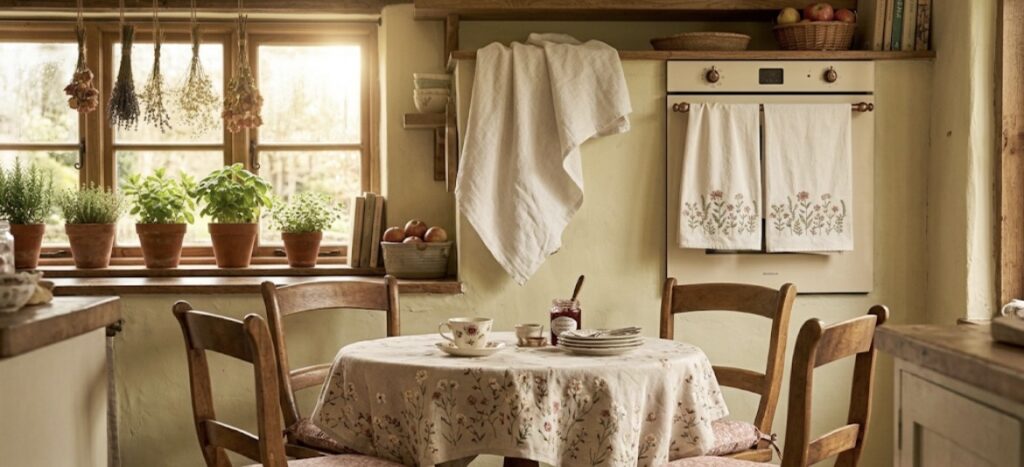
What You Need to Know to Build a Warm, Whimsical Kitchen from Scratch
There is something about a cottagecore kitchen that makes you want to slow down. Not in the “I forgot where I put my phone” way, but in the “let me put on the kettle and sit here for an hour” kind of way. It feels like the kitchen belongs to someone who bakes bread not just to eat it, but because kneading dough is the best form of therapy. It smells like dried rosemary and old wood and something sweet in the oven. It looks like it grew there. And the beautiful thing? You can build one too, even if your current kitchen looks more like a hospital break room than a countryside cottage.
Cottagecore as an aesthetic is rooted in a love of nature, simplicity, handmade things, and the comfort of old-fashioned living. It pulls from English countryside homes, French farmhouses, and the kind of kitchens that show up in slow-living blogs and Pinterest boards with names like “morning rituals” and “simple abundance.” But styling a cottagecore kitchen is not about pretending you live in 1890 or buying every antique in a thrift store and piling it in one room. It is about building a space that feels warm, personal, lived in, and deeply connected to natural materials, soft colors, and the quiet joy of making food at home.
This guide walks you through every single part of building this kitchen, from the walls and cabinets to the smallest details on your counter. It is a how-to, not a mood board. Let’s get into it.
1) Start with the Color Palette and Wall Treatment
Screenshot
The color palette of a cottagecore kitchen is the single most important decision you will make, because it sets the mood for everything else. Get this right, and every other piece falls into place naturally. Get it wrong, and even the most beautiful copper kettle will look confused.
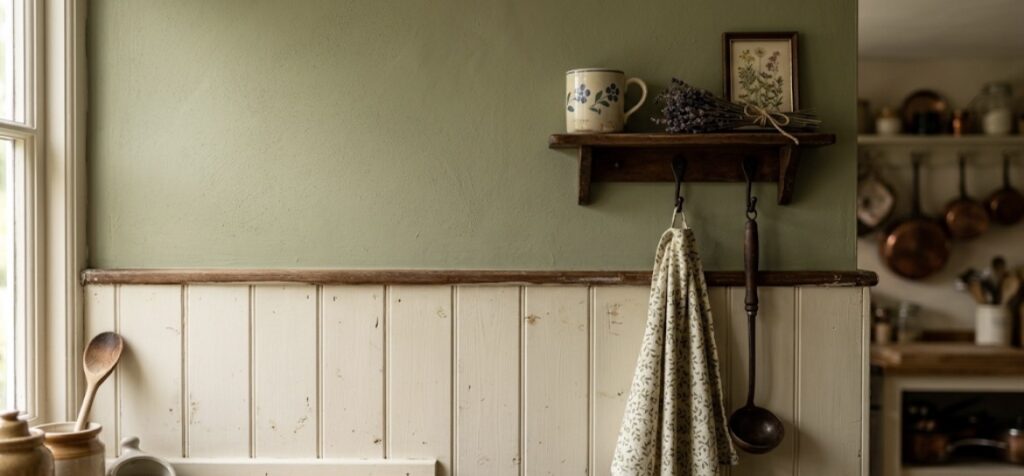
The colors you want to think about are the ones you find in a garden just before summer fully arrives: sage green, dusty rose, warm cream, soft butter yellow, antique white, lavender grey, and earthy clay tones. These are not loud or bold colors. They are the kind of colors that look different in morning light versus afternoon light, and both versions are lovely. Sage green is perhaps the most popular choice for cottagecore kitchens because it connects the inside of the room to the outside world. It reads as both calm and alive, which is exactly what this aesthetic needs.
For your walls, the goal is texture and warmth, not perfection. A flat white wall is the enemy of cottagecore. Instead, consider a limewash paint finish, which gives your walls a softly layered, uneven texture that looks like it was painted decades ago and has aged beautifully. You can also look into chalk paint applied with a dry brush technique for a similar effect. Tongue-and-groove wood paneling on the lower half of your walls, painted cream or white, adds enormous character and gives the room a sense of structure without feeling heavy. Exposed brick is another excellent choice if you have it or can fake it with brick veneer panels. The point is to avoid any surface that looks brand new, shiny, or corporate.
Wallpaper is an option too, particularly botanical prints with climbing vines, small wildflowers, or delicate leaf patterns in muted tones. Keep it to one wall, like the wall behind open shelves or behind a small dining nook, so it acts as a feature rather than competing with everything else in the room.
2) Choosing the Right Cabinets and Kitchen Furniture
Screenshot
One of the most important things to understand about a cottagecore kitchen is that it does not look like it was designed in one afternoon from a single catalog. It looks like it was built over time, with pieces added slowly as needed and as loved. This means you want to move away from perfectly matched, built-in cabinetry if you can, and instead lean into freestanding furniture pieces and open shelving.
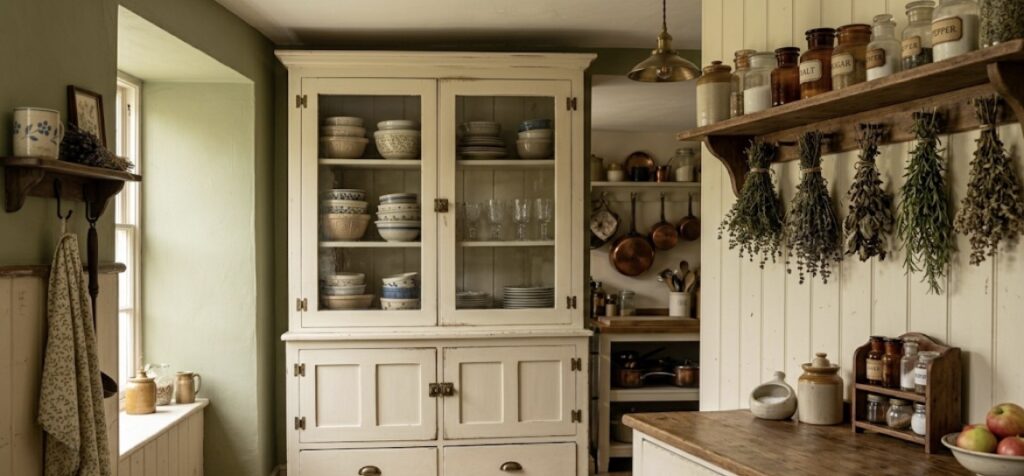
Freestanding kitchen furniture is the heart of this look. Think of a large painted dresser used as a pantry, a farmhouse sideboard storing your serving dishes, or an old wardrobe repurposed to hold dry goods and small appliances. If you do have built-in cabinets, you can still make them feel cottagecore by painting them in soft, muted tones and replacing the hardware with aged brass, brushed bronze, or hand-forged iron pulls. Shaker-style cabinets with simple recessed panel doors are the best choice if you are starting from scratch because their clean lines are modest and traditional without being plain.
Glass-fronted cabinet doors are a wonderful addition because they let you display your nicest ceramics, glassware, and stacked linens without hiding everything behind closed doors. The kitchen becomes part of your decoration when things are visible. Open wooden shelves, ideally made from thick reclaimed timber or chunky pine, are equally important. These shelves are where you will stack your most beautiful everyday items: handmade mugs, stoneware bowls, ceramic pitchers, wicker baskets, bundles of dried herbs, small potted plants, and a few well-placed vintage tins or wooden boxes.
The kitchen island or central table deserves special attention. A large, worn oak farmhouse table in the center of the kitchen is deeply cottagecore, both for function and for atmosphere. It serves as a prep area, a dining surface, and a display space. If a full table is too much, a butcher block island on legs works wonderfully and adds warmth the moment it enters the room.
3) Countertops, Sinks, and Practical Surfaces
If there is one place in the kitchen where you will regret cutting corners on the cottagecore look, it is the countertop. The material you choose here either sells the aesthetic or breaks it. Marble and polished stone can work in a slightly more elevated version of the style, but raw butcher block wood is by far the most authentic and beloved choice. It is warm, tactile, and gets better with age as it develops nicks and stains that tell the story of your cooking life. You seal it with food-safe oil, and the wood drinks it in and deepens in color. It is practically a living surface.
Honed stone is also beautiful if you prefer something more durable. A honed limestone or soapstone, rather than a polished granite, gives you a matte, ancient-looking surface that pairs perfectly with cream cabinets and brass hardware. Tiles are another option, particularly large handmade-looking terracotta tiles or hand-painted Delft-style ceramic tiles arranged in a patchwork pattern. These add enormous personality to your countertop and backsplash and are very forgiving because their imperfection is the point.
The sink should be a Belfast or butler’s sink, full stop. This deep, rectangular, ceramic apron-front sink is one of the most recognizable pieces of a traditional country kitchen. It looks like it belongs, even if everything else around it is slightly modern. Pair it with a tall, arched brass or matte black faucet with a single lever or cross handles, and you have a kitchen focal point that requires no decoration at all. Place a small wooden shelf or rack next to it for dish soap in a pretty glass bottle, a small plant, and a folded linen cloth, and the whole area becomes a moment worth photographing.
4) Flooring That Feels Right Underfoot
Screenshot
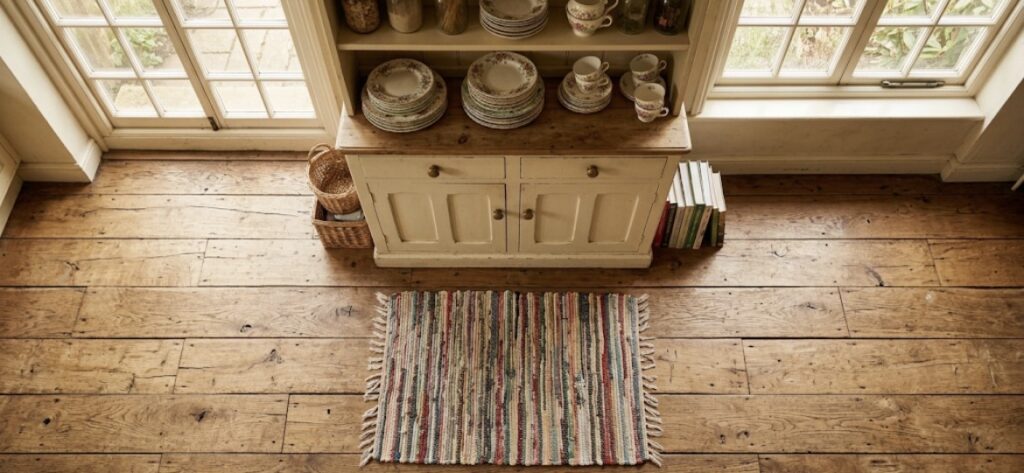
The floor in a cottagecore kitchen should feel like it has been walked on by someone who loved this house for many years before you arrived. The materials that achieve this best are wide plank wood floors in a natural oak or pine finish, and they should ideally look slightly worn and lived in rather than freshly sanded and varnished to a high gloss. If your floors are already wood, consider an oil-based finish rather than polyurethane, which adds shine but kills the warmth. A white-wash or light grey-wash stain can also soften pine floors that feel too orange or too new.
Terracotta tiles are another perfect choice for this style. Large, square terracotta tiles in their natural rust-orange or earthy red tones are deeply rooted in the farmhouse and countryside kitchen tradition. They are not trendy. They are ancient. And they look wonderful with cream walls, green cabinets, and wooden furniture. If you seal them properly and lay a few hand-woven rugs on top, they become one of the most characterful floors you can have. Encaustic cement tiles with simple geometric or floral patterns in muted colors are also worth considering if you want something slightly more decorative and patterned.
Add at least one or two small rugs or mats near the sink and stove. These should be natural fiber, hand-woven, or vintage-looking: think faded Persian-style rugs, simple striped cotton mats, or chunky jute runners. They soften the room, add color, and make the kitchen feel like a room where someone actually spends time rather than just cooks and leaves.
5) Lighting: Soft, Warm, and Intentional
Lighting in a cottagecore kitchen should never feel harsh or clinical. Overhead fluorescent lighting is the number-one thing that will kill the mood instantly, no matter how well-decorated everything else is. The lighting goal is warm, layered, and dimmable, as close to the feeling of candles and lanterns as your electrician will allow.
For your main ceiling fixture, look for a rattan pendant lamp, a woven seagrass shade, or a simple wrought-iron chandelier with small bulb holders. Enamel pendant shades in cream or dark green, hung low over an island or dining area, are a brilliant choice because they combine practicality with period-appropriate styling. Make sure you use warm-toned Edison bulbs or soft white LED bulbs, never cool daylight bulbs, which wash out the warm tones of your wood and ceramics.
Under-cabinet lighting adds a soft glow to your countertop and makes the whole room feel more intimate. Small wall sconces on either side of a window or above open shelves add depth and character. And never underestimate the role of candles in a cottagecore kitchen. A handful of thick beeswax candles in old ceramic holders, a few taper candles in simple brass candlesticks on the table, and a small lantern near the window all add the kind of light that no overhead fitting can replicate. They make the kitchen feel like a place where things are made slowly and with love.
6) Open Shelving and Display: Showing Your Best Things
Screenshot
Open shelving is not just storage in a cottagecore kitchen. It is part of the decoration. The way you arrange your shelves is one of the most expressive parts of building this interior, and it is also the most forgiving, because you can change it any time and it costs nothing.
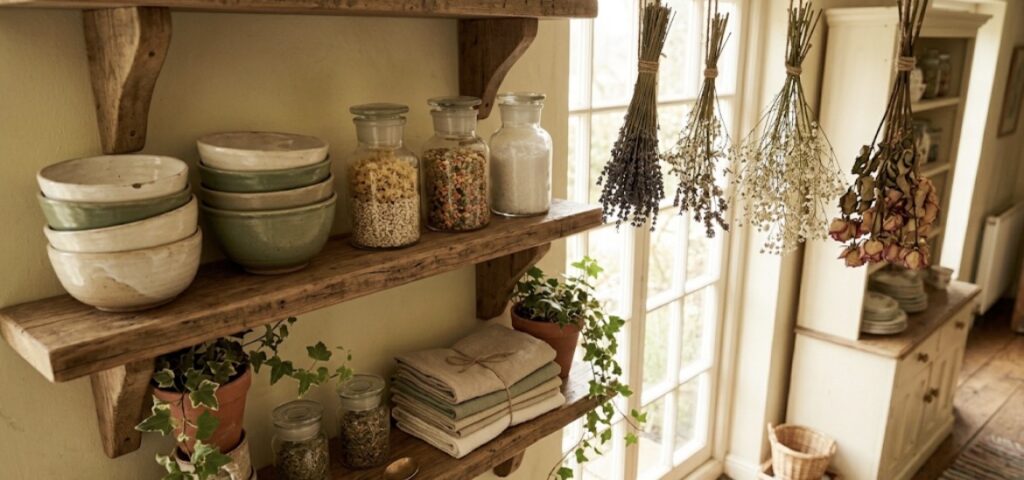
Start with a base of everyday ceramics: stacked plates, nested bowls, and a row of mugs. Choose pieces that are handmade-looking, imperfect, or earthy in tone rather than stark white and uniform. Stoneware in cream, sage, terracotta, and dusty blue is ideal. You do not need a matching set. In fact, it is better if everything almost matches but does not quite, because it gives the shelf that organic, collected-over-time feeling. Next, add height variation with a ceramic pitcher, a tall glass jar filled with wooden spoons, or a stack of books with soft spines. Add greenery with small potted herbs like thyme and rosemary, or trailing plants like pothos or ivy in a small terracotta pot.
Layer in functional items that also look beautiful: a wooden salt box, a small honey pot with a wooden dipper, a wicker basket holding folded tea towels, a vintage tin of loose leaf tea, or a bundle of dried lavender tied with twine. The shelf should look like it is used every day, not like it was styled for a catalog and then left untouched. Every item should earn its place both for what it does and how it looks doing it.
7) Plants, Herbs, and Natural Elements
Plants are not optional in a cottagecore kitchen. They are as essential as the sink and the stove. The whole aesthetic is built around a love of the natural world, and bringing that world inside through living plants, fresh herbs, dried flowers, and foraged branches is one of the most powerful ways to build this look authentically.
The most practical and atmospheric thing you can do is grow a small herb garden on your windowsill. Small terracotta pots of rosemary, thyme, basil, mint, and chives serve double duty as both decoration and actual cooking ingredients. Terracotta is the right container for this purpose because its earthy color fits perfectly and it improves with age as white salt deposits form on the outside. Place them in a row on a wide windowsill, or hang them from a small wooden rod above the window using simple twine.
Dried flowers and herbs hanging from the ceiling or from a wooden beam add incredible character to the room and require zero maintenance once dried. Bundles of lavender, chamomile, eucalyptus, dried rose heads, wheat stalks, and honesty seed pods all look beautiful and add a faint, pleasant scent to the kitchen. Tie them with natural twine or thin ribbon and hang them in clusters of three or four from small hooks. This single detail makes a kitchen feel like it belongs to someone who grows things and pays attention to seasons.
Larger plants also belong here: a potted trailing plant on top of a high cabinet, a small olive tree in a terracotta pot in the corner, or a fern in a wicker basket near the window. Every green thing adds life, oxygen, and the feeling that the garden has crept inside, which is exactly the mood you are building.
8) Textiles: Linen, Cotton, and Softness Everywhere
Screenshot
Textiles do an enormous amount of quiet work in a cottagecore kitchen. They soften hard surfaces, add color and pattern, bring in the natural fiber theme, and make the room feel genuinely lived in. The fabrics you choose should be natural wherever possible: linen, cotton, wool, and burlap are your main tools here.
Your dish towels should be beautiful enough that you do not hide them. Linen towels in undyed natural cream, soft stripe patterns, or with simple embroidered edges are ideal. Hang them from the oven handle, fold them over the edge of the sink, or drape one over the edge of a shelf. This sounds like a small thing, but good linen towels on display signal that this is a kitchen where the details matter.
Window treatments should be light and soft. Heavy drapes would feel oppressive here. Instead, go for simple linen curtains in unbleached white or a very soft check pattern, tied back loosely during the day to let the light in. Alternatively, a simple Roman blind in a botanical print fabric gives the window a more tailored look while staying within the aesthetic. Either way, avoid synthetic fabrics that catch harsh light and look flat.
If you have a small dining table in the kitchen, dress it with a linen tablecloth or a simple cotton runner in a pattern that echoes your wall colors: a soft floral, a small gingham check, or a faded stripe. Add a cushion to your chairs using fabric that ties with a bow at the back, and that table goes from functional to genuinely charming in one step.
The Final Details That Make the Difference
After the walls, cabinets, floors, and shelves are sorted, the final layer of styling is what separates a good cottagecore kitchen from a truly special one. These are the small objects, the daily tools, the little decisions that add up to a feeling you cannot quite name but immediately recognize when you walk in.
Your kitchen tools should be as beautiful as they are functional. Swap plastic-handled spatulas and neon silicone spoons for wooden-handled tools, cast iron pans, enamelware pots in cream or forest green, and ceramic mixing bowls in earthy tones. Keep a crock or a vintage jar on the counter filled with your most-used tools so they are always on display. A vintage scale on the counter, a bread box made from wood or enamel, a butter dish in hand-painted ceramic, and a wooden cutting board with a handle all contribute to the look without being purely decorative. They are used and they are lovely.
Small food storage items are an opportunity for additional decoration. Decant your dry goods into glass clip-top jars, ceramic canisters, or old-fashioned tins with printed labels. When your pasta, flour, rice, and oats live in beautiful containers, the counter becomes part of the design. Label them with small hand-lettered cards or printed botanical labels, and suddenly the practical becomes aesthetic. A small wooden fruit bowl with a few ripe lemons or apples adds color and life to a counter. A honey jar with a wooden dipper next to the kettle station looks like something from a very good lifestyle magazine.
Books also belong in this kitchen. A shelf or a small stack of old cookbooks with worn spines, a journal open near the windowsill, or a botanical illustration tucked into a frame above the table all say that this is a space where a person who appreciates beautiful things spends their time.
Putting It All Together: Building the Room in Layers
The mistake most people make when trying to achieve the cottagecore kitchen look is trying to do everything at once. They buy a cart-load of items, place them all in the kitchen on the same weekend, and wonder why it looks more like a prop warehouse than a cottage. The look works because it feels accumulated, not installed.
Build the room in layers. Start with the largest decisions first: wall color, flooring, and cabinets. Then add the furniture, shelving, and sink. Once those foundational elements are in place, bring in the plants and textiles. After that, add your ceramics and kitchen tools. Last of all, add the small decorative details, the books, the candles, the dried flowers. Each layer should feel settled before you add the next.
And remember that a cottagecore kitchen is not a museum. It is a room where you make food, spill things, forget to water the herbs, and leave the bread out too long. The worn edges, the slight imperfection, the plant that is growing in a direction it was not invited to grow in, these are not failures. They are the room telling its story. Your only job is to create the conditions for that story to be a good one.