
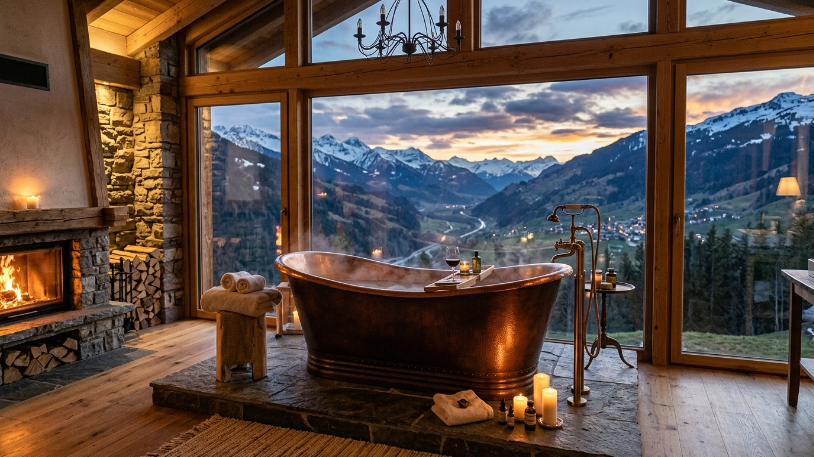
If you have ever walked into a hotel room, spotted the enormous freestanding tub by the window, and quietly decided never to leave, you already understand the appeal. Freestanding bath ideas attract more bathroom searches than almost any other topic, and the reason is not complicated. A freestanding tub does not just function. It stands alone in the room, holds the eye, and turns a bathroom from a utility into a destination.
The good news is that freestanding baths work in a much wider range of rooms than most people assume. You do not need a sprawling primary suite or a six-figure renovation budget to make one work. You need the right shape, the right finish, and a clear sense of how the tub will anchor the space around it. From sleek stone resin ovals to sculpted copper garden tubs, the range of styles is broader than it might first appear.
This post covers 12 distinct freestanding bath ideas that pull from different aesthetics, room sizes, and budgets. Some are bold and dramatic. Others are quieter and deeply functional. All of them are worth knowing about before you start shopping or planning. For a broader look at the spa atmosphere that pairs so naturally with a freestanding tub, our home spa ideas guide is a good companion read to everything here.
Why Freestanding Bath Ideas Work in Every Style
A freestanding tub changes the dynamic of a bathroom entirely. Most fixtures sit against a wall, so they mostly disappear until you need them. A freestanding tub sits in the room itself. It takes up real visual space and creates a focal point that the rest of the room then responds to, from tile choices down to towel hooks.
The key difference between a built-in tub and a freestanding one is presence. A built-in tub functions quietly in a corner. A freestanding tub functions and also makes a calm statement. Designers often place them near a large window, at the center of a spacious bathroom, or at the end of a long narrow room where they hold the architecture in balance. Still, a freestanding tub does not require a large room. Compact styles designed for smaller footprints bring the same visual impact at a smaller scale.
Before you settle on a style, also think about floor clearance. The National Kitchen and Bath Association’s kitchen and bath planning guidelines recommend at least 30 inches of clear floor space along one side and at the foot of any freestanding tub. That is a helpful baseline to plan around when choosing your tub size and deciding on placement.
1. The Classic Clawfoot Tub: One of the Most Iconic Freestanding Bath Ideas
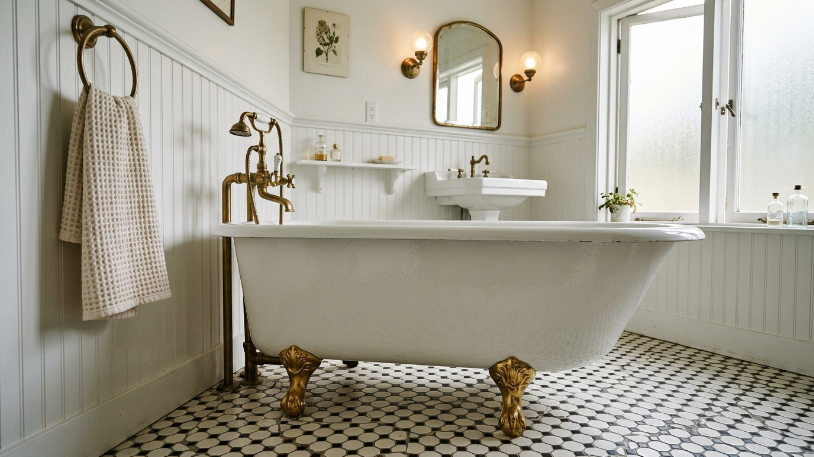
The clawfoot tub has been a bathroom centerpiece since the 1870s, and it holds its position because it earns it. It stands on four feet cast in a ball-and-claw or paw design, and the deep curved sides make it genuinely good for a long, hot soak. This is not a tub you rush.
Modern clawfoot tubs come in glossy white, matte black, sage green, and navy enamel finishes. Original cast iron models hold heat brilliantly but can weigh 300 to 500 pounds, so check your floor load capacity before ordering. Acrylic versions offer the same visual character at a fraction of the weight, which makes them practical for most homes without any structural concern.
Warm metal finishes pair naturally with the clawfoot shape. Brushed brass, oil-rubbed bronze, and antique gold all suit the vintage silhouette. A floor-mount faucet standing beside the tub is the most traditional setup, though a wall-mount faucet positioned high above the rim also works beautifully.
Works best with:
- Bathroom styles: Victorian, vintage, traditional, rustic, eclectic
- Floor types: Black and white hex tile, penny tile, warm stone
- Finishes: Glossy white, matte white, matte black, sage, navy
- Fixtures: Brushed brass, oil-rubbed bronze, antique gold
2. The Oval Stone Resin Tub
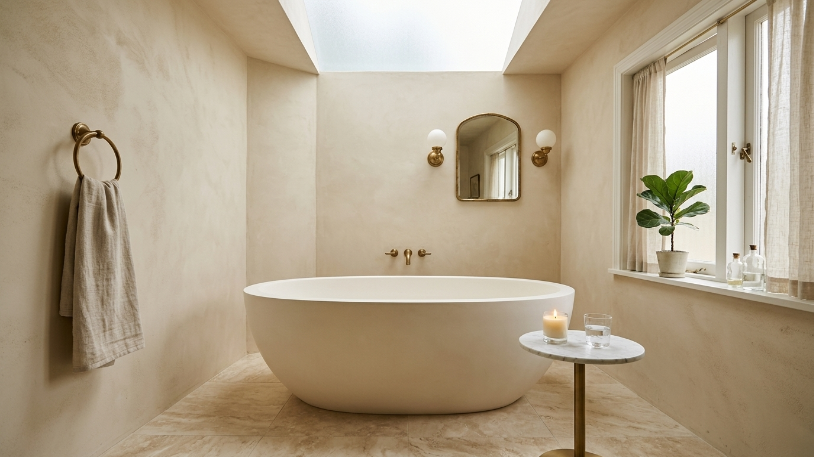
Oval freestanding tubs are the shape interior designers reach for most consistently, and the oval in stone resin or natural marble is the most sculptural version of that idea. The silhouette is continuous and soft, with no hard lines, and it reads well in both modern and transitional spaces.
Stone resin holds heat longer than acrylic, feels dense and smooth to the touch, and comes in finishes from matte white to warm travertine. The weight sits between acrylic and true natural stone, which keeps installation manageable without specialist structural reinforcement in most standard bathrooms. For a full luxe option, natural marble or onyx tubs are available; the visual payoff is significant but so is the price.
Color choices around an oval stone tub benefit from staying warm and neutral. Sherwin-Williams’ bathroom paint collection includes several tones that pair beautifully with stone-finish tubs. Heron Plume SW 6070 is a soft warm greige that sits beside travertine without competing. Accessible Beige SW 7036 is another solid pairing for a seamless, cohesive look.
Works best with:
- Styles: Modern, transitional, spa, coastal, organic modern
- Flooring: Travertine, large-format limestone, warm white marble
- Wall tones: Warm off-white, sandy greige, soft sage, pale clay
- Finish options: Matte white, warm stone, soft grey, linen
3. The Flat-Bottom Freestanding Bath
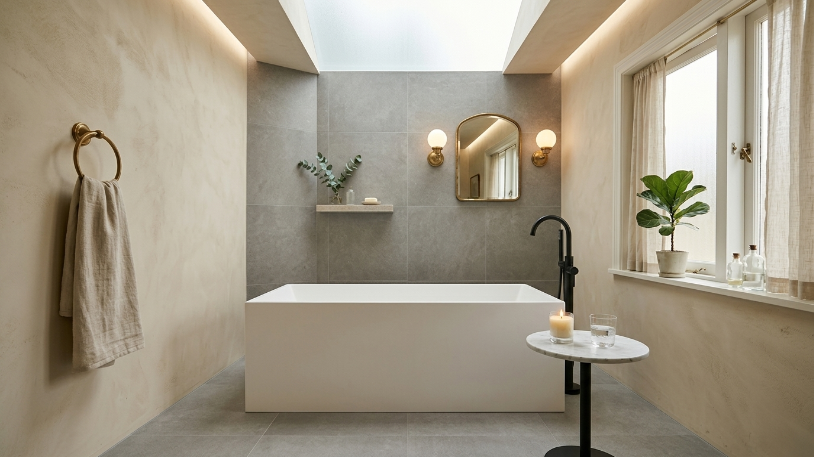
The flat-bottom freestanding bath is where minimalism arrives in the bathroom with full confidence and no apology. The sides are straight or gently tapered, the base sits flush with the floor, and the silhouette is usually rectangular. It looks deliberate, it reads clean, and it photographs extremely well, which explains why it appears in nearly every Japandi or Scandinavian bathroom mood board around.
This shape pairs naturally with large-format tile, matte wall finishes, and the kind of bathroom where one well-placed plant handles most of the decorating. Wall-mount or floor-mount faucets in matte black or brushed nickel are the obvious hardware choice. Both speak the same visual language as the tub.
Flat-bottom tubs come in acrylic, stone resin, and enameled steel. Acrylic is the lightest and most affordable option. Stone resin gives a denser, slightly more premium result. Enameled steel is durable and has a cool, industrial quality that works well in a more raw or architectural setting.
Works best with:
- Styles: Minimalist, Japandi, Scandinavian, contemporary, industrial
- Tile: Large-format concrete-look, matte porcelain, pale grey or warm white
- Hardware: Matte black, brushed nickel, polished chrome
- Avoid pairing with: Ornate traditional hardware or heavily decorative tile
4. The Matte Black Freestanding Bath
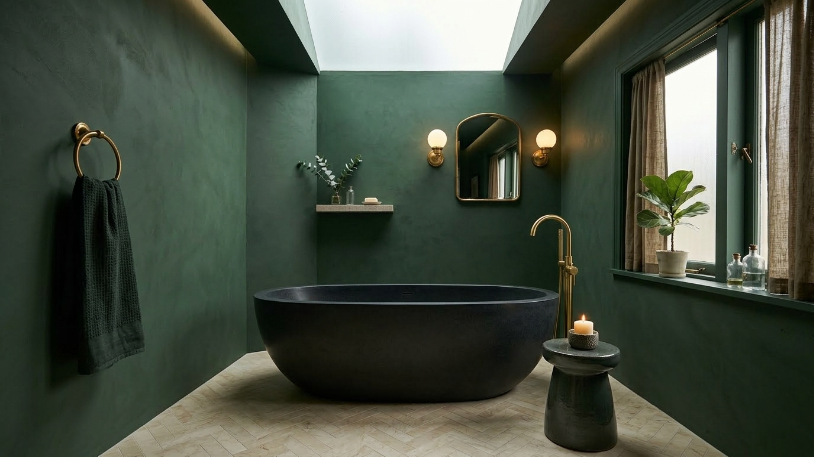
If your bathroom leans toward drama, a matte black freestanding tub is one of the most striking directions you can take. It reads moody, confident, and intentional. It also works surprisingly well in all-white or very light bathrooms, where it becomes the entire focal point and the rest of the room steps back to let it work.
The matte finish shows water marks and fingerprints more readily than a gloss surface, so plan for a regular wipe-down with a soft dry cloth. That small maintenance trade-off is easy to justify when the visual result makes the bathroom feel like a boutique hotel room in a very expensive city.
Hardware choices carry a lot of weight in this setup. Brushed gold against matte black is bold and deliberate. Brushed nickel is more restrained and slightly cooler in tone. A full matte-black-on-black pairing, matching faucet to tub, is for the people who have fully committed and are not looking back.
Works best with:
- Styles: Industrial, moody, dark glamour, contemporary
- Wall colors: Warm white (high contrast), forest green, slate, deep charcoal
- Hardware: Brushed gold, antique brass, brushed nickel, or matching matte black
- Floor pairing: Warm cream marble, large-format warm white tile, brushed concrete
5. The Garden Tub: Freestanding Bath by the Window
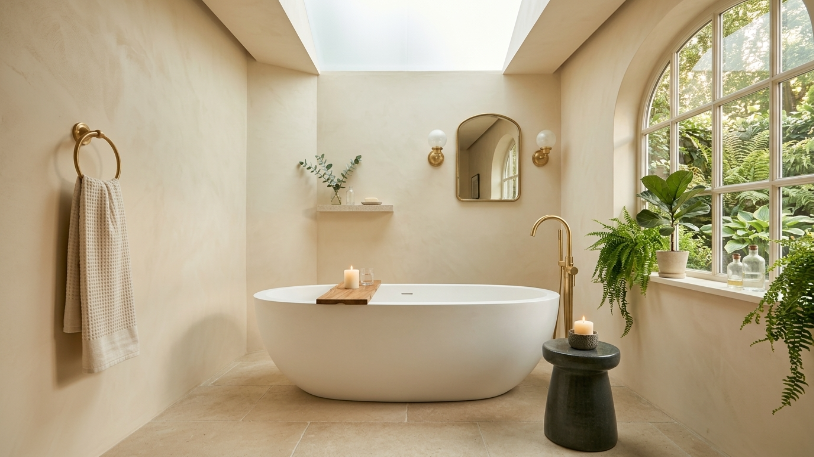
Few combinations beat a hot bath and a good view. Placing a freestanding tub beneath or beside a large window is one of the most sought-after freestanding bath ideas for people renovating from scratch, and the reason is obvious the moment you see it done well. Natural light makes the room feel larger, the changing outdoor scene adds something meditative to a long soak, and the overall effect looks like something you planned a year in advance. (Because you probably did.)
Privacy glazing handles the practical concern when the bathroom faces a street or a neighboring garden. Frosted glass, obscure patterned glass, and window film all block the view from outside while keeping light streaming in. When your outlook is genuinely private, no window treatment at all gives you the clearest connection to the outdoors.
The garden bath style pairs naturally with organic materials: limestone or travertine tile underfoot, teak bath trays across the rim, trailing plants on the windowsill, and earth-tone walls in warm cream or soft clay.
Works best with:
- Views: Private garden, courtyard, green space, skyline
- Privacy solutions: Frosted glass, textured window film, louvred shutters
- Materials: Limestone, travertine, teak, natural pebble mosaic
- Plants near the tub: Ferns, pothos, trailing philodendron, spider plant
6. The Japanese Soaking Tub
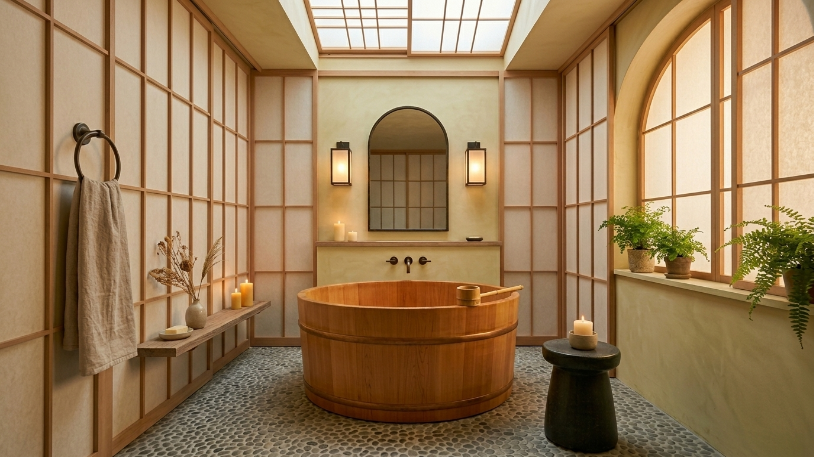
The Japanese soaking tub, known as an ofuro, is built around a completely different philosophy of bathing. It is deep rather than long. You sit upright in the water instead of reclining at a shallow angle. The experience is meditative and immersive rather than recreational, and for many people that shift in posture changes the entire feel of an evening routine.
Freestanding versions come in round, square, and barrel shapes. The floor footprint is smaller than most Western-style tubs, but the depth runs from 24 to 28 inches, which makes this a genuinely good solution for smaller bathrooms where a long oval or clawfoot tub will simply not fit. Also, the compact volume often means less water is needed to fill it, which is a practical bonus worth noting.
Traditional materials include hinoki wood, a Japanese cypress with a warm amber tone, a distinctive scent, and natural antibacterial oils. Stone composite, reinforced acrylic, and cast iron versions are also widely available in a modern context.
Works best with:
- Styles: Japandi, Zen, organic modern, spa, minimalist
- Materials: Hinoki wood, stone composite, reinforced acrylic, cast iron
- Flooring: Pebble mosaic, smooth stone, slatted teak deck
- Depth: 24 to 28 inches; designed for seated soaking, not reclining
Quick Reference: Freestanding Bath Styles at a Glance
Choosing between styles is easier when the key differences are laid out side by side. Use this as a starting reference before you dive into specific products and measurements.
| Style | Best Aesthetic | Typical Footprint | Soaking Depth | Best Room Size |
| Clawfoot | Victorian, eclectic | Large | Medium | Medium to large |
| Oval stone resin | Modern, spa, transitional | Medium | Medium | Medium to large |
| Flat-bottom | Minimalist, Japandi | Medium | Medium | Any |
| Japanese soaking | Zen, Japandi | Small | Deep (24–28 in.) | Small to medium |
| Double-ended | Spa, master suite | Large | Medium | Large |
| Copper or outdoor | Eclectic, rustic, bohemian | Varies | Medium | Outdoor or feature rooms |
7. The Copper and Brass Freestanding Tub
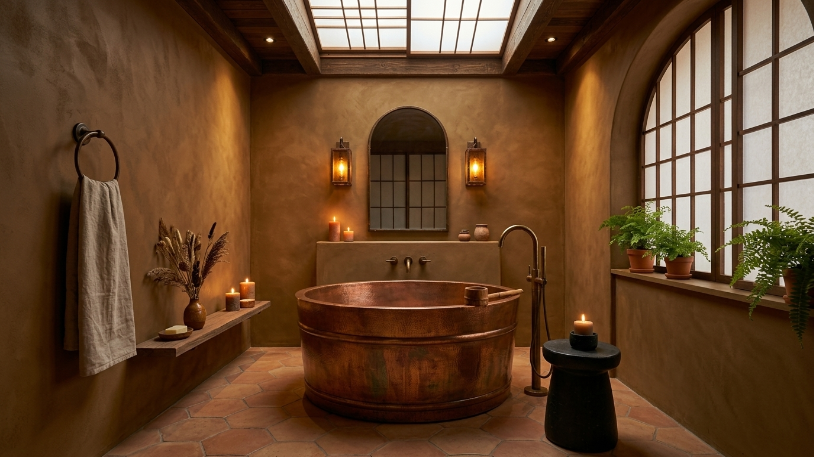
Copper and brass freestanding tubs are the kind of design choice that stops a room mid-sentence. Warm, reflective, and genuinely distinctive, a copper tub against dark plaster or warm stone looks like something from a boutique resort that has very strong opinions about candlelight and absolutely no opinions about minimalism.
Copper tubs are typically spun or hand-hammered, and the natural surface develops a patina over time, deepening from bright copper toward a rich, earthy tone. That aging quality is part of the appeal for most people who choose this material. A lacquered finish keeps the original color locked in if you prefer consistency. Brass tubs lean slightly more golden in tone and pair beautifully with terracotta tile, dark timber, and earthy plaster walls.
Both metals need gentle handling. Harsh chemicals and abrasive scrubbers damage the finish quickly. Mild soap, a soft cloth, and a thorough dry after each use keep them looking exactly as they should.
Works best with:
- Styles: Rustic luxury, bohemian, Mediterranean, maximalist, eclectic
- Floor pairings: Terracotta hexagon tile, handmade tile, dark stone, warm wood
- Wall tones: Warm clay, deep caramel, ochre, aged white plaster, dark teal
- Maintenance: Mild soap only; dry thoroughly after each use
8. The Compact Freestanding Bath for Smaller Rooms
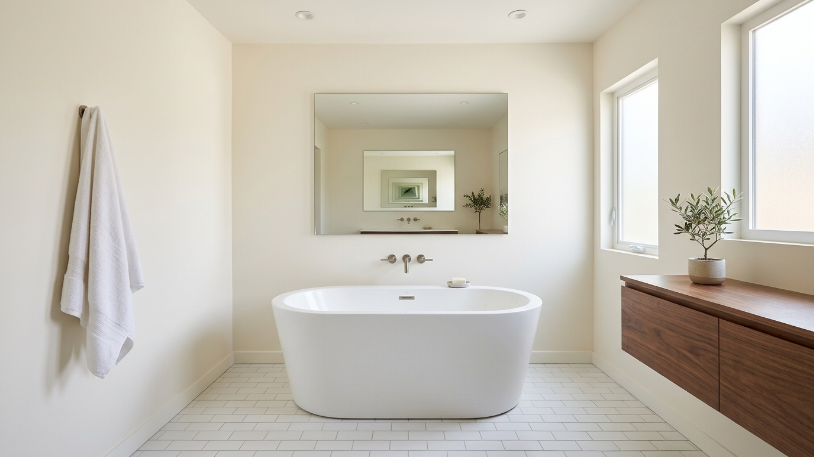
The assumption that freestanding tubs only belong in large bathrooms is worth pushing back on. Compact freestanding models start at around 47 to 54 inches in length, compared to the standard range of 55 to 72 inches. That difference is significant in a smaller bathroom where floor space is carefully managed.
A shorter oval or round soaking tub can look just as intentional and polished as a large one, especially when the surrounding space is well-edited. Wall-mount faucets rather than floor-mount fittings keep the floor area open and easier to read visually. Plus, a floating vanity, a large frameless mirror, and light-colored walls all help the room breathe more than it actually has room to.
Color choice matters here too. A matte white or soft cream tub against warm off-white walls creates a gentle, seamless effect that does not split the room into competing zones. A contrasting dark tub in a small bathroom can work, but it requires careful balancing of everything else in the space.
Works best with:
- Tub lengths: 47 to 54 inches (versus the standard 55 to 72 inches)
- Fixtures: Wall-mount faucets (keeps the floor visually clear)
- Wall colors: Warm white, soft cream, pale sage, light warm greige
- Pair with: Floating vanity, large frameless mirror, recessed shelving
9. The Freestanding Bath on a Raised Platform
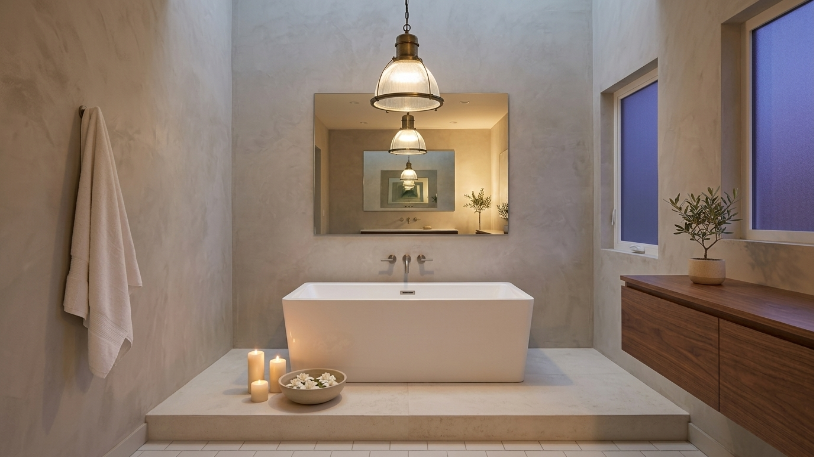
Placing a freestanding tub on a raised tiled platform is an architectural move rather than just a decorative one. The platform lifts the tub slightly off the floor, creates a stepped visual transition, and gives the whole arrangement the feeling of something custom-designed rather than simply placed in a room. It is one of the most effective ways to add a high-end, resort-quality character to a bathroom renovation without a wildly complicated build.
The platform also solves a practical problem. The step creates a narrow ledge that works perfectly for candles, bath products, or anything else you want within easy reach without a separate side table crowding the floor. Platform heights typically run from 6 to 12 inches, which is enough to create clear visual separation without making the step awkward to step up onto.
Material options for the platform range from matching floor tile (for a seamless, monolithic effect) to contrasting warm wood decking (for texture) to a natural stone slab (for a more architectural statement).
Works best with:
- Bathroom sizes: Medium to large; platforms in very small rooms can feel cramped
- Platform heights: 6 to 12 inches
- Materials: Matching floor tile, warm teak or oak decking, natural stone slab
- Visual effect: Custom, architectural, resort-level quality
10. The Double-Ended Freestanding Bath
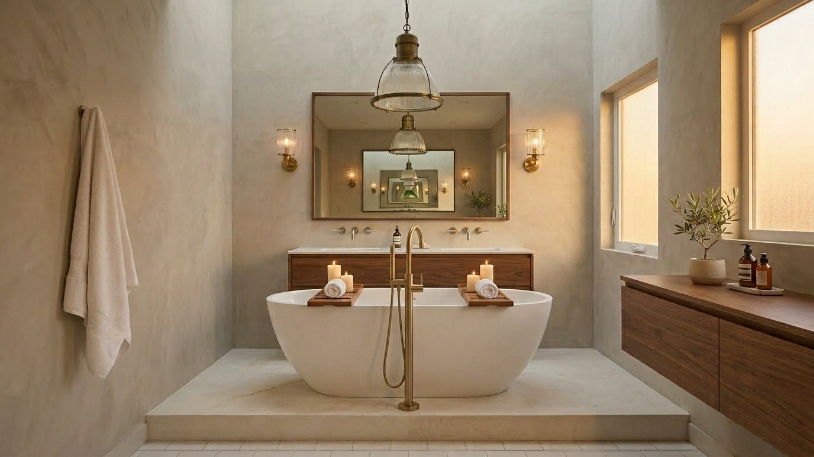
A double-ended tub is symmetrical from both ends. Both sides curve upward equally, so either end works as the head or the foot. This makes it genuinely useful for two people who actually use the bath together, rather than just an optimistic statement about your relationship. (The floor-mount faucet positioned at the center confirms the intent.)
Double-ended tubs appear most often in clawfoot and oval styles. The faucet rises from the floor at the midpoint between the two users, which is also the most photographed faucet position in bathroom design for good reason. It looks balanced, deliberate, and beautifully composed from every angle.
This shape suits larger master bathrooms best, where the tub can float in the center of the room with clear floor space on all sides. The natural symmetry of a double-ended tub also invites a symmetrical approach to the rest of the space: matching towel stands, matching side tables, matching sconces on either side of the mirror.
Works best with:
- Sizing: 60 to 72 inches long for comfortable use by two adults
- Faucet: Floor-mount centered at the midpoint of the tub
- Best rooms: Large master bathrooms and primary suites
- Styling tip: Mirror the accessories at both ends for a hotel-quality composition
11. Bold Wall Color: Dramatic Freestanding Bath Ideas
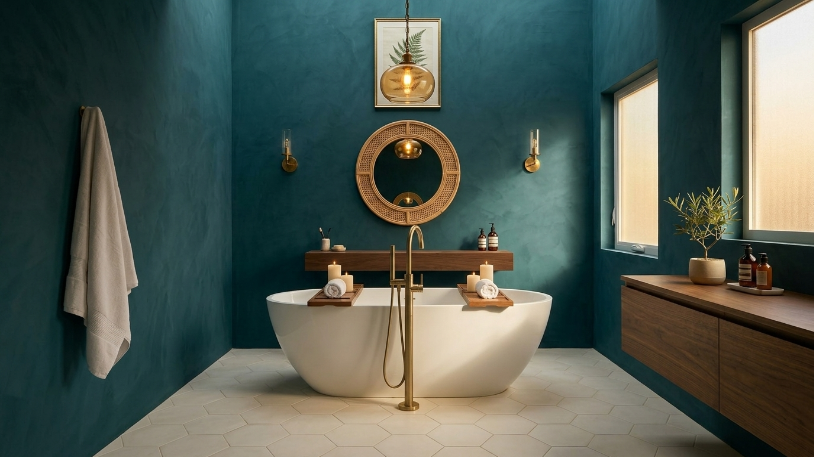
The wall behind your freestanding tub is not a passive backdrop. It is a full design decision, and it shapes the character of the whole room. A white oval tub against a white wall is calm and pleasant. The same white oval tub against a deep teal or forest green wall is a completely different proposition: rich, striking, and deliberately composed.
Dark wall colors work especially well behind freestanding tubs because the wall grounds the tub visually, the contrast creates depth, and the result reads far richer than the sum of its parts. Some of the strongest combinations put a white or cream-finish tub against walls in deep teal, British racing green, dusty navy, warm charcoal, or terracotta. Each pairing creates its own distinct mood while keeping the tub as the clear focal point.
Our post on how to style a deep teal bathroom walks through the specific tile, fixture, and accessory choices that make that particular color combination work from every angle, including how to keep the result serene rather than heavy.
Strong wall and tub color pairings:
- Deep teal walls + white oval tub + brushed gold faucet
- Forest green walls + matte black tub + brass hardware
- Warm terracotta walls + white clawfoot tub + oil-rubbed bronze
- Navy walls + white flat-bottom tub + polished chrome
- Warm charcoal walls + cream stone resin tub + warm gold
12. The Outdoor Freestanding Bath
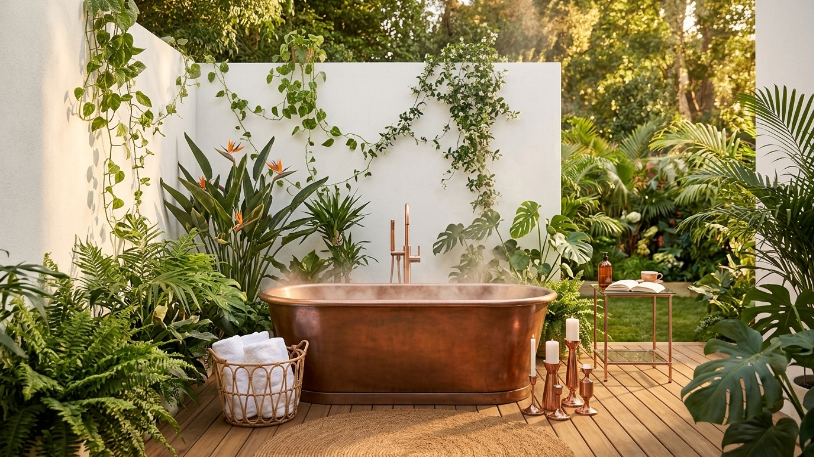
Outdoor freestanding baths are the kind of design decision that sounds slightly unlikely when you first hear it and completely obvious once you see the right one executed well. A private courtyard, a sheltered garden terrace, or a rooftop nook can absolutely become the site of an alfresco bath setup. Climate permitting, of course.
Materials need to be weather-resistant. Copper ages beautifully outdoors, developing a natural verdigris patina over time. Stone resin handles outdoor conditions well in most climates. Stainless steel is durable and works well in a more industrial or modern outdoor setting. Cast iron is possible but requires careful sealing against rust. Whatever you choose, make sure the plumbing connections are properly protected from temperature shifts and outdoor exposure.
Privacy is the main practical concern, but it is almost always solvable. Tall planting, bamboo screening, timber trellis with climbing plants, and a pergola overhead all create a sense of enclosure without making the space feel closed in or walled off.
Works best with:
- Climates: Year-round warm climates or seasonal use in temperate zones
- Materials: Copper, stone resin, stainless steel, weather-sealed cast iron
- Privacy solutions: Tall planting, bamboo screening, timber trellis, overhead pergola
- Floor surfaces: Natural stone paving, teak decking, smooth concrete, pebble stone
Final Thoughts
A freestanding bath is one of those home investments that tends to pay off quietly over time. It becomes the thing you mention when someone asks what your favorite room in the house is, not because it is the flashiest fixture around, but because it is the one that genuinely changes how you use the space.
Whether you choose a classic clawfoot with brass feet, a sleek stone resin oval in warm white, a moody matte black statement tub, or a hand-hammered copper beauty on your garden terrace, the most important thing is that the tub fits your room and fits the way you actually live in it. Think about placement carefully. Measure the floor clearance. Consider where the light falls at the time of day you are most likely to use it.