
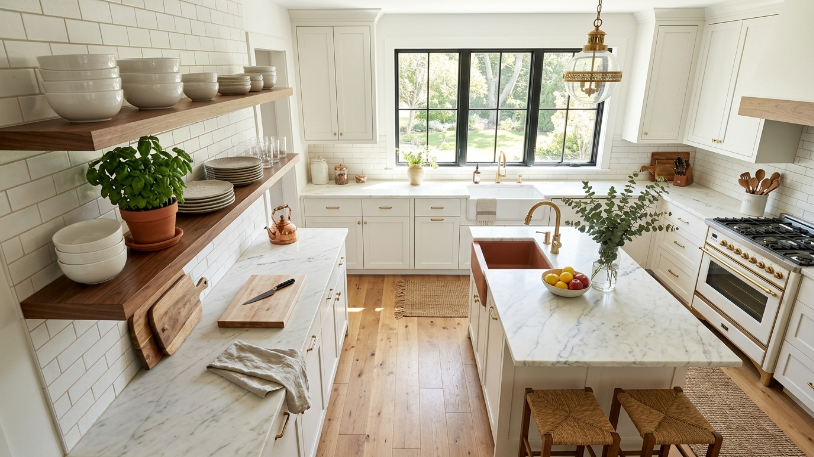
If you have been browsing kitchen inspiration lately, you already know that kitchen open shelving ideas have taken over the conversation in a big way. Walls that once held heavy upper cabinets now show off stacked white plates, trailing plants, rows of matching spice jars, and pottery that looks like it came from a weekend market in Tuscany.
The appeal is real. Open shelves make a kitchen feel larger, lighter, and more personal. They also hold you completely accountable for keeping the kitchen tidy, which is either a feature or a bug depending on your relationship with dish clutter.
Beyond style, kitchen open shelving ideas work well because they are flexible. Small city apartments, wide farmhouse kitchens, sleek modern layouts, and warm cottage spaces all benefit from at least one stretch of open shelving. The approach does not require a full renovation. It requires choosing the right style, material, and display strategy for your specific kitchen.
Below are 12 specific ideas, each with a clear visual direction, color recommendations you can actually use, and notes on what to put on the shelves once they are up.
The 12 Best Kitchen Open Shelving Ideas
1. Warm Walnut Floating Shelves
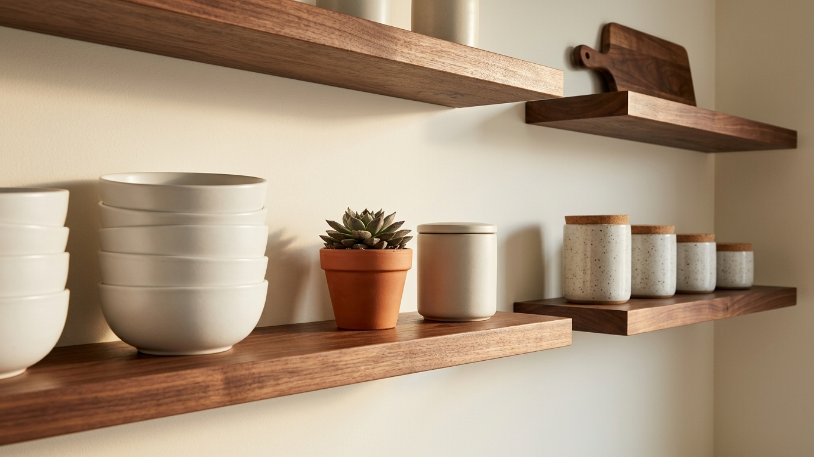
Warm wood is one of the most dependable materials for kitchen open shelves. Walnut, oak, and teak all carry a natural richness that softens a white or grey kitchen without feeling heavy or dated. Plus, these tones age beautifully rather than simply looking worn.
Float two or three shelves along a single wall and keep the display calm and layered. Stack a few white bowls, tuck in a small plant, and leave a few deliberate inches of open space on each shelf. Those empty gaps are part of the styling, not a sign that you forgot to fill them.
For wall color behind walnut shelves, a warm creamy white works best. Sherwin-Williams Alabaster SW 7008 has just enough cream to bring out the warmth in the wood without pulling the room toward yellow. Benjamin Moore White Dove OC-17 is another strong option with similar warm undertones.
What to display on warm walnut shelves:
- Matte white ceramic bowls and stacked dinner plates
- Linen or ceramic canisters with matching lids
- A small trailing plant or succulent in a terracotta pot
- A wooden cutting board stored upright at one end
- A woven basket for loose pantry items or produce
The one rule to hold onto: resist filling every inch. A shelf styled halfway looks intentional. A shelf crammed completely looks like you ran out of cabinet space, even when the items on it are beautiful.
2. Open Shelving with a Painted Backdrop
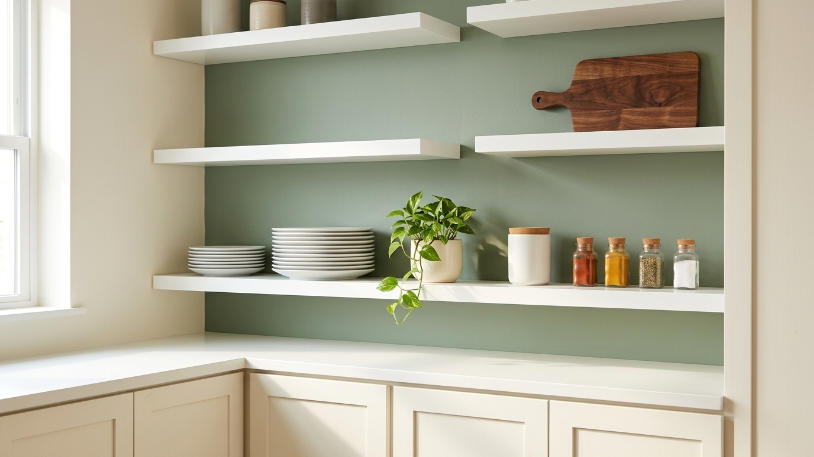
Painting the wall behind your open shelves a contrasting color is one of the simplest kitchen open shelving ideas that delivers the most visible result. The painted wall section becomes a natural frame for the display, making even modest objects look curated and placed with intention.
The backdrop color does not have to match the rest of your kitchen. In fact, it works better when it does not. For example, if your kitchen walls are cream or soft white, painting just the shelf wall in a muted sage like Sherwin-Williams Evergreen Fog SW 9130 creates a strong visual anchor without repainting the whole room.
Other backdrop colors worth trying:
- Deep navy blue for a dramatic, almost gallery-like effect
- Warm dusty terracotta for an earthy, sun-warmed feel
- Warm charcoal grey for a modern and slightly moody contrast
- Soft sage green for a calm, botanical direction
The shelf itself can stay in natural wood or get painted white. Natural wood against a painted wall looks grounded and warm. White shelves against a colored wall look clean and graphic. Both approaches work well.
For specific open shelving color pairings, Benjamin Moore’s kitchen cabinet and shelving inspiration page includes combinations like October Mist on the wall paired with Forest Floor on the shelving, which gives a layered, nature-inspired look without being too bold.
One practical note: you only need to paint the section of wall between and slightly around the shelves, not the full wall, unless you have committed to that color throughout the room.
3. Black Metal Bracket Shelves
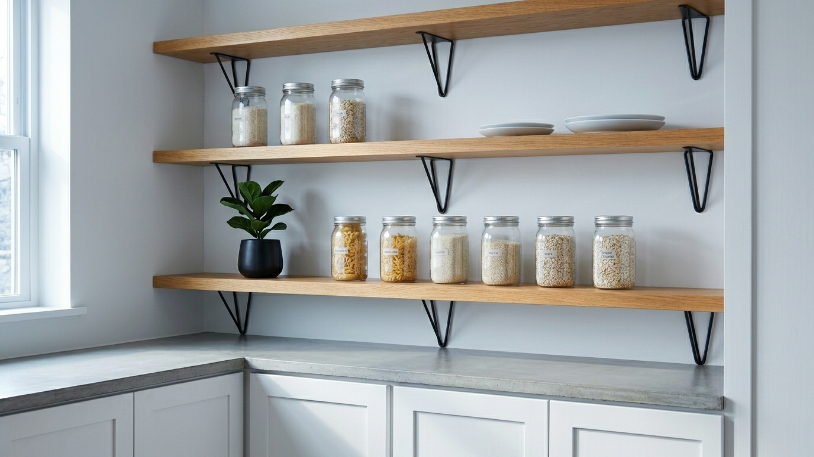
If your kitchen already has matte black hardware, dark appliances, or industrial accents, black metal bracket shelves are a natural and low-effort fit. The brackets become visible design elements rather than hidden supports, and that shift is exactly what makes the look effective.
Pair thick wood boards in a warm honey oak or medium walnut stain with matte black hairpin brackets or flat-bar industrial-style brackets. The contrast between warm wood and sharp black metal looks deliberate and cool without trying too hard.
This style suits modern, Scandinavian, and industrial-leaning kitchens well. It also works in smaller kitchens because the open structure keeps the wall feeling visually lighter than solid upper cabinets would.
Keep the display on these shelves clean and edited:
- A row of matching glass jars with metal lids
- Two or three cookbooks with their spines facing outward
- A single plant in a matte black ceramic pot
- Matching white or black bowls stacked neatly at one end
Avoid mixing too many colors or materials on these shelves. The contrast between the black brackets and the warm wood already does the visual heavy lifting. Your display simply needs to stay calm and consistent so the shelf hardware can remain the design statement.
4. Corner Open Shelving
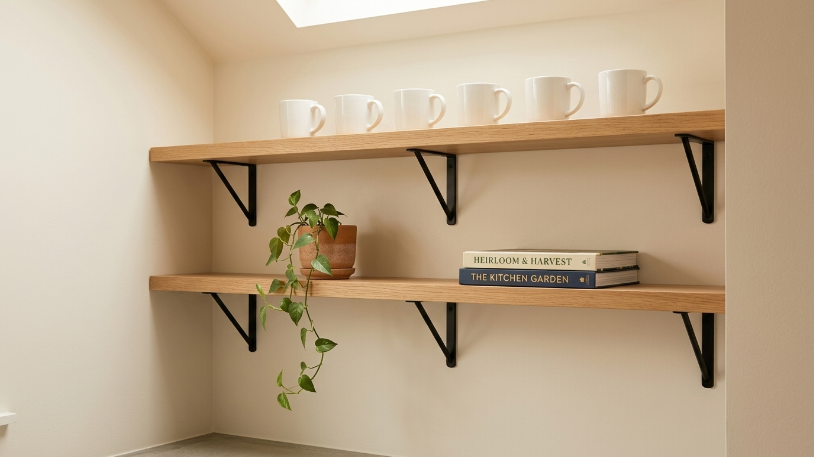
Corner shelves are among the most underused kitchen open shelving ideas, and also among the most practical. They address a problem almost every kitchen has: an awkward corner that is either wasted open space or occupied by a bulky corner cabinet that nobody can fully reach without a flashlight and some optimism.
A pair of stacked triangular floating shelves creates a display spot that draws the eye naturally toward the angle of the room. Wrap-around shelves that follow both walls are a more practical option if you need real storage rather than a curated display area.
Good uses for a kitchen corner shelf:
- A dedicated coffee and tea station with matching mugs arranged by size
- A small plant display with a trailing vine that spills over the edge
- A collection of matching glasses arranged by height
- Cookbooks standing upright with their spines facing outward
For color, a soft off-white shelf against a wall painted in warm Benjamin Moore Monroe Bisque HC-26 keeps the corner feeling comfortable and collected. Alternatively, a natural wood shelf with warm terracotta walls gives the whole corner a slightly warm, earthy quality.
One styling tip that makes a real difference: arrange items so they flow from one wall toward the other, rather than clustering everything on one side. This makes the corner feel planned rather than accidentally filled.
5. Open Shelves Above the Sink
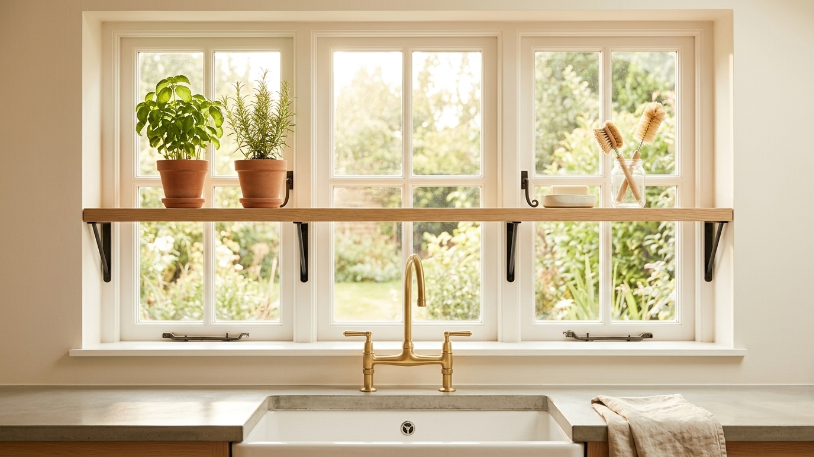
A single floating shelf above the kitchen sink is one of the most practical and visually rewarding kitchen open shelving ideas, especially in kitchens where the window above the sink leaves some empty wall space on either side of the frame.
One shelf is almost always enough in this spot. Two can work if the wall height allows. Three shelves hovering above the sink area starts to feel crowded, and nobody enjoys reaching past a trailing plant for a glass while the water is running.
Items that work well on a shelf above the sink:
- One or two small terracotta pots with fresh herbs, like basil, rosemary, or mint
- A ceramic soap dispenser and matching dish
- A short glass pitcher or jug for kitchen brushes and tools
- A small ceramic candle holder or votive
This shelf location gets more humidity than other spots in the kitchen, so material choice matters here. Sealed or oiled wood handles moisture well. Ceramic and glass are both excellent options. However, raw or unsealed wood and porous materials will absorb that humidity and show their age within a year.
For warmth, a medium-tone oak shelf backlit by natural light from the window looks lovely and soft. If the shelf is painted rather than natural wood, a warm sage green or creamy off-white both read well when light filters through from behind.
6. Industrial Pipe and Wood Shelves
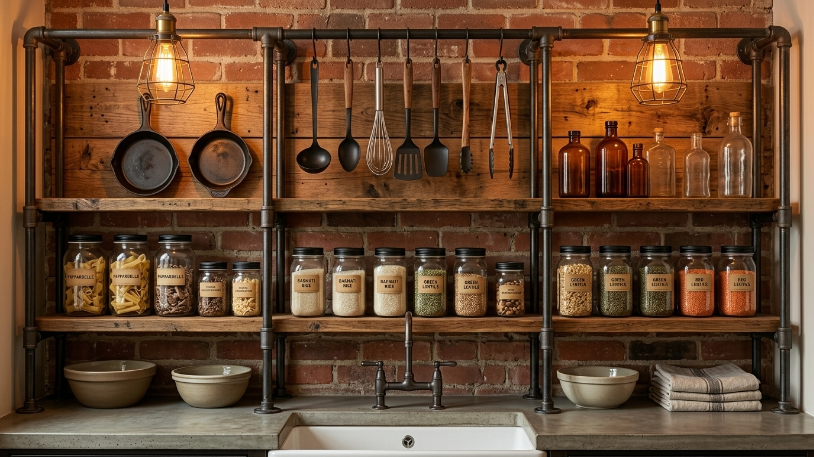
Pipe shelving is one of those kitchen open shelving ideas that manages to look both raw and considered at the same time. Raw steel or iron pipes run vertically along the wall, horizontal boards rest on pipe brackets at each level, and the whole structure looks like a design decision rather than a storage solution. It is a strong look, and it fills a wall in a way that feels architectural.
This style works best in kitchens that already have a loft, rustic, or industrial direction. The dark metal and rough wood combination needs a kitchen with some character behind it. In a very polished or minimal kitchen, the look can feel slightly out of place.
On pipe shelves, lean into the honest materiality of the style:
- Mason jars filled with dry pantry goods like pasta, rice, or lentils
- A row of enamel or cast iron cookware stored upright
- Vintage glass bottles or stone crocks used as containers
- A mix of kitchen tools hanging from a pipe rail if the design allows
For the wood boards, a dark walnut stain or warm reclaimed wood tone reads best with the dark pipe finish. Very light or bleached wood against black pipe creates a contrast that loses the warmth of the industrial look entirely.
One important and serious note: pipe shelves are only as good as their wall anchors. If you plan to fill these shelves with cast iron cookware and glass jars, make sure the hardware going into the wall is rated for the actual load. A sagging pipe shelf is not the industrial feature you were going for.
Shelf Materials at a Glance: Quick Comparison
Before committing to a shelf material, it helps to see the trade-offs side by side. Each option has genuine strengths, and the best choice depends on your kitchen aesthetic, your budget, and how much maintenance you are willing to do over the long term.
| Shelf Material | Best Style Fit | Visual Warmth | Maintenance Level | Humidity Resistance |
| Solid Walnut | Modern, Farmhouse, Transitional | High | Low (seal annually) | Good when sealed |
| Oak or Ash | Scandinavian, Minimal, Farmhouse | High | Low | Good when sealed |
| Painted MDF | Any style | Depends on color | Medium (touch-ups over time) | Fair |
| Tempered Glass | Contemporary, Minimal, Transitional | Low | Very low (easy to clean) | Excellent |
| Reclaimed Wood | Industrial, Rustic, Bohemian | Very High | Medium | Moderate |
| Pine (stained or painted) | Farmhouse, Cottage, Traditional | Medium | Low | Good when sealed |
The warmest visual results come from natural wood paired with a warm wall color. The cleanest, most open feel comes from glass shelves with a minimal display. Both are genuinely valid choices depending on the mood you want the kitchen to carry.
7. Built-In Niche Shelving
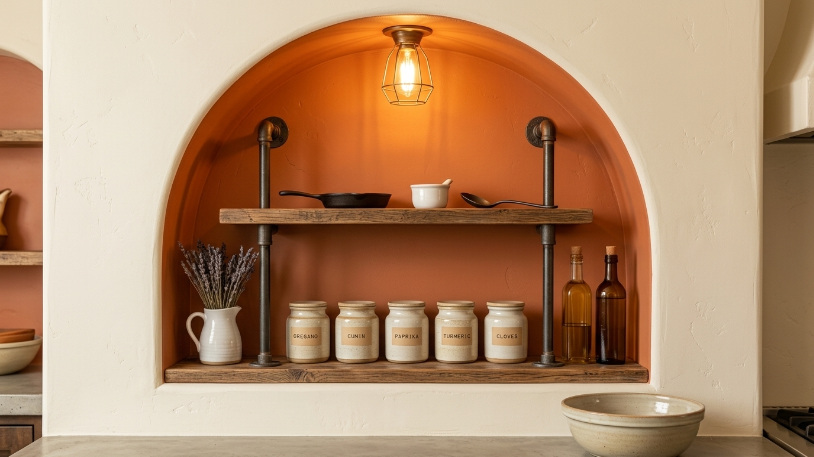
If your kitchen has a deep soffit above the counters, a section of hollow wall, or even a small alcove near the stove or refrigerator, built-in niche shelving is worth serious consideration. A recessed niche sets shelving inside the wall cavity rather than projecting out from the surface. This keeps the kitchen feeling open and clean even while adding a new display area.
Niche shelves work best in these kitchen locations:
- The wall beside or just above the stove
- The short section of wall between two windows
- Beside a refrigerator in a small alcove
- Above a breakfast bar or eating counter
For the interior of the niche, try painting it a warm accent color that differs from the main wall color. A dusty terracotta, a warm deep sage, or even a soft blush transforms the niche from a simple storage recess into a genuine focal point.
Good items for a kitchen niche shelf:
- Matching spice jars arranged as a consistent set
- Small olive oil and vinegar bottles grouped together
- A simple ceramic vase with dried stems or branches
- One or two decorative plates on a small plate stand
The niche interior should be at least four to five inches deep to fit standard kitchen jars comfortably. Six to eight inches gives you more flexibility for pitchers, small bowls, and bottles of varying sizes.
8. A Minimalist Single-Shelf Display
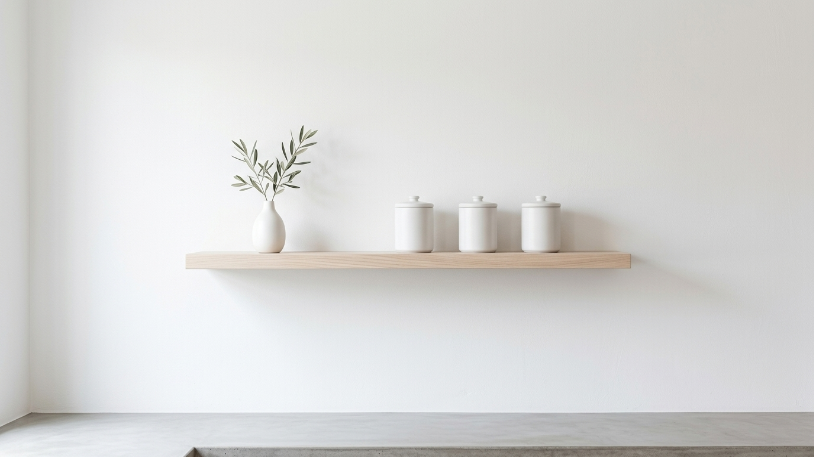
Not every kitchen open shelving idea requires a full wall of layered shelves and a carefully curated gallery of objects. Sometimes one well-chosen shelf does more than three busy ones. This is especially true in compact kitchens or in spaces where the countertops, backsplash tile, and hardware are already doing significant visual work.
A single floating shelf, around 24 to 36 inches wide, placed at eye level on an otherwise bare kitchen wall creates a quiet focal point. Style it with three to five objects, leave the rest of the shelf intentionally empty, and resist the urge to keep adding pieces.
If you are working with a pared-down aesthetic throughout the kitchen, our guide to minimalist kitchen styling covers more ways to keep things looking beautiful without overcrowding the space.
Items that work well on a single focal shelf:
- One large ceramic vase or jug as the anchor piece
- A flat cookbook with a small potted plant resting on top
- Three matching canisters with identical lids in a row
- A wooden tray holding a small oil and vinegar set
For the shelf material, a pale ash or light oak in a natural finish on a crisp warm-white wall gives you all the contrast you need. The empty space around the objects does as much visual work as the objects themselves, which is the whole point of this approach.
9. Glass Shelves for an Airy Feel
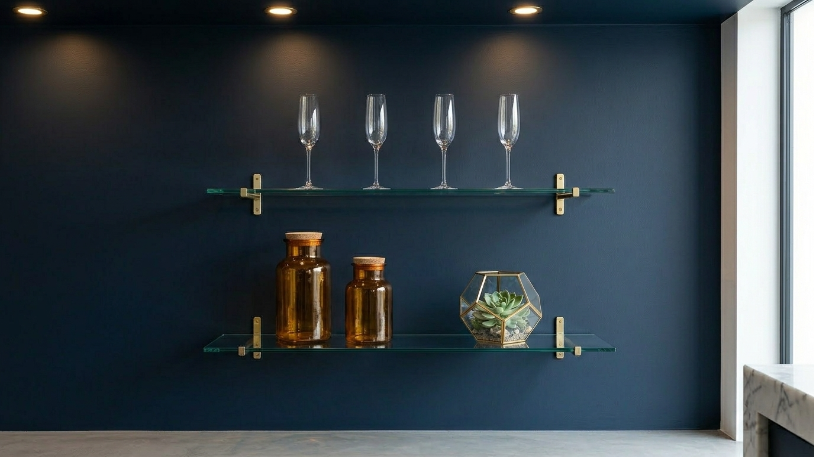
Glass shelves are consistently underused as kitchen open shelving ideas, and that is a real missed opportunity. Tempered glass shelves let light pass completely through, which makes a kitchen feel larger and more open, particularly in narrow, dark, or lower-ceiling spaces where solid wood shelves can add unwanted visual weight.
Slim brass or chrome brackets pair well with glass shelves and keep the look refined. Brass brackets with glass work particularly well in kitchens with warm undertones in the countertops, flooring, or cabinet hardware.
What to display on glass kitchen shelves:
- A row of champagne flutes or wine glasses
- Colored glass bottles or carafes in warm amber or clear tones
- Stacked white ceramic dishes with their clean profile visible
- Small glass terrariums with succulents or preserved moss
- Amber apothecary jars used as dry goods containers
Display choices matter more on glass than on wood shelves. Transparent and translucent objects look especially striking here because of the way light moves through both the shelf and the items at the same time.
One honest note: a glass shelf covered in chunky, mismatched ceramics starts to look like a very expensive lost-and-found. Keep the display intentional and consistent.
For wall color behind glass shelves, a deep navy or a warm charcoal creates a beautiful backdrop. The contrast between the dark wall and the light-passing-through glass is striking without requiring any additional decoration.
10. Open Pantry Shelving
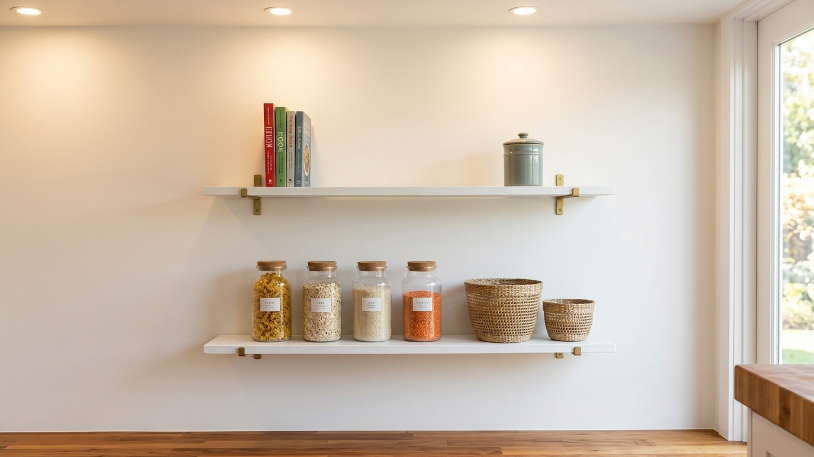
Open pantry shelving takes kitchen open shelving ideas in a fully practical direction. Rather than a curated display of decorative objects, this approach turns a full wall, a dedicated alcove, or a converted closet into a visible working pantry system that makes cooking easier every single day.
The challenge with open pantry shelving is that it must look organized to look good. A shelf covered in mismatched grocery packaging looks chaotic regardless of how nice the shelf itself is. The fix is simple: decant everything into matching containers and keep the system consistent.
A practical open pantry system to follow:
- Decant dry goods into matching clear glass or ceramic jars
- Use uniform labels, or skip labels where contents are visually obvious
- Group items by category: grains, baking, snacks, canned goods, and spices
- Add one or two woven baskets for irregular items or fresh produce
- Reserve bottom shelves for heavier items, eye-level shelves for most-used goods
For the shelf material, painted MDF or sealed pine in a warm off-white like Sherwin-Williams Alabaster SW 7008 gives a clean, bright finish that looks built-in rather than afterthought. The wall behind open pantry shelves can match the shelf color for a seamless built-in feel, or go one shade deeper for a little subtle contrast.
11. Colorful Open Shelves as a Statement
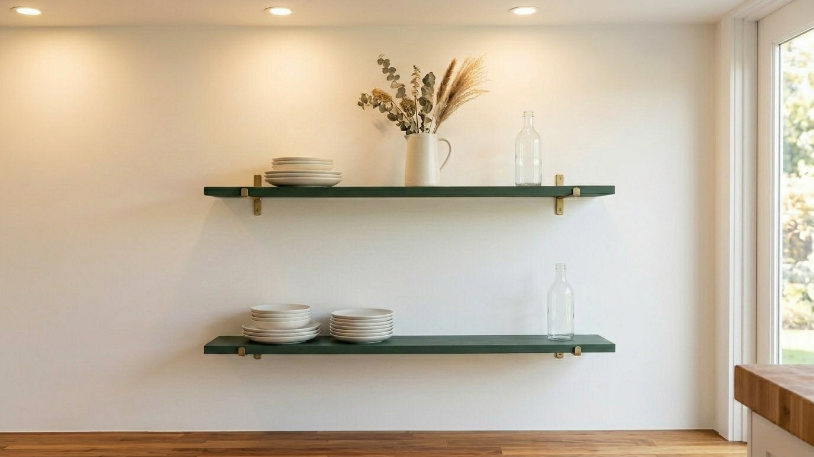
Most kitchen open shelving ideas stay safely neutral, and for good reason. However, painting your shelves in a bold or unexpected color is one of the fastest ways to make a kitchen feel genuinely designed rather than just assembled.
The shelf does not need to make noise. A deep forest green shelf in a cream kitchen looks rich and considered. A dusty terracotta shelf against pale grey walls looks warm and artistic. A muted navy shelf against a soft off-white kitchen looks confident without being aggressive.
Color combinations worth trying on kitchen open shelves:
- Shelves in Benjamin Moore Balsam 567 (deep forest green) against a warm off-white wall
- Shelves in Sherwin-Williams Needlepoint Navy SW 0032 against a soft warm grey wall
- Shelves in a muted terracotta against blonde wood floors and white walls
- Shelves in a dusty blush against deep charcoal lower cabinets
When the shelf color is doing the work, the display should step back. White ceramic dishes, natural wood accessories, and one simple plant or dried botanical arrangement let the shelf color lead the room. Too much color placed on top of a colored shelf creates visual noise rather than visual interest.
Also worth noting: painted shelves are not a permanent decision. Repainting a shelf is far less work than replacing cabinets. Experimenting with color here carries very little risk and often a very large reward.
12. Open Shelving in a Two-Tone Kitchen
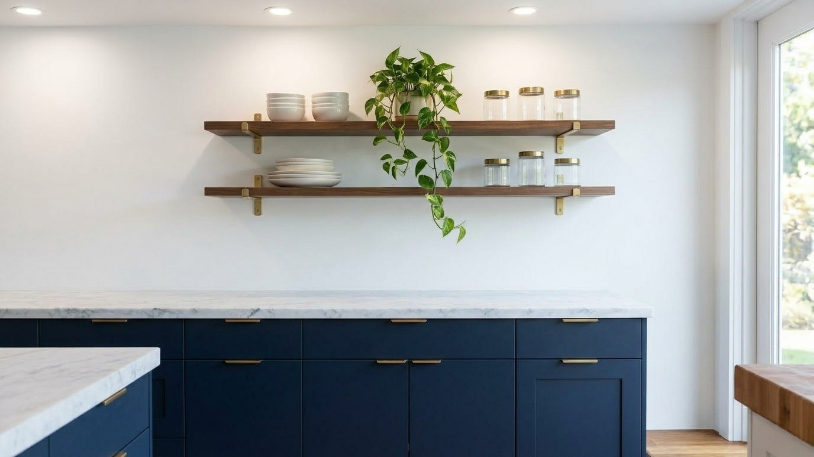
Two-tone kitchens and open shelves work particularly well together. When the lower and upper cabinets are already two different colors, replacing the upper cabinets with open shelves adds a third element that lightens the whole composition and makes the kitchen feel less enclosed.
Open shelves in a two-tone kitchen work best when the shelf material echoes or complements one of the two cabinet colors. For example, warm walnut shelves above deep navy lower cabinets connect both halves of the kitchen through shared warmth in the wood tone. White painted shelves above sage lower cabinets keep the palette soft and botanical without adding a third strong color.
Display ideas for open shelves in a two-tone kitchen:
- Use one dominant display color that ties back to either cabinet tone
- Add natural wood accessories like a cutting board or turned wood bowl to bridge the two paint colors
- Include one living plant to soften the transitions between tones
- Keep the shelf display lighter than the surrounding cabinets to balance the visual weight below
If you are still working through cabinet color pairings for your two-tone kitchen, our post on two-tone kitchen cabinet ideas covers ten specific combinations that also translate well into open shelf styling decisions.
The two-tone kitchen approach is one of the most flexible interpretations of kitchen open shelving ideas because it works with your existing cabinetry rather than requiring a full kitchen overhaul to get the look right.
How to Style Your Kitchen Open Shelving Ideas
Once you have chosen the right shelf and material, the display is where most people stall. The good news is that styling kitchen open shelves follows a few clear principles. Once you understand them, the rest becomes fairly natural.
Start with a rule of three: group items in odd numbers. Three objects on a small section of shelf look balanced and intentional. Four objects on the same section look like they arrived together in a box.
Next, vary the height within each display. A short jar beside a taller bottle beside a flat cookbook creates visual movement. Everything sitting at the same height looks flat, regardless of how nice each individual object is.
Also, consider what you are leaving out just as carefully as what you are putting in. The best-styled kitchen shelves almost always have breathing room, deliberate gaps between groups of objects where the eye can rest. Negative space is not wasted space on a shelf.
Finally, edit what you have after you first style the shelf. Put everything on, then remove one piece. The shelf almost always improves.
Core kitchen shelf styling principles:
- Group items in threes or fives, not twos or fours
- Mix heights: tall, medium, and short within each shelf section
- Use one visual anchor per shelf (a plant, a large bowl, a jug)
- Leave at least 20 percent of each shelf visually empty
- Repeat one element across all shelves for cohesion: a material, a color, or a plant
Final Thoughts
Kitchen open shelves work because they make you feel something when you walk into the room. That is not always easy for a piece of furniture to accomplish.
Whether you go with a single floating shelf in pale ash, a dramatic painted backdrop behind glass shelves, or a full industrial pipe system along an entire wall, the ideas in this post give you enough direction to make a choice that suits both your kitchen and your style.
Start with one shelf. Style it, live with it for a week, and then decide whether you want more. Most people do.