
Because your couch deserves better than a lonely throw pillow in the corner
Your sofa is the centerpiece of your living room. It is usually the biggest piece of furniture in the space, the first thing people see when they walk in, and the place where everyone ends up, whether they were invited or not. Yet somehow, most sofas sit there looking completely ignored, dressed in the same sad pillow they came with from the store. That changes today.
This post walks you through 12 sofa styling ideas that are actually doable, genuinely beautiful, and designed to make your space feel intentional without making your wallet cry. No interior design degree required. Just good taste, a little creativity, and the willingness to move a cushion or two.
1. The Odd Number Pillow Rule
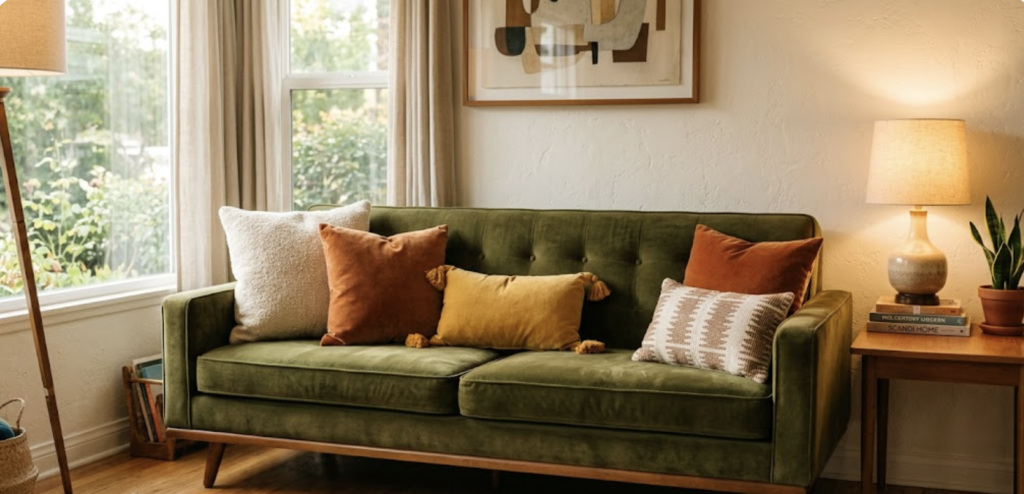
If you have ever stood in front of your sofa holding two matching pillows and thought, “something feels off,” you are not imagining it. Two matching pillows on a sofa often look too formal, too hotel-lobby, too “we just moved in and haven’t made any decisions yet.” The fix is beautifully simple: style in odd numbers.
Three pillows, five pillows, or even seven pillows (if you have a big sectional and a lot of opinions) create a visual rhythm that feels natural to the eye. The brain finds even symmetry a little rigid, but odd arrangements feel relaxed and considered at the same time. The goal is to mix one large pillow, one medium pillow, and one smaller lumbar pillow, all in different but complementary textures and patterns. Think a solid velvet, a textured boucle, and a geometric print. Keep the colors pulled from two or three shades in your room and the whole thing will look like you hired someone to do it.
The best part? You can start with three pillows and work your way up as your confidence grows. Nobody becomes a pillow stylist overnight, and that is perfectly fine.
2. The Layered Throw Blanket
A throw blanket on a sofa is one of those styling tricks that looks effortless but is actually the result of careful placement. Nobody just tosses a blanket and walks away. Well, nobody whose sofa looks good, anyway.
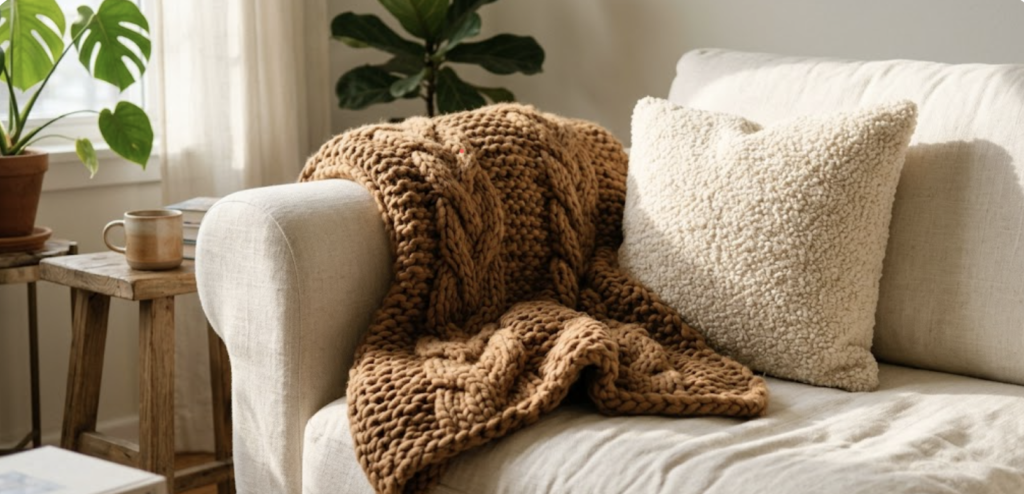
The classic approach is to fold your throw into thirds lengthwise and then drape it over one arm of the sofa, letting it hang slightly onto the seat cushion. For a more relaxed, lived-in look, you can loosely bunch it in one corner or tuck it partially under a cushion so it looks like someone just got up from reading. The key is to avoid folding it into a perfect rectangle and placing it flat on the sofa because that looks like a store display, not a home.
Fabric matters here more than you might think. A chunky knit adds warmth and texture in a way that a thin polyester throw simply cannot. Cashmere blends look luxurious. Woven cotton throws bring a casual, boho energy. Faux fur adds drama. Pick a throw that adds a texture your sofa does not already have, and you will instantly create depth in the space.
3. The Tonal Color Story
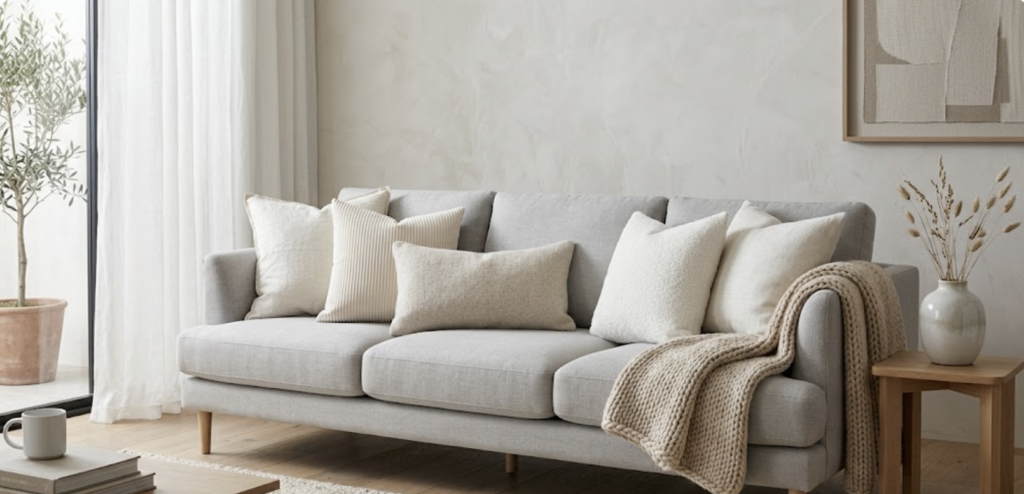
One of the most sophisticated sofa styling ideas is also one of the quietest. A tonal color story means choosing pillows, throws, and accessories in different shades of the same color family. Think cream, ivory, warm white, and oat. Or dusty rose, blush, terracotta, and warm sand. Everything belongs to the same color neighborhood, just different houses on the street.
This approach works because it creates harmony without being boring. When you layer different textures in similar tones, the eye gets interested in the variations of fabric, pattern, and depth rather than trying to process a lot of competing colors. A cream linen pillow next to a cream velvet pillow next to a cream-and-white woven pattern pillow looks incredibly rich and considered even though you are technically working with one color.
This is a particularly great approach if your walls are bold or your rug has a strong pattern. The sofa becomes a calm, beautiful anchor in the room rather than competing with everything else for attention.
4. The Statement Lumbar Pillow
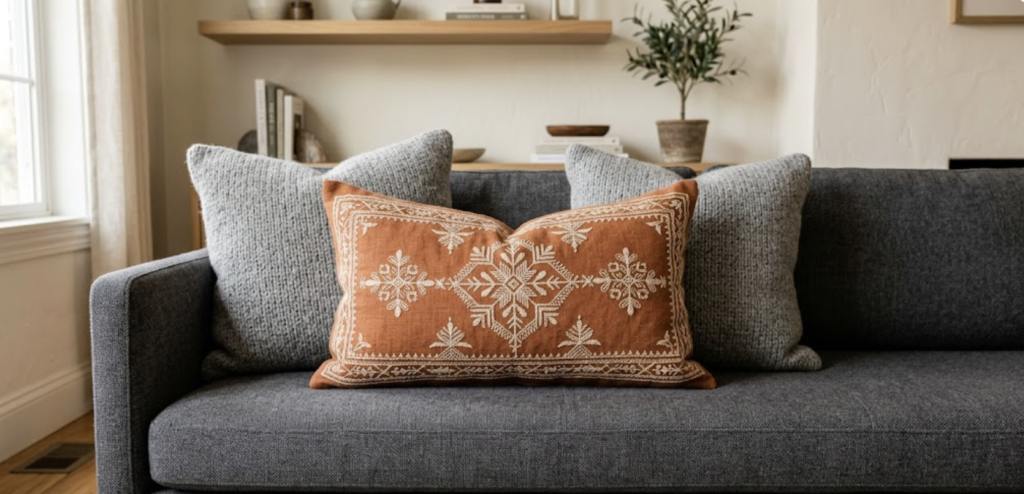
If you only do one thing after reading this post, let it be this: add a lumbar pillow. A lumbar pillow is that long, rectangular pillow placed at the front-center of your sofa, and it does more work per square inch than almost any other styling element in a room.
It adds visual interest at eye level when you walk into the room. It creates a layered look in front of your larger pillows. It gives the sofa a finished, curated feel without adding visual clutter. And because it is smaller than a standard pillow, you can choose something bolder, a bright print, an embroidered design, fringe, beading, or an interesting pattern, without it feeling overwhelming.
A lumbar pillow in a contrasting color to your sofa is always a strong choice. A dark navy sofa with a bright lemon yellow lumbar pillow is electric. A grey sofa with a blush embroidered lumbar is classic. A beige sofa with a bold printed lumbar in deep burgundy and cream is rich and warm. The options are genuinely endless, and the commitment is low because a lumbar pillow costs very little and makes a huge impact.
5. The Art-Leaning Moment
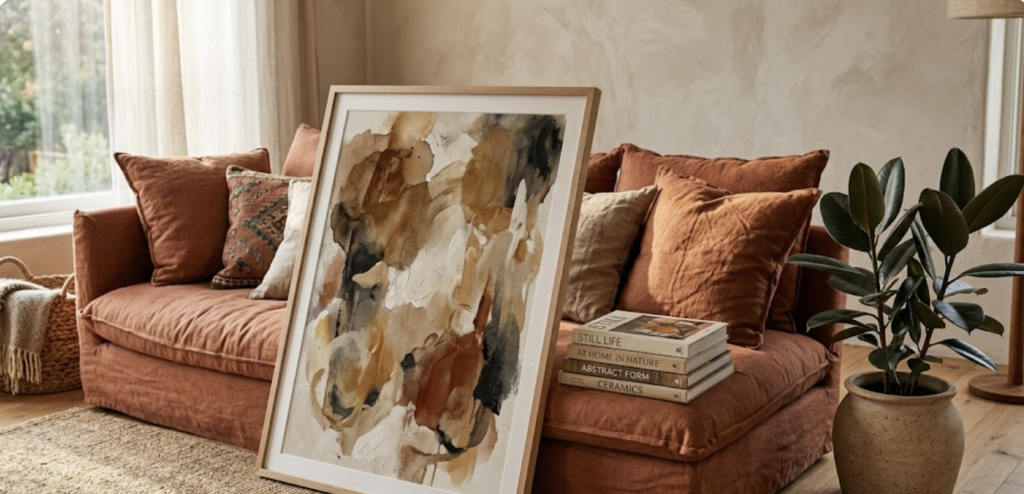
Here is an idea that feels very “I saw this in an expensive apartment in a design magazine and I have been thinking about it ever since.” Lean a piece of art or a framed print directly on your sofa, resting against the back cushions or the sofa arm.
This styling move is easy, free (if you already own the artwork), and surprisingly effective. It adds height to the sofa without requiring you to hang anything on the wall. It creates an artistic, collected feel, like the art just arrived or you are mid-rearrangement, which is a very desirable aesthetic in modern interior design. It also gives you the flexibility to change things up easily, because nothing is nailed down.
The best sizes for this are medium to large prints, roughly 18×24 inches or bigger. Small frames tend to get swallowed by the sofa. The art should have some visual weight, whether through a bold image, a strong frame, or rich colors. A simple black-framed botanical print, a large abstract canvas, a woven wall hanging, or even a beautiful vintage poster all work beautifully resting against a sofa.
6. The Coffee Table Conversation
The sofa does not exist in isolation. How your coffee table is styled directly affects how your sofa looks, because they are always seen together. A beautifully styled sofa with a cluttered or bare coffee table is like wearing a great outfit with mismatched shoes. The shoes ruin the whole thing.
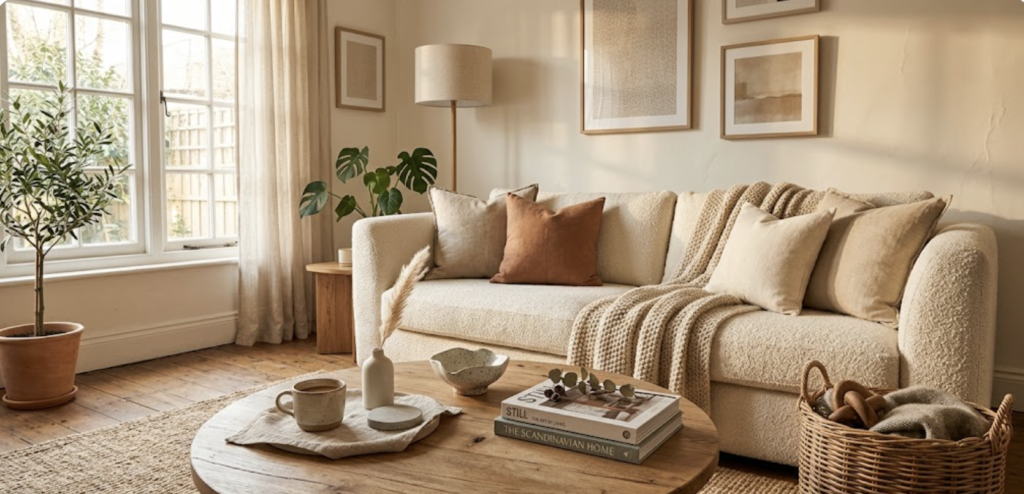
For the coffee table that sits in front of your sofa, the classic styling rule is to group items in threes on a tray: a candle, a small plant, and a decorative object like a bowl or a sculpture. Stack two or three coffee table books off to one side. Keep the center of the table mostly clear so there is breathing room. Add one item at floor height beside the table, like a decorative basket or a small potted plant, to bring the eye down and complete the vignette.
The connection between the sofa and the coffee table is created through color repetition. If your sofa has a rust throw, put a rust candle on the coffee table. If your pillows have green tones, add a small green plant. These small echoes create a sense of a designed, intentional room rather than furniture that was just placed and forgotten.
7. The Contrasting Texture Mix
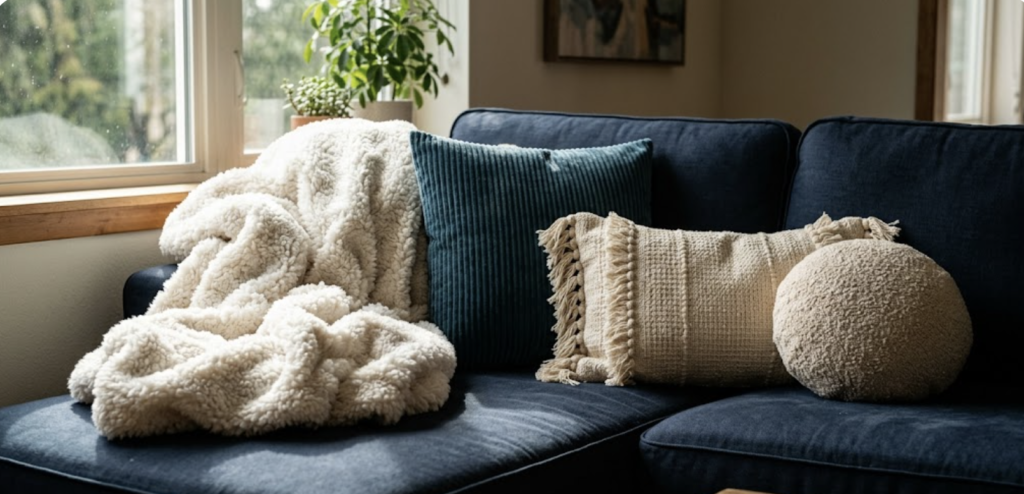
A sofa styled in all the same fabric and texture looks flat, no matter how beautiful the individual pieces are. Texture is what makes a space feel rich and layered, and the sofa is your single best opportunity to get that texture story right.
The goal is to mix at least three clearly different textures in your sofa styling. Think something smooth or sleek, something soft and fluffy, and something woven or structured. A velvet pillow next to a boucle pillow next to a linen throw is a great example. A leather sofa with a chunky knit blanket and a faux sheepskin pillow is another excellent combination. The fabrics do not need to match. They need to contrast, and that contrast is what creates the depth and visual richness you see in professionally styled rooms.
If your sofa itself is already a strong texture, like deep ribbed velvet or a heavily woven fabric, you can dial back some of the accessories and let the sofa speak. But for most sofas in smooth or plain fabrics, piling on the texture through pillows and throws is one of the easiest upgrades you can make.
8. The Plant Placement
Bringing a plant into the sofa area is one of the most underused sofa styling ideas, and it genuinely transforms the space. A plant placed beside, behind, or near the sofa adds life, color, and an organic quality that no throw pillow in the world can replicate. It softens the geometry of the furniture and makes the whole corner of the room feel alive.
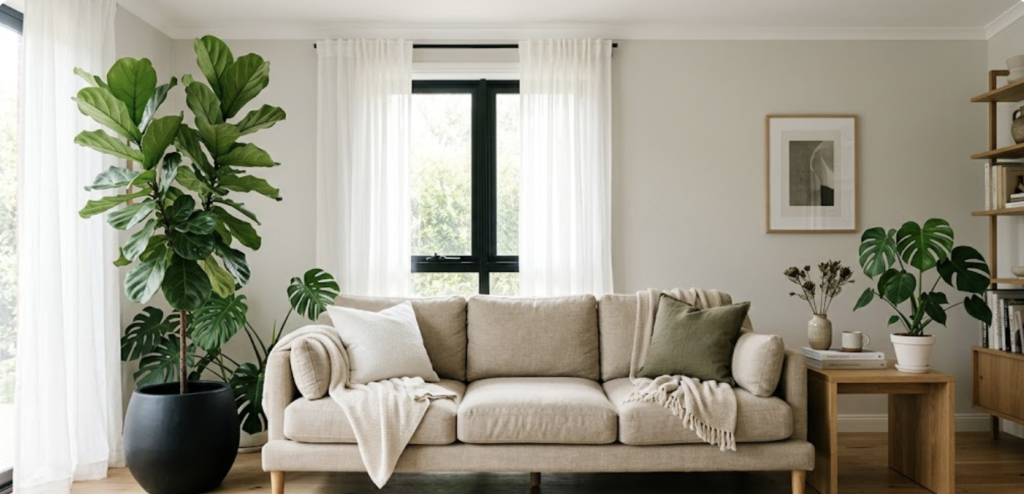
The most effective placements are a tall floor plant beside one end of the sofa, like a fiddle-leaf fig, olive tree, or tall monstera, where it creates height and frames the seating area. Alternatively, a cluster of smaller plants on an end table next to the sofa brings a different kind of lushness. You can even place a trailing plant on a high shelf behind the sofa so the leaves hang down into the composition.
The key is to make sure the plant is healthy, well-proportioned to the sofa, and styled in a pot that fits your room’s aesthetic. A beautiful ceramic pot elevates even the most basic plant. A plastic nursery container sitting on the floor next to your gorgeous sofa is a real shame that can be fixed for the price of a plant pot.
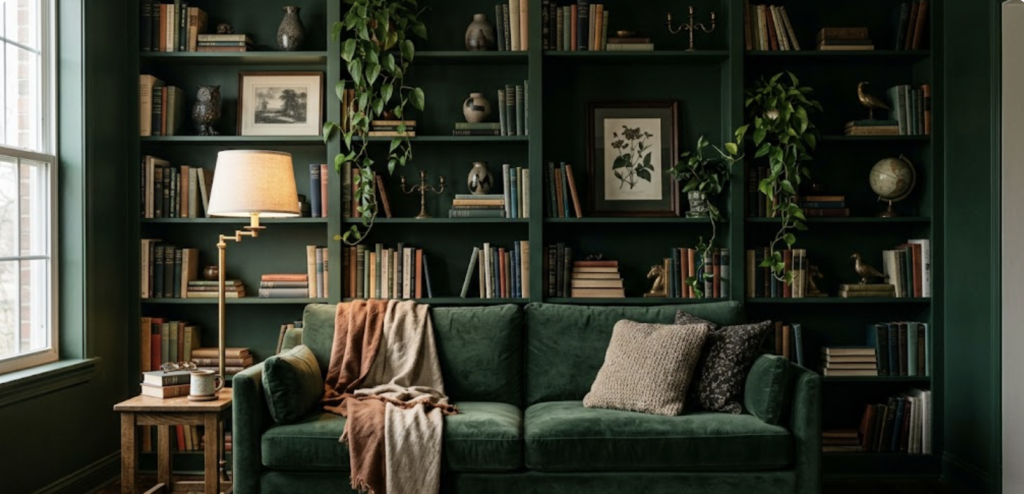
9. The Bookshelf Sofa Backdrop
The wall directly behind your sofa is prime visual real estate and most people either hang one piece of art there or leave it completely bare. Both work, but there is a third option that is increasingly popular in modern interior design: placing a tall bookshelf or open shelving unit directly behind the sofa as a backdrop.
This works particularly well in studio apartments and open-plan living rooms where space is limited and every wall has to work hard. A tall bookshelf styled with books, plants, ceramics, and decorative objects creates a rich, layered backdrop for the sofa that is essentially a piece of art in itself. The sofa sits in front of it like a stage, and the whole composition looks incredibly intentional and personal.
The styling of the shelves matters. Alternate books placed vertically and horizontally. Group objects in varying heights. Use plants to add greenery at different levels. Add a few framed photos or prints leaning against the books. Keep it busy enough to be interesting but edited enough that it does not look chaotic. Think of it as a curated display, not storage.
10. The Warm Lighting Effect
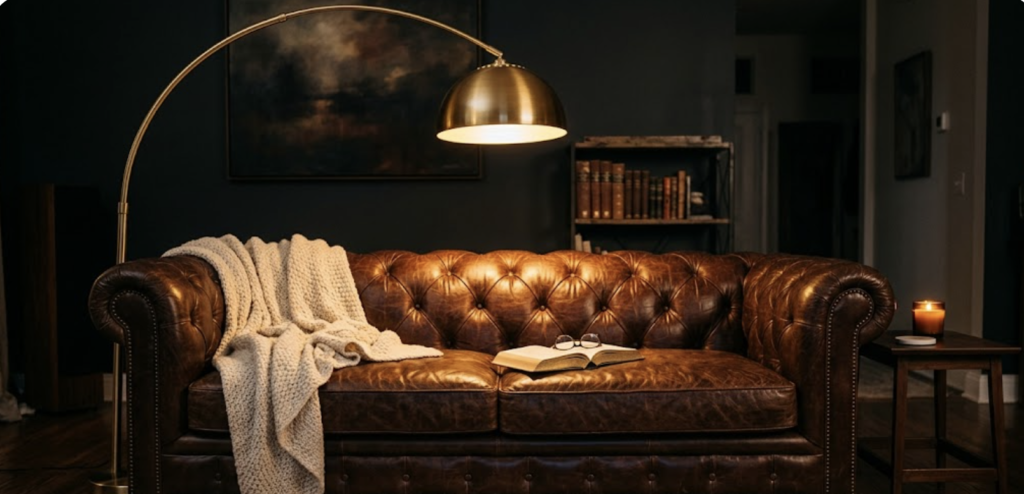
Lighting is the most underrated part of sofa styling, and almost nobody talks about it. The right light can make your sofa look expensive, cozy, and beautifully composed. The wrong light, or no deliberate light at all, makes even the best-styled sofa look like it is sitting in a waiting room.
The goal is to add a warm light source near the sofa, either beside it, behind it, or above it. A floor lamp placed beside one end of the sofa creates a beautiful reading nook feeling and casts warm directional light over the cushions. A table lamp on the side table beside the sofa creates a similar effect at a lower level. A tall arc lamp that curves over the sofa from behind creates a dramatic, design-forward look that is very popular right now.
The bulb matters too. Warm white bulbs in the 2700K to 3000K range create the golden, cozy light you see in design photography. Cool or bright white bulbs make a space look clinical and harsh. Swapping your bulbs is one of the cheapest changes you can make that will instantly affect how your sofa looks in photographs and in real life.
11. The Rug Anchor
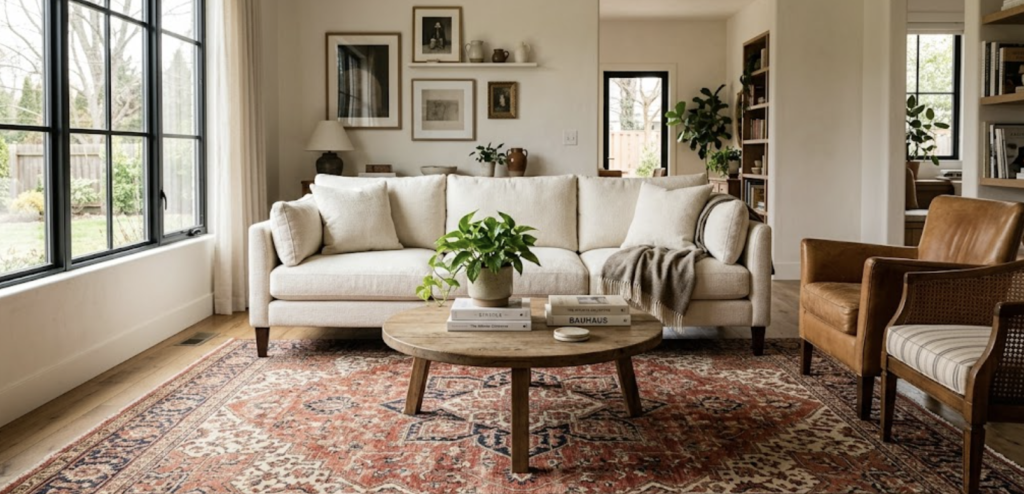
A sofa without a rug underneath it can look like it is floating in the room, disconnected from the rest of the space. A rug anchors the sofa visually, creates a defined seating zone, and adds texture and color at floor level that completes the whole composition from the ground up.
The most common mistake people make with rugs is choosing one that is too small. A rug that only fits under the coffee table with the sofa legs completely off it looks like a bath mat trying to do the work of a living room rug. The general rule is to choose a rug large enough that at least the front two legs of the sofa can sit on it. This creates a visual connection between the sofa and the rug that anchors both pieces in the space.
For sofa styling specifically, the rug also gives you another opportunity to bring in color, pattern, and texture. A plain sofa on a boldly patterned rug is a beautiful, classic combination. A textured sofa on a solid, richly colored rug is equally effective. The two pieces do not need to match, but they need to be in conversation with each other. Complementary colors, shared tones, or the same general warmth or coolness of palette will make the combination work.
12. The Curated Corner
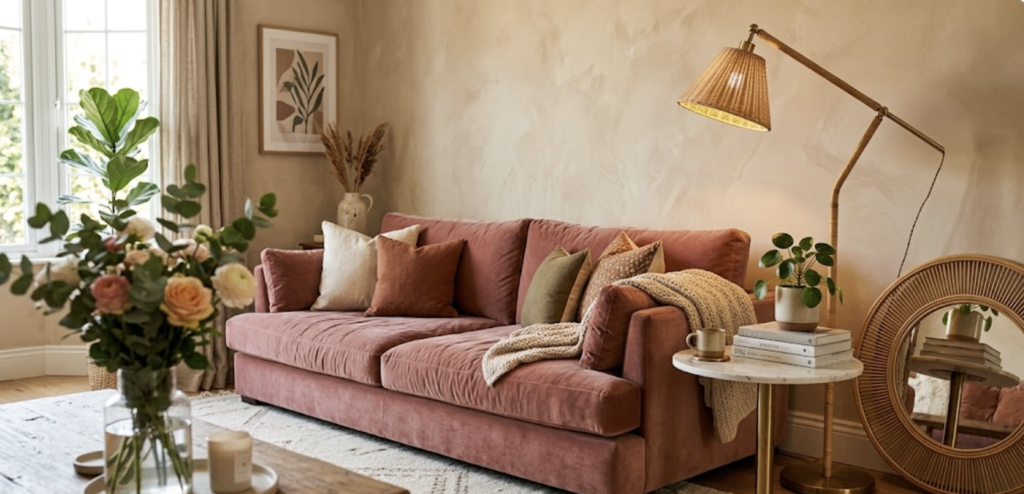
The final idea is less about one specific accessory and more about thinking of the sofa as the center of a styled corner rather than just a single piece of furniture. A curated sofa corner brings together everything: the sofa, a side table, a floor lamp, a plant, a small piece of art or a mirror, and the rug below. All of it works together as one intentional vignette.
This approach turns the sofa area into a destination in the room. When someone walks into your living room, their eye has somewhere to land and settle. It feels designed, considered, and genuinely personal. The beauty of the curated corner is that you build it over time, adding one piece, then adjusting, then adding another. You do not need to buy everything at once. You just need to see the sofa as the beginning of a composition rather than the end of one.
Start with what you have. Put your sofa in the best spot in the room, ideally against a wall or in front of one that has something behind it. Add a lamp on one side. Put a side table with one or two things on it. Lay down a rug. Style the pillows and throw. Then step back and see what the corner needs next. That process, done slowly and with intention, is how beautiful living rooms actually get made.
The truth is, your sofa is already doing most of the work. It is big, it is solid, and it is in the middle of your room. All it needs from you is a little attention, a few good pillows, and maybe a plant that you remember to water. Any one of these 12 sofa styling ideas can completely change how your living room feels, and most of them cost next to nothing to try. Start with one change. See how it feels. Then come back and do the next one.
Your living room is not a furniture showroom. It is the place where you actually live. Make the sofa look like it belongs to someone with great taste, because you clearly do.
Got a sofa that is already stunning? Or one that needs a little help? Either way, these ideas will work. Drop your favorite in the comments below.