
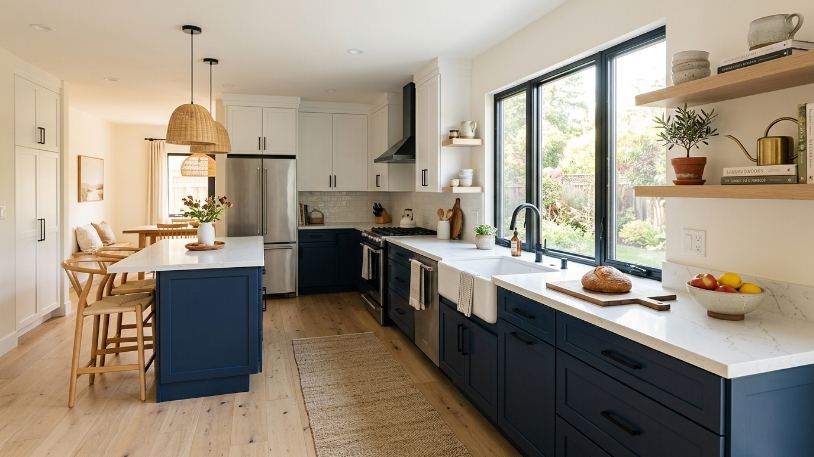
Two-tone kitchen cabinet ideas have moved from a niche design trend to a mainstream choice that works in almost every kitchen style and size. Mixing colors on your upper and lower cabinets adds contrast, depth, and a personality that a single flat color rarely achieves on its own. The right pairing can make your countertops pop, your hardware stand out, and your kitchen look like someone actually planned it. If you have been searching for fresh kitchen cabinet ideas, this is where that search ends.
The most common approach pairs a darker color on the lower cabinets with a lighter one on the uppers. This mirrors how interior designers have long thought about room color: heavier tones anchor the base of a space, and lighter ones keep the ceiling feeling open. Still, a few of the combinations on this list take a different direction, including one that reserves the bold color for the island entirely.
Each idea below includes specific color notes, hardware suggestions, and what to watch out for when making it work in your kitchen. A full comparison table is also included so you can quickly match each two-tone kitchen cabinet idea to your kitchen’s size, light conditions, and flooring. Let’s get into it.
Why Two-Tone Kitchen Cabinet Ideas Work So Well
Single-color cabinets are a safe and practical choice. However, they can make a kitchen feel flat, especially in rooms without much architectural character of their own. Two-tone kitchen cabinet ideas solve that by creating a visual anchor, usually the lower cabinets, that grounds the design while lighter uppers keep the space feeling open and airy above the countertop line.
This is not a new principle. Interior designers have used heavier tones at the base and lighter tones rising toward the ceiling for decades. Two-tone cabinets simply extend that logic to the cabinetry itself, adding a layer of intentionality that most kitchens genuinely benefit from.
There is also a practical case for this approach. If you love a bold color but do not want it covering every surface in your kitchen, a two-tone setup lets you introduce it in a controlled way. You get the visual impact without the full commitment. Plus, if you want to update the look in a few years, repainting just the lower cabinets is a far smaller project than redoing the entire room.
| Hardware Finish | Works Best With | Mood |
| Matte Black | Dark or earth-tone cabinets | Modern, graphic, bold |
| Brushed Brass | Navy, green, white, walnut | Warm, classic, rich |
| Brushed Nickel | Gray, greige, dusty blue | Transitional, clean |
| Polished Chrome | White, cobalt, light neutrals | Crisp, contemporary |
| Aged Brass | Terracotta, cream, forest green | Organic, warm, vintage |
1. Navy Blue Lowers + Bright White Uppers
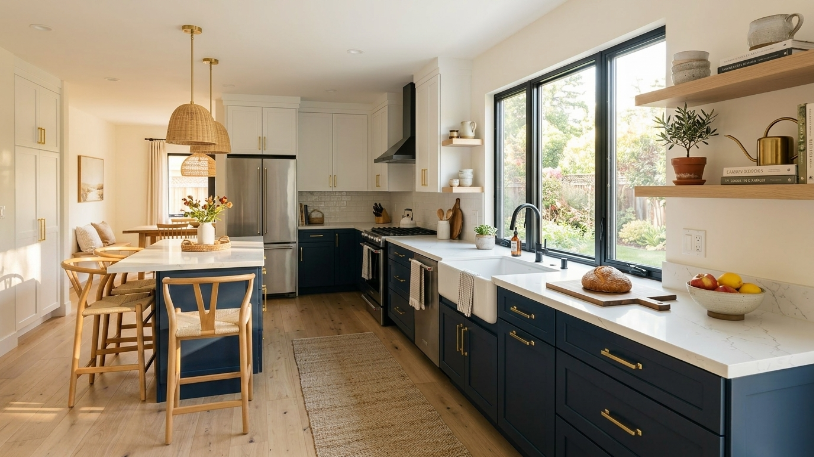
This is one of the most recognized two-tone kitchen cabinet ideas, and it earns that recognition consistently. Navy blue is bold and confident without being aggressive. White keeps the upper half of the kitchen open and airy, so the space never feels heavy even with a dark base. Together, these two colors create a kitchen that feels balanced, deliberate, and genuinely sharp.
Navy is also a versatile base. It works in coastal kitchens, farmhouse layouts, and modern designs without needing much adjustment. Countertop options are wide open; white quartz, warm marble, butcher block, and light gray stone all pair well. For color direction, Sherwin-Williams’ color resource includes navy shades like Naval SW 6244 that are popular choices for lower kitchen cabinets.
Hardware is where this pairing gets personal. Brass or gold pulls give the kitchen a warmer, more classic feel. Chrome or polished nickel keeps things cooler and more contemporary. Both work well with navy and white; the choice comes down to the overall tone you want for the space.
What works well with this pairing:
- Brushed brass or polished brass pulls and knobs
- White subway tile or light marble backsplash
- Quartz countertops in white or pale gray
- Light wood or painted white floors
This combination also holds up well in smaller kitchens. The white uppers preserve a sense of openness even when the lowers are dark. It is one of the most reliable kitchen cabinet ideas on this list, and that reliability is a feature, not a limitation.
2. Matte Black Lowers + Sage Green Uppers
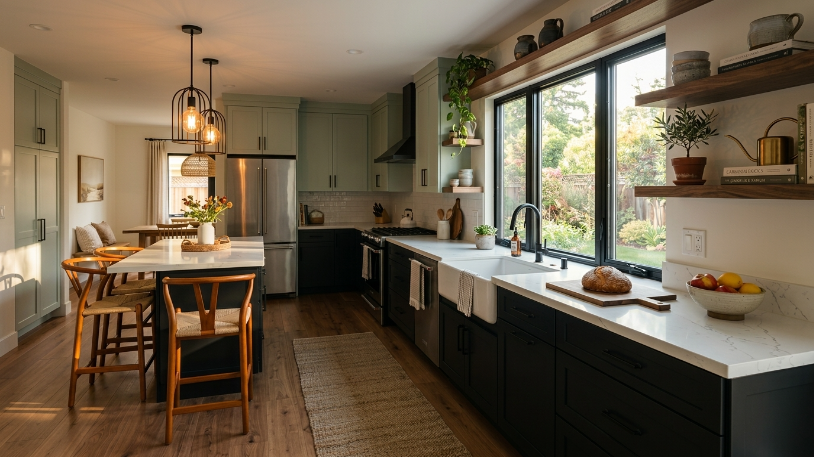
Matte black lower cabinets give a kitchen a grounded, anchored feel that is hard to replicate with another color. Sage green uppers soften that intensity and bring in an earthy, organic quality that feels fresh without being trend-dependent. These two colors sit far apart on the palette, but they balance each other in a way that feels considered rather than forced.
Sage green lands in a comfortable middle ground between neutral and color. In low or indirect light, it reads almost gray. In direct sunlight, its green tones come forward clearly. That flexibility makes it easier to live with than a fully saturated green, since it shifts with the light rather than staying static throughout the day. Also, sage pairs well with a wide range of countertop materials, from light quartz to warm-toned stone to butcher block.
This combination works best in kitchens with medium to dark wood floors. The warmth in the flooring keeps the overall palette from reading too cool or too industrial. Go with matte finishes on both cabinet colors for a cohesive modern result. Adding open wood floating shelves above the sage green uppers is a strong finishing move; the natural material adds warmth and ties the earthy palette together without introducing a third paint color.
Hardware pick: Matte black across all fixtures. It connects both cabinet tones and keeps the palette unified from top to bottom.
3. Warm Greige Lowers + Crisp White Uppers
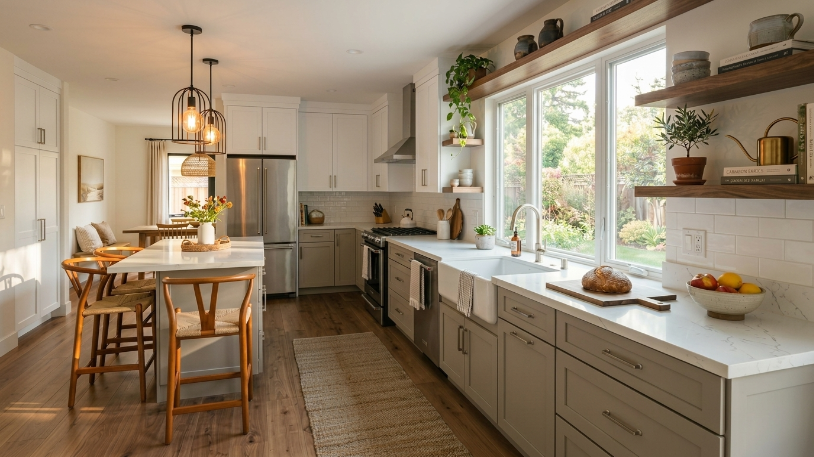
Not every kitchen needs a dramatic color moment. This pairing is for the person who wants a two-tone look without the visual noise. Greige, a blend of gray and beige, is one of the most livable and practical neutrals in kitchen design. Warm greige on the lowers gives the kitchen a grounded, settled feel without going dark enough to close in the space.
White uppers keep the kitchen feeling open, which matters especially in rooms with limited windows or lower ceilings. The transition between the two colors is subtle enough that the kitchen still reads as calm and cohesive rather than divided. Benjamin Moore’s Revere Pewter HC-172 sits comfortably in the warm greige family and is a widely used starting point for this lower cabinet color. However, pulling actual countertop and flooring samples before committing to a paint shade will always give you a more accurate read than a digital swatch on a screen.
This is also one of the most adaptable kitchen cabinet ideas on this list. It suits small kitchens, open-plan homes where the kitchen needs to blend into a neutral living space, and situations where you want something approachable rather than loud.
Best for:
- Kitchens with limited natural light
- Smaller kitchens where preserving a sense of space is a priority
- Open-plan homes that flow into neutral living or dining areas
- Anyone who wants a flexible palette that stays easy to update over time
Pair this combination with brushed nickel or satin brass hardware. Both complement the warm undertone in the greige without clashing or competing.
4. Forest Green Lowers + Natural Wood Uppers
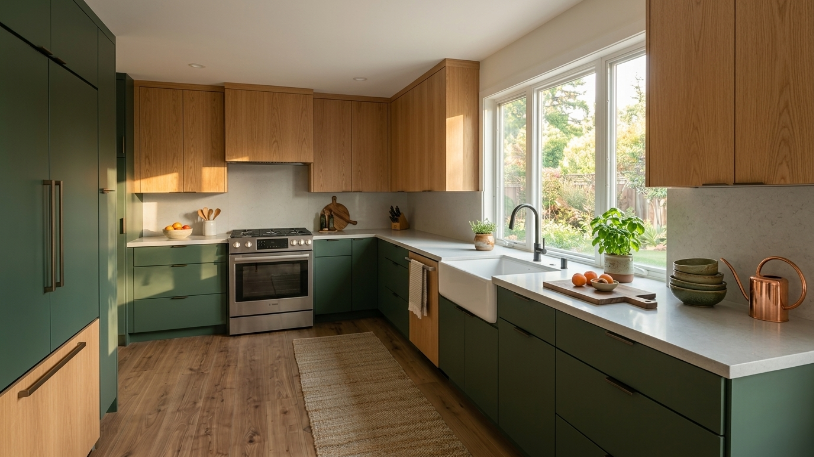
This combination leans into biophilic design, which is the interior design approach of bringing natural materials and references into the home. Forest green on the lower cabinets gives the kitchen a rich, planted quality. Natural wood uppers provide texture and warmth without adding a second paint color to the mix.
Wood grain does work that paint cannot. It adds visual texture, subtle tonal variation, and a warmth that synthetic finishes do not replicate. Also, choosing a natural wood upper means your uppers already have built-in personality, which takes some of the decision-making pressure off.
Medium to warm wood tones are the most reliable match for deep forest green. Maple, oak, and walnut are all strong options. Very blond or overly pale wood can look washed out next to the richness of the green, so lean toward tones with warmth in them. The countertop should bridge both materials; warm white stone, light gray stone, and honed marble all do this well. Keep the cabinet door style simple since flat-front or classic shaker profiles let the materials lead without competing with hardware or decorative door details.
And just to say it plainly: loving green and wood is one of the more reliable design instincts you can have. Some combinations are popular precisely because they work.
5. Charcoal Gray Lowers + Dusty Blue Uppers
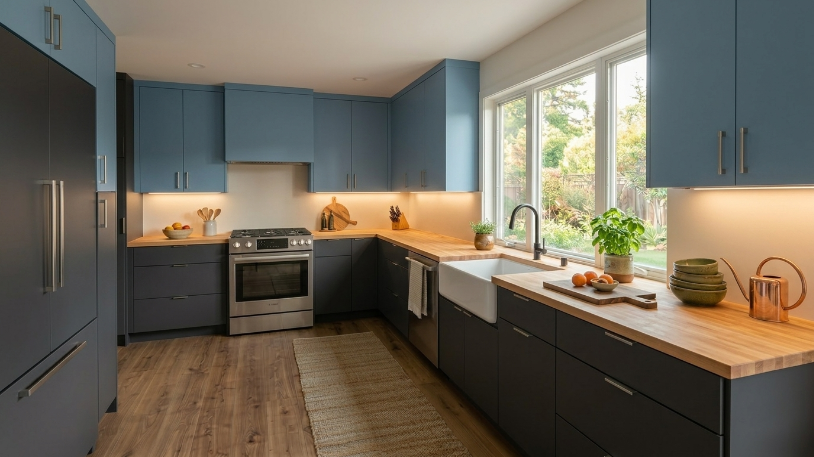
Gray and blue are close neighbors on the color spectrum, which makes this pairing easier to pull off than many high-contrast combinations. Charcoal gray lowers provide a dark, grounded base without going all the way to black. Dusty blue uppers add softness and a quiet personality that keeps the kitchen from tipping into purely industrial territory.
This is a particularly strong choice for contemporary and transitional kitchens. It reads well alongside stainless steel appliances and matte black fixtures. Since both colors sit in the cool tone family, balance the palette with a warm countertop surface. Butcher block, warm-toned quartz, or a stone with gold or amber veining all do the job well here.
Also, this combination photographs well, which is worth mentioning. Kitchens are among the most-documented rooms in any home, and cool tones read cleanly on screen and in print. In the age of sharing home photos, a well-composed palette like this one pays off beyond the room itself.
Hardware suggestions for this pairing:
- Brushed nickel keeps the cool palette polished and clean
- Gunmetal reads more modern and adds visual depth
- Warm brass is best avoided here; it tends to clash with the cool undertones
How to Pick the Right Kitchen Cabinet Ideas for Your Space
Before committing to any of these pairings, consider the variables specific to your kitchen: natural light levels, square footage, existing flooring, and countertop material. These factors shape how any color reads once it is actually on your cabinets. A color that looks bold and commanding in a large, well-lit kitchen can feel heavy and closed in a smaller, darker one.
The table below maps each two-tone kitchen cabinet idea in this post to the kitchen size and light conditions it suits best, along with hardware recommendations to help you finish the look.
| Lower Color | Upper Color | Kitchen Size | Light Level | Best Hardware |
| Navy Blue | Bright White | Medium to large | Any | Brass or chrome |
| Matte Black | Sage Green | Medium | Good natural light | Matte black |
| Warm Greige | Crisp White | Small to medium | Low to medium | Brushed nickel |
| Forest Green | Natural Wood | Any | Good natural light | Simple black |
| Charcoal Gray | Dusty Blue | Medium to large | Any | Gunmetal or nickel |
| Terracotta | Cream | Small to medium | Warm or south-facing | Aged brass |
| Warm White | Cobalt Blue Island | Any | Any | Polished chrome |
| Deep Burgundy | Pale Blush | Large | Good natural light | Gold |
| Matte Black | Warm Wood | Any | Good natural light | Matte black |
| Walnut | Bright White | Any | Any | Brass or matte black |
Also, cabinet finish plays a role that color alone cannot cover. Matte finishes feel modern and tend to hide fingerprints well. Satin and semi-gloss finishes clean up more easily and suit more traditional kitchen styles. Decide your finish before finalizing a color, since the same shade reads differently depending on how much it reflects the light.
6. Terracotta Lowers + Cream Uppers
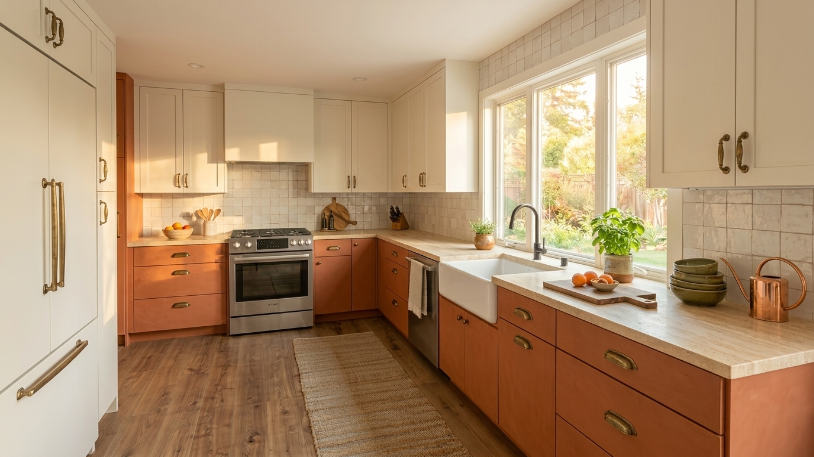
Terracotta has made a genuine comeback in home interiors, and lower kitchen cabinets are one of the best places to use it. Paired with cream uppers, it creates a warm, Mediterranean-influenced kitchen that feels full of character and easy to spend time in. The result looks collected rather than over-designed, which is one of the better outcomes you can aim for in any kitchen.
This combination suits kitchens with warm-toned floors. Terra cotta tile, brick, and warm wood all work well as a base. It also reads strongly when the backsplash features handmade tile or zellige, since the uneven glaze and irregular surface add the kind of texture that an earthy palette calls for.
Aged brass or unlacquered brass is the natural hardware choice here. It reinforces the warm, lived-in quality of the palette without tipping into overdone territory. Avoid chrome or polished nickel on this combination; cool-toned metal tends to flatten the warmth and works against what makes the pairing work in the first place.
Pair this combination with:
- Travertine or warm limestone countertops
- Handmade or zellige tile backsplash in warm white or off-white
- Aged brass or unlacquered brass hardware throughout
- Herbs or leafy plants on the counter for a punch of green contrast
7. Warm White Cabinets + Cobalt Blue Island
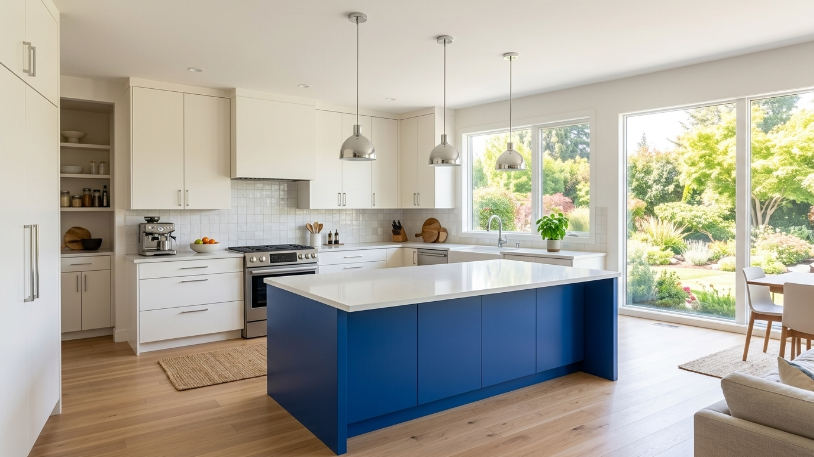
This combination breaks the standard upper-versus-lower formula entirely. Instead of splitting cabinet colors by height, this pairing keeps the perimeter cabinets in warm white and reserves the bold color for the kitchen island alone. The island becomes a true focal point in the room, less like another cabinet run and more like a piece of furniture that anchors the space.
Cobalt blue sits between navy and electric blue. It is saturated enough to hold attention without reading as loud or difficult to live with. The key is keeping everything around it simple. Warm white perimeter cabinets, a light countertop on the island surface, and minimal competing colors let the cobalt carry the room without needing help from anywhere else.
This is one of the smartest kitchen cabinet ideas for homeowners who want high visual impact without committing a strong color to every run of cabinetry. It is also one of the more flexible choices on this list. If you ever decide the cobalt feels like too much, you are only repainting one piece of furniture and not an entire kitchen.
This works best when:
- The island is large enough to serve as a clear visual centerpiece
- The kitchen is open-plan with sight lines from other rooms
- Perimeter countertop materials stay light and consistent
- You want a bold look that does not visually close in the space
8. Deep Burgundy Lowers + Pale Blush Uppers
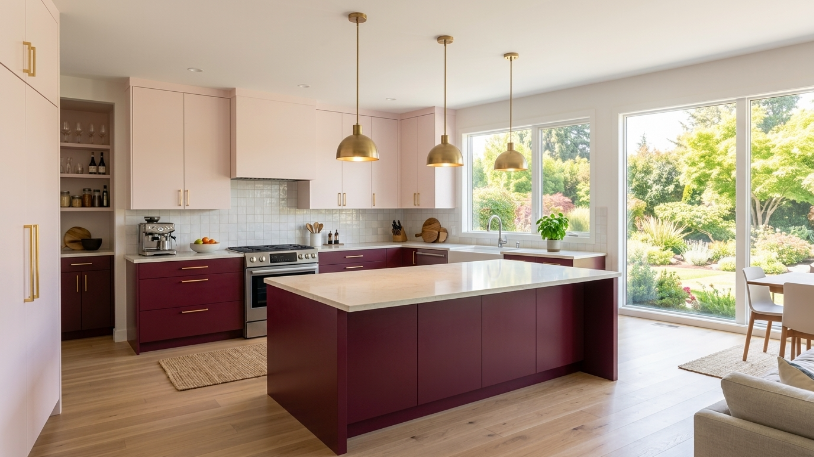
This is the most unexpected pairing on the list, and likely the one most likely to earn a genuine compliment from anyone who follows interior design closely. Deep burgundy, sometimes called plum or wine red, is a rich and moody color. However, placed on the lower cabinets with pale blush above, it reads as sophisticated rather than heavy or dramatic.
Pale blush keeps the kitchen from feeling closed in. The warmth in blush complements the red undertones in burgundy, so the two colors feel related and intentional even though they sit at opposite ends of the pink-red family. This pairing works on the principle of undertone harmony rather than color proximity, which is why it tends to surprise people who see it for the first time.
Gold or warm brass hardware is the right call here. It reinforces the richness of the palette and ties both tones together. Avoid chrome on this combination; cool-toned metal competes with the warmth and tends to read as an afterthought against these colors.
Also, good natural light is important with this particular pairing. In a poorly lit kitchen, deep burgundy can feel heavy and closing. In a well-lit space, it reads as confident and genuinely distinctive. Plan for strong overhead lighting and task lighting to make the most of what this palette offers.
9. Matte Black Lowers + Warm Wood Uppers
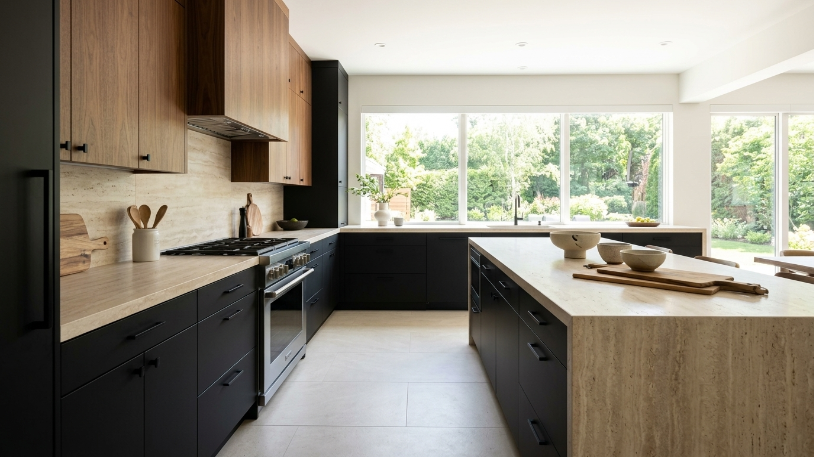
Matte black lower cabinets paired with warm wood uppers look like they belong in a high-end kitchen showroom, and the combination is more approachable than it might initially seem. The black grounds the space with confidence. The wood brings in natural texture and warmth that keeps the kitchen from feeling cold, stark, or purely industrial.
Lighter floors work best with this pairing. Dark flooring combined with dark lower cabinets can make the lower half of the kitchen feel too heavy and unbalanced. A pale tile, soft stone, or light wood floor provides contrast at the base and helps the overall visual weight feel right.
The wood tone in the upper cabinets matters too. Medium to warm tones are the most reliable: walnut, oak, and maple are all solid options. Very blond or pale wood can look thin next to the visual weight of the matte black. Keeping the countertop light is also essential; a pale stone or white quartz at eye level prevents the combination from tipping into visual overload.
What to keep in mind:
- Natural light is key; matte black amplifies a moody atmosphere in dark kitchens
- Upper wood tone should be warm and medium, not pale or gray-washed
- Light countertops are essential to balance the visual weight below
- Simple hardware shapes read best; ornate pulls tend to compete with the materials
10. Walnut Lowers + Bright White Uppers
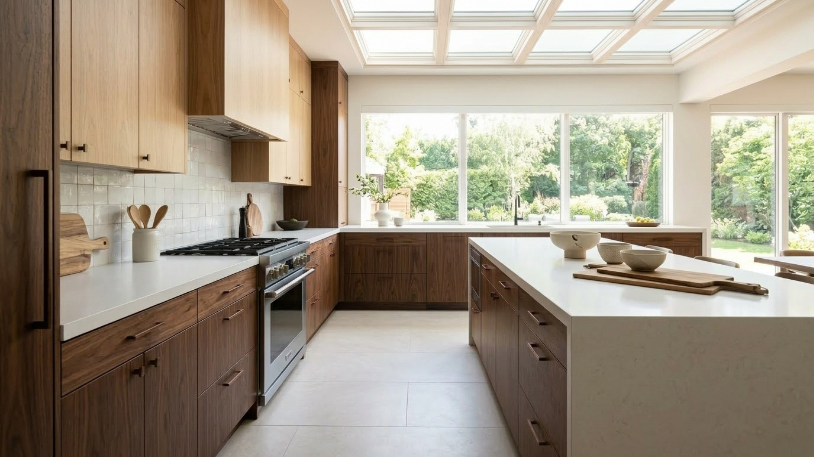
Rich dark walnut as a cabinet material has become one of the most sought-after kitchen cabinet ideas in recent years. It adds grain, depth, and warmth that a painted surface simply cannot replicate. Paired with bright white uppers, walnut lower cabinets ground the kitchen beautifully while the white keeps the upper zone open, clean, and light.
This is also one of the most adaptable pairings on this list. It works in modern kitchens, Scandinavian-influenced spaces, transitional designs, and contemporary farmhouse layouts. The natural grain variation in walnut means no two kitchens will look exactly the same even with identical cabinet profiles, which is a genuine feature rather than an inconsistency.
Countertop options are flexible here. White quartz, warm-toned marble, light gray stone, and light concrete all bridge the walnut and white well. The consistent rule is keeping the countertop in the lighter range so it connects the darker lower material to the white above without creating a visual gap.
Hardware should stay simple and deliberate. Matte black gives the kitchen a clean, modern edge. Brushed brass adds warmth and pairs naturally with the tone of the walnut. Both work well; just choose one and commit to it throughout the kitchen for a consistent result.
This combination is a strong entry point for anyone searching for two-tone kitchen cabinet ideas that feel polished and considered without tipping into overdone or trend-driven territory.
Final Thoughts
Two-tone kitchen cabinet ideas give you more creative room than a single-color approach ever could. Whether you go subtle with greige and white or go bold with burgundy and blush, the right pairing can make your kitchen feel considered, distinctive, and genuinely enjoyable to be in every day.
Start by choosing one color you truly love, then find its best complement using the comparison table in this post. Also keep in mind that finish matters as much as hue; matte finishes feel modern and handle fingerprints well, while satin or semi-gloss finishes clean up more easily and suit slightly more traditional kitchen styles.
Your kitchen is one of the most-used rooms in your home, and it deserves a look that actually makes you want to be in it. Pick a pairing that excites you, trust the contrast, and know that two colors are almost always better than one. Go make something worth walking into.