
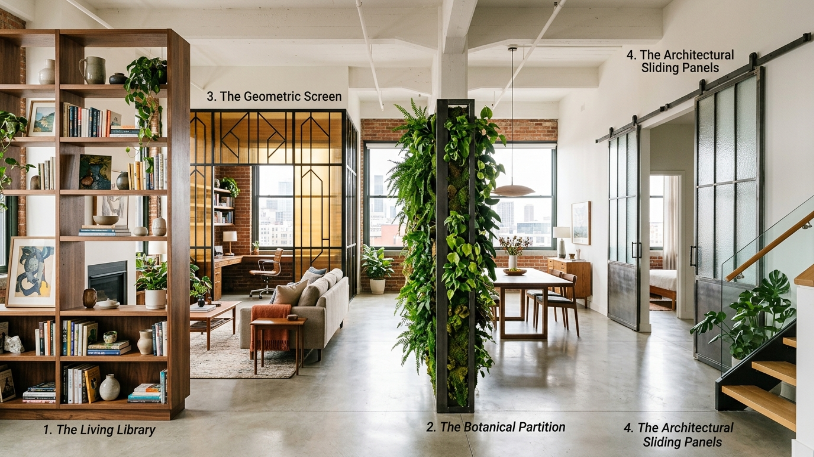
Open plan living looks stunning in photos. In real life, though, you might find yourself eating dinner with the TV blaring from the sofa, or trying to focus on a call while the kitchen smells incredible and your concentration disappears. Room divider ideas are the practical fix for this exact problem, and the best part is that none of them require a single brick.
A good divider does two things at once. It creates visual separation between zones, and it adds a layer of style to your space at the same time. According to the American Society of Interior Designers (ASID), how a space is zoned directly shapes how people experience it every day. So the right room divider is not just decoration; it is good design.
Some of the ideas below are lightweight and perfect for renters. Others are more substantial and feel like real architecture. All 14 of them are here for inspiration, not building instructions. Browse through and take note of the ones that make your open plan start to make more sense.
14 Room Divider Ideas for Every Open Plan Style
1. Bookcase Dividers
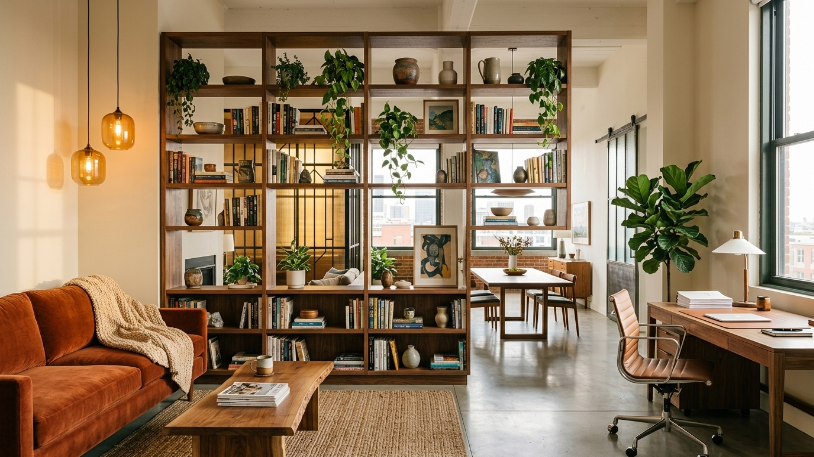
A floor-to-ceiling bookcase is one of the most functional room divider ideas you can bring into an open plan. It splits the space clearly while giving you storage on both sides, so nothing goes to waste. If you choose an open-back design, light still filters through the shelves and the room does not feel cut in half.
For style, warm wood tones work beautifully here. Think honey oak, walnut, or a painted finish in a soft warm white like Sherwin-Williams Alabaster. The shelves also give you a chance to display plants, books, and decorative objects that suit each zone independently.
- Choose open-back shelves for a lighter, more connected feel
- Style both sides so the divider looks great from every angle
- Add a warm-toned woven basket or two at the base for extra texture
This option works especially well between a living room and a home office. Plus, it does a surprisingly good job of absorbing some ambient sound between zones. For narrow rooms, a half-height bookcase at around 48 inches is a softer alternative that keeps the overhead space open.
2. Curtain Room Dividers
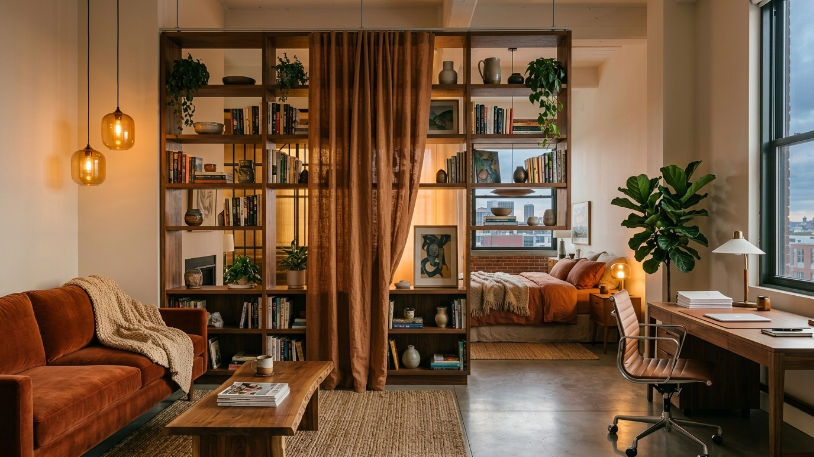
Curtains are the most flexible room divider idea on this entire list. You install a ceiling-mounted track or a simple curtain rod and suddenly you have a soft textile wall that opens or closes depending on the moment. Renters love them because installation is minimal and the look changes with a fabric swap.
For color, warm tones work best. A dusty terracotta, warm oat linen, or deep rust curtain adds warmth and natural texture to the division. The fabric also softens acoustics between zones, which is a quiet bonus most people do not think about until they have it.
- Use floor-to-ceiling lengths for the most dramatic, architectural effect
- Choose a ceiling track system for smoother movement than a basic rod
- Layer two panels on top of each other for extra privacy when needed
Next, consider pairing curtain dividers with a pendant light on each side to reinforce the zone even further. This room divider idea is especially effective in studio apartments, sleeping areas, and any open plan where you want to switch between open and enclosed without much effort or expense.
3. Sliding Barn Doors
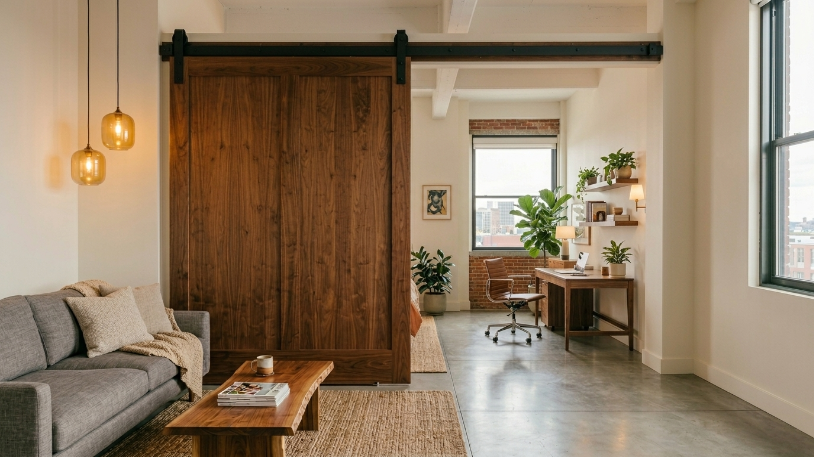
Sliding barn doors bring real personality to an open plan. They sit on an overhead track and slide sideways, so they do not eat into floor space the way a swinging door would. Also, they open or close with a single easy push, which makes them satisfying to use on a daily basis.
You can go rustic with a natural wood barn door, or modern with a glass-and-metal version. A black steel frame with frosted glass suits industrial and contemporary spaces very well. For a warmer result, a wide-planked door in rich pecan or warm walnut finish reads beautifully in most room styles and pairs naturally with warm neutral walls.
- A single door works well for standard room-width openings
- Double barn doors handle wider open-plan transitions much more effectively
- Add a soft-close stop to avoid loud banging (your guests will also appreciate this)
For colors nearby, consider a wall in a warm sandy beige or soft cream to let the wood grain take center stage. This option is best when one zone genuinely needs real privacy on demand, like a home office or a bedroom that opens off a shared living area.
4. Wooden Slat Screens
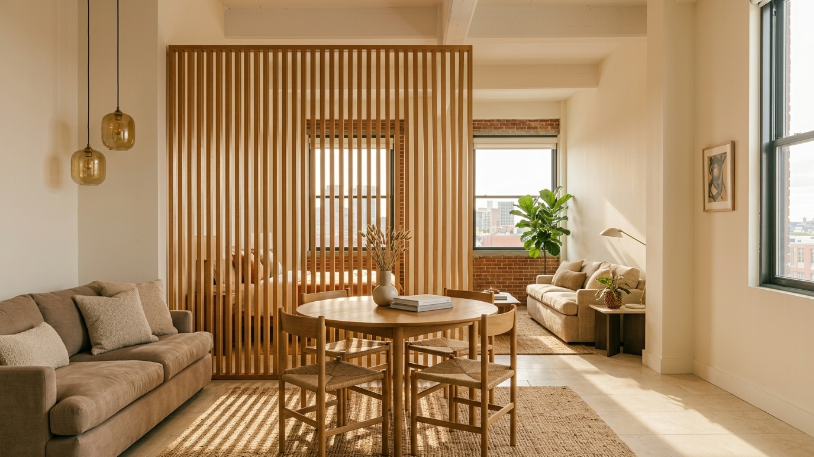
Wooden slat room dividers are among the most stylish room divider ideas on this list. They consist of thin vertical or horizontal planks with deliberate gaps between them, so they provide clear separation without blocking daylight. The result is a visual barrier that still feels open and airy.
For warm appeal, choose planks in honey pine, warm oak, or teak. A wall color behind the slats in a warm tone, like Sherwin-Williams Accessible Beige or a creamy off-white, makes the wood pop without clashing. The slats also cast soft stripe shadows when afternoon sunlight hits them, which is one of those happy accidents that makes a room feel considered.
- Space the slats one to three inches apart for the best balance of privacy and light
- Mount floor-to-ceiling for maximum visual and architectural impact
- Add warm downlights directly above to amplify the shadow effect at night
Also, this style translates beautifully across modern, Japandi, Scandi, and earthy bohemian interiors with very little adjustment to material or finish. Slat screens are also a popular choice for separating a dining zone from a living area in rectangular open-plan rooms.
5. Indoor Plant Walls
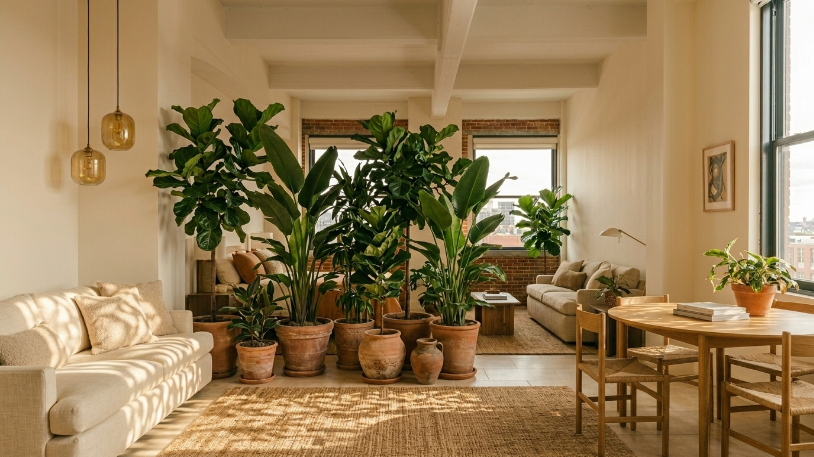
A plant wall sounds ambitious, but it does not have to be complicated. Even a cluster of tall indoor plants on a wooden stand or a long planter shelf creates a green visual boundary between two zones. The key is height; your plants need to reach at least eye level to register clearly as a divider rather than just decoration.
Good tall choices include fiddle-leaf figs, snake plants, bamboo palms, and large bird-of-paradise plants. Group three to five together and the boundary becomes visually obvious without any construction or drilling. For extra warmth, pair the green with terracotta planters or natural clay pots in earthy rust tones.
- Tall plants work best: aim for five to seven feet in height
- Mix a few different heights for a natural, layered, organic look
- Use a long planter trough for a more structured, linear boundary
Plus, plants also filter indoor air and bring a living texture to a space that no other room divider idea can replicate. Still, they do need regular watering and light, so this one is genuinely best for the committed plant parent who will follow through on care.
6. Metal Frame Screens
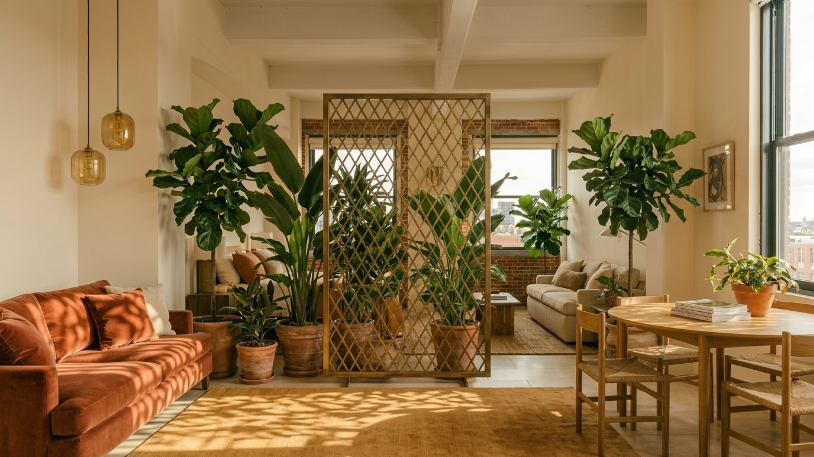
Metal frame screens are a sharp, modern take on room divider ideas. They typically feature geometric or lattice patterns, and they bring an industrial or contemporary edge to a space. A black powder-coated steel screen stands out beautifully against warm cream or sand-colored walls and suits both minimalist and industrial-inspired interiors.
These screens come in many forms, from ready-made folding panels to fixed, wall-mounted frames. For a warmer look, choose a brass or antique gold finish instead of matte black. Warm metal tones tie in naturally with warm-colored textiles and natural wood elements nearby.
- Use two panels together for wider openings
- A backlit metal screen creates a genuinely dramatic effect at night
- Pair with a wool rug in warm ochre or rust to soften the industrial character
However, keep in mind that metal screens are primarily visual dividers. They do not block sound and offer very little physical privacy. For a space where you need both style and function, this option works best when combined with a nearby sofa, bookcase, or tall plants to reinforce the zone further.
7. Folding Panel Screens
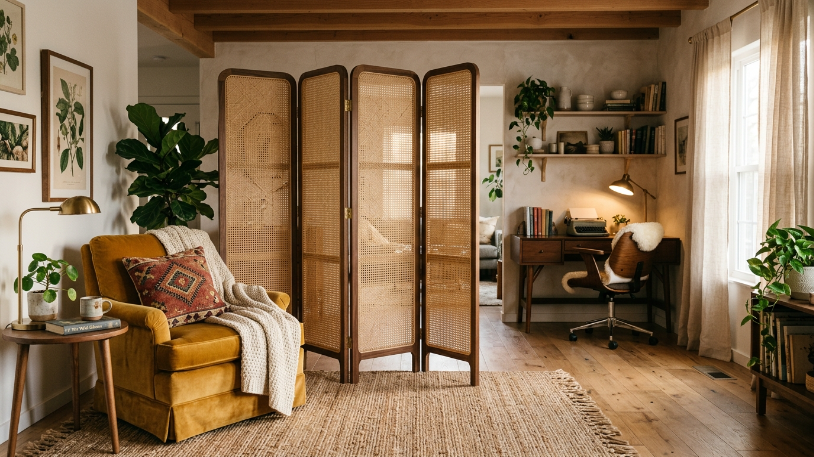
Folding screens are the most portable room divider idea on this list, and they have been solving open-plan problems quietly for centuries. They hinge together in three or more panels and fold out to create a quick visual barrier wherever you need one. Moving them to a different part of the room takes about 30 seconds, which is why renters, decorators, and people who rearrange seasonally keep coming back to them.
They come in wood, fabric, rattan, lacquered panels, and painted finishes. A warm wood frame with a fabric inset is one of the most versatile options, as it blends into most room styles without much effort. For bohemian or eclectic open plans, a painted or patterned screen adds both color and real character.
- Use a three-panel screen for a smaller zone or reading nook
- A four or five-panel screen handles larger openings much more confidently
- Choose one with feet that sit flat on the floor to prevent wobbling
Finally, a folding screen is also surprisingly good at hiding things: a messy corner, an overflowing laundry pile, or a work station you want to mentally clock out from at the end of the day. Sometimes the most useful design solutions are also the most honest.
8. Glass Partition Walls
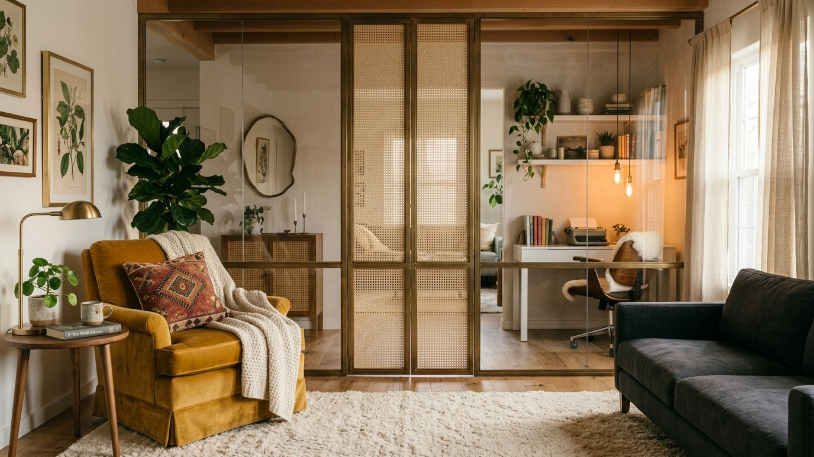
Glass partitions are among the more substantial room divider ideas, but also some of the most elegant. They create clear visual separation while keeping light moving freely through the entire space. Framed versions with black steel or warm brass hardware look especially sharp in modern and transitional interiors.
For a softer effect, frosted or reeded glass offers privacy without darkening a space. A full-height glass partition between a home office and a living area, for example, gives the office a quiet, enclosed feeling while still staying connected to the rest of the home visually. Also, the framing metal acts as a strong design statement on its own.
- Steel frames in black, warm brass, or aged bronze complement most color palettes
- Frosted or fluted glass adds privacy without sacrificing any light
- These work best in homes where you want something that looks truly permanent
Plus, a glass partition raises the perceived quality of a space significantly, which matters if you are designing a home to eventually sell or rent. Still, professional installation is usually the right call here for a clean, polished, and safe finish.
9. Shoji Screens
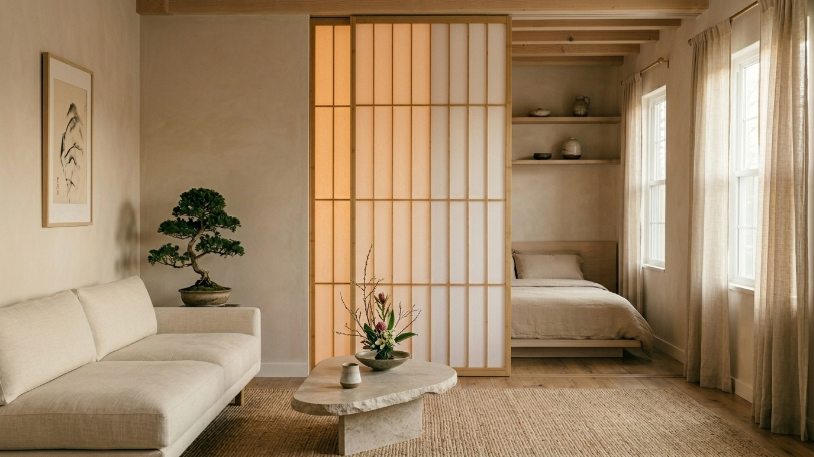
Shoji screens are a beautiful, light-diffusing room divider idea with deep Japanese roots. They consist of a wooden lattice frame filled with translucent paper panels. Light passes through them softly, giving any room a calm, glowing quality that feels considered and serene.
Traditional versions use washi paper and fine natural wood. Modern interpretations sometimes swap the paper for frosted acrylic for extra durability and longevity. Either way, the aesthetic effect remains the same: a gentle glowing barrier that separates without closing off.
- These work beautifully in Japandi, minimalist, and wabi-sabi-inspired interiors
- Pair with natural fiber rugs in warm linen, jute, or seagrass tones
- Use warm amber or yellow-toned lighting on one side for a truly moody, layered glow
Next to a window, a shoji screen also doubles as a soft diffuser for sharp afternoon light, which helps the whole zone feel more peaceful. For warmth, choose frames in natural bamboo or pale honey wood rather than painted white, which can read as cold.
10. Back-to-Back Sofas
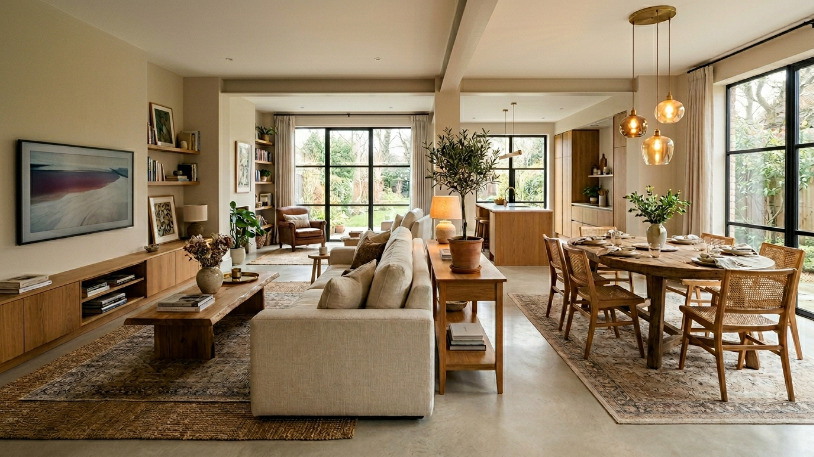
This one might surprise you: your furniture can function as one of the smartest room divider ideas in the house. Two sofas placed back to back in the middle of an open plan create a clear, immediate boundary between the living zone and whatever sits behind it, with zero construction and no tools required.
The back of a sofa essentially acts as a low visual wall. It tells your eye where one zone ends and the next begins. A slim console table placed directly behind one sofa adds another layer of definition, and gives you a surface for a lamp, books, or a vase. Your sofas are officially pulling double duty now, and they probably had no idea.
- Use a sofa with a clean, low flat back for the clearest visual boundary
- Place a narrow console table or low bookcase behind one sofa to reinforce the divide
- Anchor each zone with its own distinct area rug to make the boundary unmistakable
Also, this approach works especially well in large, square-shaped open plan rooms where there is no natural architectural break or change in floor level to define where zones begin and end.
11. Half Walls and Pony Walls
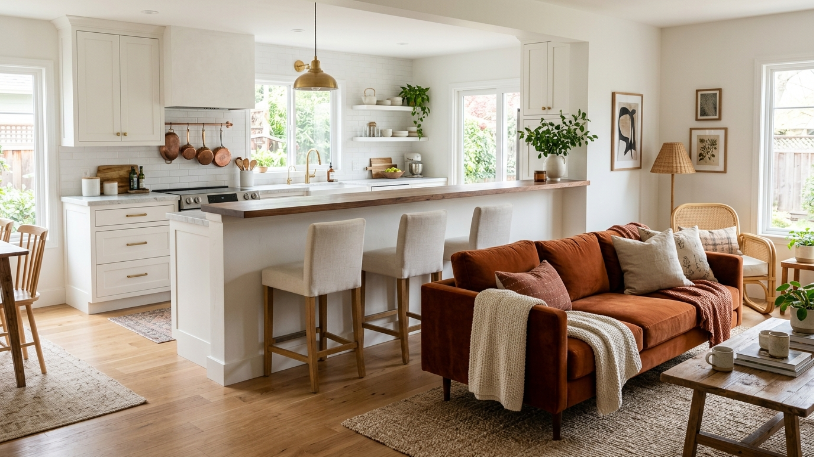
A half wall, sometimes called a pony wall, is a low partial wall that rises to roughly waist or counter height. It creates a solid physical boundary without cutting off the sightlines above, so the space still feels open and connected. Half walls are especially popular in open plans that link a kitchen to a living area.
You can finish the top of a half wall with a warm wooden ledge for extra display or dining surface space. Painting the wall in a warm earthy tone, like a sandy tan, muted sage, or dusty terracotta, adds character without going too heavy. A contrasting warm trim color can also highlight the cap nicely.
- A height of 36 to 42 inches is the standard range for functional pony walls
- A solid wood cap on top adds warmth and provides a small display or leaning surface
- Use bar stools along one side to create an easy, casual peninsula effect
Plus, half walls are one of the only room divider ideas on this list that genuinely reduce noise between zones. The physical mass of the wall absorbs sound in a way that screens and curtains simply cannot match.
12. Pendant Light Clusters
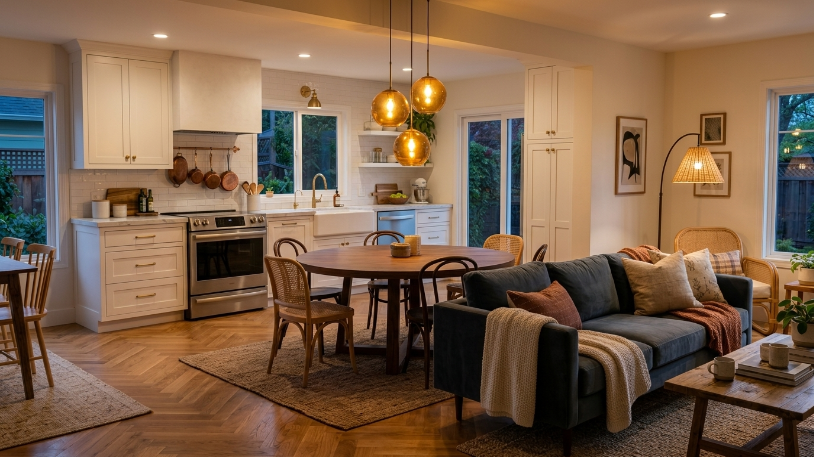
Pendant lights are not physically a room divider, but tell that to the dining table that always seems to know exactly where it belongs. A cluster of pendants hung low over a specific area, like a dining table or a reading zone, clearly marks that space as distinct, even when there is no wall or screen anywhere in sight.
Layered lighting is how professional designers zone large open-plan spaces without adding any structure. Each zone gets its own fixture with its own light temperature and intensity, creating a different mood in each area. The contrast is subtle but powerful; your eye picks it up immediately even if your brain does not consciously register it.
- Use warmer bulb tones between 2700K and 3000K for living and dining zones
- A sculptural pendant over a dining table anchors that zone with real confidence
- Pair pendant clusters with a floor lamp in the adjacent zone for complete visual separation
Still, lighting alone is the lightest touch on this list. For open plans with a lot of floor space and no physical dividers at all, pendant clusters work best as a complement to one of the other room divider ideas here rather than a standalone solution.
13. Rattan and Woven Screens
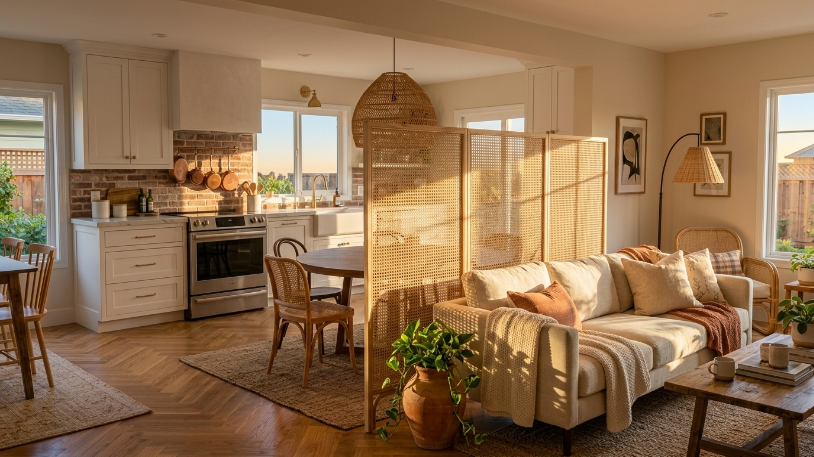
Rattan and woven screens bring warmth, organic texture, and a breezy natural quality to any open plan. The natural fibers catch light differently at every hour of the day, so the divider itself becomes a visual feature rather than just a functional object. Also, the woven gaps let light and air circulate, which keeps the space feeling breezy rather than closed off.
These screens suit coastal, bohemian, and earthy interior styles beautifully. They also feel especially at home in warmer climates where natural material aesthetics are a natural fit for the environment. For color nearby, pair a rattan screen with walls in warm sand, cream, or a light terracotta for a cohesive, grounded result.
- Woven panels can stand alone or be mounted in a clean wooden frame
- Combine a rattan screen with a linen curtain for layered texture and better privacy
- Use warm amber lighting on one side at night to make the weave glow beautifully
For a more modern reading, choose a tightly woven flat-panel rattan in a slimline frame rather than a bulky folding version. This style reads cleaner and works even in interiors that are not fully committed to the boho or coastal direction.
14. Architectural Arches
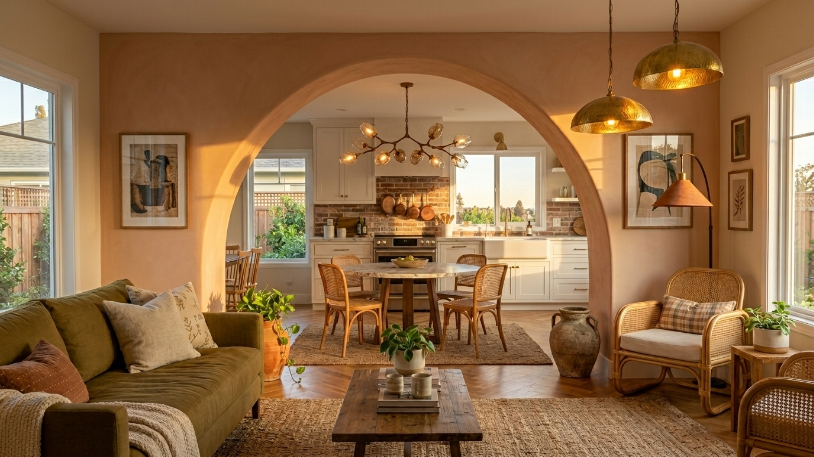
An arch is not just a doorway. When designed as a framing element within an open plan, it functions as a soft visual divider that defines space without enclosing it. An arched opening between a living area and a dining room, for example, gives each zone its own identity while still keeping them visually linked.
Arches work beautifully in Mediterranean, maximalist, Art Deco, and warm minimalist interiors. A smooth plaster arch in a warm greige, sand, or terracotta tone is a particularly striking choice. Unlike most other room divider ideas, arches feel structural and permanent, which suits anyone looking for a long-term design solution rather than something temporary or adjustable.
- A single curved arch can be added to an existing opening with modest construction
- Plaster finishes add a seamless, organic quality that paint alone cannot replicate
- Pair with warm pendant lighting just inside the arch to frame the view beautifully
Finally, arches cast beautiful curved shadows across adjacent walls in natural light, which is one of those design details that makes a room feel genuinely considered from floor to ceiling.
Room Divider Ideas at a Glance: A Quick Comparison
Before you decide, here is a side-by-side look at all 14 room divider ideas to help you narrow down your options fast.
| Room Divider Type | Best For | Light Flow | Rough Budget | Rental-Friendly |
| Bookcase Divider | Storage + zone separation | Partial (open back) | $$ | Yes |
| Curtain Divider | Flexibility and soft texture | High | $ | Yes |
| Sliding Barn Door | Privacy on demand | Low to medium | $$$ | No |
| Wooden Slat Screen | Style and filtered light | High | $$ | Yes |
| Indoor Plant Wall | Organic, natural feel | Full | $ to $$ | Yes |
| Metal Frame Screen | Modern or industrial look | High | $$ | Yes |
| Folding Panel Screen | Portability and renters | Medium | $ | Yes |
| Glass Partition | Elegant and permanent | High | $$$$ | No |
| Shoji Screen | Calm and minimal aesthetic | Soft glow | $$ | Yes |
| Back-to-Back Sofas | Large open-plan rooms | Full | $$ | Yes |
| Half Wall / Pony Wall | Kitchen-to-living transitions | Full above wall | $$$ | No |
| Pendant Light Clusters | Visual zoning only | Full | $$ | Yes |
| Rattan / Woven Screen | Coastal or boho spaces | High | $ to $$ | Yes |
| Architectural Arch | Permanent, striking look | Full | $$$$ | No |
Budget guide: $ = under $200, $$ = $200 to $600, $$$ = $600 to $1,500, $$$$ = $1,500+
Of course, your actual cost depends heavily on your location, the size of your space, and whether you go the DIY-friendly route or bring in a professional. Use this table as a rough planning tool, not a quote. For any of the permanent options, like glass partitions, half walls, or arches, getting at least one professional consultation before you start is always worth the time.
Final Thoughts
Every open plan is different, and the right room divider ideas for your space depend on your layout, your style, and how much permanence you want. Some spaces need something bold and structural. Others just need a curtain track and the right shade of warm linen.
Start with one zone that feels vague or undefined, try one idea from this list, and pay attention to how the space shifts. Good zoning is quiet design; nobody walks into a well-zoned room and says “nice bookcase placement.” They just feel more comfortable, more at ease, and more at home. That, in the end, is exactly the point.