
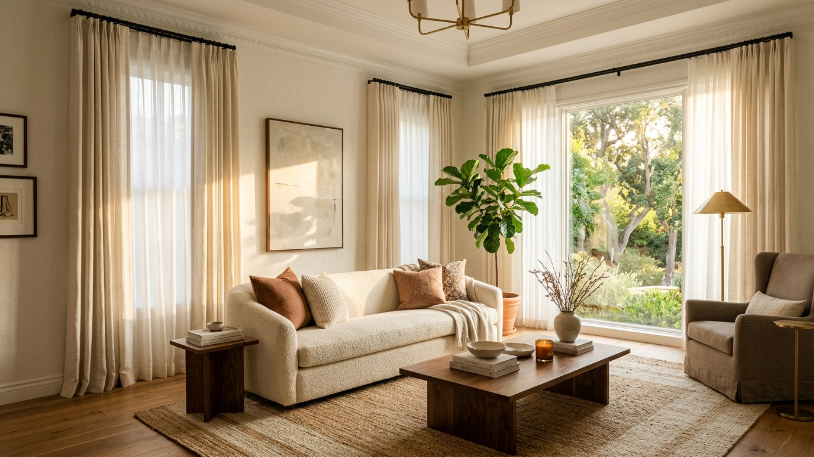
Learning how to style curtains is one of the fastest ways to change how a room feels. Curtains cover a significant section of wall space, so when they are done right, the whole room looks pulled together. When they are off, even a nicely furnished space can feel unfinished and slightly wrong.
Most people make the same handful of mistakes. They hang the rod too close to the window frame, choose panels that are too narrow, pick a color that has nothing to do with the rest of the room, or skip the finishing details entirely. None of these are serious problems. They all have simple fixes, and this guide covers every one of them.
This post walks you through how to style curtains in the exact order a designer would approach it. You start with measurements, then move through style, fabric, color, hanging height, hardware, layering, and the final finishing details. Each step builds on the one before it. Follow them in order, and your windows will finally look like someone put real thought into them, because you did.
Step 1: Measure Your Windows Before You Buy Anything
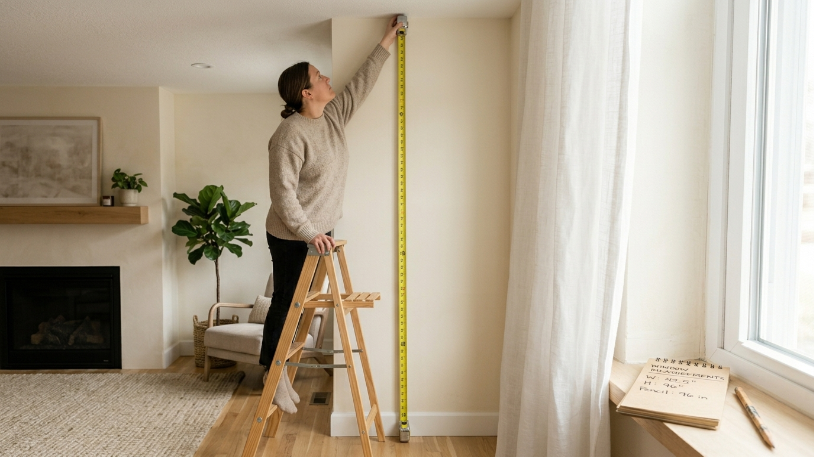
Most curtain problems start before a single panel is purchased. People measure the window itself, pick a standard panel size, hang the rod at the frame, and then wonder why the room still feels a little off. The issue is proportion, and the mistake happens long before installation.
Here is what to measure and how to do it correctly:
- Window glass width: Measure only the glass, not the frame or casing. Your curtain rod should extend 8 to 12 inches past the frame on each side. This makes the window look wider and lets you fully clear the glass when panels are open.
- Rod mounting height: Measure from the floor to where you plan to hang the rod, not just to the window’s top edge. For most rooms, this means 4 to 6 inches below the ceiling.
- Panel width: Each panel should be 1.5 to 2.5 times the width of half the rod. This gives a full, gathered look when the curtains are closed. Skimpy panels are a very common misstep.
- Panel length: For a clean floor break, subtract half an inch from your floor-to-rod measurement. For a relaxed puddle effect, add 3 to 6 inches instead.
Write every number down. Then measure again before you order. Buying panels based on memory or a rough estimate is how people end up with curtains that are technically the right size but somehow still look wrong.
Also note your window casing depth if you plan to layer curtains with a shade or blind behind them. A double rod bracket needs a bit of extra wall clearance to mount flat and swing freely.
Step 2: Choose Your Curtain Style
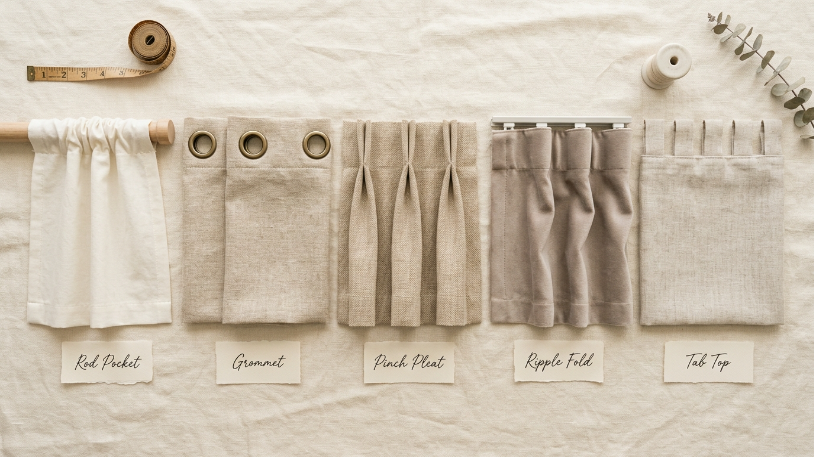
The heading style of a curtain sets the mood before anyone reads the rest of the room. A tab-top curtain communicates casual. A pinch pleat communicates formal. Grommets land in the clean, contemporary middle. Choosing a heading style that clashes with the room’s existing tone is a common issue, and also an easy one to avoid.
Here is how the most common styles compare:
| Curtain Style | Best Room Type | Formality Level | Ease of Opening |
| Rod Pocket | Romantic, layered spaces | Medium | Low |
| Grommet | Modern, casual rooms | Low to medium | High |
| Pinch Pleat | Traditional, formal rooms | High | Medium |
| Eyelet | Scandinavian, minimalist | Low | High |
| Tab Top | Relaxed, bohemian | Low | Low |
| Ripple Fold | Contemporary, clean-lined | Medium to high | Very high |
If you open and close your curtains every morning, choose grommets or ripple fold. They glide smoothly and hold their shape well over time. Tab-top curtains work fine for decorative panels that rarely move, but pulling them open daily will wear out your patience before it wears out the fabric.
For modern and transitional spaces, grommet or ripple fold is the clean, practical choice. For traditional or formally layered rooms, pinch pleat adds structure and elegance. Tab top is best saved for spaces where casual and easy is the entire point of the room.
Step 3: Pick the Right Fabric for the Room
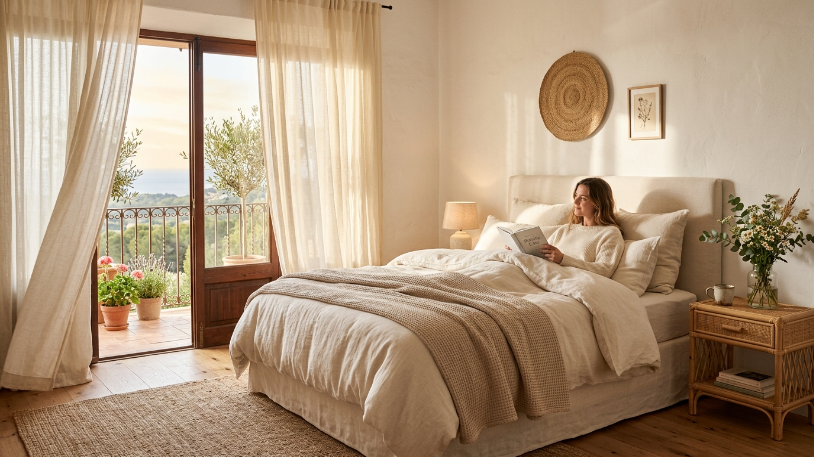
Fabric does more than look good. It determines how much light enters the room, how much sound the curtain absorbs, and how the panel drapes when pulled to the side. A heavy velvet that suits a formal dining room will feel oppressive in a sun-filled bedroom. Matching fabric to the room’s actual function is a step most people skip entirely.
Here are the main options and where each one works best:
- Linen: Natural texture with a relaxed, soft drape. Filters light without blocking it. Ideal for living rooms and bedrooms where you want warmth and airiness together. Wrinkles are part of the look; a handheld steamer handles them in minutes when you want a cleaner finish.
- Velvet: Heavy, rich, and excellent at blocking both light and sound. Best in formal or moody rooms: a dining room, a home library, or a master bedroom with strong morning sun.
- Cotton: Versatile, easy to clean, and holds prints well. Lighter cottons filter light softly; heavier cottons provide more coverage. Works in most rooms without calling too much attention to itself.
- Sheer voile or chiffon: Filters light beautifully and creates a soft, airy feel. Almost always layered behind a heavier panel rather than used alone. Best for spaces where privacy during the day is not the top priority.
- Polyester blend: Budget-friendly and wrinkle-resistant. Fine at a distance, but rarely reads as luxurious when someone looks closely.
For most rooms, a medium-weight linen or linen-cotton blend is the strongest starting choice. It has natural warmth, a generous drape, and enough texture to look interesting without competing with the furniture around it.
Step 4: Choose Your Color or Pattern
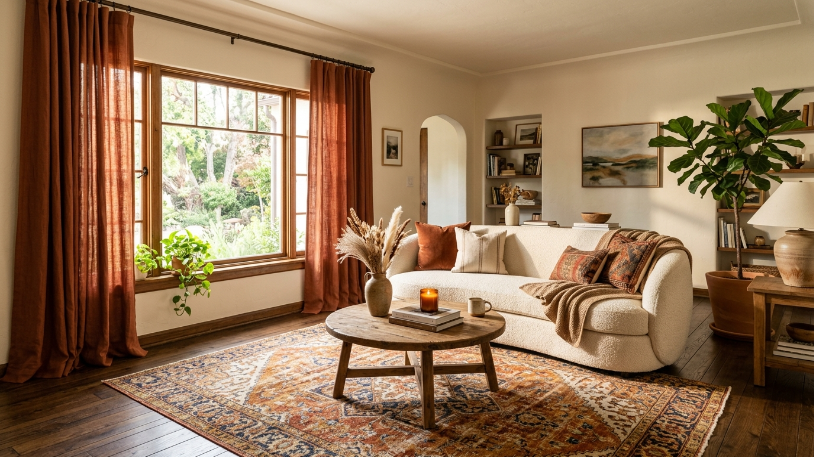
Color is where most people freeze. The safe choice is white, which works but rarely adds anything to the room. The bold choice is an oversized pattern that competes with the furniture. The right choice is somewhere between those two: a color that connects to something already in the space.
Start with your existing palette. If your sofa has warm amber undertones, a terracotta or honey-toned curtain will feel naturally connected. If your rug includes sage green, an olive or soft sage curtain pulls that color from the floor up into the vertical plane of the room. For help pulling exact tones from your existing palette, Sherwin-Williams’ Color Inspiration tool is a free, reliable resource worth bookmarking before you shop.
Here are pairings that consistently work:
| Wall Color | Curtain Colors That Work Well |
| Warm white or cream | Terracotta, dusty rose, honey gold, natural linen |
| Soft gray | Dusty blue, blush pink, sage green, warm off-white |
| Deep navy | Off-white, amber, warm brass-adjacent fabric tones |
| Warm greige | Rust, olive green, camel, cream |
| Sage green | Off-white, terracotta, warm sand, soft peach |
| Charcoal | Ivory, deep burgundy, dusty mauve, warm bronze tones |
For patterns, the rule is simple. If your sofa or rug already carries a pattern, keep the curtain solid. If the room is mostly solid, a subtle stripe, soft geometric, or quiet botanical in the curtain fabric adds visual interest without pulling focus from the furniture.
Step 5: The Hanging Rule That Defines How to Style Curtains
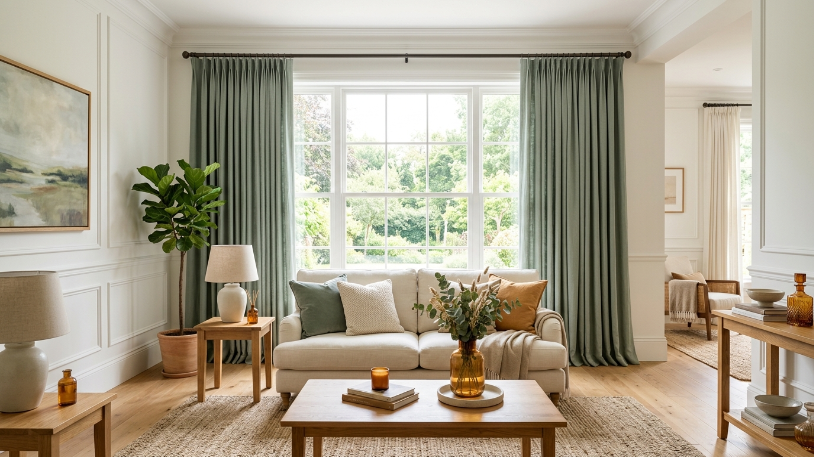
This is the most impactful rule in this entire guide. It is also the one most commonly ignored. Where you mount the rod determines how tall and how wide the room feels. A rod placed at the window frame makes the ceiling seem lower and the window feel cramped. A rod placed near the ceiling does exactly the opposite.
Here is the designer approach:
- Mount the rod 4 to 6 inches below the ceiling. In rooms with 9 or 10-foot ceilings, go even closer to the ceiling if the wall allows it.
- Extend the rod 8 to 12 inches past the window frame on each side. This lets the panels stack completely off the glass when open, keeping the full view clear and making the window appear wider than it actually is.
- Always use floor-length panels. Mid-length or sill-length curtains in a living room or bedroom almost never look planned. They usually just look short, which is a different thing entirely.
Yes, this means the curtains will cover a section of plain wall on each side of the window. That is completely intentional. The curtain becomes part of the room’s vertical architecture, not just a frame for the glass.
Also, check the hem finish before you call it done. A half-inch break, where the panel just grazes the floor, looks clean and contemporary. A two-inch puddle looks relaxed and intentional. A visible gap between the hem and the floor looks like a measuring mistake, because it usually is one.
Step 6: Choose Hardware That Completes the Look
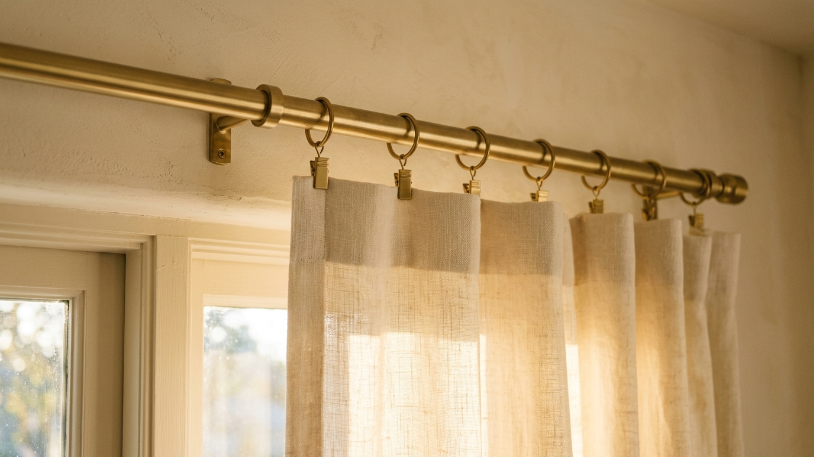
Curtain hardware is a visible design detail, not just a functional bracket and rod. The finish of your rod lives alongside every other metal finish in the room: your light fixtures, door handles, and cabinet pulls. Hardware that clashes with those finishes makes the window look like an afterthought, and it usually pulls the eye in the wrong direction.
Here is how to match rod finish to room style:
- Matte black: Best for modern, industrial, and Scandinavian spaces. Also works well as a crisp contrast detail in soft, warm, neutral rooms.
- Brushed brass or warm gold: Suits warm-toned, earthy, traditional, or eclectic spaces. Pairs especially well with terracotta, cream, and olive tones.
- Brushed nickel or chrome: Good for cool-toned, contemporary, or transitional spaces. Keeps the hardware clean and understated.
- Aged bronze: Works in layered, rich rooms with velvet curtains, dark walls, or warm traditional decor.
- Natural wood: A strong fit for organic, bohemian, or Japandi-influenced spaces. Brings a grounding, earthy quality to the window that metal rods cannot replicate.
For rod diameter, choose at least one inch for heavier fabrics like velvet or lined linen. Thinner rods can bow under the weight of heavy panels, and drooping hardware is not the focal point anyone hopes for in their living room.
For rings, use clip rings with unlined or gathered panels. Use non-clip rings with pinch-pleat or tab-style curtains. Also confirm that the ring’s inside diameter slides smoothly along the rod before you buy.
Step 7: Layer Your Curtains for Depth and Function
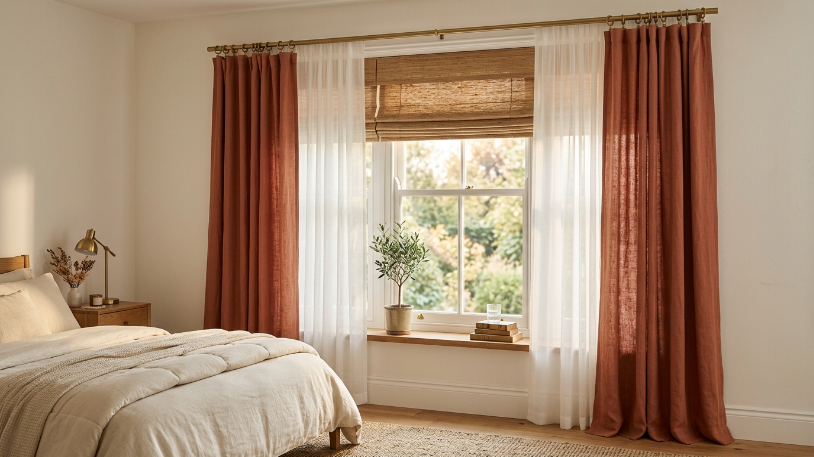
One curtain panel does one job. Two layers do three. Layering curtains adds visual depth, gives you control over light at different times of day, and makes the window look like it was actually designed rather than just dressed.
The classic approach is simple: a sheer inner layer close to the glass, and a heavier outer panel framing the sides. Here is how to build it:
- Install double rod brackets, or two separate rods mounted at slightly different depths from the wall.
- Hang sheer voile or light linen panels on the inner rod, sitting close to the glass.
- Hang your main curtain panels on the outer rod.
- In the morning, pull the outer panels to the sides and let the sheers filter and soften the light.
- In the evening, close both layers for full privacy and warmth.
For bedrooms, you can also add a Roman shade or woven wood blind mounted inside the window casing, sitting between the two curtain layers. This creates a third texture and gives you even more precise light control. A blackout blind behind sheers behind linen panels is a combination that works hard without looking like it is working at all.
Also consider what the window looks like visually when the outer panels are open. From across the room, you see the sheer panel, the curtain rod, and the side panel all at once. Each layer adds depth and makes the window look like it was designed from the wall outward rather than from the glass out.
Step 8: How to Style Curtains With the Right Finishing Details
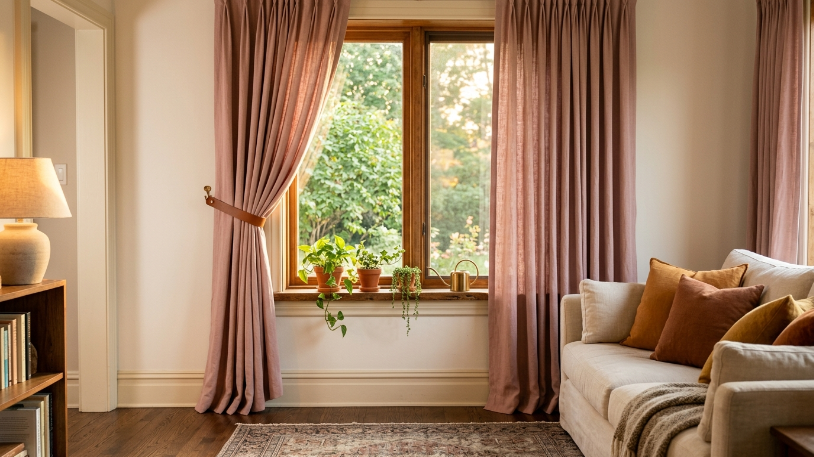
The last step separates curtains that look intentionally styled from curtains that simply hang there. These finishing details are small. They are also the ones most people skip, and they are the reason one room’s curtains look professional while another’s look fine but not quite right.
Work through this checklist before stepping back and calling the window done:
- Steam or iron every panel. Packaging folds make even expensive curtains look wrinkled and neglected. A handheld steamer handles the job in a few minutes per panel and is worth owning if you have any curtains at all.
- Dress the folds. After hanging, gather the pleats evenly by hand and tie each panel loosely with ribbon, twine, or strips of fabric. Leave them tied for 24 to 48 hours. This trains the fabric to fall in soft, consistent folds rather than bunching randomly.
- Level the hem. Both panels should hit the floor at exactly the same point. Even a small difference is visible from across the room, and the fix usually takes less than a minute.
- Add a tieback if the style suits it. A simple leather strap, braided rope tieback, or wall-mounted brass hook keeps open panels neat without looking fussy. Save elaborate tasseled tiebacks for fully traditional rooms.
- Audit the window from the doorway. Stand at the room’s entrance and look at the full window from a distance. Check the proportion of the panels against the window width, the ceiling height, and the furniture below. Adjust the tieback placement, the fold depth, or the hem drop until the whole window looks balanced.
A well-finished curtain is one of those details people notice without knowing exactly why the room looks so good. On the other side, a poorly dressed panel is often the quiet reason a room never quite comes together, even when everything else is right.
Final Thoughts
Curtains do not have to be expensive to look good. They have to be measured correctly, hung in the right position, chosen for the right function, and finished with care. Follow these eight steps in order, get the sizing right, hang them high, and take the time to dress the folds. Your windows will look like someone actually planned them, because now you have.