
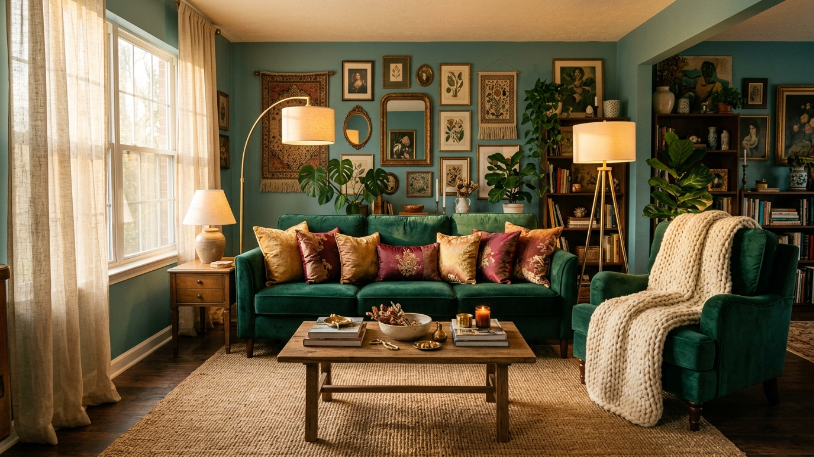
Every great maximalist living room idea begins with one simple rule: there are no rules. Actually, that is not entirely true. There are a few. But they all lean toward adding more color, more texture, and more of everything you actually love. Maximalism is, at its core, a design style built for people who love things and are not remotely sorry about it.
This style is not about clutter or chaos. It is about layering what you love until the room feels full, alive, and completely yours. So, whether you are starting from scratch or you just want to push your current space much further, these 10 maximalist living room ideas will give you the creative spark and the confidence to go for it.
1. Layer Your Textures Like a Pro
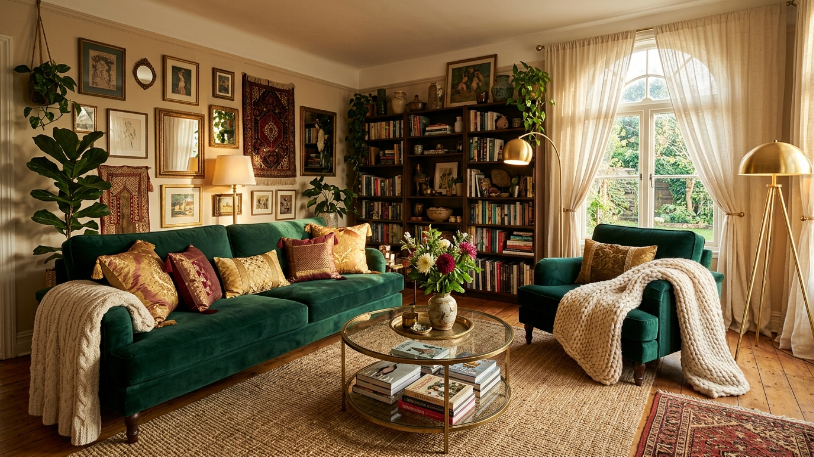
The fastest way to get a rich, maximalist feel is to pile on the textures. Think velvet sofas, silk throw pillows, jute rugs, and linen curtains all living in the same room. The trick is to mix surfaces that feel completely different from each other. Smooth against rough. Matte against shiny. Soft against structured.
Do not shy away from going heavy with fabric. A chunky knit throw tossed over a velvet armchair adds deep visual richness without introducing a single new color. Plus, it gives you a perfectly solid excuse to buy more throw pillows. Everyone wins.
Here is a quick texture combination guide for maximalist rooms:
- Velvet sofa + jute rug + brass accent lamps
- Linen curtains + leather sofa + ceramic table lamps
- Silk cushions + rattan chairs + chunky knitted throws
- Faux fur blanket + dark wood furniture + tall clear glass vases
The key is contrast. Each texture should push back against the others a little. That friction is exactly what makes a maximalist room feel full of life rather than just full of things.
2. The Bold Color Palette Every Maximalist Living Room Idea Needs
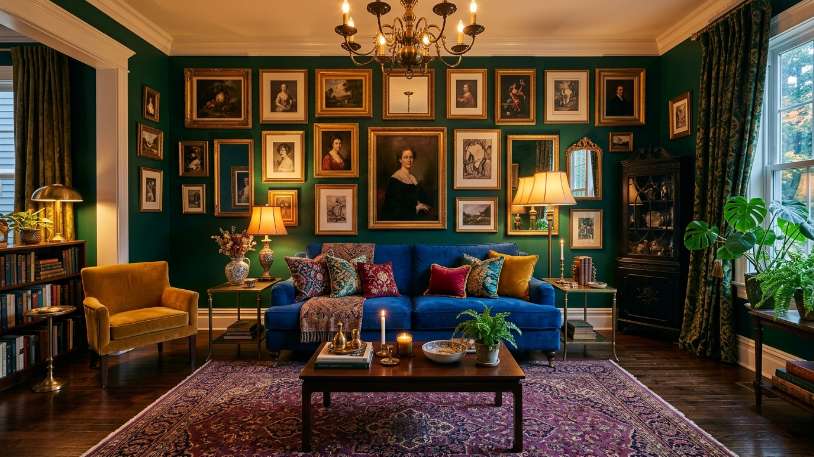
A strong maximalist living room idea lives and breathes through its color palette. Jewel tones are your best starting point. Think deep emerald green, rich sapphire blue, warm burgundy, and burnt amber. These colors work so well together because they share a similar depth and richness of tone.
You do not have to use all of them at once. Start with two or three main colors, then use the others as accents throughout the room. An emerald-walled room with a cobalt blue sofa, for example, carries warm gold accents beautifully. For palette tools and color inspiration, both Pantone and Sherwin-Williams offer excellent resources to help you find combinations that feel cohesive.
Here is a maximalist color pairing guide:
| Color Pair | Mood | Best Accent Color |
| Emerald Green + Cobalt Blue | Jewel-toned and rich | Warm gold |
| Burgundy + Dusty Rose | Romantic and layered | Cream or ivory |
| Burnt Orange + Terracotta | Earthy and warm | Dark walnut wood |
| Navy Blue + Forest Green | Deep and moody | Brushed brass |
| Plum + Mustard Yellow | Bold and eclectic | Matte black |
| Deep Teal + Warm Coral | Vibrant and striking | Antique bronze |
Colors with warm undertones, in particular, make maximalist rooms feel cozy instead of overwhelming. A burgundy with warm red undertones will always read as more welcoming than a cool, blue-toned red.
3. Stack Your Patterns with Confidence
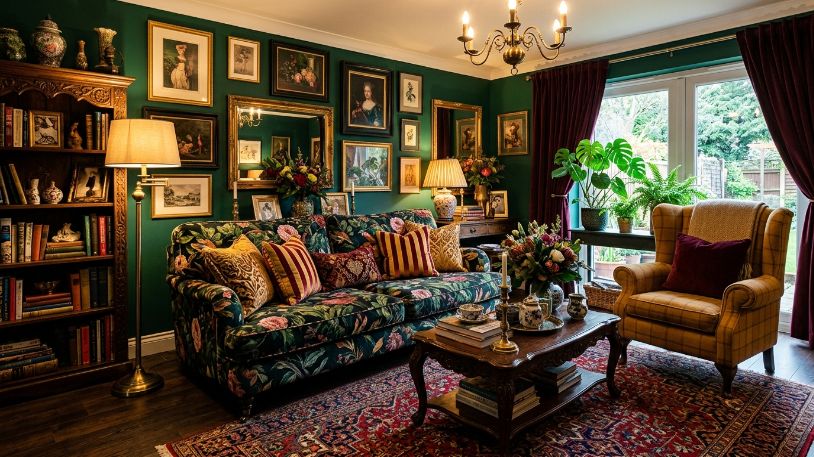
Pattern mixing is one of the most exciting parts of any maximalist approach, and also one of the most misunderstood. The secret is scale. When you pair a large botanical print with a small geometric stripe, they do not compete. Instead, they create rhythm in the room.
Start with a dominant pattern on your largest surface, such as the sofa or the curtains. Then, layer in a medium-scale pattern through throw pillows or an accent chair. Finally, bring in a smaller pattern through a rug or a decorative runner. This three-level stacking keeps the room visually interesting without making it feel hectic.
Here is a simple scale guide to pattern mixing:
| Pattern Type | Best Scale | Use It On | Pair It With |
| Floral or botanical | Large | Sofa or curtains | Small geometric stripe |
| Geometric | Medium | Pillows or accent chair | Large-scale floral |
| Stripe | Small to medium | Rug or ottoman | Large floral or plaid |
| Animal print | Medium | Accent chair or bench | Textured solid fabric |
| Paisley | Small | Cushions or runner | Any textured solid |
Also, do not underestimate the power of bold wallpaper. Even one patterned feature wall can anchor the room and give every other pattern something to respond to. It acts as the pattern foundation of the whole maximalist design.
4. Build a Gallery Wall That Tells Your Story
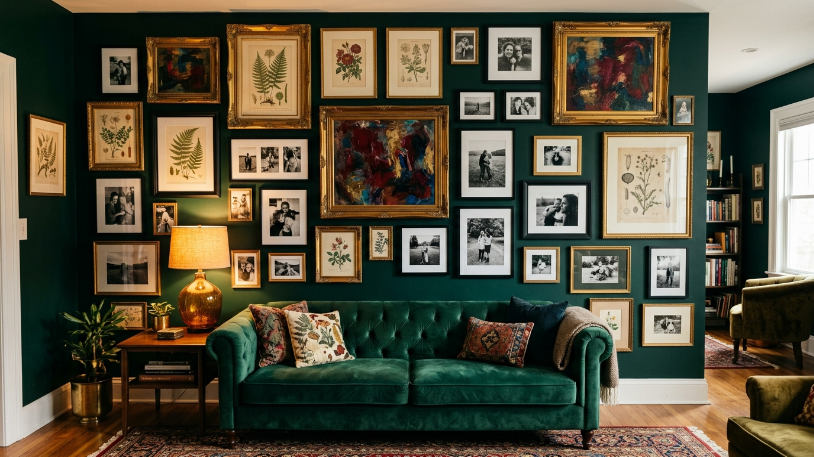
A gallery wall is one of the most personal maximalist living room ideas you can pull together. Done well, it feels like a museum crossed with a private archive. Done without intention, it looks like picture frames multiplied on their own while you were not looking.
Mix your frame styles with purpose. Ornate gold frames can sit right next to clean matte black ones. Oversized prints can hang beside small vintage photographs. Do not try to make everything match. Instead, choose a loose color story and let the frames and artwork speak in variations of it.
Here is what to consider when building your gallery wall:
- Mix original art with affordable prints and personal photography
- Use at least three different frame sizes to create visual depth
- Vary the subject matter: landscapes, portraits, abstract work, illustrated text
- Leave a little breathing room between frames; do not pack them tight
- Hang your largest piece first and build outward from it
The gallery wall works so well in maximalist spaces because it follows the same layering principle as everything else in the room. You are not just decorating a wall. You are building a wall-sized composition that can grow over time.
5. Mix Your Metals and Let Them Shine
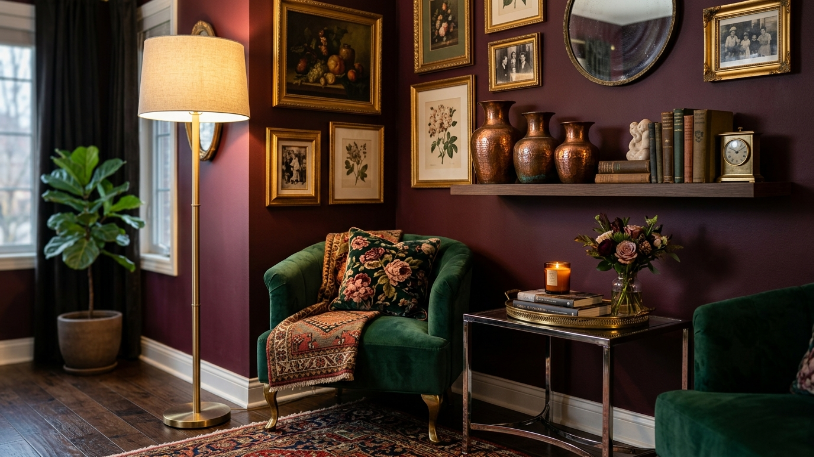
The old rule said to pick one metal finish and commit to it fully. Maximalism threw that rule out the window, and honestly, it is hard to miss. Mixing metals in a maximalist living room adds depth and makes the space feel curated over time, not assembled in a single shopping afternoon.
Gold, brass, copper, and bronze all share warm undertones, so they layer together very naturally. Chrome and silver offer a cooler contrast and can actually ground a room that skews very warm. The key is to choose one dominant metal and let the others appear in smaller supporting roles throughout the room.
Try these metal combination ideas:
- Brass pendant lights + warm gold picture frames + copper ceramic vases
- Antique bronze table legs + matte black iron details + gold mirror frame
- Brushed gold cabinet hardware + chrome lamp bases + rose gold accessories
Resist the urge to match every metal precisely. A brass lamp beside a slightly warmer gold frame is not an error. It is character. Maximalist rooms are supposed to look collected over time, not bought from a single catalog page.
6. Make the Ceiling a Fifth Wall
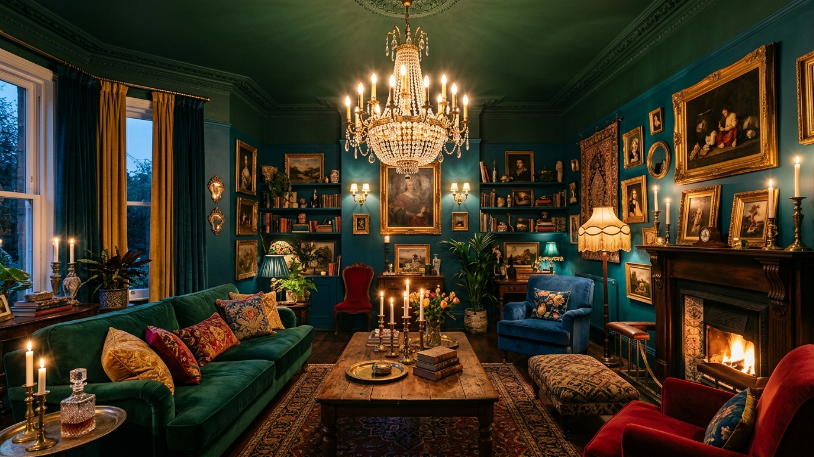
Most people stop decorating at the ceiling line. In a maximalist living room, that is a missed opportunity worth correcting. The ceiling is prime real estate, and using it well can change the entire atmosphere of the room.
Painted ceilings are a strong place to start. A deep navy or forest green ceiling, for example, makes the room feel like a polished jewel box from every angle. Wallpaper applied to the ceiling is bolder still. It creates a surprising drama that guests will notice immediately and talk about later. Also, it is one of the most effective techniques for making a room feel intentionally designed all the way around, not just at eye level.
Your lighting plays a major role here, too. A dramatic chandelier centered in the room, or a cluster of pendant lights at varying heights, draws the eye upward and makes the full height of the space part of the overall design. Your ceiling is not empty air. It is part of the room’s composition.
7. Invest in Statement Furniture
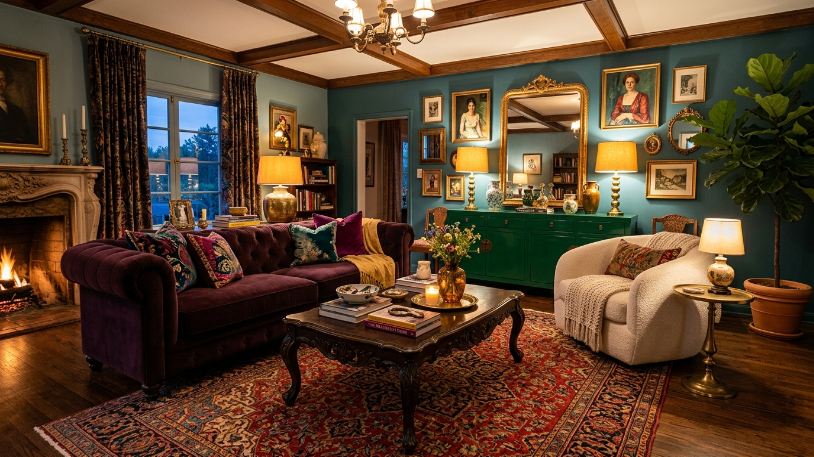
In a maximalist living room, furniture is never background decoration. It is part of the show. A tufted velvet Chesterfield sofa in deep plum is not just seating. It is a bold design statement that announces the room’s whole personality before you have added a single accessory.
Go for pieces that have real shape and physical presence. Curved sofas and rounded armchairs have earned a long, well-deserved place in maximalist design. Oversized sectionals in rich, jewel-toned fabric give the room that lush, layered quality maximalism is famous for. Dark wood coffee tables with carved legs bring visual weight and a sense of history to the floor level.
Here are statement furniture pieces worth considering:
- A velvet Chesterfield sofa in deep burgundy, emerald, or midnight blue
- A curved bouclé loveseat in ivory or warm cream
- An oversized barrel armchair in a bold print or saturated solid color
- A high-gloss lacquered credenza in a deep jewel tone
- A daybed with a carved wooden frame and silk or velvet upholstery
Do not shy away from furniture that already has personality before you add a single thing to it. That is exactly the point.
8. Bring in Dramatic, Lush Plants
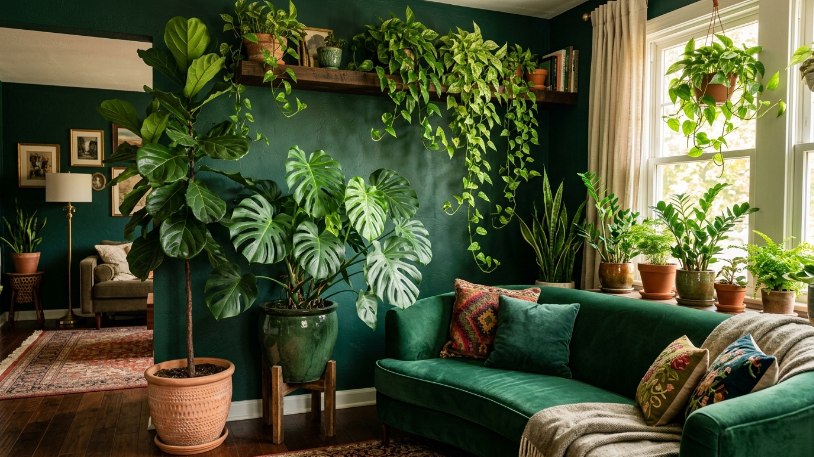
Plants belong in a maximalist living room. However, not one small succulent on a side table. You want the dramatic kind: statement-level plants that take up real space in the room. A fiddle-leaf fig in the corner, a massive monstera beside the sofa, and a banana plant stretching toward the ceiling all become part of the room’s architecture rather than just decoration.
Group plants together instead of scattering them across the space. A cluster of three or four plants in one corner creates a lush, almost greenhouse effect that fits beautifully in a maximalist room. Also, choose pots that align with your color story. A terracotta pot with warm undertones, for example, will always feel at home in a jewel-toned room. Trailing plants like pothos or heartleaf philodendron add an organic, cascading quality from high shelves, softening the room in a way that fabric and furniture simply cannot replicate.
9. Style Your Shelves Like a Curator
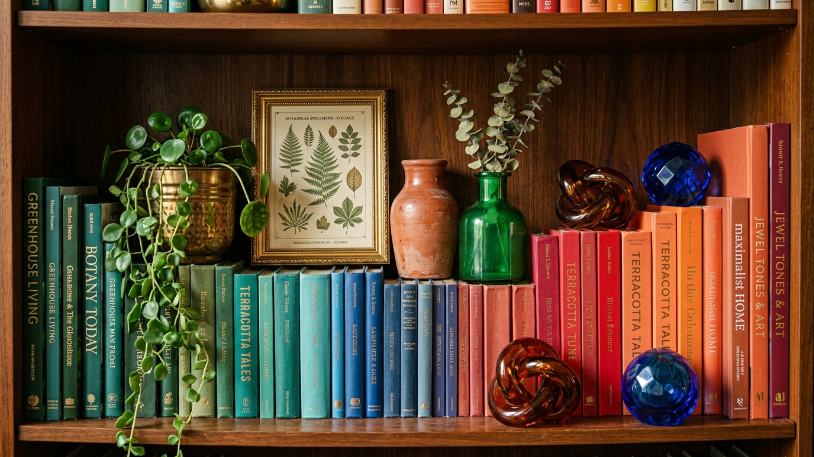
Shelves in a maximalist living room are not for storage. They are for display. Think of each shelf as a small, self-contained composition: a couple of books, one ceramic object, a small sculpture, and maybe one trailing plant. Every item earns its place.
Mix heights across the shelf to create visual movement. A tall vase next to a short horizontal stack of books next to a medium sculptural object gives the shelf a sense of rhythm. Also, consider color when you arrange your books. Grouping book spines by color creates a quiet, cohesive backdrop that lets other objects stand out clearly in front of it.
Here is a practical framework for a well-styled maximalist shelf:
- Books grouped by spine color or stacked horizontally for variation
- Ceramics and pottery in warm earthy tones with rich glazes
- Small framed art or vintage prints leaned casually against the shelf back
- Sculptural objects made from stone, glass, or carved dark wood
- One living element: a small plant or a small vase of fresh flowers
Still, leave breathing room between object groups. That small amount of open space is what separates a curated shelf from an overcrowded one.
10. Anchor Your Maximalist Living Room Idea with One Big Piece of Art
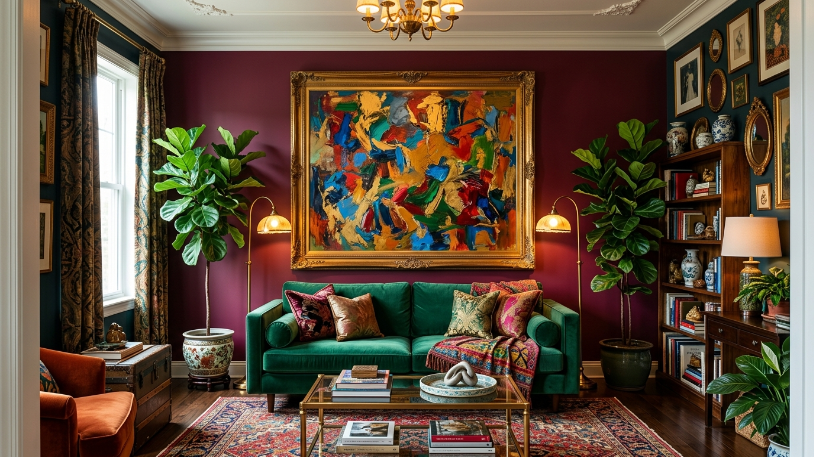
Maximalist rooms can have many things pulling for your attention all at once. So, sometimes the smartest maximalist living room idea is to choose one dominant piece of art and let the whole room answer to it. A large canvas painting, a woven wall tapestry, or an oversized framed print gives the room a clear focal point and makes every other decision feel more deliberate.
Choose a piece that already holds multiple colors in it. A painting with three or four of your room’s existing colors becomes a built-in palette guide. It tells you which throw pillows to choose, which rug to buy, and which accent colors to use. In short, the art becomes the blueprint for everything else.
Place your centerpiece on the most visible wall in the room, usually the first one you see when you walk in. Hang it at eye level and give it room to breathe. Do not crowd it with smaller pieces right around it. Let it lead, and let the rest of the room build around it.
Final Thoughts
A great maximalist living room idea does not have to be complicated. It just has to feel like you. Pick the textures you love, the colors that make you feel something real, and the objects that carry a story worth keeping. Then, layer them together with confidence and let the room take shape around those choices.
Start with one bold decision, whether it is a painted ceiling, a velvet Chesterfield, or a gallery wall that fills a whole corner. Each choice will pull the next one along naturally. The room builds itself when you trust your instincts.
Maximalism rewards the brave. Your room is waiting. Go for it.