
A Beginner-Friendly Guide to Decorating Your Home With Confidence, Clarity, and a Little Bit of Fun
There is a very specific kind of frustration that comes from standing in a home decor store, staring at two throw pillows, completely unable to decide which one belongs in your home. One is beige and simple. The other is a deep jewel green with embroidery. Both are beautiful. But neither of them makes you feel anything, because honestly, you are not even sure what your home is supposed to feel like. So you walk out empty-handed, again, and your living room continues to look like a waiting room at a very polite dentist’s office.
If that sounds familiar, this post is for you.
Finding your interior design style is not about memorizing design terminology or spending hours on mood boards (although mood boards are genuinely fun, and we will get to that). It is about understanding what makes you feel at home, literally. It is about learning to trust your own eye, edit out the noise, and make decisions about your space with confidence. By the end of this guide, you will have a clear framework for identifying your design style, practical steps for bringing it to life, and a very honest answer to why your room might not be coming together the way you imagined.
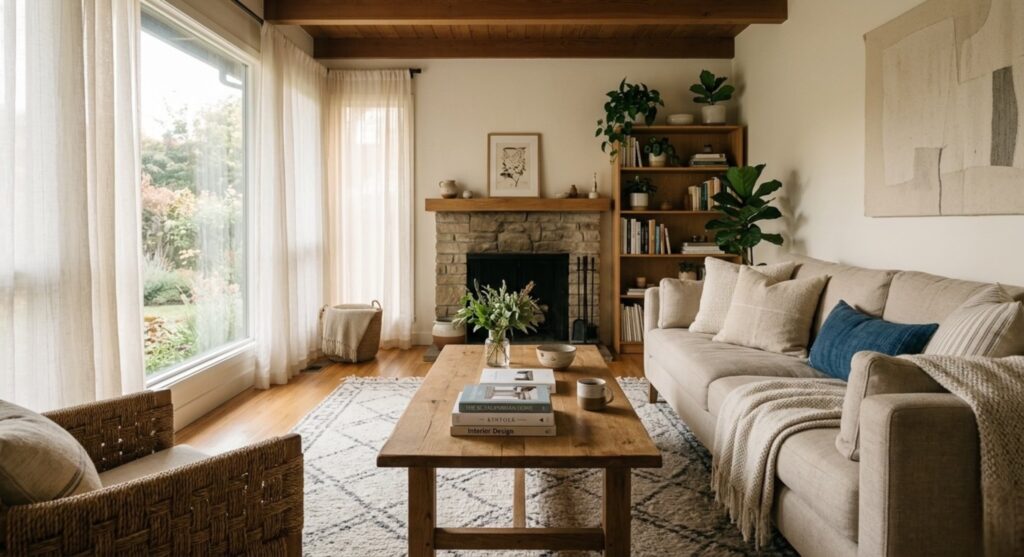
The first thing to understand is that you are not bad at decorating. You are just working without a filter. The internet has made every single design style available to you at all times. Open Pinterest for ten minutes and you will see a Japandi living room, a maximalist gallery wall, a coastal grandmother bedroom, an industrial loft kitchen, and a Danish hygge reading nook. All of them are beautiful. All of them look completely different. And none of them are helping you figure out what to do with your apartment.
This is why defining your style starts from the inside out, not the other way around. You do not start with a trend. You start with yourself.
Step One: Pay Attention to What You Already Own
Before you look anywhere else, look around you. Your home, even in its current unpolished state, already contains clues about your design preferences. Look at the things you have bought for yourself without overthinking them. A candle in a ceramic container. A blanket you love so much you use it every day. A piece of art you picked up somewhere that you could never bring yourself to put in storage. A mug you reach for first every morning, not because it is the most practical, but because you just like it.
These things are not random. They are the beginning of your visual vocabulary. Take note of the colors, materials, and shapes that keep showing up. Are they organic and earthy, like clay, wood, and muted greens? Are they sleek and minimal, with clean lines and matte surfaces? Are they eclectic and layered, mixing patterns and textures in a way that feels collected over time? Whatever you are reaching for without thinking is probably closer to your true design style than anything you have found on a trend list.
This exercise works even if your home is mostly rented furniture and things you have been meaning to replace for years. You are not looking at the furniture. You are looking at the things you chose freely, the ones nobody told you to buy and no algorithm recommended. That is where your style lives.
Step Two: Build a Mood Board Without Any Rules
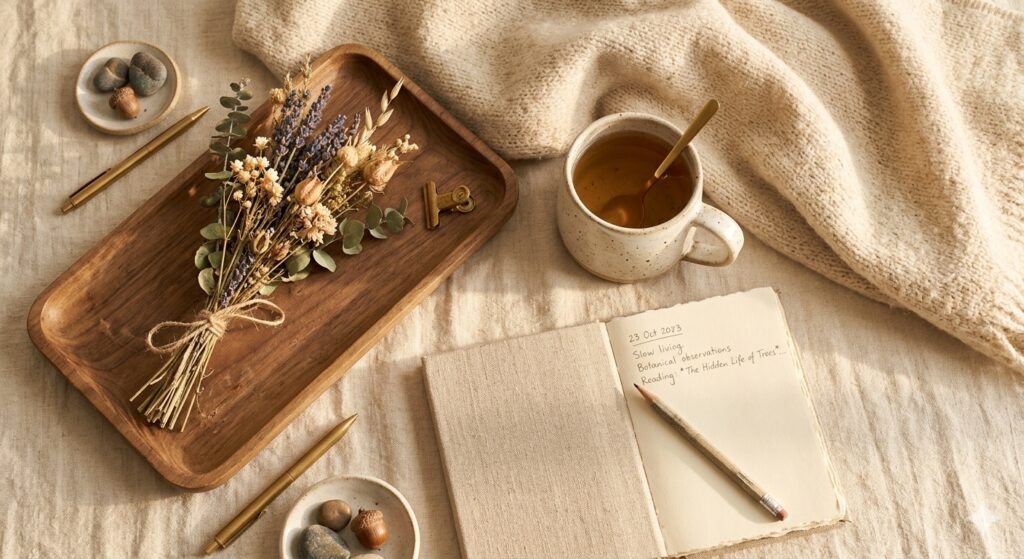
The mood board is one of the most powerful tools in interior design, and it works best when you completely ignore any rules about how it is supposed to look. You are not curating content for a design magazine. You are collecting images that make you feel something without having to explain why.
Open Pinterest, Houzz, Instagram, or even just do a Google image search for “beautiful rooms.” Save or screenshot every single image that makes you pause, even for a second. Do not filter for practicality, budget, or whether it matches anything you already own. Just save what draws you in. Do this for about twenty minutes without stopping to analyze. When you are done, look at everything you saved together as a collection.
Now the real work begins. Look for patterns. Not just in color, though that is part of it. Look for patterns in how the rooms feel. Are most of them quiet and uncluttered? Are they full of texture and layers? Are they mostly neutrals, or are there pops of color that keep appearing? Is there a lot of natural light, or are the rooms you love more moody and dramatic? Do you keep saving rooms with big collections of books, plants, and art, or do you keep saving rooms where there is almost nothing on the shelves and every object has been placed with extreme care?
The patterns in your mood board are your design personality speaking up. They show you not just what you like, but what kind of visual environment makes you feel rested, inspired, and like yourself.
Step Three: Learn the Main Design Styles (So You Can Name What You See)
You do not need to know every design style ever catalogued by the internet. But having names for the categories helps you get more precise with your searches and your decisions. Here is a simple breakdown of the most common ones.
Modern and Minimalist design is about clean lines, open space, and choosing only what is necessary. Furniture tends to be low-profile with straight edges. The color palette is usually neutral, with black, white, and grey as anchors. This style values order and breathing room. If your mood board is mostly uncluttered rooms with a single bold art piece and furniture you can describe as “smart” rather than “cozy,” you might lean modern.
Scandinavian or Hygge design shares DNA with minimalism but adds a layer of warmth and softness. Think natural wood, sheepskin throws, candles everywhere, and a strong emphasis on creating a sense of comfort and belonging. It is the design equivalent of a warm hug. If you keep saving rooms that look livable and peaceful, with lots of natural textures and soft light, Scandinavian style might be your direction.
Bohemian or Eclectic design is for the people who love a room that tells a story. Layers of pattern, texture, and color. Plants spilling from every corner. A mix of furniture from different eras and cultures. Art covering most of the wall space. Collected objects that each have a memory attached. If your mood board looks like a beautiful organized mess, this is probably where you belong.
Traditional or Classic design draws from European heritage, with structured furniture, rich fabrics, symmetrical arrangements, and a sense of permanence. Think ornate details, dark woods, and rooms that look like they have always existed exactly as they are. If you feel most at home in formal, well-appointed spaces that feel substantial, traditional design speaks your language.
Japandi is a newer hybrid of Japanese and Scandinavian design principles. It combines the simplicity and warmth of both aesthetics, with an emphasis on natural materials, muted earthy tones, and a philosophy of keeping only what you truly love. If your mood board is full of low furniture, natural linen, stone surfaces, and rooms that feel almost meditative, Japandi might be your match.
Coastal or Mediterranean design brings the feeling of being near water into your home. Whites and blues, natural linens, rattan and wicker, light streaming through sheer curtains, and a sense of ease and openness. If you keep saving rooms that make you feel like you are on a relaxed vacation, this is it.
Knowing these categories does not mean you have to pick one and stick with it forever. Most people have a primary style with influences from one or two others. What matters is being able to say, “I lean Scandinavian with some bohemian texture,” because that gives you a framework for making decisions instead of standing paralyzed in a home decor store for twenty minutes.
Step Four: Consider How You Actually Live in Your Space
This is the step that most design inspiration skips, and it is one of the most important ones. A room can look incredible in a photo and be a nightmare to actually live in. Design has to work for your real life, not a curated version of it.
Think honestly about how you use each room. Do you cook serious meals every day or mostly warm things up? Do you work from home and need your space to support focus? Do you have children or pets who need rooms that can take some activity? Do you entertain often or are you mostly a solo or quiet home kind of person? Do you function better when everything has a visible place, or does too much storage make you feel like your home is sterile?
Your answers should shape every design decision you make. A family with young children can absolutely have a beautiful, well-designed home, but the beautiful, well-designed home for that family looks different from the one for a single professional who uses their space as a calm retreat. Neither is wrong. They are just different briefs for different lives.
The mistake most people make is decorating for the life they think they should have rather than the life they actually live. Then they wonder why the room never feels comfortable. Design that serves your real habits and personality will always feel better than design that looks good in theory.
Step Five: Understand the Role of Color, Light, and Scale
Once you have a sense of your style direction, there are three elements that will make or break how that style actually shows up in your home: color, light, and scale.
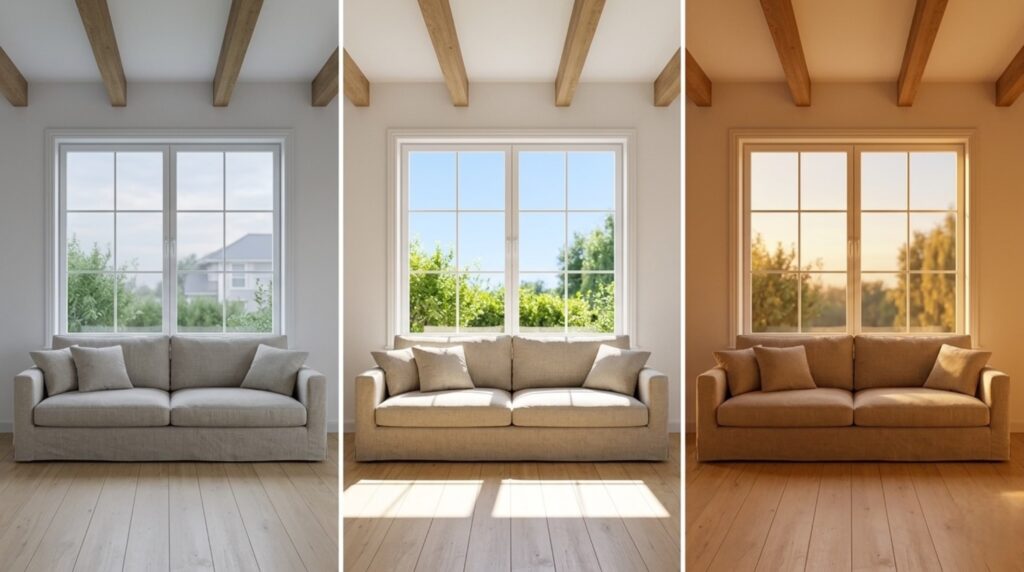
Color is often the first thing people think about, but it should usually come after light. The same shade of paint can look completely different depending on how much natural light a room receives and which direction it faces. A warm white can feel bright and airy in a south-facing room and look flat or even slightly yellow in a north-facing one. Before you commit to any color, get paint samples and live with them on your wall for at least a week, across different times of day. Many a perfectly beautiful color choice has arrived home and immediately turned into a different, less beautiful color on the actual wall. Paint samples exist for this reason. Use them.
Scale is the design element that trips up the most beginners, and it is the one that makes the biggest difference. Scale means choosing furniture and decor that are proportionally appropriate for the size of your room. A large, overstuffed sectional sofa in a small living room does not make the room feel cozy. It makes it feel like the sofa is winning a fight with the room. A tiny rug in a large living room makes the furniture look like it is floating on an island. Getting scale right often means buying smaller furniture than you think you need, or a larger rug than you think makes sense. Trust the math more than your instincts on this one until you have trained your eye.
Step Six: Edit, Edit, Edit
One of the biggest secrets of beautifully designed rooms is not what is in them. It is what is not in them. Editing is the skill that separates a room that looks designed from a room that looks accumulated. Every object in a well-designed space has earned its place. Nothing is there just because there was space for it.
This does not mean minimalism is the only valid choice. A maximalist room can be as intentional as a spare, minimal one. But even maximalism that works has been curated. Every pattern, color, and object has been selected because it belongs in the story the room is telling. Maximalism that does not work is just clutter that has been upgraded to colorful clutter.
Go through each room and apply a simple test to every object: does this thing make the room better, or is it just here? If it is just here, it can go. This is harder than it sounds because many of us have emotional attachments to objects, or guilt about getting rid of something we paid for. But a room full of things you are not sure about will never feel fully yours. Creating space, physically and visually, is often the single most impactful thing you can do for a room before you spend a single dollar on new decor.
How to Put It All Together: Making Your Room Makeover Real
Now that you understand your style, have done your mood board research, and have a sense of the principles that will guide your choices, the next step is actually doing the work. And this is where a lot of people hit another wall. Not because they lack ideas or vision, but because they lack a plan.
Knowing your style is the beginning. Executing it room by room, decision by decision, budget by budget, is a whole other skill. You need to know what to prioritize first. What to save for later. Which purchases are worth spending on and which ones you can keep affordable. How to make a rented home feel like yours without losing your deposit. How to mix what you already own with new pieces without the room looking like an accident.
This is why I put together the Room Makeover Planner, a tool designed specifically to help you move from “I love this aesthetic” to “my room actually looks like this aesthetic.” It walks you through the entire transformation process, room by room, with prompts to help you define your vision, a simple layout for planning your purchases in order of priority, a budget tracker, and a checklist for the small styling details that make the biggest difference. Whether you are doing a full bedroom overhaul or just trying to make your living room finally feel pulled together, the Room Makeover Planner gives you the structure without the overwhelm.
The Common Mistakes to Avoid
No guide to finding your design style would be complete without a look at the most common traps people fall into, because awareness is half the battle.
The first mistake is decorating room by room without any connecting thread. Each room in your home does not need to look identical, but they should feel like they belong to the same house. A color palette, a material, or even just a consistent mood should carry through your home so that moving from room to room feels cohesive, not like channel surfing.
The second mistake is buying everything at once. It is very tempting, especially after all this inspiration gathering, to want to do everything immediately. But rooms decorated in a single shopping session often feel like a showroom, not a home. Give yourself time to live in a space, notice what it actually needs, and add pieces thoughtfully. The rooms that look most beautiful and personal are almost always the ones that have been built up gradually.
The third mistake is following trends without asking if they are right for you. A trend is just something many people like at a particular moment in time. That does not mean you have to like it, or that it suits your space. Mushroom beige might be everywhere right now, but if mushroom beige makes your room feel depressing, the fact that it is trending is completely irrelevant. Trust your own eye over any trend cycle.
The fourth mistake, and probably the most sneaky one, is spending a lot of money before figuring out your style. It is very easy to buy a sofa, three rugs, several sets of curtains, and a collection of throw pillows only to discover that you have been spending without direction and nothing quite goes together. Define your style first. Make a plan. Then buy. In that order.
Conclusion
At the end of the day, interior design is not about impressing anyone. It is about creating a space that supports your life, reflects your personality, and makes you feel genuinely good every time you walk through the door. There is no style that is objectively correct. There is only the style that is correct for you, the way you live, and what makes you feel rested, creative, and at home.
You do not need a design degree to have a beautiful home. You need clarity, a little bit of patience, and the willingness to trust your instincts over the noise of every trend and opinion the internet will throw at you. You already know what you like. This guide is just permission to act on it.