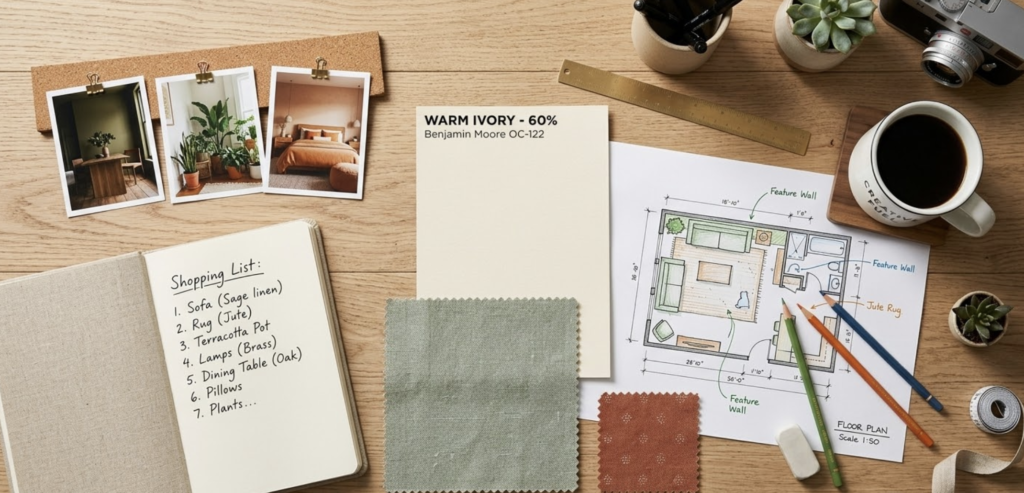
The simple color formula that professional designers have been quietly using for decades — and exactly how you can apply it to your own home today.
Why Most People Struggle With Color in Their Homes
You know that feeling when you walk into someone’s home and it just looks right? Everything sits together nicely, the colors feel calm, and you can’t quite put your finger on why it works so well. Then you go home, look at your own living room, and wonder why it feels like a furniture warehouse had a disagreement with a paint store.
Here is the thing — those beautiful, put-together spaces you see on Instagram and in design magazines are almost never the result of someone having a magical eye for color. They are the result of following a very specific, very teachable formula. And today, we are going to walk through every single detail of that formula together.
The 60 30 10 interior design rule is one of the most useful tools in decorating. It is a color distribution guideline that tells you exactly how much of each color to use in a room so that it looks balanced, intentional, and genuinely lovely to be in. The numbers — 60, 30, and 10 — refer to percentages. Sixty percent of your room uses one color. Thirty percent uses a second color. Ten percent uses a third. That is it. Simple math, extraordinary results.
Think of it like a well-seasoned meal. You have a main ingredient that makes up most of the dish, a secondary flavor that supports it, and a finishing touch that makes everything come alive. Take away the finishing touch and the dish is fine but forgettable. Add too much of it and you have ruined dinner. Color in a room works exactly the same way — and the 60 30 10 rule is your recipe.
In this guide, we are going to break down every layer of the 60 30 10 interior design rule in plain, practical language. We will look at how to choose each percentage, how to apply it to different types of rooms, common mistakes people make, and how to use this rule even if you have never thought about interior design a day in your life. By the end, you will have a clear, confident plan for any room in your home.
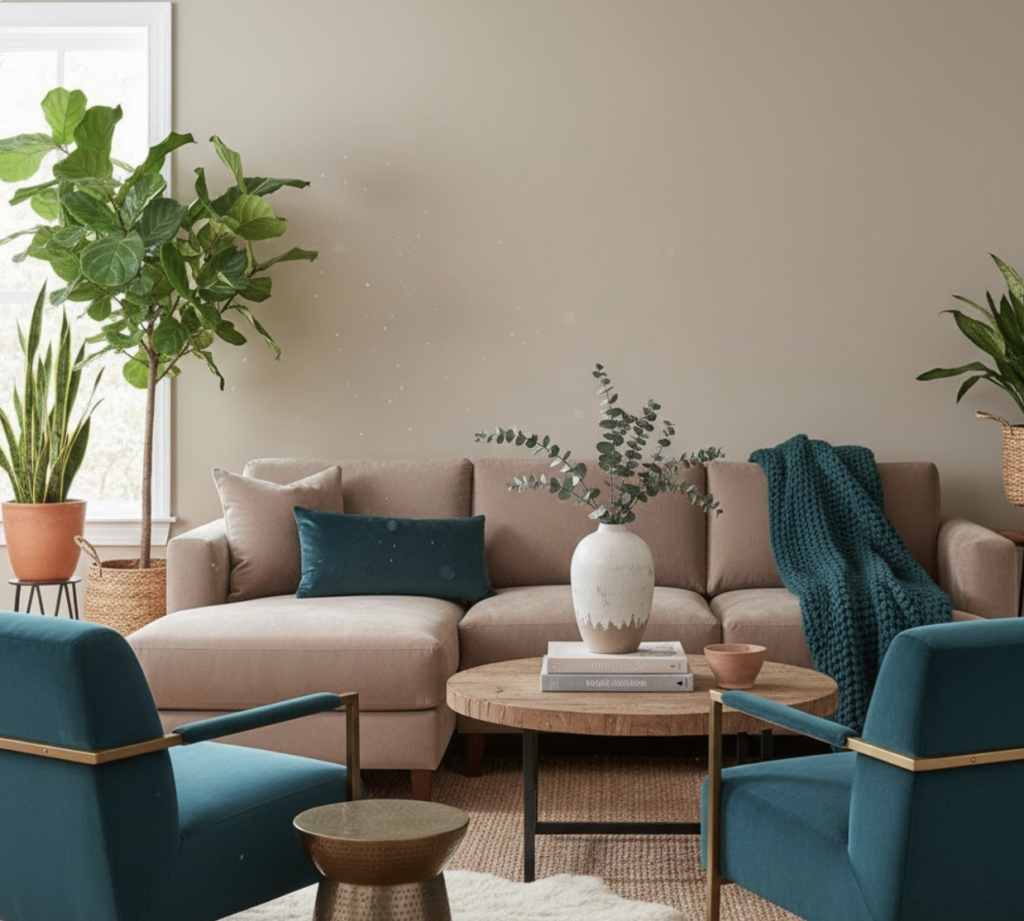
What the 60-30-10 Interior Design Rule Actually Means
Before we start painting walls and ordering throw pillows, let us make sure we understand exactly what the 60 30 10 interior design rule is telling us to do. Because it is not just about color — it is about visual weight, balance, and the way the human eye reads a space.
When you walk into a room, your eye does not scan every item one at a time. It takes in the whole picture first. And what your brain is doing in that split second is looking for patterns, for repetition, for things that feel like they belong together. When a room has a dominant color, a supporting color, and an accent color in the right proportions, your brain reads it as cohesive and intentional. When a room has six colors all fighting for equal attention, your brain reads it as chaotic, even if each individual item is beautiful on its own.
The 60 percent is your dominant color. This is the color that sets the mood of the room. It is the background against which everything else exists. In most homes, this shows up as the wall color, but it can also live in large furniture like a sofa, a large area rug, or even flooring. The dominant color should be the calmest, most versatile color in your palette. It does not have to be white or beige — though those are very popular choices — but it does need to be something you can live with in large amounts without feeling overwhelmed.
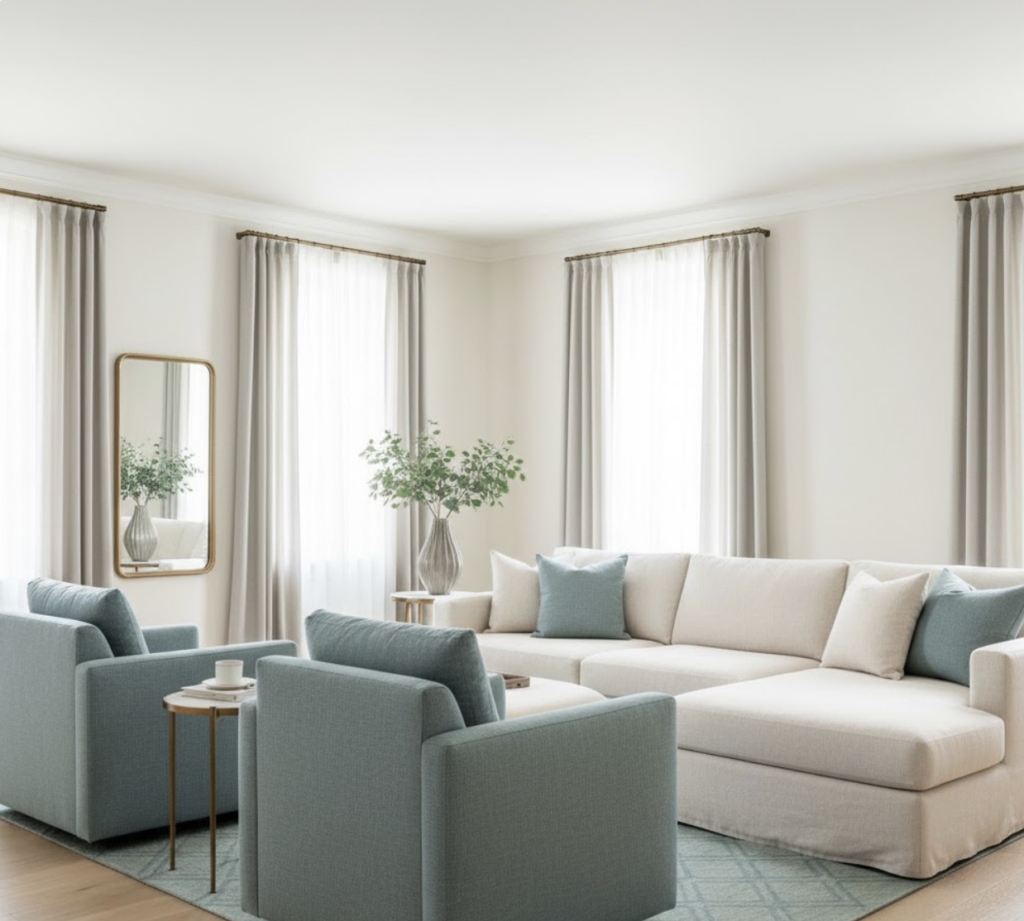
The 30 percent is your secondary color. This is where things get interesting. The secondary color supports the dominant color and provides contrast and depth. It usually shows up in larger furniture pieces — things like armchairs, curtains, a bed frame, or upholstered headboards. The secondary color should complement the dominant color without competing with it. A good test is to hold your two colors next to each other and ask: do these two feel like they are on the same team? Not identical, not opposite enemies, but teammates.
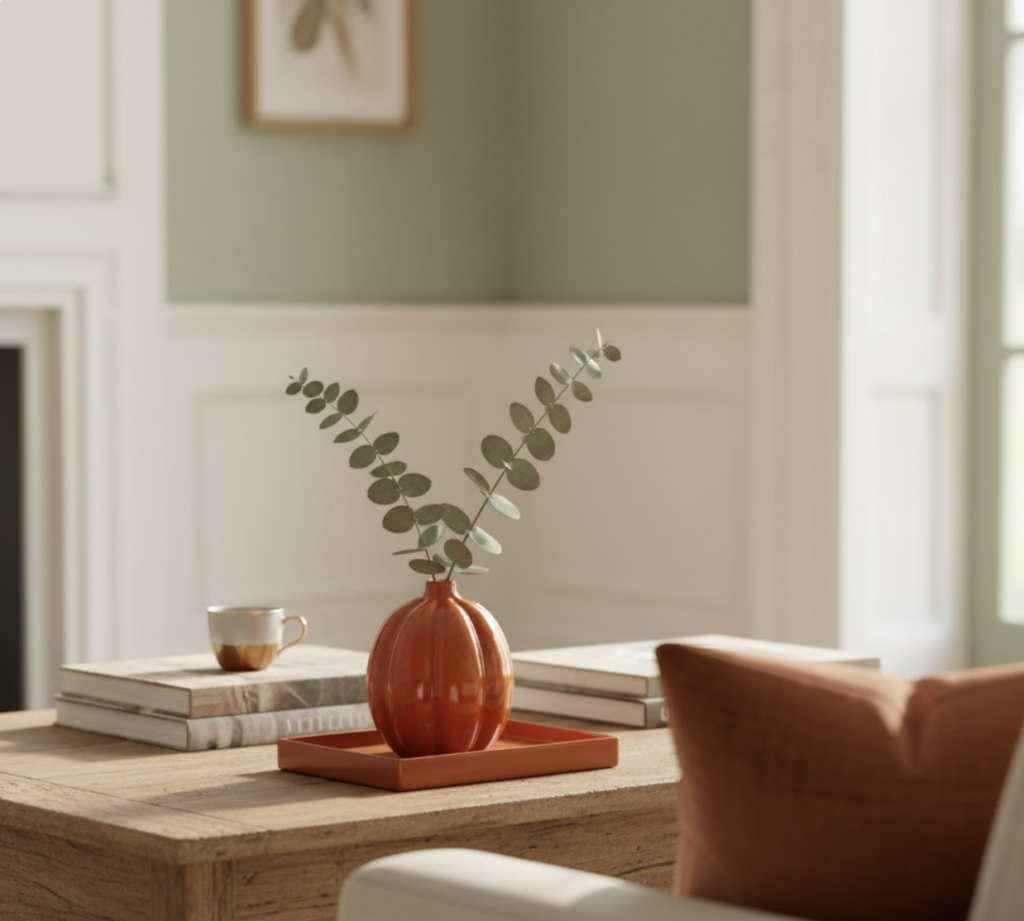
The 10 percent is your accent color. This is the smallest portion and often the most exciting one. It shows up in decorative objects, throw pillows, artwork, small lamps, candle holders, a single painted wall, a plant pot, or any small accessory. The accent color is the one you have a little fun with. It is where you can be bold, use a rich jewel tone, or introduce something unexpected. Because it is only 10 percent of the room, it cannot overwhelm the space — it can only add life to it.
One important thing to understand is that these percentages are visual, not mathematical. You are not measuring square footage with a calculator. You are looking at the room as a whole and asking: which color dominates visually? Which supports? Which pops? Your eye is the measurement tool here, and it is a surprisingly good one once you know what you are looking for.
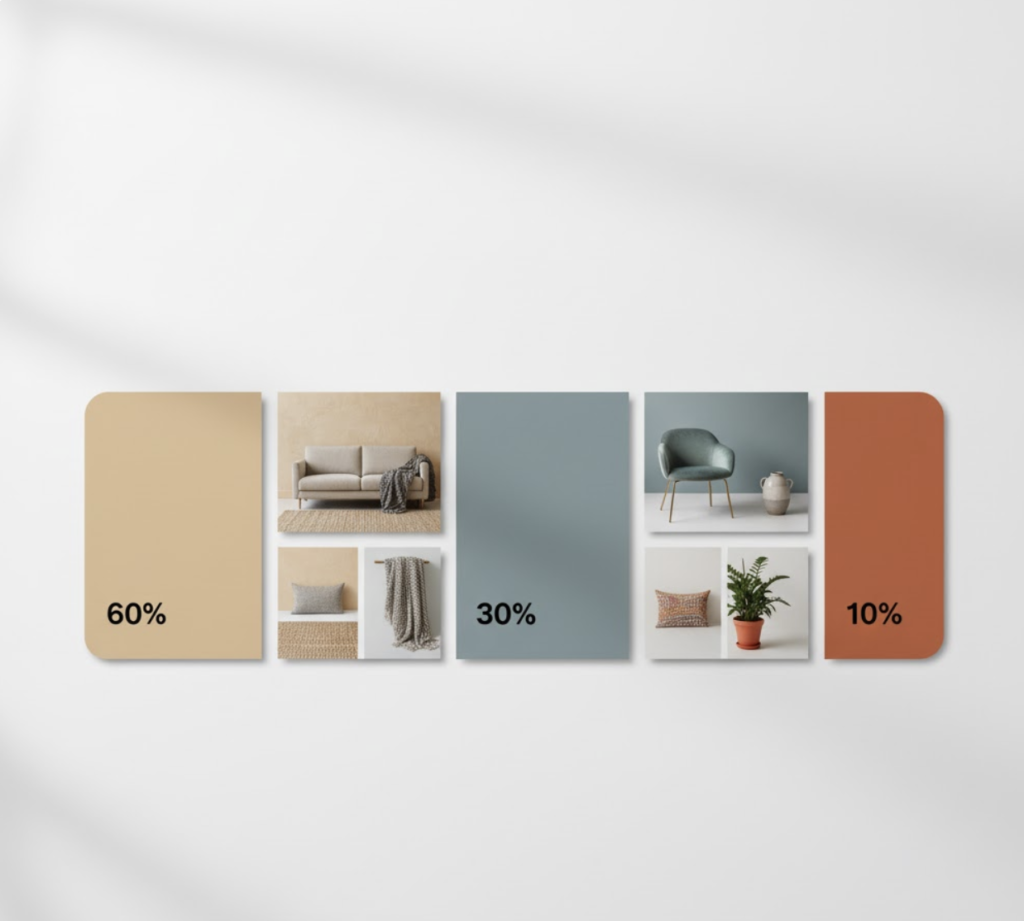
How to Choose Your 60 Percent Color
Choosing your dominant color is probably the most important decision you will make in any decorating project. It affects everything else in the room, from how large or small the space feels to what emotions you experience when you spend time in it. Getting this choice right makes the rest of the 60 30 10 interior design rule incredibly easy to apply.
The most practical way to choose your dominant color is to start with what you already have. If your floor is a warm honey oak, cool greys and stark whites can feel a little disconnected, while warm creams and caramel tones will feel natural. If you have large windows with lots of natural light, you have more flexibility — saturated colors hold up well in bright light. If your room is darker, paler and warmer tones tend to work better because they reflect what little light there is.
Another approach is to start with a piece you love and cannot change — maybe a patterned rug, a beloved sofa, or a piece of art that has a specific color story. If that piece has a background color, that background is often a strong candidate for your 60 percent. Designers do this all the time. They pull the most neutral or most dominant tone from a fixed element and let it lead the rest of the room.
It is also worth thinking about the mood you want in the room. Soft whites and warm creams create a sense of airiness and calm — perfect for bedrooms and reading nooks. Rich, dark colors like deep charcoal, navy, or forest green create a cocoon effect — wonderful for home offices, libraries, or cozy sitting rooms. Mid-tone neutrals like greige (a mix of grey and beige), warm taupe, or soft sage tend to be the most universally flattering and work beautifully in open-plan living areas.
One mistake people make with the 60 percent is choosing something too busy or too saturated. Remember, this color is going to be everywhere. A deeply patterned wallpaper in a bold print, used at 60 percent, will make the room feel like it is shouting at you. Save the drama for the 10 percent. Your dominant color should be the quiet, steady presence in the room — the one that makes all the other colors look their best.
Think of the 60 percent as the stage and everything else as the performance. The stage does not need to be exciting. It just needs to be the right backdrop so the performance can shine.
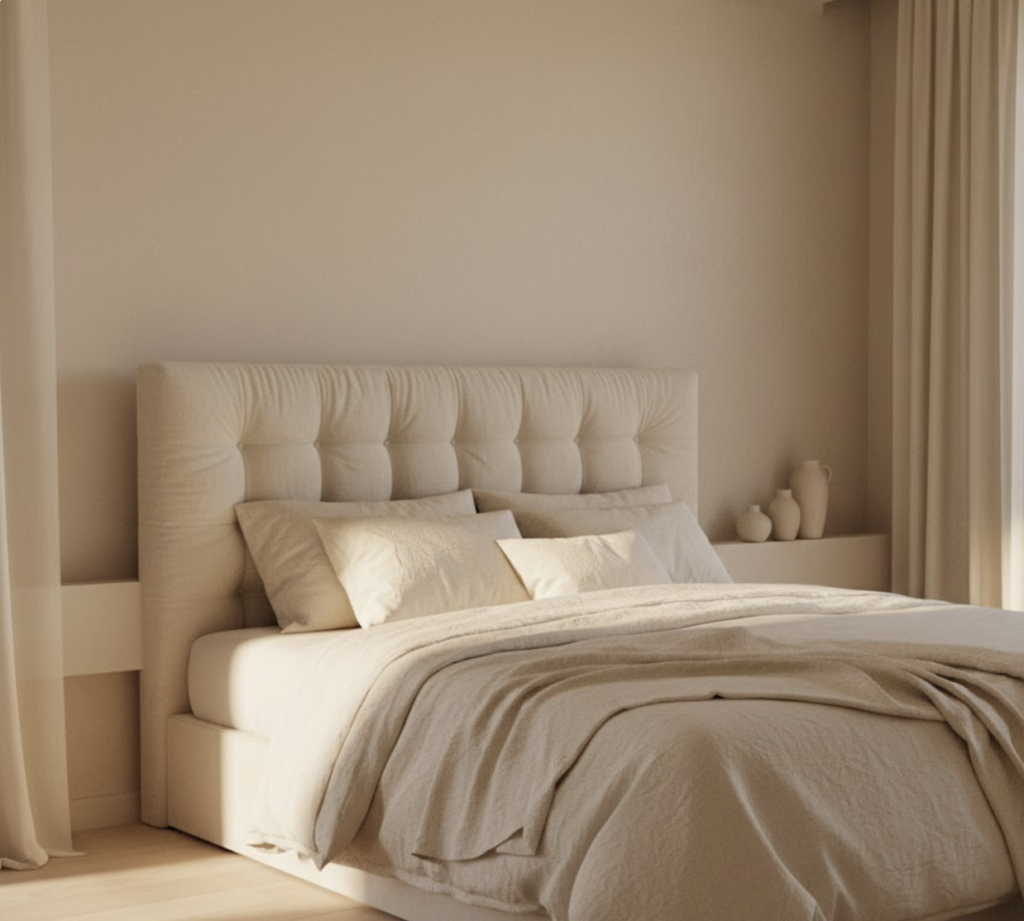
How to Pick Your 30 Percent Secondary Color
Now that your dominant color is in place, it is time to bring in the supporting actor. The 30 percent color is the part of the room that gives it character and keeps it from feeling like a monochromatic box. This is usually where people start to feel a little uncertain — they are afraid to commit to a second strong color because they worry it will clash or compete. But with the right approach, choosing your secondary color is more straightforward than it seems.
The most reliable method for finding a secondary color is to use a color relationship that designers call complementary, analogous, or split-complementary. In simple terms: complementary colors sit opposite each other on the color wheel (like blue and orange, or green and red), which creates strong contrast. Analogous colors sit next to each other (like blue, blue-green, and teal), which creates a harmonious, flowing feel. Split-complementary pairs one color with the two colors on either side of its complement, giving you contrast without the full intensity of a direct complement.
For most rooms, an analogous or split-complementary relationship between the 60 and 30 percent colors will feel the most natural and livable. If your walls are a warm cream (yellow undertone), a secondary color with a similar warmth — like a dusty terracotta, a sage green, or a warm grey — will feel cohesive. If your dominant color is a cool grey-white, a secondary in a cool blue-green or slate will sit beautifully with it.
In a living room, the 30 percent typically shows up in the main seating pieces that are not the sofa. If your sofa is the 60 percent, your armchairs, accent chairs, or loveseat carry the 30 percent. In a bedroom, the bed is usually 60 percent, and the remaining upholstered or wooden furniture — nightstands, a dresser, a bench at the foot of the bed — carries the 30 percent color. In a dining room, the table might be 60 percent (especially if it is a large wood surface), and the chairs carry the 30 percent.
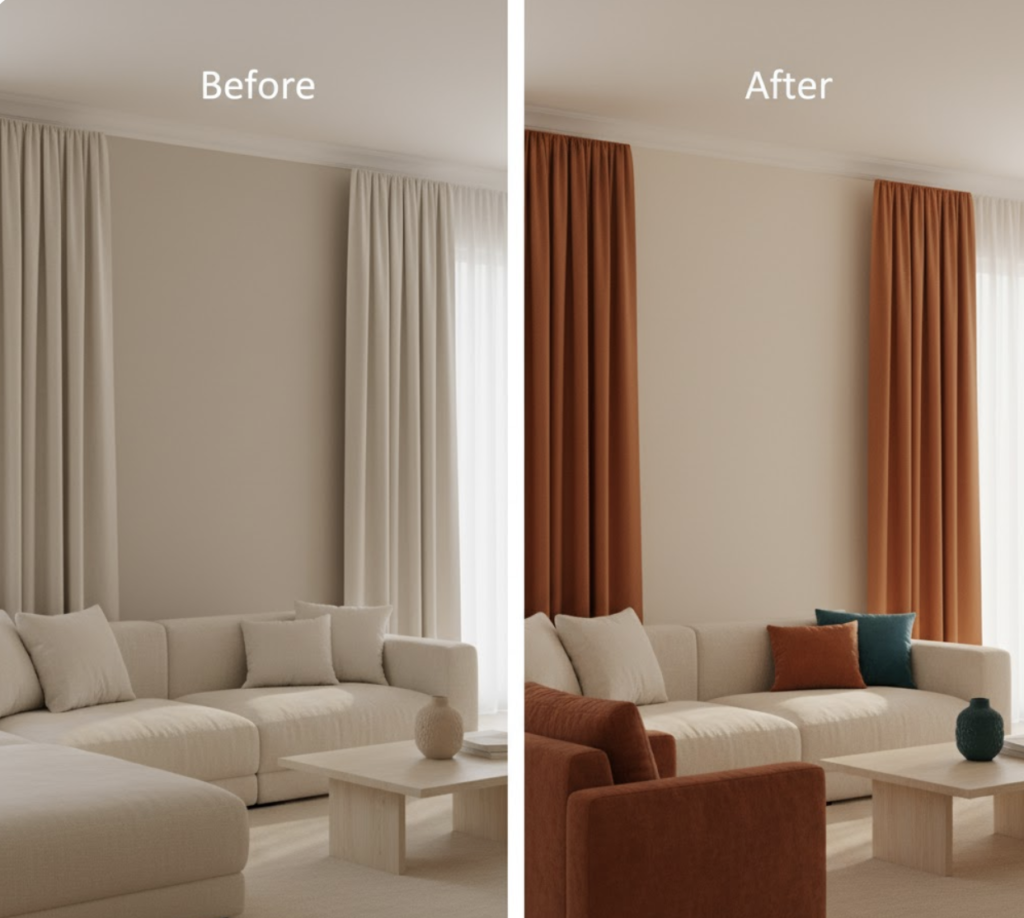
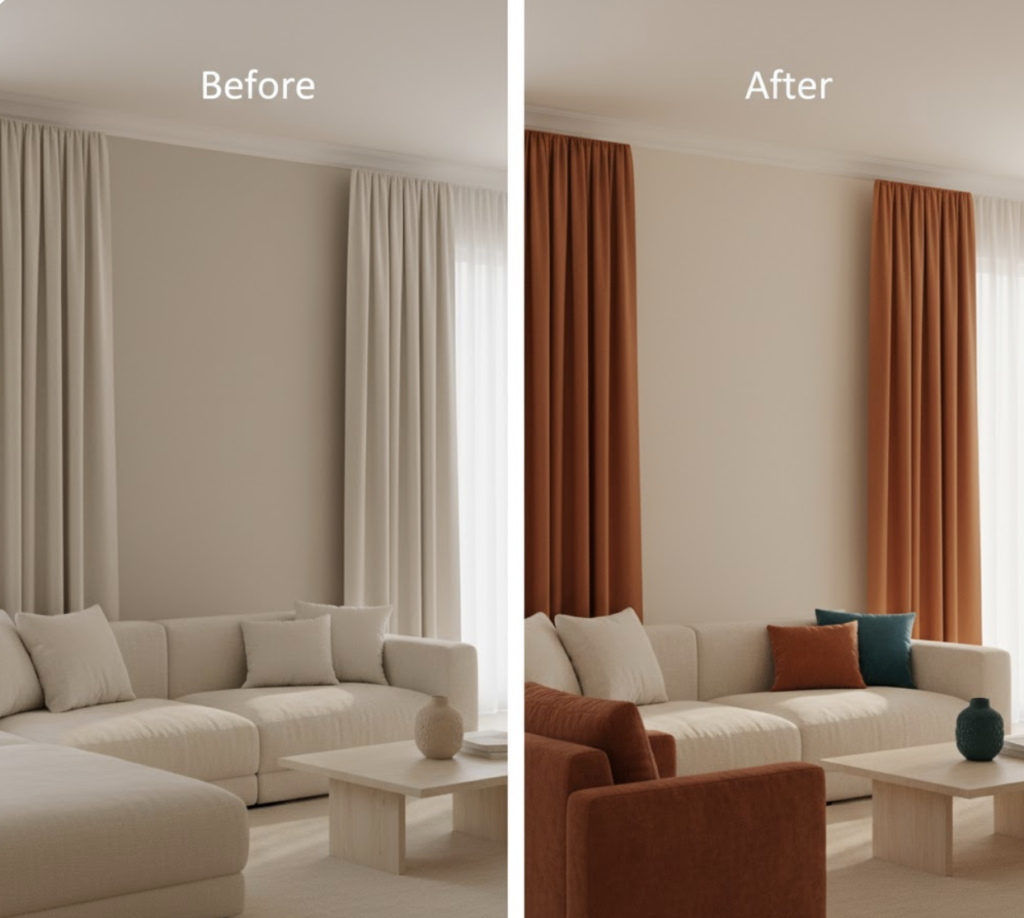
Curtains and window treatments are also a powerful place to put your 30 percent color. They are large enough to make a real visual statement, and because they frame the room rather than sit in the center of it, they do not compete with the furniture. A room with cream walls and a cream sofa gains instant depth and sophistication when you bring in long, floor-to-ceiling curtains in a contrasting secondary color.
The only firm rule for your secondary color is that it should not fight with the dominant color for attention. You want the two of them to agree on the overall mood — warm together, cool together, or intentionally mixed in a way that feels considered rather than accidental. When in doubt, bring a paint chip or fabric swatch of your dominant color to the store with you. Hold things up next to it. Your gut will tell you when two colors are on the same team.
How to Apply Your 10 Percent Accent Color
Here it is — the part everyone gets excited about, and for good reason. The 10 percent accent color is the jewelry of the room. It is the detail that catches your eye, makes you smile, and tells you that a real person with real taste put this space together. And because it is only 10 percent, you get to have a little more fun with it than you might expect.
Your accent color can be bold. It can be surprising. It can be the richest, most saturated version of a color that you love. The reason you can go bolder here than with the dominant or secondary colors is precisely because there is so little of it. A room with cream walls, sage green chairs, and deep burgundy accents does not feel overwhelming — it feels rich and layered. Put that same burgundy on the walls and suddenly the room feels like a Victorian study (which is either exactly what you wanted or the opposite of what you needed).
The best places to put your accent color are objects that naturally draw the eye: throw pillows, decorative vases, candleholders, a single piece of framed art with a bold color story, a small side table, a lamp base, books arranged by color on a shelf, a plant pot, or a coffee table tray with a few small objects. These are all things that can be swapped out relatively cheaply if you want to change the accent color in the future — which is one of the most practical advantages of putting your boldest choices here.
You can also use your accent color in architectural details. A painted interior door, the inside of a bookcase, a single wall (sometimes called a feature wall), or the ceiling in a small room. These are higher-commitment choices, but they create a stunning effect when done well. A navy ceiling in a bathroom with white walls and warm wood accents is a perfect example of a 10 percent color making an outsized impact.
One technique that designers use to make accents feel intentional rather than random is repetition. If your accent color appears in only one spot, it can look like an accident. But if the same color appears in three or more places — a throw pillow, a small piece of art, and a candle — the eye reads it as a deliberate choice. The color feels woven into the room rather than dropped into it. You do not need a lot of the accent color. You just need enough of it in enough places that it reads as a plan.
A practical tip: buy your accent pieces last. Once your 60 and 30 percent colors are in place, stand in the room and look at what it needs. Sometimes you think you want a bright coral accent and then discover the room actually needs a deep forest green. The room will often tell you what it wants if you have done the first two steps correctly.
Applying the 60 30 10 Rule Room by Room
1) Living Room
The living room is where the 60 30 10 interior design rule gets to do its best work, because it is typically the largest and most visually complex room in the home. There are more surfaces, more furniture, more objects, and more opportunity for the formula to shine — or fall apart.
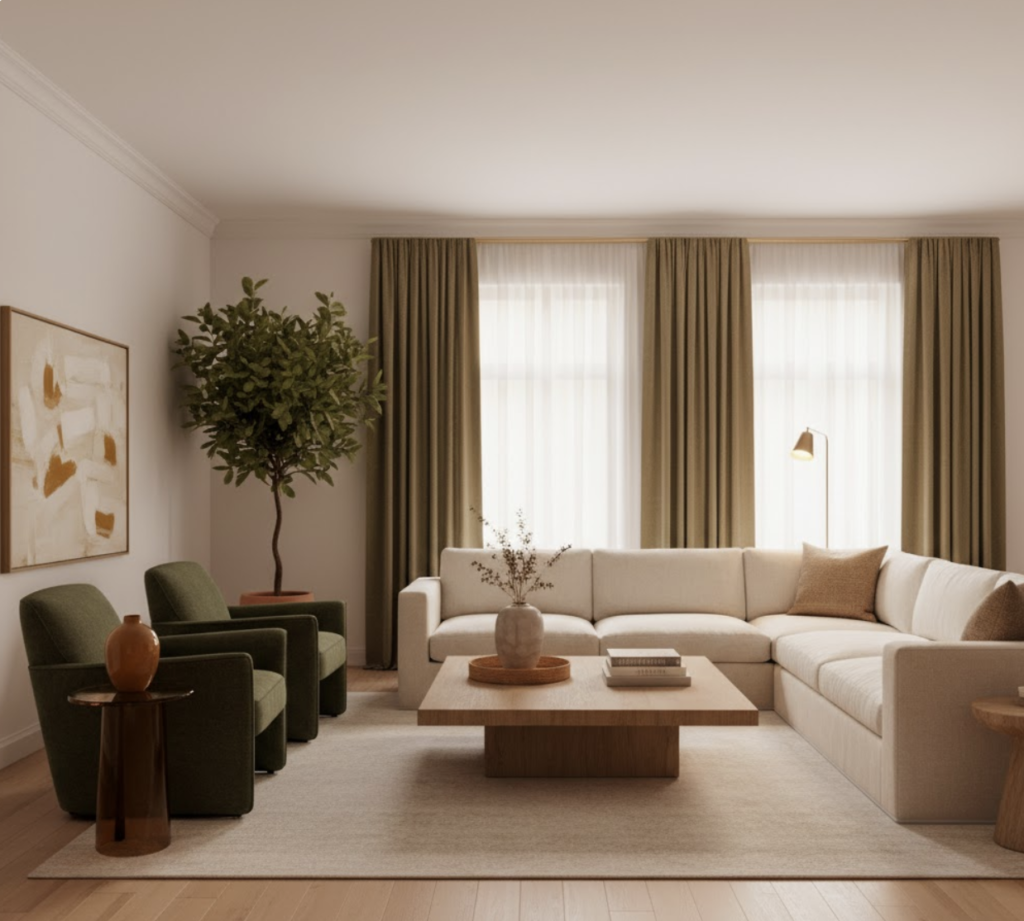
In a living room, your walls and flooring together often carry a significant portion of the 60 percent. If your walls are a warm off-white and your floors are a medium wood tone, you already have the bones of your dominant color story in place. The largest sofa should continue this 60 percent color story — either matching the walls closely or echoing the same warm or cool undertone. A large area rug in the 60 percent color, with a subtle texture or pattern, can also reinforce the dominant tone without making the room feel flat.
The 30 percent in a living room most naturally lives in the accent chairs, the secondary sofa if you have one, the curtains, and potentially a large bookcase or media unit. These are all big enough pieces to register as secondary presence without dominating. If you choose a deep, rich secondary color like hunter green, navy, or warm terracotta, it will create a beautiful contrast against a lighter dominant color and give the room depth and warmth.
Your 10 percent accent in the living room has the most options. Throw pillows are the classic choice because they are cheap, changeable, and have a big visual impact relative to their size. But do not forget about art — a single large painting or print with your accent color can anchor the room powerfully. Candles, decorative bowls, a bold lamp, the spines of books, a side table in a painted color, or even a small upholstered stool can all carry the accent percentage beautifully.
2) Bedroom
The bedroom is a more intimate space and the 60 30 10 rule becomes even more important here because the wrong color balance can disrupt sleep, make the room feel smaller, or simply make you feel unsettled when you walk in. The goal in a bedroom is usually calm and rest, which means your dominant and secondary colors should lean soft and soothing, and the accent can add just enough life to keep the room from feeling like a spa brochure.
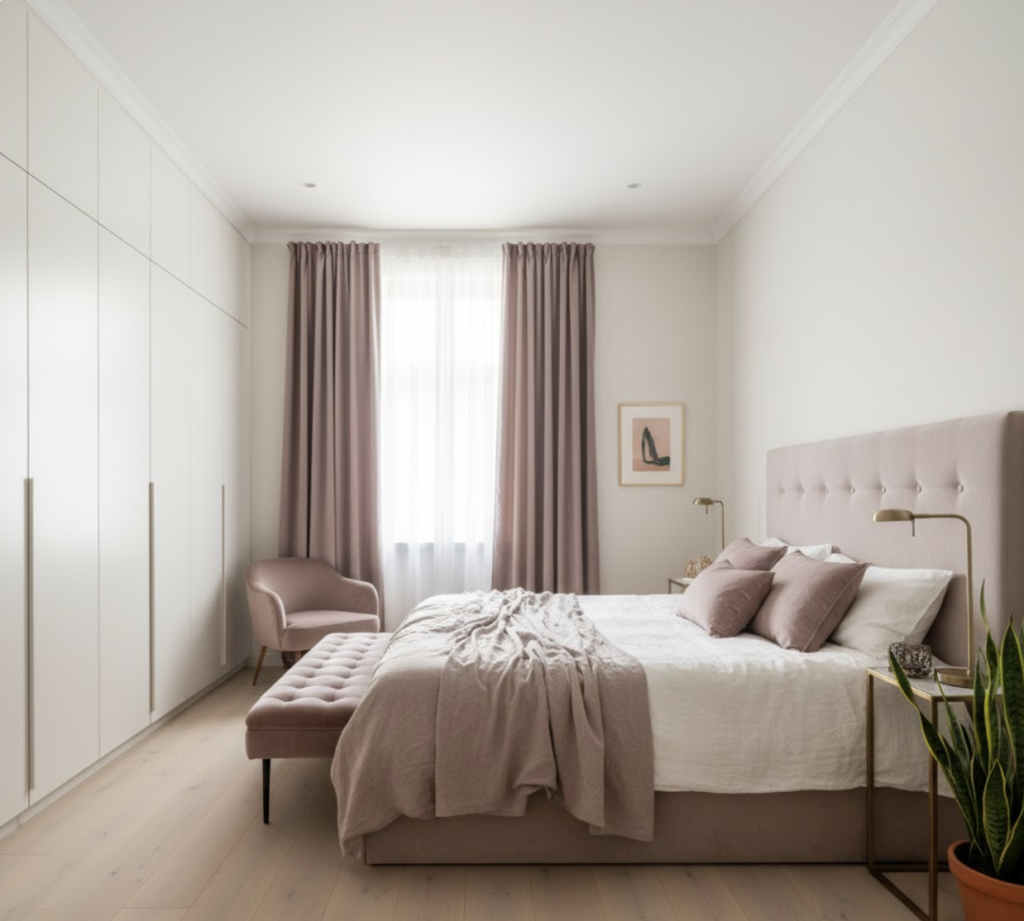
Your walls, the headboard, and the bedding together carry most of the 60 percent in a bedroom. If you choose a white or pale tone for all three, the room will feel spacious and calm. If you want something more dramatic, a deep, moody color on all four walls with a matching upholstered headboard and pale bedding can also work beautifully — the key is that the dominant color sets a consistent mood throughout. Wardrobe doors, if they are large, can also contribute significantly to the 60 percent.
In the bedroom, the 30 percent color often shows up in soft furnishings — upholstered bedside tables, a fabric-covered bench, a chair in the corner, or a throw draped across the bed. Curtains are one of the easiest and most impactful ways to bring in the 30 percent color in a bedroom, because they frame the windows and create a visual anchor for the room. Choose a fabric with some weight and texture, and the color will have a richness that flat paint cannot replicate.
Bedroom accents can be small and precious — a pair of bedside lamps in a jewel tone, a single piece of art above the bed, a ceramic tray holding a few objects in your accent color, or even just a stack of books. The bedroom is a room where less is genuinely more, and a very restrained 10 percent accent can feel more elegant than a very obvious one.
3) Kitchen and Dining Room
Kitchens and dining rooms present a slightly different challenge because there are so many fixed elements — cabinets, countertops, flooring, appliances — that you may not be able to change easily. But the 60 30 10 interior design rule is actually incredibly helpful here precisely because you have so many constraints. It gives you a way to work with what you have rather than feeling paralyzed by it.
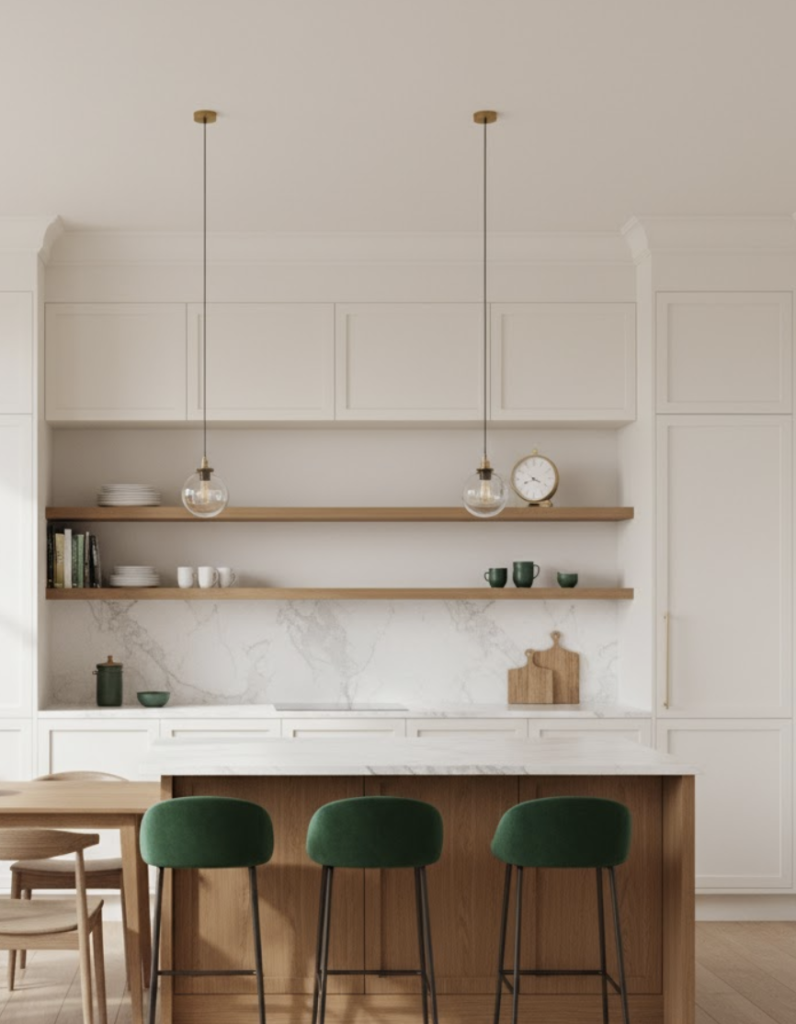
In most kitchens, the cabinet color (or the wood tone) carries a huge amount of the 60 percent simply because cabinets cover so much wall and floor space. If your cabinets are white, white is likely your dominant color. If they are a natural wood tone, that wood tone is your 60 percent. The floor, backsplash, and walls then contribute to either the 60 percent (if they match or closely tone with the cabinets) or shift into the 30 percent territory.
The 30 percent in a kitchen often shows up in the countertop material, the island (if it is a contrasting color to the main cabinets), open shelving, and seating at a breakfast bar. In a dining room, the dining table — particularly a large wood table — often carries the 30 percent, while chairs carry either the 30 or the 10 depending on their color and how strong a visual presence they have.
Accent colors in kitchens and dining rooms can be introduced through bar stools with upholstered seats, pendant lights above an island, a backsplash with a colored tile detail, artwork on a wall, a runner rug, or table accessories like placemats, napkins, and a central vase. These are all easy to swap out seasonally, which is one of the great joys of using the accent color for your most expressive choices.
4) Home Office
The home office is one of the most underestimated rooms to decorate thoughtfully, and one where the 60 30 10 interior design rule can make a particularly big difference. Because you spend focused, active mental energy in this space, the color balance affects your productivity and how you feel throughout the day.
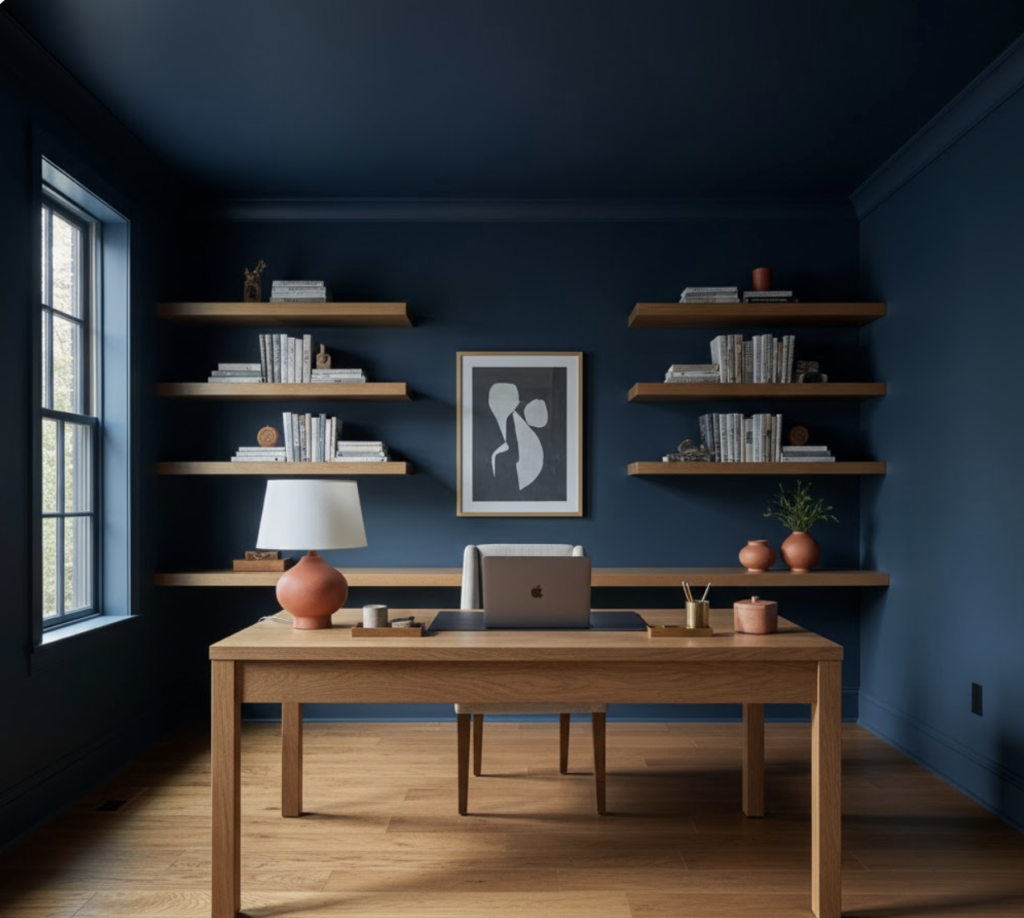
For a home office, the 60 percent color tends to work best when it is either very calm and neutral (white, soft grey, pale sage) or when it is something that feels energizing without being distracting (a deep, rich tone like navy or dark forest green). The choice depends entirely on your working style. Creative professionals often work well in richer, more saturated environments. People who need very focused, analytical concentration often prefer calmer neutrals.
The 30 percent can add a lot of personality to a home office without interrupting focus. A desk in a contrasting color, built-in shelving in a warm wood tone, or a pair of chairs in an accent fabric can create that sense of a curated, intentional workspace. The 10 percent is where desk accessories, lamp colors, framed prints, book organization, and small plants come in — and in a home office, these are genuinely enjoyable to style because they reflect your personality in a room that is entirely yours.
The Most Common Mistakes People Make With the 60-30-10 Rule
Even with a great formula, there are a few very common ways people go wrong. Knowing these mistakes in advance will save you a great deal of time, money, and the particular frustration of realizing your freshly painted room does not feel right.
The first mistake is treating the rule as absolute rather than as a guide. The numbers 60, 30, and 10 are not commandments. They are a starting point. Some rooms look stunning at 70-20-10. Others work beautifully at 55-35-10. The point is that one color dominates, one supports, and one accents. If you get rigidly mathematical about the percentages, you will tie yourself in knots trying to calculate whether your throw pillow is contributing exactly 2.7 percent to the room’s color story.
The second mistake is using three colors that are all too similar in value. Value, in color terms, means how light or dark a color is. If your 60, 30, and 10 percent colors are all medium-toned — a medium warm grey, a medium dusty blue, and a medium sage green — the room will feel muddy and flat, even though each color individually is lovely. You need contrast between your three percentages. A light dominant, a medium secondary, and a dark or vivid accent tends to create the most readable, satisfying result.
The third mistake is ignoring the undertones in your colors. Colors have undertones — hidden secondary tones beneath the surface — and when undertones clash, rooms feel wrong even when the colors seem to match. A white with pink undertones paired with a grey that has blue undertones will always feel slightly off, even in a simple two-color room. When choosing your three colors, make sure their undertones agree: all warm (yellows, reds, oranges beneath the surface), all cool (blues, greens, purples beneath the surface), or very intentionally mixed.
The fourth mistake is forgetting about the things you cannot change. If your floors are a warm honey oak, adding cool grey furniture without acknowledging the floor will create a temperature clash. Your floors, ceiling, and trim are all contributing to the color story of a room whether you address them or not. When selecting your three colors, hold swatches against the floor and look at the whole picture.
The fifth mistake — and this one is actually the funniest — is panicking and buying everything in the same safe beige and then calling it ‘neutral.’ A room where the 60, 30, and 10 percent are all different shades of the same color is not balanced. It is monochromatic. Monochromatic can be done very intentionally and beautifully, but it requires texture variation to work, and it is a different design choice from the 60 30 10 rule. The rule requires three genuinely different colors that relate to each other. Beige, greige, and ecru are not three different colors. They are the same color having an identity crisis.
Working With Patterns and Textures Within the 60-30-10 Framework
One of the most common questions people ask when they learn about the 60 30 10 interior design rule is: what do I do with patterns? What counts as what color when a fabric has three colors in it? And what about texture — does a chunky woven blanket count as the same color as a flat wall, even if both are technically cream?
The answer is actually quite liberating: patterns and textures do not break the 60 30 10 rule. They work within it. When you have a patterned fabric, look at the color that makes up the most surface area of the pattern. That is the color the fabric contributes to your room’s overall palette. If you have a cream curtain with thin dusty blue stripes, that curtain reads primarily as cream — so it contributes to the 60 percent. If the stripes are thick and bold and take up 40 percent of the fabric, it reads as both cream and blue, and contributes to both the 60 and 30 percent.
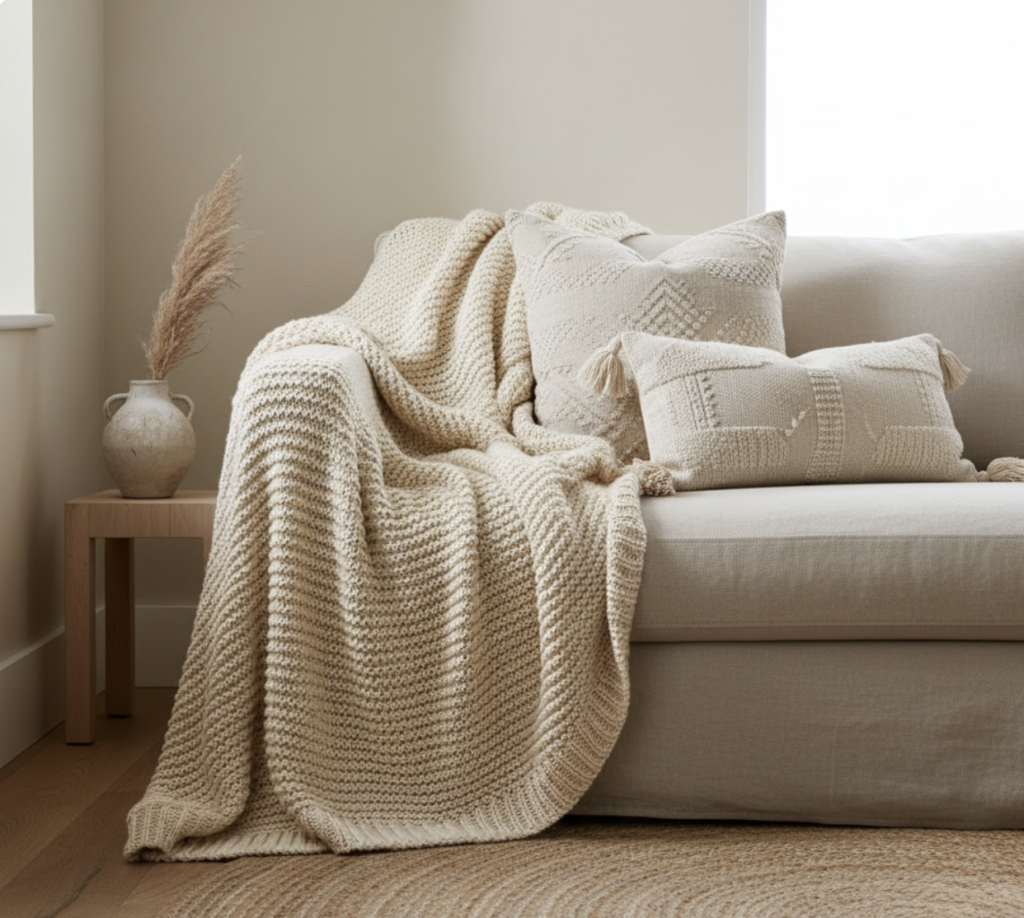
Texture, on the other hand, does something more subtle than color — it affects perceived value (light and dark) and perceived warmth (rough textures look warmer than smooth ones of the same color). A chunky wool blanket in cream will read as slightly darker and warmer than a smooth linen pillow in the same cream. This is actually a beautiful tool within the 60 30 10 framework: you can vary your dominant color through texture, creating depth and visual interest without adding a fourth color to the room.
Mixing textures within your three percentages is one of the hallmarks of a designer-level room. A 60 percent that includes a smooth plaster wall, a linen sofa, a wool rug, and raw wood flooring all in the same warm cream family will feel incredibly rich and layered — far more interesting than a room where every surface in the dominant color is the same material and finish.
When it comes to patterned wallpaper or patterned upholstery, the rule of thumb is to let the busiest pattern live in the smallest area. A bold geometric wallpaper works best as an accent wall (part of your 30 or 10 percent territory), not as something that covers all four walls. A wildly patterned fabric works best on an accent chair (30 percent) or a throw pillow (10 percent), not on the main sofa. The busier the pattern, the smaller the area it should cover — and the 60 30 10 rule gives you the exact framework for making that decision.
How to Apply the 60-30-10 Rule to a Room You Cannot Fully Renovate
Not everyone has the budget or the permission (hello, renters) to repaint walls, replace flooring, or change the big fixed elements of a room. But the 60 30 10 interior design rule does not require any of those things. It works beautifully within constraints — and in some ways, constraints make it easier because they reduce the number of decisions you need to make.
If your walls are a color you cannot change, that color is your 60 percent whether you like it or not. Your job now is to find a secondary and accent color that works with what you have. Start by identifying the undertone of the wall color — is it warm, cool, or neutral? Then look for a secondary color with a compatible undertone. If you have a rental-standard white wall with a very slight cool undertone, you have enormous flexibility: almost any secondary color will work against a cool white, from warm dusty rose to deep forest green to rich cobalt.
Large furniture you cannot replace can also define your 60 percent. If you have a big grey sofa you are stuck with, grey is part of your dominant color story. A grey sofa with cool white walls and a light grey rug makes grey your unambiguous 60 percent. Now you need a warm secondary to add contrast — maybe a caramel leather armchair, warm wood shelving, or rust-colored curtains — and a bold accent to bring the room alive.
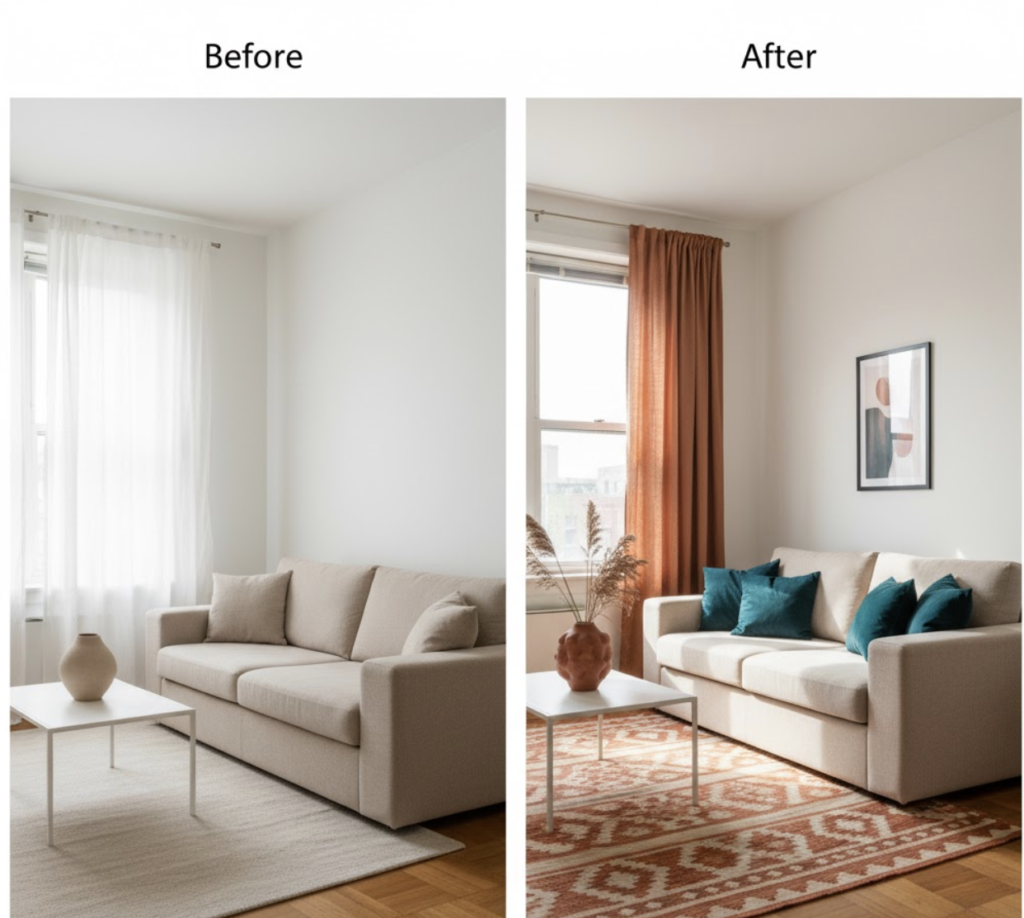
In rental spaces, the most powerful tools for applying the 60 30 10 rule are textiles and accessories. A large area rug can dramatically shift the dominant color of a room — and a good rug can be one of the most impactful purchases you make for a space you cannot repaint. Curtains, especially floor-to-ceiling ones, cover a huge amount of visual space and can carry your secondary color. And accent pieces are entirely yours to choose, stack, and style at will.
Removable peel-and-stick wallpaper has become genuinely good in recent years and provides another tool for renters who want to add color or pattern without a permanent commitment. A single accent wall of peel-and-stick wallpaper in your 30 percent color can completely transform a room — and it comes down cleanly when it is time to move. As a renter, this is practically a superpower.
Choosing a Color Palette From Scratch
If you are starting completely fresh — whether in a new home, a newly renovated space, or a room you are gutting and reimagining — you have the luxury of choosing all three percentages from scratch. This is exciting and slightly daunting in equal measure. Here is a reliable process for doing it well.
Look for rooms that make you want to sit down, pour a cup of tea, and stay. Those are the spaces with the right emotional resonance for your life. Save these images to a folder, a Pinterest board, or even just your phone camera roll.
Once you have 10 to 20 inspiration images, look at them as a group and identify patterns. What colors keep showing up? Are they warm or cool overall? Light or dark? Rich or muted? You will usually find a theme — most people are drawn to either a warm palette or a cool palette without always consciously knowing it. That theme tells you a lot about the undertone direction your three colors should take.
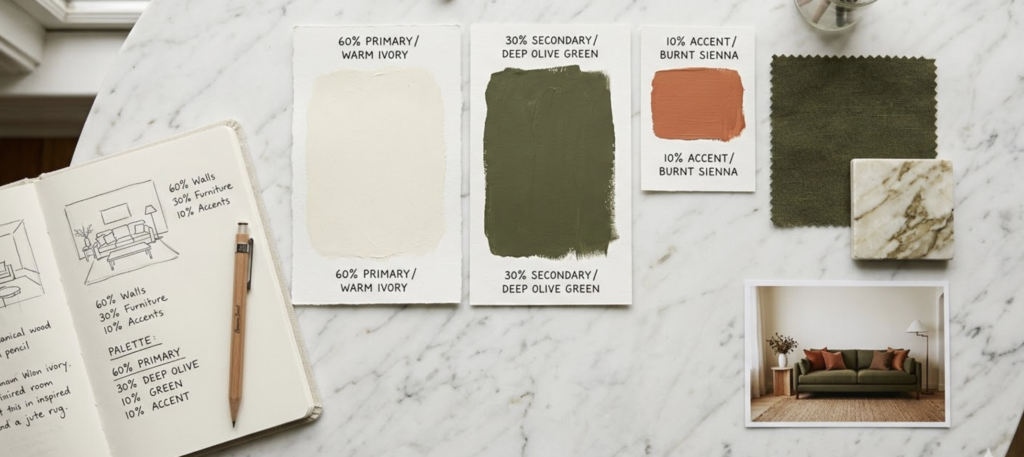
Next, identify the specific colors. From your inspiration images, try to name the three colors you are seeing most consistently: one dominant, one secondary, one accent. Then go find real-world versions of those colors in paint swatches, fabric samples, and material samples. Bring them home and live with them in your space for at least a few days before committing. Colors look dramatically different in different lighting conditions — the lovely dusty blue that looked perfect in the store can look green in your north-facing bedroom or almost purple in your warm-lit living room.
Test paint swatches on the actual walls and look at them at different times of day — morning light, midday light, afternoon light, evening with lamps on, and nighttime. Color changes so significantly throughout the day that a 12-inch paint swatch tested across all these conditions will tell you far more than any color matching tool or online preview.
Once your paint and large fabric colors are confirmed, build outward. Your dominant is set. Now find your secondary in fabric stores, furniture showrooms, and online. Then, and only then, start shopping for accent pieces. Buy accent pieces gradually — it is far better to have a room with one great accent piece and two empty spots than a room crammed with 11 medium-quality accent objects all fighting for your attention.
Using this rule with dark and bold colors
Most of the examples used when teaching the 60 30 10 interior design rule involve light neutrals as the dominant color — and for good reason. Light primary colors are forgiving, flexible, and easy to layer. But what if you love deep, moody, saturated spaces? What if your heart belongs to dark walls, rich jewel tones, and the kind of rooms that look like a very stylish cave? Good news: the rule works just as well in a dark palette, and sometimes even better.
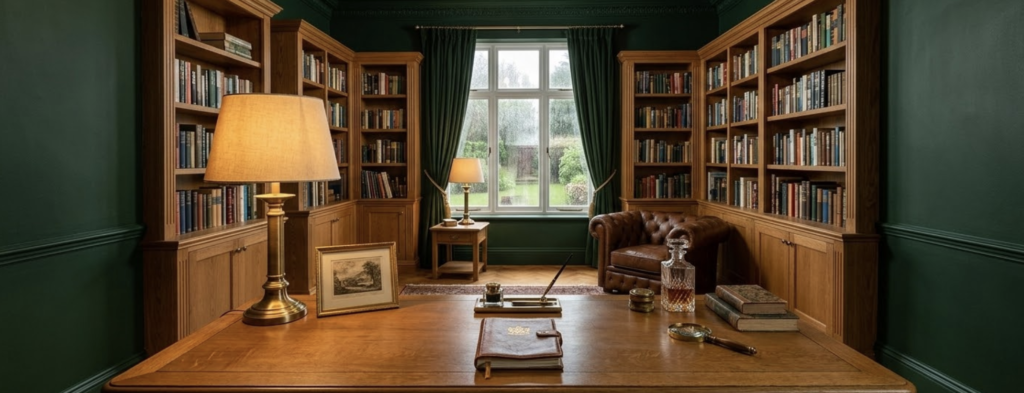
When your 60 percent is dark — think deep charcoal, inky navy, forest green, or plum — your room will naturally feel more dramatic and intimate. This is a wonderful quality in certain rooms (a home library, a home theater, a powder room, a sophisticated dining room) and a more challenging one in others (a small bedroom without much light, a living room you want to feel bright and airy). The key to making a dark dominant color work is contrast: if everything is dark, the room feels flat. You need your 30 percent to be significantly lighter or more vivid than the dominant color.
A dark dominant paired with a warm natural wood secondary is one of the most universally loved combinations in interior design right now. Think of deep forest green walls with warm oak floors and shelving. The warmth of the wood lifts the heaviness of the dark green and creates a space that feels rich without feeling oppressive. In this case, the 10 percent accent can be something unexpected and vivid — a terracotta orange, a deep mustard, or even a warm pale gold.
Dark rooms also benefit enormously from the way accent colors catch light. In a light room, a gold vase is pretty but subtle. In a dark room, that same gold vase glows. The contrast between the dark background and the bright accent color makes the accent pop far more vividly than it would in a neutral room. This is one of the real joys of working with a dark dominant — your 10 percent gets to be genuinely dramatic.
One practical consideration with dark dominants is that the ceiling and floor become very important. A dark room with a white ceiling reads lighter and less oppressive than the same room with a matching dark ceiling (unless a cosseting effect is exactly what you are after). The floor — especially if it is a light wood or pale tile — also provides visual relief in a dark room. These lighter elements contribute to your 60 percent story even while the walls are deep and dramatic, and they prevent the space from feeling like a sensory deprivation chamber.
Seasonal Updates
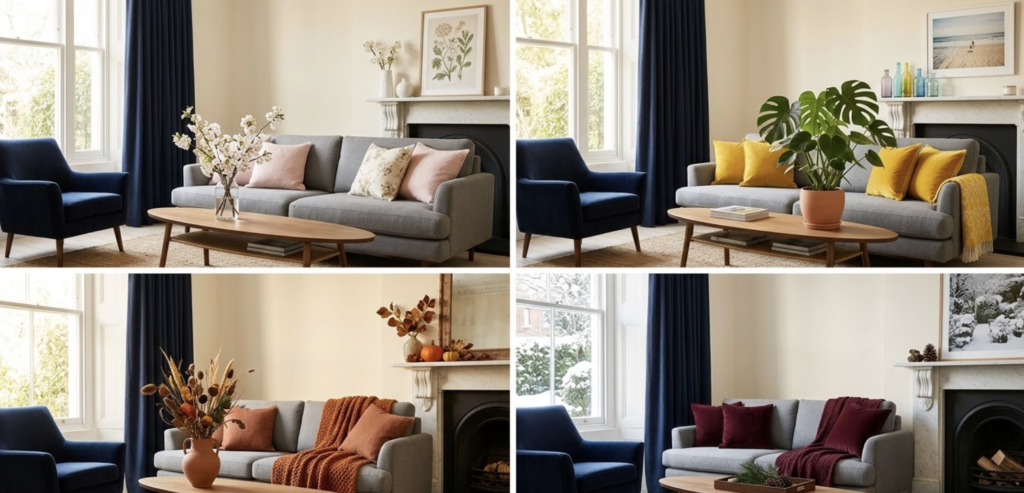
One of the most practically useful aspects of the 60 30 10 interior design rule is how easy it makes seasonal refreshes. Because the most changeable colors — your accent pieces and some of your secondary soft furnishings — are the ones you have invested least in, you can update the mood of a room with a relatively small outlay and without any structural changes.
In autumn and winter, most people instinctively want their homes to feel warmer, cosier, and more enveloping. Within the 60 30 10 framework, this usually means shifting the accent color toward warmer, richer tones — deep amber, burnt orange, jewel-toned burgundy, warm forest green. You can do this by swapping throw pillow covers, adding a new throw blanket, changing a few small decorative objects, and updating any flowers or plant cuttings to something with autumn tones. If your secondary color is on curtains, swapping to a heavier fabric in the same color family will also add to the winter warmth of the space.
In spring and summer, the move is usually toward lighter, more energetic accent colors — soft blush, sky blue, bright chartreuse, fresh lemon yellow, or coral. The same room that felt cosy and dark in December can feel fresh and sunny in May just by swapping your accent pieces to lighter, more playful tones. This is particularly effective if your 60 and 30 percent colors are neutral or close to neutral — they provide the perfect clean backdrop for your changing accent story.
The real genius of keeping your investments in the 60 and 30 percent categories relatively color-conservative is that it opens the door to this kind of seasonal flexibility. Your large sofa, your wall paint, your curtains — these are things you are going to live with for years. If they are in a calm, beautiful neutral, they become the stage for a constantly refreshing performance. Your accent color is the costume change. And nobody charges an understudy fee for a throw pillow.
Open-plan spaces
Open-plan spaces present one of the most interesting challenges for the 60 30 10 interior design rule, because you effectively have multiple ‘rooms’ within one continuous space. The living area, dining area, and kitchen might all share the same floors and ceiling, and possibly the same wall color — which means your dominant color is already decided for the entire space. But your secondary and accent colors can shift from zone to zone to define each area and give it its own identity.
The most elegant approach in an open-plan space is to keep the 60 percent completely consistent across the whole area. Same flooring, same wall color or tone, same ceiling. This visual continuity is what makes open-plan spaces feel spacious and cohesive rather than like a collection of mismatched rooms. The dominant color is the thing that holds the whole floor plan together.
The 30 percent, however, can shift slightly from zone to zone to signal the change in function. In the living area, the secondary color might be in the upholstered armchairs — a deep dusty blue. In the dining area, that same dusty blue might appear as the cushion on the dining chairs, creating a visual connection between the two zones while the dining table itself is a warm wood that is slightly distinct from the living zone. In the kitchen, that same wood tone might pick up on the dining table, creating a connection across the kitchen and dining areas.
Accent colors can be used to define zones very effectively in an open plan. The living area might have terracotta as its 10 percent, showing up in throw pillows and a vase on the coffee table. The dining zone might pick up a different accent — perhaps a warm gold in the pendant lights above the table and a small centrepiece arrangement. The kitchen might have small green plants and herb pots as its 10 percent. These different accents signal to the eye that each zone has its own character, even while the dominant color ties the whole space together.
Conclusion
Everything we have covered so far can feel like a lot of information, so let us bring it down to a very simple, actionable set of steps you can follow for any room in your home. You can apply this process this weekend, even before buying a single new thing.
Step one is to assess the room you have right now. Stand at the door of the room and take a photo. Look at the photo rather than the room — photographs flatten everything and help you see color distribution more objectively. Ask yourself: what color do I see the most of? That is your current dominant color, whether it is intentional or not. What is the second most visible color? And is there any color that appears as a small, eye-catching accent?
Step two is to decide whether you like your current 60 percent or want to change it. If you love your walls but hate the sofa, start there. If you hate the walls but love the sofa, the walls become your primary change project. Be honest about what you can change (budget, renting, etc.) and what you cannot, and build your plan around the fixed elements.
Step three is to choose your three colors deliberately. Name them. Not ‘a sort of greeny blue’ but ‘sage green’ or ‘teal’ or ‘duck egg blue.’ Specific language forces specific choices. Go get actual swatches — paint chips, fabric samples, or printouts of specific product colors. Arrange them at the proportions they will appear in the room (a large swatch for the 60, a medium one for the 30, a small one for the 10) and look at them together.
Step four is to make a shopping list. Write down every item in the room that will carry each percentage. Walls, floor, sofa — 60 percent. Armchairs, curtains, secondary rug — 30 percent. Throw pillows, vase, lamp, small art — 10 percent. Now identify which items need to change to achieve your chosen percentages. This list tells you exactly what to buy and what to keep.
Step five is to buy in order: big before small. Paint first. Large furniture second. Curtains and rugs third. Accessories last. Do not buy throw pillows before you have settled on your wall color. You will change your mind fifteen times and end up with a very expensive drawer full of pillows that belong to five different color stories.
Step six is to style slowly. Put the room together, step back, live in it for a week, and then make adjustments. You will notice things after a week of daily use that you cannot see on the day you style the room. The light at 7 AM and the light at 7 PM will tell you different things. Your eye will adjust and become more sensitive to what is working and what is not. High quality design is not a one-day event. It is an ongoing, pleasurable conversation between you and your space.