
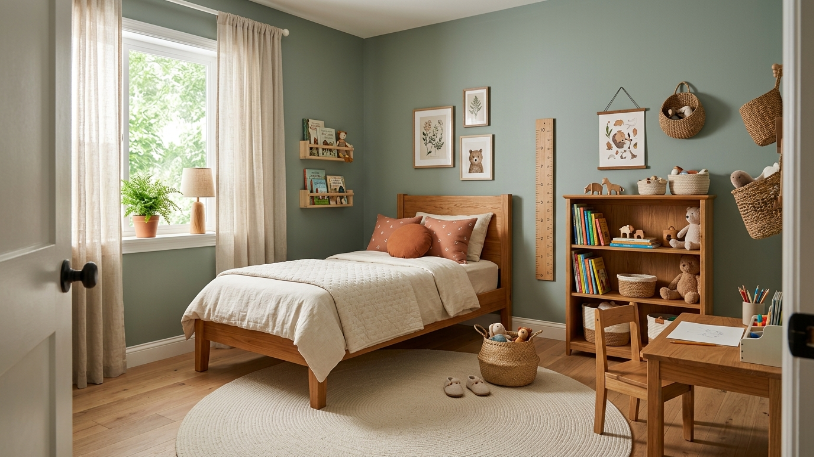
If you want to style a kids’ room that actually looks great, the key is working in the right order. Most parents head straight to the store, grab what catches their eye, and end up with a space that feels loud, scattered, and impossible to keep tidy. A clear plan changes all of that.
This guide shows you exactly how to style a kids’ room from the ground up, one step at a time. You will start with the floor plan, move through color and furniture, then layer in rugs, lighting, and accents last. Each step builds on the one before it so nothing feels out of place when you are finished.
The goal is simple: a room your child genuinely loves, that holds up to daily life, and that you do not mind walking into either. That last part matters more than people usually admit. A kids’ room that works well for parents and children alike is the real win here, and this guide gets you there without guesswork.
How to Style a Kids’ Room: The 8-Step Build Order
Every well-designed room needs a clear sequence. Working in the right order means less rearranging, fewer “I should have done this first” moments, and a room that comes together with intention rather than accident.
Here is the build order this guide follows:
- Plan the layout
- Set your color palette
- Choose the anchor bed
- Pick durable, kid-proof furniture
- Layer in rugs and bedding
- Get the lighting right
- Build storage that actually works
- Add accents and personal touches
Follow these steps in order and the room will feel thought-through from the start. Skip ahead and you will end up moving the furniture around twice, which is exactly as frustrating as it sounds.
Step 1: Plan Your Layout First
Every great kids’ room starts with a floor plan, not a shopping cart. Before you spend anything, measure the room and figure out where the key pieces will go. This one step saves more time and money than any other decision in the project.
Write down the length, width, and ceiling height. Also mark where the doors, windows, and outlets are located, since these limit where furniture can realistically go. A bed blocking a door is not a design choice anyone intends to make on purpose.
Place the bed along the longest wall, away from drafts and direct sunlight. In a smaller room, a loft bed or a bed with built-in drawers underneath frees up floor space that would otherwise be lost. Leave at least 24 inches of clear walking path along the main traffic areas so the room feels open rather than squeezed and hard to move through.
Think in zones. A functional kids’ room has three: a sleep zone, a study zone, and a play zone. You do not need a lot of square footage to make all three work. A rug under or in front of the bed defines the sleep zone. A desk and chair tucked into a corner handles the study zone. A clear patch of floor near a low shelf is all the play zone needs. Map these zones on paper before you shop and the whole project gets easier.
Step 2: Set Your Color Palette
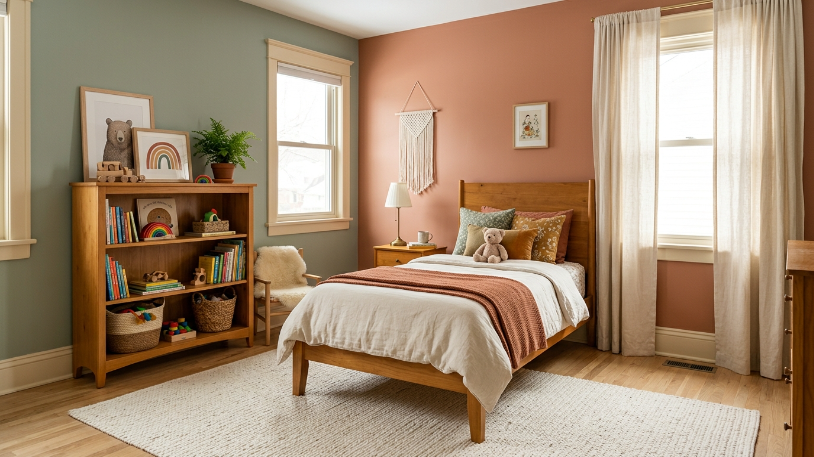
Color sets the mood of the entire room, so choose it early, before you commit to furniture or bedding. A strong palette for a kids’ room is warm, lively, and easy to update as your child grows into new tastes.
Start with one anchor wall color. Warm options like creamy white, soft terracotta, dusty sage, and buttery yellow all work beautifully because they carry warm undertones that feel cozy without feeling heavy. Avoid painting every wall a bold primary color. Instead, save the bright shade for one accent wall and keep the other three walls a soft, light neutral.
Stick to the two-to-three color rule: one main wall color, one accent tone, and one neutral for furniture and trim. More than three active colors in a small room can feel chaotic fast. You can test combinations before you commit to a single gallon by using Sherwin-Williams’ online color tools to see how your picks look in a virtual space before the paintbrush comes out.
| Wall Color | Accent Tone | Mood Created | Paint Suggestion |
| Warm White | Terracotta | Calm, airy | SW 7012 Creamy |
| Dusty Sage | Warm Beige | Fresh, grounded | SW 6184 Liveable Green |
| Soft Butter Yellow | Sky Blue | Cheerful, bright | SW 6673 Daydream |
| Blush Pink | Warm Wood Tone | Sweet, soft | SW 6323 Rosy Outlook |
| Soft Clay | Off-White | Bold, earthy | SW 6625 Dishy Coral |
All five of these palettes work because the wall color and accent share the same warm undertone family. Mixing a cool-toned wall with warm-toned accents is where most kids’ room color schemes quietly fall apart.
Step 3: Choose the Anchor Bed
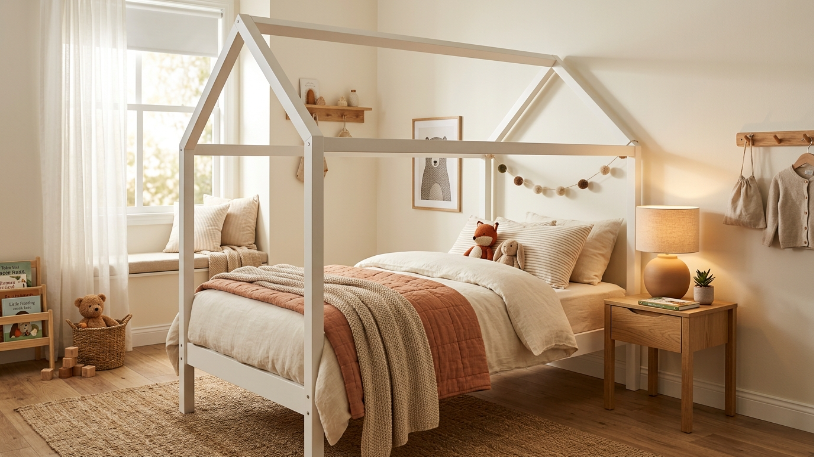
The bed is the most prominent piece in the room. It anchors the layout, sets the visual scale, and influences everything else you place around it. Get this right and the rest of the room falls into place without much effort.
For younger children (ages 2 to 8), a low platform bed or a house-shaped wooden frame adds a playful personality without overwhelming the space. For older kids (ages 8 and up), a simple upholstered bed in a neutral fabric or a clean-lined wood frame is the smarter pick. It will still look right in a few years, when dinosaurs and fairies stop being the whole personality.
Loft beds are excellent for small rooms. They lift sleeping up and leave the floor below free for a desk, a reading nook, or extra play area. Bunk beds serve double duty in shared rooms or for kids who treat every night as a potential sleepover.
Your best bed options at a glance:
- Loft bed with desk underneath: Best for small rooms and kids ages 6 and up
- Low platform bed: Great for toddlers, keeps everything close to the floor
- House-frame bed: Charming and fun, works well for ages 3 to 8
- Upholstered bed in neutral fabric: The most lasting choice; grows with the child easily
- Bunk bed: Ideal for shared rooms or kids with a serious love of sleepovers
Choose a bed that fits the room’s scale. A bed that is too large eats up all the floor space and the room ends up feeling like a furniture showroom instead of a place to actually live and play.
Step 4: Pick Durable, Kid-Proof Furniture
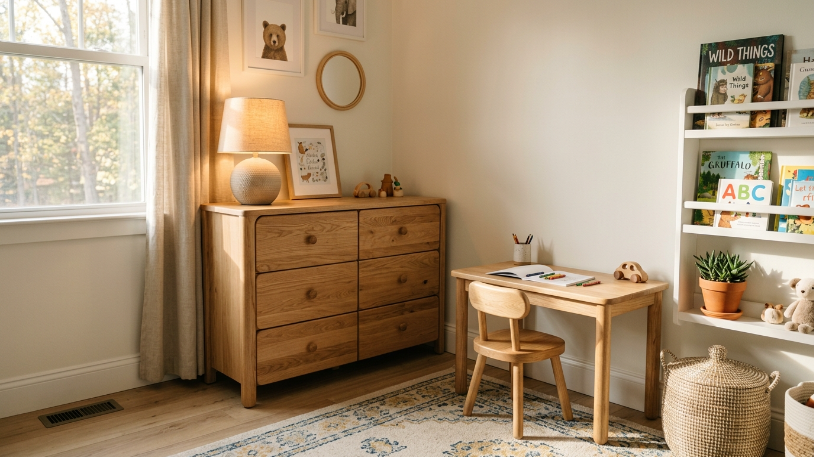
Once the bed is in, add the rest of the furniture. Keep the list short. A dresser, a desk or small worktable, and one good chair are typically all the room needs. Add too much and the room starts to feel like a furniture warehouse with a rug thrown in for good measure.
Material choice matters more in a kids’ room than almost anywhere else in the house. You need pieces that handle sticky fingers, marker experiments, and the occasional airborne toy without looking worn out inside a year.
| Material | Durability | Ease of Cleaning | Best Use |
| Solid wood | Very high | Medium | Beds, dressers, shelving |
| MDF with laminate finish | Medium | High | Desks, low shelves |
| Rattan or wicker | Medium | Low | Accent chairs, baskets |
| Upholstered fabric | Low to medium | Low | Chairs (use slipcovers) |
| Powder-coated metal | High | High | Bed frames, shelving units |
Always look for furniture with rounded edges. Sharp corners at kid-height are a constant safety hazard and a source of daily minor catastrophes. Also look for pieces that can adjust as the child grows, like a desk with a height-adjustable surface or a bookshelf with repositionable shelves.
For finishes, stick to warm natural wood tones or painted finishes in white or light cream. These neutrals make it very simple to swap out bedding, rugs, and accents as tastes change over the years without replacing the main furniture pieces each time.
Step 5: Layer Rugs and Bedding
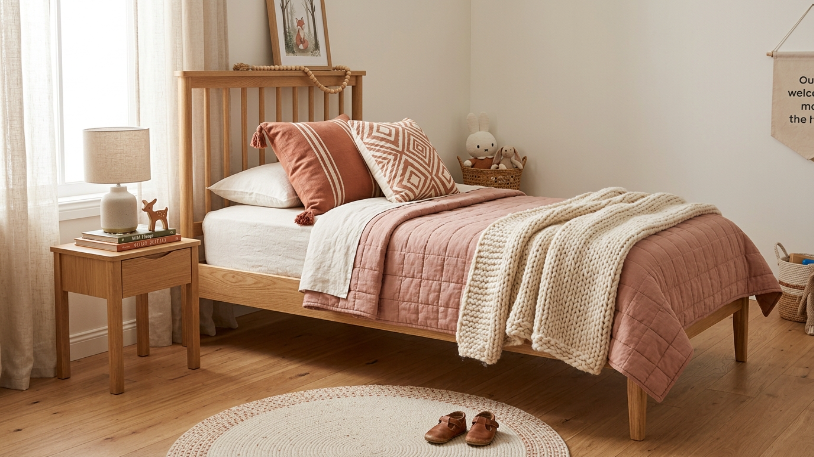
This is the step that makes the room start to feel genuinely soft and finished. Rugs and bedding add warmth, color, and texture without a big commitment, and both are easy to refresh as your child grows into new tastes and phases.
Start with the rug. In the play zone or in front of the bed, choose a low-pile or flatweave style. It cleans up much faster than a shaggy high-pile rug and holds up better under daily foot traffic, rolling toys, and the inevitable art project. A round rug in the center of the room softens the space and gives it a styled, intentional look that a rectangular rug cannot quite achieve.
For bedding, layer it in three stages. First, a fitted sheet in white or a warm neutral. Next, a duvet or quilt in the room’s accent color, keeping the pattern simple so all the layers read as cohesive rather than competing. Finally, a knit or cotton throw draped at the foot of the bed adds the last layer of texture and an easy splash of warmth.
Your bedding checklist:
- Fitted sheet in white or warm neutral
- Duvet or quilt in the accent color, solid or simple pattern
- Knit or cotton throw draped at the foot
- Two standard pillows plus one or two decorative pillows
- Machine-washable covers on absolutely everything
One quick material note: natural cotton and linen breathe better than polyester blends, which means kids sleep more comfortably and the bedding washes and lasts better over years of regular use. Also, they look better with each wash, which polyester rarely does.
Step 6: Get the Lighting Right
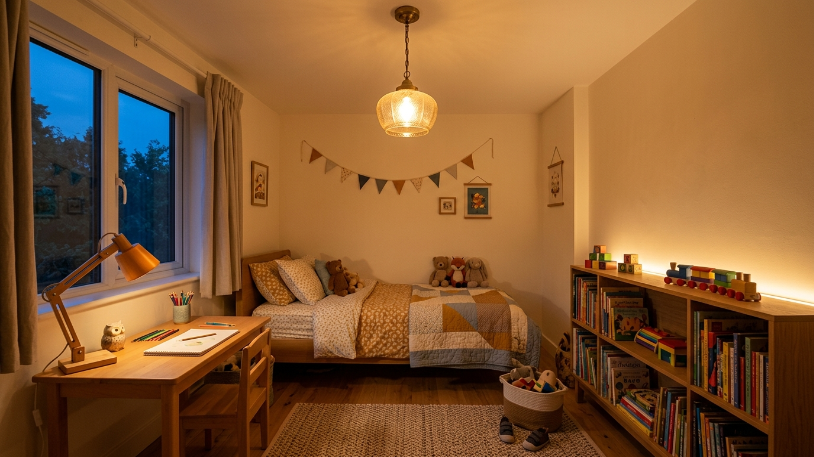
Lighting is the most skipped step when people style a kids’ room, and it shows. One overhead bulb in the center of the ceiling makes the room feel flat and clinical. Three types of light, layered together, make it feel warm, safe, and actually liveable.
You need ambient light, task light, and accent light. The overhead fixture handles the main brightness. A desk lamp provides focused light for homework and drawing. A small warm LED strip behind a low shelf or a simple plug-in nightlight adds a soft, soothing glow for winding down at bedtime.
For bulbs, stay in the warm range. Look for a color temperature between 2700K and 3000K. These tones cast a honey-warm light that feels calming and comfortable in a bedroom. Cool-white and daylight bulbs (5000K and above) are too harsh for this room and make the space feel more like a dentist’s office than a retreat.
A dimmer switch on the overhead light is one of the best small investments in a kids’ room. It costs very little to install and lets you shift from bright and playful during the day to soft and sleepy at night with one easy slide. Also, check that any floor lamp or table lamp has a weighted, stable base. Kids have a real talent for knocking things over.
Step 7: Build Storage That Actually Works
Good storage in a kids’ room does two things at once: it keeps the space tidy, and it teaches children that everything has a home. Both of those outcomes are worth working for. The most important rule is to make the system easy enough for a child to use on their own, without help from you every single time.
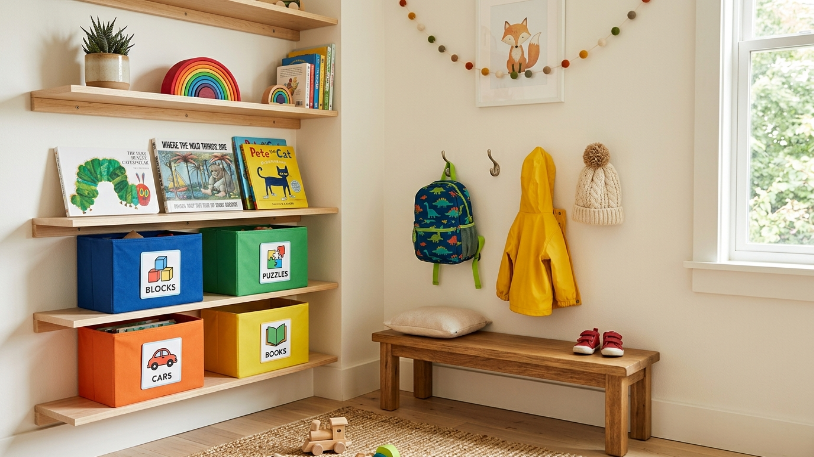
Open shelving at kid-height is your best tool here. When children can reach their books and toys without asking for assistance, they can also put those things away without asking for assistance. Add labeled bins and baskets on the shelves to contain smaller items. Use clear picture labels for children who are not reading yet so the system is obvious to them at a glance.
| Storage Option | Why It Works | What to Skip |
| Open low shelves | Kids can access and reset independently | High wall-mounted shelves that only adults can reach |
| Labeled fabric bins | Easy sorting, soft edges, completely safe | Unlabeled bins that become catch-all dumping grounds |
| Under-bed drawers | Hidden storage for extra linens and off-season items | Deep lidded boxes that are heavy and awkward to open |
| Floating wall shelves | Display-friendly and saves floor space | Wobbly or overloaded shelves |
| Tall wardrobe with a low hanging rod | Clothes, costumes, and dress-up items | Wardrobes too tall for the child to reach into independently |
Add a row of hooks at kid-height near the door. Three or four hooks take up almost no wall space and solve the daily pile-up of backpacks, jackets, and hats that appears every afternoon without fail. Keep the overall system simple. Complicated organizers with many small parts are systems that never get used after the first week.
Step 8: Add Accents and Personal Touches
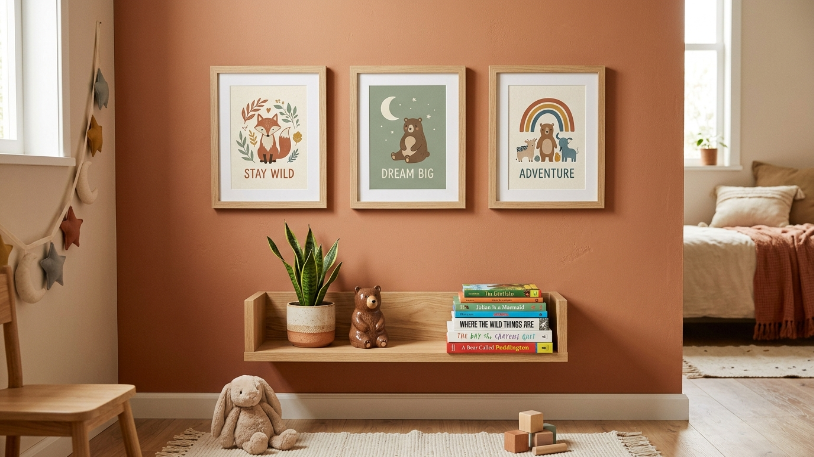
The big decisions are done. Now comes the part most people want to start with, which is exactly why it is saved for last: the accents. These are the details that take the room from styled to genuinely personal.
Art is the fastest way to add personality without a permanent commitment. Frame three to five prints that match the room’s color palette and hang them at your child’s eye level, not yours. A small gallery wall at kid-height feels intentional and curated, and it gives your child something interesting to look at from their own natural vantage point. Thin natural wood frames or simple clip frames keep the focus on the art itself rather than on the hardware around it.
Plants bring softness and a touch of nature into the space. A small pothos or a snake plant handles low to medium light well and is very nearly impossible to kill, even for adults who describe themselves as confidently plant-challenged. Keep any plants out of reach of toddlers and very young children, just to be safe.
Your finishing checklist:
- Three to five framed art prints hung at the child’s eye level
- One small, easy-care plant (pothos, snake plant, or succulent)
- A simple wall clock (useful, practical, and fills wall space well)
- One or two personal display items: a trophy, a favorite toy on a shelf, a propped-open book
- White space between each wall piece so nothing feels crowded
Resist the urge to fill every surface. Empty space on the walls makes the room feel larger and gives each display piece room to stand out. Less is almost always more in a well-styled space.
Do’s and Don’ts When You Style a Kids’ Room
A few common mistakes trip up even the most enthusiastic decorators. This quick reference will keep your project on track and save you from backtracking halfway through.
| Do | Don’t |
| Measure the room before you shop | Buy furniture that overwhelms the room’s scale |
| Use warm undertone colors on the walls | Cover every wall in loud primary colors |
| Choose machine-washable textiles throughout | Use dry-clean-only rugs or bedding |
| Layer three types of lighting | Rely on one flat overhead bulb |
| Keep storage low and clearly labeled | Buy organizers the child cannot reach or use alone |
| Leave white space on the walls | Fill every surface with decor |
| Choose furniture with rounded edges | Prioritize aesthetics over child safety |
| Pick pieces that grow with the child | Buy heavily themed sets that date quickly |
One last tip: involve your child in at least a small part of the process. Let them choose between two paint options or pick their own bedding from a shortlist you have already approved. Children are far more likely to keep a room tidy when they had some hand in creating it.
Final Thoughts
Styling a kids’ room does not have to feel overwhelming. When you work through the steps in order, starting with the layout and building up through furniture, color, textiles, and details, the room comes together in a way that makes sense and holds up over time.
The best kids’ rooms are warm, functional, and genuinely personal. Get the foundation right, keep the layers simple, and leave a little room for your child’s personality to grow into the space. You have got this.