There is a reason white keeps showing up in every beautiful bedroom you save on Pinterest. It is not because designers ran out of ideas. It is because white works. It calms the mind, opens up space, bounces light around like it is having the time of its life, and gives you the kind of clean backdrop that makes every single item in the room look intentional. A modern white bedroom is not about making your room look cold or hospital-like (we are designing a sanctuary, not a ward). It is about using white as your foundation and then building warmth, depth, and personality on top of it.
This guide will walk you through every single step of building a modern white bedroom from scratch, or refreshing the one you already have. We will talk about walls, furniture, bedding, lighting, textures, accessories, and all the small decisions that separate a bedroom that looks like a nice catalog photo from one that actually feels like a place you want to live in.
Whether you are starting from a completely empty room or working with what you already have, this guide is written to be practical, detailed, and honest. Let’s build something beautiful.
1) Start With the Walls: Choosing the Right Shade of White
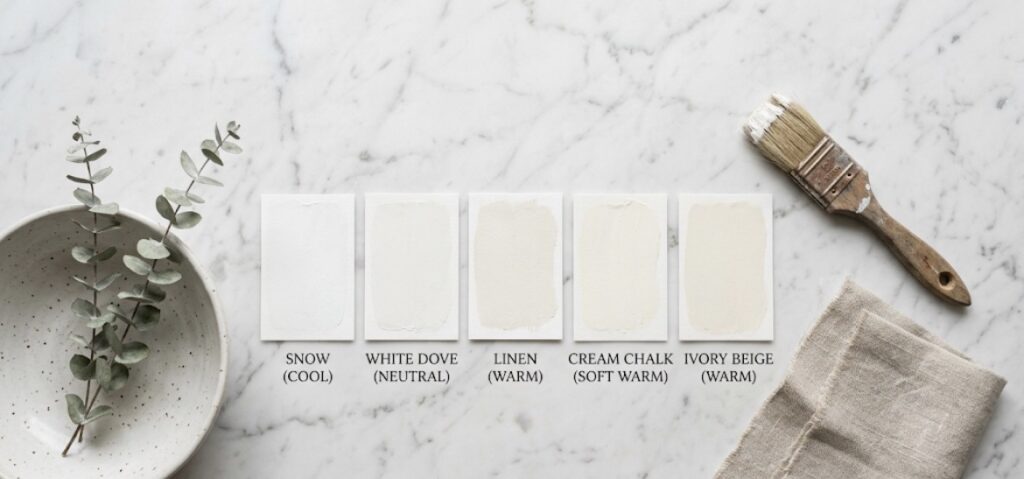
Here is the thing that surprises most people when they decide to paint their bedroom white: white is not just one color. It is hundreds of colors pretending to be white. And if you pick the wrong one, you will end up with a room that looks pink, or yellow, or, bafflingly, a little bit gray. Choosing the right white for your walls is the single most important decision in this entire project, and it deserves your full attention before you pick up a paint brush.
The first thing you need to understand is undertones. Every white paint has an undertone, which is a subtle hint of another color hidden underneath. Warm whites have undertones of yellow, beige, or cream. Cool whites have undertones of blue, green, or gray. The undertone in your paint interacts with the light in your room, the colors in your furniture, and the fabrics you choose, which means the same white can look completely different in two different bedrooms.
For a modern bedroom aesthetic, cool-to-neutral whites tend to work best because they feel crisp and intentional without being stark. Look for whites described as “soft white,” “pure white,” or “bright white” with low undertones. Popular choices from major paint brands include shades like Benjamin Moore’s Chantilly Lace (a clean bright white with barely any undertone), Sherwin-Williams’s Alabaster (a warm creamy white that feels soft and inviting), and Dulux’s Natural White (a balanced neutral that reads as a warm white in most lighting). The specific shade will depend on how much natural light your room gets, because north-facing rooms with less light will make even warm whites feel cooler, while south-facing rooms with strong sunlight can make cool whites look almost blue.
The best thing you can do is order paint samples, paint a large swatch (at least 30cm x 30cm) on your actual wall, and observe it at different times of day: morning light, midday, afternoon, and evening with artificial lighting. Do not make a final decision based on a tiny chip card at the hardware store. That little square has deceived more people than we can count.
Once your walls are painted, also think about the finish. For bedrooms, a matte or eggshell finish works best because it absorbs light rather than reflecting it, which makes the room feel softer and hides imperfections on the wall surface. Avoid glossy finishes on large wall areas in a bedroom because they can feel clinical and will highlight every bump and join.
Screenshot
2) The Bed: The Most Important Piece of Furniture in the Room
In a modern white bedroom, the bed is everything. It is the anchor, the statement, the focal point, and the reason anyone enters the room at all. Getting the bed right means getting three things right: the frame, the mattress height, and the bedding. All three work together, and neglecting one will throw off the whole look.
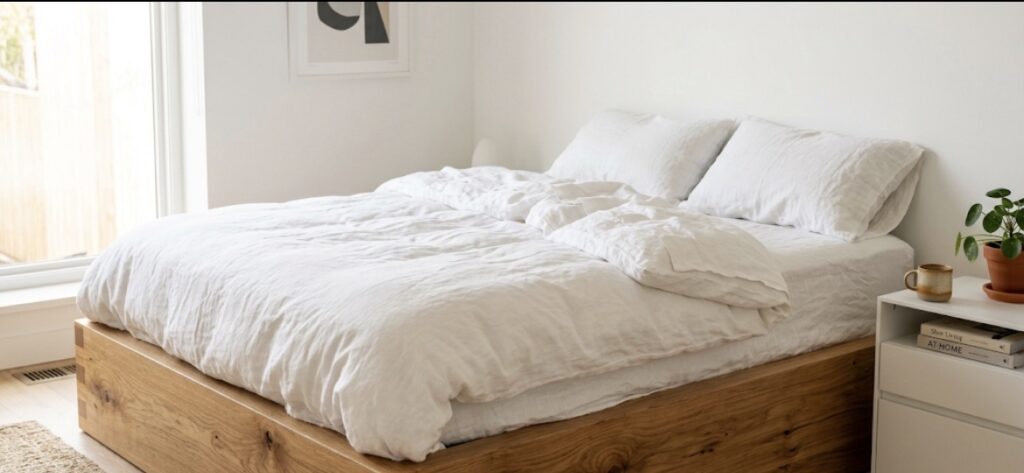
For a modern aesthetic, the most flattering bed frames are low-profile designs that sit closer to the ground than traditional beds. A platform bed with a simple headboard (or no headboard at all) reads as very modern and works beautifully against white walls. Natural wood tones like oak, walnut, or pine add warmth and organic texture that white walls desperately need. If you prefer upholstered headboards, choose tightly upholstered designs in neutral fabric tones: oatmeal linen, soft grey, or warm white boucle. Avoid heavily carved or ornate frames because they belong in a different design era (a lovely era, but not this one).
The mattress should sit at a height where the top of the mattress is roughly 60 to 65 centimeters from the floor when you factor in the frame. This is comfortable for getting in and out of bed, and it gives the room good visual proportion. A bed that sits too low can make the room feel cramped; one that sits too high can make the room feel unstable and top-heavy.
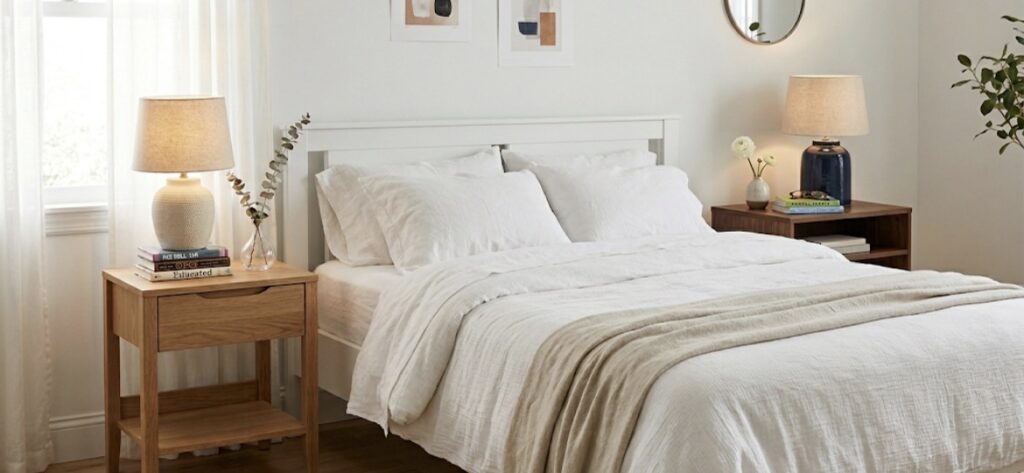
Bedding in a modern white bedroom does the most work of any element in the room. The trick is layering. Start with a high-quality fitted sheet in white or off-white. Then add a flat sheet or a duvet in a complementary white or light cream. Texture here is everything because without texture in a white room, things start looking flat. Look for bedding in cotton percale (crisp and cool), linen (relaxed and organic), or waffle weave (adds visual interest). Layer in a slightly different tone: a cream duvet with a white sheet, for example, or an oatmeal linen throw folded at the foot of the bed. Add pillows in different sizes: two sleeping pillows in white, two euro shams behind them for height, and one or two decorative pillows in a soft neutral accent tone like sand, sage, or taupe. The goal is a bed that looks effortlessly put together, not like it requires a degree in origami to make every morning.
Screenshot
3) Furniture: What to Include and What to Leave Out
The modern aesthetic is built on one principle: intentional restraint. Every piece of furniture in the room should earn its place. This does not mean the room has to be sparse or cold. It means every item should serve a purpose, and the items you choose should have clean lines, good proportions, and a natural harmony with each other.
Beyond the bed, the essential furniture in a modern white bedroom includes nightstands, a dresser or chest of drawers, and possibly a small bench or chair. Nightstands should be simple in form. Look for designs with clean edges and minimal hardware. Natural wood, painted white, or matte black finishes all work well. They do not need to match exactly, but they should relate to each other in some way: same material, same height, or same visual weight. An asymmetric pairing (two different but complementary nightstands) is a modern styling trick that looks deliberate and interesting.
A dresser in a modern white bedroom works best when it is low and wide rather than tall and narrow. A low dresser or media console with six to eight drawers keeps the visual line of the room horizontal, which makes the space feel wider and more grounded. Avoid tall armoires unless the room genuinely requires the storage, because they compete with the height of the ceiling and make the room feel crowded.
If you have the space, a small upholstered bench at the foot of the bed or a single chair in a corner (with a floor lamp beside it) adds a layer of comfort and visual interest without cluttering the room. Choose a chair in a tone that contrasts gently with the walls: a soft sage green, a warm terracotta, or a deep charcoal all work beautifully against white walls and add a moment of color without overwhelming the space.
Screenshot
4) Lighting: How to Make a White Room Feel Warm Instead of Stark
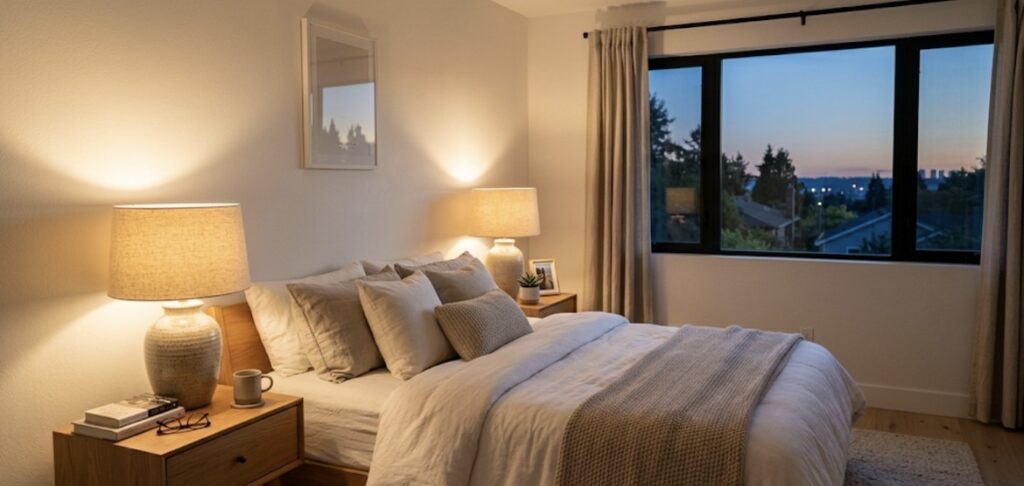
Lighting is the element that most people underestimate, and it is the thing that transforms a white room from clinical to cozy. A modern white bedroom needs at least three different types of lighting: ambient lighting (general room light), task lighting (for reading and getting ready), and accent lighting (for mood and atmosphere). Using all three, and knowing how to layer them, is what separates a well-designed bedroom from one that looks nice in photos but feels uncomfortable to actually be in.
For ambient lighting, a central ceiling light is your starting point. In a modern white bedroom, a simple flush-mount or semi-flush ceiling fixture in white, brushed brass, or matte black works well. Avoid heavy chandeliers or ornate fixtures unless the room is very large and high-ceilinged, because they tend to look out of proportion. If you want to add warmth from above, recessed downlights on a dimmer are one of the best investments you can make in any bedroom, because dimmable lighting gives you complete control over the atmosphere of the room.
For task lighting, bedside lamps are the obvious choice. Choose lamps with warm-toned bulbs (2700K to 3000K color temperature) and shades that direct light downward. Ceramic bases in soft neutrals, sculptural shapes in matte white, or simple rattan-wrapped bases all suit a modern white bedroom. If your nightstands are small and space is tight, consider wall-mounted reading lights on adjustable arms, which save surface space and look very polished.
Accent lighting is where you can have a little fun. A string of warm Edison bulbs draped loosely behind a headboard, a backlit LED strip placed at the base of a low dresser to create the illusion of the furniture floating off the floor, or a small table lamp on a dresser set to a warm glow all contribute to the layered lighting effect that makes a bedroom feel like a retreat. The goal is to have multiple light sources at different heights in the room, so you are never relying on a single overhead source that flattens everything and casts harsh shadows.
Always choose bulbs in the 2700K to 3000K color temperature range for bedrooms. Anything cooler (4000K and above) will make a white room feel cold and uncomfortable, and will make your carefully chosen white paint look blueish and harsh.
Screenshot
5) Texture and Fabric
If lighting is the thing people underestimate, texture is the thing people forget entirely, and it is the most important detail in a white bedroom. When your walls, ceiling, furniture, and bedding are all close to the same color, the only thing creating visual interest is texture. Without it, the room will feel flat, bland, and oddly uncomfortable to look at. With it, the room feels layered, warm, and genuinely beautiful.
Texture in a white bedroom comes from fabric, material, and surface finish. Think about every surface in the room and ask yourself what it contributes texturally. Smooth cotton sheets next to a rough linen duvet. A glossy ceramic lamp base next to a matte plaster wall. A woven rattan mirror frame next to a flat painted nightstand. A fluffy wool rug against smooth wood floors. Each pairing creates contrast, and contrast is what makes a room feel alive.
In terms of specific fabrics and materials to bring into a modern white bedroom, the list is generous: natural linen for curtains and bedding (wrinkles and all, linen is allowed to relax), chunky knit or waffle throws at the foot of the bed, a sheepskin or faux fur rug on either side of the bed (especially useful if you have cold floors in the morning), boucle upholstery on a chair or bench, woven baskets for storage, rattan or bamboo accents on furniture or decor, and raw wood in furniture frames and shelving. Each of these materials belongs in the warm, natural palette that makes a white bedroom feel like a place rather than a photograph.
Your rug choice deserves special mention. In a white bedroom, the rug is often the single most impactful element after the bed itself. A large area rug that extends at least 60 centimeters beyond each side of the bed (so your feet land on the rug when you get up) anchors the entire room and adds warmth underfoot. Natural fiber rugs in jute, seagrass, or sisal add texture and an organic quality that works beautifully in a modern white space. A thick wool rug in ivory or oatmeal adds luxury and cushioning. A Moroccan-style rug with a subtle pattern in cream and sand tones adds visual interest without introducing color.
Screenshot
6) Windows and Curtains: Framing the Light
In a modern white bedroom, how you treat your windows will either make or break the airy, light-filled quality you are working toward. Heavy, dark curtains block light and weigh down the space. The right window treatment frames the light, controls privacy when needed, and adds another layer of soft texture to the room.
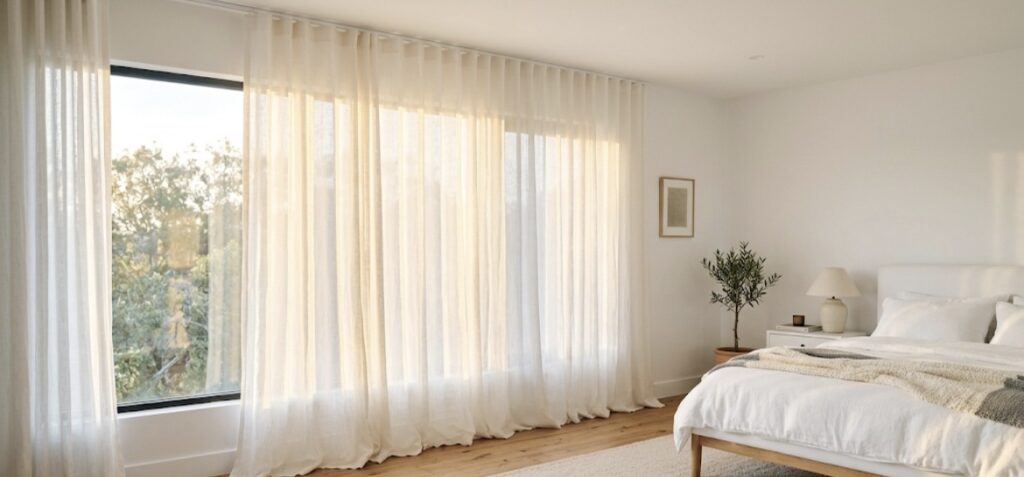
The best curtains for a modern white bedroom are floor-length panels in natural fabrics. Linen is the ideal choice because it filters light beautifully (you get a warm glow through the fabric even when the curtains are drawn), it hangs with a relaxed, elegant drape, and it comes in a range of neutral tones that all work in a white room. White linen, off-white linen, and very light grey or warm beige linen are all excellent options. Avoid patterned curtains in a heavily white room unless the pattern is very subtle and tonal, because patterns will compete with the clean backdrop you are trying to create.
Hang your curtain rod as high as possible, ideally within 10 to 15 centimeters of the ceiling, and extend the rod at least 30 to 40 centimeters beyond the window frame on each side. This makes the window look dramatically larger, the ceiling look higher, and the room look more expensive. It is one of the cheapest visual tricks in interior design and one of the most effective ones. Do not hang curtains at window height and wonder why the room feels short and cramped. Hang them high. Always.
For rooms where light control is important (if you are a light sleeper or if the room faces east and gets early morning sun), add a blackout roller blind behind the linen curtains. Choose the blind in white or the same tone as the wall so it disappears when it is rolled up. This gives you the best of both worlds: beautiful filtered natural light during the day, and full darkness when you need to sleep.
Screenshot
7) Accessories and Decor: Adding Personality Without the Clutter
At this stage, your modern white bedroom has good bones: the right paint, the right furniture, the right bedding, the right lighting, and the right textures. Now comes the part that makes it feel personal. Accessories and decor in a modern white bedroom should be chosen carefully because every item will be very visible against a white backdrop. There is nowhere to hide.
The guiding principle for accessorizing a white bedroom is this: choose fewer things, but choose them with intention, and make sure they each bring something different to the room, whether that is texture, organic shape, warmth, or a small moment of beauty. A few well-chosen pieces will always look better than a shelf full of items that do not relate to each other.
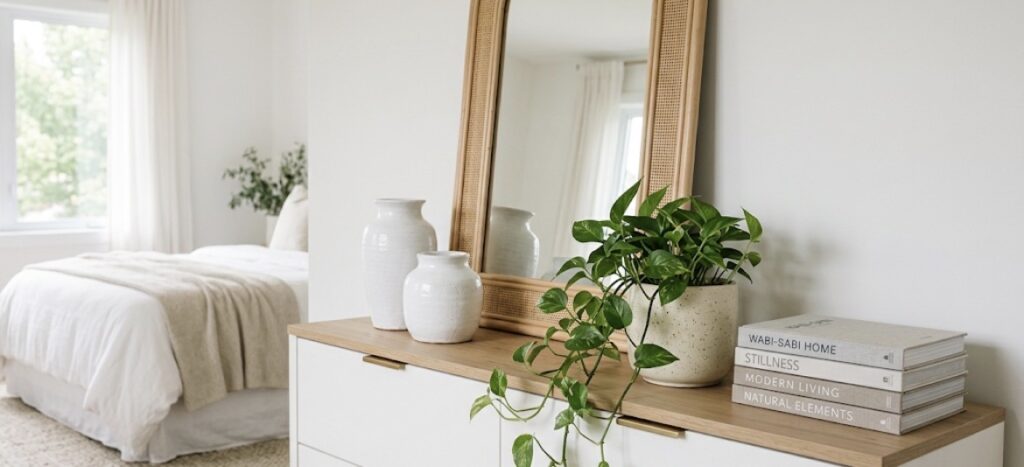
Plants are one of the best accessories for a white bedroom. A large potted plant (a monstera, a fiddle leaf fig, or a tall snake plant) in a corner adds life, color, and scale in a way that no other decor item can match. Smaller plants on a nightstand or dresser (a trailing pothos, a small succulent, or a vase of fresh eucalyptus) add freshness and a natural, organic quality to the room. You do not need to have a green thumb for this to work. Even a single stem in a clear glass vase on a nightstand counts.
Mirrors are essential in a white bedroom because they bounce light around the room, create the illusion of depth, and serve as a visual anchor on walls that might otherwise feel empty. A large round mirror above a dresser, a full-length mirror leaning against a wall, or a pair of small architectural mirrors on either side of the bed all work beautifully. Choose mirror frames in materials that add warmth: natural rattan, raw wood, brushed gold, or antique brass.
Art in a white bedroom should be simple and tonal. Large-format prints in black and white, abstract wash prints in warm sand and cream tones, fine-line botanical illustrations, or photographs with a lot of negative space all sit beautifully against white walls without overwhelming the calm atmosphere of the room. Avoid busy, heavily colored prints unless one piece of art is the deliberate focal point of the room and everything else around it is very restrained.
Screenshot
Final Touches
A truly beautiful bedroom engages more than just the eyes. The final layer of a well-styled modern white bedroom is the sensory experience of the space, and that means thinking about scent, soft furnishings, and the small details that make a room feel genuinely lived in and loved.
Scent is often overlooked in interior design conversations, but it is one of the most powerful tools you have. A white bedroom with clean linen smell, a warm candle burning, or a diffuser running a calming essential oil blend (lavender, eucalyptus, and sandalwood are all excellent choices for a bedroom) elevates the entire experience of the room in a way that no amount of styling can replicate. Keep a candle on your nightstand or dresser not just as decor, but because you actually plan to light it.
Soft furnishings at the foot of the bed (a folded throw, a textured blanket) and on the floor (the rug, the sheepskin) make the room feel comfortable rather than a showroom. A tray on the nightstand to hold a candle, a small plant, and a book keeps things organized and looks intentional. A decorative basket on the floor for extra blankets or laundry (tucked in a corner) adds storage that looks considered rather than desperate.
Finally, keep the room clean. A modern white bedroom does not hide clutter. White shows everything: the stray sock on the floor, the pile of books on the chair, the charger cable snaking across the nightstand. Part of maintaining a modern white bedroom is developing a small daily habit of putting things away so the room can breathe and look the way you designed it to look. The good news is that when a room is beautiful, you are actually motivated to keep it tidy. It becomes a space you want to protect.
A Quick Room Layout Guide
Before you move any furniture, sketch out your layout on paper. The bed should be the first thing you position, and it almost always works best centered on the wall opposite the main door or on the largest unbroken wall in the room. Once the bed is placed, build everything else around it. Nightstands must be accessible from both sides of the bed. The dresser should be on a wall where you can fully open the drawers without the door or another piece of furniture blocking them. Leave at least 90 centimeters of walking space around the bed on all three sides (the two long sides and the foot). If the room is small, push the head of the bed against the wall to buy back floor space.
In small rooms, resist the urge to fill every corner. A modern white bedroom in a small room should have fewer furniture pieces and more open floor space. Less furniture with more breathing room will always make a small room feel bigger and more luxurious than cramming in every storage piece you own.
Summary
Building a modern white bedroom is a project, not just a shopping list. It requires you to think carefully about how each element relates to the others: how your paint color behaves in your specific light, how your bedding layers create depth, how your lighting shifts the mood of the room from morning to night, and how every accessory you bring in earns its place. The result, when all of these elements come together, is a bedroom that feels genuinely restorative. A room that is quiet without being empty, white without being cold, simple without being boring. That is the goal. And with the right guidance, it is absolutely achievable.