
Step-by-Step Guide to Creating a Stunning Small Bathroom with Budget-Friendly Ideas
A small bathroom doesn’t have to feel cramped or boring. With the right planning and creative touches, you can turn even the tiniest bathroom into a space that feels bigger, brighter, and more welcoming. Whether you’re working with a powder room that measures just a few feet across or a compact bathroom in an older home, this guide will walk you through everything you need to know to create a small bathroom makeover that works for your space and your budget.
This article is designed to help you build your dream small bathroom from the ground up. We’ll cover practical ideas for maximizing space, choosing the right colors and materials, adding storage without cluttering, and creating a bathroom that feels fresh and modern. You’ll find detailed information about different approaches you can take, from simple updates to complete renovations. Each section includes specific ideas you can use right away, along with tips for making smart choices that will last for years to come.
Let’s get started on transforming your small bathroom into a space you’ll love using every single day.
1) Planning Your Small Bathroom Makeover
Before you pick up a paintbrush or buy a single tile, take time to plan your small bathroom makeover carefully. Good planning saves money, prevents mistakes, and helps you create a bathroom that truly works for your daily needs. Start by thinking about what frustrates you most about your current bathroom. Is it the lack of storage? Poor lighting? Outdated fixtures? A cramped feeling when you walk in? Write down these pain points because they’ll guide your decisions as you move forward.
Measure your bathroom carefully, noting the exact dimensions of walls, door swings, and any permanent features like windows or radiators. Take photos from different angles so you can reference them later. These measurements will help you choose fixtures that fit properly and furniture that doesn’t overwhelm the space. Many people skip this step and end up buying items that are too large or too small for their bathroom.
Set a realistic budget that includes a cushion for unexpected expenses. Small bathroom makeovers can range from a few hundred dollars for cosmetic updates to several thousand for complete renovations. Break your budget into categories like fixtures, flooring, paint, storage, lighting, and accessories. This helps you see where your money is going and makes it easier to adjust if you need to cut costs in one area to spend more in another.
Think about your timeline too. Some projects can be done over a weekend, while others might take several weeks or require professional help. If you’re doing the work yourself, be honest about your skill level and the time you can realistically commit. It’s better to plan for a longer timeline and finish early than to rush through important steps and end up with poor results.
Consider how you use your bathroom every day. Do you need extra counter space for getting ready in the morning? Would better organization help your routine flow more smoothly? Do you share the bathroom with others who have different needs? Understanding your daily habits will help you make choices that improve functionality, not just appearance. A beautiful bathroom that doesn’t work well for your lifestyle will quickly become frustrating.
2) Choosing the Right Color Scheme for Small Bathrooms
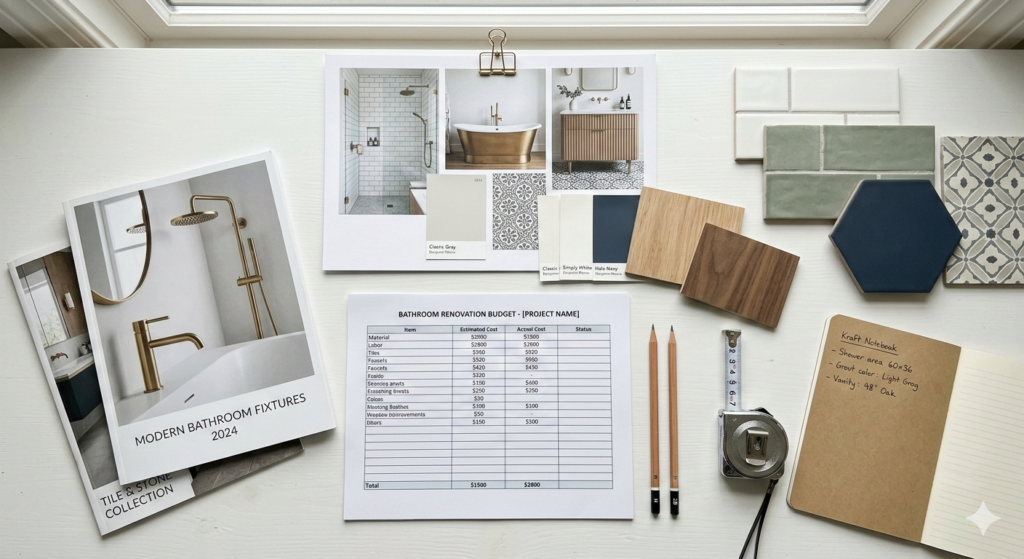
Color has tremendous power to change how a small bathroom feels. The right color scheme can make cramped quarters feel open and airy, while poor color choices can make even a decent-sized bathroom feel like a closet. Light colors are your best friend in a small bathroom makeover because they reflect light and create the illusion of more space. White, cream, pale gray, soft beige, and light blue all work beautifully to open up tight spaces.
Pure white is classic and clean, but it can feel cold or sterile if not balanced with warmer elements. Consider warm white or off-white shades that have subtle undertones of cream or beige. These softer whites still provide the space-enhancing benefits of white while feeling more inviting and comfortable. They also hide imperfections better than stark white, which can highlight every tiny flaw on walls or fixtures.
Pale gray has become incredibly popular for small bathrooms because it offers sophistication without feeling heavy. Choose grays with slight blue or green undertones rather than grays that lean toward brown or purple, as cooler grays tend to feel fresher and cleaner in bathroom settings. Pair gray walls with white fixtures and trim to create contrast that adds visual interest without overwhelming the space.
Soft pastels like pale blue, mint green, or blush pink can add personality while still keeping the room feeling light and open. These colors work especially well if you want a bathroom that feels calm and spa-like. The key is choosing very light, washed-out versions of these colors rather than saturated bright shades. Think barely-there hints of color that you notice in certain lighting but don’t dominate the space.
Don’t be afraid to use darker colors as accents, even in a small bathroom. A dark navy or charcoal gray on one accent wall can actually make the room feel more spacious by creating depth and drawing the eye. Dark colors on the floor, whether through tiles or a painted vanity, ground the space and make the walls feel taller. The trick is using dark colors strategically rather than painting everything dark, which would make the room feel smaller.
Consider the lighting in your bathroom when choosing colors. A bathroom with lots of natural light can handle cooler colors and even some darker shades. A bathroom with only artificial light might need warmer colors to prevent feeling cold and uninviting. Test your chosen colors on the actual bathroom walls and look at them at different times of day before committing to a full paint job.
Create a cohesive color scheme by limiting yourself to two or three main colors plus white. Too many colors in a small space create visual clutter that makes the room feel smaller and more chaotic. Stick with your chosen palette throughout the bathroom, from wall color to towels to accessories. This consistency creates a pulled-together look that feels intentional and polished.
3) Maximizing Storage in a Small Bathroom
Storage is often the biggest challenge in a small bathroom makeover. You need places to keep toiletries, towels, cleaning supplies, and personal items, but traditional storage solutions can eat up precious floor space and make a small bathroom feel even more cramped. The secret is thinking vertically and using every available inch of space creatively without making the room feel cluttered or crowded.
Wall-mounted cabinets and floating shelves are your best tools for adding storage without taking up floor space. Install shallow cabinets or open shelving above the toilet, beside the mirror, or on any empty wall. Keep these storage solutions narrow so they don’t protrude too far into the room. A cabinet that sticks out six inches looks sleek, while one that juts out twelve inches can make the bathroom feel cramped and make it harder to move around.
The space above your toilet is prime real estate that many people waste. Install a slim over-the-toilet storage unit or floating shelves to hold extra toilet paper, towels, and decorative items. Choose a unit that fits the width of your toilet without extending too far on either side. White or light-colored storage pieces blend into the walls and feel less bulky than dark wood or bold colors.
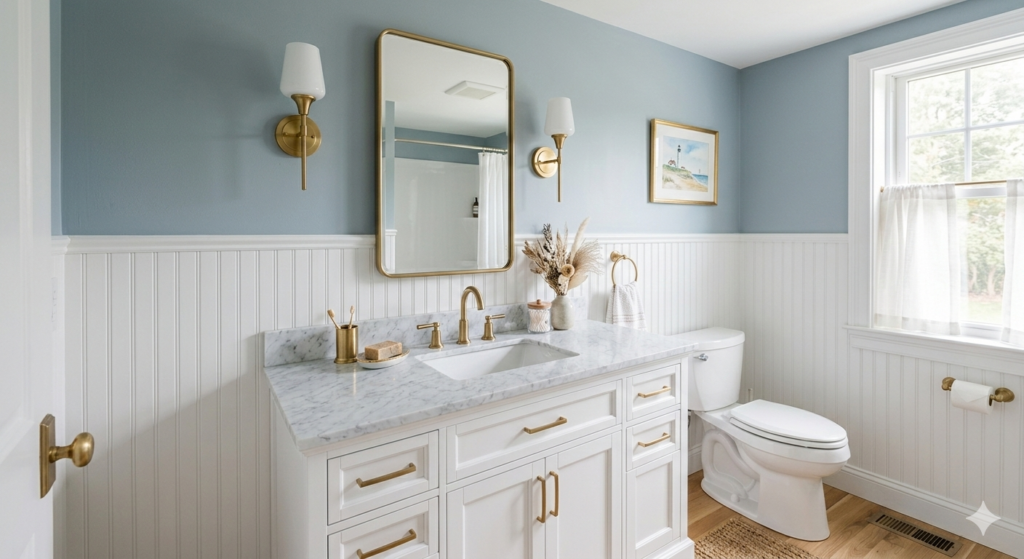
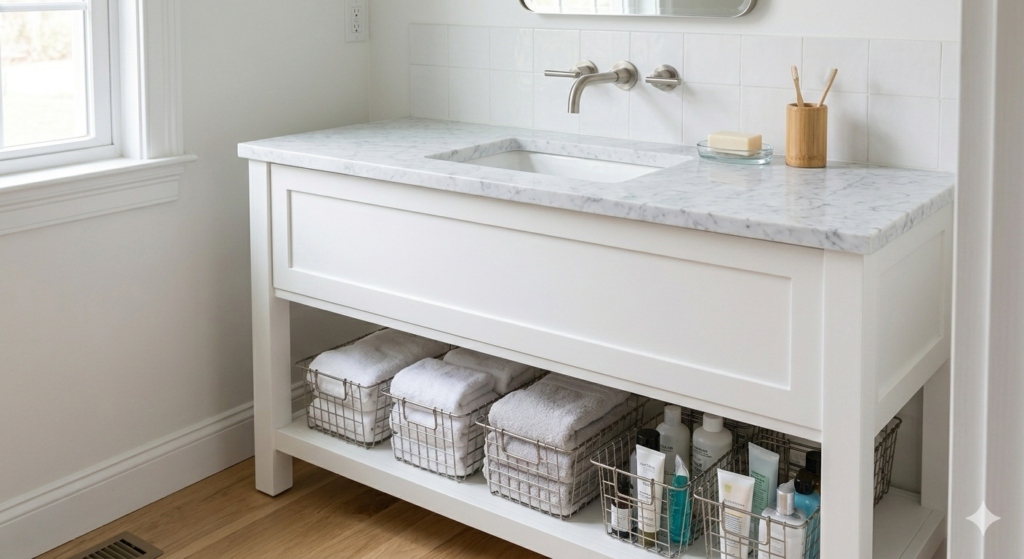
Consider a vanity with built-in storage rather than a pedestal sink if you have the space. Even a small vanity with a cabinet or drawers provides valuable storage for everyday items you want hidden away. Look for vanities designed specifically for small bathrooms, which are typically 18 to 24 inches wide instead of the standard 30 to 36 inches. These narrow vanities still offer storage while leaving more room to move around.
Use the inside of cabinet doors for extra storage by adding small hooks, magnetic strips, or narrow shelves. These spots are perfect for hair tools, cleaning supplies, or frequently used items you want to grab quickly. The back of the bathroom door is another often-wasted space where you can hang a slim organizer for towels, robes, or extra toiletries.
Built-in niches in the shower create storage without taking up any extra space. If you’re doing a shower renovation, have your contractor build recessed shelves into the wall between studs. These niches hold shampoo, soap, and other shower essentials without requiring any bulky caddies or shelves that make the shower feel smaller. Even in an existing shower, you can add corner shelves or hanging caddies that maximize vertical space.
Medicine cabinets with mirrors serve double duty by providing storage and reflecting light to make the room feel bigger. Choose a medicine cabinet that’s recessed into the wall rather than surface-mounted to save space. Modern medicine cabinets come in various styles from simple and traditional to sleek and contemporary, so you can find one that matches your bathroom’s design.
Baskets and bins help organize items on open shelves while adding texture and warmth to the bathroom. Choose storage containers in your color scheme and similar styles to create a cohesive look. Woven baskets, white bins, or clear acrylic containers all work well depending on your design aesthetic. Label containers if you’re storing things you can’t see so you can find what you need quickly.
Keep countertops as clear as possible to maintain a sense of spaciousness. Store everyday items in drawers or cabinets and only keep out the essentials you use every single day. A cluttered counter makes even a good-sized bathroom feel messy and small, while clear surfaces create a calm, open feeling that makes the whole room more pleasant to use.
4) Lighting That Make Small Bathrooms Feel Bigger
Lighting can completely transform how a small bathroom looks and feels. Poor lighting makes spaces feel dingy, cramped, and unwelcoming, while good lighting opens up the room, makes colors look better, and creates a more pleasant atmosphere. A well-planned lighting strategy uses multiple light sources at different levels to eliminate shadows and create even, flattering illumination throughout the bathroom.
Start with overhead lighting that provides general illumination for the entire room. A ceiling-mounted fixture or recessed lights work well in small bathrooms. Choose bright LED bulbs that provide plenty of light without generating excess heat. If your bathroom has a low ceiling, opt for flush-mount fixtures that don’t hang down and make the ceiling feel lower. In bathrooms with higher ceilings, you can use semi-flush fixtures that add a bit of style while still providing good overall light.
Task lighting around the mirror is essential for activities like shaving, applying makeup, or styling hair. The best mirror lighting comes from fixtures mounted on either side of the mirror at face height, which eliminates shadows under the eyes and chin. Sconces with frosted glass or fabric shades provide soft, even light that’s flattering without being harsh. If side lighting isn’t possible, a light bar mounted above the mirror works as a second-best option.
Choose light bulbs with a color temperature between 2700K and 3000K for a warm, natural glow that’s flattering and comfortable. Avoid cool white bulbs above 4000K, which can make skin tones look sickly and create a harsh, institutional feeling. Warm white light makes bathrooms feel more welcoming and helps you look your best in the mirror, which is important for getting ready in the morning.
If your bathroom has a shower or tub area, add specific lighting there too. Recessed lights rated for wet locations work well above showers and tubs. This dedicated lighting makes these areas safer and more pleasant to use, especially in the evening when you don’t want to rely only on bright overhead lights.
Consider adding a dimmer switch so you can adjust lighting levels for different times of day and different activities. Bright light is great for morning routines when you need to see clearly, but softer light is nicer for evening baths or nighttime bathroom visits. Dimmers also save energy and extend bulb life, making them a smart investment for any bathroom.
Maximize natural light if your bathroom has a window. Keep window treatments minimal so light can flow in freely. Frosted film or sheer curtains provide privacy while still allowing natural light to enter. If privacy is less of a concern, like in a second-floor bathroom, leave windows uncovered during the day to bring in as much natural light as possible.
Reflective surfaces amplify whatever light you have. Mirrors obviously reflect light, but so do glossy tiles, glass shower doors, and chrome fixtures. Use these reflective materials strategically to bounce light around the room and create a brighter, more open feeling. Even small changes like switching from a fabric shower curtain to a clear glass door can make a noticeable difference in how light and spacious your bathroom feels.
5) Selecting the Right Fixtures for Small Spaces
The fixtures you choose have a huge impact on both the functionality and appearance of your small bathroom makeover. Every fixture needs to work well for your daily needs while fitting proportionally in your space. Oversized fixtures overwhelm small bathrooms and eat up precious room, while fixtures that are too small can look odd and may not provide the functionality you need. Finding the right balance is key to creating a bathroom that works beautifully.
For sinks, consider a wall-mounted or pedestal sink if space is extremely tight. These options take up minimal room and make the bathroom feel more open because you can see more of the floor. Wall-mounted sinks float above the floor, creating an airy feeling and making cleaning easier. Pedestal sinks have a classic look and provide a small amount of storage around the base where you can tuck baskets or bins.
If you need storage, choose a compact vanity instead. Look for vanities specifically designed for small bathrooms, which typically range from 18 to 30 inches wide. A narrow vanity still provides drawer or cabinet storage for daily essentials while leaving enough floor space to move comfortably. Choose a vanity with a simple, streamlined design rather than ornate details that can make a small bathroom feel cluttered.
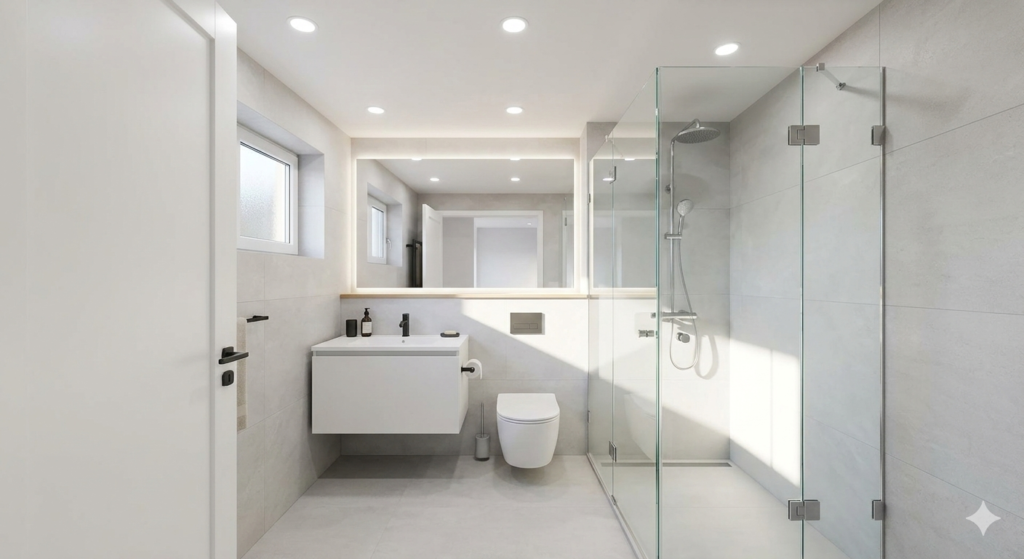
Toilets come in various footprints, and choosing a compact model can save several inches of floor space. Round-front toilets take up less room than elongated models and work better in very tight bathrooms. Wall-mounted toilets with concealed tanks are the most space-saving option, though they’re more expensive and require special installation. These sleek toilets have a modern look and make floor cleaning much easier since there’s no base to work around.
For showers, consider a corner unit if you’re working with a very small bathroom. Corner showers tuck into unused space and can feel surprisingly roomy inside despite their compact exterior footprint. If you have a bathtub you rarely use, removing it and installing a walk-in shower can dramatically increase your usable floor space. A glass shower door or enclosure makes the bathroom feel larger than a shower curtain, which visually cuts the room in half.
Faucets and hardware should match your overall design style without being too large or ornate. Simple, streamlined faucets work best in small bathrooms. Choose a finish that you’ll use throughout the bathroom for a cohesive look. Chrome, brushed nickel, and matte black are all popular choices that work with many design styles. Stick with one finish throughout the bathroom rather than mixing metals, which can make a small space feel busy and uncoordinated.
Consider the height of your fixtures too. Standard vanity height is 32 inches, but modern vanities often sit at 36 inches, which is more comfortable for taller people. Taller vanities also create the illusion of more height in the room. Just make sure the proportions work with your space. In a bathroom with low ceilings, very tall fixtures can feel overwhelming.
Think about maintenance when choosing fixtures. Matte finishes hide water spots better than shiny chrome. Flat surfaces are easier to clean than detailed, ornate designs. Simple fixtures with clean lines not only look modern and sleek but also make your cleaning routine faster and easier. In a small bathroom that you use every day, easy maintenance makes a real difference in how pleasant the space feels to live with.
6) Flooring Options That Work in Small Bathrooms
Flooring sets the foundation for your entire small bathroom makeover. The right flooring can make your bathroom feel larger, brighter, and more cohesive, while the wrong choice can make it feel choppy or cramped. Bathroom floors need to be waterproof, slip-resistant, and durable enough to handle daily use, but you also have lots of options for creating interesting visual effects that enhance your small space.
Large-format tiles are surprisingly effective in small bathrooms because they create fewer grout lines, which makes the floor look less busy and more expansive. Choose tiles that are 12 inches square or larger. The bigger the tile, the fewer grout lines you’ll see, and the more open your floor will appear. This goes against what many people expect, since it seems like smaller tiles would work better in a small room, but the opposite is actually true.
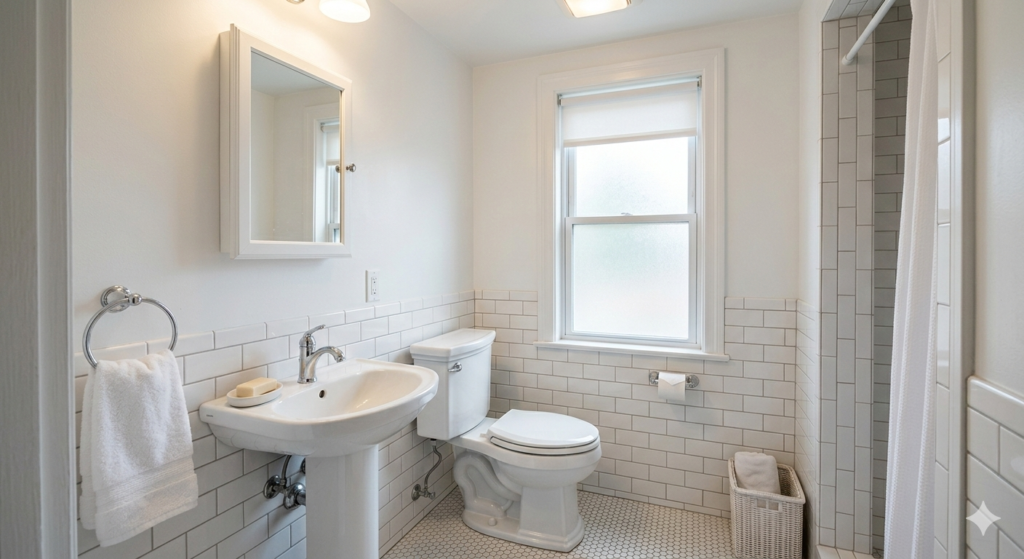
Light-colored flooring works best for making small bathrooms feel bigger. White, cream, light gray, and pale beige tiles all reflect light and create an airy feeling. If you want more visual interest, consider light-colored tiles with subtle patterns or variations in tone. Marble-look tiles, concrete-effect tiles, or terrazzo styles add texture and interest while still keeping the overall effect light and bright.
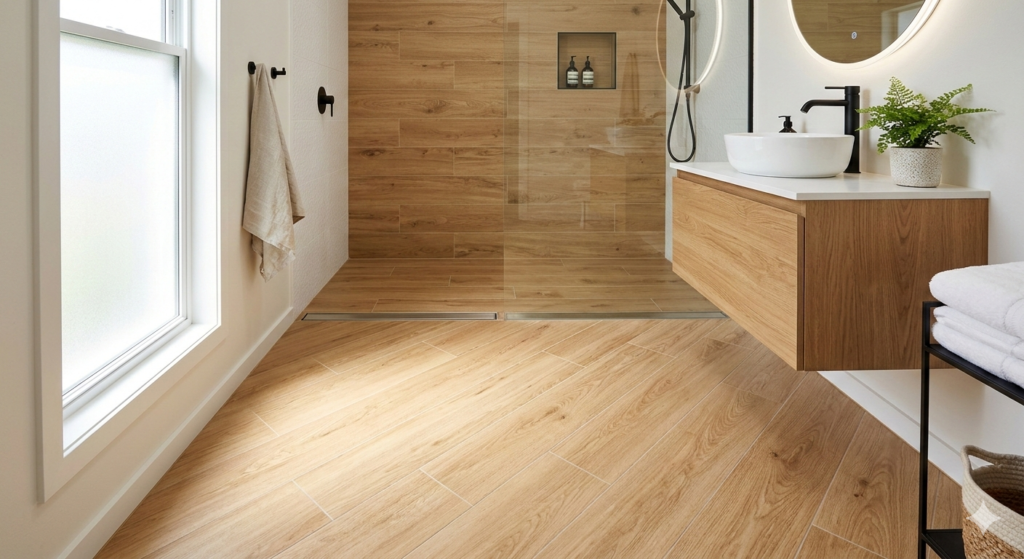
Wood-look porcelain tiles offer the warm, natural appearance of wood with the waterproof durability you need in a bathroom. These tiles work especially well in bathrooms that connect to bedrooms with hardwood floors, creating a visual flow between spaces. Choose lighter wood tones for small bathrooms to keep the space feeling open and airy. Vertical or diagonal installation can make the room feel longer or wider depending on your layout.
Hexagon tiles have become popular for bathroom floors because they add visual interest without overwhelming small spaces. Small white hexagons create a classic, vintage-inspired look, while larger hexagons in various colors can feel more modern and dramatic. The geometric pattern draws the eye and adds personality to your bathroom floor without requiring any other complex design elements.
Consider running your floor tiles diagonally rather than parallel to the walls. Diagonal installation creates diagonal sight lines that make the room feel wider and longer. This trick is especially effective in narrow bathrooms where you want to counteract the corridor-like feeling. The diagonal lines also add visual interest and make your flooring choice feel more intentional and designed.
Luxury vinyl plank (LVP) flooring has improved dramatically in recent years and now offers realistic wood and stone looks at a fraction of the cost of real materials. Good quality LVP is completely waterproof, warm underfoot, easy to install, and comfortable to stand on. It’s an excellent choice for DIY small bathroom makeovers because it doesn’t require special tools or skills to install.
Whatever flooring material you choose, make sure it continues into the shower or tub area if possible. Using the same flooring throughout the bathroom creates visual continuity that makes the space feel larger and more cohesive. If you need different flooring in wet areas for safety or practical reasons, choose something that complements your main floor rather than contrasting sharply with it.
Don’t forget about grout color, which can make a surprising difference in how your tile floor looks. Light gray grout is more forgiving than white grout, which shows dirt easily, but it’s less harsh than dark grout, which creates strong grid lines that can make a floor feel busy. Choose a grout color that’s slightly darker than your tile for the most balanced, clean look that hides minor dirt while still feeling cohesive.
7) Using Mirrors to Expand Your Small Bathroom
Mirrors are the most powerful tool you have for making a small bathroom feel bigger. They reflect light, create the illusion of depth, and can literally double the visual size of your space. The key is using mirrors strategically and generously throughout your bathroom without making the space feel like a funhouse. A well-planned mirror strategy can transform a cramped bathroom into a space that feels surprisingly open and bright.
The main mirror above your sink or vanity should be as large as possible without overwhelming the space. In a small bathroom, bigger is almost always better when it comes to mirrors. A mirror that spans the entire width of your vanity, or even extends a few inches beyond it on each side, creates the illusion of more space and provides practical benefits for getting ready. If you have two sinks, one large mirror across both looks more spacious than two separate smaller mirrors.
Consider extending your mirror all the way to the ceiling or as close as possible. This vertical emphasis makes the room feel taller and draws the eye upward, creating a more spacious feeling. A tall mirror also reflects more of the room, including ceiling lights, which helps brighten the space. If a floor-to-ceiling mirror feels too bold, at least choose a mirror that’s taller than it is wide to emphasize vertical lines.
Frameless mirrors work beautifully in small bathrooms because they seem to disappear into the wall, creating a clean, modern look that doesn’t add visual weight. If you prefer a framed mirror, choose a thin, simple frame in a light color or metallic finish that complements your fixtures. Avoid thick, dark, ornate frames that make the mirror itself feel smaller and add bulky visual weight to your walls.
Think about what your mirror reflects. Position mirrors to reflect pleasant views, light sources, or attractive features of your bathroom rather than clutter or unappealing elements. A mirror that reflects a window brings in twice as much natural light and creates a brighter, more cheerful space. A mirror that reflects messy storage or an awkward corner draws attention to problems rather than enhancing your bathroom.
Medicine cabinets with mirrored fronts provide storage while still functioning as mirrors, making them perfect for small bathrooms where every inch counts. Modern medicine cabinets come in various sizes and styles, from simple rectangular designs to more decorative options. Choose a recessed medicine cabinet that sits flush with the wall rather than a surface-mounted one that protrudes into the room.
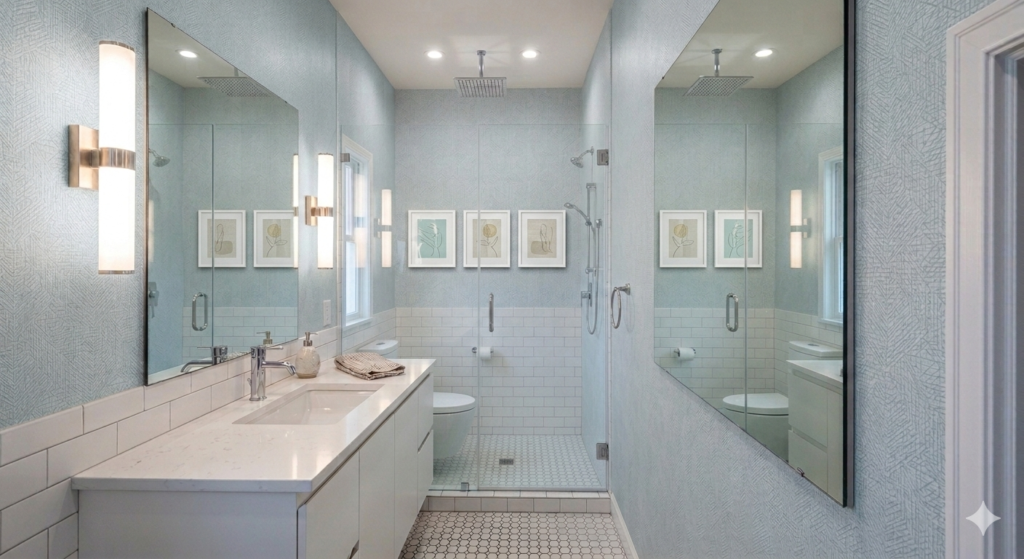
Consider adding a second mirror opposite your main mirror to create an infinite reflection effect that makes the bathroom feel much larger. This works especially well in narrow bathrooms where you have two parallel walls. The reflections bounce back and forth, creating depth and visual interest. Just be thoughtful about what the mirrors reflect so you don’t create an awkward or disorienting effect.
Mirrored or reflective tiles can serve a similar purpose to traditional mirrors while adding design interest. Consider using mirrored subway tiles for a backsplash behind your sink, or small mirror tiles as an accent. These reflective surfaces bounce light around the room and add sparkle without requiring large expanses of mirror that might feel too bold for your style.
8) Shower and Tub Ideas for Compact Bathrooms
The shower or bathtub is typically the largest fixture in any bathroom, so making smart choices about this element is crucial for a successful small bathroom makeover. You need to balance functionality with space efficiency, choosing options that give you the bathing experience you want without dominating your entire bathroom. The right approach depends on how you actually use your bathroom and what matters most to your daily routine.
If you rarely take baths, removing the bathtub and installing a walk-in shower can dramatically open up your bathroom. A standalone shower takes up less floor space than a tub-shower combination and can be configured to fit your exact space. This change often frees up enough room to add storage, a larger vanity, or simply more breathing room that makes your bathroom feel significantly more spacious.
Glass shower enclosures are far superior to shower curtains in small bathrooms. Clear glass allows you to see the entire bathroom from any position, which makes the space feel much larger than it actually is. A shower curtain creates a visual barrier that cuts your bathroom in half and makes it feel cramped and closed-in. The transparency of glass also shows off beautiful tile work and makes your shower feel like an intentional design element rather than something to hide.
Consider a doorless walk-in shower if your layout allows it. These open showers feel incredibly spacious because there’s no visual barrier at all between the shower and the rest of the bathroom. You’ll need proper planning to ensure water doesn’t spray onto the bathroom floor, which typically means positioning the showerhead away from the opening and possibly installing the shower floor at a slight slope. A doorless shower works best with a handheld showerhead or rainfall showerhead that directs water downward rather than outward.
If you must have a bathtub, look for compact models designed specifically for small bathrooms. Japanese soaking tubs are deeper but shorter than standard tubs, allowing for a comfortable soak in less floor space. Corner tubs can maximize an awkward corner that would otherwise go to waste. Alcove tubs fitted between three walls make efficient use of space and are typically the most affordable option.
For shower walls, large tiles or solid surface materials create fewer visual breaks than small tiles, making the shower feel larger and more cohesive. White or light-colored tiles keep the space feeling bright and open. If you want color or pattern, consider using it as an accent on one wall while keeping the other walls light and simple. Continuing your bathroom floor tile into the shower creates visual continuity that makes the whole bathroom feel more spacious.
Built-in shower niches provide storage without taking up any floor space or requiring bulky caddies that hang from the showerhead. Install niches between wall studs for a clean, streamlined look. Multiple small niches work better than one huge one for organizing different products. Tile the inside of niches in a complementary or contrasting tile to add visual interest and define the storage spaces.
Modern shower fixtures come in space-saving configurations that work beautifully in small showers. Wall-mounted faucets and controls free up visual space and create a cleaner look than bulky thermostatic shower systems. Rainfall showerheads provide a luxurious experience without taking up any floor space. Add a handheld wand on a slide bar for versatility and convenience, especially useful for cleaning the shower or bathing children or pets.
9) Wall Treatments and Tile Designs That Enhance Small Bathrooms
Your bathroom walls offer tremendous opportunity to add personality, visual interest, and practical benefits to your space. The treatments you choose for walls can make your bathroom feel taller, wider, brighter, or more intimate depending on your goals. Understanding how different approaches affect the perception of space helps you make choices that enhance rather than shrink your small bathroom.
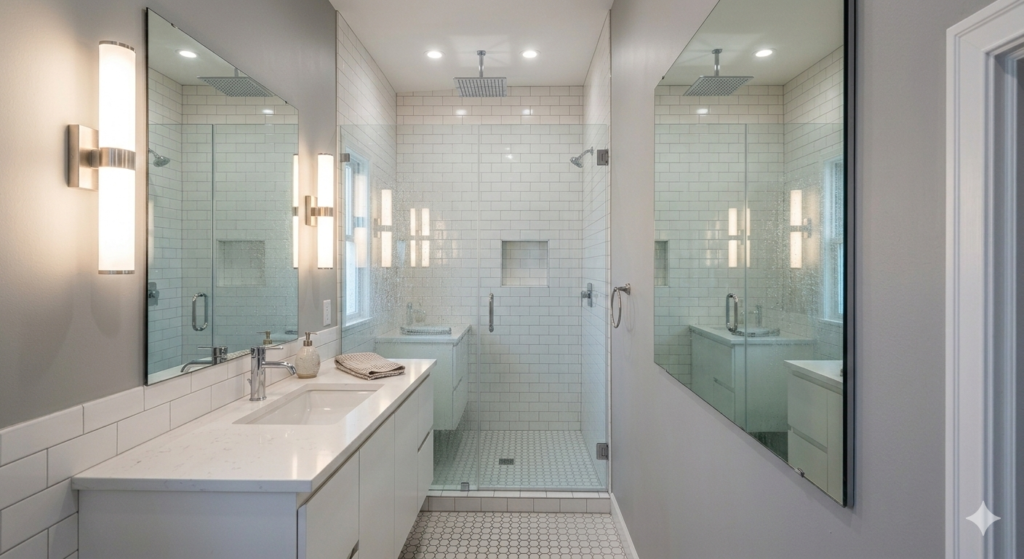
Vertical tile patterns draw the eye upward and make ceilings feel higher. Install subway tiles in a vertical stack pattern rather than the traditional horizontal brick pattern to emphasize height. Vertical stripes in wallpaper or paint create the same upward-drawing effect. Even subtle vertical elements like beadboard or shiplap installed vertically can make your bathroom feel taller and more spacious.
Large format tiles work better than small tiles in most small bathrooms because they create fewer grout lines and a cleaner, more expansive look. A wall covered in large 12-inch or 24-inch tiles feels more open than a wall covered in small mosaic tiles with their busy pattern of grout lines. Save small tiles for small accent areas where you want to add detail and interest without overwhelming the whole room.
Consider tiling only part of your walls rather than floor to ceiling. A tile wainscot that extends 36 to 48 inches up the wall protects the wettest areas while allowing you to paint upper walls in a complementary color. This approach is less expensive than full wall tiling and creates visual interest through the contrast between tile and paint. Paint the upper walls white or a light color to keep the room feeling bright and open.
White or light-colored walls remain the best choice for making small bathrooms feel larger, but you can add interest through texture and pattern. Textured paint, subtle wallpaper patterns, or tiles with dimensional surfaces add visual interest without the space-shrinking effect of dark or busy patterns. Even all-white bathrooms can feel rich and interesting when you vary textures between smooth painted walls, glossy tiles, and matte fixtures.
If you want to use bold color or dramatic tile, limit it to one accent wall rather than covering all four walls. An accent wall behind the vanity or in the shower creates a focal point and adds personality without overwhelming the space. Keep the other three walls light and neutral to maintain an open, airy feeling. This approach lets you be bold with color or pattern while still keeping the overall bathroom feeling spacious.
Glossy tiles reflect more light than matte tiles, making them a smart choice for small bathrooms where you want maximum brightness. The shiny surface bounces light around the room and adds subtle sparkle that elevates the overall look. Subway tiles with a glossy glaze are classic and affordable, while glossy large-format tiles create a more modern, sophisticated appearance.
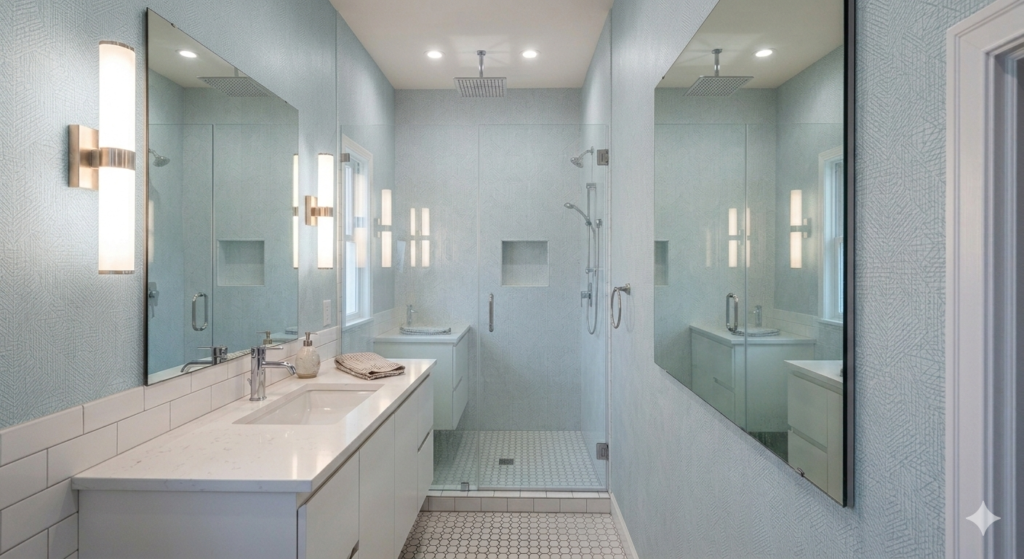
Waterproof wallpaper has improved dramatically and now offers an easy way to add pattern and personality to bathroom walls. Choose wallpaper designed specifically for bathrooms with moisture-resistant properties. Small-scale patterns in light colors work best in tiny bathrooms, while medium-scale patterns can work in slightly larger spaces. Avoid very large-scale patterns that might feel overwhelming or very dark wallpapers that make the room feel smaller.
Don’t forget about your ceiling, which is often called the fifth wall. Painting the ceiling the same light color as your walls creates a seamless flow that makes the room feel taller and more cohesive. If you have good ceiling height, consider adding subtle detail like beadboard or shiplap to the ceiling for architectural interest. Keep ceiling treatments light and simple so they add character without weighing down the space.
10) Adding Style with Accessories and Finishing Touches
Accessories and finishing touches are what transform your small bathroom from a functional space into a place that feels personal, welcoming, and complete. These final details don’t require major construction or big budgets, but they make a huge difference in how your bathroom looks and how it feels to use every day. The key is choosing accessories thoughtfully, keeping the space from feeling cluttered while adding elements that bring beauty and personality.
Start with towels that complement your color scheme. Stick with two or three coordinating colors rather than a rainbow of different towels. All-white towels create a spa-like, hotel-inspired look that feels clean and serene. If you want color, choose towels in your accent color and mix them with white or neutral towels. Roll towels on open shelves or in baskets for a decorative touch that looks intentional rather than messy.
Hardware like towel bars, robe hooks, and toilet paper holders should match your faucet finish for a cohesive look. Choose simple, streamlined designs that don’t protrude too far from the wall. In a small bathroom, bulky hardware can be a hazard and makes the space feel more cramped. Wall-mounted toilet paper holders work better than floor-standing ones, which take up precious floor space and collect dust.
Add living plants to bring life and freshness to your bathroom. Plants thrive in bathroom humidity and add natural beauty that softens hard surfaces like tile and glass. Choose low-light plants if your bathroom doesn’t have a window, such as pothos, snake plants, or ZZ plants. Small plants on shelves, a larger plant on the floor in the corner, or trailing plants on high shelves all work well depending on your space and style.
Artwork might seem like an unusual addition to a bathroom, but it makes the space feel more finished and personal. Choose pieces with bathroom-appropriate subjects and frame them properly to protect against moisture. Small prints or photographs in simple frames work well in compact bathrooms. Group several small pieces together rather than using one large piece, which can overwhelm a small wall.
A small rug or bath mat adds warmth underfoot and softens the look of tile floors. Choose a rug in your color scheme that’s sized appropriately for your space. A rug that’s too large overwhelms the floor and makes the bathroom feel cramped, while a properly sized rug defines the space in front of the sink or tub without taking over. Machine-washable rugs are practical for bathrooms that see heavy use.
Candles, diffusers, or attractive soap dispensers add personality without taking up much space. Display a few carefully chosen items rather than covering every surface with decorations. A beautiful soap dispenser, a small plant, and maybe one decorative object are plenty for a small bathroom counter. Keep the principle of editing in mind: less is more in a small space, and clear surfaces make the room feel larger and more peaceful.
Window treatments should provide privacy while allowing natural light to enter. Frosted film is permanent and maintenance-free. Simple roller shades or cellular shades work well for windows where you want adjustable privacy and light control. Avoid heavy curtains or elaborate window treatments that take up visual space and collect moisture and mildew.
Finally, keep your bathroom clean and clutter-free. Even the most beautifully designed small bathroom will feel cramped and unpleasant if it’s cluttered with too many products, dirty surfaces, or general mess. Implement simple daily habits like wiping down the sink after use, hanging up towels, and putting away products. A clean, minimally decorated bathroom always feels more spacious and welcoming than a cluttered one, regardless of its actual size.
Bringing Your Small Bathroom Makeover Together
Creating a beautiful small bathroom makeover is entirely achievable when you approach it thoughtfully and make smart choices that enhance rather than fight against your space. Every decision you make, from paint color to fixture size to storage solutions, works together to create the final result. The most successful small bathrooms feel cohesive and intentional, with each element supporting the overall goal of creating a functional, beautiful space that feels larger and more welcoming than its actual square footage might suggest.
Remember that small doesn’t mean boring or limited. The ideas and strategies we’ve covered give you plenty of options for creating a bathroom that reflects your personal style while maximizing function and space. Whether you’re working with a tight budget and timeline or planning a more extensive renovation, the principles remain the same: choose light colors, maximize vertical space, use mirrors strategically, select appropriately sized fixtures, and keep clutter to a minimum.
Start with a clear plan and realistic budget, then work through your bathroom systematically. Focus on getting the big elements right first, like layout, fixtures, and color scheme, before moving on to smaller details and accessories. This approach prevents overwhelm and helps ensure your final result is cohesive rather than a collection of random choices that don’t work well together.
Don’t be afraid to take your time with decisions. Live with paint samples on your walls for a few days. Research fixture options thoroughly. Think about how you actually use your bathroom rather than just how it looks. The small amount of extra time spent planning and choosing carefully pays off in a finished bathroom that works beautifully for your needs and continues to feel fresh and functional for years to come.
Your small bathroom makeover is an investment in your daily comfort and the value of your home. Every morning and evening, you’ll enjoy using a space that feels clean, bright, and perfectly suited to your needs. That’s the real reward of all your planning and effort: a bathroom that makes every day just a little bit better.