
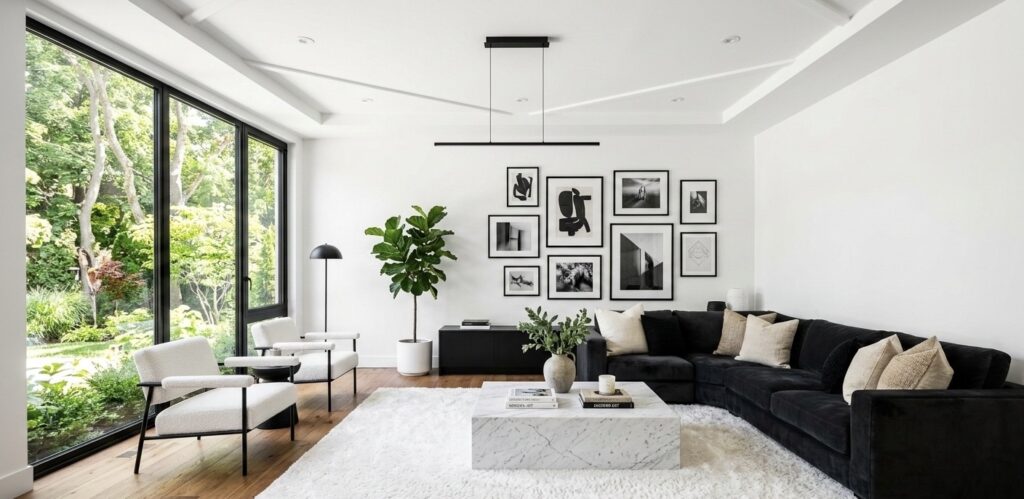
There is something about a high contrast living room that stops you in your tracks. You walk in and you just feel it — the energy, the sharpness, the sense that every single thing in the room was placed there with a purpose. It is not an accident. It is not something that happens when you grab whatever furniture is on sale and hope for the best. A truly well-done high contrast living room is built, layer by layer, decision by decision. And the good news? You do not need to be an interior designer to pull it off. You just need to understand a few core rules — and then know exactly when to break them.
This guide is going to walk you through every step of building a high contrast living room from scratch. Whether you are starting with a blank space or you are working with what you already have, this is your full playbook. We are going to talk about color, furniture, materials, lighting, texture, art, and all the small details that make the difference between a room that looks “trying too hard” and one that looks like it belongs in a magazine. We will cover five distinct directions you can take a high contrast living room — because this is not a one-size-fits-all look. High contrast has range. It has mood. And it can absolutely be made to fit your life.
What “High Contrast” Actually Means in Interior Design
Before you start ordering black sofas and painting walls white, it helps to understand what contrast really means when designers use the word. Most people assume high contrast = black and white. And yes, that is the most classic expression of it. But contrast in design actually refers to the difference in visual weight between elements. That difference can come from color — dark versus light. It can come from value — muted versus saturated. It can come from texture — smooth versus rough. Or it can come from scale — small versus large, delicate versus heavy.
When a room is “high contrast,” it means the eye travels quickly and with energy. There is visual drama. Things pop. Your attention is grabbed. Compare that to a low contrast room — think all-beige, tonal, soft — where everything blends together and the mood is calm and cocooning. Neither is wrong. They are just different emotional experiences. High contrast rooms feel dynamic, confident, and bold. They tend to feel more formal than a soft neutral room, though clever styling can absolutely make a high contrast space feel warm and livable.
The reason high contrast living rooms look so striking in photos — and so good in real life — is that your eye has clear anchor points. The dark elements ground the room. The light elements lift it. There is a visual rhythm happening that your brain reads as “intentional.” When contrast is low and everything is the same value, the room can look flat. When contrast is too random — darks and lights scattered without logic — it looks chaotic. The goal is to place contrast intentionally, so the room tells a coherent visual story.
One more important distinction: high contrast does not mean harsh. This is one of the biggest fears people have when they start planning a black-and-white room. They picture something cold, clinical, maybe even a little intimidating. But contrast and warmth can absolutely coexist. The secret is in the warm undertones you choose, the textiles you layer, the lighting you use, and the way you balance the ratio of dark to light. We will get into all of that in detail.
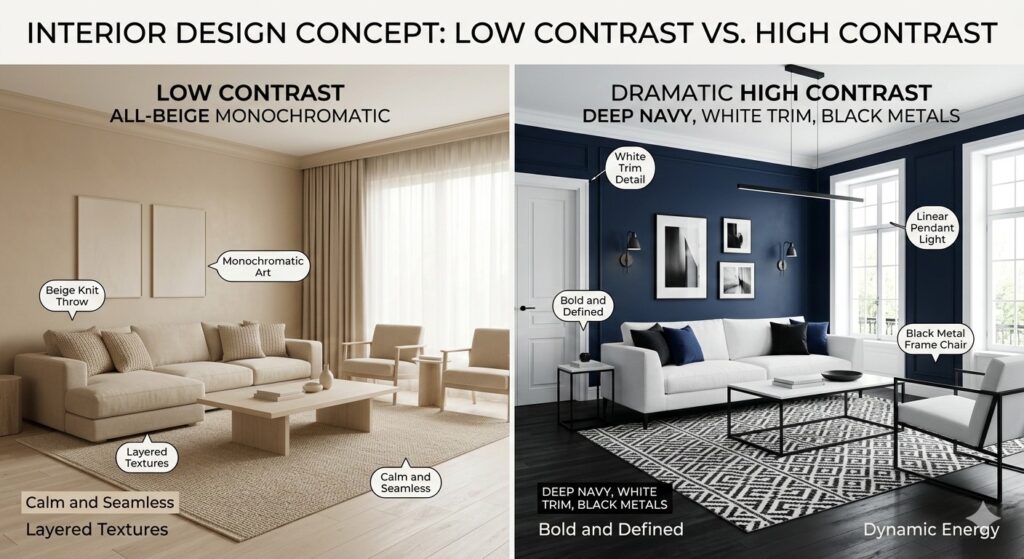
The Five Different High Contrast Living Rooms You Can Build
Here is something most articles about high contrast living rooms miss entirely: there is not just one way to do this. The phrase “high contrast” is really an umbrella over a handful of very different looks that use the same fundamental design principle. Before you start buying anything, you need to decide which direction speaks to you, because the execution is quite different for each one.
Direction 1: The Classic Black and White
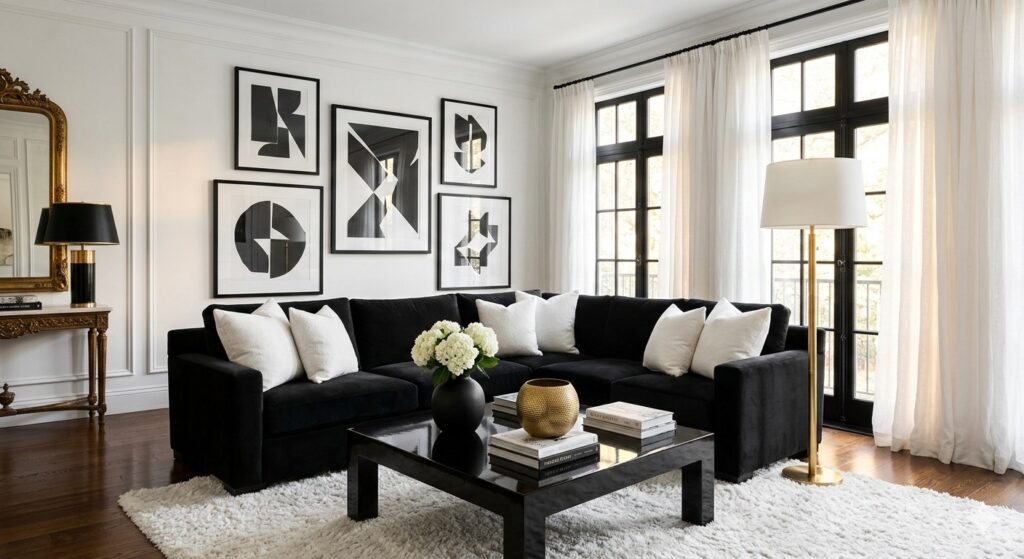
This is the one most people picture. White walls, black furniture, and a careful mix of the two in accessories and art. But here is the thing — classic black and white, done well, is incredibly sophisticated. Done lazily, it looks like an IKEA showroom. The difference is in the quality of the contrast. You want a true, deep, rich black — not a washed-out dark gray that hedges its bets. And you want a warm white on the walls — not a stark, blue-toned white that makes everything feel sterile. The classic black and white living room thrives on clean lines, graphic patterns, and very deliberate accessory choices. This direction suits people who love minimalism but still want drama.
For this look, your wall color should be an off-white or warm white — think shades like Benjamin Moore White Dove, Chantilly Lace, or Sherwin-Williams Alabaster. Your main seating piece, whether a sofa or a pair of chairs, anchors the room in deep black. Your rug is almost always white or light cream to keep the floor from going too dark and heavy. Art leans graphic — bold geometric prints, black-and-white photography, or abstract ink drawings. Metals are typically matte black or brushed brass, which adds just enough warmth to keep the room from feeling like a chess board.
Direction 2: Moody Dark Walls with Light Furniture
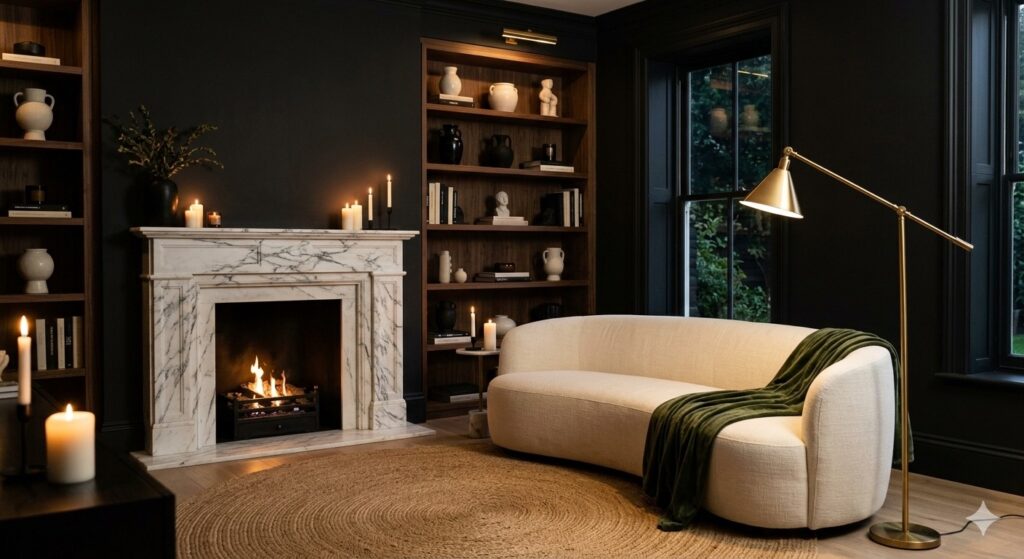
This is the direction for people who love drama and are not afraid of a dark room. Instead of white walls as the backdrop, you flip the script — your walls go deep. We are talking charcoal, near-black, deep forest green, midnight navy, or rich plum. And then your furniture comes in light. A cream linen sofa. White marble. Natural linen curtains. Pale oak wood. This creates a contrast that is actually even more dramatic than the classic version, because the dark wall makes the light pieces pop intensely.
The big fear people have with dark walls is that the room will feel small or cave-like. And it can — if you do it wrong. The key is making sure you have enough light both natural and artificial, that your floor stays relatively light (a light rug or pale hardwood will make a huge difference), and that you do not fill the room with too much furniture. Dark walls in a well-lit, thoughtfully edited room feel intimate and enveloping. They make a living room feel like the most special, cocooning space in the house.
Direction 3: Warm Contrast (Brown, Cream, and Black)
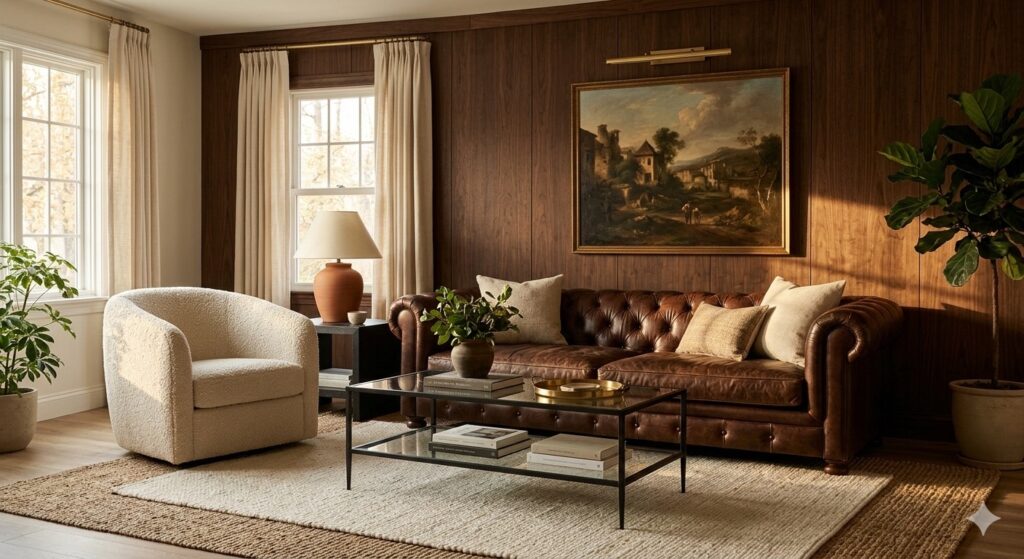
This is for people who love contrast but do not want the stark graphic quality of black and white. Warm contrast replaces the cool white-and-black palette with rich warm tones — think deep espresso brown, warm caramel leather, aged brass, cream, and off-white. The contrast is still strong — the difference between a cream boucle chair and a dark walnut wood wall is dramatic — but it feels earthy and cozy rather than graphic and sharp. This direction works beautifully in homes with traditional architecture, in spaces that get warm afternoon light, and for people whose style leans more organic and natural.
Direction 4: Bold Color as the Contrast Partner
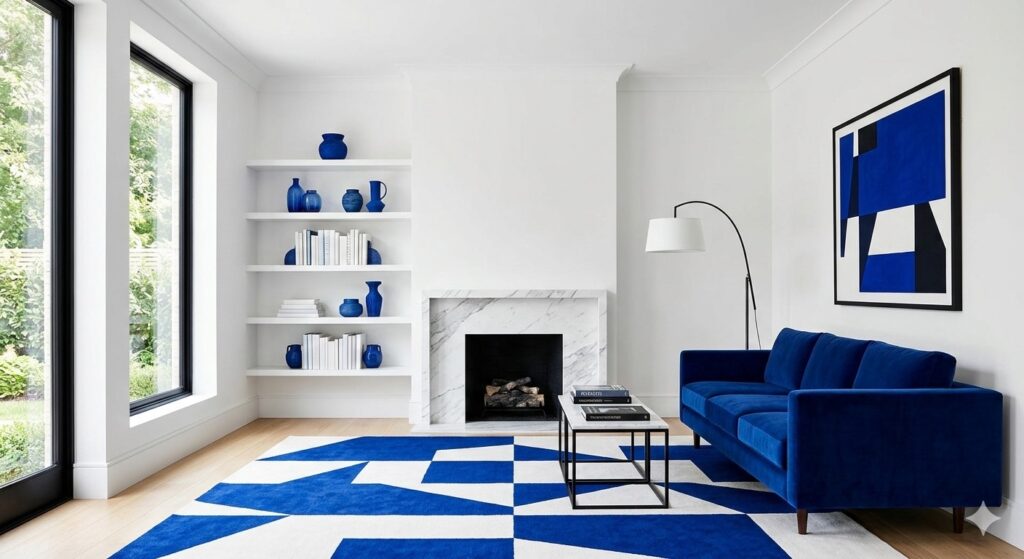
Who says contrast has to be limited to light and dark? One of the most exciting directions in high contrast living room design right now is using a bold saturated color as one of the contrast partners. Picture a deep cobalt blue sofa against white walls. Or a hunter green accent wall behind white furniture. Or a terracotta-painted fireplace wall in a room with a white sofa and dark walnut furniture. The contrast here is between saturated and neutral — and it is incredibly powerful. This approach adds warmth and personality to the high contrast formula while still delivering that punchy, visual impact.
Direction 5: Textural Contrast (Tone on Tone with Texture)
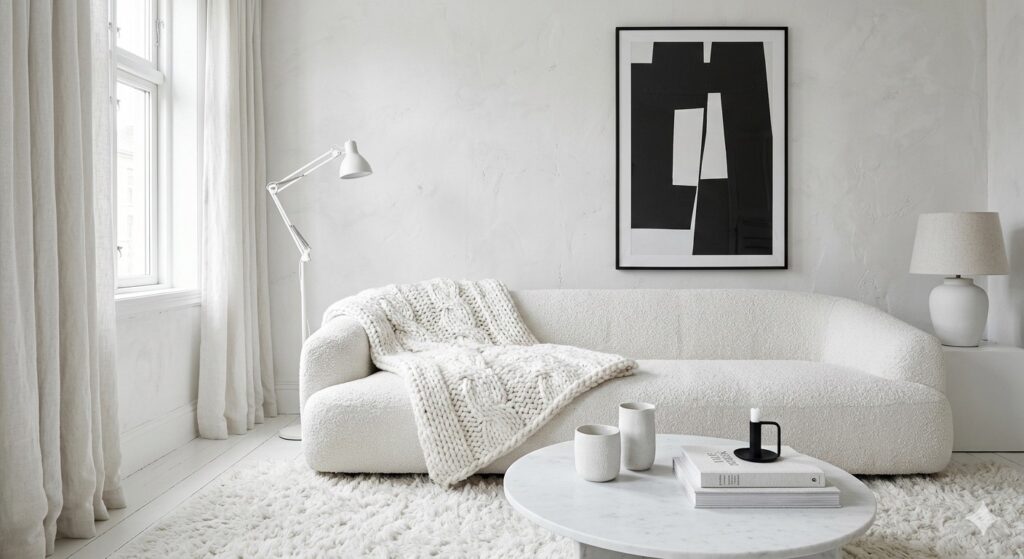
This is the most subtle expression of high contrast, and also one of the most sophisticated. In a textural contrast room, you are working within a tight color palette — often mostly white or mostly cream — but you are using the difference between textures to create the visual drama. A smooth marble coffee table next to a chunky boucle sofa. A rough plaster wall next to a sleek lacquered sideboard. Matte finishes next to glossy ones. The contrast comes from how materials catch or absorb light, not from dramatic color differences. This approach is incredibly elegant, and a small amount of true dark — a black-framed mirror, black metal furniture legs, charcoal artwork — is usually added to give the eye an anchor point.
1) Building the Walls, Floors, and Architecture
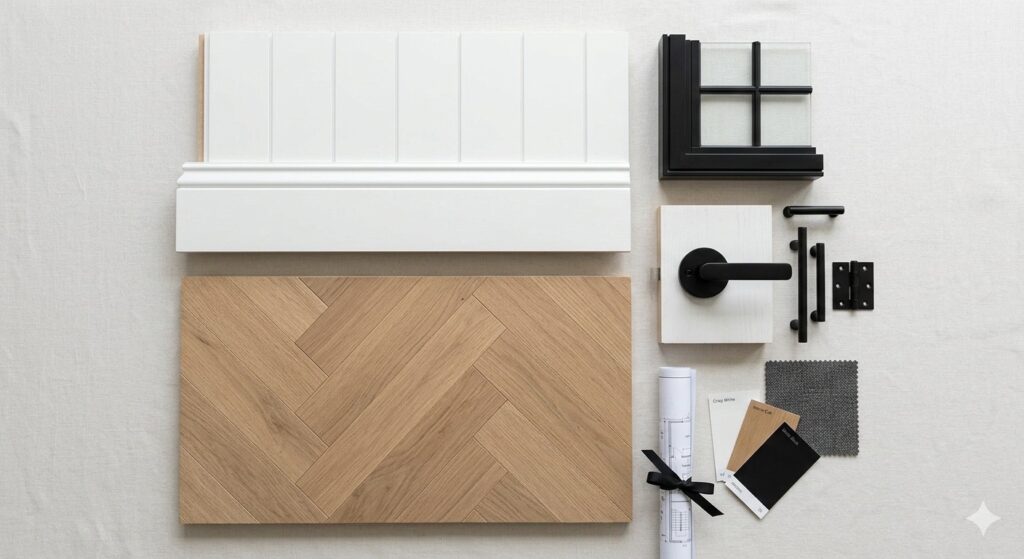
Every great high contrast living room starts with the bones of the room — the walls, floors, trim, and architectural details. These are the decisions that will either support your contrast scheme or fight against it. Getting the foundation right means everything you layer on top will work harder and look better.
Start with your walls. If you are going classic high contrast with white walls, choose your white carefully. Whites have undertones — some are cool and slightly blue or gray, some are warm with yellow, pink, or cream undertones. For most living rooms, a warm white works better because it feels livable rather than clinical. The contrast against dark furniture will still be strong. If you are going dark walls, test several samples on your actual wall across multiple times of day before committing. Colors look dramatically different under morning light versus evening lamplight, and what looks like a beautiful deep navy on a paint chip can turn into a flat gray-blue or near-black on a large wall.
Your trim color matters enormously in a high contrast space. In a classic black-and-white or moody dark-wall room, crisp bright white trim — even slightly brighter than the wall color in a light room — sharpens the architecture and adds to the contrast. Dark rooms with bright white trim feel incredibly sophisticated. The trim becomes part of the contrast story. If your room has beautiful architectural details like wainscoting, crown molding, or paneled walls, a high contrast scheme will absolutely show them off. Conversely, if your room lacks architectural detail, you can create it by adding simple board-and-batten paneling, a painted “picture frame” molding around the wall, or a painted dado rail.
Floors are another major decision. In a high contrast space, your floor is part of the palette. Light floors — pale oak, white oak, light-toned marble or tile — give the room a bright, airy base that complements dark furniture and walls well. Very dark floors, like ebony-stained wood or black tile, can work beautifully too, but they require more careful management — you will need to ensure enough light and enough visual breathing room so the room does not feel heavy. A warm medium tone floor, like a natural walnut or amber oak, bridges light and dark beautifully and adds warmth to an otherwise stark black-and-white scheme.
Black window frames are one of the most impactful architectural upgrades you can make in a high contrast living room. Standard aluminum or vinyl white window frames are fine, but black-framed windows — whether you are replacing windows, adding a painted window frame detail, or simply using a high-quality black paint on existing wood frames — instantly elevate a space. They create a graphic, architectural quality that echoes the contrast theme of the whole room. Even if nothing else changes, switching window frames from white to black in a white room with dark furniture can make the room look like it was professionally designed.
2) Choosing Your Main Furniture: The Anchor Pieces
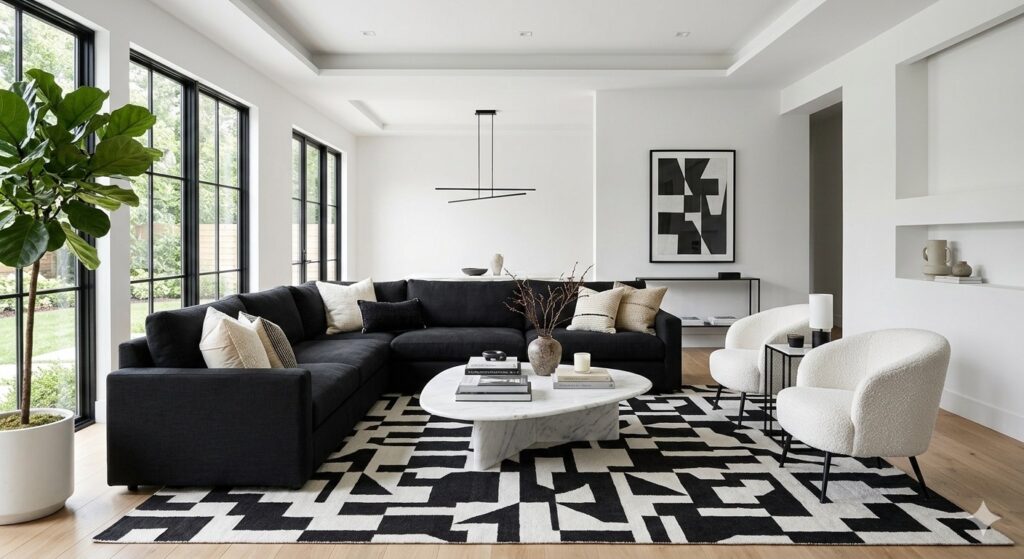
Your main furniture — the sofa, the coffee table, and the primary seating chairs — sets the stage for everything else. In a high contrast living room, these pieces need to commit. This is not the place for murky in-between tones that are “sort of dark” or “kind of light.” Every major furniture decision should clearly read as either the light side or the dark side of your contrast palette.
The sofa is almost always the largest piece of furniture in a living room, and it will make or break your contrast scheme. If your walls are white and your floors are light, a deep charcoal, true black, or near-black navy sofa creates an immediate, powerful anchor. The sofa becomes the visual weight of the room — the thing that makes everything feel grounded. If you prefer a lighter sofa, pair it with dark walls or dark floors to maintain the contrast dynamic. A cream or ivory sofa against dark walls is gorgeous and dramatic. A medium-gray sofa on light walls is underwhelming — it is exactly the kind of hedging that makes a high contrast scheme fall flat.
Material matters enormously for your main sofa. In a high contrast space, the texture of the sofa fabric is part of what gives it visual interest. A matte, fabric sofa in deep charcoal — linen, performance velvet, bouclé, or a tight-weave upholstery — reads very differently than a leather sofa in the same color. Leather adds shine and luxury and a certain editorial edge. Fabric adds softness and coziness, which is often what you need to keep a high contrast space from feeling too cold. Velvet is a strong choice in high contrast spaces because it shifts color slightly as it catches light, adding depth without visual complexity.
Your coffee table is a key contrast opportunity. If your sofa is dark, a white or light coffee table — marble, painted wood, white lacquer, travertine — creates a direct and beautiful contrast right in the center of your seating area. This central contrast anchors the whole composition. A round or oval coffee table in white marble with dark legs (or no visible legs, as in a pedestal style) is one of the most reliable moves in a high contrast living room. Alternatively, a clear glass or acrylic coffee table allows you to see through it, which reduces its visual weight and lets the rug beneath become more prominent.
Accent chairs are where you can start to introduce the opposite side of your contrast palette if your sofa is all one direction. Pair a dark sofa with a white or cream accent chair. Pair a light sofa with a dark, dramatic armchair. This creates the visual back-and-forth that makes a high contrast room feel lively and considered rather than monotonous. Having every major piece of furniture in the same color is usually less interesting than creating a dialogue between dark and light within the seating arrangement itself.
3) Rugs: The Foundation Under Your Feet
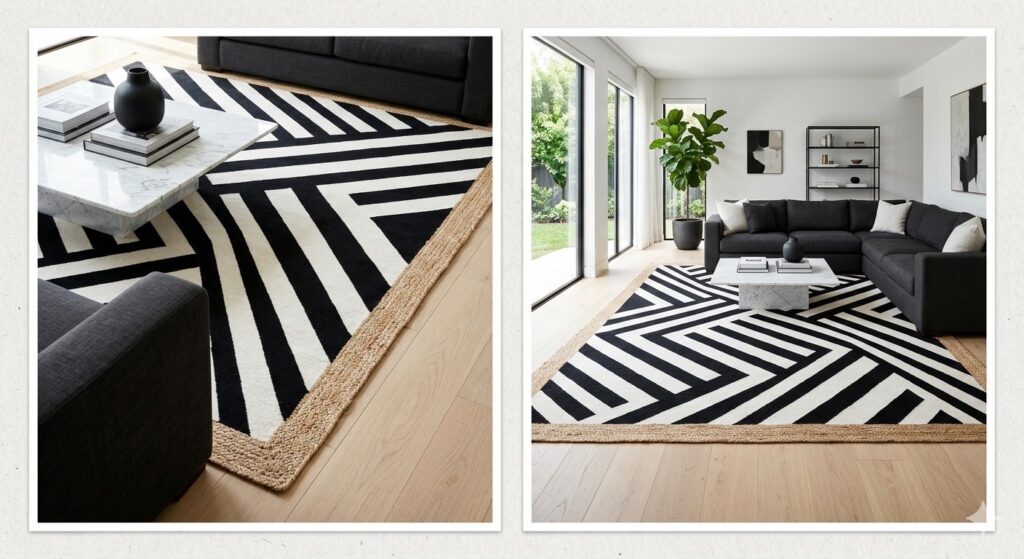
The rug in a high contrast living room does several jobs at once. It defines the seating area. It adds texture and warmth underfoot. And it either contributes to the contrast story or provides a neutral resting point for the eye. Getting the rug right is one of the decisions that separates a room that feels designed from one that just feels furnished.
If you want maximum contrast and graphic impact, a bold black-and-white patterned rug — geometric, abstract, or even a classic stripe — can be spectacular. This works particularly well if your furniture and walls are relatively clean and simple, because the rug becomes one of the main pattern statements in the room. Make sure the scale of the pattern in the rug is appropriate for the size of the room — a very small geometric print on a large rug can look busy and agitated, while a large-scale geometric on the same rug looks intentional and graphic.
For rooms where the walls and furniture are already doing significant contrast work, a solid rug in either white, cream, or deep charcoal/black can be more effective. A very light, fluffy, solid white or ivory rug — a high-pile Moroccan-style shag, a thick wool rug, or a plush bouclé — brings warmth and softness to the room and gives the eye a place to rest among all the strong contrast. It also grounds the light side of your palette in the floor plan, which helps balance a room with a lot of dark furniture.
Natural fiber rugs — jute, sisal, seagrass — in their natural warm caramel tone are a beautiful middle-ground choice in a high contrast space. They do not add to the contrast directly, but they add warmth and organic texture, which prevents the room from feeling too stark. They work especially well in the warm contrast direction (brown, cream, and black), where they contribute to the earthy, grounded feel of the whole scheme.
Size matters more than most people realize. A too-small rug in a living room will shrink the perceived size of the space and make the furniture arrangement look disconnected. In a high contrast living room, where the visual architecture is so important, an undersized rug can genuinely break the composition. The standard rule of at least the front legs of all major seating pieces on the rug is the minimum — ideally, a rug in a high contrast living room is large enough for all four legs of every major piece to sit on it.
4) Lighting: How You Illuminate a High Contrast Space
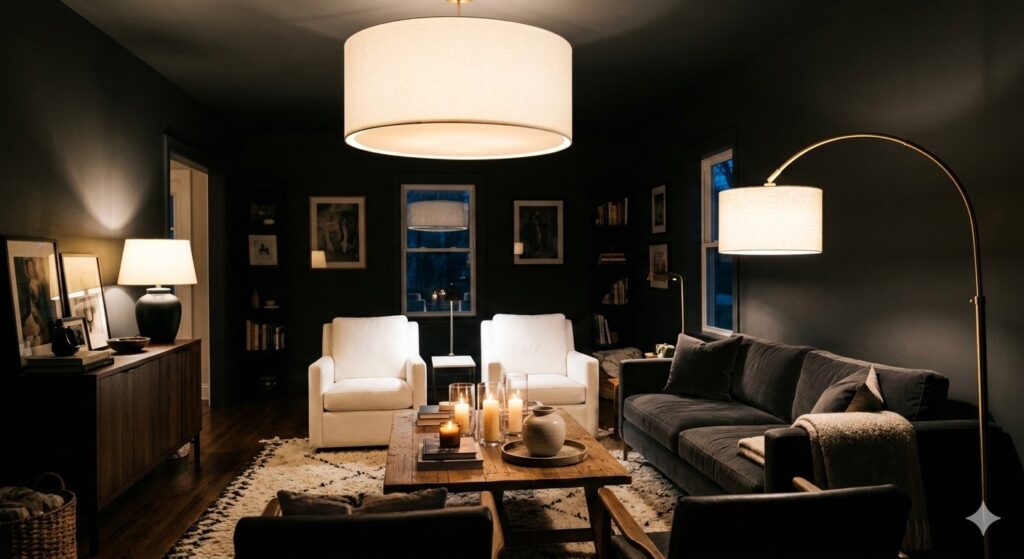
Lighting in a high contrast living room is not just functional — it is part of the design. The way light falls on your walls, picks up the texture of your furniture, and creates pools of warm glow throughout the space is what transforms a high contrast room from dramatic to livable. Lighting is, without exaggeration, the difference between a room that feels like a showroom and one that feels like a home.
The first principle of lighting in a high contrast space is layering. You never want to rely on a single overhead light source. A ceiling fixture only, even a beautiful one, creates flat, even illumination that strips the room of shadow and depth — and shadow is actually what makes contrast visible and beautiful. You need at least three types of light working together: ambient light (your ceiling or overhead source), task and accent light (floor lamps, table lamps, and reading lights), and atmospheric light (candles, battery-operated votives, LED strips behind furniture).
In a room with dark walls, the lighting design becomes even more critical. Dark walls absorb light, which means you need more lumens overall to keep the room from feeling gloomy. The magic trick is to use that light directionally — uplighting that grazes the textured wall surface, a gorgeous floor lamp that pools warm light in a corner, table lamps that create intimate zones. The dark wall is part of the atmosphere, not a problem to be overcome. You are not trying to make it look bright. You are using light to reveal its depth and richness.
Your light fixture choices should also align with the contrast theme. In a classic black-and-white room, black matte metal fixtures — a black pendant, a black arc floor lamp, a black tripod floor lamp — echo the contrast scheme and read as part of the composition. Warm brass or antique gold fixtures add a warm note that prevents starkness and pairs beautifully with off-white walls. In a moody dark-wall room, a large, dramatic pendant in white or warm glass becomes one of the most powerful contrast elements in the room — a bright point against a dark ceiling.
Natural light should be maximized rather than blocked. Sheer linen curtains in white or cream, hanging at ceiling height and extending slightly beyond the window frame on each side, will make windows look larger, allow maximum light in, and add a soft, romantic element to an otherwise graphic room. Layer blackout curtains behind for privacy and light control, but keep the sheers as the visible layer during the day.
5) The Art of Layering: Textiles, Pillows, and Throws
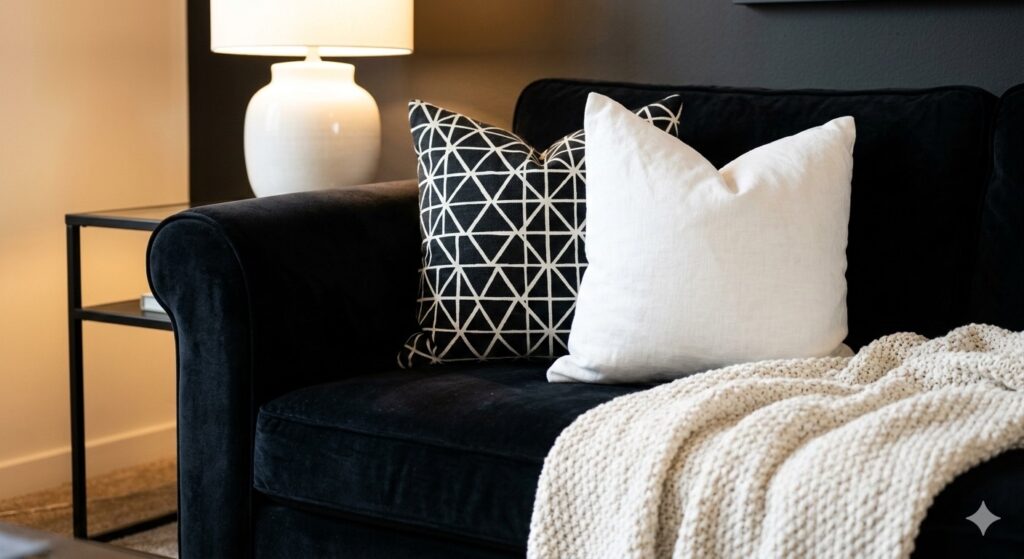
Once your main furniture is in place, the layering work begins. Textiles — cushions, throws, curtains — are the most flexible tool you have in a high contrast living room. They can shift the mood, add softness, introduce pattern, and bring in that crucial warmth that keeps the scheme from feeling cold.
Pillows on your sofa should follow a clear logic rather than feeling randomly collected. In a high contrast space, the most effective approach is to work with a simple three-part formula: solid pillows in each of your contrast tones (one set in white or cream, one set in black or dark), plus one or two graphic patterned pillows that bridge both. The graphic pillow might be a bold black-and-white stripe, a geometric print, or an abstract print that references your colors. This keeps the pillow arrangement from looking like a random assortment while still adding visual interest. For a dark sofa, leading with mostly white and cream pillows with one or two black graphic ones creates the most striking result.
Throws are one of the best ways to soften a high contrast space. A chunky knit cream throw draped over the arm of a black sofa. A white bouclé throw folded over the back of a dark chair. A throw adds texture, signals coziness, and slightly softens the sharpness of the contrast. Avoid black throws on a black sofa — they disappear. Avoid white throws on a white sofa — same problem. The throw should always contrast with the piece it is on.
Curtains deserve special attention. In a high contrast living room, the wrong curtains can undercut everything else. Heavy, dark curtains on white walls make the windows feel like holes. Light, sheer curtains on dark walls create a beautiful, dreamy glow. The most universally successful approach in a high contrast space is floor-to-ceiling white linen or white sheer curtains, hung from just below the ceiling line on a simple rod. They add height, softness, and light to whatever scheme you are working with. If your room leans heavily dark, white curtains become one of your most important light-side elements. If your room is more classically balanced, they add an airy, sophisticated quality.
6) Walls: Art, Mirrors, and Architectural Details
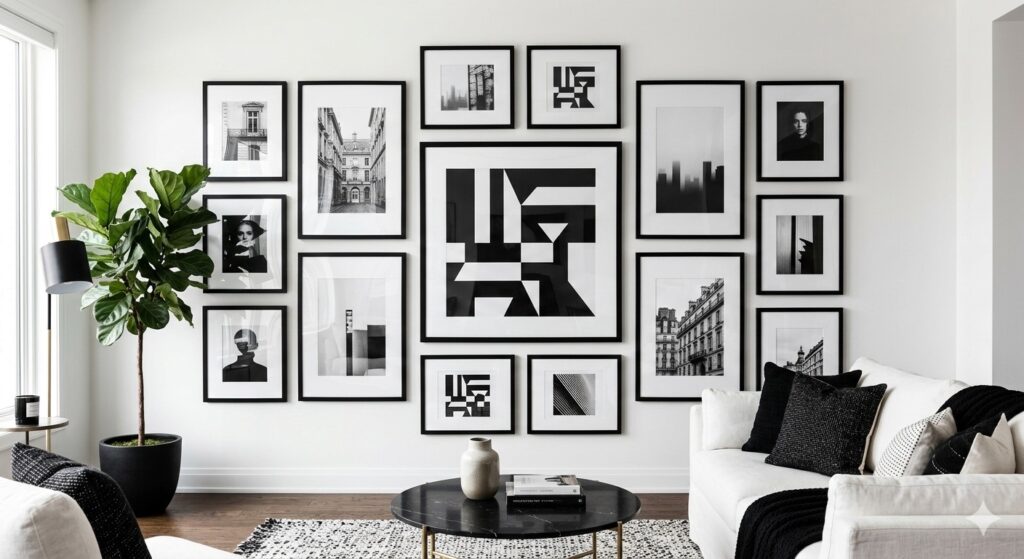
The walls of your living room are a massive canvas, and in a high contrast space, what you put on them has to be deliberate. Art, mirrors, and wall details all participate in the contrast story. Used well, they complete the room. Used carelessly, they distract from it.
Art in a high contrast living room typically goes in one of two directions. The first is graphic and bold — large-scale black and white photography, bold abstract prints, geometric art in black, white, and perhaps one accent color. This kind of art reinforces the contrast theme and feels very cohesive. The second direction is more unexpected — rich oil paintings with deep jewel tones, abstract expressionist canvases with a wide range of color, or vintage prints that bring warmth and personality. This second approach uses art as the place in the room where color and softness enter, providing a counterpoint to the strictness of the contrast scheme. Both approaches work well, but they create very different rooms.
A gallery wall done right in a high contrast space is one of the most impressive things you can achieve. The key is consistency in framing — use the same frame style and color throughout (all matte black frames, or all thin brass frames, or all white gallery frames) so the collection reads as curated rather than accumulated. The art inside the frames can vary in subject and style, but the framing uniformity gives the wall a designed, intentional quality. Mix sizes for visual interest, but keep a clear center of visual gravity — either a single large piece anchoring the arrangement, or a horizontal alignment along a shared center line.
Mirrors are powerful tools in high contrast spaces. A large, black-framed round mirror on a white wall creates a graphic statement while also bouncing light. An oversized arch mirror leans against the wall of a dark room and both reflects light and adds height. A mirror with a metallic frame — warm brass or antique gold — adds a warmth note that is incredibly welcome in a space that could otherwise feel cold. Place mirrors intentionally — they should reflect something beautiful, like a window, a lamp, or a styled shelf, not a blank wall or a cluttered area.
7) How to Style Open Shelving and Sideboard
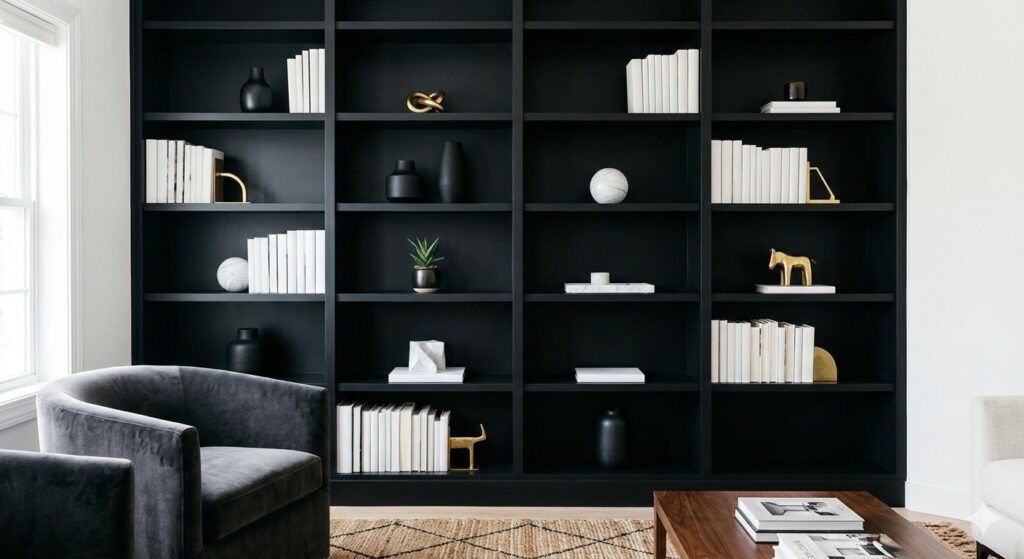
Open shelving and sideboards in a high contrast living room are where personality enters the space. These are your display surfaces — the places where carefully chosen objects, books, and plants bring the room to life. The styling of these surfaces needs to align with the contrast philosophy of the whole room while also feeling curated and personal.
The most effective approach to shelving in a high contrast space is to treat each shelf or surface as a small composition, with its own dark-to-light balance. A shelf might have two black ceramic vases, a stack of white linen-bound books, a trailing plant in a terracotta pot, and a single brass object. Within that small grouping, there is variety — dark, light, organic, metallic — but it holds together because of its restraint. The biggest mistake people make in styling high contrast spaces is overcrowding surfaces. White space — literally empty shelf space, empty tabletop — is not wasted space in a high contrast room. It is part of the contrast. It lets the objects that are there breathe and be seen.
For sideboards and credenzas, which are typically lower horizontal surfaces, the styling approach is slightly different. These tend to work best with one or two larger objects — a significant lamp, a large vase, a sculptural object — plus a small number of supporting elements rather than many small objects. Scale matters: a collection of many small things on a long sideboard looks busy and lacks confidence. Two or three well-chosen larger pieces look bold and considered.
If you have a dark sideboard or dark shelves against a white wall, let the wall become part of the display by hanging one or two strong pieces of art directly above the furniture. The negative space between the top of the furniture and the bottom of the art is intentional. In a dark room with light furniture, a painting or print hanging above a pale sideboard creates a striking focal point.
8) Plants and Natural Elements
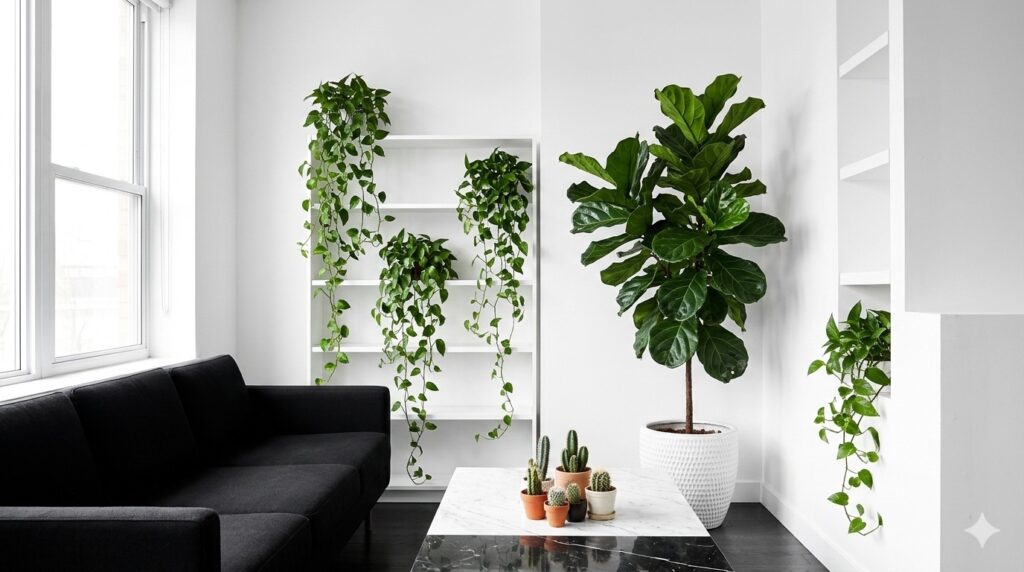
One of the most effective ways to keep a high contrast living room from feeling stark or cold is to bring in living, organic elements. Plants are the most direct way to do this. Green is technically a contrast element against a black-and-white palette — it introduces a warm, living color note that immediately adds life and softness to the room. And there is something about the organic shape of a plant — the irregular leaves, the trailing stems — that humanizes even the most graphic, architectural space.
Large floor plants are the most impactful choice. A fiddle leaf fig, an oversized snake plant, a tall olive tree, or a sculptural dracaena placed in a light ceramic planter in a corner of the room instantly becomes a focal point and adds height to the composition. In a high contrast room, the planter matters almost as much as the plant — a matte white ceramic pot, a black matte pot, or a warm terracotta planter each makes a different statement against the room’s palette.
Smaller plants can be used to bring warmth and softness to shelving, coffee tables, and windowsills. A trailing pothos draped over the edge of a black shelf against a white wall is a simple, beautiful contrast within a contrast. A collection of small cacti and succulents on a marble tray on the coffee table adds an organic, desert-inspired note. Dried flowers and stems — pampas grass, dried eucalyptus, bundles of dried cotton — are another option for adding organic softness with a muted, neutral palette that works well in high contrast spaces without competing with the color scheme.
Natural wood elements also do the work of softening. A raw-edge wooden tray on the coffee table, a wooden sculpture on a shelf, the natural grain of a walnut sideboard — all of these introduce the warmth of organic material into what might otherwise feel too graphic. In the warm contrast direction especially, natural wood is one of the starring elements, not just a supporting player.
9) Building a High Contrast Living Room on a Budget
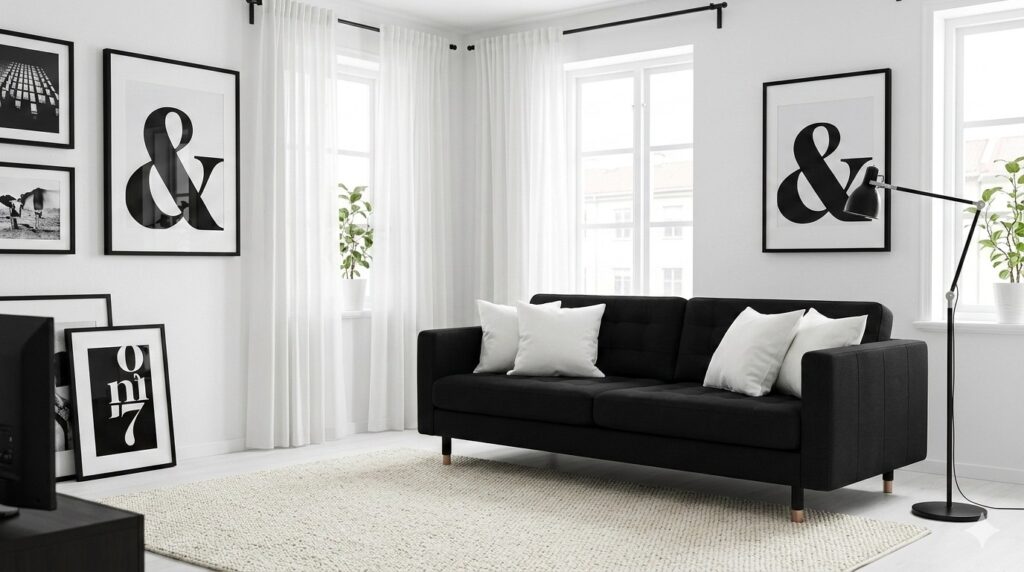
You do not need to spend a fortune to get a high contrast living room that looks intentional and considered. In fact, high contrast design is one of the most budget-friendly design approaches because the visual impact comes from the ratio and placement of dark and light, not from the price of individual pieces. A very expensive beige sofa can look boring. A simple, affordable black sofa styled correctly can look like a million dollars.
The most important place to invest, if you are budgeting carefully, is your sofa. This is the piece you will live with longest and that makes the biggest visual impact. A solid, well-made sofa in a deep black or dark charcoal — even if it is a mid-range price — will serve you far better than a cheap sofa in a murky, hedging middle tone. Many affordable furniture brands offer strong, simple silhouettes in dark tones. Look for a clean, firm cushion profile rather than saggy back cushions, good-quality stitching, and legs that are in a contrasting finish to the upholstery.
Art is the area where high contrast creates the best budget opportunities. Black and white photography prints, bold graphic abstract art, and geometric prints are all widely available as downloadable digital prints from Etsy and other platforms. Print them at your local print shop in a large format — 20×30 inches or bigger — frame them in simple matte black frames from a home store, and you have gallery-quality wall art for a fraction of the cost. The impact is entirely in the framing and the scale, not in how much you spent.
Paint is one of the highest-impact, lowest-cost changes you can make. Painting a single dark accent wall — or all four walls — in a deep dramatic color costs very little relative to the transformation it creates. If you are renting and cannot paint, large-scale artwork, dark-framed mirrors, and dark shelving can create the visual effect of dark contrast without touching the walls.
Thrift stores and second-hand marketplaces are excellent sources for accent furniture, lamp bases, ceramic vases, and decorative objects in the black, white, and neutral tones you need. A simple white ceramic vase, a black lamp base, a brass candleholder — these are exactly the kinds of objects that turn up constantly in thrift stores and cost almost nothing. In a high contrast space where restraint and negative space matter, a few carefully chosen thrifted objects look just as good as expensive ones.
Common Mistakes to Avoid
📌 AI Image Prompt for Mistakes Section:
“Side by side comparison of a high contrast living room done well vs common mistakes, left side shows a well-balanced room with deep charcoal sofa, white walls, clear visual contrast and deliberate styling, right side shows a poorly executed version with muddy mid-tones, too many competing patterns, and incorrect scale, educational interior design concept graphic”
Even with a clear vision, there are a handful of mistakes that show up consistently in high contrast living rooms that prevent them from reaching their potential. Knowing what they are upfront will save you from having to redo decisions later.
The first and most common mistake is choosing colors that are not actually far enough apart in value. What looks like a strong contrast in a store or online often becomes a muddled, undefined non-contrast in the actual room. Your “dark” element needs to be genuinely dark — a true black, a deep charcoal, a rich navy, a deep forest green. A medium gray is not dark enough to create true contrast against a white wall. A beige sofa is not light enough to pop against a medium gray wall. Commit to the extremes. If you are nervous about going full black, test it — but do not settle for a dark-ish gray because it feels safer. Safety in contrast design means mediocrity.
The second big mistake is inconsistency in the metal finishes. In a high contrast room, having three or four different metal tones — brushed nickel, chrome, antique brass, matte black — is visually exhausting. The metals compete with each other and add noise to a room that should feel edited and deliberate. Choose one or two metal tones and stick to them. The most common and successful combinations in high contrast spaces are matte black and brass, or matte black only, or brushed nickel and matte black. Mixing warm and cool metals across an entire room usually creates a sense of unease that people cannot quite identify.
The third mistake is ignoring scale. In a high contrast room, where the eye is drawn to the relationship between elements, scale mismatches are very noticeable. A coffee table that is too small for the sofa. Art that is too small for the wall. Pillows that are too small for the sofa. These errors shrink the room and make it feel amateur. When in doubt, go bigger with everything. Large art, large rugs, large plants, large coffee tables — these choices give a high contrast room the confidence it needs.
The fourth mistake is adding too much pattern. High contrast rooms have strong graphic energy already. When you add bold patterns everywhere — patterned rug, patterned pillows, patterned curtains, patterned wallpaper — the room becomes visually overwhelming. Choose one or two places for pattern at most, and keep everything else solid.
Pulling It All Together
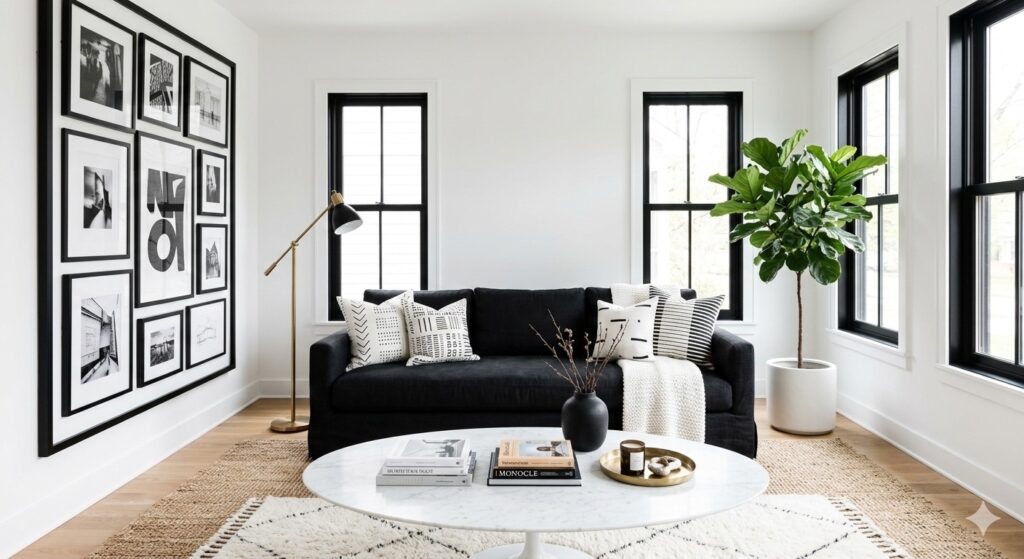
By now you have a strong sense of the decisions you need to make to build a high contrast living room that looks intentional, warm, and beautifully designed. To close out, here is a complete working framework you can follow as you pull your room together. Think of this as your decision sequence — the order in which to make choices so that each one informs the next.
Start with your direction — which of the five approaches speaks to you most? Classic black and white, moody dark walls, warm contrast, bold color as contrast partner, or textural contrast? Commit to this direction before making any other decisions, because it will guide everything else.
Next, commit to your wall color. This is your biggest surface and your backdrop. If you are going light, choose a warm white. If you are going dark, test multiple samples on the wall in different lighting conditions before painting. Get the wall color right before buying any furniture.
Then choose your primary seating — your sofa. This is your biggest furniture investment and the piece that establishes the dominant tone in the room. Make sure it clearly aligns with either the dark or light side of your contrast scheme, not the middle.
After your sofa, choose your rug. The rug defines the zone and creates the base of your seating composition. Make sure it is large enough, and choose a color and pattern that works with your sofa and walls.
With the sofa and rug in place, layer in the accent seating — chairs, ottomans — that introduce the opposite side of your contrast palette. If your sofa is dark, bring in light chairs. If your sofa is light, bring in a darker accent piece.
Add your coffee table and side tables, choosing materials and finishes that contribute to the contrast story. Use this as an opportunity to introduce a material note — marble, wood, glass — that adds visual variety.
Move to lighting: a ceiling fixture, at least one floor lamp, and at least one table lamp. Choose lamp finishes that align with your chosen metal palette.
Hang your curtains at ceiling height in white or light linen. Make them wide and full.
Hang your art. Start with your largest piece first and build outward. Keep framing consistent.
Layer in textiles — pillows and throws. Follow the solid-solid-graphic pillow formula, and make sure throws contrast with the piece they are on.
Style your shelves and surfaces with restraint. Three to five objects per surface maximum. Mix dark, light, and organic elements in each small grouping.
Add plants. At least one large floor plant and several smaller ones distributed through the space.
Step back, assess, and edit. Remove anything that feels excessive or out of tone. In a high contrast room, less is almost always more.