
Because the best dining room was already in your kitchen all along
Introduction
There is something deeply satisfying about a kitchen that does more than just cook. When your kitchen is also the place where people pull up a chair, pour a glass of wine, and sit down to actually eat — that is when the space becomes alive. That is what a dine-in kitchen is all about. It is not a trend. It is a lifestyle choice that says: I want my home to feel warm, connected, and lived in.
A dine-in kitchen does not mean you are simply squeezing a table into a corner because you ran out of room. Done well, it means you are intentionally designing a space where cooking and eating happen together, where the energy of the kitchen flows right into the act of sharing a meal. It removes the disconnect that comes with having a separate formal dining room that nobody uses except on holidays. Instead, every dinner feels like it belongs exactly where it is happening.
This post covers 14 different dine-in kitchen ideas, each one distinct in style, mood, and approach. Whether your home is small and you are working with limited square footage, or you have a generous open-plan layout and want to make the most of it, there is an idea here that will work for your space. Some of these ideas are bold. Some are quiet and cozy. Some lean into maximalism and character, while others keep things clean and minimal. All of them are designed to make you actually want to sit down and stay a while.
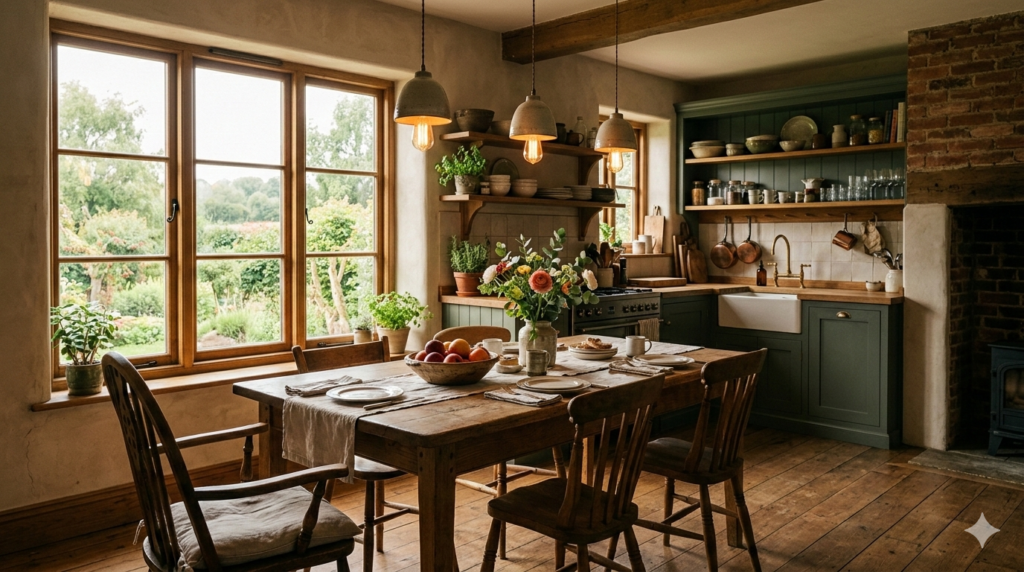
1. The Cozy Banquette Corner
A banquette is one of those design choices that looks effortless in photos and feels even better in real life. It is essentially a built-in bench seat, usually tucked into a corner or against a wall, paired with a table and often a couple of chairs or another bench on the opposite side. What makes the banquette so appealing in a dine-in kitchen is that it uses space in the smartest possible way. The corner that would otherwise be wasted becomes the most beloved spot in the entire house.
The beauty of a banquette corner goes far beyond just seating more people in a smaller footprint. It creates a psychological sense of enclosure — that cozy, sheltered feeling where you feel held in rather than exposed. Designers call this “prospect and refuge,” the idea that humans naturally gravitate toward spaces that feel both open enough to see out and intimate enough to feel safe. A banquette corner delivers exactly that. When you sit in one, your back is against the wall, the window might be right beside you, and the kitchen is just a few steps away. It feels deliberate and grounding in a way that a freestanding chair simply does not.
In terms of style, the banquette can go in almost any direction. Upholstered in a deep forest green velvet, it becomes moody and luxurious. Done in a natural linen with a light wood frame, it leans coastal and breezy. Painted in the same color as the kitchen cabinets, it blends in and makes the whole space feel like one cohesive room rather than two separate zones. The cushion thickness matters — a thin cushion on a hard bench reads cheap and uncomfortable, while a thick, well-stuffed cushion in a quality fabric signals that this is a space designed for lingering.
Storage built into the base of the banquette is a practical bonus that a lot of homeowners and renters don’t think about until they see it in person. Lift-up seat cushions or pull-out drawers underneath can hold linens, seasonal items, or even children’s toys — making the banquette not just a seating solution but a smart organizational tool as well.
The table that pairs with a banquette should be chosen thoughtfully. A pedestal table works especially well because it has no legs in the way, making it easy to slide in and out of the bench. Round or oval tables tend to feel more social and relaxed, while a rectangular table fits neatly into a corner banquette and maximizes seating along each side. Lighting above the banquette — a single pendant or a small cluster of pendants hung low over the table — is what transforms it from a seating area into a destination.
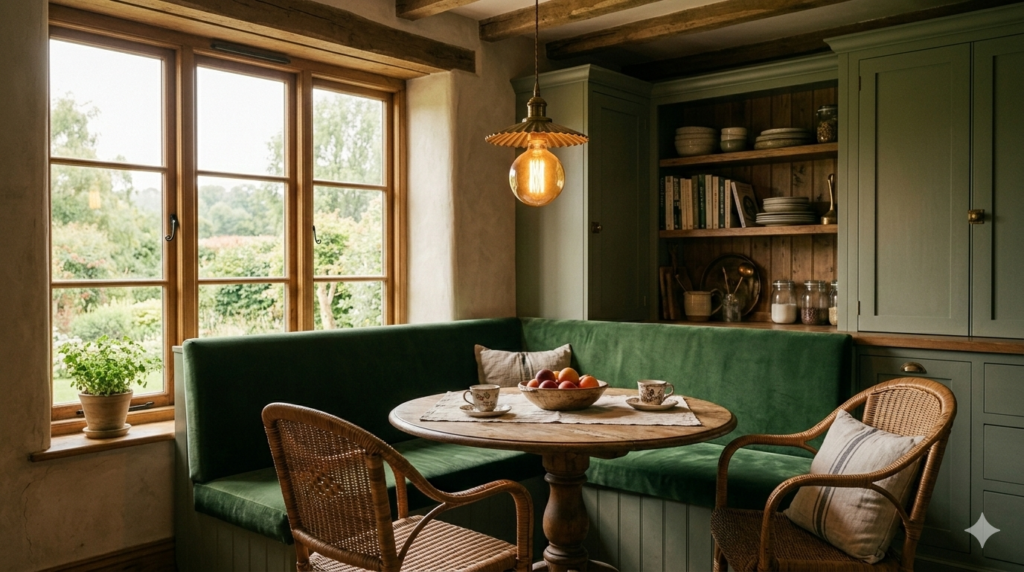
2. The Window-Side Breakfast Nook
There is a reason the window-side breakfast nook has become one of the most photographed kitchen setups on the internet. It combines natural light, a dedicated eating spot, and that magical feeling of being able to watch the world outside while you sip your morning coffee. As a dine-in kitchen idea, it works especially well because it takes advantage of wall space that would otherwise be occupied by a window with nothing underneath it except a countertop or an empty stretch of floor.
The classic interpretation of this idea is two bench seats built in on either side of the window with a small table between them — think of a train booth but with more personality and far better cushions. The seats can run the full length of the wall from one side of the window frame to the other, creating a neat, enclosed space that feels separate from the main cooking zone even though it is right there in the same room. This separation of zones within an open kitchen is one of the key principles of good dine-in kitchen design. You want the dining area to feel like it has its own identity, not like a table that was dragged in as an afterthought.
What makes the window nook particularly special is the light. Placing your dining area directly beside or beneath a window means meals are bathed in natural light, which makes food look better, moods lift more easily, and the overall atmosphere of the kitchen soften considerably. Morning light here is especially beautiful — the kind of slow, golden light that makes you want to linger over breakfast instead of rushing off. If the window faces a garden or a quiet street, that view becomes a living piece of decor that changes with every season.
Styling a window nook is one of the most enjoyable parts of putting this look together. Layered cushions and throw pillows in complementary textures — a linen base cushion, a chunky knit throw, a couple of printed pillows — add warmth and make it feel genuinely inviting rather than staged. Hanging a small piece of artwork or a wall sconce on the side walls flanking the window keeps the visual interest going and gives the nook a gallery-like quality. A small vase of fresh or dried flowers on the table, a stack of books on one end of the bench, a candle or two — these are the finishing touches that make a nook feel like someone actually lives there and loves it.
For renters who cannot install a built-in bench, a freestanding window nook can be created using a narrow console table or a small dining table pushed directly against the wall beneath the window, with a cushioned bench or a pair of slim upholstered chairs on the opposite side. The effect is nearly identical, and the setup can be taken with you when you move.
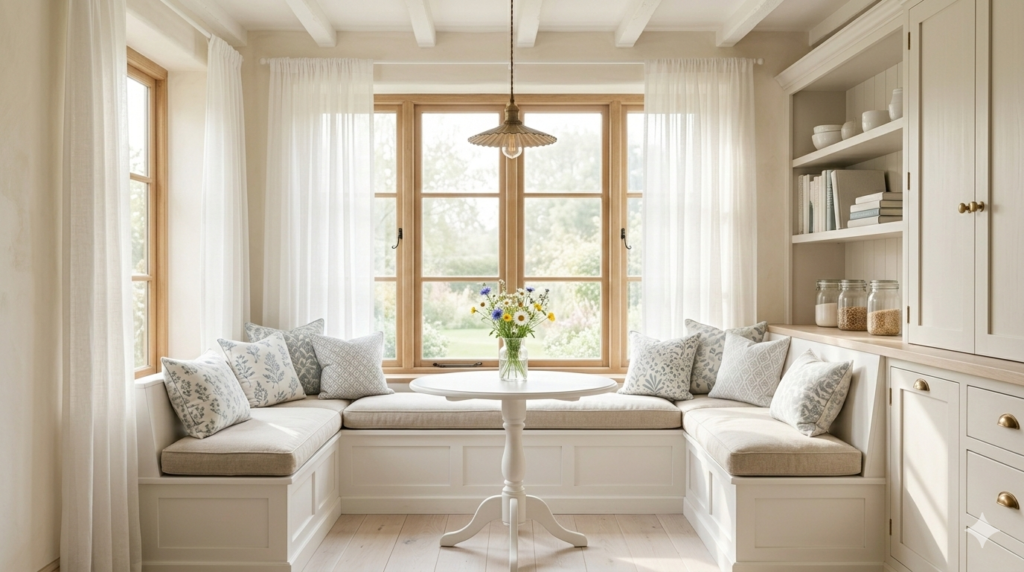
3. The Long Farm Table Setup
There is something generous and welcoming about a long farm table sitting in the middle or along one side of a large kitchen. This is the dine-in kitchen idea that says: everyone is welcome here, pull up a chair. A farm table, by nature, is made for gatherings. It is long enough to seat a crowd, sturdy enough to feel permanent, and simple enough in design that it adapts to almost every kitchen style — from a rustic country kitchen to a sleek modern one where the contrast of rough wood against white cabinetry creates a striking visual tension.
The farm table works particularly well in kitchens that are wide enough to accommodate it without the space feeling cramped. As a general guide, you want at least 36 inches of clearance on all sides of the table so that chairs can be pulled out comfortably and people can move around freely even when the table is fully seated. In a large kitchen-diner or an open plan kitchen that flows into a living area, a long farm table can serve as the anchor point — the piece of furniture around which everything else organizes itself.
What makes this setup interesting as a dine-in kitchen idea is the opportunity it creates for layering different chair styles around the same table. Mixing bench seating along one side with mismatched dining chairs along the other is one of the most popular approaches right now, and for good reason. It looks relaxed and collected-over-time rather than matchy and rigid. A wooden bench along one side of a farm table immediately increases the number of people who can sit down, and it looks effortlessly casual in a way that an extra chair never quite does.
The styling on top of a farm table is where you can really have fun. A long linen runner down the center, a cluster of pillar candles in varying heights, a bowl of seasonal fruit, or a collection of mismatched ceramics creates the kind of lived-in, abundant feel that makes a kitchen look like it was styled by someone with genuine taste rather than someone following a checklist. For everyday use, the table can be kept simpler — just a small vase of greenery and a set of placemats — but the bones of the long farm table mean it always has presence even when it is completely bare.
Overhead, the lighting above a long farm table needs to match its scale. A row of pendants — three or four hanging in a line — or a long linear chandelier works beautifully. The light should hang low enough to create a warm, intimate pool of light over the table without being so low that it interferes with sightlines across the table. Getting the scale of lighting right is honestly one of the things that separates a kitchen that looks designed from one that just looks furnished.
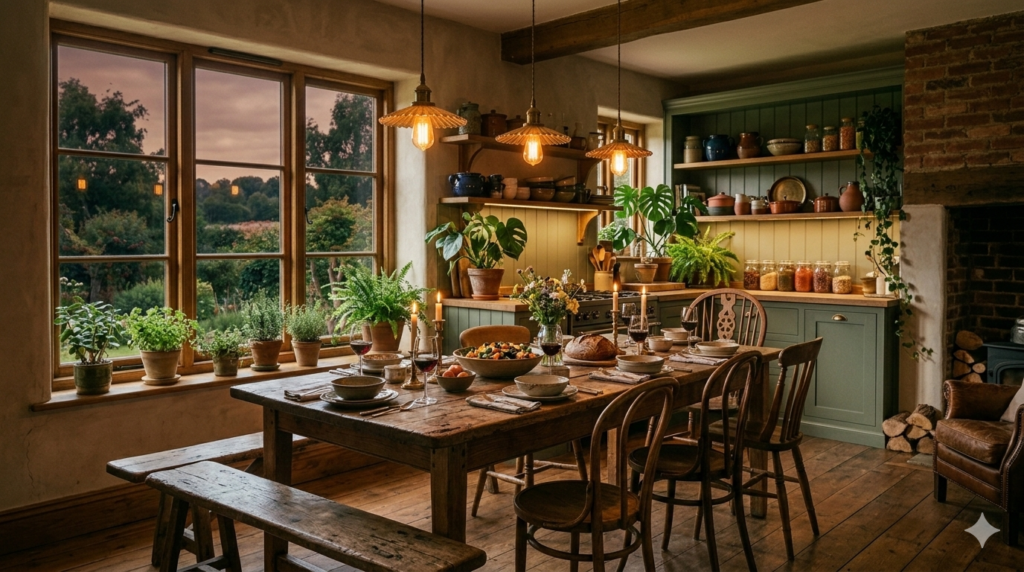
4. The Eat-In Island with Bar Stools
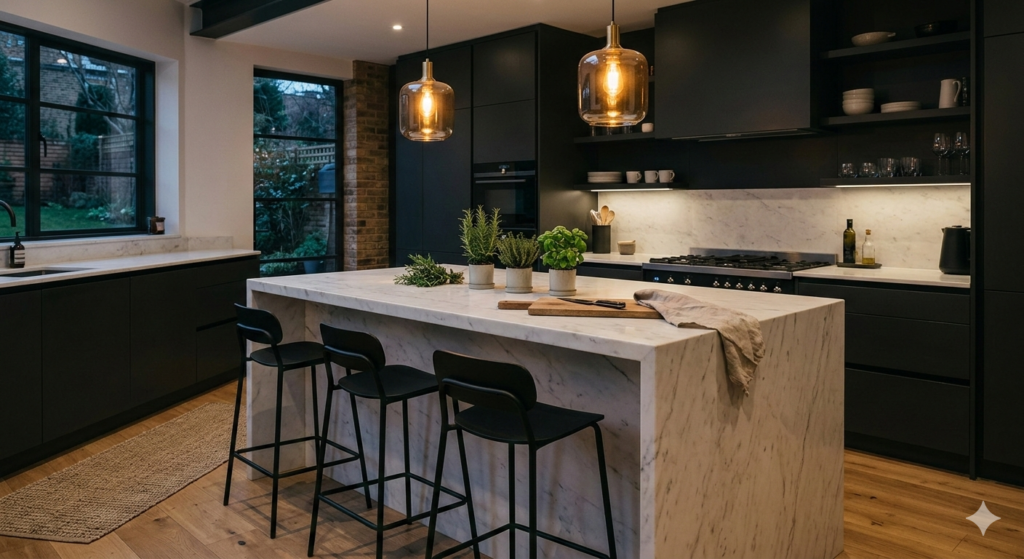
The kitchen island is already one of the hardest working elements in any kitchen, and when you extend its countertop or drop one side down to bar height to accommodate stools, it immediately becomes a dine-in kitchen solution that works for every single part of the day. Breakfast at the island, a quick lunch standing at the counter, kids doing homework while dinner gets cooked, casual drinks on a Friday evening — the eat-in island absorbs all of it without any fuss.
What makes this idea especially versatile is that it does not require the kitchen to have extra floor space beyond what is already being used by the island itself. The seating is contained to one side of the island, and the footprint stays compact. For smaller kitchens or for open-plan homes where a separate dining table would make the space feel overcrowded, an eat-in island can function as the primary dining zone without the kitchen losing any of its functionality.
The bar stools you choose are incredibly important here — not just for comfort, but for the overall look and feel of the space. Backless stools keep things open and airy and allow for a cleaner sightline across the kitchen. Stools with backs feel more like proper seating and are better for longer meals. Low-backed stools split the difference. Material-wise, wood stools warm up a kitchen that leans industrial or modern, while metal stools in a matte black or brushed brass finish add an edge and a sense of intentionality. Cushioned stools or those with a saddle seat make the seating more comfortable for extended use, which matters a lot if the island is where your family actually eats most of their meals.
The counter overhang is the detail that makes or breaks eat-in island seating. There needs to be enough of a lip — typically at least 10 to 15 inches — for knees to fit comfortably underneath. If the overhang is too shallow, stools end up pushed back awkwardly and the whole setup feels uncomfortable. Getting this detail right means people will actually use the island for eating rather than just for resting things on.
One of the things that makes an eat-in island feel more like a dining experience and less like perching at a bar is how it is styled. A small vase of flowers or a short candle on the island, proper placemats during mealtimes, and pendant lights hung directly above the seating area all contribute to making the experience feel more like sitting down to eat and less like grabbing a quick snack standing up.
.
5. The Moody Dark Dining Corner
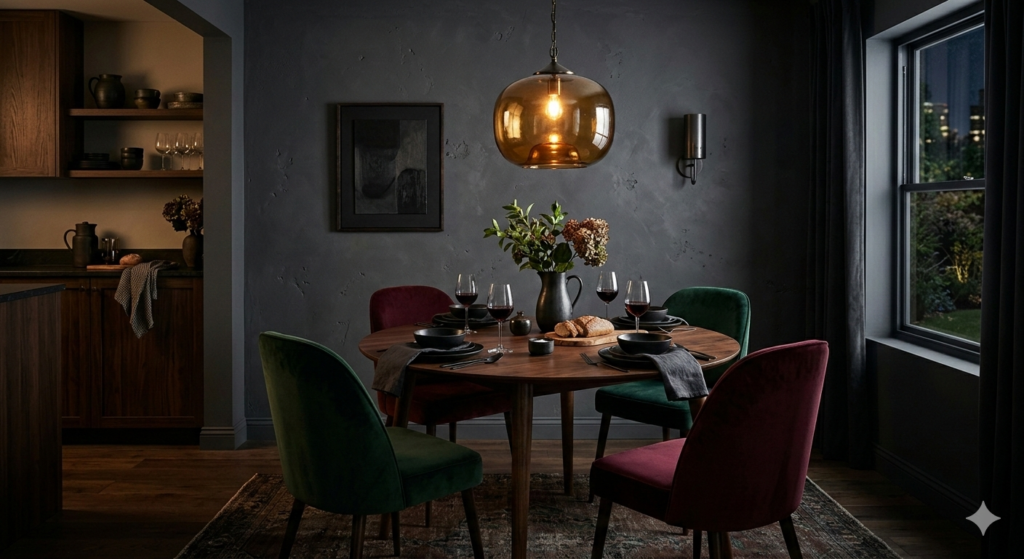
For those who lean toward deeper, more atmospheric interiors, a moody dining corner within the kitchen is one of the most compelling dine-in kitchen ideas available. This is the approach that says: dinner should feel like an event, every single night. Rather than keeping the dining area of the kitchen bright and airy, the moody corner leans into shadow, depth, and rich color to create a space that feels intimate, layered, and genuinely beautiful in a way that lighter kitchens often cannot quite achieve.
The foundation of a moody dining corner is usually color. Deep paint colors — charcoal, navy, forest green, burgundy, dark teal — on the walls or as a painted accent within the dining area create the depth that makes everything else look more expensive and considered. Dark paint does something remarkable in an interior: it absorbs light rather than reflecting it, and this makes the glow from pendant lights and candles feel warmer and more flattering. If painting the entire kitchen dark feels too much, focusing the dark color only on the dining corner wall or the alcove where the table sits can achieve the same effect while keeping the rest of the kitchen lighter.
Lighting is arguably the most important element in a moody dining corner. Overhead lighting in this context should never be bright or utilitarian — instead, it should be the kind of warm, low-wattage glow that makes faces look beautiful and food look appetizing. A statement pendant with an amber or opaque shade, a cluster of globe pendants, or even a small chandelier over the dining table sets the tone for everything else. Wall sconces mounted beside the table or a candelabra-style piece above the buffet add layers of light that make the space feel more like a restaurant than a kitchen — in the best possible way.
The furniture in a moody dining corner should lean into the richness of the palette. A dark wood table — walnut, mahogany, or even a painted ebony finish — grounds the space. Upholstered chairs in velvet, bouclé, or leather add texture and elevate the feeling of the space. Mixing a deep jewel-toned chair with a darker table creates a richness that is hard to achieve in a lighter kitchen. Accessories like a dark-glazed ceramic vase, a brass candlestick, or an art print in moody tones all contribute to a space that feels curated and intentional rather than random.
6. The Open Shelf Gallery Wall Dining Area
This is the dine-in kitchen idea for people who love their things and want their kitchen to reflect that. The open shelf gallery wall dining area takes the concept of open shelving — which is already popular in kitchen design for its accessibility and visual appeal — and expands it into the dining area of the kitchen, creating a wall of shelves, art, and collected objects that acts as both storage and backdrop for the dining table.
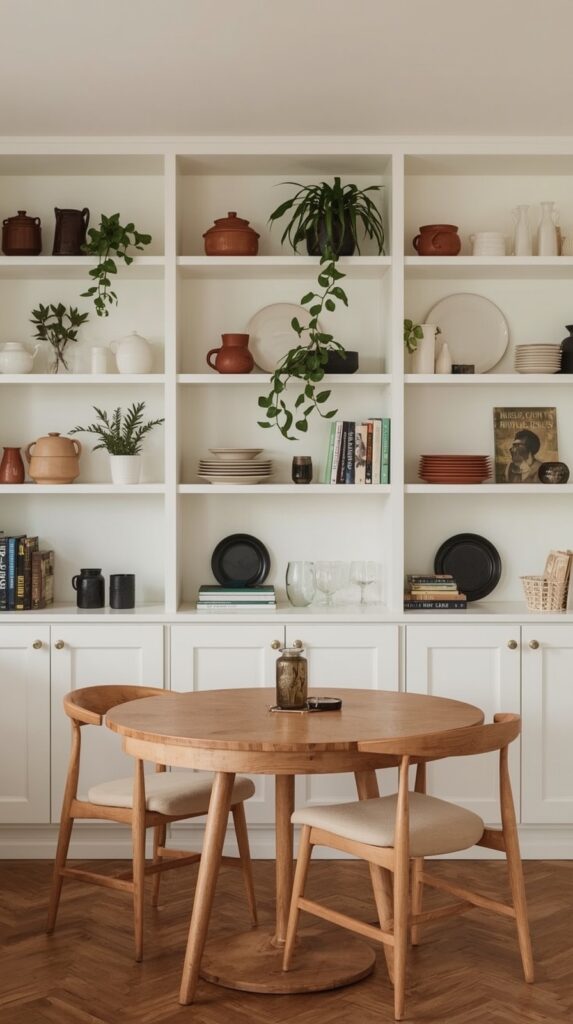
The beauty of this approach is that it turns what would otherwise be a blank wall into a living installation. Instead of a piece of art above the dining table, you have shelves filled with ceramics, cookbooks stacked horizontally, trailing pothos plants, vintage candlesticks, a small framed print or two, a collection of glassware — a whole visual story told through the objects you have accumulated and chosen to display. The dining table sits in front of all of this, and the effect is that every meal feels like it is happening within a beautifully considered, personal space.
Styling open shelves well is a skill, but the core principle is balance between function and beauty. Not everything on the shelf needs to be decorative — stacks of plates and bowls, a row of glass jars filled with pantry staples, a set of matching mugs — these functional items anchor the shelves and stop them from looking like a shop display. Then decorative pieces — a small sculpture, a piece of woven textile, a trailing plant, a framed recipe card — layer in the personality. The key is varying heights, mixing textures, and leaving enough breathing room between items so the shelves don’t feel cluttered.
The dining table that works best in front of a gallery wall shelf setup is one that doesn’t compete with the visual richness behind it. A simple round wood table, a clean-lined rectangular table in natural wood or white, or a marble-topped bistro table all work well. You want the table to feel grounded but not overdone, because the real star of this setup is the wall behind it.
Color cohesion matters a lot in this design. If the shelves are painted in the same color as the wall, the whole setup reads as one continuous composition rather than shelves imposed on a wall. Alternatively, shelves in a contrasting color — white shelves against a dark wall, natural wood shelves against a cream wall — create a defined visual rhythm that feels deliberate and clean.
7. The Bistro Table Moment
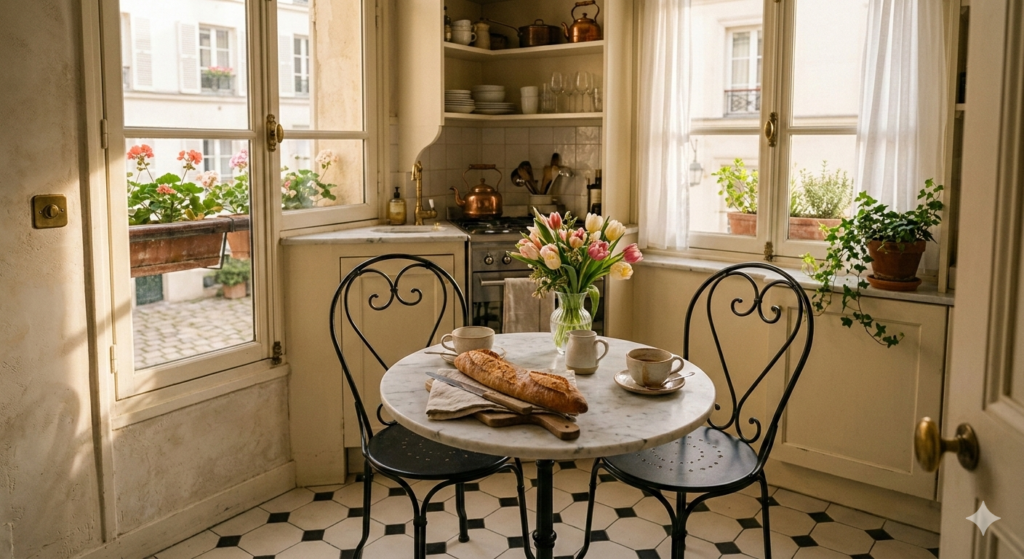
Not every dine-in kitchen needs to accommodate a family of six. For solo dwellers, couples, or city apartment kitchens where space is genuinely tight, the bistro table is one of the most charming and effective dine-in kitchen ideas you can choose. It is small, it is stylish, it borrows from the visual language of Parisian café culture, and it makes even the tiniest kitchen feel like a thoughtfully designed space rather than a compromise.
A bistro table is typically round, typically small (usually seating two comfortably), and typically elevated on slender legs that keep the visual weight light. This matters enormously in a small kitchen where a bulky table would immediately make the space feel cramped. The slender legs of a bistro table allow sightlines to pass through and underneath, which makes the kitchen feel larger than it actually is. This is a key principle of small-space interior design: furniture that allows light and sightlines to pass through creates the illusion of more space.
The classic bistro table is iron with a marble or stone top — this version has a distinctly French feel and pairs beautifully with rattan bistro chairs or simple wooden café chairs. But the bistro table also comes in wood, in painted finishes, in terrazzo, in mosaic tile — and each material creates a different mood. A terrazzo top in pink and white has a playful, modern feel. A mosaic tile top in blue and white reads Mediterranean and sunny. A plain round wood table with black iron hairpin legs is more contemporary and minimal.
What makes the bistro table such an effective dine-in kitchen idea is how easily it doubles as a coffee spot, a work-from-home corner, a spot to fold laundry, or a quick breakfast perch. In a small kitchen, every piece of furniture needs to earn its place by being flexible, and the bistro table does this with ease. When not in use for meals, it can hold a small candle, a vase of flowers, and a stack of books — and it immediately looks intentional and put-together.
Styling the area around a bistro table is important. A small pendant light or a wall sconce positioned above it signals that this is a designated dining spot rather than an accidental table. A framed print on the wall beside it, a small plant on the windowsill nearby, and a simple cloth napkin folded on the table during mealtimes all contribute to making even the most modest bistro setup feel genuinely lovely.
8. The Peninsula Dining Bar
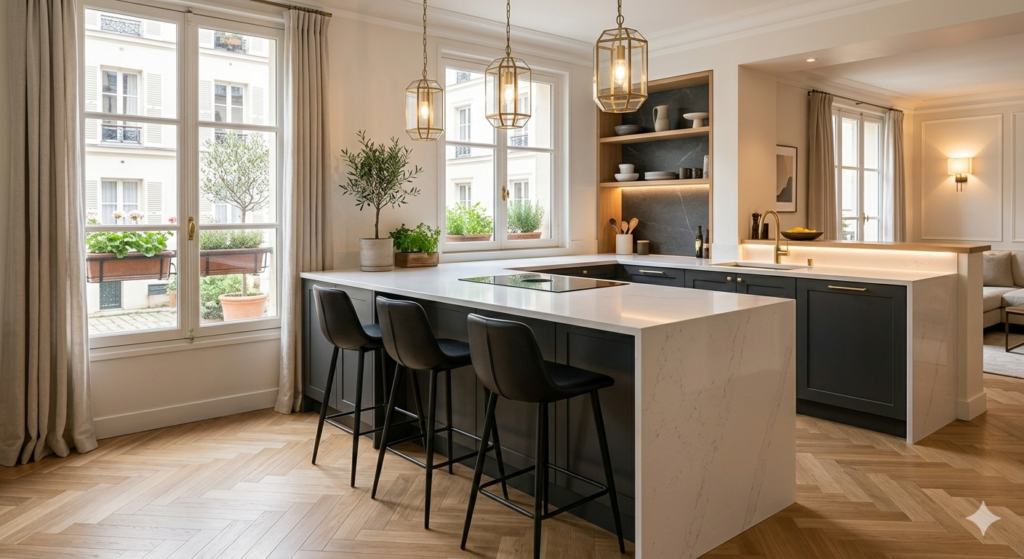
A peninsula is essentially an island that is connected to the wall or cabinetry on one side rather than being freestanding on all four sides. As a dine-in kitchen idea, the peninsula dining bar is one of the most functional and efficient solutions available because it defines the dining area while also contributing to the kitchen’s workflow. One side of the peninsula faces the kitchen and serves as a food prep surface or a casual serving counter. The other side — often dropped to a lower counter height or extended with an overhang — faces outward and becomes the dining bar.
What makes the peninsula setup particularly effective in open-plan kitchens is that it acts as a natural room divider. It creates a visual and physical separation between the kitchen and the living area without the need for a wall, a partition, or any hard architectural intervention. The person cooking on the kitchen side and the person eating or drinking on the dining bar side are still in conversation, still connected, but there is a clear delineation between the two zones that makes the space feel organized and purposeful.
The seating on a peninsula dining bar is almost always bar stools or counter stools, and the number of stools is determined by the length of the peninsula overhang. A generous peninsula can seat three or four people comfortably, which is enough for everyday family meals as well as casual entertaining. During a dinner party, the peninsula becomes the staging area — drinks lined up, appetizers set out, guests perching on stools while the host finishes cooking — and this kind of seamless social flow is one of the things that makes dine-in kitchens so much more enjoyable than kitchens with a separate dining room.
The design of the peninsula itself can be customized to create visual interest. A waterfall countertop — where the counter material wraps down the visible end of the peninsula all the way to the floor — looks architecturally stunning and works especially well with marble, quartz, or concrete. Alternatively, open shelving or wine storage built into the end of the peninsula adds functionality and creates a focal point. A contrasting finish on the peninsula cabinets compared to the rest of the kitchen cabinetry is another popular way to make the peninsula feel like a deliberate design element rather than just an extension of the counter.
9. The Alcove Dining Nook
An alcove is one of those architectural features that often gets ignored in a kitchen — a recessed section of wall, a space under a staircase, a slight indent between two structural elements — that most people use for extra storage or just leave unused. Turning that alcove into a dedicated dining nook is one of the most satisfying dine-in kitchen ideas because it transforms a structural quirk into the most character-filled spot in the house.
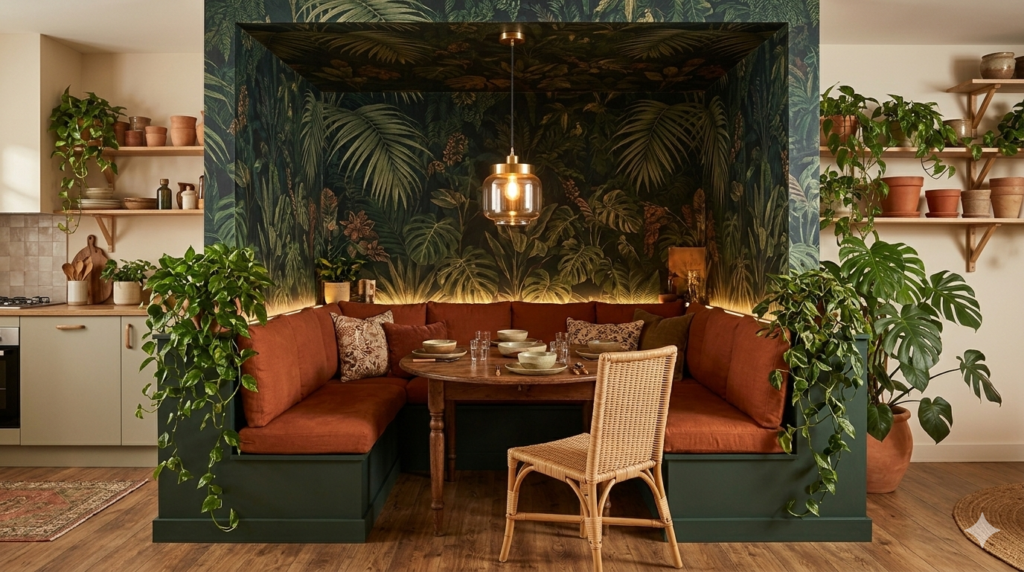
The alcove dining nook works because the recessed walls on three sides of the space do all the heavy lifting in terms of creating intimacy and enclosure. You do not need heavy curtains or partitions to make this feel like its own zone — the architecture itself provides the definition. A built-in bench that wraps across the back and down the sides of the alcove, a table in the center, and a pendant hanging down from the ceiling of the alcove is essentially all you need to create a dining spot that feels both private and inviting.
Because the alcove is enclosed on multiple sides, paint and wallpaper have an outsized impact here. A bold wallpaper inside the alcove — a rich botanical print, a graphic stripe, a hand-painted mural-style pattern — creates a jewel-box effect where the dining nook becomes a world of its own within the larger kitchen. Dark paint inside an alcove makes it feel deeply cozy and cave-like in the best possible sense. Alternatively, a limewash or plaster-effect paint in a warm tone creates a sense of age and texture that makes the alcove feel like it has always been there, even in a newly renovated kitchen.
Cushions and textiles are especially important in an alcove because they soften the hardness of the built-in structure and add the human touch that makes the space feel comfortable rather than architectural. A thick bench cushion in a quality upholstery fabric, a couple of throw pillows, and a small rug under the table if the floor is hard — these details are what separate an alcove that looks good in a photo from one that actually feels wonderful to sit in.
The table in an alcove should always be chosen with scale in mind. Too large and the nook becomes impractical — hard to get in and out of, crowded and uncomfortable. Too small and the generous depth of the alcove bench goes unused. A round or oval table is usually the best choice because it allows movement on all sides and prevents the sharp corners that can make built-in bench seating feel awkward.
10. The Scandinavian-Inspired Simple Setup
Scandinavian interior design has had such enduring appeal because it solves a problem that most people face: how do you make a space feel warm and personal without filling it with clutter? The Scandinavian-inspired dine-in kitchen setup applies this philosophy to the kitchen dining area — the result is a space that feels calm, light, and genuinely inviting precisely because of its restraint.
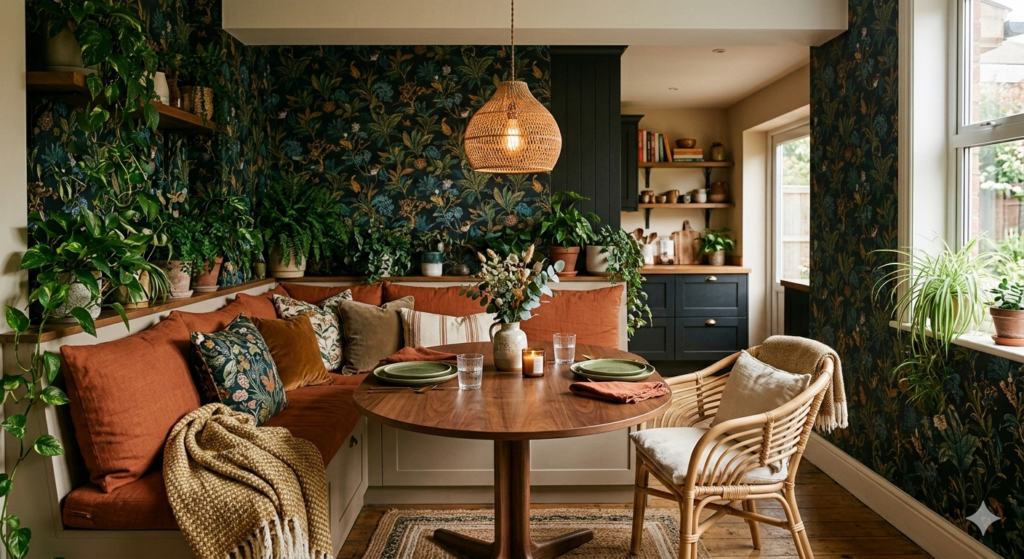
The defining characteristics of this approach are clean lines, natural materials, a neutral palette with occasional warm or muted accents, and a focus on craftsmanship and quality over quantity. In practice, this translates to a kitchen dining area with a simple wooden table — often in oak, ash, or birch — paired with matching or complementary wooden chairs, all sitting on a natural fiber rug in jute or wool. The walls are usually a warm white, soft grey, or pale putty. The lighting is a key expressive element: a simple but beautiful pendant in ceramic, glass, or woven rattan hangs above the table and brings warmth and character to an otherwise understated room.
What makes the Scandinavian-inspired setup work so well as a dine-in kitchen idea is how little it asks of the space. It does not need architectural features like alcoves or built-in benches. It does not require expensive finishes or bold paint choices. It is achievable in almost any kitchen, regardless of size or budget, simply by being selective and intentional about the pieces that are brought in. A beautiful wooden table does not need to be expensive — it needs to be well-proportioned and honest in its material. A ceramic pendant does not need to be from a designer brand — it needs to be the right scale and the right tone for the space.
Greenery is an important element in this kind of kitchen setup. A single large plant — a fig leaf tree, a monstera, an olive tree — brings life and organic irregularity to a setup that might otherwise feel too controlled. Fresh herbs growing in small pots on the table or windowsill add both visual warmth and a very practical everyday touch that aligns perfectly with the Scandinavian sensibility of beauty through usefulness.
The table in a Scandinavian-inspired kitchen setup is often the gathering point for more than just eating. It is where homework happens, where the morning newspaper gets read, where coffee stretches into conversation. This is intentional — the Scandinavian concept of “hygge,” the pursuit of warmth and togetherness through simple everyday moments, is embedded in the design of the space itself.
11. The Vintage Eclectic Mix
For those who find the idea of a perfectly coordinated kitchen dining setup slightly dull, the vintage eclectic dine-in kitchen is where the real fun begins. This approach celebrates the beauty of things that were made at different times, in different places, and in different styles — and the magic that happens when they are brought together with a confident, thoughtful hand.
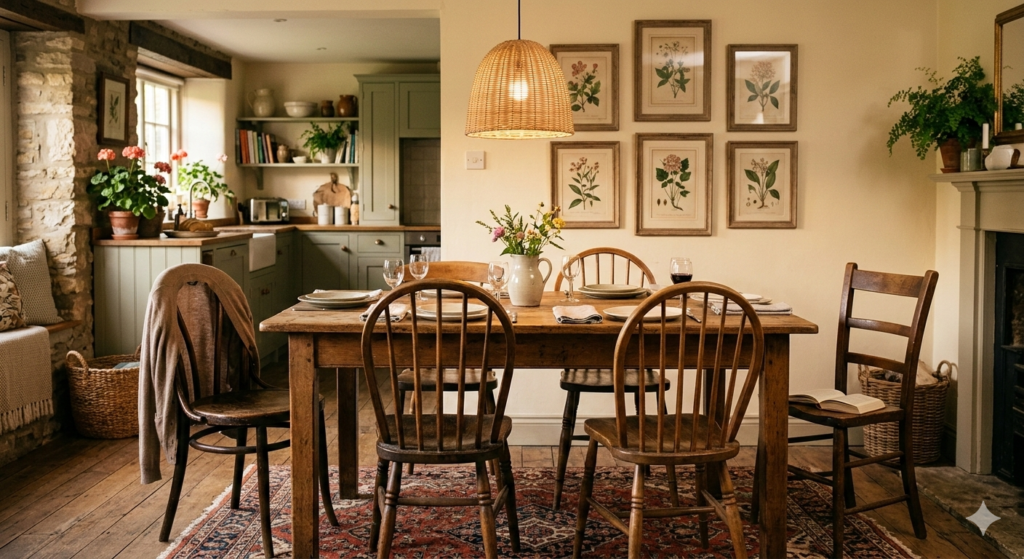
The vintage eclectic kitchen dining area might have a French farmhouse table from the 1940s sitting alongside mid-century modern chairs that were reupholstered in a contemporary fabric. Or it might feature a market find — a wrought iron and tile table — paired with a set of bamboo chairs and a pendant lamp that is clearly from a very different era. What makes this work, and what separates truly beautiful eclecticism from just chaotic accumulation, is the presence of a unifying thread running through all of the pieces. This might be a color that all the pieces share — a warm amber wood tone, or a recurring presence of black — or it might be a textural consistency, or simply a shared sense of quality and patina.
Sourcing for a vintage eclectic kitchen is one of the most enjoyable parts of designing a home. Antique markets, thrift stores, estate sales, and online vintage furniture platforms are all great sources for the kind of character-filled pieces that you simply cannot find in a regular furniture store. A set of mismatched dining chairs can look spectacular when they share one common element — the same seat height, the same cushion fabric, the same paint color. This kind of considered curation is what gives the vintage eclectic setup its sense of depth and personal expression.
Layering in the vintage eclectic dining area is what makes it feel complete. Vintage prints on the wall — botanical illustrations, old maps, abstract art — add a gallery quality to the space. A collection of mismatched candlesticks in varying heights, a stack of well-worn cookbooks, an heirloom tablecloth — these accumulated details tell a story about the people who live in the space, and that is precisely why a vintage eclectic kitchen feels warmer and more personal than one that was sourced entirely from a single store.
The one discipline required in an eclectic setup is editing. Not every interesting thing can be in the room at once. The best vintage eclectic spaces are the ones where something has been deliberately removed — where restraint has been exercised somewhere — so that the pieces that remain have enough room to breathe and be seen.
12. The Statement Lighting Focal Point Setup
Some kitchens do not have dramatic architectural features, interesting alcoves, or large windows with views. What they do have — or what they can have with the right choices — is exceptional lighting. This dine-in kitchen idea is built entirely around a statement light fixture above the dining area, using it as the anchor and focal point for everything else in the space.
The idea works because lighting is perhaps the single most powerful tool in interior design. The right light fixture can make an ordinary dining table feel like the center of the universe. It draws the eye immediately upon entering the room, establishes the mood, and determines the warmth and quality of every other element in the space. An extraordinary light fixture above a simple table is more impactful than an ordinary light fixture above an extraordinary table — and it is also often more affordable, since a beautiful pendant or chandelier can be found at a wide range of price points.
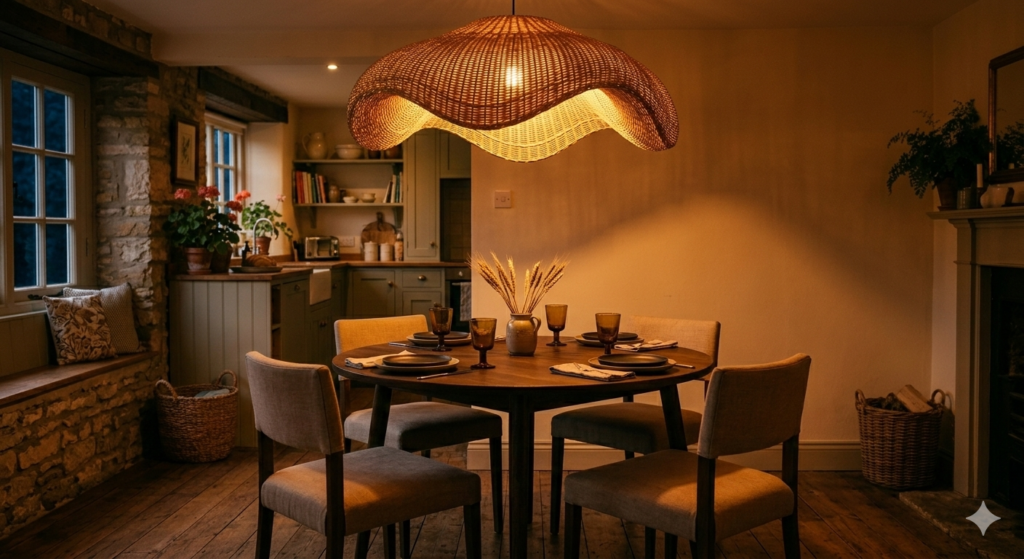
Statement light fixtures for a kitchen dining area come in many forms. A sculptural rattan chandelier in an oversized scale creates a warm, organic, almost tropical atmosphere. A cluster of hand-blown glass pendants in varying sizes looks like art and fills the vertical space above the table in a way that is both playful and sophisticated. An industrial-style pulley pendant in oxidized metal adds edge and contrast, especially against lighter cabinets. A dramatic black wrought iron chandelier with candle-style bulbs creates something deeply atmospheric that works especially well in a moody or traditionally-inspired kitchen.
When the statement fixture is the focal point, the rest of the dining setup should support it without competing. The table can be simple — a good plain round table works beautifully. The chairs can be understated. The wall treatment can be minimal. It is a philosophy of “one hero, everything else supporting cast,” and when it is executed well, the result is a space that feels both edited and magnetic.
Scale is the critical factor. A pendant that is too small above a large table will look lost and timid. A fixture that is too large for the table and the ceiling height will feel overwhelming and out of proportion. A good rule of thumb is that the diameter of the fixture should be roughly one-half to two-thirds the width of the table, and it should hang so that the bottom of the fixture sits somewhere between 28 and 36 inches above the tabletop. These numbers are not rigid, but they provide a starting point for getting the proportions right.
13. Indoor Garden Dining Corner
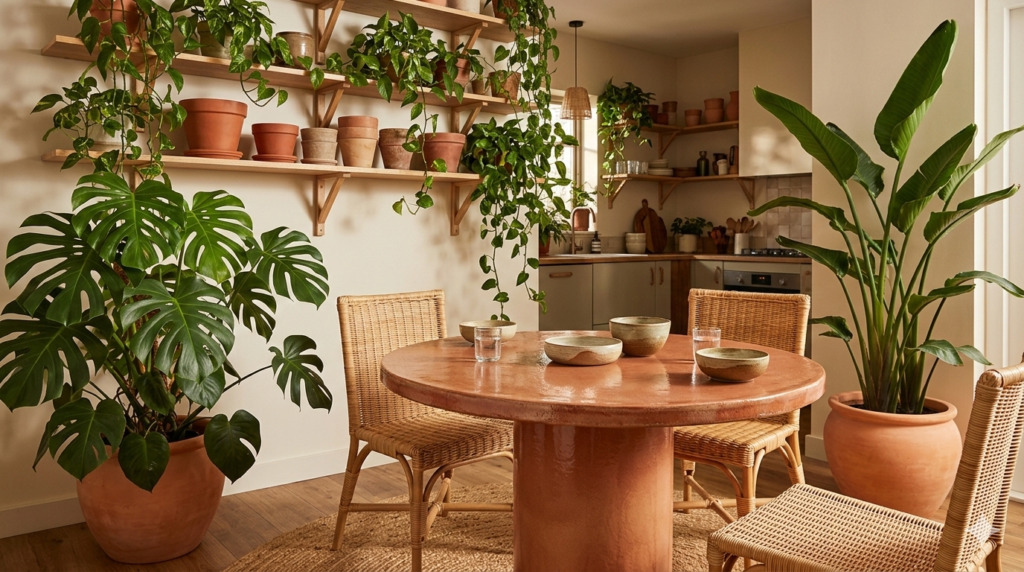
Plants have a way of transforming any space from something that looks designed into something that feels alive. The indoor garden dining corner takes this to a deliberate extreme by making greenery a central design element of the dine-in kitchen area — not just a plant or two as accessory but an intentional, abundant presence of living things that makes meals feel as though they are happening somewhere in nature.
The indoor garden dining corner can take many forms depending on the light available and the aesthetic of the kitchen. In a kitchen with large windows or a skylight, the natural light supports lush, leafy plants — giant monsteras, fiddle leaf figs, bird of paradise plants, banana palms — that bring a tropical, greenhouse quality to the space. In a kitchen with less natural light, more shade-tolerant plants — pothos trailing from shelves, ZZ plants on the floor, snake plants in corners — create a similar effect with plants that thrive in lower light conditions.
The dining table in this kind of setup becomes a place within a garden rather than a table in a kitchen. Herbs growing in terracotta pots on the windowsill beside the table, a vine trailing across a shelf above, a large floor plant leaning in from the corner, a small succulent collection on the center of the table — these details create an environment that is multi-sensory in a way that a purely decorative approach never quite achieves. The smell of fresh herbs, the sound of leaves moving in the air from an open window, the texture of real clay and real soil — these are the details that make a home feel truly inhabited.
Materiality matters in the indoor garden dining corner. Terracotta pots in their natural unglazed form have a warmth and an earthiness that plastic pots never have. Woven baskets as plant holders, moss poles for climbing plants, ceramic planters in earthy tones — these all contribute to a cohesive, grounded aesthetic that makes the greenery feel intentional rather than random. A ceramic or wooden dining table works beautifully in this context because it shares the same organic material language as the plants themselves. Mixing in rattan or wicker chairs, a jute rug, or linen textiles reinforces the connection to natural materials and makes the whole dining area feel as though it has been assembled from things that grew rather than things that were manufactured.
This is the dine-in kitchen idea for people who feel most comfortable and most at peace when they are surrounded by living things — and who want their everyday meals to carry a little bit of that feeling too.
Final Thoughts
The dine-in kitchen is not a compromise. It is not what you settle for when you do not have room for a separate dining room. It is a conscious choice to place the act of eating exactly where it belongs — at the heart of the home, surrounded by warmth, good light, the smell of food, and the people you love.
What all 14 of these ideas share is a commitment to making the kitchen dining area feel intentional and considered. Whether you choose the quiet restraint of a Scandinavian wooden table or the theatrical abundance of a moody dark corner with jewel-toned velvet chairs, the principle is the same: take the space seriously, choose pieces with care, layer in the details slowly, and create a dining experience that makes every meal feel like it is worth sitting down for.
The best dine-in kitchens are not the most expensive ones. They are the ones where someone clearly thought about what it would feel like to sit there, to eat there, to linger there. Use these ideas as a starting point. Come back to the ones that made you stop scrolling. And start building the kitchen dining space that actually reflects how you want to live.