
The world feels louder and busier every day. We scroll through perfectly curated feeds showing homes that look untouched by human hands, with every surface gleaming and every object placed just so. But there’s a growing movement that’s changing how we think about our spaces. It’s called Wabi-Sabi Modern, and it’s teaching us that true beauty lives in the imperfect, the worn, and the natural.
Wabi-Sabi comes from Japan, where it has shaped design and philosophy for centuries. The concept celebrates things that are impermanent, incomplete, and imperfect. When you blend this ancient wisdom with modern design principles, something magical happens. You create spaces that feel both fresh and deeply grounded, contemporary yet somehow ancient, minimalist but warm. These are homes that breathe, that tell stories, that welcome you in and let you relax completely.
Modern design often chases perfection through clean lines, industrial materials, and precise geometry. Wabi-Sabi softens these edges. It brings in the organic, the handmade, the slightly irregular. The result is a home that feels like a sanctuary rather than a showroom. You’re not afraid to touch things or live fully in the space. Every mark and patina becomes part of the story instead of something to hide or fix immediately.
This approach to design matters more now than ever. We’re surrounded by mass production and digital perfection, and our nervous systems are craving something real. Wabi-Sabi Modern gives us permission to embrace the beauty of aging wood, the character in a handmade ceramic bowl, the soft irregularity of natural linen. It reminds us that our homes should reflect life as it actually is, not some impossible standard we see online.
1. Raw Concrete Walls Paired with Soft Organic Textiles
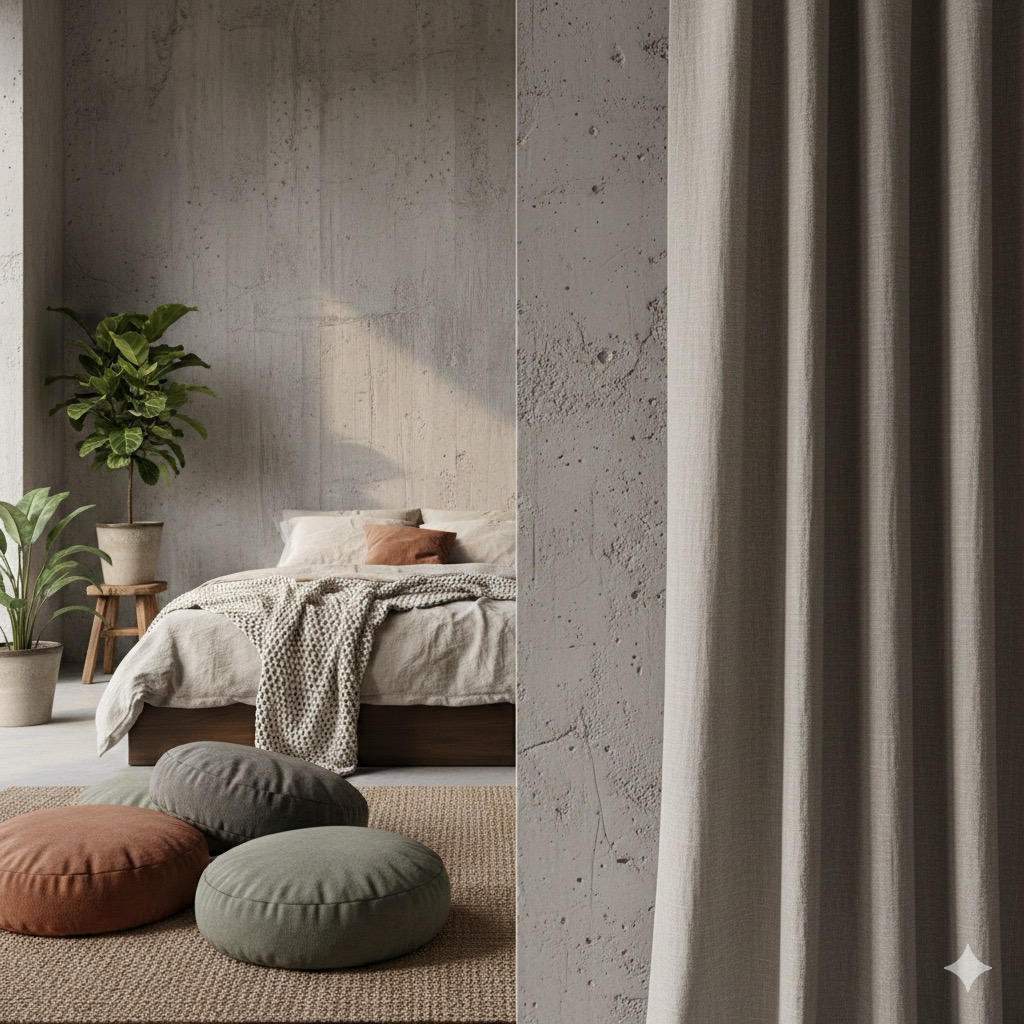
Walk into a Wabi-Sabi Modern space and you might see something unexpected: rough, unfinished concrete walls serving as the backdrop for the softest, most inviting textiles you can imagine. This contrast creates visual tension that makes both elements sing. The concrete provides structure and a sense of permanence, while the fabrics bring warmth and humanity into the room.
Concrete in its raw state shows its true nature. You can see the formwork patterns, the slight variations in color, maybe even small air bubbles or imperfections. Instead of covering these up, Wabi-Sabi Modern celebrates them. These walls become sculptural elements in their own right, changing throughout the day as light moves across their textured surface. The gray tones provide a neutral canvas that makes other materials stand out without competing for attention.
Against this industrial backdrop, organic textiles create pockets of softness that draw you in. Think heavy linen curtains that puddle slightly on the floor, their natural slubs and irregularities catching the light. Imagine a low platform bed dressed in layers of washed cotton and wool throws in earthy tones like clay, sand, and charcoal. The fabrics should look lived-in from the start, pre-washed and relaxed, never stiff or overly precious.
The key to making this combination work is intentional placement. You’re not trying to cover up the concrete or apologize for it. Instead, you’re creating deliberate moments of comfort within the architectural frame. A chunky knit blanket draped over a simple concrete bench transforms it from cold to inviting. Floor cushions in natural fabrics clustered in a corner turn that space into a reading nook that feels both grounded and cozy.
Material quality matters tremendously here. The textiles should be substantial and natural, nothing synthetic or flimsy. Look for European linen with its characteristic texture, organic cotton that gets softer with each wash, wool that still smells faintly earthy. These materials age beautifully alongside the concrete, developing their own patina over time. A coffee stain or a pulled thread becomes part of the narrative rather than a disaster.
Color choices amplify the effect. Stay within nature’s palette, with variations of beige, gray, brown, cream, and muted green. These colors have depth and complexity when you look closely. What appears as simple beige might actually contain hints of pink, yellow, or gray depending on the light. This subtle variation keeps the space interesting without overwhelming the senses. The concrete acts as an anchor while the textiles provide gentle movement and softness.
Lighting plays a crucial role in bringing this combination to life. During the day, natural light reveals the texture in both the concrete and the fabrics, creating shadows and highlights that change by the hour. As evening comes, warm artificial lighting makes the textiles glow while the concrete recedes into mysterious shadows. This transformation throughout the day keeps the space from feeling static or boring.
- Weathered Wood Furniture with Clean Geometric Lines
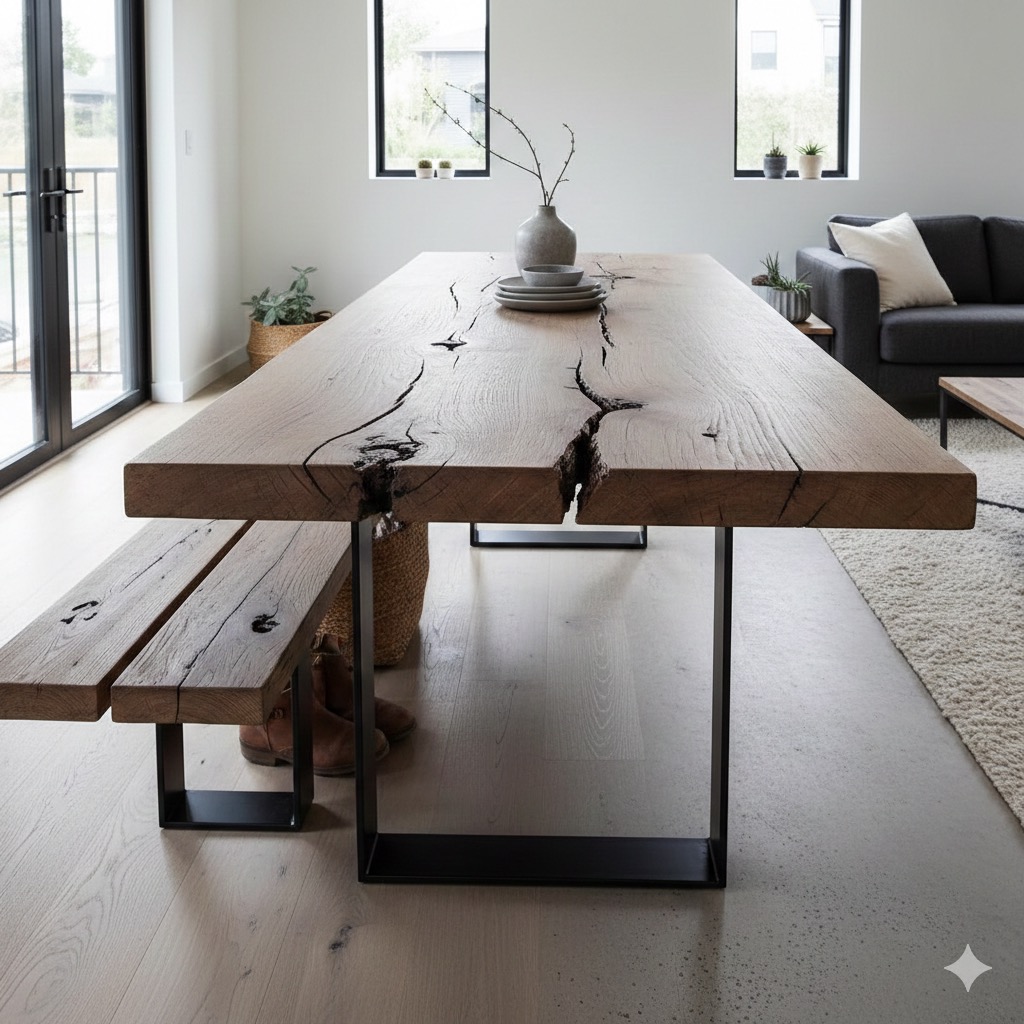
Furniture in a Wabi-Sabi Modern space tells a story through its materials while maintaining the crisp silhouettes that define contemporary design. Weathered wood becomes the hero material, showing its history through cracks, knots, color variations, and the marks left by time and use. But instead of rustic or traditional forms, these pieces feature simple geometric shapes that feel current and uncluttered.
Picture a dining table made from a single slab of old oak. The wood might have come from a barn beam or reclaimed flooring, bringing decades of life with it. The surface shows everything: nail holes filled with dark resin, splits that have been stabilized with wooden butterflies, variations in color from light honey to deep chocolate. But the legs are simple steel rectangles, perfectly straight and minimal. The combination feels both ancient and modern, rooted in history but designed for how we live now.
This approach works for every piece of furniture in the home. A coffee table might feature wood that’s been bleached by sun and salt water, giving it a silvery gray finish with darker grain lines showing through. The form is pure geometry though, perhaps a perfect square with slightly rounded corners, sitting low to the ground on barely-there metal legs. The weathering provides visual interest while the simple shape keeps the piece from feeling busy or dated.
Seating follows the same principle. A bench for the entryway could use wood planks with visible wear patterns, showing where countless people have sat over the years. The structure remains clean and architectural, with the seat floating between two solid end pieces or suspended on a simple metal frame. You can see the construction clearly, nothing hidden or overly decorated. The wood’s imperfections become the decoration, eliminating the need for carving or ornament.
Storage pieces benefit especially from this treatment. A sideboard or console table made from weathered wood brings warmth to a room while providing function. The exterior might show beautiful aging, with color shifts and surface texture that invite touch. Inside, the drawers and compartments can be simpler, cleaner, focused on utility. This creates a pleasing contrast between the expressive exterior and the calm, organized interior.
The wood itself deserves careful selection. You’re looking for pieces that have genuinely aged rather than being artificially distressed. Real weathering creates patterns that you can’t fake convincingly. Wood that has lived outdoors develops checking and cracks that follow its natural grain structure. Wood from old buildings carries marks from nails, saw marks from when it was originally cut, and subtle bowing from supporting weight over decades. These authentic details give furniture depth that manufactured distressing never quite captures.
Mixing wood tones works beautifully in this aesthetic because nothing is trying to match perfectly anyway. A darker walnut table can live happily alongside lighter oak shelving if both pieces share the same design language of simple forms and honest materials. The variations in color and aging patterns add richness to the space without creating visual chaos. Each piece stands as its own sculpture while contributing to a cohesive whole.
The joinery visible in these pieces often becomes a design feature rather than something to hide. Wooden pegs, visible dovetails, or metal brackets that hold pieces together add to the sense of honesty and craftsmanship. You understand how the piece was made, which creates appreciation for the work involved. This transparency feels very modern even when the techniques are traditional.
3. Handmade Ceramic Collections Displayed on Simple Shelving
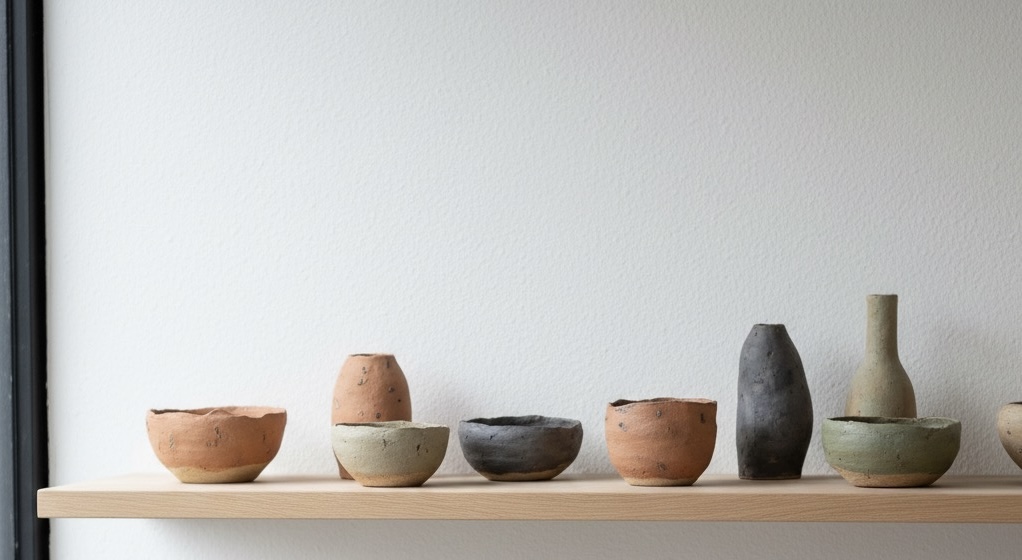
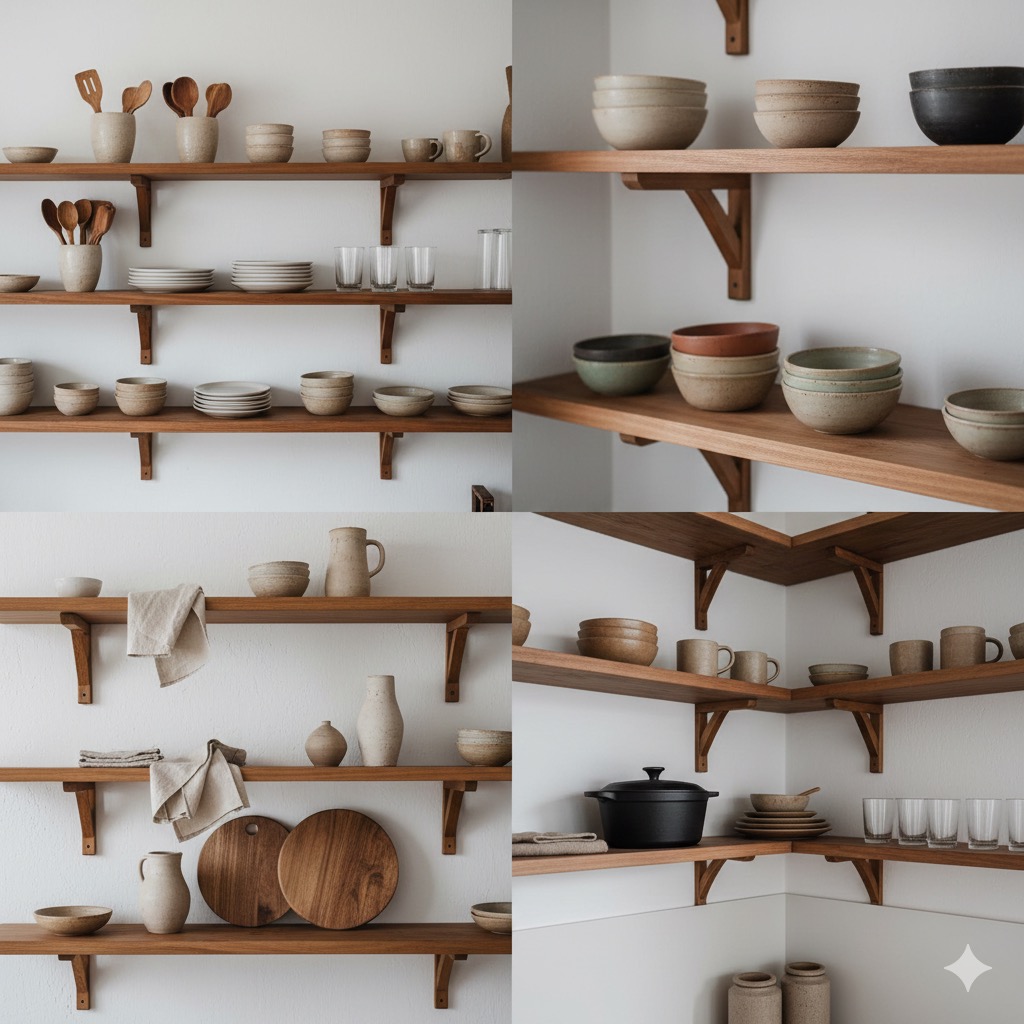
In the Wabi-Sabi Modern home, handmade ceramics serve as both functional objects and sculptural elements. These aren’t pristine porcelain pieces that look machine-made. Instead, they’re vessels that show the potter’s hand clearly, with slight wobbles, visible throwing lines, and glazes that pooled or broke in unexpected ways during firing. Displayed on minimal shelving, they become a curated collection that brings life and personality to clean, contemporary spaces.
The beauty of handmade pottery lies in its variations. No two pieces are exactly alike, even when made by the same artist using the same techniques. One bowl might have a rim that’s slightly thicker on one side. A vase could lean just a bit, giving it character and movement. These small irregularities make each piece feel alive and special, objects that deserve close attention and careful handling. When you use them daily, you notice new details and develop relationships with specific pieces.
Display becomes crucial for letting these ceramics shine. Simple floating shelves in natural wood or metal provide the perfect stage. The shelving itself stays minimal, drawing no attention, allowing the pottery to be the star. Open shelving rather than closed cabinets means you see and appreciate these pieces constantly. They become part of the room’s visual landscape rather than things hidden away for special occasions.
Arrangement matters but shouldn’t feel too studied or precious. Group pieces in odd numbers, which feels more natural and less formal. Mix heights and shapes while maintaining some common thread, perhaps similar clay colors or glaze families. Leave plenty of empty space on the shelves so each piece has room to breathe. This isn’t about showing off how much you own but rather appreciating each object individually.
The color palette in handmade ceramics naturally aligns with Wabi-Sabi principles. Look for earth tones that come from natural clays and glazes: deep browns, soft grays, muted greens, creamy whites, and charcoal blacks. Many potters use ash glazes or wood-firing techniques that create unpredictable surface effects. The glaze might be smooth in one area and rough in another, shiny here and matte there. These variations keep your eye moving and discovering new details.
Functional use keeps these objects from becoming static decoration. That slightly irregular bowl becomes your favorite for morning cereal. The lumpy vase holds fresh-cut branches from your yard. The hand-thrown mug with the thick rim is what you reach for when you need tea. Daily use develops the patina and wear that Wabi-Sabi celebrates. A small chip or crack doesn’t mean throwing the piece away; it adds to the object’s history and your relationship with it.
Combining pottery from different makers creates an interesting collection that tells a broader story. Each artist brings their own aesthetic and approach. One might favor rough, heavily textured surfaces while another creates smooth forms with subtle surface decoration. Together, they create a conversation about different ways of working with clay and different visions of beauty. The minimal shelving provides a unified framework that helps diverse pieces feel cohesive.
Lighting transforms ceramic displays throughout the day. Morning light might highlight the texture on one piece while casting shadows that emphasize another’s form. Evening artificial light changes the way glazes appear, sometimes making them seem to glow from within. This constant transformation keeps you engaged with objects you see every day, finding new aspects to appreciate.
5. Minimal Color Palettes Anchored by Natural Variations
Color in Wabi-Sabi Modern spaces comes primarily from materials themselves rather than applied paint or decoration. The palette stays quiet and restrained, but far from boring because natural materials contain subtle complexity that keeps your eye interested. This is color that shifts with the light, that looks different when wet versus dry, that reveals new tones the longer you look.
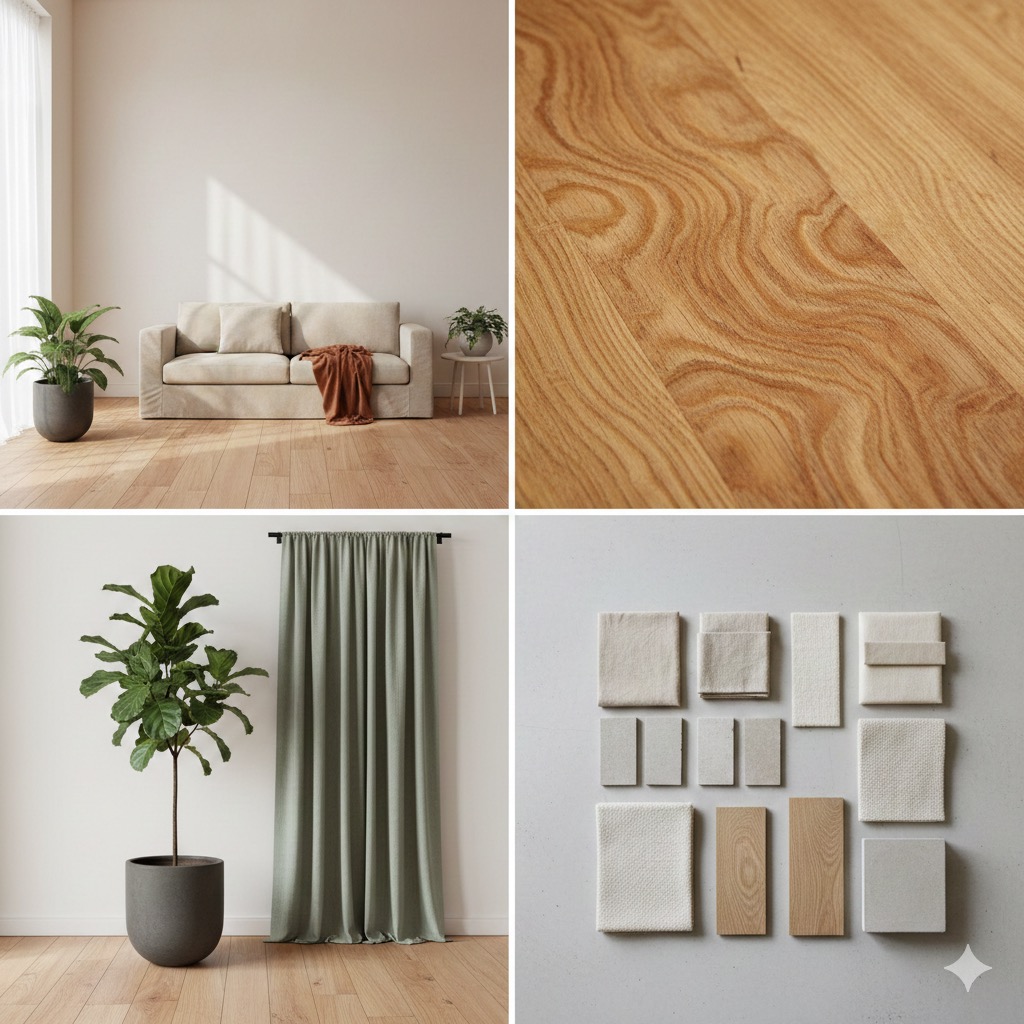
Start with a base of neutrals that aren’t flat or one-dimensional. White walls might have a hint of gray or cream, never pure stark white that looks artificial. Beige contains notes of pink or yellow or green depending on the light and adjacent materials. Gray ranges from warm charcoal to cool silver, sometimes within the same room. These base colors recede and let other elements come forward while providing a calm foundation for daily life.
Wood tones provide much of the color interest, and they’re anything but boring neutrals. A single piece of oak contains dozens of colors: honey gold, tan, caramel, chocolate, and sometimes streaks of gray or pink. As light moves across the wood throughout the day, different colors become visible. Morning light might emphasize golden tones while afternoon sun brings out richer browns. This constant subtle change keeps spaces from feeling static.
Textile colors stay within nature’s range but offer opportunities for slightly richer tones. Deep rust, sage green, warm terracotta, and slate blue all work beautifully. These colors have complexity and depth, looking different against various backgrounds and lighting conditions. A rust-colored linen curtain might appear orange in direct sunlight and brown in shadow, its color never quite the same twice. This variation feels organic and alive rather than flat and manufactured.
Stone and ceramic introduce cooler tones to balance warmer woods and textiles. Gray concrete, black basalt, cream limestone, and charcoal pottery provide visual anchors. These materials often have subtle color variations within themselves. Concrete might shift from light to dark gray in different areas. Stone can show veining in contrasting colors. Glazed pottery pools darker in recesses and breaks lighter on edges and high points.
The limited palette makes the occasional introduction of a brighter natural color feel special and intentional. A single plant with deep green leaves becomes a focal point against neutral walls. Branches with golden autumn leaves in a ceramic vase bring seasonal color that feels appropriate because it’s temporary and natural. These moments of brighter color feel earned rather than arbitrary, connected to the living world outside.
Patina and aging add color complexity over time. Wood darkens or lightens depending on its exposure to light. Metal develops rust or verdigris. Textiles fade where sun hits them regularly. Rather than fighting these changes, Wabi-Sabi Modern embraces them as the space developing its own character. These aging processes add layers of color that you couldn’t plan or create artificially.
Black and white serve as bookends to the palette, appearing in small doses for definition and contrast. Black metal frames around windows or furniture legs provide crisp lines against softer neutral backgrounds. White space on walls gives the eye places to rest. But neither black nor white dominates; they’re accents that make the mid-tones more visible and appreciated.
The overall effect is sophisticated without being stuffy, calm without being bland. Color works subconsciously rather than demanding attention. You feel the room’s palette more than you consciously notice it, experiencing a sense of harmony and rightness without being able to point to exactly why the space feels so peaceful. The colors support life rather than competing with it.
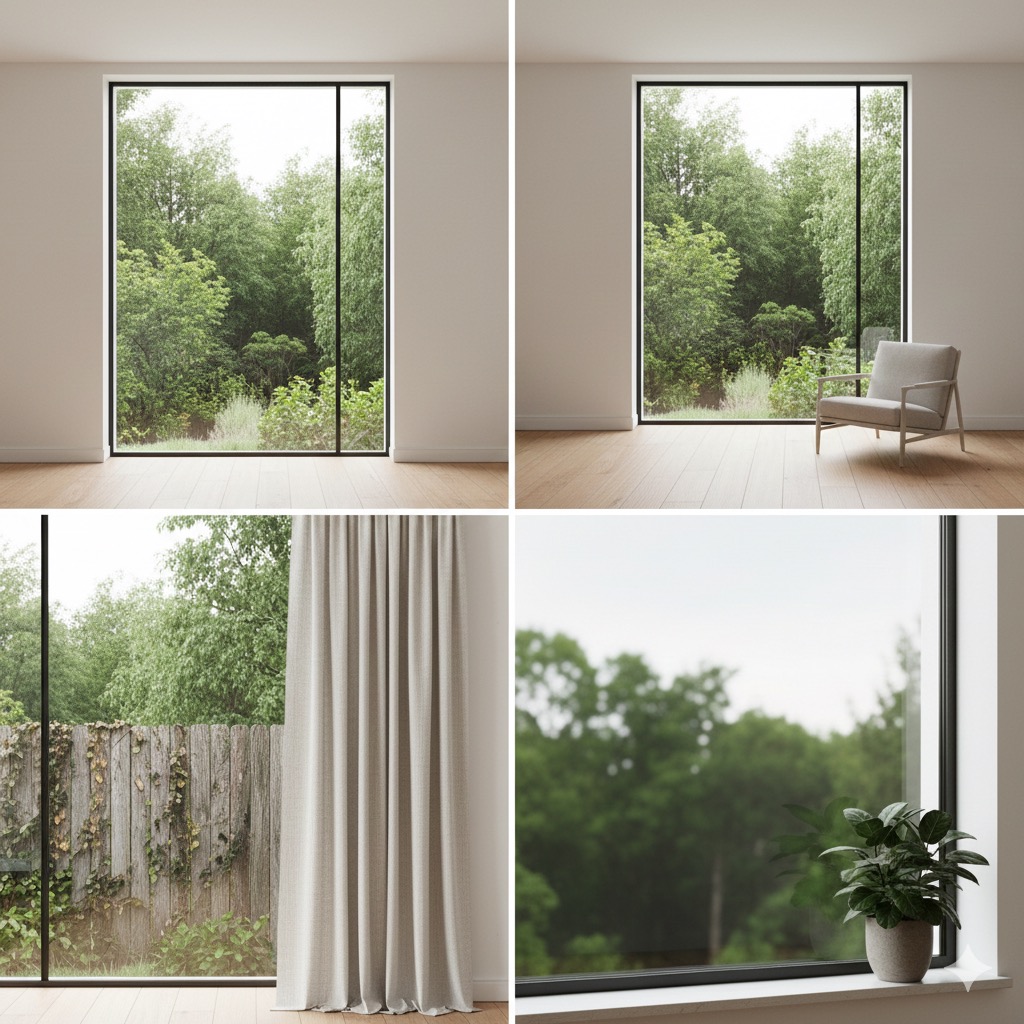
6. Large Windows Framing Nature
Windows in Wabi-Sabi Modern design do more than let in light; they create a conversation between interior and exterior, making nature an integral part of the home’s aesthetic. Large expanses of glass, simply framed without fussy treatments, turn the view outside into constantly changing artwork that no human could create or improve upon.
The key is letting windows be generous in size while keeping their framing minimal. Slim black or natural wood frames provide necessary structure without calling attention to themselves. No thick mullions or decorative grilles interrupt the view. The glass becomes almost invisible, a transparent threshold rather than a barrier. This simplicity allows the landscape outside to be fully present inside.
What the window frames matters as much as the window itself. In urban settings, this might mean looking out at other buildings, but finding beauty in their weathered brick, in the way shadows fall between structures, in a glimpse of sky between rooflines. In suburban locations, the view might include a garden designed with the same principles, full of natural plantings that change with seasons. Rural settings offer landscapes where human intervention is minimal and nature’s cycles are most visible.
Window treatments stay simple when needed but often aren’t necessary at all if privacy allows. When you do need coverage, natural linen or cotton curtains can be pulled aside during the day and closed at night. The fabric should drape naturally, never stiff or formal. Alternatively, simple wooden shutters or rice paper panels provide privacy while still filtering light and maintaining a connection to outside. The goal is never to block the view completely but to modulate it when needed.
The window itself becomes a frame for observing change. Morning light has one quality, afternoon sun another, evening dusk yet another. Weather transforms the view constantly: rain, fog, snow, clear skies all create different scenes. Seasons bring dramatic shifts as trees leaf out, flower, change color, and go bare. This constant transformation provides visual interest that never gets old because it’s never quite the same.
Plants inside often relate to the view outside, creating layers of green and blurring the boundary between interior and exterior. A fig tree near the window echoes larger trees in the yard. Low plants on the windowsill create a foreground for the garden beyond. This layering makes the space feel larger and more connected to the natural world, less like a sealed box and more like a shelter within a larger landscape.
Bird feeders or bird baths placed where they’re visible through windows add life and movement to the view. Watching birds come and go, observing their behaviors and seasonal patterns, connects you to natural rhythms that have nothing to do with human schedules or concerns. This connection to non-human life provides perspective and peace that’s increasingly rare in modern existence.
Night transforms the window’s role. What was transparent becomes reflective, showing you the room itself against the darkness outside. Interior lighting becomes more important, creating a glow that makes the home feel like a lantern in the landscape. This shift from day to night use adds another dimension to how windows function in the space.
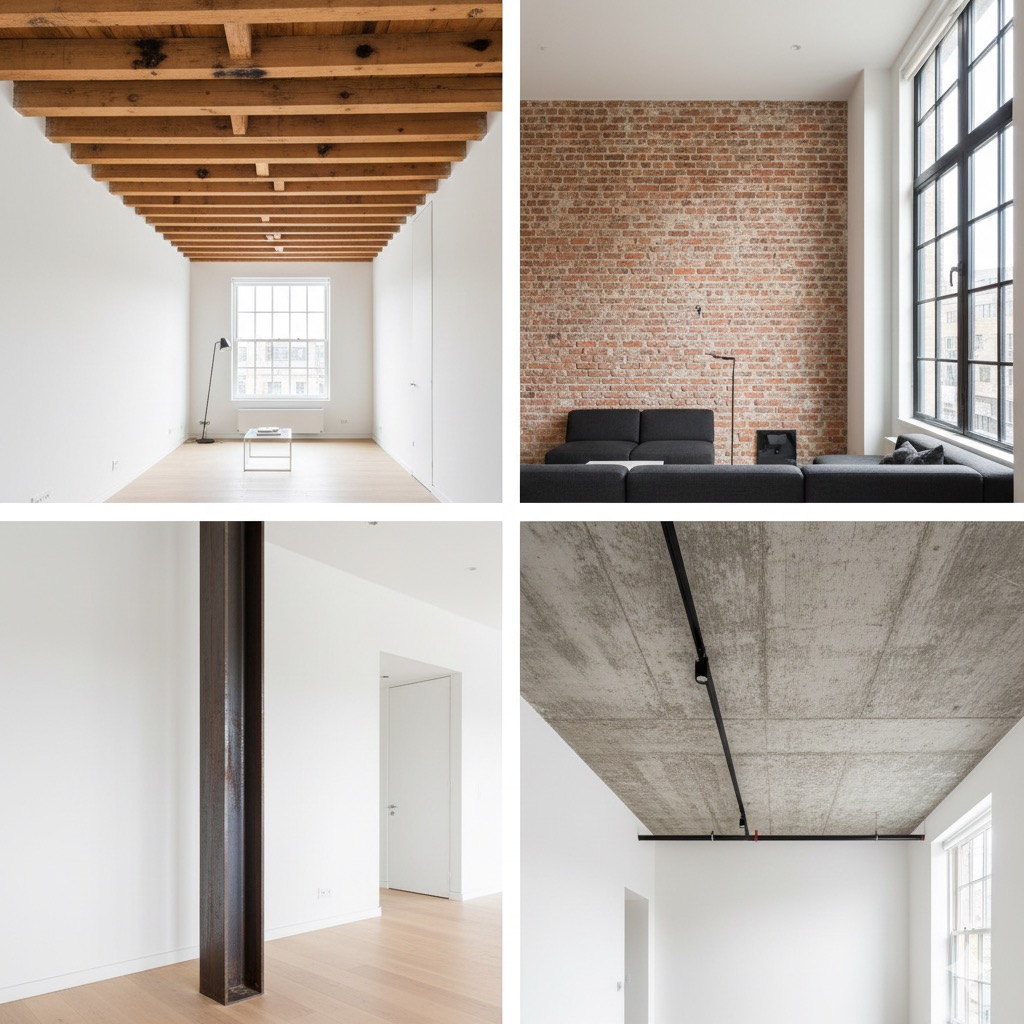
7. Exposed Structural Elements Left Honestly Raw
Modern building techniques usually hide a structure’s bones behind finished surfaces, but Wabi-Sabi Modern brings them forward as design elements. Exposed beams, visible columns, revealed brick, and open ductwork become part of the aesthetic when left in their honest, unrefined state. This transparency about how the building is made and what holds it up creates spaces that feel grounded and authentic.
Wooden beams overhead show their true character when left natural or simply sealed rather than painted or wrapped. You see the grain, knots, and variations that make each beam unique. If the wood is reclaimed, you might see old mortise holes, nail marks, or even stamps from the original mill. These marks tell the building’s history and connect present occupants to past uses and builders. The beams also break up tall ceilings, creating a sense of shelter and human scale within larger volumes.
Brick walls revealed during renovation become features to celebrate rather than cover again. Original mortar, slightly uneven courses, color variations in the bricks themselves, and small imperfections all add texture and warmth. The brick provides thermal mass that helps regulate temperature and creates acoustic properties that soften sound. Its rough surface contrasts beautifully with smooth plaster, polished concrete, or glass elsewhere in the space.
Steel columns and beams in their raw or simply primed state bring industrial strength and honesty to residential spaces. The metal might show slight rust that’s been sealed in place, mill scale patterns, or welding marks. These imperfections prove the structure’s authenticity and functionality. Steel’s cool gray tones and hard surfaces create perfect counterpoints to softer, warmer materials used elsewhere.
Concrete often forms the structural skeleton of modern buildings, and leaving it exposed makes architectural sense. Formed concrete shows the pattern of its formwork, sometimes deliberately left rough rather than ground smooth. The color varies based on mixture and curing conditions, creating natural variation within what might seem like a uniform material. Concrete’s mass and weight feels reassuring, creating spaces that feel solid and permanent.
Mechanical systems usually hide in ceilings and walls, but exposing some elements adds to the sense of honesty and function. Ductwork, plumbing, and conduit become linear elements that create visual rhythm across ceilings. Painted matte black or left in natural metal, these systems read as part of the architecture rather than mistakes or afterthoughts. Their presence reminds you that buildings are active systems that heat, cool, and provide water and electricity.
The key to making exposed elements work is treating them with respect rather than trying to make them into something they’re not. Don’t paint rough brick to look smooth or try to hide welds on steel beams. Let each material and element be what it is, doing its job visibly. This honesty creates spaces that feel trustworthy and real, without pretense or fakery.
Lighting plays an important role in highlighting structural elements. Grazing light across brick brings out its texture. Uplighting can emphasize beam patterns overhead. Shadows cast by columns and beams change throughout the day, creating movement and interest in otherwise static architectural elements. The structure becomes part of the room’s visual drama rather than just background.
Furniture and objects arranged against or near structural elements create interesting juxtapositions. A soft sofa against rough brick shows both materials at their best through contrast. A delicate ceramic piece on a concrete column emphasizes both the strength of the structure and the fragility of the object. These relationships between permanent architecture and temporary furnishings add depth to how you experience the space.
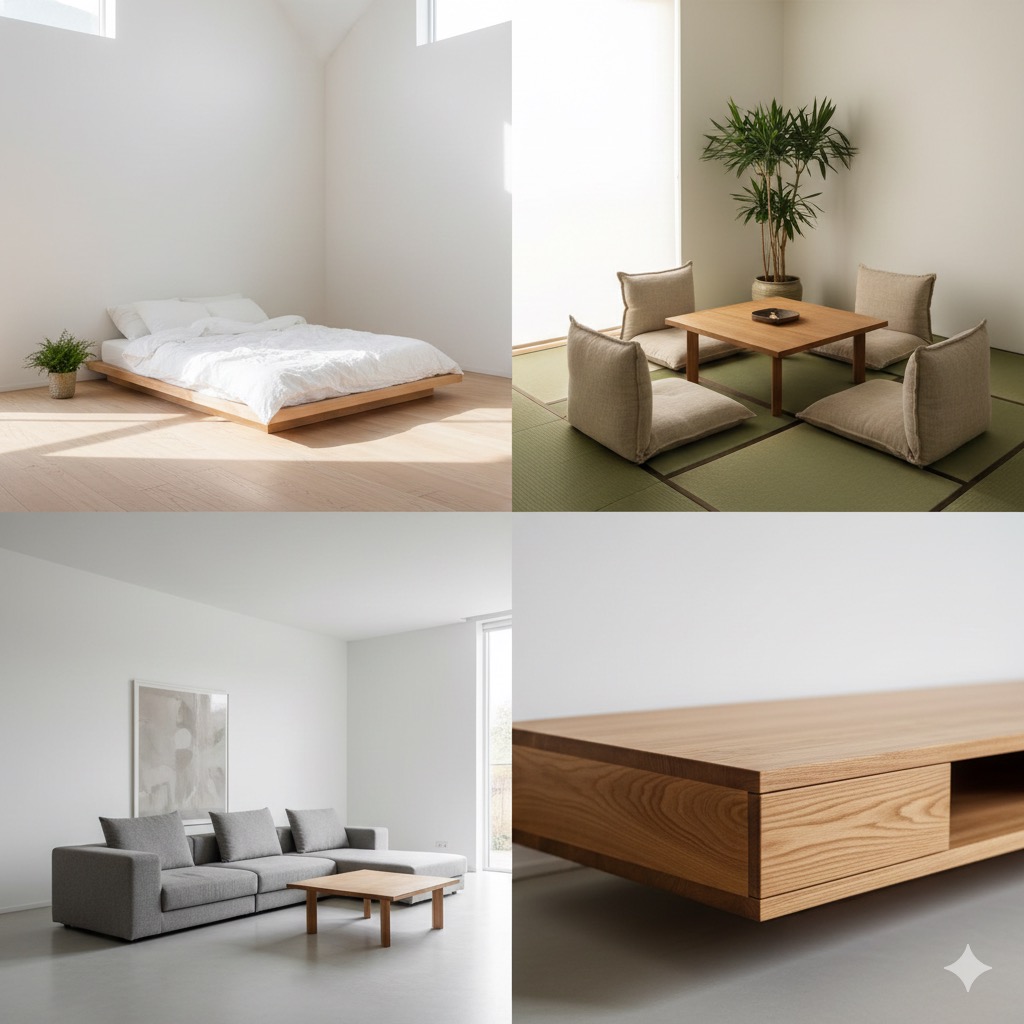
8. Low Platform Furniture That Grounds the Space
Furniture in Wabi-Sabi Modern spaces often sits lower than conventional pieces, creating a different relationship with the room and with gravity. Low platform beds, floor-level seating, and tables barely off the ground change how you move through and experience space. This approach comes partly from Japanese design traditions where floor seating is normal, but it also creates specific aesthetic and psychological effects that support the overall philosophy.
A platform bed sitting just inches off the floor transforms the bedroom into a more restful space. Without a visible gap beneath the bed frame, the piece appears to float or grow from the floor itself. This grounds the room visually while making the ceiling seem higher by comparison. You step down into sleep rather than climbing up, a subtle shift that feels more connected to earth. The low profile also means the mattress itself is more visible and important, becoming part of the design rather than hidden by a tall frame.
Floor cushions and low sofas create flexible seating that’s inherently casual and comfortable. Instead of perching on furniture, you’re closer to settling into it. The lower vantage point changes your perspective on the room, making standard ceiling heights feel more generous and creating a sense of shelter. This seating style encourages relaxation and informal gathering rather than formal visiting. You can easily move cushions around, creating different configurations for different activities or numbers of people.
Coffee tables that hover just above the floor serve tea and display objects while maintaining the horizontal emphasis throughout the space. These low tables don’t interrupt sightlines across the room, allowing the space to feel more open and connected. When you’re seated on the floor or on low cushions, the table is perfectly positioned. Even when using conventional-height seating, the low table provides a counterpoint that creates visual interest through varied levels.
Storage pieces also benefit from low profiles. A credenza or console that sits close to the floor appears more stable and permanent than taller furniture. It provides a strong horizontal line that echoes the floor and ceiling, reinforcing the room’s geometry. Objects displayed on top of low storage pieces appear to float at an unexpected height, drawing the eye down rather than up.
This approach to furniture height affects how you use space. Rooms with low furniture feel more open and spacious because so much visual volume remains empty above the pieces. You become more aware of the ceiling, walls, and windows as defining elements of the room. The furniture supports life without dominating the architecture.
Movement through spaces with low furniture changes too. You’re more likely to sit on the floor, to sprawl comfortably, to arrange yourself in casual ways. The formality of standard-height dining or living room furniture dissolves. This physical relaxation supports mental relaxation, making the space genuinely restful rather than just aesthetically calm.
Combining low furniture with high ceilings creates dramatic proportion shifts that feel both grounding and expansive. The compressed horizontal realm where you live contrasts with the soaring vertical space above. This combination can make relatively small rooms feel more spacious and large rooms feel more human-scaled and comfortable.
Children and pets often prefer low furniture instinctively, finding it easier to access and more comfortable to use. This makes homes with low platform pieces more genuinely livable for entire households rather than designed primarily for adult use. The inclusivity of low furniture aligns with Wabi-Sabi’s embrace of life as it actually happens.
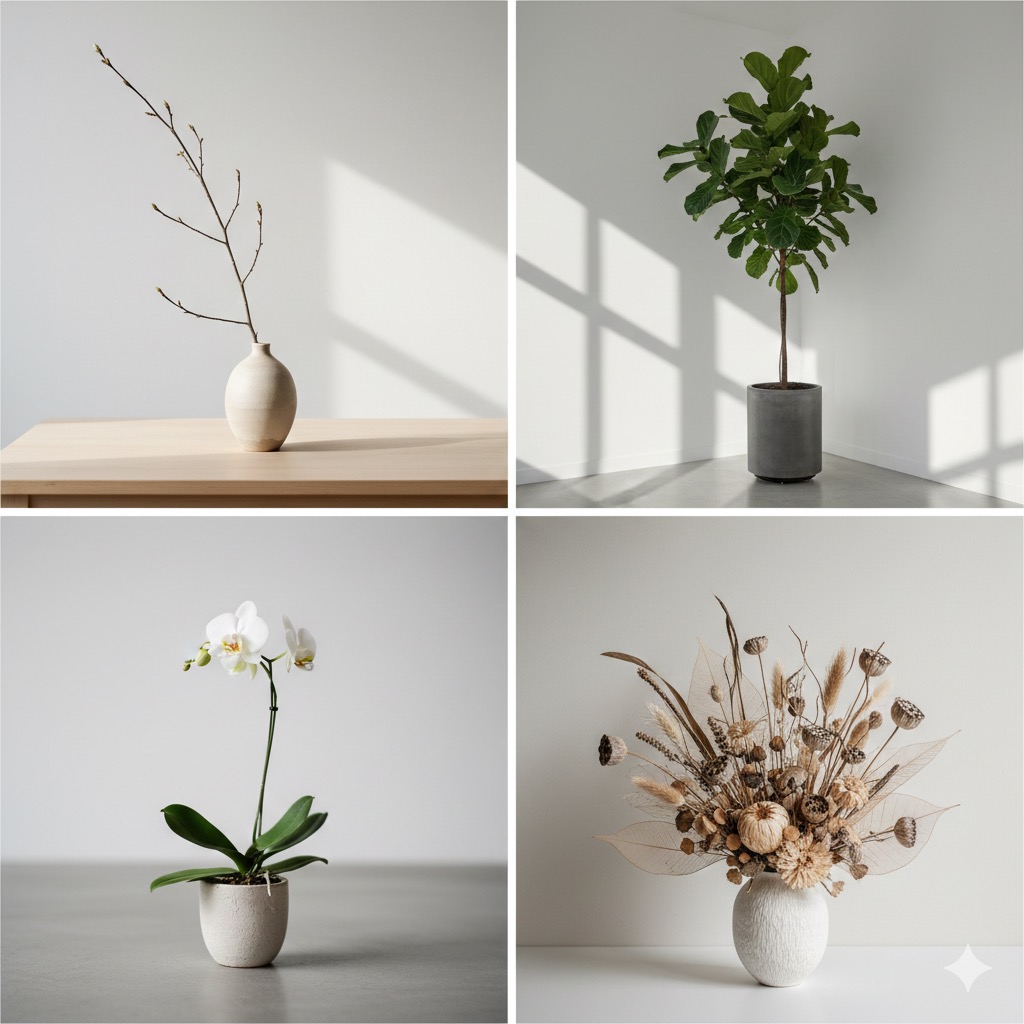
9. Single-Stem Arrangements and Sparse Greenery
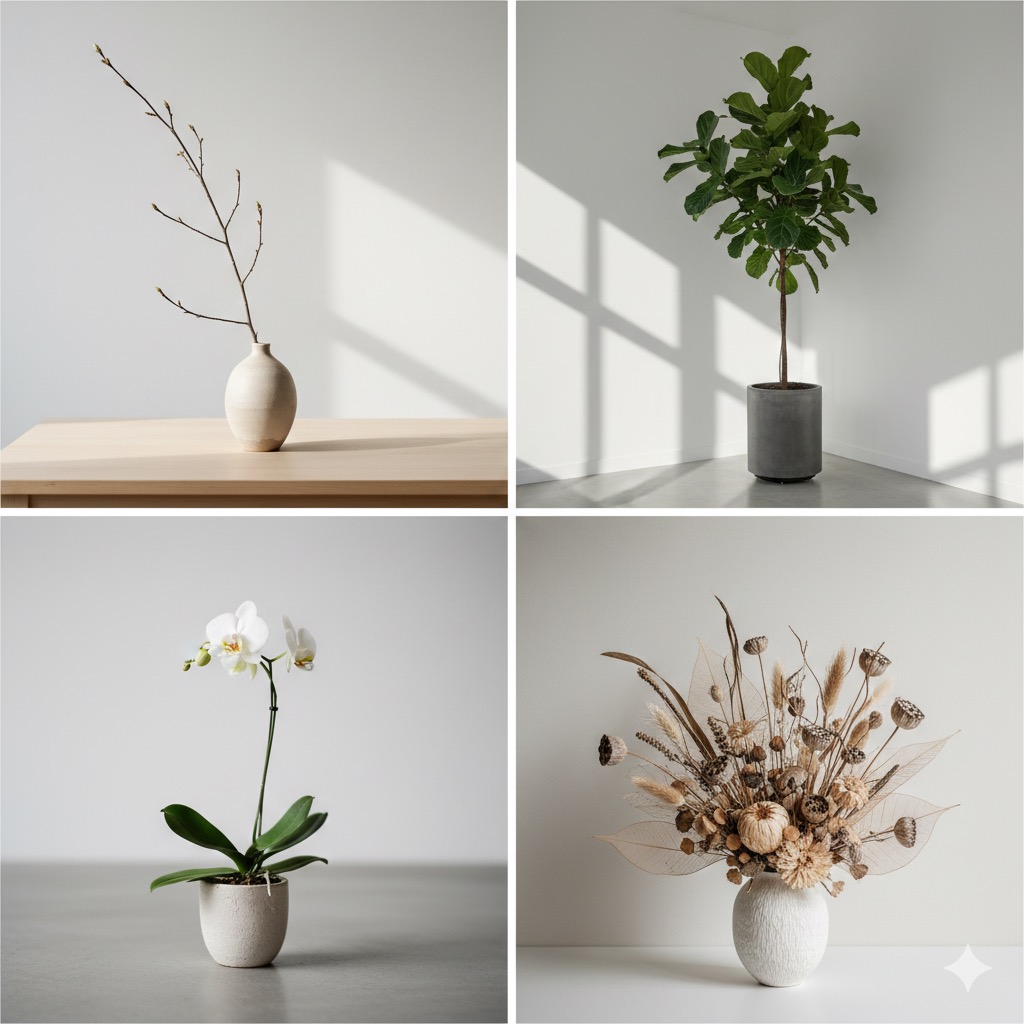
Plants in Wabi-Sabi Modern spaces appear thoughtfully placed rather than abundant, each one given space to be appreciated individually. The Japanese art of ikebana influences this approach, where a single branch or stem receives as much attention as a large bouquet might elsewhere. This restraint makes each plant more important and turns greenery into a form of meditation rather than decoration.
A single stem in a handmade vase becomes a focal point for attention. You notice how the stem curves, where leaves emerge, the exact angle at which it leans. The vase itself matters more when it’s not competing with dozens of flowers. You see the relationship between container and contained, how the vase’s form echoes or contrasts with the plant’s shape. This simple arrangement changes daily as the stem moves toward light, flowers open, or leaves unfurl.
Branch arrangements bring the architecture of plants indoors. A branch of forsythia before it blooms shows its structure clearly, the pattern of smaller branches emerging from larger ones, the arrangement of leaf buds. Once it blooms, the flowers appear even more precious because the underlying structure is already familiar. Branches last longer than cut flowers and provide more dramatic forms that work at room scale.
Choosing plants carefully means each one serves a purpose in the space. A fig tree might stand alone in a corner, its large leaves creating shadows on the wall. A single fern fills a spot near a window where its fronds catch morning light. A small succulent sits on a shelf where you see it every time you walk by. These plants aren’t fighting for attention as part of a crowded collection; they’re individual presences that contribute to the room’s atmosphere.
Simple containers let plants be the stars. Unglazed ceramic pots in earth tones, basic concrete planters, or even glass bottles become neutral supports for living things. The container’s form matters, but it doesn’t compete visually. This simplicity also makes it easier to change arrangements seasonally or as moods shift without needing different containers.
The amount of empty space around plants matters as much as the plants themselves. A single orchid on an otherwise empty table commands attention through isolation. A branch arrangement gains impact when surrounded by white wall. This negative space, this breathing room, prevents the space from feeling cluttered while highlighting each plant’s unique characteristics.
Seasonal changes become more noticeable when plant displays are simple. Spring branches with new leaves, summer’s full green growth, autumn’s colors, and winter’s bare branches each create a different feeling. Bringing these seasonal shifts inside connects the home to natural cycles happening outside. You mark time by what’s growing or resting rather than just by the calendar.
Dead or dying plant material isn’t immediately discarded but appreciated for its own beauty. Seed pods, dried flowers, fallen leaves all have interesting forms and colors. They represent the full lifecycle rather than just the moment of peak bloom. A branch of cotton bolls or dried hydrangea flowers can be as beautiful as fresh blooms, just in a different way that acknowledges impermanence.
The care required for minimal plant displays differs from maintaining large collections. You develop relationships with individual plants, learning their needs and responses. Watering becomes a moment of attention rather than a chore. Pruning means making intentional decisions about form and growth rather than just controlling size. This careful tending aligns with Wabi-Sabi’s emphasis on mindful attention to small details.
11. Matte Metal Accents
Metal in Wabi-Sabi Modern spaces appears in its most honest forms, showing age and use rather than gleaming with high polish. Matte black steel, raw iron, aged brass, and weathered copper bring industrial strength and organic patina together. These materials develop character over time, looking better as they age rather than deteriorating.
Black steel appears throughout these spaces in simple forms. Cabinet pulls, shelf brackets, light fixture frames, table legs, all rendered in matte black metal that’s been left unsealed or given the barest protection. The metal might show slight variations in color, small surface imperfections, or tiny rust spots that add to rather than detract from its appearance. This imperfect finish feels authentic and lived-in from the start.
Brass left to age naturally develops a patina that shifts from bright gold to darker bronze to eventually showing green verdigris in spots. Rather than polishing these changes away, Wabi-Sabi Modern celebrates them. A brass door handle shows darker areas where hands grip it most often. Brass picture frames develop uneven toning that creates subtle visual interest. This aging process connects present inhabitants to everyone who has touched and used these objects before.
Raw iron and steel rust when exposed to moisture, creating layers of orange, red, and brown oxides. Controlled rusting can be sealed at whatever stage appeals, preserving a particular look while preventing further deterioration. Rust patterns are always unique, creating surfaces that look organic and painterly despite being formed through simple chemical processes. A rusted steel panel becomes wall art that cost nothing but time.
Copper’s ability to develop patina makes it fascinating to use and watch. New copper gleams reddish-orange, gradually darkening to brown, then eventually developing a green verdigris layer. Each stage has its own beauty. Copper also has antimicrobial properties that make it practical for high-touch surfaces. A copper sink or door pull serves functional purposes while slowly transforming visually.
The key to using these metals successfully is letting them be what they are rather than trying to control or maintain them artificially. Don’t seal raw steel so heavily it can’t develop any patina. Don’t polish brass so obsessively that it never changes. Allow the natural aging processes to happen, accepting that materials change as they interact with air, water, and human touch.
Hardware throughout the space maintains consistency through material choice even when forms vary. All door handles might be brass, but different rooms could have different styles. Window latches, cabinet pulls, shelf brackets, and hooks share material while serving different functions. This creates unity without uniformity, a thread that ties the space together.
Light fixtures benefit especially from matte metal finishes. Shiny chrome or polished brass can create glare and look too finished. Matte black or aged brass fixtures provide necessary light while receding visually. The metal frame supports the light source without competing with it. Simple forms work best: basic shades, exposed bulbs, minimal decoration.
Combining different metals adds depth when done thoughtfully. Black steel and aged brass work beautifully together, the warm brass preventing the black from feeling too cold or industrial. Raw iron and copper share warmth that allows them to coexist. The key is that none of the metals should be too shiny or perfect; they all need to share a quality of age and authenticity that lets them harmonize.
11. Textured Plaster Walls with Visible Trowel Marks
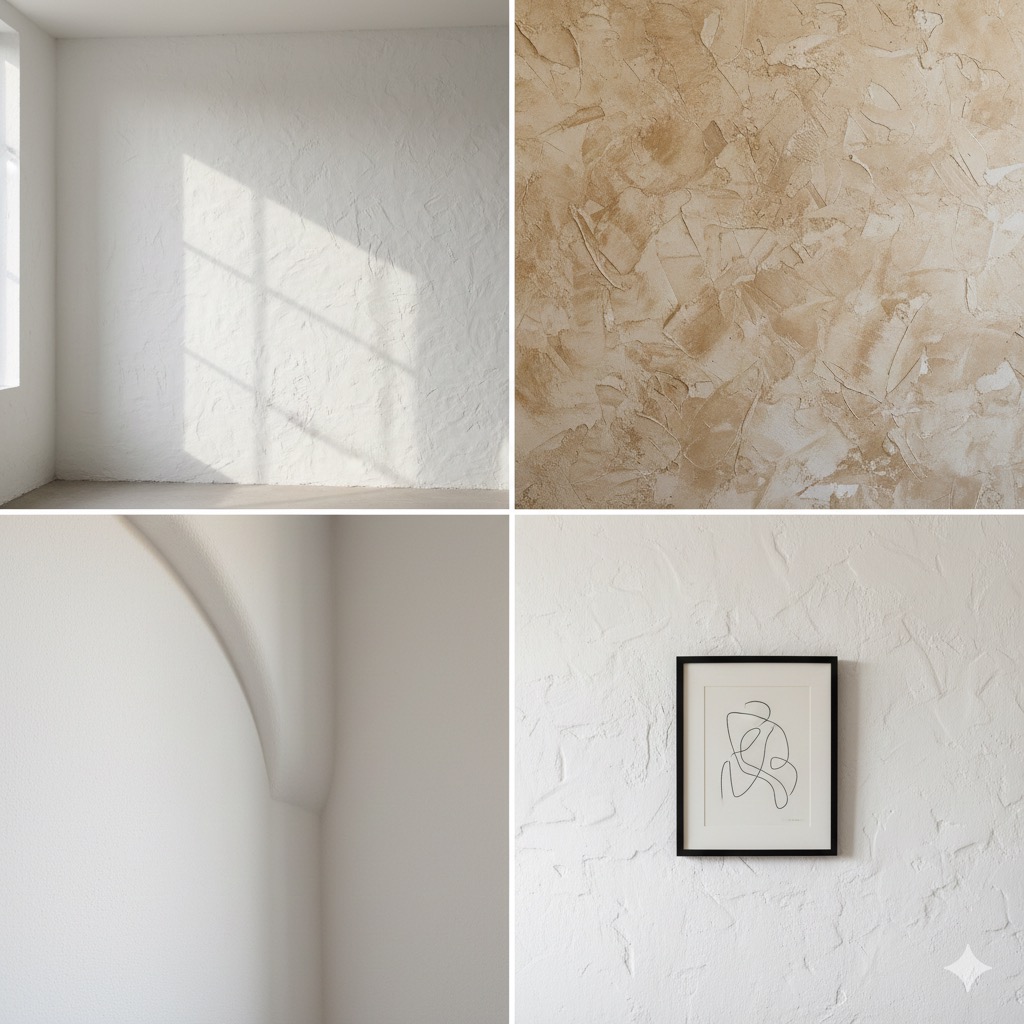
Wall surfaces in Wabi-Sabi Modern spaces often show the hand of the person who created them. Instead of perfectly smooth drywall finished to eliminate any sign of process, textured plaster reveals trowel marks, slight variations in thickness, and subtle color shifts. These walls become tactile and visually interesting without requiring decoration or artwork to complete them.
Traditional plaster applied by hand creates surfaces that are never perfectly flat or uniform. The plasterer’s trowel leaves marks that catch light differently throughout the day. Morning sun might graze across the wall, emphasizing texture through shadows. Afternoon light could hit more directly, softening the appearance. Evening artificial light creates yet another effect. This constant change means walls remain visually active rather than static backgrounds.
Modern lime plaster offers especially beautiful results while being more environmentally friendly than synthetic alternatives. Lime naturally creates subtle color variations as it cures, with slight differences in tone appearing across a wall. The material breathes, helping regulate humidity. It ages beautifully, developing a soft patina over years that looks richer rather than worn out. Small cracks or imperfections that might develop only add to the character.
Color in plaster walls comes from natural pigments mixed into the material rather than paint applied on top. This creates depth that painted walls can’t match. The color exists throughout the plaster, not just on the surface. If chipped or marked, the wall shows the same color beneath. Common choices include soft whites, warm grays, gentle beiges, and muted earth tones. These colors look different in different light, revealing complexity that synthetic paint often lacks.
The texture itself can vary from subtly irregular to heavily worked depending on technique and preference. Some surfaces show just slight ripples, barely visible except in raking light. Others feature more pronounced marks from large trowels or deliberately rough application. The texture you choose depends on the room’s purpose and scale. Larger rooms can handle more dramatic texture while smaller spaces might feel cramped with heavily textured walls.
Applying plaster requires skill and creates results that obviously involve human effort. This visibility of craft is part of the appeal. You can imagine the plasterer working, moving across the wall, making decisions about where to add material or scrape it away. The final surface records this process, making the wall a document of its own making.
These textured walls eliminate the need for much artwork or decoration. The walls themselves provide visual interest and textural richness. A single piece of art on a textured plaster wall has more impact than multiple pieces fighting for attention on bland drywall. The wall supports and frames objects placed on it without competing for attention.
Corners and edges where plaster walls meet other surfaces can be softly rounded rather than sharply defined. This creates a gentler, more organic feeling than standard drywall with its perfect 90-degree angles. Rounded corners also wear better, less likely to chip or show damage from bumps and scrapes over time.
Maintenance of plaster walls differs from painted drywall. Small marks or scuffs often blend into the texture rather than standing out. If repairs are needed, new plaster can be matched quite closely to old, especially with lime plaster that continues curing and integrating over time. This forgiving nature makes plaster practical for real life rather than requiring careful preservation.
12. Open Shelving Displaying Functional Objects
Storage in Wabi-Sabi Modern homes often remains visible rather than hidden, with everyday objects displayed on open shelves becoming part of the aesthetic. This approach requires curation and restraint, keeping only what’s used and loved, but it creates spaces that feel honest and alive. The things you use daily deserve to be seen and appreciated rather than tucked away.
Kitchen open shelving transforms cookware and dishes into a display that’s constantly changing. The bowls you use for breakfast sit on the shelf in the morning, get washed and returned after use, and appear again at dinner. This movement and use keeps the display from becoming static or museum-like. The objects are genuinely functional, not just decorative, which gives them authenticity and meaning.
Choosing what to display requires thought. Keep things that are beautiful in their own right, even if that beauty comes from use rather than perfection. A wooden cutting board that’s slightly warped and deeply marked from years of use tells a story. A set of mismatched but well-made plates shows your taste and values. Practical objects like good knives, quality pots, and handmade serving pieces all deserve to be visible and accessible.
Shelf materials should stay simple so the objects become the focus. Natural wood planks, metal brackets, or floating shelves in neutral tones provide support without calling attention to themselves. The shelving becomes infrastructure rather than design feature, a framework for displaying the things you actually use and care about.
Arrangement on open shelves needs balance between accessibility and aesthetics. Group similar items together, but don’t make it look too studied. Stack plates and bowls rather than lining them up separately, which saves space and looks more natural. Lean some items rather than placing everything perfectly flat. This casual organization feels more honest and livable than precise symmetry.
Including some empty space on shelves prevents them from looking cluttered or overwhelming. Not every inch needs to be filled. Some shelves might hold just one or two items, giving those pieces room to breathe and be appreciated. This negative space also makes it easier to grab what you need without disturbing everything else.
Rotating what’s displayed based on season or need keeps open storage functional. Summer might feature lighter dishes and glasses for cold drinks. Winter could bring out heavier pottery and teapots. This rotation ensures you’re using what’s visible and keeps the display from becoming stagnant. Objects that aren’t currently in use can be stored elsewhere, reducing clutter.
The color and material palette of displayed objects naturally creates cohesion. If you favor earthenware pottery, wooden utensils, and linen napkins, these materials share an aesthetic that looks intentional when grouped together. You don’t need to match everything, but shared qualities of naturalness and craftsmanship create visual harmony.
Maintenance of open shelving requires regular attention but becomes part of daily routine rather than major cleaning projects. When you use something, you naturally notice if the shelf needs wiping down. Washing dishes and returning them to shelves keeps everything moving and prevents dust buildup. This constant low-level maintenance is easier than periodically deep cleaning closed cabinets.
13. Indirect Lighting That Shifts Throughout the Day
Light shapes how we experience space more than almost any other element, and in Wabi-Sabi Modern homes, lighting is carefully considered to support rather than fight natural rhythms. The goal is creating layers of light that can adapt to different times of day and activities while always maintaining a sense of softness and warmth.
Natural light enters through large windows without heavy filtering, connecting interior spaces to the sun’s movement across the sky. Morning light is cool and direct, waking you gently and encouraging activity. Midday sun floods in, bright but not harsh when balanced by the right window orientation. Afternoon light grows warmer and more golden, slanting across floors and walls. Evening brings the slow fade to darkness, signaling rest.
Artificial light supplements natural light rather than replacing it, turning on only as needed. During the day, lights stay off even in corners where natural light is weaker, allowing eyes to adjust and appreciate subtle variations in brightness. As evening comes, lights come on gradually, mimicking the slow transition from day to night rather than creating an abrupt switch.
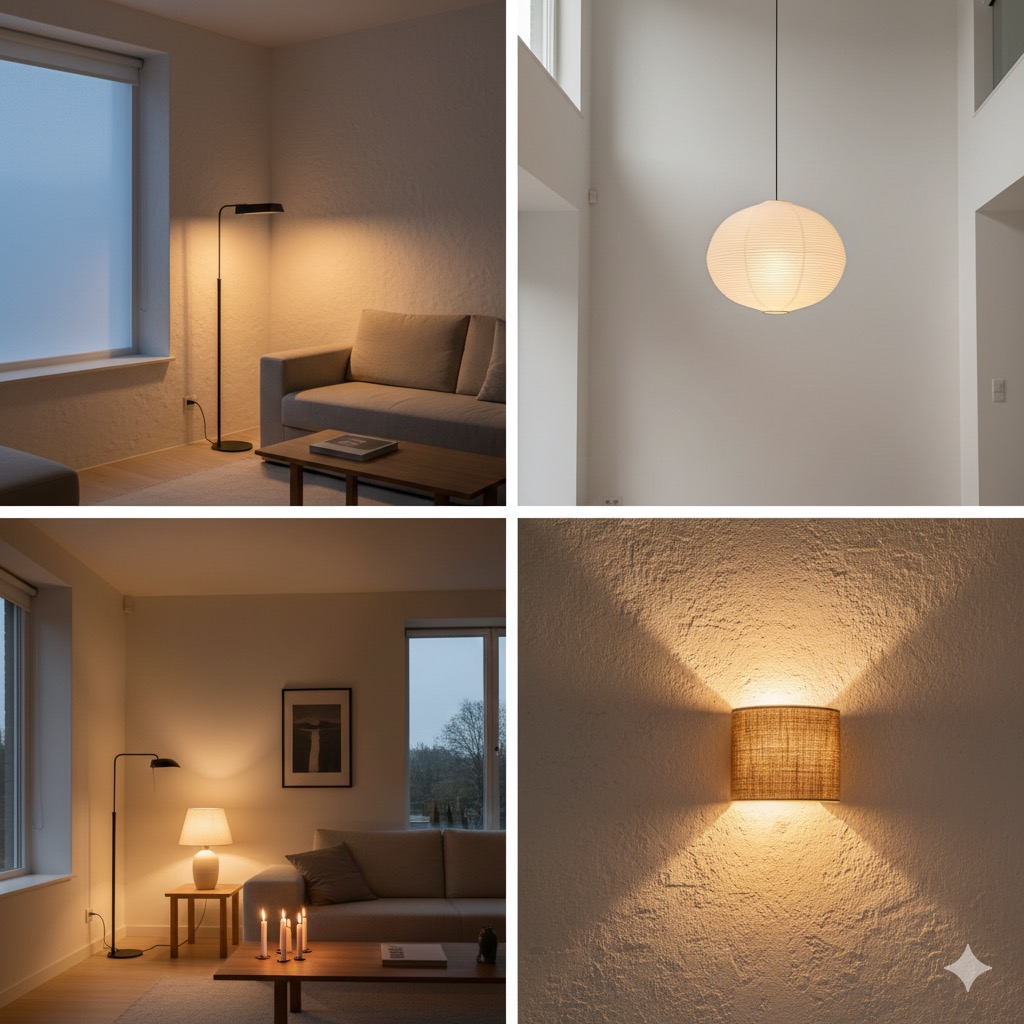
Indirect lighting works better than harsh overhead fixtures for creating the gentle atmosphere Wabi-Sabi spaces require. Floor lamps that wash light up walls, table lamps with paper or fabric shades that diffuse light softly, and concealed LED strips that graze across surfaces all create illumination without glare. You see the effects of light without staring at bright sources.
Multiple small light sources at different heights create more interesting and flexible lighting than single overhead fixtures. A floor lamp in one corner, a table lamp on a shelf, wall sconces flanking a window, and perhaps a pendant over a dining table provide options for different combinations depending on mood and activity. Dimmer switches on each circuit allow fine control over intensity.
Paper lanterns and shades create especially beautiful indirect light. The paper glows from within, becoming a luminous object rather than just a light source. Traditional Japanese lanterns work perfectly in contemporary spaces when kept simple in form. The warm light through paper feels organic and gentle, never clinical or cold.
Candlelight still has a place even in modern homes. Real flames create movement and warmth that electric lights can’t match. A few candles lit in the evening add living light that responds to air movement and burns down slowly, marking time passage. The ritual of lighting candles signals transition from day to evening, work to rest.
Task lighting appears only where specifically needed and stays focused on its purpose. A reading lamp beside a chair directs light downward onto pages without spilling unnecessarily into the room. A light under kitchen cabinets illuminates countertop workspace without lighting the entire kitchen. This focused light makes tasks easier while keeping overall ambient light levels low and comfortable.
Color temperature matters tremendously for creating the right atmosphere. Warm white bulbs (2700-3000K) provide light that feels similar to late afternoon sun or candlelight, promoting relaxation. Avoid cool white or daylight bulbs in living spaces as they create a harsh, institutional feeling. The investment in warm-toned bulbs pays off in how comfortable and welcoming the space feels.
Conclusion
Start where you are with what you have. Look at your space with fresh eyes, noticing what feels authentic and what feels forced. Remove things that don’t serve you or bring joy. Add natural materials slowly and thoughtfully. Choose handmade objects when you can, supporting craftspeople who work with their hands. Let go of the need for everything to match perfectly or look magazine-ready.
Your home should support your life, not the other way around. It should feel like a place where you can breathe deeply and be yourself completely. Wabi-Sabi Modern design creates this feeling by honoring natural materials, embracing imperfection, and maintaining simplicity. The result is a space that feels both contemporary and ancient, minimal but warm, calm yet full of subtle interest.
As you live in your space, it will change with you. Materials will age, developing patina and character. Your collection of objects will shift as some leave and others arrive. The light will move across surfaces daily and seasonally, revealing new details. This constant gentle change keeps your home alive and interesting, a reflection of life itself rather than a frozen moment trying to resist time.
The peace you find in a Wabi-Sabi Modern space comes from this acceptance of change and imperfection. You’re not fighting against reality but working with it, creating beauty from what is rather than yearning for what might be. This philosophy extends beyond design into life, offering a way of being that values presence, authenticity, and the genuine over the merely perfect.