
A soft pastel kitchen can make your home feel brighter, calmer, and more welcoming. In modern homes, people often want a clean and simple design, but they also want warmth and personality. Soft pastel colors help you achieve both. They add color without making the space feel loud or overwhelming. When used correctly, pastels can feel elegant, fresh, and thoughtfully designed.
In this detailed guide, each section will walk you step by step through how to build a soft pastel kitchen. You will learn how to choose colors, materials, layouts, lighting, and decor. Each section is written in depth so you can fully understand how to design the space properly.
Soft pastel colors are light, muted shades that are created by mixing a base color with white. This creates a softer, lighter version of the original tone. In a kitchen, these colors can instantly make the space feel open and airy. However, the key to using pastel colors in a modern kitchen is choosing the right shade and balancing it with neutral materials.
The most popular pastel colors for kitchens include blush pink, sage green, mint green, powder blue, pale peach, soft lavender, and butter yellow. But not every pastel works in every home. The undertone of the color matters. For example, a blush pink with a warm beige undertone feels calm and elegant, while a bright pink with strong red undertones may feel childish. A sage green with gray undertones feels grounded and modern, while a bright lime pastel may feel too playful.
In modern homes, pastel colors should look controlled and intentional. This means limiting your palette to one main pastel color and possibly one supporting pastel tone. Everything else in the kitchen should be neutral. White, cream, light gray, soft beige, and natural wood are perfect companions for pastel cabinets.
Lighting also plays a major role. Natural daylight enhances pastel colors beautifully. Large windows, glass doors, and open layouts help reflect light and make the colors feel soft instead of dull. Artificial lighting should be warm white, not cool blue. Cool lighting can make pastel kitchens look washed out and lifeless.
Another important factor is texture. Because pastel colors are light, you need texture to add depth. You can do this with wood grain, stone countertops, brushed metal hardware, linen fabrics, and ceramic decor. Texture keeps the kitchen from feeling flat.
When planning your pastel kitchen, ask yourself:
- Is my color too bright or nicely muted?
- Does it pair well with my flooring?
- Will it look good in morning and evening light?
- Am I balancing it with enough neutral tones?
Soft pastel kitchens work best when they feel clean and uncluttered. Avoid too many patterns or busy backsplashes. Let the color be the highlight. Modern design is about simplicity, so keep lines straight, cabinets flat or minimal, and decor controlled.
If done correctly, a pastel kitchen feels fresh, warm, and stylish without trying too hard.
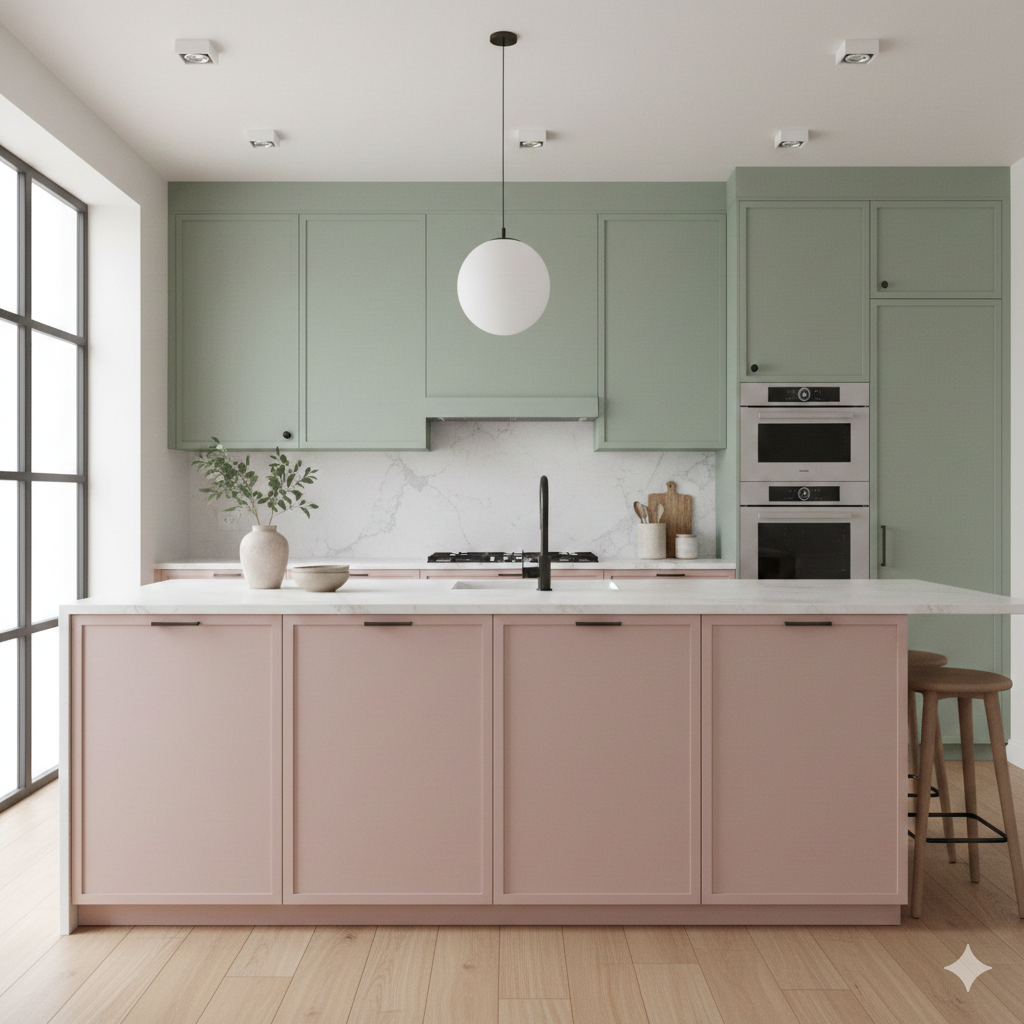
Planning the Layout Before Choosing Colors
Before selecting cabinet colors or buying paint samples, you must first design a functional layout. Even the most beautiful pastel shade will not save a poorly designed kitchen. Modern homes focus heavily on open layouts, clean movement, and efficient work zones.
The first thing to consider is the kitchen work triangle. This includes the sink, stove, and refrigerator. These three points should form a comfortable triangle that allows you to move easily between them while cooking. If these areas are too far apart, cooking becomes tiring. If they are too close together, the kitchen feels cramped.
There are four main layout types that work well in modern homes. The L-shaped kitchen uses two connected walls and is perfect for small to medium spaces. The U-shaped kitchen surrounds you on three sides and provides plenty of counter space. The galley kitchen has two parallel walls and works well in narrow homes. The open concept kitchen with an island is very popular in modern homes because it connects to the living and dining areas.
If you have an open layout, your pastel kitchen must visually connect with the rest of the house. For example, if your living room has beige sofas and light wood furniture, a sage green or blush pastel kitchen will blend beautifully. If your home has cooler gray tones, powder blue or soft lavender may work better.
Storage planning is also essential. Modern pastel kitchens look best when counters are clean and clutter-free. This means you need enough cabinet storage, deep drawers, pantry units, and possibly hidden storage solutions. Consider adding pull-out drawers, corner cabinet organizers, and vertical dividers for trays and cutting boards.
Upper cabinets can sometimes make pastel kitchens feel heavy. If possible, reduce upper cabinets and replace some with open wooden shelves. This adds airiness and prevents the pastel color from overwhelming the space.
Islands are also important in modern kitchens. A pastel island can act as a focal point if the rest of the cabinets are neutral. Islands provide extra prep space, storage, and seating. Choose slim, modern bar stools in wood, white, or soft fabric tones.
Lighting layout must also be planned early. Install recessed ceiling lights for general lighting. Add pendant lights over the island for style and focus. Include under-cabinet lighting to brighten work areas and highlight the pastel color.
Planning first ensures your color choices enhance the space instead of fighting against poor design.
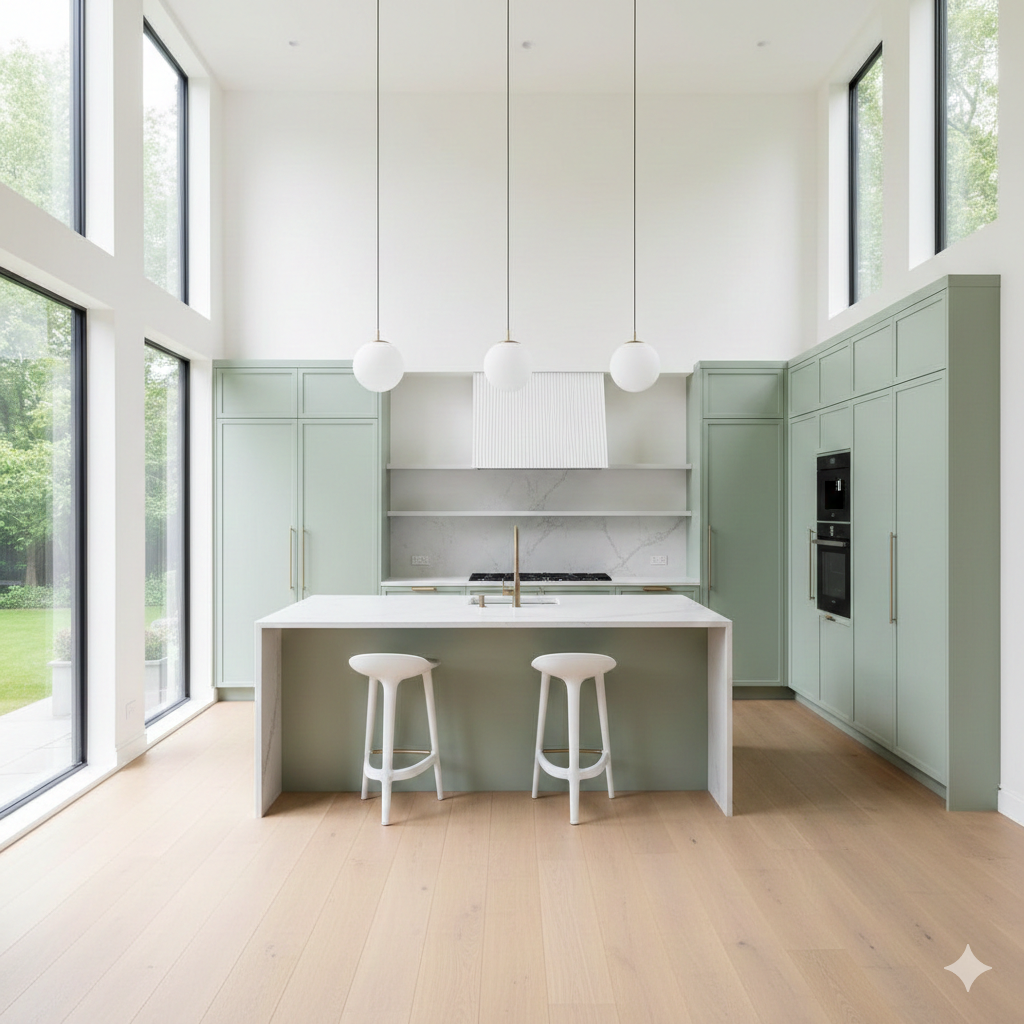
1) Soft Blush Pink Kitchen: Warm and Modern
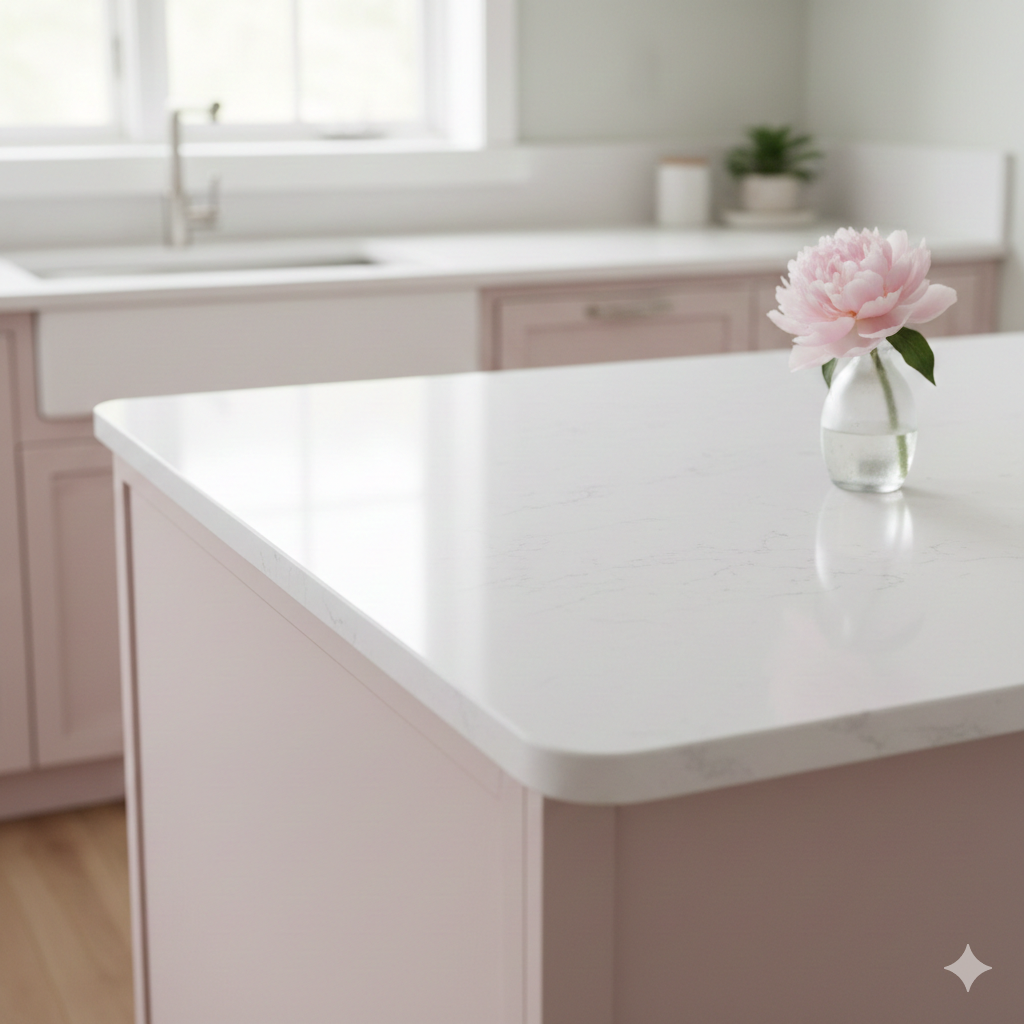
A blush pink kitchen can feel warm, gentle, and elegant when designed properly. The key is choosing the right shade. You want a muted blush with beige or dusty undertones, not a bright bubblegum pink. A soft, slightly earthy pink blends beautifully with modern materials and keeps the space feeling mature and refined.
Start with cabinetry. Flat-panel cabinets create a clean, modern look. Shaker cabinets also work if the lines are simple and not overly decorative. Paint all lower cabinets in blush pink for a grounded look, and keep upper cabinets white or cream to prevent the room from feeling heavy. If you want a more subtle approach, use blush pink only on the kitchen island and keep the rest of the cabinets neutral.
Countertops should balance the warmth of pink. White quartz is the safest and most practical choice. It provides a bright, smooth surface that reflects light and keeps the kitchen feeling fresh. Marble also pairs beautifully with blush tones, especially if it has soft gray veining. Avoid dark countertops, as they can overpower the gentle pastel shade.
Hardware plays a major role in defining the style. Brushed brass or warm gold handles enhance the warmth of blush pink and give the kitchen a luxurious finish. If you prefer a softer contrast, choose brushed nickel. Matte black can work, but it creates a stronger contrast and should be used carefully.
For the backsplash, keep it simple. Cream subway tiles, white zellige tiles, or a smooth slab backsplash will maintain a clean and modern appearance. Avoid bold patterns because the pastel cabinets should be the star.
Flooring should ground the space. Light oak flooring is ideal because it adds warmth and texture. If you prefer tile, choose soft beige or light gray stone tiles.
Decor should remain minimal. Add ceramic vases, wooden cutting boards, neutral dishware, and a small plant for life. Avoid pink accessories so the kitchen does not feel overly themed.
Lighting must be warm white to enhance the softness of the blush tone. Pendant lights above the island in brass or white finishes complete the design.
When done correctly, a blush pink kitchen feels calm, inviting, and modern without feeling overly feminine or playful.
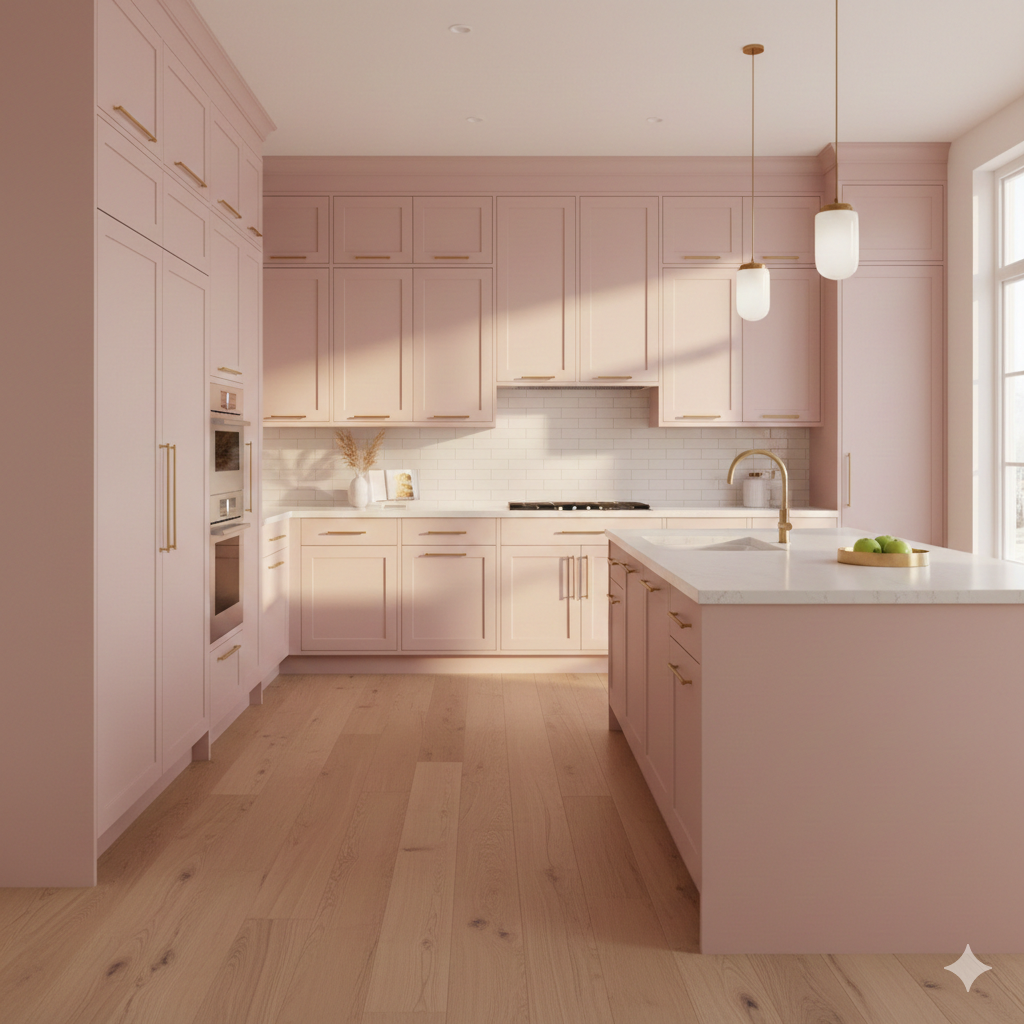
2) Sage Green Kitchen: Calm and Earthy
Sage green is one of the most versatile pastel shades for a modern kitchen. It feels natural, calming, and grounded. Unlike brighter greens, sage has gray undertones that soften the color and make it easy to pair with modern materials.
Begin with cabinet selection. Sage green looks beautiful on full-height cabinets, especially in flat-panel or simple shaker styles. If you want a bold yet balanced look, paint all cabinets sage green and pair them with white walls and countertops. If you prefer something lighter, combine sage lower cabinets with white upper cabinets.
Countertops should remain light. White quartz, light marble, or soft gray stone work best. These materials highlight the green without darkening the space. A waterfall island in white quartz paired with sage cabinetry creates a clean and elevated look.
Hardware options include brushed brass for warmth or matte black for contrast. Black hardware creates a sharper modern look, while brass makes the kitchen feel warmer and slightly more classic. Choose one metal and stay consistent throughout the space.
Backsplashes should be subtle. White ceramic tiles, light gray stone, or even a slab backsplash keeps the look streamlined. Avoid heavy patterns that compete with the cabinet color.
Wood accents are especially important in sage kitchens. Open wooden shelves, oak bar stools, or wooden cutting boards enhance the natural feel. Plants also pair beautifully with sage green and reinforce the earthy atmosphere.
Lighting should include warm recessed lights and pendant lights over the island. Consider black or brass light fixtures depending on your hardware choice.
Flooring can be light oak, pale laminate, or soft beige tiles. Avoid dark brown floors as they may make the room feel heavier.
Sage green works particularly well in open-concept modern homes because it connects beautifully with living spaces that use neutral sofas, textured rugs, and wooden furniture.
The overall effect of a sage green kitchen is peaceful and welcoming, while still looking clean and current.
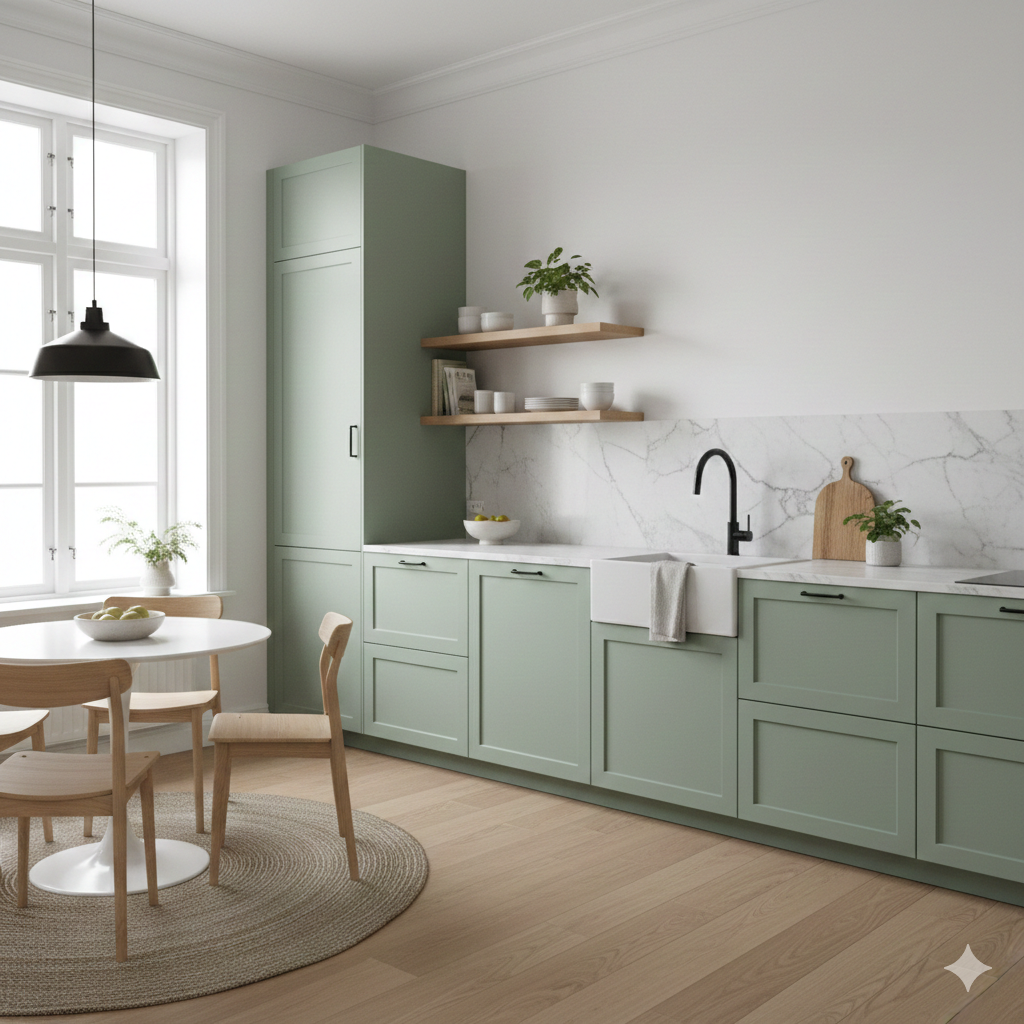
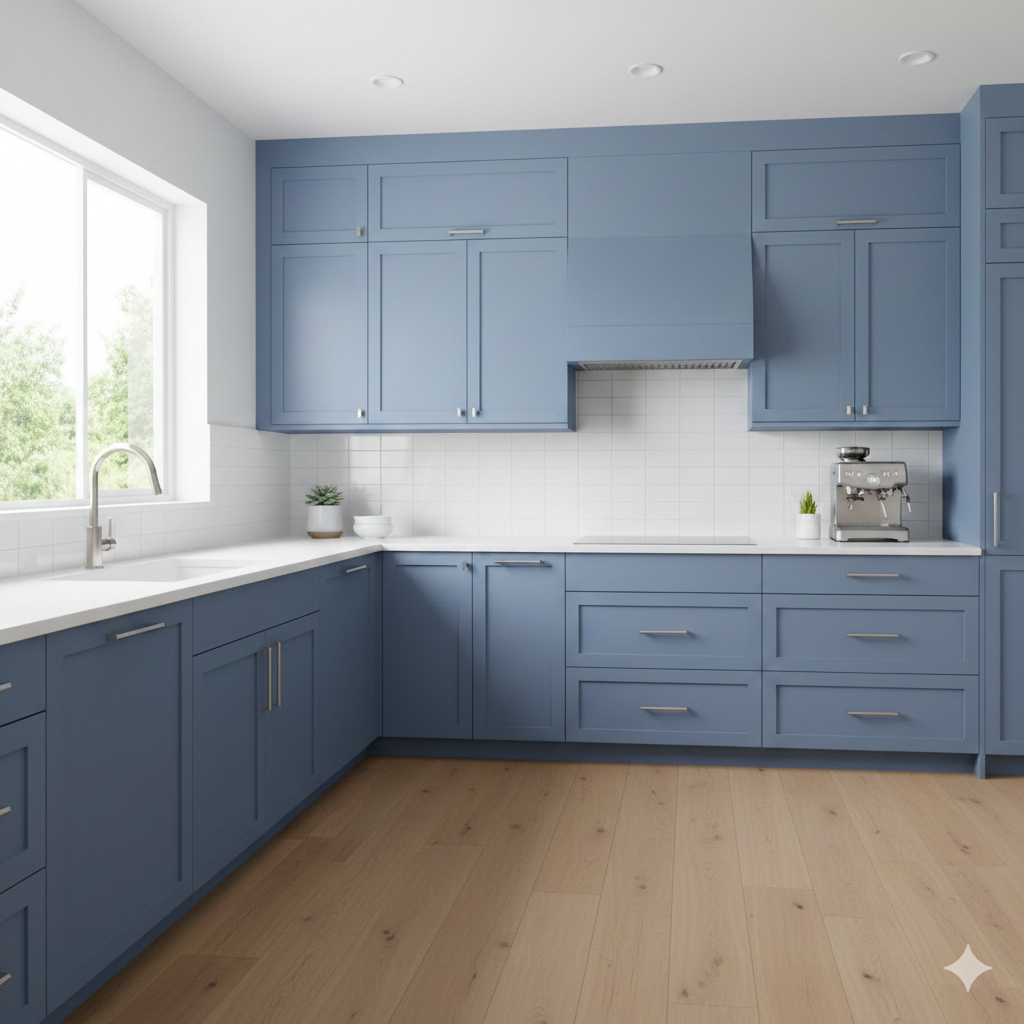
3) Powder Blue Kitchen: Light and Fresh
Powder blue kitchens feel bright, airy, and refreshing. This pastel shade works especially well in smaller kitchens because it reflects light and makes the space appear larger. The key is selecting a muted gray-blue tone instead of a vibrant baby blue.
Start with cabinetry. Flat-panel cabinets in a soft powder blue create a sleek and modern base. If you want subtlety, use blue only on lower cabinets or the island. Keep upper cabinets white to maintain brightness.
Countertops should remain simple and clean. White quartz or marble is ideal because it enhances the cool freshness of blue. Avoid dark countertops that may clash with the softness of the pastel shade.
Hardware in brushed nickel or stainless steel pairs naturally with powder blue. These cooler metals maintain a cohesive and balanced look. If you prefer warmth, brushed brass can also work, but keep the rest of the finishes warm to avoid mixed tones.
Backsplashes should stay minimal. White subway tiles, glossy white tiles, or soft gray tiles are perfect choices. Consider a glossy finish to reflect more light.
To prevent the kitchen from feeling too cool, introduce warmth through wood accents. Light oak flooring, wooden bar stools, or natural wood shelves soften the blue and add depth.
Lighting is important. Choose warm white bulbs rather than cool lighting. This prevents the space from feeling sterile.
Decor should remain simple. White ceramic bowls, neutral linen towels, and clear glass jars maintain the airy feel. Add one or two green plants for freshness.
Powder blue kitchens work beautifully in coastal-inspired modern homes, Scandinavian spaces, or minimalist interiors.
The final look is clean, peaceful, and refreshing without feeling overwhelming.
4) Soft Butter Yellow Kitchen: Bright but Gentle
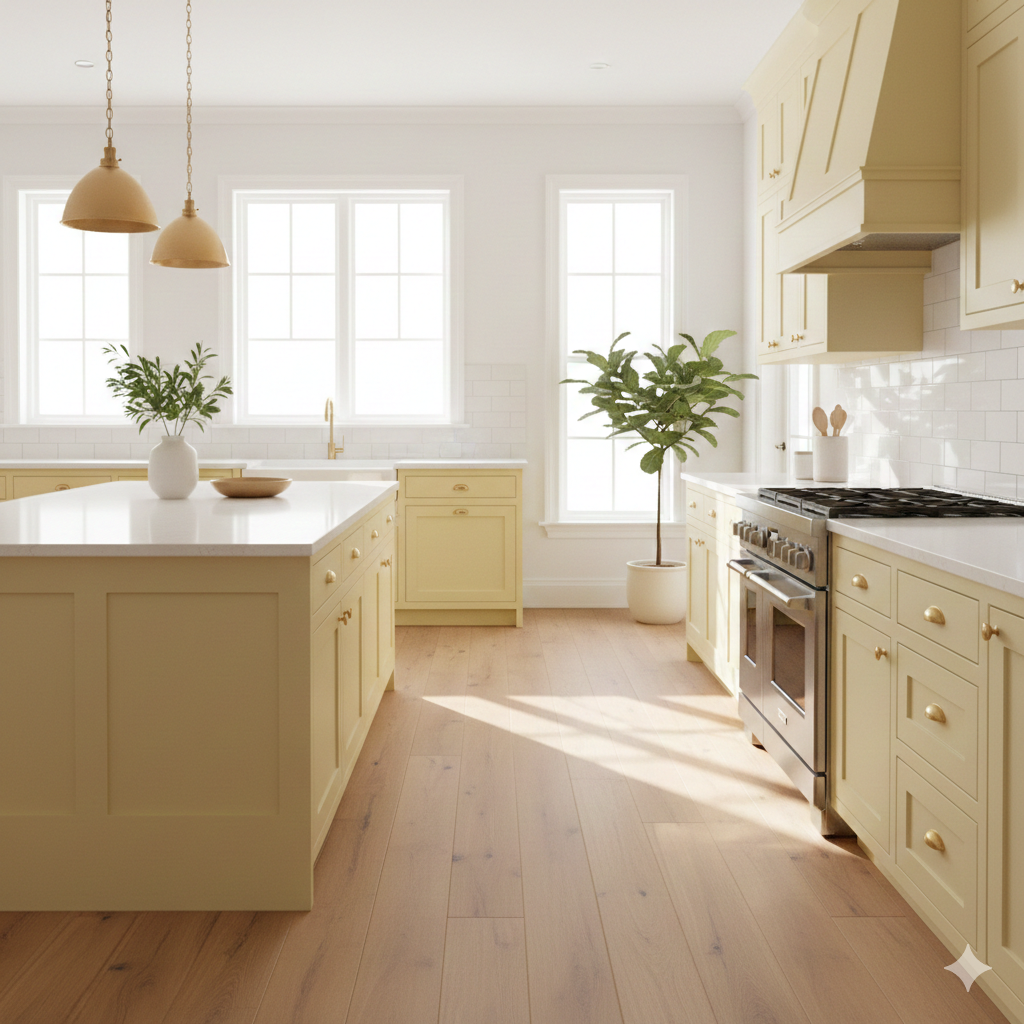
A soft butter yellow kitchen brings warmth and quiet brightness into a modern home. Unlike strong yellow tones, butter yellow is pale, creamy, and slightly muted. It feels cheerful without being overwhelming. This makes it perfect for homeowners who want color but still want a clean and balanced look.
The first step is choosing the right shade. Look for a yellow that has a creamy or slightly beige undertone. Avoid neon or overly saturated yellows, as they can feel harsh and dated. A soft butter tone should almost feel like warm sunlight on a white wall.
Cabinet placement matters. If you want a bold yet controlled design, use butter yellow on the kitchen island and keep the surrounding cabinets white or cream. This creates a focal point without flooding the space with color. If your kitchen receives a lot of natural light, you can paint all lower cabinets butter yellow and keep upper cabinets white to maintain balance.
Countertops should remain light and simple. White quartz, cream marble, or soft beige stone pair beautifully with yellow tones. These materials enhance the warmth without competing with it. Avoid dark granite or black countertops, as they may create too much contrast.
Hardware should feel warm. Brushed brass or gold finishes work beautifully with butter yellow and add sophistication. If you prefer a softer look, choose brushed nickel. Keep hardware simple and minimal to maintain a modern feel.
Backsplashes should not distract from the cabinetry. White subway tile, cream ceramic tile, or a slab backsplash in white quartz keeps the look clean. You can also consider very light beige tiles for subtle warmth.
Flooring is important in yellow kitchens. Light oak floors are ideal because they complement the warmth of yellow. Pale stone tiles or beige porcelain tiles also work well.
Lighting enhances butter yellow beautifully. Warm white LED lights make the color glow softly, especially in the evening. Pendant lights above the island in brass or white finishes add elegance.
Decor should be simple and natural. Add wooden cutting boards, white ceramic dishes, linen kitchen towels, and small green plants. Avoid too many yellow accessories so the kitchen does not feel overly themed.
A butter yellow kitchen feels uplifting, welcoming, and modern when designed with balance and restraint.Soft Butter Yellow Kitchen: Bright but Gentle (500+ words)
A soft butter yellow kitchen brings warmth and quiet brightness into a modern home. Unlike strong yellow tones, butter yellow is pale, creamy, and slightly muted. It feels cheerful without being overwhelming. This makes it perfect for homeowners who want color but still want a clean and balanced look.
The first step is choosing the right shade. Look for a yellow that has a creamy or slightly beige undertone. Avoid neon or overly saturated yellows, as they can feel harsh and dated. A soft butter tone should almost feel like warm sunlight on a white wall.
Cabinet placement matters. If you want a bold yet controlled design, use butter yellow on the kitchen island and keep the surrounding cabinets white or cream. This creates a focal point without flooding the space with color. If your kitchen receives a lot of natural light, you can paint all lower cabinets butter yellow and keep upper cabinets white to maintain balance.
Countertops should remain light and simple. White quartz, cream marble, or soft beige stone pair beautifully with yellow tones. These materials enhance the warmth without competing with it. Avoid dark granite or black countertops, as they may create too much contrast.
Hardware should feel warm. Brushed brass or gold finishes work beautifully with butter yellow and add sophistication. If you prefer a softer look, choose brushed nickel. Keep hardware simple and minimal to maintain a modern feel.
Backsplashes should not distract from the cabinetry. White subway tile, cream ceramic tile, or a slab backsplash in white quartz keeps the look clean. You can also consider very light beige tiles for subtle warmth.
Flooring is important in yellow kitchens. Light oak floors are ideal because they complement the warmth of yellow. Pale stone tiles or beige porcelain tiles also work well.
Lighting enhances butter yellow beautifully. Warm white LED lights make the color glow softly, especially in the evening. Pendant lights above the island in brass or white finishes add elegance.
Decor should be simple and natural. Add wooden cutting boards, white ceramic dishes, linen kitchen towels, and small green plants. Avoid too many yellow accessories so the kitchen does not feel overly themed.
A butter yellow kitchen feels uplifting, welcoming, and modern when designed with balance and restraint.
5) Lavender and Lilac Kitchen
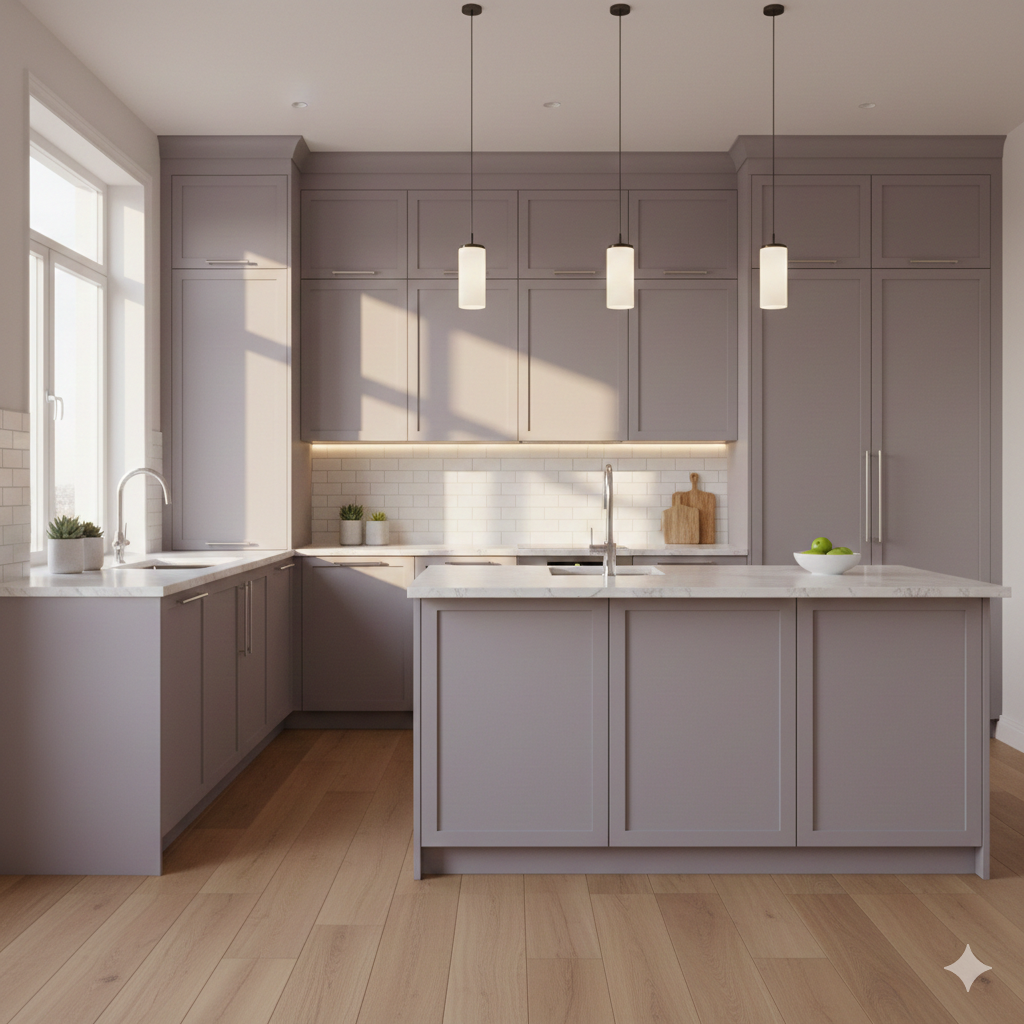
Lavender and lilac kitchens offer a soft and creative alternative to more common pastel shades. When done correctly, this color feels calming and elegant rather than overly decorative. The key is choosing a muted lavender with gray undertones instead of a bright purple.
Start by selecting flat-panel or simple shaker cabinets in a pale lavender shade. For a subtle approach, use lavender only on the island or lower cabinets while keeping upper cabinets white. If your space has plenty of natural light, you can use lavender on all cabinetry while balancing it with white walls and countertops.
Countertops should stay neutral and bright. White quartz or marble works best because it keeps the space fresh and prevents the lavender from feeling heavy. A waterfall island in white quartz paired with lavender cabinets creates a clean and modern contrast.
Hardware choice affects the overall mood. Chrome or brushed nickel gives a sleek, cool finish that pairs naturally with lavender’s undertones. If you want a bit of warmth, brushed brass can also work, but keep other finishes consistent.
Backsplashes should remain simple. Glossy white tile, soft gray tile, or even a full slab backsplash keeps the look modern. Avoid bold patterns or colorful tiles that compete with the pastel tone.
Flooring should ground the design. Light oak floors add warmth, while pale gray tiles create a cooler and more contemporary feel. Avoid very dark floors that could overpower the gentle color.
Lighting is especially important in lavender kitchens. Warm white lighting softens the purple tones and prevents the space from looking too cool. Natural daylight makes lavender appear airy and elegant.
Decor should remain minimal. White ceramics, glass jars, wooden boards, and subtle greenery maintain a calm atmosphere. Avoid too many purple accessories.
A lavender kitchen feels unique and sophisticated while still being soft and welcoming. It works well in modern apartments and contemporary homes that embrace subtle color.
Choosing the Right Countertops for Pastel Kitchens
Countertops are one of the most important elements in a pastel kitchen. Because pastel cabinets are light and soft, the countertop must balance the design without overpowering it. The wrong countertop can make the space feel busy or heavy.
White quartz is the most practical and popular choice. It has a clean appearance, reflects light, and complements all pastel shades. Quartz is also durable, stain-resistant, and low maintenance, which makes it ideal for everyday use. A smooth white quartz surface keeps the kitchen modern and simple.
Marble is another beautiful option. White marble with soft gray veining adds elegance and natural texture. It pairs especially well with blush, sage, and lavender cabinets. However, marble requires more care because it can stain and scratch.
Light gray quartz or cream solid surfaces also work well. These slightly warmer neutrals prevent the kitchen from looking too stark. If your pastel color is very cool, like powder blue or lavender, a warmer countertop can create balance.
Avoid very dark countertops such as black granite unless you are intentionally making contrast. Dark surfaces can overwhelm the softness of pastel cabinets and make the space feel smaller.
Consider a slab backsplash using the same material as your countertop. This creates a seamless, modern look and keeps the design uncluttered.
Edge profiles should remain simple. Choose straight or slightly eased edges instead of decorative styles. Modern kitchens look best with clean lines.
When choosing countertops, always test samples in your kitchen lighting. Pastel cabinets can look different depending on the time of day, so make sure the countertop complements the color in both natural and artificial light.
A well-chosen countertop enhances the softness of pastel cabinetry and keeps the kitchen feeling bright, fresh, and balanced.
Flooring for a Soft Pastel Kitchen
Flooring is one of the most important decisions in a pastel kitchen because it visually grounds the entire space. Since pastel cabinets are light and airy, the floor must provide subtle contrast and stability without overpowering the softness of the design.
The best flooring choice for most pastel kitchens is light oak wood. Light oak adds warmth, natural texture, and a modern feel. It pairs beautifully with blush pink, sage green, powder blue, butter yellow, and lavender cabinets. The natural grain of oak introduces depth, which prevents the kitchen from feeling flat or overly smooth.
When selecting wood flooring, choose planks with soft, neutral undertones. Avoid wood that is too orange or too dark brown. A pale or slightly beige oak works best in modern homes. Wide planks enhance the contemporary look and make the space feel larger.
If you prefer tile flooring, soft beige porcelain tiles or light gray stone tiles are excellent alternatives. Porcelain tiles are durable, easy to clean, and ideal for high-traffic kitchens. Choose large-format tiles to reduce grout lines and maintain a clean, seamless look. Too many grout lines can make a pastel kitchen feel busy.
For homes with cooler pastel tones like powder blue or lavender, pale gray flooring creates harmony. For warmer tones like blush or butter yellow, light beige or cream tiles complement the warmth.
Avoid very dark flooring such as deep walnut or black tile unless your kitchen has very high ceilings and abundant natural light. Dark floors can visually shrink the space and overpower soft pastel cabinets.
If your kitchen is part of an open concept space, ensure the flooring flows into the living and dining areas. Consistent flooring creates visual unity and enhances the modern aesthetic.
You can also add softness with rugs. A neutral woven runner in front of the sink or island adds texture without clashing with the color palette. Choose cream, beige, or subtle patterned rugs that do not compete with the cabinets.
In summary, flooring in a pastel kitchen should feel natural, warm, and understated. It should support the cabinetry rather than steal attention. When chosen carefully, the right floor ties the entire design together and enhances the soft, welcoming atmosphere.
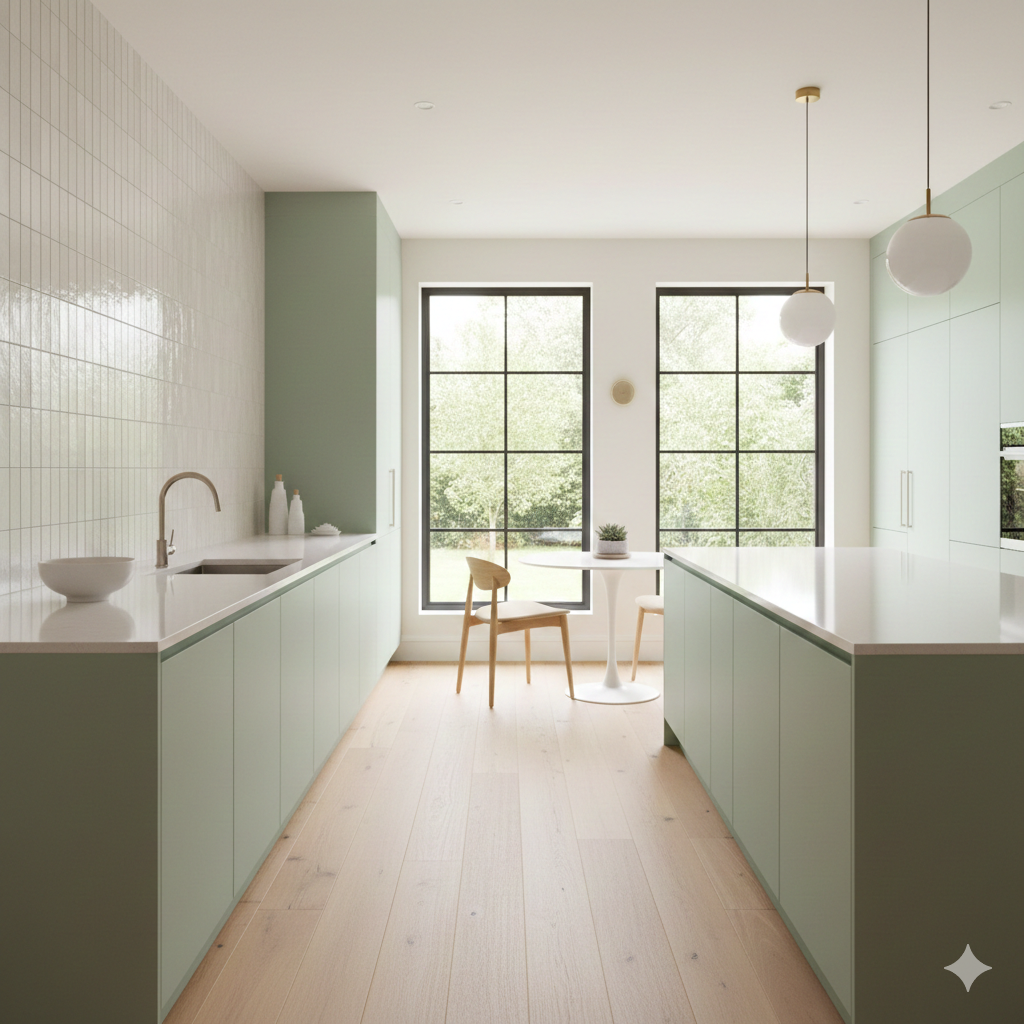
Lighting for a Soft Pastel Kitchen: Enhancing Color and Mood
Lighting can completely change how pastel colors appear. A well-lit kitchen makes pastel shades glow softly, while poor lighting can make them look dull or washed out. That is why lighting must be carefully planned in a soft pastel kitchen.
Start with natural light. Large windows, sliding glass doors, or skylights allow sunlight to reflect off pastel cabinets and brighten the entire space. If privacy is needed, use sheer curtains or light linen blinds that allow sunlight to filter through.
For artificial lighting, layer your light sources. A modern kitchen should include three types of lighting: ambient, task, and accent lighting.
Ambient lighting is your main source of brightness. Recessed ceiling lights are ideal because they provide even illumination without adding visual clutter. Choose warm white LED bulbs (around 2700K to 3000K). Avoid cool white lighting, as it can make pastel colors look harsh and lifeless.
Task lighting is important for food preparation areas. Install under-cabinet LED strips to brighten countertops. This not only improves functionality but also highlights the softness of pastel cabinetry. Under-cabinet lighting creates a subtle glow that enhances depth.
Accent lighting adds style. Pendant lights above the island create a focal point and elevate the design. Choose simple pendant shapes in brass, matte black, white, or glass finishes depending on your hardware and overall style.
If your kitchen has open shelving, consider adding small spotlights to highlight decorative objects. This adds dimension and keeps the space from feeling flat.
The placement of lighting fixtures should feel balanced. Avoid overcrowding the ceiling with too many fixtures. Keep lines clean and minimal.
Dimmer switches are highly recommended. They allow you to adjust the brightness throughout the day. In the evening, dimmed warm lighting makes pastel cabinets look soft and cozy.
Lighting not only supports functionality but also protects the integrity of your color palette. The right lighting makes your pastel kitchen feel inviting and refined.
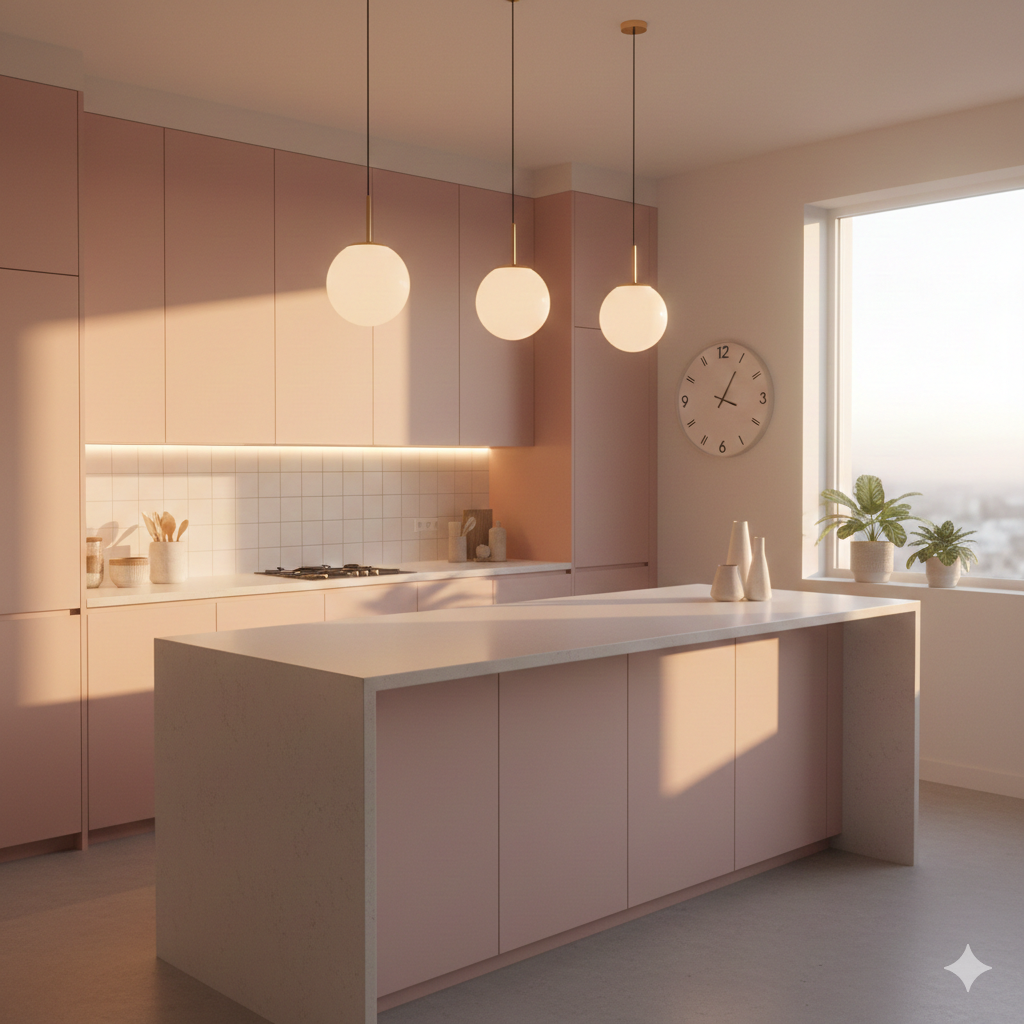
Styling and Decor for a Soft Pastel Kitchen: Keeping It Clean and Balanced
Styling is the final step in creating a soft pastel kitchen. Even the most beautiful cabinets and countertops can lose their impact if the decor feels cluttered. Modern pastel kitchens look best when styling is simple and intentional.
Start with countertops. Keep them mostly clear to highlight the cabinetry. Only display items that are functional and aesthetically pleasing. Wooden cutting boards, white ceramic canisters, and glass jars create subtle texture without adding visual noise.
Ceramic pieces work especially well in pastel kitchens. Choose white, cream, or soft beige ceramics for bowls, vases, and utensil holders. These neutral tones complement the pastel color rather than competing with it.
Plants bring life and freshness. A small potted herb on the windowsill, a simple leafy plant on the counter, or a vase with fresh flowers adds natural contrast. Greenery pairs beautifully with all pastel shades.
Textiles should remain soft and neutral. Linen kitchen towels, beige seat cushions, or woven placemats introduce texture without overwhelming the space. Avoid bold prints or bright patterns.
Bar stools should match the overall design. Light wood stools, white stools, or soft upholstered seats maintain the airy atmosphere. Keep shapes simple and modern.
Wall decor should be minimal. A single framed print with subtle colors or a round mirror can enhance the space without crowding it. Avoid overcrowding walls with multiple artworks.
Storage should remain organized. Use drawer dividers and cabinet organizers to keep everything hidden. Clutter quickly ruins the clean look of a pastel kitchen.
When styling, remember that pastel cabinets already provide visual interest. The goal of decor is to support, not distract. Every item should serve a purpose or add quiet beauty.
A well-styled pastel kitchen feels calm, thoughtful, and welcoming. It invites you to cook, gather, and enjoy the space without feeling overwhelmed.
How to Keep a Pastel Kitchen Modern
A pastel kitchen can easily shift from modern to overly decorative if not carefully managed. The key to maintaining a modern aesthetic is simplicity, consistency, and quality materials.
First, choose clean cabinet styles. Flat-panel cabinets are the most modern option. If using shaker cabinets, select ones with slim frames and minimal detailing. Avoid ornate or traditional door styles that clash with contemporary design.
Second, limit your color palette. Stick to one primary pastel shade and one or two neutral tones. Too many colors can make the kitchen feel chaotic. Consistency in finishes also matters. Choose one metal finish for hardware and stick with it throughout the space.
Third, prioritize quality materials. Quartz countertops, solid wood flooring, and durable hardware elevate the look. High-quality finishes make pastel colors appear intentional and refined.
Fourth, avoid excessive decoration. Keep countertops clear and decor minimal. Modern design embraces open space and clean surfaces.
Fifth, focus on lighting and layout. A well-organized kitchen with balanced lighting naturally feels modern. Cluttered layouts and poor lighting can make even beautiful pastel cabinets feel outdated.
Appliances should blend seamlessly. Built-in or panel-ready appliances maintain clean lines. Stainless steel works well, but avoid overly bulky designs.
Finally, maintain organization. Modern kitchens look effortless because everything has its place. Invest in storage solutions that keep everyday items hidden.
When you combine soft pastel colors with minimal design, thoughtful materials, and proper lighting, you create a kitchen that feels fresh, calm, and beautifully modern.