
Discover how to blend the clean lines of minimalism with warmth and comfort for a living room that’s both peaceful and inviting
Living rooms have become more than just spaces to entertain guests. They’re personal rooms where we unwind after long days, curl up with good books, and spend quality time with loved ones. But building a space that feels both calm and welcoming can be challenging. That’s where soft minimalism comes in—a design approach that takes the peaceful simplicity of minimalism and adds layers of warmth, texture, and comfort that make a house feel like a home.
Unlike traditional minimalism, which can sometimes feel cold or stark, soft minimalism embraces gentle colors, natural materials, and carefully chosen details that add character without creating clutter. It’s about finding balance—keeping your space open and breathable while surrounding yourself with things that bring joy and comfort. This approach works beautifully in living rooms because it creates an environment that feels restful yet lived-in, simple yet full of personality.
In this guide, we’ll explore different soft minimalism living room ideas that show you how to create these balanced spaces. Whether you’re starting from scratch or looking to refresh your current living room, these ideas will help you design a room that feels like a breath of fresh air every time you walk in.
1) The Neutral Canvas with Warm Undertones
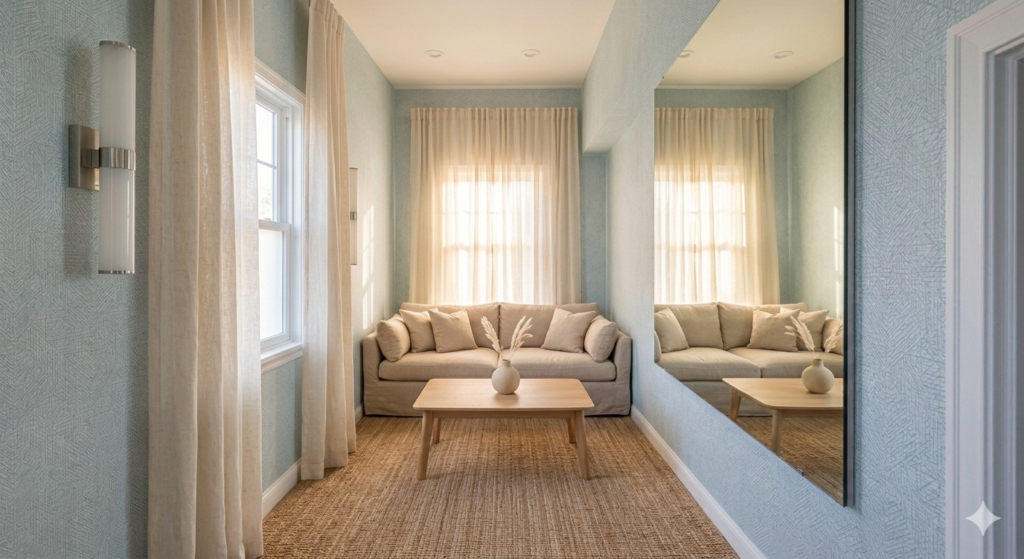
One of the most popular approaches to soft minimalism starts with a neutral color palette, but not just any neutrals. Instead of cool grays and stark whites that can feel sterile, this idea centers on warm neutrals that create an instantly welcoming atmosphere. Think soft creams, warm beiges, gentle taupes, and off-whites with subtle peachy or golden undertones. These colors form a soothing backdrop that feels cozy rather than cold.
The beauty of this approach lies in how these warm neutrals interact with natural light throughout the day. Morning sunlight brings out honey tones in cream walls, while evening light adds depth and richness to beige textiles. The space feels alive and changing, never flat or boring, even with a limited color palette. This creates a living room that feels different at various times of day, adding visual interest without needing lots of decorative objects.
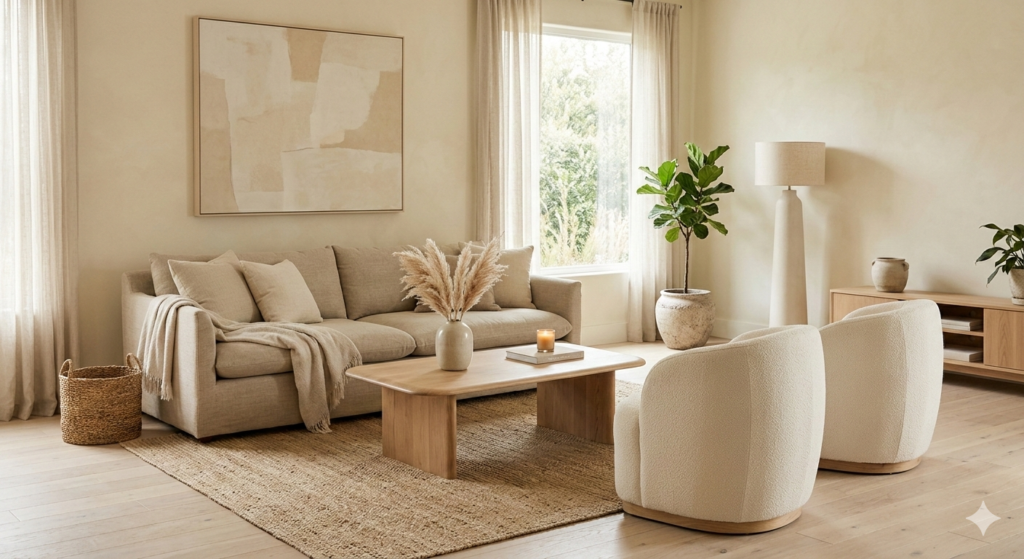
To build this look, start with warm white or cream walls as your foundation. Choose a sofa in a slightly deeper neutral—perhaps a soft linen in oatmeal or a cotton blend in warm sand. Add texture through natural fiber elements like a jute rug or woven basket storage. Layer in throw pillows in varying shades of cream, beige, and taupe, mixing different fabrics like linen, cotton, and soft wool. The key is keeping everything within the same warm color family while varying the tones just enough to create depth.
Window treatments play an important role in this design. Light, flowing curtains in natural linen or cotton soften the windows and filter daylight beautifully, creating that sought-after soft, diffused glow that makes everything look peaceful. Avoid heavy, dark curtains that block too much light—you want the room to feel airy and open. If privacy is a concern, consider sheer curtains paired with simple roller shades in a matching neutral tone.
The furniture in this space should have clean, simple lines that don’t overwhelm the eye. A low-profile sofa with gentle curves rather than sharp angles contributes to the soft aesthetic. A simple coffee table in light wood or with a natural wood finish adds warmth without visual weight. Keep surfaces mostly clear, perhaps adding just a small wooden bowl or a simple ceramic vase to maintain that sense of calm spaciousness.
2) Textured Layers in Monochrome
When you limit your color palette to shades of one color, texture becomes your most powerful design tool. A monochrome soft minimalist living room might feature various tones of white, cream, and beige, or perhaps gentle grays and soft browns. The magic happens when you layer different textures throughout the space, creating visual interest and depth without introducing multiple colors.
Start thinking about all the different ways materials can feel and look. A nubby linen sofa has a completely different texture than smooth cotton velvet, even if they’re the same color. A chunky knit throw blanket draped over the sofa arm adds dimension that’s entirely different from the flatness of the sofa fabric. A natural wool rug with a subtle pattern provides underfoot interest, while smooth wooden surfaces on side tables create contrast. Each texture catches light differently, creating shadows and highlights that make the monochrome palette feel rich and complex.
Mix rough with smooth, matte with subtle sheen, woven with solid. A bouclé accent chair provides textural interest alongside your main sofa. Linen curtains have a natural slub that creates subtle movement and texture. Ceramic vessels with varied finishes—some matte, some with a soft glaze—add sculptural interest on shelves or side tables. Natural materials like rattan, cane, or wicker introduce organic texture through furniture pieces like a side table or storage basket.
The layering extends to soft furnishings too. Start with your sofa cushions, then add throw pillows in different fabrics—maybe linen, cotton, and a soft wool blend. Include pillows with subtle texture through weaving or quilting. Add a chunky knit blanket or a soft cotton throw. Each layer adds another dimension of texture while maintaining your monochrome color story.
Walls contribute to this textural landscape as well. Instead of perfectly smooth painted surfaces, consider textured paint finishes, subtle wallpaper with a barely-there pattern, or even natural plaster that shows gentle variations. These wall treatments add another layer of texture without departing from your neutral palette. The goal is to create a space where your eyes travel from one interesting texture to another, never getting bored despite the limited color range.
3) Natural Wood Elements as Focal Points
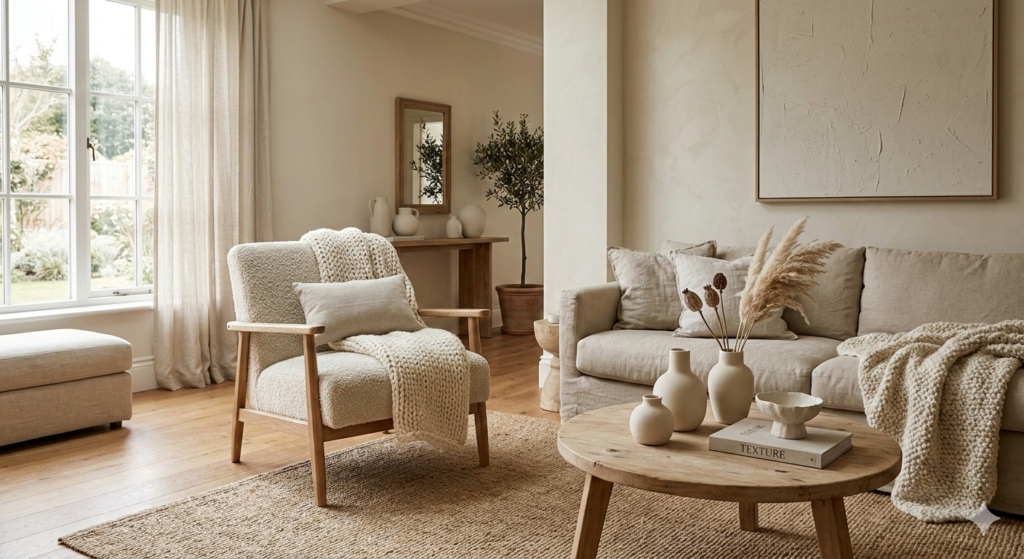
Wood brings instant warmth and organic beauty to soft minimalist spaces. Unlike painted or laminate furniture, natural wood shows grain patterns, color variations, and unique characteristics that add personality without clutter. A soft minimalist living room can use wood as beautiful focal points that ground the space and connect it to nature.
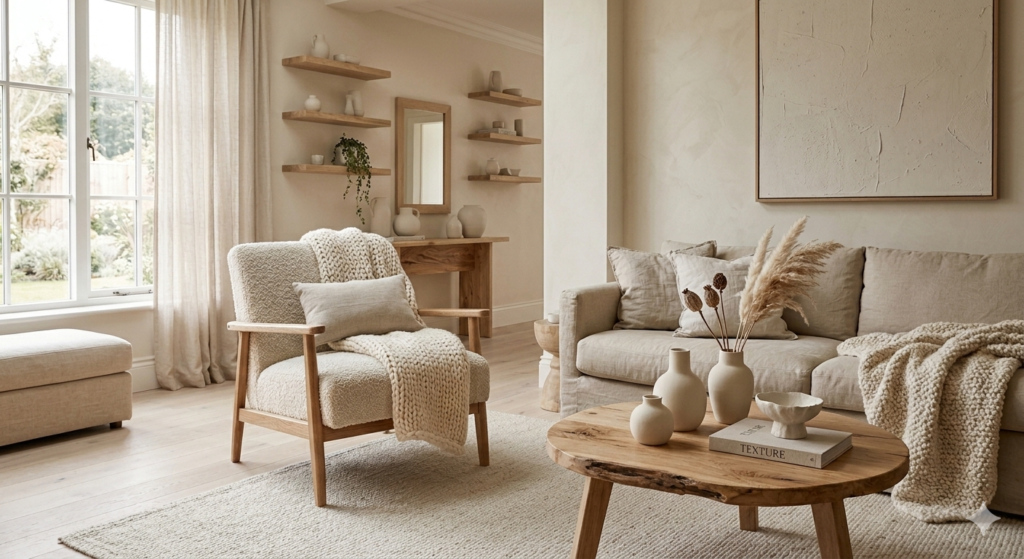
Consider a stunning live-edge coffee table as your centerpiece. The natural edge of the wood, with its organic curves and irregularities, provides visual interest while maintaining a minimal aesthetic. The wood grain tells a story, with each line and knot representing years of growth. This kind of piece becomes a conversation starter and a work of art, yet it remains functional and unobtrusive in the space.
Wooden furniture in soft minimalism should feel natural and unfussy. Simple wooden side tables with clean lines and visible grain. A low media console in light oak or walnut that showcases beautiful wood rather than ornate details. Floating shelves in natural wood that display a few carefully chosen items without overwhelming the wall. The wood finish should be natural or lightly stained to show the material’s authentic beauty—skip heavy, dark stains that hide the grain.
Different wood tones can work together in a soft minimalist space if you’re thoughtful about it. Mixing light and medium woods creates depth, but keeping them all in similar undertones—all warm or all cool—helps them feel cohesive. For example, pale oak paired with warm walnut creates beautiful contrast while maintaining harmony. The variety adds interest without creating the busy feeling that comes from too many competing elements.
Wood also works beautifully in architectural elements. Exposed ceiling beams in natural wood add character and draw the eye upward, making the room feel larger. A wood accent wall—perhaps in vertical shiplap or horizontal planks—creates a focal point that feels organic and calming. Wood window frames or door frames in natural finish add warmth without needing any decoration. These architectural touches bring nature inside and create a sense of permanence and quality.
Don’t forget smaller wooden accents. A wooden tray on the coffee table to corral a few items. Wooden picture frames in simple styles. A wooden ladder for displaying throws or magazines. Wooden bowls or vessels on shelves. These smaller touches reinforce the natural element without adding clutter. Each piece should be chosen for its beautiful grain and simple form rather than decorative details.
4) The White and Natural Fiber style
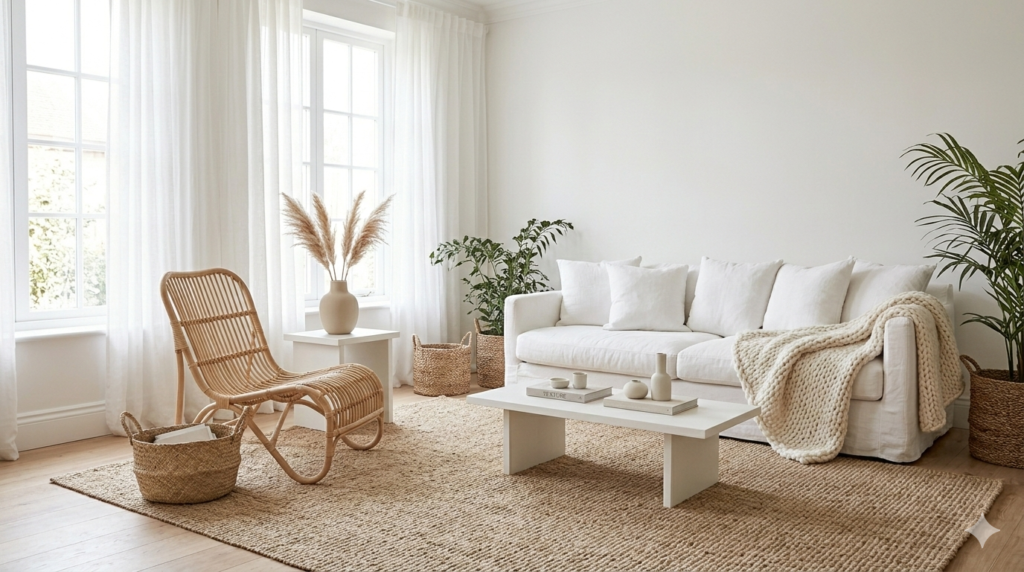
There’s something deeply calming about a living room dressed primarily in white and natural fibers. This approach to soft minimalism feels fresh and airy, like a constant breath of fresh air. The whiteness creates a sense of spaciousness and light, while natural fibers add the warmth and texture that keep the space from feeling sterile or cold.
Start with white or off-white walls that reflect light and create an open feeling. Choose a sofa in natural linen or cotton in white or cream—these fabrics have enough texture to add visual interest despite their light color. The beauty of linen is that it wrinkles slightly and has a natural slub, which prevents it from looking too perfect or precious. It’s a fabric that invites you to relax rather than worry about keeping everything pristine.
Natural fiber rugs become essential in this scheme. A large jute or sisal rug grounds the seating area and adds earthy warmth underfoot. These rugs have wonderful texture and natural color variation that adds interest without competing with the white elements. They’re practical too—they hide dirt better than white rugs while maintaining the light, natural feeling of the space.
Incorporate other natural fibers throughout the room. Woven seagrass baskets for storage add texture and functionality. Rattan or bamboo furniture pieces like a chair or side table bring in organic shapes and patterns. Cotton and linen throw pillows in white or natural tones layer more texture onto the sofa. A wool throw in cream or natural sheep’s wool color provides cozy warmth without introducing color.
Window treatments in this space should be light and flowing. White or natural linen curtains that puddle slightly on the floor create an elegant, relaxed look. They filter light beautifully, creating that soft glow that makes white rooms feel so peaceful. During the day, the light streaming through these curtains illuminates the room with a gentle, diffused quality that enhances the serene atmosphere.
This palette works especially well when you have good natural light, as the white surfaces bounce light around the room, making it feel bright and open. But even in rooms with less natural light, this approach can work—just be sure to layer in enough warm-toned natural fibers to prevent the space from feeling cold. The contrast between crisp white and warm natural materials creates a balanced, inviting environment.
Keep decorative elements minimal and natural. A few dried branches or pampas grass in a simple white ceramic vase. Wooden bowls or trays in light tones. Perhaps a simple piece of art with white space and natural motifs. The restraint in decoration allows the interplay of white surfaces and natural textures to be the star of the show.
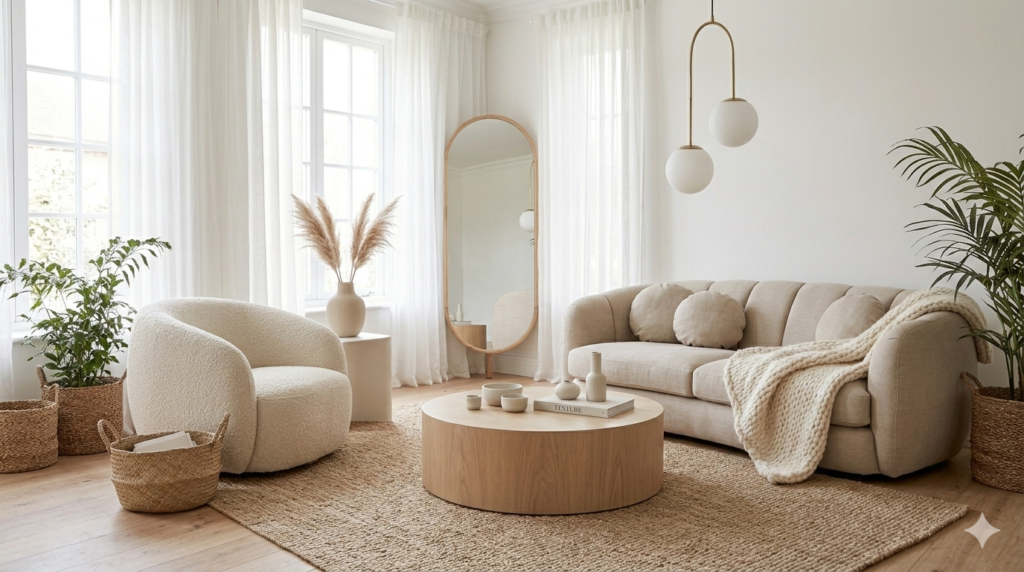
5) Curved Furniture and Soft Edges
Soft minimalism embraces curves and rounded edges rather than the sharp, angular lines often associated with traditional minimalism. A living room designed around curved furniture and soft edges feels more welcoming and comfortable, more human and less rigid. The gentle curves create flow and movement in the space, guiding your eye smoothly from one element to another.
Start with a sofa that features rounded arms and a curved back rather than boxy, angular construction. These softer shapes invite you to sink in and relax. The curves feel organic, almost like the furniture is gently embracing you. Paired with plump cushions and pillows, a curved sofa becomes the ultimate cozy centerpiece while maintaining clean, minimal lines.
Coffee tables and side tables with rounded edges or completely circular tops contribute to this soft aesthetic. An oval coffee table provides all the function of a rectangular one but with gentler lines that feel less imposing. Round side tables or nesting tables with curved legs add sculptural interest. These pieces are easier to move around too, creating a more flexible living space.
Consider accent chairs with curved backs or rounded silhouettes. A barrel chair or papasan-style seat with soft cushioning creates a cozy reading nook. An egg chair or cocoon chair provides a personal retreat within the larger living space. These statement pieces add personality while maintaining the soft, minimal aesthetic through their simple forms and neutral colors.
The beauty of curved furniture is how it creates pockets of space and interesting shapes in the room’s footprint. While angular furniture tends to create hard divisions, curves create flow. The space feels more cohesive and less chopped up. Movement through the room feels more natural and easy, with no sharp corners to navigate around.
Extend this principle to other elements in the room. Rounded mirrors instead of rectangular ones. Curved shelving or arched doorways if your architecture allows. Even smaller details like rounded vases, circular wall art, or arched windows contribute to the overall sense of softness. Layer different scales of curves—from the large curve of a sofa to the small curves of decorative objects—to create rhythm and harmony.
Lighting fixtures with curved elements work beautifully in this context. Pendant lights with round globes or dome shapes. Floor lamps with arching arms or rounded shades. Table lamps with spherical bases or curved necks. These lighting choices reinforce the soft, flowing aesthetic while providing necessary illumination.
6) Light and Shadow style
In soft minimalist spaces, where decorative elements are kept to a minimum, natural light becomes decoration. A living room designed to maximize and celebrate natural light transforms throughout the day as sun moves across the sky, creating ever-changing patterns of light and shadow that add movement and interest without any clutter.
Begin by considering your windows as key design elements rather than just openings to cover. Large, unobstructed windows bring in maximum light and create connection with the outdoors. If privacy allows, skip heavy window treatments entirely or use minimal options that can be pulled completely to the side. The view becomes part of your decor, and natural light floods the space.
When you do need window coverings, choose ones that filter light beautifully rather than blocking it completely. Sheer linen or cotton curtains create that dreamy, diffused glow. Light-colored roller shades or roman shades in natural fabrics provide privacy when needed while still allowing light to pass through. The quality of filtered light—soft and gentle—enhances the peaceful atmosphere of soft minimalism.
Pay attention to how light moves through your space throughout the day. Morning light might stream in from east-facing windows, creating long shadows and dramatic angles. Afternoon sun warms south or west-facing walls. Evening light creates a golden glow before transitioning to twilight. Each phase creates a different mood in the same room. Arrange your furniture to take advantage of these changes—perhaps positioning a reading chair where afternoon light falls, or orienting the sofa to capture morning sun.
Reflective surfaces amplify natural light without adding visual clutter. A simple mirror positioned to reflect a window doubles the light in the room. Light-colored walls bounce illumination around the space. Pale wood floors or light rugs reflect upward. Glass or lucite furniture pieces allow light to pass through rather than blocking it. These thoughtful choices maximize the impact of whatever natural light you have.
Consider architectural features that create interesting shadow patterns. A plant near a window casts moving shadows as it sways. Window mullions create geometric patterns on walls and floors. Sheer curtains gently billowing create shifting shadows. These organic, changing patterns add life and movement to your space without requiring any decorative objects.
Artificial lighting should complement rather than compete with natural light. During the day, you might not need artificial light at all. As evening approaches, layer in warm, soft lighting that mimics the quality of natural light. Dimmable lights allow you to adjust intensity. Multiple light sources at different heights create depth without harsh overhead lighting. The goal is seamless transition from day to night, maintaining the room’s peaceful atmosphere.
7) Greenery as monochrome
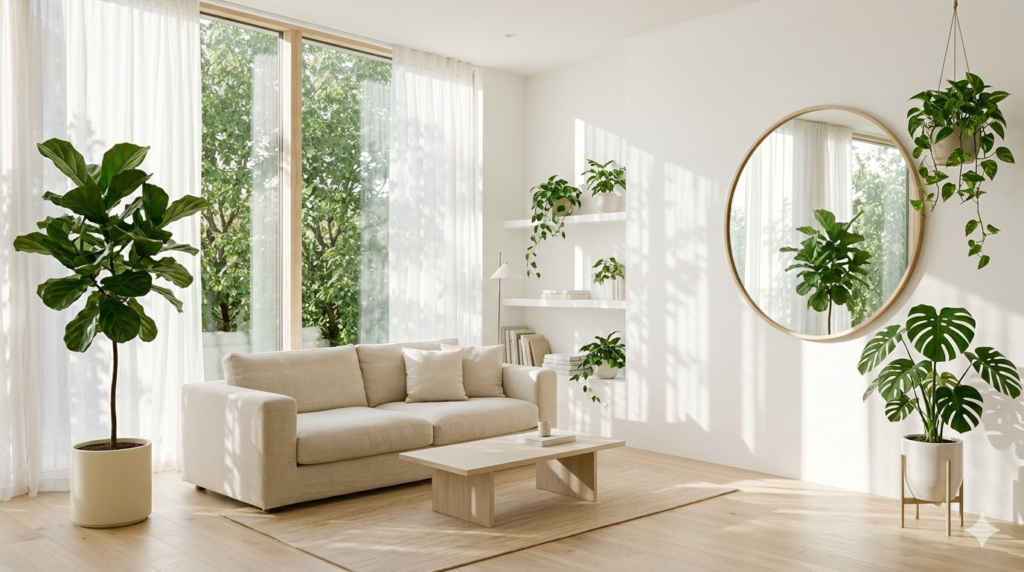
One of the most beautiful approaches to soft minimalism uses plants as the only source of color in an otherwise neutral space. This creates a living room that feels fresh and alive while maintaining the calm simplicity of minimalism. The varying shades of green—from pale sage to deep forest—add just enough color to keep things interesting without overwhelming the peaceful atmosphere.
Choose plants of different heights and leaf shapes to create visual interest. A tall fiddle leaf fig or bird of paradise in the corner makes a dramatic statement and draws the eye upward. Medium-height plants like monstera or pothos on plant stands fill middle space. Smaller plants on shelves, side tables, or window sills add touches of green throughout the room. The variety in plant sizes creates layers and depth.
The containers you choose for plants matter in a soft minimalist space. Simple ceramic pots in white, cream, or natural terracotta keep the focus on the plants themselves. Woven baskets add texture while maintaining neutrality. Modern concrete planters provide an industrial-organic contrast. Skip ornate or colorful pots that compete with the plants—the greenery should be the star.
Mix different types of greenery for varied textures and shades. Broad-leafed plants like rubber trees or monstera provide bold shapes. Trailing plants like pothos or string of pearls add movement and softness. Plants with smaller, delicate leaves like ferns create gentle, lacy texture. Some plants have glossy leaves that reflect light, while others have matte surfaces that absorb it. This variety keeps the all-green palette from feeling monotonous.
Consider the practical aspects of your plant choices. Some plants thrive in bright light, others prefer shade. Match plants to your actual light conditions rather than forcing plants that won’t be happy in your space. Healthy, thriving plants contribute to the peaceful atmosphere—struggling plants create stress. Choose varieties appropriate for your maintenance level too. If you travel frequently or tend to forget watering, opt for more forgiving plants like snake plants or ZZ plants.
The presence of plants brings life energy into the space. They move gently in air currents, their leaves turning toward light throughout the day. They grow and change, providing subtle evolution in your static decor. They improve air quality and add humidity. Beyond their visual appeal, plants create a healthier, more vital living environment.
Group plants in odd numbers for the most pleasing arrangements. Three plants of varying heights in one corner. Five small plants clustered on a shelf. A single dramatic plant as a focal point. These groupings create moments of lush greenery against the neutral backdrop. Leave plenty of negative space between plant groupings—overcrowding defeats the minimalist purpose.
8) The Low-Profile Living Room
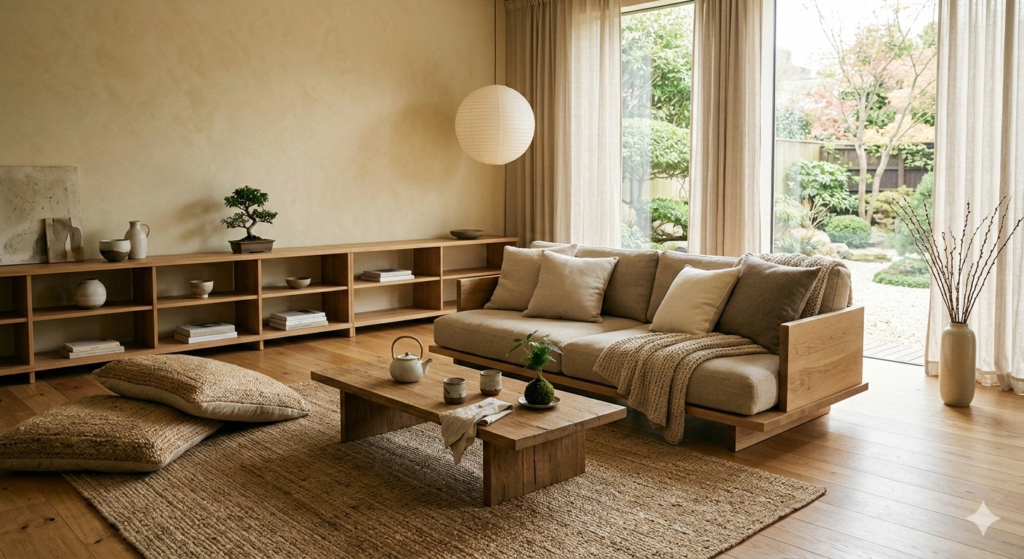
Furniture with a low profile—closer to the ground than traditional pieces—creates a unique sense of space and calm in a soft minimalist living room. This approach makes ceilings feel higher and rooms feel larger because more wall space is visible. The overall effect is grounding and peaceful, with an almost zen-like quality that encourages relaxation.
A low-profile sofa or sectional forms the foundation of this look. These pieces sit closer to the floor, with lower backs and often slightly recessed legs or no visible legs at all. They feel substantial and comfortable without overwhelming the room visually. The horizontal emphasis creates a restful feeling—our eyes don’t have to travel as far vertically, which paradoxically makes the room feel more spacious.
Coffee tables in this scheme should be correspondingly low. A simple platform table that sits just above the sofa cushions maintains the horizontal line. These low tables make it easy to put your feet up and create an informal, comfortable atmosphere. They also provide an unobstructed view across the room, maintaining visual flow.
Floor seating elements complement the low furniture beautifully. Large floor cushions or poufs provide flexible seating options. A low bench or daybed against a wall creates a lounging spot. These elements reinforce the grounded, relaxed feeling while maintaining the minimal aesthetic. They’re also practical for casual gatherings when you need extra seating.
This style works especially well in smaller living rooms because it makes the space feel larger than traditional furniture would. With furniture sitting lower, you see more of the walls and more of the floor, both of which contribute to a sense of openness. The room breathes more easily. If your living room has low ceilings, this approach can actually make them feel higher through contrast.
Keep other furnishings proportional to maintain the aesthetic. Low shelving units instead of tall bookcases. Art hung at a lower height on walls. Even window treatments can be simplified or eliminated to emphasize the horizontal lines. The consistency in scale creates harmony and reinforces the peaceful, grounded atmosphere.
The color palette in a low-profile living room often emphasizes earth tones and natural materials to reinforce that grounded feeling. Think warm browns, soft tans, muted greens, and natural wood tones. These colors combined with the low furniture create a space that feels connected to the earth, stable and calm.
9. Soft Grays and Cloud-Like Style
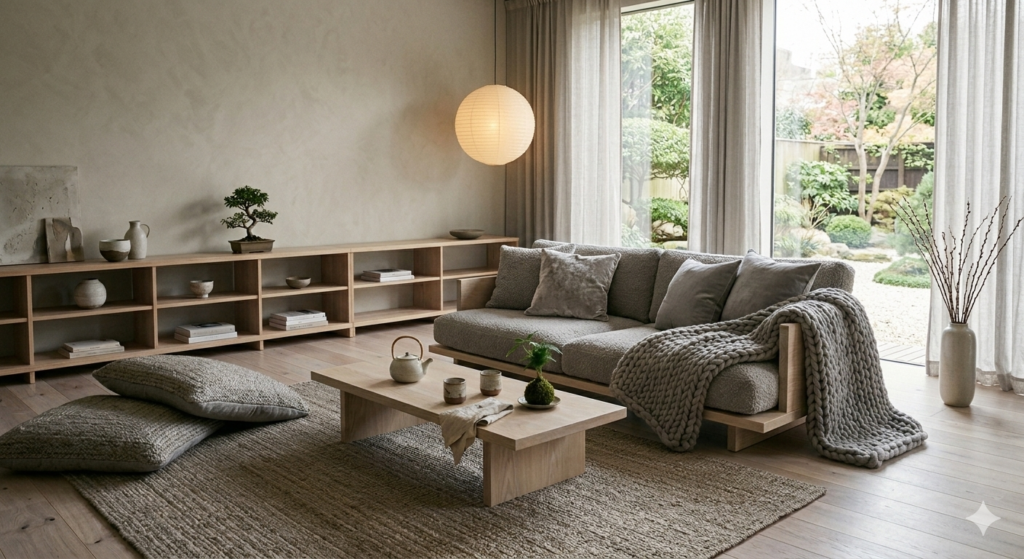
Gray gets a bad reputation for being cold, but soft, warm grays can create one of the most soothing living room palettes imaginable. The key is choosing grays with warm undertones—greige, taupe-gray, or gray with subtle beige or brown notes—and pairing them with incredibly soft, plush textures that invite touching and sinking in. The result is a living room that feels like resting on a cloud.
Start with walls in a warm, light gray—almost like morning fog or soft dove feathers. This creates a gentle, neutral backdrop that feels calming without being stark. Against this foundation, build layers of soft gray textiles in varying shades. A sectional sofa in a medium warm gray becomes the centerpiece. Choose fabrics with depth and softness—think bouclé, soft chenille, or plush velvet that begs to be touched.
Texture becomes crucial in an all-gray space to prevent it from feeling flat or dull. Layer different gray textiles—smooth cotton, nubby linen, fuzzy wool, soft faux fur. A chunky knit throw in charcoal gray over lighter gray cushions. Velvet pillows alongside linen ones. A soft wool rug in heathered gray. Each texture catches light differently, creating subtle variations in tone that add depth and richness.
The beauty of working within a gray palette is the sophisticated, cohesive look it creates. Everything flows together seamlessly, creating a restful environment for your eyes. There’s no jarring color transitions or competing elements—just gentle variations in tone and texture that create interest without demanding attention.
Break up the gray with natural wood tones and white accents to prevent the space from feeling too monotone. A light wood coffee table or side tables add warmth. White ceramic vases or simple white artwork provide bright moments. These touches of contrast keep the space from feeling heavy while maintaining the overall soft, minimalist aesthetic.
Lighting plays an important role in a gray living room. Natural light brings out the subtle warm undertones in your grays. In the evening, warm white artificial lighting prevents the space from feeling cold. Layer lighting sources to avoid harsh shadows—table lamps, floor lamps, and ambient lighting work together to create a cozy glow.
This palette works beautifully for those who want a calm, neutral space but find all-white or all-beige too stark or boring. Gray offers sophistication and depth while still providing that peaceful, minimalist foundation. The plush textures ensure the space feels inviting and comfortable rather than cold or unwelcoming.
10) Cozy Nook Within Minimalism
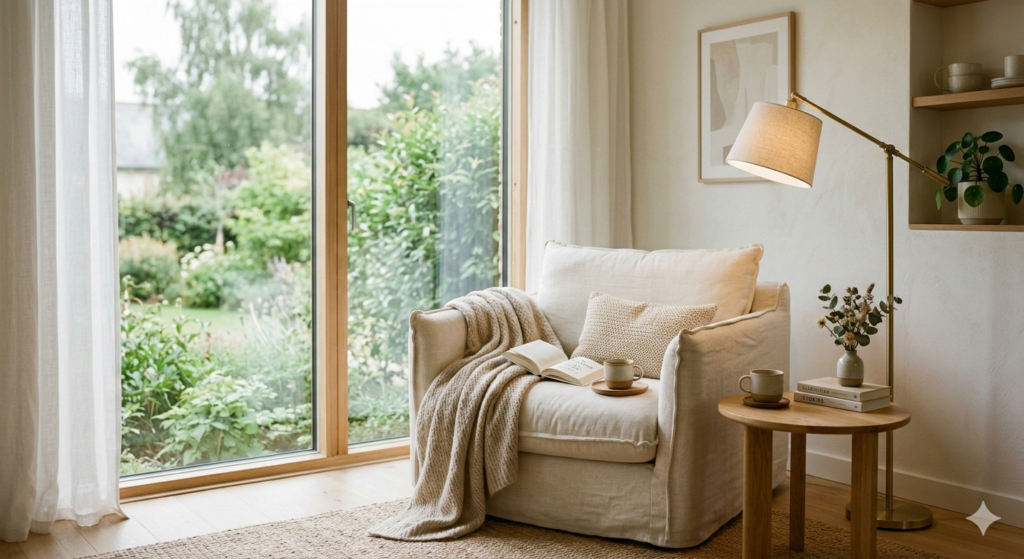
Even in a minimal living room, you can create a dedicated cozy nook—a small area designed specifically for comfort and retreat. This corner becomes your personal sanctuary within the larger space, somewhere to curl up with a book, enjoy morning coffee, or simply sit and think. The nook adds function and warmth without cluttering the entire room.
Start with a comfortable chair that invites lounging. An oversized armchair with deep cushions, a papasan chair with a plush cushion, or even a small loveseat if space allows. The chair should feel like a hug—supportive but soft, roomy but cozy. Choose upholstery in neutral tones that complement your overall palette, perhaps going slightly darker or adding subtle texture to differentiate the nook from the main seating area.
Add a small side table within easy reach for your coffee cup, book, or reading glasses. A simple wooden or metal table with clean lines works well. This table grounds the nook and makes it functional—you can actually use this space for reading or relaxing rather than just looking at it.
Layer in soft elements that enhance comfort. A chunky knit throw draped over the chair back. A sheepskin or faux fur throw over the seat for extra softness. Plush pillows in natural fabrics. These elements create that cozy feeling essential to a nook while maintaining minimal visual clutter through neutral colors and natural materials.
Lighting makes or breaks a reading nook. A floor lamp with an adjustable arm lets you direct light exactly where you need it. Choose a lamp with warm-toned light rather than harsh white. The lamp itself should have clean, simple lines that fit your minimal aesthetic—perhaps a modern arc lamp or a simple tripod design in natural wood or matte metal.
Position your nook near a window if possible, taking advantage of natural light during the day. Window views add another dimension to your retreat—watching clouds, trees moving in wind, or even urban streetscapes can be meditative. If privacy is a concern, sheer curtains provide screening while still allowing light and glimpses of the outside world.
Keep the immediate area around your nook clear and simple. Maybe a small plant on the side table or nearby floor. Perhaps a minimal wall shelf holding a few favorite books. Resist the urge to crowd the space—the nook should feel like a refuge from the rest of the room, not an extension of it. The simplicity enhances the sense of retreat and relaxation.
11) Scandinavian styled Living Room
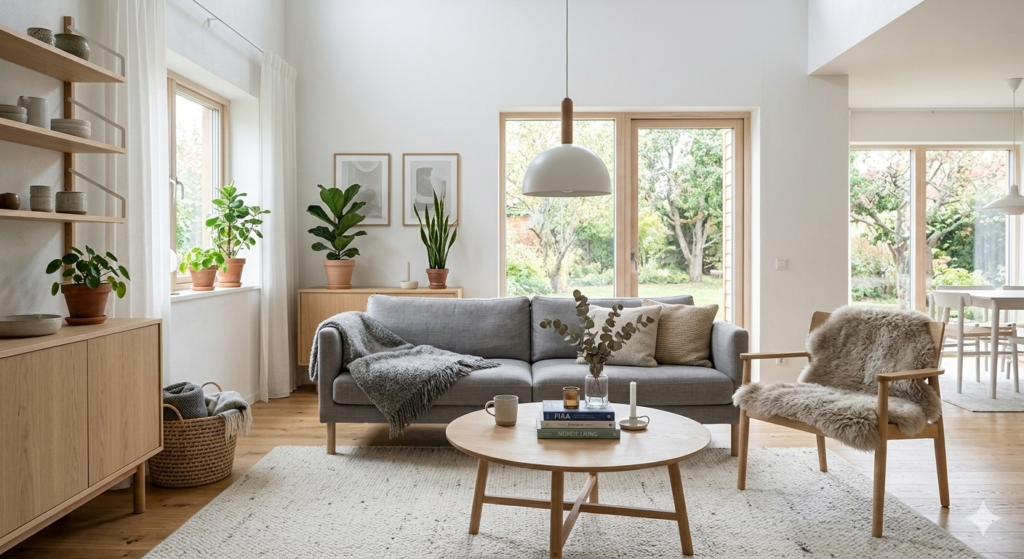
Scandinavian design principles align beautifully with soft minimalism, emphasizing simplicity, functionality, and connection to nature. A Scandinavian-inspired living room combines clean lines with warm materials, creating a space that feels both organized and welcoming. The aesthetic celebrates light, natural materials, and the beauty of well-made, functional objects.
Light wood tones form the foundation of this look. Pale oak, ash, or birch furniture brings warmth without visual weight. A simple wooden coffee table with tapered legs, a low media console in light wood, floating shelves in natural finish—these elements add essential warmth while maintaining clean, minimal lines. The grain and texture of the wood provide visual interest without need for decoration.
White or very light gray walls create the bright, airy feeling essential to Scandinavian spaces. This light backdrop maximizes reflection of precious natural light—especially important in northern climates but beneficial everywhere. The brightness creates a sense of space and cleanliness, a blank canvas for your simple furnishings and natural materials.
Textiles add coziness to balance the crisp whites and pale woods. Think wool blankets in natural sheep colors, linen pillows in soft grays, cotton throws in subtle stripes or simple patterns. Sheepskin rugs or cowhide add warmth and texture underfoot. A jute or wool rug grounds the seating area. These natural fiber textiles bring softness while maintaining the natural, understated aesthetic.
Functionality guides furniture choices. Every piece should serve a purpose—no purely decorative furniture taking up valuable space. A sofa for seating, a coffee table for drinks and books, storage that actually stores things. But functional doesn’t mean utilitarian or ugly. Scandinavian design proves that practical objects can be beautiful, with thoughtful proportions and quality materials elevating everyday items to art.
Bring nature inside through simple elements. A few branches in a tall vase, potted plants in simple ceramic containers, a wooden bowl filled with pine cones or stones. These organic touches connect the indoor space to the natural world outside. They’re simple enough not to clutter but meaningful enough to add life and interest.
Lighting in Scandinavian spaces layers multiple sources to combat long, dark winters. This same approach works beautifully in any climate, creating warm, flexible lighting. Pendant lights with simple, clean shades. Table lamps with wooden bases or ceramic bodies. Candles in simple holders add that signature hygge glow. The layered lighting creates depth and atmosphere as natural light fades.
11) The Art of Empty Space
One of the defining features of soft minimalism is the intentional use of negative space—the empty areas between and around objects. Far from being wasted space, negative space serves important functions in creating rooms that feel calm, spacious, and restful. Learning to appreciate and preserve negative space transforms how you approach furnishing and decorating your living room.
Negative space gives your eyes places to rest. In a world full of visual stimulation, having areas of emptiness in your home provides relief. Your brain doesn’t have to process and categorize every surface and object—it can simply be. This creates a subtle but powerful sense of peace that accumulates over time. You come home to your living room and immediately feel your shoulders drop and your breathing slow.
In practice, this means resisting the urge to fill every corner and cover every surface. Leave sections of wall bare instead of hanging art everywhere. Keep coffee table surfaces mostly clear rather than covered with books and objects. Allow space between furniture pieces rather than pushing everything together. Create breathing room on shelves rather than filling every inch. Each of these empty spaces contributes to the overall sense of calm.
Negative space also makes the objects you do display more impactful. A single beautiful vase on an otherwise empty shelf draws the eye and allows you to appreciate its form. A piece of art on a bare wall gets full attention rather than competing with neighboring pieces. The few items you choose to display become meaningful focal points rather than getting lost in clutter.
Consider the space between furniture pieces as carefully as the furniture itself. Walkways should feel open and easy to navigate. The area around your sofa should have breathing room. Don’t push furniture against every wall—floating pieces with space around them creates better flow and makes rooms feel larger. This thoughtful spacing makes the room feel designed and intentional rather than crammed and chaotic.
Floor space matters too. Large areas of visible floor—whether hardwood, tile, or covered by a simple rug—create visual rest. You see the floor’s material and appreciate its beauty rather than it being just a background for furniture. This is especially true with beautiful hardwood floors or interesting tile—let them show. Don’t cover them completely with furniture and rugs.
12) Natural Light as Primary Decor
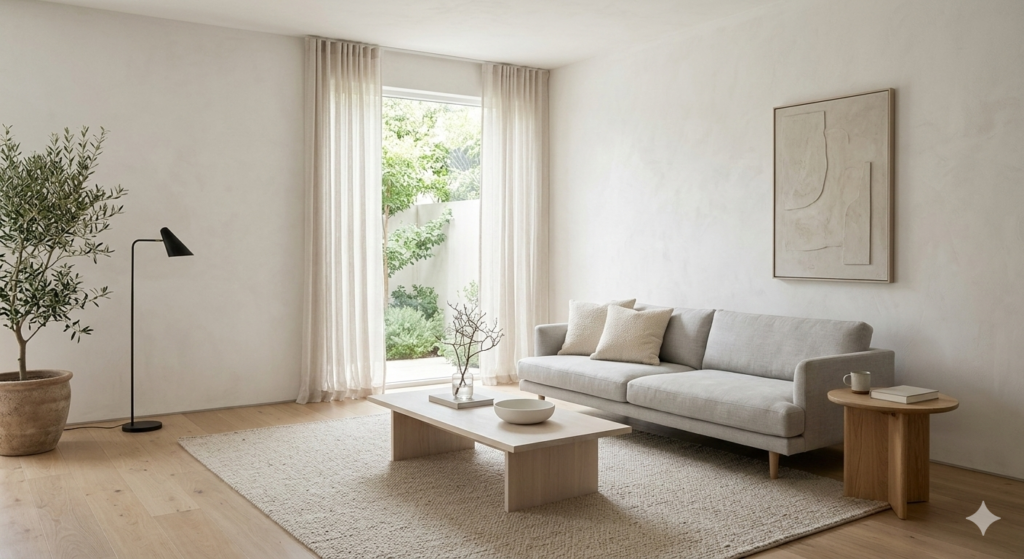
When you embrace soft minimalism, natural light becomes one of your most important design elements. Instead of filling your walls with art and your shelves with objects, you can let sunlight streaming through windows create the visual interest. This approach requires being thoughtful about window treatments, furniture placement, and reflective surfaces—all working together to maximize and celebrate natural light.
The first step is removing barriers to natural light. Heavy, dark curtains that block windows prevent light from entering and make rooms feel smaller and dimmer. Replace them with sheer fabrics that filter light softly, or eliminate curtains entirely if privacy allows. The difference is dramatic—suddenly your room feels twice as large and infinitely more peaceful. The quality of natural light, especially morning and evening sun, adds warmth that artificial lighting can’t replicate.
Window positioning and orientation affect how light moves through your space. East-facing windows fill rooms with gentle morning light perfect for starting the day. South-facing windows provide consistent, bright light throughout the day. West-facing windows create warm, golden afternoon and evening light. North-facing windows offer steady, indirect light without harsh glare. Understanding your windows’ orientations helps you arrange furniture to take advantage of the best light at different times.
Furniture placement should enhance rather than block natural light. Avoid placing tall furniture directly in front of windows. Position seating to face windows or at angles where occupants can enjoy the view and light. Keep the area immediately around windows relatively clear so light can penetrate deep into the room. If you need privacy screening, choose solutions that still allow light transmission—sheer curtains, frosted glass, or light-colored blinds that can be adjusted.
Reflective surfaces amplify whatever natural light you have. Mirrors positioned across from or adjacent to windows bounce light around the room, effectively doubling its impact. Light-colored walls reflect rather than absorb light, keeping rooms bright. Glass or lucite furniture allows light to pass through rather than creating dark shadows. Glossy or semi-gloss finishes on some surfaces add subtle light reflection without being overly shiny or distracting.
The changing quality of natural light throughout the day creates free, ever-changing decoration. Morning light has a cool, fresh quality that energizes. Midday light is bright and clear. Afternoon light warms and softens. Evening light glows golden. The same room looks and feels different at each time of day, providing variety without you having to change anything. Seasonal changes add another layer—low winter sun creates different patterns than high summer sun.
13) The Capsule Furniture Collection
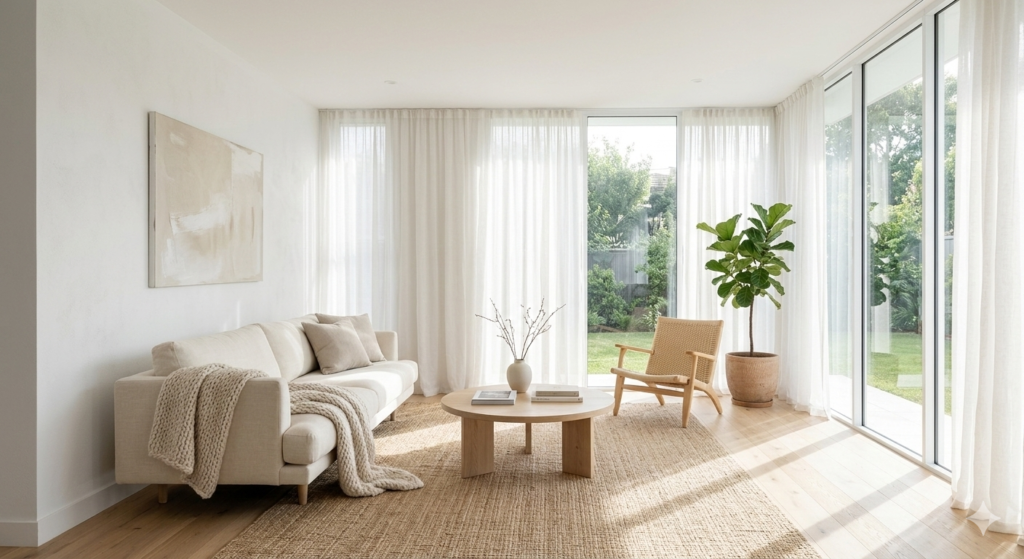
Just as capsule wardrobes focus on fewer, higher-quality pieces that work well together, a capsule furniture approach applies the same principle to your living room. Instead of accumulating furniture over time without an overall plan, you carefully select a small collection of pieces that coordinate beautifully and serve all your needs. This creates a cohesive, intentional space that feels curated and calm.
Start by identifying what you actually need. Most living rooms function well with a sofa or sectional, a coffee table, perhaps one or two accent chairs, a media console or storage piece, and side tables or surfaces for lamps and drinks. That’s it. Eight pieces or fewer can fully furnish a living room. When each piece is chosen carefully for quality and style, you don’t need more. The restraint creates breathing room and allows each piece to shine.
Choose furniture in a consistent style and color palette. Everything doesn’t have to match exactly—that would look like a furniture showroom—but pieces should feel like they belong together. Maybe everything features light wood tones and clean lines. Or perhaps curved silhouettes and neutral upholstery unite the collection. This consistency creates visual harmony that makes rooms feel peaceful and well-designed.
Invest in quality over quantity. Fewer pieces of well-made furniture will serve you better and last longer than many cheap pieces. Good construction, quality materials, and classic design mean your furniture remains beautiful and functional for years. You’re not constantly replacing worn-out pieces or feeling dissatisfied with how things look. The initial investment pays off in lasting satisfaction and reduced waste.
Each piece should be versatile and timeless rather than trendy. A simple sofa in neutral upholstery works with any decor evolution. A wooden coffee table with clean lines never goes out of style. Accent chairs in classic shapes remain relevant year after year. Avoiding trendy pieces means you’re not constantly updating to keep up with changing fashions. Your room maintains its appeal regardless of what’s currently popular.
The beauty of a capsule furniture collection is how it simplifies decision-making. You’re not constantly wondering if you should add another chair or table. You know what you have serves your needs. When something wears out, you replace it with equal or better quality in the same style. The consistency and restraint create a room that feels complete and satisfying rather than constantly in progress.
Building Your Soft Minimalist Living Room
Soft minimalism offers a refreshing approach to creating living spaces that feel both calm and welcoming. Unlike traditional minimalism, which can sometimes feel austere or cold, soft minimalism embraces warmth through texture, natural materials, and thoughtful color choices. It proves that you can have a clutter-free, peaceful space without sacrificing comfort or personality.
The key to successful soft minimalism lies in the details—choosing warm neutrals over cool ones, layering different textures in similar tones, incorporating natural materials like wood and linen, and being thoughtful about what you bring into your space. Each element should earn its place either through function, beauty, or the joy it brings you. This intentional approach to design creates rooms that feel curated and calm rather than empty or sterile.
Whether you’re drawn to the all-white serenity of a natural fiber retreat, the sophisticated depth of a monochrome textured space, or the warm simplicity of Scandinavian-inspired design, soft minimalism gives you a framework for creating a living room that truly feels like a sanctuary. The beauty of this approach is its flexibility—you can adapt these ideas to your personal style, your existing space, and your practical needs.
Start small if the idea of a full room transformation feels overwhelming. Add a chunky knit throw in a neutral tone. Swap colorful pillows for ones in natural linen. Bring in a plant or two. Gradually edit out items that create visual noise. Over time, you’ll develop an eye for what works in your soft minimalist space and what doesn’t. The process itself can be meditative and rewarding.
Your living room should be a place where you want to spend time, where you can relax and recharge. Soft minimalism creates exactly this kind of space—one that’s peaceful without being boring, simple without being stark, and minimal without sacrificing warmth. It’s an approach to design that honors both your need for calm and your desire for comfort, creating a home that truly nourishes your well-being.