
Let’s get one thing straight: you don’t need a five-star budget to sleep like you’re staying in one. Every time you check into a nice hotel and sink into that perfectly made bed, you think the same thing — why doesn’t my bed feel like this? Well, it’s not magic. It’s not even expensive thread count (well, mostly). It’s a very specific set of tricks that hotel housekeeping teams follow every single day, and once you learn them, your bedroom will never look the same again. The good news is that most of these tricks are free. The slightly less good news is that you’ll have to make your bed every morning. But honestly, after reading this, you’ll actually want to.
This is a full step-by-step guide on how to style a bed like a luxury hotel. We’re covering everything — the right mattress setup, the bedding layers, the pillow arrangement, the finishing touches, and even the little details that most people never think about. By the end of this post, you’ll have a bed that looks like it belongs in a boutique hotel in Paris or a resort in the Maldives, and you’ll have done it using things you can find on your regular shopping runs or already have sitting in a closet somewhere.
Step 1: Start With the Right important piece — The Mattress and Mattress Topper
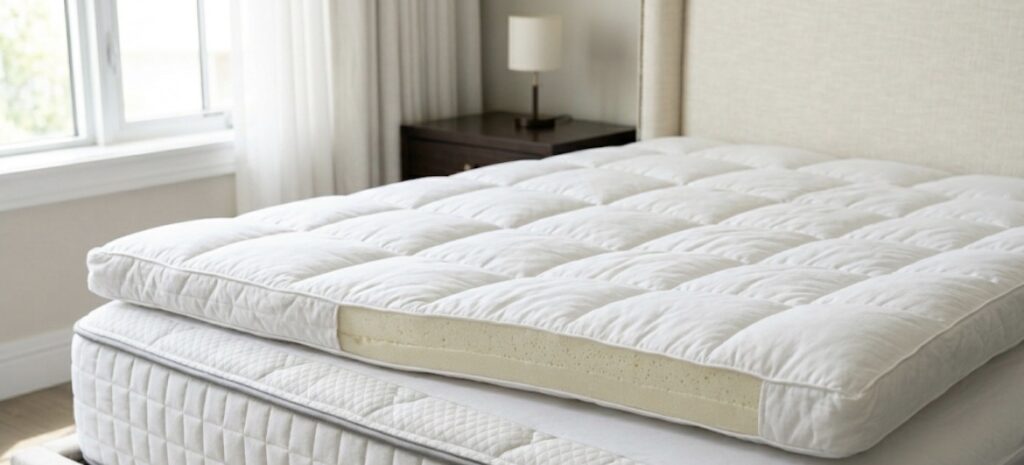
Everything in a luxury hotel bed starts from the bottom and works its way up. The reason hotel beds feel like sleeping on a cloud is not just the sheets — it’s the foundation underneath those sheets. Hotels invest heavily in quality mattresses, but more importantly, they add a mattress topper that gives the bed that signature plush, sink-in feeling that makes you never want to leave.
If your current mattress is fine but just feels a little flat or firm, a good mattress topper is the single most impactful purchase you can make for your bedroom. A two to three inch thick memory foam or down-alternative topper adds that hotel-like softness that transforms a regular mattress into something guests will comment on. You don’t need the most expensive option on the shelf — mid-range mattress toppers in the $60 to $150 range do an excellent job. What you’re looking for is density and loft, meaning the topper should feel thick and fluffy, not thin and flimsy.
Once your topper is on, make sure it is secured with a mattress topper strap or a deep-pocket fitted sheet that goes over both the mattress and topper together. Nothing ruins the luxury hotel look faster than a lumpy topper sliding around under your sheets. Hotels use fitted sheets with elastic around the full perimeter (not just the corners) to keep everything locked in place. These are sometimes called deep-pocket or wrap-around fitted sheets, and they are worth every penny.
The mattress itself should sit on a solid base that doesn’t creak or shift. Platform beds or beds with slatted bases work beautifully for the hotel aesthetic. If your bed frame is wobbly or noisy, take ten minutes to tighten the bolts and add felt pads under the legs. A bed that sounds like a ship in a storm is not luxurious, no matter how beautiful the sheets are.
Before you even think about pillows and duvets, take a moment to straighten and smooth the topper so it lies perfectly flat and even on all sides. Run your hands across the surface to remove any lumps. This small habit changes everything about how the final bed looks.
Step 2: The Fitted Sheet
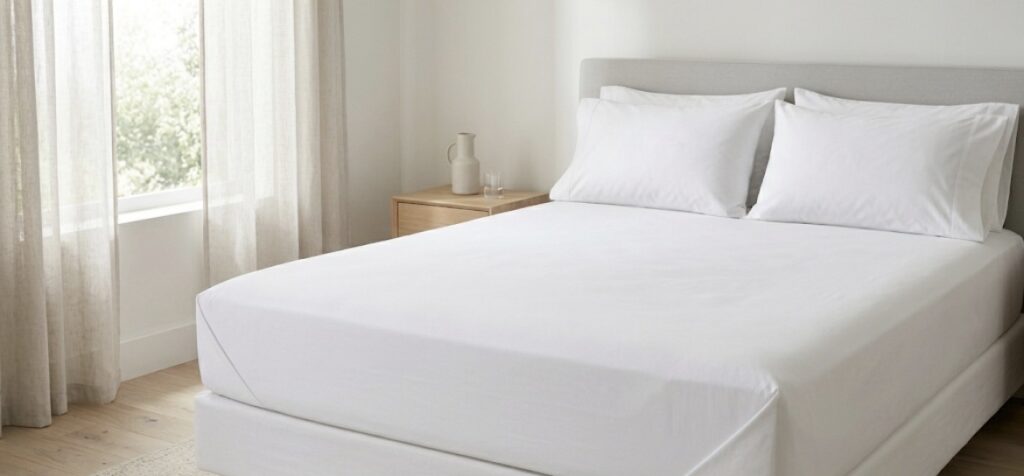
Here is a truth that most home decorators skip right over: the fitted sheet is the most important layer in making a bed look like a hotel bed, and it is also the most ignored. People will spend $200 on a duvet and then throw a wrinkled, baggy fitted sheet on the mattress and wonder why the bed still looks messy. The fitted sheet is your canvas. If the canvas is uneven, nothing painted on top of it will look right.
When choosing a fitted sheet, look for one that is at least 400 thread count in a sateen or percale weave. Sateen feels silky and drapes beautifully, which gives a more glamorous hotel look. Percale is crisp and cool, which gives a cleaner, sharper look — think classic five-star business hotel. Both are correct choices. The color should be white or a very light cream for the full luxury hotel effect, because white reflects light and makes the bed look brighter and more expensive than it actually is. Hotels know this. White sheets photograph better, look cleaner, and signal quality even when they aren’t the fanciest option in the store.
When you put the fitted sheet on, pull it so tight that you could bounce a coin off it. This is not a joke — hotels literally test their sheets this way. The surface should be completely smooth, with zero wrinkles, zero bunching, and zero saggy spots. If your fitted sheet keeps popping off at the corners, it either doesn’t fit your mattress depth properly or it needs sheet straps (small elastic clips that connect opposite corners under the mattress). Sheet straps cost almost nothing and solve the problem instantly.
After the fitted sheet is on and tightened, run a flat hand across every inch of the surface. Press down gently and smooth outward toward the edges. Do this three or four times. It takes about ninety seconds and it makes a visible difference in the final result. This is also the moment to make sure the sheet is centered on the mattress, with equal amounts hanging down on all four sides.
Step 3: The Flat Sheet
In many homes, the flat sheet has been replaced entirely by just a duvet cover. This is the biggest mistake you can make if you want the luxury hotel look. Hotels use a flat sheet between the guest’s body and the duvet, and it is one of the key reasons hotel beds feel so polished and intentional. The flat sheet adds a layer of crispness, a folded-back cuff at the top, and the legendary hospital corner at the foot that makes the whole bed look professionally dressed.
Start by laying the flat sheet over the fitted sheet with equal amounts hanging over both sides of the bed. The flat sheet goes with the decorative or right side facing down at this stage, because you’ll fold it back later. Smooth it completely flat from the center outward, making sure there are no wrinkles.
Now for hospital corners — this is the move that separates hotel beds from regular home beds. To make a hospital corner at the foot of the bed, tuck the bottom of the sheet under the mattress straight across. Then pick up the side of the sheet at a 45-degree angle to create a triangle-shaped flap. Hold that flap up, tuck the hanging part straight under the mattress, then fold the flap down over the edge and tuck it under too. The result is a perfectly mitered corner that is tight, clean, and flat. It looks impossibly neat, and once you’ve done it twice, it takes about fifteen seconds per corner.
Once the bottom is tucked with hospital corners, pull the flat sheet up toward the headboard with a little extra length. That extra length is what you’ll fold back over the top of the duvet later to create the signature hotel turndown look. For now, lightly tuck the sides of the flat sheet under the mattress along the length of the bed — not so tight that you can’t get in, but tight enough to keep things smooth and structured.
Step 4: The Duvet
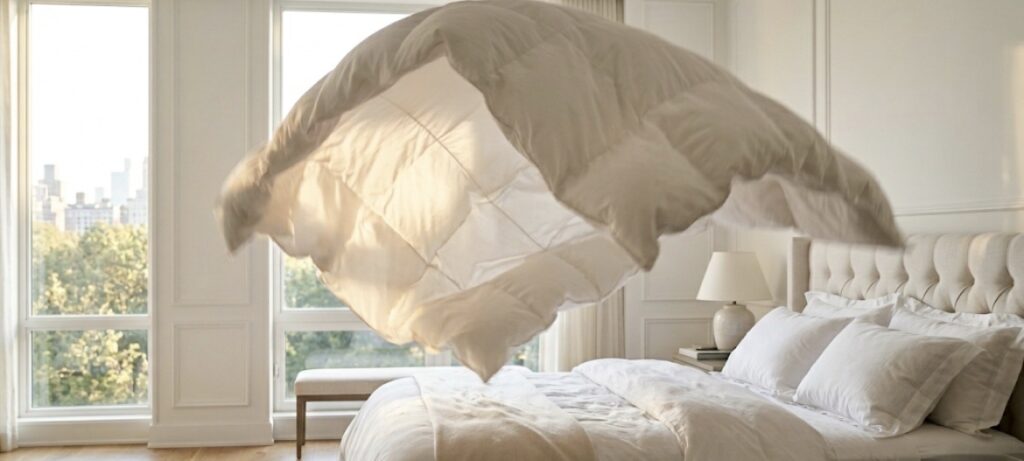
It is what draws the eye when you walk into a room and sees a well-made hotel bed. A great duvet should look full, even, and impossibly fluffy — like someone spent twenty minutes making it look effortless. And actually, someone did. Here’s how they do it.
First, the duvet itself. Hotels use either genuine goose or duck down duvets or high-quality down-alternative fills. Down duvets are lighter, fluffier, and more breathable, while down-alternative duvets are better for people with allergies and are easier to wash at home. For the hotel look, you want a duvet with a high fill power — for down, look for 600 fill power or higher. For down-alternative, look for one that is described as “ultra-plush” or “hotel weight.” The duvet should feel substantial but not heavy. When you shake it out, it should puff up and spring back. If it lies flat and sad, it’s not going to give you the look you want.
The duvet cover should match or complement your flat sheet. White is again the classic hotel choice, and for good reason. An all-white bed looks editorial, clean, and expensive. If white feels too clinical for you, soft ivory, warm cream, or the palest possible grey are all appropriate choices. What you want to avoid for the hotel look are busy patterns, bold colors, and novelty prints. A subtle texture — like a waffle weave, a delicate jacquard, or an embroidered edge — adds interest without ruining the serene, spa-like quality of the overall look.
When you put the duvet into the cover, use the burrito method. Lay the duvet cover inside out on the bed. Place the duvet on top, aligning all four corners. Roll both layers together from one end to the other like a burrito. Reach inside the open end of the cover and grab the rolled corners, then pull the cover right-side-out over the roll. Unroll, shake, and you have a perfectly even duvet with the insert centered in the cover. No more fighting with a twisted, lumped-up duvet insert. Hotels do this every single day because it works every time.
Once the duvet is on the bed, fluff it by grabbing opposite corners and shaking vigorously. Then lay it flat and smooth it with your hands from the center outward. The top of the duvet should sit about halfway up the pillow stack — not over the pillows, but at the base of them. Tuck the sides and foot of the duvet under the mattress slightly for a clean line, or leave them flowing freely for a softer, more relaxed hotel look. Both are correct — it just depends on the style of hotel you’re going for.
Step 5: The Pillow Arrangement
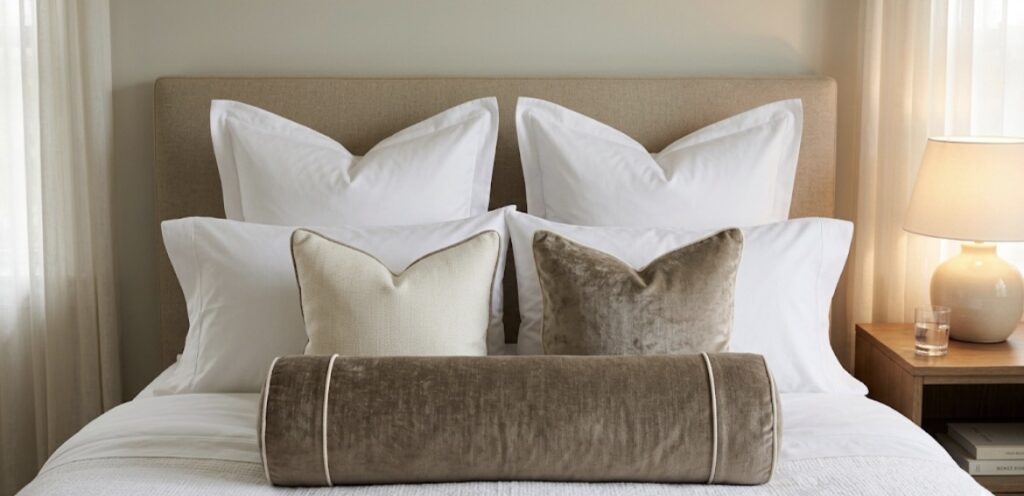
This is the section that turns people into absolute believers. The pillow arrangement is what makes a hotel bed look like a hotel bed and not just a neatly made one. And the formula is actually not complicated at all. Hotels use a layered system that builds depth from back to front, with different pillow sizes creating a graduated, stacked effect that draws the eye and makes the bed look full and luxurious.
Here is the classic hotel pillow formula, starting from the back of the bed and working toward the front.
The first row, sitting directly against the headboard, consists of two to three large Euro shams. Euro shams are square pillows, typically 26 by 26 inches, and they stand upright against the headboard. They are usually covered in shams that match the duvet cover — white or coordinated solid fabric. These big square pillows create a backdrop for everything in front of them and make the headboard look intentional rather than just structural. Stand them upright and fluff them so they’re full and even. If they keep falling over, a quick trick is to lean them forward slightly so they rest at a gentle angle against the headboard. Hotels do this constantly.
In front of the Euro shams, place your sleeping pillows — the standard or king-size pillows you actually use at night. These go in crisp, matching pillowcases. White, crisp, and smooth. Two for a twin or full, two for a queen, two to three for a king. These pillows should be fully stuffed and fluffed. If your sleeping pillows are flat and deflated, replace them or add an insert. A lumpy, flat pillow in a nice pillowcase is like wearing a designer bag that’s been run over by a car. No one is fooled.
In front of the sleeping pillows, add one or two smaller accent pillows. These can have a little more personality — a subtle texture, a monogram, a delicate border detail. This is where you can introduce a second color or a fabric like velvet, linen, or boucle if you want to step away slightly from the all-white hotel look. Keep the accent pillows proportional — they should be smaller than your sleeping pillows but substantial enough to be noticed.
Finally, at the very front of the arrangement, an optional bolster pillow or single lumbar pillow completes the look. This is purely decorative and is the element that screams “I have thought about this.” A bolster pillow is cylindrical and sits horizontally across the front. A lumbar pillow is a small rectangular pillow, often with piping or tassels, that adds the finishing flourish. Either one works. Neither one is mandatory. But both are very, very hotel.
Step 6: The Turndown Fold
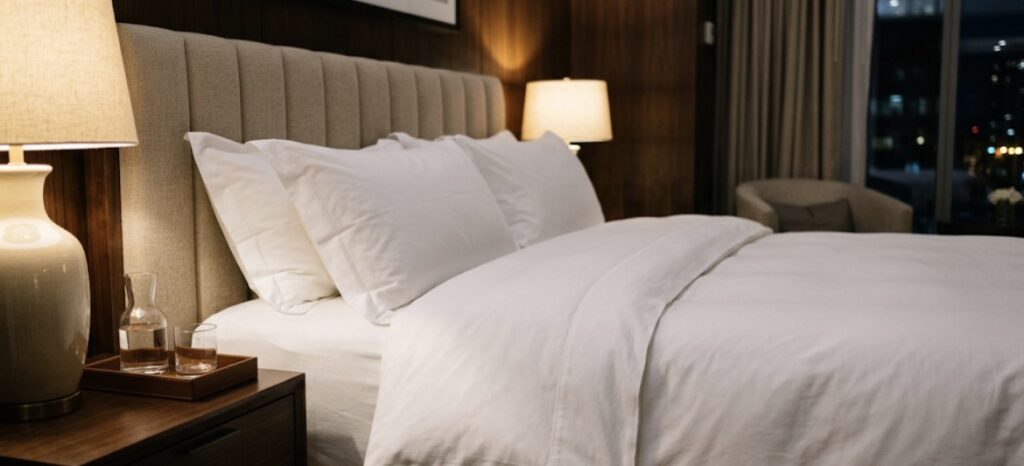
If you’ve ever wondered what makes a hotel bed look like it was made by someone who went to school specifically for this purpose, the answer is the turndown fold. It’s the neat, crisp fold of the flat sheet and duvet at the top of the bed that creates a finished, tailored cuff right below the pillow line. It is the single most recognizable visual element of a luxury hotel bed, and it takes literally thirty seconds to do.
Here’s how it works. Once the duvet is on the bed and the pillows are arranged, grab the top edge of both the flat sheet and the duvet together. Fold them back toward the foot of the bed by about six to eight inches. Smooth the fold so it lies completely flat and straight across the bed from one side to the other. The result is a clean horizontal line that exposes the top of the fitted sheet slightly and creates a layered visual that looks intentional and structured.
Some hotels fold just the top sheet over the duvet, leaving the duvet underneath. Others fold both together. Either approach works. What matters is the neatness of the fold — it should be ruler-straight across the full width of the bed, with no uneven edges, no bunching, and no visible wrinkles in the fold itself. If the edge of your duvet cover has a decorative border, fold to just below that border so it shows.
This fold also serves a practical purpose: it makes it easier to slide into bed at night without having to wrestle with the bedding. Hotel housekeepers fold this way for a reason. It’s welcoming, it’s beautiful, and it signals that someone put thought into the bed for you specifically. Recreate it in your own bedroom and your guests will notice immediately, even if they can’t explain exactly why the bed looks so good.
Step 7: Throws, Blankets, and the Foot-of-Bed Fold
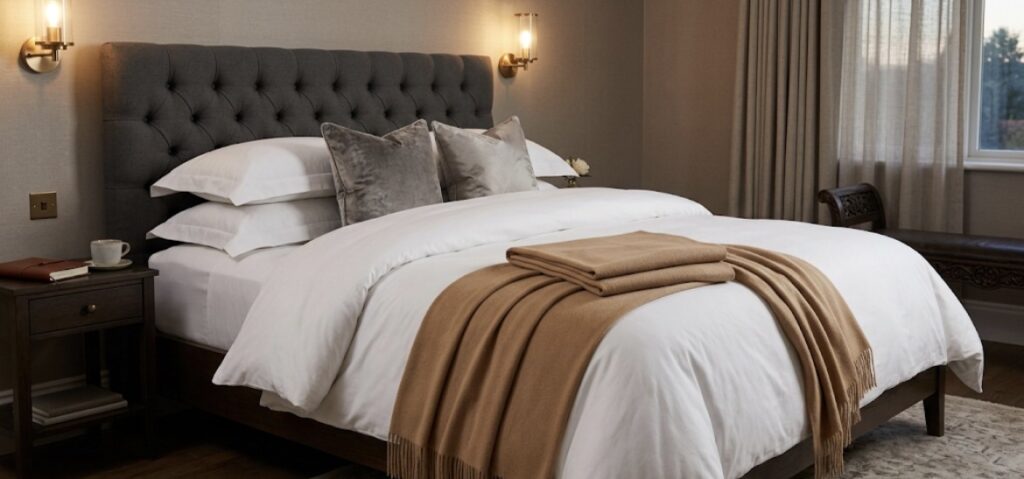
A throw blanket at the foot of the bed is one of the most underused styling tools in residential bedrooms, yet it appears on virtually every well-styled hotel bed you’ve ever seen. It adds a layer of visual texture, it introduces a second color or material into the all-white palette, and it makes the bed look like it has been thoughtfully dressed rather than just hastily made. Also, practically speaking, it’s there in case you get cold at night without wanting to mess up the whole duvet arrangement. Hotels know that function and style don’t have to compete.
For the hotel look, choose a throw that is made from cashmere, merino wool, waffle cotton, or a high-quality faux version of any of the above. The texture should be visible and interesting — chunky knit, herringbone, waffle, or brushed cotton all work beautifully. The color should complement your bedding without matching it perfectly. If your bed is all white, a soft camel, warm taupe, charcoal grey, dusty sage, or muted navy throw adds depth without overpowering the clean aesthetic. A throw that is exactly the same color as everything else disappears. A throw that clashes looks like a mistake. The sweet spot is in between.
To place the throw in the hotel style, fold it lengthwise into thirds so you have a long, neat rectangle. Then fold it one more time so it becomes a shorter, wider rectangle. Lay this folded throw across the foot of the bed, centered between the two sides, with about a third of the bed covered. The fold should be facing toward the foot of the bed so the smooth, folded edge is what you see. Some stylists prefer a looser, slightly casual drape — pick up one corner of the throw and let it fall slightly off the foot of the bed for a more relaxed but still refined look.
The key is intentionality. Whether you fold it perfectly or drape it casually, it should look like you meant for it to be there and thought about where to put it. A throw tossed on the bed haphazardly looks like you forgot to put it away. A throw placed with intention looks like a design choice.
Step 8: Bedside Table Styling
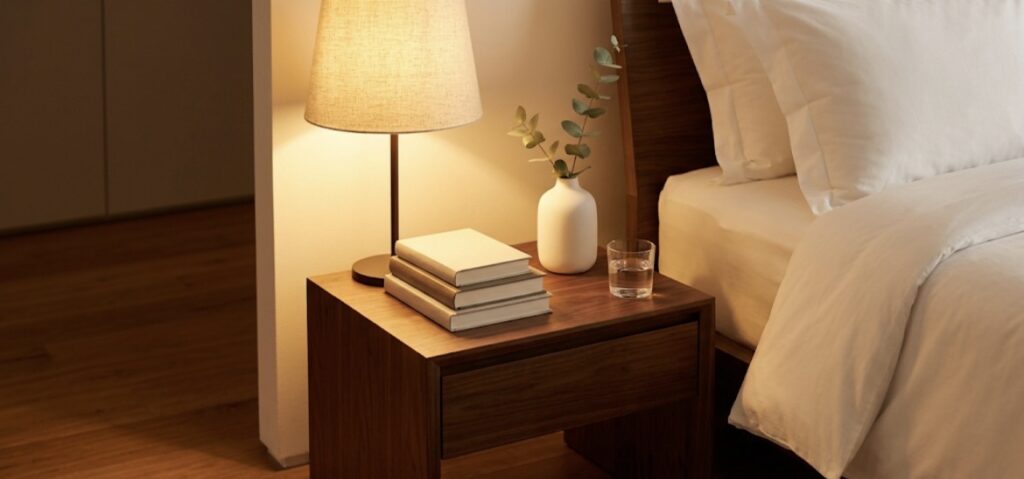
Styling a bed like a luxury hotel is not just about the bed itself — it’s about the entire scene that surrounds it. And nothing contributes more to that scene than the bedside tables. Hotels pay close attention to bedside styling because these are the surfaces closest to the guest. They should feel functional, beautiful, and completely organized. There should be nothing messy, nothing unnecessary, and nothing that looks like it was left there by accident.
The foundation of a great bedside setup is the lamp. A proper bedside lamp with a fabric or linen shade provides warm, soft, ambient light that is completely different from an overhead light. The glow of a bedside lamp at night is what creates that cozy, enveloping hotel room atmosphere. The lamp should be tall enough that its center sits at eye level when you are lying down — roughly 20 to 24 inches from the tabletop to the center of the lampshade. If the lamp is too short, you get harsh downward light. If it’s too tall, you get glare. Get the height right and the whole room changes.
On the surface of the nightstand, keep things minimal and curated. A small stack of two or three books with the spines facing away is a classic hotel move that looks neat and intentional. A small ceramic or glass vase with a single flower or greenery stem adds life and softness. A small tray to corral items like a phone charger, earbuds, or hand cream keeps the surface looking organized instead of cluttered. A glass or carafe of water is both practical and elegant.
What you should remove from the bedside table for the hotel look: medication bottles, receipts, tangled charging cables lying loose, empty mugs, hair ties, or anything that feels personal in a messy way. Hotels keep bedside tables curated because clutter is visually chaotic, and visual chaos is the opposite of luxury. A cable management clip stuck to the back of your nightstand keeps cords hidden. A small tray keeps small items from scattering. Two to three intentional objects are enough. More than five and it starts to look crowded.
If you have two bedside tables, style them symmetrically. Matching lamps, matching trays, roughly matching arrangements. Symmetry is the visual language of order and intentionality, and hotels use it constantly. Even if the items on each side aren’t identical — one vase, one small plant — the balance should be approximately equal in height and volume.
Step 9: Lighting
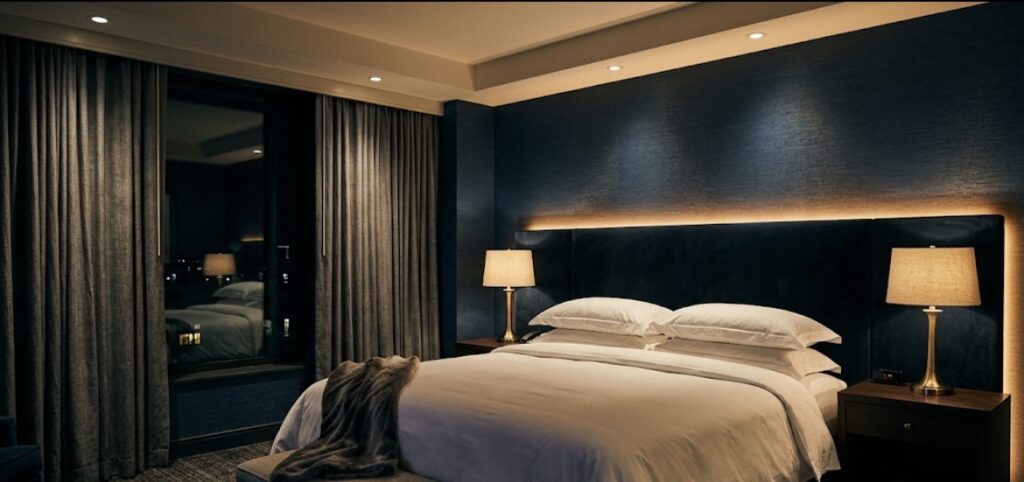
No amount of beautiful bedding will make your bedroom look like a luxury hotel room if the lighting is harsh, cold, or coming from the wrong direction. Lighting is the element that most people get completely wrong in bedrooms, and hotels get almost universally right. The difference is so significant that the exact same bed can look either spectacular or ordinary depending solely on the light in the room. This is not an exaggeration.
The rule in luxury hotel rooms is layered lighting with no overhead fluorescent or cold white light. That means a combination of ambient light, task light, and accent light working together to create a warm, enveloping atmosphere. Your ceiling light — if you need to use it at all in the evening — should be on a dimmer and should use warm white bulbs, not cool white or daylight bulbs. The color temperature you want is between 2700K and 3000K. This is the golden, incandescent-quality light that makes everything look expensive. Cool white bulbs at 4000K or above make rooms look like dental offices and should be removed immediately.
Bedside lamps are non-negotiable, as discussed above. But beyond lamps, think about where else you can add warm, soft light. Battery-operated candles or LED candles on a dresser or shelf add flickering warmth that is almost identical to real candlelight without any fire risk. A small accent light pointing up at the headboard wall creates a soft halo that makes the headboard look architectural and beautiful. Under-bed LED lighting (warm white only) creates a floating effect that makes the entire bed look like it’s hovering — this is a common trick in high-end hotel design and it absolutely translates to residential bedrooms.
Curtains or drapes also play a role in the lighting atmosphere. Sheer white or ivory curtains diffuse natural daylight beautifully, creating that soft, luminous morning hotel room quality. Heavyweight blackout curtains behind the sheers give you sleep control without sacrificing aesthetics. The combination of sheers plus blackout drapes is the standard hotel window treatment and it works extraordinarily well in bedrooms.
Step 10: The Headboard
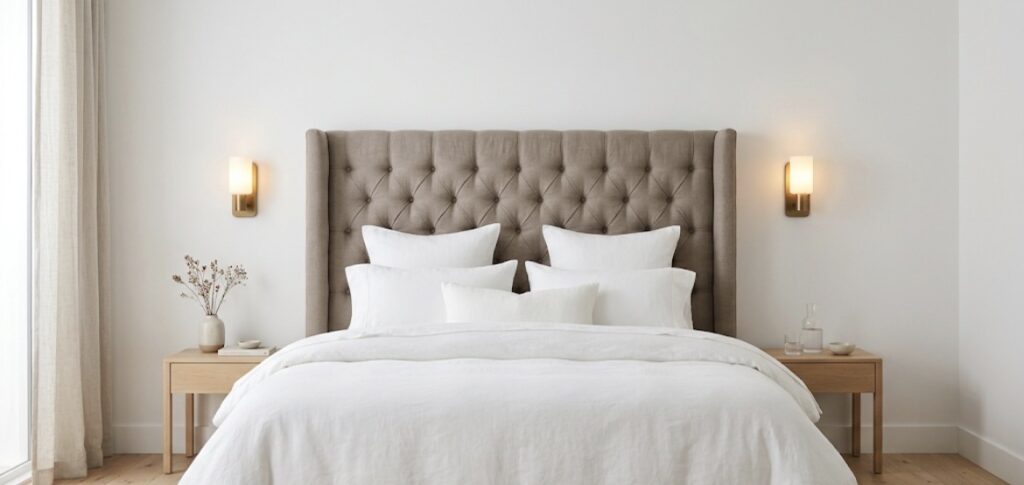
The headboard is the visual anchor of the entire bedroom. In a luxury hotel room, the headboard is almost always tall, upholstered, and substantial — it fills the wall behind the bed and creates a sense of drama and depth that a bare wall simply cannot provide. If your bedroom currently has no headboard or a headboard that’s too small for the wall, this is the change that will make the biggest visual difference in the overall room.
For the hotel aesthetic, an upholstered headboard in a neutral fabric is the gold standard. Linen, velvet, boucle, and performance fabric in colors like warm white, ivory, taupe, soft grey, and sand are all perfect choices. The headboard should be full-width — meaning it extends to at least the width of the mattress on both sides — and it should be tall enough to sit above the pillows when you’re looking at the bed straight on. A headboard that disappears behind the pillow stack is too short. Aim for at least 24 to 36 inches above the mattress surface for a full, grand look.
Tufting — those button-pulled dimples in the fabric — is common in hotel headboards and adds texture and elegance. But a smooth, flat upholstered panel is equally beautiful and actually more contemporary in aesthetic. Nailhead trim along the edges of the headboard adds a finished, tailored quality that is very hotel without being fussy.
If a full upholstered headboard is not in the budget right now, there are excellent alternatives. A piece of fabric mounted on a frame, a large mirror hung above the bed, floating wall shelves at headboard height, or even a large framed piece of art centered above the bed all create visual structure behind the bed that serves the same purpose. The goal is to make sure there is something intentional and beautiful on that wall — not blank white space and not a faded watercolor from 2009.
Step 11: Scent, Sound, and the Sensory Details Hotels Never Ignore
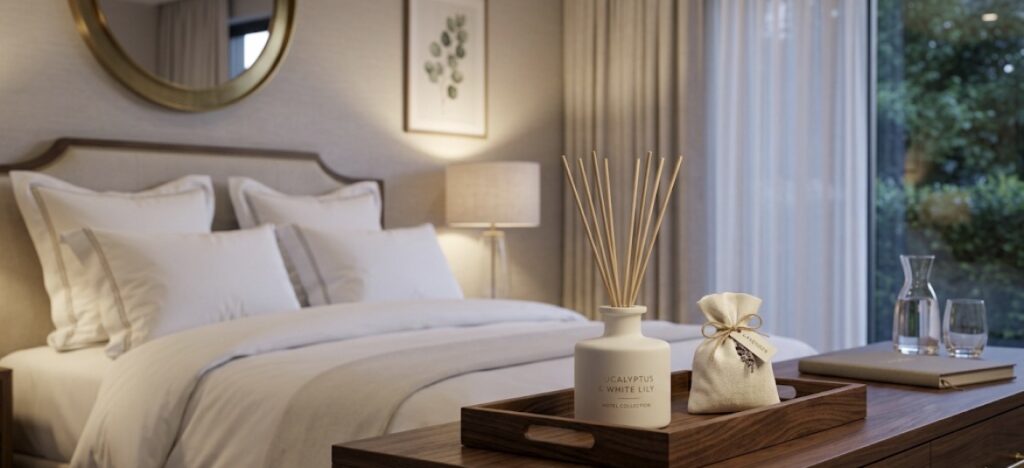
Here is something that most styling guides leave out entirely: luxury hotels don’t just look beautiful. They smell beautiful. They sound beautiful. The sensory experience of walking into a well-designed hotel room is multi-layered, and the visual styling of the bed is only one part of it. If you want your bedroom to genuinely feel like a luxury hotel — not just look like one in photographs — you need to address scent, temperature, and sound too.
Scent is the most powerful and most underused design element in residential bedrooms. Hotels often have signature scents that are diffused throughout the property, and these scents are carefully chosen to communicate luxury, cleanliness, and relaxation. In your own bedroom, a high-quality reed diffuser, a luxury candle, or an ultrasonic diffuser with essential oils can transform the sensory atmosphere completely. Scents that work beautifully in bedrooms include eucalyptus and white tea (clean and fresh), lavender and vetiver (deeply relaxing), sandalwood and amber (warm and rich), and jasmine and rose (soft and romantic). Choose one dominant scent and don’t overcrowd the space with multiple competing fragrances. One beautiful, subtle scent is all you need.
Temperature is something hotels control meticulously. A bedroom that is too warm or too cold disrupts sleep and comfort, and no amount of beautiful bedding compensates for a room that is the wrong temperature. The ideal sleep temperature for most people is between 65 and 68 degrees Fahrenheit. If your room tends to run warm, keep a lighter-weight blanket as an alternative to the heavy duvet. If it runs cold, a heated mattress pad set to low creates that warmed-bed feeling that is honestly one of the most luxurious sensory experiences a bedroom can offer.
Sound is often overlooked entirely. Hotels in urban settings typically have excellent sound insulation, and many high-end properties play very soft ambient music in corridors or lobbies that creates a sense of calm. In your bedroom, heavy curtains help absorb sound. A white noise machine or a smart speaker playing soft ambient music at low volume adds an auditory softness to the room that supports the visual aesthetic beautifully. The goal is an absence of jarring, harsh sounds and the presence of very gentle, calming ones.
Step 12: Keeping It Hotel-level Every Morning
Here is the part where we have to talk about maintenance, because a beautifully styled bed that gets made once and then ignored for a week is not a luxury hotel bed — it’s a hotel bed that has been slept in by eight guests without housekeeping service. The magic of the hotel bed look is that it appears freshly made every single day, and achieving that in your own home requires a morning routine that takes less time than brewing your coffee.
Hotels have an advantage you don’t: a full housekeeping team that makes the bed while you’re at breakfast. You don’t have that team. What you do have, however, is a simpler job — because it’s only your bed and you already know exactly how everything goes. The full hotel-style bed makeup should take between five and ten minutes once you have done it a few times and know the system. The fitted sheet is already on and doesn’t need to be removed every morning. The flat sheet and duvet just need to be straightened. The pillows need to be fluffed and stacked. The throw needs to be refolded. That’s genuinely it.
The single habit that makes the biggest difference in maintaining the hotel bed look is fluffing the pillows every single morning without exception. Pillows compress overnight and look flat, lumpy, and sad if not fluffed. To properly fluff a pillow, hold it by two corners and fold it in half repeatedly, then shake it vigorously. It should spring back and look full. Do this for every pillow on the bed before you place them. It takes ten seconds per pillow. Your bed will look completely different.
Washing your bedding on a regular schedule keeps the hotel-quality freshness alive. Wash sheets every one to two weeks in hot water with a small amount of white vinegar in the rinse cycle — this removes detergent buildup and leaves sheets soft, bright, and fresh without fabric softener, which can make sheets feel stiff over time. Duvets and duvet covers should be washed every two to four weeks. Pillow inserts should be washed every three months and replaced annually or whenever they go flat and don’t spring back.
Ironing or steaming your flat sheet and pillowcases is the step that takes your bed from “nicely made” to “actually hotel-quality.” Hotels press their linens before putting them on beds. You don’t have to iron every single day — do it after washing, before putting the sheets back on the bed, and they will stay crease-free for the week. A handheld steamer makes this incredibly fast and doesn’t require an ironing board. Run it quickly over the flat sheet as it lies on the bed after making it for a crisp, just-pressed finish that is unmistakably hotel.
A Note on Color Palettes and Personal Style
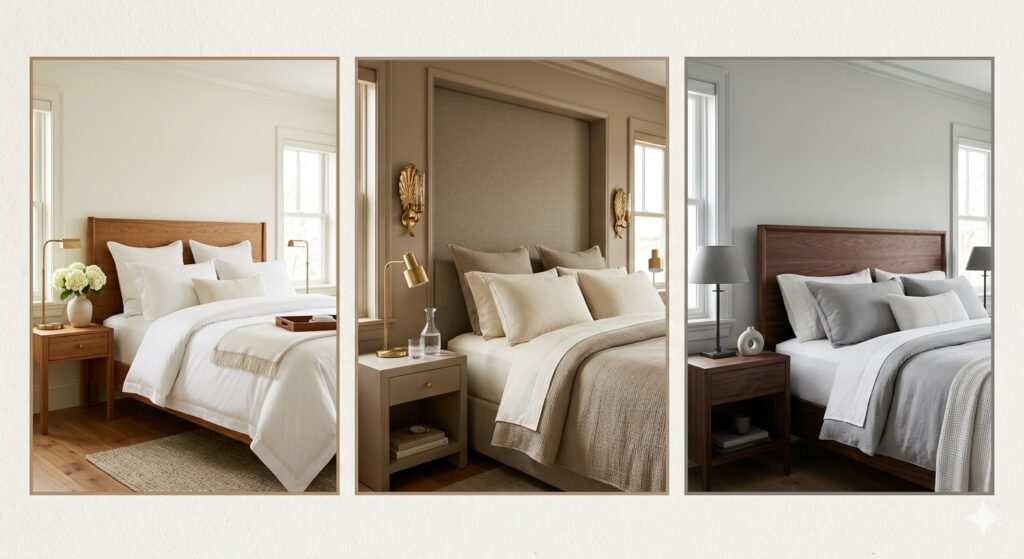
The classic luxury hotel palette is white and cream with warm wood or brass accents, and it works because it is simple, clean, and universally appealing. But luxury is not one-color-fits-all, and there are several other color directions that work beautifully for the hotel bedroom look.
The warm neutral palette takes the classic white bed and adds warmth through the surrounding room rather than the bedding itself. Think sandy beige walls, linen drapes in warm ivory, wooden furniture in a honey or walnut finish, and brass or gold light fixtures. The bed stays crisp and white while everything around it is wrapped in warmth. This is the palette of boutique hotels in the Mediterranean and Napa Valley wine country properties, and it feels incredibly welcoming and adult.
The moody dark palette is the approach of boutique hotels that want to feel intimate and atmospheric rather than bright and airy. Deep charcoal walls, slate grey upholstered headboard, white bedding that glows against the dark background, and amber lighting that makes the whole room feel like an adult cocoon. This palette is dramatic but still completely within the hotel aesthetic — it just skews toward a boutique property over a resort.
The soft earthy palette uses warm blush, dusty terracotta, sage green, or warm grey as secondary tones introduced through the throw blanket, accent pillows, and surrounding decor. The bed itself remains largely neutral, but the color temperature of the room shifts to something more organic and calming. This is the current direction of many high-design boutique hotels and it feels both contemporary and incredibly livable.
Whatever palette you choose, the principle remains the same: keep the bedding itself relatively simple and neutral, and let the surrounding room elements (walls, furniture, lighting, art) carry any bolder design moves. The bed is the canvas. Keep it clean.
The Quick-Reference Hotel Bed Formula
For everyone who wants the whole thing in a single visual summary, here is the complete hotel bed formula from start to finish. The foundation is a quality mattress with a plush mattress topper secured under a deep-pocket fitted sheet that is pulled drum-tight and smoothed completely flat. On top of that goes a crisp white flat sheet, laid with the decorative side down, pulled tight on the sides and tucked with hospital corners at the foot. Over the flat sheet goes a full, fluffy white duvet in a clean duvet cover, centered on the bed with equal overhang on both sides, then fluffed and smoothed flat. The top of both the flat sheet and duvet are folded back together six to eight inches to create the turndown cuff below the pillow line.
The pillows stack from back to front: two or three large Euro shams standing upright against the headboard, two sleeping pillows in crisp matching cases in front of those, one or two smaller accent pillows in front of those, and an optional bolster or lumbar pillow at the very front. A folded throw blanket in a complementary color or texture drapes across the foot of the bed. Bedside tables are styled with matching lamps at the correct height, one or two curated objects, and a small tray to keep items organized. Lighting is warm, layered, and dimmable. The room smells subtly and beautifully of a single quality scent. The bed is remade every morning with a five-minute refresh routine that includes pillow fluffing, sheet smoothing, and duvet straightening.
That’s it. That’s the whole thing. It is not complicated, it is not unaffordable, and it is absolutely achievable in any bedroom with any budget. The luxury hotel bed is a system, not a price point. And now that you know the system, there is genuinely no reason your bed shouldn’t look like this every single day.
Final Thoughts: Why Your Bedroom Deserves This
Every interior designer will tell you the same thing: the bedroom is the most important room in the house. Not the kitchen. Not the living room. The bedroom. Because the bedroom is the first thing you see when you wake up and the last thing you see when you go to sleep. It sets the tone for your entire day and the quality of your entire night’s rest. A bedroom that looks and feels like a luxury hotel room is not a vanity project. It is an investment in your daily quality of life that costs far less than a single night in the hotel you’re trying to recreate.