
How to choose a cohesive color story for every room in your home — without second-guessing every wall.
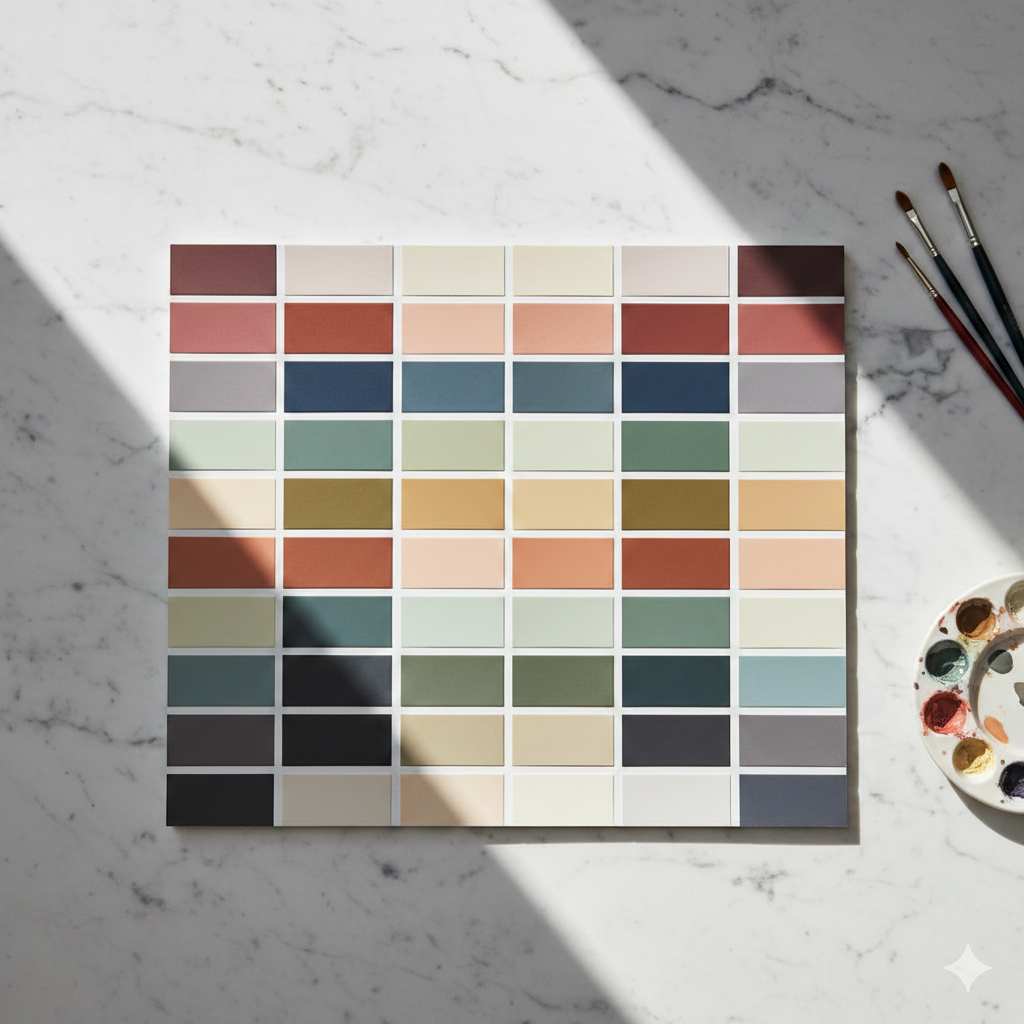
Paint is one of the most aesthetic tools in a home. It does not take up space. It does not require a contractor. But it switches the feel — the way a room feels in the morning, how big or small a space seems, whether your home feels like one flowing place or a collection of mismatched rooms. And yet, most people pick colors one room at a time, holding up a single swatch, squinting at it, and hoping for the best.
That approach works fine in isolation. The problem shows up when you stand in the hallway and look from your living room into the dining room into the kitchen. If each room has its own color story with no connection to the others, the home starts to feel choppy, visually noisy, and oddly small — even if it is a large house. The transitions feel abrupt. The rooms feel unrelated. The home stops feeling like a home and starts feeling like a series of apartments stacked next to each other.
This blog post is about something much more useful than how to paint: how to think about color across your whole house as one complete, curated palette. We are going to walk through five full whole-house paint palettes, each with its own personality and mood. For each palette, you will find out which rooms it suits, which specific paint colors bring it to life, and how the colors talk to each other across every space. These are real paint names from real brands — Benjamin Moore, Sherwin-Williams, and Farrow & Ball — so you can take this post directly to the paint store.
These are not random color combinations. Each palette has been carefully put together to move well from room to room, feel connected without being repetitive, and give your home a clear visual identity. Whether you love soft and airy, warm and earthy, moody and rich, or clean and modern, there is a palette here that fits the home you are trying to build.
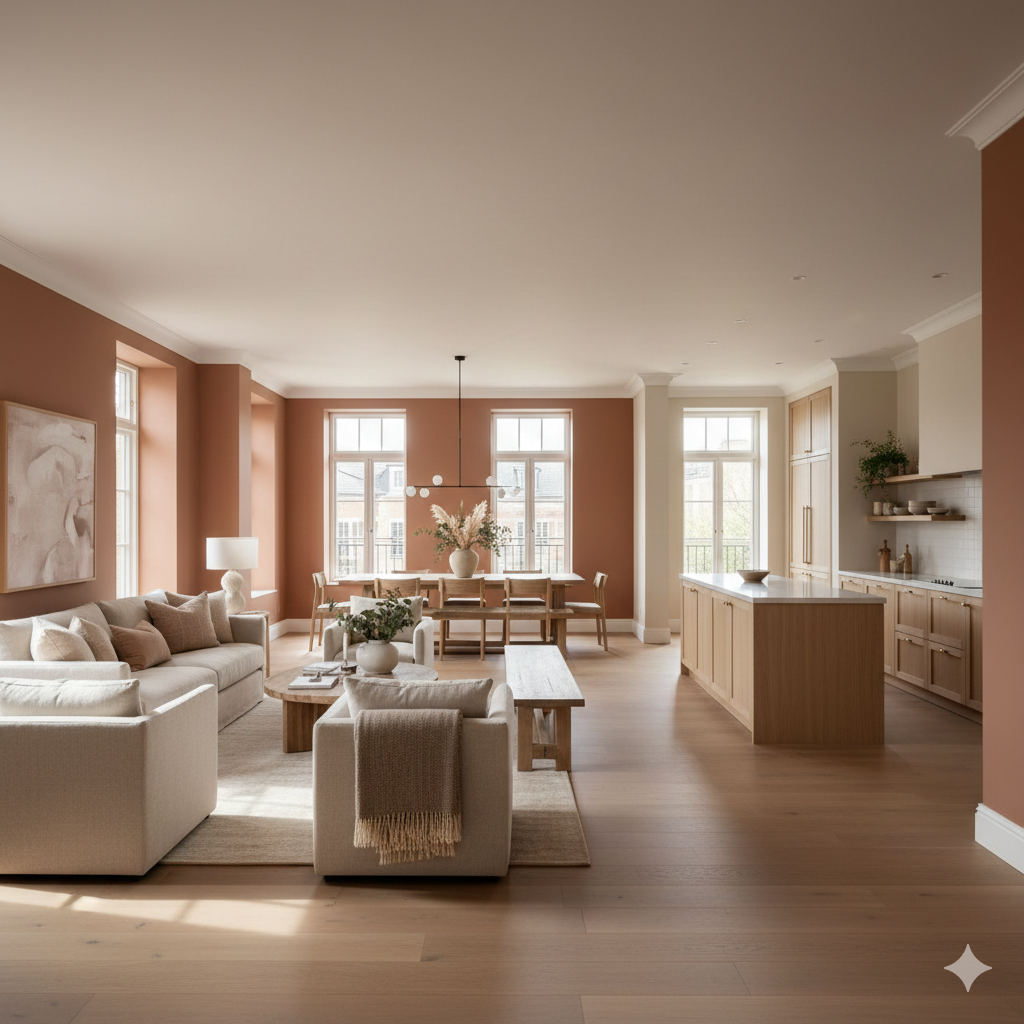
Palette One: The Warm Neutral House
There is a reason warm neutrals never go out of fashion. They are not boring — they are actually extremely versatile and deeply livable. This palette is built around tones that feel like sand, oat, warm white, and a soft clay. Every room in the house gets a version of the same warmth, but the shades shift slightly in depth so each space still feels distinct and intentional.
This palette works especially well in homes that get a mix of light — warm afternoon light in some rooms and cooler northern light in others. Warm neutrals have a unique ability to look beautiful in both conditions. In rooms with strong sunlight, an oat or warm greige will glow and feel golden. In cooler, shadier rooms, the same family of colors reads as cozy and calm rather than cold or flat. This makes the Warm Neutral palette one of the most universally forgiving of all the palettes in this guide.
For the main living spaces — living room, hallway, and open dining area — the anchor color of this palette is a warm white with a faint yellow undertone. Think of shades like Benjamin Moore White Dove, Sherwin-Williams Alabaster, or Farrow & Ball All White. These are not stark, blue-white whites. They breathe, they feel lived-in, and they make wood tones and natural textiles look richer and more expensive. White Dove, in particular, has become one of the most beloved whites in interior design because of how softly it handles light — it never looks clinical, even in a very modern room.
Moving into the kitchen, this palette steps up a notch in depth. A soft greige — something like Sherwin-Williams Accessible Beige or Benjamin Moore Pale Oak — grounds the kitchen without making it feel dark. Kitchens often have more going on visually: appliances, cabinetry, countertops, tile, and hardware. A slightly deeper wall color pulls all of those elements together rather than competing with them. Pale Oak, specifically, has an almost chameleon quality in a kitchen — in morning light it looks fresh and barely-beige, and in the afternoon sun it warms to a beautiful golden oat.
The bedrooms in this palette use the warmest and most intimate shade: a muted clay or terracotta blush. This is not a bold coral or a bright orange-pink. It is a dusty, aged tone — something like Farrow & Ball Setting Plaster or Benjamin Moore Peach Amber in its softest reading. In a bedroom, this color wraps the room in warmth and makes it feel like a true retreat. Against white linen bedding, warm wood furniture, and brass lighting, this shade is effortlessly beautiful. It is the kind of color that makes you feel calm the moment you walk in.
The bathrooms in a Warm Neutral House work best in the palest tone from the whole palette — a clean, barely-there warm white or a soft cream. Bathrooms are small and reflective, and lighter shades make them feel larger and more spa-like. A warm cream like Benjamin Moore Linen White or Sherwin-Williams Creamy keeps the bathroom visually connected to the palette without adding any weight. With warm towels, aged wood accessories, and a brass faucet, this kind of bathroom feels genuinely luxurious.
What makes this palette feel curated rather than accidental is the consistency of undertone across every room. Everything is warm. Nothing drifts into cool gray, cool blue-white, or olive. When the undertone stays the same throughout the house, your eye reads the space as one whole, even as the depth of color shifts from room to room. That consistency is the entire secret of a great whole-house palette — and the Warm Neutral House delivers it more naturally than almost any other approach.
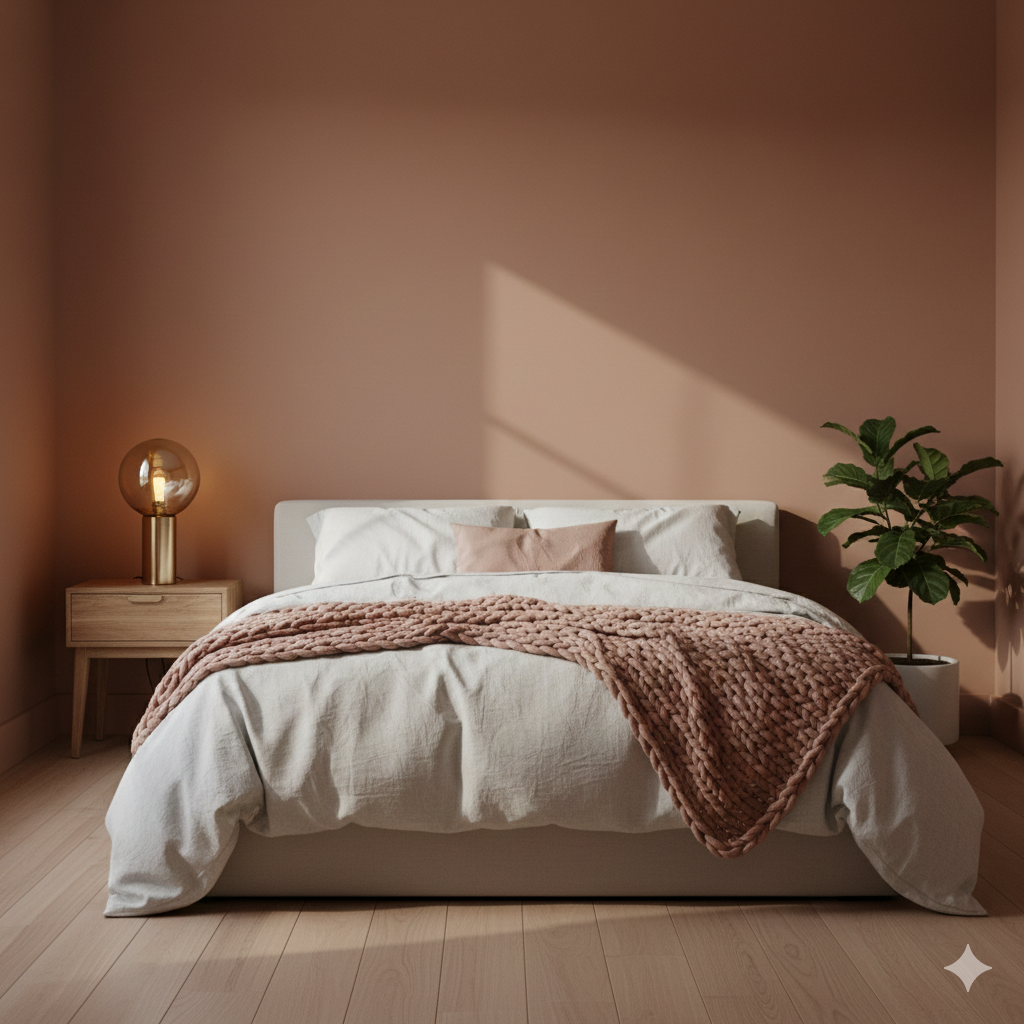
Palette Two: The Soft Blue and White Coastal House
This is not a nautical cliche. There are no anchors on the walls or shells in baskets. What this palette creates is the feeling you get in a home near water — that specific quality of light, that sense of airiness, that easy, unhurried mood. Blue and white as a whole-house palette is one of the most sophisticated combinations you can work with, particularly when the blues are soft, complex, and layered rather than bright and obvious. This is the palette for people who want their home to feel like a long exhale.
The key to making this palette feel elevated rather than expected is in the specific blues you choose and how you use white as the connecting thread. The white in this palette is not a stark, bright white. It is a soft white with a cool, slightly blue or gray undertone — something like Sherwin-Williams Extra White, Benjamin Moore Chantilly Lace, or Farrow & Ball Strong White. This cool white becomes the background tone that allows the blues to sing without clashing. It also looks beautiful on all the woodwork — trim, baseboards, doors — creating a clean, continuous line through the entire house.
In the main living room and hallway, this palette uses a pale, misty blue — a color that looks almost like soft sky or washed denim in its most diluted form. Benjamin Moore Horizon, Sherwin-Williams Silverpointe, or Farrow & Ball Borrowed Light are perfect examples. These are blues that are easy to live with every day, light enough to make rooms feel open, but with enough presence to read clearly as a deliberate color choice rather than a failed white. Borrowed Light, in particular, is one of the most beloved colors in the Farrow & Ball range for this reason — it looks like blue in some lights and like a cool, airy gray in others.
The dining room in this palette is where you can go a little deeper. A dusty slate blue, like Benjamin Moore Newburyport Blue, Farrow & Ball Stone Blue, or Sherwin-Williams Smoky Blue, creates a beautiful, intimate mood for a dining room. Dining rooms are often used at night, with warm candlelight or pendant lighting, and a deeper blue does something spectacular under that kind of light — it becomes almost velvety, rich, and romantic. The combination of deep blue walls, warm wooden furniture, and warm-toned lighting is one of the most consistently beautiful in all of interior design.
Kitchens in this palette stay light. White cabinetry paired with walls in the palest blue or a soft blue-gray keeps things fresh and open. Sherwin-Williams Sea Salt is a remarkable choice here — it reads somewhere between soft blue, soft sage, and soft gray depending on the light, making it one of the great chameleon colors. In a kitchen with white cabinetry and natural wood or stone countertops, Sea Salt on the walls feels like gentle coastal air without any literal reference to the beach. It is quietly extraordinary.
For bedrooms, the Soft Blue and White Coastal palette offers some of its most beautiful moments. A deeper, muted blue-green like Farrow & Ball Blue Ground or Benjamin Moore Mt. Rainier Gray creates a bedroom that feels like sleeping surrounded by the early morning sky. Paired with white trim and crisp white bedding, these tones feel clean, serene, and surprisingly grounding. They are cool without being cold, and they create one of the most restful sleeping environments of almost any color family. If you have ever stayed in a hotel room with carefully chosen blue-toned walls and come home feeling like you slept better than you have in years, this is why.
One thing that unifies this palette across the whole house is the woodwork. In a Soft Blue and White Coastal House, all trim, doors, and built-ins should be painted in the same crisp, slightly cool white throughout every room. This continuity creates a thread that your eye follows from space to space, tying everything together even as the wall colors shift in depth and tone. White woodwork is one of the most underrated tools in whole-house color cohesion, and nowhere does it work more beautifully than in a cool, coastal-inspired palette.
Palette Three: The Earthy Green House
Green is the color that the design world has embraced deeply in recent years, and the reason is not trend-chasing — it is biology. Green is the color humans are most evolved to find restful, familiar, and safe. It is the color of living things, of nature, of growth. When used with care, an earthy green palette can make a home feel incredibly grounded, alive, and deeply personal. It is the palette that makes people feel at home in a way that is hard to fully explain but impossible to ignore.
The word earthy is important here. This palette is not about bright, saturated greens or lime or mint. It is about the greens you find in nature that have already been touched by weather, light, shadow, and time. Olive. Sage. Moss. Eucalyptus. These are greens with gray in them, or brown in them, or gold in them. They do not shout. They absorb light beautifully and make everything around them look more interesting and more alive. They are the kind of greens that make your furniture look better than it actually is.
The entry and living room in this palette begin with a medium-toned sage — something with gray and green in equal proportion, like Sherwin-Williams Clary Sage, Farrow & Ball Mizzle, or Benjamin Moore Aganthus Green. At medium tone, this kind of sage reads differently at different times of day. In bright morning light, it feels fresh and unmistakably green. In the evening under warm lamps, it pulls warmer and begins to read almost like a muddy, golden khaki. That adaptability — that willingness to shift and surprise you — is what makes it so satisfying to live with over time. It never gets boring.
The kitchen in an Earthy Green House is where things get genuinely exciting. Deep, forest green cabinetry — think Farrow & Ball Studio Green, Sherwin-Williams Hunt Club, or Benjamin Moore Tarrytown Green — paired with white or cream walls creates a kitchen that feels rich, considered, and completely at home in a house of earthy greens. You do not have to paint the kitchen walls green if the cabinetry is already doing that work. Cream or off-white walls let the green cabinets take center stage while connecting back to the lighter tones elsewhere in the house.
Bedrooms in this palette lean into the softer, more sage and eucalyptus end of the green family. A pale silvery sage — like Farrow & Ball Mizzle at its lightest or Benjamin Moore Gray Wisp with a green read — makes a bedroom feel incredibly fresh and clean without being stark. If you want something with slightly more presence, Sherwin-Williams Retreat or a pale sage green from the Benjamin Moore palette creates a room that feels like being surrounded by very early morning mist in a garden. Pair with warm wood tones, cream linen, terracotta ceramics, and touches of aged brass to stop the room from feeling cold or clinical.
One of the secrets of the Earthy Green palette is how well it works with warm, natural materials. This is a palette that loves terracotta pots, rattan baskets, jute rugs, raw linen, aged brass hardware, and wooden beams. The green on the walls acts as a backdrop that makes every natural material look richer and more beautiful. A simple rattan chair looks museum-worthy against a sage wall. A stack of earthy ceramics on a kitchen shelf looks like it was styled by a professional. The palette does not compete with your things — it makes your things better.
For bathrooms, a deep, moody green tile or deep green paint — even something like Farrow & Ball Teal Blue or Sherwin-Williams Rookwood Jade — can make a bathroom feel luxurious and spa-like. Small rooms can handle deeper colors better than large rooms, because depth in a small space reads as intentional and dramatic rather than overwhelming. A deep green bathroom with white fixtures, warm lighting, brass details, and a woven mat is one of the most universally loved bathroom combinations in current interior design, and it sits perfectly within an Earthy Green whole-house palette.
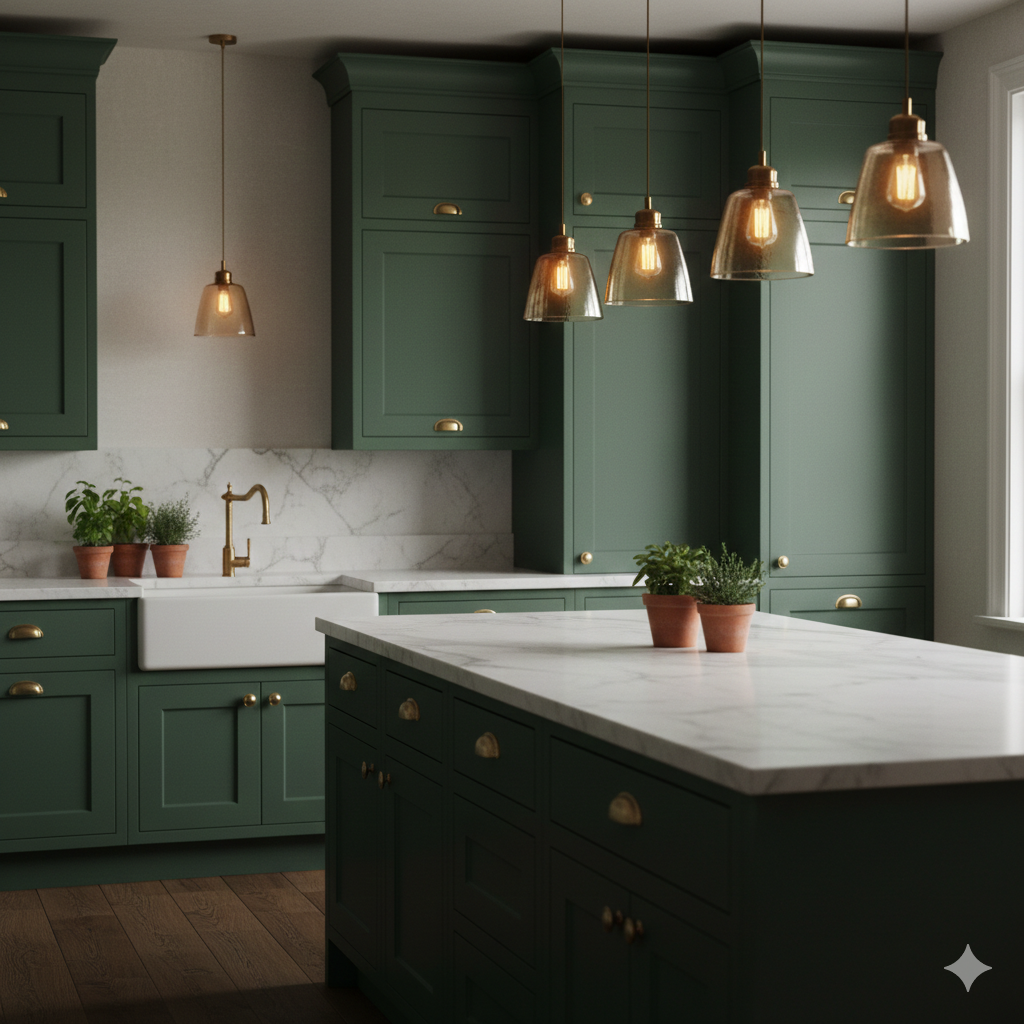
Palette Four: The Moody, Rich Dark House
Not every home wants to be light-filled and airy. Some homes — and some people — are drawn to the depth, drama, and incredible coziness that comes from painting with darker, richer tones. The Moody Dark House palette is not about making rooms feel smaller or heavier. When done right, it makes rooms feel larger, more intimate, and more dramatic — like stepping into a jewel box or a beautiful old library. It is a palette for people who are not afraid of color and want their home to feel genuinely extraordinary.
The key to making a dark palette work across a whole house is the same as with any other palette: undertone consistency. In this case, all the dark shades need to come from the same color family. You might work in deep, warm burgundy-adjacent tones — wine, plum, and deep rust. Or you might work in cool, dramatic tones — deep navy, charcoal, and dark teal. The most sophisticated option, and the one that tends to age the most beautifully, is to build the whole palette around deep, complex greens and warm blacks that feel rich and layered rather than simply dark.
For the main living spaces — living room, hallway, staircase — the palette works beautifully with a charcoal that has a warm undertone. Something like Farrow & Ball Mole’s Breath, Sherwin-Williams Dovetail, or Benjamin Moore Wrought Iron gives you a shade that is deep enough to feel dramatic but not so dark that it becomes a cave. These mid-dark shades absorb light in a way that feels luxurious. They make art, furniture, and textiles stand out in a vivid, gallery-like way that lighter walls simply cannot achieve. A painting that looked fine on a white wall looks spectacular on a deep gray.
Dining rooms in the Moody Dark House are perhaps the most naturally suited rooms to deep color. Dining rooms are made for candlelight, warmth, and intimacy — all things that dark color delivers. A deep navy like Hague Blue from Farrow & Ball, or Sherwin-Williams Anchors Aweigh, or Benjamin Moore Van Deusen Blue creates a dining room that feels both sophisticated and cozy at the same time. Paired with a warm wood dining table, linen drapes, and brass or aged bronze lighting, this is the kind of room that makes dinner feel like an event even when it is just a Tuesday.
The kitchen in a dark whole-house palette is where many people hesitate. Kitchens feel like they are supposed to be bright and practical, and the idea of dark walls in a kitchen can feel risky. But a kitchen with dark charcoal or navy walls and light cabinetry — white, cream, or natural wood — creates an incredibly striking balance. The dark walls become the drama; the light cabinetry keeps the kitchen from feeling heavy. It is a combination that photographs beautifully and feels unexpectedly welcoming in person, particularly in kitchens with good natural light.
Bedrooms in a moody palette can go one of two ways. You can continue the depth with a rich jewel tone — a deep teal, a dusty plum, a forest green — for a bedroom that feels like a true sanctuary, totally separate from the outside world. Or, if you want some contrast and visual relief after working with deep tones throughout the home, a bedroom in a warm, deep white like Farrow & Ball Pointing or a very warm off-white gives your eyes and nervous system a rest, while still remaining clearly connected to the warmth of the overall palette. Both choices are right. It depends on whether you want your bedroom to feel like a continued experience of the house or a private departure from it.
What makes dark palettes feel curated rather than oppressive is light — both natural and artificial. If you are committed to a dark palette, lighting becomes even more important than usual. Warm bulbs at 2700K or below, multiple light sources per room rather than a single overhead fixture, mirrors placed to catch and bounce light, reflective surfaces like lacquered trays or gilt frames, and artwork in lighter tones all help balance the depth of the walls. A dark palette needs to be lit with real intention, and when it is, the result is extraordinary — the kind of home that makes guests stop at the doorway and visibly respond.
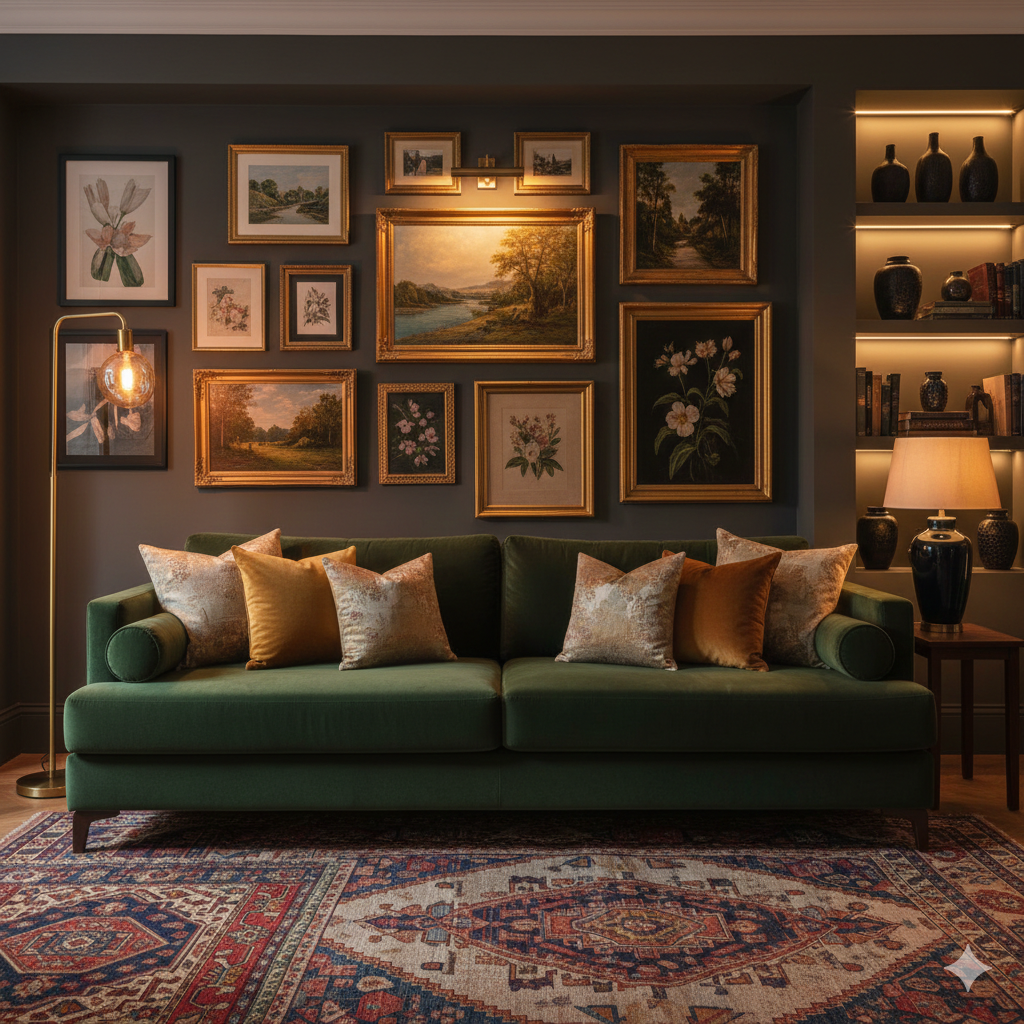
Palette Five: The Modern Greige and White House
Greige — the blend of gray and beige — is one of the most useful colors ever invented for interiors. It sits in the middle ground between cool and warm, between gray and beige, and it has a quiet, chameleon quality that allows it to work in almost any light and alongside almost any material. A whole-house palette built on greige and white is perhaps the most approachable of all the palettes in this post — but it is also one of the most sophisticated when executed well. It is the palette most often mistaken for simply being neutral when it is actually doing a great deal of quiet work.
The difference between a beautiful greige house and a boring one comes down to two things: texture and contrast. Because greige itself is an understated, quiet color, the interest in a room has to come from somewhere else — the materials you layer in, the way light catches surfaces, and the deliberate use of white to create clean, crisp contrast. A greige house with flat walls, cheap furniture, and no texture will feel lifeless and like a builder-grade spec home. The same walls with natural wool rugs, aged wood, stone surfaces, linen drapery, and layered warm lighting will feel like a Scandinavian design retreat. The color is not doing all the work — it is setting the stage for everything else.
For the living room, entry, and hallway of a modern greige house, the anchor color is a warm greige — something like Sherwin-Williams Agreeable Gray, Benjamin Moore Edgecomb Gray, or Farrow & Ball Elephant’s Breath. These shades are warm enough not to look dingy or sad in lower light, and neutral enough to disappear into the background when the furniture and styling takes center stage. Agreeable Gray in particular has become perhaps the single most popular paint color in the United States, and the reason is simple: it works everywhere, in every light, with almost every material. It is endlessly livable.
For the kitchen, stepping to a slightly lighter, airier greige or even a warm white creates the feeling of a kitchen that belongs to the rest of the house without feeling heavy or closed. Sherwin-Williams Accessible Beige on the walls with Simply White or Chantilly Lace on the cabinetry makes a kitchen feel open, clean, and connected to the palette. The trim and cabinetry in white create enough contrast to keep the space from feeling flat, while the greige walls keep it from feeling cold or stark. It is a combination that works in virtually every home regardless of layout or size.
Bedrooms in a greige palette are deeply restful in a way that is worth understanding. The natural middle-ground quality of greige — not too warm, not too cool — makes it one of the most sleep-friendly colors available. Unlike a cool gray, which can feel clinical or harsh in a bedroom, and unlike a bright warm neutral, which can feel overly energetic in morning light, greige sits at the exact right point of calm. In a bedroom, something like Benjamin Moore Balboa Mist, Sherwin-Williams Balanced Beige, or Farrow & Ball Skimming Stone creates walls that feel like a gentle exhale at the end of a long day.
The bathrooms in a modern greige house often benefit from leaning slightly cooler and lighter than the rest of the palette. A crisp warm white or the lightest possible greige — something that barely reads as color at all — gives the bathroom that clean, hotel-like quality that most people are looking for in a bathroom. Sherwin-Williams Alabaster or Benjamin Moore White Dove are both perfect here. They are white enough to feel clean and bright, but they have just enough warmth to stay connected to the greige throughout the home. With warm lighting, a stone countertop, and warm-toned towels, this kind of bathroom feels quietly luxurious.
One thing that distinguishes a thoughtfully put-together greige house from a builder-grade one is how well woodwork and natural materials are used alongside it. Dark or medium stained wood floors, warm wood furniture, and wood-toned cabinetry all look extraordinary against greige walls. The greige palette is perhaps the most forgiving to work with of all the palettes in this guide, but it rewards intentional styling more than any other. The more beautifully you furnish and accessorize a greige room, the more beautiful the color looks. It gives, but it asks you to give back.
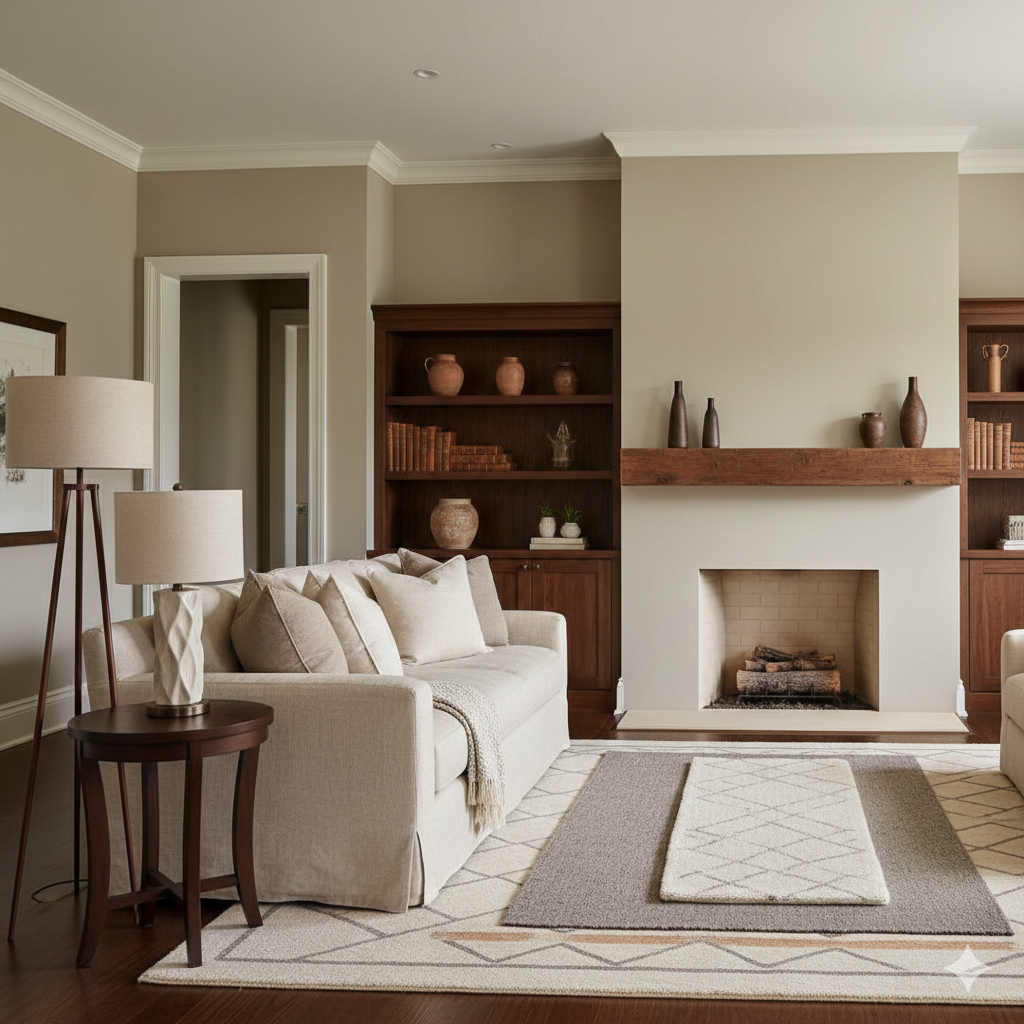
How to Make Any Palette Flow Through Your Whole Home
No matter which palette you choose, there are a handful of principles that make the difference between a home that feels cohesive and one that feels randomly assembled. The most important is undertone. Every color has an undertone — a secondary hue that lives beneath the main color. A white can be warm (yellow or pink undertone), cool (blue or green undertone), or neutral. A gray can be warm (beige undertone, which gives you greige) or cool (blue or purple undertone). Mixing undertones across a house is the number one reason whole-house palettes fall apart. When you pick a warm greige living room and pair it with a cool blue-gray bedroom and a stark white kitchen, your eye feels the shift even if your brain cannot name it. The house does not feel wrong. It just does not feel right.
The second principle is value variety — the range of light, medium, and dark tones across your home. Even within a single-undertone palette, you want variation in depth across your rooms. If every room is exactly the same shade and depth, the house feels flat and monotonous, like walking through a series of identical rooms. But if there is a beautiful range — an airy pale in the bathroom, a medium tone in the living room, a deeper accent in the dining room — the house feels layered and considered, even though every tone belongs to the same family. That depth variation is what creates the impression of thoughtful, professional-level design.
The third principle is the power of consistent white woodwork. One of the most underused tools in whole-house color cohesion is keeping all trim, baseboards, crown molding, and door frames in the same shade of white throughout the entire home. This single decision creates a continuous visual thread that the eye follows from room to room, unifying very different wall colors. The white of the woodwork should connect to the undertone of your palette — a warm white for warm palettes, a cool white for cool ones — but within a palette, it should never change. Paint every door frame, every baseboard, every piece of molding the same color. It is a quiet discipline with an enormous visual reward.
Finally, think carefully about the transitional spaces: hallways, staircases, landings, and foyers. These are the bridges between your rooms, and they are often treated as afterthoughts — painted the same as the adjacent room or left in a builder-grade white. But these spaces matter enormously. They set the pace of your home. If you paint a hallway too dark, it becomes a tunnel between rooms. If it is jarring in color compared to the rooms it connects, the transition feels abrupt and unsettling. The best approach is to use your palette’s lightest or most neutral tone in these connecting spaces, so they act as a visual breath between rooms rather than a full stop. A light, quiet hallway makes the rooms it connects feel more dramatic by contrast.
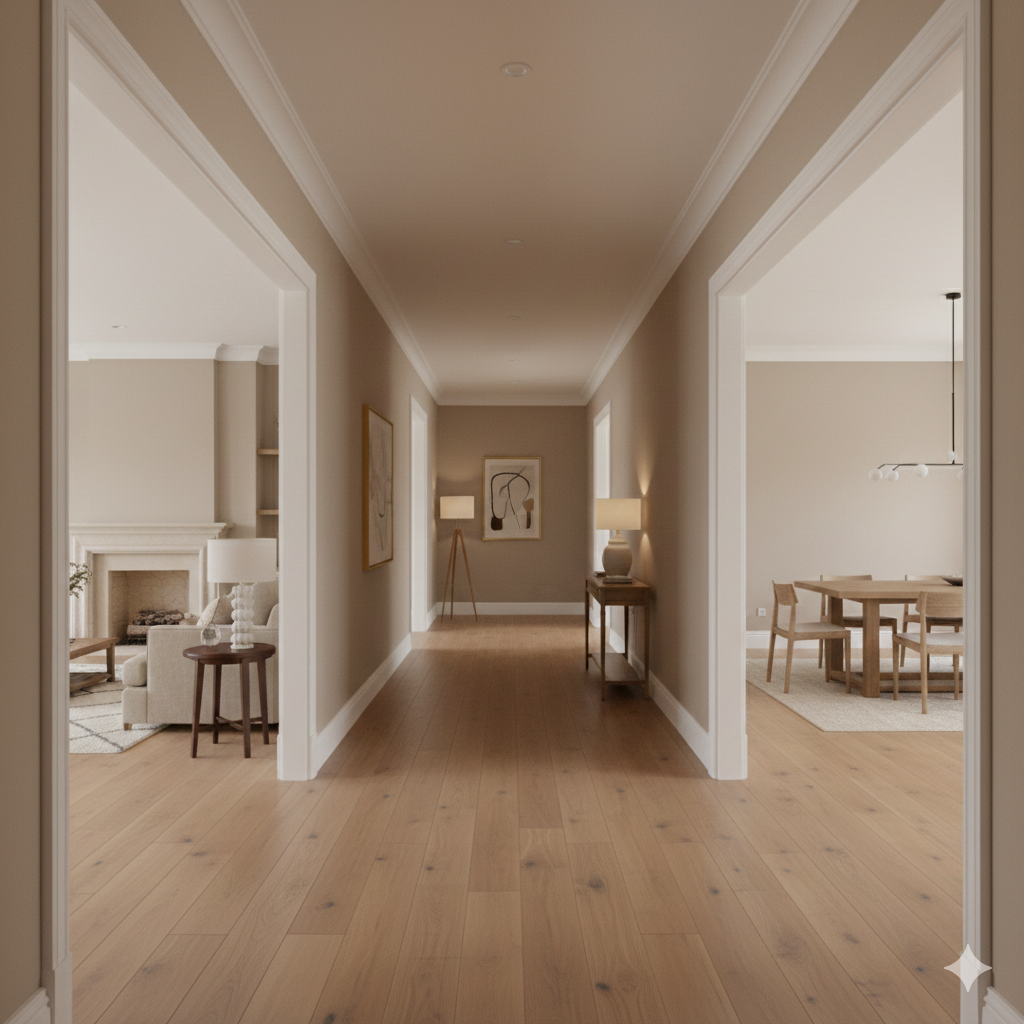
Paint Finish Matters as Much as Paint Color
A curated whole-house palette is not just about the colors you choose — it is also about the finish you apply to each surface. The same color in a flat finish looks entirely different from the same color in a satin or eggshell finish. Understanding how finish affects the appearance of your palette is essential to making it work in real life, and it is a detail that even experienced home decorators often overlook until it is too late.
Flat or matte paint is the choice of designers and photography-ready homes for a reason. It absorbs light rather than reflecting it, hides imperfections and texture in walls, and gives color its richest, most saturated appearance. The trade-off is that flat paint is the least washable and the most prone to scuffing, marking, and damage over time. This makes it ideal for adult living rooms, bedrooms, and dining rooms where walls are not constantly being touched, but a poor choice for kitchens, bathrooms, children’s bedrooms, and hallways where walls take more physical abuse.
Eggshell is the middle ground, and it is what most interior designers recommend for the majority of living spaces. It has a very slight sheen that catches light gently without looking glossy or plasticky. It is significantly more wipeable than flat paint, and it still reads as relatively matte from across the room — you have to be close to it and looking at it in raking light to notice the sheen. For most rooms in a home, eggshell is the wisest, most practical choice. It gives color depth and richness while remaining durable enough for real life.
Satin or semi-gloss is reserved for high-traffic, high-humidity, and high-contact areas: kitchens, bathrooms, hallways, and most importantly, all trim and woodwork. Higher-sheen finishes are far more washable, hold up beautifully to humidity and cleaning, and create the crisp, clean contrast that white woodwork is designed to provide. If you paint your baseboards and door frames in the same flat finish as your walls, you lose the visual definition that separates wall from trim — and it is that definition that makes a room feel polished and finished. Trim should always be in satin or semi-gloss. It is not optional.
A Note on Paint Brands and Testing Your Colors
All five palettes in this post reference colors from specific paint brands — Benjamin Moore, Sherwin-Williams, and Farrow & Ball — because these are the brands with the most reliable color accuracy, the best pigment quality, and the widest availability in North America and beyond. However, most of these colors can be matched or closely approximated at other paint retailers. If you fall in love with a specific shade from one of these brands, take the paint chip to your local hardware store and ask them to mix a match. The color matching technology at most major hardware stores is excellent.
The difference in quality between premium paint brands and budget alternatives is real and worth understanding before you buy. Premium paints — Benjamin Moore Aura, Sherwin-Williams Emerald, Farrow & Ball’s entire range — have higher pigment concentration and better binders. This means richer, truer color; better coverage (often one coat where cheaper paints need three); better durability; and more accurate, consistent color matches between batches. They are more expensive upfront, but the cost difference becomes much smaller when you factor in the labor and time saved by not needing multiple coats, and the fewer gallons you ultimately use.
One more thing on paint colors: always test before you commit. Never rely on paint chips or photos on a screen, which vary enormously depending on photography conditions, screen settings, and the viewing environment. Buy sample pots in your final two or three color candidates, paint large swatches directly on the wall — at least twelve by twelve inches, ideally larger — and live with them for a full 24 to 48 hours before making a final decision. Look at your swatches at every time of day: early morning light, midday sun, afternoon gold, evening lamp. The color that wins over every lighting condition is your color.