
Building a modern eclectic home is like composing a song where different instruments come together to make something beautiful. It’s not about following strict rules or matching everything perfectly. Instead, it’s about learning how to blend pieces from different eras, styles, and cultures in a way that feels both intentional and authentic. This approach to decorating has become increasingly popular because it allows you to express your true personality rather than conformating to a single design trend. Your home becomes a living story that evolves with you, filled with objects that carry meaning and spark joy every time you walk through the door.
The beauty of modern eclectic design lies in its flexibility and personal nature. Unlike minimalist modern spaces that can feel cold, or traditional rooms that might seem stuffy, eclectic interiors have warmth and character. You’re not starting with a blank canvas that needs to look like a magazine spread. Instead, you’re curating a collection of furniture, art, and accessories that speak to you individually, then learning how to arrange them so they have conversations with each other rather than shouting over one another.
Many people feel intimidated by the eclectic approach because they worry about making mistakes or creating a space that looks cluttered or chaotic. The truth is that there are guiding principles that make mixing styles successful, and once you understand these foundations, you’ll feel confident making bold choices. This guide will walk you through every aspect of building your modern eclectic home, from establishing your color palette to selecting furniture pieces, incorporating textiles, displaying collections, and adding those final touches that make a space feel complete.
Understanding Your Color Palette
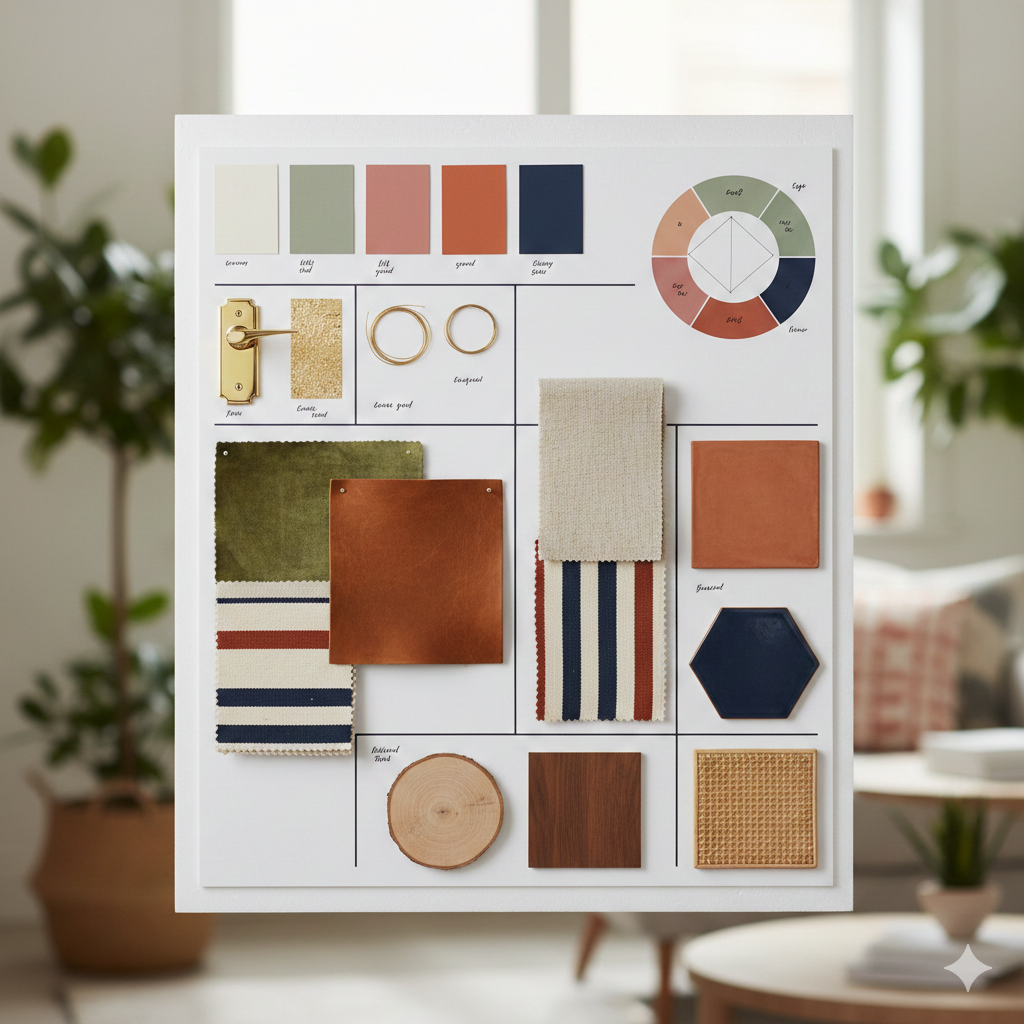
The single most important decision you’ll make when building a modern eclectic home is choosing your color foundation. This doesn’t mean picking one color and sticking to it religiously. Rather, it means selecting a cohesive color story that will thread through your entire space, creating visual harmony even when you’re mixing wildly different furniture styles and periods. Think of your color palette as the invisible glue that holds your eclectic mix together.
Start by choosing a neutral base color for your walls and largest furniture pieces. This neutral doesn’t have to be boring beige or stark white. Consider warm whites with creamy undertones, soft greiges that have both gray and beige qualities, or even gentle sage greens that read almost neutral but add subtle interest. These base colors create a calm backdrop that allows your more vibrant eclectic pieces to shine without competing for attention. When you paint most of your walls in this base color, you’re creating flow between rooms that makes even the most diverse furniture collection feel intentional.
Next, select three to five accent colors that you genuinely love and that work well together. This is where you can get creative and personal. Perhaps you’re drawn to jewel tones like emerald green, sapphire blue, and ruby red. Or maybe you prefer earthier combinations like terracotta, mustard yellow, and burnt sienna. You might love the sophistication of navy, blush pink, and brass gold. The specific colors matter less than ensuring they complement each other and that you’re genuinely excited about seeing them in your space every day.
Understanding basic color theory helps immensely here, but you don’t need to be an expert. Look for colors that sit either next to each other on the color wheel (analogous colors) or across from each other (complementary colors). Analogous schemes like blue, blue-green, and green create harmony and flow. Complementary pairings like blue and orange or purple and yellow create energy and visual interest. You can also work with different shades, tints, and tones of the same color family, which creates depth without overwhelming the eye.
Once you’ve selected your accent colors, commit to repeating them throughout your home in various forms. If navy is one of your accent colors, you might have a navy velvet sofa in the living room, navy patterned curtains in the bedroom, navy ceramic vases on the dining table, and navy spines on books in your library. This repetition creates rhythm and makes your space feel curated rather than random. The same principle applies to all your accent colors. When someone walks through your home, they should subconsciously notice these color threads weaving through different rooms.
Don’t forget about metallic finishes as part of your color story. Brass, copper, and gold add warmth to eclectic spaces, while chrome, nickel, and silver bring cooler sophistication. You can mix metals in an eclectic home, but it’s wise to choose one or two dominant metallic finishes and use others sparingly. For instance, if brass is your primary metal, you might have brass cabinet hardware, brass picture frames, brass lamp bases, and a brass bar cart, with just occasional touches of black iron or brushed nickel for contrast.
Selecting Your Furniture Pieces
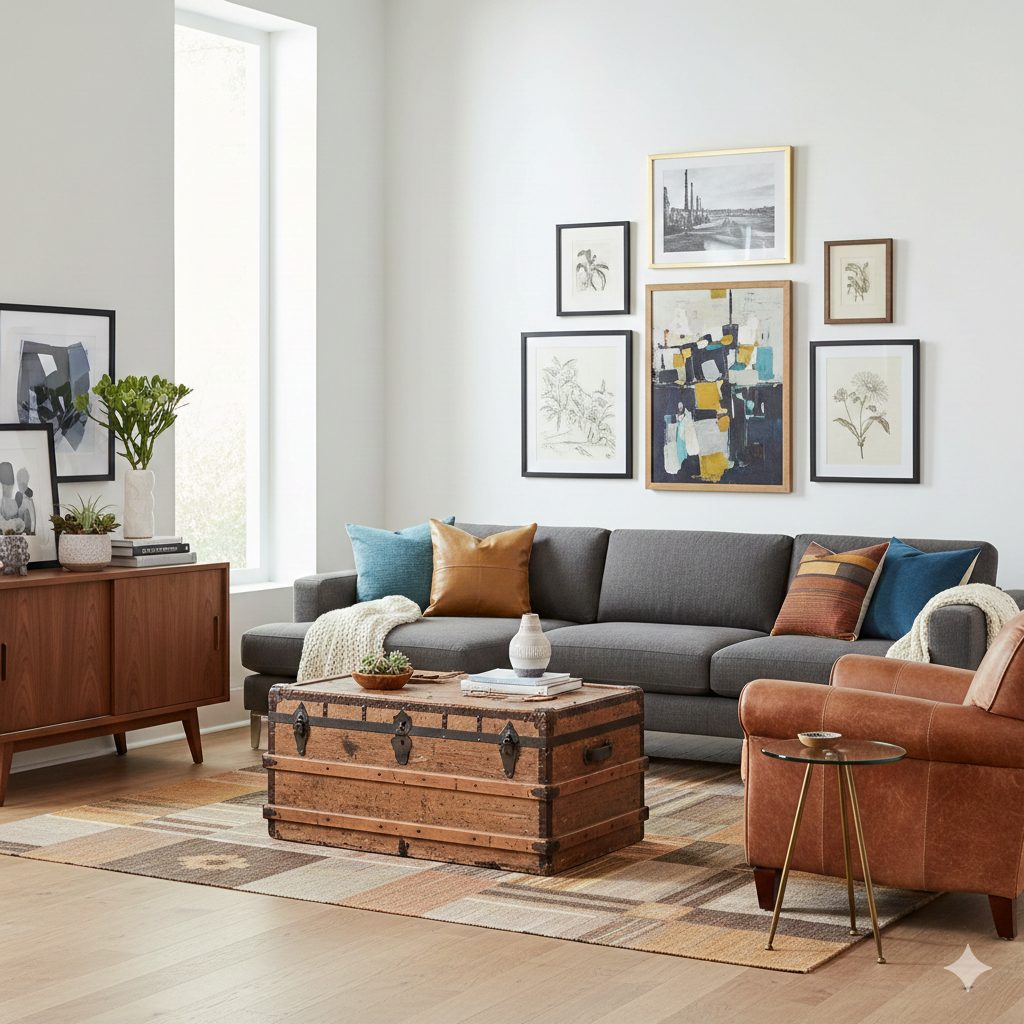
Furniture forms the backbone of any eclectic space, and learning to mix pieces from different eras and styles is where the magic happens. The key is creating balance between old and new, ornate and simple, soft and hard, heavy and light. You’re not aiming for everything to match, but you are aiming for everything to belong together in some way.
Start with your largest pieces first, typically your sofa and bed. These anchor pieces can lean either modern or vintage, but they should be relatively neutral in color to provide flexibility as your style evolves. A contemporary sofa in gray, cream, or even a rich jewel tone can pair beautifully with vintage accent chairs. Conversely, a vintage sofa can be reupholstered in modern fabric to bridge old and new. The condition and quality of these large pieces matters because they’ll get the most use and draw considerable attention.
Mix your furniture periods intentionally. A successful eclectic room often includes pieces from at least three different eras. You might combine a mid-century modern credenza from the 1960s, a contemporary dining table from this year, and a set of vintage bentwood chairs from the 1920s. This variety creates visual interest and tells a story. However, there should be some connecting element—perhaps they’re all wood pieces, or they share similar leg styles, or they’re all in your established color palette.
Pay attention to scale and proportion when mixing furniture. Eclectic doesn’t mean cluttered. Each piece should have breathing room and purpose. If you have a massive vintage armoire, balance it with lower, sleeker pieces rather than surrounding it with equally heavy furniture. If your sofa is low and modern, you can add height with a tall vintage bookcase or a substantial piece of art above it. Think about the silhouettes of your furniture pieces and aim for varied heights, depths, and widths throughout the room.
Wood tones are another important consideration. Gone are the days when all wood in a room had to match perfectly. In modern eclectic spaces, mixing wood tones adds richness and depth. You might combine a dark walnut dining table with lighter oak chairs and a honey-toned vintage sideboard. The key is having enough variety that the mix looks intentional rather than accidental. If you only have two different wood tones in a space, they might look like a mistake. Three or more reads as a deliberate choice.
Don’t overlook the importance of furniture with varied materials. Eclectic spaces thrive on textural contrast. Pair a leather sofa with a velvet chair. Put a glass coffee table near a chunky wood side table. Mix metal furniture frames with upholstered pieces. These material combinations create visual richness that makes a space feel layered and collected over time. Every surface doesn’t need to be soft or hard, smooth or textured—the variety is what makes the space interesting to look at and comfortable to inhabit.
Consider the legs and bases of your furniture pieces. This might seem like a small detail, but legs contribute significantly to a piece’s visual weight and style. Tapered mid-century legs, chunky turned legs, sleek metal legs, and carved traditional legs all communicate different aesthetics. In an eclectic space, mixing leg styles prevents monotony. A room where every piece has the same tapered wooden legs might feel too matchy. Adding pieces with different leg treatments creates more visual intrigue.
Reupholstering vintage furniture is one of the most powerful tools in your eclectic decorating arsenal. That worn Victorian chair with good bones can be completely transformed with modern geometric fabric. An outdated 1980s sofa with a solid frame becomes fresh and contemporary in a bold solid color or updated pattern. Reupholstery allows you to keep the character and craftsmanship of vintage pieces while adapting them to your modern color palette and aesthetic preferences.
Layering Textiles and Patterns
Textiles bring warmth, comfort, and personality to your modern eclectic home. This is where you can be bold with pattern, experiment with texture, and inject softness into spaces that might otherwise feel too hard or cold. The wonderful thing about textiles is that they’re relatively affordable and easy to change if you want to refresh your space seasonally or as your tastes evolve.
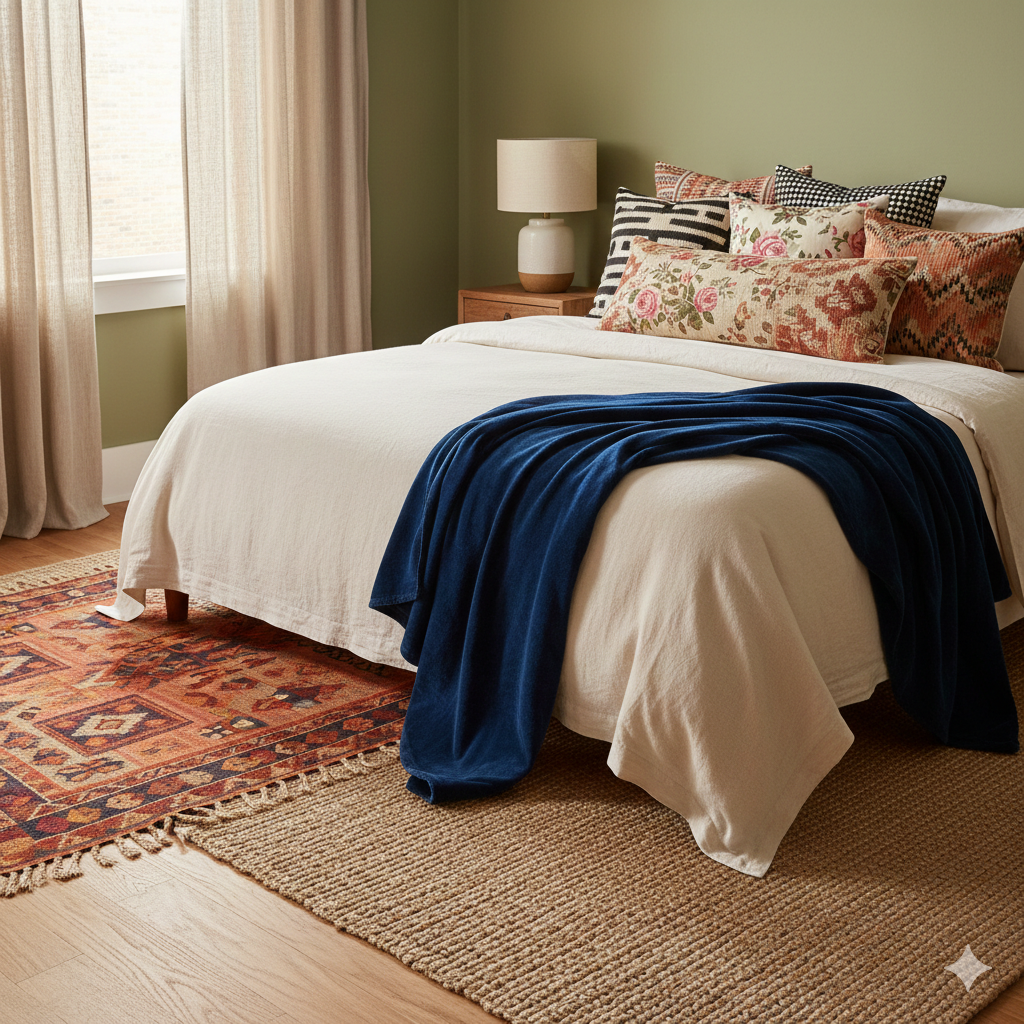
Start by understanding the principle of pattern mixing, which initially intimidates many people. The secret is varying the scale of your patterns. If you want to combine three different patterns in one space—say, on throw pillows—choose one large-scale pattern, one medium-scale pattern, and one small-scale pattern. A large floral print, a medium geometric design, and a small dotted pattern will work together because they each operate at different visual scales and don’t compete directly with each other.
Stick to your established color palette when selecting patterned textiles. Even if the patterns themselves are completely different—a modern stripe, a traditional paisley, and a tribal print—they’ll work together if they share colors from your palette. You don’t need every pattern to contain every color, but there should be color overlap. If your accent colors are navy, terracotta, and cream, look for patterns that feature at least two of these colors in some combination.
Solid textiles are just as important as patterned ones in creating successful eclectic spaces. They give the eye places to rest and prevent pattern overload. Use solid-colored pillows, throws, and curtains strategically among your patterns. These solids can be in your accent colors or neutrals, and they help balance busy patterns. A good rule of thumb is having roughly 60% solids to 40% patterns in your textile mix, though you can adjust based on your personal tolerance for visual stimulation.
Texture is where textiles truly shine in eclectic interiors. You want to include a variety of textile textures in each room—smooth cotton, nubby linen, plush velvet, soft wool, rough jute, silky satin, and chunky knits all have places in eclectic design. These texture variations make spaces feel rich and inviting. They also add visual interest without relying solely on pattern or color. A neutral room with multiple textures feels far more sophisticated than a neutral room with only smooth, flat fabrics.
Rugs deserve special attention because they anchor furniture arrangements and add significant warmth to rooms. Layer rugs in eclectic spaces for added depth and interest. You might put a vintage Persian or Turkish rug over a natural jute rug, or layer a cowhide over a neutral flat-weave. This layering technique is very eclectic and creates an collected-over-time feeling. When selecting rugs, don’t worry if they’re not perfectly aligned with your color palette—vintage rugs especially can contain colors you’d never choose yourself, but their aged patina and character make them work.
Window treatments impact how textiles read in your space. Heavy velvet curtains create drama and richness, perfect for eclectic living rooms and bedrooms. Light linen curtains feel breezy and casual, ideal for kitchens and casual family spaces. Patterned curtains make bold statements, while solid curtains provide calm backdrops. Consider your room’s purpose and light needs when selecting window textiles. In eclectic homes, it’s perfectly fine to have different curtain styles in different rooms as long as they each work within their specific space.
Throws and blankets are functional textiles that also serve decorative purposes. Drape a chunky knit throw over your sofa arm, fold a vintage quilt at your bed’s foot, or layer a faux fur throw over a reading chair. These pieces add coziness while introducing additional textures and colors. They also invite people to get comfortable and use your space, which is ultimately the goal of any home.
Designing Your Walls
Walls offer enormous potential in modern eclectic homes. Rather than leaving them blank or treating them as mere backgrounds, embrace them as opportunities to express personality and tie your design together. The way you treat walls—from paint color to artwork to architectural details—significantly impacts how eclectic and intentional your space feels.
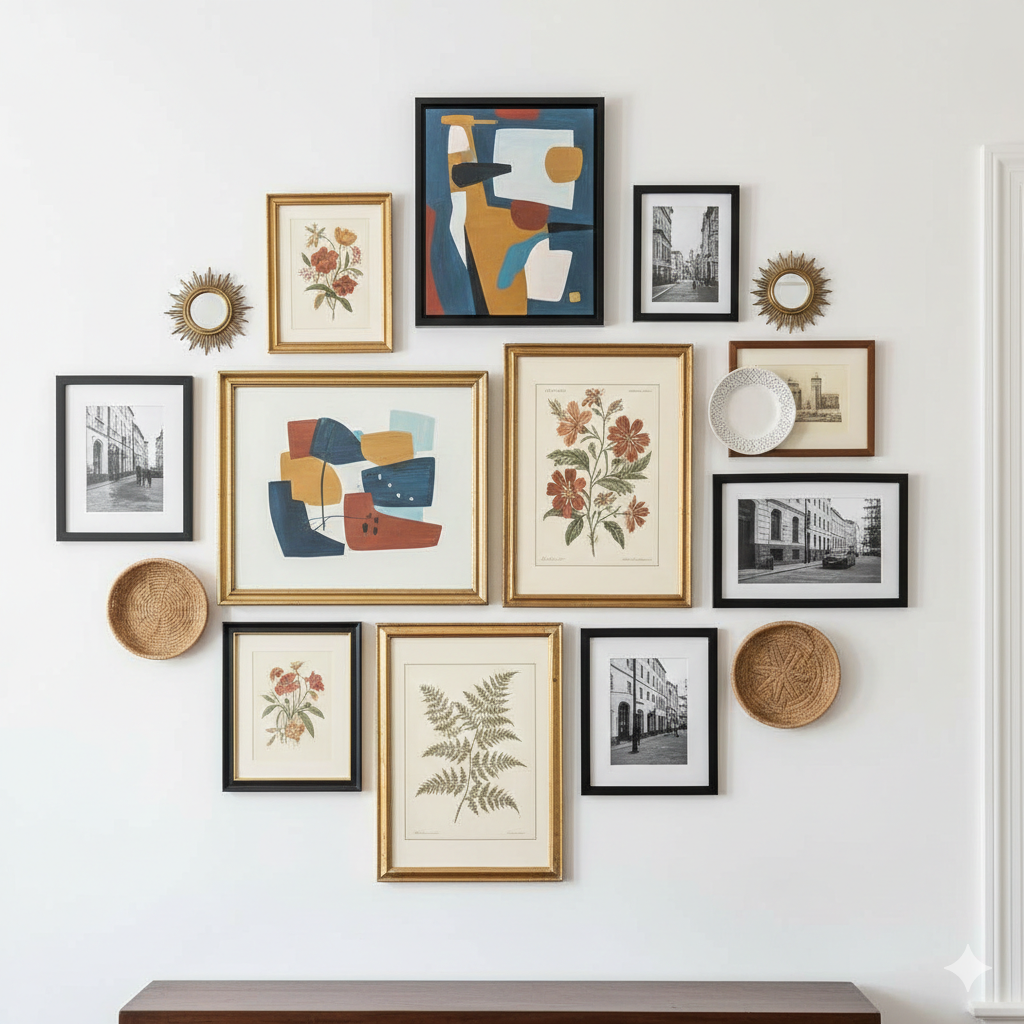
Gallery walls are quintessentially eclectic when done thoughtfully. Instead of uniform frames in a grid pattern, create collections that include various frame styles, sizes, and finishes. Mix thin black frames with ornate gold frames, modern metal frames with vintage wood frames. Include different types of art—contemporary abstracts next to vintage botanical prints, personal photography alongside found flea market art, and even three-dimensional objects like woven baskets, ceramic plates, or small sculptural pieces. The content matters less than creating a composition that feels balanced even in its asymmetry.
When planning a gallery wall, lay everything out on the floor first to play with arrangements. Look for roughly balanced visual weight—you don’t want all your large pieces on one side. Vary the spacing slightly between pieces rather than using perfectly uniform gaps, which can feel too rigid for eclectic style. If you’re nervous about committing to nail holes, create paper templates of each frame and tape them to the wall, adjusting until the arrangement feels right.
Single statement pieces also work beautifully in eclectic homes. An oversized contemporary painting above a vintage sofa creates dynamic contrast. A large antique mirror over a modern console table bridges old and new. These bold choices show confidence and give rooms focal points. Don’t be afraid to go big—one large piece often makes more impact than several small ones and can actually make a room feel larger and more intentional.
Wall color deserves reconsideration beyond your initial neutral choice. Accent walls in deeper colors add drama to eclectic spaces. A dark green bedroom wall behind a brass bed frame creates moody sophistication. A terracotta dining room wall warms up the space and makes vintage wood furniture glow. Navy walls in a study feel rich and cocooning, perfect for displaying brass sconces and leather furniture. These colorful walls work in eclectic homes because you’re already mixing styles—the wall color becomes another layer in your mix.
Wallpaper is making a strong comeback and fits perfectly in modern eclectic design. Choose wallpaper with personality for powder rooms, behind built-in shelving, or for entire accent walls. Large-scale botanical prints, geometric patterns, or even bold stripes add pattern and interest. In eclectic spaces, you can use wallpaper that might feel too bold in a minimalist home because your varied furniture and accessories balance the busy walls.
Architectural details like picture rails, wainscoting, or exposed brick add character that complements eclectic decorating. If your home has these features, highlight them rather than hiding them. Paint wainscoting in colors that complement your palette. Leave brick exposed and style shelves against it. Add picture rail if you don’t have it—it’s a relatively simple renovation that provides both visual interest and practical hanging solutions for art.
Shelving transforms walls into functional display spaces while adding architectural interest. Floating shelves in varied lengths create asymmetric visual interest. Vintage shelving units add character while serving modern storage needs. Style shelves eclectically with books, ceramics, plants, and small art pieces. Vary the heights and groupings of objects rather than lining everything up uniformly. This casual, curated approach epitomizes eclectic style.
Designing Your Lighting Layers
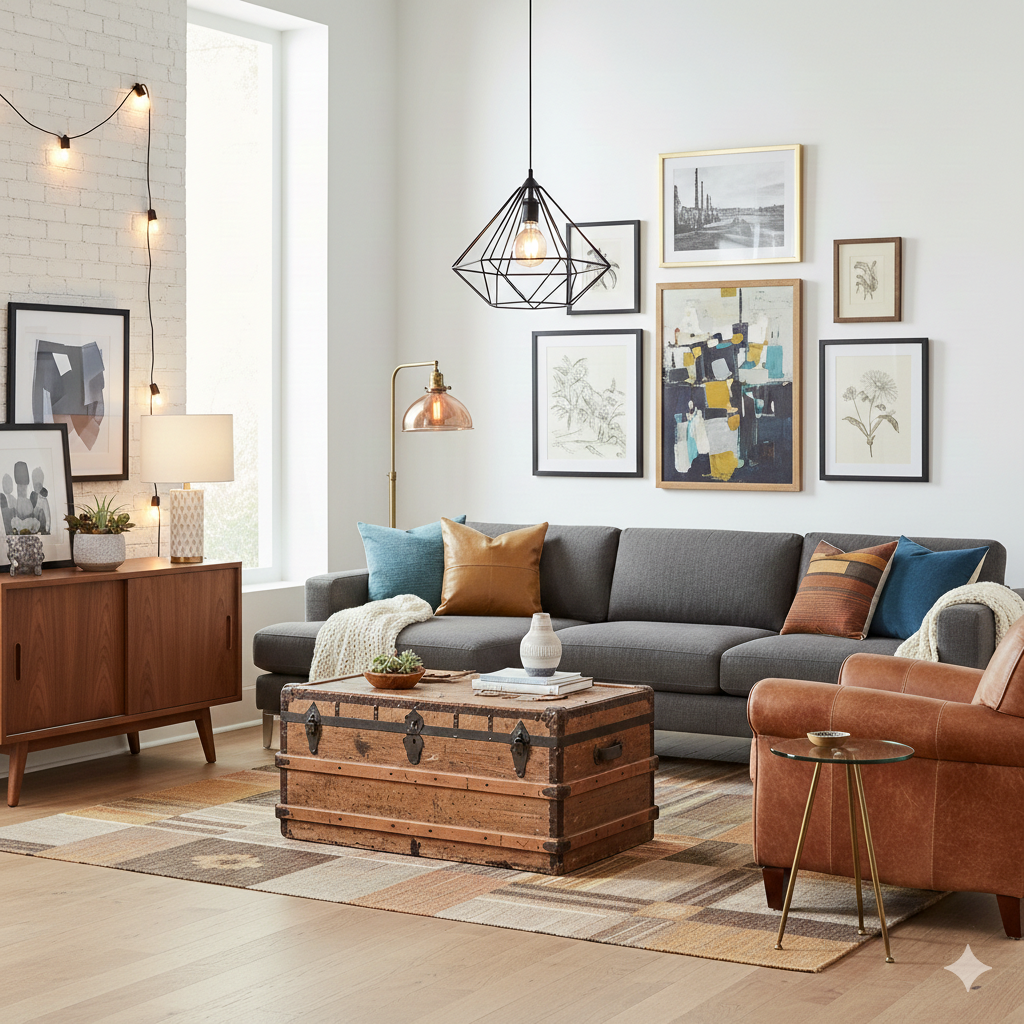
Lighting might be the most overlooked element in home design, yet it dramatically affects how your eclectic mix reads. Poor lighting can make even the most carefully curated space feel flat and unwelcoming, while thoughtful lighting creates warmth, highlights your favorite pieces, and makes your home feel complete. Eclectic spaces particularly benefit from varied light sources at different heights and with different qualities of light.
Overhead lighting provides general illumination but shouldn’t be your only light source. Ceiling fixtures in eclectic homes can make statements—a vintage chandelier, a contemporary geometric pendant, or a sculptural fixture that becomes art. Choose overhead fixtures that complement your room’s style while adding visual interest to the ceiling plane, which often gets ignored. If you have boring overhead lights, replacing them is one of the most impactful updates you can make.
Table lamps and floor lamps add warmth and task lighting while contributing to your decor. This is where you can really have fun mixing styles. Pair a mid-century modern ceramic lamp base with a contemporary drum shade. Use a vintage brass pharmacy lamp on a modern desk. Put a sculptural contemporary table lamp on an antique dresser. The lamp itself becomes a decorative object, so choose bases with interesting shapes, materials, and finishes that enhance your eclectic aesthetic.
Layer your lighting by including multiple sources throughout each room. A living room might have an overhead fixture, two table lamps on end tables, a floor lamp in the reading corner, and candles on the coffee table. This variety allows you to adjust lighting for different activities and moods. Bright overhead lights for cleaning, soft lamp light for entertaining, reading lamps for curling up with books. Multiple light sources also cast light from different directions, eliminating harsh shadows and creating dimensional, flattering illumination.
Dimmer switches are essential in eclectic homes where ambiance matters. Install dimmers on overhead lights so you can adjust brightness based on time of day and activity. Soft, dimmed light in the evening makes eclectic spaces feel cozy and intimate, highlighting textures and creating shadows that add depth. The ability to control light levels gives you flexibility and enhances the layered, collected feeling that defines eclectic style.
Consider the color temperature of your light bulbs. Warm white bulbs (2700K-3000K) create cozy, inviting light that flatters skin tones and enhances warm wood and metal finishes common in eclectic spaces. Cool white bulbs feel more energetic and modern but can make spaces feel sterile. Stick with warm bulbs in living areas, bedrooms, and dining spaces where comfort matters. You can use slightly cooler bulbs in kitchens and bathrooms where task lighting is more important than ambiance.
Wall sconces add lighting while saving surface space and drawing attention to walls. Flank a piece of art with sconces to create a gallery effect. Install sconces beside a bed instead of table lamps to free up nightstand space. Use vintage sconces in hallways to add character. Sconces work particularly well in eclectic spaces because they come in countless styles—you can find options to match any aesthetic from traditional brass to contemporary black metal.
Don’t forget natural light as part of your lighting strategy. Maximize natural light by keeping window treatments light or sheer enough to allow daylight through. Position mirrors across from windows to bounce light deeper into rooms. Natural light changes throughout the day, making your eclectic collections look different in morning sun versus afternoon glow versus evening light. This changing quality adds life and interest to your carefully curated space.
Displaying Collections and Treasures
Collections give eclectic homes their soul. These gathered objects tell stories about where you’ve been, what you love, and who you are. Learning to display collections well turns personal treasures into decoration that enhances your space rather than cluttering it. The key is curation—showing enough to make an impact without overwhelming the eye or the room.
Start by gathering similar objects together rather than scattering them throughout your home. A collection of vintage cameras displayed on one shelf makes a statement. Three vintage cameras spread across three rooms gets lost. The same applies to ceramics, books, artwork, or any collection. Grouping creates impact and intention. Your eye recognizes the collection as deliberate rather than random accumulation.
Use odd numbers when arranging collections. Three vases look more natural than two or four. Five candlesticks create better visual rhythm than six. This principle, called the rule of thirds, comes from art and photography but applies to home styling. Odd-numbered groupings feel organic and casual, while even numbers can feel formal or static. There are exceptions—pairs of matching lamps or symmetrical arrangements—but generally, odd numbers create more dynamic, eclectic displays.
Vary heights within your displays to create visual interest. If you’re arranging objects on a shelf or console table, include tall pieces, medium pieces, and low pieces. Stack books to create platforms that add height to smaller objects. Use risers or cake stands to elevate certain pieces. This height variation guides the eye around the display, creating movement and preventing the flat, lifeless look that happens when everything sits at the same level.
Negative space is your friend when displaying collections. Every surface doesn’t need to be filled. Leave empty space around object groupings so they can breathe and be appreciated individually. A shelf packed with stuff looks cluttered, but a shelf with a few well-chosen, properly spaced objects looks curated. If you have more items than space, rotate your collections seasonally rather than trying to show everything at once.
Color coordinate parts of your collections for cohesive displays. Group books by spine color to create rainbow bookshelves or monochromatic sections. Arrange ceramics by color family—all blue pieces together, then green pieces, then neutral pieces. This color blocking makes collections feel intentional and creates visual calm even when you’re displaying many objects. It’s an organizing principle that brings order to potentially chaotic collections.
Layer objects on surfaces to create depth. Don’t line everything up in a row. Instead, place some objects in front of others, slightly overlapping or staggered. Lean art against walls behind table displays. Prop books up with bookends and display small objects in front of them. This layering creates professional-looking vignettes that feel collected and lived-in rather than stiff and staged.
Include living elements in your displays. Plants bring life, color, and texture to collections. A trailing pothos vine among books softens hard edges. A small succulent next to ceramics adds organic contrast. Fresh flowers in vintage vases combine old and new. These living elements change over time, growing and shifting, which keeps your displays dynamic and prevents them from feeling static or museum-like.
AI Decor Prompt for Plant Integration Section: “Modern eclectic plant styling featuring variety of indoor plants in different containers, large fiddle leaf fig in woven basket, trailing pothos in vintage brass planter, snake plant in contemporary ceramic pot, small succulents in eclectic mismatched containers, plants at various heights on plant stand and shelves, natural light from large windows, plants integrated throughout living space with mixed furniture styles”
Integrating Plants and Natural Elements
Plants are essential in modern eclectic homes. They add life, color, texture, and improve air quality while bridging different design styles naturally. The organic shapes and green tones of plants complement both modern and vintage pieces, making them perfect unifying elements in eclectic spaces. Learning to select and style plants elevates your space from decorated to alive.
Choose a variety of plant types with different forms and textures. Tall, architectural plants like fiddle leaf figs or bird of paradise add drama and fill vertical space. Trailing plants like pothos or string of pearls soften edges and add movement. Bushy plants like ferns or calatheas create volume. Sculptural plants like snake plants or rubber trees make statements. This variety in plant forms mirrors the variety in your furniture and accessories, reinforcing the eclectic aesthetic.
Select planters as carefully as you select furniture. Mix ceramic pots, woven baskets, metal containers, vintage finds, and contemporary vessels. The planter is part of the decor, not just a functional holder. A modern plant in a vintage brass planter bridges old and new. A traditional fern in a contemporary geometric pot creates pleasing contrast. Vary your planter heights, colors, and materials throughout your space, treating them as decorative objects that happen to hold plants.
Group plants at different heights to create indoor gardens. Use plant stands, stools, shelves, and floor space to position plants at varying levels. A tall plant on the floor next to a medium plant on a stand next to trailing plants on wall shelves creates a lush, layered look. These groupings feel intentional and jungle-like rather than scattered and random. Corner plant groupings are particularly effective, transforming dead space into vibrant focal points.
Consider your lighting conditions when selecting plants. Not all spaces can support high-light plants like fiddle leaf figs. Many beautiful plants thrive in medium to low light—pothos, snake plants, ZZ plants, and philodendrons all tolerate less-than-ideal light. Choose plants that will actually thrive in your space rather than struggling plants that will look sad despite your best efforts. Healthy, thriving plants contribute to eclectic style; dying plants detract from it.
Incorporate other natural elements beyond living plants. Driftwood pieces, branches in vases, dried flowers, and pampas grass add organic texture. Stone and geode collections bring geological interest. Wooden bowls, woven baskets, and jute rugs introduce natural fibers. These elements connect your indoor space to the natural world and add warmth that balances harder, more industrial materials common in modern eclectic design.
Propagate and share plants to keep your collection growing affordably. Many plants readily propagate from cuttings—pothos, philodendrons, and succulents being particularly easy. Propagating creates new plants for free and gives you gifts to share with friends. It also creates personal connections to your plants, knowing you grew them yourself or received them from people you care about. These stories add to the eclectic, collected-over-time feeling.
Care for your plants properly so they enhance rather than detract from your space. Yellowing leaves, dusty foliage, and dead stems don’t look good in any design style. Learn each plant’s needs for water, light, and humidity. Dust leaves regularly so they can photosynthesize effectively and look their best. Remove dead foliage promptly. Repot plants as they outgrow their containers. This maintenance keeps your living elements looking lush and intentional.
Adding Personal Touches That Matter
The most successful eclectic homes feel deeply personal. They reflect the people who live there, not a designer’s vision or a catalog’s aesthetic. Adding meaningful personal touches differentiates your space from every other eclectic home and makes it truly yours. These elements connect your past, present, and future while creating emotional resonance that guests can feel.
Display family photos thoughtfully throughout your home. Instead of relegating photos to formal matching frames on the piano, integrate them into gallery walls, shelves, and side tables. Mix family photos with other art and objects so they become part of the visual story rather than a separate category. Use frames that match your eclectic aesthetic—mix old and new, ornate and simple, color and neutral. Update photos periodically so they represent your current life, not just your past.
Incorporate travel souvenirs and finds from trips you’ve taken. That ceramic bowl from the Mexican market, the textile from Morocco, the print from the Paris flea market—these objects carry memories and stories. Display them prominently rather than hiding them in closets. When friends ask about pieces in your home, you get to share the story of finding them, creating connections between your space and your experiences. These travel finds also naturally introduce global influences that enrich eclectic design.
Include handmade items whether made by you, family members, or artisans. Handmade objects carry energy and uniqueness that mass-produced items lack. A quilt made by your grandmother, a ceramic bowl thrown by a local potter, a painting created by your child—these pieces have value beyond their aesthetics. They represent human creativity and connection. In eclectic spaces that celebrate individuality, handmade items feel especially appropriate and meaningful.
Inherited furniture and objects connect you to family history. That dresser from your grandparents might need updating with new hardware or a fresh coat of paint, but keeping it honors your family story. These inherited pieces have quality and craftsmanship that’s hard to find in new furniture. They’ve survived decades, which speaks to their durability. Don’t feel obligated to use inherited items exactly as they were—adapt them to your style while maintaining their essence and story.
Books reflect your interests, education, and curiosity. Display books throughout your home, not just in one designated library space. Stack coffee table books about subjects you love. Create book vignettes on shelves mixed with other objects. Let book spines show their colors and titles. Books add texture, color, and personality while signaling what matters to you. They invite guests to pick them up, flip through pages, and start conversations about shared interests.
Artwork you create yourself deserves prominent display. You don’t need to be a professional artist for your work to enhance your home. Frame your paintings, drawings, or prints. Display pottery you’ve made. Hang quilts or textiles you’ve sewn. Creating art connects you to the creative process that professional artists experience. Displaying your own work in your eclectic home demonstrates confidence and authenticity.
Collections built over time tell stories about your passions. Whether you collect vintage cameras, antique keys, contemporary ceramics, or vinyl records, these collections reveal what captivates you. Display them proudly rather than hiding them away. Let your collections grow and evolve. Trade pieces that no longer resonate and add new finds that excite you. Your home is a living space that should reflect your current interests and enthusiasms.
Styling the Final Details
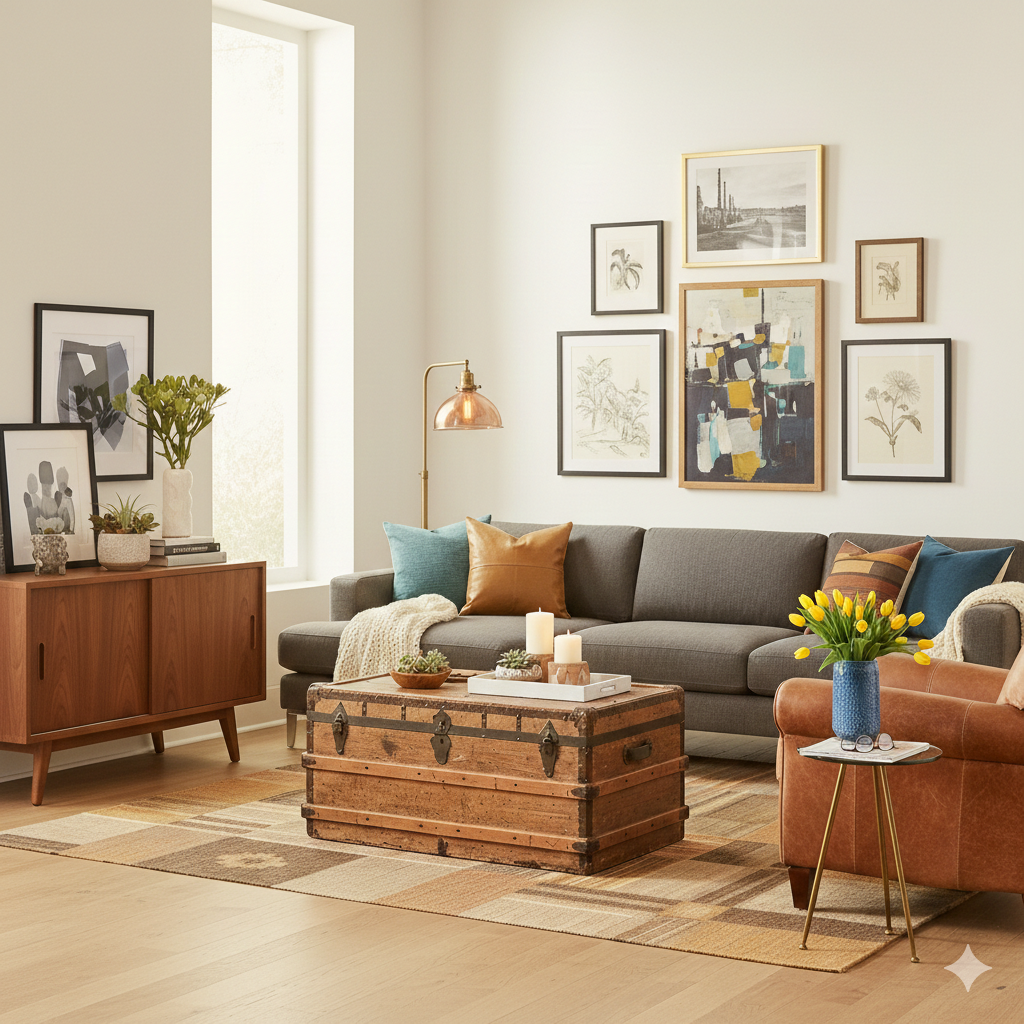
The difference between a good eclectic space and a great one often comes down to final styling details. These finishing touches make rooms feel complete, lived-in, and intentional. They’re the elements that catch your eye, provide functionality, and tie everything together. Mastering these details elevates your space from decorated to designed.
Coffee table styling creates focal points and adds functionality. Start with a stack of beautiful books about subjects you love—architecture, travel, art, gardening. Add a decorative tray to corral smaller items like candles, coasters, or a small plant. Include something organic like flowers or greenery. Leave some empty space for actually using the table—setting drinks, putting feet up, playing games. The coffee table should look good but remain functional. Rotate items seasonally or when you need a refresh.
Throw pillows and blankets add comfort and style to seating areas. Mix pillow sizes, patterns, and textures as discussed earlier. Odd numbers work better than even. Arrange pillows with larger ones in back, smaller ones in front. Some can stand upright, others can lean. Drape throw blankets over sofa arms or chair backs rather than folding them perfectly. This casual approach looks collected and inviting rather than stiff and showroom-like. Have enough pillows and blankets that people actually use them without feeling they’re disturbing the decor.
Side table and nightstand styling balances form and function. These surfaces need to work practically—holding lamps, phones, drinks, books—while looking good. Use a small tray to organize functional items. Add one decorative element like a small plant, candle, or object from a collection. Include a coaster that complements your style. Keep surfaces relatively clear so they remain useful. Nightstands especially should support your bedtime routine rather than just looking pretty.
Entry styling creates first impressions. Include a console table or shelf near your door for keys, mail, and bags. Hang a mirror for last-minute checks. Add a tray for small items. Include a stool or bench if space allows. Hang hooks or a coat rack. These practical elements prevent clutter while establishing style right at the entry. This is where guests form their first impression of your eclectic aesthetic, so make it welcoming and organized.
Bathroom styling often gets overlooked but matters for complete eclectic design. Use interesting containers for cotton balls, swabs, and toiletries. Display pretty hand towels. Add a small plant if you have light. Hang interesting art—bathrooms can showcase quirky pieces that might overwhelm other rooms. Include a candle or diffuser for scent. Group similar items together in baskets or trays. These details make bathrooms feel designed rather than purely functional.
Kitchen styling brings personality to practical spaces. Display beautiful dishes rather than hiding everything. Keep frequently used items in attractive containers on counters. Hang interesting dish towels. Include a small vase of herbs or flowers. Style open shelving with a mix of functional and decorative items. The kitchen should feel like part of your eclectic home, not a purely utilitarian space separate from your design.
Seasonal styling keeps your space feeling current and alive. Swap throw pillows for seasonal colors. Bring in seasonal plants and flowers. Adjust artwork or accessories. Change out books on display. Add seasonal scents through candles or diffusers. These small changes keep your space feeling fresh without requiring major overhauls. They also connect your indoor space to the changing outdoor world.
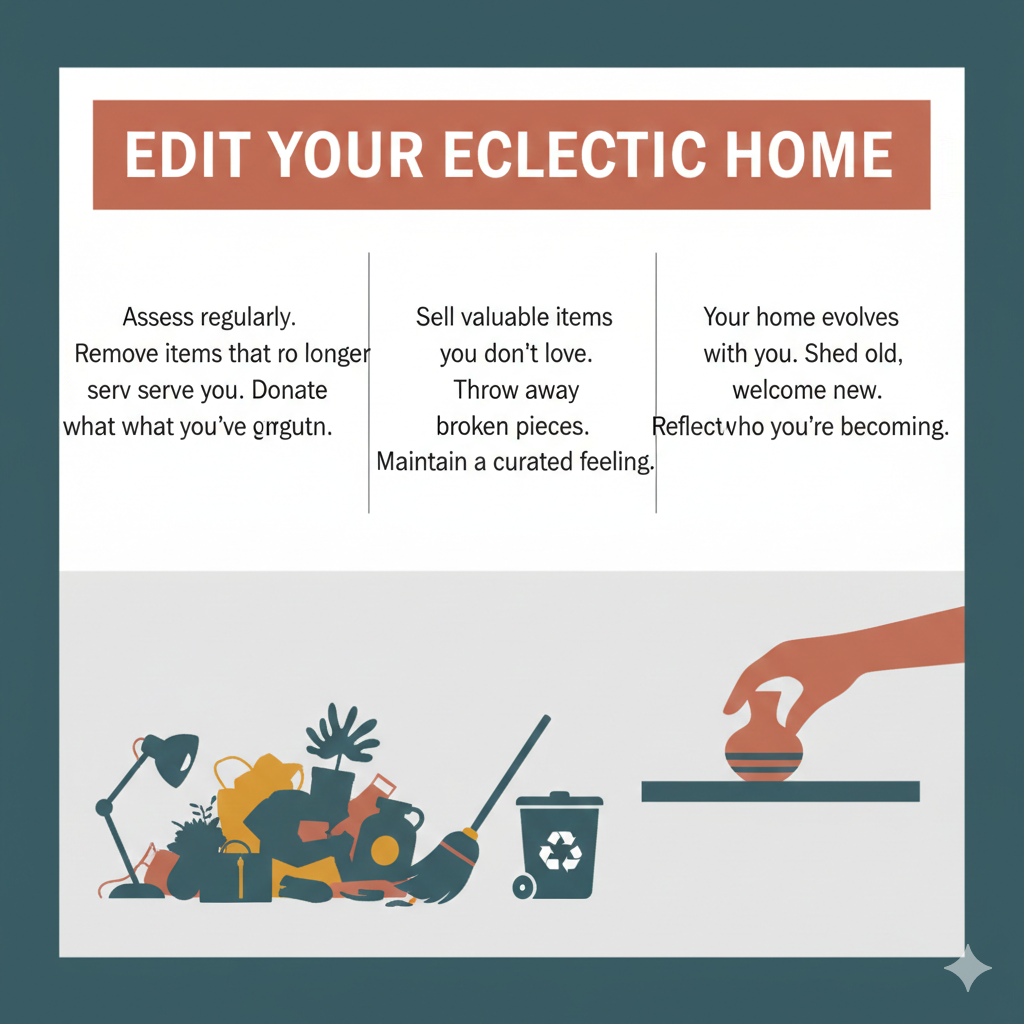
Edit regularly to prevent clutter from accumulating. Eclectic doesn’t mean keeping everything. Regularly assess your spaces and remove items that no longer serve you or fit your aesthetic. Donate things you’ve outgrown. Sell valuable items you don’t love. Throw away broken or damaged pieces. This editing maintains the curated, intentional feeling that makes eclectic spaces work. Your home should evolve with you, shedding old pieces and welcoming new ones that better reflect who you’re becoming.
Bringing It All Together
Building a modern eclectic home is a journey rather than a destination. Your space will evolve as you find new pieces, as your tastes develop, and as your life changes. The principles outlined here provide a foundation for making confident decisions, but they’re guidelines rather than rigid rules. Trust your instincts, choose pieces you genuinely love, and create spaces that feel authentically yours.
Start by implementing these ideas room by room rather than trying to transform your entire home at once. Pick one space—maybe your living room or bedroom—and apply these principles fully. Establish your color palette, select your furniture mix, layer your textiles, style your surfaces. Once that room feels complete and cohesive, move to the next space. This approach prevents overwhelm and allows you to learn what works for your specific home and taste.
Shop secondhand and vintage stores regularly to build your eclectic collection. Thrift stores, estate sales, antique malls, and online marketplaces offer unique pieces with character and history. These venues provide the vintage elements that give eclectic spaces their depth and interest. Don’t buy everything at once—let your collection grow naturally as you find pieces that speak to you. The patience required to source eclectic pieces is part of what makes them special.
Mix high and low pieces without apology. Expensive designer furniture can sit alongside flea market finds. New pieces from mainstream stores can work with vintage treasures. The source and price don’t determine value—what matters is how pieces look together and how they make you feel. This democratic approach to decorating is liberating and makes eclectic style accessible regardless of budget.
Break rules when it feels right. While the guidelines here help create cohesive eclectic spaces, your home should ultimately reflect your personality even when that means breaking conventional design rules. If you love something, find a way to include it even if it seems unconventional. The confidence to follow your instincts and create spaces that make you happy is more valuable than perfectly following any design system.
Invite feedback but trust yourself ultimately. Friends and family might have opinions about your eclectic choices. Some people won’t understand why you mixed that vintage chair with your modern sofa or why you painted a wall dark green. Listen to feedback but remember that you live in your space every day. Design for your own joy and comfort rather than for others’ approval. The most successful eclectic homes feel personal precisely because they prioritize the owner’s preferences over generic design trends.
Your modern eclectic home will never be finished, and that’s the beauty of this approach. You’ll always find new pieces to add, old pieces to release, and ways to refresh your space. This ongoing evolution keeps your home interesting and prevents the stagnation that can happen with more rigid design styles. Embrace the journey of building and refining your eclectic space. Every change teaches you more about your taste and preferences.
The effort invested in creating a modern eclectic home pays dividends in daily joy. Walking into spaces that reflect your personality, tell your stories, and surround you with objects you love improves your quality of life. Your home becomes a sanctuary that energizes rather than drains you, a place that supports your wellbeing and creativity. This emotional return on your design investment makes every hour spent curating, styling, and refining worthwhile.