
Simple, smart changes that make your space feel like a million dollars — no renovation needed
There is something about walking into a beautifully put-together apartment that makes you stop and take a breath. Everything feels intentional. The lighting is warm, the furniture looks like it was made for that exact spot, and even the small details seem to have been thought through. You leave thinking the person who lives there must have spent a fortune — but in most cases, they did not. They just knew the right tricks.
Making your apartment look high end is less about how much money you spend and more about the choices you make. It is about understanding which things the eye notices first, which details quietly say ‘this space was cared for,’ and how small shifts in the way you arrange, layer, or light your home can completely change the way it feels. Renters, apartment dwellers, and people on real budgets do this all the time. You do not need to gut your kitchen or replace your floors. You need a different way of looking at what you already have — and a few key moves that interior designers use every single time.
This blog post is going to walk you through the specific ways to make your apartment look expensive and well-designed, room by room and idea by idea. Some of these things cost almost nothing. Others are small investments that pay off every single day when you walk through your front door. All of them work. Let’s get into it.
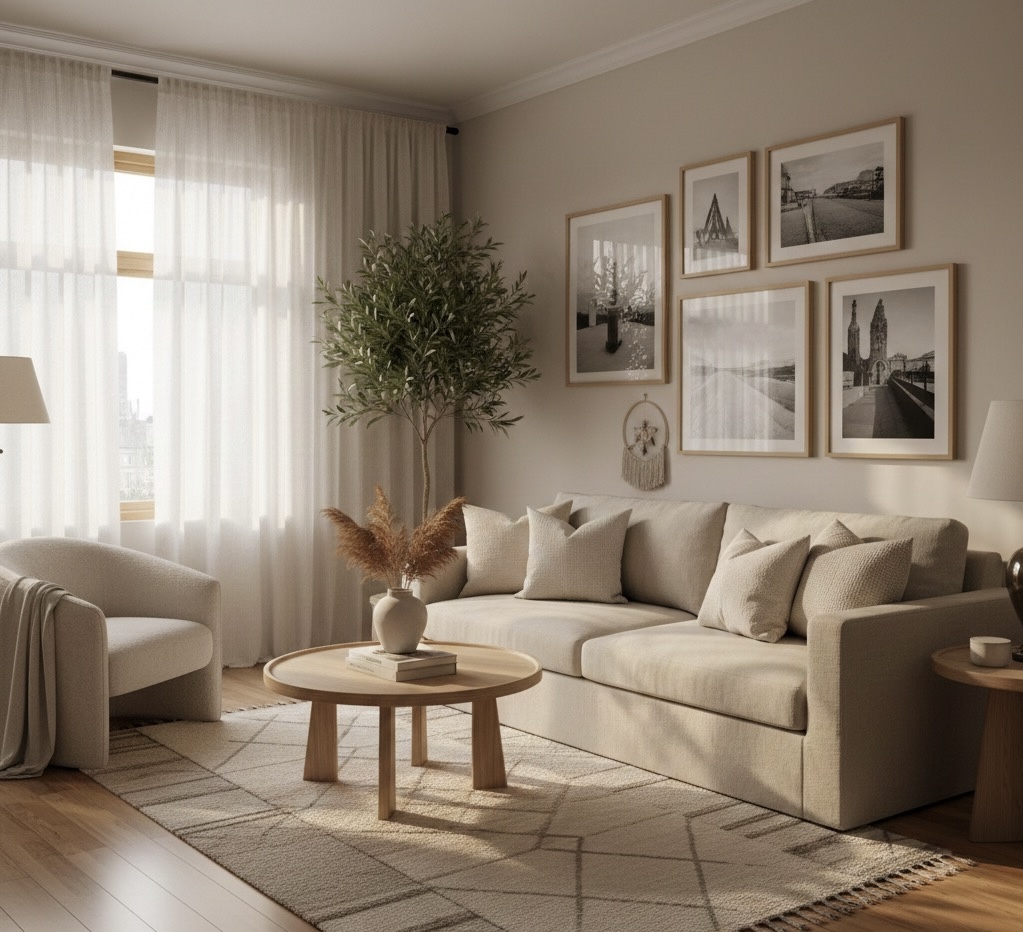
1. Think About Lighting Before Anything Else
If there is one single thing that separates a space that looks luxurious from one that feels flat and cheap, it is the lighting. Most apartments come with harsh overhead lighting — usually a single ceiling fixture or recessed bulbs that flood the room with cold, flat light from one direction. That kind of lighting is functional, but it is not flattering. It makes rooms feel like offices or hospitals. It flattens out texture, washes out colour, and kills the warmth that makes a home feel inviting.
The fix is layering your light. Think of lighting in three categories: ambient (the overall light in the room), task (light for specific jobs like reading or cooking), and accent (light that highlights something beautiful or adds warmth). A high-end looking apartment almost always has all three working together. Instead of relying on that one overhead light, plug in floor lamps with warm bulbs in the corners of your living room. Add a table lamp on your nightstand and another one on a console table or sideboard. Put a small lamp or candles on your dining table rather than eating under a bright ceiling light.
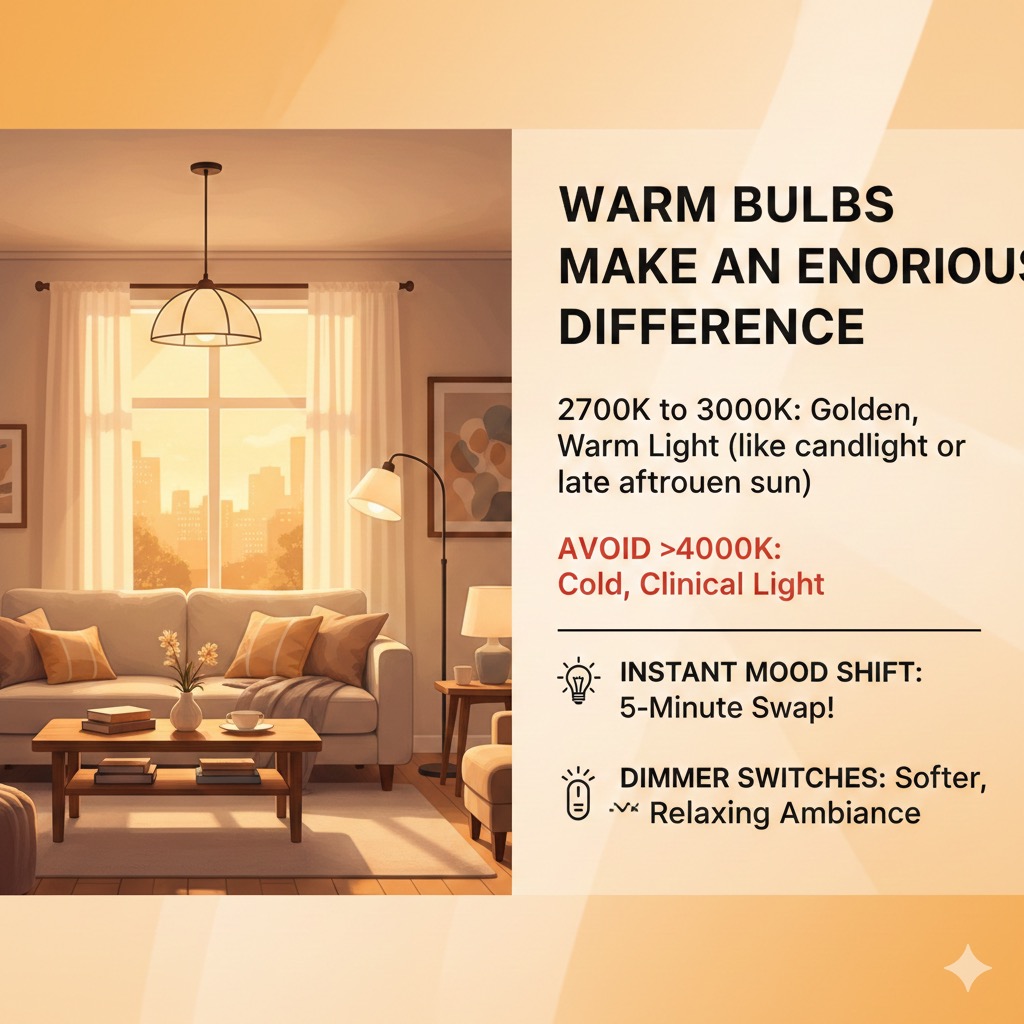
Warm bulbs make an enormous difference. Look for bulbs labelled 2700K to 3000K — this is the warm, golden range that looks like candlelight or late afternoon sun. Avoid anything over 4000K in living spaces, which reads as cold and clinical. Swapping your bulbs out takes about five minutes and instantly changes the entire mood of your home. If you have dimmer switches, use them. Dim your lights in the evening and the whole apartment will feel softer, more expensive, and far more relaxing.
Candles are another tool that designers and stylists use constantly. They add texture, scent, and a flickering warmth that no electric light can fully replicate. A cluster of three pillar candles on a coffee table or a row of tapers on a dining shelf instantly makes a space feel considered. If you are not comfortable with open flames, very good quality LED candles have become convincingly realistic and are a perfectly good option.
2. Go Taller with Everything
One of the quickest ways to make a small or average apartment look dramatically more expensive is to draw the eye upward. Ceilings feel higher, rooms feel bigger, and the whole space gains a sense of grandeur simply by making intentional vertical choices. This is a trick used in almost every high-end interior and it is easier to apply than most people think.
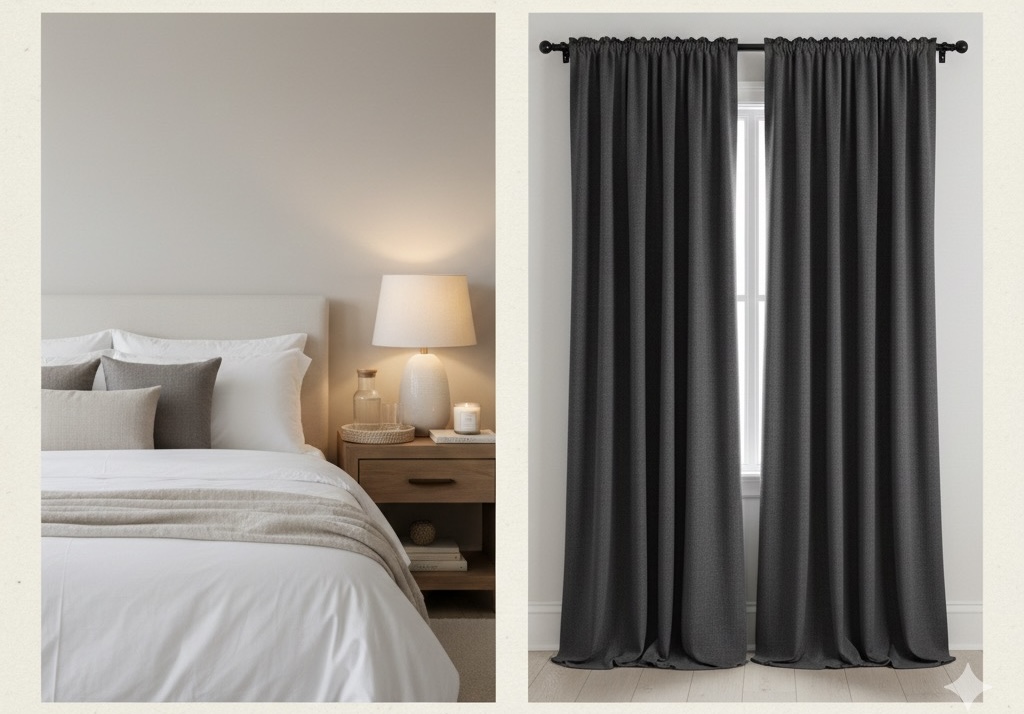
Start with your curtains. If your curtains end at the window frame — or worse, just below it — move the rod up. Hang it as close to the ceiling as possible and buy curtains that fall all the way to the floor with a slight puddle or break. Floor-to-ceiling curtains make windows look twice as tall, rooms look twice as spacious, and the whole apartment looks far more polished. The length matters more than the fabric or the print. Even inexpensive curtains from a budget store look stunning when they are hung high and long.
Apply the same vertical thinking to your shelving. Instead of floating shelves that sit at eye level in a short row, try a tall bookcase that reaches toward the ceiling, or stack shelves all the way up the wall. Fill the top sections with books, decorative objects, or trailing plants. The eye naturally travels up and reads height as luxury. In your bathroom, stack towels or place a tall plant in the corner. In your bedroom, choose a headboard that is taller than standard — it anchors the room and gives it a hotel-like feel.
Even art placement follows this logic. If you hang pictures too low — which most people do — the room feels squat and disconnected. The general rule is to hang the centre of an artwork at around eye level, which is about 57 to 60 inches from the floor. But when you are grouping multiple pieces together, treat them as a whole unit and think about how the collection as a whole reaches upward. Gallery walls that climb high on a wall read as intentional and collected, not cluttered.
3. Choose a Colour Palette and stick with it
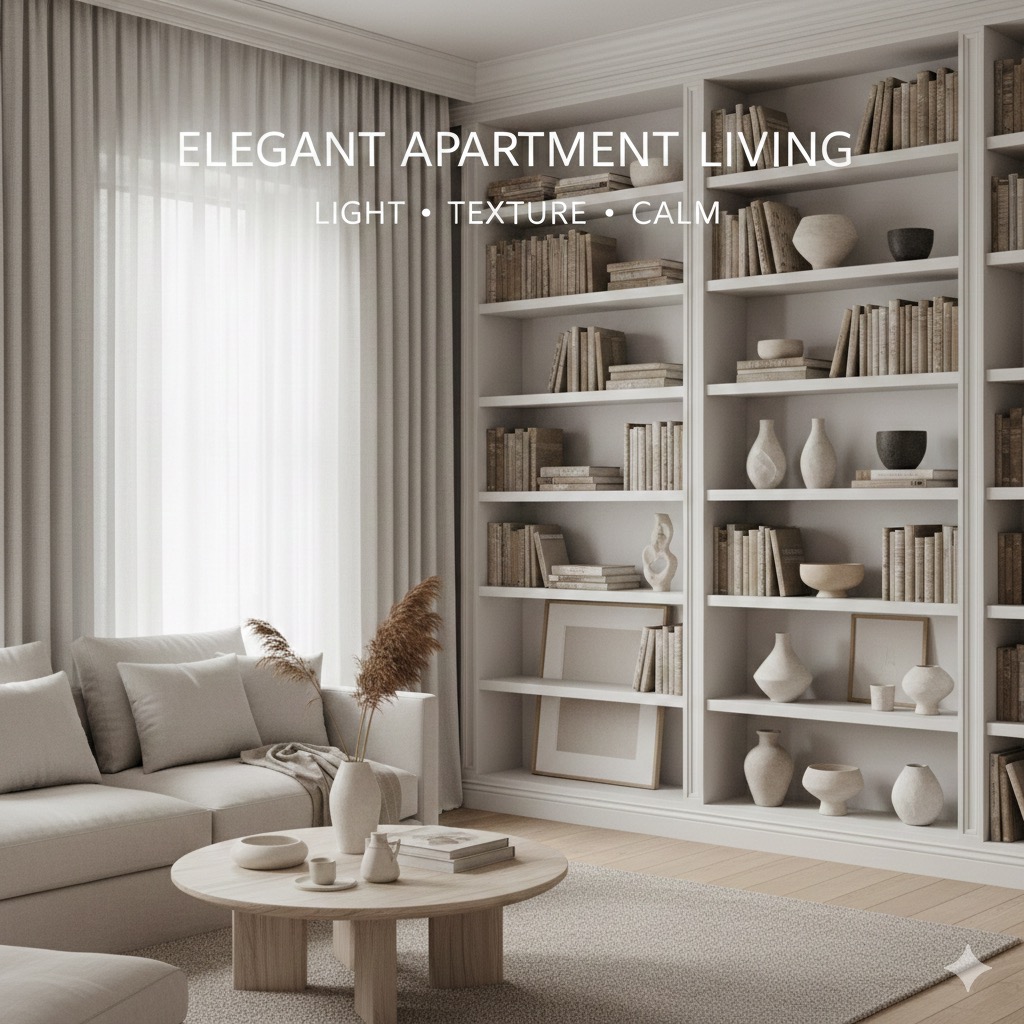
Nothing makes an apartment look more pulled-together and high-end than a cohesive colour palette. When there are too many competing colours — a blue sofa, red throw, green rug, yellow wall art — the eye bounces around and the space feels busy and cheap, no matter how individual each item is on its own. The most expensive-looking interiors almost always use a restrained palette: usually two to three main colours, one or two accent colours, and a consistent undertone running through everything.
You do not have to go all-white or all-beige to achieve this — though neutral palettes are very popular for good reason. They are easy to layer, they make it simple to add and remove pieces over time, and they photograph beautifully, which is partly why they feel so associated with high-end design in magazines and on social media. But a deeply saturated, moody palette — think forest green walls, dark wood, and brass accents — works just as well, as long as everything within the space belongs to the same colour family.
Pick your dominant colour first. This is usually the walls or the largest piece of furniture like the sofa. Then choose one or two secondary colours that either harmonise with it (close on the colour wheel) or contrast it intentionally (directly opposite, like warm terracotta against cool blue-grey). Your accent colour is the third layer — small doses in throw pillows, a vase, a picture frame. The key is to repeat your colours. If you have a terracotta pillow on the sofa, bring a terracotta candle to the bookshelf and a warm terracotta-toned print in the bedroom. When colours echo throughout a space, it feels designed rather than decorated.
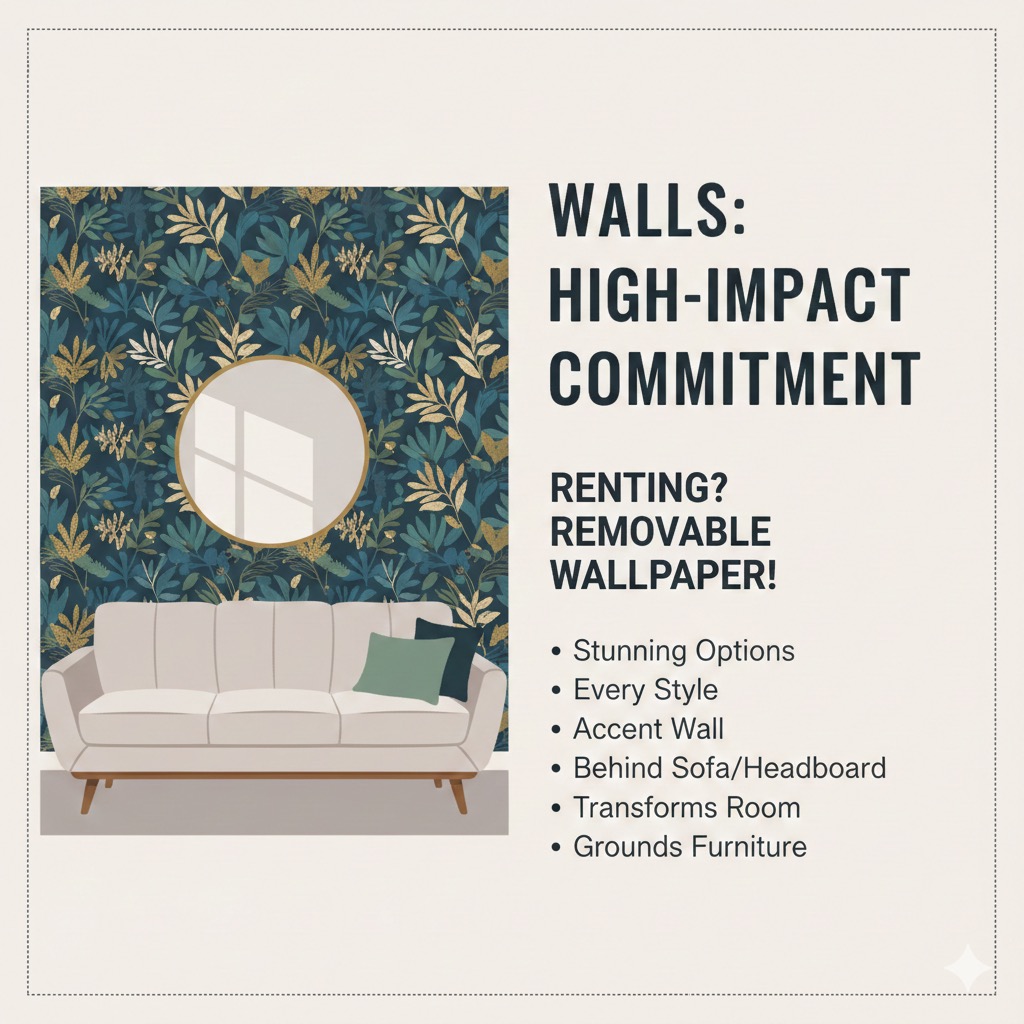
Walls are a high-impact place to commit. If you rent and cannot paint, removable wallpaper has come a very long way and there are stunning options in every style. Even a single accent wall — especially behind your sofa or headboard — changes the entire atmosphere of a room and grounds the furniture in front of it.
4. Invest in One or Two Statement Pieces
A common misconception is that an expensive-looking home requires every single item to be expensive. It does not. In fact, the opposite approach often works better: keep most things simple and affordable, and invest seriously in one or two pieces that carry the room. These are what interior designers call anchor pieces or hero pieces — and they do the heavy lifting for everything around them.
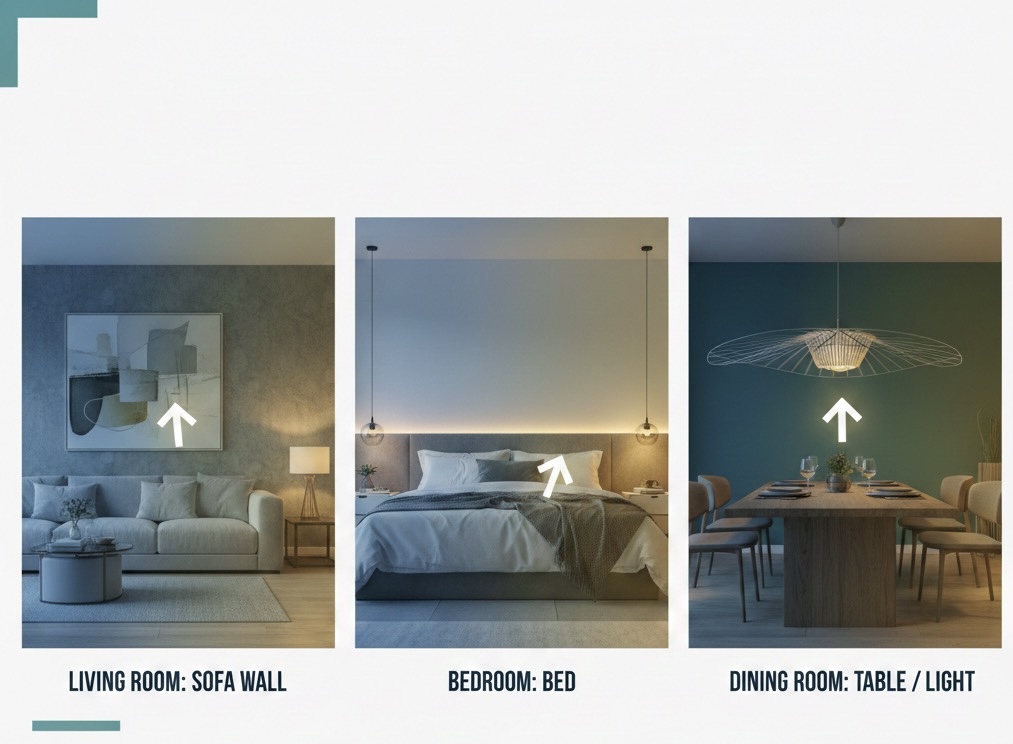
In a living room, this might be a genuinely beautiful sofa in a rich fabric like velvet or boucle. Or a large, striking piece of wall art that commands attention. Or a one-of-a-kind vintage rug that grounds the whole room. In a bedroom, it might be a high-quality bed frame with real weight and presence. In a dining space, it might be a sculptural light fixture hanging above the table, or a dining table made from real, solid wood. These pieces immediately elevate everything placed near them.
The reason this works is contrast and intention. When you place something genuinely beautiful next to things that are simpler and more affordable, the eye reads the beautiful thing and assumes everything else is of a similar quality. It is a psychological effect that designers and stylists use constantly. A velvet sofa makes affordable cushions look better. A real marble side table makes a budget floor lamp feel elevated. The hero piece lifts the whole room.
When you are deciding where to invest, think about what you look at most in a given room — what draws your eye when you walk in? In most living rooms, it is the sofa wall. In bedrooms, it is the bed. In dining rooms, it is the table or the light above it.
5. Layer Your Textiles Thoughtfully
Expensive interiors are almost always soft interiors. They invite you to touch things — to run your hand along a linen cushion, to sink your feet into a thick rug, to pull a heavy throw around your shoulders. Texture is what makes a home feel rich and alive, and the way to achieve that is through layering textiles thoughtfully. A bare sofa with no cushions and no throw looks like a showroom floor. The same sofa with three cushions in different but complementary fabrics, a folded throw draped over one arm, and a rug underneath it looks like a home.
The key word in that sentence is complementary. Layering textiles well does not mean matching them — it means choosing things that work together in colour, scale, and feel. Mix smooth with rough: a silky cushion alongside a woven one. Mix patterns carefully: a bold geometric alongside a softer, more subtle stripe. Mix weights: a light linen throw alongside a heavier knitted blanket. The variety creates visual richness that reads as intentional and curated rather than thrown together.
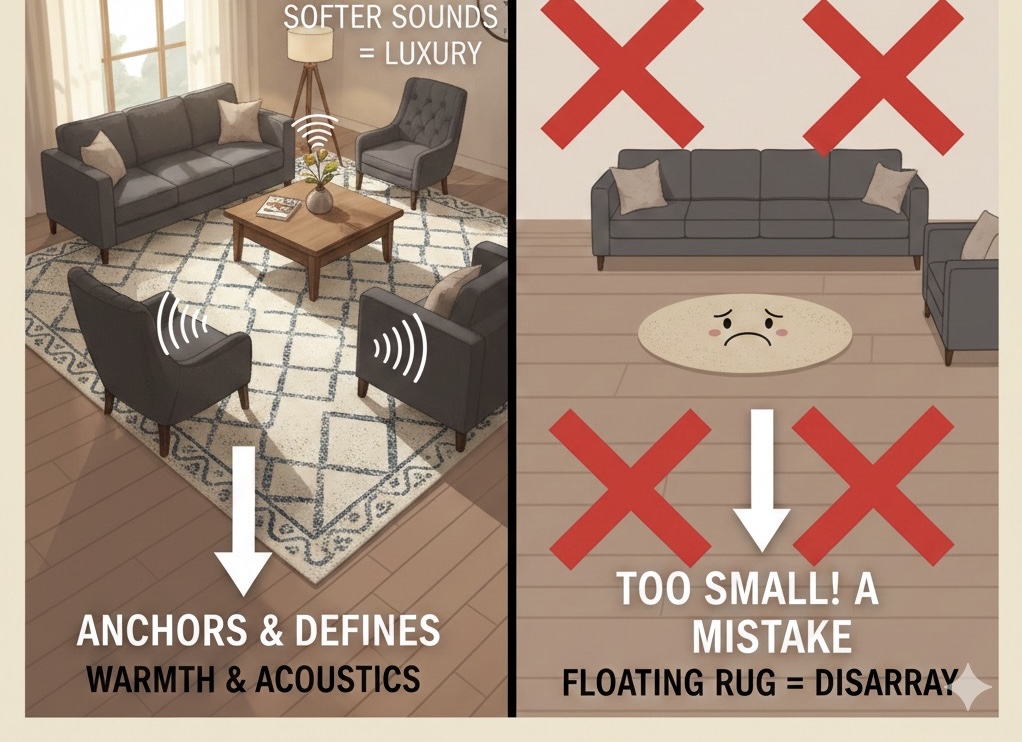
Rugs deserve a dedicated mention because they are one of the most obvious transformations you can make in an apartment. A rug defines a seating area, anchors furniture, adds warmth to hard floors, and contributes enormously to the acoustic quality of a room (which itself has a subconscious effect on how luxurious the space feels — softer sounds feel more expensive). The number one mistake people make with rugs is buying one that is too small. In a living room, the rug should be large enough that at least the front legs of all the seating sit on it. If the rug is floating in the middle of the room touching nothing, it does the opposite of its job.
In the bedroom, a large rug that extends well beyond the sides of the bed is one of the single most effective upgrades you can make. Waking up and placing your feet on a soft, warm rug instead of bare floor is a small moment of luxury that happens every single day. In the bathroom, a good quality bath mat — thick and properly absorbent — adds a spa-like quality that elevates the whole experience of the space.
6. Edit Ruthlessly — Less Really Is More
One of the clearest visual differences between an apartment that looks expensive and one that does not is the amount of stuff in it. Clutter is the enemy of luxury. When surfaces are covered in a mix of mail, random objects, old magazines, and decorative pieces that no longer have a purpose, the eye cannot rest anywhere and the whole space reads as chaotic rather than curated. The most beautifully styled interiors are almost always edited down to fewer, more intentional pieces.
This does not mean your home should feel empty or cold. It means every object that sits on a surface, hangs on a wall, or takes up visual space should be there on purpose. Ask yourself, when you look at each surface in your apartment: does this belong here? Does it add something — beauty, function, meaning — or is it just filling space out of habit? The objects that genuinely add something get to stay. The rest either finds a home out of sight or leaves the apartment entirely.
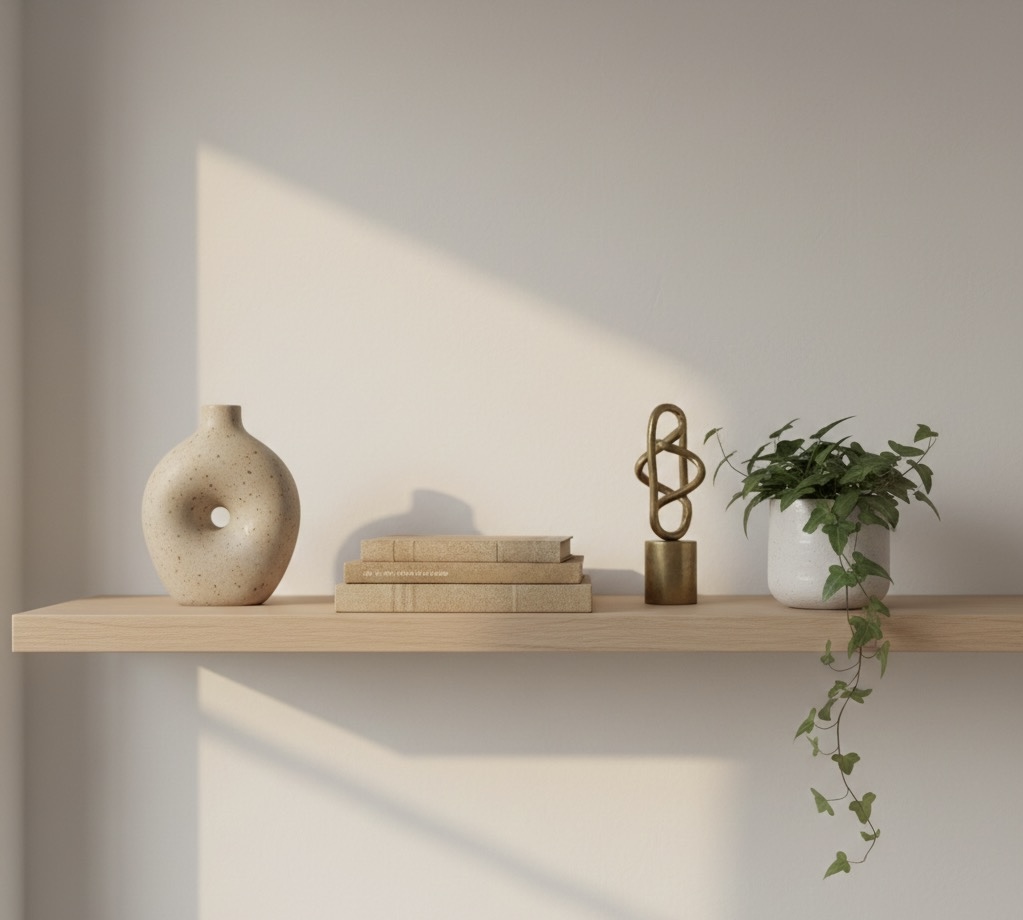
A good practical exercise is to clear a surface completely — a coffee table, a shelf, a kitchen counter — and then put back only three to five things, arranged thoughtfully. You will almost certainly be surprised by how much better it looks with less on it. Then you can work your way through the rest of the apartment using the same approach. This kind of editing is free, takes an afternoon, and immediately makes your home look more expensive and intentional.
Storage is your best friend in an apartment. Beautiful baskets hide remote controls, chargers, and extra throws. A media cabinet closes the door on a tangle of wires and equipment. Closed storage in the kitchen keeps appliances off the counter. The goal is not to own less necessarily — it is to be more deliberate about what is visible. What is out should be beautiful or necessary. What is not beautiful and not necessary should be put away.
7. Bring in Plants — The Right Way
Plants are one of the most effective and affordable ways to make an apartment feel alive, designed, and expensive. They add colour, texture, scale, and a sense of organic warmth that no object can replicate. But the way you use them matters enormously. A single small succulent on a windowsill does almost nothing for a room. A large, dramatic plant in the right corner completely transforms it.
Think big when it comes to plants. A tall fiddle leaf fig, a monstera that has grown to fill its corner, a climbing pothos trained along a wall, or a dramatic snake plant in a beautiful ceramic pot all make a statement that says this person cares about their space. One large plant does far more than six small ones scattered around randomly. It creates a focal point, it adds life at a scale the room can feel, and it grounds the corner it sits in the same way a piece of furniture would.
The pot is just as important as the plant. A beautiful monstera in a plastic nursery pot looks sad. The same plant in a hand-thrown ceramic pot, a pale terracotta with a natural rim, or a woven basket liner looks like a design choice. Repotting into something beautiful is one of those small details that costs almost nothing and makes a visible difference. As a general rule, stick to natural materials for plant pots: ceramic, terracotta, stone, and woven materials all work. Avoid shiny plastic, bright colours, or anything that competes visually with the plant itself.
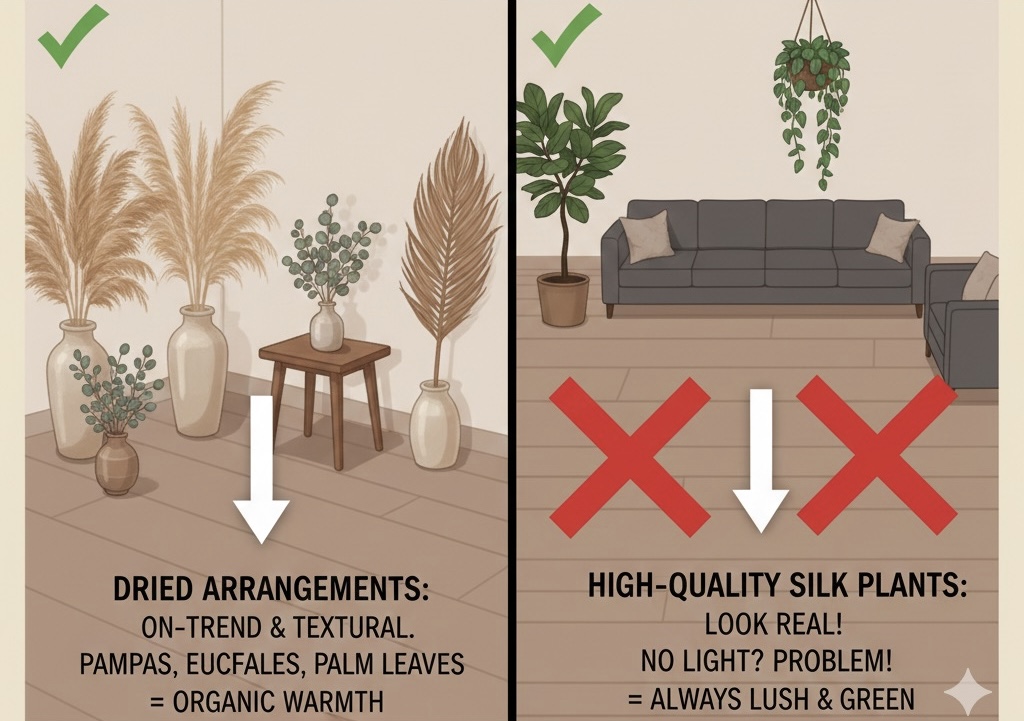
If you do not have a green thumb, dried arrangements have had a serious design moment and show no sign of going away. A bunch of dried pampas grass in a tall vase, a bundle of dried eucalyptus, or a dramatic dried palm leaf in a corner all add the same visual warmth and organic texture as live plants — with zero maintenance. High-quality silk plants have also improved enormously in recent years and there are some very convincing options if natural light is a genuine issue.
8. Pay Attention to the Details That People Actually Notice
The difference between a beautiful apartment and a merely nice one is almost always found in the small details — the things you might walk past without consciously registering, but which your brain picks up on and uses to form an impression of quality. Hardware, for example. The handles and knobs on kitchen cabinets and drawers are something you interact with every day. If they are cheap-looking plastic or standard brushed chrome, they quietly signal a certain level of quality — or lack of it. Replace them with brushed brass, matte black, or hand-cast ceramic hardware and the whole kitchen feels more expensive, even if nothing else has changed.
The same is true for light switch covers and outlet plates. The standard white plastic covers that come with most apartments are perfectly functional and completely invisible in terms of design quality. Swap them out for something in brushed brass or satin nickel and you are spending very little money but making every wall you look at slightly more refined. These are the kinds of things that interior designers and stylists call ‘the edit’ — the final pass where you look at everything that is slightly ugly or out of place and deal with it.
Consider your cable situation. Cables trailing from TVs, computers, and phone chargers are one of the most reliable ways to make an apartment look messy and cheap. Cord management solutions — clips, cable covers that blend with the wall, or simply hiding cords behind furniture — cost almost nothing and make an immediate visual difference. A TV mounted on the wall with cables hidden inside the wall or behind a panel looks infinitely more polished than the same TV sitting on a stand with a tangle of black wires visible below it.
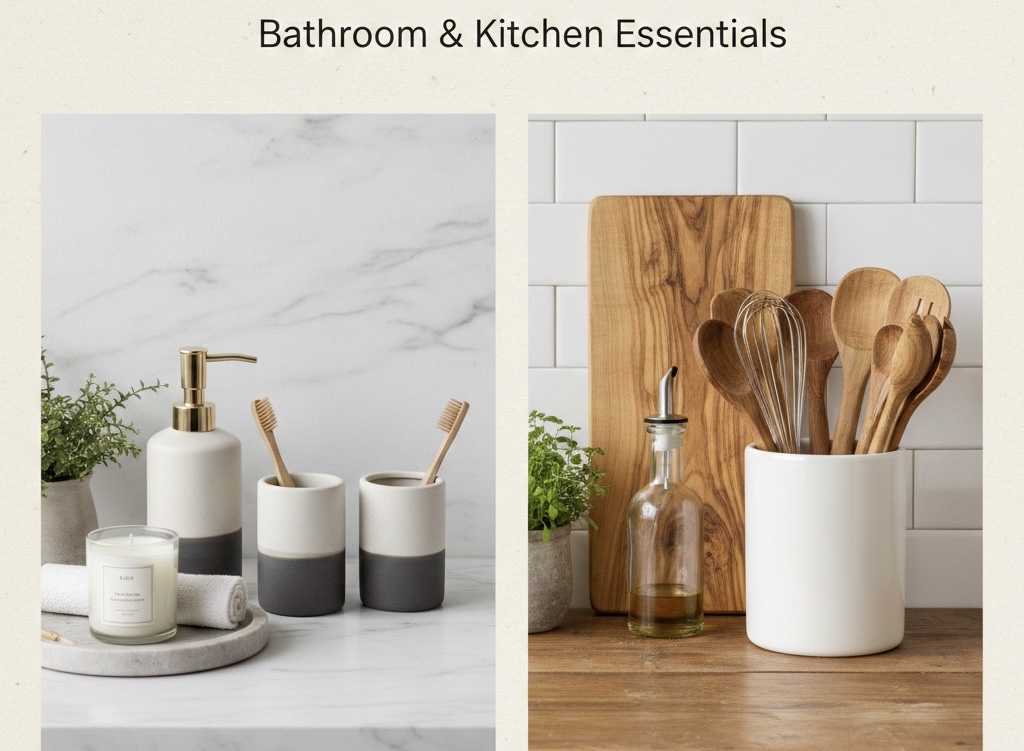
Soap dispensers, toothbrush holders, and bathroom accessories are another set of details that people genuinely notice, even if they do not realise it. Replacing plastic pump bottles with a matching set of ceramic or stone dispensers in your bathroom, and a coordinated set of accessories, makes the space feel like a high-end hotel. Same with your kitchen — a beautiful olive wood cutting board, a ceramic utensil holder, and a proper glass oil bottle with a pour spout on the counter make the kitchen feel intentional even when not in use.
9. Curate Your Art and Make It Feel Personal
Blank walls are one of the fastest ways to make an apartment feel unfinished and cheap. But not all wall art is created equal, and the way you hang and arrange art matters just as much as what the art actually is. A single beautiful print, properly framed and hung at the right height, does more for a room than a cluster of unrelated, mismatched frames stuck up without thought.
The frame is half the art. A mediocre print in a genuinely beautiful frame — something with real weight and quality, in wood, brass, or a chunky powder-coated metal — looks elevated. A beautiful print in a thin, flimsy plastic frame looks diminished. When you are choosing frames, look for consistency across a wall. They do not need to be identical, but they should belong to the same family — same finish, same thickness, or the same wood tone. A mix of natural wood frames in slightly different shades all feel cohesive. A mix of gold, silver, wood, and black frames in different sizes just looks random.
Think about art as something you are collecting over time rather than something you buy all at once to fill walls. A single large-scale work in a prominent spot is more impressive than ten small pieces scattered everywhere. Vintage art from markets, original pieces from local artists, or even beautifully printed photographs you have taken yourself all make for walls that feel personal and interesting rather than generic. Avoid anything that has been mass-produced and is sold in every home goods chain — these pieces are recognisable and they immediately make a space feel less considered.
Art on shelves and surfaces — leaning a print against a wall on a shelf, propping a small artwork on a console, or placing a sculptural object on a coffee table — works alongside hung pieces and makes a room feel layered and lived in. The combination of hung art and art at surface level is something you see in every high-end interior, and it is one of those visual details that reads as effortless but is actually quite intentional.

10. Make Your Bedroom Feel Like a Hotel
Of all the rooms in an apartment, the bedroom is the one where the quality of what you put in it is most felt rather than just seen. You spend hours every day in direct contact with your bedding, pillows, and mattress, so the sensory experience of that room shapes how rested and at ease you feel in your home. And the visual experience of a beautifully made bed — the kind you see in high-end hotel rooms — is something anyone can achieve, regardless of budget.
Start with white or neutral bedding in natural fabrics. White bedding is the single most universally agreed-upon marker of luxury in a bedroom — it reads as clean, calm, and hotel-like no matter what else is in the room. Linen is the fabric that most closely recreates the feeling of high-end bedding, even at affordable price points. It wrinkles in a way that looks intentional rather than sloppy, softens beautifully with washing, and has a natural texture that feels beautiful against skin. If white feels too stark, warm whites, creams, and soft oatmeal tones all carry the same feeling.
The layered bed is the secret to the hotel look. Start with a well-fitted bottom sheet, then a flat top sheet, then a duvet or quilt, and finally a folded throw or extra blanket across the foot of the bed. Add pillows in layers: sleeping pillows at the back, euro shams in front of them, and two or three decorative cushions in front of those. The layering adds depth and visual texture that a simple covered bed just cannot achieve. The morning routine of actually making this kind of bed takes two minutes and makes the entire bedroom feel put together for the rest of the day.
Beyond the bed itself, a few other details transform a bedroom into a retreat. Matching bedside lamps on both sides of the bed create symmetry and visual balance that immediately reads as considered. A tray with a small carafe of water, a candle, and a book on each nightstand looks like a hotel room in the best way. Blackout curtains that hang from ceiling to floor add that same vertical drama we talked about earlier while also genuinely improving your sleep, which makes everything feel better.
11. Make the Entryway Work Harder
The entryway sets the tone for the entire apartment. It is the first thing you see when you come home and the first thing guests experience when they visit. Most apartments, especially smaller ones, treat the entryway as an afterthought — a functional space for dropping keys and kicking off shoes rather than an opportunity to make an impression. But even a narrow hallway or a small landing area can be made to feel intentional and beautiful with very little space and very little money.
A console table is one of the best investments for an entryway. Even a slim one that takes up very little depth gives you a surface on which to create a styled vignette — a lamp, a small tray for keys and change, a plant or vase, and a piece of art leaning above it. This single arrangement immediately makes the entryway feel like it belongs to a considered home rather than a rented apartment. If there is genuinely no room for a console table, even a floating shelf at about waist height achieves the same effect.
A mirror in the entryway does double duty. It makes the space feel larger and brighter by reflecting light back into it, and it gives you a place to check yourself before leaving the house, which is practical. A large mirror — round, arched, or rectangular, in a frame that suits the rest of your apartment — is a simple addition that carries a lot of visual weight. Lean it against the wall if you rent and cannot mount things, or hang it properly if you can. Either approach works.
Finally, think about what your entry smells like. A candle, a diffuser, or a bunch of dried botanicals near the door means that the sensory experience of your apartment begins the moment the door opens, not just the visual one. Scent is deeply connected to our sense of luxury and comfort, and a home that smells as good as it looks is a home that feels genuinely well-cared for.

12. Use Scent as Part of Your Design
Scent is often called the forgotten element of interior design, and that is exactly right. We think about what our homes look like and sometimes about what they sound like, but rarely about what they smell like — even though scent is one of the most powerful senses we have for forming emotional impressions. Expensive hotels, boutiques, and beautifully designed spaces almost always have a signature scent. It is part of the experience of being there, and it works on a level that you might not be consciously aware of but absolutely feel.
The easiest way to add scent to your apartment is through candles. A good quality candle — not necessarily a very expensive one, but one with a clean, natural fragrance rather than an artificial, headache-inducing synthetic one — changes the atmosphere of a room in a way that is hard to explain but immediately felt. Reed diffusers are a good option for continuous, background scent that does not require you to light anything or remember to blow anything out. Place them in the rooms where you spend the most time and in areas with some air flow, like near a hallway or by a window, so the fragrance moves through the space naturally.
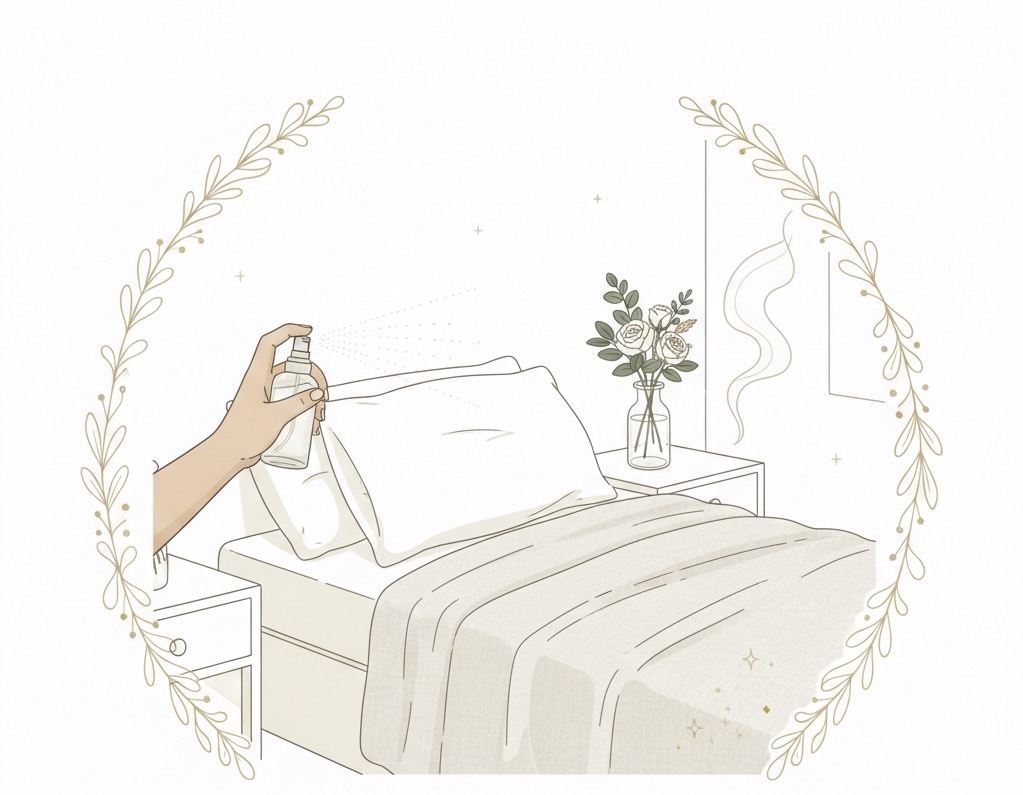
Linen sprays are a small luxury that makes an immediate difference to the sensory experience of your bedroom. Spraying your pillows and bedding before you get into bed at night adds a subtle fragrance that connects the act of going to bed to a feeling of calm and luxury. Many high-end hotels do this as standard. It costs very little and takes about five seconds. Fresh flowers are another natural fragrance source — and they have the double benefit of looking beautiful. A bunch of fresh eucalyptus in the bathroom releases a spa-like scent every time the shower runs steam through the room.
13. Upgrade Your Kitchen Without Renovating
The kitchen is often the space renters feel most stuck in — and for good reason. You usually cannot change the cabinets, the countertops, or the appliances. But there is far more you can do to make a rental kitchen feel expensive and beautiful than most people realise, without touching a single thing that belongs to the landlord.
Paint or contact paper on cabinet interiors is a surprisingly effective update. You see the insides of cabinets every time you open them, and lining them with a beautiful paper adds a small moment of delight that also signals care and attention. Coordinated kitchen storage — decanting your rice, pasta, grains, and coffee into matching glass or ceramic containers — transforms the pantry area from a collection of different-branded bags and boxes into something that looks like a magazine spread. It is also genuinely more functional because things are easier to find and stay fresher longer.
The items that live on your counter permanently matter enormously because they are always visible. A beautiful olive wood or marble board, a ceramic or glass oil bottle, a proper salt cellar instead of a cardboard salt box, a plant, and a fruit bowl arranged intentionally make a kitchen counter look styled even when you are not cooking. Conversely, a toaster, a microwave, a paper towel roll on a cheap holder, and a pile of mail on the same counter look chaotic even if the room is otherwise clean.
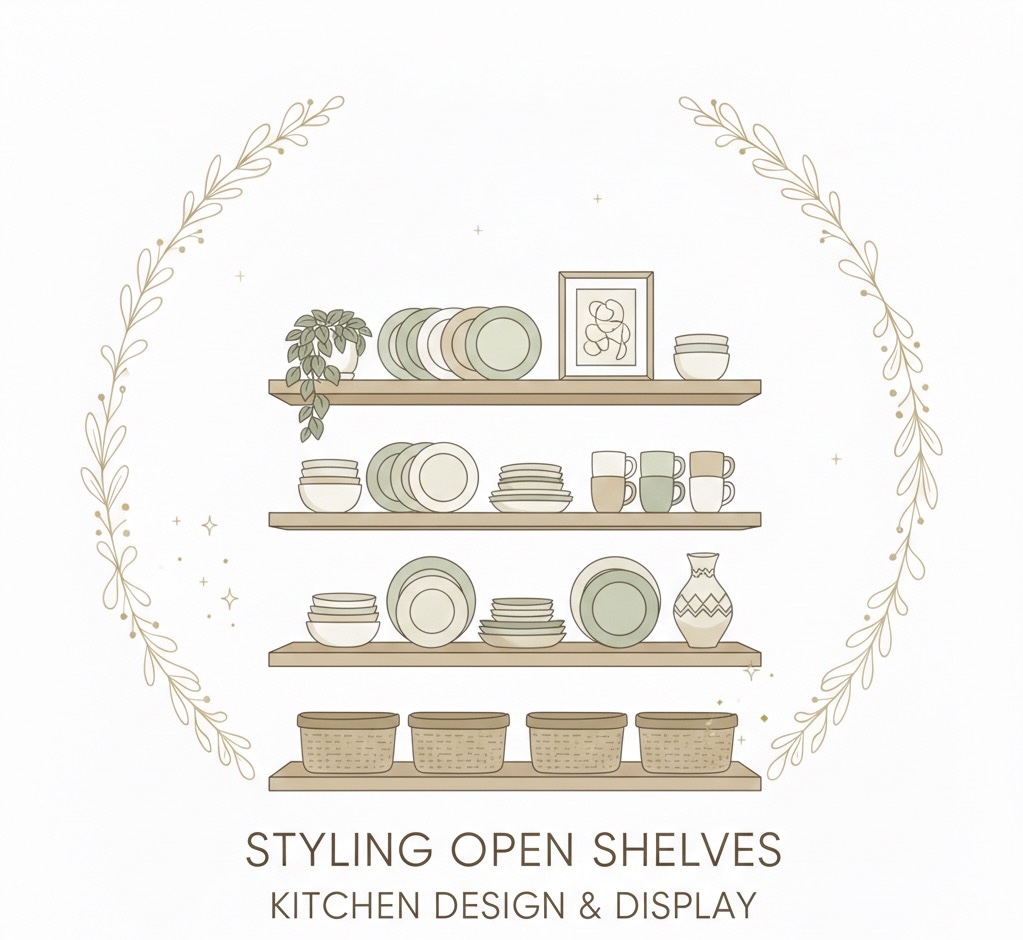
If your kitchen has open shelving, style it the way you would style any other surface in your home. Group dishes and mugs by colour. Put the most attractive items at the front and the practical but less beautiful ones out of sight in closed cabinets. Add a plant or two. Put a small piece of art or a beautiful object at the end of a shelf. Treat the shelves as a display rather than just storage, and they will function as a design feature rather than an eyesore.
14. Layer Your Living Room Like a Designer Would
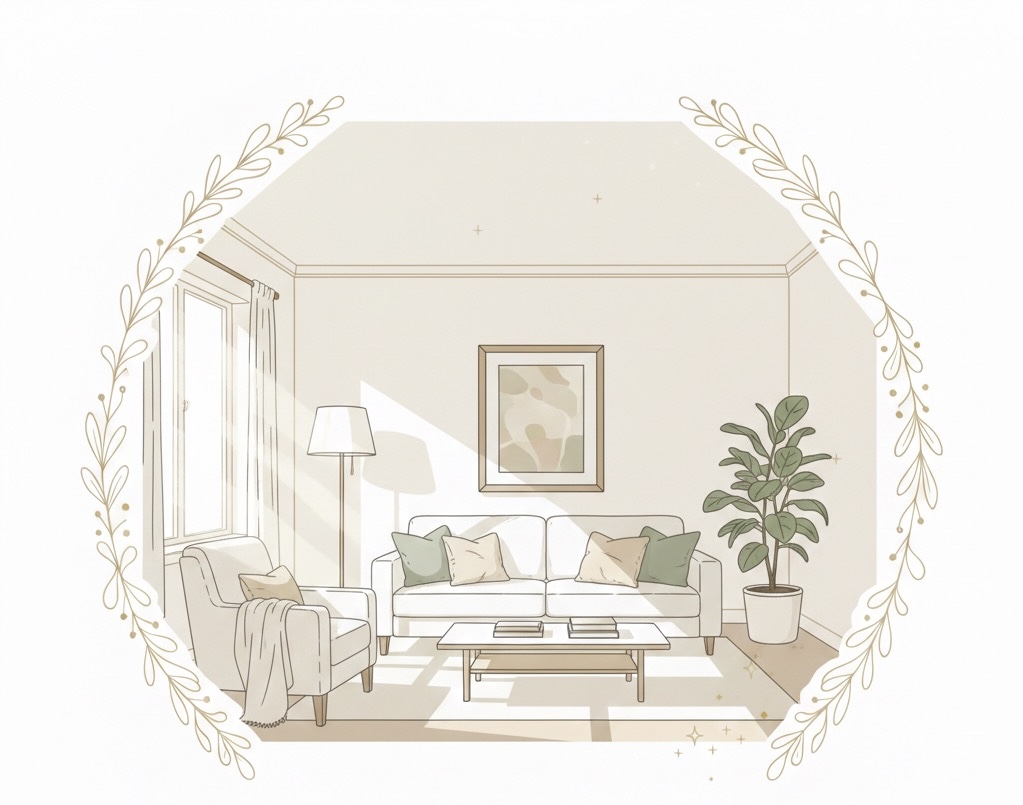
The living room is the room most people spend the most time in, and it is often the room that feels hardest to get right. There are usually multiple functions happening in the same space — relaxing, working, entertaining, watching TV — and the furniture arrangement, the layering of objects, and the way light moves through the space all need to work together. The living rooms that feel the most high-end are almost always ones where the arrangement of furniture creates a clear, comfortable zone, and where the layers of objects and textiles feel curated rather than collected.
Furniture arrangement is where most people go wrong. The instinct in a small apartment is to push everything against the walls to create more floor space in the middle. This actually makes a room feel smaller and less comfortable, not larger. Pulling furniture away from the walls and angling pieces slightly toward each other creates a more intimate, conversation-friendly arrangement that also happens to look far more expensive. A sofa floating in the room with a console table behind it looks designed. The same sofa pushed flat against a wall looks like a waiting room.
The coffee table is one of the most styleable surfaces in the living room. A well-styled coffee table — a tray with a candle and a small object, a stack of two or three beautiful books, a vase with a single stem or dried grasses — anchors the seating area and gives the eye somewhere interesting to rest. The key is restraint. Three or four items, deliberately placed. Not a chaotic collection of things that happen to be there. Switch up the arrangement every few weeks to keep the space feeling fresh and considered.
Finally, think about what your living room looks like when it is not in use. When the TV is off and no one is home, is it a space that looks beautiful? Or does it look like a room waiting to be used? The most well-designed living rooms look good empty. That is the test — and working toward it, one edit and one intentional choice at a time, is how you build an apartment that genuinely looks and feels high end.
Final Thoughts
Making your apartment look high end is not about wealth. It is about intention. It is about making choices rather than defaults — choosing to hang curtains from the ceiling rather than the window frame, choosing to light your apartment with warmth rather than overhead glare, choosing to put three beautiful things on a surface rather than twenty random ones. Every idea in this post is something you can start today, in whatever space you live in, with whatever budget you have right now.
The most important thing is to start. Pick one room. Pick one idea. Do that one thing and see how it changes the way the space feels to you. When you feel that shift — that small but real sense of ‘yes, this feels better, this feels like mine’ — you will want to keep going. That feeling is what a well-designed home is supposed to give you, every single day.