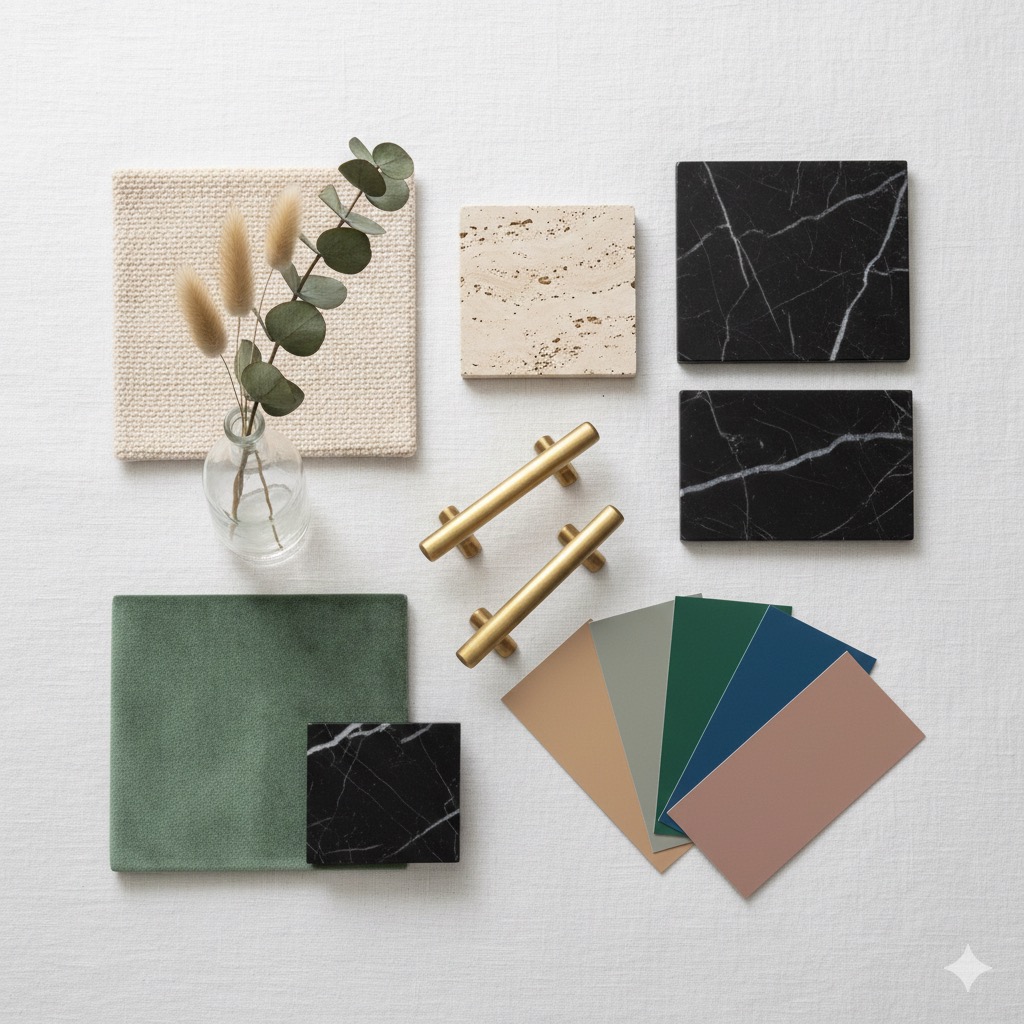
Rich finishes, quiet confidence, and spaces that feel genuinely expensive without looking like a showroom
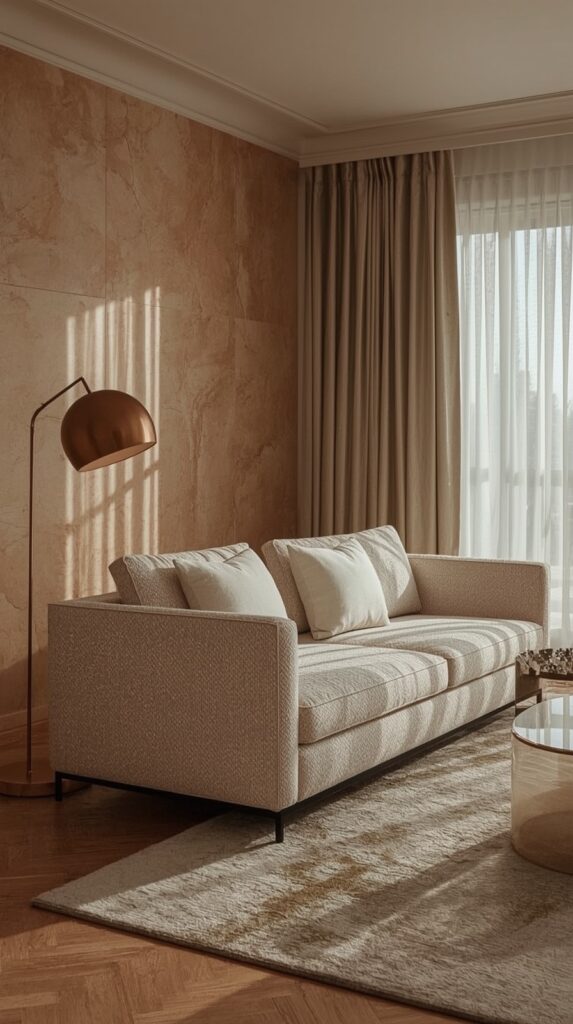
There is a specific kind of room that stops you mid-step. Not because it is loud or over-decorated, but because everything in it feels considered, calm, and quietly expensive. The walls do not shout. The furniture does not fight for attention. And yet the whole space communicates something powerful — that someone with a strong sense of taste and confidence lives here. That is contemporary luxe decor, and it is one of the most searched, most saved, and most talked-about interior styles right now.
Contemporary luxe is not about following a rigid rulebook. It sits beautifully at the intersection of modern clean lines and rich, tactile materials. It borrows from high-end hotels, private members clubs, and the homes of people who understand that luxury is not about filling a space — it is about editing it. The result is a home that feels like an experience rather than just a place to live.
If you have been seeing certain images on your feed — rooms with deep jewel tones layered over aged brass, or stark minimalist layouts warmed up by a single sculptural object — that is this aesthetic doing its work. It is a style that photographs beautifully, ages well, and translates across apartment living, suburban homes, and everything in between. In this post, we are going to walk through 13 distinct contemporary luxe decor ideas, each one a full world unto itself. Whether you are redecorating one room or simply looking for a direction that finally feels right, something here will spark something in you.
1. The Marble and Matte Black Kitchen
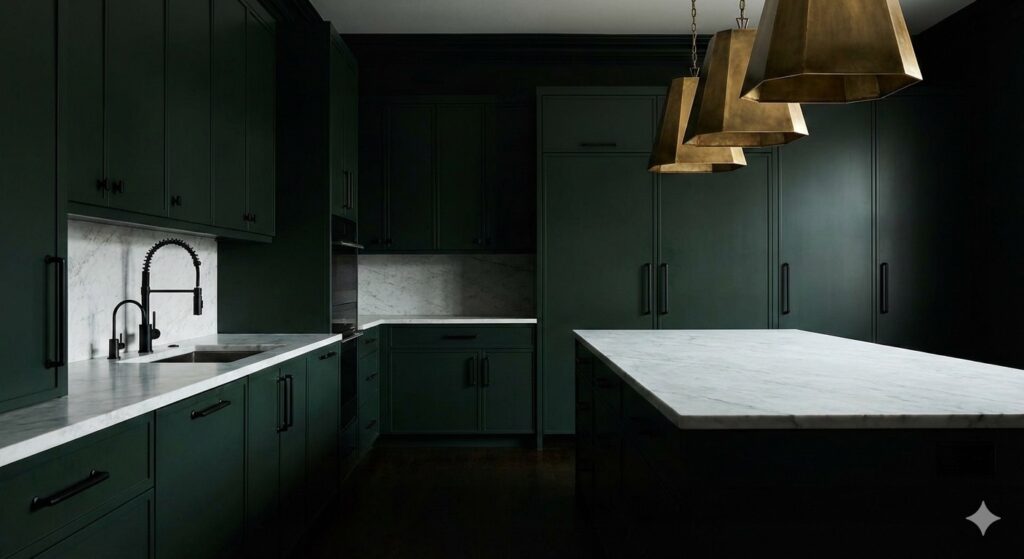
The kitchen has become the room where contemporary luxe makes its boldest statement. In this particular interpretation of the style, the tension between organic stone and industrial metal does something almost theatrical. Picture leathered marble — not the overly polished kind, but the kind that catches light imperfectly and shows its veining with quiet arrogance — paired with matte black fixtures. The combination feels both clean and dramatic, like a fine restaurant kitchen crossed with a Manhattan penthouse.
What makes this idea so compelling is the restraint. Cabinetry tends to be flat-front, handleless, or fitted with long bar pulls in matte black or unlacquered brass that will age over time. The marble does not need to be everywhere — sometimes a full slab backsplash is enough, running from counter to ceiling, while the island sits in a contrasting dark stone or a painted cabinetry finish in deep forest green or graphite. It is the negative space that sells the luxury. Bare counters. A single sculptural fruit bowl. One oversized pendant light that commands the room without apology.
Color is kept intentional here. This is not a white-on-white kitchen. It leans into deep, complex neutrals — charcoal, near-black, warm taupes, or aged greens. These colors make the marble sing louder by contrast, and they make the space feel like it was designed for someone who actually cooks, eats, and entertains in here, rather than someone who designed for Instagram and forgot to include the human element.
2. Curved Furniture With Plush Upholstery
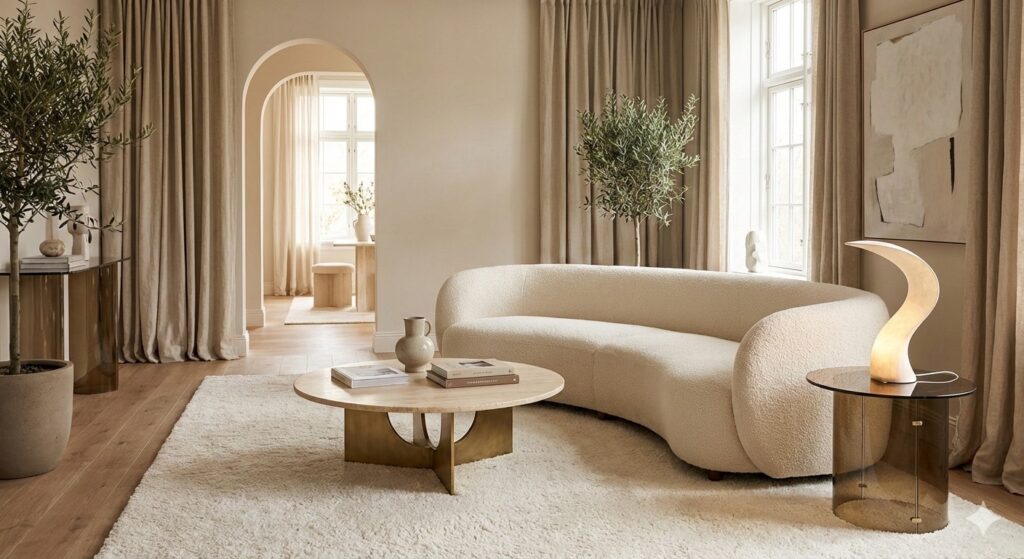
There is something about a curved sofa that changes the energy of an entire room. The sharp-edged, boxy furniture of the early 2000s has given way to something far more sensual and considered — rounded forms, swooping silhouettes, and cloud-like proportions that invite you to sink in and stay. In contemporary luxe decor, this shift toward curved furniture is one of the most defining characteristics of the moment, and it feels like a genuine design movement rather than a passing trend.
The sofa is usually the starting point. A low-profile curved sectional in bouclé, velvet, or brushed cotton has the kind of presence that makes everything else in the room support it rather than compete. Bouclé — the loopy, textured fabric that gained enormous momentum over the past few years — works particularly well here because its tactile surface adds warmth even to neutral palettes. A cream or oat-toned curved sofa against a warm white or limewash wall creates a tonal composition that feels almost architectural in its simplicity.
The furniture surrounding it should echo the philosophy rather than the exact shape. A round travertine coffee table, a kidney-shaped side table in smoked glass, ottomans with no corners — these are the supporting characters that make the curved sofa feel deliberate rather than random. What you are building is a room where nothing pokes or interrupts, where the eye travels in loops rather than stops and starts. That circularity is deeply comforting, and it is what gives this idea its genuine luxury quality.
3. Floor-to-Ceiling Drapery
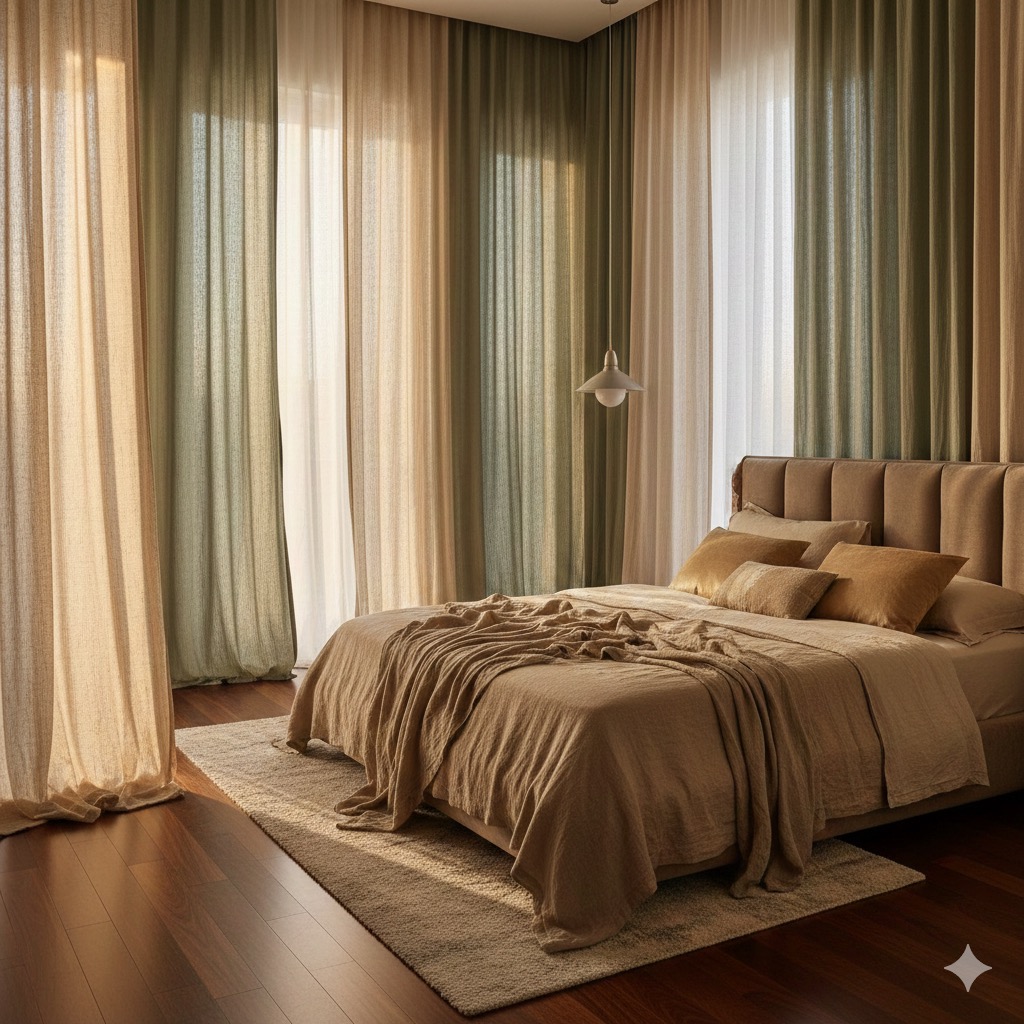
It is one of those design decisions that costs relatively little compared to the visual impact it delivers, which is probably why it appears in nearly every genuinely luxe space, from private residences to high-end hotels. The key is in the installation: curtain rods need to be mounted as close to the ceiling as possible, sometimes directly to it, and the fabric needs to fall all the way to the floor — or ideally just beyond it, forming a slight puddle that looks effortless.
In the context of contemporary luxe decor, the fabric choice matters enormously. Linen, silk, velvet, and cotton-silk blends are the materials that do the heavy lifting here. They have weight and drape in a way that cheaper alternatives cannot replicate. The color palette tends to run toward neutrals — champagne, warm ivory, dusty blush, mushroom, sage — but occasionally you see a room anchored by deep emerald, midnight navy, or earthy terracotta drapery that makes the whole space feel like a jewellery box.
What these curtains do, beyond the obvious light control, is add enormous height to any room. They force the eye upward. They soften the architecture while simultaneously making it feel more intentional. And when they catch morning light or an evening breeze, they do something no piece of furniture can match — they bring movement into the room, which is one of the quietest and most underrated forms of luxury in interior design.
4. Warm Metals and Aged Brass
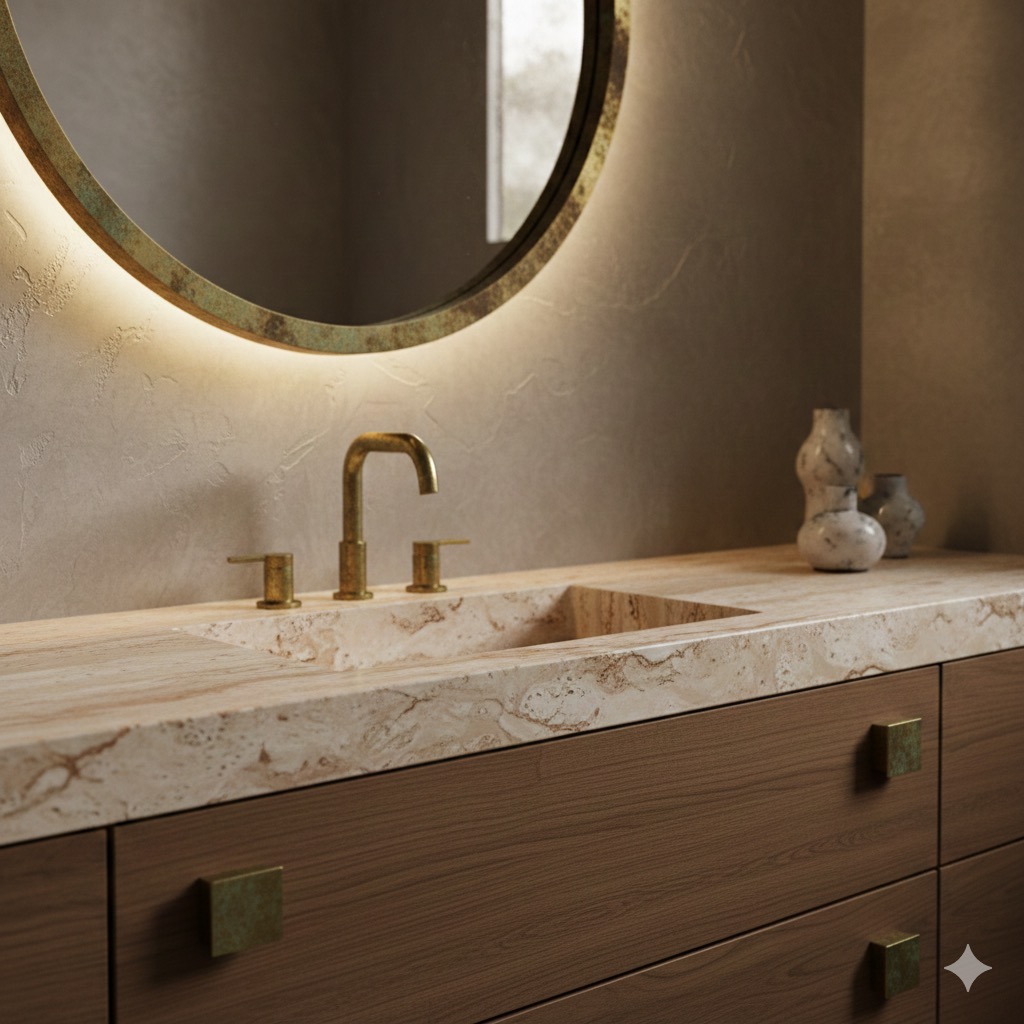
For a long time, polished chrome and stainless steel dominated contemporary interiors — clean, reflective, and easy to pair with everything. But there has been a significant and lasting move toward warmer metals, particularly aged or unlacquered brass, that communicates something different. Where polished chrome is anonymous and industrial, aged brass is personal. It develops a patina over time. It has character. It looks like it has been somewhere.
In contemporary luxe spaces, brass appears across all the functional metal elements of a room — door hardware, cabinet handles, tap fixtures, light switch plates, mirror frames, curtain rod finials, and the structural legs of coffee tables and consoles. What makes this approach feel luxe rather than dated is the consistency and the texture of the brass itself. Unlacquered brass — the kind that is meant to age and oxidize in the hands of its owner — feels far more authentic than bright, cartoonish gold tones. It sits beautifully against textured plaster walls, linen fabrics, and stone surfaces.
Warm metals also act as a bridge between organic materials and sleek modern elements. In a kitchen fitted with marble and dark cabinetry, brass fixtures pull the room away from feeling cold and sterile. In a bathroom tiled in cream limestone, brass taps and soap dispensers make the whole space feel like a boutique spa rather than a functional room. This is the power of warm metal — it humanizes whatever it touches, and that humanity is a core ingredient of what makes contemporary luxe feel genuinely sophisticated rather than just expensive.
5. The Textured Limewash Wall
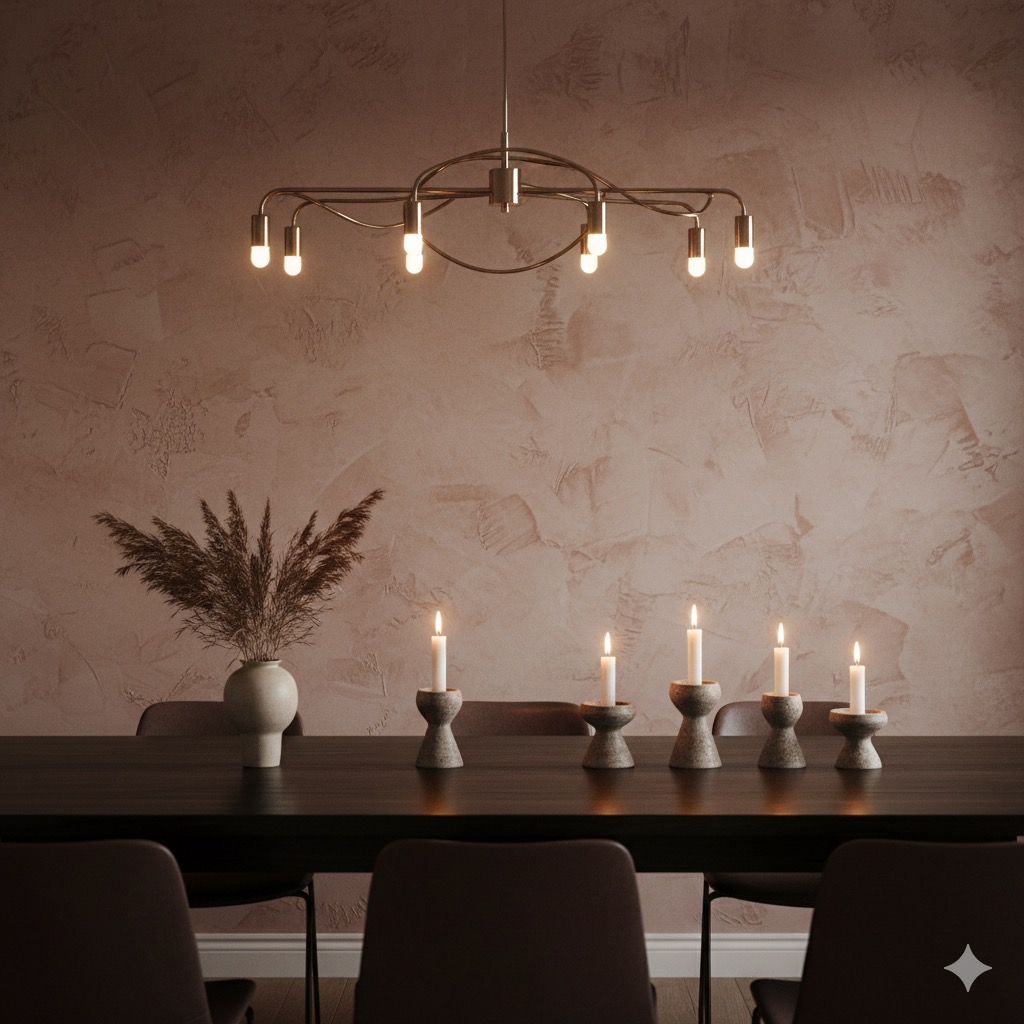
The perfectly smooth, freshly painted white wall is no longer the pinnacle of interior sophistication. Something more layered has taken its place — the limewash or Venetian plaster wall, a technique borrowed from centuries of European architecture and reinterpreted for the contemporary moment. These walls are not uniform. They breathe. They shift color slightly depending on the light, showing subtle variations in tone across their surface that make a room feel alive in a way that flat paint simply cannot.
Limewash walls in contemporary luxe spaces tend to appear in warm, chalky tones — pale stone, warm white, dusty blush, aged terracotta, muted ochre, or deep clay. The texture catches both natural and artificial light in ways that change throughout the day, and this constant gentle variation is deeply atmospheric. In the evening, with candles or low warm lighting, a limewash wall in a dining room becomes one of the most beautiful surfaces in any home. It glows softly rather than reflecting harshly.
What makes this idea so versatile is that it works as a backdrop rather than a focal point, which means the furniture and objects in the room can still lead. A limewash wall behind a sleek contemporary sofa feels like the best kind of contradiction — old-world texture meeting modern restraint. It also works beautifully in bedrooms, where the tactile quality of the wall adds to the cocooning, sensory richness of the overall space. It is one of the few decor decisions that adds character without asking anything else in the room to do less.
6. Oversized Art as Structural Furniture
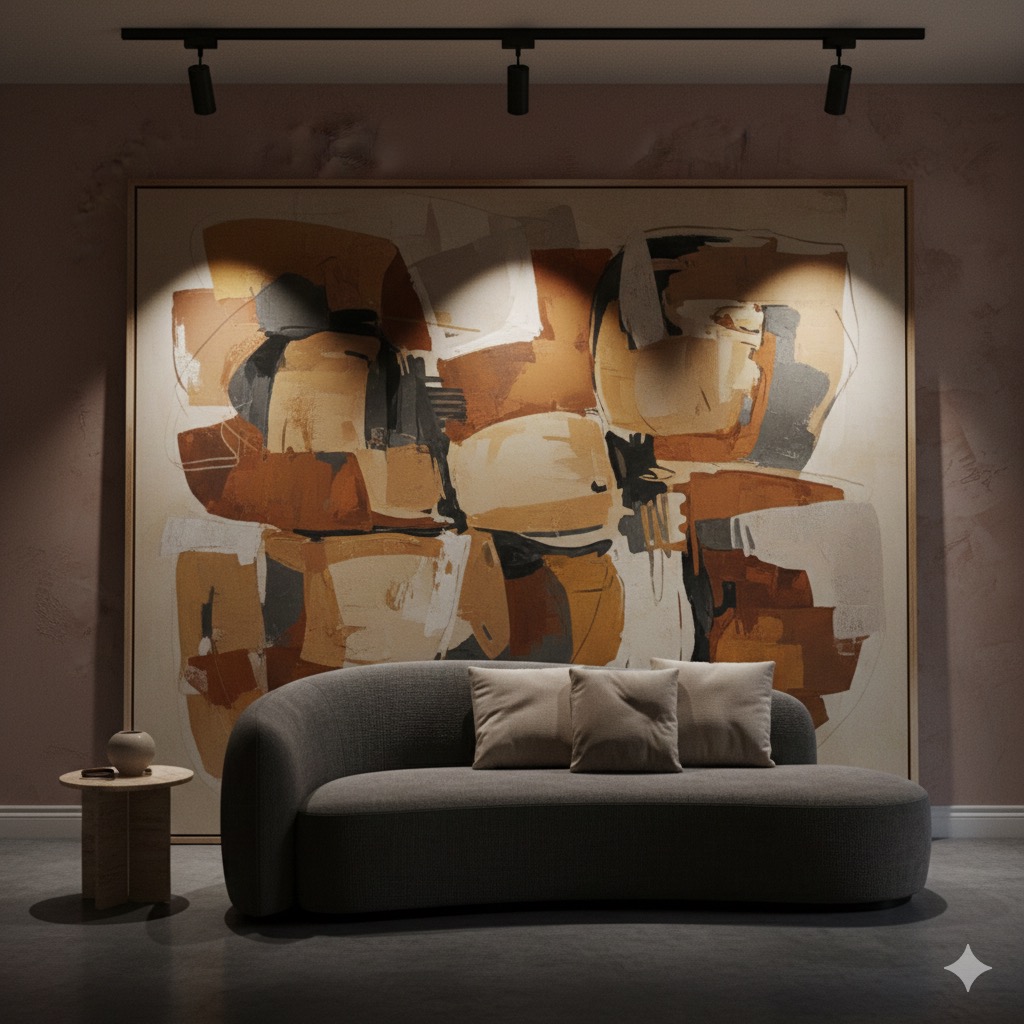
The gallery wall — that patchwork of small framed prints arranged in careful asymmetry — has had its moment. What is replacing it in contemporary luxe spaces is something far more confident: a single, massive piece of art that commands an entire wall the way a structural element would. Not because it fills the space (though it does), but because it makes a statement that smaller pieces collectively cannot. One large painting or print creates a room that feels edited, deliberate, and certain of itself.
In practice, this means canvases that are genuinely large — often taller than a person, wide enough to span the width of a sofa, or audacious enough to lean directly on the floor against the wall rather than being hung. The floor-lean approach has become particularly associated with contemporary luxe aesthetics because it feels casual in a way that framing and nailing never can. It suggests that art is a living part of the room, not a fixed decoration. It also makes it easy to swap out and rotate, which appeals to people who think about interiors in terms of seasons and moods.
The style of the art itself in this context tends toward the abstract — gestural brushwork, color field paintings, textural mixed media, or oversized photography. The color palette usually connects to the room rather than contrasting sharply with it, creating a composition where the art and the furniture feel like they belong to the same conversation. What is remarkable about this idea is how much it simplifies the rest of the room’s decor decisions. When one wall holds a statement this strong, everything else gets to be quieter, which is the essence of true contemporary luxe.
7. The Spa Bathroom With Stone and Steam
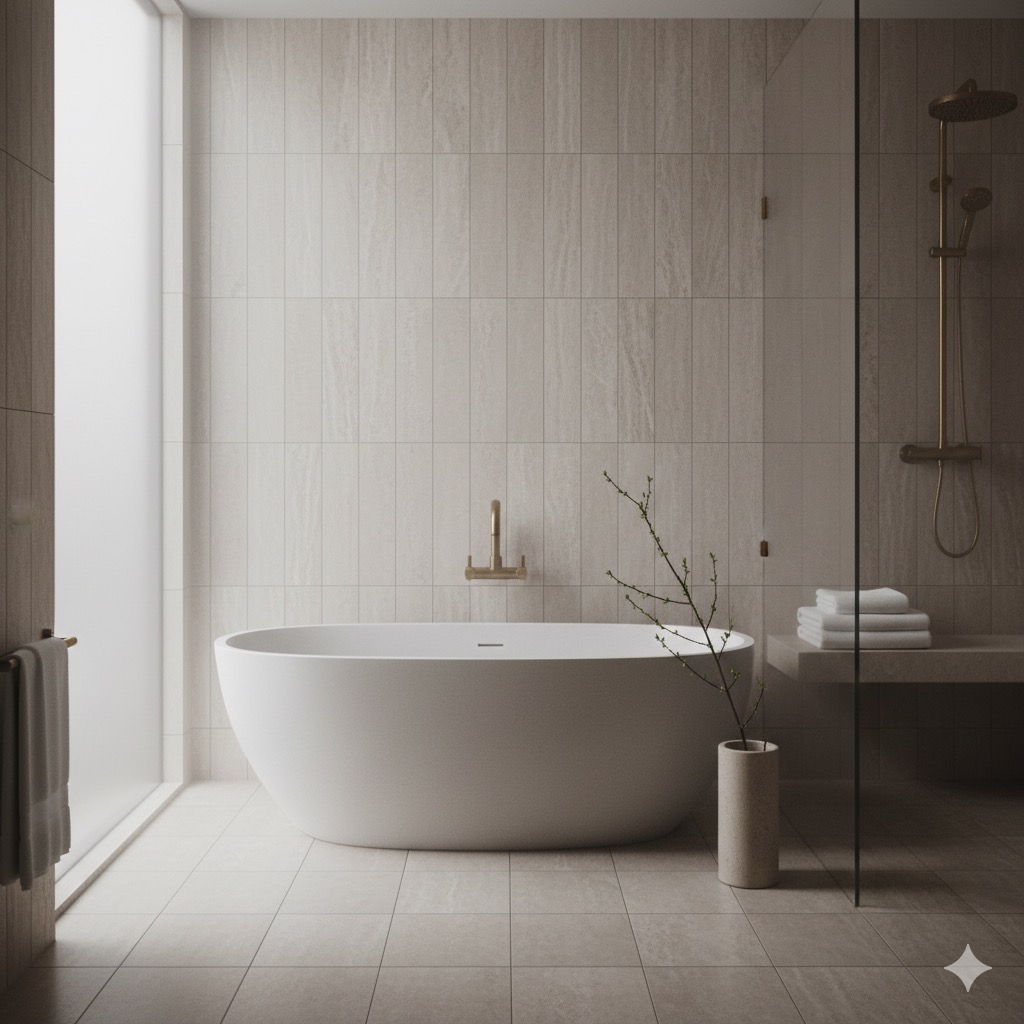
The bathroom has become one of the most invested rooms in the contemporary home, and in a luxe interior, it is expected to deliver a level of sensory experience that goes far beyond basic function. The spa bathroom idea is less about a specific layout and more about a philosophy: that bathing and daily grooming should feel like a ritual, not a task. The materials, proportions, and details in this kind of bathroom are chosen to create that feeling every single morning.
Stone is the defining material — travertine, limestone, honed marble, or smooth concrete, appearing as large-format floor tiles, full wall cladding, or a freestanding bathtub carved from a single block of stone. These materials have mass and presence. They warm slowly under underfloor heating and hold that warmth throughout the day. They look better with water on them than without it, which makes them uniquely suited to the bathroom. Paired with a frameless glass shower, a rainfall showerhead, and deep built-in shelving, the stone bathroom becomes a room you do not want to leave quickly.
The details in this idea are what separate a good bathroom from a great one. Aged brass taps and accessories, a single piece of art that can handle humidity, hotel-quality thick white towels stacked on a warming rail, a deep soaking tub positioned to look out of a frosted window or toward a wall of textured stone — these are the touches that make the difference. There is also a growing move toward fluted tile surfaces in luxe bathrooms, where the vertical ridges catch light in an almost musical rhythm that makes flat expanses of tile look suddenly ordinary by comparison.
8. The Moody Library or Reading Nook
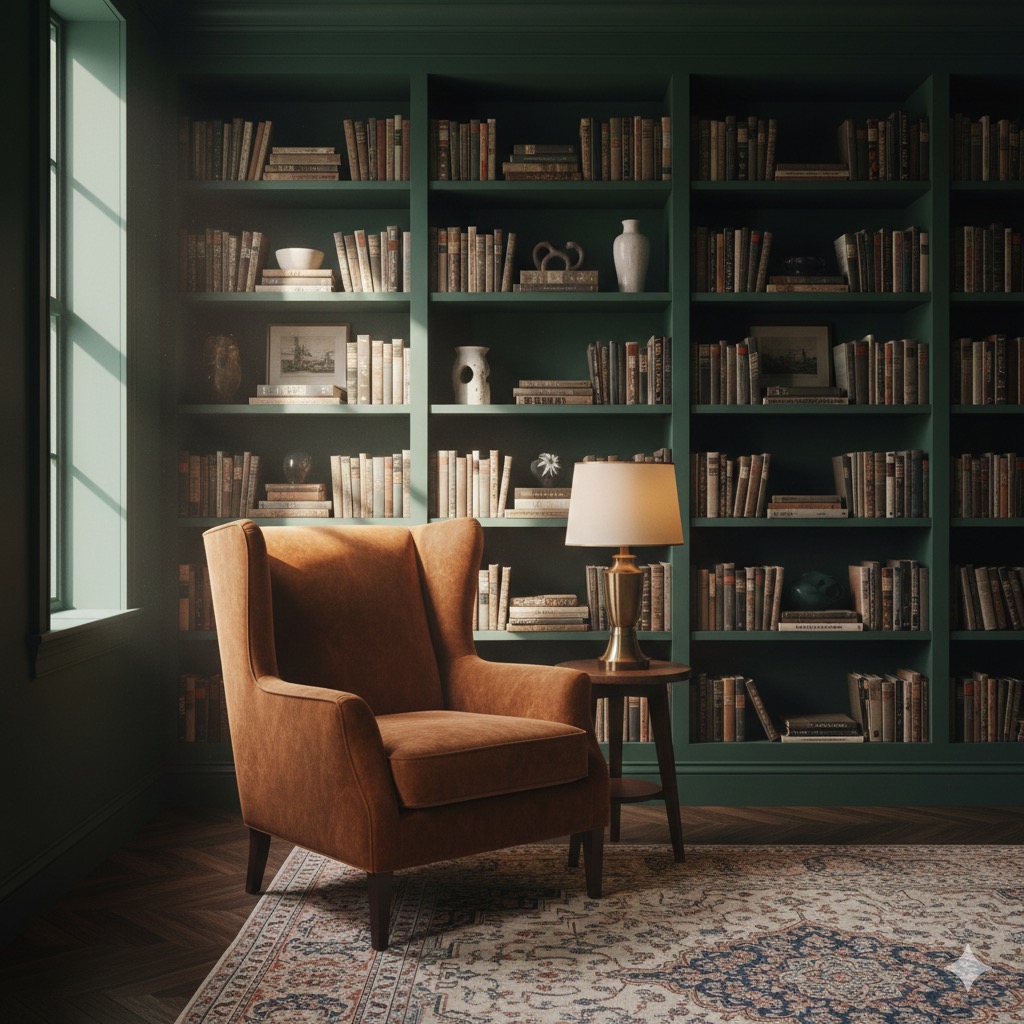
There is a category of room that has come to define aspirational home design at the higher end of the market, and it is one that fewer and fewer homes actually build out: the dedicated library, reading room, or even a deeply considered reading nook. In contemporary luxe decor, this space is a direct rejection of minimalist emptiness. It is allowed — even encouraged — to be filled. Books, objects, art, layered rugs, and deep upholstered seating are all welcome here, as long as they are chosen with the same intentional eye applied to every other room in the house.
The palette in this kind of space tends to run dark. Deep forest green, midnight navy, inky charcoal, or a warm tobacco brown on the walls and built-in shelving create the intimate, enveloping quality that makes a reading space feel genuinely private and nourishing. When shelves are painted in the same color as the walls, the whole room reads as one continuous surface — books and objects floating within a single rich field of color — which looks far more sophisticated than the standard white bookshelf against a white wall approach.
Lighting is crucial in this idea. A single brass floor lamp positioned beside a deep velvet armchair creates the kind of light pool that makes sitting down with a book feel like a specific, deliberate pleasure. Layered with a low table lamp on a nearby surface and possibly some subtle shelf lighting, the room develops a glow that is warm and slightly theatrical — not the bright, flat lighting of a home office, but something moodier and more forgiving. Add a Persian or Moroccan-style rug underfoot, and you have built a room that feels both richly lived in and completely, unmistakably luxe.
9. Statement Lighting as the Jewelry of the Room
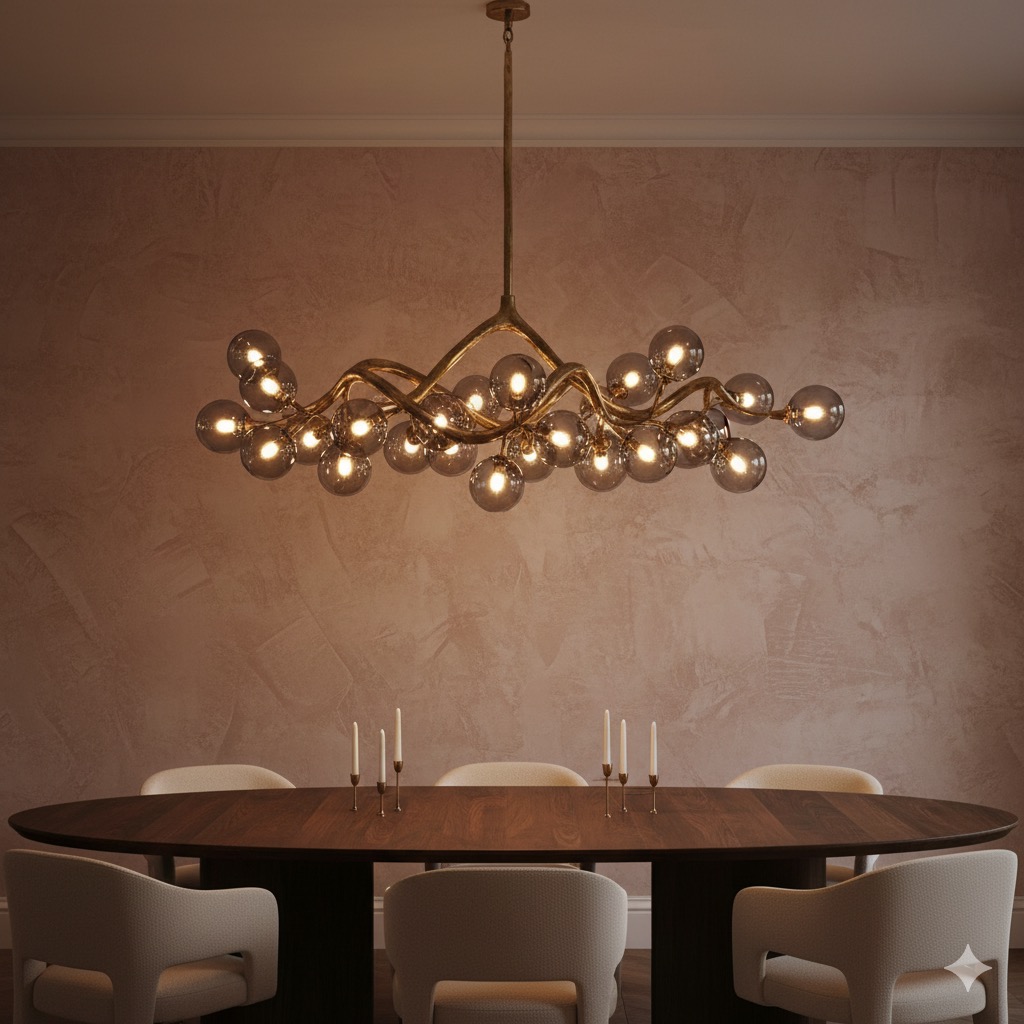
In any room, the light fixture is the one element that everyone sees simultaneously, regardless of where they are standing. And yet in so many interiors, it is treated as an afterthought — chosen last, budgeted last, and often replaced with something generic that technically provides light but contributes nothing else to the room’s character. In contemporary luxe decor, this is reversed entirely. The lighting fixture is often the very first decision, the element around which everything else is organized, and the one thing that can single-handedly elevate an otherwise modest space into something that reads as genuinely extraordinary.
The kinds of lighting fixtures that appear in contemporary luxe spaces are sculptural objects first and light sources second. An oversized chandelier in aged brass with organic, asymmetric forms hanging over a dining table makes that table feel like a destination. A cluster of hand-blown smoked glass globes descending at different heights in a double-height entryway creates a moment of arrival that no foyer furniture or flooring can replicate. A single dramatic arc floor lamp in brushed bronze, curving high over a reading chair, does more for a living room corner than a whole collection of decorative objects.
The rule in this idea is that the fixture should be slightly too large for the space — or at least larger than your initial instinct. Interior designers consistently advocate for oversizing light fixtures, because the most common mistake is choosing one that disappears into the room. In contemporary luxe, disappearing is the last thing you want your statement piece to do. You want it to be the thing that guests comment on immediately, and the thing that photographs as the room’s signature element.
10. The Tonal Monochrome Bedroom
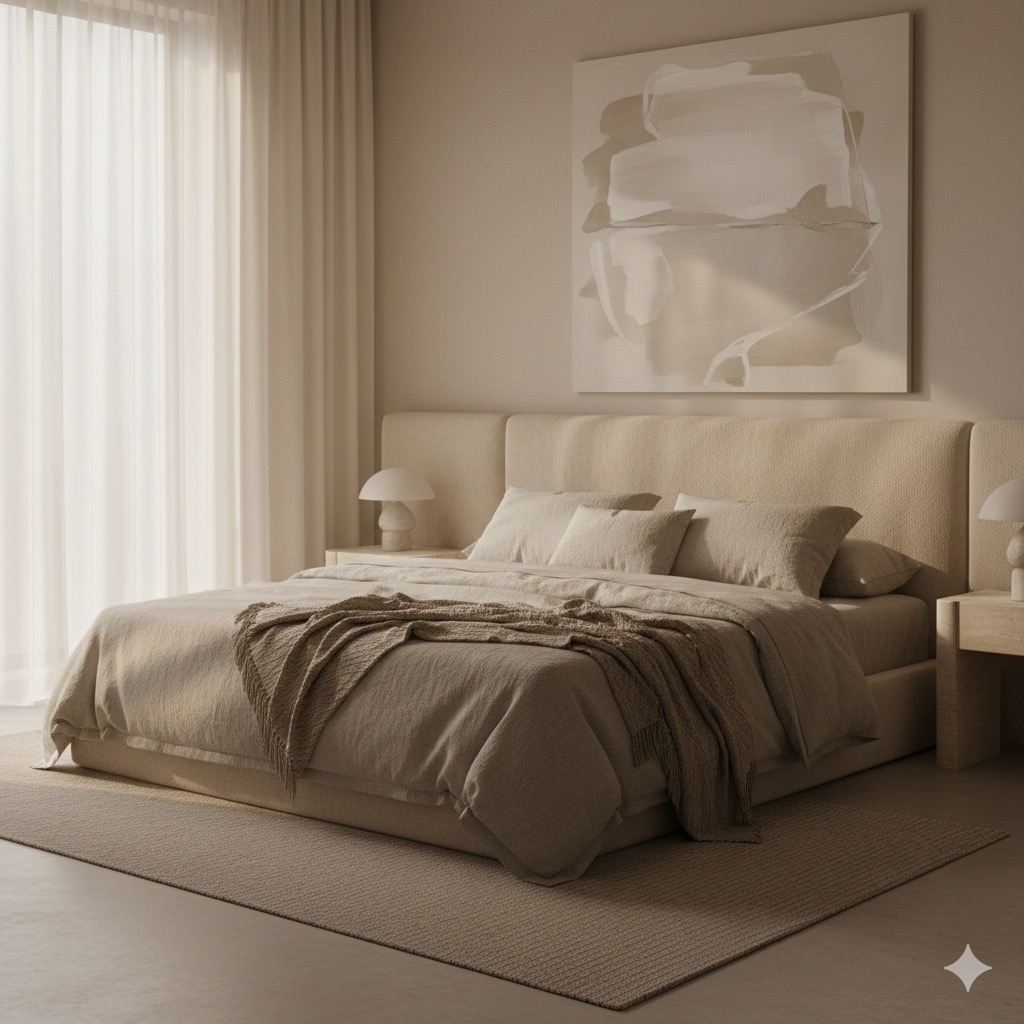
The monochrome bedroom has become one of the most sought-after interior concepts within the contemporary luxe world, and it is more demanding to execute than it first appears. A truly successful tonal bedroom — one where every surface, fabric, and object belongs to the same colour family — requires a precise understanding of undertones, texture, and proportion. Done wrong, it looks dull. Done right, it is one of the most beautiful and calming rooms imaginable, the kind of space that wraps around you like the best hotel suite you have ever stayed in.
The palette that works best for this idea in a contemporary luxe context is warm rather than cool — tones in the sand, greige, mushroom, warm white, and oatmeal family that have just enough pigment to feel considered but not so much that they feel heavy in a sleeping space. The key to making this work is texture variation. When the walls, bedding, upholstery, and drapery are all working in the same tonal register, the only thing that creates visual interest is the difference in how those surfaces catch and hold light. A bouclé headboard against a matte plaster wall against sheer silk curtains against a linen duvet — all in cream — creates a room that hums with quiet richness.
Accessories in this idea are minimal and carefully chosen. A single sculptural lamp in warm stone, a bedside table in travertine or bleached oak, a low-slung art piece in muted tones that just barely distinguishes itself from the wall behind it — these are the notes that complete the composition without disrupting it. The monochrome bedroom is, in many ways, the fullest expression of the contemporary luxe philosophy: that real sophistication is not about showing everything you have, but about the confidence to show almost nothing, and make it feel extraordinary.
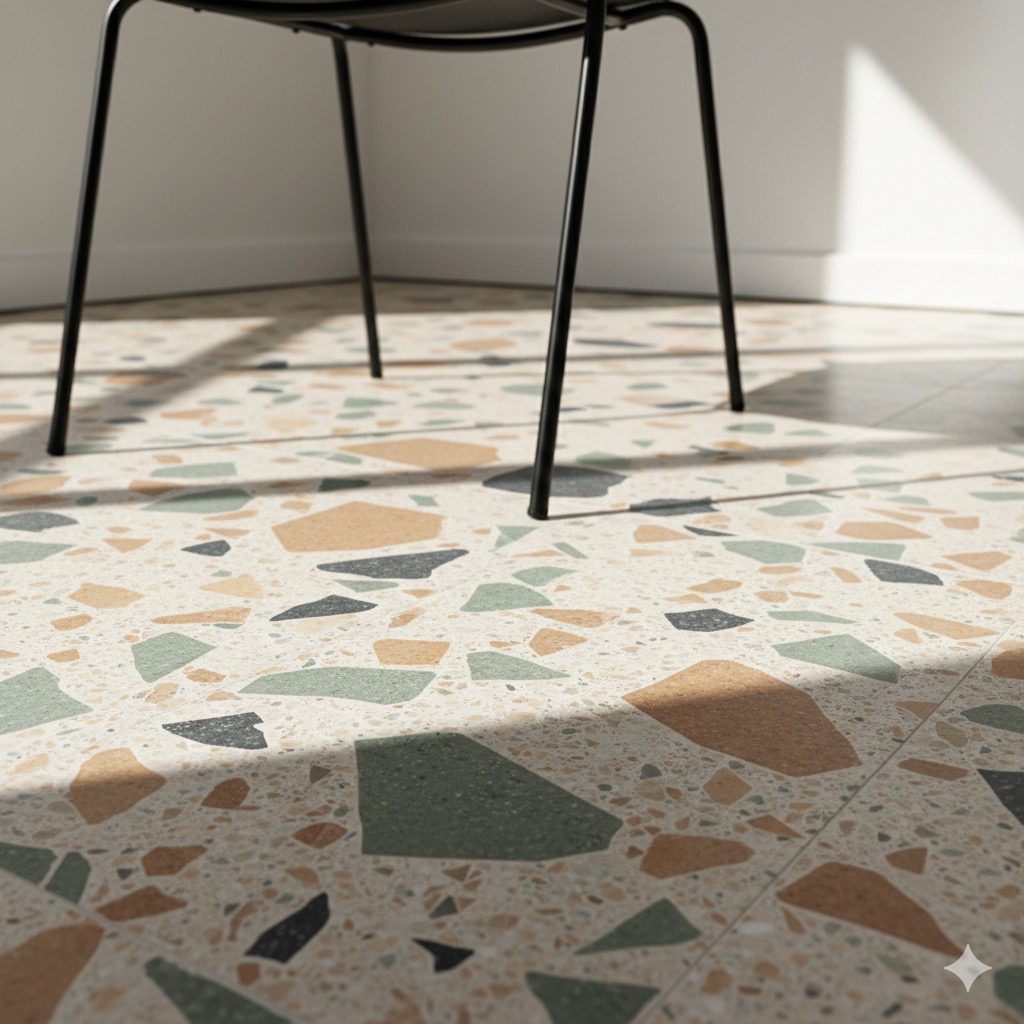
11. Terrazzo and Stone Floors as Art
Floors are possibly the most overlooked surface in any home, and in contemporary luxe decor, this is where some of the most exciting decisions are being made. The floor is the canvas that everything else sits on — furniture, rugs, people, light — and when it is made from a genuinely beautiful material, it transforms the whole register of the space above it. Two materials in particular have become defining elements of the contemporary luxe floor story: oversized format natural stone tiles and terrazzo.
Oversized stone — think travertine, honed limestone, or warm white marble in formats of 120 by 120 centimetres or larger — creates a visual calm that smaller tiles cannot achieve. The fewer grout lines, the smoother and more architectural the floor reads. In a kitchen or bathroom, large-format stone tiles make the entire room feel like it was carved from a single piece of earth, which is a deeply satisfying quality in a material-saturated world. The finish matters enormously — honed stone, with its soft matte surface, is almost always preferable to polished in a contemporary luxe context because it is less reflective and more forgiving of the evidence of daily living.
Terrazzo, on the other hand, brings joy and personality to the contemporary luxe floor story. The modern interpretation of this ancient Venetian technique uses larger aggregate chips and a more restrained palette — warm cream with sage green, dusty pink with charcoal, warm white with rust — to create a floor that is visually active without being aggressive. It photographs beautifully, ages gracefully, and brings a unique warmth to rooms that might otherwise feel too minimal. In a hallway, bathroom, or kitchen, a custom terrazzo floor is one of the few decor choices that is genuinely one-of-a-kind.
12. The Jewel-Tone Dining Room
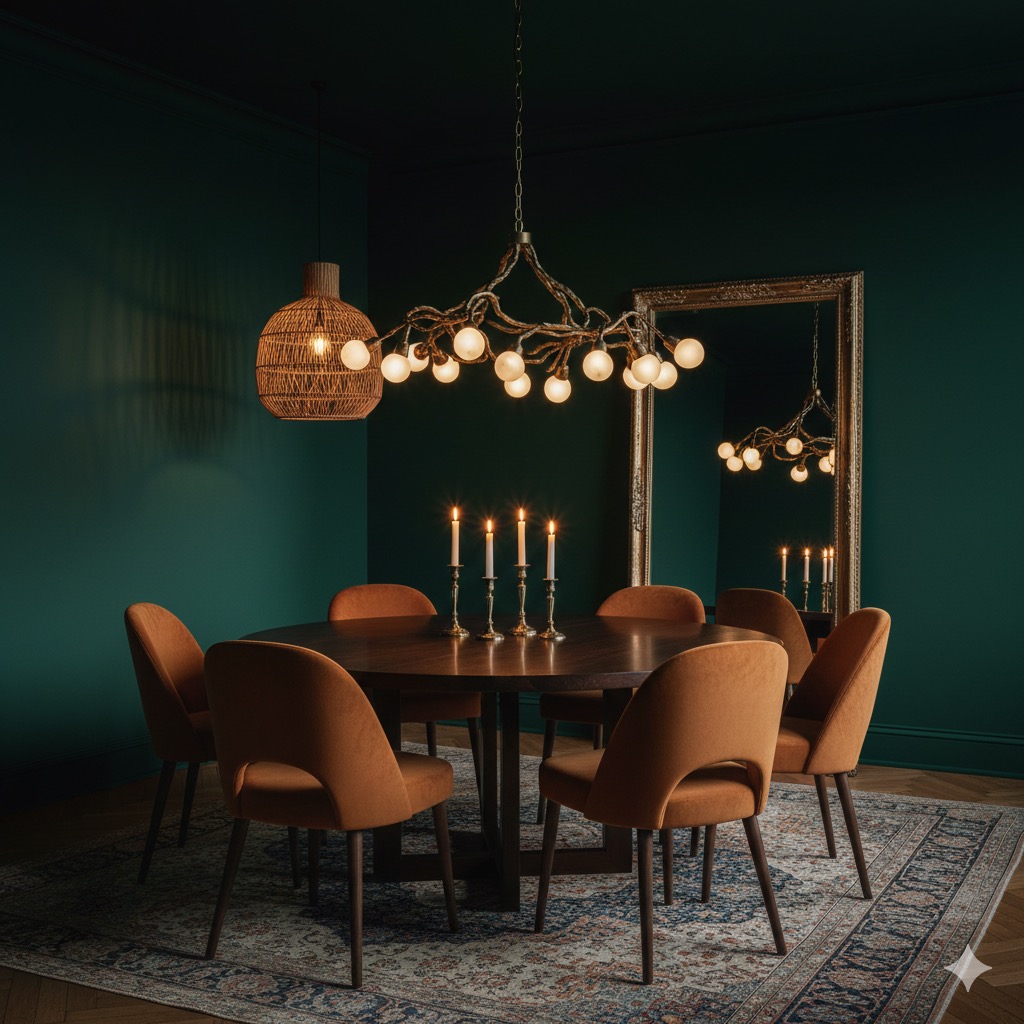
While the rest of the home in a contemporary luxe aesthetic often reaches toward calm neutrals, the dining room is the one space where deep, saturated colour is not just permitted but celebrated. There is a strong argument that the dining room is the most performative room in the house — the one designed most specifically for an audience, where meals are served, guests are hosted, and evenings are extended well past sensible hours. That performance deserves a backdrop that rises to the occasion.
Jewel tones — deep emerald, sapphire blue, plum, warm burgundy, rich terracotta — applied to all four walls and the ceiling create the effect of stepping inside a room that has been lined in velvet. When the ceiling is painted to match the walls, that boxed-in effect amplifies the intimacy, which is exactly what a dining room designed for long evenings and deep conversation requires. Against these walls, dark wood furniture reads as rich and sophisticated rather than heavy; brass fixtures glow like embers; and white table linen looks almost theatrical in contrast.
The dining chair is one of the most important elements in this kind of room, because it is the most repeated form — usually six or eight identical pieces arranged around a table — and therefore has enormous compositional power. Velvet dining chairs in cognac, rust, forest green, or cream bring a layer of material richness that upholstered chairs in harder fabrics cannot match. They also soften the sound of the room, which makes conversation easier and more intimate. When paired with a deep-toned statement chandelier and a statement mirror that reflects the candlelight back into the room, the jewel-tone dining room becomes one of the most memorable spaces in any home.
13. The Curated Entryway
If there is one space in a contemporary luxe home that is most often underestimated, it is the entryway. It is usually the smallest room in the house, and it is the first one that every single person who walks through the front door will experience. That first impression — the immediate sensory hit of stepping from the outside world into your home — shapes how the rest of the house feels. A poorly considered entryway makes even the most beautiful rooms beyond it feel slightly diminished. A beautifully designed one elevates everything that follows.
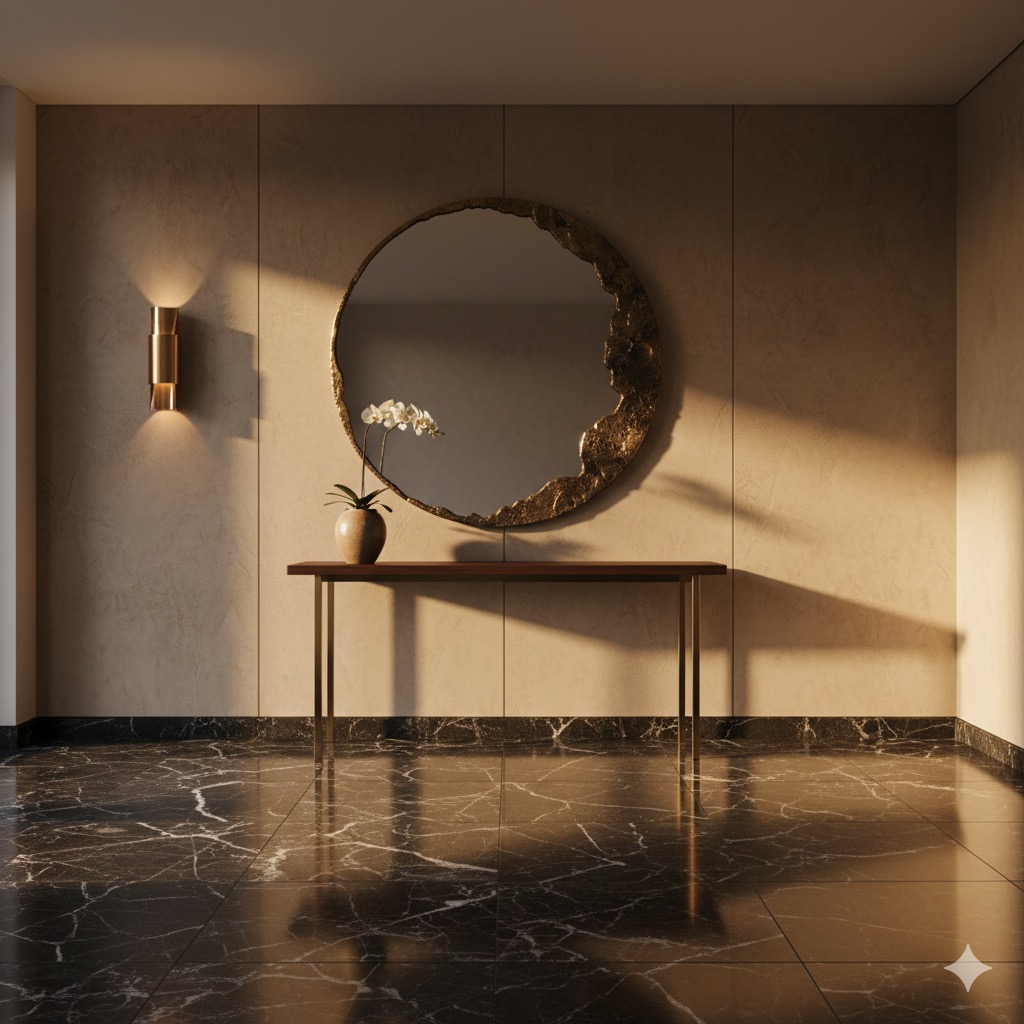
Contemporary luxe entryways achieve their impact through sharp editing and confident material choices. A console table with sculptural presence — in dark walnut, lacquered black, or stone with warm metal legs — positioned against a limewash wall immediately signals that this is not a generic space. An oversized round mirror above the console, ideally in an organic, cast brass or hand-finished stone frame, does two things at once: it bounces light deep into what is often a narrow, light-challenged corridor, and it creates a focal point of genuine visual interest that makes the space feel like it was designed by someone who understands scale.
Lighting in the entryway is the most transformative decision you can make in this space. Wall sconces mounted at eye level or above, casting their light upward onto the ceiling and downward toward the floor, create the warmest and most welcoming quality of light imaginable. Add a single large-format piece of art, one vase with dried stems or a single large-leafed plant, and a rug that is not afraid of being too bold — and you have an entryway that does exactly what it should. It tells the whole story of the house in a single glance, and it makes everyone who crosses the threshold feel like they have arrived somewhere worth being.
Bringing Contemporary Luxe Into Your Own Home
Contemporary luxe decor is not a single room or a single product — it is a way of making decisions. Every idea in this post is built on the same underlying principles: quality over quantity, texture over pattern, restraint over accumulation, and confidence over trend-chasing. The spaces that embody this aesthetic best are not ones that have been designed to look expensive. They are ones that have been designed to feel considered, personal, and deeply comfortable in their own skin.
You do not need to redecorate your entire home to begin moving in this direction. A single oversized piece of art. A set of quality linen drapery hung from ceiling height. A statement light fixture that you love unreservedly. A limewash paint sample on the wall that makes you pause every time you walk past it. These are the starting points. Contemporary luxe is built incrementally, one well-chosen element at a time, and each good decision makes the next one easier to see.
The 13 ideas here are not a prescription — they are a menu. Some will resonate immediately. Some will plant themselves quietly and resurface six months from now when you are finally ready for them. That is how design usually works, and it is one of the things that makes living with beautiful interiors such a long and rewarding conversation. Take what speaks to you, adapt it to your space and your life, and trust that your instincts are sharper than you think.