
Creative Ways to Style Your Home with Beautiful Greenery and Plant Arrangements
Bringing plants into your home does more than just add a splash of green. Indoor plants decor has become one of the most popular ways to make living spaces feel fresh, welcoming, and alive. Whether you live in a small apartment or a spacious house, the right plant arrangements can completely change how a room looks and feels. Plants bring nature indoors, clean the air you breathe, and create peaceful corners where you can relax after a long day.
The beauty of indoor plants decor is that it works for everyone. You don’t need to be a gardening expert or have a green thumb to create stunning plant displays in your home. From hanging planters that draw the eye upward to small succulents that sit perfectly on a desk, there are endless ways to incorporate plants into your decorating style. Each plant brings its own character, texture, and energy to a space, making your home feel more personal and connected to the natural world.
Indoor plants decor isn’t just about placing a pot on a windowsill anymore. Today, people are getting creative with how they display their plants, using unique containers, building vertical gardens, creating themed plant corners, and even mixing plants with other decor elements like books, candles, and artwork. The possibilities are truly endless, and that’s what makes decorating with plants so exciting.
In this guide, I’ll explore fifteen different indoor plants decor ideas that can work in any home. Each idea comes with detailed inspiration to help you understand how to make it work in your space. Whether you’re just starting your plant collection or you already have dozens of green friends, these ideas will help you display them in beautiful, interesting ways that enhance your home’s style and atmosphere.
1) Cascading Plant Shelves
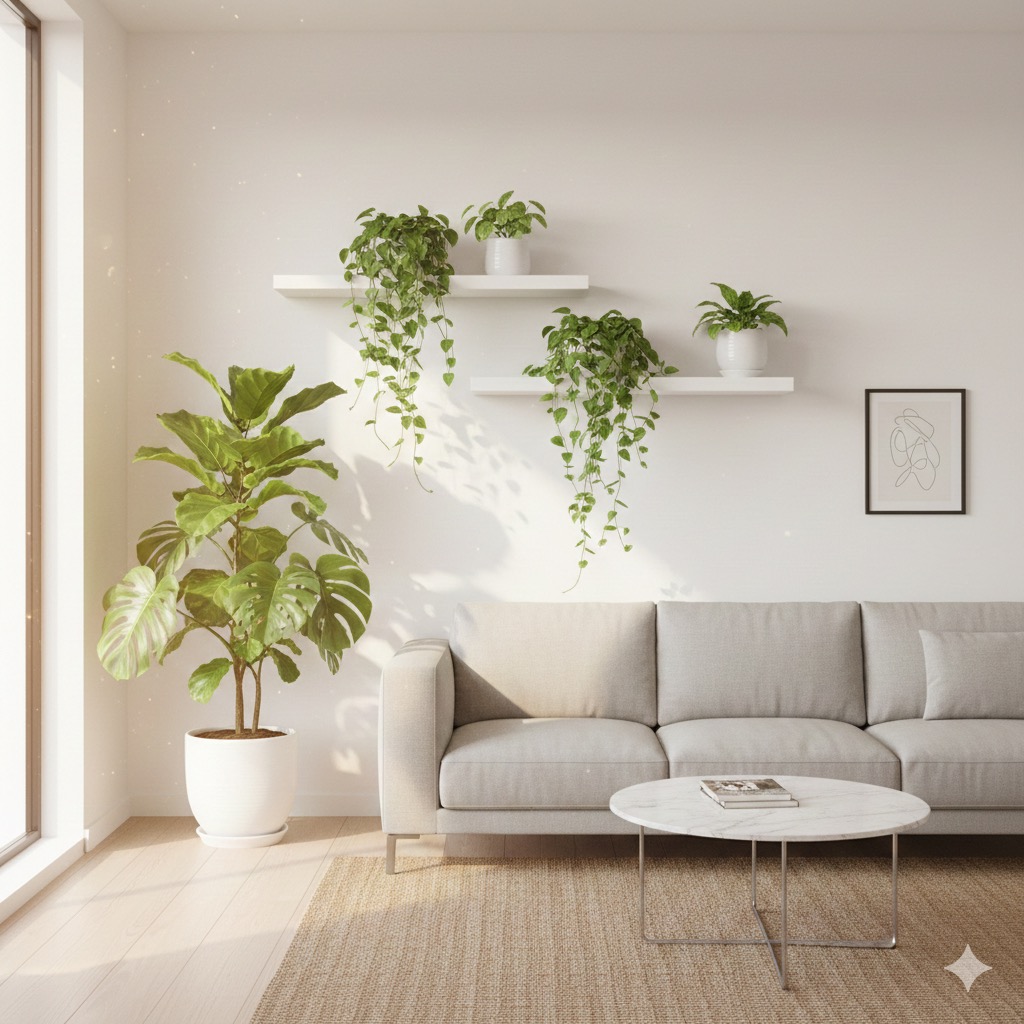
Creating a cascading effect with plants on shelves brings dimension and movement to any wall in your home. This indoor plants decor style works beautifully because it uses vertical space while creating a living, breathing piece of art. The concept is simple but striking: arrange plants at different heights on floating shelves or a bookshelf, letting trailing plants drape downward while upright plants reach toward the light. The cascading effect happens naturally as vining plants like pothos, string of pearls, or philodendron hang over the edges of shelves, creating green waterfalls that add softness and life to straight architectural lines.
When you set up cascading plant shelves, think about creating layers of interest. Place taller plants on lower shelves and shorter or trailing plants on higher shelves so nothing blocks the view of plants behind it. Mix different types of greenery to create texture contrast. Combine broad-leafed plants like monstera or rubber plants with delicate trailing plants and maybe add some spiky plants like snake plants or aloe for variety. The different shapes and shades of green work together to create a rich, lush display that feels abundant without being cluttered.
The containers you choose for cascading plant shelves matter almost as much as the plants themselves. White ceramic pots create a clean, modern look that lets the plants shine. Terracotta pots bring warmth and an earthy, natural feeling. You could also mix container styles for a more eclectic, collected-over-time appearance. Just keep some consistency in color or material so the overall look feels intentional rather than random. Adding small decorative elements between plants, like candles, small books, or crystals, helps break up the greenery and makes the display feel curated.
This indoor plants decor idea works especially well in living rooms, home offices, or even bathrooms with good natural light. The cascading effect draws the eye vertically, making rooms feel taller and more spacious. As the trailing plants grow longer over time, the display becomes even more dramatic and lush, rewarding you with an ever-evolving living installation that changes with the seasons.
2) Plant Corner
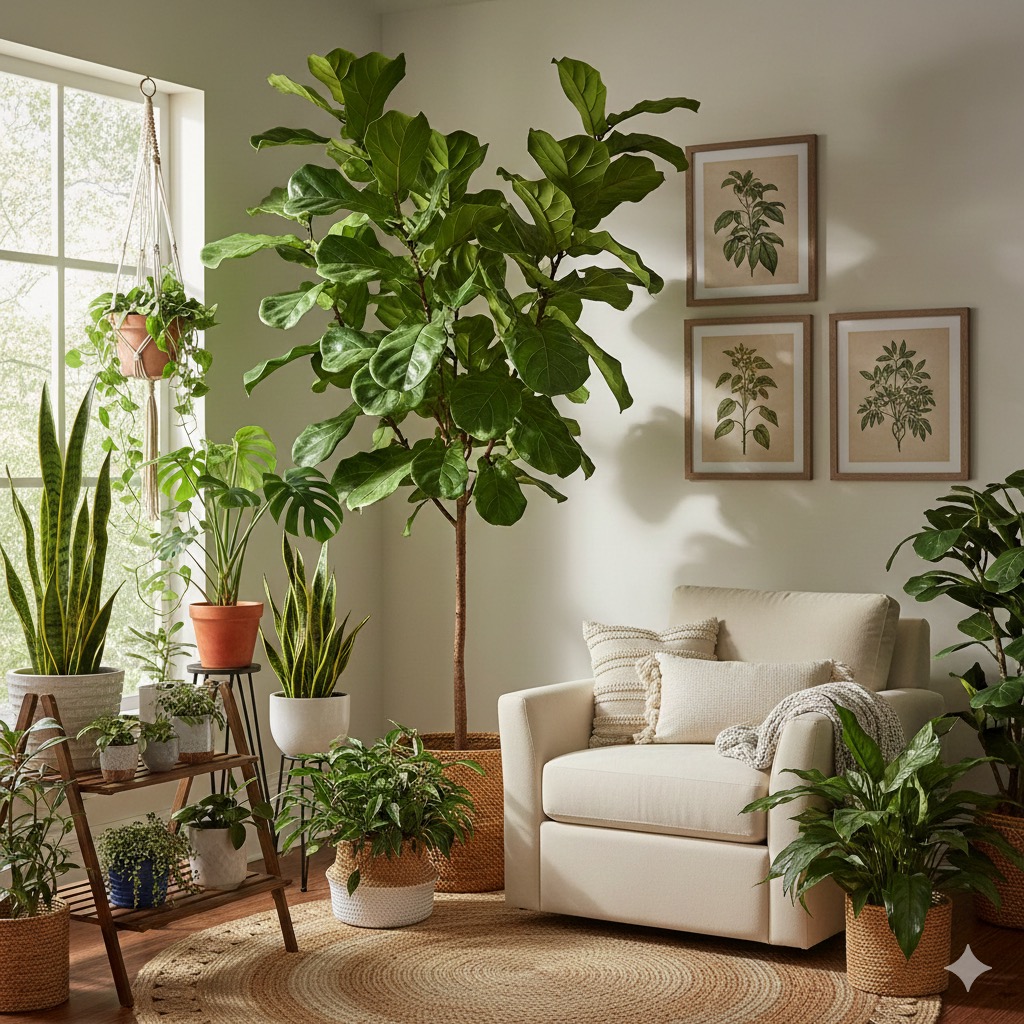
Dedicating an entire corner of a room to plants creates a sanctuary-like feeling that immediately becomes a focal point. This indoor plants decor approach transforms an unused corner into a mini indoor garden that feels like a peaceful retreat within your home. The beauty of a plant corner is that it allows you to group multiple plants together, creating density and abundance that single plants scattered around a room can’t achieve. When plants are clustered together, they create their own microclimate, helping each other thrive through shared humidity and creating a more impactful visual statement.
To create a plant corner sanctuary, start by choosing a corner that gets decent natural light, ideally near a window but not in harsh direct sun all day. Begin with a large statement plant as your anchor, something like a fiddle leaf fig, bird of paradise, or a tall rubber plant. This becomes the backbone of your display. Around this main plant, arrange smaller plants at different heights using plant stands, stacked books, or small tables. Layer in medium-sized plants, then add smaller plants and trailing varieties that can hang or drape from higher positions.
The key to making this indoor plants decor idea work is creating depth and variety. Don’t line plants up in a row or make them all the same height. Instead, stagger them, overlap them slightly, and use different levels to create a sense of abundance. Mix leaf shapes, sizes, and colors. Pair broad tropical leaves with delicate ferns, add some structural plants with interesting shapes, and include a few flowering plants if you want pops of color. The goal is to create a layered, jungle-like feeling where the eye can wander and discover new details.
Adding comfortable seating near your plant corner makes it even more special. A cozy chair, floor cushion, or small bench transforms the space into a true sanctuary where you can sit with your morning coffee, read a book, or simply enjoy being surrounded by greenery. The plants become a living backdrop that makes any activity in that corner feel more peaceful and grounding. This type of indoor plants decor also works wonderfully for meditation spaces, reading nooks, or yoga corners.
Don’t forget to include some practical elements in your plant corner. A small watering can, a decorative tray for plant care supplies, and maybe a plant mister can be displayed as part of the decor rather than hidden away. These functional items add to the authenticity of the space and make plant care easier, which means your sanctuary will stay beautiful and healthy over time.
3) Hanging Garden Display
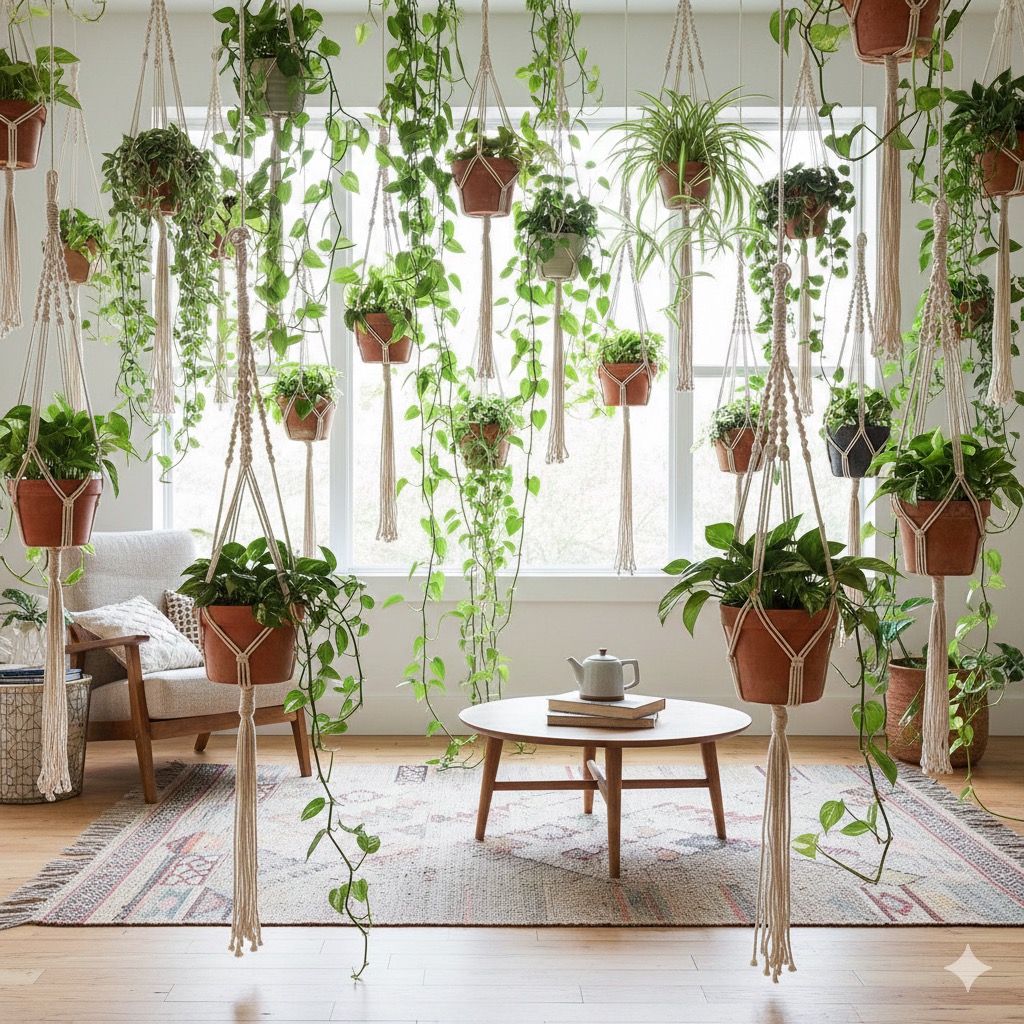
Bringing your indoor plants decor off surfaces and into the air creates drama and makes use of space that usually goes overlooked. Hanging gardens bring the eye upward, making rooms feel taller and more dynamic while adding layers of greenery at different heights. This approach works beautifully in any room but especially shines in spaces where floor and surface area is limited. A well-designed hanging garden can transform a plain ceiling into an overhead canopy of green, creating an immersive, nature-filled environment.
The most popular way to create a hanging garden is using macrame plant hangers, which add texture and bohemian charm while supporting plants at various heights. Mix different lengths of hangers so plants cascade at different levels, creating depth and visual interest. Choose plants that look beautiful from below, like trailing pothos, spider plants, string of hearts, or english ivy. These plants naturally grow downward, creating living curtains that soften hard edges and architectural elements. The movement of hanging plants also brings gentle motion to a room as they sway slightly in the breeze from windows or air circulation.
You can also create hanging gardens using ceiling hooks with simple rope or chain hangers for a more modern, minimalist look. Group three or five plants together in odd numbers for the most pleasing visual arrangement. Vary the heights so they create a cascading effect, with the lowest plant hanging at about eye level and others staggered higher. This indoor plants decor technique works wonderfully in front of windows, where plants benefit from natural light while creating a living screen that adds privacy without blocking light completely.
For an even more dramatic effect, consider installing a ceiling-mounted plant rail or rod that allows you to hang multiple plants in a line, creating a living divider between spaces. This works especially well in open-concept homes where you want to define different areas without building walls. The hanging plants create a natural boundary that feels open and airy while still providing visual separation. Fill the rail with plants that have different textures and trailing lengths for maximum impact.
When setting up hanging indoor plants decor, always make sure your ceiling hooks and hardware are properly installed and rated for the weight of water-filled plants. Plants get heavier when freshly watered, so account for that extra weight. Also consider access for watering and maintenance. You might want to use hanging planters with built-in drip trays or invest in a long-spouted watering can that makes reaching high plants easier.
4) Kitchen Herb Garden Display
Combining functionality with beauty, a kitchen herb garden brings indoor plants decor into one of the most-used rooms in your home while providing fresh herbs for cooking. This practical yet beautiful approach to plant styling turns your kitchen into a space that smells wonderful and offers fresh ingredients right at your fingertips. The best part about kitchen herb gardens is that they encourage you to use your herbs regularly, which keeps plants healthy and bushy while making your cooking more flavorful and interesting.
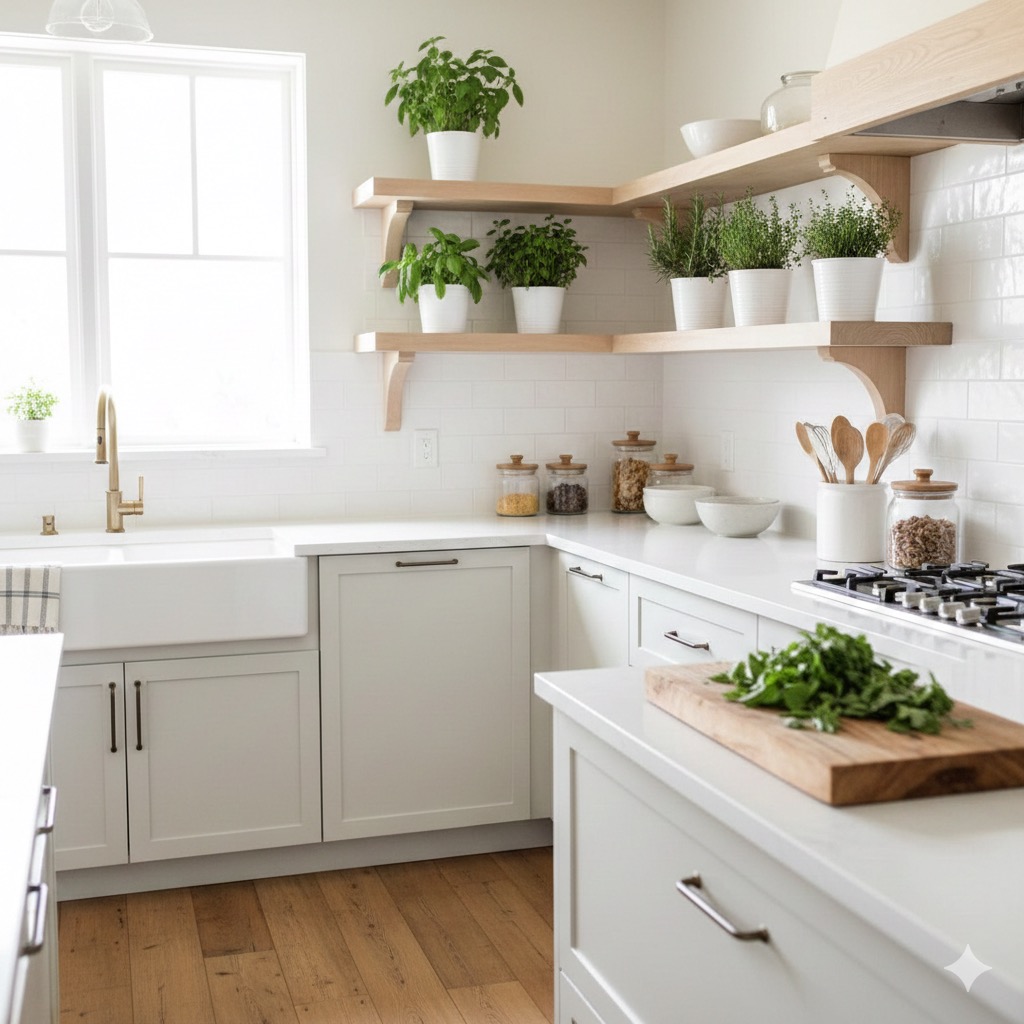
Creating an attractive herb garden display in your kitchen means thinking beyond basic plastic pots on the windowsill. Consider using matching containers that complement your kitchen’s style. White ceramic pots with drainage trays work beautifully in modern kitchens. Terracotta pots bring warmth to farmhouse or rustic kitchens. Small galvanized metal containers or vintage mason jars add character to eclectic or cottage-style spaces. Arrange your herbs on a dedicated shelf, on open kitchen shelving mixed with dishes and cookbooks, or on a windowsill using a custom wooden herb box with several compartments.
Choose herbs that you actually use in your cooking to make this indoor plants decor both beautiful and practical. Basil, rosemary, thyme, mint, parsley, cilantro, and oregano are popular choices that thrive indoors with enough light. Group herbs with similar water needs together to make care easier. Add small plant markers or labels, either store-bought or handmade, to identify each herb and add a charming detail to your display. The labels can be simple wooden stakes, copper plant markers, or even painted stones, depending on your kitchen aesthetic.
For kitchens with limited counter space, consider vertical herb gardens using wall-mounted planters or a small ladder-style plant stand that takes up minimal floor space while holding several herb pots. You can also use magnetic planters on the side of your refrigerator or metal backsplash, creating a space-saving herb garden that’s always within reach. Some people even install a small shelf with a grow light above their kitchen counter, ensuring herbs get enough light even in kitchens without bright windows.
The living, growing presence of herbs in your kitchen creates an atmosphere that feels abundant and connected to food at its freshest. As you snip herbs for dinner, the room fills with their aromatic scents, making cooking feel more like a sensory experience. This type of indoor plants decor also reminds you daily of the connection between plants and food, bringing a little bit of garden living into urban or suburban homes where outdoor gardens might not be possible.
5) Bathroom Jungle Retreat
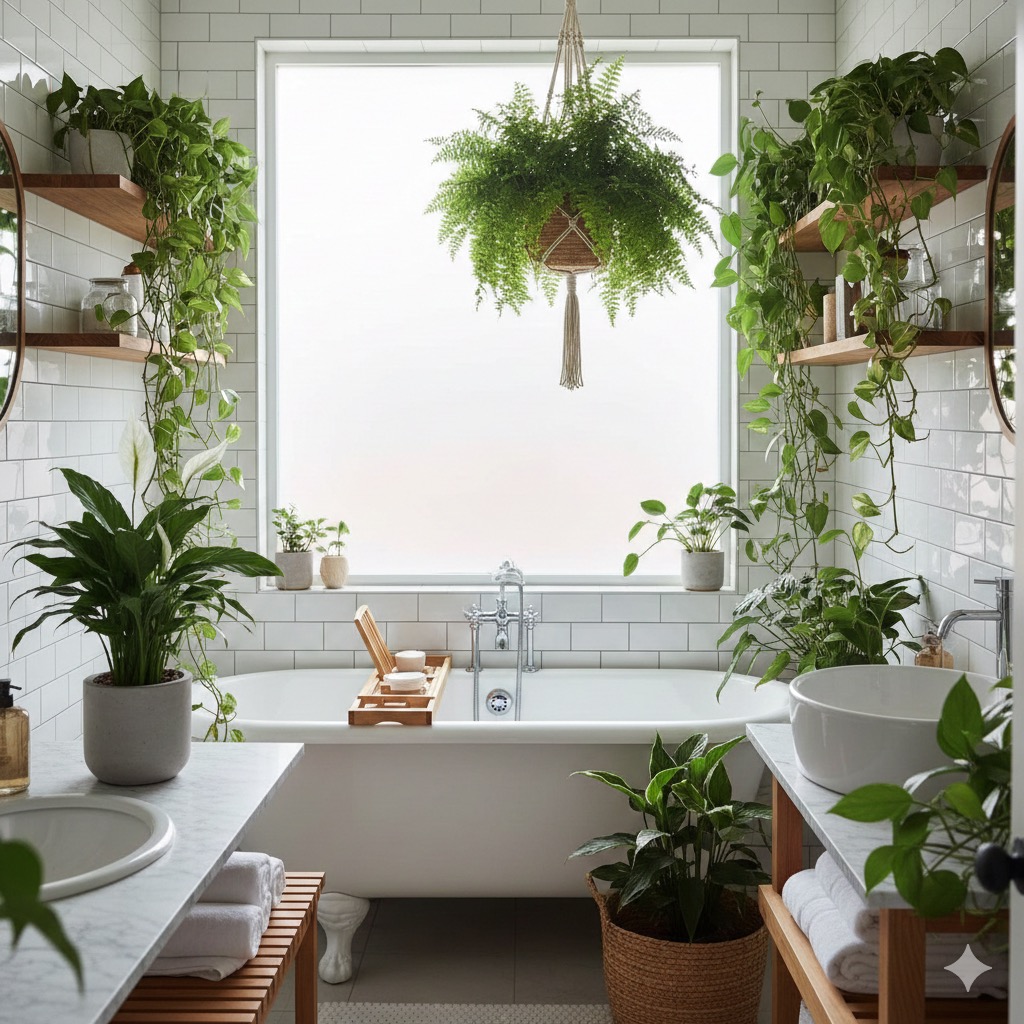
Transforming your bathroom into a lush retreat through indoor plants decor creates a spa-like atmosphere that makes daily routines feel more luxurious and relaxing. Bathrooms are often overlooked when it comes to plant styling, but they actually make perfect homes for many plants because of the natural humidity from showers and baths. This moisture-loving environment allows you to grow plants that might struggle in drier rooms, creating opportunities for beautiful tropical displays that thrive in bathroom conditions.
The key to successful bathroom plant displays is choosing varieties that love humidity and can tolerate the specific light conditions in your bathroom. If you have a window, you have more options and can include plants like Boston ferns, orchids, prayer plants, and peace lilies. For bathrooms without windows, focus on low-light tolerant plants and consider adding a small grow light. Snake plants, pothos, ZZ plants, and certain philodendrons can all handle lower light conditions while still providing the lush greenery that turns a bathroom into a retreat.
Place plants strategically around your bathroom to create layers of green without cluttering the space. A large plant on the floor in a corner adds height and makes the room feel more abundant. Smaller plants on the bathroom counter, windowsill, or the back of the toilet bring greenery to eye level. Hanging plants from the ceiling or shower rod create an overhead canopy effect that feels especially luxurious. Trailing plants like string of hearts or pothos can hang from high shelves, creating living curtains that soften hard bathroom surfaces.
This indoor plants decor style works particularly well with natural materials and spa-inspired aesthetics. Pair plants with wooden bath accessories, natural stone soap dishes, white towels, and soft lighting to complete the retreat feeling. The combination of living plants, natural materials, and the sound of running water creates a multi-sensory experience that makes bathroom time feel restorative rather than just functional. Plants also help purify bathroom air and absorb excess moisture, making them both beautiful and practical additions to the space.
Remember that bathroom plants benefit from the steam and humidity but still need regular watering and occasional wiping of leaves to remove soap residue or dust. The easier you make plant care in the bathroom, the more likely you are to maintain your jungle retreat over time. Choose containers with drainage or use decorative outer pots that catch excess water, making maintenance simple and mess-free.
6) Desk Companion Greenery
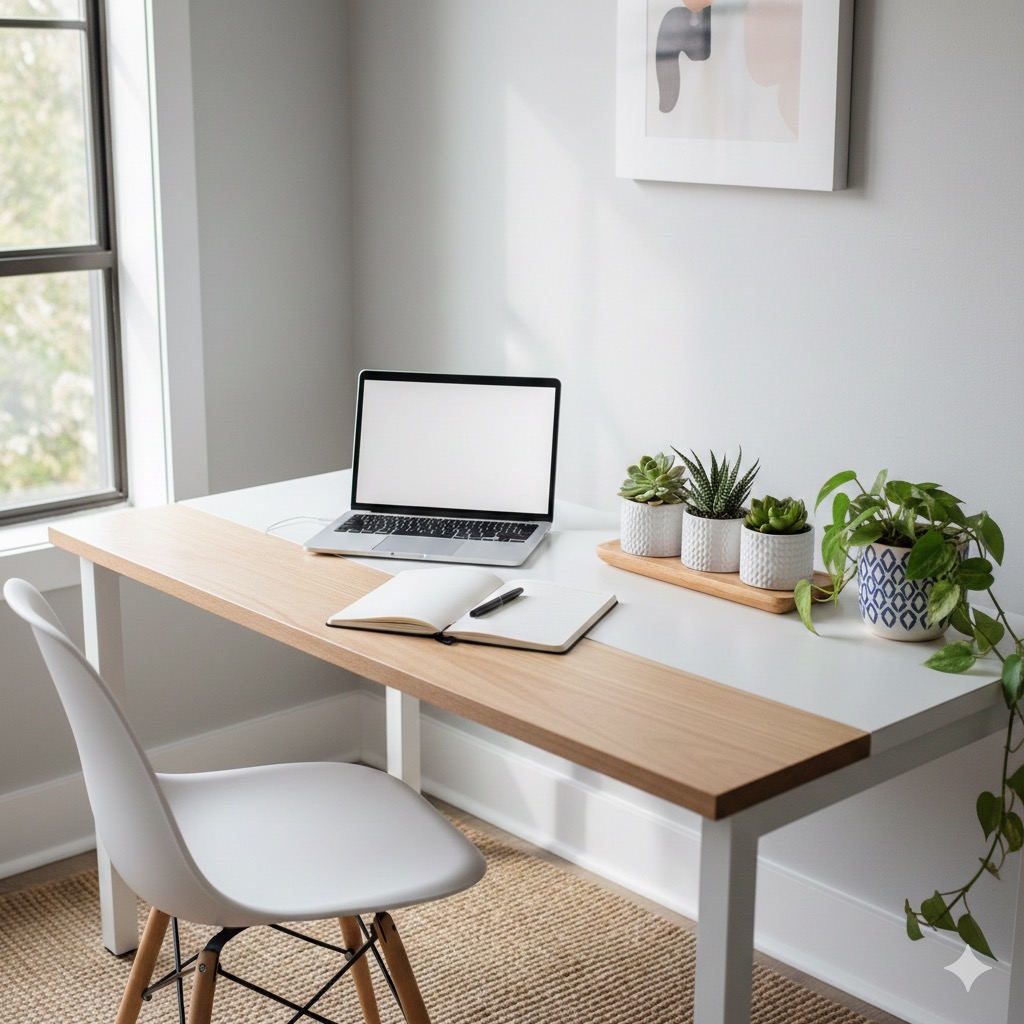
Incorporating indoor plants decor into your workspace brings life and calm to areas where you spend significant time focused and productive. Desk plants aren’t just decoration. Studies show that having plants in your work environment can reduce stress, increase productivity, and improve air quality. Even a small plant on your desk creates a living focal point that gives your eyes a place to rest during screen breaks, making long work sessions feel less draining and more pleasant.
When choosing plants for desk displays, consider size and maintenance needs. You want plants that stay relatively compact, don’t need frequent watering, and can thrive in indoor office lighting. Succulents and small cacti are perfect for sunny desks and require minimal care. Small pothos plants bring trailing greenery without taking up much desk space. Snake plants stay upright and structured, adding vertical interest without spreading. Air plants can sit in decorative holders without needing soil, making them perfect for small spaces and unique displays.
Create a mini plant arrangement on your desk by grouping three small plants together rather than scattering single plants around your workspace. This creates more visual impact while keeping your desk organized. Use a small tray or decorative plate to corral the plants and define the space they occupy. This approach to indoor plants decor makes your workspace feel intentional and curated while preventing the plants from taking over your entire desk. Mix different plant types and container styles for interest, or keep everything matching for a more minimalist, cohesive look.
Position desk plants where they’ll be visible as you work but won’t interfere with your tasks. The corner of your desk, next to your monitor, or on a small shelf above your workspace all work well. If desk space is limited, consider a small hanging planter attached to a desk lamp or wall-mounted above your workspace. The goal is to have greenery in your peripheral vision without it blocking your work or requiring you to move plants constantly to access what you need.
For home offices, you can take desk plant displays further by adding a larger plant on the floor next to your desk or creating a small plant shelf on the wall behind your computer. These additions create a pleasant backdrop for video calls while making your entire workspace feel more comfortable and less sterile. The combination of small desk plants and larger surrounding greenery transforms a basic home office into a space that feels alive and inspiring, making work feel less like work.
7) Living Room Statement Plant
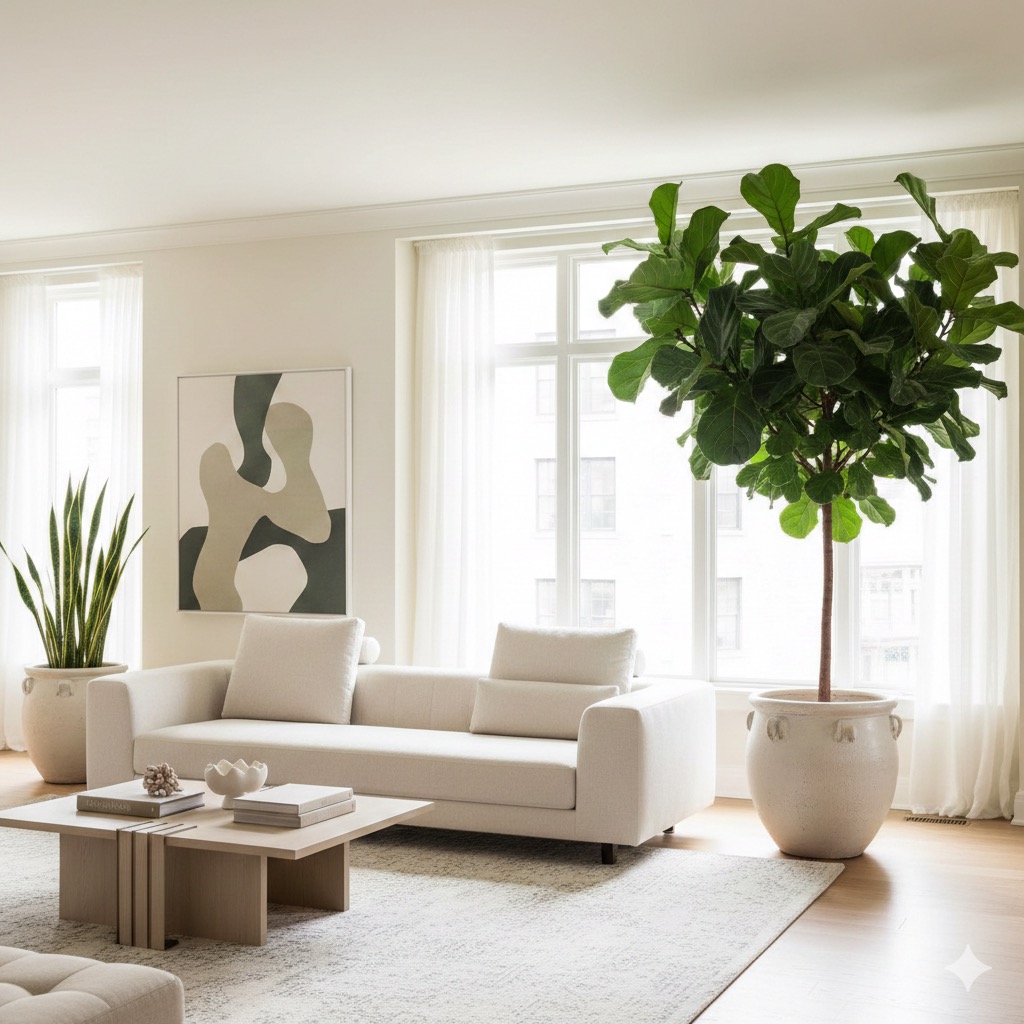
Sometimes the most effective indoor plants decor is a single dramatic plant that commands attention and sets the tone for an entire room. A statement plant acts as living sculpture, bringing instant personality and life to your living room while creating a focal point that draws the eye and starts conversations. Unlike collections of smaller plants, a statement plant makes a bold declaration about your space and your appreciation for nature’s beauty in its most impressive forms.
The best statement plants have impressive size, interesting structure, or striking leaves that make them impossible to ignore. Fiddle leaf figs are classic choices with their large, violin-shaped leaves and tree-like growth. Monstera deliciosa brings tropical drama with split leaves that create beautiful shadow patterns on walls. Bird of paradise plants offer height and architectural leaves that fan out gracefully. Rubber plants grow tall with glossy leaves in deep green or burgundy. Large snake plants create vertical interest with their upright sword-like leaves. Each of these plants brings different energy to a space, so choose one that matches the feeling you want to create.
Placement is crucial for statement plants. They need space to shine without being crowded by furniture or other decor. Empty corners are perfect spots, especially near windows where plants get natural light while filling otherwise unused space. Next to a sofa or beside a fireplace also works well, anchoring your seating area with organic height and presence. Make sure the plant has room to grow and spread without touching walls or interfering with traffic flow through the room.
The container for a statement plant deserves special attention since it will be prominently displayed. Large ceramic planters in neutral colors let the plant remain the star while looking polished and intentional. Natural woven baskets bring texture and warmth. Modern concrete planters create contemporary, industrial vibes. Whatever style you choose, make sure the container is proportional to the plant and complements your room’s existing decor. A too-small pot makes even a large plant look precarious, while a too-large pot can overwhelm the plant itself.
This indoor plants decor approach works because it keeps things simple while making maximum impact. One impressive plant creates more presence than a dozen small ones scattered around. It also makes plant care easier since you’re focusing attention on a single plant’s needs rather than maintaining many. As your statement plant grows and matures over time, it becomes even more impressive, creating a living legacy piece that grows with your home.
8) Window Garden Display
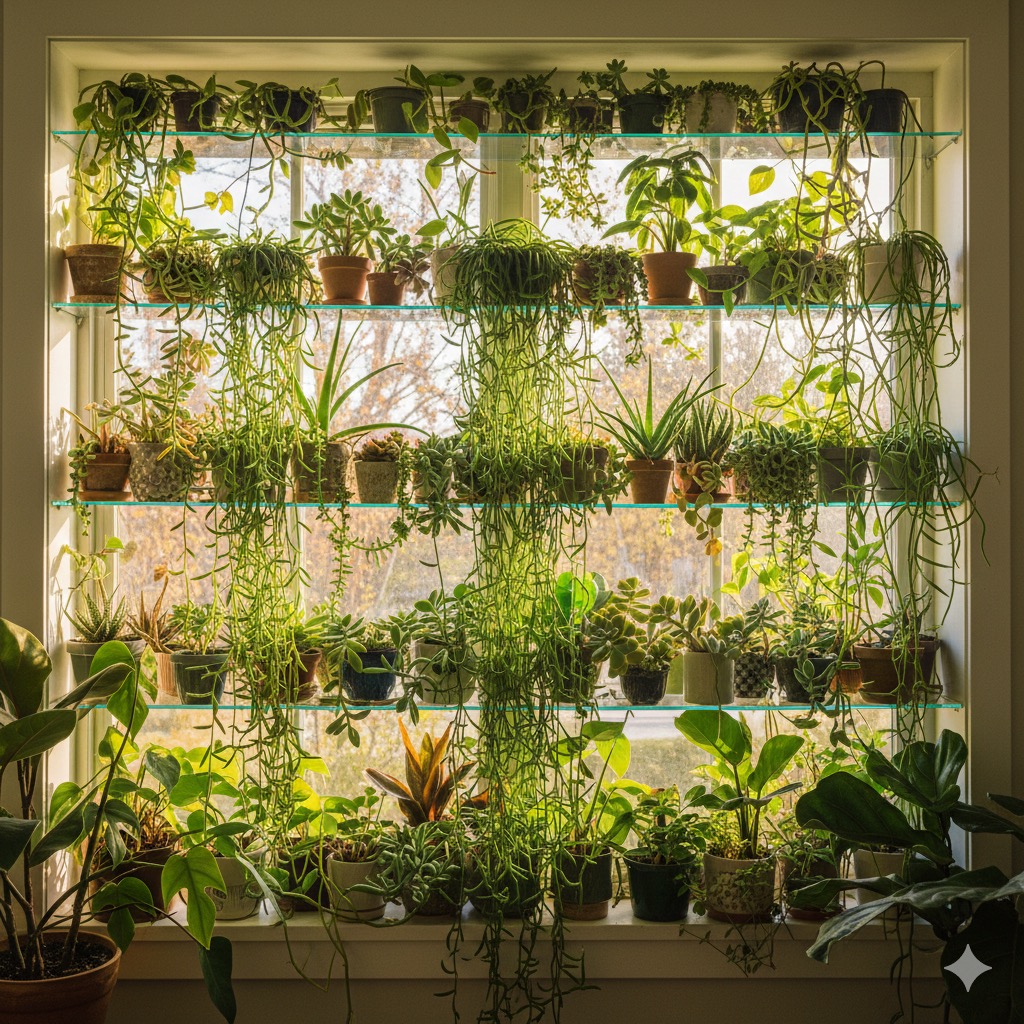
Maximizing the natural light that pours through windows by creating dedicated window gardens brings indoor plants decor to the spot where plants naturally thrive most. Window gardens take full advantage of the sunniest spots in your home, creating lush displays where plants can photosynthesize happily while forming a living screen that adds privacy and softens harsh window light. This approach transforms windows from simple architectural elements into living frames of greenery that change with the seasons and times of day.
The simplest window garden uses the windowsill itself, lining it with plants in matching or complementary containers. Choose plants based on your window’s light exposure. South-facing windows get intense, direct sun perfect for cacti, succulents, and sun-loving herbs. East or west windows get gentler morning or afternoon light ideal for most houseplants like pothos, philodendrons, and prayer plants. North-facing windows offer indirect light that works well for ferns, snake plants, and peace lilies. Matching your plants to your light conditions ensures they thrive rather than just survive.
For a more elaborate window garden, install glass shelves across your window, creating multiple levels for plant display. These transparent shelves let light pass through to plants on lower levels while maximizing your growing space. Arrange plants from tallest on the bottom to shortest on top so each gets adequate light. This tiered approach to indoor plants decor creates a greenhouse effect right inside your home, turning the window into a living installation that changes throughout the day as light shifts and shadows move.
Hanging plants in front of windows creates another dimension to window gardens. Use tension rods inside the window frame to hang macrame planters or simple s-hooks with hanging pots. Layer these hanging plants at different heights in front of windowsill plants for a lush, layered look that has depth and movement. The plants suspended in the window get excellent light while creating privacy and a beautiful view from both inside and outside your home. People walking past your windows will see a curtain of green rather than straight into your space.
Window gardens also benefit from the temperature regulation that windows provide. The glass maintains more consistent temperatures than interior walls, and plants often appreciate the slight temperature drop at night that windows naturally provide. Just be mindful of extreme temperature windows. Very cold windows in winter or hot windows in summer might stress plants, so you may need to adjust placement seasonally or add insulation during extreme weather.
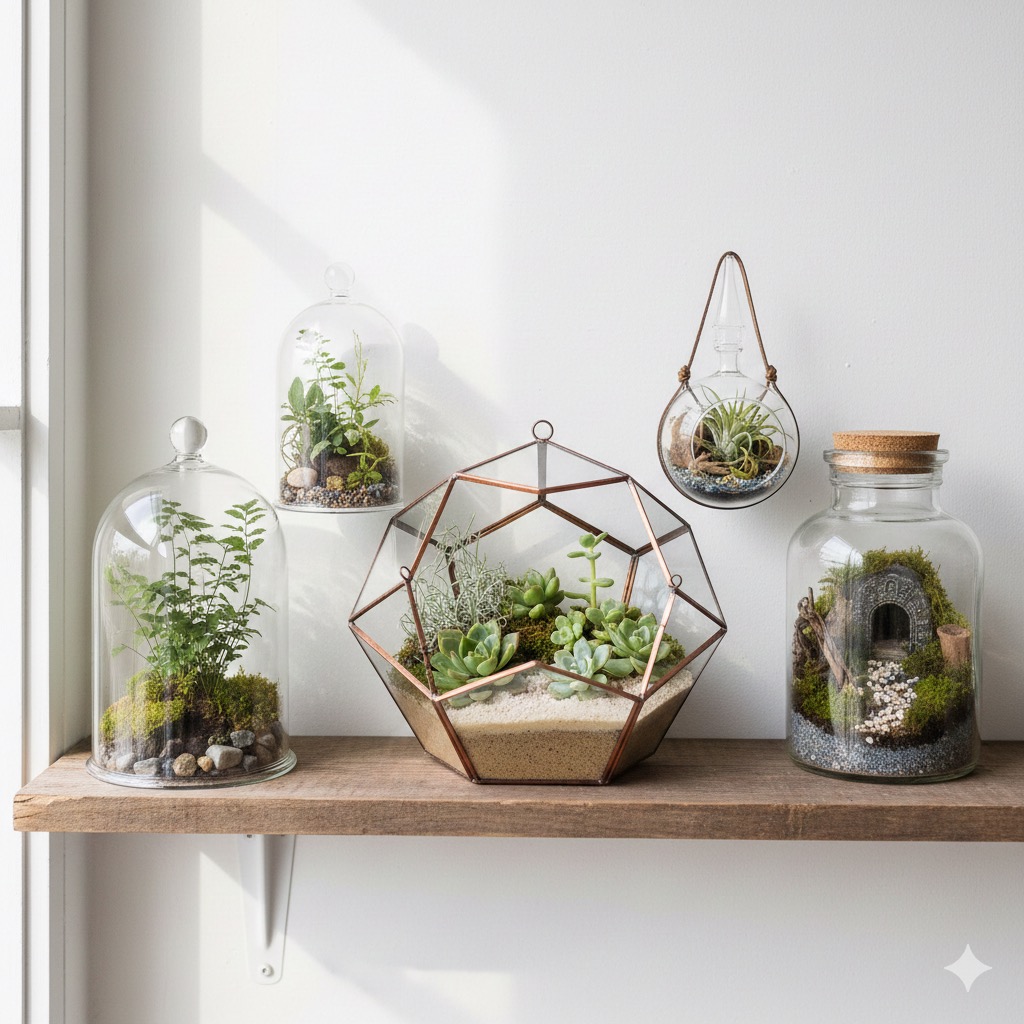
9) Terrarium Collection Display
Creating miniature worlds inside glass containers brings a unique approach to indoor plants decor that feels both artistic and practical. Terrariums are self-contained ecosystems that maintain their own humidity, making them perfect for growing plants that need more moisture than your home typically provides. Beyond their practical benefits, terrariums are beautiful sculptural objects that work as living art pieces, bringing nature indoors in a controlled, contained way that works even in the smallest spaces.
A collection of terrariums creates more impact than a single one. Group three or five terrariums of different sizes and shapes together on a shelf, console table, or coffee table. Use various glass containers like geometric terrariums, vintage glass jars, fish bowls, or modern glass orbs to create visual interest through different shapes while maintaining the coherent theme of glass and greenery. Each terrarium can contain different plants and decorative elements, making every one a unique little world that invites close inspection.
Fill terrariums with plants that love humidity and stay relatively small. Fittonia, small ferns, moss, baby tears, and miniature versions of larger plants all work beautifully. Layer the bottom of each terrarium with pebbles for drainage, add activated charcoal to prevent mold, then add potting soil before planting. Beyond plants, include decorative elements like small stones, crystals, tiny figurines, or miniature furniture to create scenes and add personality. These details make each terrarium feel like a complete miniature landscape rather than just plants in glass.
This style of indoor plants decor works especially well for people who travel frequently or have unpredictable schedules because closed terrariums need very little maintenance once established. The glass creates a humid microclimate where water recycles through condensation, meaning you might only need to water every few months. This makes terrariums perfect for offices, bedrooms, or any space where you want greenery without daily care requirements. Open terrariums with succulents and air plants need slightly more attention but still less than traditional potted plants.
Terrariums also make excellent gifts and can become conversation pieces that guests naturally gravitate toward. As plants grow and fill out their glass homes, terrariums become more lush and established, rewarding patience with increasingly beautiful displays that feel alive and constantly evolving.
10) Bedroom Plant Oasis
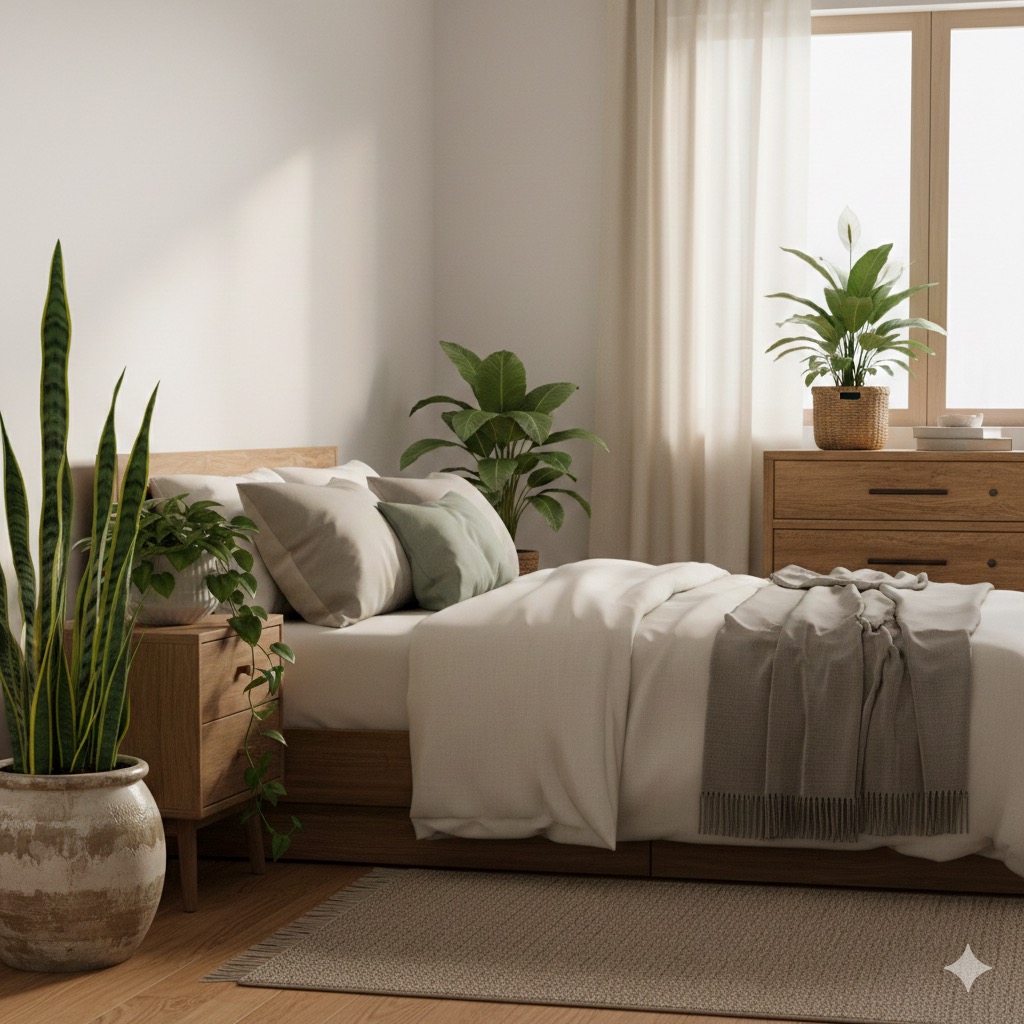
Bringing indoor plants decor into the bedroom creates a calming sanctuary that promotes better sleep and more peaceful mornings. Plants in the bedroom aren’t just beautiful. They actively improve air quality by filtering toxins and producing oxygen, creating a healthier environment for the third of your life spent sleeping. The presence of living greenery in a bedroom also creates a psychological connection to nature that research shows reduces stress and promotes relaxation, making it easier to unwind at the end of long days.
Choose bedroom plants carefully, focusing on varieties known for their air-purifying properties and ability to thrive in lower light conditions since bedrooms typically don’t get as much sun as living areas. Snake plants are perfect bedroom companions because they produce oxygen at night rather than during the day like most plants. Peace lilies filter air pollutants while bringing elegant white blooms. Pothos thrives in various light conditions and trails beautifully from nightstands or dressers. Spider plants are nearly impossible to kill and produce baby plants that add movement and interest.
Place plants strategically around your bedroom to create a cohesive oasis feeling without cluttering the space. A large plant in the corner softens the room and adds height. Plants on nightstands bring greenery right next to where you sleep, making them the last thing you see before closing your eyes and the first thing you notice when waking. A plant on your dresser or vanity adds life to these functional areas. If you have a reading nook or seating area in your bedroom, surround it with plants to create a peaceful retreat within a retreat.
Keep bedroom plant displays simple and uncluttered since bedrooms should feel restful rather than busy or overstimulating. Choose containers in calming colors that match your bedroom’s palette. White, cream, soft gray, or natural wood tones work beautifully in most bedrooms. Avoid bright colors or busy patterns that might feel too energetic for a sleep space. The indoor plants decor in your bedroom should enhance the room’s peaceful, restful quality rather than adding visual noise or demanding attention.
Some people worry about having plants in bedrooms because of old myths about plants consuming oxygen at night. In reality, the amount of oxygen plants use at night is negligible compared to what they produce during the day. The air quality and psychological benefits of bedroom plants far outweigh any minimal oxygen exchange. Many people report sleeping better and feeling more rested after adding plants to their bedrooms, finding that waking up surrounded by greenery makes mornings feel gentler and more positive.
11) Entryway Welcome Garden
First impressions matter, and using indoor plants decor in your entryway creates an immediate sense of welcome and life as soon as someone steps through your door. An entryway garden signals that your home is cared for, alive, and connected to nature. Even in small entryways, plants make the space feel more open and inviting while setting a positive tone for the entire home. This is the first space guests see and the last space you see when leaving, making it worth the effort to create something beautiful and uplifting.
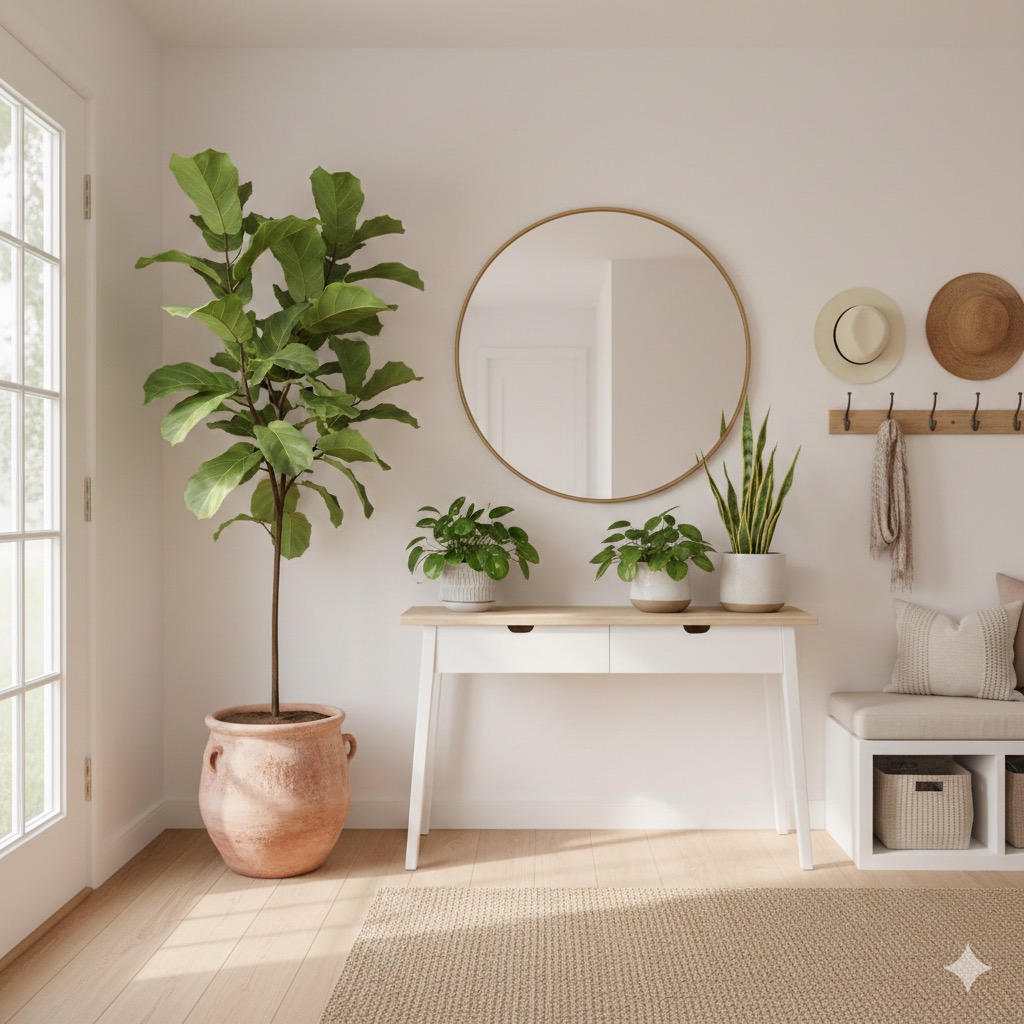
For entryways with space, a large floor plant creates immediate impact. A tall dracaena, yucca, or fiddle leaf fig makes a statement without taking up too much floor space since these plants grow up rather than out. Place the plant next to the door or in a corner where it won’t interfere with traffic flow but will be immediately visible when entering. If your entryway gets good natural light from a window or door with glass panels, you have more plant options. Darker entryways need plants that tolerate lower light, like pothos, snake plants, or ZZ plants.
Small entryways benefit from vertical plant displays that make use of wall space rather than precious floor area. Install a narrow shelf or small plant stand near the door that holds a few small plants without blocking the entryway. Hanging plants work beautifully in entryways with high ceilings, bringing the eye upward and making the space feel larger. A single hanging plant positioned where it catches light can make even the smallest entryway feel special and thoughtfully designed.
Pair your entryway plants with other welcoming elements like a console table, mirror, and lighting to create a cohesive entry moment. Plants on or around a console table work well with keys, mail, and other functional entry items, making the space both beautiful and practical. A plant next to a mirror gets double visual impact through its reflection. Good lighting, whether natural or artificial, helps plants thrive while making the entryway feel bright and inviting rather than dark and forgotten.
Choose hardy plants for entryways since these spaces often experience temperature fluctuations from doors opening and closing, drafts, and varying light conditions. Plants that can handle some neglect and environmental stress will look better longer with less maintenance. The indoor plants decor in your entryway should be low-maintenance enough that it always looks good, since this is the space that represents your entire home to visitors and reminds you daily that you’re entering a place full of life and beauty.
12) Bookshelf Plant Integration
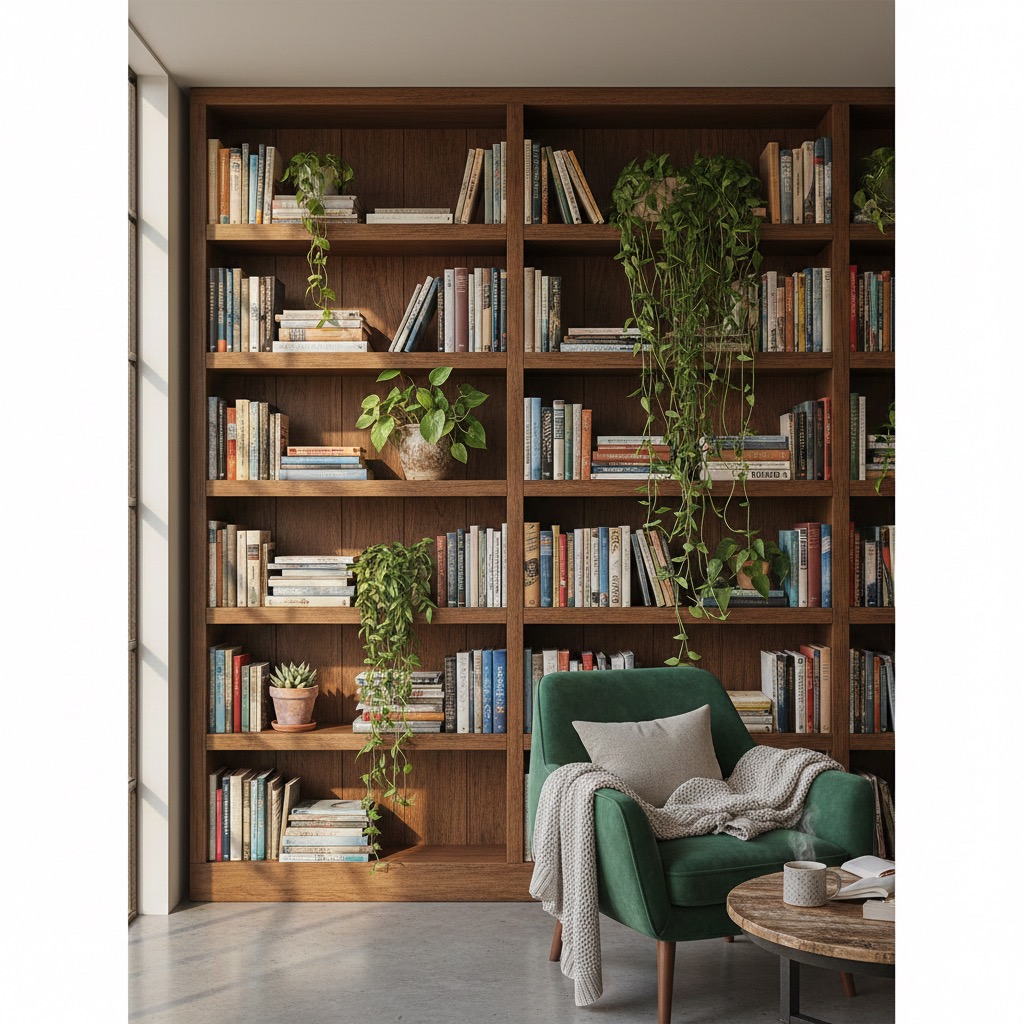
Mixing plants with books creates one of the most appealing forms of indoor plants decor because it combines two different types of organic matter, creating unexpected texture and color contrasts. Books and plants work together beautifully, with the structured rectangular shapes of books providing the perfect backdrop for the organic, flowing forms of plant leaves. This combination also makes practical sense because bookshelves are often located near windows for reading light, providing the natural light that plants need to thrive.
When integrating plants into bookshelves, think about creating breathing room rather than filling every inch of space. Remove some books to make room for plants, or leave some shelves partially empty to let plants shine. Place plants at different heights throughout the bookshelf rather than clustering them all on one shelf. A large plant on a lower shelf, medium plants on middle shelves, and small or trailing plants on upper shelves creates vertical flow and makes the eye travel up and down the bookshelf, discovering new details.
Use books themselves as plant stands by stacking them horizontally to create different heights and levels. This approach to indoor plants decor makes books part of the display even when they’re not being read. Choose hardcover books with attractive spines in colors that complement your plants and overall room design. Stack books in groups of two to five, varying the heights to create an organic, collected look. Place small plants on top of these book stacks, turning functional storage into artistic displays.
Select plants that work well with the scale of your bookshelf. Small succulents, pothos in small pots, air plants, and compact ferns all work beautifully without overwhelming books or making shelves look cluttered. Trailing plants like pothos or string of hearts can drape over shelf edges, adding movement and softness to straight lines. These trailing elements create a lived-in, cozy feeling that makes the bookshelf look less like storage and more like a curated display that reflects your personality and interests.
The combination of plants and books creates a space that feels intellectual and grounded at the same time. Books represent knowledge and culture, while plants represent growth and life. Together, they create an environment that feels nurturing to both mind and spirit. This type of indoor plants decor works especially well in home offices, libraries, or reading nooks where you want to create an atmosphere that encourages both thought and relaxation.
13) Dining Table Centerpiece Garden
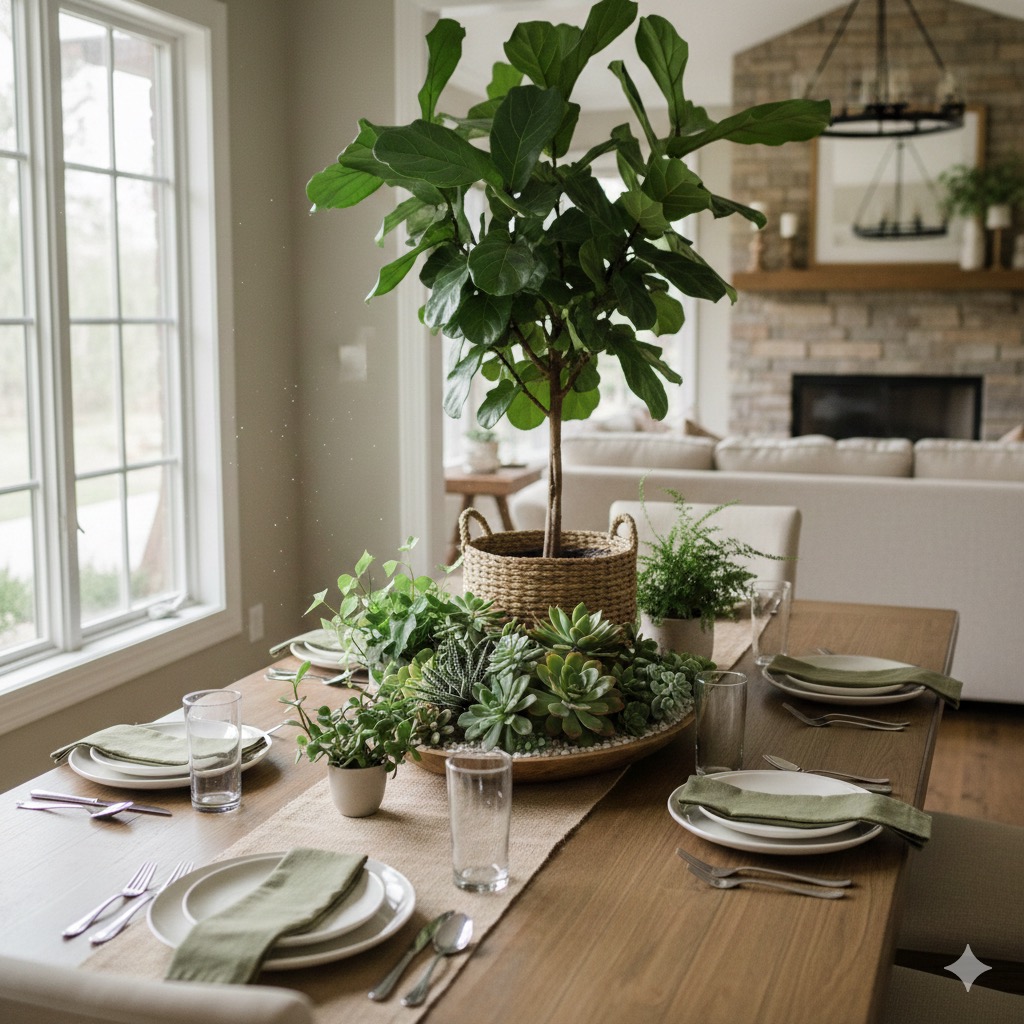
Replacing traditional cut flower arrangements with living plant centerpieces brings lasting beauty to your dining table while creating indoor plants decor that evolves and grows rather than wilting after a week. A plant centerpiece makes daily meals feel more special and provides a living focal point during dinners and gatherings. Unlike fresh flowers that require weekly replacement, a well-chosen plant centerpiece lasts for months or years, developing character and presence over time while requiring minimal maintenance.
The key to successful dining table plant centerpieces is keeping them low enough that people can see and talk across the table. Tall arrangements block sightlines and make conversation awkward, so focus on plants that spread horizontally rather than growing tall. Succulents in shallow bowls, small herb gardens in long planters, collections of tiny potted plants on decorative trays, or low ferns in wide containers all work beautifully. The goal is to add greenery and interest at the center of the table without creating a visual barrier between diners.
Create movement and interest by using multiple small plants rather than one large one. Arrange three, five, or seven small plants in matching or complementary pots along the center of the table. Odd numbers create more visual interest than even numbers. Use a decorative runner, tray, or shallow box to unify the group and define the centerpiece area. This approach to indoor plants decor allows you to adjust the arrangement for different occasions, removing some plants for larger dinner parties or rearranging them for different looks.
Choose plants that can handle the specific challenges of dining table life. They need to tolerate occasional splashes from water glasses, the warmth from nearby candles during dinners, and being moved regularly for cleaning or larger meals. Hardy plants like succulents, snake plants, or pothos work better than delicate ferns or finicky tropical plants. Also consider plants without strong scents that might compete with food aromas. Save fragrant herbs and flowering plants for other locations where their scent enhances rather than distracts.
For special occasions, you can enhance your permanent plant centerpiece with seasonal elements like pinecones in winter, small pumpkins in fall, or fresh flowers tucked between the plants. This flexibility makes plant centerpieces practical for everyday use while still allowing you to dress them up when hosting. The plants provide consistent green beauty while seasonal additions keep the look fresh and appropriate for different times of year and celebrations.
14) Staircase Gallery of Greenery
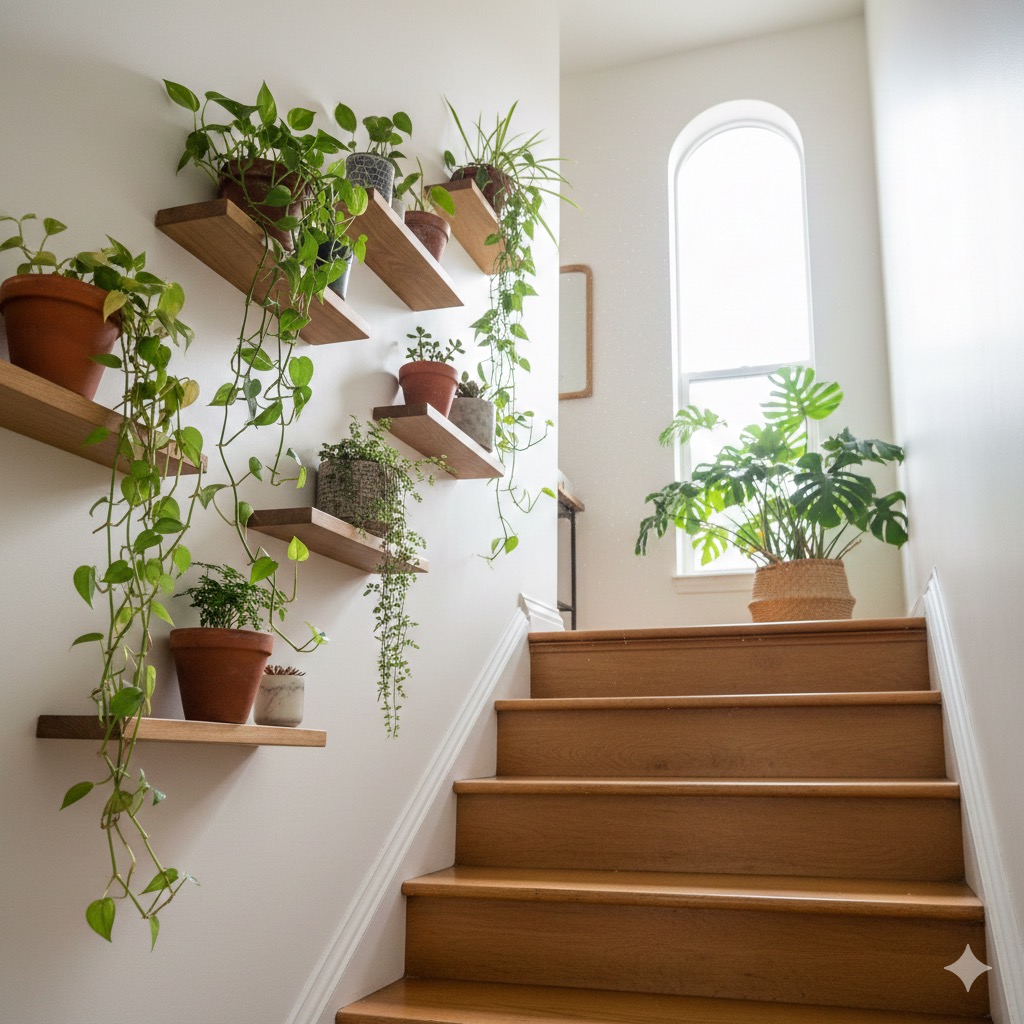
Staircases often become forgotten transitional spaces, but transforming them with indoor plants decor creates a living gallery that makes moving between floors a visual experience rather than just functional necessity. The vertical nature of staircases provides perfect opportunities for displaying plants at multiple heights, creating layers of greenery that follow you up and down. Every trip up or down the stairs becomes a walk through a green space that connects different levels of your home while making the staircase itself feel like a destination rather than just a passage.
The simplest way to bring plants to staircases is placing them on the steps themselves, but this only works safely if your staircase is wide enough that plants won’t create a tripping hazard or get knocked over during regular use. For most homes, the walls along the staircase offer better opportunities. Install small shelves at regular intervals along the staircase wall, each holding a small plant. As you climb the stairs, each step brings you eye-level with a different plant, creating an ascending garden that makes the climb more interesting and pleasant.
If you have a landing or turn in your staircase, use these spaces as mini plant stations. A larger floor plant at a landing creates a moment of pause and beauty in the middle of the climb. Window ledges along staircases become perfect spots for trailing plants that can cascade down along the wall. Hanging plants suspended from the ceiling above the stairwell create an overhead canopy effect that makes the space feel more enclosed and special. Just make sure hanging plants are secured properly and positioned where they won’t interfere with movement up and down the stairs.
Staircase plants need to be relatively low-maintenance since they’re not always the easiest spots to reach for watering and care. Choose plants that can handle some neglect and don’t require frequent attention. Consider the light conditions along your staircase when selecting plants. Staircases with windows or skylights can support light-loving plants, while interior staircases without natural light need plants that tolerate lower light or might benefit from small grow lights tucked discreetly on shelves.
This approach to indoor plants decor transforms one of the most utilitarian spaces in your home into something that brings joy every single time you use it. The staircase stops being just a way to get upstairs and becomes a living installation that changes as plants grow and seasons shift. Family members and guests will notice and appreciate the effort to bring beauty even to spaces that usually go unconsidered, making your whole home feel more thoughtfully designed and alive.
15) Seasonal Plant Rotation Display
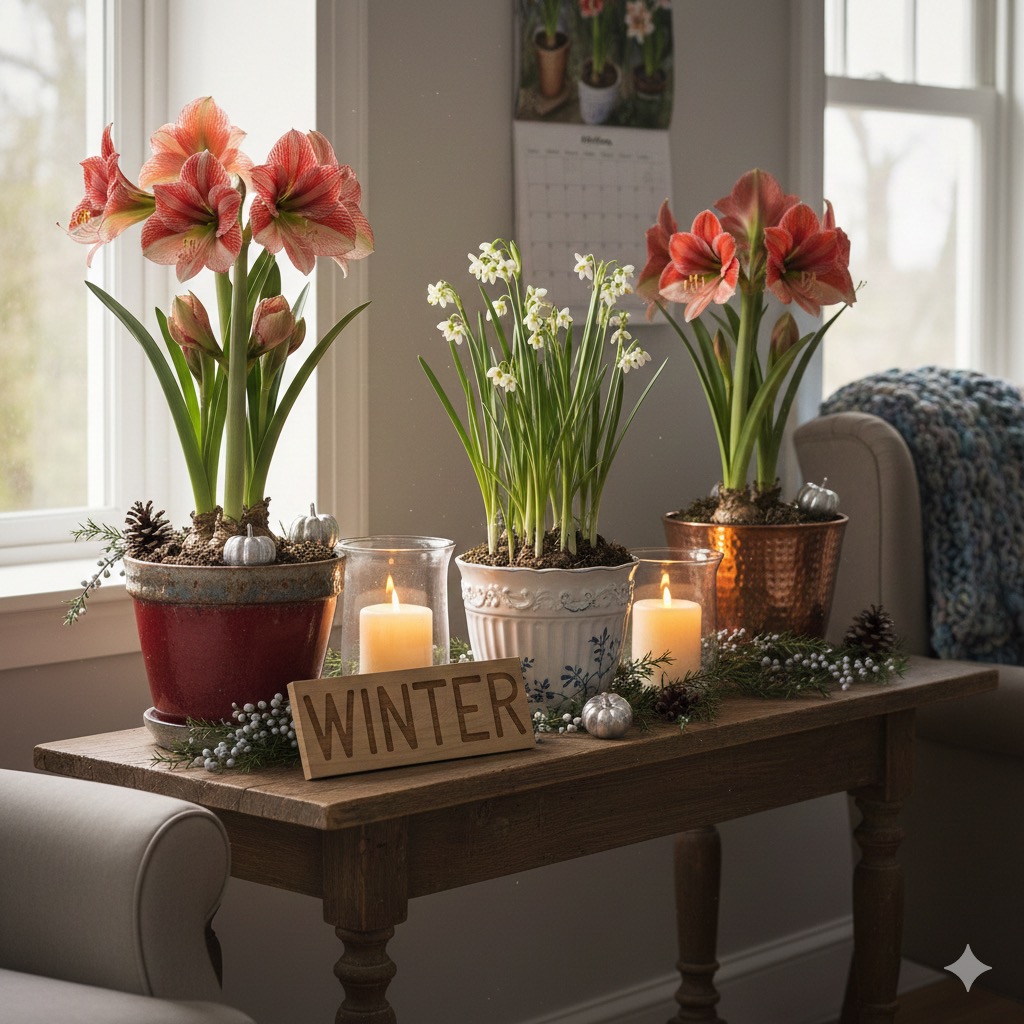
Creating a dedicated space for rotating seasonal plants brings the changing character of nature indoors through thoughtful indoor plants decor that evolves throughout the year. This approach acknowledges that different plants look their best at different times, and rotating your displays to highlight seasonal bloomers or varieties that thrive in current conditions keeps your plant decor fresh and interesting year-round. A seasonal rotation space becomes a living calendar that marks time through natural changes rather than just dates on a wall.
Choose a prominent location in your home for your seasonal display, somewhere visible enough that changes will be noticed and appreciated. A console table near the entrance, a side table in the living room, or a kitchen counter with good light all work well. In winter, fill this space with plants that bring life during the coldest, darkest months. Amaryllis bulbs force blooms in shades of red and white. Christmas cacti flower in pink or red. Paperwhites bring fragrant white blooms and bright green leaves. These winter bloomers combat seasonal blues and bring hope during months when outdoor gardens sleep.
As spring arrives, swap winter bloomers for plants that echo outdoor spring awakening. Forced bulbs like tulips, hyacinths, and daffodils bring spring indoors weeks before outdoor gardens bloom. Small pots of herbs started from seed remind you that growing season approaches. Ferns unfurl new fronds in shades of bright green. The spring rotation signals renewal and fresh starts, filling your home with the energy of new growth and longer days. Summer rotations might feature flowering plants like begonias, small citrus trees with fragrant blooms, or dramatic foliage plants that appreciate summer’s heat and long daylight hours.
Fall brings opportunities for plants with autumn colors and textures. Ornamental peppers offer colorful pods in shades of purple, orange, and red. Chrysanthemums bloom in rich fall tones. Sedums and other succulents change color as temperatures drop. Bring in interesting seed pods, dried grasses, or branches with colorful leaves to supplement your living plants, creating displays that mirror the outdoor autumn landscape. This type of indoor plants decor keeps you connected to natural cycles even if you live in a climate with mild seasons or in an urban environment far from changing forests.
Maintaining a seasonal rotation space requires planning and some storage for plants not currently on display. Keep off-season plants in a garage, basement, or spare room where they can rest until their time comes again. Many seasonal bloomers actually need a rest period after flowering, so rotating them out benefits the plants as much as it keeps your displays fresh. The effort of rotating plants seasonally pays off by giving you constantly changing beauty that never feels stale or overlooked, making every season feel celebrated in your home.
Bringing It All Together
Indoor plants decor offers endless possibilities for transforming your living space into a more beautiful, healthy, and connected environment. From cascading shelves that create living walls to single statement plants that command attention, from functional herb gardens to purely decorative terrariums, there are approaches to suit every home, every budget, and every level of plant care experience. The fifteen ideas we’ve explored show that bringing plants indoors isn’t just about adding decoration. It’s about relationships with living things that grow and change alongside you.
What makes indoor plants decor special is how it evolves over time. Unlike furniture or artwork that stays the same, plants grow, develop new leaves, occasionally bloom, and respond to the care you give them. This living quality means your decor is never static. A plant arrangement that looks sparse and new today will become lush and established over months and years. This patience and care creates deeper connections to your space and teaches valuable lessons about nurturing living things.
As you incorporate these ideas into your home, remember that there’s no right or wrong way to decorate with plants. Start small if you’re new to houseplants, perhaps with a single cascading shelf or a few desk companions. Build your confidence and your collection gradually. If you’re already a plant enthusiast, these ideas might inspire you to reorganize your existing plants in new ways or to try styles you haven’t explored before. The goal isn’t perfection but rather creating spaces that feel alive, personal, and connected to the natural world.
Indoor plants decor also offers flexibility that other decorating approaches don’t. If an arrangement isn’t working, you can move plants, swap containers, or try different groupings without major investment or commitment. This forgiving nature makes plant decorating perfect for renters, for people whose style is still evolving, or for anyone who enjoys changing their surroundings seasonally or when the mood strikes. Plants adapt to new positions and new containers, making them incredibly versatile decorating elements.
Whether you implement one idea from this guide or experiment with all fifteen, you’re embarking on a journey that will make your home more beautiful, more healthy, and more nurturing. Plants give back far more than they ask for, improving air quality, reducing stress, and creating beauty that changes daily as light shifts and new growth emerges. Welcome these green companions into your home, experiment with different displays and arrangements, and discover how indoor plants decor can transform not just your space but how you experience living in it.