
Simple and Beautiful Ways to Style the Wall Above Your Couch
The wall above your sofa is one of the most important spaces in your living room. It’s the first thing people notice when they walk in, and it sets the tone for your entire space. But choosing the right decor can feel overwhelming with so many options available. Should you go big and bold with one statement piece, or create a collection of smaller items? What colors should you choose? How high should you hang things?
The good news is that decorating above your sofa doesn’t have to be complicated or expensive. Whether you love modern minimalism, cozy farmhouse style, or something in between, there’s a perfect solution for your space. The key is finding ideas that match your personality and make your living room feel complete.
In this guide, you’ll discover 13 beautiful above sofa wall decor ideas that work in real homes. These aren’t complicated designer tricks that require professional help. They’re simple, practical ideas you can implement yourself. Each section includes detailed information about why these ideas work, what to consider, and how to make them fit your specific space. Let’s explore these options and find the perfect wall decor for your living room.
1) Large Scale Art
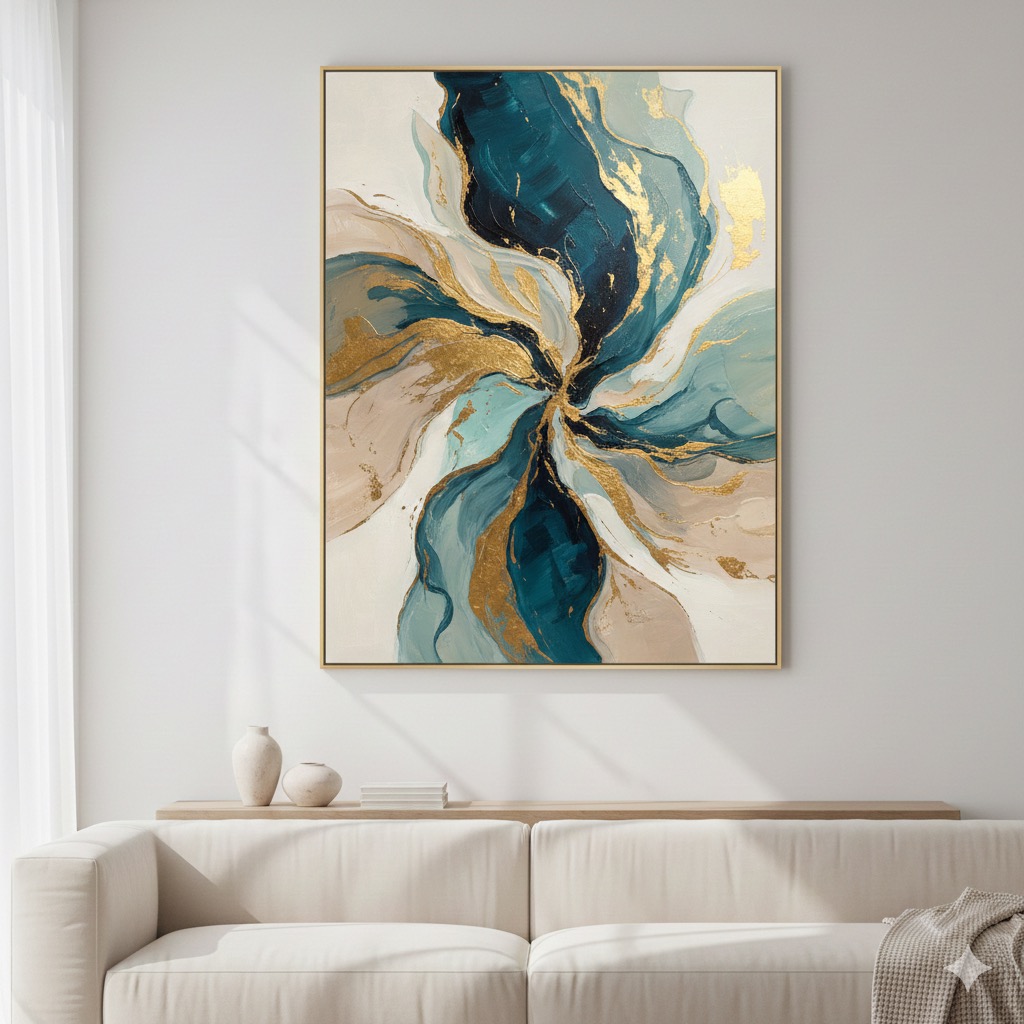
A single large piece of art creates instant impact above your sofa. This approach works beautifully in modern and contemporary spaces where clean lines and simplicity rule. The power of one oversized artwork lies in its ability to anchor the entire room without creating visual clutter. When you choose a large piece, you’re making a clear design statement that says you value quality over quantity.
The size matters tremendously when selecting large scale art. Your piece should take up about two-thirds to three-quarters of the width of your sofa. This proportion creates balance without overwhelming the space. If your sofa is six feet wide, look for art that spans roughly four to five feet across. This sizing guideline ensures the artwork feels connected to the furniture below rather than floating awkwardly on the wall.
Color selection in your large artwork can either complement or contrast with your existing decor. Many people find success with abstract pieces that pull colors from their throw pillows, curtains, or area rug. This creates a cohesive look that ties the room together. Others prefer bold contrasts, like a vibrant red painting above a neutral gray sofa. Both approaches work, but they create very different moods in your space.
Frame choice affects the overall feel of your large art significantly. A thick, ornate gold frame adds traditional elegance and works well in classic interiors. A simple black or white frame keeps the focus on the artwork itself and suits contemporary spaces. Frameless canvas prints offer a modern, gallery-like aesthetic that many homeowners love. Consider how the frame style aligns with your other furniture pieces and architectural details.
Hanging height is crucial for large artwork above your sofa. The center of your piece should sit at eye level, which typically means 57 to 60 inches from the floor. However, when hanging art above furniture, adjust this slightly. Aim to leave about 6 to 8 inches of space between the top of your sofa and the bottom of the frame. This creates visual breathing room while maintaining a strong connection between the furniture and the art.
Budget-conscious decorators can find large scale art in unexpected places. Many online retailers offer affordable canvas prints of original paintings. Local art fairs and college art shows feature emerging artists selling original work at reasonable prices. You can also create your own large abstract piece using canvas, paint, and simple techniques found in online tutorials. The DIY approach adds personal meaning to your space.
2) Gallery Wall Collection
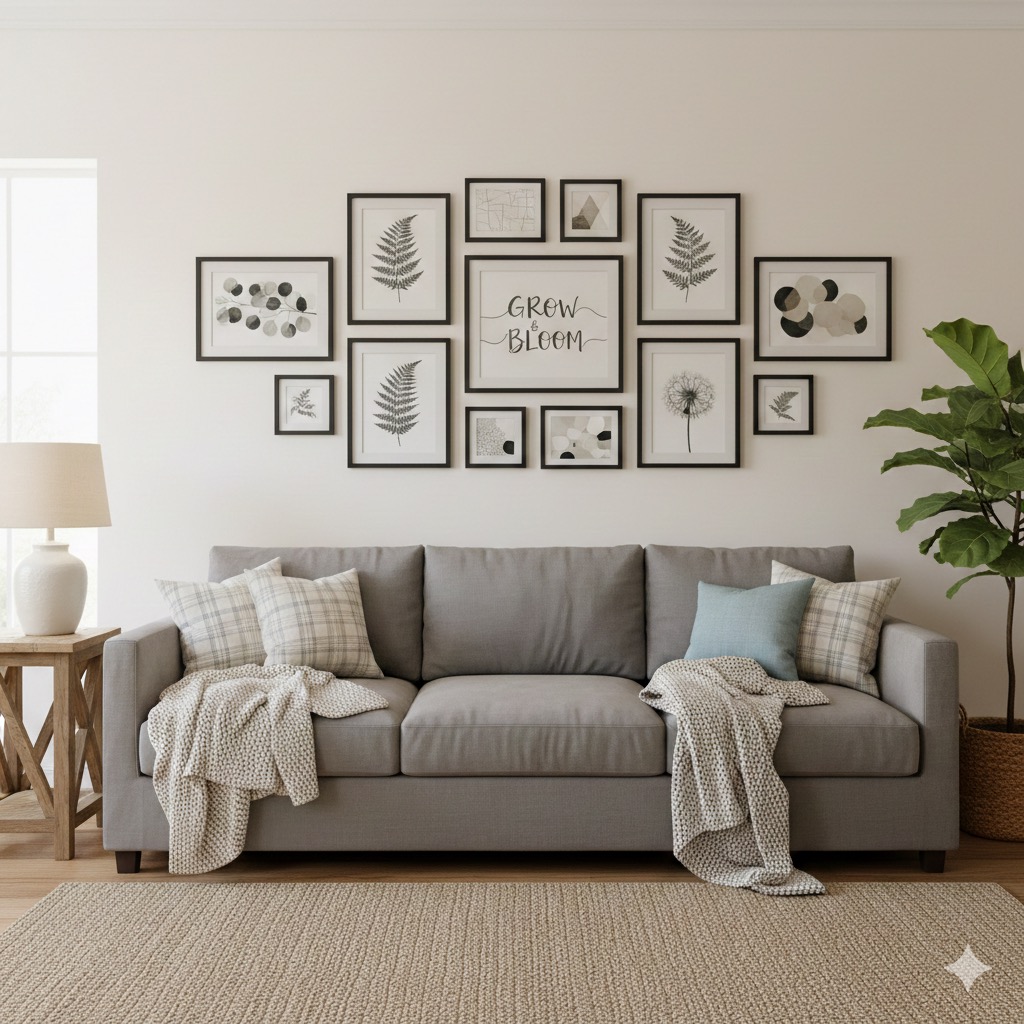
A gallery wall transforms the space above your sofa into a personal museum of your favorite things. This approach allows you to showcase multiple pieces, creating layers of visual interest that draw people in for a closer look. Gallery walls work in nearly any style home, from traditional to eclectic, because you control what goes into the collection. The beauty lies in the mix, the way different pieces relate to each other while maintaining individual character.
Planning your gallery wall layout before hammering a single nail saves time and frustration. Start by arranging your pieces on the floor in front of the sofa. This lets you experiment with different configurations until you find an arrangement that feels balanced. Take a photo of your final floor layout to reference when hanging. Many people find success with a grid pattern where frames align in neat rows and columns. Others prefer an organic salon-style arrangement where pieces of different sizes fit together like puzzle pieces.
The frame selection in your gallery wall creates either unity or intentional contrast. Matching frames in the same color and style create a cohesive, polished look that feels very intentional. This approach works especially well if your art prints or photos vary widely in color or subject matter. The consistent frames provide structure. Alternatively, mixing frame styles, colors, and materials creates an collected-over-time aesthetic that feels more personal and eclectic. Both methods succeed, but they deliver different visual messages.
Spacing between frames significantly impacts how your gallery wall reads from across the room. Consistent spacing of 2 to 3 inches between all frames creates a clean, modern look. Tighter spacing of 1 to 1.5 inches makes the wall feel more dense and dramatic. Variable spacing can work in organic arrangements but requires a good eye for balance. Use painter’s tape to mark frame positions on the wall before hanging, adjusting until the spacing feels right.
Content selection for your gallery wall should reflect your personality and interests. Family photos create warmth and tell your story. Art prints or posters showcase your aesthetic preferences. Mixing different types of content, like photos with botanical prints and vintage maps, adds depth and intrigue. The key is finding a thread that connects the pieces, whether that’s color palette, subject matter, or overall mood. This thread prevents the wall from feeling random or chaotic.
Building your gallery wall gradually over time relieves pressure and allows for more thoughtful curation. Start with 3 to 5 core pieces and hang them first. Live with this arrangement for a while, then add new pieces as you find them. This approach feels more organic and prevents buyer’s remorse from purchasing everything at once. It also spreads out the cost, making the project more budget-friendly.
The overall shape of your gallery wall should relate to your sofa dimensions. If you have a long, low sofa, create a horizontal gallery wall that echoes that shape. For a smaller loveseat, a more square or vertical arrangement might work better. The gallery wall should extend roughly the same width as your sofa, give or take a few inches. This creates visual harmony between the furniture and the wall decor.
3) Oversized Mirror
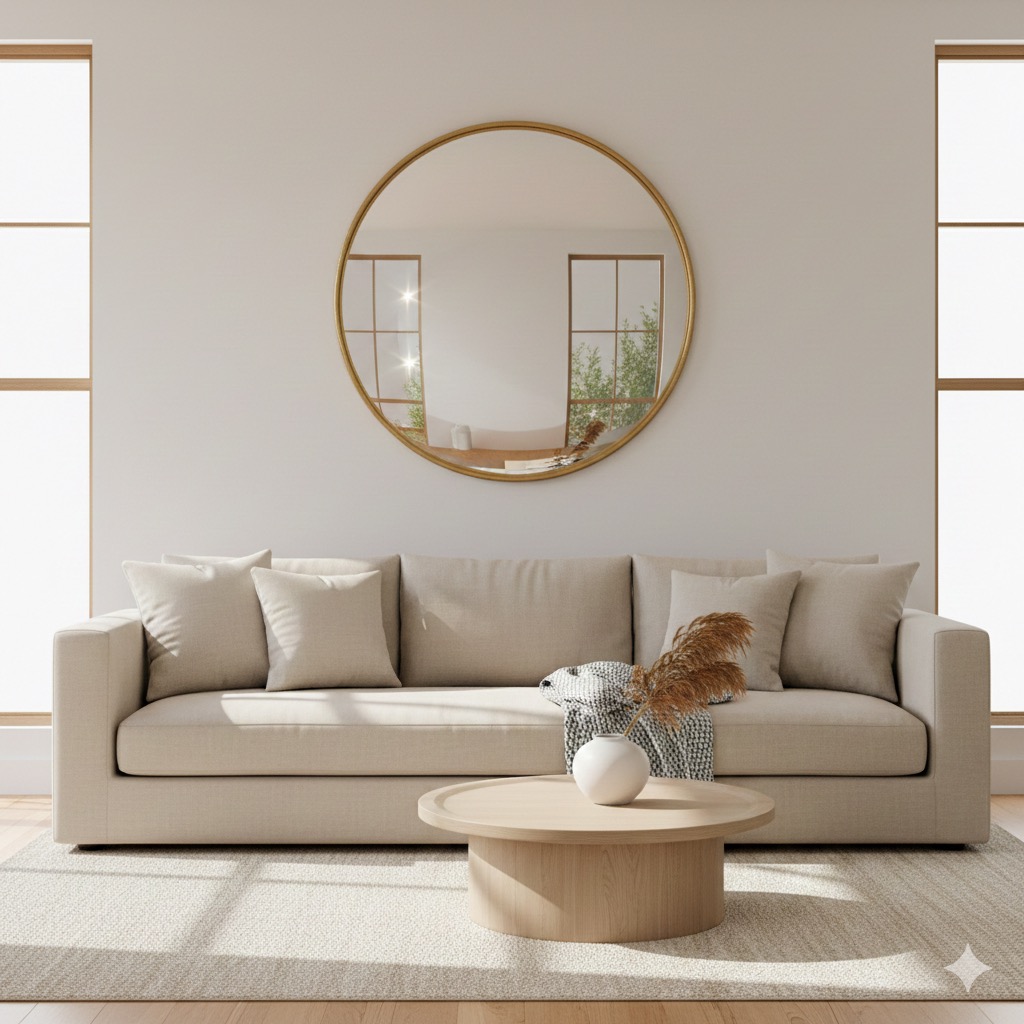
An oversized mirror above your sofa does double duty by adding decorative appeal while making your room feel larger and brighter. Mirrors reflect natural light from windows, effectively doubling the illumination in your space. This makes them particularly valuable in darker living rooms or basement spaces where light is limited. The reflective quality also creates an illusion of depth, making even small rooms feel more spacious and open.
Mirror shape and frame style dramatically change the mood of your space. A large rectangular mirror with a simple frame feels modern and clean. Round or oval mirrors soften the space and work beautifully in rooms with lots of angular furniture. An ornate, antique-style frame adds elegance and works well in traditional or transitional spaces. Frameless mirrors create a sleek, contemporary look that almost disappears into the wall while still providing all the functional benefits.
Positioning your mirror thoughtfully maximizes its impact. Consider what the mirror will reflect. A mirror positioned to reflect a beautiful view from a window brings that outdoor scenery deeper into your room. Mirrors that reflect interesting architectural features or attractive furniture pieces multiply those design elements. Avoid positioning mirrors to reflect clutter, blank walls, or unflattering angles. Walk around the room and observe what the mirror captures from different viewing spots.
The size of your mirror matters for both aesthetic and functional purposes. An oversized mirror should be substantial enough to make a statement, typically at least 40 to 50 inches wide for a standard sofa. However, it shouldn’t extend the full width of your sofa. Leave some breathing room on each side, about 6 to 12 inches from the sofa edges to the mirror edges. This prevents the mirror from looking awkwardly squeezed into the space.
Hanging an oversized mirror securely is non-negotiable because of the weight involved. Use heavy-duty wall anchors rated for the mirror’s weight plus 50 percent extra for safety. If possible, locate wall studs and anchor directly into them. For very large or heavy mirrors, use a French cleat hanging system that distributes weight across a wider area. Don’t skip proper installation, even if it means hiring a professional. A falling mirror is dangerous and potentially expensive to replace.
4) Floating Shelves Display
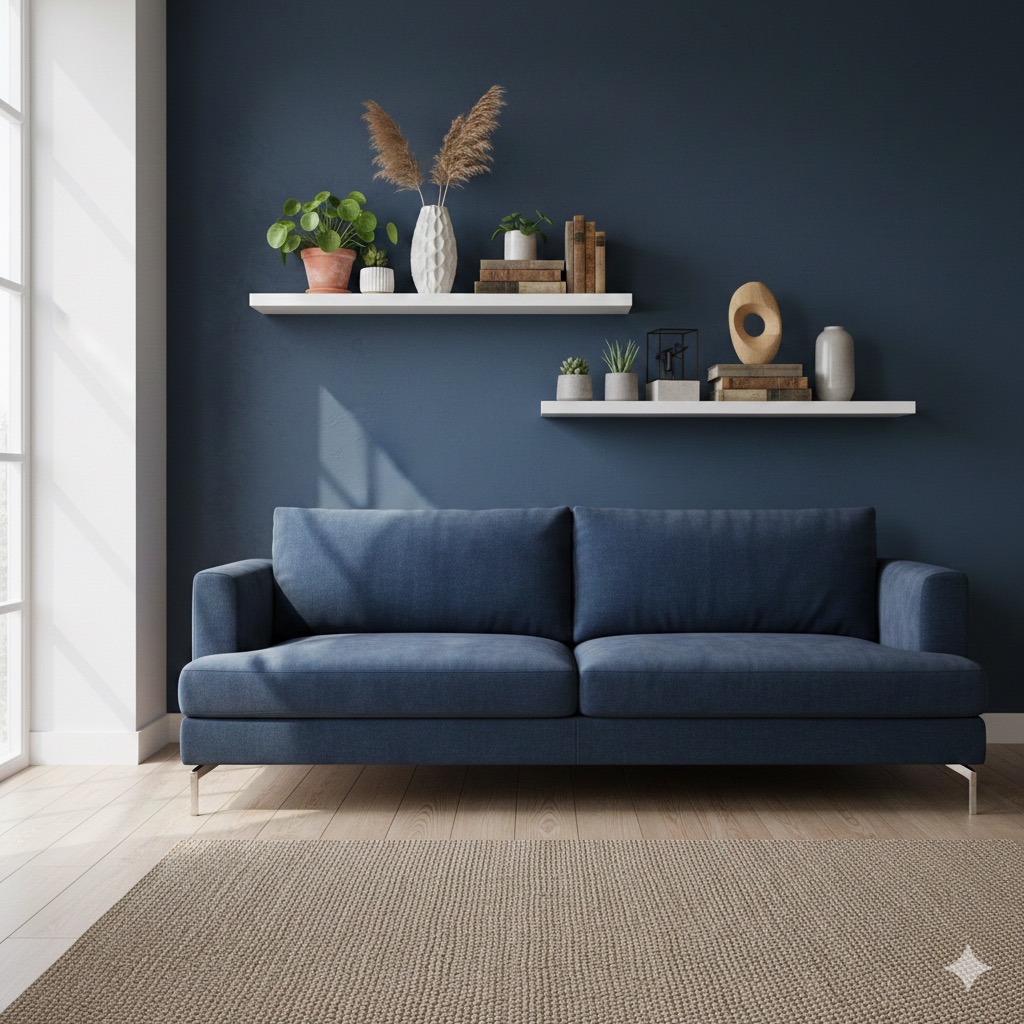
Floating shelves above your sofa create functional display space that adds dimension and personality to your wall. Unlike flat art, shelves extend into the room, creating shadows and depth that make the wall more interesting. They also offer flexibility that static art cannot match. You can change what’s displayed seasonally or whenever you want a fresh look, making this option appealing for people who like to refresh their decor regularly.
Shelf configuration depends on your aesthetic preferences and practical needs. A single long shelf spanning most of the sofa width creates a clean, modern look and provides substantial display space. Two or three shorter shelves stacked vertically offer more display area and create visual layers. Asymmetrical shelf arrangements add artistic interest and work well in eclectic or contemporary spaces. Consider how much you want to display and how often you plan to change things when choosing your configuration.
The styling of your floating shelves requires a balanced approach between decoration and restraint. Overcrowded shelves look cluttered and chaotic. Aim to fill about 60 to 70 percent of each shelf, leaving some empty space for visual breathing room. Vary the height of objects by mixing tall items like vases or candlesticks with shorter pieces like small plants or stacked books. This height variation creates visual rhythm that’s more interesting than a flat line of similar objects.
Object selection for your shelves should follow the rule of threes and odd numbers. Group items in clusters of three or five rather than pairs or even numbers. Odd groupings feel more dynamic and visually appealing. Mix different textures and materials, like smooth ceramics with rough wooden objects and metallic finishes. This textural variety adds sophistication. Choose items in a limited color palette that coordinates with your room to avoid a jumbled appearance.
Installation of floating shelves requires attention to weight capacity and secure mounting. Choose shelves rated to hold significantly more weight than you plan to place on them. Use appropriate wall anchors for your wall type, drywall, plaster, or concrete. If your shelves will hold heavy items like books or large planters, anchor into wall studs whenever possible. A shelf that sags or pulls away from the wall ruins the entire aesthetic and could damage your belongings.
Maintaining and updating your shelf display keeps this decor option feeling fresh. Dust shelves and objects weekly to prevent buildup. Rotate items seasonally, swapping summer elements like seashells and light colors for autumn items like small pumpkins and warm tones. This seasonal rotation keeps your space feeling current without requiring major redecorating efforts. Consider themed displays around holidays without being overly obvious, subtle nods to the season work best in adult living spaces.
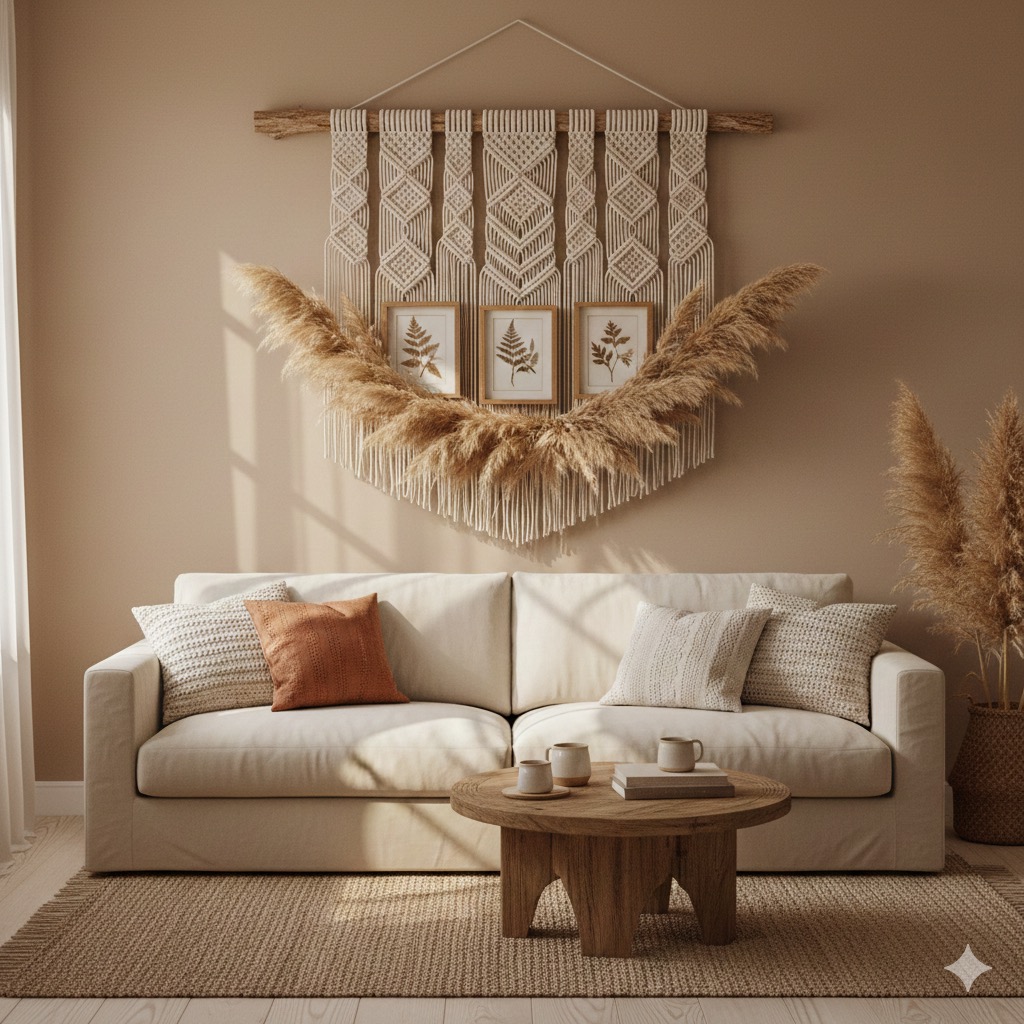
5) Tapestry or Textile Wall Hanging
Textile wall hangings bring warmth and softness to the space above your sofa in a way that hard materials like framed art cannot. The fabric texture adds a tactile quality that makes the room feel cozier and more inviting. Tapestries and textile art also offer cultural and artistic diversity, with options ranging from traditional woven pieces to modern macrame designs. This decor choice works particularly well in bohemian, eclectic, or globally inspired spaces.
Size considerations for textile hangings differ slightly from traditional art. Because fabric drapes naturally, your hanging can extend closer to the furniture without looking too heavy or overwhelming. A tapestry can start as close as 4 to 6 inches above your sofa cushions. The width should still follow the two-thirds to three-quarters rule, leaving some wall space visible on each side. Larger spaces can handle floor-to-ceiling textiles that create a dramatic backdrop for your seating area.
Style options in textile wall hangings span a wide spectrum. Traditional woven tapestries often feature intricate patterns and rich colors that add instant sophistication. Modern macrame pieces in neutral tones create texture without adding color, perfect for minimalist spaces. Quilts and vintage textiles bring nostalgic charm and work beautifully in farmhouse or cottage style rooms. Hand-dyed or batik fabrics introduce vibrant colors and organic patterns that energize a space.
Hanging methods for textiles need to support the weight while preserving the fabric. A wooden dowel rod threaded through a sleeve or tabs at the top provides secure support and creates a clean look. For heavier tapestries, use a curtain rod with decorative finials that complement your room’s hardware finishes. Smaller pieces can be mounted on canvas stretcher bars, giving them a more rigid structure similar to traditional art. Avoid methods that put stress on the fabric, like tension rods that might stretch delicate materials.
Care and maintenance of textile wall hangings ensures they stay beautiful over time. Dust regularly with a soft brush attachment on your vacuum, keeping the suction on low to avoid damaging fibers. Most tapestries benefit from professional cleaning rather than home washing, which can cause shrinkage or color bleeding. Rotate textile hangings occasionally to prevent uneven fading from sunlight exposure. Consider using UV-protective window film if your textile hangs on a wall that receives direct sunlight for several hours daily.
Layering textiles with other wall decor creates interesting dimension. Hang a large tapestry as your base layer, then add smaller framed pieces or wall sculptures in front of it at varying heights. This layering technique adds depth and makes your wall decor feel more curated and intentional. The textile provides a textured backdrop that makes hard elements like frames and metal sculptures stand out more dramatically.
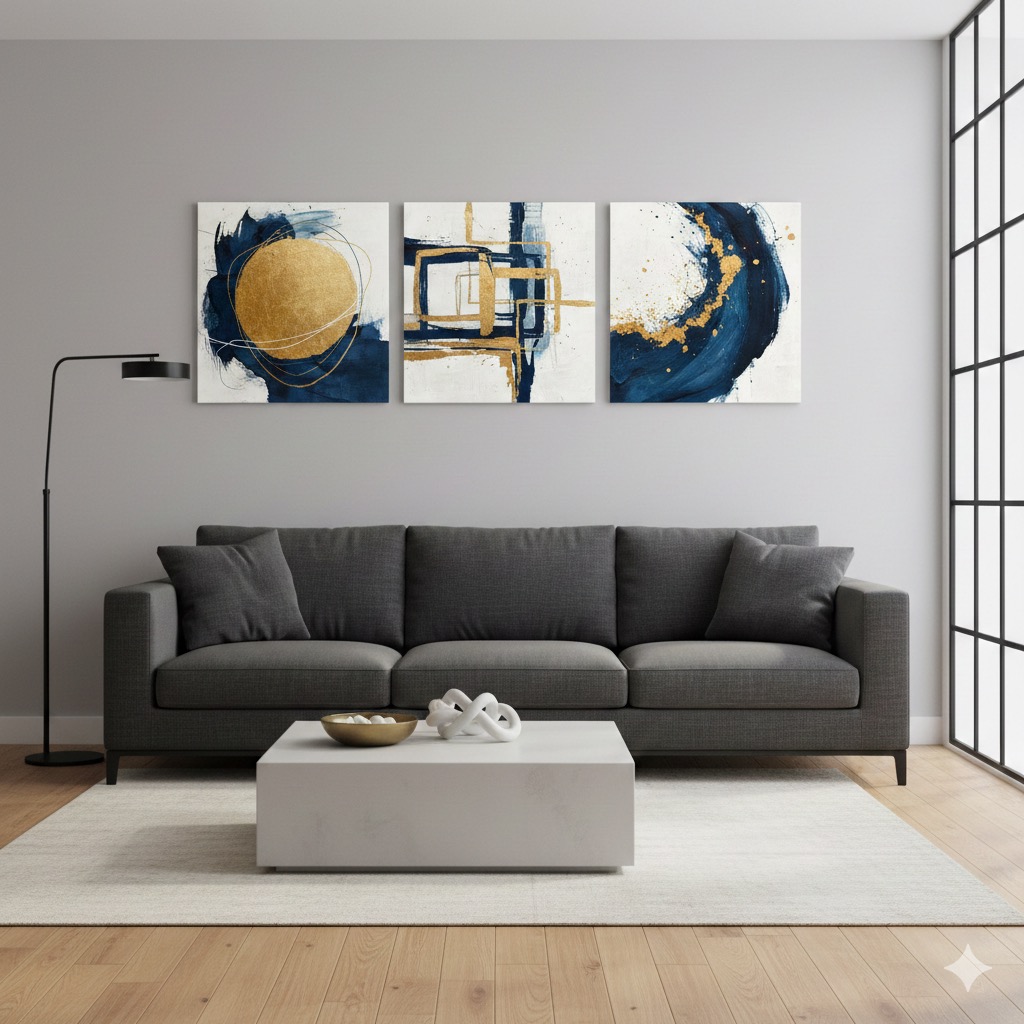
6) Three Panel Art (Triptych)
A triptych, or three-panel art arrangement, offers the impact of large scale art with built-in visual interest from the divisions. This format works exceptionally well above sofas because the three panels naturally create horizontal movement that complements the long lines of the furniture. The panels can display a single image split across three canvases, or three related but distinct images that work together thematically. This format bridges the gap between the simplicity of single artwork and the complexity of a full gallery wall.
Spacing between triptych panels significantly affects the overall look. Most designers recommend 2 to 4 inches between panels for a cohesive appearance. Closer spacing makes the piece read as a single artwork from a distance. Wider spacing of 6 to 8 inches creates a more distinct separation that emphasizes the individual panels while maintaining their relationship. Consider your viewing distance when deciding. Larger rooms where people view from farther away can handle wider spacing better than smaller intimate spaces.
Panel sizing can follow two main approaches. Equal-sized panels create symmetry and balance that feels calm and organized. This works well in modern and contemporary spaces where order and structure dominate. Alternatively, varying panel sizes with a larger center panel flanked by smaller side panels creates dynamic visual interest. This asymmetrical approach suits eclectic or transitional spaces better. Whichever sizing you choose, ensure all panels align at the top or bottom for a polished, intentional appearance.
Subject matter for triptychs ranges widely depending on your style preferences. Abstract designs work beautifully because the division across panels adds to the artistic composition. Landscape photographs split across three panels create panoramic views that draw the eye across the entire wall. Nature subjects like forests, beaches, or mountains benefit from the triptych format’s horizontal emphasis. Urban scenes and architectural photography also translate well to this multi-panel format.
Color coordination across the three panels creates unity even when the images differ. Choose panels that share a primary color family, like three different beach scenes that all feature blues and sandy beiges. Or select panels with a repeated accent color that ties them together, like three abstract pieces with pops of coral throughout. This color connection helps the eye read the panels as a intentional set rather than three random artworks.
Budget options for triptych art are plentiful and accessible. Many online print services offer triptych canvas sets at affordable prices. You can also create your own by purchasing three blank canvases and painting a simple abstract design across them using colors from your room. Another budget approach involves printing your own photos as triptych panels at a local print shop, then mounting them on foam board for a lightweight, affordable solution.
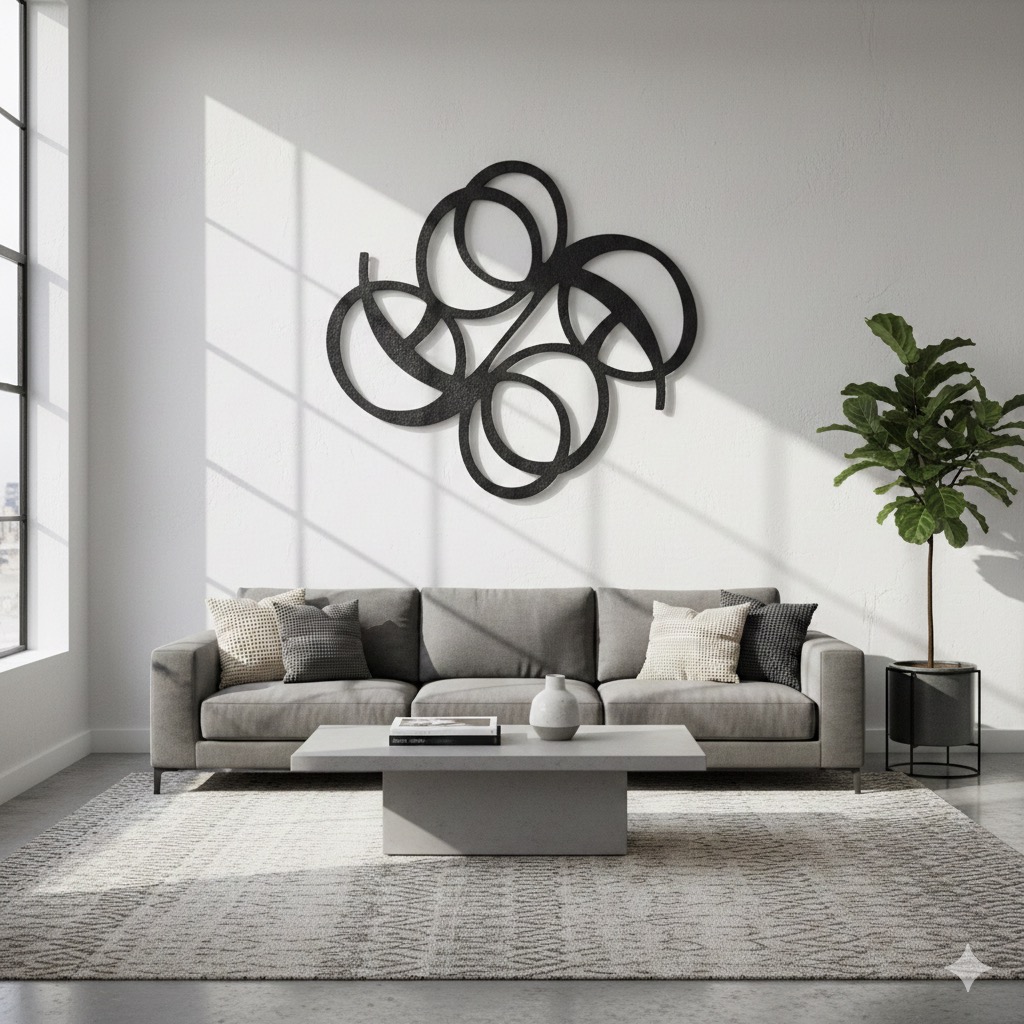
7) Metal Wall Art Sculpture
Metal wall sculptures bring three-dimensional interest to the flat surface above your sofa. Unlike printed art, metal pieces cast shadows that change throughout the day as light shifts, creating living artwork that transforms with the hours. Metal finishes also add a touch of sophistication and can introduce different textures into your space, from smooth polished brass to rough hammered iron. This option works particularly well in modern, industrial, or contemporary spaces where metal accents already appear in light fixtures or furniture hardware.
Metal finish selection impacts both the style and maintenance of your wall sculpture. Matte black metal provides dramatic contrast against light walls and suits industrial or modern farmhouse aesthetics. Brass and gold tones add warmth and luxury, working well in glam or traditional spaces. Silver and chrome finishes feel sleek and contemporary, complementing cool color schemes. Weathered or oxidized finishes create rustic appeal perfect for farmhouse or cottage style rooms. Consider how the metal finish coordinates with other metals in your room, like lamp bases, picture frames, or coffee table legs.
Scale and proportion matter enormously with metal wall art. Because metal sculptures often feature open, airy designs rather than solid forms, you can go larger than you might with traditional framed art. A piece that spans the full width of your sofa can work if the design is delicate or has negative space that lets the wall show through. Heavier, more solid metal pieces should follow the two-thirds width guideline to avoid overwhelming the space. Step back and view the scale from across the room before finalizing your choice.
Design styles in metal wall art vary from abstract geometric shapes to organic natural forms. Geometric designs with clean lines and symmetrical patterns feel modern and structured. Organic designs like trees, leaves, or flowing abstract forms soften the space and add movement. Circular sunburst designs work particularly well above sofas, creating a focal point that draws the eye. Consider how the sculpture’s lines relate to your furniture shapes, angular metal art can balance curved furniture while rounded metal pieces soften angular, modern sofas.
Installation of metal wall sculptures requires proper anchoring because of weight distribution. Most pieces come with built-in hanging systems, typically keyhole slots or D-rings on the back. Use wall anchors appropriate for both your wall type and the sculpture’s weight. For large or heavy pieces, anchor into wall studs. Some elaborate metal sculptures may benefit from multiple hanging points to prevent tilting or rotating on the wall. Don’t trust a single nail or basic picture hook for metal art.
Maintenance of metal wall art keeps it looking fresh and prevents deterioration. Dust regularly with a microfiber cloth or soft brush to prevent buildup in crevices. For detailed pieces with intricate cutouts, use compressed air to blow dust from hard-to-reach areas. Brass and copper finishes may develop patina over time, which many people find attractive. If you prefer the original shine, clean occasionally with metal polish following the manufacturer’s instructions. Avoid harsh chemicals that might damage protective coatings on colored or painted metal pieces.
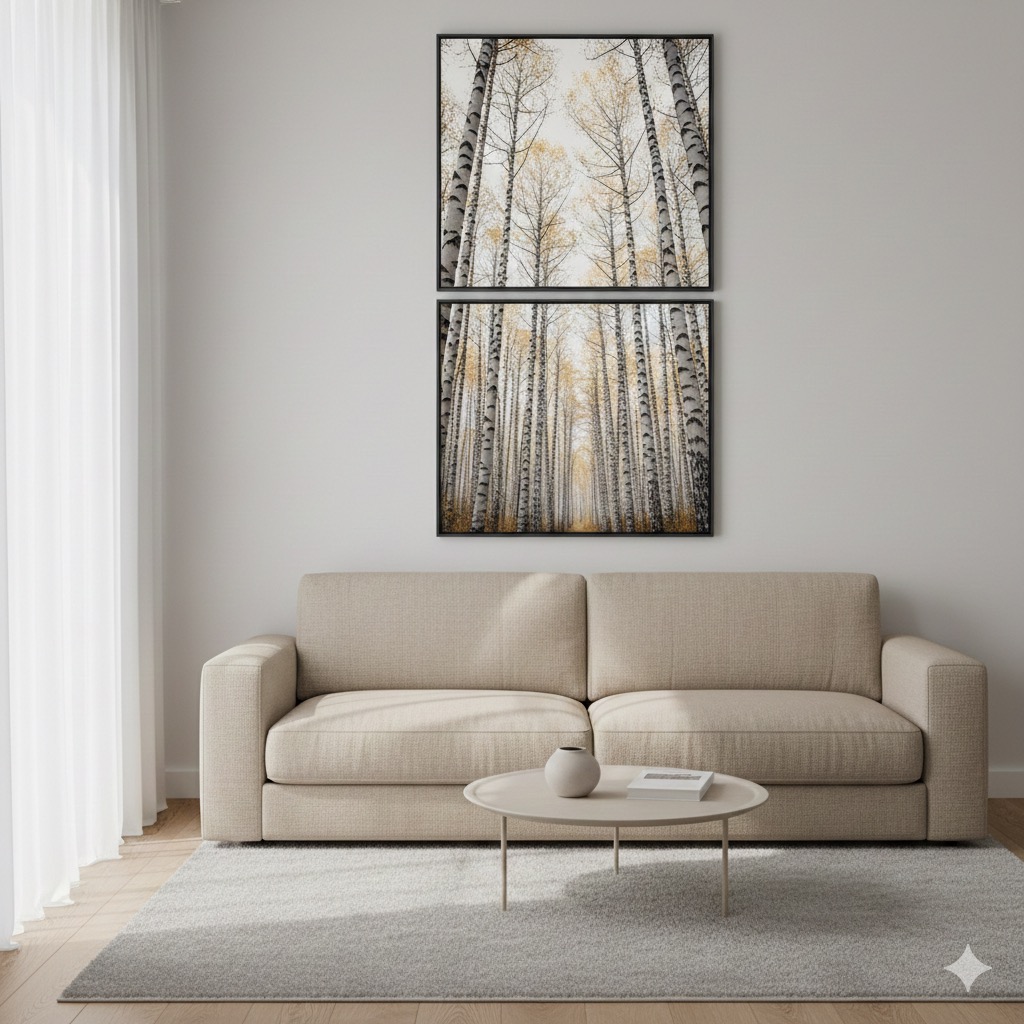
8) Vertical Diptych
A vertical diptych consists of two tall panels stacked one above the other, creating striking vertical lines in a space typically dominated by horizontal elements. This unexpected orientation adds architectural interest and draws the eye upward, making ceilings appear higher and rooms feel more spacious. Vertical diptychs work especially well in rooms with tall ceilings or in narrow spaces where horizontal art might emphasize the limited width. This format also suits specific subjects like tall trees, city skylines, or abstract designs that benefit from vertical emphasis.
Positioning a vertical diptych requires different considerations than horizontal art. Center the overall arrangement above your sofa, but think about the composition as one tall piece rather than two separate units. The bottom panel should start about 6 to 8 inches above your sofa back, with 2 to 3 inches of space between the upper and lower panels. This modest spacing helps the panels read as a cohesive unit while maintaining distinct visual separation. The top panel can extend quite high on the wall without looking awkward because the vertical format naturally draws attention upward.
Subject matter selection for vertical diptychs should emphasize height or vertical movement. Tall trees photographed from ground level looking up create natural vertical drama. City architecture and skyscrapers work beautifully in this format. Abstract paintings with vertical brushstrokes or color blocking enhance the upward motion. Waterfall or mountain scenes gain impact when split into upper and lower sections. Avoid subjects that feel awkwardly cropped when divided vertically, like horizontal landscapes or wide panoramic views.
Panel proportions in vertical diptychs can vary to create different effects. Equal-sized square or rectangular panels stacked vertically create balanced symmetry. Alternatively, different sized panels add visual interest, perhaps a larger lower panel with a smaller upper accent panel. Some designers place a larger panel on top with a smaller grounding element below. Experiment with proportions to see what feels right for your specific artwork and wall height.
Frame choices for vertical diptychs follow similar principles to other multi-panel art. Matching frames on both panels create a unified, intentional appearance. The frame style should complement your overall decor, sleek thin frames for modern spaces or more substantial frames for traditional rooms. Frameless gallery-wrapped canvases work well if you want the art itself to be the focus without frame distraction. Whatever frame you choose, keep it consistent across both panels to maintain the diptych’s integrity as a single artwork.
The vertical diptych format works particularly well in specific room layouts. In rooms with built-in shelving or bookcases flanking the sofa, the vertical lines echo those architectural elements. In narrow living rooms, the upward emphasis counterbalances the horizontal squeeze. In rooms with impressive ceiling height, vertical art draws attention to that architectural feature. Consider your room’s specific proportions when deciding if a vertical diptych would enhance or fight against the existing architecture.
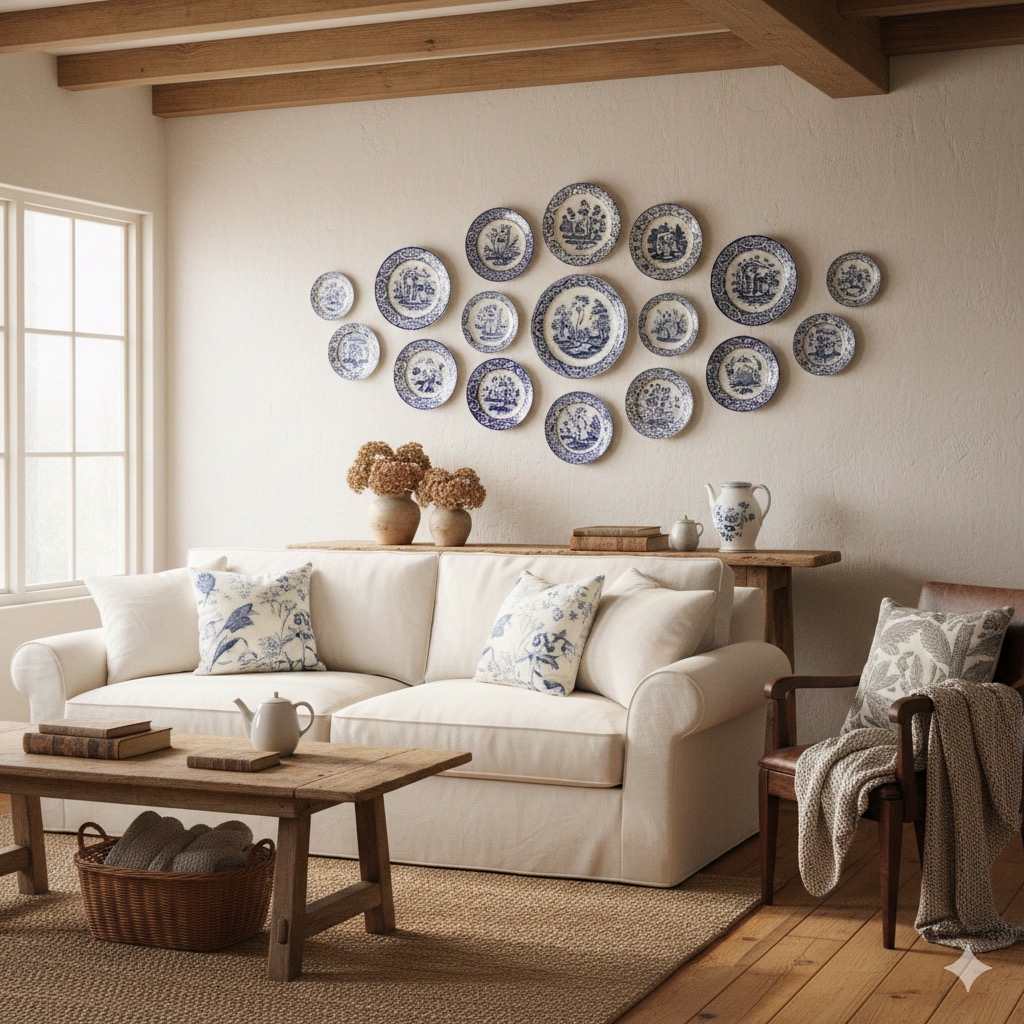
9) Plate Wall Display
A collection of decorative plates arranged on the wall above your sofa brings an unexpected and charming element to your living room. This approach has deep roots in traditional design but can be adapted to feel modern and fresh with the right plate selection and arrangement. Plates add three-dimensional texture because of their curved surfaces, and the variety of patterns, colors, and sizes available means you can create a truly unique display. This option particularly suits cottage, farmhouse, eclectic, or traditional spaces where collected, curated looks feel at home.
Plate selection determines whether your display feels cohesive or chaotic. Start by choosing a color palette, perhaps all white plates with different patterns, or plates in shades of blue and white. Alternatively, select plates with a common theme like botanical prints, geometric patterns, or vintage scenes. Varying the sizes creates visual interest, mixing dinner plates, salad plates, and small dessert plates. Aim for an odd number of plates, typically seven to eleven works well for most sofa widths, to create a balanced but dynamic arrangement.
Layout planning for plate walls benefits from the same floor arrangement technique used for gallery walls. Lay your plates on the floor in different configurations until you find an arrangement that feels balanced. Circular or oval arrangements create a traditional, formal look. Asymmetrical organic arrangements feel more casual and collected. Some people prefer a structured grid where plates align in clear rows. Others create a cloud-like cluster with varied spacing. Take a photo of your final floor layout before moving to the wall.
Hanging plates securely requires special hardware designed for the job. Adhesive plate hangers stick to the back of plates and have a loop for hanging on a nail. These work well for lightweight plates. Spring-loaded plate hangers grip the edges and work for heavier plates. Wire plate hangers attach to the back with adjustable arms. Whatever hanger you use, ensure it’s rated for the plate’s weight and size. Use multiple plates on a wall anchor or wall stud rather than drywall alone to distribute weight safely.
Modern interpretations of plate walls give this traditional idea contemporary appeal. Use all white or cream plates in various subtle patterns for a monochromatic, sophisticated look. Choose modern graphic plates with bold geometric designs for a contemporary edge. Mix vintage finds from antique stores with modern pieces for an eclectic feel. Consider hanging plates alongside other wall decor like small mirrors or framed botanical prints to create a mixed media wall that feels current rather than dated.
Finding plates for your wall display can be an enjoyable treasure hunt. Thrift stores and antique shops offer vintage plates with character at budget-friendly prices. Estate sales often have complete or partial sets available. Online marketplaces feature both vintage and new decorative plates. Home decor stores sell plates specifically designed for wall display. Mix sources to create an interesting collected look, a few antique plates with history combined with new pieces that coordinate perfectly with your color scheme.
10) Architectural Salvage Piece
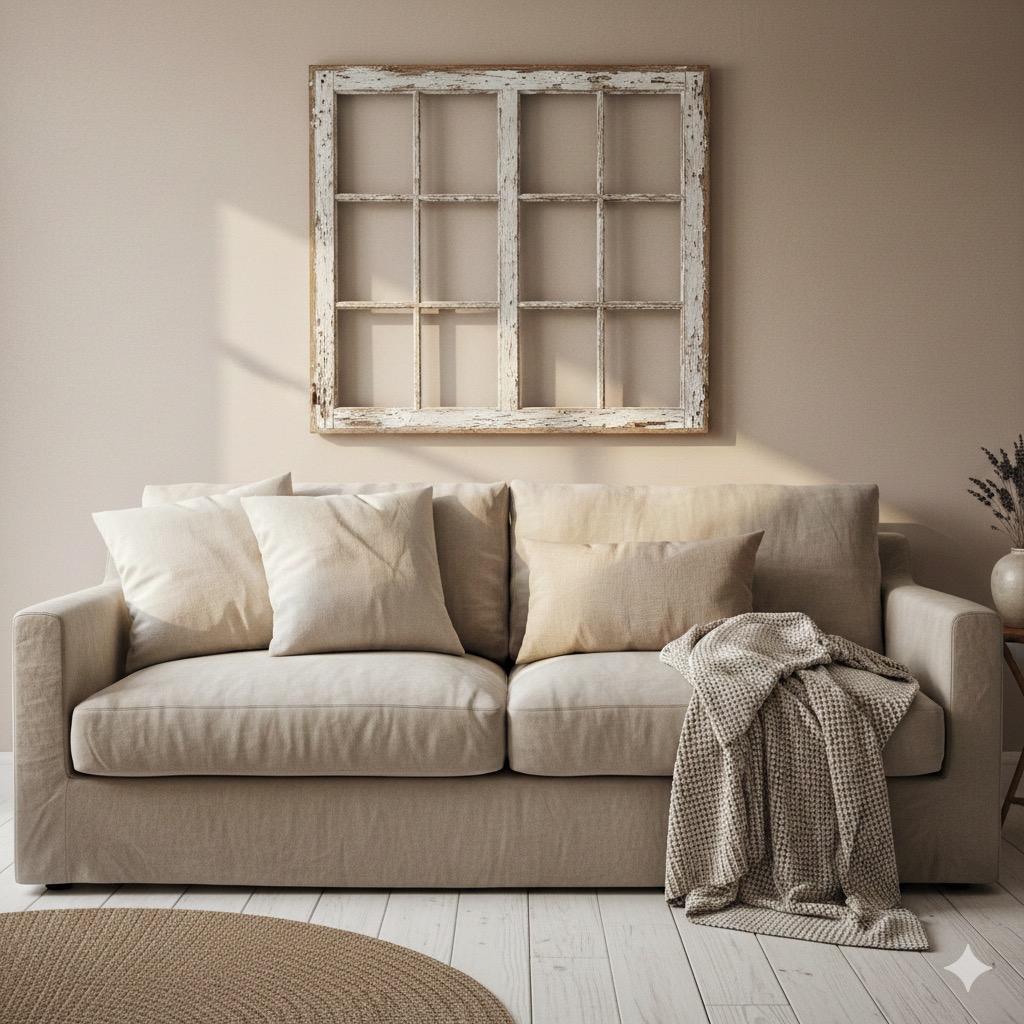
Using architectural salvage as wall art above your sofa creates instant character and tells a story that new decor simply cannot match. These pieces, whether old shutters, vintage window frames, antique doors, or decorative moldings, bring history and texture to your space. The aged patina and wear marks on salvaged pieces add authenticity that new items lack. This approach works beautifully in farmhouse, industrial, shabby chic, or eclectic spaces where imperfection and history are celebrated design elements.
Popular architectural salvage options for above sofas include vintage shutters, which add vertical lines and texture. Old window frames work as ready-made display cases for photographs or artwork tucked behind the glass. Decorative molding pieces or corbels create sculptural interest. Salvaged wood panels from old barns or buildings bring rich patina and character. Antique ironwork like gates or railings add industrial charm. The key is finding pieces with the right proportions for your wall space and ensuring they coordinate with rather than compete with your existing decor.
Preparing architectural salvage for wall display often requires some cleaning and stabilization. Remove loose paint carefully, but don’t strip away all the character. Secure any loose elements with wood glue or small nails. Check for pests or rot that might cause problems. Some pieces benefit from a clear protective sealant to prevent further deterioration while preserving the aged appearance. Very heavy pieces may need reinforcement on the back, adding a frame or mounting board to distribute weight across a larger area for safer hanging.
Hanging architectural salvage requires serious attention to weight and mounting. These pieces are often heavy and oddly shaped, making standard picture hanging inadequate. Use heavy-duty wall anchors or French cleats rated for substantial weight. For very large pieces, consider mounting directly to wall studs. Some salvage pieces benefit from resting partially on the sofa back with additional wall support, but ensure this doesn’t create a tipping hazard. Never compromise on hanging hardware when dealing with heavy salvaged materials.
Styling around architectural salvage balances the rustic element with your room’s overall aesthetic. Keep surrounding decor simple to let the salvage piece be the star. A vintage window frame above the sofa becomes even more striking when flanked by simple throw pillows in solid colors. Architectural elements with lots of visual texture pair well with solid colored walls and simple furniture lines. If your salvage piece feels too rustic for your space, paint it in a color that coordinates with your room to bridge traditional and modern elements.
Finding architectural salvage requires knowing where to look. Architectural salvage yards specialize in these items and often have impressive inventory. Estate sales sometimes include vintage architectural elements. Demolition sites may allow you to salvage pieces before buildings are destroyed, though always get permission first. Online marketplaces connect buyers with salvage sellers. Antique stores occasionally carry smaller architectural pieces. Be patient in your search; finding the perfect piece may take time, but that’s part of the charm of using salvaged elements.
11) Symmetrical Pair of Artwork
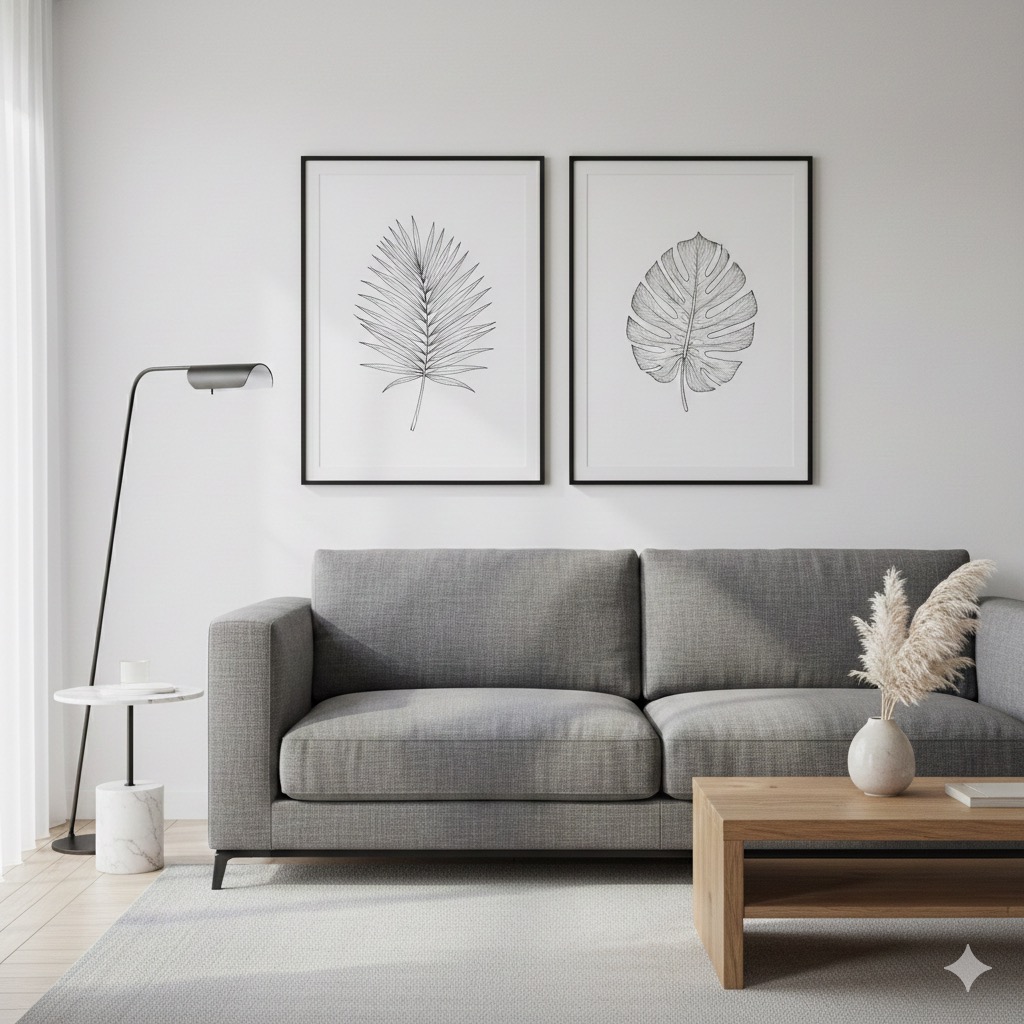
Two matching or coordinating pieces of artwork hung symmetrically above your sofa creates a balanced, orderly aesthetic that feels intentional and polished. This approach appeals to people who appreciate symmetry and traditional design principles. The symmetry creates a calm, restful atmosphere in your living room, which many people find more relaxing than complex asymmetrical arrangements. This option works particularly well in formal living rooms, traditional spaces, or rooms where architectural features already emphasize symmetry like matching windows or built-ins.
Selecting artwork for symmetrical pairs requires finding pieces that relate to each other clearly. Identical prints in matching frames create the most obvious symmetry and work well in traditional spaces. Similar but not identical pieces, like two different botanical prints in the same style and frame, offer symmetry with subtle variation. Mirror image compositions, where the subject matter reflects across the center line, create interesting visual play. Abstract pieces in complementary colors can work if they share similar composition and energy level.
Spacing and positioning of your symmetrical pair determines how unified they appear. Hang the pieces with identical distances from the sofa center point, typically leaving 4 to 6 inches between them. This central gap allows each piece to breathe while maintaining obvious connection. The pieces should hang at exactly the same height, with their centers or top edges perfectly aligned. Use a level and measure carefully from multiple reference points to achieve true symmetry. Even small deviations become obvious and distracting in symmetrical arrangements.
Frame selection for symmetrical pairs must be identical. Even slight variations in frame color, width, or style disrupt the symmetry and make the arrangement look unintentional or incomplete. Order both frames from the same source at the same time to ensure perfect matching. If using pre-framed art, verify that frames are truly identical before purchasing. The frame style itself can range from ornate traditional frames to simple modern ones, but the key requirement is perfect consistency across both pieces.
Size considerations for symmetrical pairs differ slightly from single large artworks. Each piece should be sized so the pair together fills the appropriate width above your sofa, roughly two-thirds of the sofa width for the combined pieces plus the space between them. Individual pieces are therefore smaller than a single statement artwork would be. Standard sizes like 24 by 36 inches work well for large sofas, while 16 by 20 inches suit smaller loveseats. Consider your viewing distance when selecting size; larger rooms can handle bigger pieces.
Modern interpretations of symmetrical pairs keep this traditional approach feeling current. Use black and white photography for a sophisticated, gallery-like aesthetic. Choose minimalist abstract pieces with simple compositions and limited color palettes. Select modern botanical prints with clean lines rather than fussy traditional florals. Frame pieces in simple, thin frames rather than ornate traditional ones. These modern updates maintain the symmetrical principle while keeping the look fresh and contemporary.
12) Woven Basket Collection
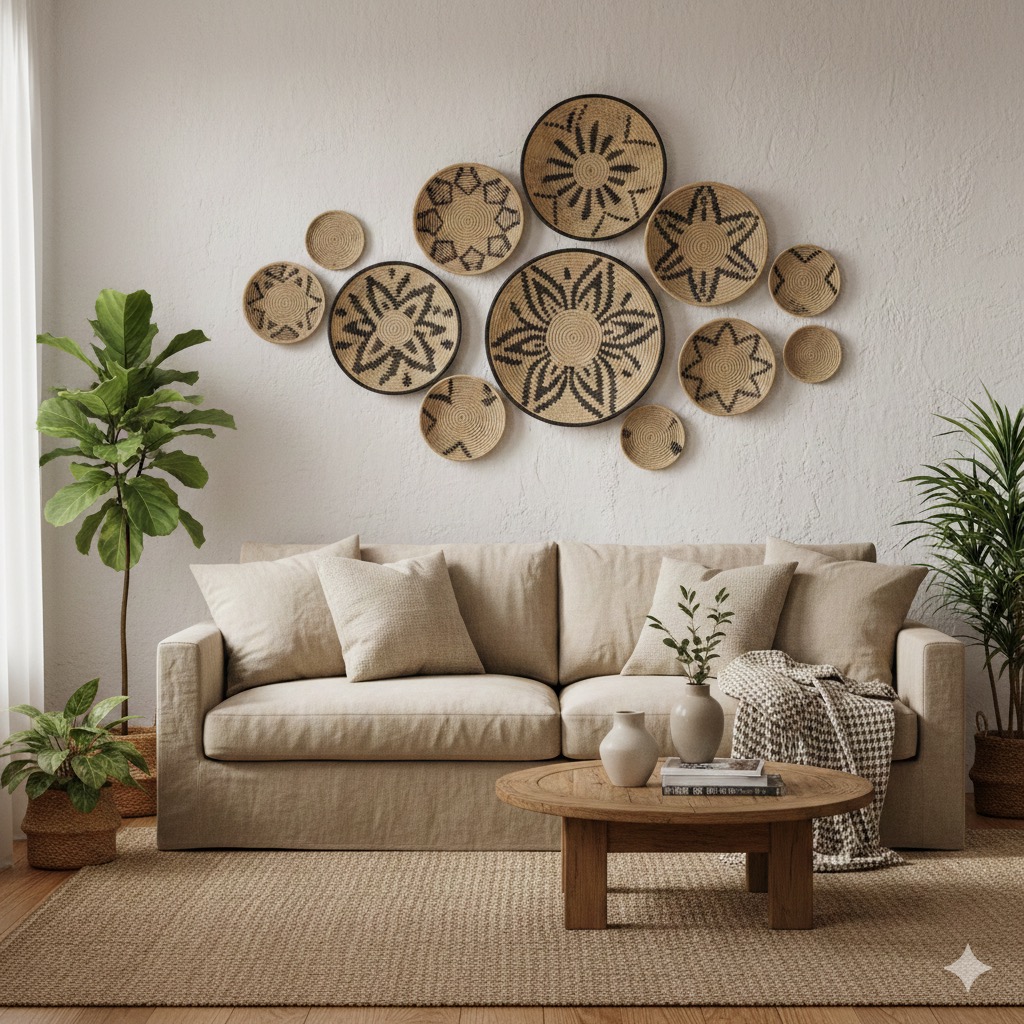
A collection of woven baskets hung on the wall above your sofa brings organic texture and global-inspired style to your space. This unexpected use of functional objects as art creates visual interest through the natural materials, varied weaving patterns, and dimensional quality of baskets. The neutral tones of natural fibers work with virtually any color scheme while adding warmth and earthy appeal. This approach suits bohemian, coastal, farmhouse, or globally influenced spaces where natural materials and handcrafted items are celebrated.
Selecting baskets for wall display involves considering size, shape, and weaving pattern variety. Choose baskets in different sizes to create visual hierarchy and interest. Mix circular baskets with oval or oblong shapes for variety. Look for different weaving patterns, from tight smooth weaves to loose chunky ones. Varying depths adds dimension, some flat plate-style baskets mixed with deeper bowl shapes. Natural undyed materials create a cohesive monochromatic look, or introduce baskets with colored accents for subtle visual interest.
Arrangement options for basket walls range from organized to organic. A grid arrangement with baskets aligned in clear rows creates structure and order. An organic cluster where baskets overlap slightly and vary in spacing feels more casual and collected. Symmetrical arrangements with baskets mirrored on either side of a center point bring traditional balance. Asymmetrical compositions with intentional weight distribution create modern appeal. Experiment with different layouts on the floor before committing to holes in your wall.
Hanging baskets securely requires specific techniques because of their three-dimensional shape and varying weights. Use sturdy plate hangers that grip the basket edges or rim. For baskets with handles, the handle can serve as a natural hanging point. Small nails or wall anchors work for lightweight decorative baskets. Heavier, more substantial baskets need wall anchors rated for their weight. Some people attach a sawtooth hanger or D-ring to the back of flat baskets for easier hanging. Test your hanging method before making holes in the wall.
Sourcing woven baskets for your wall display can be budget-friendly and fun. Import stores and world market retailers carry baskets from various cultures at reasonable prices. Thrift stores often have baskets that people donate. Online marketplaces feature both new and vintage options. Craft stores sell plain woven baskets that you can customize with paint or dye if desired. Mixing baskets from different sources adds to the collected, curated appearance that makes this display style charming.
Maintenance of basket wall displays keeps them looking fresh over time. Dust regularly with a soft brush or vacuum attachment on low suction. Natural fibers can become brittle with age, so avoid placing baskets where they receive direct intense sunlight for hours daily. If baskets become dusty or dirty, most can be gently cleaned with a slightly damp cloth. Handle carefully during cleaning to avoid damaging delicate weaving. Rotating baskets occasionally prevents uneven fading and keeps the display feeling dynamic.
13) Oversized Clock
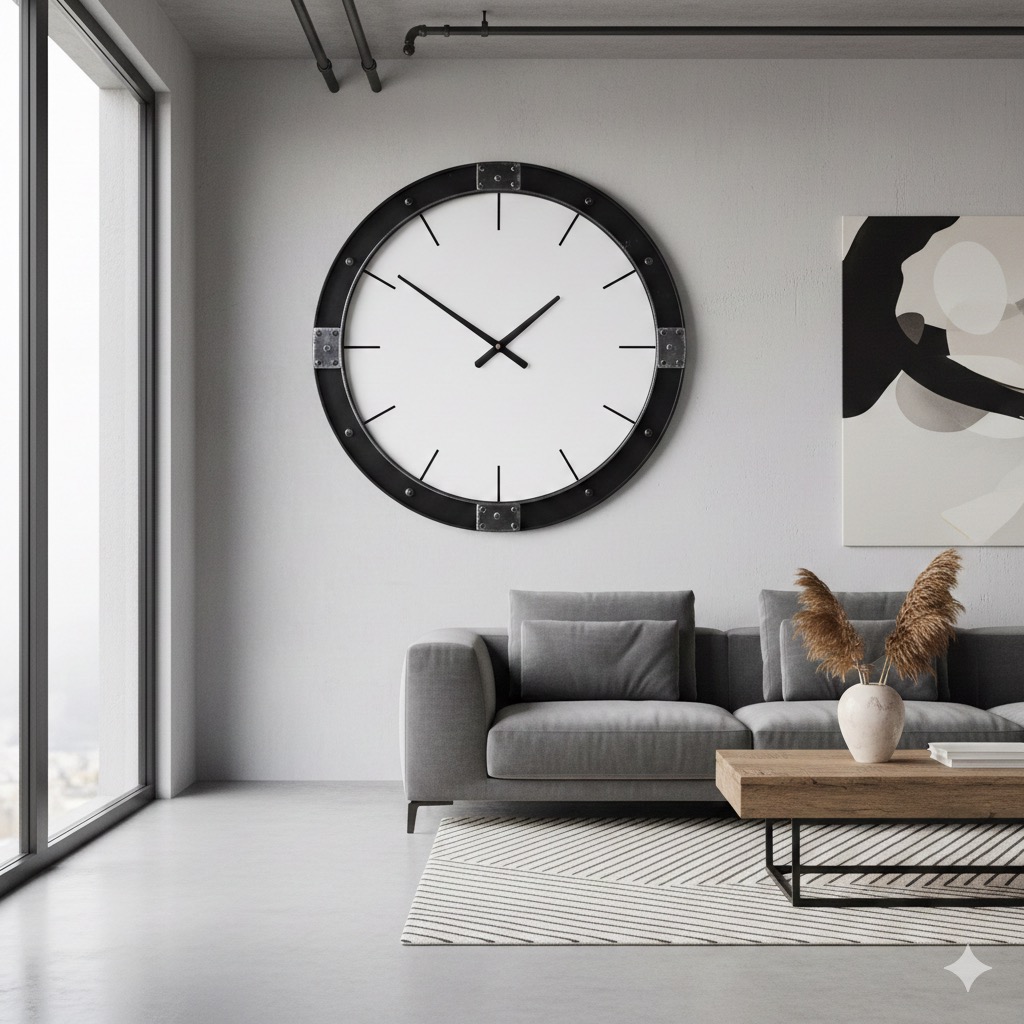
An oversized wall clock above your sofa serves as both functional timepiece and striking decorative element. Large clocks make bold statements because of their size and the movement of their hands, which adds living interest that static art cannot provide. This option particularly suits industrial, farmhouse, or modern spaces where functional objects double as decor. The clock face provides a natural focal point, and the circular or square shape offers geometric contrast to the horizontal lines of your furniture.
Clock style selection dramatically affects your room’s aesthetic. Industrial metal clocks with exposed gears and mechanisms add edgy character to modern or loft-style spaces. Rustic wooden clocks with distressed finishes work perfectly in farmhouse or cottage rooms. Minimalist clocks with simple hands and minimal numbering suit contemporary spaces. Vintage-inspired clocks with Roman numerals bring traditional elegance. Consider how the clock style aligns with your existing furniture and decor, the clock should feel like a natural extension of your design story.
Size considerations for oversized clocks differ from other wall decor. Because clocks are inherently circular or square rather than rectangular, the proportions work differently. Look for clocks between 30 and 48 inches in diameter for most standard sofas. Larger spaces and higher ceilings can accommodate clocks up to 60 inches or more. The clock should feel substantial without overwhelming the wall. Consider the visual weight, an open face clock with minimal material reads lighter than a solid metal or wood clock of the same diameter.
Installation of large clocks requires proper mounting because of their significant weight. Most oversized clocks come with specific hanging hardware. Follow manufacturer instructions precisely. Use wall anchors appropriate for the clock’s weight and your wall type. For very large or heavy clocks, anchor into wall studs whenever possible. Consider the clock’s depth when positioning, clocks that extend several inches from the wall need adequate clearance above the sofa back. Some people place a small shim behind the clock’s bottom edge to angle it slightly down for easier viewing.
Practical considerations include clock mechanism quality and noise. Battery-operated quartz movements are most common and generally reliable. However, some cheaper mechanisms produce audible ticking that becomes annoying in quiet living rooms. Look for silent sweep movements that eliminate ticking sounds. Consider battery accessibility, you’ll need to change batteries periodically, so ensure you can reach the mechanism without taking the clock down. Some clocks offer radio-controlled movements that automatically stay accurate, a nice feature for large statement clocks.
Styling around an oversized clock keeps the focus on this significant design element. Because the clock itself makes such a strong statement, keep surrounding elements simple. Solid colored throw pillows rather than busy patterns let the clock be the star. Simple side tables and minimal accessories on shelves prevent competition with the clock’s visual presence. If your clock features busy details like exposed gears or ornate numerals, balance it with cleaner, simpler furniture lines. The clock should feel like the room’s intentional centerpiece, not one element competing for attention.
Conclusion
The wall above your sofa offers tremendous potential to elevate your living room from ordinary to extraordinary. Each of these 13 ideas brings something different to the table, whether that’s the bold simplicity of large scale art, the personal touch of a gallery wall, or the unexpected charm of woven baskets. The key is choosing an option that resonates with your personal style while working within your space’s specific dimensions and architectural features.
Remember that decorating is a process, not a race to completion. Take time to consider your options, measure your space carefully, and think about how each choice affects the overall atmosphere of your room. Don’t be afraid to start with something simple and evolve your wall decor over time as your style develops and your budget allows. Many of the most beautiful rooms develop organically rather than being completed all at once.
The most important factor in choosing above sofa wall decor is selecting something that makes you happy every time you see it. Design rules and guidelines help, but they’re not rigid requirements. If you love it and it fits your space, it’s the right choice. Your living room should reflect your personality and make you feel comfortable and at home. Use these ideas as starting points, but don’t be afraid to adapt them to suit your unique situation and preferences.
Start with one idea that speaks to you most strongly. Gather your materials or begin shopping for pieces that fit your vision. Take accurate measurements and plan your layout carefully. Then commit to the installation and enjoy the transformation. That blank wall above your sofa is an opportunity waiting to happen, and now you have the knowledge and inspiration to make it beautiful.