
An earth tone bedroom is not about trends or fast design ideas. It is about how a space makes you feel when you walk in at the end of a long day. Earth colors come from nature. They remind us of soil, sand, stone, wood, clay, and dry leaves. These colors help the body relax because they feel familiar and calm. That is why earth tone bedrooms often feel warmer, deeper, and more welcoming than rooms filled with bright or sharp colors.
When you build a bedroom using earth tones, you are creating a space that feels grounded. It does not shout for attention. Instead, it slowly pulls you in. The colors do not fight each other. They sit together gently. Browns, beiges, soft whites, warm grays, olive greens, muted terracotta, and sandy tones all work together when used the right way.
This guide will walk you through how to build an earth tone bedroom step by step. We will talk about color choices, walls, flooring, furniture, fabrics, lighting, decor, and styling. Every part will be explained in a simple way so you can follow along whether you are decorating one small room or designing a full home.
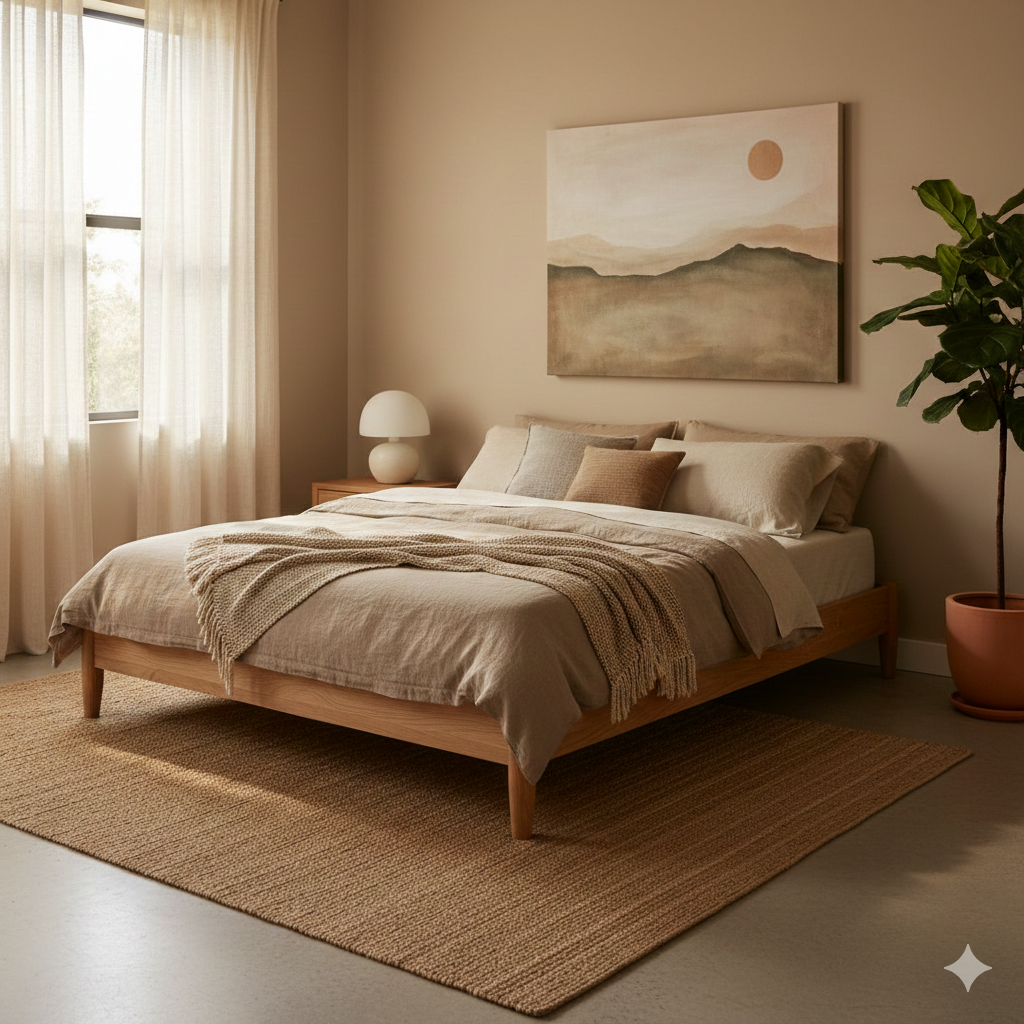
Understanding Earth Tone Colors Before You Start
Before buying anything, you need to understand what earth tones actually are. Earth tones are colors found in nature that feel warm or neutral. They are not bright, shiny, or loud. They are soft, dusty, and sometimes slightly muted.
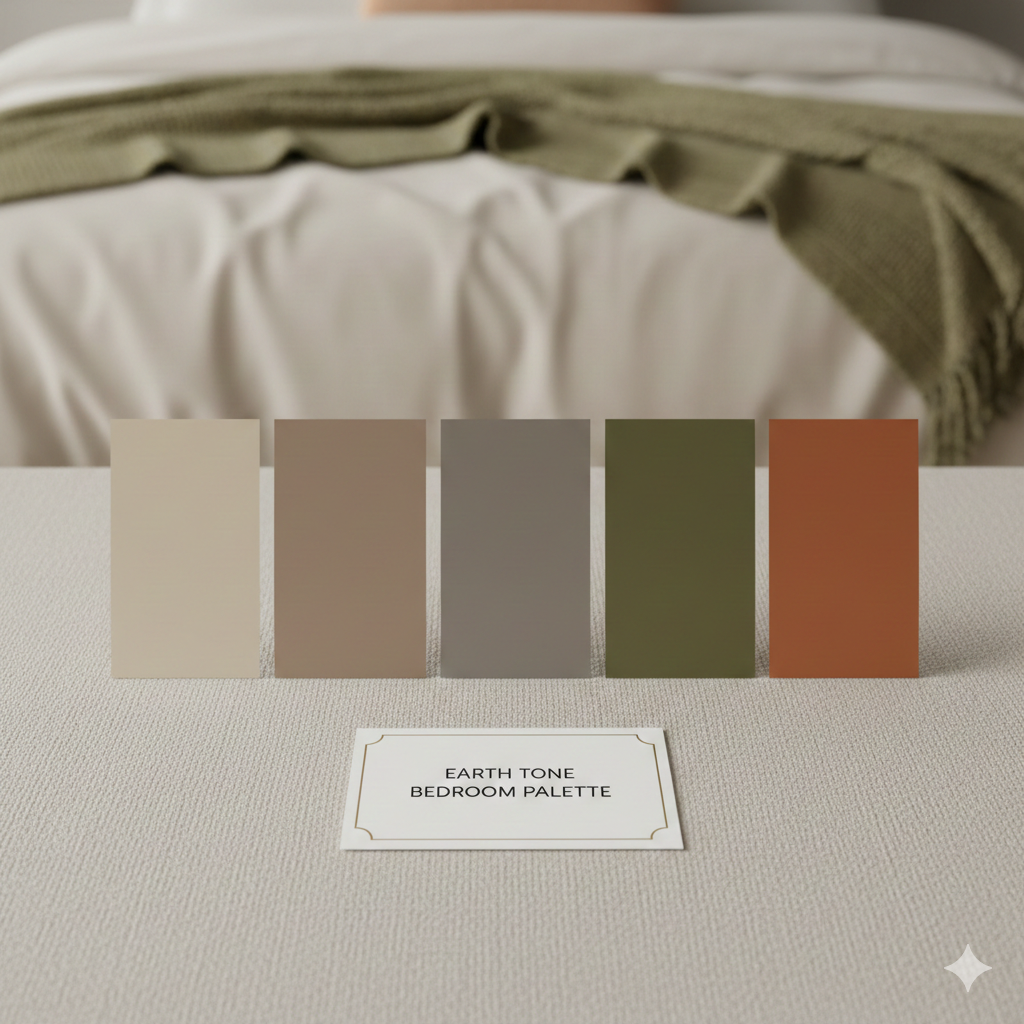
Common earth tones include beige, cream, ivory, tan, camel, brown, mocha, taupe, warm gray, olive green, sage, rust, clay, terracotta, and soft charcoal. These colors work best when they stay close to their natural version. Avoid colors that look too yellow, too orange, or too dark unless you balance them carefully.
A good earth tone bedroom usually has one main base color, one or two supporting colors, and a few deeper shades for contrast. The base color often shows up on walls, large furniture, or bedding. Supporting colors appear in pillows, rugs, and throws. Deeper shades are used in small details like lamps, frames, or accent chairs.
The goal is not to use many colors, but to layer similar tones in different materials. This is what gives the room depth without making it feel busy.
1) Choosing the Right Wall Color for an Earth Tone Bedroom
Walls are the largest surface in your bedroom, so the color you choose will dictate the overall feel of the space. In an earth tone bedroom, walls should provide a calm and balanced backdrop. Lighter shades help make the room feel open and airy, while slightly deeper tones create warmth and intimacy. The choice depends on natural light, room size, and furniture.
Soft beige is a safe and versatile option. When choosing beige, focus on warm undertones. Beige with gray undertones can feel cold, while yellow undertones can feel too bright. Cream and ivory are excellent for rooms with less light. These shades reflect natural light, making the room feel brighter while staying neutral. Light walls also allow furniture, bedding, and decor to stand out without clashing.
For a more dramatic but still earthy effect, use medium browns, clay, or muted olive as an accent wall. Accent walls are usually behind the headboard to draw attention subtly without overwhelming the space. Deep shades provide depth and richness, making larger rooms feel cozier. Keep the other walls lighter to maintain balance.
Finish is critical. Matte or eggshell paints are preferable in earth tone rooms because they reduce glare and make colors look softer. Satin or glossy finishes reflect light sharply and can make muted tones look harsher than they are. Some subtle texture, like a matte finish with a slight sand effect, can also enhance the natural, organic feeling.
Consider layering wall treatment with wood paneling or woven textures. For instance, a headboard wall with wooden slats in light oak or a textured clay plaster wall can add dimension. These elements make the wall more than just a flat surface—they enhance the sensory warmth of the room.
Lighting also affects wall color perception. A wall that looks warm and inviting in daylight may appear muted or cooler under artificial light. Warm LED bulbs or table lamps can maintain the softness of earth tones in the evening.
2) Flooring That Supports the Earth Tone Look
Flooring is one of the most important elements in an earth tone bedroom because it forms the foundation for the entire design. Choosing the right flooring not only affects the room’s aesthetics but also how cozy and grounded it feels. Natural materials, warm colors, and textures that echo nature create a sense of calm that complements the earth tone palette.
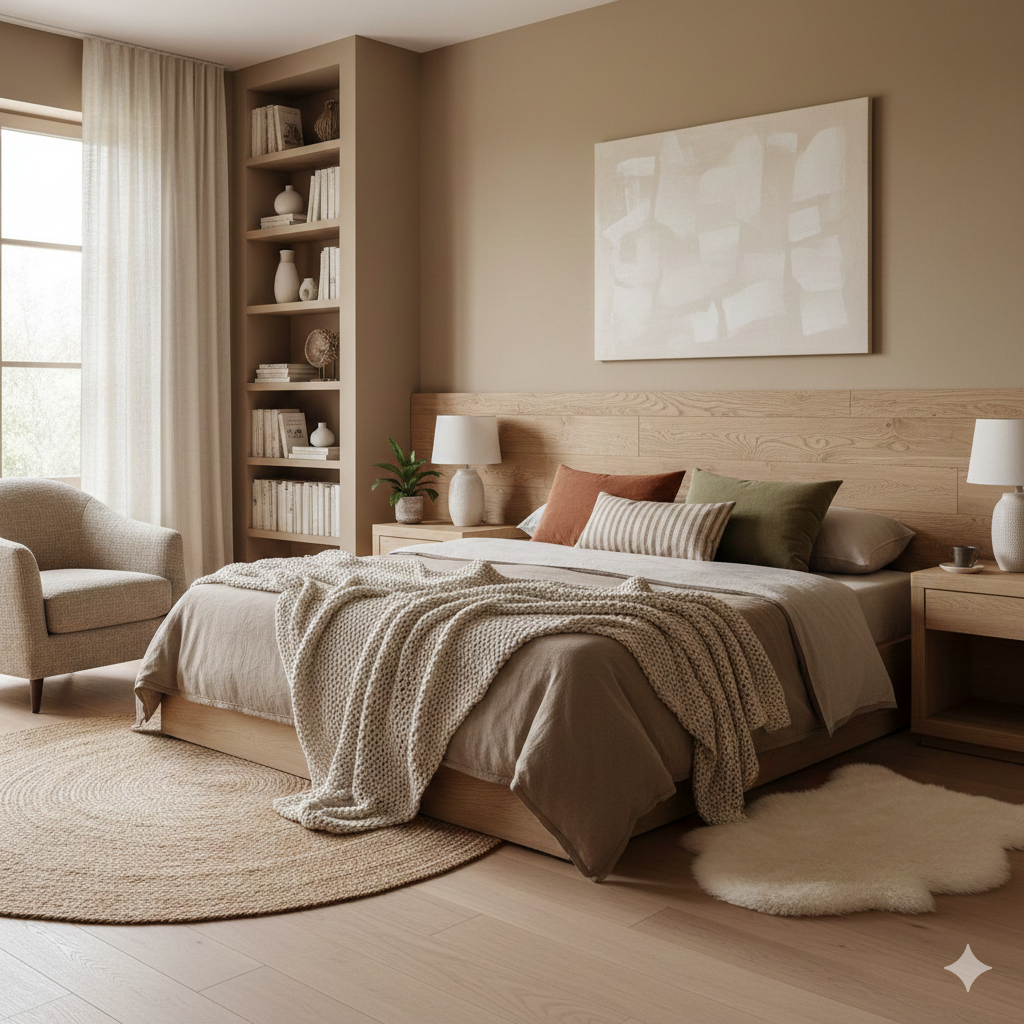
Wood floors are a top choice. Solid hardwood or engineered wood in oak, walnut, cherry, or medium brown tones works beautifully. Lighter woods like oak can make the room feel open and bright, while deeper woods like walnut add richness and intimacy. Wood-look vinyl or laminate can also be effective if real wood is not an option; choose textures and tones that mimic natural grain patterns. Avoid overly shiny or glossy surfaces, as these can look artificial in an earth tone room.
Carpets are another option. When selecting a carpet, choose soft, warm neutrals such as beige, taupe, or light brown. Loop or cut-pile textures feel soft underfoot while maintaining a grounded, cozy look. Avoid bold patterns, which can distract from the natural calm of an earth tone scheme. A carpet or rug also provides comfort and helps absorb sound, making the bedroom feel peaceful and quiet.
Rugs play an important role, even if you have hardwood or tile floors. Layered rugs add texture, color depth, and warmth. Natural fiber rugs like jute, sisal, wool, or cotton work best in this style. For instance, a neutral jute rug under the bed adds visual weight and complements wood furniture. Adding a small wool rug near a reading nook or by the bed can create cozy pockets of texture and color.
The color of the flooring should harmonize with the wall and furniture colors. Light floors pair well with darker furniture, while medium or dark floors can be balanced with light walls and bedding. The key is creating a visual hierarchy—flooring should support the other elements, not compete with them.
Texture is as important as color. Wood grain, woven fibers, or soft carpet fibers create tactile interest that invites touch and adds depth. When combined with layered bedding and furniture, the flooring contributes to an overall feeling of warmth and sophistication.
Finally, consider maintenance and longevity. Hardwood, tile, and rugs in durable fibers will last for years and age gracefully, often improving in character as they wear. Earth tone bedrooms benefit from materials that feel natural and authentic, so flooring that shows texture, grain, and minor imperfections actually enhances the space rather than detracts from it.
3) The Bed as the Main Focus of the Room
The bed is often the largest visual element, so choosing the right frame, materials, and colors is critical to achieving a cohesive and calming design.
Wooden bed frames are ideal. Natural wood tones like walnut, oak, or reclaimed wood fit perfectly within an earth tone palette. A low-profile wooden frame can make the room feel expansive, while a taller frame with a solid headboard can create a sense of coziness. Look for frames with simple, clean lines rather than intricate carvings or shiny finishes. Natural imperfections in wood, such as knots or visible grain, enhance the organic feel of the space.
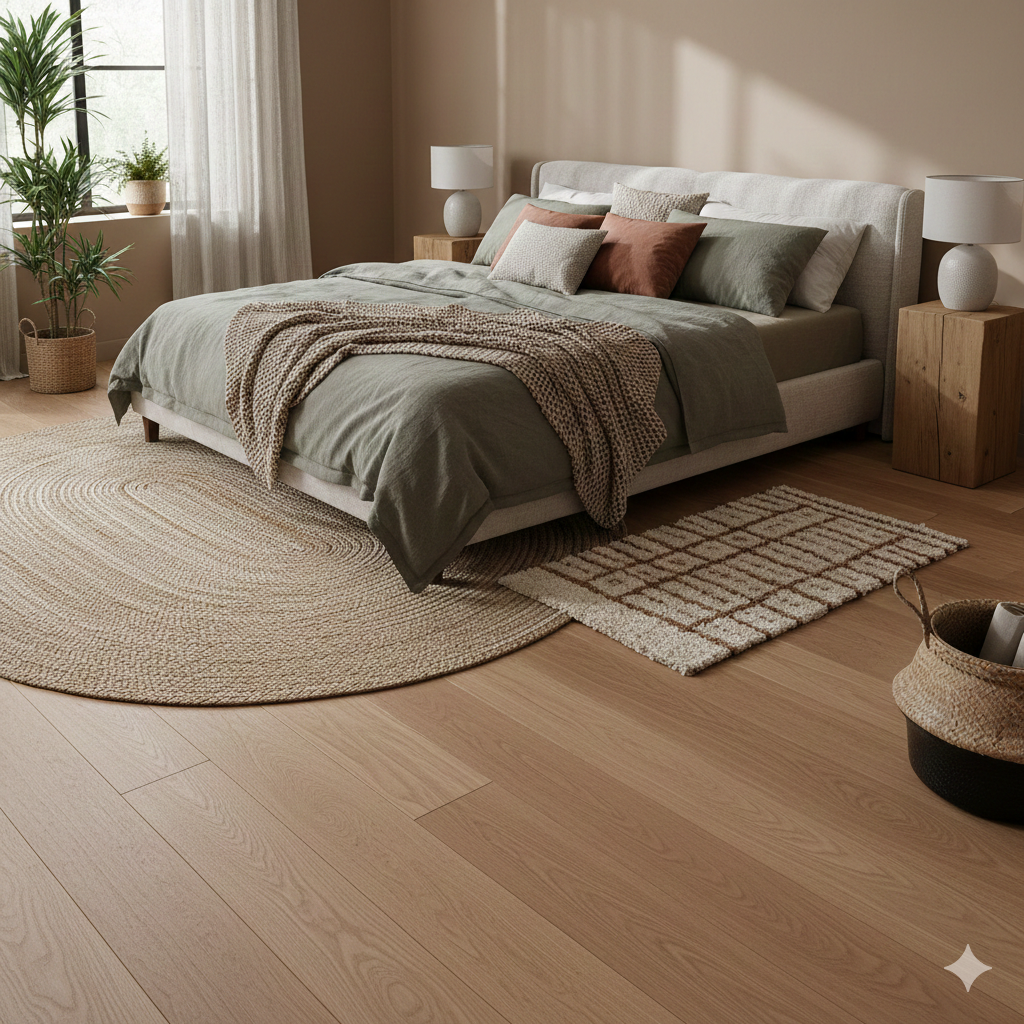
Upholstered beds are another great option, especially in fabrics like linen, cotton, or textured wool. Soft upholstery in neutral colors such as beige, taupe, camel, or warm gray contributes to the sense of calm. Avoid synthetic fabrics that appear glossy, as they can break the natural, grounded vibe of the room. A fabric headboard can also add tactile warmth and a subtle focal point without overpowering other elements.
The bed should be proportionate to the room. Oversized beds in small spaces can overwhelm the room, while very small beds in large spaces can feel lost. Consider the scale of surrounding furniture, including nightstands and rugs, when selecting a bed size and frame style.
Layering is key. Earth tone bedrooms look best when the bed is dressed in multiple layers of bedding, with a mix of textures and complementary shades. Sheets, blankets, duvets, and pillows should combine warm, muted colors in natural fabrics. Layered bedding adds visual depth, comfort, and a tactile quality that makes the bed the most inviting feature of the room.
Placement also matters. Positioning the bed against the main wall, preferably centered with windows or accent lighting, creates balance and symmetry. If space allows, add a bench or a low table at the foot of the bed for additional functionality and style.
The bed sets the tone for the entire room. A well-chosen frame, paired with layered, natural bedding, and a few thoughtfully selected pillows, will anchor the earth tone palette, giving the bedroom a calm and welcoming atmosphere that encourages sleep.

4) Bedding Layers
A bed dressed in multiple layers can look inviting, luxurious, and deeply relaxing, while staying completely natural and grounded. When layering bedding, focus on color, texture, and material quality.
Start with the base sheets. Cotton or linen sheets in neutral shades such as cream, ivory, sand, or light taupe provide a soft foundation. These materials feel natural, breathable, and comfortable against the skin, contributing to a restful sleep environment. Avoid synthetic fabrics, which can feel harsh and disrupt the calm mood of an earth tone room.
The next layer is a duvet or comforter. Choose a shade slightly darker than the sheets for contrast. Taupe, camel, or muted warm gray work well. A quilted duvet adds texture, while a simple flat comforter keeps the look minimal. Ensure the duvet is filled with natural materials like down or cotton for both comfort and alignment with the natural theme.
Pillows add both comfort and visual interest. Start with a set of standard sleeping pillows, then layer a few decorative pillows in varying sizes. Use muted colors from your palette, such as soft brown, clay, or olive green. Mix textures: linen, cotton, wool, or soft knits. This variation prevents the bedding from appearing flat, giving the bed depth and a tactile appeal.
Throws and blankets are the final layer. A chunky knit throw or soft wool blanket draped casually over the bed adds warmth and visual intrigue. Consider darker shades for contrast or subtle patterned weaves that echo natural elements. Throws also allow seasonal adjustments; lightweight cotton for summer and heavier wool for winter.
Pay attention to arrangement. Layering should look natural, not overly styled. Pillows can be slightly uneven, and throws casually draped rather than rigidly folded. This creates a lived-in, welcoming look.
Lighting affects how bedding colors appear. Warm lamps highlight soft neutrals and enhance the textures of linen and wool. Layered bedding combined with soft lighting makes the bed the focal point, inviting you to relax at the end of the day.
A well-layered bed also balances proportions with other furniture. Rugs, nightstands, and accent chairs should complement the scale and colors of the bedding, creating a cohesive earth tone space.
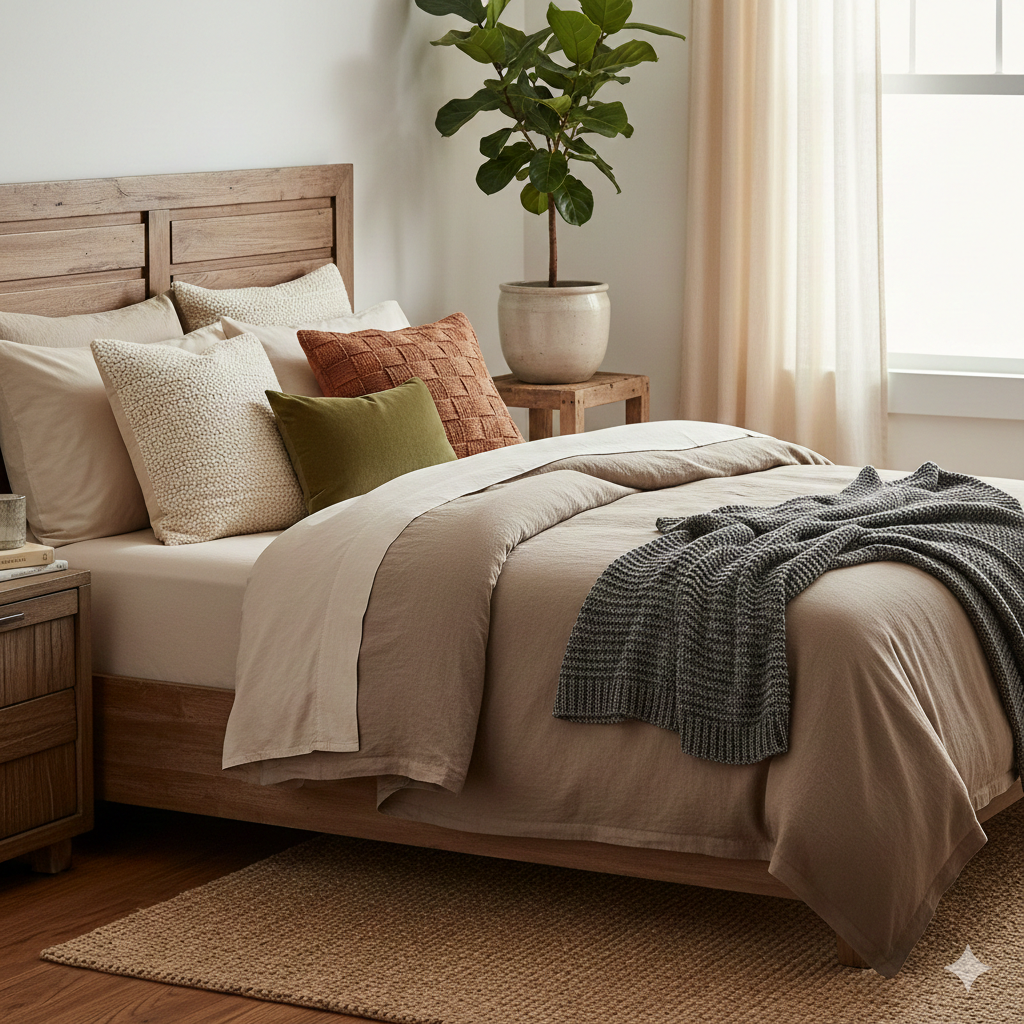
5) Furniture That Feels Natural and Balanced
Furniture in an earth tone bedroom should feel grounded, natural, and unobtrusive while still providing function and comfort. The key is to select pieces that complement the earth tone palette without overwhelming the space. Natural materials like wood, stone, and fabric are ideal, and finishes should feel soft rather than glossy.
Start with your essential furniture: nightstands, dressers, wardrobes, and optional seating like a bench or chair. Wooden pieces are best when they showcase the material’s natural grain and texture. Oak, walnut, teak, and reclaimed wood all work beautifully. Light wood can make the room feel airy, while medium to dark woods add richness and warmth. Painted furniture can work as long as the color is within the earth tone palette—warm taupe, muted beige, soft gray, or clay shades are ideal. Avoid bold painted furniture, metallic finishes, or shiny laminates, as they can clash with the natural vibe of the room.
Simplicity in design is important. Minimalist lines, soft edges, and low-profile forms make the furniture feel less imposing and help the room maintain a calm, airy feeling. For example, a rectangular nightstand with soft rounded edges looks inviting, whereas a highly decorative piece with multiple finishes can distract from the soothing palette. Consider how each piece interacts with the rest of the room: the furniture should blend in visually rather than dominate.
Storage should also be subtle and functional. A dresser with concealed handles or simple wooden knobs keeps the room looking clean. Open shelving can be used sparingly for decorative items, but avoid over-cluttering the space. The furniture should provide function first, beauty second, without compromising the calm, balanced feel.
Optional seating adds a sense of luxury and practicality. A low wooden bench at the foot of the bed, a simple armchair in linen upholstery, or a small reading nook can enhance comfort. Upholstered chairs in neutral colors tie into the bedding and wall colors, while wooden pieces complement flooring and other accents. Keep fabrics natural—linen, cotton, or wool feels soft and authentic.
Placement matters just as much as style. Arrange furniture to allow easy movement, creating pathways that feel open and intentional. Avoid crowding the room with unnecessary items. Negative space is important; it allows the eye to rest and emphasizes the layered textures and colors already present.
Finally, consider accent furniture. Small side tables, floating shelves, or a wooden stool can provide subtle visual interest without overpowering the palette. Accessories like a ceramic lamp or woven basket on a dresser reinforce the natural, grounded aesthetic. By focusing on quality materials, simple design, and functional placement, furniture becomes part of the overall calming experience, not just decoration.
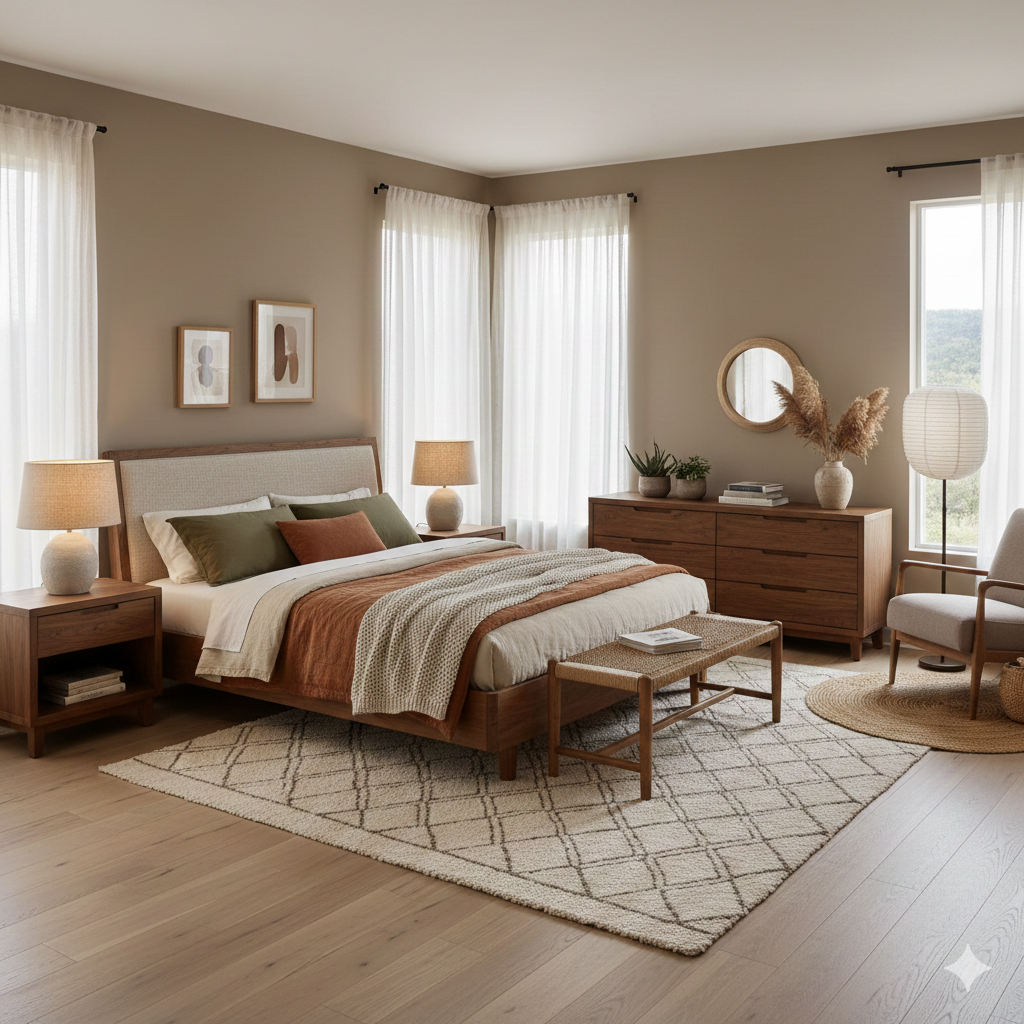
6) Lighting That Feels Soft
Lighting in an earth tone bedroom is essential for creating a calm, grounded atmosphere. The way light interacts with neutral colors and natural materials can dramatically influence how warm and inviting the room feels. Harsh, bright lights can make soft browns, beiges, and greens look dull or washed out. Warm, layered lighting enhances both color and texture, contributing to a relaxed, restful environment.
Start with ambient lighting. Avoid stark, overhead lights that create shadows or glare. Instead, consider soft, diffused ceiling fixtures or recessed lighting with warm bulbs around 2700–3000K. A warm white LED works well, providing enough brightness without making the room feel clinical. Dimmer switches allow you to adjust light levels throughout the day, creating a sense of calm in the morning and intimacy in the evening.
Layered lighting is key. Include bedside lamps, floor lamps, and wall sconces. Table lamps with linen or fabric shades diffuse light gently, creating a cozy glow. Wooden, ceramic, or metal lamp bases complement earth tone furniture and flooring. Floor lamps with soft shades can highlight seating areas, reading nooks, or corners of the room without introducing harsh shadows. Wall sconces on either side of the bed add symmetry and allow for relaxing nighttime reading.
Natural light should be maximized. Choose window treatments that filter sunlight rather than block it entirely. Linen or cotton curtains in neutral tones allow soft light to flow through, giving the room a natural, airy feel. Layering sheer panels behind heavier drapes allows for flexibility—letting in daylight while maintaining privacy. Natural light also emphasizes the textures of wood, textiles, and woven materials, reinforcing the organic feel of the space.
Accent lighting can further enhance the room. Small LED strips under shelves, hidden behind headboards, or along furniture edges add a subtle, indirect glow. Avoid colored or neon lights; stick with warm tones that mimic sunlight or candlelight. Candles themselves can be a charming addition, adding both warmth and a gentle flickering light.
The placement of lights is as important as the type. Avoid shining light directly on reflective surfaces that can create glare. Aim for soft, indirect light that spreads evenly. Consider the flow of natural and artificial light throughout the day, ensuring that all areas of the room feel balanced.
In essence, lighting in an earth tone bedroom should highlight textures, warm the space, and create zones for relaxation, reading, or reflection. Soft, layered, and natural lighting makes the bedroom feel inviting, grounded, and ready for rest.
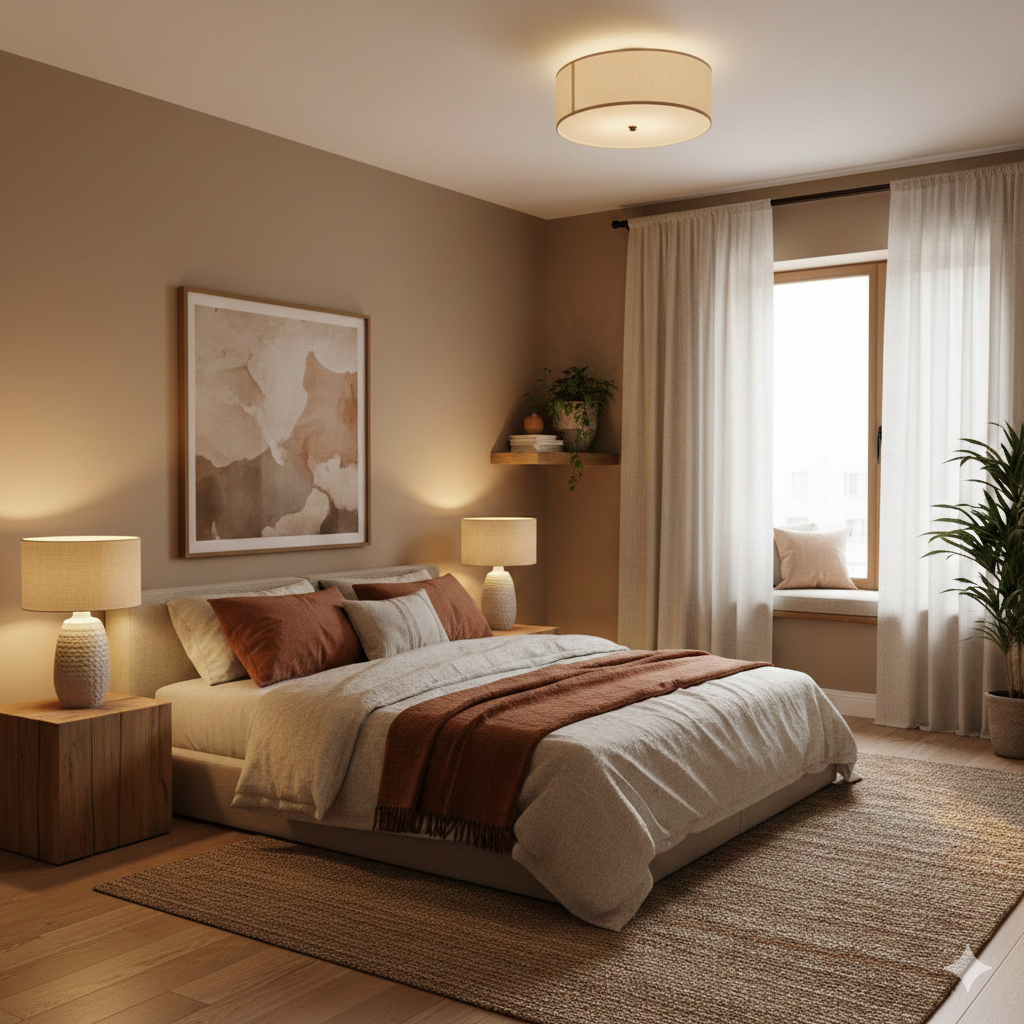
7) Textures That Add Depth
In an earth tone bedroom, textures are as important as color. Without texture, neutral tones can feel flat or cold. Carefully layered textures add warmth, dimension, and sensory interest. This includes everything from bedding fabrics and rugs to wall treatments and furniture surfaces. The goal is to create a tactile, visually engaging environment without introducing noise or clutter.
Start with textiles. Linen, cotton, wool, and jute are excellent choices for bedding, rugs, and throws. Linen sheets with a slightly crumpled look feel natural and relaxed. Wool or knitted throws add visual interest and comfort. Layer pillows in different textures—smooth cotton, soft velvet, or knitted designs—to create depth on the bed. Avoid synthetic fabrics that reflect light too harshly and disrupt the organic aesthetic.
Rugs are another opportunity to introduce texture. A wool or jute rug under the bed or near a seating area enhances warmth and grounding. Layering rugs can add visual interest: a soft, plush rug layered over a flatwoven jute rug creates contrast while maintaining a natural feel. Patterns, if used, should be subtle and tone-on-tone to prevent visual clutter.
Furniture surfaces also contribute to texture. Wooden furniture with visible grain, natural imperfections, or matte finishes feels grounded. Upholstered furniture in linen or soft wool contrasts with the hard surface of the floor, adding balance. Even metal or ceramic accents can add subtle texture, especially when paired with natural fibers.
Walls and decorative elements can incorporate texture as well. Textured paint, plaster finishes, woven wall hangings, or natural wood panels add depth without introducing bold color. These elements draw the eye and make the room feel layered and intentional.
Lighting amplifies texture. Soft, warm light highlights natural fibers, wood grain, and surface finishes, enhancing the tactile quality of the space. Shadow and light play can make simple textures appear more dynamic and visually engaging.
Finally, balance is crucial. Mixing textures adds richness, but too many conflicting textures can create chaos. Combine rough and smooth, soft and firm, large and small elements thoughtfully. For example, a chunky knit throw on a smooth linen duvet, paired with a rough jute rug and polished wooden furniture, creates a cohesive, grounded look.

8) Decor That Feels Grounded and Personal
Decor in an earth tone bedroom should feel intentional, natural, and harmonious with the overall palette. Unlike bright or highly decorative spaces, the earth tone aesthetic thrives on subtlety, balance, and meaningful choices. Every piece should reinforce warmth, calmness, and texture, while also reflecting your personal taste.
Start with wall decor. Artwork should complement the neutral palette without dominating the room. Neutral-toned prints, abstract paintings in soft browns, beiges, clay, or muted greens, and photographic prints of landscapes or natural textures work beautifully. Frames should be wooden, matte, or neutral to maintain cohesion. Avoid bold colors or glossy finishes, which can clash with the calm, organic mood of the room. Consider using one statement piece above the bed or a small gallery of coordinated prints on a single wall.
Plants are an excellent way to add life and texture to an earth tone bedroom. Real plants bring subtle color and vitality, while realistic faux plants achieve a similar effect with low maintenance. Choose plants with natural, muted green tones such as olive, sage, or dusty green. Place them strategically on nightstands, dressers, or in corners to fill empty space without cluttering the room. Natural planters, such as clay, terracotta, or woven baskets, enhance the earthy aesthetic.
Decorative objects like bowls, trays, vases, and candle holders can add depth and texture. Stick with natural materials: ceramics, stone, wood, and woven fibers. A small stone vase on a dresser or a wooden bowl on a nightstand adds tactile interest and maintains the grounded feel. Avoid metallic or glossy surfaces unless they are subtle and complement the palette.
Lighting accents also become part of decor. Decorative table lamps, candle sconces, or even a small LED accent light can create pockets of warmth and highlight key textures. Think of lighting as both functional and decorative; it should draw attention to your favorite objects while contributing to the room’s atmosphere.
Storage can also be decorative. Woven baskets, wooden boxes, and linen-covered storage bins are functional while reinforcing the organic feel. They hide clutter without introducing visual noise. Open shelves can display carefully chosen items like books, pottery, or small plants, creating focal points that feel curated, not overcrowded.
Finally, the key to decorating an earth tone bedroom is restraint. Less is often more. Each item should have a purpose or emotional resonance. A well-chosen object or plant can make a room feel alive and personal, while unnecessary clutter distracts from the calming, grounded aesthetic. By selecting natural materials, subtle colors, and intentional pieces, the bedroom becomes a reflection of both comfort and style, balancing functionality with beauty.
Styling the Room Without Overdoing It
Styling an earth tone bedroom requires balance, intention, and subtle layering. The goal is to create a space that looks curated yet natural, comfortable yet sophisticated. In this style, less truly is more, and thoughtful placement of every element ensures the room feels grounded rather than cluttered.
Start with the bed. It is the focal point, so styling should highlight its layers and textures. Arrange pillows in a relaxed manner—avoid rigid or perfectly symmetrical stacks. Mix textures and sizes: large sleeping pillows at the back, medium decorative pillows in the center, and a small accent pillow in the front. Drape a chunky knit throw or soft wool blanket casually across the foot of the bed. This adds warmth and softness while creating a lived-in look.
Nightstands should be styled sparingly. One or two well-chosen items such as a lamp, small vase, or a tray with personal items is enough. Avoid overcrowding with books, gadgets, or unnecessary decor. Negative space is important; it allows each object to breathe and emphasizes the calm aesthetic.
Layering textures throughout the room reinforces the earth tone feel. Rugs, bedding, furniture fabrics, and decorative objects should complement each other. A jute or wool rug layered over wooden flooring adds warmth, while linen curtains soften natural light. Vary textures subtly without introducing clashing patterns or bright colors. This keeps the room visually interesting yet harmonious.
Consider placement and balance. Larger pieces, like a dresser or chair, should anchor the space without blocking flow. Smaller decor items can create focal points in corners, on shelves, or beside windows. Mirrors can be used strategically to reflect light and expand the sense of space. Again, choose frames and finishes that blend with the natural palette.
Lighting enhances styling. Table lamps, floor lamps, and candles add depth, creating visual layers of light and shadow. Warm bulbs complement earth tone fabrics, walls, and furniture, enhancing textures and highlighting key elements. The interplay of light with materials like wood, linen, and stone reinforces the cozy, grounded feeling.
Finally, assess the room from different angles. Step back and ensure that each element contributes to the overall calm aesthetic. Remove anything that feels too bright, shiny, or distracting. Add elements only if they enhance comfort, texture, or harmony. Styling in an earth tone bedroom is about subtle layering, thoughtful placement, and restraint—creating a space that feels serene, personal, and welcoming.
Final Thoughts
An earth tone bedroom is more than just a color scheme—it is a carefully crafted environment that promotes calm, comfort, and grounding. The beauty of this style lies in its subtlety: colors, textures, materials, and lighting all work together to create a cohesive, relaxing space. Each element is chosen deliberately to enhance serenity, rather than overwhelm the senses.
The foundation starts with walls and flooring. Soft, warm neutrals for walls create a soothing backdrop, while natural wood or textured rugs provide a tactile, grounding base. Together, they set the tone for furniture, bedding, and decor. Flooring should be chosen for both aesthetics and comfort, complementing the rest of the palette without competing for attention.
The bed is the heart of the room. A well-chosen bed frame, upholstered headboard, and layered bedding in natural fabrics like linen and cotton create an inviting focal point. Pillows, throws, and duvets in complementary shades add depth, while textures like wool, knit, or linen provide tactile interest. The bed should feel approachable and relaxing, the centerpiece of a grounded space.
Furniture and decor should follow the same principles. Natural wood furniture, minimal lines, and organic shapes complement the palette. Decor should be meaningful, subtle, and intentional—plants, ceramics, and neutral art enhance the space without cluttering it. Lighting should be warm and layered, highlighting textures, drawing attention to key elements, and supporting a cozy atmosphere.
Layered textures unify the room. From rugs to throws, from bedding to decorative objects, textures make earth tones feel alive. Varying materials and surfaces—soft linen, rough jute, polished wood, or smooth ceramics—creates visual interest and comfort without needing bright colors or patterns.
Styling completes the room. Thoughtful placement, subtle layering, and restraint are essential. The room should feel curated yet natural, lived-in yet organized. By focusing on balance, texture, and warmth, every object contributes to the overall feeling of calm and grounding.
An earth tone bedroom is an investment in comfort, aesthetics, and mental wellbeing. It is a space where you can rest, recharge, and feel connected to natural, calming elements every day. By following these principles—choosing warm neutrals, natural materials, layered textures, subtle lighting, and meaningful decor—you can create a bedroom that is both beautiful and restorative.