
Turn that awkward space above your cabinets into a stunning feature with these simple and beautiful decorating ideas
That empty space above your kitchen cabinets can feel like a design puzzle. It sits there, collecting dust and making your kitchen look unfinished. Many homeowners wonder what to do with this awkward gap between the top of their cabinets and the ceiling. The good news is that this overlooked area offers amazing potential to add personality, visual interest, and style to your kitchen without major renovations.
Whether you have six inches or three feet of space to work with, the area above your kitchen cabinets can become a beautiful focal point. This vertical real estate is perfect for displaying collections, adding warmth with natural elements, or creating an eye-catching design statement. The key is choosing decor that fits your kitchen style while keeping the space from looking cluttered or random.
Smart decorating above your cabinets can make your kitchen feel more complete and polished. It draws the eye upward, making your ceiling appear higher and your space feel larger. Plus, it gives you a chance to bring in colors, textures, and items that reflect your personal taste. From traditional to modern, farmhouse to eclectic, there are countless ways to style this space that work with any design preference.
The following 14 ideas will help you transform that empty space into something special. Each approach offers a different way to add visual appeal while working with your existing kitchen design. You will find options for every budget, skill level, and style preference. These ideas go beyond simple shelf styling to show you creative ways to use this often-forgotten space. Whether you prefer simple and minimal or bold and dramatic, you will discover approaches that inspire you to see the space above your cabinets in a whole new way.
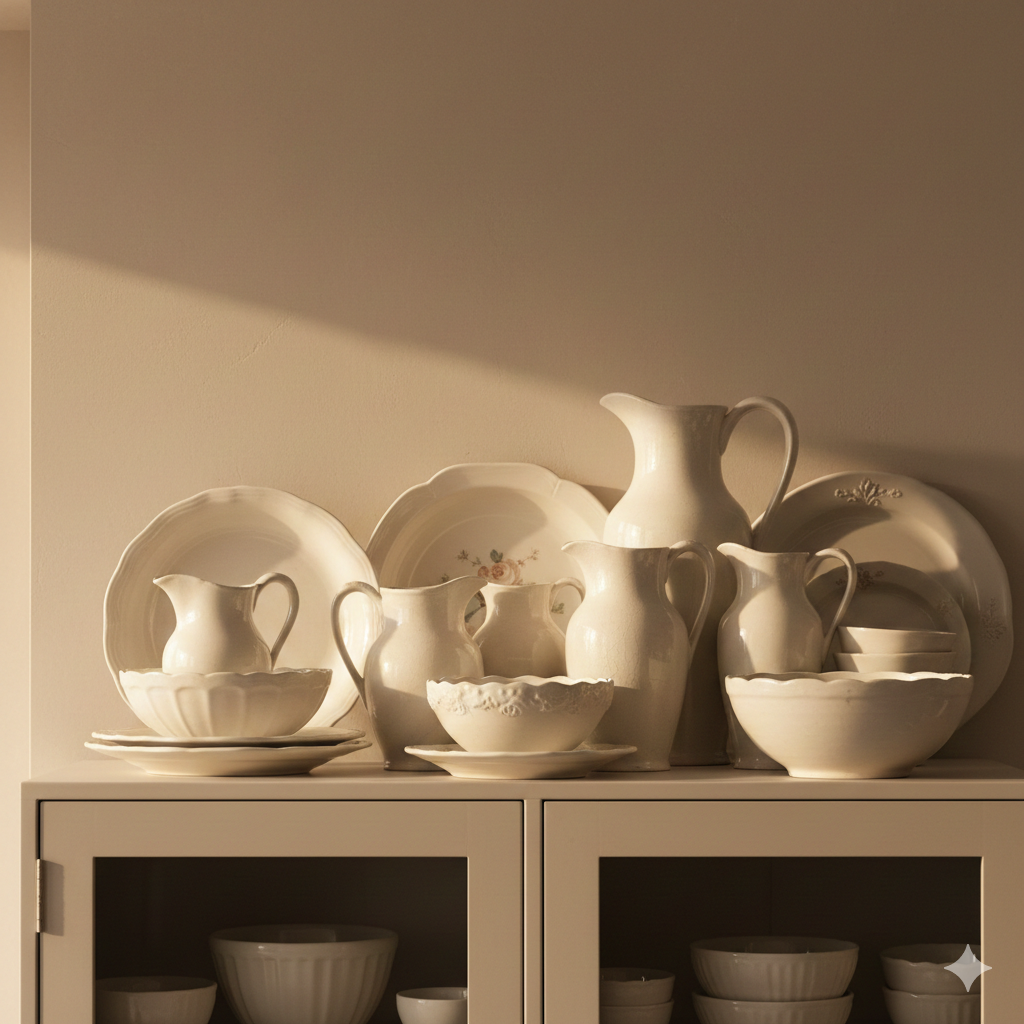
1. Vintage Ceramic Collection Display
Creating a display with vintage ceramic pieces brings warmth and character to your kitchen. Antique pitchers, bowls, and serving platters in soft whites, creams, and muted colors create a collected-over-time feel that adds instant charm. This approach works especially well in farmhouse, cottage, or traditional kitchens where you want to showcase beautiful old pieces without taking up valuable counter or cabinet space.
The beauty of vintage ceramics lies in their imperfect nature and unique shapes. Each piece tells a story, whether it comes from a flea market find, or an antique shop discovery. Mixing different sizes and heights creates visual interest and keeps the display from looking too uniform or staged. Large pitchers can anchor the corners while smaller pieces fill in the middle sections. The varied textures and subtle color differences in vintage pottery add depth without overwhelming your kitchen design.
When arranging vintage ceramics, think about creating small groupings rather than spacing items evenly across the entire cabinet run. Three to five pieces grouped together makes more impact than single items spread far apart. Vary the heights within each grouping by placing taller pitchers next to shorter bowls or plates propped at an angle. This clustering approach mimics how items would naturally appear on a shelf and feels more organic than a rigid, evenly-spaced arrangement.
Consider the color palette carefully when selecting pieces for your display. While an all-white collection creates a clean, cohesive look, mixing in pieces with subtle blue transfers, yellow ware, or soft green glazes adds personality and visual texture. Stick to a limited color range so the collection feels curated rather than random. If your cabinets are white or light-colored, the ceramics will stand out beautifully. If you have darker cabinets, lighter pottery creates a nice contrast that draws the eye upward.
The practical aspect of this decor choice matters too. Vintage ceramics are relatively lightweight compared to books or heavy vases, which is important when placing items on top of cabinets. They are also less likely to break if you need to dust or rearrange them. However, make sure the items are stable and placed well back from the edge to avoid accidents. For very tall or narrow pieces, you might want to use museum putty on the bottom to keep them secure.
This display style works particularly well in kitchens with traditional or transitional design elements. The vintage pieces complement crown molding, shaker-style cabinets, and classic hardware. If your kitchen has open shelving or glass-front cabinets, coordinate the ceramics above with similar pieces displayed inside the cabinets to create a unified look throughout the space. The key is letting each piece shine while creating an overall sense of harmony across the display.
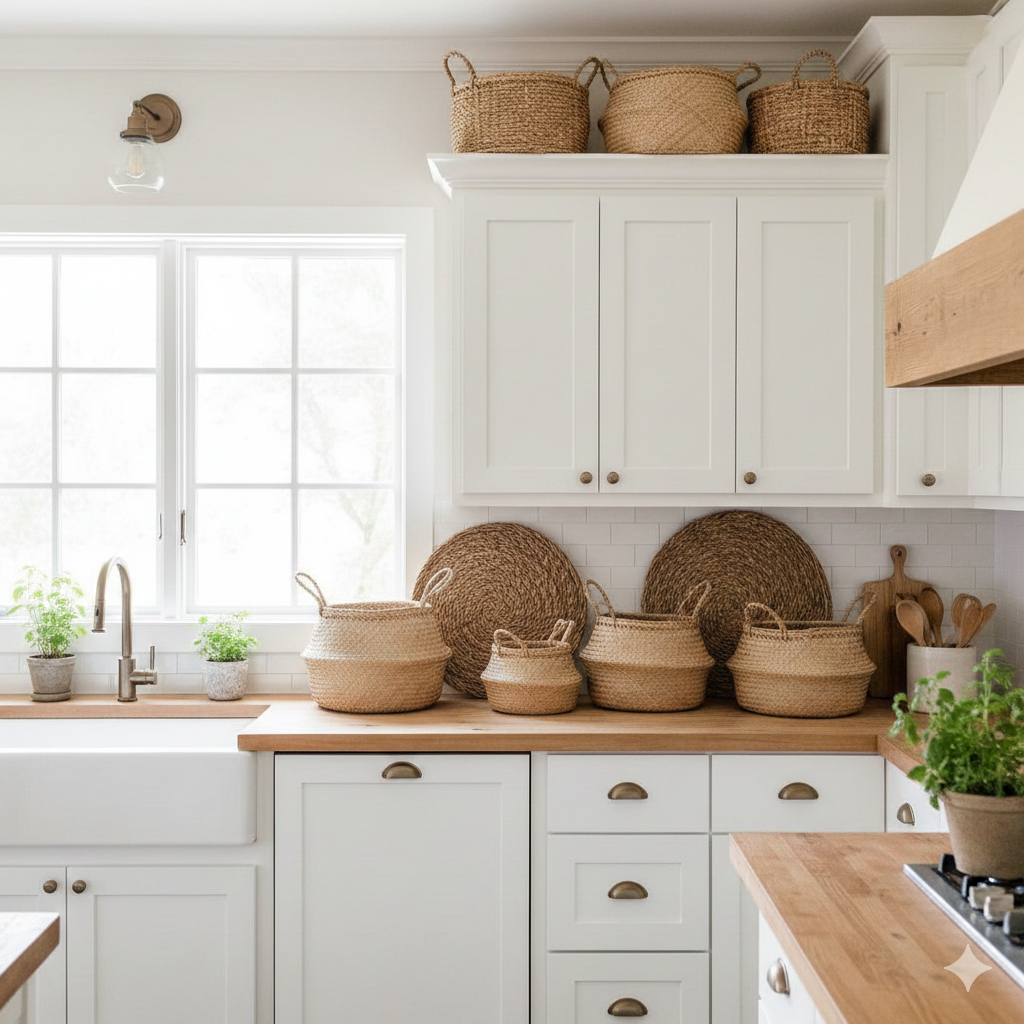
2. Oversized Woven Baskets
Large woven baskets bring natural texture and warmth to the space above your cabinets while providing practical hidden storage. These organic elements work beautifully in farmhouse, coastal, or bohemian kitchens where natural materials and earthy tones are featured. The baskets add visual weight without feeling heavy, and their neutral tones complement almost any color scheme you might have in your kitchen.
Choosing the right size baskets makes all the difference in this approach. You want pieces large enough to make a statement and fill the vertical space effectively. Small baskets get lost above cabinets and can make the area look cluttered rather than intentional. Look for baskets that are at least twelve to eighteen inches in height or diameter. Round baskets with handles, rectangular storage baskets, or even large flat baskets displayed on their side can all work depending on your space and style.
The texture of woven baskets adds dimension that flat decor cannot achieve. Whether you choose tight weaves or more open patterns, the three-dimensional quality creates shadows and depth that make the space above your cabinets feel more dynamic. Natural materials like seagrass, rattan, bamboo, or wicker each bring their own character. Seagrass offers a more casual, beachy feel, while bamboo tends to read slightly more refined. Mixing different weave patterns in similar tones creates interest while maintaining a cohesive look.
The practical function of baskets above cabinets should not be overlooked. These pieces can actually store items you use occasionally but do not need daily access to, such as serving platters for holidays, extra kitchen linens, or seasonal decorations. This dual purpose makes baskets both decorative and functional. Just make sure the items inside are clean and the baskets are not overstuffed, which can make them bulge or look messy from below.
Arranging baskets above cabinets requires thinking about balance and spacing. Instead of lining them up in a row, try grouping two or three baskets together on one side with a gap before the next grouping. This creates a more organic, less rigid appearance. You can also vary the orientation by placing some baskets upright and others on their side to show the interior weave pattern. Layering a smaller basket in front of a larger one adds depth and makes the display more interesting from different viewing angles.
The color of your baskets can either blend seamlessly with your kitchen or provide gentle contrast. Natural honey-toned baskets work well with warm wood tones and white cabinets. Darker stained or painted baskets create more drama and work especially well in kitchens with darker cabinetry or bold wall colors. If you prefer a lighter look, whitewashed or bleached baskets maintain the texture while reading as more neutral. Consider your wall color too, as baskets in a similar tone to the wall tend to recede while contrasting baskets stand out more prominently.
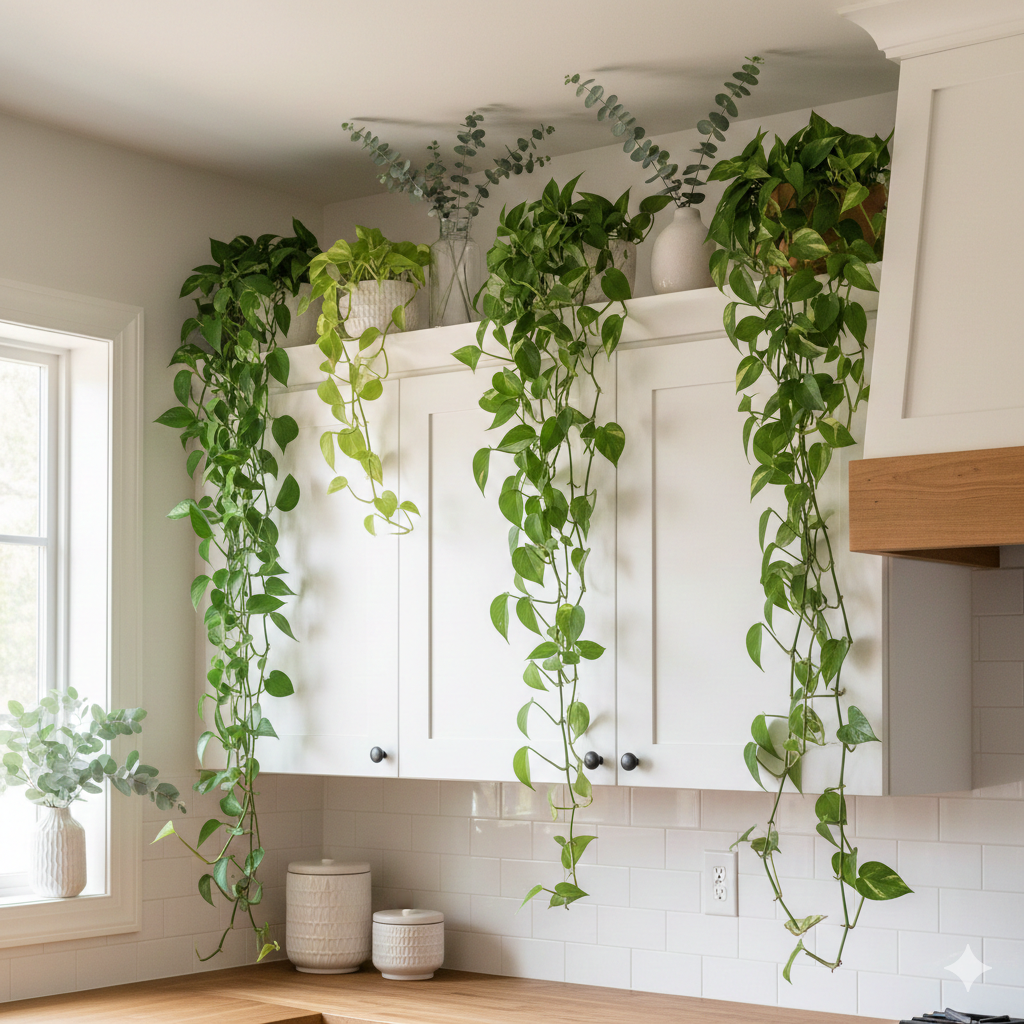
3. Greenery and Plant Life
Adding greenery above your kitchen cabinets brings life and freshness to the space in a way that few other decor choices can match. Plants create movement, add natural color, and connect your indoor space with the outdoors. Whether you choose real plants or high-quality artificial options, the organic shapes and green hues soften the hard lines of cabinetry and bring a sense of vitality to your kitchen design.
For real plants above cabinets, consider species that tolerate lower light conditions since this area typically receives less direct sunlight than windowsills. Pothos, philodendron, and snake plants are excellent choices that survive well in kitchen conditions and require minimal maintenance. Trailing plants like pothos create beautiful cascading effects that soften the edge of the cabinets. The vines naturally drape down, adding vertical interest and drawing the eye upward to appreciate the full height of your kitchen.
The challenge with real plants in this location is access for watering and care. You will need a step stool or ladder to reach them, which means choosing plants that do not need frequent attention. Drought-tolerant varieties work best, and using self-watering planters can extend the time between waterings. Make sure your pots have proper drainage or use cachepots to protect your cabinets from water damage. Consider the weight too, as soil-filled pots can be heavy, especially after watering.
High-quality artificial greenery has come remarkably far in recent years and offers a practical alternative for this hard-to-reach space. Look for realistic options with varied leaf sizes, natural color variation, and stems that can be arranged and shaped. Eucalyptus sprays, faux olive branches, and artificial fiddle leaf fig stems all create beautiful effects without the maintenance requirements of real plants. The key is choosing pieces that look convincing from the ground level where people will actually view them.
Mixing greenery with other decor elements creates the most successful displays. Pair plants with ceramic pots, wooden boxes, or woven baskets to ground them and add additional texture. The combination of organic plant forms with structured containers creates visual balance. You might group three different plants of varying heights together, or alternate single large plants with other decorative objects across your cabinet run. Avoid spacing plants evenly like soldiers in a line, which can look stiff and unnatural.
The style of your planters matters as much as the plants themselves. Terracotta pots suit farmhouse and Mediterranean kitchens with their warm, earthy tones. White ceramic planters work in almost any style and keep the focus on the greenery. Woven basket planters add even more texture and work beautifully in coastal or bohemian spaces. Sleek ceramic or concrete planters fit modern and contemporary kitchens. Whatever style you choose, keeping all planters in a similar color family creates cohesion even when using different sizes and shapes.
4. Large-Scale Artwork
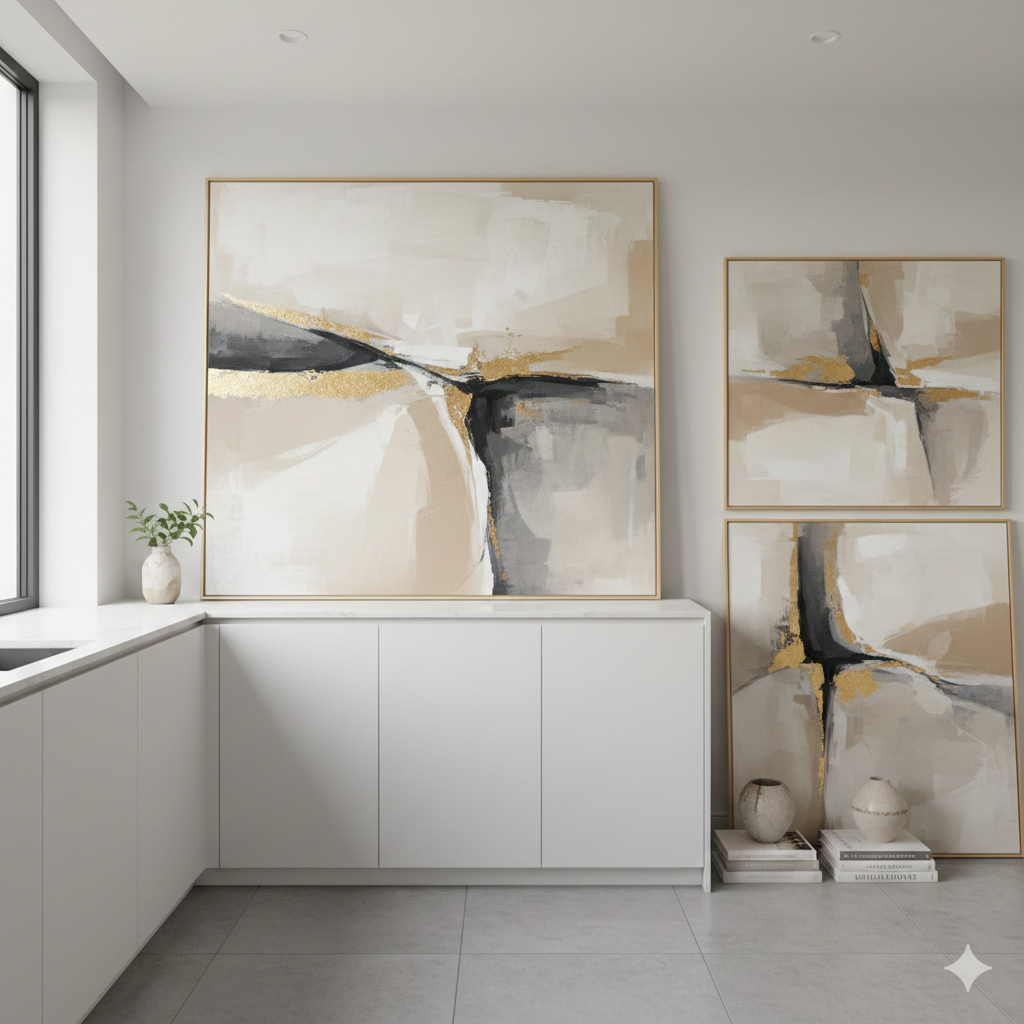
Treating the space above your cabinets as a gallery wall brings an unexpected artistic element to your kitchen. Large canvas paintings, oversized prints, or dramatic photography can transform this overlooked area into a focal point that expresses your personal style. This approach works especially well when you have substantial height above your cabinets and want to make a bold design statement rather than display small collected objects.
Scale is critical when choosing artwork for this space. Small framed pieces get lost when viewed from ground level and can make the area look cluttered. Instead, opt for pieces that are at least twenty-four inches in one dimension or larger. A single oversized piece spanning several cabinet sections creates dramatic impact. Alternatively, a carefully curated group of two or three large pieces can work together as a cohesive display. The key is making sure each piece is large enough to read clearly from across the room.
The subject matter and style of your artwork should complement your kitchen design while adding personality. Abstract pieces in your kitchen color palette tie the whole space together. Black and white photography adds sophisticated contrast and works with virtually any design style. Botanical prints connect beautifully with natural kitchen elements and add organic shapes. Vintage food advertisements or farm scenes suit traditional and farmhouse kitchens. Modern geometric art fits contemporary spaces. Choose subjects that make you happy and reflect your interests.
Propping artwork above cabinets rather than hanging it offers several advantages. You avoid putting holes in your walls, and you can easily rotate pieces when you want a fresh look. Lean large canvases or framed pieces directly against the wall, making sure they are stable and secure. For extra security, use earthquake putty or adhesive strips on the bottom corners to prevent sliding. The slightly angled position created by propping actually makes the artwork easier to view from below than if it were hanging flat against the wall.
Framing choices affect how your artwork integrates with the kitchen design. Simple frames in black, white, or natural wood tend to work best as they keep the focus on the artwork itself. Ornate gold or silver frames can overwhelm a kitchen space unless your design is very traditional or glamorous. No frame at all works beautifully for canvas pieces and creates a more contemporary, casual feel. Consider keeping all frames in the same finish for a cohesive look, or intentionally mix frames in a consistent color family for an eclectic gallery wall approach.
Lighting plays an important role in showcasing artwork above cabinets. If possible, add small picture lights or use your kitchen recessed lighting to illuminate the pieces, especially in the evening. Good lighting makes the artwork stand out and prevents the top of your cabinets from becoming a dark, ignored space. Even battery-operated puck lights placed strategically can make a significant difference in how visible and impactful your artwork appears throughout the day.
5. Rustic Wood Elements
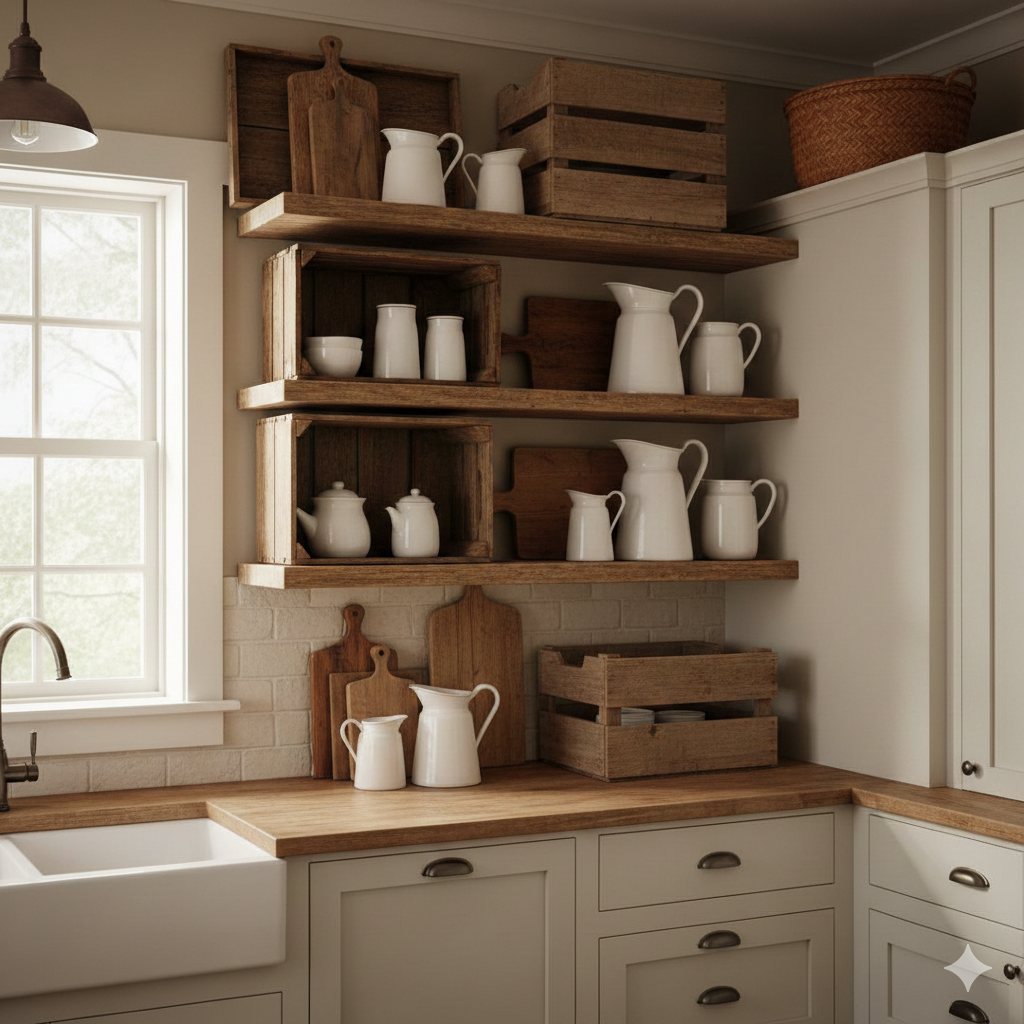
Incorporating weathered wood pieces above your cabinets adds warmth, texture, and organic character that grounds your kitchen design. Vintage wooden crates, reclaimed wood signs, old architectural salvage, or chunky wooden bowls bring an earthy, collected quality that suits farmhouse, rustic, and transitional kitchen styles. The natural material creates visual warmth that balances the harder surfaces of countertops and cabinets throughout your kitchen.
The appeal of rustic wood lies in its imperfections and age. Weathered surfaces, worn edges, and varied patinas tell stories and add depth that new, perfectly finished wood cannot replicate. Old wooden bread boards, vintage rolling pins, reclaimed barn wood pieces, or antique wooden boxes each bring unique character. The natural grain patterns, knots, and color variations in the wood create interest even in simple pieces. This organic beauty needs little additional decoration to make an impact.
When selecting wooden pieces for this space, consider both color and scale. Lighter woods like pine or whitewashed pieces keep things bright and airy, working well in kitchens with light cabinetry and walls. Darker woods like walnut or aged oak add drama and richness, especially effective in kitchens with darker elements or when you want to make a contrast. Medium-toned woods offer versatility and work in most settings. Mixing different wood tones can work if they share similar levels of weathering and age.
Wooden crates offer both decorative appeal and hidden storage potential. Stack them in different configurations, turn some on their sides to show the interior, or use them as containers for other decorative items like greenery or vintage bottles. The dimensional quality of crates adds architectural interest to the flat surface above your cabinets. Make sure crates are clean, sturdy, and free from rough splinters. Vintage ones often need a good cleaning and sometimes light sanding on rough spots before displaying.
Mixing wooden elements with other materials creates the most successful displays. Pair wooden pieces with white ceramics for a classic farmhouse look. Combine them with greenery to emphasize the natural, organic theme. Add metal elements like vintage scales or galvanized containers to create an industrial-rustic blend. The contrast between smooth and rough textures, different materials, and varied heights makes the display more dynamic and interesting than wood alone.
Architectural salvage pieces like corbels, spindles, or pieces of old trim work beautifully in this space and add vertical interest. These pieces were designed to be viewed from a distance, making them perfect for above-cabinet displays. Look for items with interesting shapes and details that show well from below. Lean them against the wall or lay them horizontally depending on their shape. The historical character of salvaged pieces adds a sense of permanence and authenticity to your kitchen that new items cannot achieve.
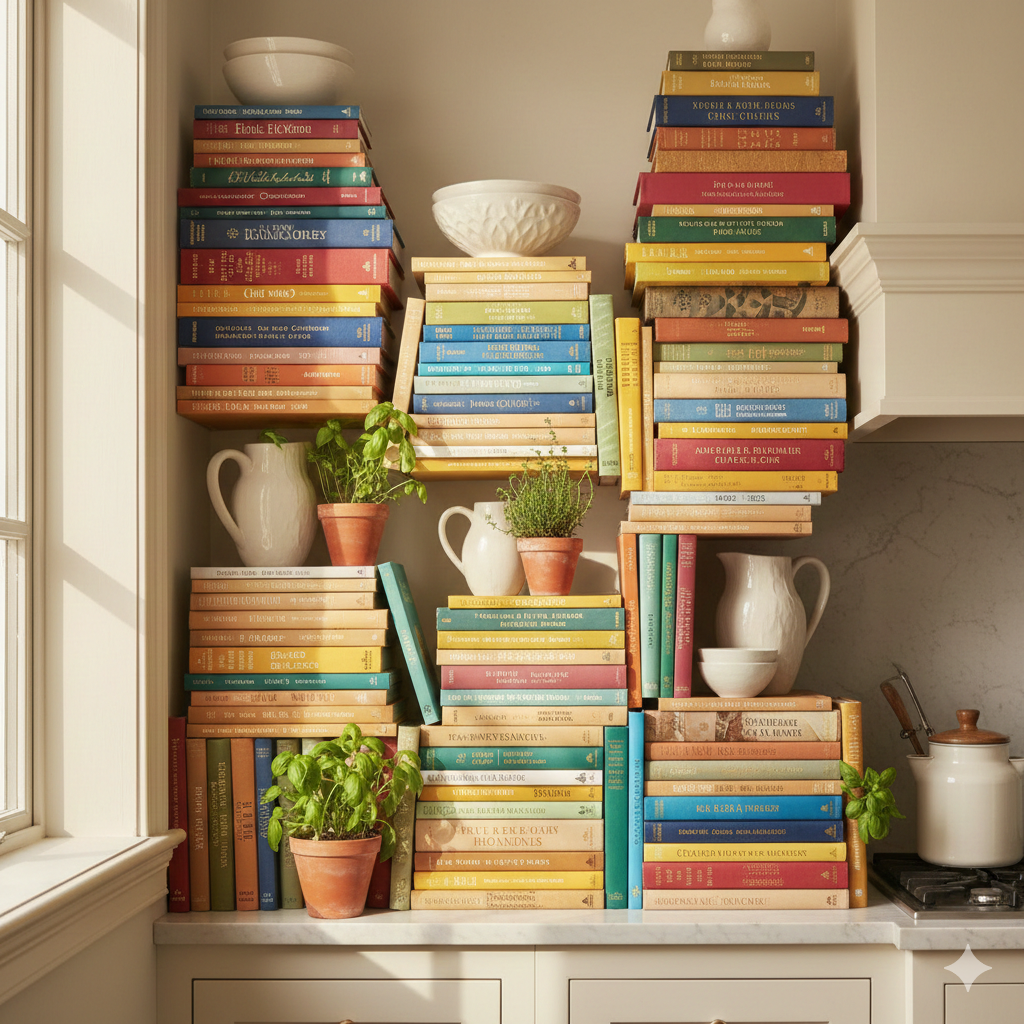
6. Book Collections and Vintage Cookbooks
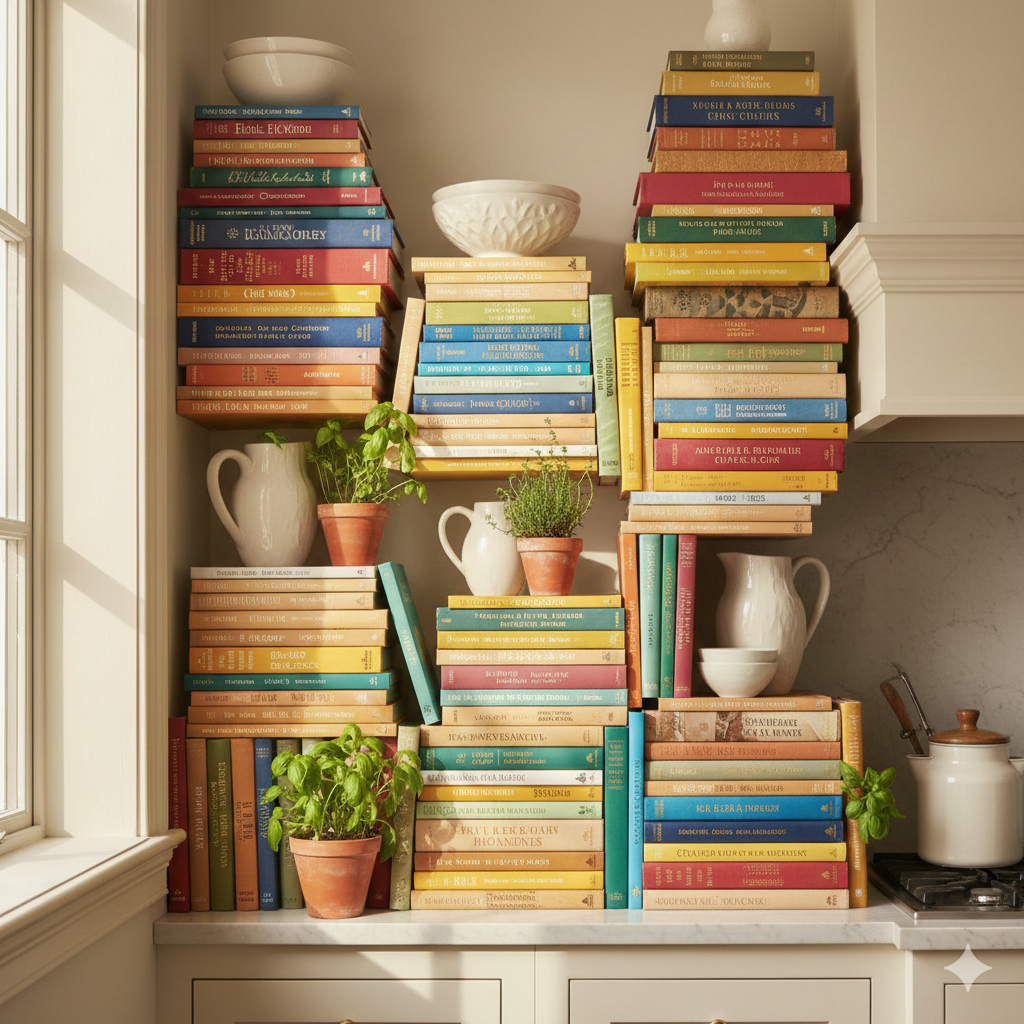
Stacking books above your kitchen cabinets brings color, height, and intellectual character to the space. Vintage cookbooks with colorful spines, coffee table books about food and design, or collections of novels in matching dust jackets create visual interest while reflecting your interests. Books add a lived-in, personal quality that makes your kitchen feel less showroom-perfect and more like a real home where people cook, gather, and spend time.
The key to making books work in this space is choosing them for their visual appeal as much as their content. Vintage cookbooks from the mid-century period often feature beautiful cover designs and spine colors that look wonderful displayed. Look for books with spines in complementary colors that work with your kitchen palette. All white books create a clean, modern look. Books with colorful spines add personality and warmth. Organizing by color creates a rainbow effect that some people love, while organizing by size creates a more traditional library feel.
Stacking books both vertically and horizontally creates the most interesting displays. Stack several books flat to create height, then stand a few upright next to them. This variation in orientation adds dimension and makes the arrangement feel more casual and collected. You can also use stacks of books as pedestals for other small decorative objects like a vintage scale, a small plant, or a ceramic piece. This layering technique creates depth and makes the display more complex and interesting.
Consider the practical aspects of storing books in the kitchen environment. Heat and humidity from cooking can affect books over time, so save your most precious first editions for elsewhere. Use books you genuinely enjoy but that are not irreplaceable. Cookbook collections work thematically in a kitchen and can actually be functional if you occasionally rotate them down to use in your cooking. Books also collect dust in this location, so plan to remove and clean them periodically or choose volumes you do not mind getting a bit dusty.
Mixing books with other decor elements prevents the space from looking too much like a library shelf. Alternate groupings of books with other objects like vases, candlesticks, or framed photos. Use bookends to keep stacks neat and add additional decorative interest. Vintage brass or marble bookends add elegance, while simple wooden or ceramic ones maintain a more casual feel. The goal is to make a curated, intentional look rather than appearing as overflow storage from a home library.
The spines of books create natural horizontal lines that can affect how the space reads visually. If your cabinets have horizontal lines in their design, books reinforce this. If you want to break up horizontal movement, mix in some vertical elements like tall vases or upright picture frames among the book stacks. The combination of horizontal book stacks and vertical accents creates a more dynamic, balanced arrangement that prevents the space from feeling too heavy or static.
7. Glass Bottle and Jar Collections
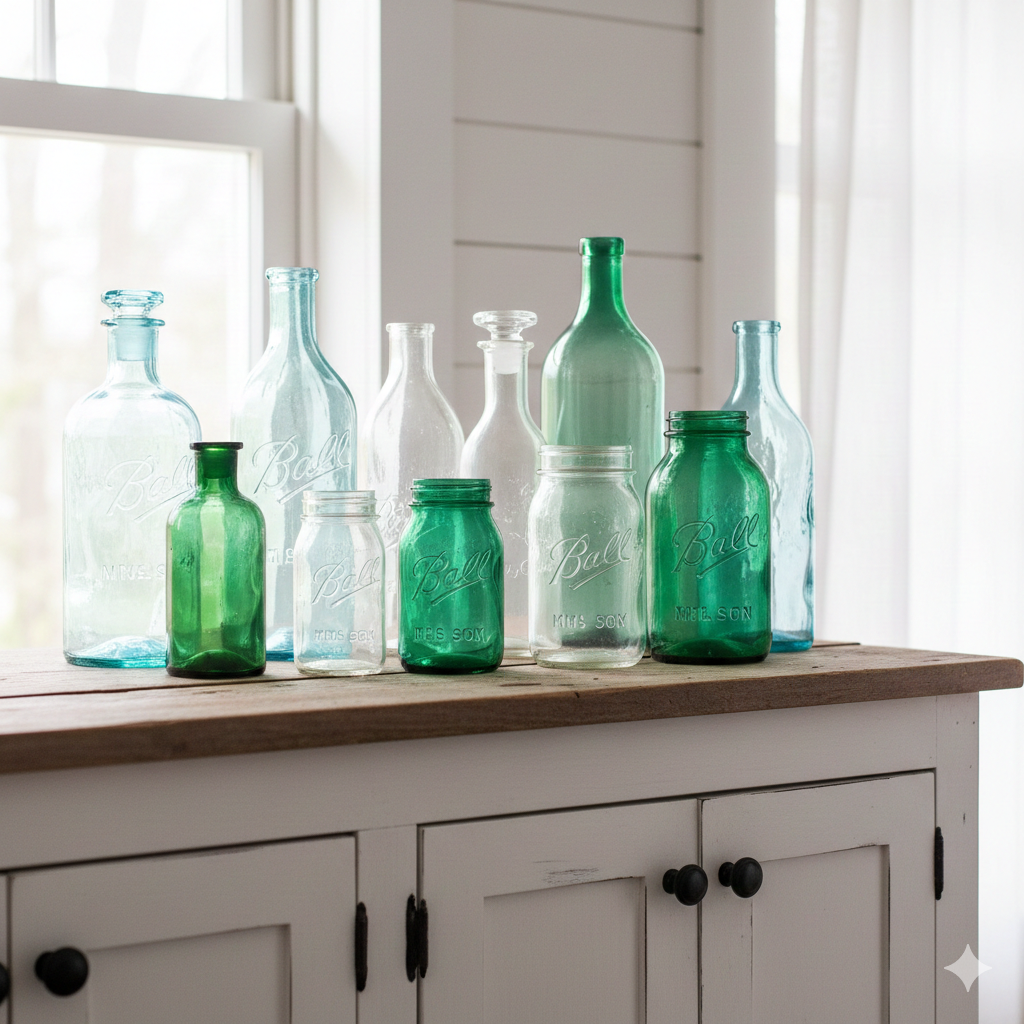
Displaying collections of glass bottles and jars above your cabinets creates beautiful light-catching effects while adding vintage charm and color to your kitchen. Old medicine bottles, vintage soda bottles, mason jars, milk bottles, or decorative glass containers in blues, greens, ambers, and clear glass create a collected, cottage-style look. The transparent and translucent quality of glass makes these collections feel lighter and less heavy than solid objects, allowing light to filter through and create interest.
The beauty of vintage glass lies in the slight imperfections, bubbles, and color variations that modern glass lacks. Old bottles often have seams, embossed lettering, or unique shapes that add character and visual interest. The way light hits different colored glass creates beautiful effects throughout the day as the sun moves and changes the lighting in your kitchen. Blue bottles glow when backlit, amber glass adds warmth, and clear bottles maintain a lighter, more neutral presence.
Building a cohesive bottle collection requires some planning and patience. Decide whether you want all clear glass, all colored glass, or a mix. Collections that stick to one or two colors tend to look more intentional than a rainbow of every color. All clear or all aqua blue creates a serene, unified look. Mixing blues and greens evokes a beachy, sea glass feeling. Amber and brown bottles suit more rustic or traditional kitchens. Whatever colors you choose, varying the heights and shapes keeps the collection interesting while the consistent color palette provides unity.
Arranging glass bottles and jars requires attention to spacing and grouping. Rather than lining them up in single file, cluster several bottles together with slight overlaps and gaps between groups. This creates a more organic, collected appearance. Taller bottles work well at the back or corners, with shorter jars and bottles in front creating layers. The slight transparency of glass means you can partially see through some pieces to others behind them, adding depth to your arrangement in a way that solid objects cannot achieve.
Consider the practical aspects of displaying glass in this location. Glass is heavier than it looks, especially antique glass, so make sure your cabinet tops can support the weight. Clean bottles thoroughly before displaying, as dust and grime show easily on glass. The good news is that glass is easy to clean when it does get dusty. The smooth surfaces wipe down quickly compared to textured items. Make sure bottles are pushed back from the edge and are stable to prevent accidents.
Mixing your glass collection with other elements can enhance the overall display. Pair bottles with vintage books, small potted plants, or wooden cutting boards. The contrast between the transparency of glass and the solidity of other materials creates visual interest. You might also add fairy lights or small LED candles inside some larger bottles or jars to create a magical glow in the evenings. This transforms your daytime display into something special after dark while adding ambient lighting to your kitchen.
8. Seasonal and Holiday Displays
Using the space above your cabinets for rotating seasonal displays keeps your kitchen feeling fresh and celebrates the changing year. This approach allows you to switch out decor every few months, bringing in colors, textures, and themes that reflect each season or upcoming holiday. The ability to change your display regularly prevents your kitchen from feeling static and gives you creative freedom to try different styles and ideas throughout the year.
Spring decorating above cabinets might include fresh flowers in vintage vases, soft pastel colors, bird nests, or botanical prints. Light and airy elements that celebrate renewal and growth work beautifully. Think about incorporating pussy willows, cherry blossom branches, or tulips in simple containers. Soft greens, blush pinks, and creamy whites create a fresh spring palette. Vintage gardening tools, terracotta pots, or seed packets can add thematic interest while maintaining a natural, organic feel appropriate to the season.
Summer displays can embrace vibrant colors and outdoor themes. Bright lemons and limes in bowls, beach-found treasures like shells or driftwood, or nautical elements create a warm-weather feeling. Coral and navy blues evoke coastal vibes while sunny yellows and fresh greens bring the garden inside. Lightweight fabrics draped casually, vintage picnic baskets, or old lemonade advertisements suit the relaxed feeling of summer. The key is keeping things bright, fresh, and reflective of longer, sunnier days.
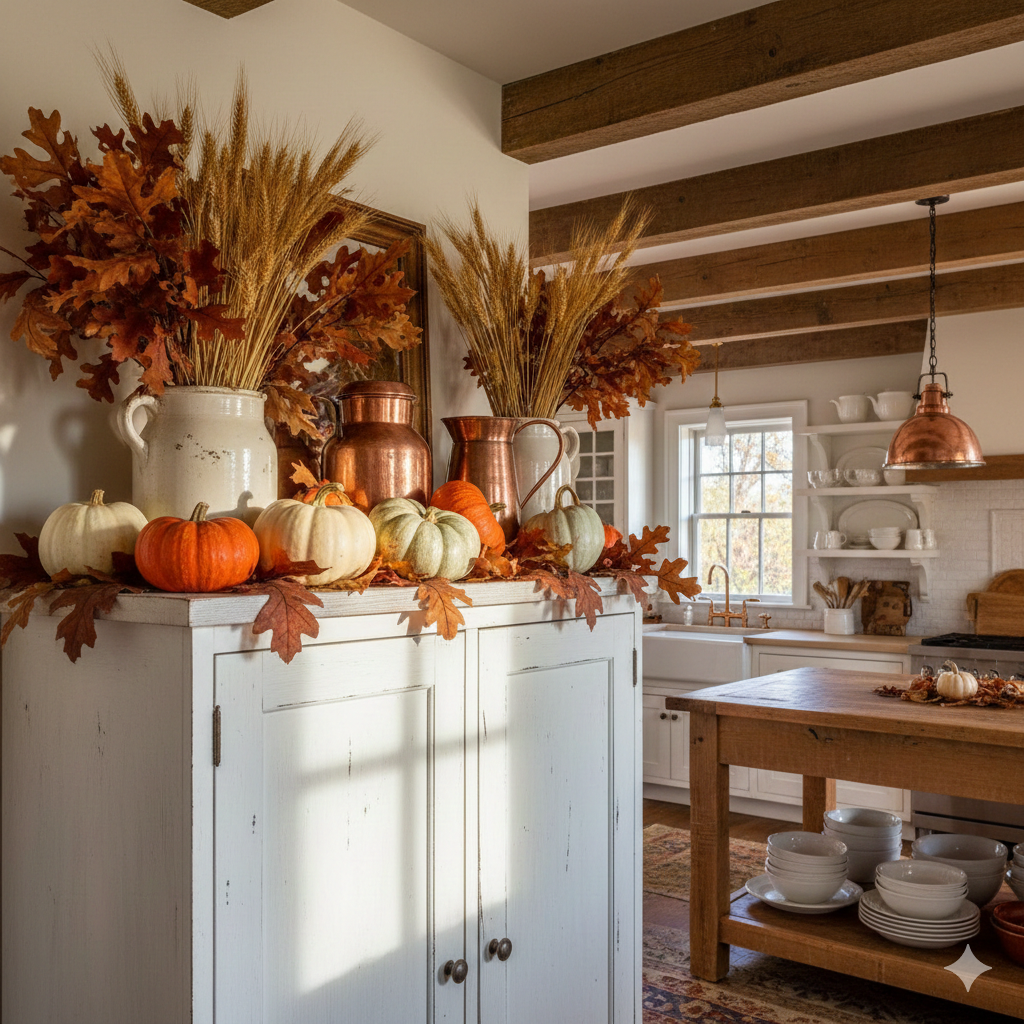
Fall brings opportunities for rich, warm colors and harvest themes. Mini pumpkins and gourds, autumn leaves in copper and rust tones, wheat sheaves, or vintage apple crates create cozy seasonal appeal. Deep oranges, burnished golds, and warm browns reflect the changing leaves and cooler weather. This is a wonderful time to bring in more texture with burlap, wood, and natural elements. Vintage thermoses, old lanterns, or copper pieces add warmth and shine that suits the season beautifully.
Winter and holiday displays can range from subtle and elegant to festive and full. Evergreen branches, white and silver elements, vintage sleds, or antique skates create winter wonder without being specifically Christmas-focused. If you celebrate Christmas, small bottle brush trees, vintage ornaments, or mercury glass in silver and gold add festive sparkle. For those who prefer simplicity, an all-white winter scheme with white branches, snow-covered pinecones, and white candles creates a serene, wintry feeling that works from November through March.
The key to successful seasonal decorating is storage and planning. You need space to store off-season items, which can become a challenge if you have limited storage elsewhere. Start with a few key seasonal pieces that make an impact rather than trying to completely overhaul the entire display four times a year. You might keep some neutral base items up year-round and simply swap out a few key colored or themed pieces to shift the seasonal feeling. This approach is less work and requires less storage while still keeping your kitchen feeling current and connected to the time of year.
9. Metallic Accents and Reflective Surfaces
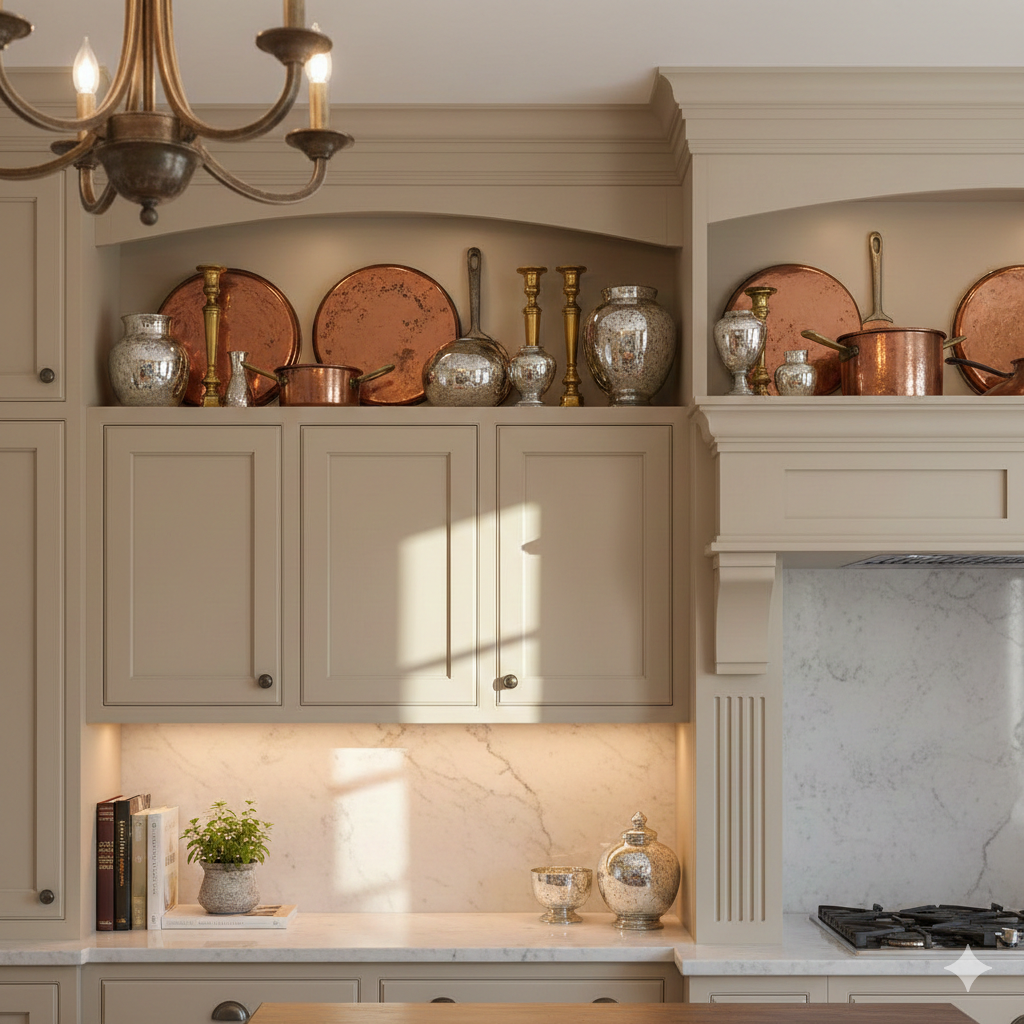
Incorporating metallic elements above your cabinets adds glamour, reflects light, and creates visual interest through shine and reflection. Copper pots, brass candlesticks, silver serving trays, mercury glass, or vintage metal signs bring dimension and luxury to this often-overlooked space. Metallic finishes catch and reflect light throughout the day, making them particularly effective in darker kitchens or on walls that receive limited natural light.
Different metals create distinct moods and suit different kitchen styles. Copper brings warmth with its rosy-gold tones and develops a beautiful patina over time that adds character. Copper works beautifully in farmhouse, French country, or traditional kitchens. Brass offers a more golden, slightly cooler tone that reads as sophisticated and works in both traditional and modern settings. Silver and chrome create a cooler, more contemporary feeling perfect for modern or transitional kitchens. Mixing metals can work if done intentionally, but choosing one dominant metal finish creates the most cohesive look.
The patina and finish of metallic pieces affects their overall appearance and suitability for your kitchen. Highly polished metals create maximum shine and reflection but show fingerprints and require regular polishing to maintain their gleam. Brushed or satin finishes offer a more subtle, sophisticated look that needs less maintenance. Aged or antiqued metals with developed patinas bring character and work beautifully in vintage or eclectic spaces. The tarnish and wear tell a story and add depth that perfectly shiny new pieces cannot match.
Practical metallic items like vintage scales, old coffee pots, antique molds, or retired cookware serve dual purposes as both functional objects and decorative elements. These pieces have interesting shapes designed for specific purposes, which makes them more visually compelling than purely decorative items. An old copper pot with a patina tells the story of countless meals prepared, while a vintage brass scale shows the mechanics of weighing ingredients. These objects connect to the kitchen function while adding metallic shine and historical character.
Combining metallic elements with other materials creates balance and prevents the space from looking too cold or shiny. Pair metals with warm wood pieces, soft textiles, or natural greenery. The contrast between reflective metal and matte surfaces adds dimension and interest. A copper pot next to a wooden cutting board, or brass candlesticks beside ceramic vases creates a layered, collected look. The varied textures and finishes work together to create a display that is rich and interesting without being overwhelming.
Lighting considerations are especially important with metallic displays. Metallics reflect whatever light hits them, whether natural or artificial. In rooms with good natural light, metals will glow and change throughout the day as the sun moves. In kitchens with primarily artificial light, consider how your light fixtures will interact with the metals. Warm-toned bulbs enhance copper and brass while cool-toned lights make silver and chrome sparkle. Adding small accent lights above cabinets can dramatically increase the impact of metallic pieces in the evening.
10. Dramatic Architectural Elements
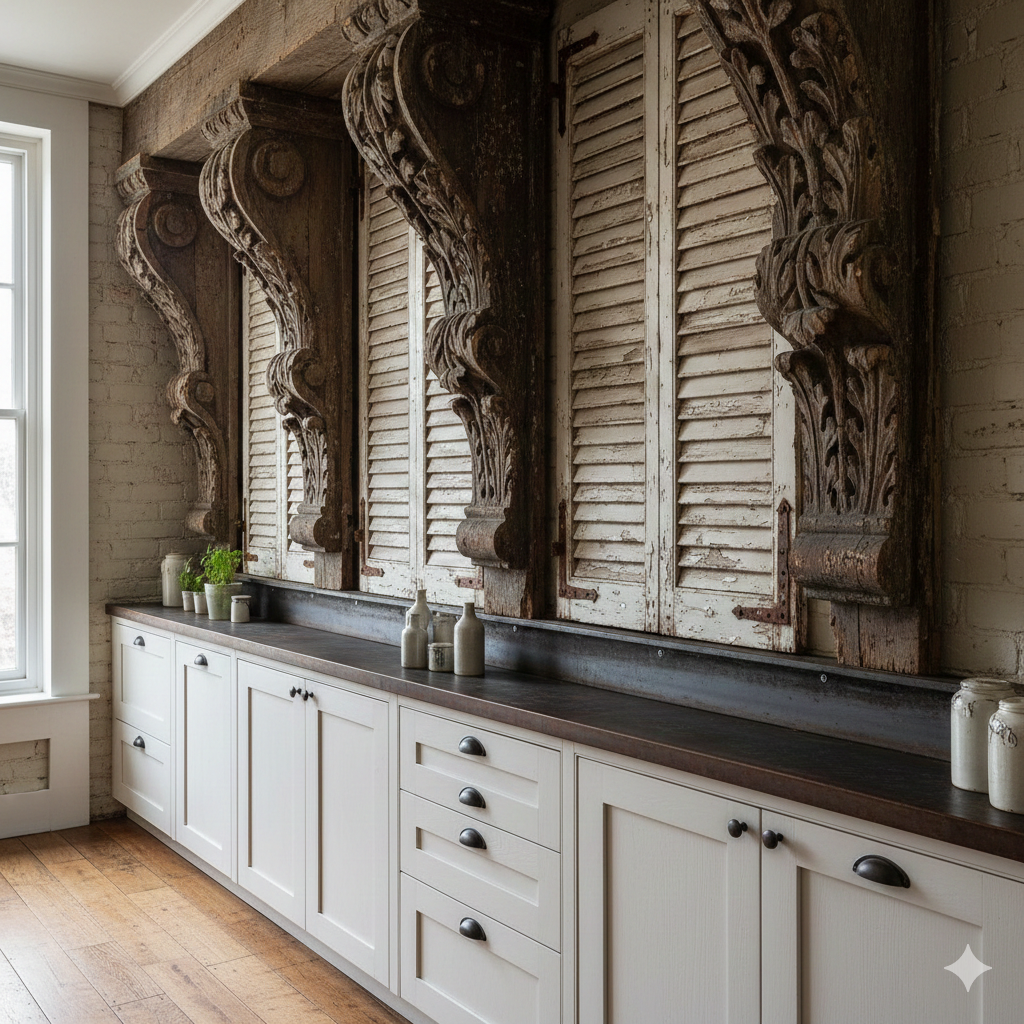
Using bold architectural pieces above your cabinets creates an unexpected design statement that adds character and visual drama to your kitchen. Large corbels, vintage shutters, old window frames, decorative molding pieces, or salvaged architectural details bring three-dimensional interest and historical charm. These substantial pieces work especially well when you have significant height above your cabinets and want to fill the space with something impressive rather than small decorative objects.
Architectural salvage pieces carry history and craftsmanship that new decorative items cannot replicate. An old corbel might have supported a ceiling beam in a century-old building. Vintage shutters once protected windows from weather and sun. These pieces were functional in their original context, which gives them inherent interest and substance. The wear, paint layers, and patina they have developed over decades add authenticity and depth. Even reproductions of architectural elements can work if they have good scale and detail, though authentic pieces always carry more character.
Scale matters tremendously with architectural elements. These pieces need to be large enough to make an appropriate impact from ground level. Small corbels or narrow pieces of trim get lost in the space and look more like clutter than intentional design. Look for items that are at least twelve to eighteen inches in height or width. A pair of substantial corbels flanking a range hood makes a strong statement. A large vintage window frame leaning casually creates an interesting vertical element. The goal is filling the space with pieces that have presence and visual weight.
The finish and color of architectural pieces affects how they work in your kitchen. White or cream-painted pieces maintain a lighter feeling and work beautifully above white or light-colored cabinets without creating too much contrast. Natural wood architectural elements add warmth and suit traditional or rustic kitchens. Pieces with original layered paint showing through distressing bring color and personality. Black architectural pieces create drama and work well in contemporary settings or as striking contrast against light cabinets.
Arranging architectural pieces requires careful consideration of balance and spacing. These are bold items that need room to breathe and make their impact. A single large piece can be enough, especially centered above a range or sink. If using multiple pieces, give them adequate space between so each can be appreciated individually. Avoid the temptation to fill every inch of space. Sometimes one dramatic architectural element on one section of cabinets, balanced by simpler decor on adjacent sections, creates the most successful overall composition.
Combining architectural pieces with softer elements creates balance and prevents the space from feeling too heavy or masculine. Pair a substantial wooden corbel with a delicate vine plant trailing down beside it. Place a vintage shutter next to a collection of white ceramics. The contrast between hard architectural elements and softer, organic items creates a more dynamic and interesting display. This mixing of elements makes the space feel curated and thoughtful rather than like a salvage yard.
11. Curated Color Story
Creating a deliberate color scheme with your above-cabinet decor brings cohesion and visual impact to your kitchen. Choosing items in a specific color palette, whether monochromatic, complementary, or analogous, creates a curated look that feels intentional and sophisticated. This approach works particularly well when you want to introduce color into a neutral kitchen or reinforce existing accent colors from other areas of the space.
An all-white or cream color story creates a serene, cohesive look that never goes out of style. White ceramics, cream-colored baskets, white-painted wooden pieces, and off-white pottery in various shapes and textures create visual interest through form and texture rather than color. This approach makes the space feel larger and more open while maintaining a calm, uncluttered aesthetic. The subtle variations in white and cream tones add depth without the visual complexity that multiple colors bring. This works beautifully in farmhouse, coastal, Scandinavian, or minimalist kitchen designs.
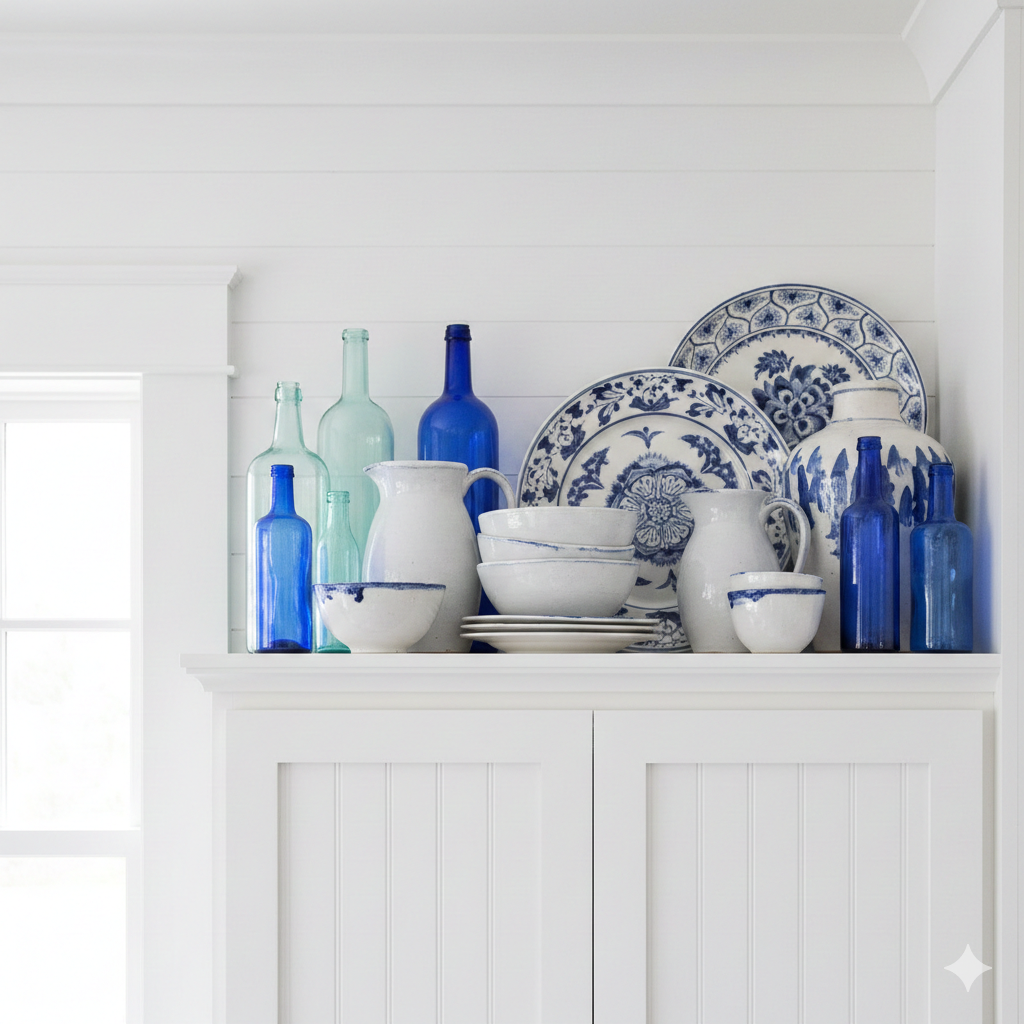
Blue and white combinations create classic appeal with endless variation possibilities. Navy and white feels nautical and crisp. Soft blue-gray with white reads as coastal and serene. Cobalt blue creates dramatic punctuation against white backgrounds. Collect blue and white ceramics, pottery, or vintage bottles to create this color story. The combination works in almost any kitchen style and brings a fresh, clean feeling. You can adjust the intensity from pale and subtle to bold and graphic depending on the shade of blue you choose.
Warm earth tones create a grounded, organic color palette that brings coziness to your kitchen. Terracotta, rust, ochre, warm browns, and amber glass create a sun-baked, Mediterranean or Southwestern feeling. This palette works beautifully with natural materials like wood, clay, and woven elements. The warm tones add richness without being overly bright or demanding attention. These colors create a welcoming atmosphere and work especially well in kitchens with warm wood tones or stone elements.
Green-based color stories connect your kitchen to nature and create a fresh, lively feeling. Soft sage greens feel calm and versatile, working in both traditional and modern settings. Deeper forest greens create drama and sophistication. Olive tones bring earthiness. Combine green glass bottles, green-glazed pottery, plants, and green-painted pieces to build this color story. Green works beautifully as a bridge between warm and cool tones and pairs well with both wood and white elements in your kitchen.
The key to a successful color story is commitment to the palette while varying the shades, tones, and textures within it. Using the same exact shade of blue on every item looks flat and uninteresting. Instead, collect pieces in related but varied shades. Mix glossy and matte finishes, smooth and rough textures, large and small items, all within your chosen color family. This creates richness and depth while maintaining the cohesion that makes a color story work. Allow some neutral elements to provide breathing room and prevent the display from becoming overwhelming or one-note.
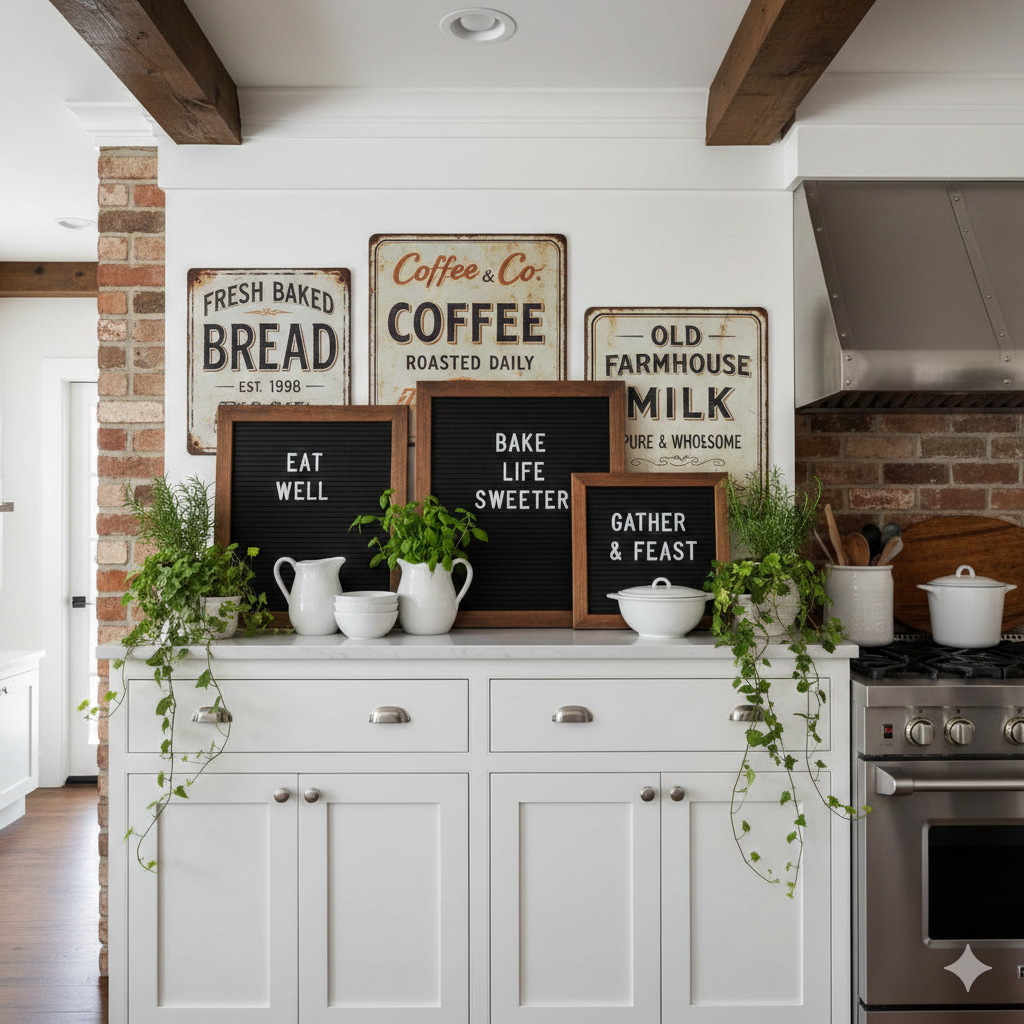
12. Vintage Signs and Typography
Incorporating vintage signs, letter boards, or pieces with interesting typography adds personality and can bring meaningful words or phrases into your kitchen. Old advertising signs, vintage cafe menus, antique store signs, or decorative letter art create focal points that are easy to read from across the room. Typography-focused decor works especially well in eclectic, industrial, or farmhouse-style kitchens where a bit of quirk and character fits the overall design.
Authentic vintage signs carry history and character that reproductions struggle to match. Old metal advertising signs with their aged paint and rusty patinas tell stories of different eras. Wooden signs from old businesses show wear and fading that adds authenticity. Hand-painted signs have imperfections and variations that machine-made items lack. Even the typography itself often reflects the period when the sign was created, giving it historical interest beyond just the words it displays. These genuine pieces add a layer of authenticity and depth to your kitchen design.
The content and messaging of signs matters as much as their visual appeal. Food-related vintage advertising for coffee, flour, sugar, or other kitchen staples connects thematically to the space. Humorous or welcoming phrases add personality and can make people smile. Family names or meaningful words create personal significance. Whatever message you choose, make sure it is something you want to see daily and that reflects your personality or values. Avoid anything too trendy that might feel dated quickly or sayings that feel generic rather than meaningful to you specifically.
Size and scale are crucial when selecting signs for above-cabinet display. The letters need to be large enough to read easily from ground level, which typically means signs should be at least eighteen to twenty-four inches in their smallest dimension. Tiny signs with small lettering get lost and look cluttered from a distance. If you want to display multiple signs, vary the sizes and arrange them like a gallery wall rather than lining them up evenly, which can look rigid and uncomfortable.
Mixing signs with other decor elements creates balance and prevents the space from looking like a flea market. Pair a vintage metal sign with natural greenery in a simple vase. Flank a large wooden sign with matching ceramic pieces on either side. The combination of typography-focused pieces and more organic or traditional decorative items creates a layered, collected look. The signs provide bold visual interest while the supporting elements soften and complete the overall composition.
Color considerations with vintage signs depend on your kitchen palette and the existing colors in the signs themselves. Some vintage signs have wonderful faded colors that add character without overwhelming. Black and white or neutral signs work in virtually any kitchen and provide visual interest through text and form rather than color. Brightly colored vintage advertising can become a focal point and introduce accent colors to an otherwise neutral space. Consider how the sign colors work with your walls, cabinets, and other kitchen elements to create an integrated rather than jarring look.
13. Minimalist Sculptural Objects
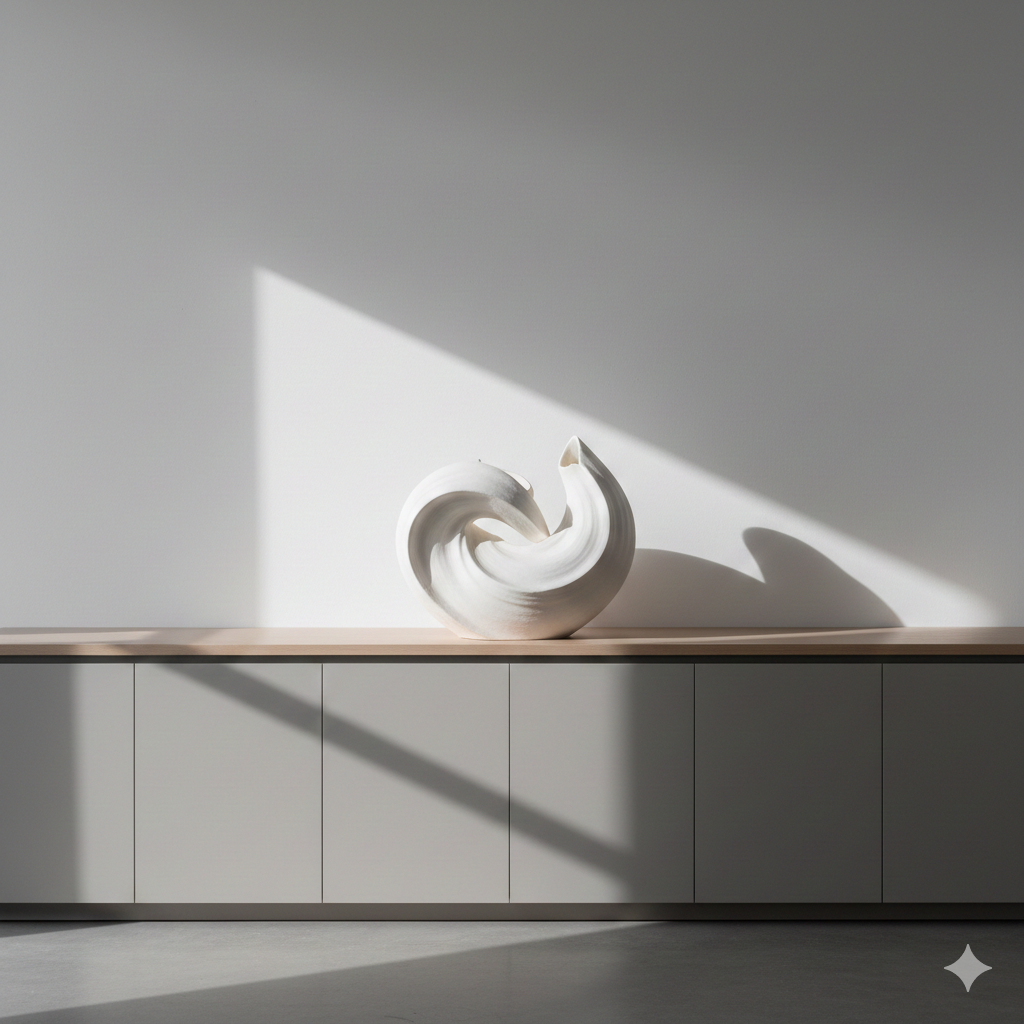
Taking a less-is-more approach with carefully selected sculptural pieces creates a sophisticated, gallery-like feeling above your cabinets. Instead of filling the space with multiple items, choose one or two significant objects with interesting forms that function as art. This approach works beautifully in modern, contemporary, or minimalist kitchens where clean lines and thoughtful editing define the aesthetic. The restraint allows each piece to make its full impact without competing for attention.
Sculptural objects for this space should have strong silhouettes that read clearly from below. Abstract forms, organic shapes, or geometric pieces in materials like ceramic, wood, metal, or stone create visual interest through form rather than color or pattern. A large organic ceramic vessel with a beautiful curve, a sculptural wooden bowl showing dramatic grain, or an abstract metal piece with interesting negative space can each stand alone as a focal point. The object becomes a conversation piece and adds an artistic element to your kitchen without requiring a collection or complex arrangement.
The color palette for minimalist sculptural displays typically stays neutral to keep the focus on form. Black, white, natural wood tones, concrete gray, or matte metallics all work well in this aesthetic. Monochromatic pieces prevent color from distracting from the shape and texture. The beauty comes from the object itself—its curves, angles, surface quality, and how light interacts with its form. A white ceramic sculpture creates completely different shadows and highlights than the same form in black matte, demonstrating how color choice affects the overall impact even within a minimal palette.
Placement and spacing become especially important with minimalist displays. These pieces need room to breathe and space around them to be fully appreciated. Centering a single large piece above a range or sink creates intentional symmetry. Placing one substantial object off-center creates dynamic asymmetry. If using two pieces, position them with careful attention to balance and proportion. The negative space around the objects is as important as the objects themselves in creating the calm, edited aesthetic that defines minimalism.
Lighting plays a crucial role in showcasing sculptural pieces effectively. These objects often have interesting forms that create beautiful shadows and highlights when properly lit. Consider adding discrete spotlights or track lighting that illuminates the sculpture from an interesting angle. The play of light and shadow adds dimension and drama that makes the piece more engaging. Even subtle lighting changes throughout the day as natural light moves can transform how the sculpture appears, creating an ever-changing display.
The key to success with minimalist sculptural displays is choosing pieces you genuinely love and find beautiful. Since you are displaying very few items, each one matters tremendously. The sculpture becomes a reflection of your taste and sensibility. It should be something that brings you pleasure to see every day, something with enough visual interest that you continue discovering new aspects of it over time. This thoughtful curation creates a refined, intentional look that elevates your entire kitchen design.
14. Textile and Fabric Elements
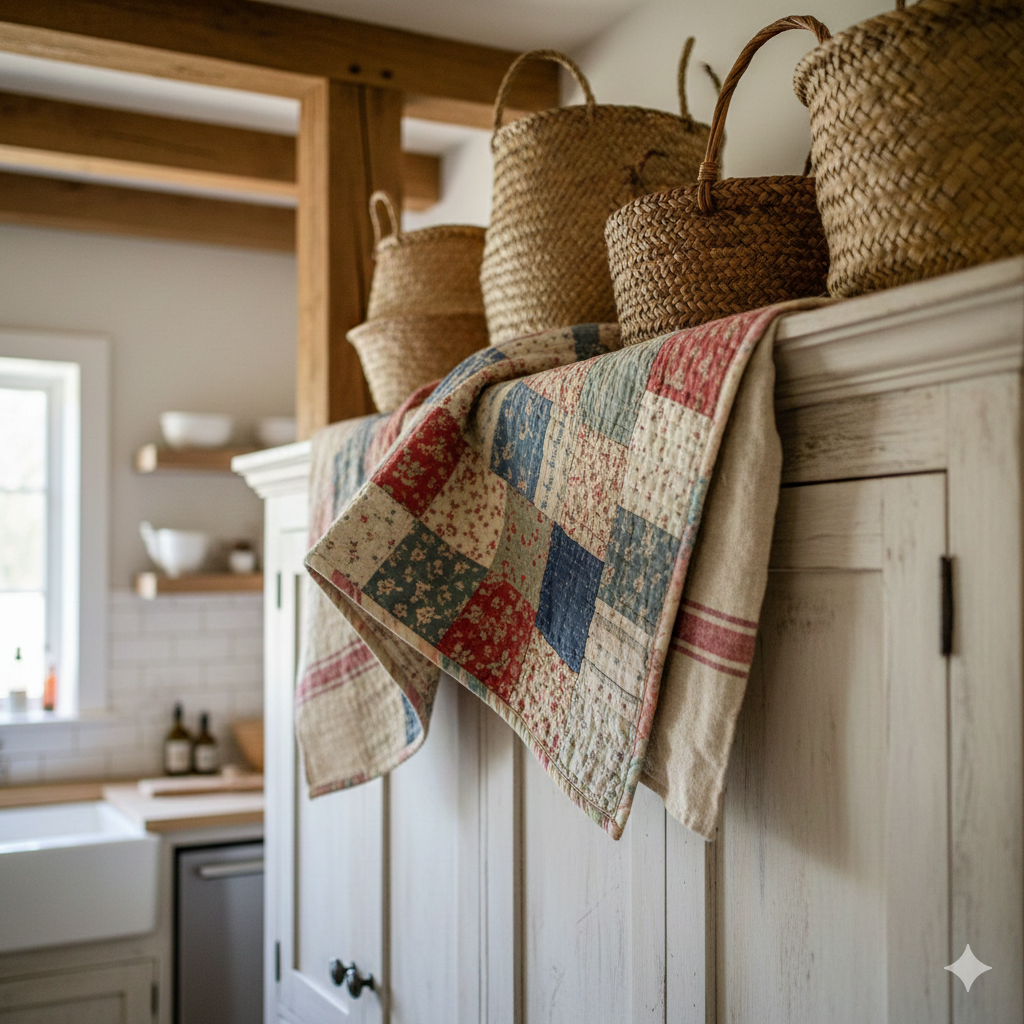
Introducing soft textiles above your kitchen cabinets brings unexpected warmth and texture to a space typically dominated by hard surfaces. Vintage quilts folded and displayed, textile art pieces, woven wall hangings, or antique linens add softness and can introduce pattern and color in a unique way. This approach works particularly well when you want to make your kitchen feel more inviting and less utilitarian, especially in farmhouse, bohemian, or eclectic design styles where mixing materials creates character.
Vintage quilts offer beautiful patterns, colors, and handcrafted appeal that modern fabrics rarely match. A folded antique quilt draped casually over the cabinet edge or propped against the wall brings folk art into your kitchen. The patchwork patterns add visual interest and often feature colors that can tie together other elements in your kitchen.
Woven textiles and fiber art pieces add global influences and bohemian character to kitchen design. Macrame wall hangings, woven tapestries, or ethnic textiles from various cultures bring in artisan quality and unique patterns. These pieces often incorporate natural fibers like cotton, jute, or wool that add organic texture. The handmade quality of woven pieces creates visual interest through slight imperfections and variations that machine-made items lack. Neutral woven pieces work in almost any kitchen while colorful ethnic textiles can become bold focal points.
Antique linens including tablecloths, grain sacks, or tea towels can be displayed in various ways above cabinets. Fold them neatly and stack them like you would books, creating soft horizontal layers. Drape them casually over other objects for a relaxed, lived-in look. Frame special pieces with beautiful embroidery or monograms to display as art. European grain sacks with their graphic stripes and lettering add farmhouse appeal and work especially well in French country or rustic kitchens. The aged fabric and faded graphics tell stories of their original use.
Practical considerations with textile displays include dust accumulation and kitchen environment factors. Textiles will collect dust over time and may absorb cooking odors, so choose pieces you can remove and clean periodically. Vintage or antique textiles should be displayed out of direct sunlight to prevent further fading. Consider rotating textile pieces seasonally to prevent constant exposure and allow for cleaning. Delicate or precious fabrics might be better framed behind glass rather than displayed openly where they are more vulnerable to kitchen conditions.
Combining textiles with harder decorative elements creates contrast that makes both more interesting. A soft folded quilt next to a wooden cutting board highlights the different textures. A woven wall hanging beside ceramic vessels creates a pleasing mix of organic materials. The softness of fabric plays against the structure of other objects, creating a more layered and sophisticated display. This combination prevents any single material from dominating and adds depth to your overall cabinet-top styling.
Bringing It All Together
The space above your kitchen cabinets offers wonderful potential to add personality, warmth, and visual interest to your kitchen. Whether you choose one of these fourteen approaches or combine elements from several, the key is creating a display that feels intentional and reflects your personal style. This often-neglected area can become a beautiful focal point that completes your kitchen design and makes the entire space feel more finished and polished.
Remember that successful decorating above cabinets balances several considerations. Scale matters tremendously—items need to be large enough to read clearly from ground level without looking cluttered or overwhelming. Visual weight and balance across your cabinet run creates harmony, whether you arrange items symmetrically or with intentional asymmetry. Cohesion through color, material, or style ties the display together and connects it to your broader kitchen design. And practical concerns like dust accumulation, safety, and maintenance should inform your choices.
Start with pieces you already own and love before investing in new decor. You might discover that the vintage pitcher your grandmother gave you or the basket you picked up at a flea market years ago is perfect for this space. Building your display over time allows you to find pieces that truly speak to you rather than rushing to fill the space with items that feel random or forgettable. The most successful displays feel collected and personal, showing evolution and thought rather than appearing to have been purchased all at once.
Do not be afraid to change your display seasonally or whenever you feel like refreshing your kitchen. The beauty of decorating this space is that it requires no permanent installation or major commitment. You can easily swap items, try different arrangements, or completely change your approach when you want something new. This flexibility makes it a wonderful place to experiment with styles, colors, or items you might not commit to in more permanent design decisions.
Most importantly, decorate this space in a way that brings you joy every time you walk into your kitchen. Whether that means a carefully curated minimalist display, an abundant collection of vintage treasures, or seasonal rotation that celebrates the changing year, make choices that reflect who you are and how you want your kitchen to feel. The space above your cabinets is an opportunity to express yourself and complete your kitchen design in a way that feels uniquely yours.