
A galley bathroom is often seen as a challenge. It is long, narrow, and can easily feel tight or awkward if not designed well. But when done right, a galley bathroom can feel calm, luxurious, and extremely efficient. The bathroom in the image is a perfect example of how thoughtful choices can turn a narrow footprint into a beautiful and relaxing space.
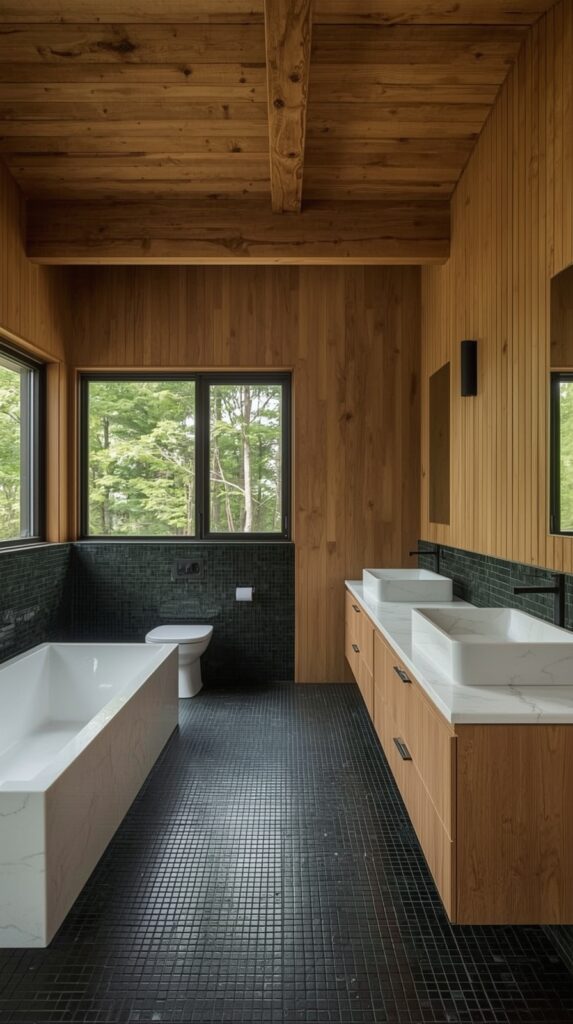
This bathroom uses natural wood, simple shapes, clean lines, and smart layout decisions. Nothing feels crowded. Every element has a purpose. The room feels warm, modern, and connected to nature, even though the layout is narrow.
In this guide, we will walk through how to build this exact type of interior from the ground up. We will talk about layout, materials, colors, lighting, storage, and finishes. The language will stay simple and clear, so you can follow along whether you are a homeowner, a renter planning a remodel, or a designer looking for inspiration.
1) Understanding the Galley Bathroom Layout
A galley bathroom is usually long and narrow, with fixtures placed along one or both long walls. Instead of spreading items around the room, everything is organized in a straight line. This makes movement easy and keeps the space feeling open.
In this interior, the bathtub is placed on one side, while the vanity runs along the opposite wall. The toilet is tucked neatly toward the back, close to the window. This layout keeps the center walkway clear, which is very important in narrow spaces. When the floor remains open and uncluttered, the bathroom feels wider and more comfortable.
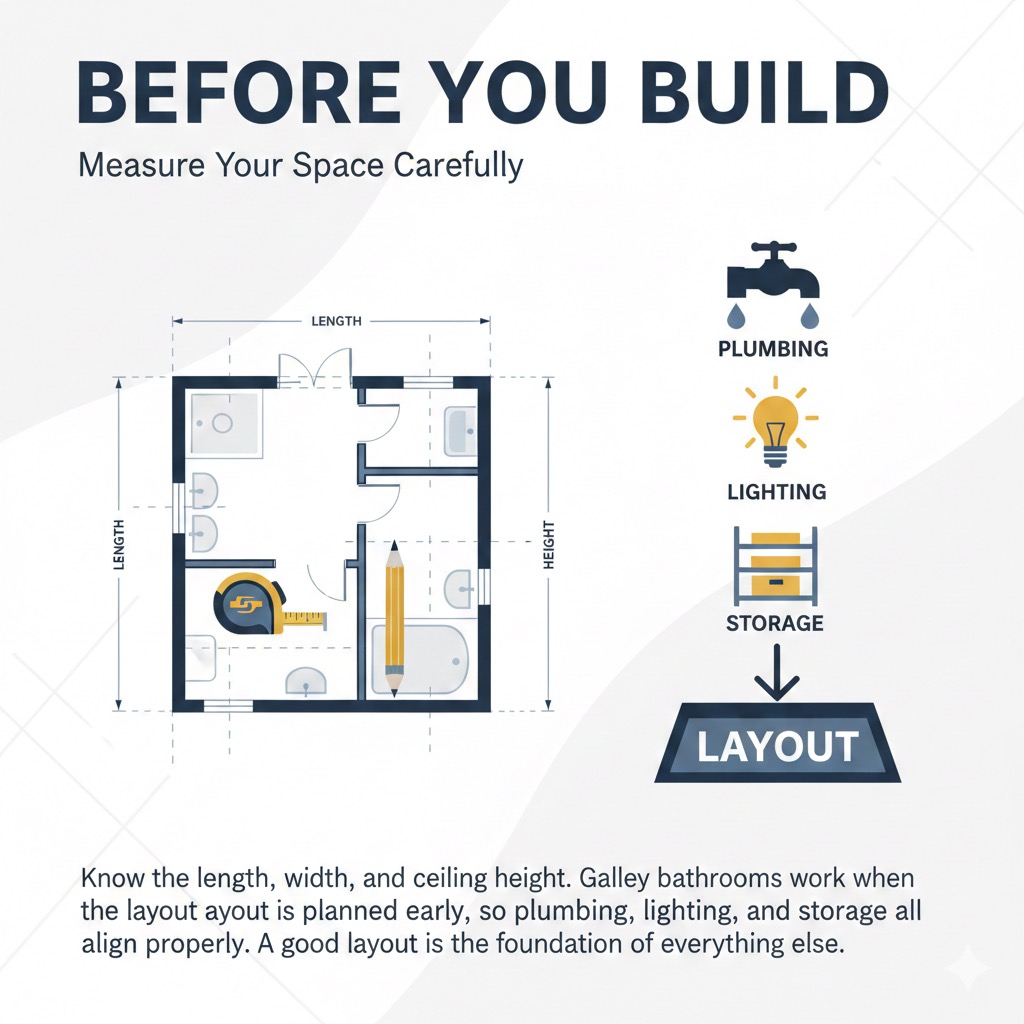
Before building, measure your space carefully. Know the length, width, and ceiling height. Galley bathrooms work best when the layout is planned early, so plumbing, lighting, and storage all align properly. A good layout is the starting point of this interior.
2) Using Natural Wood to Create Warmth
One of the strongest features of this bathroom is the use of natural wood. The walls, ceiling, and vanity are all finished in warm wood tones. This immediately makes the space feel inviting and calm.
Wood works especially well in narrow bathrooms because it softens the space. Hard surfaces like tile and stone can sometimes feel cold or sharp. Wood adds balance. In this design, vertical wood panels are used on the walls. Vertical lines help draw the eye upward, making the room feel taller.
For bathrooms, it is important to use moisture-resistant wood or wood-look materials. Treated wood panels, engineered wood, or high-quality wood veneers are good options. Make sure everything is sealed properly to prevent damage from humidity.
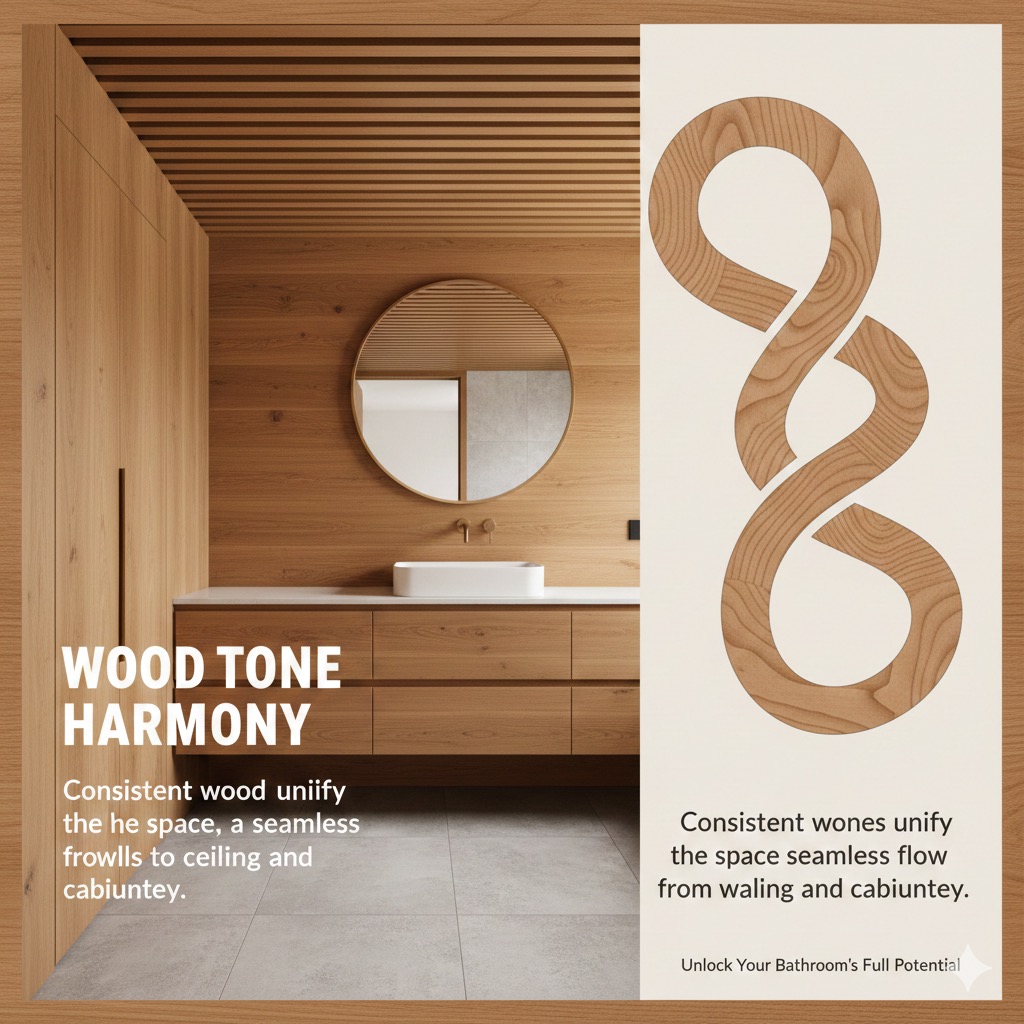
Keeping the wood tone consistent across the space helps create flow. When walls, ceiling, and cabinetry share a similar color, the bathroom feels unified instead of broken into sections.
3) Choosing the Right Color Palette
The color palette in this bathroom is simple and natural. Warm wood tones are paired with dark tiles and clean white fixtures. This balance keeps the space grounded while still feeling fresh.
Dark floor tiles help define the walking path and anchor the room. They also hide water spots and wear better than very light floors. The dark tile continues partially up the walls, creating a visual base around the room.
White fixtures, like the bathtub and sinks, stand out against the darker elements. This contrast makes the bathroom feel crisp and clean without being harsh.
When designing a galley bathroom, avoid too many colors. A limited palette makes the space feel calmer and more open. Two or three main colors are enough.
4) Flooring That Looks Good
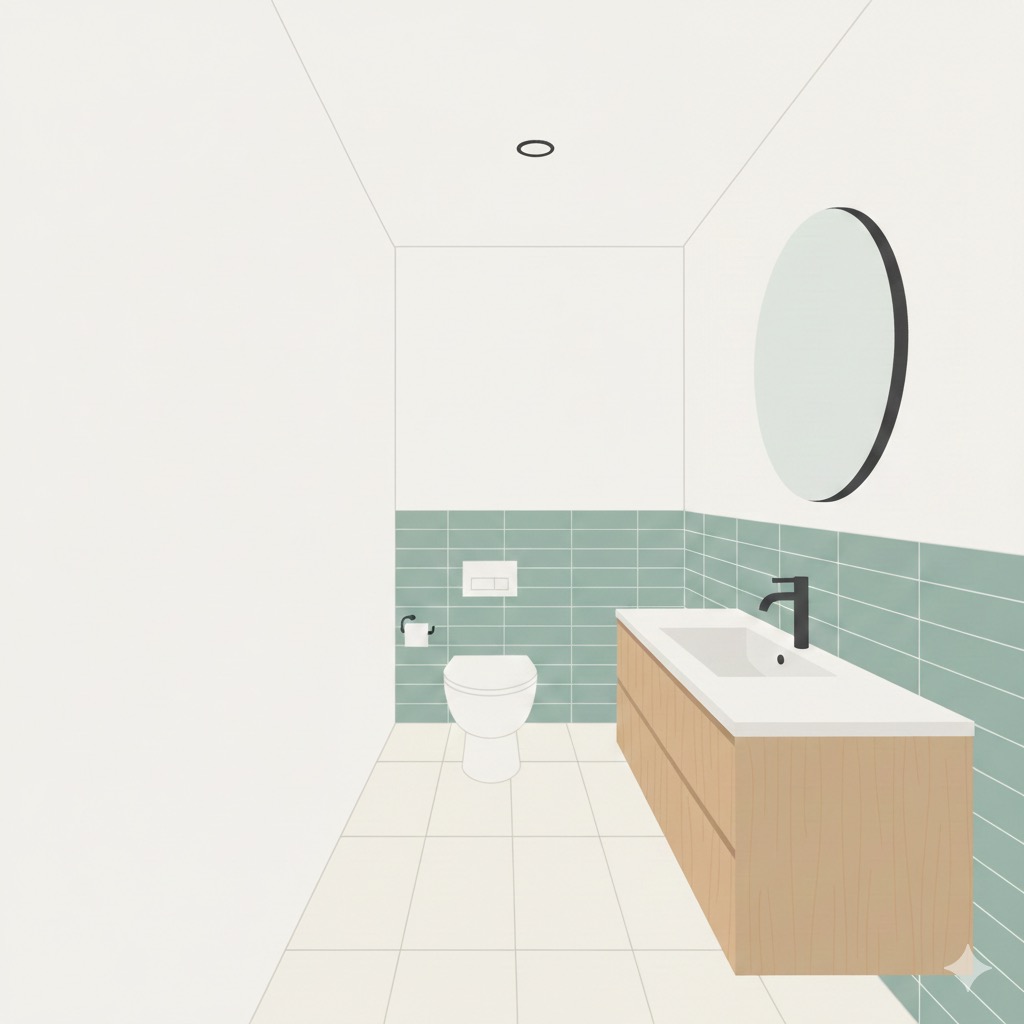
The floor in this bathroom uses small, dark tiles. This is a smart choice for narrow spaces. Small tiles provide better grip, which is important in wet areas. They also add texture without overwhelming the room.
Dark flooring helps visually ground the space. In a narrow bathroom, lighter floors can sometimes show dirt easily and feel too bright. Dark tiles create a strong base that supports the lighter walls and fixtures.
Make sure the floor tile is slip-resistant and durable. Bathrooms see a lot of moisture and foot traffic. Porcelain or ceramic tiles are excellent options.
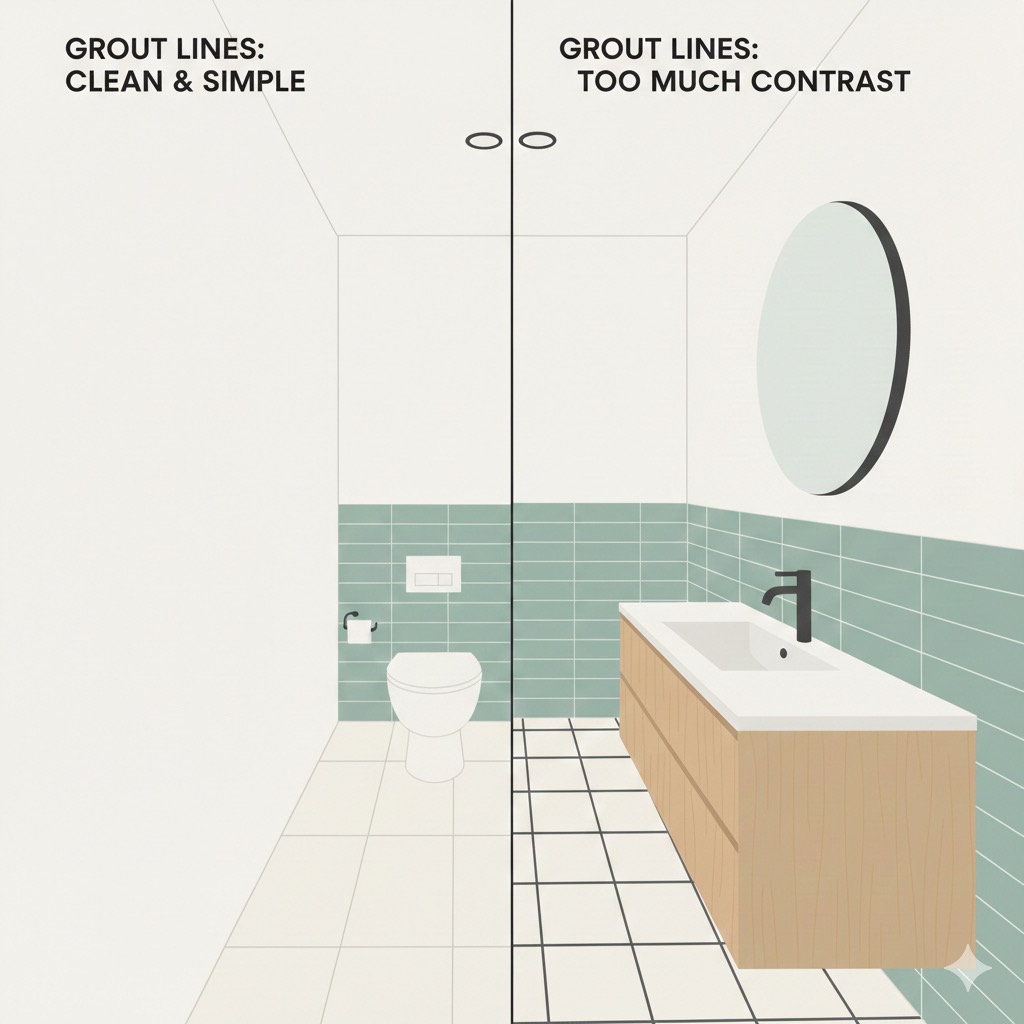
Keep grout lines clean and simple. Too much contrast in grout can make the floor feel busy. A grout color close to the tile color keeps the look smooth and modern.
5) Walls That Feel Tall and Clean
The walls in this bathroom are mostly wood, with tile used only where needed. This is a smart balance. Wood adds warmth, while tile protects areas exposed to water.
The wood panels run vertically, which visually stretches the height of the room. This is especially helpful in galley bathrooms where width is limited. Vertical lines naturally make spaces feel taller and more open.
Behind the bathtub and toilet, dark tile is used. This protects the wall and adds contrast. The tile does not go all the way to the ceiling, which keeps the space from feeling boxed in.
When planning wall finishes, think about where water will hit most. Use tile or waterproof materials in those areas, and softer materials elsewhere for comfort and style.
6) A Simple and Functional Vanity Design
The vanity in this bathroom is long, clean, and simple. It runs along one wall, offering plenty of storage without taking up too much space.
Flat-front drawers keep the look modern and uncluttered. The wood finish matches the walls, which helps the vanity blend into the space rather than stand out too much. This is important in narrow rooms. Large, bold cabinets can make the space feel crowded.
The countertop is light-colored, likely quartz or stone. This adds brightness and contrasts nicely with the wood. The sinks are simple rectangular basins that sit neatly on the counter.
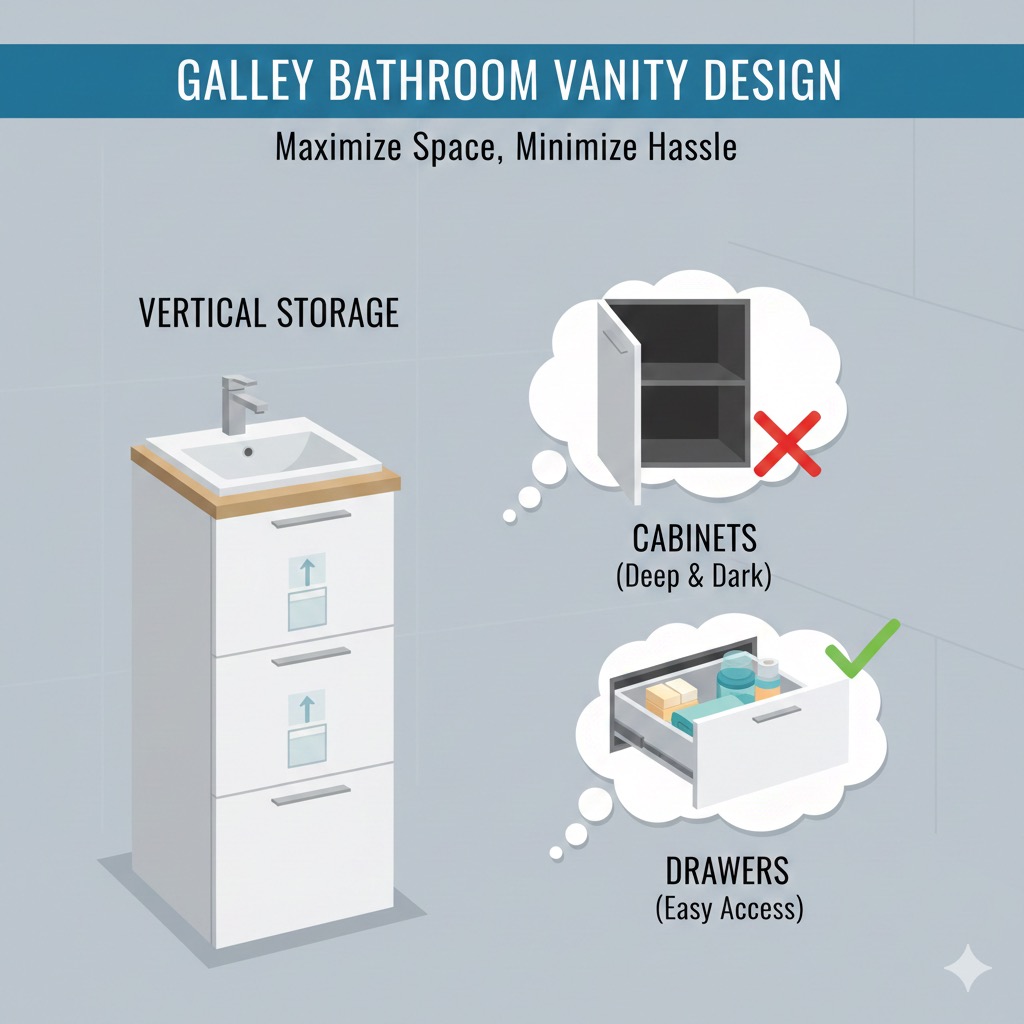
When designing a galley bathroom vanity, focus on storage that goes vertical instead of deep. Drawers are often better than cabinets because they are easier to access in tight spaces.
7) Double Sinks Without the Clutter
Even though the bathroom is narrow, it includes two sinks. This works because the vanity is long and slim. The sinks are evenly spaced, and the counter area between them remains clear.
Having two sinks can make a bathroom feel more luxurious and functional, especially for shared spaces. The key is keeping everything minimal. No bulky hardware or oversized basins.
Wall-mounted faucets or simple deck-mounted faucets help keep the counter clean. Less clutter means the bathroom feels larger and easier to use.
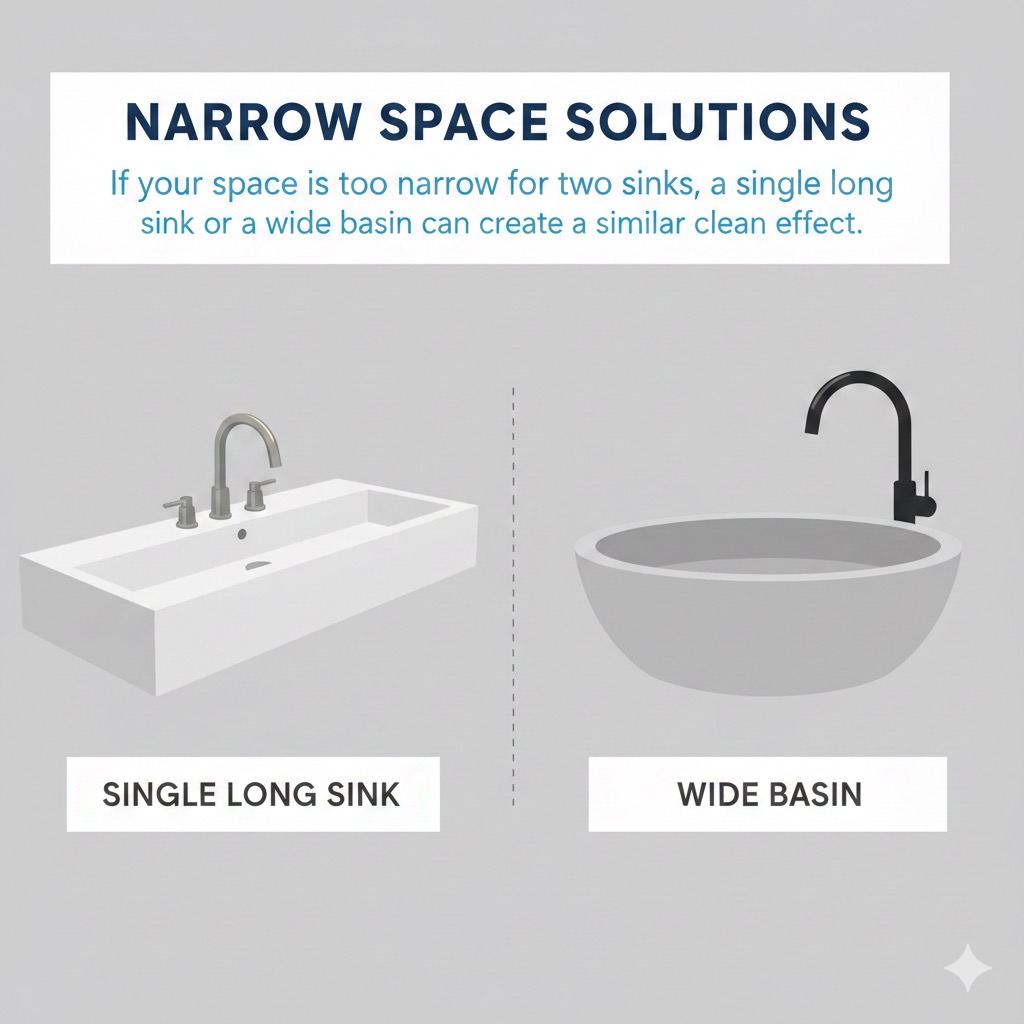
If your space is too narrow for two sinks, a single long sink or a wide basin can create a similar clean effect.
8) Smart Placement of the Bathtub
The bathtub is placed along one side of the room, parallel to the vanity. This keeps the layout balanced. The tub has clean, straight edges and a simple shape.
A built-in bathtub works well in galley bathrooms because it saves space and looks tidy. There are no extra legs or curves to block movement.
The tub is positioned under a window, which adds natural light and creates a relaxing bathing experience. Natural light makes any bathroom feel larger and more inviting.
When installing a tub in a narrow space, make sure there is enough clearance to move comfortably around it. Keep edges clean and avoid unnecessary details.
9) Letting Natural Light Do the Work
Natural light is one of the most powerful tools in this bathroom. Large windows at the end and side of the room bring in daylight and connect the space to the outdoors.
In narrow bathrooms, windows placed at the end of the room can visually extend the space. Your eye is drawn forward, making the room feel longer and more open.
Black or dark window frames add contrast and match the dark tile and fixtures. They also frame the outdoor view nicely.
If privacy is a concern, use frosted glass or place windows higher on the wall. Natural light is still able to enter without sacrificing comfort.
10) Lighting That Feels Soft and Intentional
Artificial lighting in this bathroom is simple and well-placed. Wall-mounted lights near the vanity provide focused light for daily tasks. The fixtures are minimal and dark, blending into the overall design.
Avoid large or decorative lighting in narrow bathrooms. Simple fixtures keep the space clean and calm.
Warm light tones work best with wood finishes. They enhance the natural warmth and make the bathroom feel cozy rather than clinical.
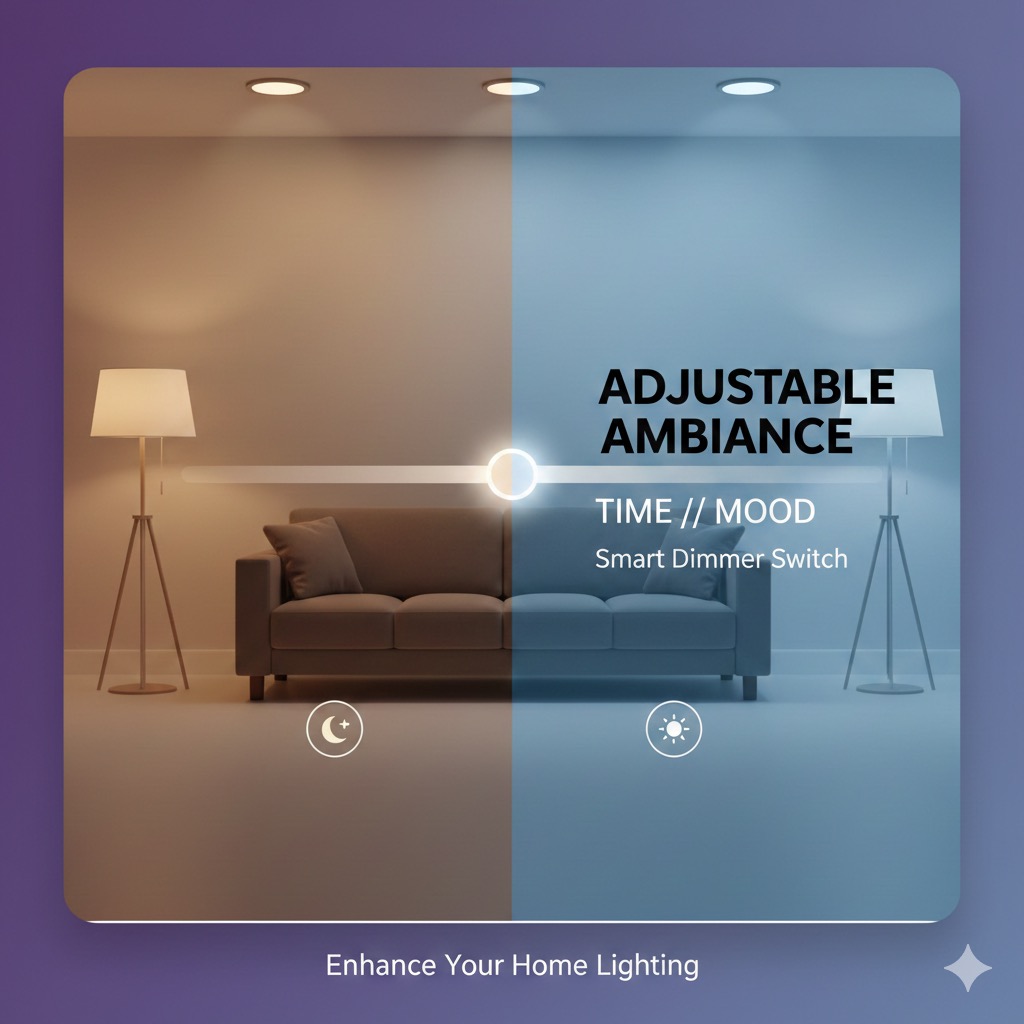
Consider adding dimmers so the lighting can change depending on the time of day or mood.
11) Keeping the Ceiling Warm and Interesting
The ceiling in this bathroom is also finished in wood, with visible beams. This is a bold choice that works beautifully here.
Wood ceilings add depth and character. They also help create a feeling of enclosure without being heavy. In a narrow space, matching the ceiling to the walls can make everything feel connected.
The exposed beam adds subtle structure and interest without overpowering the room.
If a full wood ceiling is not possible, wood-look panels or even a wood-toned paint can create a similar effect.

12) Minimal Hardware and Fixtures
Every fixture in this bathroom is simple and modern. Faucets, handles, and accessories are clean-lined and understated.
Black or dark hardware works well with wood and dark tile. It adds contrast without being flashy.
Avoid shiny or overly decorative pieces. In a galley bathroom, simplicity is key. The fewer visual distractions, the larger the space feels.
Choose quality fixtures that will last. Because the design is simple, each element stands out more.
13) Storage Without Visual Clutter
Storage is built into the vanity, which keeps everything hidden. There are no open shelves or bulky cabinets.
In narrow bathrooms, closed storage is often better. It keeps the room looking tidy and calm.
If extra storage is needed, consider recessed cabinets or slim wall-mounted units. Always think about how storage affects movement and sightlines.

14) a Calm, Spa-Like Feeling
The overall feeling of this bathroom is calm and grounded. This comes from the natural materials, simple colors, and thoughtful layout.
There is nothing extra her No unnecessary decorations, no busy patterns. Every choice supports comfort and ease.
A galley bathroom does not need to feel tight or boring. With the right design, it can feel like a private retreat.
Final Thoughts on Building a Galley Bathroom
Building a galley bathroom is about balance. You balance function with beauty, simplicity with warmth, and efficiency with comfort.
By using natural materials, keeping the layout clear, and limiting visual noise, you can turn even the narrowest bathroom into a space that feels open and relaxing.
This interior shows that small or narrow does not mean limited. With smart choices, it can mean focused, intentional, and beautiful.