
Mid-century modern design has been around since the 1940s and 1950s, and yet here we are, still obsessed. You would think after decades of use, people would have grown tired of it. But no. The clean lines, the organic shapes, the celebration of natural materials — it just keeps working. And when you add warm tones into that equation, it stops being just a design style and starts feeling like a mood. A very good one.
The version of mid-century modern that most people picture tends to lean cool. Lots of white walls, grey sofas, and furniture that looks like it belongs in a corporate lobby. That interpretation is clean, yes. Comfortable? That depends on your personality. But warm-toned mid-century modern is something completely different. It wraps you in color the way a good sweater does. It makes a room feel like it was meant to be lived in, not photographed for a furniture catalogue and then abandoned.
This blog post is about 16 distinct ways to bring warm tones into a mid-century modern interior. Not one look, sixteen. Because the style is flexible enough to hold all of them, and you deserve options.
1. The Terracotta Living Room
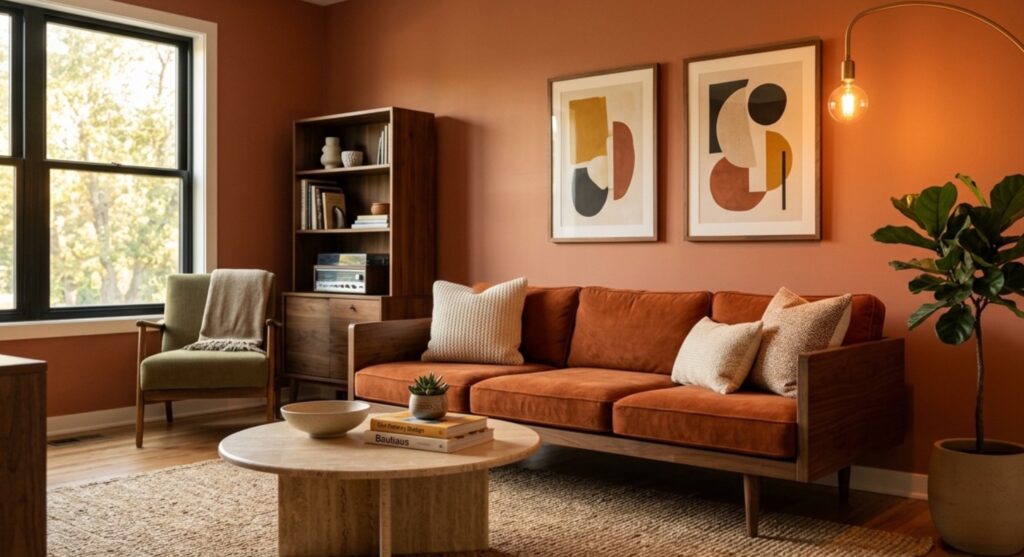
Terracotta is one of those colors that sounds like a trend but behaves like a classic. In a mid-century modern living room, it works because it is essentially the color of the earth, and mid-century design has always had a deep respect for natural materials. When you paint a living room in terracotta and pair it with walnut wood furniture, the combination feels grounded in a way that is genuinely hard to achieve with cooler colors.
This kind of room works best when the furniture is kept low and horizontal. A long, low sofa with tapered legs. A sideboard that hugs the wall rather than reaching for the ceiling. Coffee tables that sit close to the floor. Everything has a calm, settled energy. Then the terracotta walls bring warmth from above and behind, making the whole room feel like it is glowing from the inside. Throw in some cushions in rust or burnt orange, a jute rug, and a simple pendant light in rattan, and you have a room that feels incredibly complete without trying too hard.
The secret is to let the color do the work. Terracotta is bold enough that you do not need to stack pattern on top of pattern. A few clean shapes, a couple of carefully chosen art prints, and the room essentially styles itself.
2. The Mustard Yellow Accent Wall
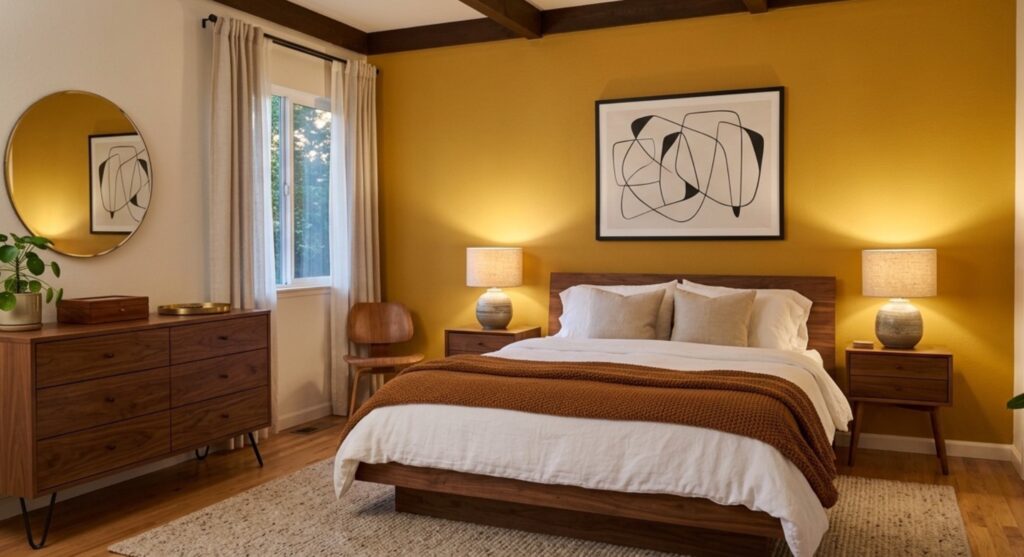
Mustard yellow is the color that separates the bold from the cautious. It is not yellow-yellow. It is deeper, richer, and it has this quality of making everything near it look more expensive. On an accent wall behind a platform bed or a seating area, it creates an instant focal point that feels deliberately designed rather than accidentally chosen.
In a mid-century modern space, mustard yellow pairs beautifully with dark walnut wood and matte black metal accents. The warm depth of the yellow against the rich brown of the wood creates a color relationship that feels vintage in the best possible way. It echoes those beautiful old interiors from the 1960s design magazines, where color was treated as something exciting rather than something to fear.
You do not need to do the whole room. One wall is enough. Let the other three walls stay neutral — a soft white or a warm cream — and allow the mustard to lead the conversation. The furniture does not need to match the wall; it needs to complement it. Walnut tones, olive green accents, and a few pieces with that signature mid-century silhouette are all you need to make the whole thing click.
3. The Caramel Leather Lounge
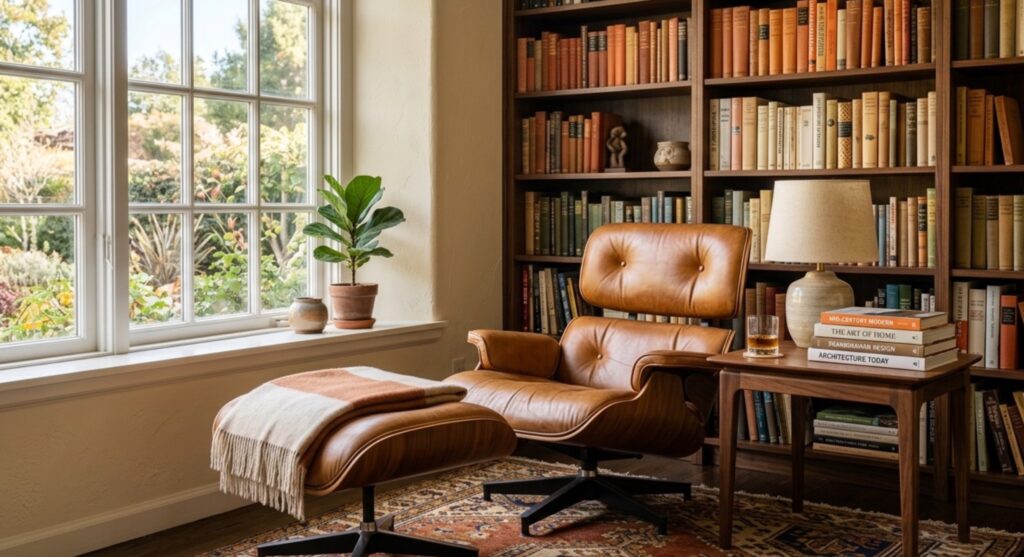
Caramel leather and mid-century modern design have a relationship that goes back to the very beginning of the style. The classic lounge chair silhouette, with its reclined back and generous cushioning, was basically designed to be covered in leather that looks exactly like this. Rich, warm, and slightly broken in.
A caramel leather lounge chair in a corner of a room does more than provide seating. It creates an atmosphere. It says that this is a space where you can genuinely relax, where comfort was considered as carefully as aesthetics. Pair it with a brass arc floor lamp and a low side table, and you have a reading corner that people will want to sit in for hours.
The genius of caramel leather in a warm-toned mid-century space is that it ages beautifully. It does not stay perfect and pristine. It softens, it picks up light differently over time, it develops a patina that makes it look even better as the years go by. In a design style built around honest materials and functional beauty, that kind of aging is not a problem. It is the point.
4. The Warm Wood Dining Room
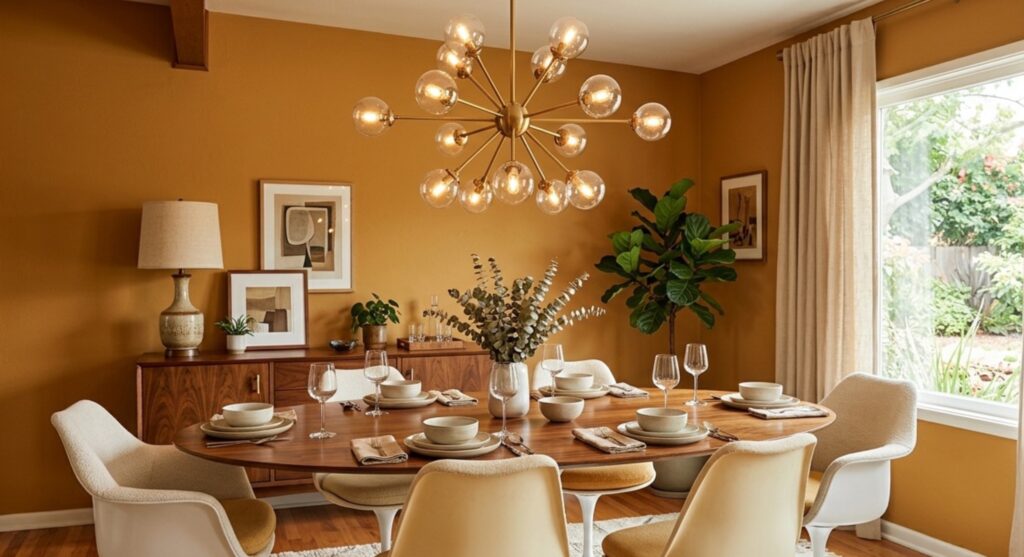
Dining rooms in warm-toned mid-century spaces have one job: make people want to linger at the table longer than they planned. A long oval table in rich walnut wood, surrounded by chairs with a little cushion and a lot of personality, does exactly that. This is not a dining room where you eat and immediately leave. It is a room that holds you.
The warmth comes from the wood first. Walnut has a depth of grain and a range of warm brown tones that no painted surface can replicate. When you build a dining room around a piece of walnut furniture, everything else can be relatively simple. The chairs can be in a warm ivory or cream. The walls can stay in a soft amber or honey tone. A statement chandelier, ideally in brushed gold or aged brass, ties everything together and gives the room its punctuation mark.
What makes this dining room distinctly mid-century is the restraint in the silhouette. Clean lines on the table legs. No ornate carving or fussy decoration. The beauty is in the material itself, not in what has been done to it. And with warm tones layered throughout, the result is a dining room that feels both sophisticated and completely welcoming.
5. The Olive Green and Walnut Study
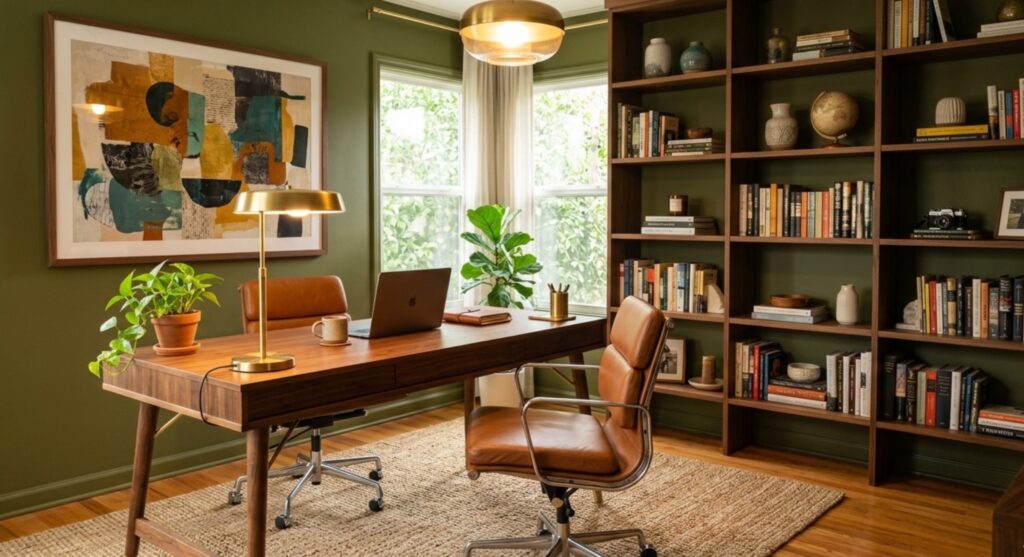
Studies and home offices have a tendency to end up looking like punishment rooms. Too much grey. Too much cold metal. The kind of lighting that makes you feel like you are filing a tax return rather than doing creative work. The olive green and walnut study is the antidote to all of that.
Olive green is a warm neutral that does not announce itself loudly but completely changes how a room feels. On the walls of a study, it creates a sense of focus and calm that is very different from the clinical brightness of a white-walled office. It reads as serious without being severe. Smart without being cold. Paired with the rich brown of walnut wood shelving and a desktop, it creates a workspace that feels like a place where good thinking actually happens.
The furniture in this kind of study is simple but intentional. A desk with clean lines and tapered legs. A chair with real leather in a warm cognac tone. Open shelves that hold books and a few carefully chosen objects. A brass lamp that gives the desk its warm circle of light. No clutter, no unnecessary pieces, just everything you need and nothing you do not. It is the kind of study that makes you want to sit down and actually do the work.
Want to plan your next room makeover, we have something for you, our room makeover planner is for anyone who wants to start a room decor project while staying on budget?
6. The Rust and Cream Bedroom
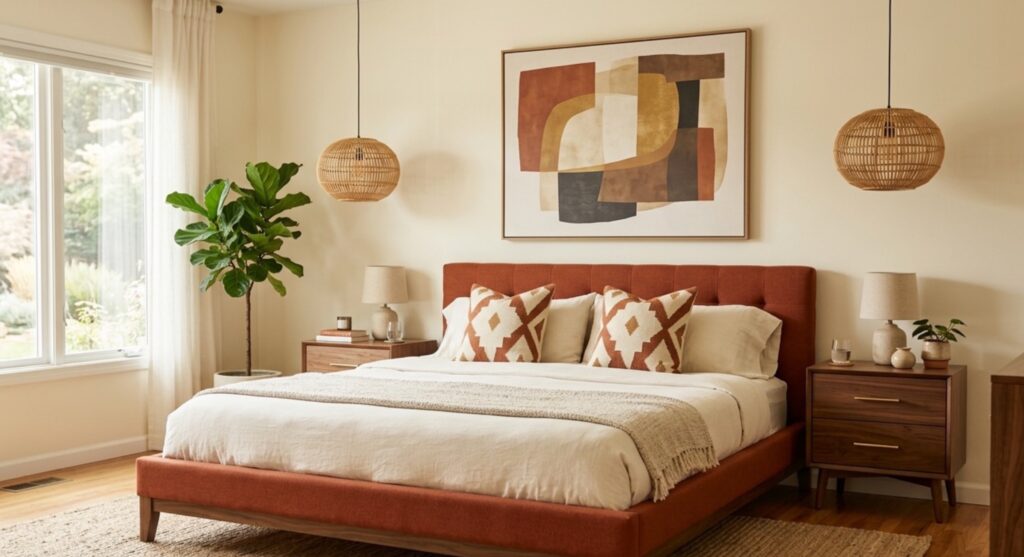
Bedrooms in warm-toned mid-century interiors are built around one idea: that a bedroom should feel like the most comfortable room in the house, not the most decorated one. The rust and cream combination delivers on that promise in a way that feels both personal and considered.
Rust as an upholstery color on a platform bed is a bold choice, but it is the kind of bold that makes perfect sense once you see it. It grounds the bed as the anchor of the room without making the space feel heavy or oppressive. The cream walls around it keep things light. The walnut nightstands carry the warm wood tone through. And the rattan pendant lights add just enough texture to prevent the room from feeling flat.
What this bedroom does particularly well is the layering of warm tones. Rust and cream and walnut and rattan are all in the same warm family, but they are different enough that the room has depth. It is not monochromatic. It is harmonious. There is a difference, and that difference is what makes the room feel genuinely designed rather than just decorated.
7. The Amber-Lit Open Plan Space
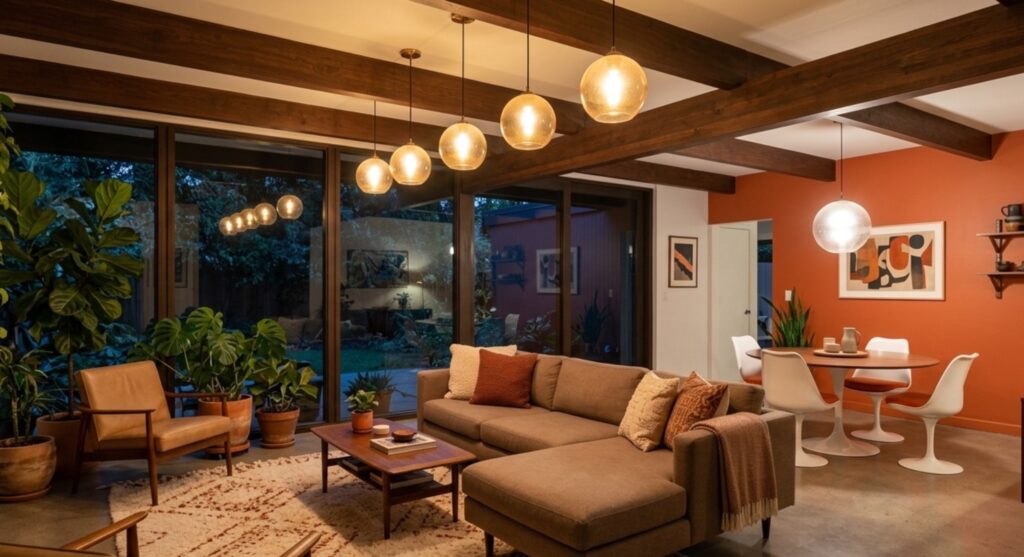
Lighting is often treated as an afterthought, the thing you figure out after all the furniture is in place. In a warm-toned mid-century modern space, that approach is backwards. Lighting is actually the tool that ties all the warm tones together and makes the whole room feel cohesive.
Amber-toned lighting, the kind that comes from Edison bulbs, warm-white LEDs, or a beautiful series of globe pendants, transforms an open-plan space in the evening. During the day, natural light does the work. When the sun goes down, the amber lighting picks up the warm tones in the furniture, the walls, and the floors, and the whole space seems to glow. It is the equivalent of a filter applied to reality, except you actually live inside it.
In an open-plan mid-century modern interior, the lighting plan needs to account for multiple zones. The seating area might have a floor lamp and a low pendant. The dining area needs an overhead fixture that feels centered and intentional. The kitchen, if visible, needs warm undertones in its own task lighting. When all of these are in the same warm amber register, the open plan reads as one connected space rather than three separate rooms awkwardly sharing a floor plan.
8. The Earthy Sunken Living Room
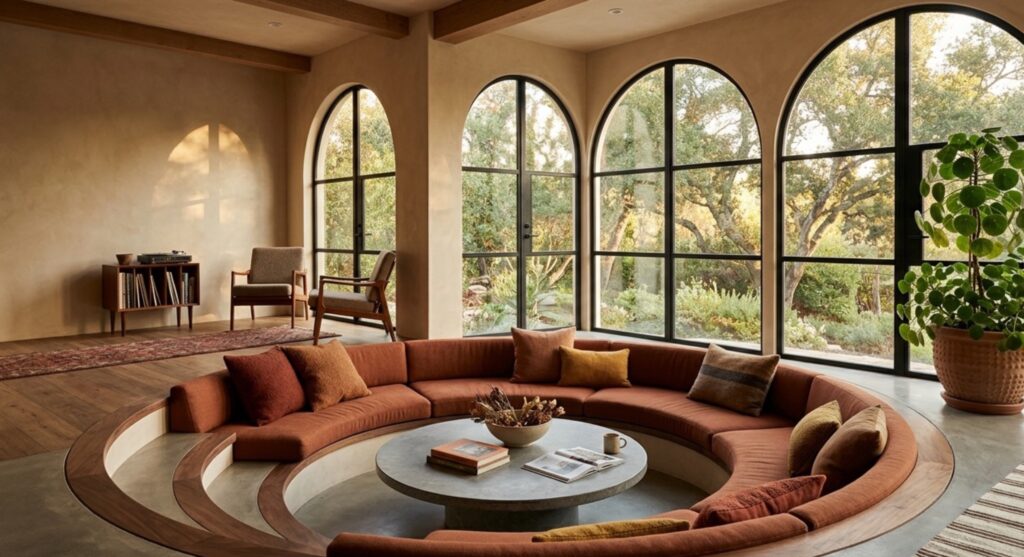
The sunken living room is perhaps the most dramatic idea in this entire list, and it belongs in a mid-century modern interior the way a good plot twist belongs in a novel. It completely changes the experience of being in a space without changing the square footage at all.
The sunken pit creates a sense of enclosure and intimacy that a flat floor simply cannot achieve. You step down into the conversation area, and suddenly the rest of the room recedes. You are in your own contained world, surrounded by cushioned seating and warm earthy tones. It is the architectural equivalent of being held.
In warm tones, the sunken living room leans into this cozy energy even further. Terracotta or rust-colored cushions on the seating. Walnut wood on the step edges. A round stone or travertine coffee table at the center. A few oversized plants at the perimeter. The warmth of the colors combines with the intimacy of the layout to create a room that makes you want to cancel your plans and stay home instead.
9. The Blush and Brass Powder Room
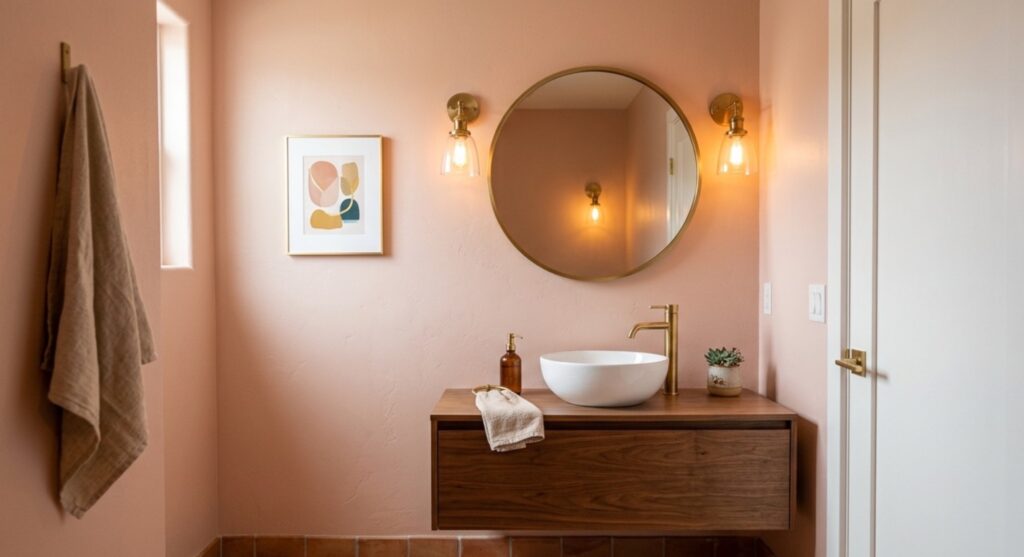
Powder rooms are small. They are visited briefly. And because of this, people often treat them as an afterthought. That is a mistake, and the blush and brass powder room is the proof that getting it right is worth the effort.
A small room with warm blush pink walls and brushed brass fixtures is the kind of space that makes guests pause before leaving. Not because it is over-decorated, but because it is perfectly weighted. Everything in it earns its place. The brass mirror. The walnut vanity. The terracotta floor tile that grounds all that pink.
In mid-century modern terms, the powder room is a space where you can take risks that would feel too bold in a larger room. A strongly colored wall, a statement mirror, a dramatic tile pattern on the floor. The small scale means the choices are contained, so they read as curated rather than chaotic. Blush and brass in this context is not sweet or overly feminine. It is warm, confident, and a little bit glamorous.
10. The Honey Oak Kitchen
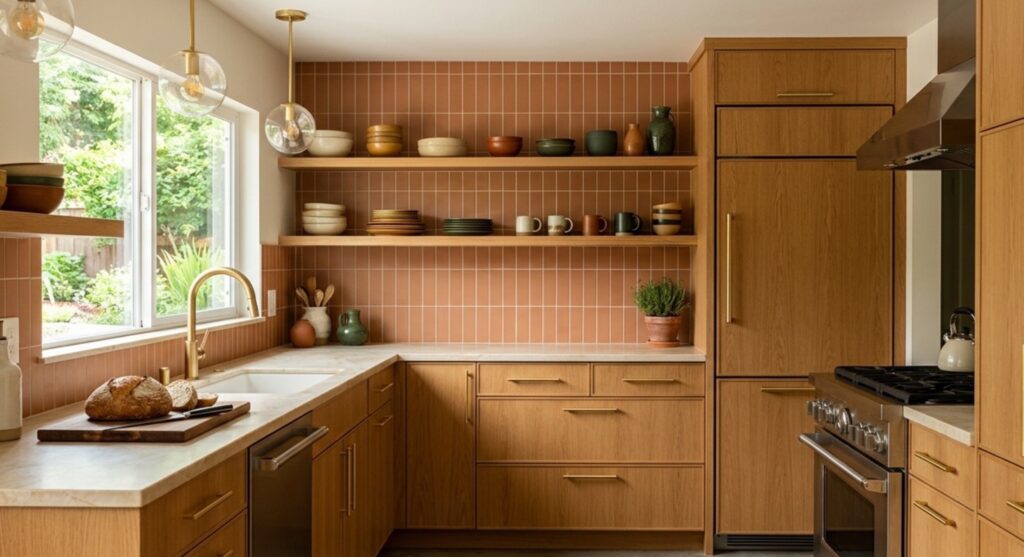
Oak had a long moment out of fashion. For years, kitchens went blonde-oak-free as hard as they could, choosing painted cabinetry in white or grey instead. And then something shifted. People realized they missed the warmth. They missed the grain. They missed the way natural wood makes a kitchen feel like a place where food is actually made, not just plated and photographed.
Honey oak cabinetry in a mid-century modern kitchen brings that warmth back in a way that feels current rather than dated. The key is in the style of the cabinet doors, flat-front panels with clean lines and minimal hardware, that align with mid-century principles. The hardware should be in brushed gold or brass. The countertops should be warm in tone, a cream stone or a honed travertine. The backsplash can introduce a subtle pattern in terracotta or warm ivory tile.
What this kitchen avoids is the busy, fussy quality of over-designed spaces. There are no elaborate crown moldings or decorative flourishes. Just the honest beauty of warm wood grain, good proportions, and quality materials. It is a kitchen that says, quietly but clearly, that the people who live here know what they are doing.
11. The Sienna Velvet Sofa Room
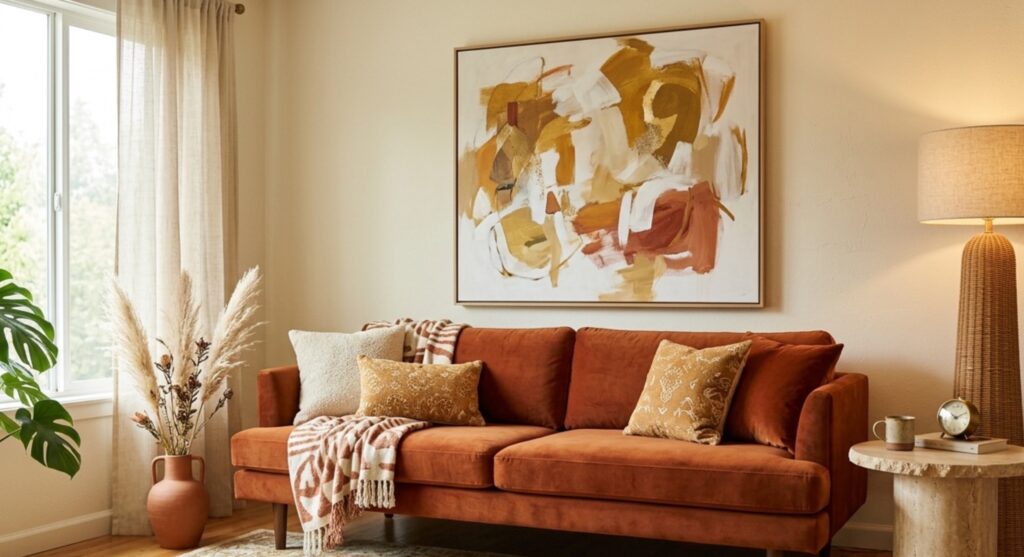
If there is one piece of furniture that defines the warm-toned mid-century modern aesthetic better than any other, it is a velvet sofa in a deep, saturated warm color. Sienna. Burnt orange. Ochre. These are the colors that make a sofa feel like an event.
The silhouette matters enormously here. The sofa should be long and low, with a back that does not reach much above shoulder height when seated. The legs should be in walnut wood, tapered to a point. The cushions should be deep enough to really sink into. When you get all of that right, and cover it in sienna velvet, the sofa becomes the most important object in the room.
Everything else in the space should support the sofa rather than compete with it. Cream walls. A travertine or stone coffee table. A few carefully placed ceramics in complementary earth tones. A rug that picks up the warm tones without duplicating them exactly. The result is a living room where the sofa is not just seating but a statement about how seriously this household takes the business of being comfortable.
12. The Warm Minimalist Entryway
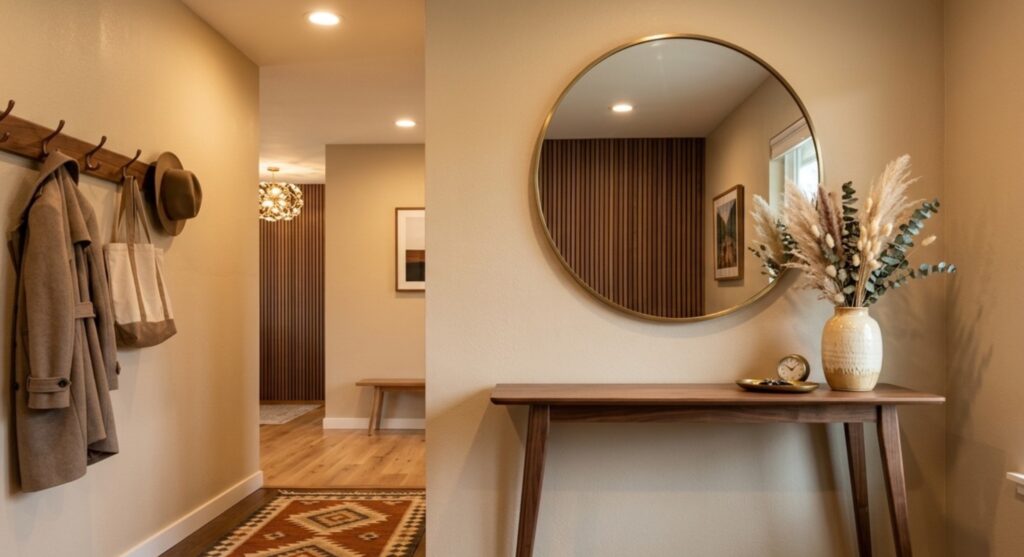
First impressions are made in the entryway, and a warm minimalist one does something remarkable. It makes you feel like you have arrived somewhere that was designed with care. Not overdone, not cluttered, just right.
In warm-toned mid-century terms, the entryway is about a slim console table, a beautiful mirror, and very little else. The table should have tapered legs and a grain that shows. The mirror should be large enough to feel intentional, ideally round with a brass or wooden frame. A single vase with dried stems. A runner rug that introduces warmth and pattern at floor level. Nothing more.
The warm sand or honey tone on the walls sets the temperature of the whole house from the moment the front door opens. It is the first color a visitor sees, and it tells them immediately what kind of place this is. A warm, considered, calm home. Not a showroom. Not a magazine set. A place where real life happens at a very attractive temperature.
13. The Travertine and Walnut Bathroom
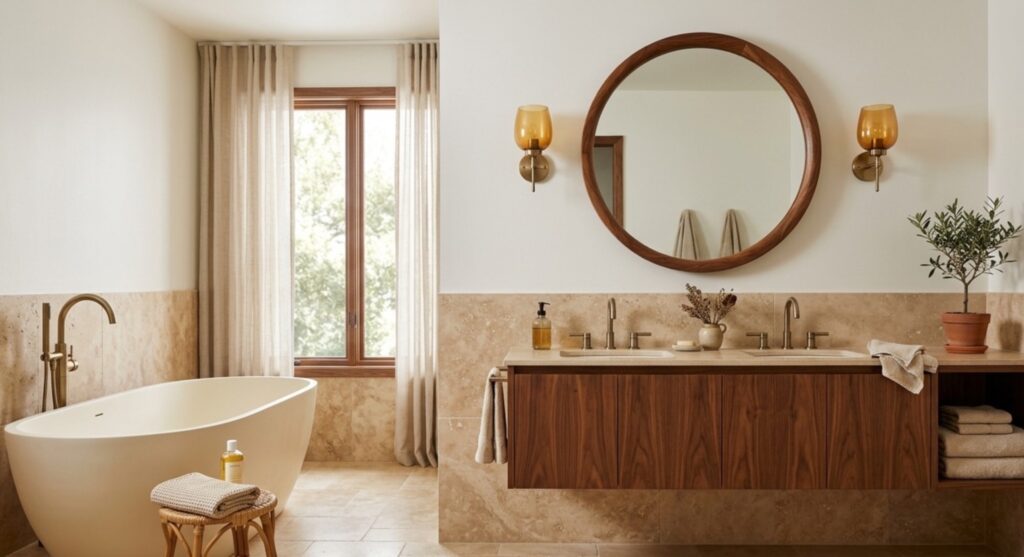
Bathrooms have a long history of defaulting to cold. White tiles, chrome taps, fluorescent lighting. The travertine and walnut bathroom says goodbye to all of that and replaces it with something genuinely luxurious.
Travertine stone, with its warm creamy beige tones and natural veining, is one of the most beautiful materials you can put on a floor or a wall. It absorbs light in a way that ceramic and porcelain cannot replicate. It has history and weight and a kind of natural beauty that makes a bathroom feel like a retreat rather than a utility space.
Pair it with floating walnut cabinetry, brushed brass fixtures, and warm amber lighting, and the bathroom becomes one of the most luxurious rooms in the house. The mid-century modern influence comes through in the clean lines of the vanity, the simple silhouette of the mirror, and the absence of unnecessary ornamentation. This is luxury through material quality and good proportion, not through fuss.
Wrapping It All Up
Mid-century modern design in warm tones is not a single look. It is a framework. A set of principles, including clean lines, natural materials, functional shapes, and a deep appreciation for good proportion, applied in different ways across sixteen different ideas. What ties all of these spaces together is not a specific color code or a furniture brand. It is a feeling. Warm, grounded, considered, alive.
Whether you are drawn to the drama of the sienna velvet sofa, the tranquility of the travertine bathroom, or the confidence of the monochromatic brown living room, the warm-toned mid-century modern aesthetic gives you permission to commit. To pick a color and mean it. To choose a material and trust it. To design a room that does not hedge its bets but goes all in on warmth.