
Warm, earthy, and endlessly stylish — here is everything you need to bring the terracotta trend into your living room with confidence.
Terracotta has been around since humans figured out that clay and fire were a great team. That was thousands of years ago. Yet somehow, every decade or so, the world remembers just how good this color looks in a living room and falls in love with it all over again. Right now, we are deep in one of those moments, and for good reason.
This warm, earthy shade sits somewhere between orange and brown, and it has a magical ability to make any room feel both cozy and stylish at the same time. It is the color of sun-baked clay pots, Moroccan tiles, Italian hilltop villages, and that perfect cup of chai on a rainy afternoon. In short, it has character. Your living room could use some of that.
Whether you are thinking about painting an accent wall, redecorating with new textiles, or doing a full room refresh, there is a terracotta idea in this list for you. We have pulled together 14 genuinely beautiful approaches to using terracotta in a living room, from bold and dramatic to soft and subtle.
So grab a coffee, get comfortable, and let us get into it. Your living room called. It wants warmth.
1. The Full Terracotta Feature Wall
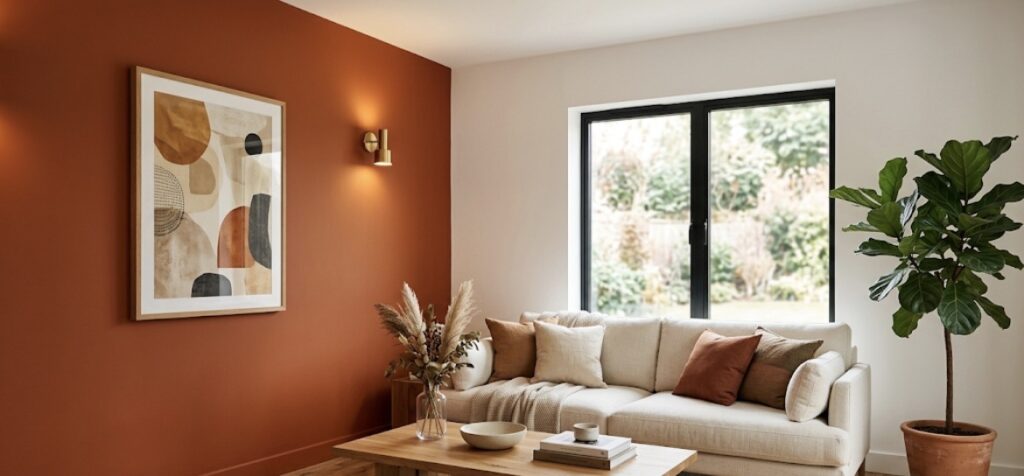
If you are the kind of person who believes that going halfway is not really going at all, then a full terracotta feature wall is your starting point. This means painting one entire wall, typically the one behind your sofa or the fireplace wall, in a deep, rich terracotta shade and letting it do all the talking.
The key to pulling this off without it feeling like a pottery studio is to balance the wall with calm, neutral tones everywhere else. Think of off-white or cream for the other walls, soft grey or beige for the sofa, and natural wood tones for the coffee table and shelves. The terracotta wall becomes the focal point, and everything around it exists to support it rather than compete with it.
Finish is everything here. A flat or matte paint finish gives the wall a dusty, organic look that feels very intentional and very on-trend. If you want something a little more interesting, consider a limewash or color wash finish, which creates subtle variation in the paint and makes the wall look like it belongs in a Tuscan farmhouse. In a very good way.
Keep wall decor on this feature wall minimal. A single large piece of artwork in earthy tones, a woven wall hanging, or a cluster of ceramic plates in complementary shades works beautifully. Avoid anything too busy or colorful, because the wall itself is already making a statement, and it does not need the competition.
2. Terracotta Through Textiles Only
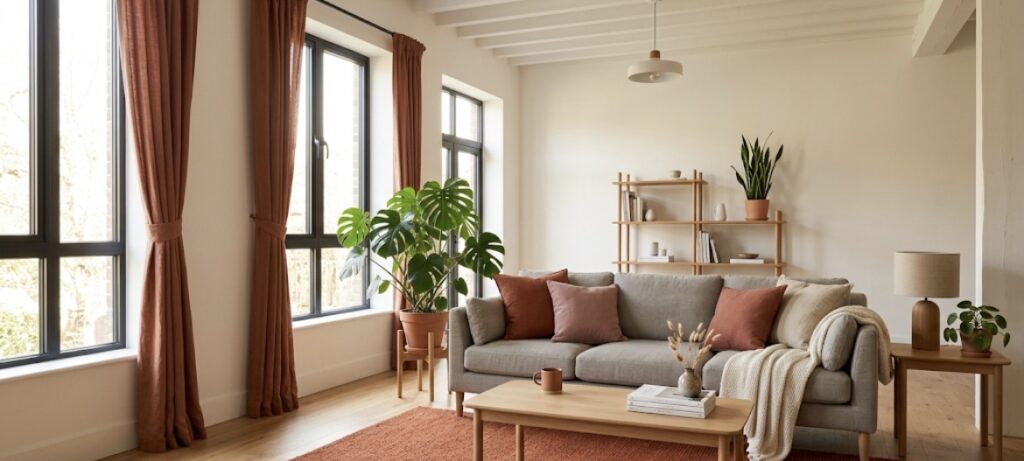
Not everyone is ready to commit to paint, and that is perfectly reasonable. One of the most accessible ways to bring terracotta into your living room is through textiles, which means cushions, throws, rugs, and curtains. The beautiful thing about this approach is that it is completely reversible, extremely affordable, and still delivers a big visual impact when done right.
Start with a statement rug in a terracotta shade. A large rug in a warm burnt orange anchors the seating area and immediately shifts the color palette of the whole room. You do not need to change anything else for it to feel like a transformation. From there, add cushions in coordinating tones. Mixing terracotta with dusty pink, olive green, and warm cream in your cushion selection creates a layered, thoughtful look that feels curated rather than color-blocked.
Curtains in a terracotta linen or cotton are another high-impact addition. Full-length linen curtains in a warm rust or terracotta shade add incredible warmth and softness to a space, especially in rooms that get a lot of natural light, where the fabric seems to glow from within. Pair them with a brass or gold curtain rod and you have an instantly elevated look.
Throws are the easiest entry point of all. Drape a chunky knit throw in terracotta over the arm of a neutral sofa, and you have introduced the color without any commitment whatsoever. This is the interior design equivalent of dipping your toe in before diving. Highly recommended for anyone who is still deciding.
3. Terracotta and White: The Classic Contrast
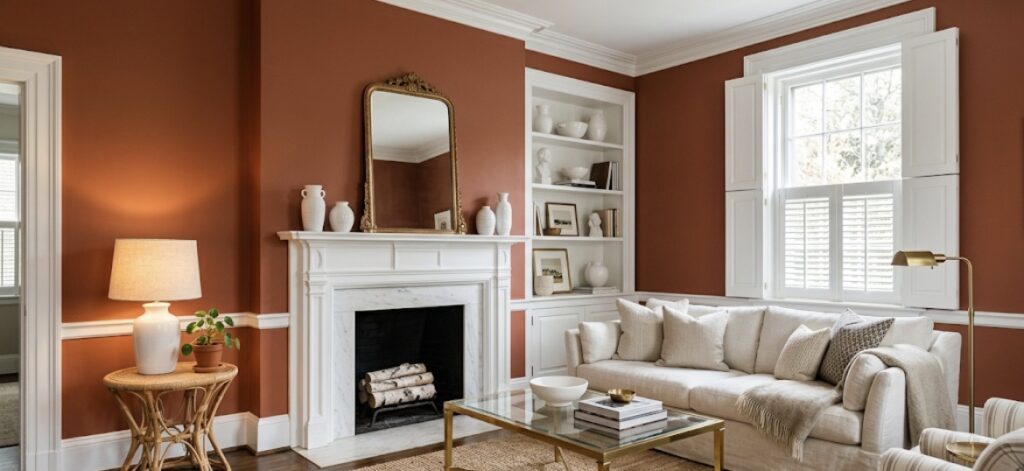
There are certain color pairings in interior design that are so good they feel like they were decided by the universe rather than anyone in particular. Terracotta and white is one of them. The crisp brightness of white gives terracotta somewhere to breathe and be fully appreciated, while the warmth of terracotta stops white from feeling cold or sterile.
In a living room, this pairing works beautifully as terracotta walls against white trim, skirting boards, and ceiling. The contrast between the two creates a clean, structured look that still feels warm and inviting. It is particularly effective in rooms with original architectural features, because the white trim highlights the details while the terracotta walls add depth and richness.
You can also flip the script and keep the walls white while introducing terracotta through furniture. A terracotta-upholstered armchair or a burnt orange sofa against a white wall is a striking combination that manages to feel both bold and fresh at the same time. Add white ceramics, white candles, and white-framed artwork, and the terracotta pieces stand out like the confident main characters they are.
Accessory choices matter a lot in this palette. Natural materials like rattan, jute, and unbleached linen bridge the gap between the two colors and add texture. Avoid chrome or anything too industrial, which can break the warmth of the combination. Brass and warm gold work much better here.
4. The Terracotta and Green Botanical Living Room
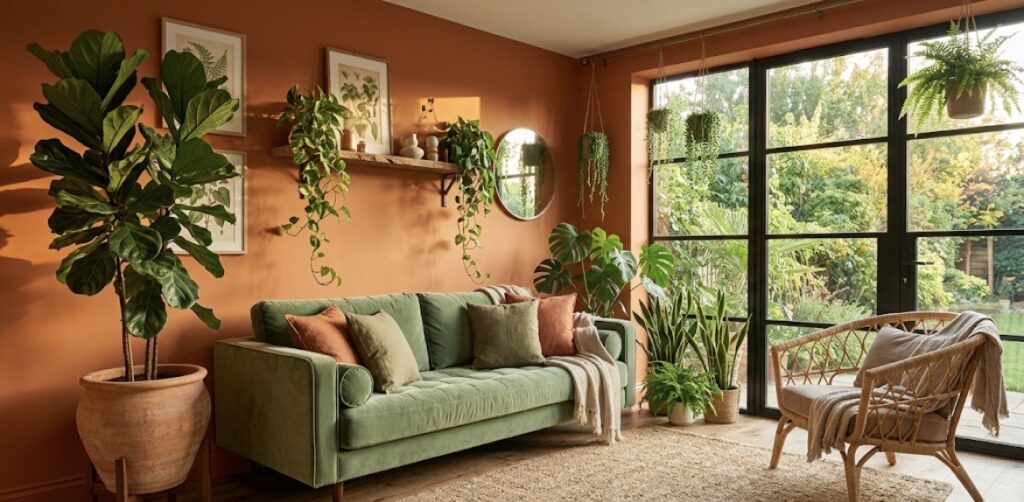
If you want your living room to feel like the most beautiful greenhouse that also happens to have a sofa in it, then terracotta and green is the palette for you. These two colors are naturally at home together because, well, they are literally found together in nature. Think of a terracotta pot with a lush plant growing out of it. That is the entire mood.
The terracotta here can live on the walls, in the upholstery, or in decorative accessories, but it always works best when it is balanced by a genuine abundance of greenery. We are not talking about one small succulent on a shelf. We mean generous, layered plant styling, with larger floor plants like fiddle leaf figs or olive trees, medium plants on shelves and side tables, and trailing vines from hanging pots near the windows.
For the green elements that are not plants, olive green and sage green are the shades that work best with terracotta because they share that earthy, desaturated quality. A sage green linen sofa against a terracotta wall is one of the most beautiful combinations in contemporary interior design. Add a jute rug, some aged ceramic vases, and a wooden coffee table, and you have a room that looks like it came straight from a design magazine.
This style also pairs well with natural wood, wicker, and woven textures, all of which reinforce the organic, grounded feeling of the palette. If your living room has large windows or French doors that open onto a garden, this combination will create a seamless flow between inside and outside that feels genuinely special.
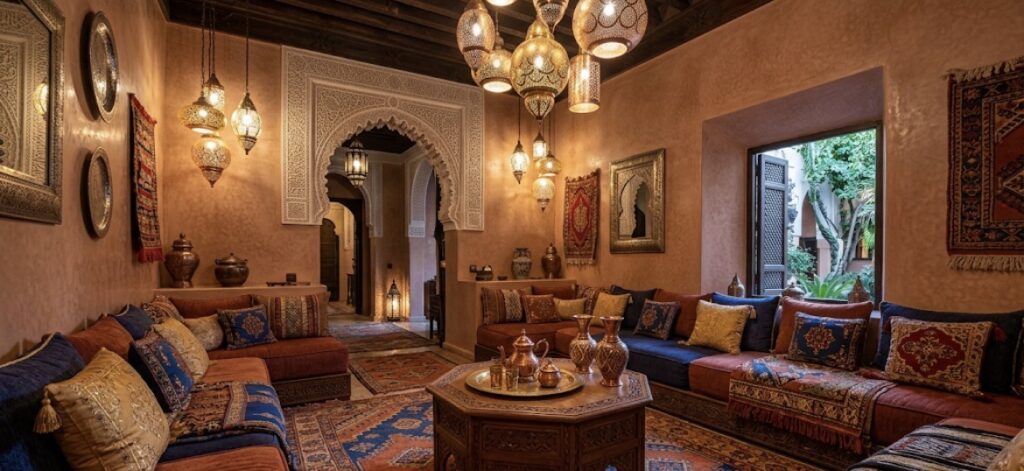
5. Moroccan styled Terracotta Living Room
Morocco has been doing terracotta right for centuries, and there is a very specific mood that comes with Moroccan-styled design that feels both exotic and enormously cozy. It is rich, layered, patterned, and warm in a way that makes you want to sit down, drink mint tea, and stay for several hours.
In a Moroccan-styled terracotta living room, the walls are typically a warm, medium terracotta that acts as a background for layered decorative elements. Geometric tile patterns, whether real or represented through patterned rugs, bring in the visual complexity that defines the style. A large area rug with an intricate geometric or medallion pattern in terracotta, gold, cobalt blue, and cream is a centerpiece that pulls the whole room together.
Furniture in this style tends to be low and floor-level, which gives the room a relaxed, lounge-like quality. Cushioned floor seating, low wooden coffee tables with carved or inlaid details, and plush poufs in leather or embroidered fabric are all perfect additions. Lanterns, both hanging and floor-standing, provide soft, patterned light that creates beautiful shadows on the terracotta walls in the evening.
Metallic accents in brass, copper, and hammered gold add glamour without going over the top. A hammered copper tray on the coffee table, brass pendant lights, and copper-colored candle holders bring the whole look together. The final touch is layering fabrics generously, mixing patterned and plain textiles in warm, spice-inspired shades like cinnamon, saffron, ochre, and deep plum alongside the terracotta.
6. Terracotta in a Minimalist Setting
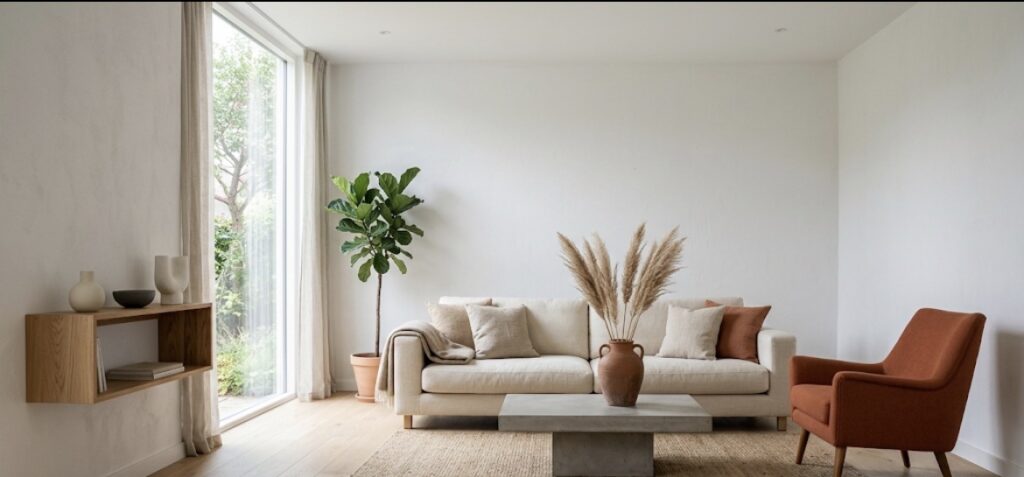
Minimalism and terracotta might sound like an unlikely pairing, but they actually work together extremely well when handled thoughtfully. The idea is to use terracotta as a single, considered accent in an otherwise spare and simple space, which allows the color to carry maximum visual weight without the room feeling overcrowded.
In a minimalist terracotta living room, you might have white or light grey walls, a simple neutral sofa, and very little in the way of decoration. But one element, perhaps a single terracotta-upholstered armchair, a large ceramic lamp in a warm burnt orange, or a small terracotta plaster wall section behind the fireplace, brings the whole palette to life. The restraint is the point.
Furniture should be clean-lined and functional, with no unnecessary embellishment. Think straight-leg sofas in neutral linen, simple rectangular coffee tables in concrete or light wood, and open shelving with carefully chosen objects rather than crowded displays. A handful of ceramic pieces, a small stack of books, and one beautiful terracotta vase is all the shelf styling you need.
The magic of this approach is that the terracotta feels intentional and precious rather than decorative. It is like placing a single perfect flower in a clean white room. The simplicity of everything else elevates the color and gives it room to be genuinely appreciated. If you tend toward a clean, uncluttered home but still want warmth, this is the version of terracotta that was made for you.
7. Terracotta Ceiling
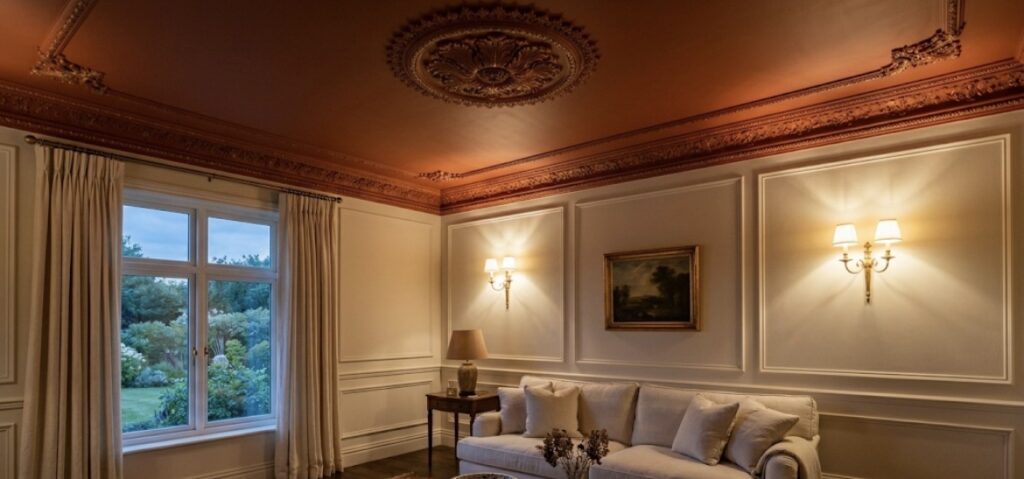
If the walls feel a bit obvious, take your eyes upward. Painting the ceiling in a rich terracotta shade is one of the most unexpected and genuinely impressive things you can do in a living room, and it creates a depth and drama that a wall simply cannot match. The ceiling becomes the defining feature of the room, and the effect when you walk in is honestly a little breathtaking.
A terracotta ceiling works especially well in rooms with lower ceilings, where the warmth of the color makes the space feel intimate rather than cramped. It also works beautifully in rooms with ceiling cornices or plaster moldings, because the terracotta color settles into those details and makes them look like they have always been there.
For the walls beneath a terracotta ceiling, keep things light. Pale cream, warm white, or a very soft blush all work well and stop the room from feeling too enclosed. The contrast between a light, airy wall and a warm, rich ceiling is what creates the interesting tension that makes this look so compelling.
Lighting choice is especially important when you have a terracotta ceiling. Wall sconces and floor lamps that direct light upward will cast a beautiful warm glow onto the ceiling and make the color even richer in the evening. Overhead lighting works too, but opt for warmer bulb temperatures to keep the cozy, amber atmosphere going after dark.
8. Terracotta and Navy Blue
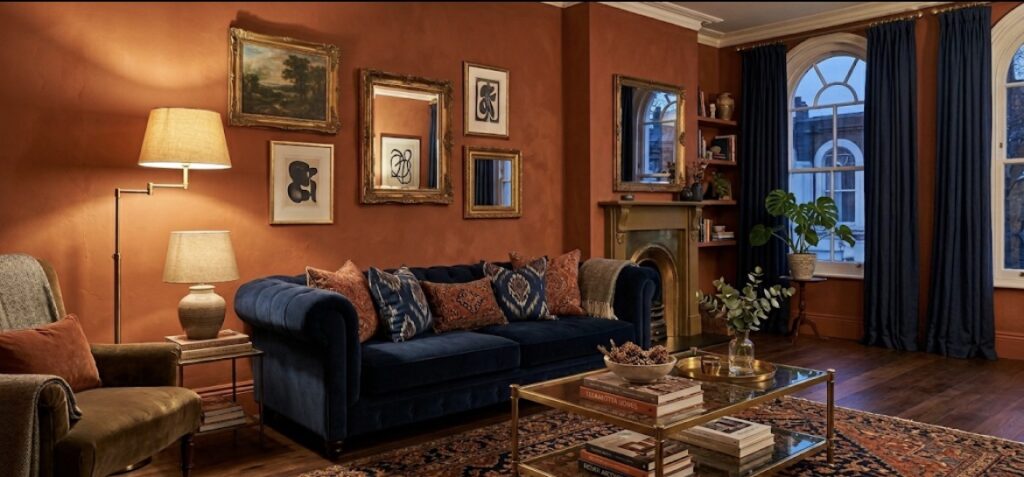
Terracotta and navy blue is a color combination that has no right to be as good as it is, and yet here we are. These two colors sit on opposite ends of the warm-cool spectrum, which is exactly why they create such a satisfying visual contrast when placed together. The navy grounds and cools the warmth of the terracotta, while the terracotta brings life and energy to the depth of the navy.
In a living room, you might express this combination by painting the walls a terracotta shade and introducing navy through a large area rug, deep blue velvet cushions, or a statement navy sofa. Alternatively, a navy accent wall can be paired with terracotta upholstery and accessories for the same effect in reverse. Both approaches work beautifully, and the choice depends on which color you want to lead the room.
The materials and textures you choose matter a great deal in this palette. Velvet and linen are both excellent fabric choices because they absorb and reflect light in ways that make both colors look richer. Brass and aged gold accessories tie the two colors together and add a layer of warmth that stops the navy from feeling too cold.
This combination works particularly well in rooms with traditional or transitional architecture, where the color pairing adds a sense of history and confidence. It is a grown-up, considered palette that feels both current and enduring, which makes it a genuinely smart investment if you are redecorating with an eye toward longevity.
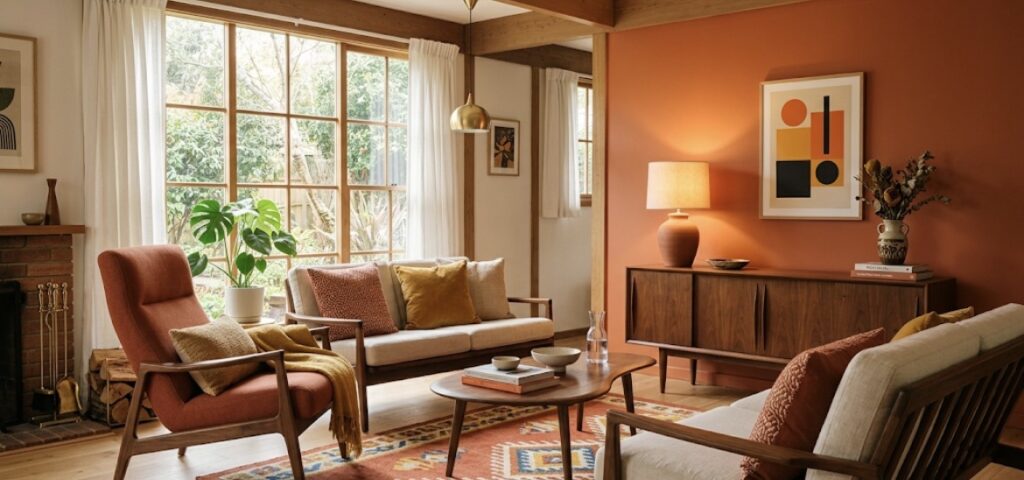
9. Terracotta in a Mid-Century Modern Living Room
Mid-century modern design and terracotta are a match that makes complete sense when you think about it. The mid-century movement was deeply influenced by natural materials, organic shapes, and warm color palettes, all of which align perfectly with what terracotta brings to a space. Many original mid-century homes of the 1950s and 1960s used earthy orange and rust tones as signature colors, so using terracotta in a mid-century-styled room is less of a trend and more of a homecoming.
In this context, terracotta might appear as a wall color behind a classic walnut sideboard, as the upholstery on a curved lounge chair, or as the color of a ceramic table lamp beside the sofa. The furniture itself should have the clean lines, tapered legs, and organic forms that define mid-century style, in materials like walnut, teak, and oak.
Geometric patterns work beautifully in this combination. A rug with a bold 1960s-styled geometric print in terracotta, mustard yellow, and cream brings instant mid-century character to the floor. Graphic artwork in warm, earthy tones on the walls, atomic-era light fixtures in brass, and a sunburst clock are all details that reinforce the period-inspired aesthetic while keeping the room feeling fresh and contemporary.
The key in a mid-century terracotta room is to let the forms speak as loudly as the color. Every piece of furniture should have a shape worth looking at, and the terracotta should frame those shapes rather than swallow them. Keep the walls relatively clean, let the furniture be the art, and the result is a living room that feels both retro and completely current.
10. Terracotta Through Artwork and Ceramics
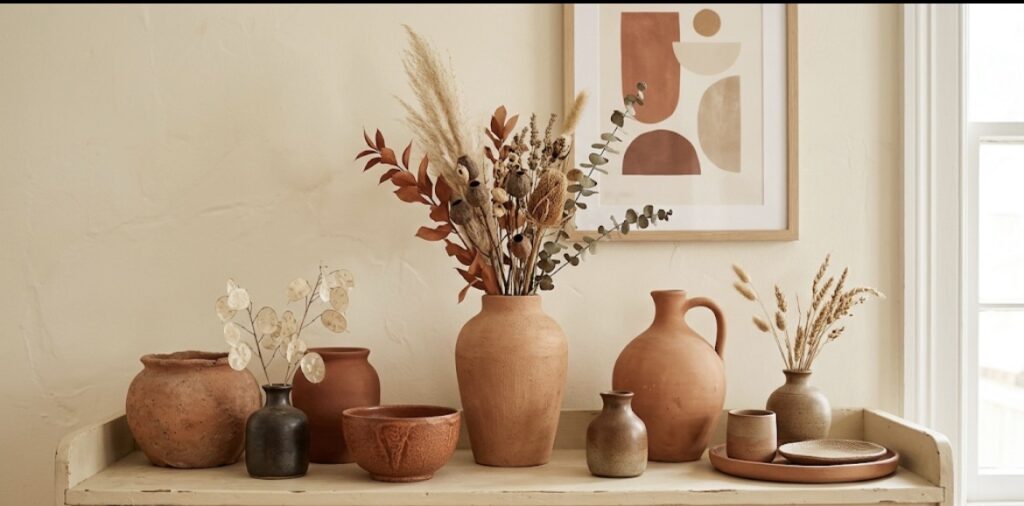
Sometimes the most elegant way to bring a color into a room is not through paint or furniture but through the objects you choose to live with. For terracotta, this means building a collection of art and ceramics that celebrate the earthy, warm tones of the color while letting the rest of the room stay relatively neutral.
Start with artwork. Abstract paintings, prints, or photographs that feature terracotta, rust, burnt sienna, and warm amber tones bring the color into the room in a way that feels artistic rather than decorative. A large canvas with earthy swashes of color hung above the sofa is both a focal point and a color anchor, setting the warm tone for the whole room. A gallery wall mixing smaller prints in coordinating terracotta-adjacent tones creates a similar effect with a more layered, personal feel.
Ceramics are where terracotta really lives at its most literal and most beautiful. A collection of ceramic vases and vessels in shades from pale blush to deep brick, arranged on a shelf, sideboard, or coffee table, brings a genuinely artisanal quality to the space. Handmade ceramics with visible texture and slight imperfections are especially beautiful because they carry the sense of craft and warmth that the color itself embodies.
Sculptural ceramic objects, terracotta planters, stoneware bowls, and even unglazed pottery are all fair game. The variety of textures within the same tonal family creates visual richness without any of the busyness that comes from mixing many different colors. It is a very grown-up, considered way to decorate.
11. Warm and Layered: The Bohemian Terracotta Living Room
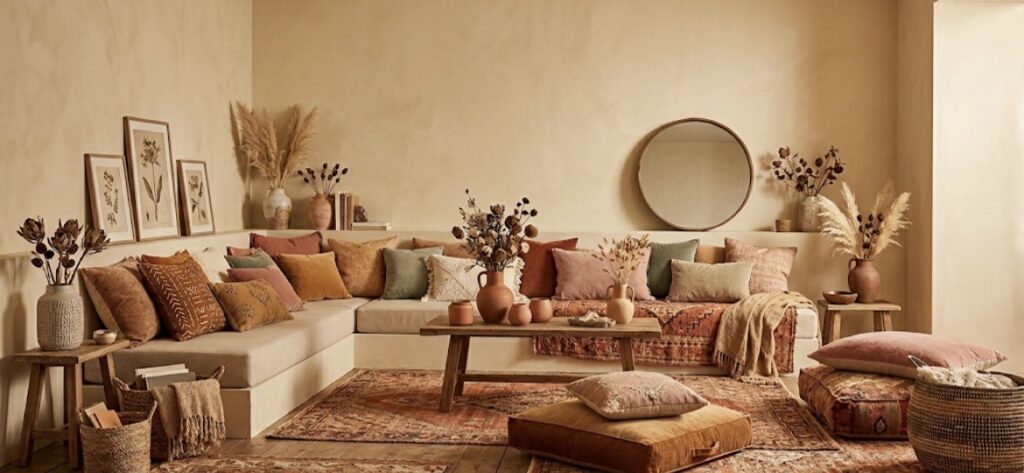
The bohemian approach to terracotta is the most joyfully maximalist version on this list, and it is absolutely glorious when done well. The whole idea here is warmth through abundance: layered rugs, stacked cushions, draped throws, hanging plants, woven wall art, and enough terracotta running through every surface that the whole room feels like a warm, amber hug.
In a bohemian terracotta living room, the palette extends well beyond a single shade of terracotta to include a full range of warm, earthy tones: rust, burnt orange, golden ochre, cinnamon, dusty rose, and deep brown. These are layered together through textiles and surfaces to create depth and richness that feels lived-in and personal rather than designed.
Rugs are particularly important in this style. Layering two or three rugs of different sizes, patterns, and textures, all within the terracotta and warm tonal family, is a classic bohemian technique that makes the floor feel as inviting as the seating. Vintage kilims, Moroccan rugs, and natural jute all work well together and do not need to match precisely. The slightly improvisational quality is part of the charm.
Macrame wall hangings, woven baskets, hanging plants in terracotta pots, and an eclectic mix of seating from low floor cushions to a worn leather armchair give the room its character. The whole effect should feel like a space that has been thoughtfully gathered over time rather than purchased all at once. Which, incidentally, is also the most fun way to shop for it.
12. Terracotta with Natural Stone and Raw Materials
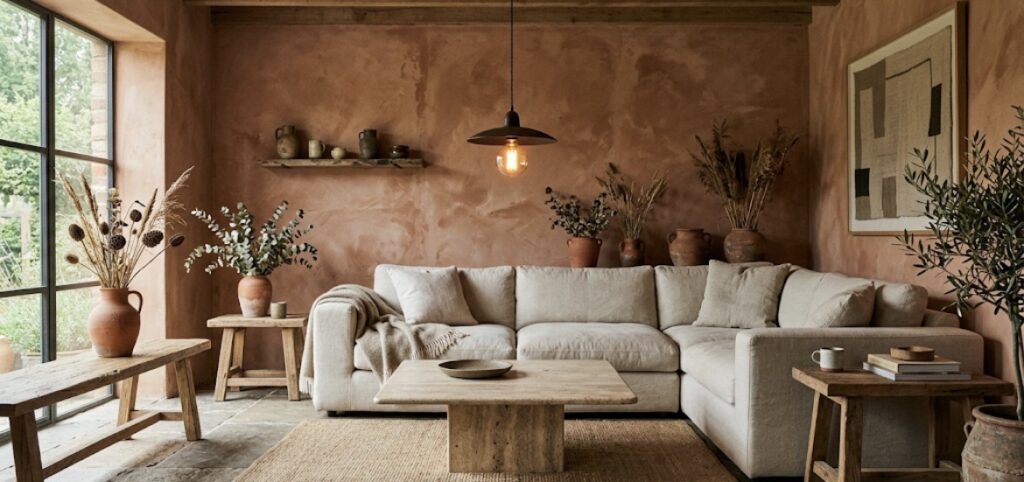
If there is a more elemental combination than terracotta and natural stone, interior design has yet to find it. Both materials come from the earth, both carry a rich natural variation in tone, and together they create a living room that feels grounded, honest, and quietly extraordinary.
In practical terms, this might mean a terracotta wall color or lime-washed terracotta plaster surface paired with a stone fireplace, a travertine coffee table, or a slate floor. The natural variation in the stone responds beautifully to the warmth of the terracotta, with the cool greys and beiges in the stone providing balance without breaking the earthy mood.
Raw and natural materials extend this idea further. Chunky undyed linen, rough-hewn wooden furniture, unpolished concrete, and natural rope or twine accents all belong in this kind of room. The aesthetic is sometimes described as biophilic design, which is just a fancy way of saying that the room uses natural materials to create a connection with the natural world. It works remarkably well and has the added benefit of making people feel instinctively calm when they walk in.
Lighting in a room like this should be kept soft and warm. Exposed Edison bulbs in simple iron holders, linen pendant shades, and candles all reinforce the raw, unfinished quality of the materials and let the natural textures cast interesting shadows. This is not a room for harsh overhead fluorescent lighting. It is a room for slow mornings and long evenings.
13. Terracotta Block Color Sofa as the Room’s Hero Piece
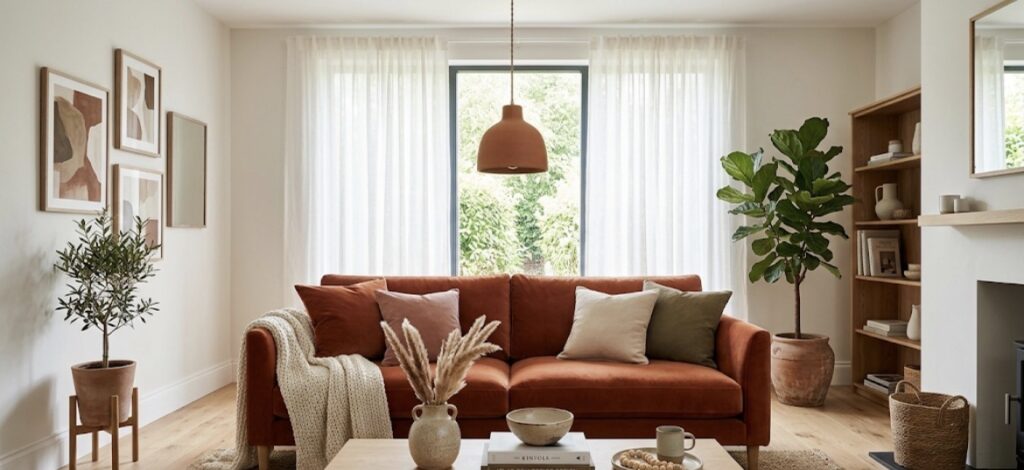
If you are ready to make one significant investment in your terracotta living room journey, let it be the sofa. A block-color terracotta sofa is a genuinely bold and beautiful choice that transforms a room instantly, serving as both a statement piece and the natural anchor of the entire color scheme.
The sofa works best in a fabric that complements the earthy quality of the color. Velvet gives it a rich, jewel-box feel that leans elegant and dramatic. Linen keeps it natural and relaxed. Cotton gives it a clean, fresh quality that suits more contemporary spaces. All three are beautiful choices for terracotta, and the right one depends entirely on the overall mood you are going for in the room.
With a terracotta sofa as your centerpiece, the walls should step back and let it lead. Pale warm whites, soft plasters, and neutral warm greys all work excellently as backgrounds. The floor should be light too, whether that is natural blonde wood, pale limestone, or a neutral rug, so the sofa sits above it with clarity and presence.
Cushion styling on a terracotta sofa is where you get to have the most fun. Layering in tones of rust, dusty pink, cream, olive, and charcoal creates a rich textural palette that emphasizes the warmth of the sofa without clashing with it. Keep the cushion fabrics varied, mixing velvet, linen, knit, and embroidered for maximum texture. Add a cream or oatmeal throw draped across one end, and you have a sofa that looks like it belongs on a magazine cover. Which, now that you think about it, is not a bad aspiration for a Tuesday afternoon.
Final Thoughts
Terracotta is one of those rare colors that manages to be both deeply rooted in history and completely relevant right now. It does not shout. It does not try too hard. It simply brings warmth, personality, and a sense of ease to every space it inhabits, and a living room is one of the very best places to let it do exactly that.
Whether you go all-in with a full wall and matching sofa, or you start small with a terracotta rug and a few well-chosen ceramics, you will find that the color has a way of making a room feel more complete. More like a place where people want to sit down and stay. Which is, when you think about it, the entire job description of a living room.
So pick the idea that excites you most, gather your references, and start pulling it together. Your walls are ready whenever you are.