
Your bedroom shelves don’t have to be boring storage spots. Here are 10 easy, beautiful shelf decor ideas that will turn your walls into the best-looking thing in your room.
Let’s be honest. Most bedroom shelves start with great intentions and end up as the place where things go to be forgotten. A random charger. A book you meant to read in 2021. Maybe a lone sock that has lost its partner and its will to live. If this sounds familiar, you are not alone, and more importantly, you are in the right place.
Bedroom shelves are one of the easiest and most affordable ways to completely change the way your room feels. They don’t ask for a renovation budget or a weekend of hard labor. They just ask for a little thought, a little intention, and maybe a small shopping trip that you were going to take anyway. The way you style your shelves says a lot about who you are, what you love, and how you want to feel when you walk into your room at the end of the day.
This post covers 16 shelf decor ideas for your bedroom that are practical, beautiful, and actually doable. Each idea is explained in detail so you understand not just what to do but why it works and how to make it feel like yours. Whether your bedroom is small, large, modern, cozy, or somewhere in between, there is something here for you. We’ll go through every style, every mood, and every kind of shelf person, from the “I want it minimal and clean” type to the “I want my shelf to look like a beautiful library exploded in the best way possible” type.
Let’s get into it.
1. The Book Lover’s Display
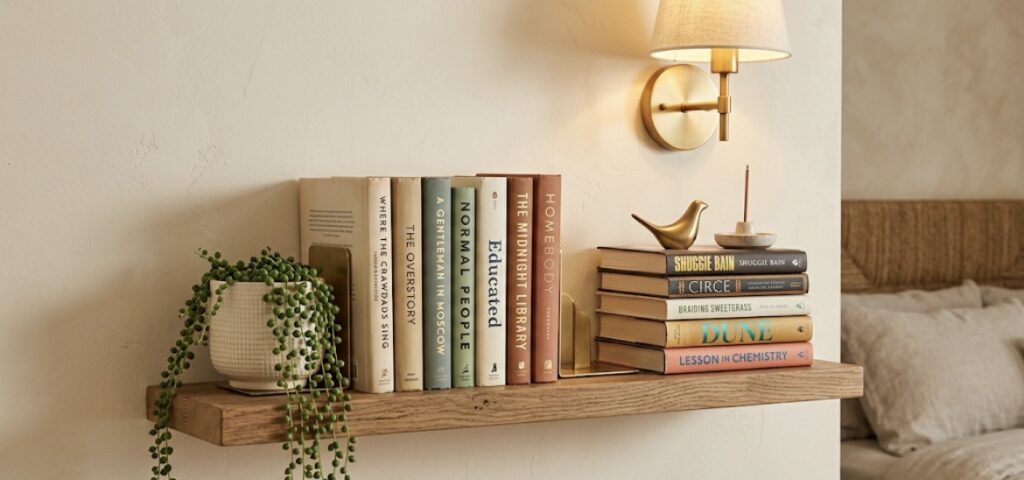
Books are the most personal thing you can put on a shelf, and they also happen to be one of the most beautiful. The key to making a bookshelf look intentional rather than like a library’s discard pile is in how you arrange them. Most people line every book up straight and call it a day. That works, but it doesn’t sing. What actually works better is mixing your arrangement. Stand some books upright with their spines showing, lay a few flat and stack them in groups of two or three, and then place a small decorative object on top of the horizontal stack. That one small move turns a shelf of books into a shelf that has rhythm and flow.
The color of your books matters more than people think. If you have a shelf full of books with chaotic, brightly colored spines, the shelf will feel visually noisy even if it is perfectly organized. One approach that works beautifully is grouping books by color family so that your shelf moves from light to dark or from warm tones to cool tones. You don’t have to be obsessive about it. Even loosely sorting by color will make a noticeable difference. Another approach is to face some books backward so only the white or cream pages show. This gives a very clean, calm look and works especially well if you want a shelf that feels peaceful and minimal.
Add one or two small objects among the books to break up the wall of text. A small ceramic bowl, a tiny potted succulent, or a single framed quote can do wonders. The rule of thumb is to give your books some breathing room. Don’t pack every inch. Let the shelf breathe. Let the books be seen. Let people come into your room and ask about what you are reading, which is honestly one of the best conversations a shelf can start.
2. The Plant Paradise Shelf
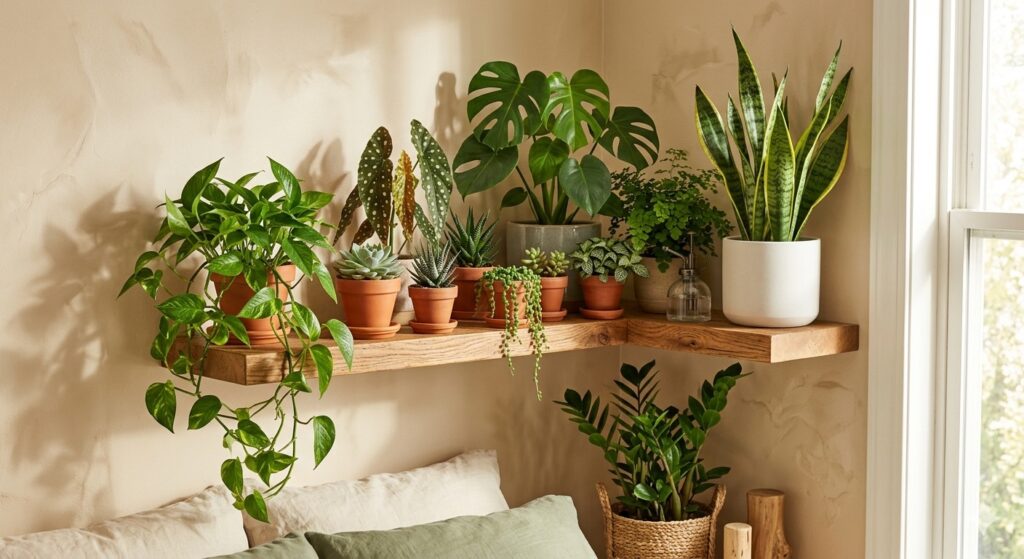
There is something almost magical about walking into a bedroom that has plants on the shelves. It feels alive. It feels like someone actually lives there and loves where they live. Plants bring color, texture, movement, and fresh energy into a room in a way that almost nothing else can. The good news is that you don’t need to be a master gardener to make a plant shelf work. You just need to choose the right plants and style them thoughtfully.
The best plants for bedroom shelves are ones that don’t need constant attention and can handle lower light levels. Trailing plants are particularly wonderful on shelves because they drape beautifully over the edge and create that lush, flowing look that looks incredible in photos and even better in person. Pothos is the king of trailing shelf plants. It grows fast, it forgives you when you forget to water it, and it looks like it belongs on a shelf in a fancy hotel. String of pearls is another gorgeous option that trails in a really unique way with tiny round leaves that look almost like jewelry.
For a full plant shelf, try combining different heights, textures, and pot styles. A cluster of small terracotta pots with succulents sitting next to a tall slender pot with a snake plant creates visual interest through contrast. Mix matte ceramic pots with unglazed terracotta and maybe one pot in a deeper tone like olive green or rust. The variety in containers is just as important as the variety in plants because both contribute to how layered and curated the shelf feels. If you want the shelf to look intentional rather than like you just placed plants wherever there was space, work in odd numbers. Three plants, five plants, seven plants. Odd groupings always look more natural and dynamic than even ones.
3. The Minimalist Shelf
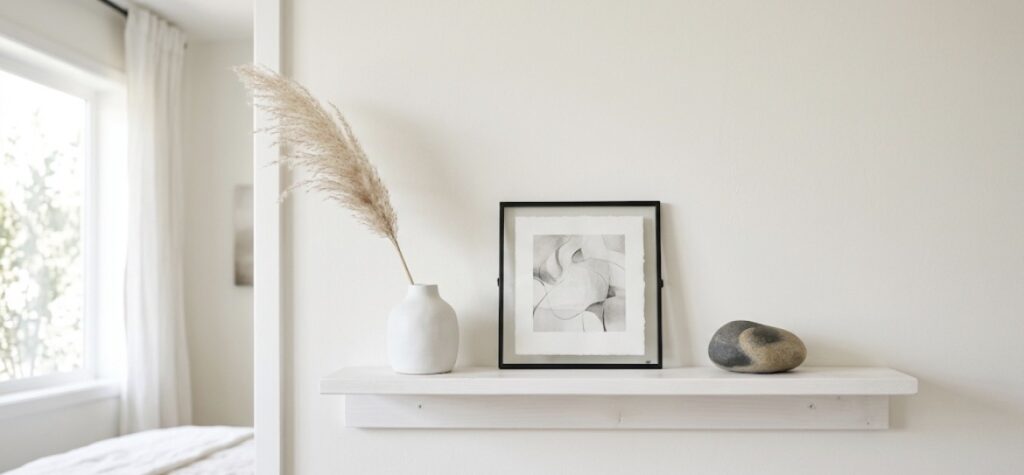
Minimalism is not about having nothing. It is about having just enough, and that distinction is important because it is the difference between a shelf that feels serene and one that just feels empty and sad. A minimalist shelf is one of the most beautiful things you can create in a bedroom because it forces you to choose only the things that are truly special to you and give each object the space to actually be seen.
The classic rule for minimalist shelf styling is the rule of three. Choose three objects that vary in height, shape, and texture. A tall narrow vase, a low wide bowl, and a single small sculpture or stone. Place them with generous space around each one. That’s it. You don’t need anything else. The negative space on the shelf is not wasted space. It is part of the design. It gives your eye a place to rest and makes each object feel more important and intentional.
Color is key on a minimalist shelf. Sticking to a monochromatic palette, all whites and creams, all warm neutrals, or all muted earth tones, creates a very cohesive and calming look. You can add one quiet accent, a shelf with mostly white and cream tones that includes one small object in matte black, or a shelf that is all natural textures with a single blush pink ceramic piece. The accent pulls your eye and keeps the shelf from looking too flat without creating any visual noise.
Material choice also matters a lot in minimalist shelf styling. Natural materials like unglazed ceramic, raw wood, stone, dried botanicals, and linen-wrapped items bring warmth and texture without adding color or complexity. A shelf that uses only white and cream objects but has a variety of textures, smooth ceramic, rough linen, soft dried grass, weathered wood, will feel rich and interesting even though it is technically very simple. The textures do the visual work that color would do on a busier shelf.
4. The Gallery Wall Shelf Combo
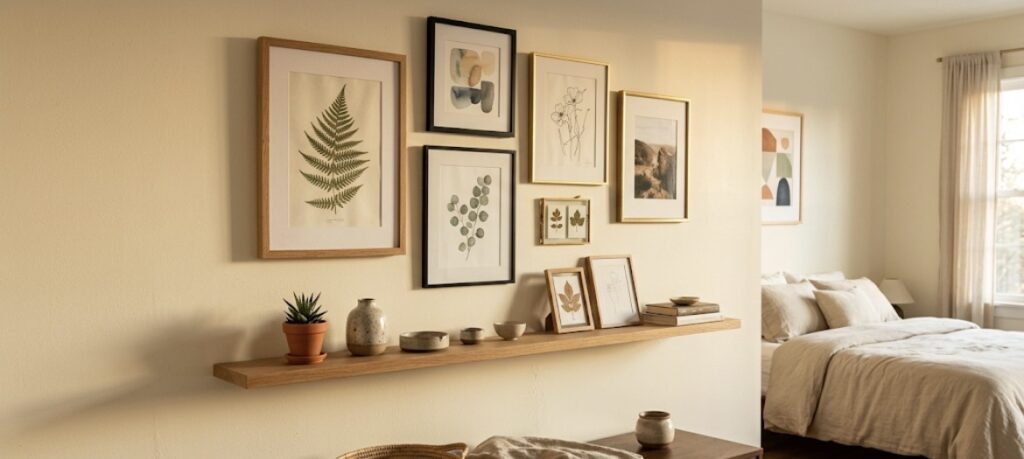
This idea is technically two things working together as one, and the combination is incredibly effective. A shelf placed below a gallery wall creates a layered, built-up feel on your bedroom wall that looks like something you planned very carefully, even if you actually just had fun putting it together. The shelf and the gallery wall act as a unified display rather than two separate things, and that unity is what makes it look so polished.
The gallery wall above the shelf should feel like it belongs with what is on the shelf. If your shelf has warm tones with terracotta pots and wooden objects, your gallery wall frames should be in warm wood or antique gold. If your shelf is clean and minimal with white ceramics, your frames should be simple black or thin white metal. The visual conversation between the shelf and the wall above it is what makes this combination work, and that conversation needs to happen in terms of color, material, and mood.
For the shelf below the gallery wall, keep it lighter and less busy than you might otherwise style it. The gallery wall is already doing a lot of visual work up above, so the shelf should support it rather than compete with it. Two or three well-chosen objects, maybe a small leaning print that bridges the shelf with the wall, and a small plant to bring in some softness. Let the shelf be the base of the composition rather than the main event.
The size of the shelf matters here. A longer shelf, one that spans most of the width of the gallery wall cluster, grounds the whole arrangement and makes it feel like a considered installation. A short shelf under a large gallery wall can look a little awkward, like the shelf arrived late to a party that had already started without it. If you have a smaller shelf, keep your gallery wall arrangement directly above it and tightly centered so the two elements stay visually connected.
5. The Aesthetic Color Story Shelf
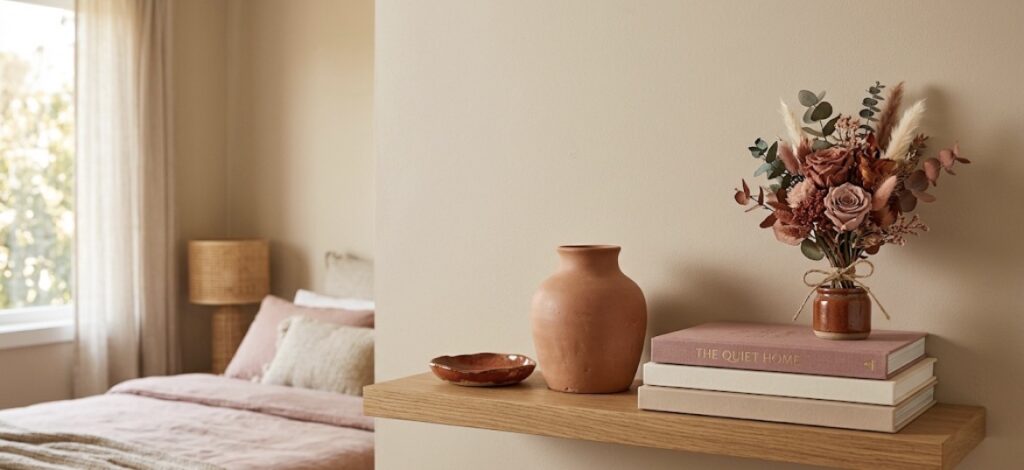
This is the idea where you choose a color palette and let that palette be the organizing principle for everything on the shelf. It sounds simple because it is simple, and that simplicity is exactly why it works so well. When everything on a shelf belongs to the same color family, the shelf immediately looks curated and intentional no matter what individual objects are on it.
Choosing your color story is the most important first step. Think about the overall palette of your bedroom. If your room has warm tones, walls in cream, beige, or terracotta, and furniture in warm wood, then a shelf in a palette of dusty rose, rust, and warm amber will feel like it was designed to be there. If your room leans cooler, with white or gray walls and furniture in darker tones, a shelf in soft sage green, dusty blue, and warm ivory will give you that same feeling of total cohesion.
Once you have your palette, go through your existing objects and see what already fits. You may already own a few items in the right tones. Then fill in the gaps with new finds. Charity shops, vintage markets, and even dollar stores often have small objects like bowls, vases, and candle holders in excellent colors. The objects themselves don’t have to be expensive or even particularly beautiful on their own. What makes them beautiful is the context, the way they sit together in a considered palette that ties the whole shelf together.
One tip for making a color story shelf feel less expected is to vary the finish within your palette. If you are working in a terracotta and cream palette, use one object in a glossy terracotta glaze, one in a completely matte terracotta, one in unglazed rough terracotta, and a cream object in smooth linen or soft fabric. The same color in different finishes creates depth and keeps the shelf from feeling flat even though the color range is narrow.
6. The Nature styled Shelf
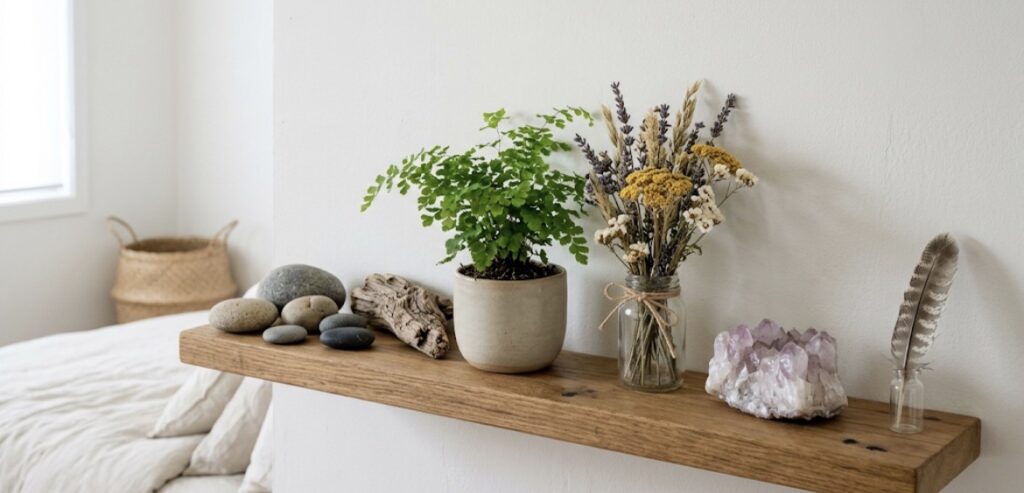
Bringing the outside in is one of the most effective ways to make a bedroom feel calm, grounded, and quietly beautiful. A nature-inspired shelf does exactly that by using materials and objects that come directly from or reference the natural world. The result is a shelf that feels peaceful and organic in a way that feels very different from a shelf styled with purely decorative objects.
The foundation of a nature shelf is natural materials. Smooth river stones gathered on a walk, a piece of driftwood picked up from a beach or found at a craft store, a raw crystal or geode purchased from a small shop or market, a glass bottle filled with dried wildflowers or grasses. These are the kinds of objects that bring real natural texture into a room and create a shelf that looks like someone who actually spends time outdoors styled it.
Plants, as always, work beautifully here. A small fern in an earthy pot, a tiny cactus, a single moss plant in a shallow ceramic dish. The difference between a plant shelf and a nature shelf is that a nature shelf uses plants as part of a larger natural composition rather than as the main event. The plants sit alongside stones, shells, driftwood, and botanical prints to create a whole world rather than just a display of greenery.
Dried botanicals are particularly lovely on a nature-inspired shelf because they have a delicate, sculptural quality that fresh plants don’t have. A small bunch of dried lavender, a stem of dried cotton, a sprig of preserved eucalyptus, or a single dried protea flower adds a kind of quiet beauty that is very different from the bright freshness of live plants. Dried botanicals also require zero maintenance, which is always a welcome quality in any bedroom decor.
7. The Personal Memories Shelf
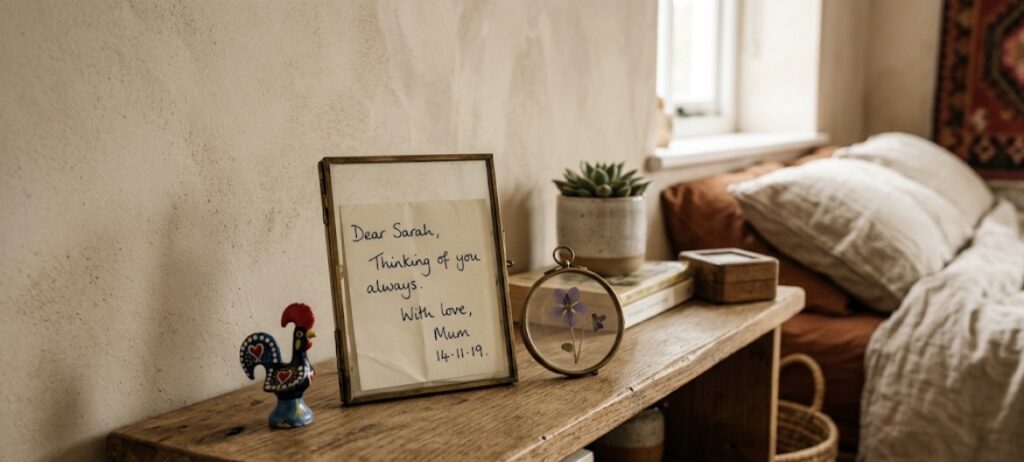
A personal memories shelf is the most individual and irreplaceable shelf you can create because no one else in the world could style it exactly the same way. It is uniquely, completely yours, and that is what makes it beautiful.
This kind of shelf can hold photographs of people you love, small souvenirs from places that mattered to you, objects given to you by important people, handwritten notes, ticket stubs tucked into small frames, pressed flowers from a meaningful occasion. The items don’t need to be particularly beautiful or coordinated. They just need to mean something to you. The beauty of this shelf comes from the collection of meaning rather than the collection of aesthetically matched objects.
The styling challenge with a personal shelf is keeping it from looking cluttered or overwhelming. The easiest way to do this is to edit carefully. Choose only the objects that represent the most meaningful moments or people, not every single thing you want to keep. Put everything else in a beautiful memory box or storage box. The objects that make the shelf should be the ones you want to see every day, the ones that make you feel happy, grateful, loved, or inspired when your eyes fall on them.
Frames are your best tool on a personal shelf. Small frames in a consistent finish, warm wood, aged brass, simple black, can turn a personal collection of photos and mementos into something that looks genuinely styled and considered. Even a single pressed flower in a tiny round frame immediately looks intentional. The frame is what gives a small meaningful object the visual weight and presence to hold its own on a shelf.
8. The Reading Nook Companion Shelf
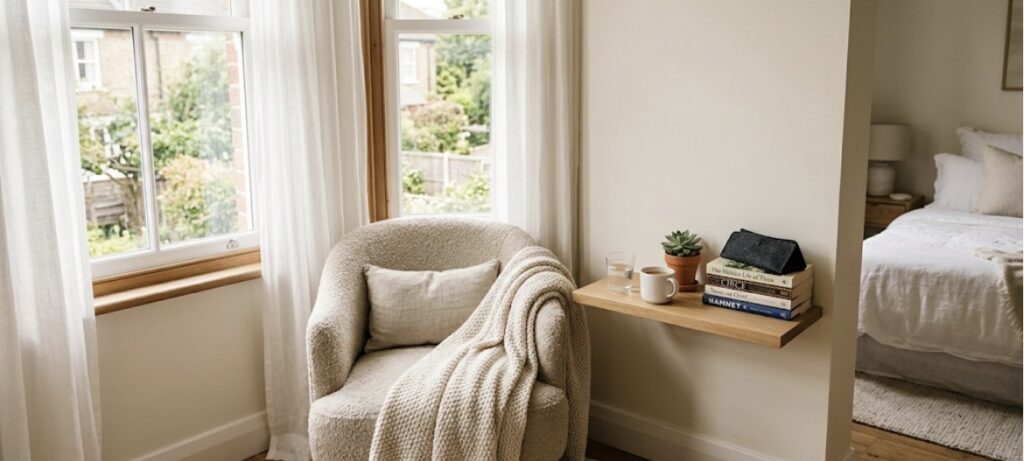
If your bedroom has a reading chair, a window seat, or any dedicated spot where you like to sit and read, a small companion shelf positioned near that spot is one of the most practical and lovely shelf ideas you can implement. It creates a self-contained little world around your reading ritual: the books you are currently reading, the drink you sip while you read, maybe a candle, maybe your reading glasses, and a small plant to keep the corner company.
The beauty of a reading nook shelf is that it gets to be functional first and decorative second. The objects on it are the things you actually use and love in those quiet moments when you sit down with a book. Your current read sits there with its spine creased from being opened so many times. Your favorite mug waits for you. A small lamp or candle provides the perfect light. It is the most honest kind of shelf because every object on it has a real purpose in your real life.
Styling this shelf is mostly about restraint and honesty. Don’t put objects on it that don’t belong to your reading ritual. Don’t add a beautiful decorative bowl if you never reach for decorative bowls while reading. The nook companion shelf should feel like it was set up by you for you, not for a photoshoot, even if it does end up looking beautiful in photos. When a shelf is genuinely used and lived in, it has a quality that purely decorative shelves can lack, a quality of realness that makes a room feel truly inhabited.
One lovely touch for a reading nook shelf is a small journal or notebook alongside the books. Many readers keep notes, write quotes, or sketch while they read, and having that notebook within reach makes the reading spot feel even more personal and intentional. Add a small cup or ceramic dish to hold one or two pencils or pens, and the shelf becomes a tiny complete creative environment.
9. The Morning Routine Shelf
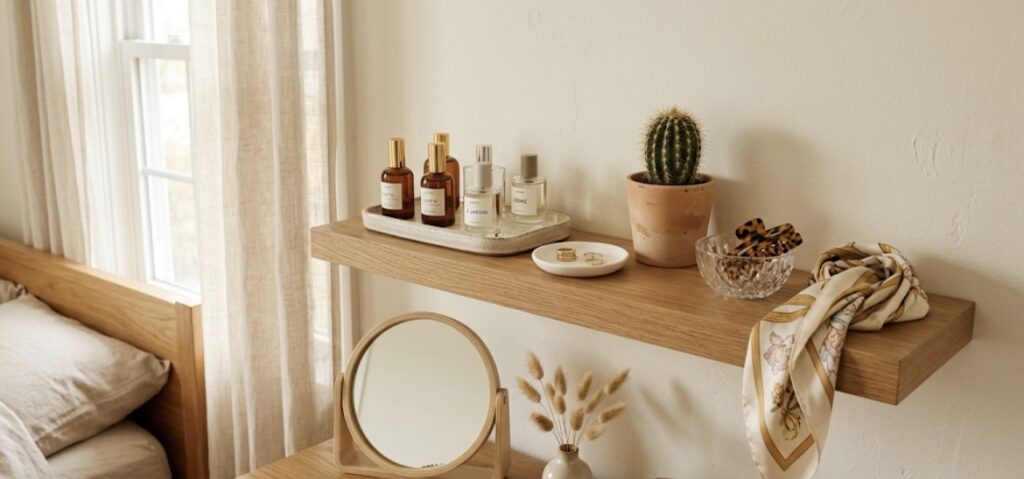
The morning routine shelf is the most functional idea on this list, and it works by treating the objects you use every morning as decorative elements worthy of display. Most people stuff their jewelry in a drawer, scatter their perfume bottles across a surface, and pile their hair accessories somewhere inconvenient. The morning routine shelf takes all of those everyday items and gives them a proper, beautiful home that is also completely functional.
The first thing to do when planning a morning routine shelf is identify the small items you reach for every single morning. Your most-worn jewelry. Your daily perfume. Your hair clips or ties. Your watch. Maybe a small mirror. These are your shelf residents. Everything else stays in a drawer. The discipline of this shelf is in deciding what deserves the visible, accessible spot and what should be stored away.
Trays and dishes are the organizational heroes of a morning routine shelf. A small ceramic ring dish is one of the most useful and beautiful items you can own, and you can find them for very little money. A slightly larger tray corrals your perfume bottles together so they look like a deliberate collection rather than random objects. A small bowl or basket can hold hair accessories without letting them spill all over the shelf.
The visual secret to making a morning routine shelf look beautiful rather than just organized is mixing in one or two purely decorative objects. A small plant. A single candle. One small piece of art leaning against the wall. These non-functional elements give the shelf a decorative quality that elevates it from “organized junk spot” to “beautiful, functional display.” The mix of practical and beautiful is what makes this shelf feel like it was designed rather than just arranged.
10. The Cozy Bedroom Corner Shelf
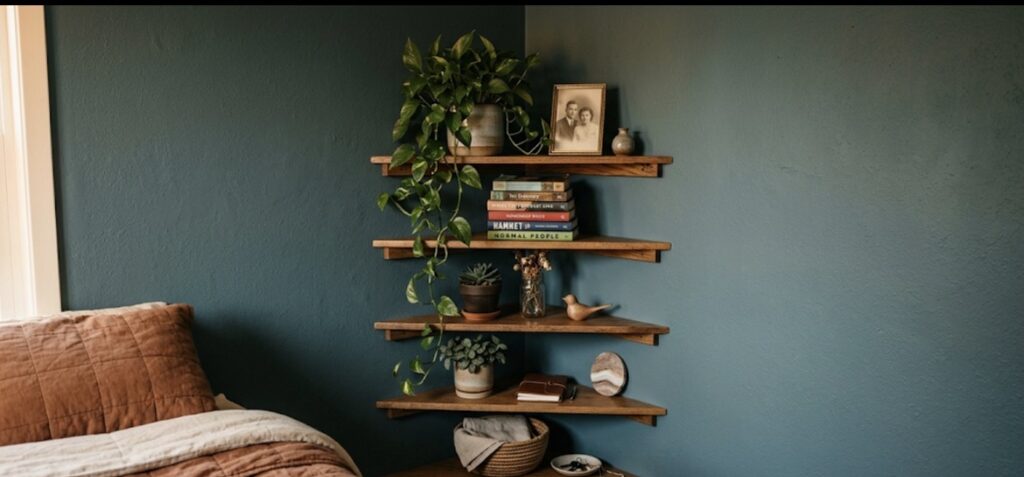
Corner shelves are one of the most underused opportunities in bedroom decor. The corners of a room are often completely ignored, left empty and wasted, when they could be some of the most interesting and cozy display spots in the whole space. A corner shelf takes an architectural awkwardness, that 90-degree spot where two walls meet and nothing fits comfortably, and turns it into a feature.
The multi-level corner shelf is particularly effective because it creates a whole little installation in a space that would otherwise be empty. Several small triangular shelves mounted at different heights in a corner can hold a remarkable variety of objects without any single shelf feeling overcrowded. Each small shelf can hold just one or two things, and the whole collection of small shelves creates a vertical display that draws the eye up and makes the room feel taller and more interesting.
The styling approach for a corner shelf is deliberately layered and cozy. This is not the place for minimalism. A corner shelf looks best when it is full of warmth and personality, small objects at different heights, a plant trailing down from an upper shelf, a candle on a lower shelf, a little framed something on the middle shelf. The corner naturally creates a sense of depth and enclosure that makes layered, abundant styling feel right rather than overwhelming.
Color plays an important role in a corner shelf display. Because the shelf is seen against two walls that meet at an angle, the background is more complex than a flat single-wall shelf. This makes it especially effective to use a color palette for your corner shelf objects that stands out clearly against the wall color. If your walls are warm white, objects in deep terracotta, rich green, and warm brass will look beautiful against them. If your walls are a deeper color, lighter objects in cream, blush, and warm wood tones will pop beautifully.
How to Put These Ideas Together
You don’t have to choose just one of these ideas. The best-decorated bedrooms often use two or three different shelf styles in the same room, each one serving a different purpose or filling a different space. Your bedside shelf might be a self-care and candle shelf. Your main wall might have a floating ledge gallery. Your corner might have a small layered corner shelf with plants and personal objects. Each shelf has its own personality and purpose, but because they are all in the same room, they need to share a common thread.
That common thread is almost always color and material. If every shelf in your bedroom uses objects in the same general color palette, even loosely, the room will feel cohesive no matter how different the individual shelf styles are. Warm wood tones, cream ceramics, terracotta pots, and brass accents can run through a candle shelf, a book shelf, and a plant shelf simultaneously and tie them all together. You don’t need to be rigid about it. Just be aware of the overall palette and make sure no single shelf introduces a color family that exists nowhere else in the room.
Material consistency works the same way. If you use natural materials across all your shelves, unglazed terracotta, raw wood, linen, dried botanicals, stone, the shelves will feel like part of the same design story even if their individual styles are quite different. The materials are like a language, and when every shelf speaks the same material language, the room feels fluent and harmonious.
The most important thing, though, is that your shelves make you feel good. Not the shelves in someone else’s home that you saw in a photo. Not the shelf of someone whose room you admire. Yours. The ones in your room. The ones you look at every morning when you wake up. The very best shelf is one that holds things you love, looks the way you want your room to look, and makes you feel, even just slightly, that your space is working for you. And honestly, a space that works for you is a space worth living in.