
A Simple, Step-by-Step Guide to styling a Living Room That Looks Good and Actually Works
Let’s be honest. Most of us have stood in the middle of our living room holding a throw pillow, looking around like we’re waiting for the furniture to tell us where to go. And somehow, the couch ends up against the wall anyway. The wall wins every single time. It is very persuasive. But here is the truth: knowing how to arrange furniture in your living room is not about having a design degree or expensive taste or even a measuring tape, though that does help. It is about understanding a few simple ideas and then making them work for your actual life, your actual room, and your actual budget.
This guide is going to walk you through everything, from the moment you stand in that empty room all the way to the day you sit down, look around, and think, yes, this finally feels right. You are going to learn how to figure out what your room is really for, how to measure and plan before you move a single chair, how to place your biggest pieces of furniture, how to bring in the smaller stuff without making it look like a yard sale, and how to add the finishing touches that pull everything together. By the end, your living room will not just look better. It will feel better, too.
And if you have ever rearranged your furniture five different ways in one afternoon only to end up exactly where you started, this guide is especially for you.
Step One: Figure Out What Your Living Room Is Actually For
Before you move a single piece of furniture, before you look at any inspiration photos, and before you even think about the color of your throw pillows, you need to answer one simple question: what does this room actually need to do for you? This question matters more than anything else in this entire guide. Because a living room that works beautifully for a single person who works from home and watches a lot of movies is going to look completely different from a living room that belongs to a family of five with three kids, two dogs, and a grandmother who visits every Sunday. The furniture can be the same price. The room can be the same size. But the way you arrange everything should be built around real, daily life, not around a photograph you saved on your phone six months ago.
Think about the activities that happen in this room every day. Do people sit and watch television together? Do you have long conversations over coffee? Do the kids do homework on the floor? Do you host gatherings where guests spill into the living room with drinks in hand? Do you work from a laptop on the couch? Maybe all of the above. Write it down if you need to, because every answer is going to shape every decision you make from this point forward. A room that hosts movie nights needs clear sightlines to the television. A room that is mostly for conversation needs its seating arranged so that talking is easy and comfortable. A room that doubles as a kids’ play zone needs open floor space and furniture with rounded edges. These are completely different arrangements, even in identical rooms.
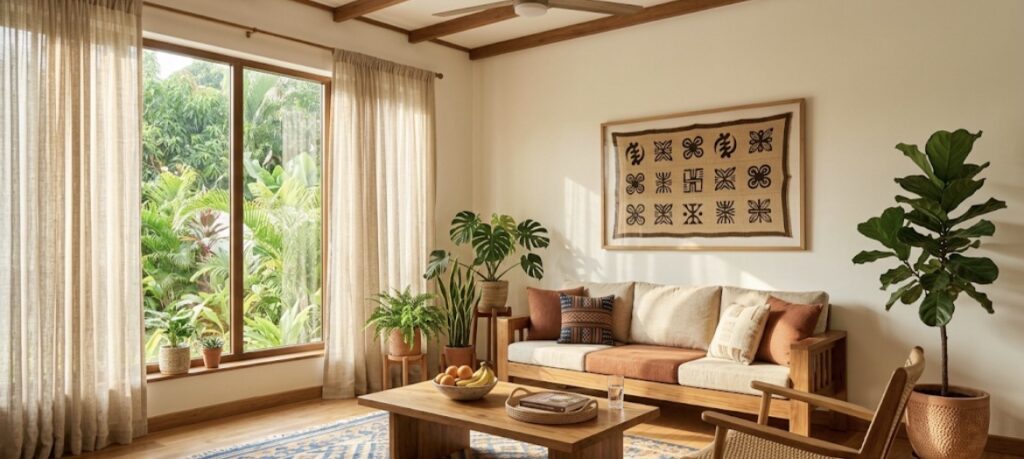
Once you know what the room needs to do, you can start thinking about zones. A zone is just a practical word for an area that has a specific purpose. Your living room might have one main zone, which is the seating and conversation area, usually centered around a television or a fireplace. Or it might have two or three: a reading corner by the window, a small play area for children near the hallway, and the main seating group in the center. Knowing your zones before you move furniture means you will stop trying to make one area do five conflicting things at once, which is usually why rooms feel messy and uncomfortable even when they are technically tidy. This step costs you nothing, takes about ten minutes, and is the foundation of everything that follows.
Step Two: Measure Everything Before You Move Anything
Here is where most people skip ahead and regret it. They see a gorgeous sofa at the furniture store, fall in love, buy it, get it delivered, and discover that it is roughly the size of a small aircraft carrier relative to their living room. Or they spend an afternoon shoving furniture around only to find that the new arrangement does not work because the cable outlet is on the wrong side of the room. Measure first. Move second. This one habit will save you hours of frustration and possibly a very difficult conversation with a delivery company.
Start by measuring your room from wall to wall in both directions. Get the full length and width. Write it down. Then measure the height of your ceilings, because ceiling height affects how tall your furniture, shelving, and lighting should be. A room with nine-foot ceilings can carry a tall bookshelf or a dramatic floor lamp that would look completely out of scale in a room with seven-foot ceilings. Measure the distance from the floor to the bottom of each window, because a sofa back that sits higher than the windowsill will block light and make the room feel smaller. Measure your doorways and the width of the hallways leading into the room, because large furniture needs to get through those spaces to reach the room in the first place. This sounds obvious. It is less obvious when you are standing in a furniture store and the salesperson is telling you what a great deal you are getting.
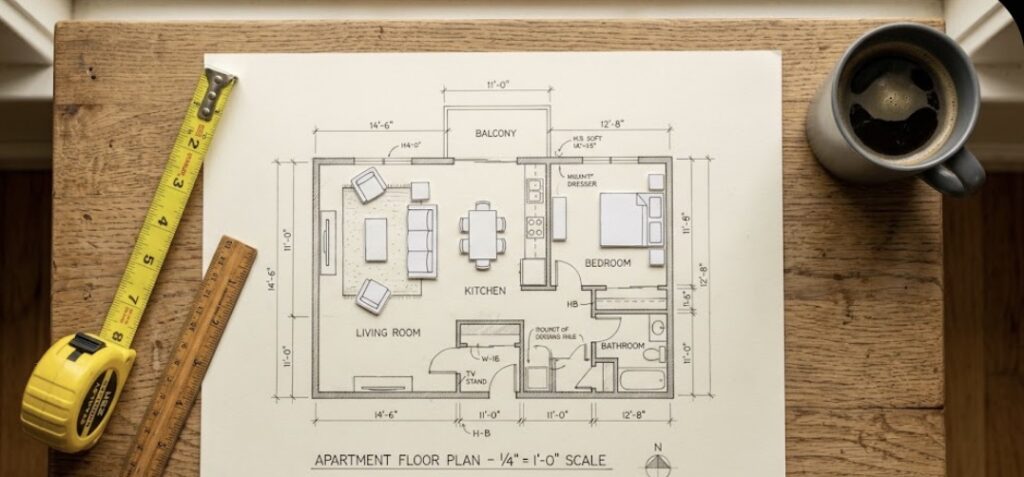
Next, measure every piece of existing furniture you plan to keep: the sofa, the coffee table, the armchairs, the side tables, the television stand, and anything else that will live in the room. Note the length, the depth, and the height of each piece. If you are planning to buy new furniture, note the dimensions of anything you are seriously considering before you commit to buying it. Then take all of those numbers and draw a rough floor plan. You do not need to be an artist. A sketch on graph paper where one square equals one foot, or one square equals half a meter, works perfectly. Draw the room outline to scale, mark the location of every door, window, outlet, light switch, cable connection, and radiator vent. Then cut out small paper rectangles for each piece of furniture, also to scale, and move them around on your floor plan. This takes twenty minutes and lets you try a dozen different arrangements without pulling your back out. That is a genuine quality of life improvement.
There are also free apps that let you do this digitally. Room Sketcher, Planner 5D, and IKEA’s online planning tool are all free, easy to use, and allow you to see the room in a rough three-dimensional view once you have placed everything. But a pencil and paper will do exactly the same job. The point is not to have a perfect architectural drawing. The point is to stop guessing and start planning. The single most common cause of a living room that never quite works is that the furniture was arranged by intuition and trial and error rather than by measurement and planning. The measuring step takes thirty minutes. The guessing approach can take years.
Step Three: Place Your Anchor Piece First
Every living room has an anchor piece. This is the single largest, most dominant piece of furniture in the room, and in almost every living room on earth, it is the sofa. Occasionally the anchor might be a large sectional, a built-in window seat, or a substantial armchair in a very small room, but for most people, the sofa is it. The anchor piece goes first. Everything else in the room is arranged around it. If you try to place the armchairs, the coffee table, or the TV unit before you have committed to where the sofa goes, you are building the room from the outside in, and the arrangement will almost certainly feel off.
Before you place the sofa, identify your room’s focal point. A focal point is the natural center of visual attention when you walk into the room. In many traditional homes, this is a fireplace. In most modern homes, it is the television. In rooms with spectacular views, it might be a large picture window. In rooms with none of these things, you can create a focal point with a large piece of art, a bold painted accent wall, a dramatic bookshelf, or an oversized mirror. Whatever your focal point is, your sofa should face it, or at least be angled toward it. The sofa and the focal point exist in a relationship with each other, and everything else in the room orbits around that relationship.
Now, the single biggest mistake people make when placing a sofa: pushing it flat against the wall. This feels right because it seems like it frees up space in the middle of the room. But it almost always makes the room look worse and feel less comfortable. When furniture is pushed to the edges of a room, the center becomes a wide, empty void that makes everything feel disconnected, like the furniture is just sitting around the outside of a dance floor waiting for something to start. Pull your sofa away from the wall. Even twelve to eighteen inches of clearance between the sofa back and the wall makes a dramatic difference. When the sofa floats in the space, even slightly, the room immediately begins to feel more like a real sitting area and less like a furniture showroom where everything is just lined up against the walls.
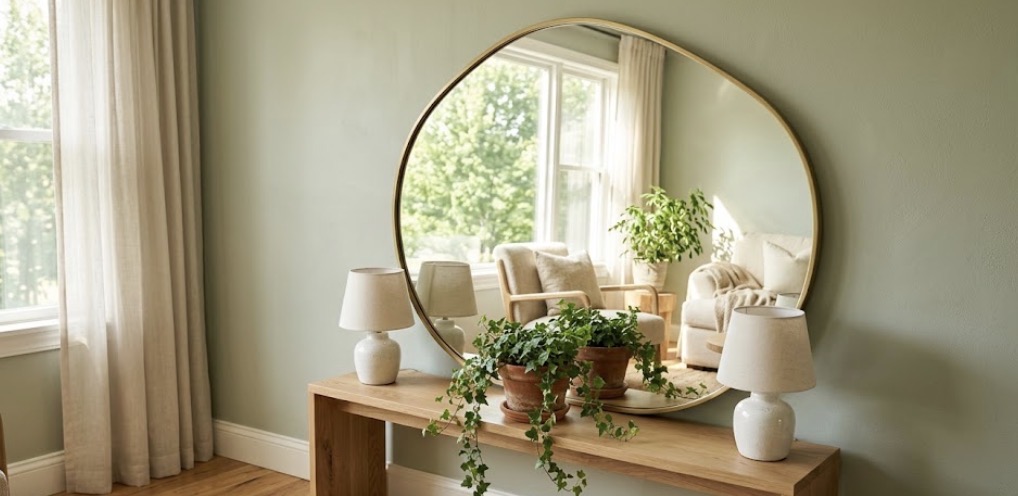
If you are worried about the gap between the sofa and the wall looking empty or wasted, a narrow console table placed directly behind the sofa solves this beautifully. You can put a pair of small lamps on it, a trailing plant, a few books, or a small decorative tray. Suddenly that formerly awkward strip of space has become a deliberate and lovely design detail. Think about traffic flow as you position the sofa. People need to be able to move through the room comfortably without turning sideways or sucking in their stomach. Leave at least thirty inches between pieces of furniture along any walking path, and ideally thirty-six inches along the main path through the room. If the room has multiple entrances, make sure none of them are blocked by a sofa corner or a chair back sticking out into the walkway.
Step Four: Build a Conversation Area That People Actually Want to Use
Here is a simple test. Think about the last time you had people over and the conversation really flowed. Everyone was relaxed, laughing, talking freely, nobody was leaning too far forward trying to hear, nobody was twisting at an odd angle to see someone across the room. Now think about where everyone was sitting. Chances are, they were relatively close together, probably no more than eight to ten feet apart, and they were positioned so they could see each other’s faces without effort. This is exactly what a well-designed conversation area does. It makes talking easy. And for most living rooms, creating that easy, natural conversation zone is the primary design challenge.
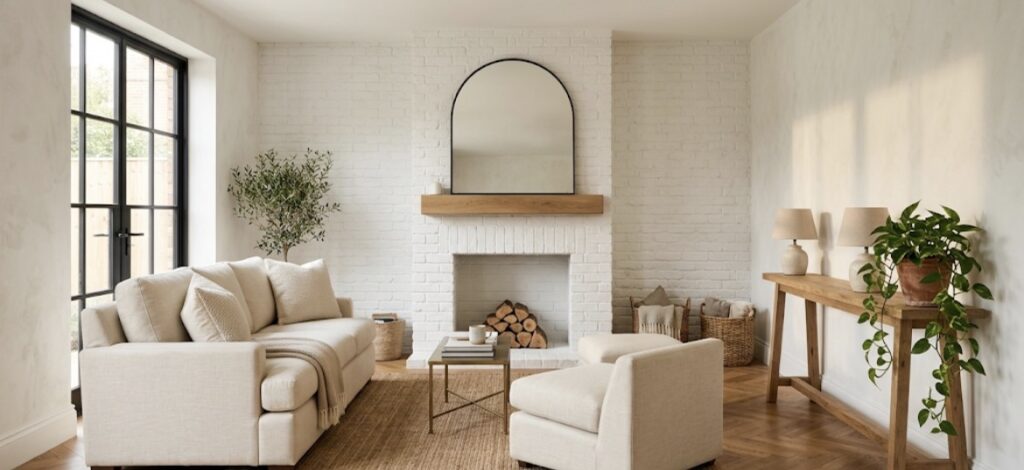
The ideal conversation area is roughly square or slightly rectangular in shape, with seating arranged on at least two sides and ideally three. Your sofa anchors one side. A pair of armchairs, a loveseat, or a combination of the two anchor the opposite or adjacent sides. A bench, a pair of accent chairs, or even a large upholstered ottoman can close in the remaining side. The goal is that anyone sitting in this grouping can easily see and hear everyone else without twisting or straining. Keep the seating within eight feet of each other from side to side. Anything further and people start to feel like they are trying to hold a conversation across a conference table, which is fine for business meetings and very bad for a relaxed evening at home.
Angle your armchairs and side chairs slightly toward the center of the conversation area. This is a small adjustment, maybe ten to fifteen degrees, and it sounds too subtle to matter. But it changes the entire energy of the room. A chair pointed straight ahead looks like it belongs in a waiting room. A chair angled even slightly inward toward the group looks like it belongs in a home. It signals, without any words, that this is a place where people are expected to talk and connect. Humans pick up on this cue subconsciously every single time they walk into a room.
If you have a sectional sofa, which is a large L-shaped sofa that wraps around a corner, be aware that it already creates a partial conversation zone on its own by virtue of its shape. The challenge with sectionals is that the open end of the L can feel unanchored and incomplete. An armchair, a chaise longue, or even a large, firm floor pouf placed at the open end closes the shape and completes the conversation area. Without something at that open end, the sectional tends to look like it is gesturing toward empty space, which is slightly sad for such a large piece of furniture.
Step Five: Place the Coffee Table Right
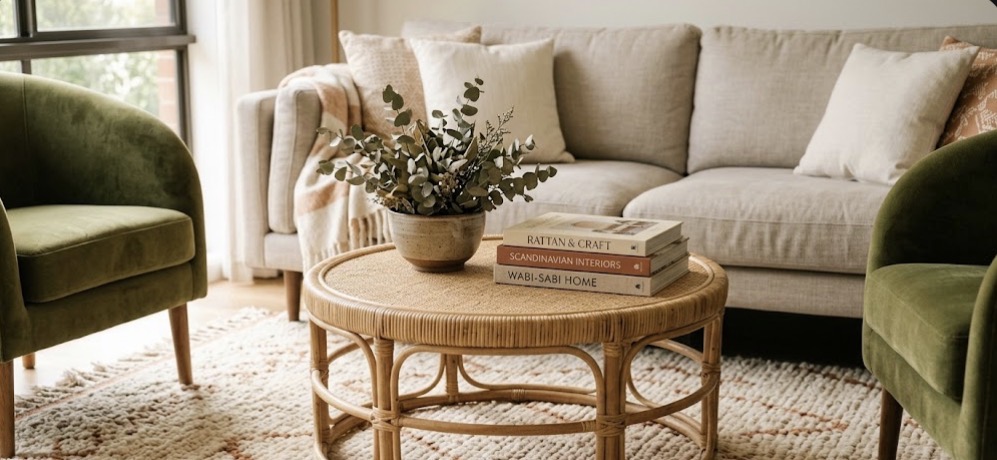
The coffee table is the middle child of living room furniture. It holds your remotes, your coffee, your candles, your books, and sometimes your feet after a long day. It often gets placed without much thought, pushed wherever it fits, and left there. But the coffee table, when placed with intention, is the piece that completes the conversation area and makes the whole seating arrangement feel grounded and finished. When placed badly, it becomes an obstacle course and a source of daily shin pain.
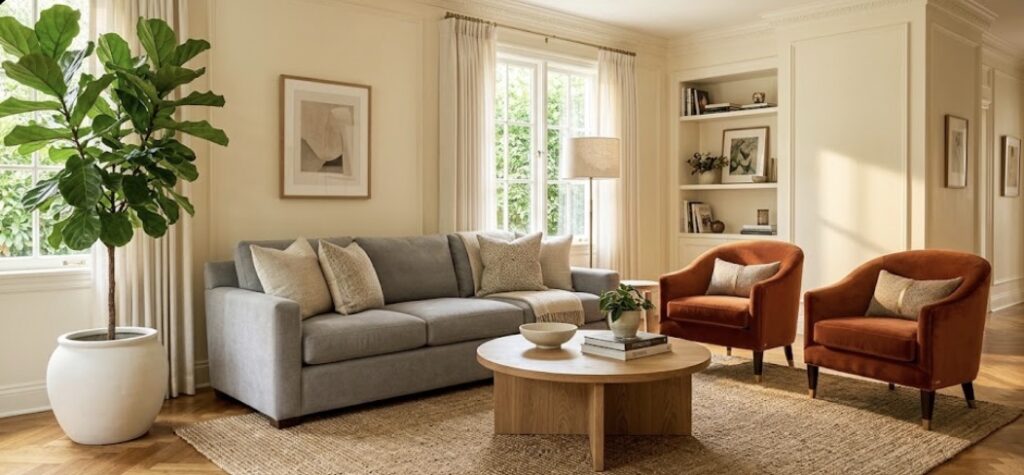
The basic rule for coffee table placement is simple and easy to remember: it should sit between twelve and eighteen inches away from the sofa. Close enough that you can easily reach it from a seated, relaxed position. Far enough that you do not bang your shins when you stand up, which will happen, and which will cause you to say words you would prefer your children not hear. If you have children in the house, lean toward the eighteen-inch end of that range both for safety and for the extra floor space that children seem to require at all times for reasons that are not entirely clear to adults.
The coffee table should be roughly the same height as the seat cushions of your sofa, or very slightly lower, ideally one to two inches below. A table that rises significantly above the seat cushions looks out of scale and is uncomfortable to use. A table that is dramatically lower than the seat cushions looks too small and makes reaching for your coffee feel like a mild yoga exercise. Think also about the length. A coffee table that is too small for the sofa looks like it wandered in from a different room. The general design guideline is that a rectangular coffee table should be approximately two-thirds the length of your sofa. If your sofa is ninety inches, aim for a coffee table around sixty inches long. For a round table, use the same two-thirds principle based on the sofa’s length versus the table’s diameter.
If a single large coffee table feels too heavy or too formal for the space, a cluster of smaller pieces works beautifully. Two matching upholstered ottomans side by side can replace a single coffee table, and they double as extra seating when needed. A grouping of three nesting tables can spread out or stack together depending on the situation. A collection of different-sized wooden stools or floor poufs creates a casual, collected look that is very much at home in relaxed, family-oriented living rooms. The key with any of these alternatives is to make sure the combined footprint is proportional to the sofa, and that the surface heights remain in that comfortable one-to-two-inch-below-seat-cushion range.
Step Six: Handle the Television Thoughtfully
The television creates more living room design debates than almost any other single object. Interior designers will tell you not to let it dominate the room. The other half of your household will tell you they want to see it clearly from every seat, including ideally while standing in the kitchen making a snack. Here is how to handle it in a way that respects both the design and the real humans who live in the space.
Start with height. The single most common television placement mistake is hanging it too high. When you are sitting on your sofa in a fully relaxed position, the center of the television screen should be at roughly eye level, which for most seated adults is around forty-two to forty-eight inches from the floor. If the center of your screen is significantly higher than that, you will be tilting your neck upward for every minute of every viewing session, and over time this creates the kind of neck discomfort that even the best throw pillow cannot fix. The instinct to hang the television high comes from wanting it to be visible from far away or from wanting to keep it above other furniture. But comfort while seated matters more than visibility while standing.
Think about viewing distance. The widely accepted guideline is that you should sit at a distance from your television that is roughly 1.5 to 2.5 times its diagonal screen measurement. For a fifty-five-inch television, that puts the ideal viewing distance between approximately seven feet and eleven and a half feet from the screen. Too close and you see every pixel individually, your eyes work overtime, and the experience is genuinely unpleasant. Too far and details become difficult to read and you end up leaning forward on the sofa, which defeats the entire purpose of a comfortable seat. Measure the distance from where your sofa will sit to where the television will be, and use it as a check on whether the TV size you are considering is actually appropriate for the room.
If your room has both a fireplace and a television, welcome to one of the most reliably discussed interior design dilemmas in existence. The answer depends on how you actually live. If the television is on most evenings and the fireplace is used occasionally for atmosphere, face the main seating toward the television. If the fireplace is the centerpiece of your daily living and the television is secondary, face the seating toward the fireplace. If you use both equally, you have the option of angling the sofa slightly between them in a larger room, or mounting the television above or beside the fireplace in a smaller room. Mounting above the fireplace raises the screen higher than is technically ideal, but many people live with this compromise happily because the visual tidiness of having everything on one wall outweighs the slight neck adjustment.
The television unit, media console, or TV stand grounds the television visually and provides essential storage for all the equipment that lives around it. As a rule, the media unit should be at least as wide as the television, and ideally wider. A large television sitting on a narrow little stand looks visually precarious and oddly top-heavy. A television centered on a wide, substantial media unit looks intentional and settled. Media consoles with closed cabinet doors for hiding equipment, cables, and the general chaos of streaming boxes and game controllers are particularly useful for keeping the room looking tidy.
Step Seven: Choose and Place Your Rug Correctly
A well-chosen and well-placed rug is one of the most powerful elements in a living room. It defines zones, adds warmth, absorbs sound, brings pattern and color, and ties all the separate pieces of furniture together into a cohesive group. A rug that is the wrong size, or placed in the wrong position, does the opposite: it makes the room look disjointed, cheap, or simply off in a way that most people can feel but cannot always name. The good news is that the rules for getting the rug right are very simple once you know them.
The number one rug mistake, made in homes all over the world, is buying a rug that is too small. A rug that is too small for the space forces the furniture to float around it rather than being anchored by it, and the whole room ends up looking like the furniture is just parked on top of a bath mat. For a living room, the guideline that works in almost every situation is this: the front two legs of the sofa and the front two legs of any armchairs in the conversation area should all sit on the rug. This creates a visual boundary for the seating group and ties all the pieces together without crowding them. The rug essentially acts as a soft, textile room divider that tells your eye where the conversation area is without requiring any physical walls.
If budget is a constraint and a large rug is not immediately possible, the next best option is to have all four legs of the sofa on the rug while the armchairs remain just off it. This is less unified but still works reasonably well. What consistently fails is a rug where only the sofa’s front feet touch the edge of it and everything else is on bare floor. That rug will look like it arrived at the wrong address. For size guidance, in a typical living room a rug of at least eight by ten feet is usually the minimum that will hold a sofa, a coffee table, and two chairs comfortably. For larger rooms, ten by fourteen or larger is often appropriate.
Think about shape. Rectangular rooms usually look best with rectangular rugs. Rooms where the seating is arranged in a more circular or square formation often look beautiful with a round rug placed at the center, which adds a softness and dynamism that rectangular rugs do not provide. Round rugs are also particularly useful in smaller rooms because the absence of sharp corners makes the space feel more open and less boxy. Pattern and color in a rug do substantial work in a room. A bold geometric or organic pattern in a room with mostly neutral furniture adds visual excitement without requiring expensive furniture changes. A subtle, textured, neutral rug lets statement furniture or art take the lead. Neither approach is wrong. They just create different moods.
Step Eight: Add Armchairs and Secondary Seating
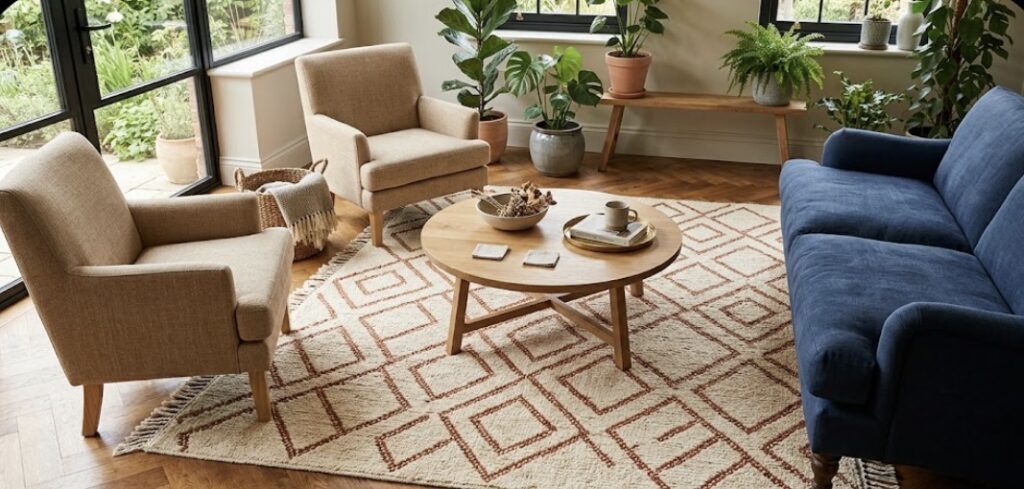
Once your sofa and coffee table are placed, the secondary seating pieces come next. This usually means one or two armchairs, sometimes a loveseat, occasionally an accent chair or two, and in family rooms, perhaps a generous floor pouf or a bench that can hold extra people when needed. These secondary pieces do two things simultaneously: they complete the conversation area by closing the seating group on the open sides, and they add visual variety to the room so that everything does not look like it rolled off the same assembly line on the same Tuesday afternoon.
A pair of matching armchairs placed across from the sofa, flanking the coffee table, creates a classic, balanced, symmetrical composition that feels elegant and considered. It is a very reliable arrangement and it works in almost every room type. If symmetry feels too formal or too static for your taste and personality, try pairing two chairs that are slightly different in style but share a unifying element, such as the same leg finish, a similar color, or a complementary fabric weight. This creates a more layered, gathered-over-time feeling that many people find warmer and more personal than a perfectly matched set.
The way you angle armchairs matters enormously. Chairs pointed perfectly straight, like two soldiers standing at attention, look formal and slightly uncomfortable. Chairs angled even slightly inward, turning to face the center of the conversation group, look relaxed and inviting. This is a detail you can adjust in about ten seconds and it changes how the room reads from the moment you walk in. It is the kind of thing a professional stylist would notice immediately and a first-time guest would simply feel without knowing why.
For rooms where full armchairs are too large, accent chairs are a wonderful alternative. Accent chairs are typically smaller and lighter than traditional armchairs, and they are often made in more visually interesting silhouettes and materials. A single sculptural accent chair in a bold color or an unexpected fabric, placed at the edge of the conversation area or in a corner with a floor lamp behind it, can become one of the most characterful elements in the room. It is a seat that also functions as decoration, which is a very efficient use of space and money.
For flexible extra seating that disappears when not needed, floor poufs, ottomans, and low upholstered stools are hard to beat. A large square ottoman at the end of a sectional serves as a footrest, an extra seat, and a visual anchor for the open end of the L-shape. Smaller leather or fabric poufs can live under a console table, tucked beside the sofa, or stacked in a corner, and be pulled out whenever additional guests arrive. They add almost no visual weight to the room when not in use, which is a meaningful advantage in any room that is not enormous. Resist the temptation to fill every corner and every wall with seating. Leave breathing room between pieces. The space around furniture is not wasted. It is the space that makes the room feel like somewhere a person would actually want to spend time.
Step Nine: Layer the Lighting
Lighting is the element of interior design that most people spend the least time thinking about and that makes the most dramatic difference to how a room feels. A room with perfect furniture arrangement and harsh or flat lighting will always feel uncomfortable and slightly institutional. A room with decent furniture and beautifully layered, warm lighting will feel wonderful from the moment you walk in. Lighting changes the perceived size of a room, the warmth of the color palette, the comfort of the atmosphere, and the mood of every person who sits in it. It is also one of the most affordable things to improve, which makes neglecting it particularly unfortunate.
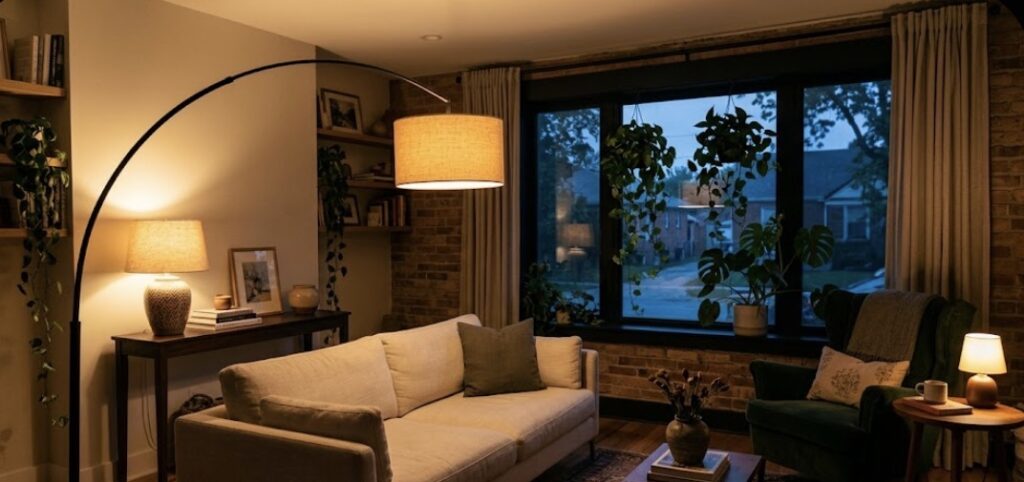
The first principle of good living room lighting is to stop relying on a single overhead light source. One ceiling bulb flooding the room from above with uniform, flat light is the fastest way to make a beautifully furnished room feel like a brightly lit storage unit. Instead, think in layers. Designers call this layered lighting, and it means having light coming from multiple sources at multiple heights so that the room has depth, dimension, and warmth rather than flat, even illumination from a single angle. Your three layers are ambient, task, and accent. Ambient light is the general illumination of the room from ceiling fixtures, chandeliers, or recessed lights. Task light is focused light for a specific activity, like a floor lamp beside an armchair for reading. Accent light draws attention to specific elements, like an art piece, a bookshelf, or an architectural feature. All three working together create a room that is visually dynamic and genuinely pleasant to be in.
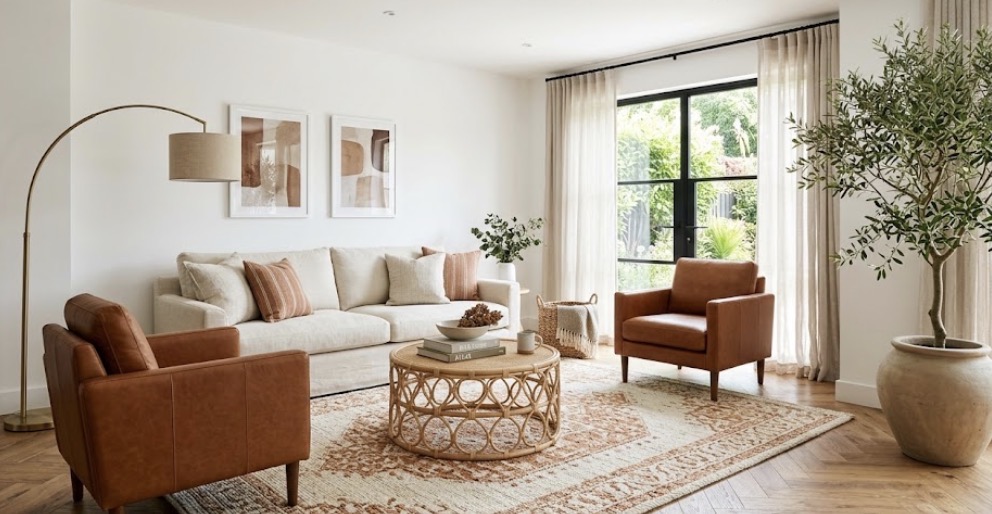
Floor lamps are among the most useful pieces of equipment in a living room. A tall floor lamp placed behind or beside an armchair fills that seating corner with warm, inviting light and makes the whole area feel more complete and defined. An arched floor lamp that extends over a sofa from one side is particularly useful in smaller rooms where there is no space for a side table but you still want a light source near the seating. Sculptural floor lamps in interesting materials and finishes, brushed brass, matte black, rattan, aged iron, also function as standalone decorative objects that add a design element of their own beyond just illuminating the space.
Table lamps on side tables contribute light at human scale, which is the most flattering and comfortable height for a living space. The warm glow of a table lamp at seated eye level, roughly thirty to thirty-four inches from the floor, is dramatically more pleasant than light falling directly from above. Matching lamps on both ends of a sofa create a symmetrical, settled look. Different but complementary lamps on mismatched side tables create a more relaxed, eclectic feel. Both are valid choices. The important thing is that the lamps are there and that they are switched on in the evening, because far too many beautiful lamps spend their lives as decoration rather than light sources because people forget to turn them on.
Bulb temperature, measured in Kelvin, matters enormously for living room atmosphere. Bulbs in the 2700K to 3000K range produce the warm, golden light that makes people feel relaxed and comfortable. This is the color of candlelight, of a setting sun through a window, of the kind of light that makes food look appetizing and faces look their best. Bulbs above 4000K produce a cooler, bluer white light that is excellent for kitchens, bathrooms, and offices where clarity and alertness matter more than warmth. In a living room, cool white light creates an atmosphere closer to a fluorescent-lit office than a relaxed home, and no amount of beautiful furniture overcomes it. Check every bulb in your living room. If any of them are above 3000K, replace them. It will cost less than ten dollars and change how the room feels immediately.
Step Ten: Add Side Tables, Shelving, and Storage
The supporting pieces of a living room, the side tables, shelves, media storage, consoles, and baskets, are where function meets decoration in the most practical way. When these pieces are chosen and placed well, they make daily life in the room easier and more organized while adding visual character and warmth. When they are chosen carelessly or crammed in wherever they fit, they become sources of clutter and visual noise that make the whole space feel busier and more stressful than it needs to be.
The basic rule for side tables is simple: every seat in the conversation area should have a surface nearby where a person can comfortably place a drink, a phone, or a book without standing up or reaching uncomfortably. For the sofa, this usually means a side table at each end. For armchairs, a small round table placed beside the chair or a C-shaped table that slides underneath the chair arm works very well. C-shaped side tables, also called sofa side tables or laptop tables, are particularly clever in smaller rooms because they require almost no floor footprint. They slide in from the side and hover at arm level, providing all the surface area of a side table while taking up essentially none of the floor space.
Bookshelves and display shelving are among the most characterful things in a living room. A well-organized and thoughtfully styled bookshelf tells visitors something about who you are, what you care about, and how you live. But the difference between a bookshelf that looks styled and intentional and one that looks overstuffed and chaotic is surprisingly small. The technique is simple: do not fill every inch. Leave breathing room at the end of each shelf. Alternate vertical rows of books with horizontal stacks. Break up solid runs of books with objects: a small ceramic vase, a framed photo, a trailing plant, a sculptural object that means something to you. Keep the color palette of the books relatively consistent if possible, either by covering them in plain paper wraps or simply by grouping similar spine colors together. None of this requires buying anything new. It just requires looking at what you already have with fresh eyes.
Console tables earn their floor space many times over. Placed behind the sofa in an open-plan room, they define the boundary between the living and dining areas with elegance. Placed against a bare wall, they fill vertical space without blocking anything. Placed under a window, they create a perfect spot for a small lamp, a vase of flowers, and a few meaningful objects. The surface of a console table is one of the most useful decorative spaces in a living room, and a console table with a shelf or a lower rail beneath it adds storage for books, baskets, or plants without adding visual bulk.
Storage in a living room is one of those things that is easy to underestimate until you are living without it. Remote controls, spare blankets, charging cables, children’s toys, magazines, board games, the small detritus of daily living accumulates in living rooms faster than anywhere else in a home because it is the room where people spend the most time. Attractive storage solutions, lidded ottomans, wooden trays, wicker baskets, side tables with drawers, shelving with baskets on the lower levels, give all of this stuff somewhere designated and tidy to live. The room does not need to have less stuff in it to look tidy. It just needs each thing to have a home.
Step Eleven: Hang Art and Mirrors at the Right Height
Art and mirrors on the walls are not optional extras. They are functional elements of a well-designed room. They define the visual scale of the space, make ceilings feel higher or lower depending on placement, introduce color, texture, and personality, and fill the vertical space of a room in a way that furniture alone cannot do. A room with beautiful furniture but bare walls will always feel slightly unfinished, as if it has not yet settled into itself. Getting art and mirrors right is one of the final steps that brings the whole room together and makes it feel complete.
The rule for hanging art at the correct height is simple and applies in almost every situation: the center of the artwork should be at approximately eye level, which is around fifty-seven to sixty inches from the floor. This is the standard used by professional galleries and museums because it is the height at which art is most comfortable to look at. Art hung too high on a wall, which is the most common mistake, looks like it is floating disconnected from the furniture below it, leaving an awkward gap of blank white wall between the piece and the room it is supposed to belong to. Art hung too low looks like it is sliding off the wall and competing with the furniture in front of it. At eye level, the artwork feels settled and grounded, like it belongs exactly where it is.
When hanging art specifically above a sofa, the bottom edge of the artwork or art grouping should sit approximately six to eight inches above the top of the sofa back. Any more than twelve inches of gap between the sofa top and the art bottom starts to look disconnected and floating. This is particularly common when people hang large art very high on a tall wall without accounting for the relationship between the art and the furniture below it. The art does not just relate to the wall. It relates to everything in the room, and most importantly to the piece of furniture it sits directly above.
Large single-piece artwork makes a bold, confident statement. One oversized canvas or print anchors an entire wall and gives the room a clear visual focal point that requires no explanation or arrangement. Gallery walls, which are groupings of multiple frames arranged together on one wall, create visual depth and personality, and are a beautiful way to display a collection of smaller pieces that might get lost individually. The key to a gallery wall that looks deliberate rather than chaotic is consistent frame spacing, usually two to three inches between each frame, and a unifying visual thread, whether that is a consistent frame material, a similar color palette within the art, or a shared subject matter.
Mirrors deserve to be treated as architectural elements, not just as decorative afterthoughts. A large mirror in a living room reflects light, making a darker room brighter. It creates visual depth, making a smaller room feel larger. And it adds a decorative element of its own, since a beautifully framed mirror can be as visually interesting as any work of art. Position a mirror across from a window to maximize reflected natural light. Position it across from a lamp to double the warmth of the light it reflects back into the room. A large floor-leaning mirror against a wall creates a casual, editorial look. A framed mirror hung deliberately at eye level creates a more formal, composed effect. Both work. Choose based on the mood of your room.
Step Twelve: Style with Plants, Texture, and Accessories
You have your furniture in the right places. Your rug is grounding the conversation area. Your lighting is warm and layered. Your art is at the right height on the right walls. Now comes the final and most personal layer: the styling. This is the step that takes a well-arranged room and turns it into a home that a specific person loves living in. Plants, texture, and accessories are the elements that bring individuality, warmth, and sensory richness to a space that is otherwise just furniture in a room.
Plants are the fastest and most reliable way to bring life into a living room. A large floor plant, like a fiddle leaf fig, a bird of paradise, a rubber tree, a tall snake plant, or a mature monstera, fills vertical space beautifully and gives the room a sense of organic height that no lamp or bookshelf quite replicates. These large plants work particularly well in corners that would otherwise look empty, beside the end of a sofa, or flanking a fireplace or television wall. Medium plants on shelves and side tables bring greenery at different heights, which is important because visual interest at multiple levels makes a room feel richer. Small succulents, herbs in terracotta pots, or trailing plants on the coffee table or windowsill add detail and texture at the closest viewing distance.
If you have a complicated history with houseplants, there are two honest solutions. First, choose genuinely low-maintenance varieties. Snake plants, pothos, ZZ plants, and peace lilies survive in almost any indoor condition with minimal care and will outlast most furniture in the room. Second, invest in high-quality artificial plants for the larger, more dramatic pieces. The artificial plants available today, particularly for larger tropical varieties like fiddle leaf figs and birds of paradise, are remarkably convincing at normal viewing distances. They require nothing beyond occasional dusting. There is no shame in this. A convincing fake plant that looks beautiful is infinitely better than a real plant that is slowly dying in the corner.
Texture is the quality that makes a room feel physically and emotionally comfortable. A room with all hard surfaces and a single fabric material feels cold and sterile regardless of how expensive or well-arranged the furniture is. A room with multiple textures working together feels layered, sensory, and deeply satisfying to spend time in. The simplest and most affordable way to add texture is through soft furnishings: a chunky knit throw draped over the back of a sofa, a collection of pillows in different fabrics mixing velvet, linen, and cotton, a woven rattan tray on the coffee table, a jute or sisal rug layered over a larger flat-weave rug.
Step Thirteen: Solve Common Living Room Problems
Even with excellent planning and careful measurement, living rooms frequently present at least one genuine layout challenge. A room that is too long and narrow. A room that is too small for the furniture you own. A room where the doors and windows seem to conspire against every possible furniture arrangement. A room with an odd shape that no floor plan ever seems to properly address. These challenges come up in almost every home, and they all have practical, workable solutions once you know what to look for.
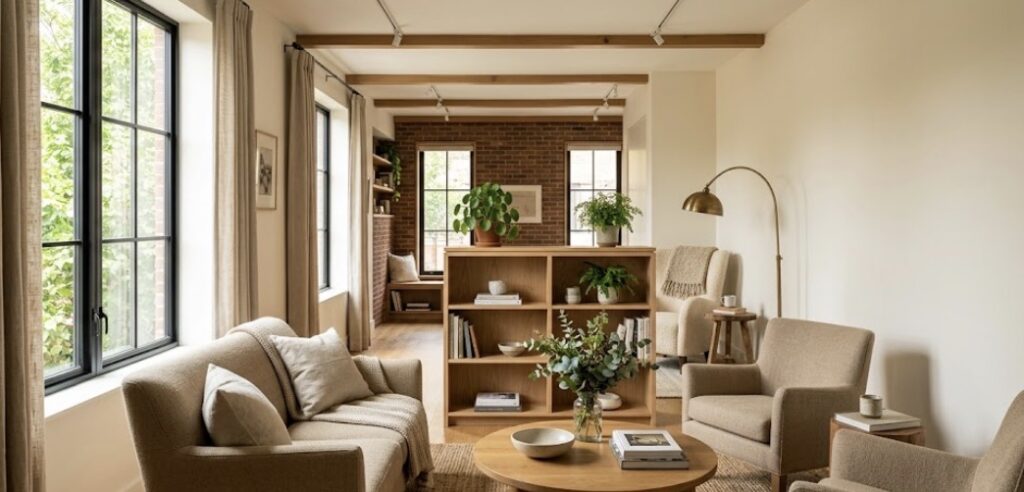
For a long, narrow living room, the mistake people most often make is placing a long sofa along the longest wall and wondering why the room feels like a very expensively decorated hallway. The fix is to divide the room visually into two distinct zones that each run across the width of the room rather than down its length. Place your main seating area at one end and a secondary zone at the other, perhaps a reading chair with a lamp, a small desk area, or a simple console table arrangement. Use a low bookshelf, a row of plants, or a console table turned perpendicular to the walls to mark the visual boundary between the two zones. This breaks the tunnel effect and transforms one long awkward room into two smaller, more usable spaces that each feel intentional and comfortable.
For a very small living room, the counterintuitive truth is that filling it with very small furniture makes it feel more crowded, not more spacious. Small furniture in a small room looks busy and cluttered and gives the eye nowhere to rest. Instead, choose fewer pieces at a more appropriate scale. One properly sized sofa, one coffee table, one armchair, and stop there. Keep the floor as clear as possible. Use light wall colors and light upholstery to reflect light. Use mirrors to add visual depth. Keep all surfaces clear of excess objects. A small room that is edited and uncluttered will always feel bigger than a small room that is crammed with small-scale furniture trying to accommodate everything.
For rooms with awkward window placements, low ceilings, or challenging door locations, the principle is the same in every case: respect the architectural constraints and build around them rather than fighting them. Never block a doorway with furniture. Always maintain clear traffic paths of at least thirty inches from every entrance through to the main living area. Keep sofas and chairs below the window line whenever possible so that natural light is not blocked. Use tall vertical elements, floor lamps, tall plants, tall bookshelves, to draw the eye upward in rooms with low ceilings, which creates the perception of more height even when the architecture does not provide it.
The Final Walk Through
You have planned, measured, moved furniture, placed your rug, sorted your lighting, hung your art, styled your shelves, and added the plants and accessories that make the room feel like home. The last step, before you declare the room finished and reward yourself with a long sit-down on that sofa you worked so hard to place correctly, is the final walk-through. This is your editing pass. Your quality check. Your chance to see the room the way a first-time guest sees it, with fresh eyes and no memory of how it looked before.
Start from outside the room. Walk in through the main entrance exactly as you normally would. What is the first thing your eye goes to? It should go to the focal point of the room, whether that is the fireplace, the art on the wall, or the television. If your eye is immediately drawn to something cluttered, something that looks out of place, or something that feels visually too heavy or too light for its position, note it down and fix it. The first impression of a room is set in the first three seconds of entering it, and getting that opening view right matters more than almost anything else.
Sit in every seat in the room. Sit on the sofa, on each armchair, on any other seating in the space. From each position, ask yourself: can I reach the coffee table? Can I see the television without turning my neck uncomfortably? Is there a light source close enough to read by? Does this seat feel comfortable, or is it angled slightly wrong against something? Sitting in each seat takes five minutes and will reveal problems that are invisible when you are standing up looking at the room from a design perspective but become immediately obvious the moment you try to actually use the space the way it was intended to be used.
Walk through the room along every traffic path. From the front door to the sofa. From the sofa to the kitchen. From the hallway to the armchair. Do you have to squeeze past anything, turn sideways, or step over a corner? Are any cabinet doors or drawers blocked by furniture that got placed an inch too close? Is the flow natural and easy in every direction? Good furniture arrangement should feel like a room that was designed for movement through it, not just for sitting in it. If anything interrupts the flow, adjust it. A few inches in either direction is usually enough.
Finally, live in the room for a few days before you call it done. Furniture arrangements that look correct in the evening can reveal small problems in the morning light. A chair that seemed perfectly placed on Saturday might turn out to be slightly too close to the doorway when you are carrying grocery bags through on Monday. A lamp that looked beautiful from across the room might create glare on the television screen when it is turned on during a movie. Give the room a week of real life before you finalize it. Note anything that bothers you without immediately moving it. At the end of the week, look at your notes and make the adjustments that genuinely improve things. Small, considered changes after living in a space are always more effective than big changes made in the first excited afternoon.
Putting It All Together
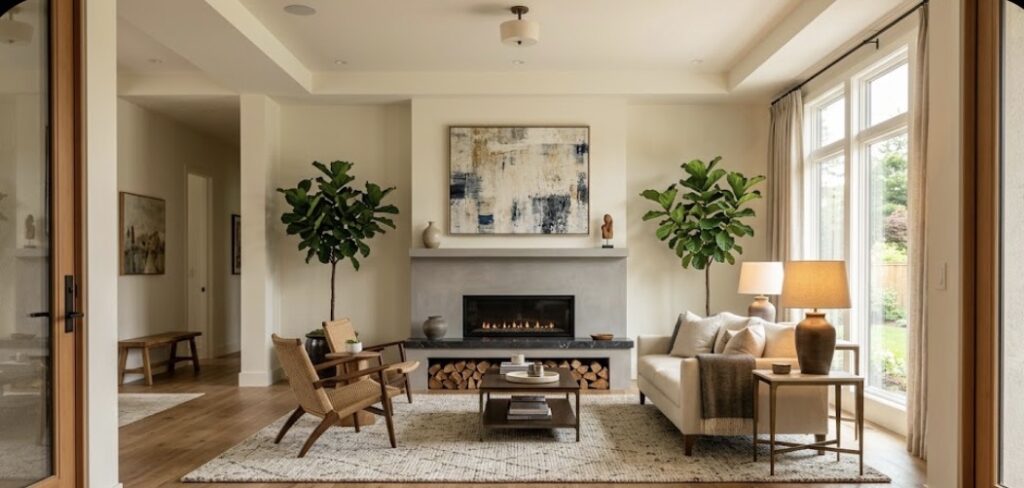
Here is the thing about how to arrange furniture in your living room: the goal was never to make it look like a showroom. The goal was always to make it feel like home. A place where you can sink into the sofa at the end of a long day and feel your shoulders genuinely relax. A place where guests come in and immediately feel comfortable without knowing exactly why. A place where the light is warm, the seating is right, the rug is big enough, the traffic flows without obstacles, and the things you love are arranged around you in a way that makes sense for your actual life.
None of the steps in this guide require a large budget or any professional help. You do not need to replace your furniture. You do not need to hire a designer. You need a measuring tape, a piece of paper, a willingness to move things around, and one solid weekend of focused attention. The transformation that comes from simply placing things in the right relationship to each other, pulling the sofa away from the wall, angling the chairs inward, sizing the rug correctly, layering the lighting, and editing the accessories down to what genuinely adds to the room, can be more dramatic than spending many times as much on new furniture placed in all the wrong positions.
Start with what you already have. Measure your room. Identify your focal point. Pull the sofa off the wall. Build the conversation area. Place the coffee table at the right distance. Get a rug that is actually big enough. Layer the lighting from three different heights. Style the shelves with breathing room between the objects. Add a plant or two. Hang the art at eye level. And then sit down, look around, and notice how the room feels. If something still bothers you after a week, adjust it. This is your room. It should work for you, feel good to you, and be somewhere you genuinely love spending time in. With the steps in this guide, it absolutely can be.