
Resort style living rooms are not just pretty rooms. They are rooms that speak a very specific language — one made up of natural textures, soft lighting, open layouts, and a quiet luxury that never tries too hard. The best part? You don’t need a beachfront property in Bali or a mountain lodge in Aspen to bring this feeling home. You just need the right ideas, a clear eye for what matters, and a willingness to let your living room do the heavy lifting when it comes to rest and comfort.
This blog post walks you through 12 resort style living room ideas — each one distinct, each one rich with detail, and each one designed to help you understand not just what the look is, but why it works and what makes it feel so good to be in. Whether your home leans coastal, tropical, desert modern, or mountain lodge, there is a version of resort living that belongs in your space.
What Makes a Living Room Feel Like a Resort?
Before we dive into the individual ideas, it helps to understand the bones of this design style. Resort spaces are not random. They are carefully engineered to create a specific emotional response — calm, comfort, and a gentle sense of luxury. When interior designers create resort-inspired living rooms, they are working with a very consistent toolkit.
Natural materials show up everywhere. Rattan, jute, linen, teak, stone, sisal, bamboo, these materials carry warmth and texture in a way that synthetic alternatives simply cannot replicate. They also age well, which is a polite way of saying they look better with a little wear, which is exactly how a great vacation spot should feel: lived-in, not staged.
Color plays a quiet but important role. Resort palettes almost always stay close to nature, warm creams, soft whites, sandy beiges, muted terracottas, earthy greens, oceanic blues, and deep charcoals that read like storm clouds over the sea. These colors don’t compete with each other. They layer, breathe, and let the textures do the talking. You will rarely walk into a well-designed resort space and feel visually assaulted. That restraint is intentional.
Lighting in resort spaces is always layered and always warm. There are no harsh overhead lights doing all the work alone. Instead, there is a mix of ambient lighting from pendants or recessed fixtures, task lighting from table lamps, and accent lighting that catches interesting surfaces. The result is a glow rather than a glare — the kind of light that makes people look good and feel even better.
And finally, there is scale. Resort living rooms tend to be generous with their furniture choices — deep sofas, wide armchairs, oversized ottomans. The message is that there is always room for you and everyone you love to stretch out fully and feel held. That physical sense of being accommodated is a surprisingly powerful design tool.
Now, let’s look at each idea in detail.
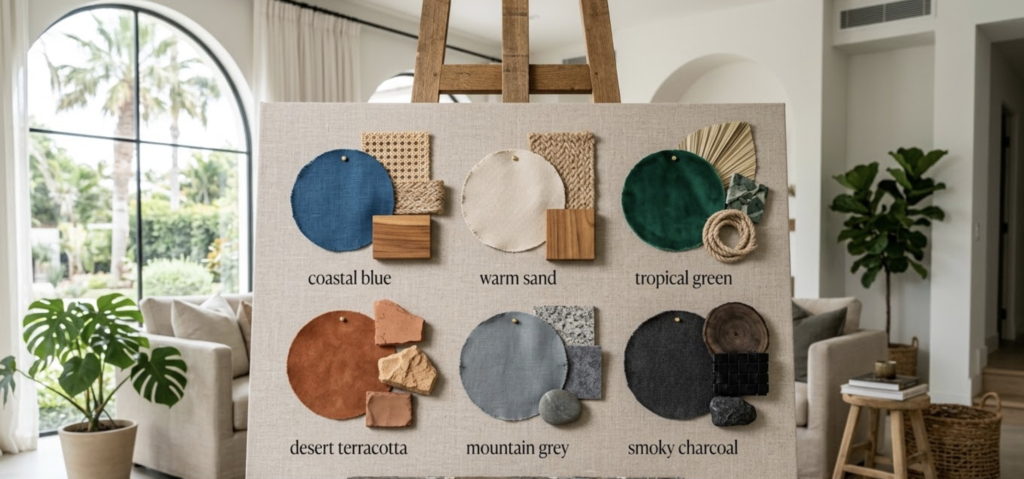
Idea 1: The Coastal Linen Lounge
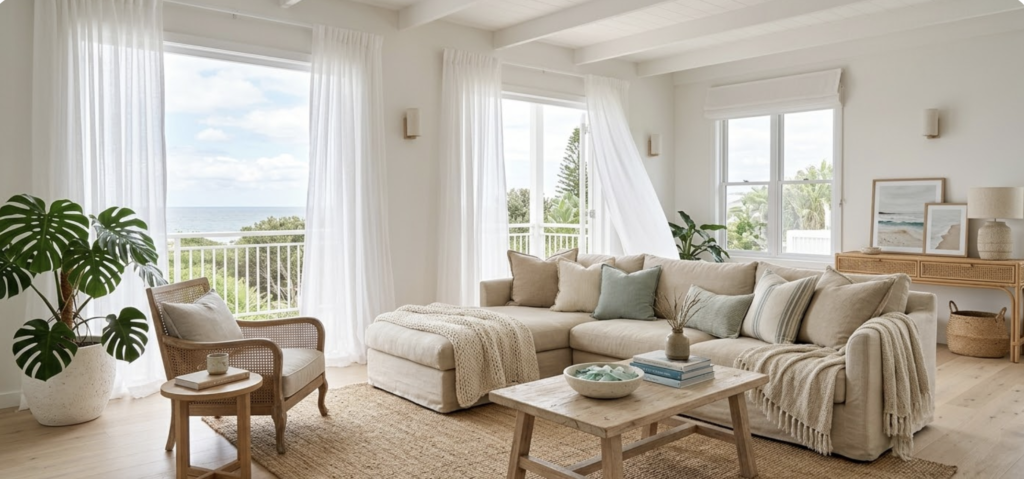
There is a particular kind of peace that only comes from rooms built in pale, sun-washed tones and dressed in fabrics that feel like they’ve been out in a sea breeze. The coastal linen lounge is not a beach house cliché — it is a more refined, grown-up version of coastal living, stripped of anything that feels kitschy (so yes, the seashell collections and anchor motifs can stay packed).
This living room idea centers on a sofa upholstered in heavy, natural linen — the kind that wrinkles beautifully and tells you in no uncertain terms that this is a room for actually sitting in. The color palette runs from bleached white to warm oat to the palest grey-blue, with occasional moments of deeper navy or faded denim. The floor is either wide-plank light oak or pale stone tiles, both of which feel cool underfoot and carry that breezy coastal energy without even trying.
Layering is everything here. You want at least two different textures in every corner — a chunky woven throw over linen cushions, a jute rug under a whitewashed coffee table, a ceramic lamp base next to a driftwood-framed mirror. The layers create visual depth without visual noise, which is exactly the balance that makes coastal resort spaces feel so restful.
Windows are a major player in this look. The goal is to get as much natural light in as possible, framed with linen or sheer cotton drapes in white or natural — nothing heavy, nothing dark. If there is an ocean view or even a garden view, this look turns it into art. If there isn’t, the room creates its own internal landscape through carefully placed plants (think soft-leafed varieties like pothos or monstera in pale ceramic pots), layered textiles, and that effortless pale palette.
The furniture silhouettes lean low and generous. A broad, cushiony sectional. A pair of linen-covered chairs with wide arms. A driftwood or bleached oak coffee table that looks like it floated in from the shore. A few well-placed baskets for throws and magazines. Nothing is precious. Nothing requires a coaster or a careful sit. This room wants to be used.
Idea 2: The Tropical Palm
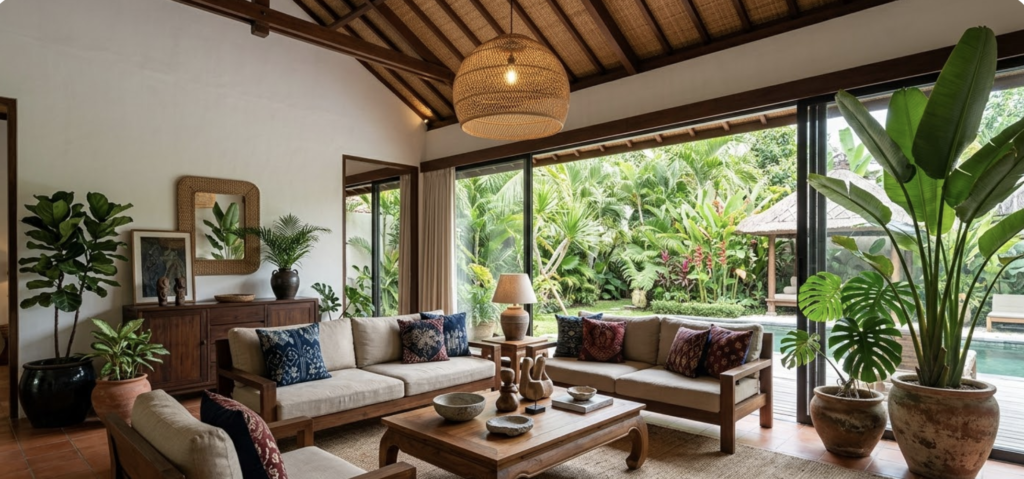
If the coastal linen lounge is a quiet sigh, the tropical palm sanctuary is a deep, satisfied exhale into a hammock. This living room idea is lush, warm, and unashamedly bold — but in the most sophisticated way possible. Think of the lobby of a high-end Balinese resort: dark teak furniture, ceiling fans turning slowly overhead, an abundance of tropical greenery pressing in from every angle, and a color story that mixes deep forest greens with warm terracottas and natural wood tones.
The key to making this look feel elevated rather than overwhelming is restraint in the color palette combined with generosity in the plants. The walls stay neutral, a warm white, a soft cream, or even a very pale earthy sage. The furniture is dark and grounded, typically teak or dark-stained rattan with deep cushions in natural fabrics. And then the plants arrive and do everything. Large-leafed varieties like bird of paradise, elephant ear, monstera, and fiddle leaf fig are the workhorses of this look. They are big, structural, dramatic, and alive in a way that no piece of art can quite replicate.
Textiles in this room tell a story of travel and texture. A woven ikat-print cushion. A batik-inspired throw. A sisal or bamboo rug underfoot. Pendant lighting in rattan or woven cane that casts beautiful shadow patterns across the ceiling at night. A long, low coffee table in carved teak with a collection of ceramic bowls, sculptural coral pieces, and a stack of books about faraway places.
This is also a living room idea that responds beautifully to outdoor connectivity. If you have sliding doors that open to a patio or garden, the tropical sanctuary living room becomes its most powerful when those doors are open and the interior greenery blurs into the outside landscape. The boundary between indoors and outdoors should feel soft and intentional. That blurring is one of the greatest tricks in the resort design playbook.
The mood of this room is warm, immersive, and deeply sensory. You walk in and feel slightly enveloped — in the best possible way. Like the room is giving you a very long hug.
Idea 3: The Desert Modern
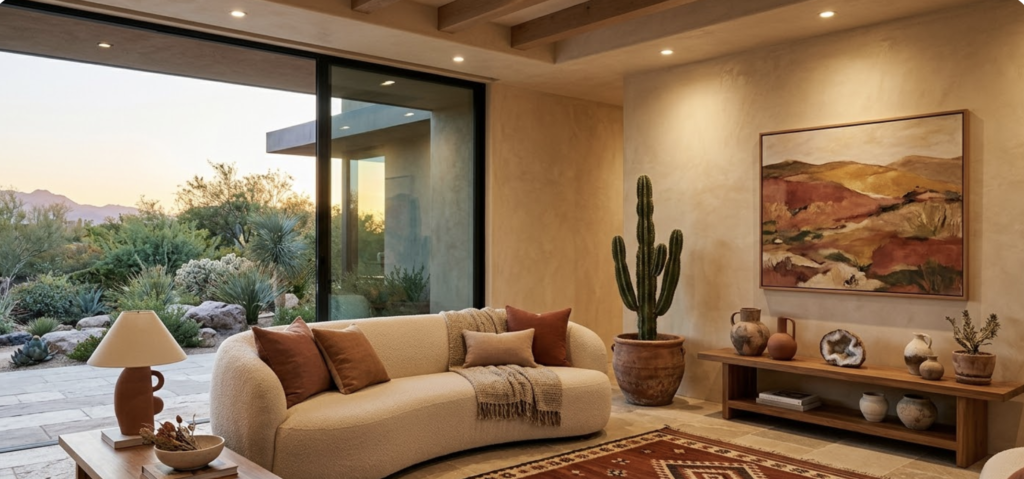
Not every resort dream involves the ocean. Some of the most extraordinary resort experiences in the world happen in the middle of nowhere — in the Arizona desert, the Moroccan sand dunes, or the red rocks of Utah — and they are breathtaking in a completely different way. The desert modern living room brings that experience home.
This look is built on a palette of warm neutrals: sandstone, burnt sienna, clay, dusty terracotta, and the occasional deep rust or copper accent. The walls could be limewash plaster in a warm white or sand tone, which gives the surface a beautiful, ancient-looking texture that catches the light differently at every hour of the day. The floors lean toward large-format stone tile or concrete in a warm buff or grey, occasionally softened by a Moroccan or kilim rug in muted reds, oranges, and creams.
The furniture in a desert modern living room is low, architectural, and comfortable. Think of deep-seated sofas in bouclé or performance linen in warm natural tones. Curved forms are very at home here — a rounded sectional, a half-moon coffee table, a sculptural pouf in leather or woven fabric. There is something about the rounded silhouette that echoes the organic forms of desert landscapes: the curve of a dune, the smooth face of a canyon wall.
Art and objects are where the soul of this room lives. Handmade pottery in clay and terracotta tones. Woven wall hangings in natural wool or cotton. A curated collection of smooth stones and geodes. A piece of abstract art in the warm, earthy tones of a desert sunset. Low lighting from terracotta table lamps or wall sconces that cast long, warm shadows that grow more dramatic as the sun goes down.
Plants in this space are architectural and stoic. A large saguaro cactus in a terracotta pot. A cluster of succulents on a stone shelf. An olive tree in a hand-thrown ceramic vessel. These plants do not overwhelm — they punctuate, like exclamation points in a sentence made of quiet beauty.
Idea 4: The Overwater Bungalow Lounge
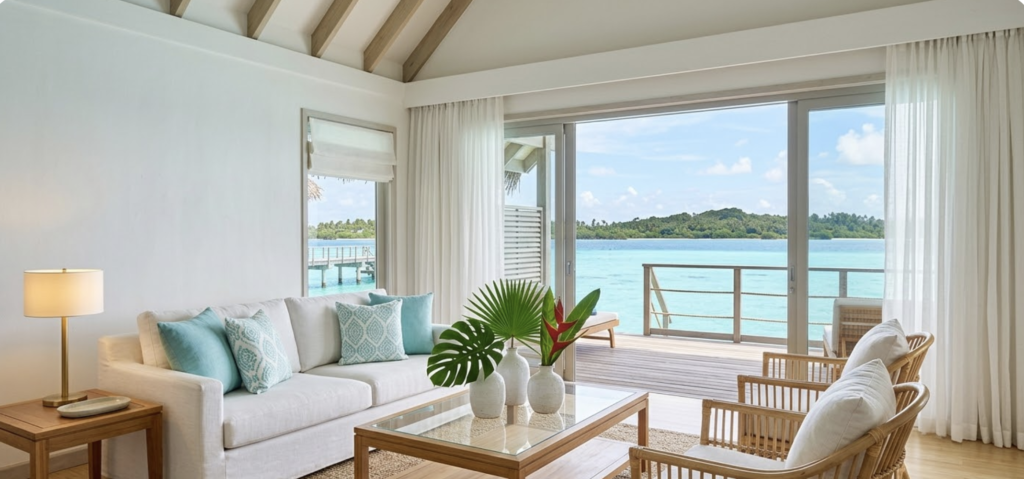
If you’ve ever stayed in an overwater bungalow — or spent a significant amount of time Pinterest-dreaming about one — you know the aesthetic. It is clean, white, and blue. It is open to the breeze. It has that specific brand of luxurious simplicity that makes you feel like the world has been reduced to just this room, this view, and this moment.
The overwater bungalow living room brings that crystalline, open-sea feeling to a land-locked space. The palette is very clean: bright whites, crisp blues ranging from soft aqua to deep cobalt, and the warm natural wood tones of teak or bamboo. Everything that is not white, blue, or wood feels deliberate — a pop of coral in a cushion, a brass lamp base that catches the light, a potted palm in a white pot.
The furniture is light in both color and visual weight. A white linen sofa. Occasional chairs in natural rattan with white cushions. A glass and teak coffee table that feels almost transparent. Open shelving in whitewashed wood with carefully curated objects: white coral sculptures, blue glass bottles, stacked white linen books. The overall effect is one of airiness — like the room weighs nothing and is perpetually about to float away.
Windows and doors are the real stars of this look. Floor-to-ceiling panels that open fully, or wide windows dressed in sheer white curtains that lift and drift in any breeze. The room should feel as though the sky and the light are invited guests who always show up. This connection to the outside is non-negotiable — it is the detail that separates a “blue and white room” from an “overwater bungalow living room.”
Lighting in the evenings becomes romantic and warm, which creates a beautiful contrast against the cool daytime palette. Warm Edison bulbs in a rattan pendant fixture. A set of brass table lamps with white shades. Candles in glass hurricane holders. The transition from bright and airy to warm and intimate is part of what makes this look feel so resort-worthy.
Idea 5: The Japanese Onsen
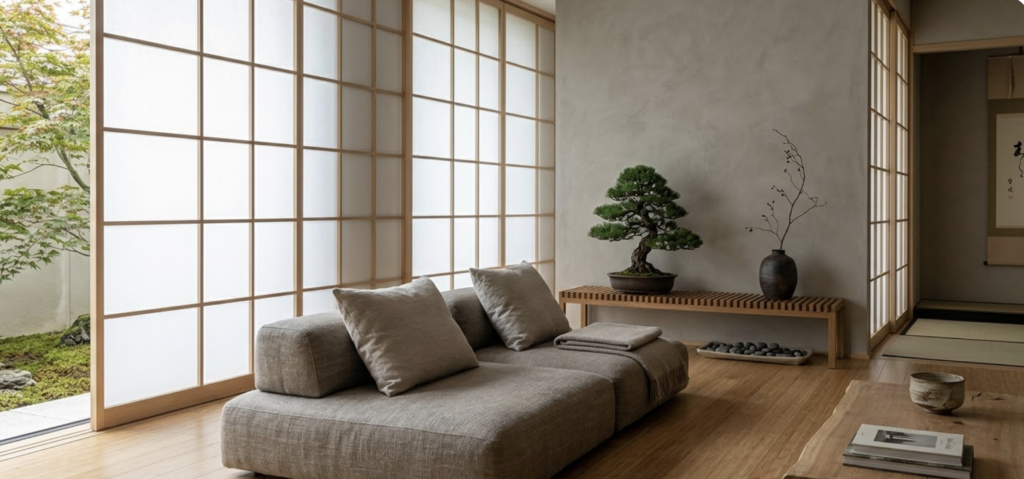
There is a reason wellness resort design so often draws from Japanese aesthetics. The principles of wabi-sabi — finding beauty in imperfection and simplicity — produce spaces that feel like the opposite of a cluttered, overstimulated life. The Japanese onsen retreat living room is built on those principles, and the result is one of the most genuinely serene resort-inspired looks available.
The palette here is restrained and earthy. Warm greys, charcoal, warm whites, the natural tones of unfinished wood, and the deep, mossy green of live plants. The walls might be in a textured plaster finish or simply left as clean, smooth white. The floors are typically wood — either wide, natural oak planks or bamboo — with a low, woven mat or a simple wool rug in a muted tone.
Furniture in this look is deliberately minimal and very low. A platform sofa or a set of large floor cushions in neutral fabric. A low, slatted wood coffee table that sits only centimetres off the floor. Open shelving in natural wood that holds only what is necessary and beautiful. The idea is to remove anything that is not earning its place in the room, which — if you are the kind of person who has three candles, four baskets, and a collection of forgotten throw pillows — is a genuinely radical act.
Objects in this space are chosen for their tactile beauty and their quietness. A handmade ceramic bowl. A single branch of dried botanicals in a tall stone vase. A small water feature or sand garden. Shoji-inspired panels that diffuse light beautifully. There is a profound intentionality to every single thing in this room. Nothing is accidental. Nothing is excess.
Plants here are precise and sculptural: a bonsai on a low shelf, a cluster of bamboo in a stone pot, or a single, perfect peace lily. The greenery is not exuberant — it is considered. It is the difference between a jungle and a haiku, and this room is firmly in haiku territory.
Idea 6: The Safari Lodge Living Room
Big game sunsets, warm lantern light, the sound of crickets and distant wildlife — the safari lodge experience is one of the most coveted resort aesthetics in the world, and it translates into living room design with extraordinary richness. This is a living room that feels like an adventure, like warmth, and like the finest version of being outdoors while being completely, luxuriously indoors.
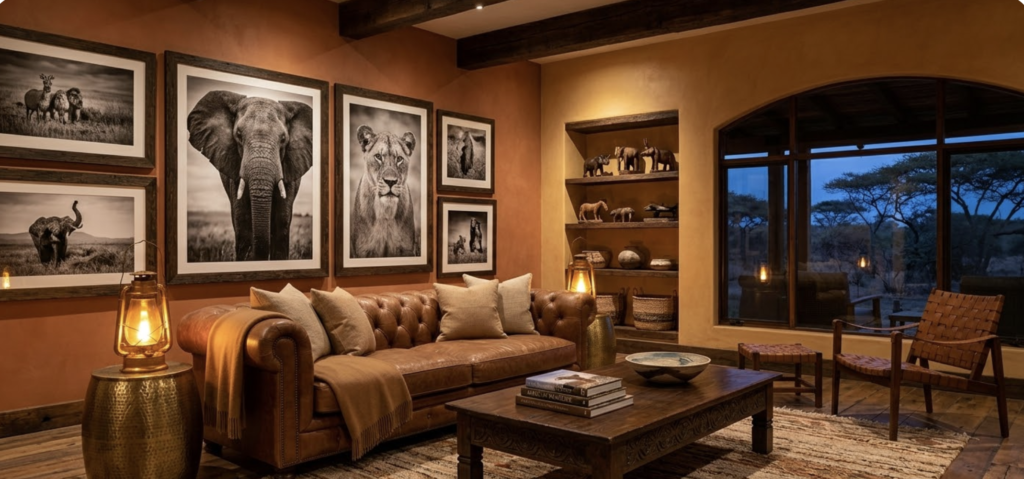
The palette is drawn entirely from the African savanna: warm caramel, deep toffee, creamy white, sandy gold, rich rust, and the deep, almost black tones of ebony wood. The walls may be painted a warm ochre or terracotta, or they may feature a natural stone accent wall that grounds the space visually. The floors are usually rich wood — dark walnut or mahogany-stained oak — with animal-print area rugs (the sophisticated, tasteful kind that look organic rather than costumey) or textured wool rugs in warm neutral tones.
The furniture here is substantial. Deep, tufted leather sofas in caramel or cognac. Wide, solid wood armchairs with raw hide or linen upholstery. A large, carved wood coffee table with a slight rawness to its finish. Side tables in hammered brass or blackened iron with warm-glowing lantern-style lamps. The room feels like it is built for deep conversation, long evenings, and drinks that have no business being finished quickly.
Art and objects are where this room absolutely comes alive. Framed wildlife photography — done in elegant, large-format black and white or sepia — on the walls. A collection of carved wooden figures or masks on a shelf. A woven grass basket from a craft market. A globe on a brass stand. Striped tribal-print cushions. The room tells a story of exploration without resorting to stereotypes, keeping the focus on beauty, craft, and warmth rather than kitsch.
Lighting in the safari lodge living room is everything. This is a space that transforms at night into something almost theatrical. Warm, amber light from multiple sources — brass floor lamps, table lanterns, pillar candles in clusters — creates the effect of firelight without the smoke. The room glows.
Idea 7: The Mediterranean Villa Lounge
Stand on any terrace overlooking the Amalfi Coast, the Greek islands, or the Spanish countryside, and you will feel a very specific kind of joy. It is the joy of sun-warmed stone, of terracotta pots overflowing with bougainvillea, of whitewashed walls and the deep blue stripe of the sea in the distance. The Mediterranean villa lounge brings all of that into a living room, and it does so with confidence, color, and extraordinary charm.
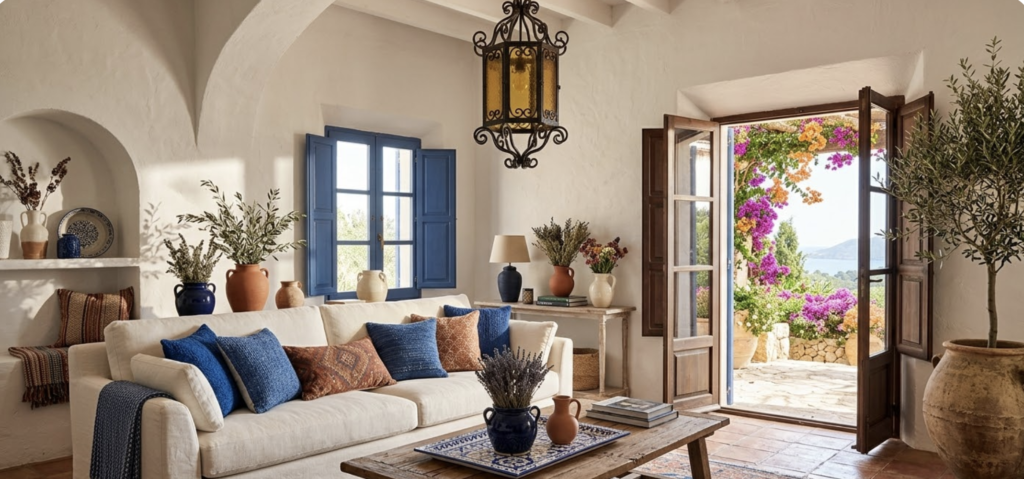
The defining palette here is the one that has made the Mediterranean synonymous with “beautiful place to be alive”: warm white, sun-baked terracotta, the blue of deep water, earthy green, and the burnished gold of late afternoon sun. These colors appear on walls (sometimes all white, sometimes with terracotta or painted accent tiles), in textiles, in glazed ceramic accessories, and in the hand-painted tiles that are synonymous with this part of the world.
Furniture in this look is built for comfort and has a slightly rustic, hand-crafted quality to it. A wide sofa upholstered in a heavy linen or a lightly striped cotton. Low wooden tables in reclaimed or painted wood. Wrought iron details in light fixtures, mirror frames, and occasional table bases. Cane-back accent chairs. The pieces feel made by hand rather than produced at scale, which gives the room an authenticity that is central to the Mediterranean aesthetic.
Ceramics are absolutely central to this look and deserve their own paragraph. Glazed tiles in cobalt blue and white on a coffee table tray, or as a backsplash on the wall behind a console. Hand-painted ceramic vases in terracotta and navy, filled with fresh or dried flowers. A collection of mismatched ceramic plates hung on the wall as art. A large ceramic urn in the corner. The presence of ceramics — imperfect, colorful, handmade — is one of the fastest ways to inject authentic Mediterranean soul into a living room.
Plants in a Mediterranean living room are aromatic and abundant. Rosemary and lavender in terracotta pots on the window ledge. An olive tree in a large earthenware pot. A climbing vine on a trellis near the French doors. The room smells as good as it looks, which is — when you think about it — a goal that far too few living rooms dare to aspire to.
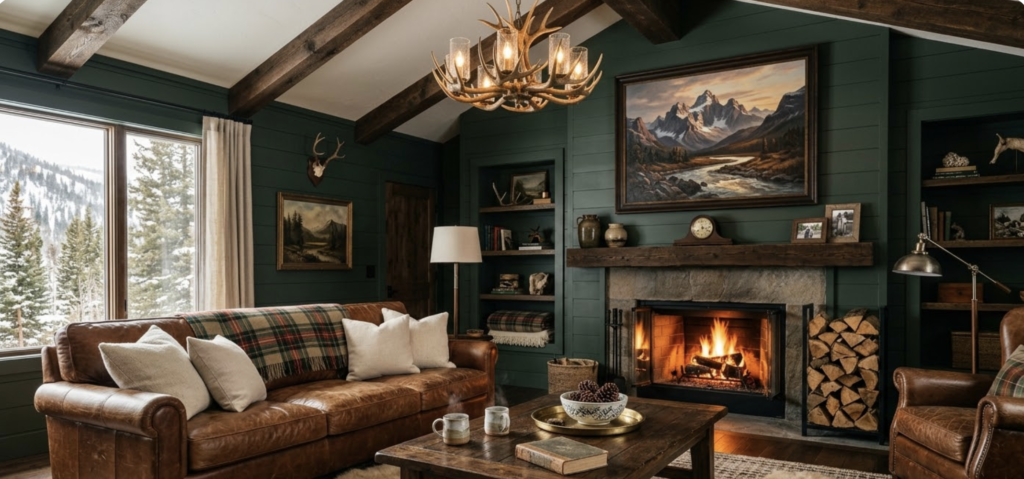
Idea 8: The Mountain Lodge
For those who find their deepest peace not at sea level but at altitude — in the crackling warmth of a fireplace, surrounded by pine trees and the hush of snow — the mountain lodge living room is the most restorative resort-inspired space imaginable. This is a room for wrapping yourself in a blanket, holding a warm drink in both hands, and watching the fire go.
The palette of a mountain lodge living room is drawn from the forest and the stone: warm charcoal, deep forest green, rich chocolate brown, the grey of granite, the warm gold of pine wood, and the cream of heavy wool. These are colors that absorb and hold warmth — visually and literally. The walls might be clad in shiplap or natural stone, or simply painted in a deep, saturated shade like hunter green or charcoal grey that makes the room feel like a cave in the very best sense.
The fireplace is the heartbeat of this room. Everything orients toward it — the furniture arrangement, the rug placement, the lighting design. The mantel is a stage for meaningful objects: a stack of firewood, a collection of pine cones, a brass clock, framed black-and-white family photographs, a weathered wooden sign. Above the fireplace might hang a large, dramatic painting of a mountain landscape or a rustic mirror that reflects the fire’s glow back into the room.
Sofas and chairs here are deep, tufted, and upholstered in either heavy cotton velvet, wool, or worn leather. The kind of furniture that asks you to sit down and specifically discourages you from getting back up. Layered rugs — a sheepskin over a flat-woven wool, for example — create a texture underfoot that feels indulgent. Throw pillows in plaid, houndstooth, and solid forest green pile up at the corners of the sofa. The room is deliberately, generously warm.
Wood is everywhere in this look and it ranges from polished to raw. A reclaimed wood beam on the ceiling. Rough-hewn side tables. A carved wooden bowl on the coffee table. Stacked wood near the hearth. This material presence is grounding and deeply satisfying in the same way that a woodland walk is satisfying — elemental, quiet, real.
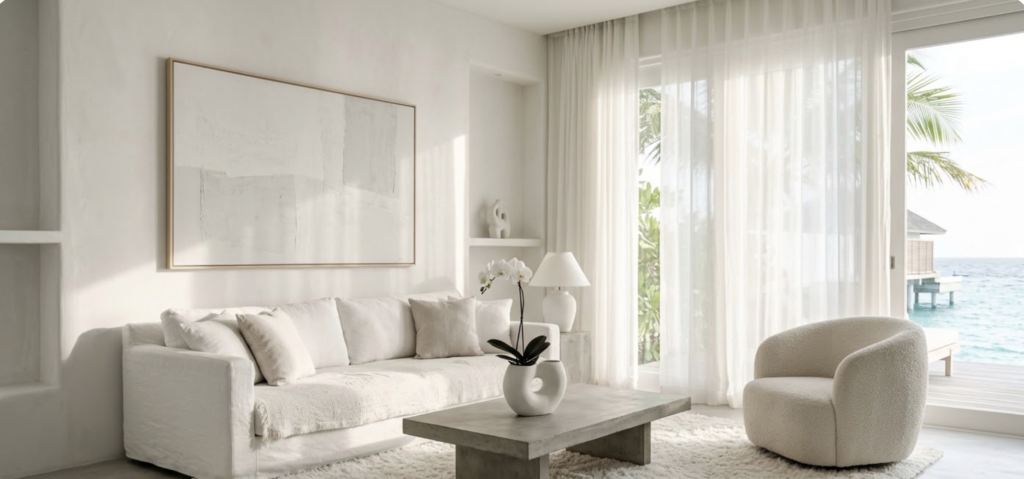
Idea 9: The White Minimalist
Some of the most celebrated resort spaces in the world particularly in Greece, Scandinavia, and the Maldives, have achieved their transcendent calm through radical simplicity. The all-white minimalist living room is not a timid choice. It is actually one of the most demanding and most rewarding resort-style living room ideas on this list, because when you remove all color and pattern, every surface, every texture, and every object must earn its place.
The palette is, predictably, white but not a single flat white. The beauty of this look comes from layering multiple whites: warm white walls, off-white linen upholstery, bright white ceramic accessories, the soft grey-white of washed concrete, the creamy white of natural sheepskin, the blue-white of daylight through sheer curtains. These are different enough to create depth without ever introducing actual color, and the result is a room that feels like a very expensive cloud.
Texture is the only tool this room has for creating visual interest, and so texture must be applied generously and thoughtfully. A linen sofa next to a bouclé armchair. A smooth plaster wall next to a rough plaster planter. A shiny white ceramic lamp base next to a matte cotton lampshade. A smooth concrete coffee table on a fluffy, high-pile white rug. The contrast of surfaces, smooth against rough, matte against glossy, hard against soft — is what prevents this room from feeling cold or institutional.
Natural light is the most important material in this room. It is not a room that survives under bad lighting. Wide, uncovered or barely-covered windows are essential. Light should move across the room throughout the day, changing the way every surface and shadow looks. In the morning, it feels fresh and crisp. In the afternoon, it turns warm and golden. In the evening, with layered lamps turned to their lowest settings, it becomes intimate and beautiful. This room has the same light story every day, and it never gets old.
The objects in this space are few and chosen with great care. A single large piece of abstract art in white and soft grey. A sculptural vase in white ceramic. A white orchid in a minimal pot. A stack of architecture and photography books with pale covers. The restraint is the entire point, and it takes a certain personality to love a room like this, someone who finds peace in emptiness and beauty in silence.
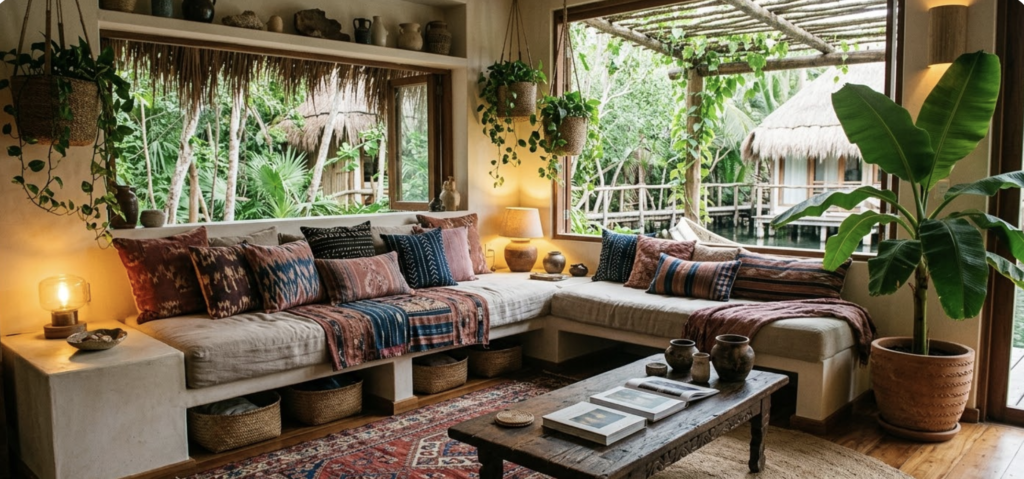
Idea 10: The Bohemian Lagoon Lounge
Not all resort style is polished and precise. There is an entire category of resort experience — think boutique eco-lodges in Costa Rica, yoga retreat centers in Goa, or treehouse hotels in Tulum — where the luxury comes from abundance of texture, warmth of layering, and a deliberate, joyful imperfection. The bohemian lagoon lounge is that living room. It is colorful without being chaotic. Layered without being cluttered. Free-spirited without being sloppy.
The palette here is earthy and warm with moments of unexpected color. Warm terracotta, deep indigo, dusty rose, forest green, faded mustard, and raw natural neutrals all appear in this room — but they are united by their shared dustiness and depth, rather than being bright or primary. Think sunset colors, tide pool colors, jungle colors. Colors that look like they’ve been sun-bleached to their most beautiful, quiet version.
Textiles are the primary medium of this look and they pile up in the most glorious way. A large macramé wall hanging above the sofa. Woven cushions in patterns from around the world — ikat, mudcloth, suzani, kantha. A Turkish kilim rug layered over a flat jute base rug. Tasseled throws draped over every possible surface. Hand-embroidered pillow covers in faded jewel tones. The room is textile-rich in a way that feels completely intentional rather than accidental, which requires a collector’s eye and a willingness to spend time curating rather than shopping.
Furniture here is low, eclectic, and relaxed. A large, cushioned daybed that could seat six people. A carved wooden side table from a vintage market. A floor lamp in a bent bamboo frame with a rattan shade. A low, round coffee table in clay or terracotta. The mix of origins and eras in the furniture is what gives this room its well-traveled, unhurried character. It does not look like a showroom. It looks like a life.
Plants in the bohemian lagoon lounge are lush and everywhere. Hanging planters from the ceiling. A trailing pothos on a high shelf. A cluster of cacti and succulents in handmade pots on a low table. A tall banana leaf plant in the corner. The room breathes and smells green, which is, ultimately, one of the best things a living room can do.
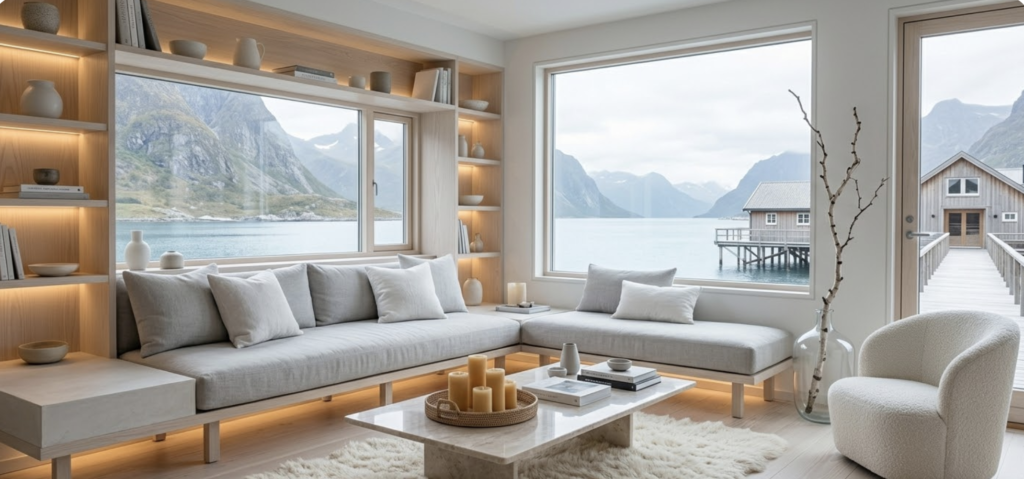
Idea 11: The Scandinavian Fjord
There is a Scandinavian concept called friluftsliv which roughly translates to “open air living” and there is another called hygge, which you have probably heard of, meaning the art of creating warmth, coziness, and togetherness. The Scandinavian fjord retreat living room is a resort-style interpretation of both of these philosophies, and it is one of the most liveable, practical, and genuinely beautiful looks on this list.
The palette is cool and clean but never cold: soft white, pale grey, warm birch wood tones, the deep blue-grey of a fjord at dusk, and quiet accents of dusty sage and pale blush. These colors exist in perfect ecological relationship with each other, the way colors in nature always do. There is never any tension in this palette.
Furniture is minimal, well-crafted, and slightly elevated from the floor on clean wood legs. A white or pale grey sofa with simple lines and high-quality upholstery. Classic mid-century-influenced accent chairs in pale wood with linen or bouclé seats. A slender marble-top or light wood coffee table. Clean-lined shelving in birch or ash that holds books, ceramics, and plants in a tightly edited way. Everything has excellent bones. Nothing is frivolous.
Texture in this room is soft, warm, and subtle. A sheepskin rug over pale hardwood floors. A heavy-knit throw in cream or pale grey. Linen cushion covers with simple embroidery. A ceramic lamp in pale grey. Beeswax candles on a low tray.
Natural elements are central. A birch branch in a tall clear vase. Smooth river stones on a window ledge. A reindeer hide over the arm of a chair. A simple bowl of pine cones in the winter or fresh garden herbs in the summer. The room changes with the seasons in small, meaningful ways, which is one of the reasons it never feels stale.
Idea 12: The Courtyard Garden Room
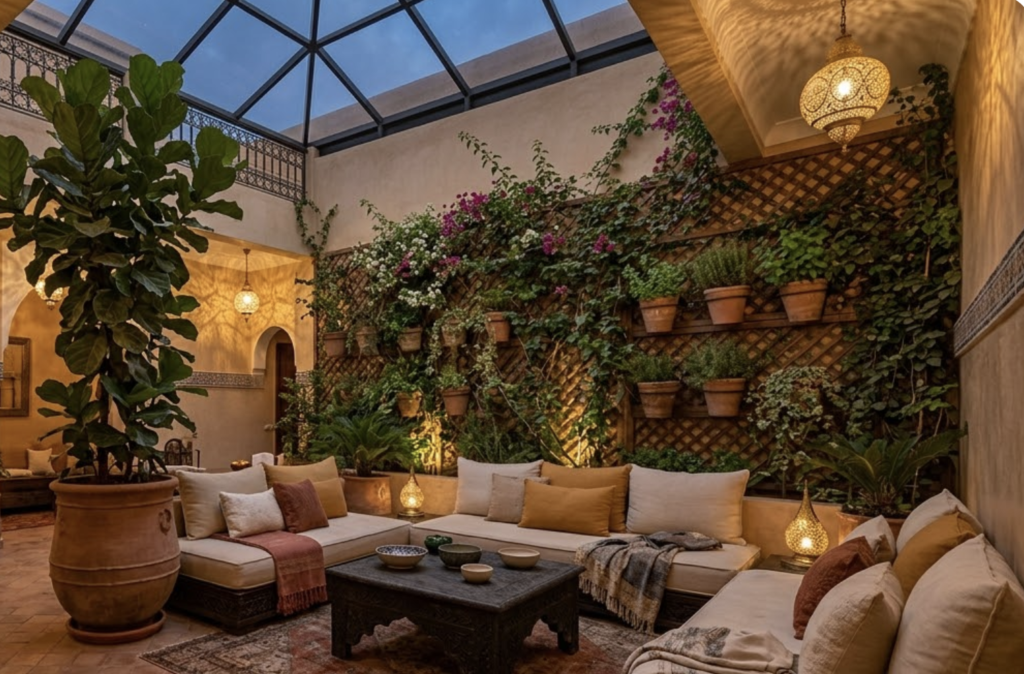
The final idea on this list is one of the most architecturally evocative: the courtyard garden room. This is a living space that is directly inspired by the great open-air courtyards of Moroccan riads, Spanish haciendas, and Southeast Asian boutique resort hotels — spaces where the interior and the garden exist in such close dialogue that they have effectively become one room with two personalities.
The visual language of this living room is anchored by natural stone, terracotta, and the abundant greenery of an indoor garden. The floors are large-format stone tiles or terracotta pavers. The walls are in smooth plaster, often in a warm white or ochre, with occasional mosaic tile accents in geometric patterns. A central coffee table is low and large, often in carved stone or mosaic-tiled wood, surrounded by deep cushion seating on low platforms.
The plants in this room are not accidental — they are structural and abundant in the way a real courtyard garden is abundant. Climbing vines on a trellis built against one wall. A fig tree or olive tree in the center of the room under a skylight or large window. Rows of terracotta pots filled with herbs, trailing vines, and flowering plants. Hanging baskets overhead. The greenery is not decoration — it is architecture. It shapes the space, creates shade, and gives the room the feeling of being simultaneously sheltered and open.
Water is an optional but extraordinarily effective element in this look. A small, recirculating fountain in the corner — perhaps set into a tiled alcove — adds the sound of water, which is one of the most reliably calming sounds available to interior design. The gentle sound of moving water shifts the entire sensory experience of the room, turning it from a visually beautiful space into an immersive, multisensory retreat.
Final Thoughts
Reading through twelve distinct resort-inspired living room ideas, it might start to feel like a decision needs to be made — coastal or tropical? Desert or mountain? Minimalist or bohemian? But the most honest advice is this: the best resort-inspired living rooms are rarely pure expressions of a single idea. They are usually the result of someone who has fallen in love with a central concept and then layered in personal touches that are entirely their own.
The process of creating your resort-style living room starts with identifying the feeling you want the room to produce. Not the look — the feeling. Do you want to feel like you’re on holiday in a warm, green place where the air smells of rain and jasmine? That’s tropical. Do you want to feel like you’re in a stone house in a hillside village somewhere in southern Europe, with the smell of bread and herbs in the air? That’s Mediterranean. Do you want the room to feel like a breath held and slowly released — perfectly, achingly still? That’s your Japanese onsen or your Scandinavian retreat.
Once you have the feeling, the materials and objects you need to create it will start to reveal themselves. You’ll find the right rug, the right lamp, the right plant. You will walk past something in a shop and know instantly that it belongs in that room you’re building in your mind. This is the best way to decorate — not by following a rigid style guide, but by staying curious and trusting your sense of what feels right.
The practical advice is to start with the large surfaces: walls, floors, and the main sofa. These are the costliest elements to change and the ones that will set the tone for everything else. Get these right and the room will want to dress itself. The smaller pieces — the lamps, the plants, the cushions, the ceramics — are the conversation rather than the architecture, and they can evolve and change over time as your taste deepens and your collection grows.
One last thought: the one thing all twelve of these resort-style living rooms have in common is that they are uncluttered. Not empty — uncluttered. There is a meaningful difference. Empty rooms feel abandoned. Uncluttered rooms feel intentional. Resort spaces are masterclasses in restraint — in knowing when enough is enough and when one more thing would tip a beautiful room into a busy one. As you build your own version of resort living, editing is as important as adding. A room that breathes is a room that rests. And a room that rests is, ultimately, the whole point.
Resort style living rooms are, at their heart, rooms that respect you enough to give you what you actually need: rest, beauty, sensory pleasure, and the quiet luxury of feeling like the world beyond those walls can wait. Whether you lean toward the cool precision of a Scandinavian fjord retreat or the lush, joyful excess of a bohemian lagoon lounge, the principles are the same. Natural materials. Intentional objects. Layered light. A palette pulled from the natural world. And always, always, enough space to breathe.
The best resort you’ll ever visit might just be the one you build at home.