
Step by step, room by room — here is exactly how to build a beautiful, personal, and put-together home interior from scratch (no design degree required)
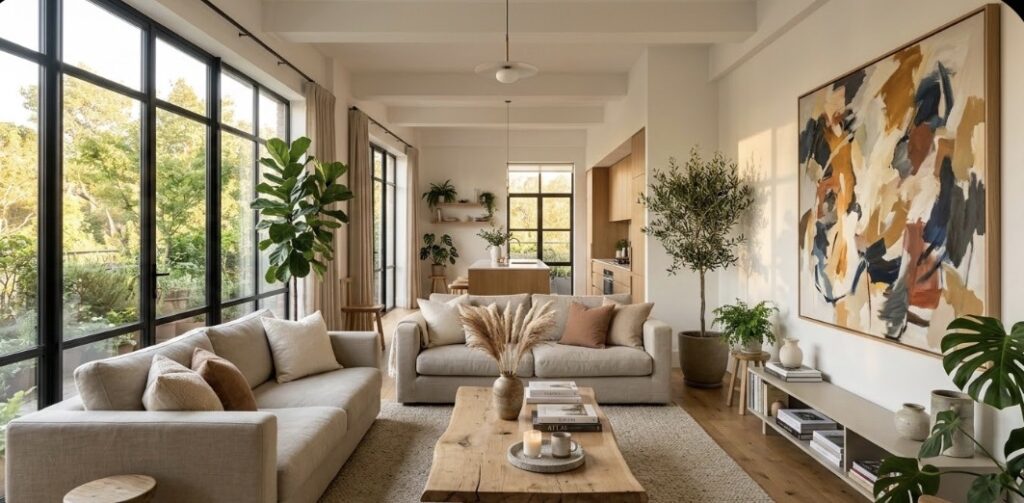
Let’s be honest. Most of us have scrolled through Instagram at midnight, saved three hundred photos of gorgeous living rooms, and then looked around our own space and thought: how did my couch end up looking like this? You are not alone. Designing your dream house interior feels overwhelming mostly because nobody teaches you how to actually do it. They show you the pretty pictures but skip the blueprint. This guide skips the fluff and gets straight into how you can build a dream interior yourself, step by step, room by room, decision by decision. Whether you are moving into a new house, renovating an old one, or simply tired of living in a space that does not feel like you, this is exactly where you start.
Think of your home as a project, not a purchase. The most beautiful interiors in the world were not built in a weekend with one trip to a furniture store. They were built with intention — slow decisions made with purpose. And here is the good news: you do not need to hire an expensive interior designer. You need a plan, a clear vision, and the confidence to make choices that feel true to how you actually live. This guide gives you all three.
Step 1: Start With a Vision, Not a Mood Board
Before you buy a single throw pillow or paint a single wall, you need to understand what you actually want your home to feel like. Not look like — feel like. This distinction is everything. A lot of people make the mistake of jumping straight to aesthetics without first asking themselves the real questions: Do you want your home to feel calm and quiet, like a retreat from the world? Do you want it to feel warm and social, a place where people gather and conversations run long? Do you want it to feel creative and layered, full of stories and personality? Or do you want it to feel clean and edited, where every object earns its place? The answers to these questions will shape every single choice you make from here on — your colors, your materials, your furniture scale, your lighting, your textiles. They are the foundation. Without them, you will keep buying things that look nice in the store and feel wrong in your home. With them, every decision becomes easier because you have a filter: does this match the feeling I am building toward?
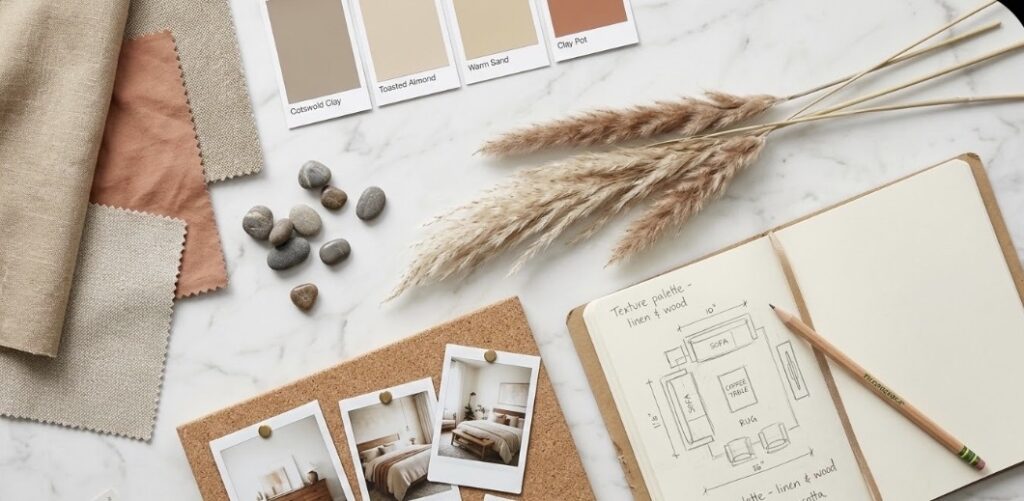
Start a dedicated folder — on your phone, on Pinterest, in a notebook, wherever works for you — and fill it only with images of spaces that genuinely stop you in your tracks. Not spaces you think you should like, not spaces that are popular right now, but spaces that make your chest feel a little warmer when you look at them. After you collect thirty or forty of these images, sit with them together and look for patterns. Are all the spaces light and bright? Are they mostly filled with natural materials? Are they moody and layered? Do they have a lot of green plants, or almost none? These patterns are your design instincts speaking clearly, and they are worth more than any trend report. Once you identify your patterns, you can translate them into a simple design direction for your home. Something like: I want my home to feel like a warm, low-key refuge — lots of natural textures, soft lighting, no sharp edges, plants everywhere, and a little bit of art that makes people ask questions. That kind of sentence is ten times more useful than saying I like the Scandinavian style, because it tells you not just what to choose but what to leave out.
Do not overthink the naming of your style. Interior design categories like mid-century modern, maximalist, or japandi are useful shorthand, but your home does not have to belong to one category. Real homes — the ones that feel truly beautiful and alive — usually borrow from several directions at once, unified by a consistent feeling rather than a consistent catalogue. The style label is a starting point for research, not a cage. Use it loosely.
Step 2: Understand Your Space Before You Decorate It
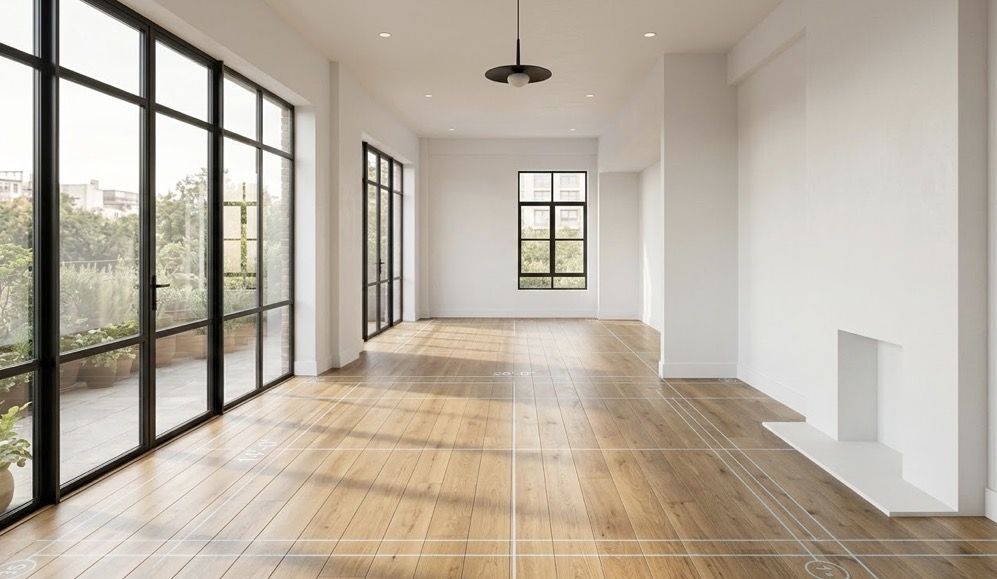
Your home is not a blank canvas — it already has bones, and those bones matter. Before you can make good decisions about furniture placement, colors, or decor, you need to really understand the physical space you are working with. This means looking at your rooms with fresh eyes, not just as the rooms you are used to walking through every day, but as architectural spaces with specific qualities that will either work for you or against you depending on how you approach them. The number of people who have bought a gorgeous piece of furniture without measuring their room first — and then spent a weekend rearranging everything because it does not fit — is truly humbling. Do not be those people. Measure everything first, and measure twice.
Start with light. Walk through every room at different times of day — early morning, midday, late afternoon, and evening — and notice how the light changes. A room that feels dark and cave-like at noon might be absolutely gorgeous at 4pm when the sun hits it from the west. A room that gets harsh direct light in the morning might need softer window treatments to be comfortable. Light is the single most powerful element in any interior, and understanding how it moves through your home will tell you more about your color choices, your furniture placement, and your lighting needs than any other single factor. Colors look dramatically different in different light conditions — a paint chip that looked perfect in the store can look entirely wrong on your wall in the afternoon sun or under artificial light at night. Always test paint on a large section of your actual wall before committing.
Next, pay attention to your ceiling heights, your floor materials, your architectural details — the things you cannot easily change. High ceilings are a gift that invites drama: tall bookcases, pendant lights hung low over a table, large-scale art. Low ceilings need a different approach: horizontal lines, low-profile furniture, and light colors that make the ceiling feel like it is lifting away. Existing wood floors will anchor your color palette — there is a warm undertone built into the room whether you plan for it or not. Tiled floors, concrete, or carpet each create a different starting point that your design has to work with rather than against. It also helps enormously to draw a simple floor plan of each room — nothing fancy, just a rough sketch with measurements. Mark where the doors and windows are, and where electrical outlets and fixed fixtures like radiators or built-ins sit. This kind of spatial thinking will save you from expensive mistakes.
Step 3: Build Your Color Palette the Smart Way
Color is probably the element people feel most scared about, and it is also the element that has the most impact for the least amount of money. Painting a room the right color can make it feel twice as large, twice as warm, or completely transformed — and painting it the wrong color can make even the most expensive furniture look off. The key is not to treat color like a trend decision but like an architectural one. Trends come and go, but a color palette that is built around how light moves through your home and how you want to feel in it will hold up far longer than whatever shade a paint brand declares to be the color of the year.
A great color palette for a home usually has three tiers. The first tier is your base — the neutral or near-neutral that covers the most surface area, including walls, large upholstered pieces, and rugs. This color sets the overall temperature of your home. Warm bases — creamy whites, warm greiges, soft taupes, dusty tans — make a space feel cozy and enveloping. Cool bases — crisp whites, soft grays, pale blues — feel clean, airy, and more formal. The base does not have to be boring; it just has to be something you can live with every day without getting tired of it. Think of it less as a color choice and more as the lighting of your entire interior — it affects how everything else in the room reads.
The second tier is your mid-tone — the color that appears in medium-sized elements like accent walls, curtains, larger decor objects, or upholstered chairs. This is where you can introduce personality. Maybe it is a warm terracotta for a Mediterranean feel, or a deep forest green for something organic and grounded, or a navy blue for something classic and confident. Your mid-tone should feel like a natural extension of your base, not a fight with it. The best way to test this is to hold your paint samples next to each other in the actual light of your room, not just in a store. The third tier is your accent — the color that appears in small doses and creates visual moments. This could be the throw pillows, the vase, the lampshade, the side table, the artwork. Accents can be bold because they cover so little surface area. A room that is ninety percent warm neutral with three percent deep burgundy scattered through it will feel sophisticated and intentional. A room that is thirty percent every color will feel chaotic. Accents work because of restraint.
One practical trick that professional designers use regularly: pull your palette from something you already love and own. A piece of art, a rug, a fabric pattern, a ceramic you are obsessed with, a set of books. Pick the dominant color for your base, a secondary color for your mid-tone, and the smallest, punchiest color in it for your accent. You will end up with a palette that already feels harmonious because it came from something that already works. It is essentially stealing from your own good taste, and it is completely legal.
Step 4: Choose Furniture That Works for Your Life, Not Just Your Feed
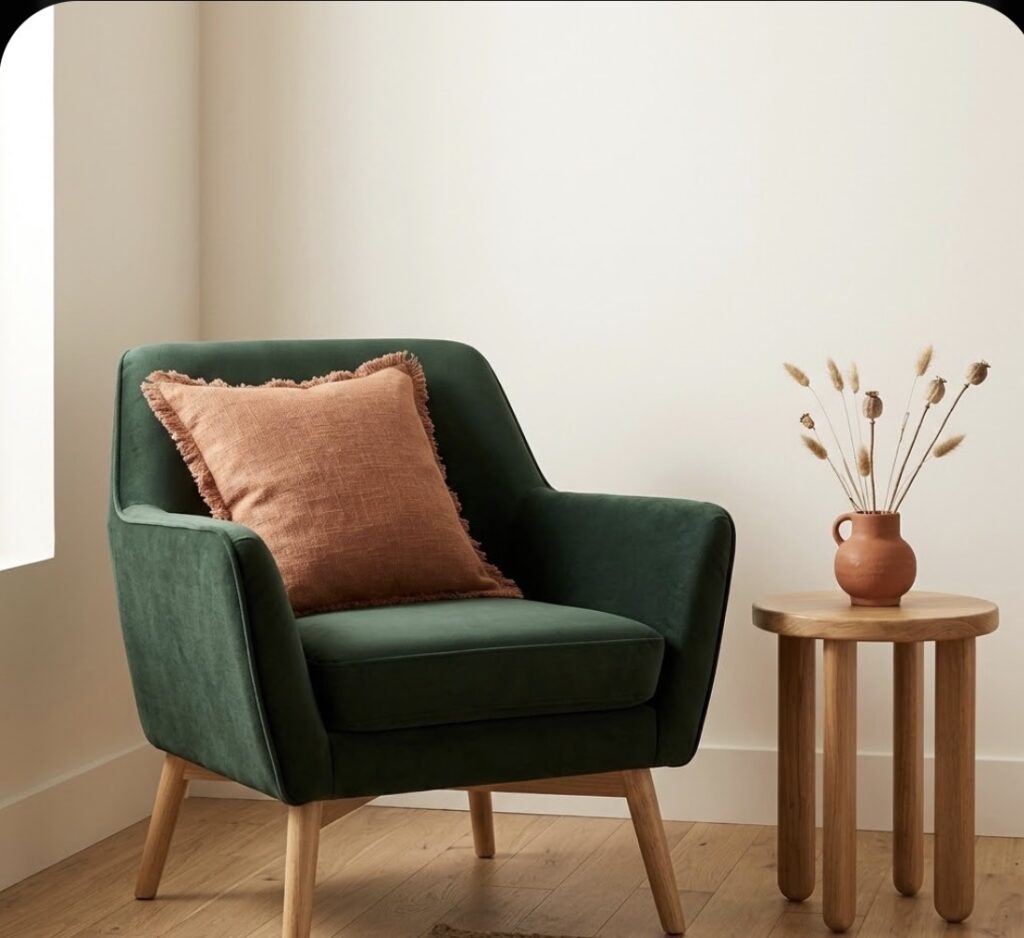
Here is a truth that the furniture industry does not love to admit: the most important quality a piece of furniture can have is that it fits your actual life. Not that it looks good in a showroom. Not that it photographs well. Not that it was in a magazine. That it works for how you actually live — how you sit, what you do in that room, how many people use it, and how much you want to maintain it. A white linen sofa is gorgeous until you have kids, a dog, or a habit of eating pasta on the couch. No judgment — pasta on the couch is a valid lifestyle choice. But plan for your real life, not the aspirational version of it.
When selecting furniture, start with the largest anchor pieces first — the sofa in the living room, the bed in the bedroom, the dining table in the dining area. These pieces set the scale and character of the room, and everything else will be selected in relation to them. Getting the scale right is critical: a tiny sofa in a large room feels lost, and an oversized sectional in a small room feels like you are living inside your own furniture. Use your floor plan to figure out dimensions before you buy, and if possible, tape out the footprint of a piece on your actual floor to see how it lives in the space. This takes about ten minutes and saves enormous amounts of money and regret.
Pay attention to furniture legs. This sounds like a small thing, and it is — but it changes a room entirely. Furniture with visible legs, especially tapered or angled ones, makes a room feel lighter and more open because you can see floor space beneath it. Furniture that sits directly on the floor feels more grounded and anchored. A room where everything sits on legs tends to feel more airy. A room where things hug the floor tends to feel more modern and grounded. Neither is wrong, but knowing the effect helps you build the feeling you are going for.
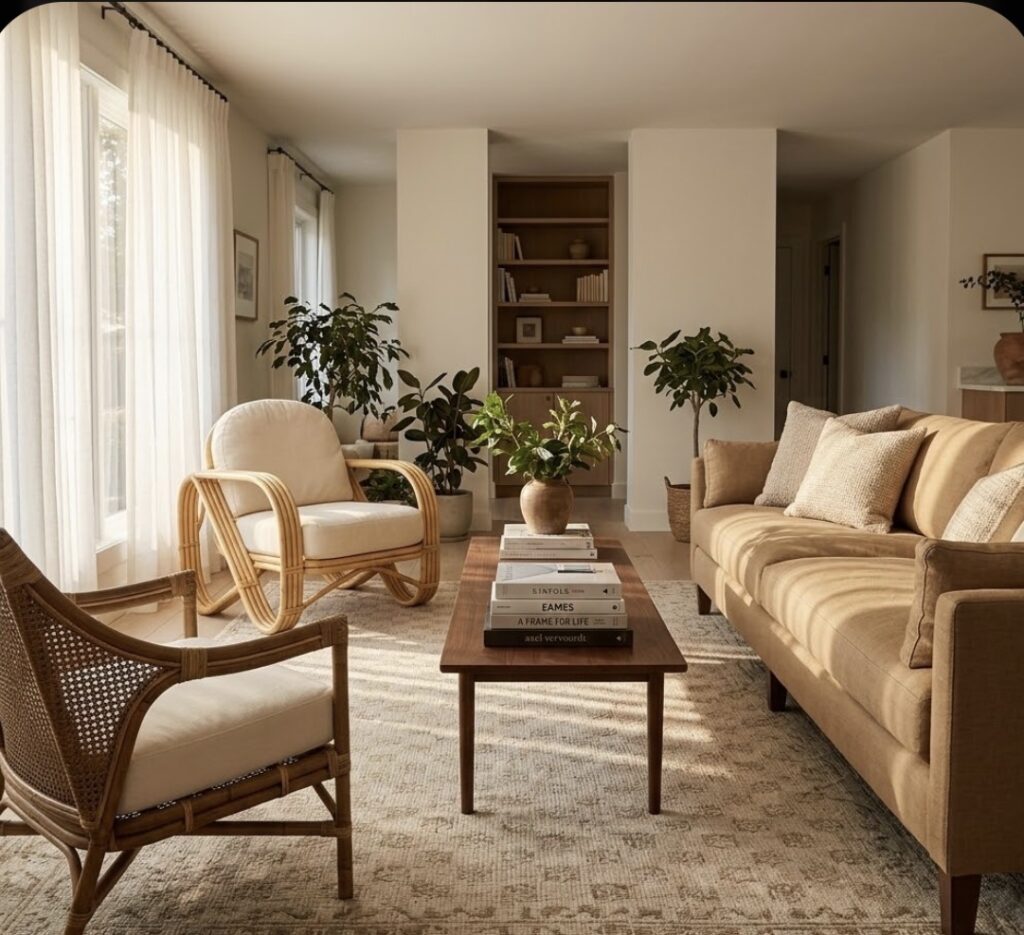
The most interesting and personal rooms are never entirely matchy-matchy. A living room that has one sofa from a furniture store, one vintage armchair from a second-hand shop, and one unique accent table from an artisan market will feel far more alive and considered than a room where every single piece came from the same collection. Mix materials — wood with metal, fabric with rattan, leather with linen. Mix ages — something old with something new. Mix formality levels — something refined with something rough-edged. That kind of layering is what makes a room feel like a human being lives there, not a set decorator with a very large budget.
Step 5: Layer Your Lighting
If you want to know the single biggest difference between a room that looks professionally designed and a room that just looks furnished, the answer is almost always lighting. Lighting is the element that most people get completely wrong, and the reason is simple: most people treat it as an afterthought. They furnish the room, put art on the walls, style the shelves, and then realize there is only one overhead ceiling light that makes everything look like a very stylish waiting room. Great lighting is planned before the furniture goes in, not after. Think of lighting as part of your architecture, not your accessories.
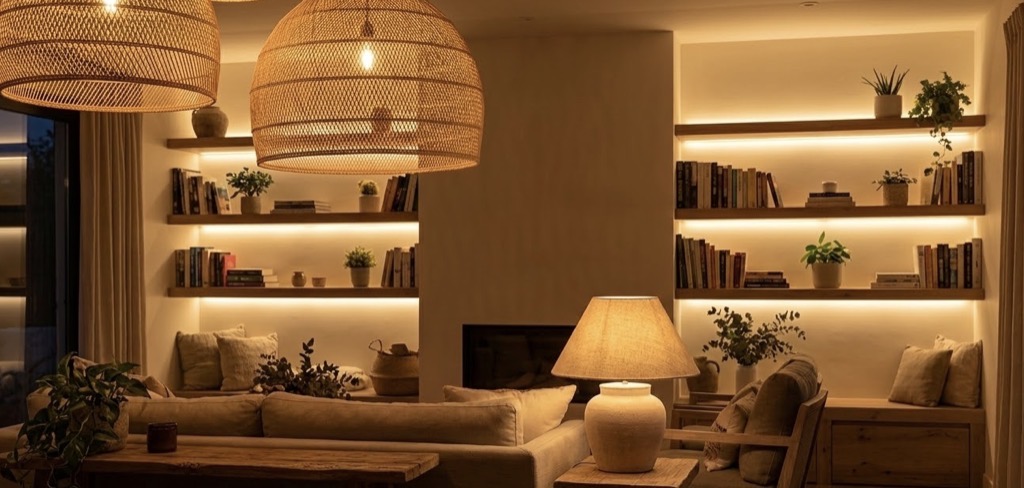
The rule that every designer knows and almost every homeowner ignores is this: layer your light. Every room needs at least three types of lighting working together. The first is ambient light — the general overall illumination that replaces daylight once the sun goes down. This might come from a ceiling fixture, recessed lights, or even a series of floor lamps. The second is task light — focused, practical light for activities like reading, cooking, or working. A reading lamp next to your favorite chair, under-cabinet lights in the kitchen, a good desk lamp in the home office. The third is accent light — decorative, mood-setting light that creates warmth and drama. Think candles, LED strip lights behind a shelf, a small table lamp on a sideboard, a picture light above a painting. The accent lights are the ones that, when turned on in the evening, make your room go from nice to genuinely magical.
The color temperature of your bulbs matters more than most people realize. Warm light at around 2700K to 3000K makes a space feel cozy, intimate, and golden — great for living rooms, bedrooms, and dining areas. Cool light at 4000K and above feels bright, energizing, and clear — better suited for bathrooms and home offices where you need to see what you are doing. A common mistake is mixing bulbs of different temperatures in the same room, which creates a disjointed and slightly unsettling effect. Pick one temperature per room and stick to it. Install dimmer switches on your main light sources wherever possible — one of the cheapest and highest-impact upgrades you can make to any room. A fully lit room and the same room at forty percent brightness feel entirely different. One is a working environment. The other is a Saturday evening.
Step 6: Use Textiles to Add Warmth and style
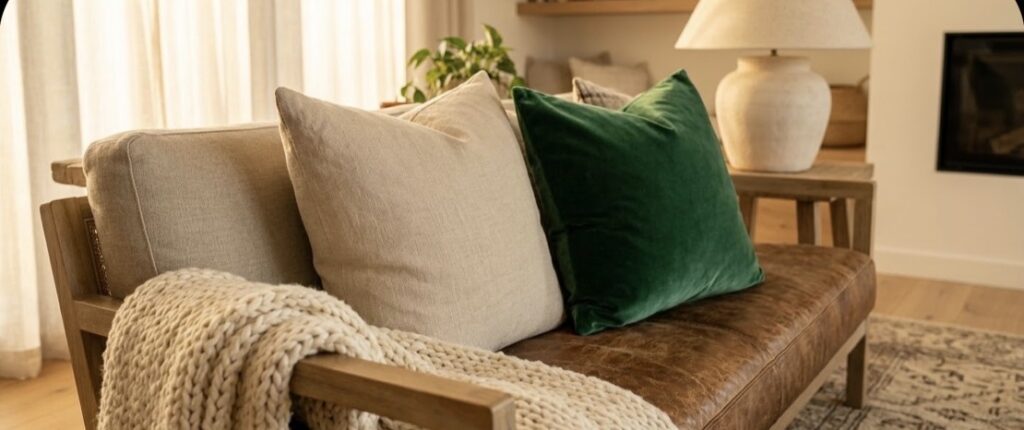
If lighting is the soul of a beautiful room, textiles are its skin. They are what you touch every day, what you wrap around yourself on cold evenings, what absorbs sound and makes a room feel quiet instead of echoey, and what adds the kind of visual richness that no amount of paint or furniture can achieve on its own. A room with no soft textiles feels bare and cold no matter how expensive the furniture is. A room generously layered with good fabrics feels warm, personal, and alive even if everything in it cost almost nothing. Textiles are one of the most underestimated tools in interior design, and learning to use them well will transform any space.
The rug is usually the single most impactful textile in any room. It defines the space, anchors the furniture grouping, adds color and pattern, and has a major effect on how sound moves through the room. A rug that is too small — the most common mistake in living rooms worldwide — makes a room feel disconnected, like the furniture is floating on separate islands. A rug should be large enough that at least the front legs of all the main furniture pieces sit on it, ideally with enough room to walk comfortably between the edge of the rug and the walls. If you are between sizes, go bigger. A rug that is too large for a room looks slightly more intentional than one that is too small. This is not true of most design elements, but it is absolutely true of rugs.
Curtains are another area where people consistently under-invest and then wonder why their room does not look polished. The trick with curtains is threefold: hang them high, close to the ceiling rather than at the top of the window frame; hang them wide, extending six to twelve inches beyond each side of the window; and make them long, all the way to the floor with a slight puddle or at least a clean break. This trio of adjustments makes every window look larger, the ceilings feel taller, and the room feel more considered. It costs the same amount of fabric — it just requires knowing the trick. Throw pillows and blankets are where you can be most playful. They are the most removable and replaceable textiles in any room, which means they are low-stakes experiments in color and texture. Use them to introduce an accent color, to add texture contrast, and to make the whole space feel a little more inviting.
Step 7: Style Your Walls and Shelves With Intention
Styling the surfaces and vertical spaces in your home — the shelves, the mantles, the side tables, the walls — is often where people feel the most lost. It is also where rooms either start to feel curated and personal or start to look like a collection of objects with nowhere better to be. The difference comes down to intention. Every object on display should earn its place, either because it is beautiful, because it means something to you, or ideally both. The objects that are neither beautiful nor meaningful are the ones that create visual noise without adding anything, and the rooms that feel freshest and most considered tend to have fewer of them.
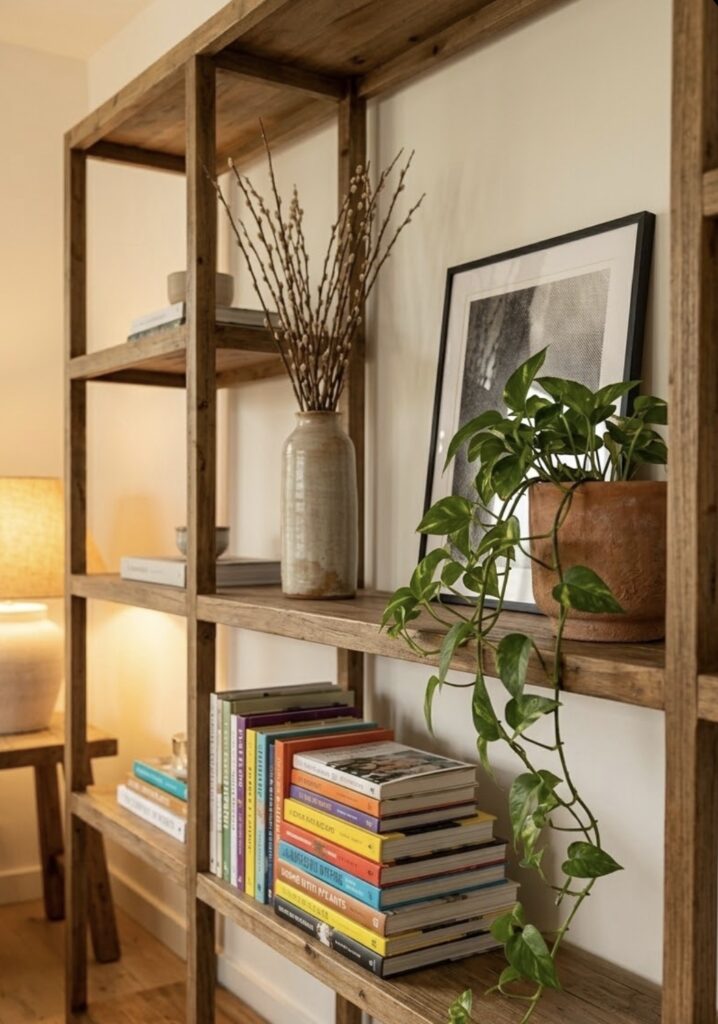
When styling shelves, think in terms of zones and vary what goes in each zone. A well-styled shelf usually has a combination of books — some standing, some stacked horizontally to create platforms for smaller objects — objects of different heights, and negative space. The negative space is as important as the objects. Resist the urge to fill every inch. A shelf that is about sixty to seventy percent full tends to look the most intentional. The remaining thirty to forty percent is not emptiness — it is breathing room, and it is what allows your eye to actually appreciate the objects that are there. Think of negative space as the white space in good graphic design: it is doing real work even though you cannot see it.
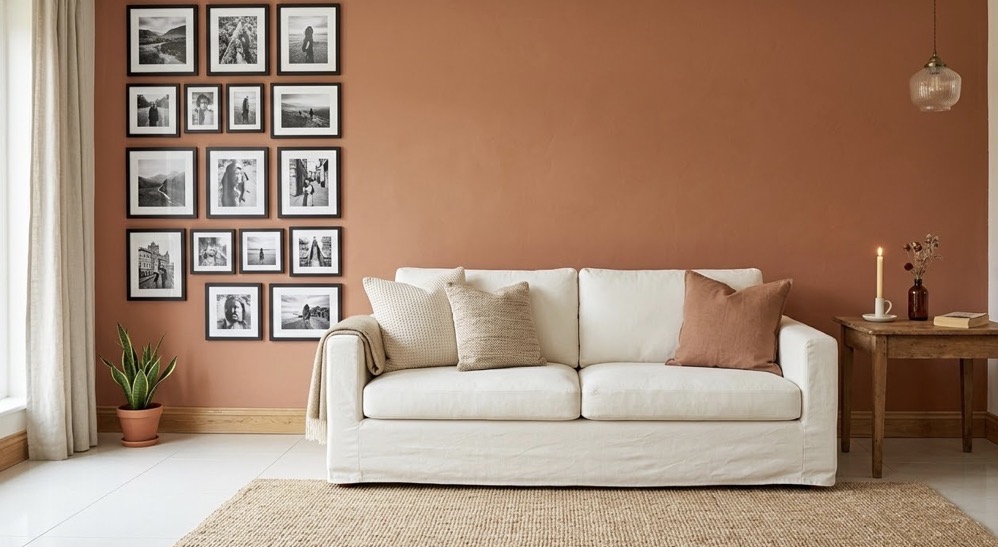
For walls, think about scale before you commit. The single most common wall art mistake is hanging pieces that are too small for the wall they are on. A small framed print on a large empty wall looks uncertain. It looks like it got there by accident. Go bigger than you think you should — a large single piece or a gallery wall that covers a meaningful area will look far more confident and intentional. Hang things at eye level, generally around 57 to 60 inches from the floor to the center of the piece, not so high that you have to tilt your head up to appreciate it. Gallery walls work best when there is one unifying element that ties the collection together — a consistent frame color, a consistent tone in the artwork, a consistent subject matter. Before committing to hammers and nails, lay the whole arrangement on the floor and photograph it to check the balance.
Step 8: Bring Plants
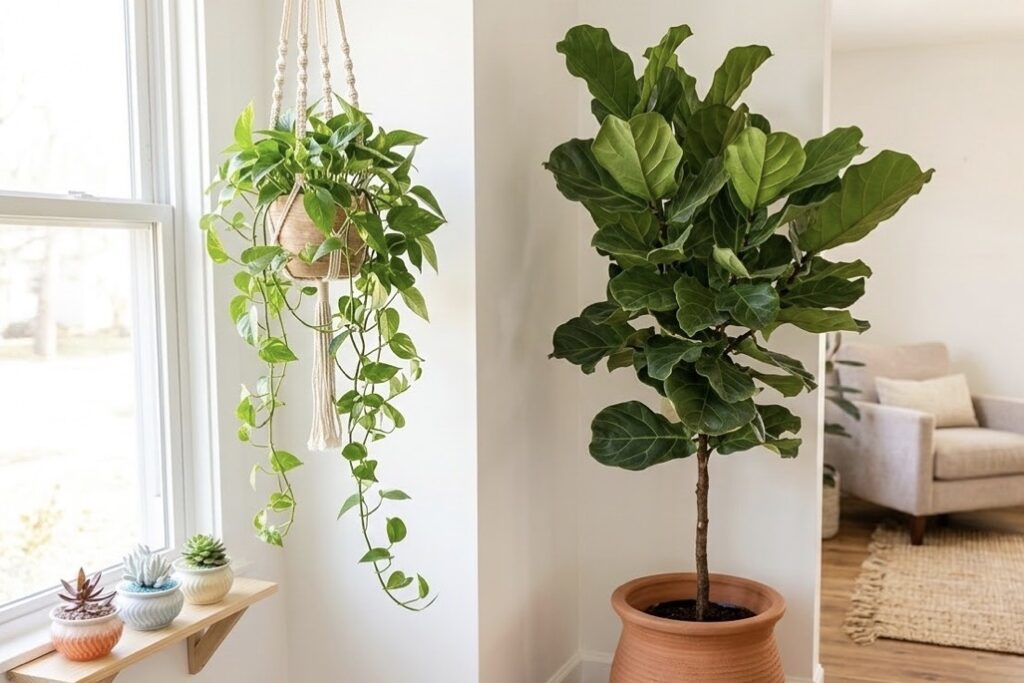
There is a reason that almost every professionally styled interior includes plants. It is not just that they look nice — though they do. It is that they add something that no object can replicate: life. A room with plants has a quality of energy, freshness, and warmth that even the most beautifully designed plant-free room cannot quite achieve. Plants soften hard edges, add color and texture that reads completely differently from anything manufactured, and remind you quietly that you are part of something larger and more natural than your furniture. A monstera on a bright white wall will do more for that wall than most art pieces, and the monstera keeps growing. That is a pretty good deal.
If you have historically killed every plant you have owned, start with the hardest-to-kill species and treat them like the low-maintenance friends they are. Pothos, snake plants, ZZ plants, and cast iron plants will survive neglect, low light, irregular watering, and all manner of beginner plant care. Once you have kept a few of these alive for six months and realized that plants are not actually trying to die on you, you will feel confident enough to try something more interesting — a fiddle-leaf fig, a monstera, an olive tree, or a large fig tree that becomes the anchor of your whole living room. Think about scale and placement carefully. One large floor plant makes a much bolder statement than ten small plants scattered randomly around the room. It becomes a sculptural element, a living piece of decor that draws the eye and anchors a corner. Small plants work beautifully clustered together on a shelf or windowsill where their variety creates something interesting collectively.
Beyond potted plants, consider other forms of natural, living decor: fresh flowers changed weekly, dried botanicals that last for months, branches of eucalyptus or olive in a tall vase, bowls of seasonal fruit in the kitchen, driftwood or interesting stones arranged on a shelf. Nature has a texture and an organic quality that manufactured objects simply cannot replicate, and bringing more of it inside makes your home feel more grounded, more honest, and more beautiful. A room that contains living things feels alive. A room without them, no matter how beautiful, sometimes feels like a very nice photograph of a room.
Step 9: Build Each Room in Your Dream House
Now that you have the overall principles, let us walk through the specific rooms and what makes each one work. Every room in your home has a primary purpose that should inform every design decision — and when you start from that purpose, the right choices become much clearer.
The Living Room
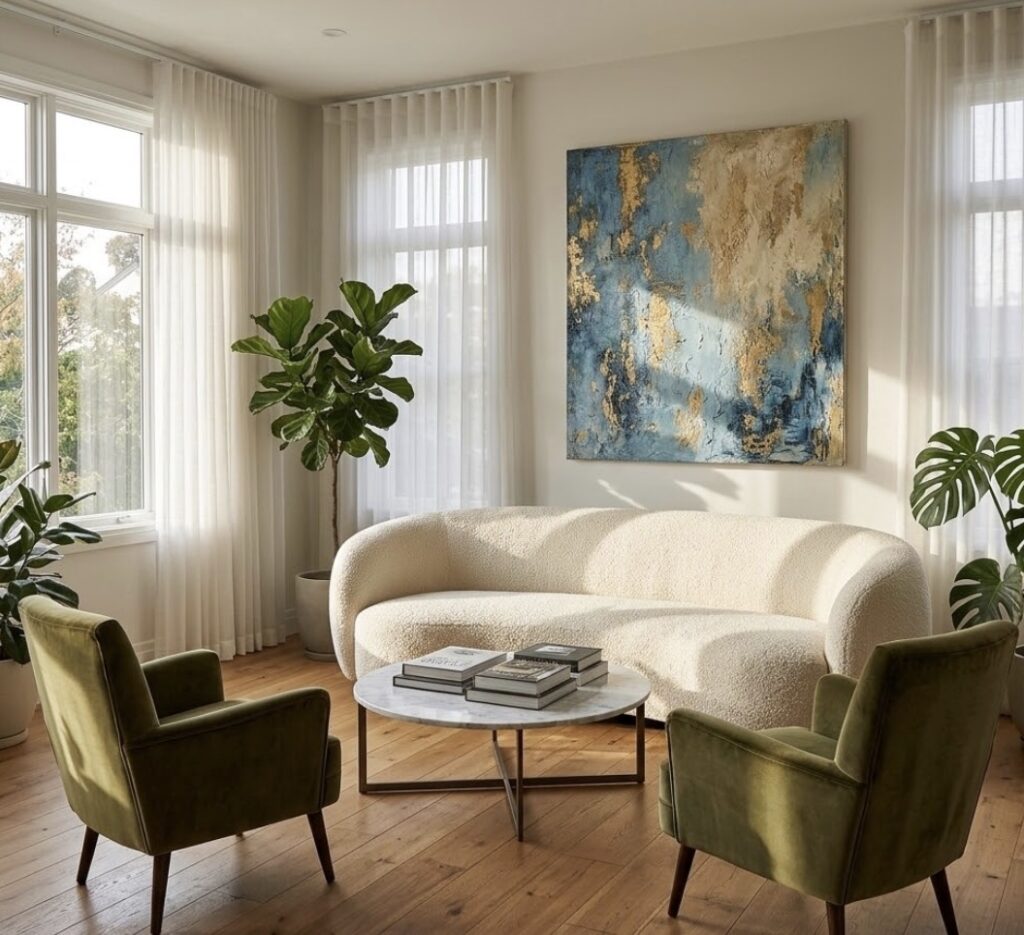
The living room’s job is connection — it is where people gather, rest, and interact. The layout should always put conversation first. Arrange seating so that people can look at each other naturally without craning their necks. The classic layout is a sofa facing two armchairs with a coffee table between them, and this works because it has worked for decades — not out of habit, but because it genuinely facilitates the thing the living room is for. The coffee table should be reachable from all seating, roughly 14 to 18 inches from the sofa, and low enough that it does not block the sight lines across the space. Create a focal point to orient the room toward: a fireplace, a large piece of art, a beautiful window, or a carefully arranged media wall. Everything else in the room should feel like it supports that focal point rather than competing with it. The living room should also have enough surface area — side tables, a shelf, a console — that people can set down a drink without having to hunt for somewhere to put it. That kind of practical generosity is what makes a room feel genuinely welcoming rather than just beautiful.
The Bedroom
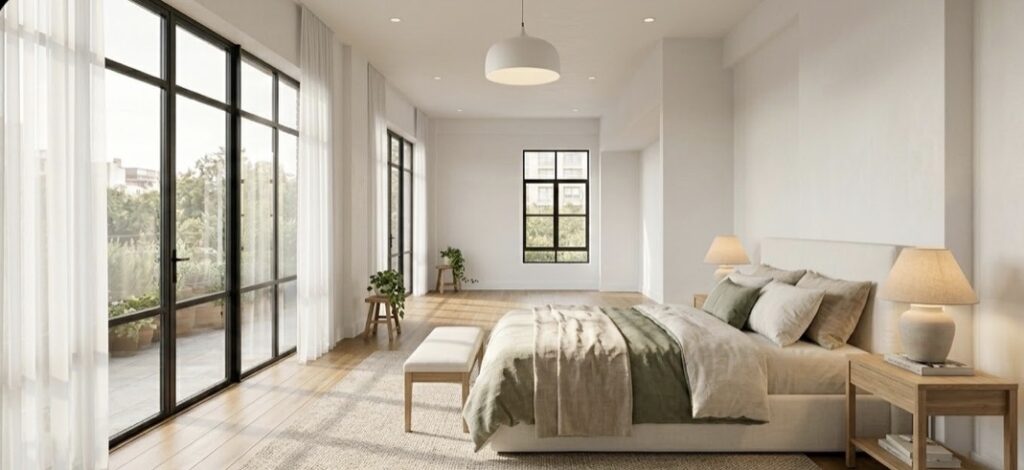
The bedroom’s job is rest, and every decision you make in this room should serve that purpose. The bed is the undisputed center of gravity — invest in the best mattress you can afford and a bed frame that makes you feel good every time you see it. Position the bed so that you can see the door from it but are not directly in line with it. Bedside tables should be at roughly mattress height, easily reachable in the dark, and large enough for a lamp, a glass of water, and whatever book you are currently trying to finish. Keep the palette calm and quiet — this is not the room for bold, energizing color unless you happen to find that genuinely restful. Blackout curtains, soft layered bedding in natural fibers, and minimal clutter will do more for your quality of sleep than any other single design choice. And quality of sleep, it is worth saying, affects everything else in your life — your energy, your mood, your decision making. The bedroom is probably the most important room in your home to get right, and it is also the one most people treat as an afterthought behind the living room.
The Kitchen
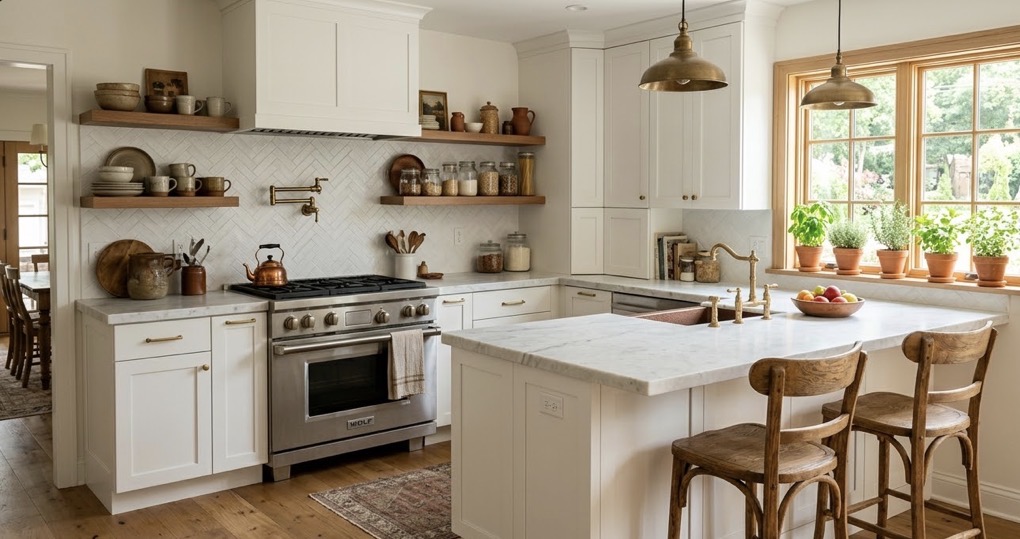
Kitchens are where function must lead and beauty must follow — not the other way around. A gorgeous kitchen that is frustrating to cook in is a failure no matter how nice it photographs. The triangle between your refrigerator, cooktop, and sink should be efficient, with no more than a few steps between each point. Storage is never enough in kitchens, so maximize every inch: tall cabinets that go all the way to the ceiling, deep drawers instead of lower cabinets where possible, a pantry if space allows, and thoughtful use of the inside of cabinet doors. The aesthetic can be whatever you love — shaker cabinets, flat-front modern, open shelving with warm wood — but the materials need to be practical. Countertops will be cut on, wet, and stained over years of real use. Choose something that handles life honestly rather than pretending the kitchen is a display case. Good ventilation, task lighting under cabinets, and a beautiful tap that you actually enjoy using are the invisible upgrades that make cooking feel like a pleasure rather than a chore.
The Bathroom
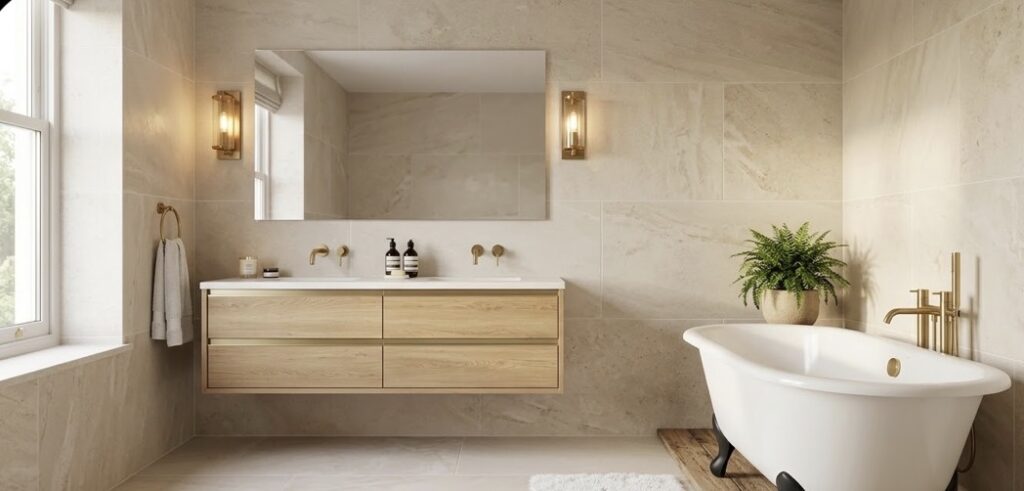
The bathroom is the most ignored room in the house and the one that has the biggest impact on your daily experience. You start and end every single day here. Treat it with the same care you would give your living room, because you spend far more time in it than you probably think. Good lighting around the mirror — warm and even, coming from the sides rather than just overhead — is the single most important upgrade in any bathroom. A large mirror, or even one that extends the full width of the vanity or beyond, makes the space feel twice as large. Tile choices set the whole character of the room: large format tiles reduce grout lines and make small bathrooms feel bigger; mosaic tiles add texture and pattern; subway tiles are forgiving and work with almost everything. Invest in fluffy, high-quality towels, a beautiful bath mat, and a few thoughtful accessories — a soap dispenser you actually like the look of, a humidity-tolerant plant, a small tray that keeps the counter looking organized rather than cluttered. Your bathroom should feel like a calm, considered space, not a utilitarian room you pass through as quickly as possible.
Step 10: Make It Personal Without Making It Cluttered
The greatest risk in designing a dream home is building something that looks like a showroom: beautiful, impersonal, and oddly exhausting to be in. The antidote is personality — specific, honest, unapologetically yours. Personal touches do not mean cluttering every surface with souvenirs and family photos. They mean choosing objects that carry real meaning to you and displaying them in a way that honors that meaning. There is a big difference between a shelf that is covered in small objects you have collected mindlessly over the years and a shelf that has six objects you love, displayed intentionally. The second shelf tells a story. The first just tells you that you have been to a lot of gift shops.
This might mean dedicating one shelf in your living room to your collection of vintage travel books, arranged not alphabetically but by the color of their spines so they also work visually. It might mean framing a drawing your child made and hanging it in a real frame, at eye level, next to actual bought art, because it is actual art to you. It might mean keeping your grandmother’s ceramic bowl on the kitchen counter even though it does not match your color scheme, because every time you see it you feel something, and a home should make you feel things. It might mean building your whole living room palette around a painting you bought from a young artist whose work moved you, instead of the other way around. These kinds of choices are what separate a beautiful home from a beautifully designed home. The first is nice to look at. The second is yours.
The line between personal and cluttered is one of curation and presentation. If everything you love is displayed all at once, nothing stands out. Edit thoughtfully — display only the things that truly matter, arranged with care — and each object gets to be seen and felt properly. A good rule that serves most people well: if an object does not make you feel something positive when you look at it, it does not earn space in your dream home. That goes for the expensive things too. A fancy vase you feel nothing about takes up the same real estate as a simple river stone that makes you smile every time. The stone wins.
Step 11: Build Your Dream Interior on Any Budget
Here is something the luxury interior world does not love to admit: budget and taste are not the same thing. Taste is about understanding proportion, color, texture, and meaning. Budget is about how much money you have to spend. They are related only in that a high budget makes it easier to get things right quickly. With the right knowledge and some patience, a modest budget can produce a space that looks every bit as considered and beautiful as one that cost ten times more — and often more personal, because expensive shortcuts have not been taken.
The strategy is to spend where it matters most and save everywhere else. The places where quality makes the most difference in daily life are the mattress, the sofa, the main lighting fixtures, and the rug. These are worth investing in because you interact with them every single day for years, and cheap versions of these things show quickly. The places where you can get away with spending less are the accent tables, the decorative objects, the art — thrift stores, art school graduate shows, and print-on-demand services can all yield stunning pieces at low cost — and the textiles like throw pillows and blankets that you will likely want to change as your taste evolves anyway.
Second-hand and vintage pieces are not just a budget strategy — they are a design strategy. Vintage furniture is often better made than its contemporary equivalent, and it carries a patina and character that new furniture takes years to develop. A vintage side table with a little wear will add more soul to a room than a brand new one from a fast-furniture chain. Thrift stores, estate sales, online marketplaces, and local vintage shops are full of pieces waiting to be recognized. You just need to know what you are looking for and be willing to spend some time. Paint is your single best budget investment. A fresh coat of paint in the right color transforms a room completely and costs a fraction of any piece of furniture. If your budget is tight, prioritize paint and save for furniture more slowly. A beautifully painted room with modest furniture looks intentional. An expensively furnished room with drab walls looks unfinished. Paint first, always.
Step 12: Know When Your Room Is Done (And When to Stop Adding Things)
There is a moment in every well-designed room when it clicks — when all the pieces have found their places and the space feels complete, cohesive, and alive. Getting to that moment takes time, and knowing when you have arrived is a skill in itself. Many people either stop too soon, leaving the room furnished but never really styled, or too late, adding and adding until the space feels crowded and confused. The sweet spot is somewhere in between, and the best way to find it is to live in the space for a while before declaring it done. Decorating is not a race and your room will not judge you for taking your time.
Once you have the big elements in place — furniture, rug, lighting, curtains, paint — spend a few weeks living in the room before you style the surfaces and hang the art. Notice where you naturally put things down when you come in. Notice which corner you find yourself drawn to. Notice what feels a little off: maybe the lamp is throwing light in the wrong direction, maybe the coffee table feels too far from the sofa, maybe the room needs one more plant in that empty corner you keep glancing at. These observations from actually living in the space are more valuable than any design rule. The room will tell you what it needs if you spend enough time listening to it.
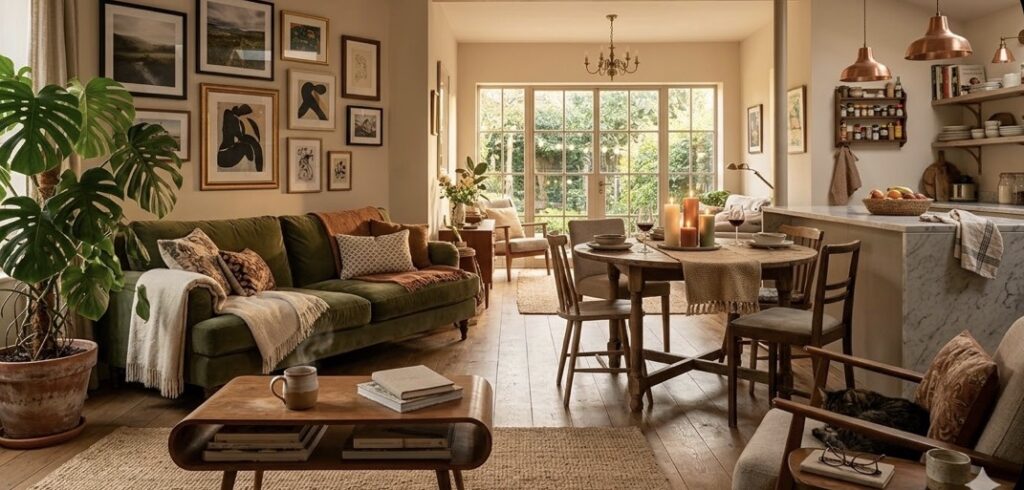
A useful test for whether your room is done: stand in the doorway and look at the whole space. Does your eye move comfortably around the room, landing on interesting moments and then moving on? Or does it get stuck somewhere — on a bare wall, on a piece that looks out of place, on a corner that feels unresolved? A finished room has a visual rhythm. It has moments of detail and moments of simplicity. It has the right balance of light and dark, tall and short, soft and hard, old and new. When your eye moves through the room easily and with pleasure, you are done. And here is the most important thing: a dream home is not a destination — it is a practice. The most beautiful homes in the world evolve as their owners grow, as seasons change, as tastes shift, as new objects find their way in and old ones make way. The goal is not to finish your home once and lock it in place forever. The goal is to build a home that reflects who you are right now, with room to change. That kind of living space is not just beautiful — it is genuinely yours.
Final Thoughts: One Step, One Room, One Good Decision at a Time
Designing a dream house interior is not about having infinite money or some innate gift for taste that other people were born with and you were not. It is about slowing down, making deliberate choices, understanding how spaces work, and having the patience to build something beautiful over time. The people whose homes you have saved at midnight got there by making one good decision after another — some expensive, some completely free, all intentional.
You have, right now in this guide, everything you need to get started. A vision framework. A way to understand your space. A color palette system. A furniture selection strategy. A lighting plan. A textiles approach. A styling method. A room-by-room blueprint. A way to make it personal without making it chaotic. And a budget strategy that proves you do not need to be wealthy to have a beautiful home — just thoughtful. So close this tab, look at the room you are in right now, and ask yourself: what is one thing I can do this week to bring my dream home one step closer? Because that is how it gets built. One step. One room. One very good decision at a time.