
Small space, big personality — here are 15 living room ideas for tiny homes that actually work in real life.
Let’s be honest. When most people hear ‘tiny home living room,’ they picture a sad little couch squeezed between two walls, a TV mounted at a neck-breaking angle, and one sad throw pillow trying its best. But here’s the thing — tiny home living rooms can be some of the most beautiful, creative, and intentional spaces you’ll ever sit in. The secret is not squeezing more in. The secret is choosing better.
Whether you’re living in a tiny house on wheels, a studio apartment, a converted shipping container, or a backyard ADU, your living room doesn’t have to feel like a waiting room at the dentist. It can feel warm. It can feel layered. It can feel like you — and still leave room for a guest or two (three is pushing it, but we’ve seen it work).
This post walks through 15 tiny home living room ideas that go beyond ‘add a mirror’ and ‘use light colors.’ Each one is a full approach to how a small living room can look, feel, and function beautifully. Get comfortable. Or, you know, find a seat first.
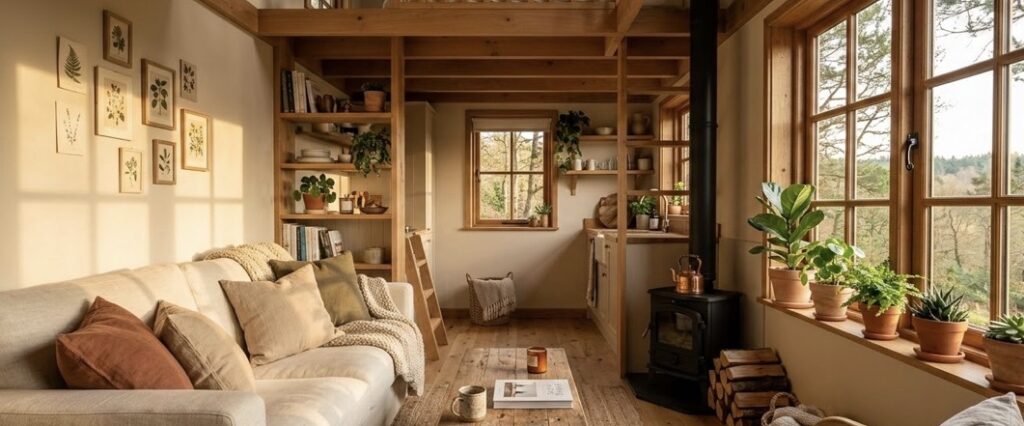
1. The Cozy Minimalist Living Room
Minimalism and tiny homes were practically made for each other. When you don’t have much space, every single item needs to pull its weight. The cozy minimalist living room takes this idea and wraps it in a warm blanket — literally. This style is not about cold, bare rooms with one sad chair and a single candle. It is about keeping only the things that feel good and look good, and letting the room breathe around them.
In a tiny home, a cozy minimalist living room usually starts with a low-profile sofa in a neutral color — think oatmeal, warm white, soft grey, or dusty blush. The sofa sits close to the floor, which tricks the eye into seeing more vertical space. A few chunky knit throw pillows, one lightweight cotton throw, and a small side table that doubles as a footrest complete the seating area without cluttering it.
The walls stay mostly clear. Maybe one piece of art, maybe a single shelf with three things on it. The floor is visible — that’s important. In small rooms, floor space is visual breathing room. The more of it you can see, the bigger the room feels. A small jute or wool rug defines the seating area without covering everything up.
Lighting in this style is soft and intentional. A floor lamp with a warm bulb in one corner, a small candle on the coffee table, and maybe a string of warm LEDs along a shelf. Natural light is the MVP, so window treatments stay minimal — sheer linen panels at most.
The cozy minimalist approach works especially well in tiny homes because it removes the visual noise that makes small spaces feel cramped. Everything has a place. Nothing is there by accident. And somehow, the room ends up feeling more personal than a room stuffed full of things, because every item was picked on purpose.
Think of it as: Marie Kondo met a Scandinavian interior designer and they opened a very small, very lovely shop together.
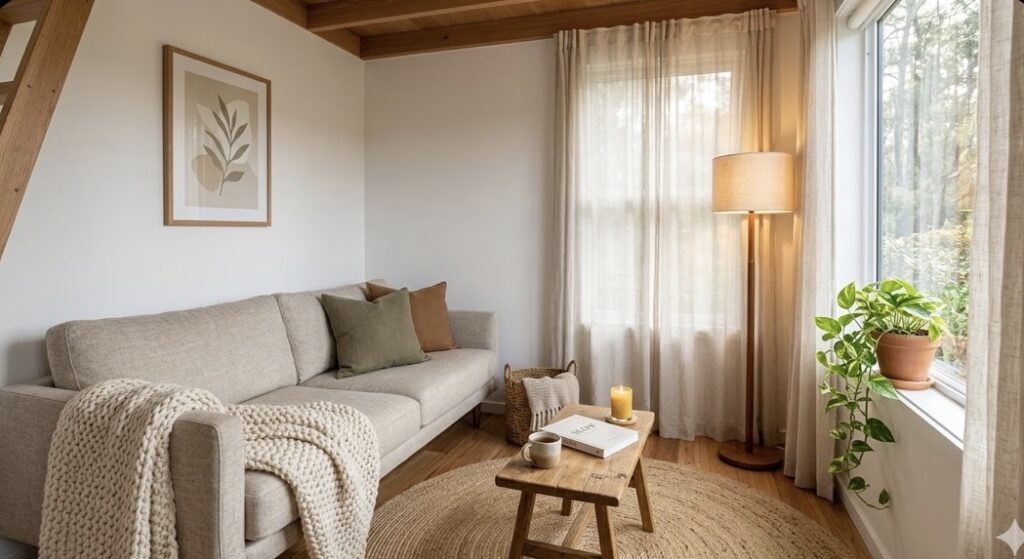
2. The Bohemian Layered Living Room
If minimalism is the edited version, the bohemian layered living room is the full playlist. This style is for the tiny home dweller who has collected things — from markets, from travels, from thrift stores, from that one estate sale that changed their life — and wants to live surrounded by them without the room looking like a storage unit.
The key to bohemian layering in a small space is intentional abundance. Every layer should add warmth or color or texture, not just weight. It starts with a base — usually a floor-length macrame or a woven textile wall hanging that fills vertical space and draws the eye upward. Then comes a sofa covered in a mix of patterned throw cushions: geometric prints, embroidered designs, block-printed cottons. No two need to match, but they should share a color story — maybe rust, deep teal, and cream, or mustard, sage, and off-white.
A low wooden coffee table or a stack of vintage trunks used as a table sits in the center, layered with a candle tray, a few books, and a small plant. More plants — hanging, trailing, potted in wicker or painted ceramic — fill the corners and the shelves. The floor gets a layered rug situation: a flat woven rug underneath and a smaller patterned kilim or sheepskin on top.
Shelving in a bohemian tiny home living room is a gallery wall of sorts. Open shelves hold books stacked horizontally, plants in varied heights, a candle, a found object or two, and maybe a framed photo tucked between a trailing pothos and a small brass bowl. It looks effortless because the key rule in this style is: if it brings you joy, it belongs here.
The lighting continues the warm, layered atmosphere. A rattan pendant light overhead, a vintage lamp with a warm shade in the corner, and a cluster of candles on the coffee table give the room a glow that feels more like a favorite restaurant than a living room — and in a tiny home, that is the highest compliment.
The bohemian living room says: ‘I’ve lived a full life and I have the throw pillows to prove it.’
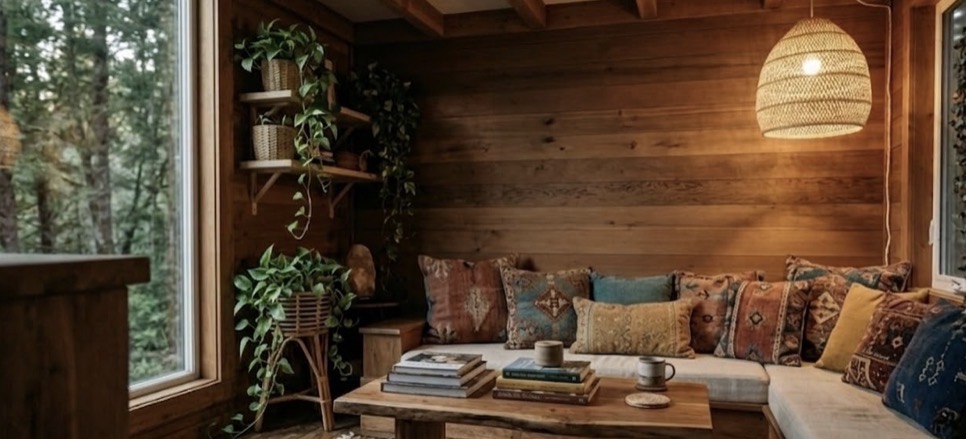
3. The Japandi Living Room
Japandi is a mix of Japanese and Scandinavian design, and it is absolutely perfect for tiny home living rooms. The concept blends the Japanese philosophy of wabi-sabi — finding beauty in imperfection and simplicity — with the Scandinavian love of functional, beautiful everyday objects. The result is a living room that feels like a deep breath.
In a small space, the Japandi approach focuses on low furniture, natural materials, and a palette that looks like it was borrowed from the forest floor — charcoal, sand, warm beige, soft clay, and muted sage. The sofa is low and clean-lined, usually in a warm grey or natural linen. A flat, minimalist coffee table in solid wood — oak or walnut with visible grain — sits low in front of it. Everything sits close to the ground, which frees up the upper half of the room and makes the ceiling feel higher.
Texture is everything in Japandi. Because the colors are quiet, the materials do the talking. Rough linen versus smooth wood. Coarse pottery versus soft cashmere. A woven bamboo lamp shade versus a matte plaster wall. These contrasts give the room depth and interest without adding visual clutter.
Accessories in this style are few but well-chosen. A single ceramic vase with one or two dried stems. A handmade bowl on the coffee table. A folded wool blanket draped precisely over the armrest. A single low plant — a bonsai or a snake plant or a ZZ plant in a matte pot. Nothing is decorative for decoration’s sake. Everything is both beautiful and quiet.
For tiny homes specifically, the Japandi living room is excellent because it encourages the resident to own fewer things, but better things. And in 200 square feet, that is not just an aesthetic choice — it is a survival strategy.
Japandi whispers: ‘Less is more — and it’s also better. Also, your plant is thriving, and so are you.’
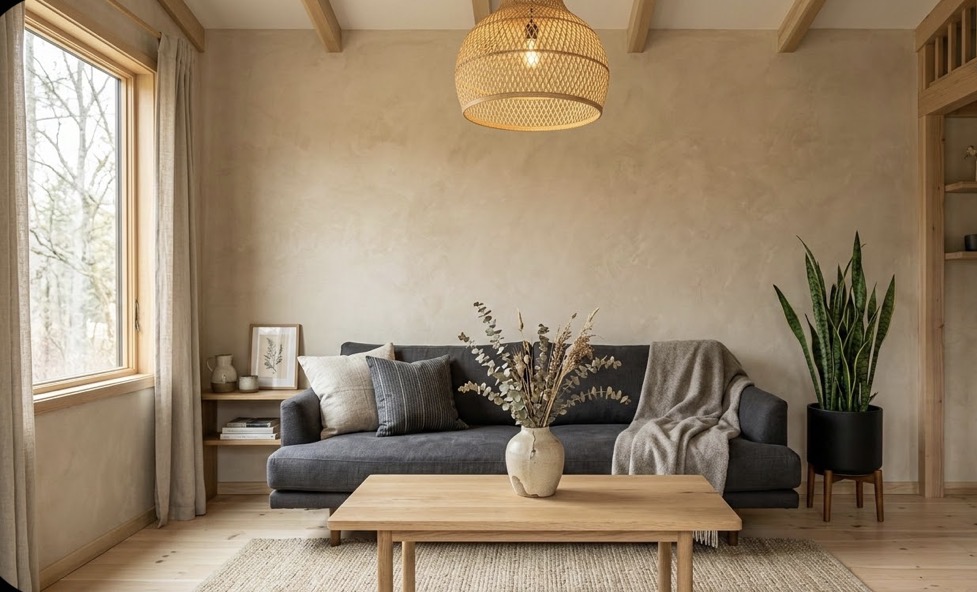
4. The Multifunctional Living Room
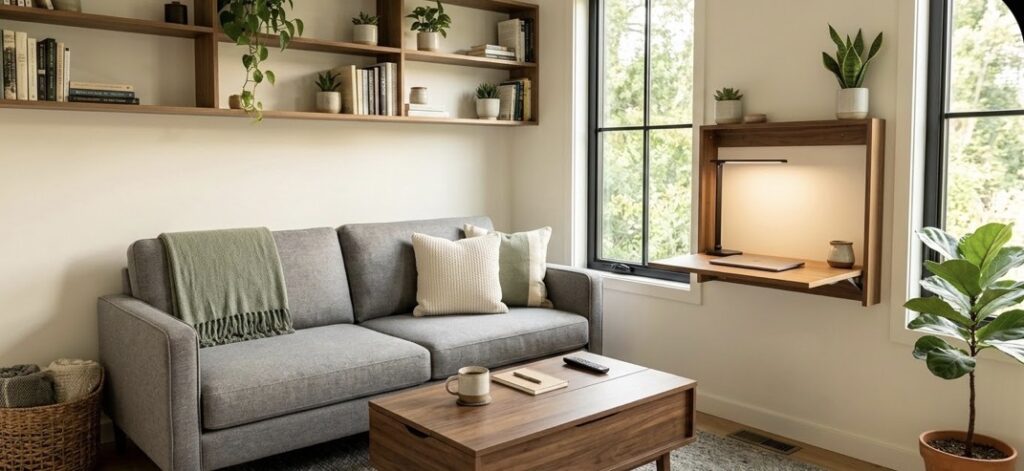
In a tiny home, the living room rarely gets to just be a living room. It is also the reading nook. The home office. The occasional guest room. The craft corner. The place where things go when you’re not quite sure where they belong. The multifunctional living room accepts all of this and turns it into a design feature rather than a problem.
The centerpiece of a multifunctional tiny home living room is usually a sofa bed or a daybed that looks nothing like what you imagine when you hear those words. Modern sofa beds have come a long way from the metal bar that used to make overnight guests deeply regret their friendship with you. Today’s versions are stylish, comfortable, and transform with a simple pull or fold.
Storage is built into every surface. The coffee table has drawers or lift-top storage. The ottomans open up. The bench at the end of the daybed is hollow. Floating shelves line one wall with a dedicated zone for work — a slim fold-down desk that closes flush to the wall when not in use, a power strip tucked behind it, and a small task lamp that lives on the shelf above.
The trick with multifunctional spaces is creating visual zones even within one open room. A rug anchors the seating area. A pendant light or floor lamp above the work area creates a different mood. A small plant or bookshelf between zones acts as a soft divider without eating into the square footage.
Color and consistency tie it all together. When a room has to work this hard, it needs a visual through-line. One cohesive palette across all the zones — furniture, textiles, and accessories — makes the room feel like one intentional space rather than a furniture showroom with an identity crisis.
The multifunctional living room is proof that small spaces don’t limit your life — they just make you get creative about where you nap.
5. The Warm Industrial Living Room
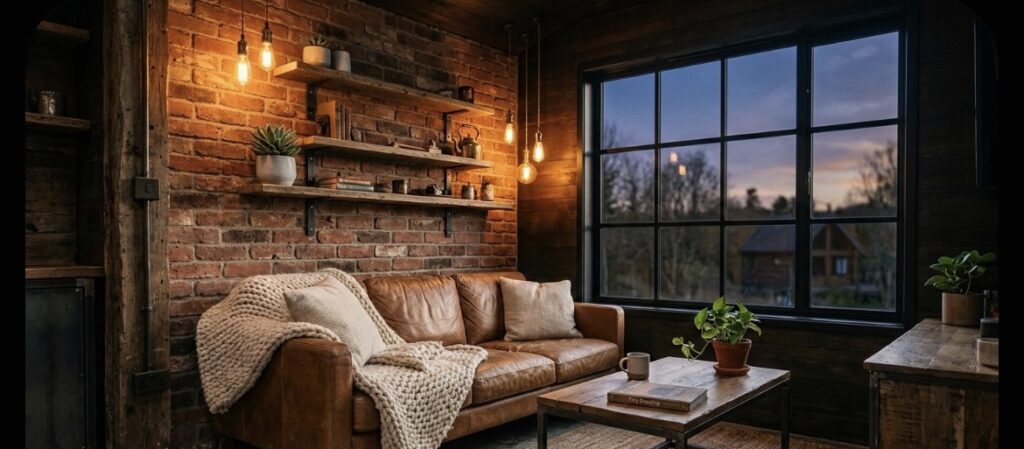
Industrial style and tiny homes might seem like an unlikely pair — one conjures images of vast warehouse lofts with exposed brick walls, and the other is, well, the opposite of vast. But the warm industrial aesthetic, which softens the raw edges of classic industrial design with wood tones, warm metals, and cozy textiles, translates beautifully into small spaces.
The foundation of this look is contrast. Exposed materials — brick-effect wallpaper or real brick on one wall, concrete-look panels or painted concrete, raw wood shelving — are paired with soft, warm layers. A leather sofa or a canvas sectional in caramel or cognac anchors the room. A metal and wood coffee table with visible joints sits in front of it. Open shelving made from reclaimed wood on black metal brackets lines one wall.
The palette leans into the industrial look: charcoal, black, deep navy, warm brick red, and the natural warmth of wood and leather. But the textiles bring it back from cold: chunky wool throws, faux shearling cushions, a patterned rug in warm tones. The balance of hard and soft is what makes this style work in a living room rather than feeling like you’re sitting in a very stylish garage.
Lighting is a huge part of the warm industrial feel. Edison bulb pendants on black cords hang from the ceiling — even one or two of these instantly sets the tone. A metal floor lamp with a cage shade fills a corner. Candles in metal holders add another layer of warmth at eye level. Together, they give the room a moody, golden glow that makes it feel larger and more atmospheric than it is.
For tiny home dwellers who love a bit of edge with their comfort, the warm industrial living room offers a look that feels intentional, grown-up, and full of character — without needing much space to pull it off.
The warm industrial living room looks like it could star in a coffee commercial. The good kind. The kind where someone is wearing a flannel and clearly has their life together.
6. The Nature Biophilic Living Room
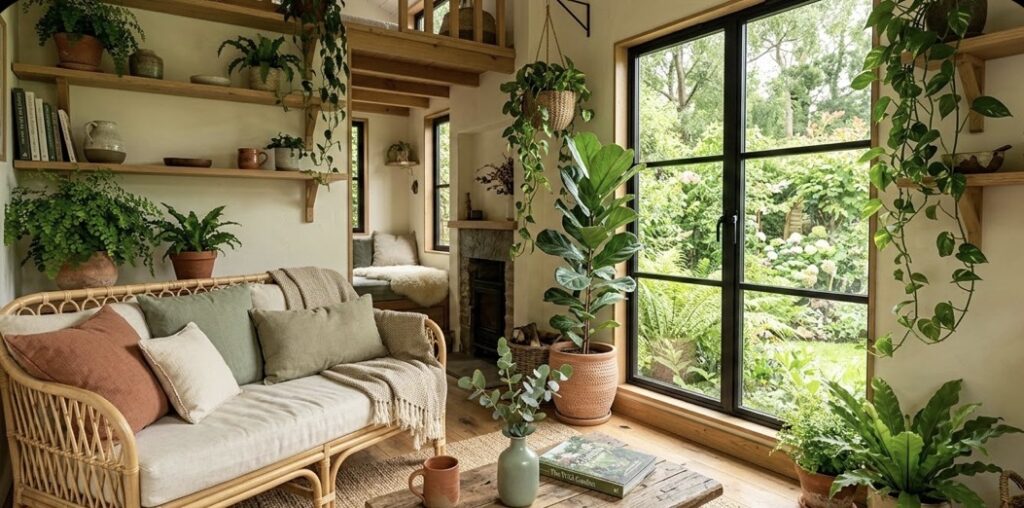
Biophilic design — the idea of bringing the natural world into your indoor space — has become one of the most talked-about concepts in interior design, and for good reason. Humans are wired to feel calmer, happier, and more focused when surrounded by natural elements. In a tiny home, this instinct becomes even more important, because the walls are closer and the feeling of space depends a lot on how connected the room feels to the outdoors.
A biophilic tiny home living room uses plants as a primary design element rather than an afterthought. Not just a single succulent on a shelf, but a genuine indoor garden moment: a tall fiddle leaf fig in the corner, trailing pothos cascading from the shelves, a hanging basket of string of pearls near the window, a cluster of ferns near the floor. The plants are at different heights, different sizes, different textures, and they fill the room with green in a way that feels lush without being overwhelming.
The materials follow the nature-first rule: raw wood, stone, rattan, jute, linen, and ceramic. A rattan sofa or chairs with linen cushions feels lighter than a fully upholstered piece and allows more visual floor space. A low stone or wood slab coffee table grounds the seating area. A woven jute rug underfoot ties the natural material story together.
Color in a biophilic tiny home living room is drawn directly from the outdoors: earthy greens, warm terracotta, sandy beige, soft clay, deep forest green, and the rich brown of bark and soil. These are colors that never fight each other — nature figured out the color palette long before any designer did.
Natural light is celebrated and maximized. Window treatments are kept sheer or removed entirely. Mirrors are placed to reflect garden views or treetops. If the tiny home is on a property with outdoor space, a sliding glass door or a large picture window becomes the star of the living room — bringing the outside in so that the room feels double its actual size.
In a biophilic living room, even the plants have better posture than you. But at least one of you is photosynthesizing.
7. The Scandinavian Hygge Living Room
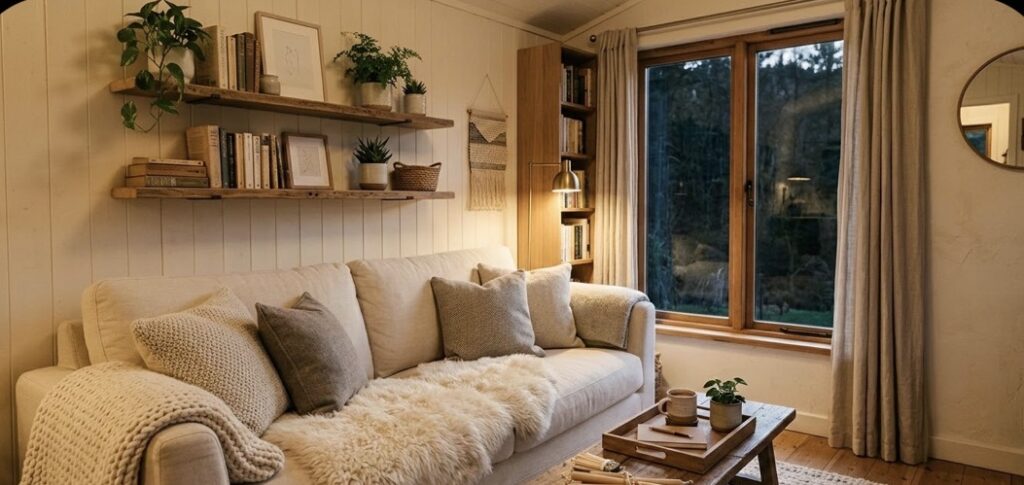
Hygge is a Danish and Norwegian concept that describes a feeling of coziness, contentment, and warmth — usually shared with good people, good food, and good light. It is less a design style and more a design feeling, and in a tiny home living room, it is one of the most achievable and delightful aesthetics there is.
The hygge tiny home living room is built around the idea of comfort first. The sofa is big enough to curl up in — a deep-seated sectional or a plush two-seater with extra cushions and a mountain of throw blankets. Sheepskin rugs are piled on the floor. A wool blanket is within arm’s reach at all times. The coffee table has a tray with candles, because hygge without candles is just sitting.
The palette is soft and warm: creamy white, warm grey, soft caramel, dusty blush, and muted sage. It is the palette of a freshly baked loaf of bread and a cozy afternoon, and it works beautifully in a small space because it creates warmth without making the room feel heavy.
Candles are a non-negotiable in this style — not just for the light, but for the ritual of lighting them. A cluster of white pillar candles on a wooden tray, tea lights in glass holders on the window ledge, a single large scented candle in a ceramic jar on the coffee table. Hygge is as much about the sensory experience as it is about how the room looks.
Shelving in a hygge living room holds the things that make life feel good: a row of well-read books with beautiful spines, a few framed photos of people you love, a small succulent or air plant, a handmade ceramic mug waiting to be filled. The room is personal, warm, and quiet — the kind of space where you immediately want to remove your shoes and stay longer than you planned.
A hygge living room is basically a warm hug that you can also sit in. It’s the only kind of hug that comes with a candle.
8. The Gallery Wall Living Room
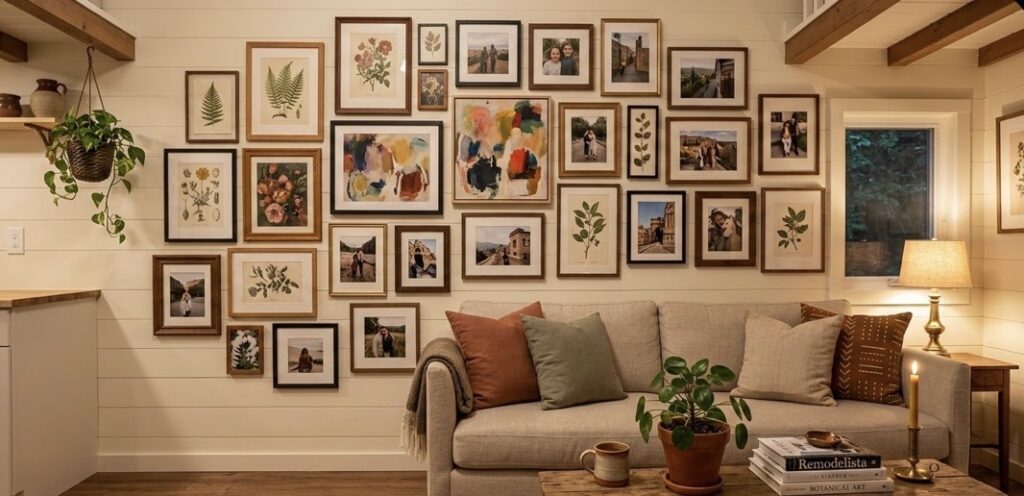
When you have limited floor space, the walls become your best friend. The gallery wall living room takes this literally, using one large wall — or two — as the main design feature of the room. Done well, a gallery wall does more than just fill space. It tells a story, adds color and texture, creates visual depth, and makes a tiny room feel like a curated space that someone actually lives in and loves.
In a tiny home, the gallery wall works best when it is cohesive without being matchy-matchy. This means picking a palette — all black and white frames, or all warm wood frames, or a mix of frames in the same color family — and then varying everything else: print sizes, artwork styles, frame shapes. Mix a large abstract print with a smaller botanical illustration, a framed textile, a postcard, a mirror, and a small shelf holding a tiny plant. The variety keeps the eye moving. The cohesion keeps it from looking chaotic.
The furniture in a gallery wall living room is intentionally quiet so the wall can speak. A simple two-seater sofa or a pair of armchairs in a solid neutral, a low coffee table in natural wood, a floor lamp in one corner. The pieces support the wall without competing with it.
Color is pulled from the gallery wall into the rest of the room through cushions and textiles. If the wall includes a print with rust, terracotta, and deep green, those same tones show up in the throw pillow, the rug, and the plant pot. This makes the whole room feel connected and designed rather than assembled.
One important note for tiny home gallery walls: leave a few inches of wall space at the edges. Filling the wall all the way to the corners can make the room feel closed in. Giving the artwork a little breathing room around the perimeter is the difference between a gallery and a covered-in-stickers-at-age-fourteen situation.
A gallery wall is the most efficient use of vertical space known to interior design — and, apparently, the second most efficient use of the afternoon you spent arranging it on the floor first.
9. The Earthy Terracotta Living Room
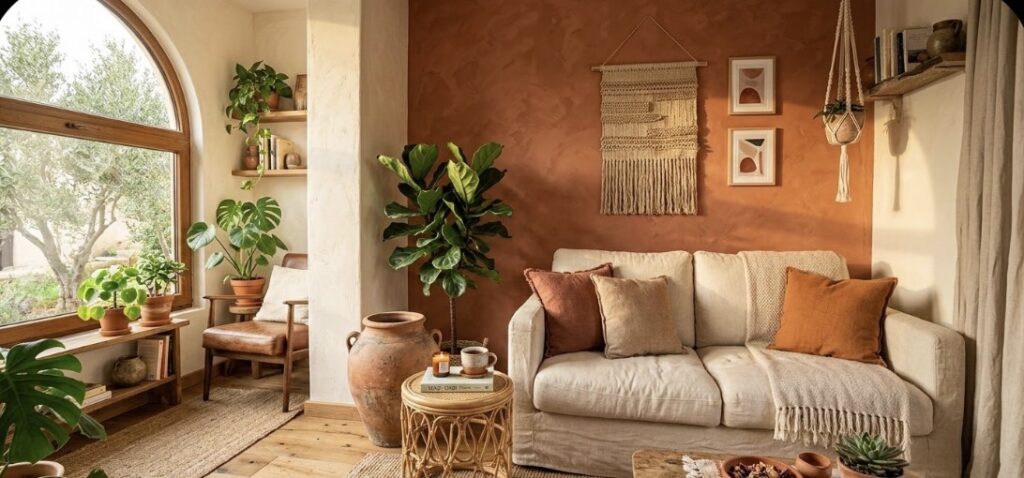
Earthy, warm, and full of personality — the terracotta living room has had a serious moment in interior design, and for tiny homes, it is an especially smart choice. Deep terracotta, burnt orange, rust, and clay tones make a room feel grounded, warm, and inviting without relying on a lot of accessories or layers to get there. The color does most of the work.
In a tiny home living room, the terracotta approach usually starts with an accent wall or a sofa in one of these warm earth tones. A terracotta-painted accent wall behind the sofa immediately transforms the room — it adds depth and warmth, makes the space feel intentional, and creates a backdrop that makes everything in front of it look better. A velvet sofa in rust or deep clay, paired with cream and warm white accessories, achieves a similar effect from a different angle.
The materials that work best with this palette are natural and textured: woven rattan, rough terracotta pottery, hand-thrown ceramic bowls, leather, jute, and linen. A rattan side table or a ceramic stool used as a side table fits perfectly into this world. Plants in terracotta pots — unsurprisingly — look like they were made to be here. Because they were.
The rest of the palette stays in the warm zone: warm white, sandy beige, dusty blush, and deep forest green as an accent. This combination feels like the Mediterranean — sun-warmed walls, hand-thrown pottery, a cool breeze through an open window, and a glass of something worth savoring.
For tiny homes with low budgets, the terracotta living room is accessible because the drama comes from paint and pottery, not from expensive furniture. A single can of terracotta paint and three ceramic pots from a thrift store can completely change the feel of a room. That kind of impact-per-dollar is exactly what small living is all about.
The terracotta living room says: ‘I’ve never been to Tuscany, but I’ve definitely looked at a lot of pictures.’
10. The Bright Living Room
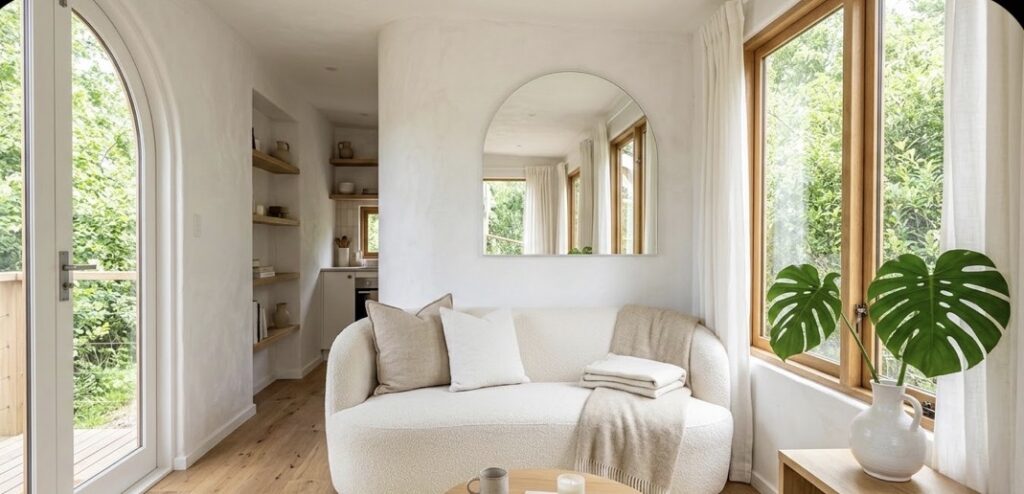
The key to a white tiny home living room that does not feel sterile is texture. When everything is the same color, the materials become the design. A chunky boucle sofa in cream white. A fluffy white sheepskin rug over white-painted wood floors. A white linen curtain that catches the breeze. A ceramic vase in matte white next to a plaster-textured wall. All white, all different, all interesting.
Because the walls, floors, and furniture are all pulling in the same direction, natural light becomes even more important. Mirrors help — a large, simple mirror on one wall doubles the visual space instantly. A round arch mirror above the sofa, a full-length mirror propped against a corner wall, or a cluster of smaller mirrors as part of a gallery arrangement all work beautifully in this style.
The one place color appears in an all-white living room is in the greenery. Plants against a white backdrop pop like paintings — a deep green fiddle leaf, a bright lime monstera, a rich emerald fern. They become the art. They become the color story. And unlike actual art, they also improve your air quality, which is a bonus feature most wall prints cannot offer.
Practical considerations for the all-white tiny home living room include: washable sofa covers, dark-colored throws for movie nights, and accepting that you may need to touch up the paint every couple of years. It is a commitment, but the light, open feeling it creates is worth every bit of it.
Thewhite living room says: ‘I’m peaceful and I have things figured out.’ It does not say: ‘I own a dog.’ These two can coexist.
11. The Dark Moody Living Room
Here is a design rule that gets broken beautifully in tiny homes every day: dark colors make small rooms feel smaller. This is sometimes true, but in the right hands, a dark, moody tiny home living room feels cocooning, dramatic, and deeply intimate in the best possible way. Instead of fighting against the smallness, this approach leans into it and makes it an asset.
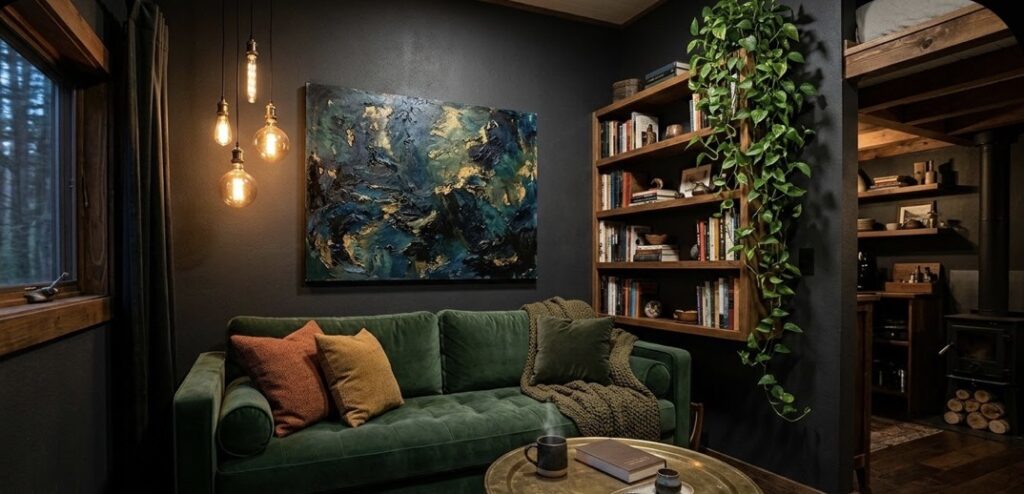
The dark moody living room uses deep, rich tones as the foundation: charcoal, midnight navy, deep forest green, inky plum, warm black. These colors do not try to fake space — they do the opposite. They pull the walls in, create a sense of enclosure, and make the room feel like a velvet box — private, warm, and intentional.
Against this dark backdrop, the furniture and accessories shine. A deep green velvet sofa, a brass and glass coffee table, warm amber light from a set of Edison pendants or a vintage lamp, a cluster of cream candles, and a large mirror in a dark frame on one wall. The contrast between the rich walls and the warm, glowing accessories creates a depth that brighter rooms often struggle to achieve.
Art looks incredible on dark walls. A single large piece of oversized abstract art becomes a focal point that would get lost on a white wall. Shelves on dark walls showcase books and objects with a clarity that feels almost theatrical. Every item pops.
The dark moody approach is particularly effective in tiny homes where the space is used primarily in the evening — for relaxing, watching films, reading, or hosting intimate gatherings. When the lights are low and the candles are lit, a tiny dark living room becomes the coziest place in any building you’ve ever been in. It is the opposite of a problem. It is a destination.
The dark moody living room looks like the villain’s study in a great movie — but the villain has excellent taste and just wants to read in peace.
12. The Coastal Relaxed Living Room
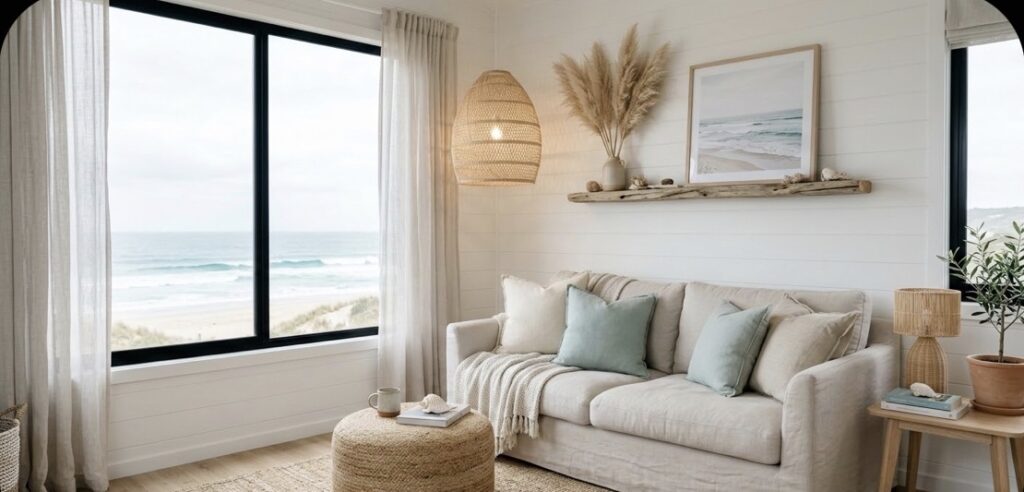
Not every tiny home is by the sea. But the coastal living room makes your small living space feel like it could be, and that is arguably even better — no sand in the sofa. The coastal relaxed style brings in the calm, natural, easy feeling of a beach house, without the shells-glued-to-driftwood vibe of the 1990s version. This is refined coastal, and it is wonderful.
The palette is the star: soft white, warm sand, pale driftwood grey, faded navy, dusty sage, and the blue-green of sea glass. These are the quietest, most restful colors there are, and together in a tiny home living room, they create a space that feels breezy and open regardless of actual proximity to water.
Textures in a coastal tiny home living room are natural and relaxed: woven seagrass, linen, cotton, rattan, washed wood, and weathered rope. A seagrass rug underfoot. A linen slipcover sofa that looks like it has been washed in sunlight. A rattan pendant light overhead. Wooden shelves with faded books, a small driftwood sculpture, and a glass vase with dried pampas grass or a branch of eucalyptus.
The accessories stay low-key and intentional. A few large smooth pebbles in a white ceramic bowl on the coffee table. A simple linen throw folded over the armrest. A wide, shallow basket near the sofa for throw blankets. A single large landscape print — sea, horizon, sky — in a simple light frame. These pieces add to the atmosphere without overwhelming it.
For tiny homes with good natural light and light flooring, the coastal relaxed living room can make a 120-square-foot space feel like the summer cottage everyone wishes they had rented. For homes with less natural light, the soft pale palette and natural materials still work beautifully — the breezy feeling comes from the colors and textures, not just the sun.
The coastal living room says: ‘I’m on vacation in my own home.’ Which, honestly, is living.
13. Vintage Eclectic Living Room
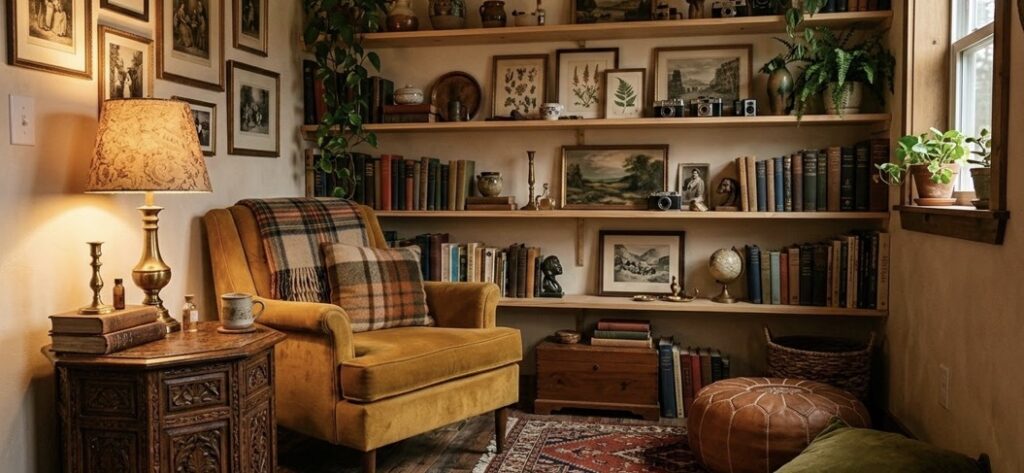
The vintage eclectic living room is for the person who loves the old stuff — the things made to last, the pieces with history, the furniture that has clearly had a life before it arrived in this one. In a tiny home, a well-curated collection of vintage pieces creates a space that feels deeply personal, layered, and utterly unique. No two vintage eclectic living rooms will ever look alike, which is exactly the point.
The key word is curated. Vintage eclectic is not the same as holding onto every old thing you own. It is carefully selecting pieces that work together visually — usually through color, through a shared material palette (lots of warm wood, aged brass, worn leather, faded fabrics), and through a consistent level of quality. A beautifully restored mid-century armchair next to a Victorian side table with an original brass lamp on it next to a 1970s rattan magazine rack — these should feel like they chose each other, not like they were abandoned in the same room.
A vintage eclectic tiny home living room often anchors around one statement piece: a genuine mid-century sofa in a bold fabric, a large antique wooden cabinet repurposed as a media unit, or a beautiful Art Deco rug that sets the whole color palette for the room. Everything else builds around that one piece, complementing it and letting it lead.
Books are important here. A mix of paperbacks, hardcovers, art books, and old coffee table books stacked and sorted on open shelves adds personality and warmth. Old magazines, vintage prints framed in ornate or simple frames, a collection of small ceramics or glass objects on a shelf — these little collections are what give a vintage eclectic living room its texture and its charm.
Color in this style tends to be rich and warm: deep olive, caramel, cognac, aged burgundy, dusty rose, warm mustard, and dark teal. These are colors that look good on vintage pieces because they echo the tones of aged materials — leather, wood, worn velvet. They bring the whole room into the same warm, nostalgic register.
Final Thoughts
If there is one thing all 15 of these tiny home living room ideas have in common, it is this: they all start with a point of view. Not a rule. Not a formula. A feeling — a vibe, a palette, a way of living in a space — and everything else follows from that. The best tiny home living rooms are not decorated. They are decided.
The living room in a tiny home is often the only room you can sit in comfortably, which means it works harder than any other room in the house. It is where you start your morning, end your evening, host your friends, take your calls, do your work, watch your shows, and have the important conversations. It deserves to be beautiful. It deserves to be thought through. And it absolutely deserves more than a sad little couch and a TV.
Pick the idea that feels most like you — or mix two or three that speak to different parts of your personality. Your tiny home living room is yours. Make it a place you actually want to be.