
Beautiful, welcoming, and full of personality — your guest room can be the most talked-about room in your home.
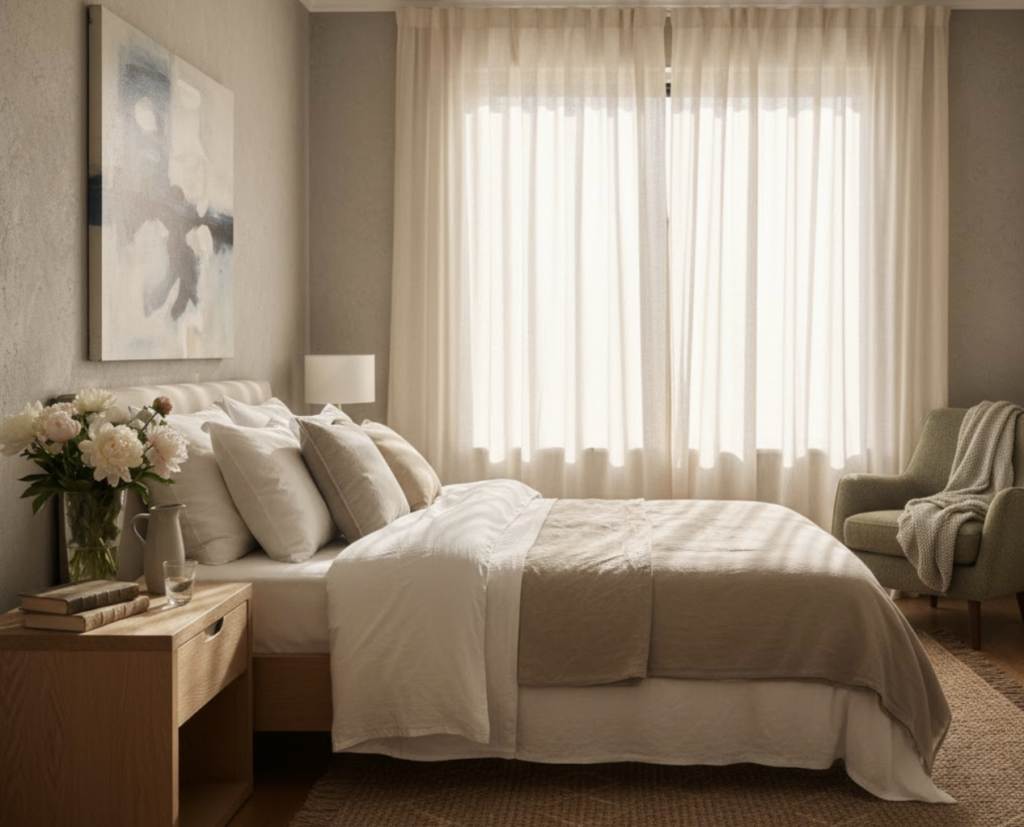
Let’s be honest. A lot of guest rooms are, at best, a bed and a spare lamp that flickers dramatically at 2 a.m. At worst, they are a graveyard for furniture you couldn’t bring yourself to throw away but also couldn’t stand to look at every day. Your guests deserve better. And truthfully, so do you, because a well-designed guest room adds real value to your home and is one of the most satisfying spaces to decorate.
The idea behind a beautiful guest room is simple: you want someone to walk in, exhale, and feel immediately at ease. Like the room was made for them. Like someone actually thought about what they might need. That feeling does not come from expensive furniture or a matching set you bought all at once. It comes from choices — the color on the walls, the texture of the bedding, the warmth of the lighting, the little things that make someone feel cared for.
In this post, we are walking through 14 distinct guest room interior ideas that each bring their own personality, mood, and charm. Whether you have a large spare room or a tiny space that basically moonlights as a closet, there is something here for you. Each idea is a full vision, not just a color tip or a furniture suggestion. These are complete worlds you can step into and make your own.
And no, none of them say ‘timeless.’ We are done with that word. Everything here is specific, beautiful, and interesting. Which is much better anyway.
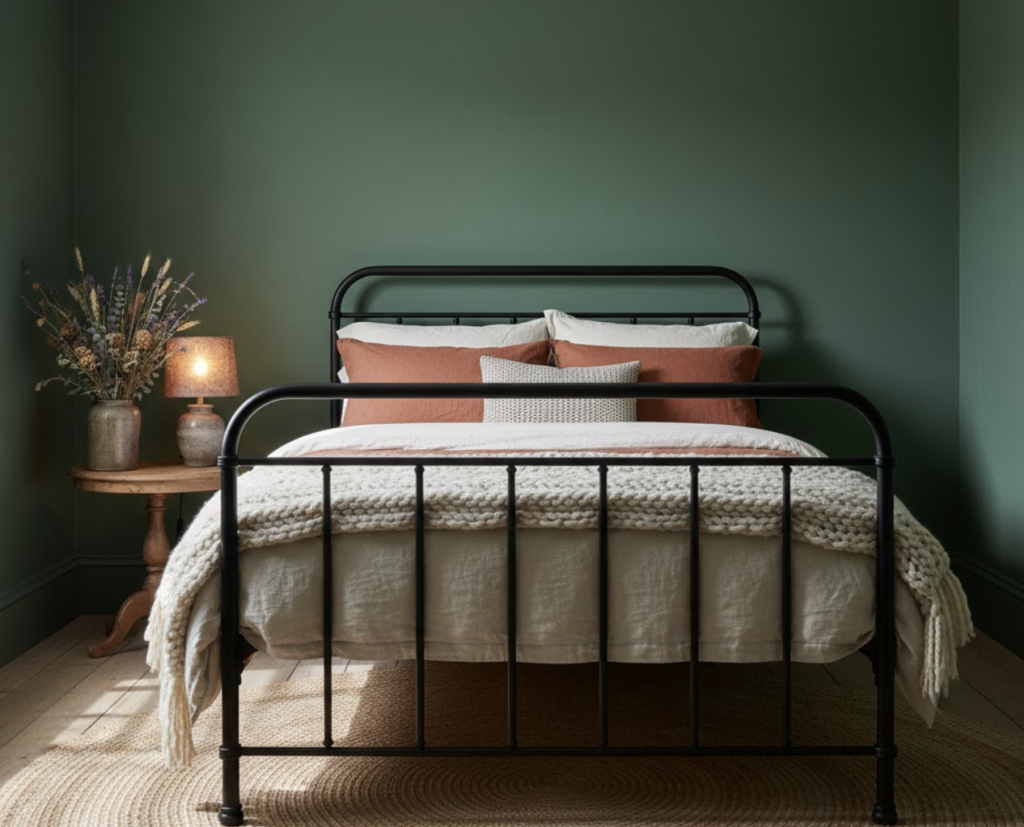
1. The Cozy Countryside
Picture a room that feels like it belongs in a cottage somewhere in the English countryside, even if your house is in the middle of a city. This guest room idea is built around warmth, softness, and the kind of charm that makes people want to stay an extra night — and then maybe just move in permanently. (Friendly reminder to agree on check-out dates in advance.)
The walls in this room are painted in a deep, earthy green — something in the sage or moss family, not too bright, not too gray. It is a color that wraps around you like a warm blanket. Against that, you layer cream and off-white linens, a chunky knit throw at the foot of the bed, and pillows in earthy tones like rust, camel, and warm white. The bed itself should feel substantial — a wrought iron frame, an aged wooden headboard, or even a simple upholstered frame in a natural linen fabric.
Lighting is everything in this room. You want lamps with warm bulbs, not overhead lighting that feels like an office. A ceramic table lamp with a linen shade on the nightstand, maybe a wall sconce with a soft amber glow. If there is a window, dress it with thick curtains in a soft cream or a very subtle floral that does not scream. The goal is light that feels filtered through leaves, not bounced off fluorescents.
Natural elements do a lot of the heavy lifting here. A small wooden tray on the dresser holding a candle, a dried flower arrangement, maybe a little dish for jewelry. Woven baskets for extra blankets. A jute rug underfoot. A small stack of actual books on the nightstand — not just for looks, but because your guests might actually read them. Think of this room as a place where someone can genuinely exhale and rest, because that is exactly what it will deliver.
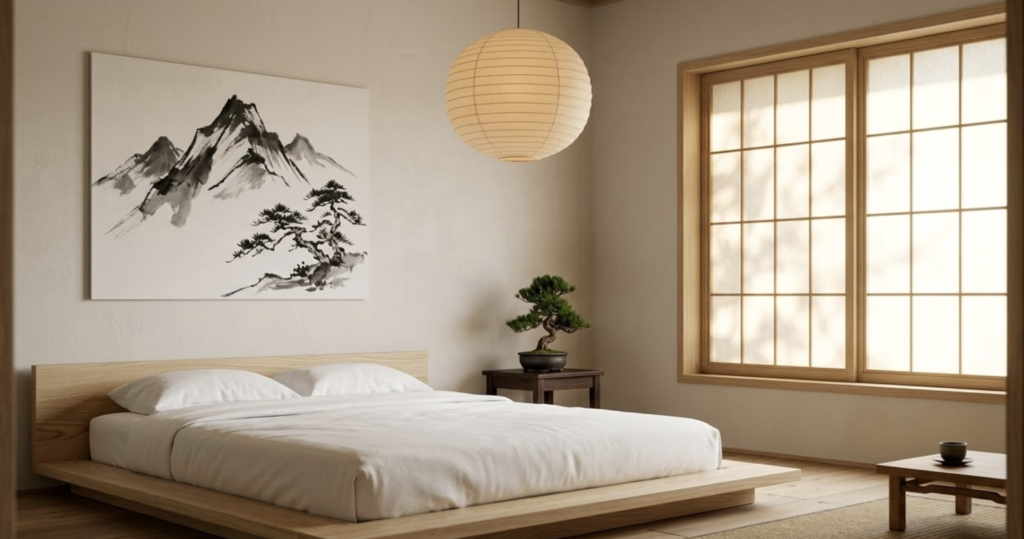
2. The Minimal Japanese styled Room
This guest room idea is for people who believe that less is genuinely more, and who have the restraint to actually pull it off. Inspired by Japanese interiors and the philosophy of wabi-sabi — which values simplicity, imperfection, and the beauty of natural things — this room is quietly stunning in a way that takes people a moment to fully absorb.
The foundation is a very low platform bed, close to the floor, with a simple wooden frame in a natural or charcoal-stained finish. The bedding is crisp and unfussy: white or oatmeal-colored cotton, folded neatly, with one thin accent pillow in a muted earth tone. Nothing is overdone. The whole point is that each item in the room earns its place.
Walls can be white, warm greige, or a very pale clay. The floor ideally would be natural wood or even tatami-style matting if you want to lean further into the Japanese aesthetic. A single piece of art on one wall — a simple ink brush painting, a framed piece of handmade paper, or an abstract print in soft grays and blacks — is more than enough. Resist the urge to add more. That single piece will do more work in a quiet room than five pieces in a busy one.
Storage is built in or hidden. The nightstand is minimal — just a small wooden block or a sleek white shelf. Lighting comes from a paper pendant lamp or a low floor lamp with a warm glow. A small indoor plant, like a bamboo shoot in a simple ceramic pot or a bonsai, adds life without noise. Every single thing in this room should feel chosen, not collected. Your guests will either love the peace and quiet, or they will feel a sudden urge to declutter their own homes. Both outcomes are great.
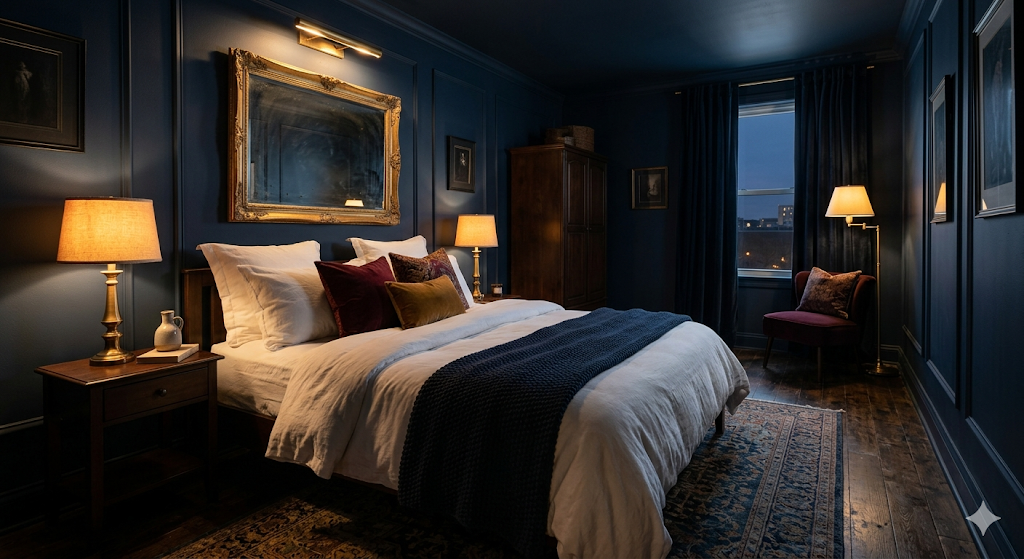
3. The Bold Dark Room
Not every guest room needs to be light, airy, and neutral. Sometimes the most memorable room in a home is the one that surprises you. This guest room idea is for those who are willing to go dark and dramatic — and trust us, it works beautifully when done well. Dark rooms feel intimate and cocooning, like the best boutique hotel you ever stayed in. The kind where you close the curtains, lose track of time, and sleep better than you have in years.
The star of the show is the wall color. Deep navy, charcoal, forest green, or even a rich plum — pick one dark, saturated tone and commit to it fully. Paint all four walls, and if you are feeling bold, paint the ceiling too. A dark ceiling in a guest room does not feel oppressive; it feels like a warm embrace. If full dark walls feel too intense, you can do three walls in a lighter tone and one feature wall in the dark shade, but the full-room approach is genuinely special.
Against those dark walls, light-colored bedding pops in a way that feels crisp and luxurious. White or ivory linens look almost luminous against navy or charcoal. You can also go the other direction and lean into the drama with deep jewel-toned bedding — burgundy, forest green, or cobalt layered over a white base. Metallic accents in gold or aged brass add warmth and keep the room from feeling cold. A brass table lamp, gold picture frames, a gilded mirror — these small touches catch the light and add a sense of richness.
Lighting is absolutely critical in a dark room. You need to layer it thoughtfully: a pendant or chandelier for ambient light, table lamps on nightstands for reading, maybe a small floor lamp in a corner. Wall sconces flanking the bed look incredibly elegant and solve the bedside lighting problem beautifully. The goal is warm, layered light sources that glow against the dark walls rather than a single harsh overhead fixture. When everything comes together, guests will feel like they are sleeping in a luxury suite.
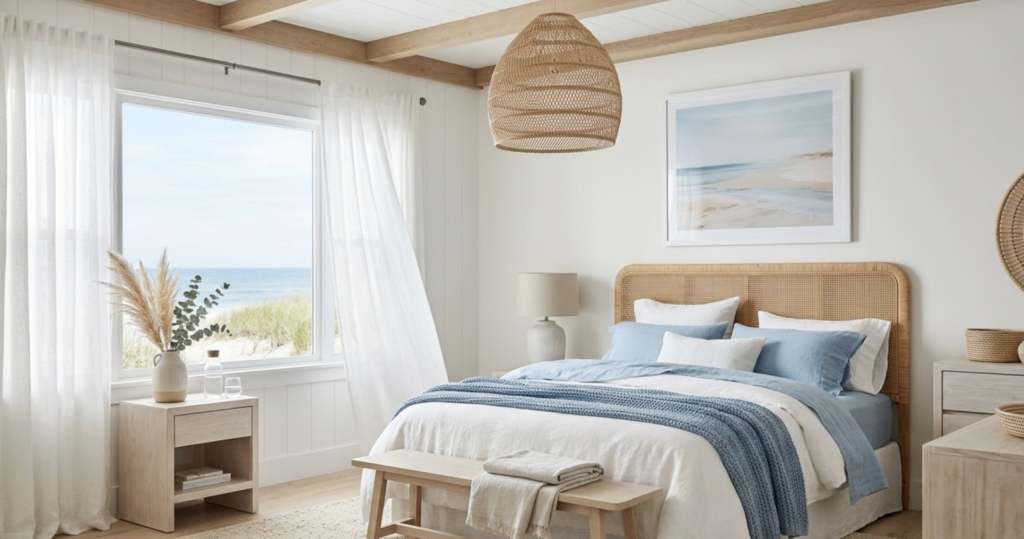
4. The Beachy Coastal Room
No, this does not mean a room full of anchors, seashell collections, and driftwood signs that say ‘Life is Better at the Beach.’ We can all agree to leave those behind. A genuinely coastal-inspired guest room is about capturing the feeling of being near water — the lightness, the airiness, the soft blues and sandy neutrals, the way everything seems a little more relaxed and unhurried. That is the actual goal.
Start with a palette of soft whites, sandy beiges, and ocean-inspired blues that range from barely-there sky blue to a deeper sea glass green. The walls can be a very pale blue or a warm white with a subtle undertone. The bedding is the place to bring in color — layer white or cream as the base with accents in soft denim blue, seafoam, or sandy linen. Keep the patterns simple: thin stripes, subtle textures, loose weaves. Nothing too loud.
The materials are just as important as the colors. Natural textures make this room feel authentic rather than like a themed hotel room. A rattan or wicker headboard. A sisal or braided jute rug. Linen curtains that move gently in the breeze. Bleached wood or whitewashed furniture. A woven throw on the end of the bed. These textures collectively create a feeling of organic, relaxed ease.
Accessories should be thoughtful and selective. A ceramic vase in a sandy or ocean-blue glaze on the dresser. A framed watercolor of a coastline. A small selection of smooth river stones or sea glass displayed in a simple glass bowl — not as a collection, but as an intentional object that catches light and invites touch. Lighting should be natural and soft: linen or cotton shades on table lamps, perhaps a woven rattan pendant over the bed. Open the window. Let the room breathe.
5. The Glamorous Art Deco Room
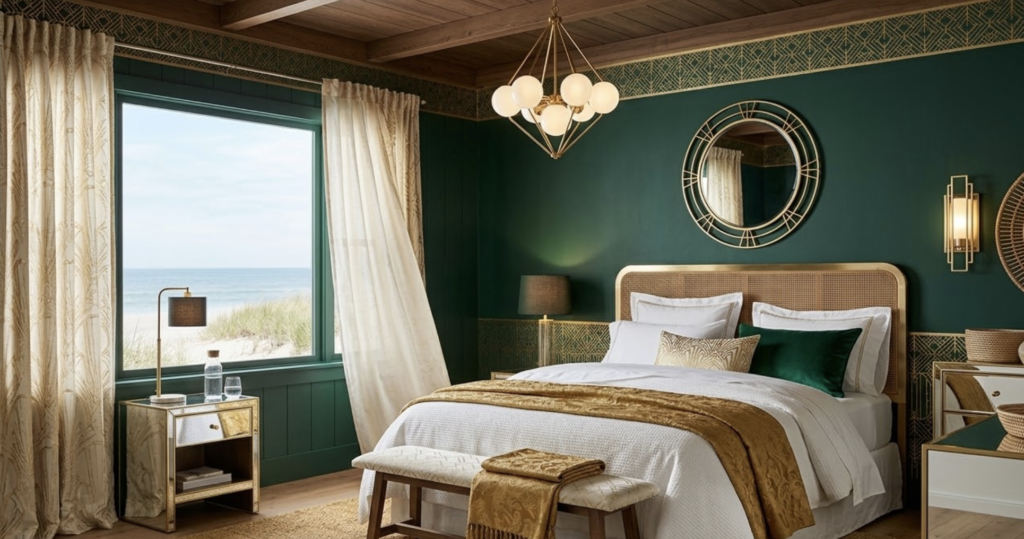
Some guests deserve to be treated like they are staying at a hotel in 1930s Paris. This guest room idea is for the people who love a little sparkle, a little history, and a lot of personality. Art Deco is a style that does not apologize for its love of luxury, and there is something deeply satisfying about a room that leans fully into that energy. Done thoughtfully, it is showstopping without feeling overdone.
The color palette of Art Deco is rich and deliberate. Think deep emerald green, navy, black, or a warm champagne paired with gold or silver metallic accents. Black and gold is the classic combination — endlessly elegant, immediately striking. The walls could be a deep green or navy with black trim details, or a dramatic wallpaper in a geometric Art Deco pattern: repeated fans, chevrons, or stylized sunburst motifs in gold on a dark background.
Furniture in this room has presence. A bed with a dramatic fan-shaped upholstered headboard in deep velvet — emerald, sapphire, or midnight black. Nightstands with clean geometric lines and gold or mirrored hardware. A curved dresser or chest of drawers with a lacquered finish. A vanity table with a round mirror and gold detail, if the room allows. These are pieces that look like they have a story, and your guests will absolutely feel it.
The accessories here are where you can have genuine fun. A bedside lamp with a geometric base in aged brass or smoked glass. Gold picture frames around black and white vintage-style prints or bold botanical illustrations. A velvet throw in a rich jewel tone folded elegantly at the foot of the bed. A small mirrored tray on the dresser holding a crystal perfume bottle or two. This is a room that feels like getting dressed up to stay in.
6. The Boho Layered Room
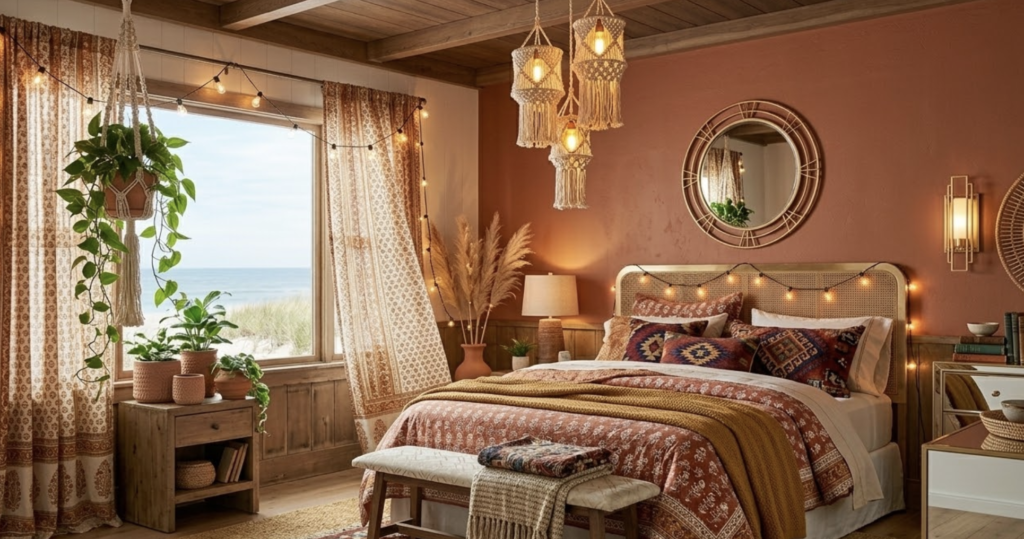
Bohemian style in a guest room is less about following rules and more about creating a feeling — one of warmth, creativity, and comfort. It is the room that feels like it was put together over time, with things collected from different places, different moments, different moods. When it works, it is one of the most inviting rooms you can walk into. Your guests will feel like they are sleeping in a thoughtfully curated artist’s loft, which is a very good thing.
The palette for a boho guest room is warm and earthy with pops of unexpected color. Think terracotta, warm ochre, dusty rose, burnt sienna, and deep teal. You do not need to use all of them at once — pick three or four and let them play together through the textiles and accessories. The walls can be a warm white, a soft terracotta, or even a mural if you are adventurous. A hand-painted geometric or botanical mural on one wall will become the focal point of the room and the background of approximately one hundred guest Instagram photos.
Layering is the key technique in a boho room. The bed should look abundant: multiple pillows in different sizes, textures, and patterns that somehow all work together. A base of white or ivory linens, then layer in a patterned duvet, a woven cotton throw, a kilim-inspired pillow, a velvet cushion. On the floor, layer rugs — a natural jute base with a smaller, patterned rug on top. On the walls, mix a mirror, a macrame hanging, a framed textile, and a small cluster of prints. The layering should feel intentional and collected, not cluttered.
Plants are a big part of the boho aesthetic. A large trailing pothos in a macrame hanger, a cluster of different sized plants in terracotta pots on the windowsill, a small monstera on the dresser. They bring life, color, and a sense of natural ease to the space. Lighting leans toward the romantic: string lights along the ceiling, a beaded or rattan pendant lamp, table lamps with warm amber bulbs. This is a room for people who feel happiest surrounded by color, texture, and things that feel alive.
7. The Scandinavian Hygge Room
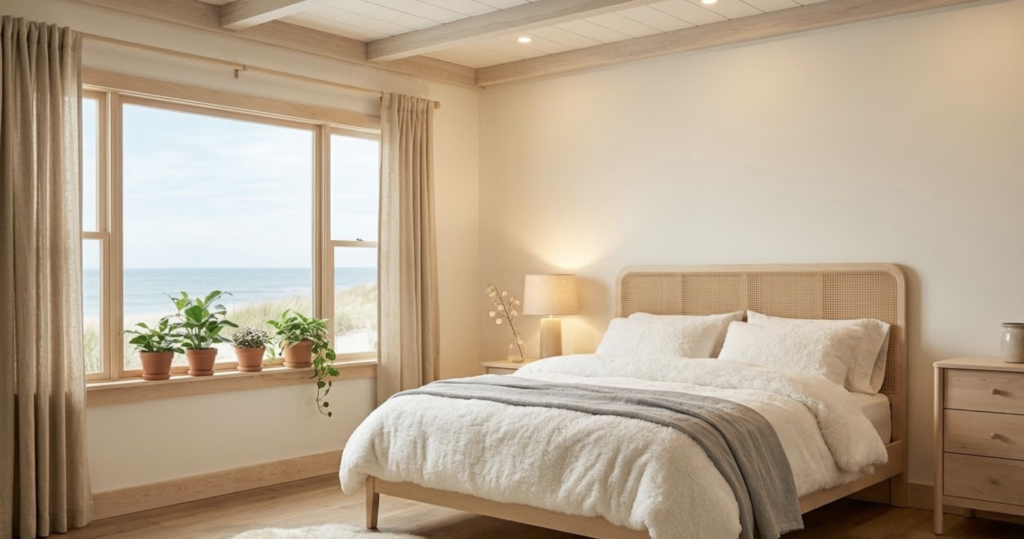
Hygge (pronounced hoo-gah, for everyone who has been quietly mispronouncing it at dinner parties) is a Danish concept that roughly translates to the art of creating coziness and contentment. A hygge-inspired guest room is designed around one central question: what would make someone feel truly, deeply comfortable right now? The answer, it turns out, involves a lot of soft textures, warm light, and the feeling that the outside world cannot touch you in here.
The Scandinavian palette is light, clean, and warm. Whites with subtle undertones of gray, warm ivory, pale birch wood, and soft greens pulled from the natural landscape. It is not a stark, cold minimalism — Scandi style is far warmer and more livable than that. The walls are typically white or a very pale, warm neutral. The wood tones are light: birch, ash, or pine, finished naturally or with a very pale stain. These light materials keep the room feeling open and bright without feeling empty or clinical.
The textiles are where all the warmth lives. A fluffy, oversized duvet in white or pale gray. Multiple knit and fleece throws in varying textures piled casually on the bed and draped over a simple wooden chair in the corner. Sheepskin or faux-fur accents — a small rug beside the bed, a throw over the back of the chair — add that essential layer of softness. Thick woolen socks left out for guests would not be out of place here either. (Yes, this is actually a thing, and yes, your guests will love it.)
Candles are non-negotiable in a hygge room. Several of them, in simple holders, placed around the room. Battery-operated candles work beautifully if real flames feel like too much responsibility. A small wooden tray on the nightstand with a candle, a simple plant cutting in a bud vase, and a single good book creates one of the most inviting nightstand arrangements imaginable. Add a small basket of extra blankets, keep the colors simple and warm, and you have a room that feels like a hug.
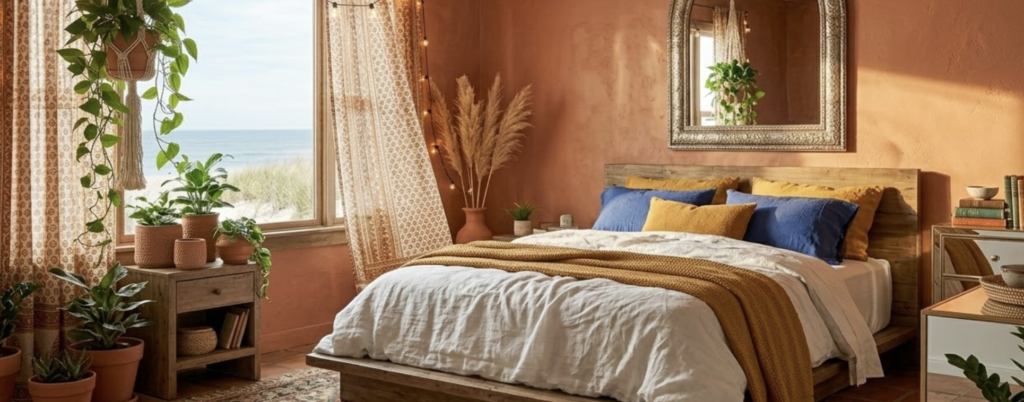
8. The Mediterranean Terracotta Room
There is a particular kind of warmth that Mediterranean interiors carry — the kind that makes you think of sun-warmed stone walls, hand-thrown pottery, and afternoons that stretch on forever. This guest room idea draws from that rich visual tradition: Spanish tile work, Moroccan textiles, Italian plaster, Greek whitewash. It is warm, layered, and full of texture, and it creates a guest room that feels genuinely transported.
Terracotta is the heart of this palette. The walls in warm terracotta or a rich adobe clay create an immediate sense of warmth and enclosure that feels incredibly welcoming. If full terracotta walls feel bold, try a limewash or plaster finish in the same tones — the texture adds depth and looks organic in a way that flat paint simply cannot. Pair those walls with white or cream bedding, natural linen curtains, and accents in cobalt blue, deep teal, or a warm ochre yellow.
Tile is a huge part of Mediterranean interiors, and even in a guest room you can bring it in. A tiled nightstand, a small section of hand-painted tile as a splash back behind the bed, a terracotta tile floor — any of these elements immediately signals the aesthetic. If structural changes are off the table, beautiful tile-printed textiles, a ceramic lamp base in hand-thrown terracotta, and printed tile-motif cushions can achieve the same visual effect with far less construction dust.
Arched details, if the room allows, bring the Mediterranean aesthetic to life immediately — an arched alcove above the bed, an arched mirror on the wall, even an arched door or window opening. A low wooden bed frame with a carved or simple clean-lined design. A wrought iron light fixture overhead. A cluster of terracotta pots of varying sizes on a windowsill or shelf. Dried botanicals — lavender, eucalyptus, dried citrus — hanging or arranged in a vase. This is a room that smells as good as it looks.
9. The Moody Jewel Toned Room
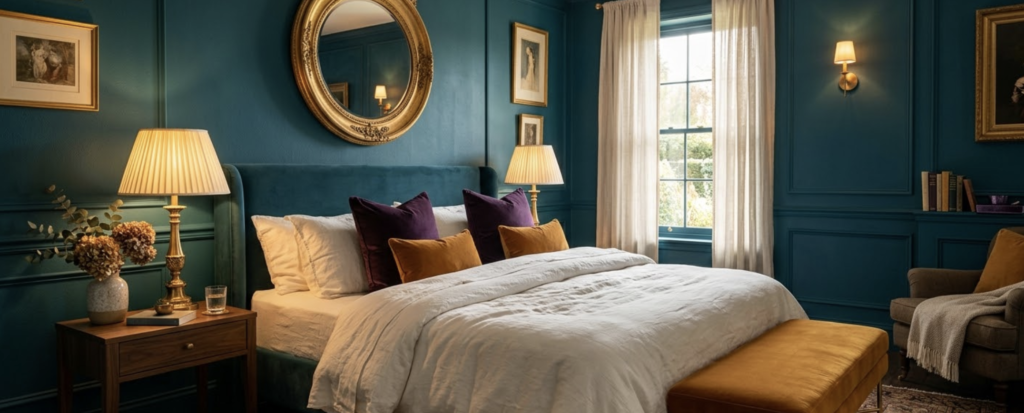
If the dark dramatic room is a deep navy suit, the jewel toned guest room is its more extroverted sibling who showed up in an emerald blazer with a statement ring. This idea is about saturated, rich color used with enough confidence that the room becomes genuinely memorable. Jewel tones — sapphire, amethyst, ruby, deep jade — carry a kind of opulence that lifts the entire room, and when they are paired thoughtfully, the result is warm and welcoming rather than overwhelming.
The approach here is usually to choose one dominant jewel tone for the walls and then bring in its complementary accents through textiles. Deep teal walls with touches of amber and gold. Rich amethyst with rose gold and dusty pink. Sapphire blue with warm brass and ivory. The jewel tone sets the mood while the warmer accent tones prevent the room from feeling cold or one-dimensional. The balance between richness and warmth is the whole game.
The bedding in a jewel toned room should feel luxurious. Velvet cushions in deep tones of jewel and neutral. High-thread-count cotton in white or ivory that pops against the saturated wall color. A duvet in a tone that picks up the accent color — a dusty pink or a warm amber can work beautifully against teal walls. Silk or satin-finish cushions add a sense of luxury without requiring you to actually buy silk. The combination of matte walls and shiny or plush textures creates beautiful visual contrast.
Gold or rose gold hardware, fixtures, and accessories pull the whole room together. A round mirror with an ornate antique gold frame. Brass candle holders. A vintage-style table lamp with a pleated shade and a ceramic base in a complementary tone. A small velvet bench at the foot of the bed. Even the small touches — a gold bookend, a jewel-toned perfume bottle on a mirrored tray — contribute to the overall richness of the room. This is a space where guests will genuinely pause and take it all in.
10. The Converted Attic Guest Room
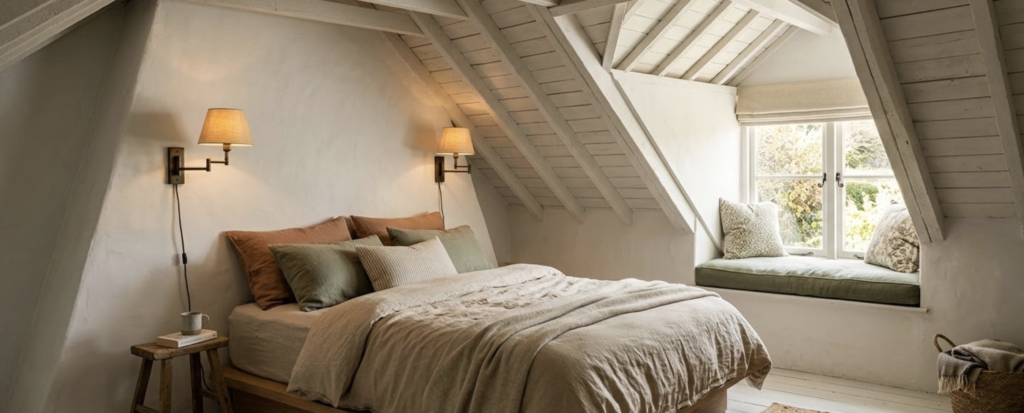
If you are lucky enough to have an attic space that can become a guest room, you already have something most designers would love to get their hands on: sloped ceilings, interesting angles, small dormer windows, and an inherently cozy structural character that flat-ceilinged rooms simply cannot recreate. The challenge with attic conversions is often seen as a limitation — low ceilings, awkward walls — but those features are actually what make these rooms so charming.
The key to making an attic guest room feel intentional rather than improvised is to work with the architecture rather than against it. Tuck the bed into the lowest-ceiling area and use built-in shelving or cabinetry along the sloped walls where full-height furniture would not fit. A window seat in a dormer window with a thick cushion and a stack of pillows creates a reading nook that guests will fight over. Exposed beams, if present, are a gift: paint them white for a bright cottage feel, leave them natural for a warm rustic look, or paint them in a contrasting dark tone for a dramatic effect.
The palette in an attic room benefits from going lighter, which helps the space feel larger and more open. White or very pale walls bounce light around the room and prevent the lower ceiling from feeling oppressive. Natural wood tones warm up the space. Soft linen or cotton bedding in whites and naturals. A palette that is calm and considered keeps the focus on the interesting architecture rather than competing with it. That said, a pop of color — a vintage rug, a brightly painted door — can add a wonderful sense of character.
Lighting in an attic room requires creativity. Overhead fixtures often need to be low-profile given the ceiling height, so recessed lighting or flush-mount pendants work well for general light. Plug-in sconces mounted beside the bed solve the bedside lamp problem beautifully without taking up nightstand space. Under-shelf lighting in built-in areas adds warmth and makes the space feel finished.
11. The Modern Farmhouse Room
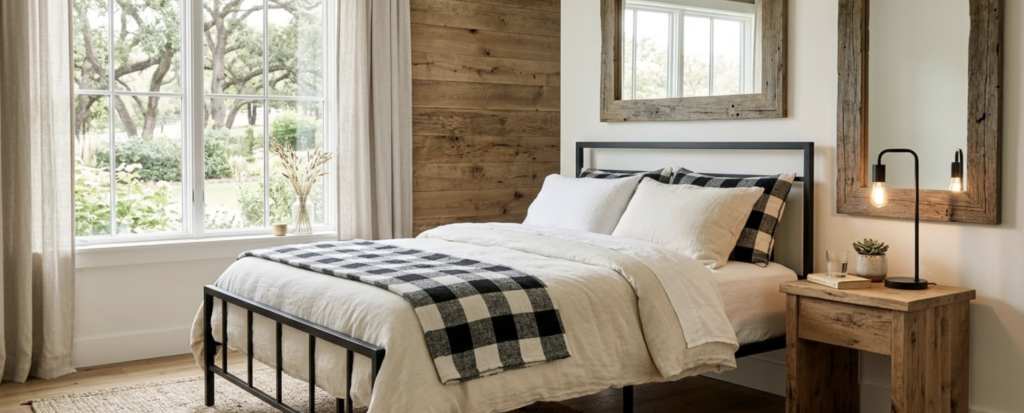
Modern farmhouse has been one of the most widely interpreted interior aesthetics of the last decade, which means it has also been done badly in approximately one million homes with shiplap walls and signs that say ‘gather.’ But when the style is approached with restraint and a genuine eye for quality materials, it is genuinely beautiful: warm, clean, comfortable, and full of honest materials that feel good to be around. A modern farmhouse guest room done right is a proper joy.
The foundation is a mix of the old and the new. A warm white or off-white wall — maybe with a horizontal wood plank detail on one wall, or even a simple beadboard treatment in the lower half — creates the farmhouse structure. Against that, you introduce modern touches: clean-lined furniture without ornate detail, simple black or matte iron fixtures and hardware, and bedding that is beautiful but unfussy. The combination of rustic materials and clean modern lines is exactly what makes this style feel fresh rather than themed.
Black iron or matte black metal accents are a signature element of the modern farmhouse look and do a tremendous amount of work in defining the style. A black metal bed frame — simple, clean, with no ornamentation — looks crisp and strong against white walls. Black hardware on white nightstands. A matte black table lamp. A black metal clothes rail for hanging things. These dark metal touches add structure and definition without heaviness.
White and neutral bedding is a given here, but the texture is what elevates it: waffle-weave cotton, stonewashed linen, a cotton matelasse duvet cover with subtle raised pattern. A plaid or buffalo check throw in black and white or black and red is a classic farmhouse accent. Reclaimed or natural wood on surfaces — a wooden tray, a wood-framed mirror, a turned-leg nightstand in natural pine — keeps the warmth alive. Keep the accessories selective and meaningful, and resist the urge to label everything. No signs needed. The room speaks for itself.
12. The Small Space Smart Room
Not every guest room has the luxury of square footage. Sometimes the guest room is a second bedroom that is also partly an office, partly a storage solution, and partly a philosophical question about what personal space even means. That is perfectly okay. A small guest room done well is genuinely more comfortable than a large guest room done poorly, and the constraint of small space often produces the most creative and thoughtful design decisions.
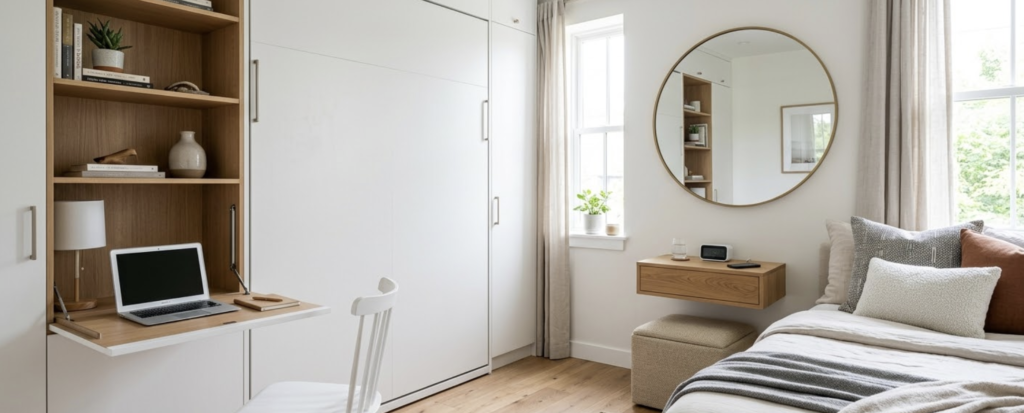
The bed is the biggest piece of furniture in most guest rooms, and in a small space it needs to earn every inch it takes up. A daybed or a sofa bed that doubles as a couch during non-guest periods is a genuinely smart solution. A Murphy bed — those wall-mounted fold-down beds that seemed like a novelty but are actually incredibly practical — can completely transform a small room into a functional space that serves multiple purposes. Pair a Murphy bed with built-in shelving and a fold-out desk on either side, and you have a room that works just as hard as you do during the week.
In a small guest room, every decision should serve multiple purposes. A storage ottoman at the foot of the bed holds extra bedding and provides seating. A floating nightstand takes up no floor space. A tall, narrow bookshelf draws the eye upward and adds storage without consuming precious floor area. Mirrors are the small-room designer’s best friend: a large mirror on one wall visually doubles the space and bounces light beautifully. Use light, reflective surfaces throughout to keep the room feeling open.
Color in a small guest room should be considered carefully. Light walls, especially whites and very pale neutrals, make the room feel larger. But that does not mean the room has to be boring. A single feature wall in a deeper tone or a beautiful wallpaper creates visual interest without the room feeling closed in. Keep the bedding and window treatments in lighter tones to maximize the sense of airiness. Even in the smallest room, the goal is the same: a guest who walks in and feels taken care of. Space is just a constraint, not a limitation.
13. The Botanical Green Room
This is the room for the person who believes that every space is improved by the presence of living things — and they are absolutely right. The botanical guest room is lush, green, and filled with plant life in a way that makes the room feel like a beautiful corner of the natural world has found its way indoors. It is probably the most Instagram-photographed type of guest room in existence, but that is because it is genuinely stunning when done with care.
The plants are obviously the stars here, but the backdrop matters enormously. A deep forest green or a warm olive on the walls creates the feeling of being surrounded by nature without the plants having to work so hard. Against green walls, plants blur beautifully into a lush, layered world. Alternatively, white walls with high-contrast plant life create a cleaner, more graphic look — think black and white botanical prints alongside real plants. Either approach works; it depends on whether you want the room to feel like a greenhouse or a clean studio.
Choose plants that are genuinely good for indoor bedroom environments. Large-leafed plants like monstera, fiddle leaf fig, or a bird of paradise make dramatic, sculptural statements. Trailing plants like pothos, philodendron, or string of pearls look beautiful on high shelves or in hanging planters. Small succulents and air plants in interesting ceramic vessels add detail at the nightstand level. The combination of large, medium, and small plants at varying heights creates a layered, garden-like depth that feels genuine rather than staged.
The non-plant elements in this room should feel natural and organic. Rattan, bamboo, and cane furniture. Linen bedding in white, cream, or the softest sage green. Terracotta pots and organic ceramic planters in muted earthy tones. Woven baskets. Natural wood surfaces. The botanical room is not just about plants — it is about creating an entire environment that feels like a gentle extension of the natural world. Guests who sleep in a green, living room consistently report sleeping better, waking more rested, and being generally reluctant to leave. Which, again, you should factor into your checkout policy.
Final Thoughts: The Best Guest Room is One That Feels Like It Was Made for Them
Every one of these 14 guest room interior ideas starts from the same place: the belief that your guests deserve to feel genuinely cared for. Not just given a bed, but given a room. An experience. A space that makes them feel like showing up was a very good decision.
The beautiful thing about designing a guest room is that it gives you real creative freedom. It does not need to match the rest of your home. It can be its own world — darker, lighter, bolder, softer, more maximalist or more minimal than anywhere else in your house. It is a room where you can take a style risk, try a paint color that felt too bold for the living room, or commit fully to an aesthetic that you love but thought might be too much.
Because here is the thing: when a guest walks into a room that has clearly been thought about — where the lighting is warm, the bedding is soft, and everything feels chosen rather than collected — they feel it immediately. They feel like they matter. And that feeling, created by color and texture and light and care, is the whole point of interior design.
Pick the room that makes your heart happy. Your guests will feel the difference. And they will definitely be back. (You have been warned.)
© Blog Post — 14 Guest Room Interior Ideas