
The Complete Guide to Making a Kitchen you love
So you have an L-shaped kitchen and you are thinking about adding an island. Or maybe you already have one and you are wondering how to make the whole setup look like it belongs in a magazine instead of looking like furniture had a disagreement about personal space. Either way, you are in the right place. Let me walk you through everything you need to know about styling an L-shaped kitchen with island, and I promise to keep it simple and fun.
The L-shaped kitchen with island is one of the smartest layouts you can choose. It gives you tons of counter space, creates a natural work triangle, and that island becomes the spot where everyone wants to hang out. But here is the thing about kitchen islands: they can either tie your whole kitchen together or stick out like a sore thumb. The difference comes down to styling, and that is exactly what we are going to talk about today.
Think of your L-shaped kitchen and island as a team. The L gives you your main workspace along two walls, and the island is like the captain in the middle, bringing everything together. When you style them right, they work as one beautiful space instead of two separate things fighting for attention. And the best part? You do not need a huge budget or a complete renovation to make this happen.
1) Choosing the Right Island Size and Shape
Let me tell you about the biggest mistake people make when adding an island to their L-shaped kitchen: they go too big. I get it. Islands are awesome, and more is better, right? Wrong. An island that is too large for your space will make your kitchen feel crowded and kill the flow. An island that is too small looks lonely and does not give you the benefits you want.
So how do you find that sweet spot? Start by measuring your space. The open area in your L-shaped kitchen is where your island will live. Subtract at least 42 inches from all sides for walkways. What you have left is your maximum island footprint. Now, here is the fun part: you do not have to use all of that space.
For most L-shaped kitchens, an island that is about 4 to 7 feet long and 2 to 4 feet deep works great. If you have a smaller kitchen, go smaller. If you have a big open kitchen that flows into your living or dining area, you can go bigger. The shape matters too. Rectangular islands are the most common because they are simple and efficient. But you could also do a square island, an L-shaped island that mirrors your counter layout, or even a curved island if you are feeling fancy.
Think about what you want your island to do. If you mainly want extra counter space for meal prep, you can keep it simple. If you want seating, you need to add at least 15 inches of overhang on one side and about 24 inches of space per person. Planning to put your cooktop or sink in the island? That changes things too because you need to account for plumbing or ventilation.
Here is a trick that interior designers use: create a mock island using cardboard boxes or painter tape on the floor. Live with it for a few days. Walk around it, pretend to cook, open your cabinet doors and appliances. Does it feel comfortable? Can you move around easily? Do you bump into it constantly? This simple test will tell you if your planned island size is right before you commit to anything permanent.
The height of your island matters for styling too. Standard counter height is 36 inches, which works great for food prep and under-counter storage. If you want a breakfast bar or casual seating, you might want part or all of your island at bar height, which is 42 inches. You can also do a two-level island with one section at counter height for working and another at bar height for eating. This looks really sharp and gives you the best of both worlds.
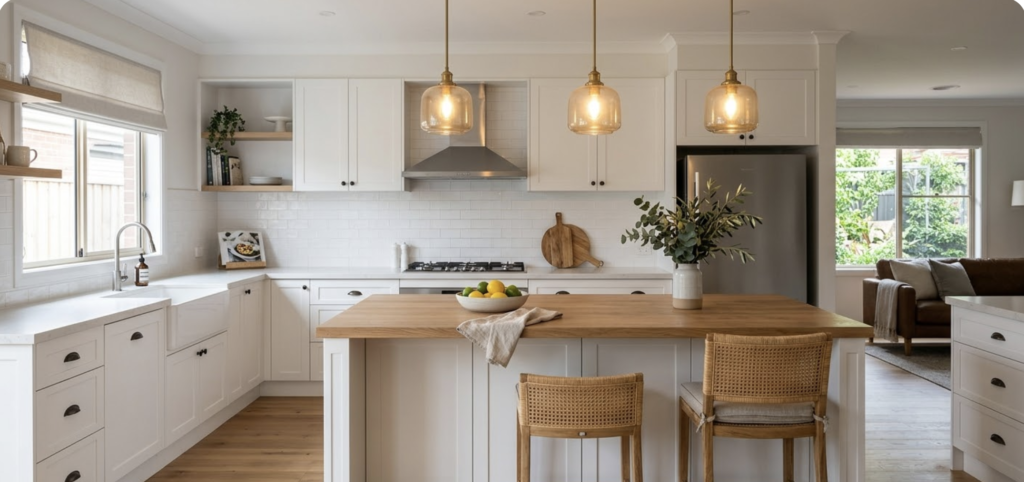
2) Color Schemes That Tie Everything Together
Now we get to the really fun part: color. This is where your L-shaped kitchen with island can go from nice to absolutely stunning. The key to great kitchen color is making your island and your L-shaped cabinets work together as a team instead of competing for attention.
You have three main approaches when it comes to color. First, you can match your island to your cabinets for a cohesive look. This creates a calm, unified space where everything flows together. Second, you can make your island a different color for contrast and visual interest. Third, you can use different materials that are in the same color family, like pairing white painted cabinets with natural wood or vice versa.
If you are going for a matched look, paint your island the same color as your perimeter cabinets. This works especially well in smaller kitchens because it makes the space feel bigger. White on white is classic and always looks fresh. Gray on gray is sophisticated. Navy on navy is dramatic and rich. Just make sure your countertops provide some contrast so everything does not blend into one big blob.
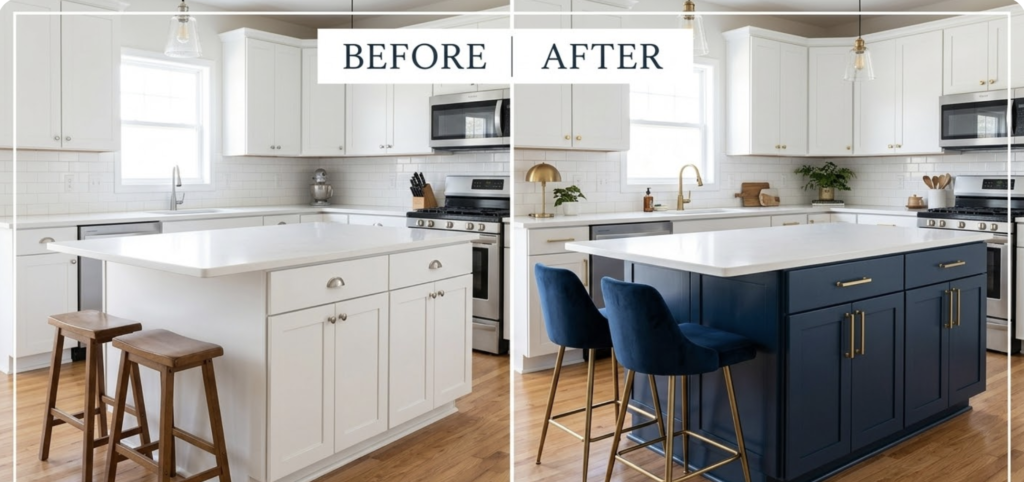
The contrast island approach is super popular right now, and for good reason. It lets you add personality and makes your island the star of the show. If your L-shaped cabinets are white or light gray, your island could be navy blue, forest green, charcoal gray, or even black. If your perimeter cabinets are dark, flip it and go with a white or cream island. The contrast creates visual interest and helps define different zones in your kitchen.
Here are some color combinations that always look amazing. White perimeter cabinets with a navy blue island gives you that coastal elegant vibe. Light gray cabinets with a darker gray or charcoal island adds depth while staying neutral. White cabinets with a natural wood island brings warmth and that trendy modern farmhouse feel. Cream or off-white cabinets with a sage green or forest green island creates a fresh, organic look that feels both classic and current.
Do not forget about your countertops, backsplash, and floors in your color scheme. These elements need to work with both your L-shaped cabinets and your island. White or light countertops keep things bright and open. Dark countertops add drama and hide stains better, if we are being honest. Your backsplash can either blend in or make a statement. A simple subway tile in white or a neutral color lets your cabinets and island shine. A bold patterned tile or colored glass backsplash becomes a focal point.
Wall color matters too. Most designers recommend keeping your walls neutral when you have a lot going on with your cabinets and island. A soft white, warm gray, or greige on the walls creates a backdrop that makes your kitchen colors pop. But if your cabinets and island are both neutral, you could go bolder on the walls. A deep blue, soft sage, or warm terracotta can add personality without overwhelming the space.
One more tip: think about the light in your kitchen when choosing colors. North-facing kitchens get cooler light, so warm colors like creams, warm grays, and wood tones help balance that out. South-facing kitchens get warm light all day, so cooler colors like true whites, cool grays, and blues work beautifully. If you are not sure, get some large paint samples and look at them at different times of day before you commit.
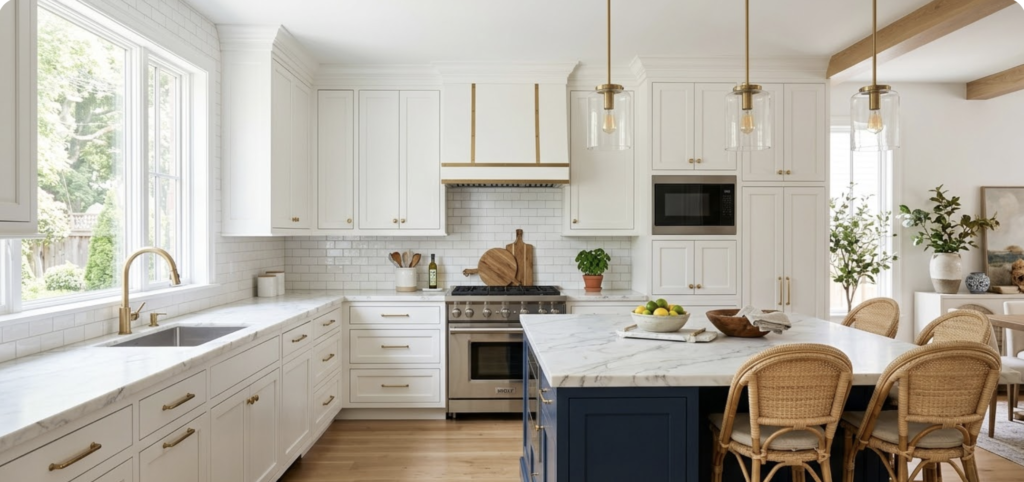
3) Materials and Textures for Visual Interest
Color is important, but materials and textures are what make your kitchen feel expensive and well-designed. This is where you can get creative and add layers that make people want to reach out and touch everything in your kitchen.
Let us start with countertops because they are a major player in your kitchen styling. Quartz is hugely popular because it looks like natural stone but never needs sealing. It comes in endless colors and patterns, from pure white to dramatic black with gold veining. Granite is classic and every slab is unique. Marble is gorgeous but needs more care, so save it for your island if you love the look but worry about staining. Butcher block adds warmth and works great for a prep area on your island.
Here is a smart styling move: use different countertop materials on your island versus your perimeter counters. This creates visual interest and can be really practical too. You might have quartz on your L-shaped counters for durability and a butcher block section on your island for a warm cutting surface. Or white quartz on the perimeter and a dramatic dark granite on the island to make it stand out. Just make sure the materials complement each other even though they are different.
Cabinet materials matter for the overall feel of your kitchen. Painted cabinets in a smooth finish look clean and modern. Shaker-style doors with a subtle texture add traditional charm. Flat-panel doors in a matte finish scream contemporary. If you want to mix it up, you could do painted cabinets on your L-shaped perimeter and natural wood on your island, or vice versa. Wood brings warmth that painted cabinets cannot match, even if you love color.
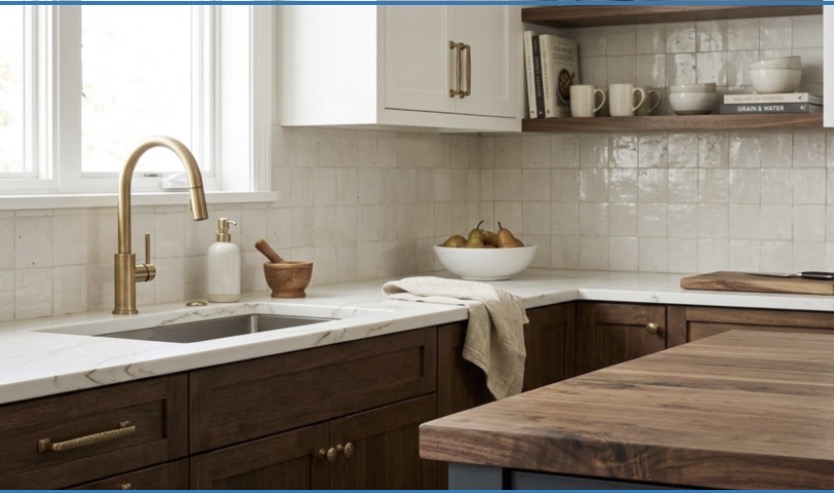
The backsplash is your chance to add pattern and texture without committing to it everywhere. Classic white subway tile is safe and always looks good. Large format tiles in a neutral color create a sleek, modern look with fewer grout lines. Patterned cement tiles or zellige tiles add artisan character and tons of personality. Glass tiles reflect light and add subtle shimmer. Natural stone like marble or travertine brings organic texture. You could even do a slab backsplash in the same material as your countertop for a seamless look.
Hardware is the jewelry of your kitchen, and this is one place where you should not cheap out. The finish and style of your cabinet pulls and knobs tie your whole look together. Brass and gold hardware adds warmth and luxury. Matte black is crisp and modern. Brushed nickel or stainless steel is classic and goes with everything. Oil-rubbed bronze has traditional character. You can match your island hardware to your perimeter cabinet hardware, or switch it up for contrast. Just stay within the same finish family for a cohesive look.
Hardwood floors in a medium to light tone keep things warm and classic. Wide planks feel more modern than narrow ones. Gray or white-washed wood is trendy and hides dirt well. Large format tile in a neutral color is practical and sleek. Patterned tile can be amazing but use it carefully so it does not clash with your backsplash or other patterns. If you are on a budget, luxury vinyl plank flooring has come a long way and can look surprisingly high-end.
Think about how all these materials work together. You want some contrast but not chaos. A good rule is to have a mix of smooth and textured, light and dark, warm and cool. If your cabinets are smooth painted wood, add texture with your backsplash or a woven rug. If your countertops are busy with veining or pattern, keep your backsplash simple. Balance is the goal, and every material should feel intentional, not random.
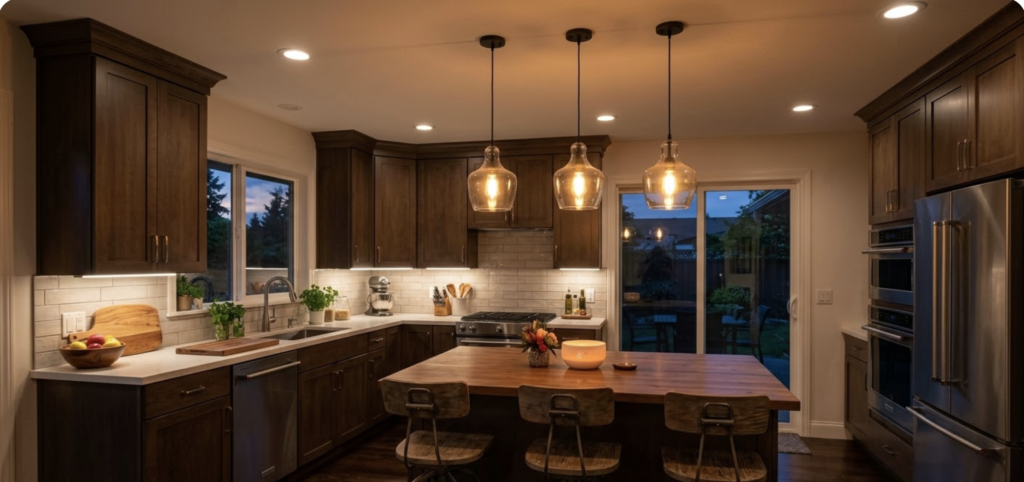
4) Lighting Your L-Shaped Kitchen and Island
Good lighting can make even a basic kitchen look amazing, and bad lighting can make an expensive kitchen look terrible. No pressure, right? The good news is that lighting an L-shaped kitchen with island follows some simple rules, and once you get them right, everything else falls into place.
You need three types of lighting in your kitchen: ambient, task, and accent. Ambient lighting is your overall illumination, usually from ceiling fixtures or recessed lights. Task lighting is focused light where you work, like under the cabinets and over the island. Accent lighting highlights special features and adds atmosphere. Most kitchens need all three to function well and look great.
Let us talk about your island first because this is usually the showpiece. Pendant lights over the island are pretty much standard, and for good reason. They provide task lighting where you need it and they add style and personality to your kitchen. For a standard island, you want two or three pendants spaced evenly. Bigger islands might need four. The bottom of your pendants should hang about 30 to 36 inches above the island counter.
The style of your pendant lights should match your overall kitchen vibe. Glass pendants with metal frames work in almost any style. Industrial-style metal shades with Edison bulbs add character and warmth. Sleek drum pendants look modern and sophisticated. Crystal or beaded pendants bring a touch of glamour. Schoolhouse pendants are classic and friendly. Whatever you choose, make sure the pendants are proportional to your island. Too small and they look like toys. Too big and they overwhelm the space.
Under-cabinet lighting along your L-shaped counters is not optional if you want a functional kitchen. This lights up your work surfaces so you are not cooking in your own shadow. LED strip lights are the most popular choice because they are energy-efficient, long-lasting, and give you even light distribution. Puck lights create pools of light and work well if you want to highlight specific areas. Linear fixtures give you the most professional look.
Install your under-cabinet lights toward the front of the cabinets so the light hits your countertops instead of the backsplash. And please, please use a warm white color temperature around 2700 to 3000 Kelvin. Anything cooler looks like a hospital or office, not a place where you want to cook and eat. Warm light makes food look better, makes people look better, and creates a welcoming atmosphere.
For ambient lighting, recessed lights in the ceiling work great for L-shaped kitchens. You want them spaced evenly to avoid dark spots. A good rule is to place them about 4 feet apart. If you have a large open kitchen, consider a flush-mount or semi-flush ceiling fixture in the center of the space to add another layer of light and style. Track lighting is another option if you want flexibility to direct light where you need it.
Accent lighting is the fun stuff. This is where you add personality and create mood. If you have glass-front cabinets, put small LED lights inside to showcase your pretty dishes or glassware. Toe-kick lighting under your cabinets and island creates a floating effect and adds a soft glow at night. If you have open shelving, small spotlights or strip lights on the underside of each shelf highlight your styled items. A dimmer switch on all your lighting layers lets you adjust the mood from bright and functional for cooking to soft and cozy for entertaining.
One often-overlooked lighting spot is inside your island if it has cabinets. Adding a simple puck light or LED strip inside makes it so much easier to find things, especially in deep drawers or back corners. It is a small detail that makes a big difference in daily life. And speaking of details, make sure all your light fixtures have a cohesive finish. If your pendant lights are brushed brass, your under-cabinet lights should have brass or gold accents too. These little touches add up to a polished, professional look.
5) Storage Solutions That Keep Things Organized
Let me be real with you: a nice looking kitchen is useless if you cannot find anything or if your counters are covered with stuff because you have nowhere to put it. Smart storage is what separates a magazine-pretty kitchen from a kitchen that actually works for real life. Your L-shaped layout and island together give you tons of storage potential, but you have to use it wisely.
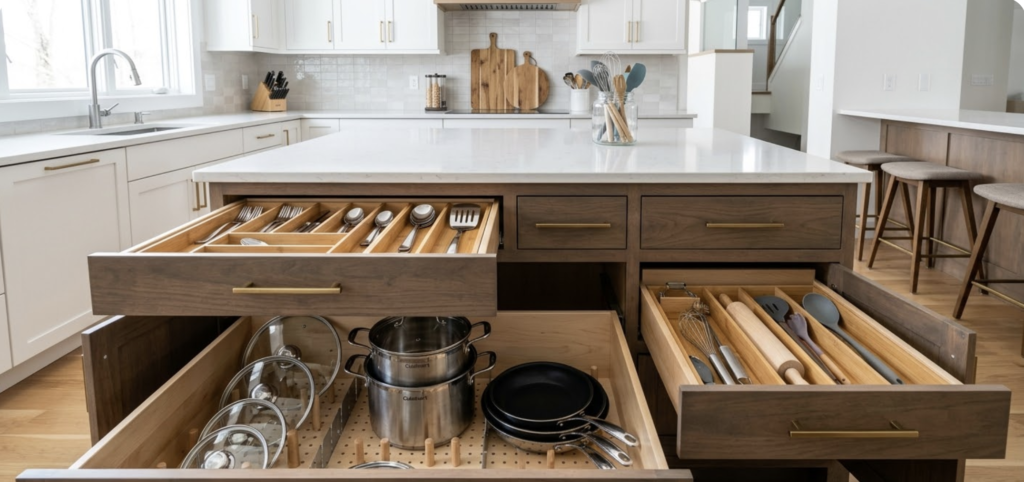
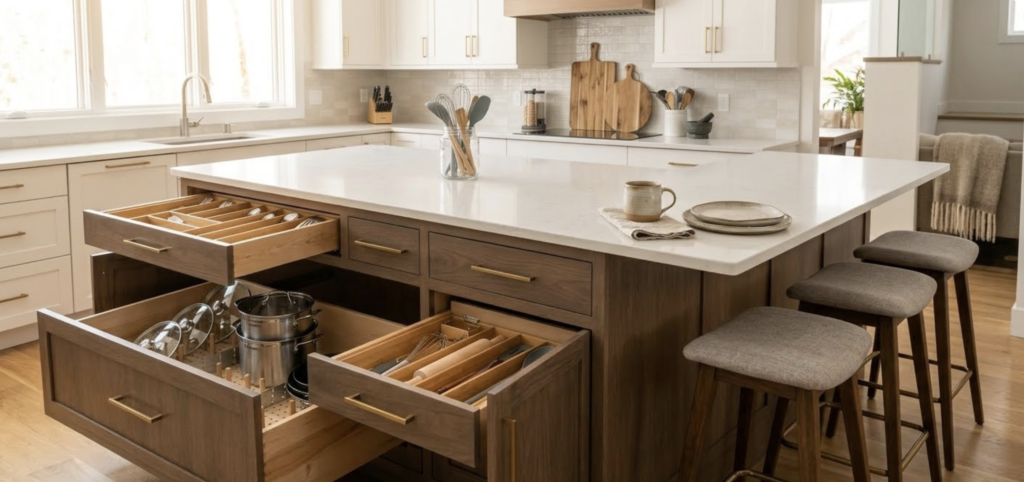
Your island is prime real estate for storage, so do not waste it. Deep drawers are better than cabinets for most things because you can see everything without digging around in the back. Use the deep drawers for pots, pans, mixing bowls, and small appliances you use regularly. Drawer dividers keep everything organized and stop your spatulas from playing hide and seek with your whisks.
If your island has cabinet space instead of drawers, add pull-out shelves or organizers so nothing gets lost in the back. A lazy Susan in a corner cabinet makes that awkward space actually useful. Pull-out trash and recycling bins keep your garbage out of sight and free up floor space. If you have kids, dedicate one island cabinet to their plastic plates, cups, and snacks at a height they can reach. This gives them independence and saves you from constant requests for help.
The ends of your island are often wasted space, but they do not have to be. Open shelving on one end can display cookbooks, pretty bowls, or a collection of cutting boards. This adds visual interest and keeps frequently used items within reach. A wine rack built into the end of your island is both functional and decorative. Narrow pull-out storage for spices or cutting boards makes use of that slim space. Or add hooks for hanging dish towels, oven mitts, or even your favorite aprons.
Your L-shaped perimeter cabinets need smart organization too. The corner where your two legs meet is notoriously tricky. A corner lazy Susan or a pull-out corner system makes this space accessible instead of a black hole where appliances go to die. Upper cabinets should have adjustable shelves so you can customize the height for your dishes, glasses, and pantry items. Pull-down shelving systems make top shelves actually reachable without a step stool.
Vertical storage is your friend in kitchen cabinets. Vertical dividers keep baking sheets, cutting boards, and pot lids organized and easy to grab. A pull-out vertical storage unit next to your stove can hold oils, spices, and cooking tools right where you need them. If you have a narrow cabinet, turn it into a pull-out pantry with tall shelving on both sides. This stores a surprising amount in a small footprint.
Do not forget about the inside of your cabinet doors. Over-the-door organizers can hold measuring cups, pot lids, or cleaning supplies. A small rack on the inside of the door under your sink keeps sponges and brushes organized.
Drawer organization is where the magic happens. Use dividers to create zones for different types of utensils. A knife block insert in a drawer is safer and cleaner than a counter-top block. A spice drawer organizer lets you see all your spices at once instead of digging through a cabinet. Pegboard drawer inserts let you customize the layout for your specific tools and gadgets. These systems might seem like overkill until you experience the joy of opening a drawer and instantly finding what you need.
If you have open shelving anywhere in your L-shaped kitchen, style it with intention. Use a mix of functional items you actually use and pretty things that make you happy. Stack white dishes for a clean look. Display a collection of vintage cutting boards. Line up glass jars filled with pasta or baking supplies. Group items in odd numbers for visual appeal. And please, do not overcrowd the shelves. A little breathing room makes everything look more expensive and intentional.
6) building a Functional Work Triangle
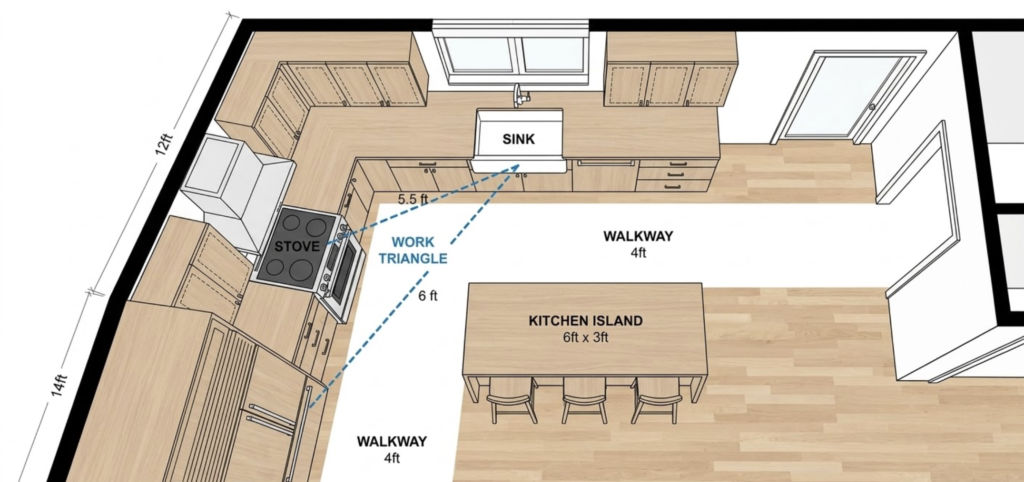
The work triangle is one of those kitchen design concepts that sounds complicated but is actually super simple. It is just the path between your three main work zones: the sink, the stove, and the refrigerator. The idea is that these three spots should form a triangle that is easy to move between while you cook. When you add an island to your L-shaped kitchen, you want to make sure you are not blocking or ruining that triangle.
In most L-shaped kitchens, the sink is on one leg of the L and the stove is on the other leg. The fridge is usually on the end of one of those legs or tucked into a corner. This naturally creates a triangle. When you add an island, it should sit in the middle without cutting through the main paths between these three zones. You should be able to move from sink to stove to fridge without having to walk around the island every single time.
Here is where it gets interesting: you can actually incorporate your island into the work triangle if you put your sink or cooktop there. An island sink can be amazing because it lets you face into the room while you wash dishes or prep food. You can chat with family, watch TV, or keep an eye on kids doing homework at the dining table. Just make sure you account for the plumbing, which usually means running pipes through the floor.
An island cooktop is another option that creates a really functional work triangle. It gives you a spot to cook while still being part of the action in the kitchen. The downside is that you need ventilation, which means either a downdraft vent built into the island or a hood hanging from the ceiling. Ceiling-mounted hoods over islands can be a design statement, but they also take up visual space and need to be positioned carefully so they do not block sight lines.
If you keep your sink and stove on your L-shaped perimeter and use your island purely for prep and storage, that works great too. The island becomes a landing spot in the middle of your triangle. You can set down groceries there when you come home from the store. You can stage ingredients there while you cook. You can plate food there before serving. The island supports your workflow without interfering with it.
Think about the other work zones in your kitchen too. Where do you keep your knives and cutting boards? That should be near your main prep area. Where are your everyday dishes? They should be close to the dishwasher for easy unloading. Where do you store pots and pans? Ideally near the stove. Coffee station? Should be near the water source and mugs. All these little zones should make sense based on how you actually use your kitchen.
If you have multiple people cooking at once, the work triangle concept expands to work zones. One person might be at the island chopping vegetables while another person is at the stove cooking. As long as you have enough counter space and they are not constantly bumping into each other or blocking each other’s access to appliances, you are good. This is why that 42 to 48 inches of clearance around your island is so important.
Do not stress too much about making your triangle perfect. The classic work triangle concept assumes one cook in the kitchen, which is not always realistic. Modern kitchens are gathering spaces where people hang out, kids do homework, and friends help with meal prep. A slightly imperfect triangle is fine if your kitchen functions well for your actual life. The goal is to make cooking and cleaning as easy as possible, not to follow rules for the sake of rules.
7) Adding Seating to Your Island
One of the best things about having an island in your L-shaped kitchen is that you can add seating. This turns your island into a casual dining spot, a homework station, a place for guests to hang out while you cook, or just somewhere to sit with your morning coffee. But island seating is not as simple as pushing a few stools up to the counter. There are some real considerations to make it work right.
First, you need overhang. This is the part of the countertop that extends past the base cabinets. For counter-height seating at 36 inches, you need at least 12 inches of overhang, but 15 inches is more comfortable. For bar-height seating at 42 inches, 12 inches works okay, but again, 15 inches is better. This overhang gives people leg room so they are not banging their knees on the cabinet fronts. Trust me, nobody wants to eat breakfast while fighting with the cabinetry.
If you are doing a larger overhang, especially with heavy stone countertops, you might need support brackets or corbels. These can be hidden underneath or they can be decorative elements that add character. Just make sure they do not interfere with leg room. Some materials like quartz can cantilever further than others without support, so check with your fabricator about what is structurally sound for your specific countertop.
How many seats you can fit depends on the size of your island. You need about 24 inches of width per person for comfortable seating. So a 6-foot island can fit three stools, an 8-foot island can fit four. You could squeeze people closer together, but nobody will be comfortable. Leave a little extra space at the ends too, especially if your island has drawers or cabinets that open on the seating side.
Choosing the right stools is important for both style and function. Counter-height stools are typically 24 to 26 inches tall. Bar-height stools are 29 to 31 inches tall. Make sure you measure the exact height from your floor to the underside of your countertop and choose stools that give you about 10 inches of clearance between the seat and the counter. Too much clearance and you feel like a little kid at the grown-up table. Too little and you are hunched over your plate.
Stools with backs are more comfortable for longer sitting sessions, like family dinners or homework time. Backless stools tuck completely under the counter when not in use, which is great for smaller kitchens where you need to maximize space. Swivel stools make it easy to turn and talk to people in different parts of the room. Stools with footrests are more comfortable than ones without. Think about who will use the seating most and choose accordingly.
The style of your stools should complement your kitchen design. Modern kitchens look great with sleek metal stools in chrome, brass, or matte black. Farmhouse kitchens can handle wood or wicker stools, or even upholstered ones in a durable fabric. Industrial kitchens pair well with metal stools with wood seats. If your kitchen is more traditional, consider stools with turned legs and classic profiles.
Color is important too. You can match your stools to your island for a coordinated look. You can match them to your dining chairs if those are visible from the kitchen. Or you can make them a statement in a contrasting color or finish. Just make sure they work with your overall color scheme. Neutral stools like wood, black, or white are safe choices that go with everything.
One practical tip: if you have kids or messy eaters in your house, avoid light-colored upholstered stools unless they have removable, washable covers. Leather or faux leather wipes clean easily. Metal and wood are even easier. Save the pretty cream linen stools for when your kids are grown and out of the house, or for guest bedrooms where wine spills are less likely. Your kitchen seating needs to be as practical as it is pretty.
8) Styling Your Island as a Focal Point
Your island is probably the first thing people see when they walk into your kitchen, so it should look good. Not staged-for-a-photoshoot good necessarily, but intentional and pulled together. The trick is to style it so it looks great while still being totally functional for real life.
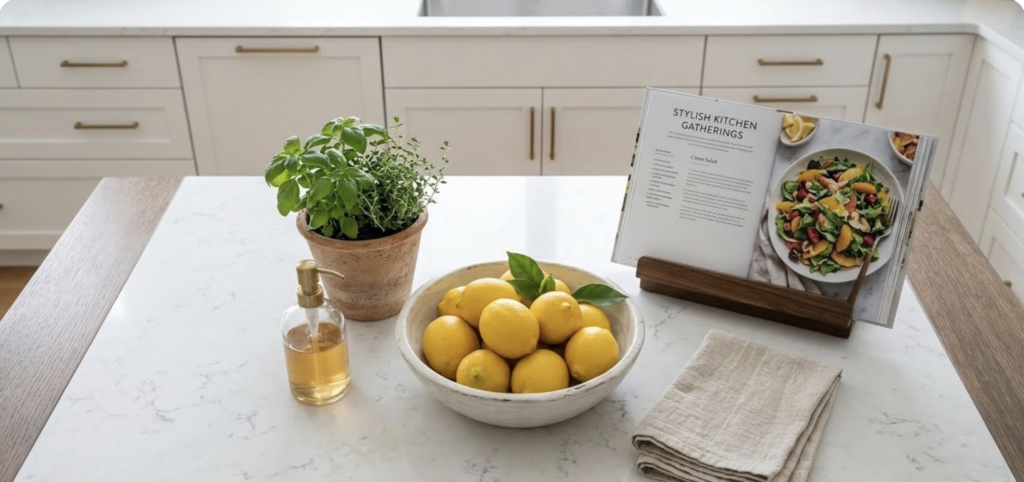
Let us start with what you keep on your island day to day. A beautiful bowl of fresh fruit is classic and practical. Lemons and limes in a white bowl look fresh and bright. A big wooden bowl filled with seasonal fruit adds warmth and color. Just commit to keeping the fruit actually fresh. Sad brown bananas do not count as decor.
A cake stand or tiered tray on your island is both pretty and useful. You can display baked goods, fill it with fresh herbs in pots, or use it to corral cooking oils and frequently used ingredients. The height adds visual interest and makes the island feel styled without cluttering the counter. Plus, you can easily move it when you need the whole surface for cooking.
Fresh flowers or a potted plant can make your island feel alive and welcoming. A simple vase with grocery store flowers works great. Herbs in small pots are functional and fragrant. A big leafy plant in a pretty planter adds drama. Just make sure whatever you choose fits the scale of your island and does not block sight lines if you have seating on both sides.
A cookbook stand with your current favorite recipe book is both functional and decorative. It shows that this is a real working kitchen where people actually cook. If you do not use cookbooks, a pretty cutting board leaning against the backsplash or wall adds texture and visual interest without taking up counter space.
Think about your everyday items and how to make them look intentional. Your dish soap and hand soap should be in pretty dispensers, not plastic bottles with garish labels. A simple glass or ceramic dispenser in white, black, or a color that matches your kitchen looks so much better. A pretty dish for your sponge keeps it from looking messy. A nice hand towel on a hook or ring adds color and softness.
If your island has open shelving on the ends or sides, style it thoughtfully. Stack white plates or bowls for a clean look. Display your pretty serving pieces. Line up cookbooks by color or size. Mix functional items with a few decorative objects like a small plant, a pretty jar, or a vintage kitchen tool. The rule of three works well: group items in sets of three for a balanced, intentional look.
Lighting plays a huge role in how your island looks styled. Those pendant lights we talked about earlier are part of the styling. Make sure the bulbs are the right color temperature and brightness. Dimmer switches let you adjust the mood. In the evening, dimmed pendant lights create a cozy, intimate feel. During the day, brighter light makes everything look crisp and clean.
Here is the most important styling rule: edit ruthlessly. It is better to have a few well-chosen items that you love than a cluttered counter full of stuff. Your island needs to work hard every day, so do not fill it with decorations that you have to move every time you cook. Everything on display should either be beautiful, useful, or ideally both. And for the love of all that is holy, put away the small appliances when you are not using them. No matter how expensive your mixer or coffee maker, it is not decor.
9) Connecting Your Kitchen to Adjacent Spaces
Here is something people forget when styling an L-shaped kitchen with island: your kitchen probably does not exist in a vacuum. Most L-shaped kitchens open into a dining room, living room, or family room. How you style your kitchen needs to make sense with those adjacent spaces, or the whole flow of your home feels disjointed.
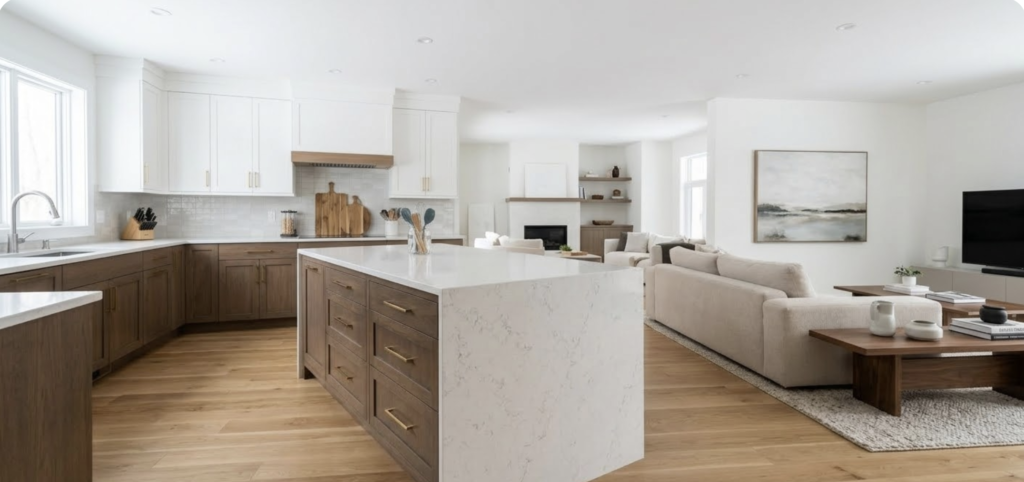
If your kitchen opens to your living or dining area, think of the island as a bridge between the two spaces. The side facing the kitchen can be more utilitarian with storage and workspace. The side facing the living area should look more polished and furniture-like. This might mean doing a waterfall edge on the living room side so you do not see the cabinet ends. Or adding decorative panels instead of functional storage on that side.
Your color scheme should flow from room to room. If your living room has a lot of warm wood tones, incorporate wood into your island or choose warm paint colors. If your dining room is done in cool grays and blues, your kitchen should pick up those tones. This does not mean everything has to match exactly, but there should be a clear connection between spaces.
The style of your island can echo furniture pieces in adjacent rooms. If you have traditional furniture in your dining room, a more traditional island with furniture-style legs instead of a solid base helps tie the spaces together. If your living room is modern and minimalist, a sleek island with clean lines and minimal hardware makes sense. The island is visible from these other rooms, so it should feel like it belongs to the whole house, not just the kitchen.
Flooring transitions matter too. If your kitchen floor is different from your living or dining room floor, think about where and how they meet. The transition should happen at a logical spot, like a doorway or where your island ends. A jarring transition right in the middle of the open space looks awkward. If possible, continue the same flooring throughout the open area for the most seamless look.
Rugs can help define zones while connecting spaces visually. A runner along your L-shaped kitchen adds comfort and style. A rug under your dining table in an adjacent area creates a separate zone. Choose rugs that share a color palette or style so they feel related. In the kitchen itself, make sure any rugs are low-pile and easy to clean because kitchen floors get messy.
Lighting should flow between spaces too. If you have a chandelier over your dining table, your island pendants should be compatible in style and finish even if they are not identical. The light fixtures throughout your open floor plan should feel like they were chosen by the same person with the same taste, not like you picked random things from different stores.
Sight lines are important in open floor plans. From your main living areas, what do you see when you look at the kitchen? Make sure that view is attractive. This might mean keeping your counters clear of clutter, styling your island beautifully, or adding a pretty backsplash that looks good from a distance. Think of your kitchen as part of the living space, not a separate room, and style it accordingly.
10) Budget-Friendly Styling Updates
Maybe you are not ready for a full kitchen renovation. Maybe you just want to make your current L-shaped kitchen with island look better without taking out a second mortgage. Good news: there are plenty of styling updates that make a big impact without costing a fortune.
Painting your island a different color from your perimeter cabinets instantly makes your kitchen look more custom and expensive. A gallon of quality cabinet paint costs maybe fifty bucks and can completely transform your space. Navy blue, forest green, charcoal gray, or even black on an island with white or light perimeter cabinets looks like a million bucks.
Changing your hardware is another small change that makes a surprisingly big difference. New cabinet pulls and knobs can shift your kitchen style from dated to modern, from basic to elevated. Brass hardware adds warmth and luxury. Matte black is crisp and contemporary. Brushed nickel is classic and versatile. You can change out all your hardware for a few hundred dollars depending on how many pieces you need.
Update your lighting without rewiring anything. New pendant lights over your island can change the whole look of your kitchen, and they are relatively easy to install. You can find great pendants for anywhere from thirty dollars each to a couple hundred if you want something really special. Replacing dated recessed light trim with new slim trim makes those ceiling lights look modern again.
A new backsplash can be affordable if you choose wisely. Peel-and-stick tile has come a long way and some styles look genuinely good. You can install it yourself in a weekend. If you want real tile, doing just a small section behind your stove as an accent keeps the cost down while adding a focal point. Or you could do a simple white subway tile yourself for the cost of materials and learn a new skill in the process.
Open shelving is a budget-friendly update that adds style and function. Removing the doors from one or two upper cabinets and adding some simple wood or metal shelves costs very little but makes a big visual impact. Style the shelves with your prettiest dishes, cookbooks, and a few plants or decorative objects. This works best in areas where you do not have to worry about grease splatter.
Styling with accessories costs almost nothing if you shop your house. Move pretty items from other rooms into your kitchen. That nice bowl from your coffee table could hold fruit on your island. Those candlesticks from your dining table could sit on a kitchen shelf. Plants from your living room can move to the kitchen for a fresh look. Shop the clearance section at home goods stores for pretty containers, cutting boards, and decorative items.
A fresh coat of paint on your walls makes everything look cleaner and more intentional. Paint is cheap and you can do it yourself. Choose a color that complements your cabinets and makes your kitchen feel the way you want it to feel. Soft white makes a small kitchen feel bigger. Warm gray adds sophistication. A bold accent wall adds personality without overwhelming the space.
Sometimes the best budget update is just decluttering and deep cleaning. Clear your counters of everything except your most-used items and a few styled accessories. Clean your cabinet fronts until they shine. Organize your drawers and cabinets. A clean, organized kitchen always looks better than a cluttered one, regardless of how much money you spend on updates. It is amazing what you can accomplish with a Saturday, some cleaning supplies, and a ruthless approach to what stays on your counters.
Bringing It All Together
Styling an L-shaped kitchen with island is all about making smart choices that work for your space and your life. It is not about following trends blindly or spending a fortune. It is about understanding the bones of your kitchen, choosing colors and materials that work together, lighting everything properly, and adding storage and seating that makes sense for how you actually use the space.
Remember that your kitchen is a working space first and a showpiece second. Every choice you make should support how you cook, how you eat, and how you live. That beautiful marble countertop is great until you realize you are terrified to set down a glass of red wine. Those backless stools look sleek until your kids complain that breakfast is uncomfortable. Style matters, but function matters more.
Start with the big decisions: island size and placement, color scheme, major materials. Get those right and the rest falls into place more easily. Then layer in the details: hardware, lighting, accessories, styling. Take your time with decisions and live with samples before committing. Paint chips on the wall for a week. Cardboard island mockups for a few days. It is easier to be patient now than to redo expensive mistakes later.
Do not be afraid to break rules if breaking them makes sense for your space. Design rules are guidelines, not laws. If your kitchen is small and the experts say you need 48 inches of clearance but 42 inches works fine for you, go with 42. If everyone says white kitchens are out but you love white, do white. Your kitchen should make you happy every time you walk into it.
And remember that styling is never really finished. Your needs change, trends shift, you find a new favorite color. The beauty of most styling updates is that they are not permanent. You can paint your island a different color next year. You can swap out your stools. You can change your accessories with the seasons. Your kitchen should evolve with you.
The goal is a kitchen that works hard, looks beautiful, and makes you happy. An L-shaped kitchen with island is already a great foundation. With thoughtful styling choices, you can turn it into the heart of your home, the place where everyone wants to gather, where great meals happen, and where life unfolds. And honestly, is there a better goal than that?