
When you think about a lakehouse kitchen, what comes to mind? Maybe it’s the gentle morning light streaming through oversized windows, reflecting off calm waters while you sip your coffee. Perhaps it’s the smell of fresh fish being prepared for dinner, surrounded by family and friends who’ve spent the day on the boat. A lakehouse kitchen isn’t just a place to cook—it’s the heart of your retreat, where vacation memories are made and the outside world fades away.
Creating the perfect lakehouse kitchen means blending practical needs with the unique character of waterfront living. Unlike your everyday city or suburban kitchen, a lakehouse kitchen should feel like a breath of fresh air. It needs to handle sandy feet, wet bathing suits, and impromptu gatherings, all while maintaining a sense of calm that mirrors the water just outside your door. The design should make you feel relaxed the moment you walk in, as if the stress of daily life stays on the other side of the lake.
The beauty of lakehouse kitchen ideas is that they can work in any waterfront setting. Whether you’re renovating a cozy cabin on a quiet pond, updating a sprawling estate on a massive reservoir, or building your dream home on a pristine alpine lake, the principles remain the same. These kitchens celebrate natural materials, embrace light and views, and create spaces that feel connected to the water and wilderness around them.
In this detailed guide, we’ll explore stunning lakehouse kitchen ideas that bring together style and function. From color schemes inspired by nature to layout solutions that maximize your lake views, you’ll discover how to create a kitchen that feels both special and livable. We’ll dive deep into materials, lighting, storage solutions, and design details that make lakehouse kitchens truly unique. Whether you’re starting from scratch or refreshing your existing space, these ideas will help you create a kitchen that becomes your favorite room in the house.
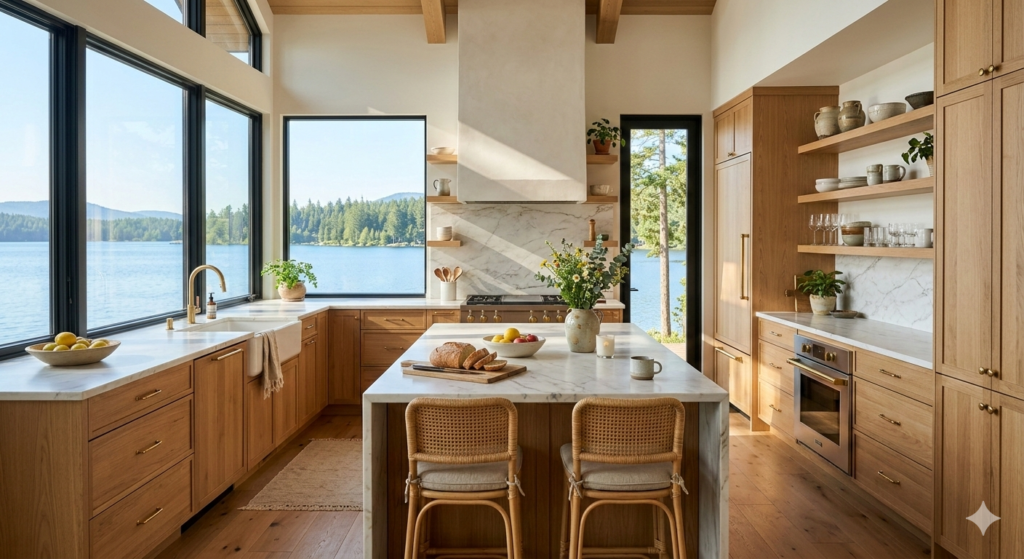
1) Natural Wood Cabinetry That Brings the Outdoors In
Wood cabinetry forms the foundation of exceptional lakehouse kitchen design, and choosing the right wood species and finish can completely transform the feeling of your space. Unlike painted cabinets that can feel formal or sterile, wood cabinets create warmth and connection to the natural environment surrounding your lake home. The grain patterns, natural variations, and organic textures in wood make each cabinet unique, adding character that manufactured materials simply cannot replicate.
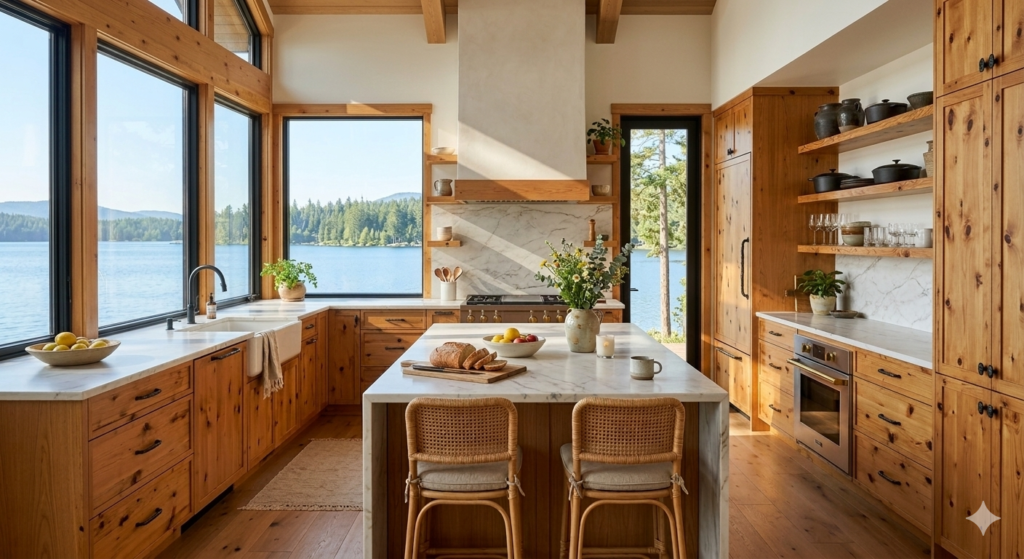
Knotty pine cabinets offer an authentic rustic charm that perfectly suits traditional lakehouse aesthetics. The knots and natural imperfections tell a story, creating visual interest that draws the eye. When finished with a clear coat or light stain, knotty pine maintains its honey-colored warmth while protecting against moisture and daily wear. This wood choice works beautifully in cabins where you want to emphasize the retreat-like quality of your space. The casual, laid-back vibe of knotty pine makes your kitchen feel welcoming rather than precious, which is exactly what you want in a lakehouse where people should feel comfortable coming in from swimming or hiking.
For those seeking a more refined look, white oak cabinetry delivers sophistication without sacrificing the organic quality that makes lakehouse kitchens special. White oak features beautiful grain patterns with those characteristic ray flecks that catch the light differently throughout the day. The wood ranges from light tan to medium brown, creating a neutral foundation that works with virtually any color scheme. White oak can be left natural to showcase its inherent beauty, stained darker for drama, or even treated with a cerused finish that highlights the grain in white. The durability of white oak makes it particularly well-suited to lakehouse living, where moisture levels can fluctuate and cabinets need to withstand the test of time.
Reclaimed wood cabinets tell the most compelling stories in lakehouse kitchens. Salvaged from old barns, factories, or even previous lake structures, reclaimed wood carries history in every board. The weathered patina, nail holes, and color variations create one-of-a-kind cabinets that become conversation pieces. Using reclaimed wood also connects your kitchen to the local area’s heritage, especially if you can source materials from nearby historic buildings. Beyond the aesthetic appeal, choosing reclaimed wood is an environmentally conscious decision that gives new life to materials that might otherwise end up in landfills. Each piece of reclaimed wood is different, so your kitchen will have a truly custom appearance that cannot be duplicated.
The finish you choose for wood cabinets dramatically impacts the overall kitchen atmosphere. Natural oil finishes penetrate the wood, enhancing the grain while providing protection. These finishes give wood a soft, matte appearance that feels organic and understated. They require more maintenance than polyurethane finishes but allow the wood to breathe and age gracefully. Clear polyurethane creates a more protective barrier and comes in various sheens from matte to glossy. For lakehouse kitchens, satin or matte finishes typically work best because they don’t show fingerprints as readily and create a more casual vibe than high-gloss finishes.
Mixing wood tones adds depth and prevents your kitchen from feeling too matchy or staged. Consider using darker stained wood for lower cabinets and lighter or natural wood for upper cabinets, creating a grounded feel that mimics the natural progression from earth to sky. Alternatively, use a different wood species for your kitchen island, making it a focal point that stands apart from the perimeter cabinets. This approach allows you to incorporate multiple wood types you love while adding visual layers to the space.
Open shelving made from thick wood planks provides both storage and display opportunities in lakehouse kitchens. Rough-hewn planks with live edges maintain the organic quality of the tree, creating shelves that feel like art pieces themselves. These shelves work perfectly for displaying colorful dishes, vintage glassware, or collections of lake-found treasures. The open concept keeps the kitchen feeling airy and prevents the space from feeling closed in, which is especially important in smaller lakehouse kitchens where maintaining a sense of openness is crucial.
Wood cabinet hardware choices should complement rather than compete with the natural beauty of the wood. Wrought iron handles and pulls add rustic authenticity, especially when they have a hand-forged quality. Leather pulls attached with rivets create a unique look that references maritime and outdoor traditions. Even simple wooden knobs turned from contrasting wood species can provide visual interest while maintaining the natural theme. Whatever hardware you choose should feel substantial and well-made, because flimsy hardware cheapens even the most beautiful wood cabinets.
The layout of wood cabinetry in lakehouse kitchens should prioritize the view and natural light. Avoid placing upper cabinets on walls with windows whenever possible, opting instead for open shelving or no cabinets at all to preserve sightlines to the water. Use wood cabinets on interior walls where they create warmth without blocking views. Floor-to-ceiling wood pantry cabinets can define the kitchen space while providing generous storage for the extra supplies you need when hosting weekend guests.
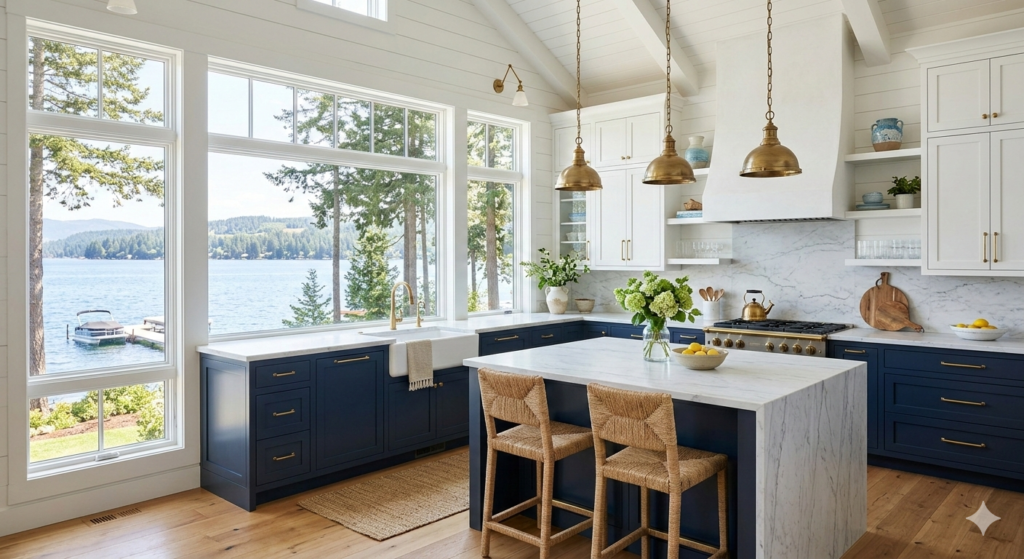
2) Blue and White Color Schemes Inspired by Water and Sky
The colors of your lakehouse kitchen should reflect the natural palette outside your windows, and nothing captures the essence of lake living quite like variations of blue paired with crisp white. This classic combination evokes the meeting of water and sky, creating a serene atmosphere that makes your kitchen feel like an extension of the lake itself. The beauty of blue and white schemes is their versatility—they can skew casual and cottage-like or sophisticated and refined depending on the specific shades and materials you choose.
Navy blue cabinets create dramatic impact while maintaining the water-inspired theme. Deep, saturated navy reads almost neutral, providing a grounded foundation that makes other colors pop. Navy lower cabinets paired with white upper cabinets or open shelving create a classic look that never feels dated. The dark lower cabinets are practical in lakehouse settings where sandy feet and water splashes are common, while the white uppers keep the space feeling bright and open. Navy works beautifully with brass or gold hardware, creating a slightly nautical feel without being overtly themed. This color combination also pairs wonderfully with natural wood elements, marble countertops, and white subway tile backsplashes.
Powder blue cabinets bring softness and tranquility to lakehouse kitchens. This lighter shade evokes morning mist rising off the water or the pale blue of a clear summer sky. Powder blue feels fresh and airy, making it ideal for smaller kitchens where darker colors might feel heavy. This shade works particularly well in cottage-style lakehouse kitchens where you want to emphasize charm and cheerfulness. Powder blue cabinets paired with white countertops and natural wood accents create a space that feels light-hearted and welcoming. The color is forgiving of imperfections and age, which makes it practical in vacation homes where perfection isn’t the goal.
Aqua and turquoise tones celebrate the playful side of lake living. These blue-green shades reference tropical waters and swimming pool tiles, bringing energy and personality to your kitchen. Aqua cabinets make a bold statement that says your lakehouse is a place for fun and relaxation. These brighter blues work best in kitchens with excellent natural light, where the color can shift and change throughout the day. Pair aqua cabinets with white or light gray countertops and backsplashes to prevent the space from feeling overwhelming. Natural wood accents and plants help ground these brighter blues and connect them back to the natural environment.
White cabinets with blue accents offer flexibility and brightness while still nodding to the lakehouse location. Crisp white cabinets create a clean backdrop that makes your kitchen feel larger and more open. Introduce blue through tile backsplashes, painted islands, or even just accessories and dishes displayed on open shelving. This approach allows you to change the amount of blue in your kitchen over time without major renovations. A blue tile backsplash in classic subway or handmade ceramic tiles adds color and texture without permanent commitment. Painting just the kitchen island blue creates a focal point while keeping the overall space light and neutral.
The specific finish you choose for blue cabinetry affects the final atmosphere. Matte or flat finishes in blue create a soft, chalky appearance that feels relaxed and casual—perfect for a lakehouse retreat where you want to leave formality behind. These finishes hide fingerprints and imperfections well, making them practical for high-traffic vacation homes. Satin finishes offer subtle sheen that’s easier to clean than flat finishes while still maintaining a relatively casual appearance. High-gloss blue cabinets create a more modern, polished look that reflects light and makes small kitchens feel more spacious, though they do show fingerprints more readily.
Blue and white patterned tiles bring additional visual interest to lakehouse kitchens. Mediterranean-inspired cement tiles in blue and white patterns create an artisanal, collected-over-time feeling. These tiles work beautifully as backsplashes or even as a feature wall in the kitchen. Classic delft tiles with hand-painted blue designs on white backgrounds add old-world charm and sophistication. Moroccan-style geometric patterns in blue and white create energy and movement. Whatever pattern you choose, patterned tiles become a focal point that adds personality and character to your kitchen.
Incorporating different shades of blue creates depth and prevents the kitchen from feeling flat or one-dimensional. Use darker blues for lower cabinets, medium blues for the island, and lighter blues in accents like barstools or window treatments. This variation mimics the way water itself has different tones depending on depth, light conditions, and what lies beneath the surface. The layering of blues creates visual interest while maintaining a cohesive color story.
White marble or quartz countertops with blue-gray veining tie together blue and white kitchens while adding luxury. The natural veining in marble references water ripples and sky clouds, creating organic movement across your countertops. These materials feel cool to the touch, which is both practical and symbolic in a lakehouse kitchen. The veining also helps hide small imperfections and water spots that might be more visible on pure white surfaces.
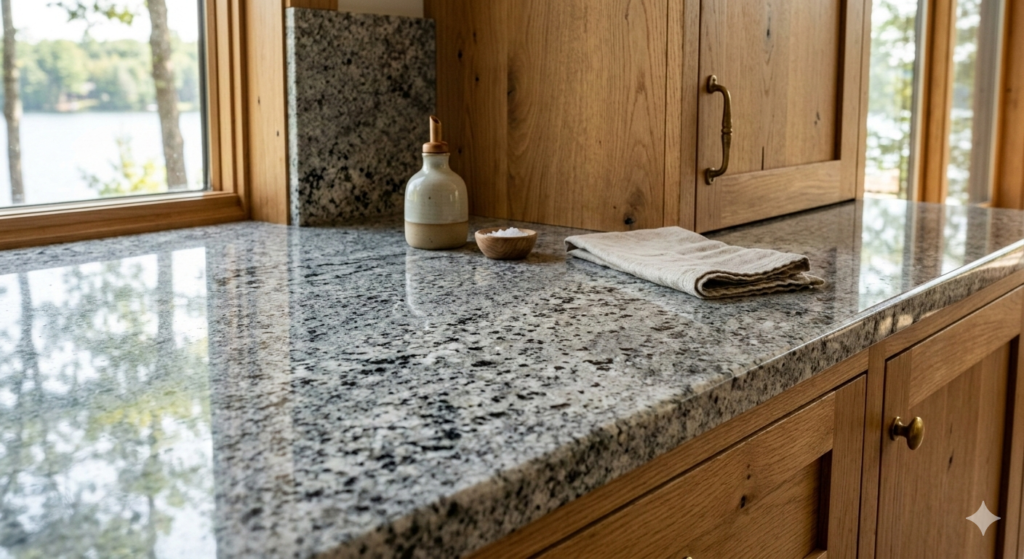
3) Stone Countertops
These materials bring billions of years of geological history into your kitchen, creating surfaces that feel substantial and permanent. Unlike man-made materials, natural stone carries unique patterns and variations that ensure no two kitchens are exactly alike. The cool touch of stone on a hot summer day and its ability to withstand decades of use make it both practical and beautiful in lakehouse settings.
Granite countertops offer incredible durability and a huge range of colors and patterns. For lakehouse kitchens, look for granite in earthy tones that reference the local geology. Gray granite with black and white flecking mimics the appearance of granite boulders you might find along the lakeshore. Brown and tan granite with rust-colored veining warms up the space while still feeling natural. Even dramatic black granite can work in lakehouse kitchens, especially when paired with white or light wood cabinets to create contrast. Granite stands up beautifully to heavy use, resists heat from hot pans, and requires minimal maintenance beyond periodic sealing. The polished surface reflects light, helping brighten the kitchen, while honed granite offers a softer, more matte appearance that feels less formal.
Soapstone countertops develop a beautiful patina over time, making them ideal for lakehouse kitchens where you want materials that age gracefully. This metamorphic rock starts with a light gray-green color and darkens to rich charcoal with use and oiling. Soapstone feels smooth and slightly soft to the touch, creating a tactile experience that’s pleasant and unique. The material is non-porous, so it won’t harbor bacteria and doesn’t require sealing like granite or marble. Soapstone scratches relatively easily, but these marks can be sanded out or simply embraced as part of the material’s story. In a lakehouse where perfection isn’t required, the living finish of soapstone creates character and authenticity.
Marble countertops bring elegance and luxury to lakehouse kitchens while maintaining organic beauty. White marble with gray veining creates sophisticated contrast against wood cabinets or colored cabinetry. The veining patterns reference water flowing over stone or clouds drifting across the sky, connecting to the natural theme. Marble does require more care than other stone options—it can etch from acidic substances and stain from certain foods—but many lakehouse owners love the imperfect, lived-in patina that develops. If you love the look of marble but want less maintenance, consider using it only on the island or in areas away from heavy food prep, pairing it with more practical materials in work zones.
Quartzite offers the beauty of marble with much greater durability. This natural stone features dramatic veining and comes in a range of colors from pure white to gray, beige, and even blue-tinted varieties. Quartzite is harder than granite, resists etching better than marble, and stands up to heavy use without showing wear. The material often has a slight shimmer or depth that creates visual interest and catches light beautifully. For lakehouse kitchens where you want a stunning natural stone but need serious durability, quartzite delivers on both fronts.
Leathered or honed finishes on stone countertops create a more casual appearance than polished surfaces. A leathered finish gives the stone subtle texture that hides fingerprints and water spots while maintaining color depth. Honed finishes offer a smooth, matte surface that feels sophisticated without being shiny. Both finishes work beautifully in lakehouse kitchens where you want to avoid the formal feeling that highly polished surfaces can create. These finishes also make the stone feel more touchable and organic, emphasizing its natural origins.
Thick edge profiles make stone countertops feel more substantial and custom. A thick mitered edge, where two pieces of stone are joined at a 45-degree angle to create the appearance of a thick slab, adds architectural weight to your island or countertops. Waterfall edges, where the stone continues down the sides of an island, create a modern sculptural element that becomes a focal point. For a more rustic approach, a chiseled or rough-hewn edge maintains the raw quality of quarried stone, creating a direct link to the rock formations outside your windows.
Mixing different stone materials adds layers of interest to your kitchen. Use one stone for perimeter countertops and a different stone for the island, creating distinct zones while adding visual variety. Pair honed granite on work surfaces with polished marble on the island for different textures and finishes. Combine soapstone on one section with butcher block on another to balance stone’s coolness with wood’s warmth. This approach allows you to use high-maintenance materials like marble in low-impact areas while choosing more practical stones for heavy-use zones.
Local stone creates the strongest connection between your kitchen and its setting. If there’s a local quarry or stone common to your region, incorporating that material makes your kitchen feel rooted in place. Regional limestone, slate, or granite tells the story of your specific location and creates authenticity that imported exotic stones cannot match. Local stone also typically costs less than materials shipped from across the world and has a smaller environmental impact.
4) Large Windows and Glass Doors That Frame Lake Views
Windows and glass doors transform lakehouse kitchens from simple cooking spaces into observation decks where you can watch the water’s changing moods while preparing meals. Maximizing glass in your kitchen design connects you to the primary reason you’re at the lake in the first place—the view and natural beauty outside. Every window placement decision should prioritize capturing the best views while bringing in maximum natural light. The interplay between your kitchen’s interior and the exterior landscape creates a seamless flow that makes your lakehouse feel expansive and integrated with nature.
Floor-to-ceiling windows along the lake-facing wall eliminate the barrier between inside and out. These dramatic expanses of glass flood the kitchen with natural light and make the view a living piece of art that changes with weather, seasons, and time of day. Morning sun streaming through these windows makes your kitchen the brightest, most energizing room in the house. Watching storms roll across the lake while safely inside becomes entertainment. Floor-to-ceiling glass also makes smaller kitchens feel much larger by visually extending the space beyond the walls. Frame these windows simply, avoiding heavy drapes or complicated window treatments that would block the view you’re working so hard to capture.
Corner windows create particularly interesting sight lines and bring light from multiple directions. When two walls of windows meet at a corner, you eliminate the visual interruption of a solid wall corner, opening up panoramic views that wrap around you. This configuration works beautifully at the end of a galley kitchen or on an island that faces two directions. The increased glass area floods the kitchen with light from different angles throughout the day, eliminating dark corners and creating a bright, welcoming space. Corner windows also make you feel more immersed in the landscape, as your field of vision isn’t limited to a single direction.
Sliding glass doors or folding glass walls dissolve the boundary between kitchen and deck entirely. These openings allow you to extend your kitchen into outdoor living spaces during pleasant weather, creating an indoor-outdoor kitchen perfect for entertaining. Install a small prep sink or counter space just outside the doors so you can cook and serve partially outside while maintaining access to your indoor kitchen. When the doors are open, breezes flow through the kitchen, bringing in the smell of pine trees and fresh water. Even when closed, these large glass expanses maintain visual connection and bring in abundant light.
Skylights supplement window light and brighten kitchens in homes where lake-facing walls can’t accommodate enough glass. A band of skylights running along the peak of a vaulted ceiling floods the space with overhead light while maintaining privacy. This solution works particularly well in kitchens with upper cabinets on the lake-facing wall, where traditional windows would be blocked. Skylights also bring in the view of the sky, clouds, and treetops, adding another layer of natural connection. Operable skylights provide ventilation, helping clear cooking odors and heat during summer months.
Transom windows above standard windows or doors bring in additional light while maintaining wall space for cabinets and backsplashes. These horizontal windows near the ceiling draw the eye upward, making rooms feel taller and more spacious. The high placement means you can place upper cabinets below them without sacrificing storage, solving the common dilemma between windows and cabinet space. Transom windows also provide privacy while still flooding the room with light, which can be useful in kitchens where neighbors or roads pass close to the house.
Picture windows frame specific views like living artwork. Instead of trying to window-wrap an entire wall, a thoughtfully placed picture window can highlight the best view—whether that’s a particular cove, a distant mountain, or a beautiful tree. Frame this window simply with minimal trim to emphasize the view itself. Position your sink or prep area in front of this window so you can enjoy the view during the time you spend at this station. A picture window also works well on a wall without a lake view, framing forest, garden, or architectural features of your home.
Window seat nooks built into deep window wells create cozy spots within the kitchen for morning coffee or reading cookbooks. These built-in benches with cushions make use of the wall depth required for large windows, adding functionality to structural necessity. Storage drawers beneath the seat provide space for linens, serving pieces, or seasonal items. A window seat transforms a window from just a view portal into a destination within your kitchen, creating a special spot that becomes everyone’s favorite place to sit.
Black-framed windows and doors create striking contrast against white or light-colored walls while giving the window frames a more contemporary, refined appearance than traditional white or wood frames. The dark frames disappear visually against outdoor views, making the glass feel larger and less framed. This choice also adds architectural definition to your kitchen without being heavy-handed. Black frames work in both modern and traditional lakehouse kitchens, proving versatile across different design styles.
Minimal window treatments preserve views while providing necessary privacy and light control. When window treatments are needed, consider simple Roman shades in natural linen or cotton that stack tightly when raised, virtually disappearing and leaving the view unobstructed. Sheer curtains filter harsh afternoon sun while maintaining the view. Motorized shades that lower with a button press make it easy to control light without manual effort. In kitchens where privacy isn’t a concern, leave windows completely untreated to maximize the connection with outdoors.
5) Wood Beam Ceilings
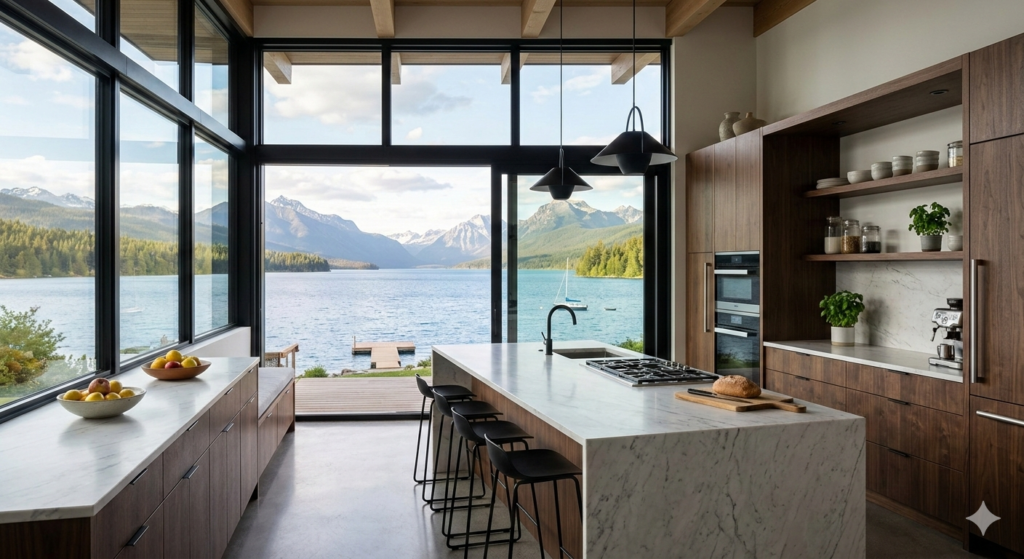
Exposed wood beams transform flat, forgettable ceilings into architectural features that define the character of lakehouse kitchens. These structural elements or decorative additions create visual interest overhead, draw the eye upward to make rooms feel taller, and reinforce the organic, natural materials palette that makes lakehouse design so appealing. Beams also provide a sense of craftsmanship and permanence, suggesting the care and quality that went into building your lake retreat. Whether you’re exposing original structural beams or adding decorative beams to a finished ceiling, this element adds substantial impact to your kitchen’s overall design.
Rough-hewn beams maintain the texture and character of freshly milled wood. These beams show saw marks, slight irregularities in dimension, and the organic qualities of real timber. The rough surface catches light differently than smooth wood, creating shadows and depth that change throughout the day. Rough-hewn beams work beautifully in rustic or traditional lakehouse kitchens where you want to emphasize the handcrafted quality and natural materials. Leave these beams natural to showcase the wood’s inherent color, or apply a clear coat to protect them while maintaining their texture. Darker stains create dramatic contrast against white or light ceilings, while lighter stains or white-washing preserve the texture while keeping the overall space bright.
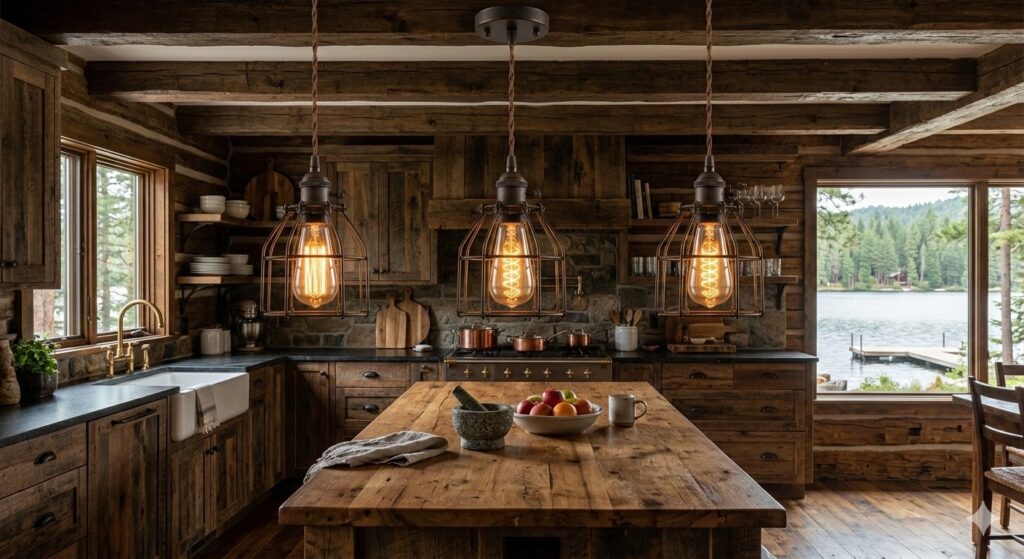
Reclaimed barn beams bring instant age and authenticity to lakehouse kitchens. Salvaged from old barns, mills, or other agricultural buildings, these beams carry the patina of decades or even centuries. The wood may have nail holes, mortise and tenon joints, or worn areas that tell stories of their original use. Colors range from silvery gray weathered wood to rich dark brown, depending on the wood species and exposure during the beam’s previous life. Using reclaimed beams not only adds incredible character but also represents sustainable building practices and connects your new kitchen to local history. Each beam is unique, ensuring your kitchen ceiling looks one-of-a-kind.
Hand-hewn beams showcase the axe and adze marks left by craftspeople who shaped timber before modern sawmills. These beams feature slightly irregular surfaces with visible tool marks that create incredible texture and visual interest. Hand-hewn beams feel artisanal and crafted, emphasizing the human effort that went into creating them. They work particularly well in kitchens aiming for an authentic historical appearance or in new construction where you want to create the feeling of an old, well-loved lake cabin. The slight imperfections and variations make each beam a work of functional art.
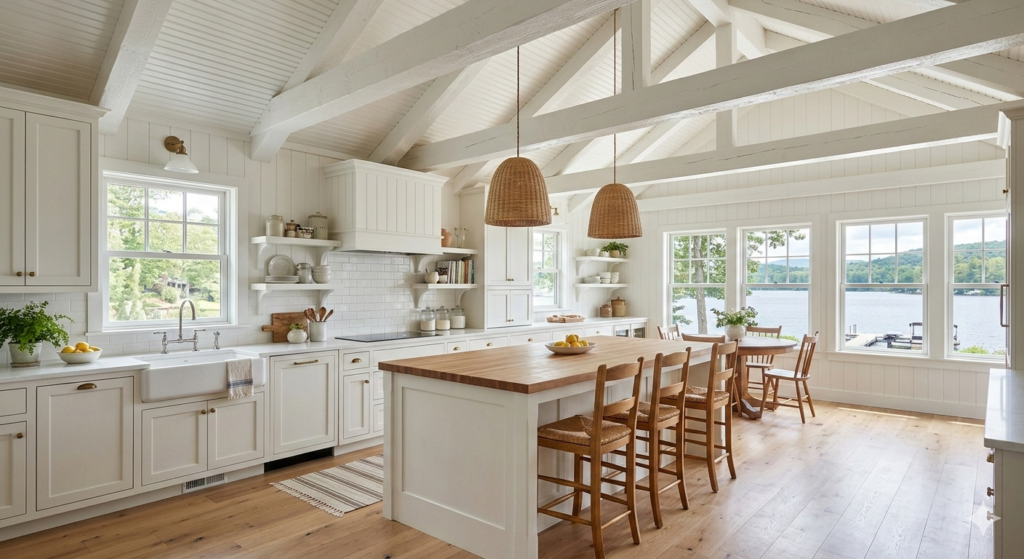
Painted white or light-colored beams brighten kitchens while still providing architectural definition. This approach works well in smaller kitchens where dark beams might feel heavy or in spaces where you want a more refined, coastal-cottage aesthetic rather than a rustic cabin feel. White beams create a clean, airy look while adding dimension and interest to the ceiling plane. They also reflect light rather than absorbing it, helping keep the kitchen bright. Consider painting beams in the same white as your cabinets or walls for a monochromatic scheme, or choose a slightly different shade to create subtle layering.
Vaulted ceilings with exposed beams create dramatic volume in lakehouse kitchens. Following the roofline, these soaring ceilings make even modest-sized kitchens feel grand and open. Exposed structural beams running along the ceiling peak emphasize the architecture while supporting the roof. Cross beams or collar ties add additional visual interest and can provide a place to hang pendant lights or pot racks. The height created by vaulted ceilings with beams draws the eye upward, making the space feel expansive and emphasizing any windows placed high on the walls.
Stained beams in medium to dark tones create warmth and richness overhead. A warm walnut or chestnut stain brings out the wood grain while adding depth to the ceiling. Darker beams create striking contrast against white painted ceilings, defining the space and adding sophisticated drama. The beams ground the room visually, preventing vaulted spaces from feeling too disconnected from the rest of the house. When choosing stain colors, consider how they relate to other wood elements in your kitchen, such as cabinetry or flooring, to create a cohesive design.
Decorative brackets or corbels at the beam ends add detail and visual interest. These ornamental supports can range from simple angled cuts to elaborate carved designs, depending on your kitchen’s style. Even functional brackets that genuinely support the beams can be shaped attractively, turning necessary structural elements into decorative features. Corbels provide an opportunity to introduce curves or carved details in a room often dominated by straight lines and flat surfaces.
Integrating lighting into or around beams solves the challenge of illuminating kitchens with exposed beam ceilings. Recessed lights installed between beams provide general lighting without competing with the architectural features. Pendant lights hung from beams at varying heights create layered lighting and draw attention to the beam structure. Track lighting mounted along the side of beams directs light where needed while remaining unobtrusive. LED strips hidden in the angles where beams meet the ceiling create indirect lighting that highlights the architecture while providing ambient light.
The spacing and size of beams significantly impact how they affect the kitchen’s feeling. Closely spaced smaller beams create a more intricate, detailed ceiling that draws the eye and creates coziness. Widely spaced massive beams make a bold statement and emphasize the structural nature of the design. The scale should relate to your kitchen’s overall size—modest beams in a huge kitchen will look undersized, while massive beams in a small kitchen can feel overwhelming.
6) Open Floor Plans
Open floor plans make lakehouse kitchens the social hub of the home, eliminating walls that would separate the cook from family and guests. This layout philosophy recognizes that vacation time is precious and no one wants to be isolated in the kitchen while others relax and enjoy the lake views. By connecting the kitchen directly to living and dining areas, you create one large, flexible space where conversation flows as easily as people move between areas. The openness also allows natural light and views to penetrate deeper into the home, making every square foot feel connected to the lake outside.
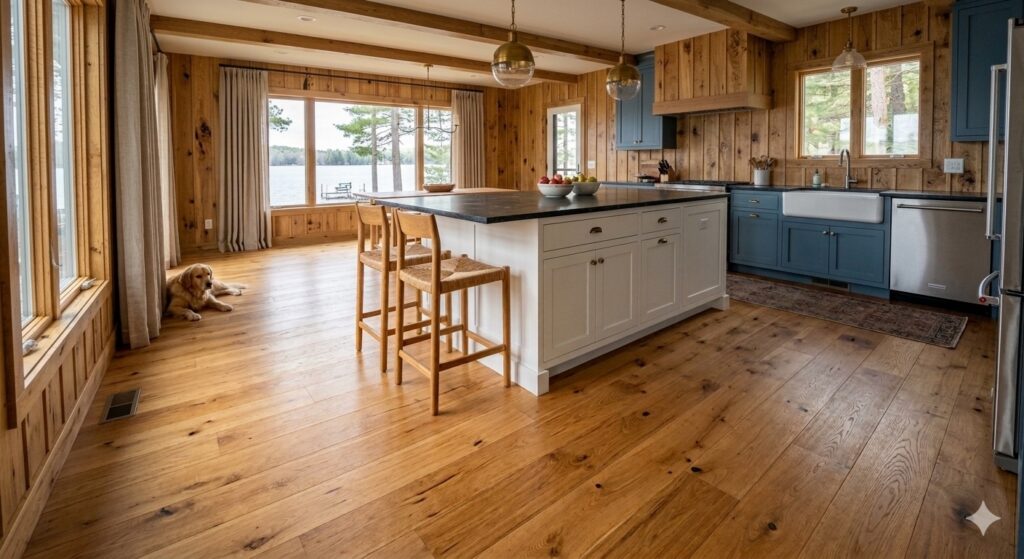
The kitchen island becomes the natural divider and centerpiece in open floor plans, defining the kitchen zone without solid walls. A substantial island with seating creates a gathering spot where people naturally congregate, whether they’re helping with meal prep, enjoying appetizers, or just chatting with the cook. Position the island so people sitting at it can see the lake view and anyone in the living area, making it truly the social center of the space. The island can house the cooktop, sink, or remain purely prep space—each configuration creates different traffic patterns and social dynamics. An island with seating on two or three sides accommodates more people and creates a more inclusive feeling than single-sided seating.
Sight lines matter tremendously in open floor plans. Position the kitchen so the person cooking can see the living area, dining table, and ideally the lake view. This arrangement means the cook isn’t staring at a wall but instead remains engaged with the household and outdoor beauty. Similarly, people in the living room should have pleasant views into the kitchen rather than looking at the back of cabinets or appliances. The refrigerator, in particular, benefits from thoughtful placement—its large mass can block views or create awkward traffic patterns if poorly positioned.
Furniture arrangement helps define different zones within the open space without walls. A sofa with its back to the kitchen creates a subtle division between living and cooking areas while maintaining openness. Positioning the dining table between kitchen and living room creates a natural transition zone. Area rugs under the dining table and in the living area help visually separate these spaces from the kitchen’s hard flooring. These subtle divisions make each area feel purposeful without sacrificing the open, connected quality that makes these floor plans so appealing.
Consistent flooring across the open space creates visual flow and makes the area feel larger. Running the same wood planks, tile, or stone from kitchen through dining and living areas eliminates visual breaks that would chop up the space. If you want some variation, consider keeping the same material but changing the pattern—for example, running wood planks in a different direction in the kitchen versus the living room. Any flooring transitions should happen at natural breaking points like doorways rather than arbitrarily in the middle of the space.
Ceiling treatments can define the kitchen within an open plan while maintaining openness. A slightly lower ceiling in the kitchen area, perhaps with exposed beams, distinguishes it from the living room’s cathedral ceiling. Different ceiling materials—such as wood planks in the kitchen and drywall in the living room—create visual separation overhead. These architectural moves define spaces without walls, making each area feel special while preserving the open connection.
Kitchen range hoods become sculptural elements in open floor plans since they’re visible from multiple angles and distances. A large, statement hood makes the kitchen feel intentional and finished rather than simply a cooking zone in a bigger room. Wood hoods crafted from the same beams used in the ceiling tie the design together. Metal hoods in copper, brass, or stainless steel create industrial-chic focal points. Stone or plaster hoods can blend with the architecture, becoming integrated parts of the design rather than obvious appliances.
Keeping the kitchen organized and attractive becomes more important in open floor plans where the space is always on display. Adequate closed storage ensures you can hide clutter and keep counters clear. A walk-in pantry just off the kitchen provides a place to stash small appliances, bulk goods, and miscellaneous items that would detract from the clean, open feeling. Attractive storage solutions for items you use daily—beautiful canisters, open shelving with coordinated dishes, fruit bowls—make functional items contribute to the design rather than detract from it.
Acoustic considerations matter in large open spaces where sounds can echo. Soft furnishings like upholstered seating, curtains, and rugs absorb sound and prevent the space from feeling too loud or echo-y. Acoustic ceiling panels designed to look like wood or other natural materials can be incorporated into ceiling designs to manage sound. Running the dishwasher or disposal won’t disturb conversation in the living area as much if you choose quieter appliance models and position them strategically away from seating areas.
Flexible lighting allows you to adjust the mood and function of different zones within the open space. Dimmer switches on all lighting circuits let you brighten the kitchen for cooking while lowering lights in the living area for movie watching, or vice versa. Multiple lighting layers—task lighting in the kitchen, ambient lighting in living areas, accent lighting highlighting art or architecture—create flexibility and atmosphere. The ability to control different zones independently makes the large open space feel more intimate and customizable to different activities and times of day.
7) Durable Flooring
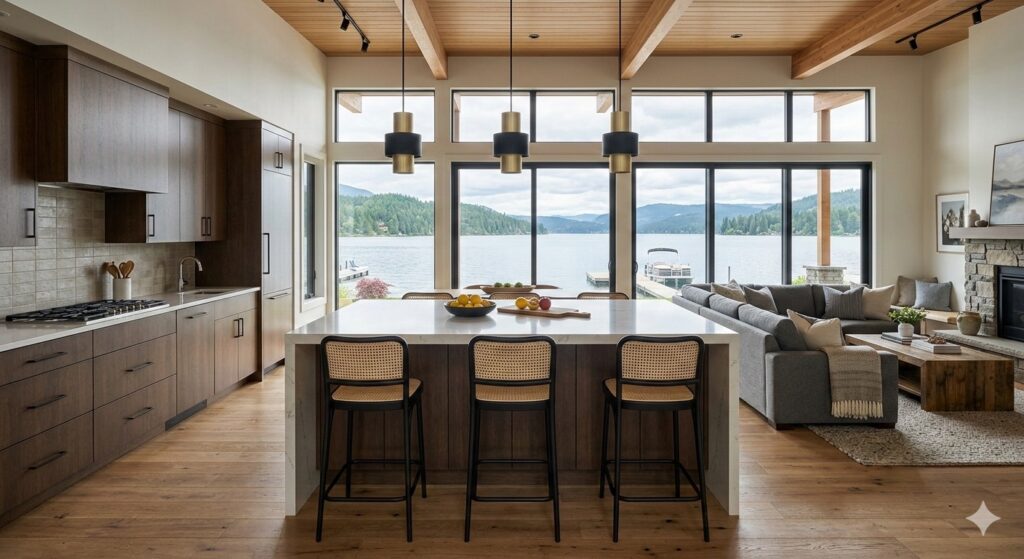
Flooring in lakehouse kitchens must withstand wet feet, sandy shoes, spilled drinks, and the constant traffic of vacation living while still looking beautiful and appropriate to the setting. Unlike formal dining rooms or guest bedrooms that see limited use, kitchen floors take a beating, especially in lakehouse settings where people transition constantly between indoors and outdoors. The right flooring choice balances durability, water resistance, comfort underfoot, and aesthetic appeal, creating a surface that will age gracefully and serve you well for decades.
Wide-plank hardwood flooring creates warmth and natural beauty while standing up to lakehouse life surprisingly well. Look for harder wood species like white oak, hickory, or maple that resist denting and wear better than softer pines. Wide planks—eight inches or wider—create a more casual, relaxed appearance than narrow strips while showing off the wood’s grain patterns. Longer plank lengths reduce the number of end joints, creating cleaner sight lines across the floor. For water resistance, choose engineered hardwood rather than solid wood in kitchens, as the construction makes it more stable in the humidity fluctuations common in lakehouse settings. A matte or satin finish hides wear and water spots better than high-gloss finishes, maintaining a fresh appearance longer.
Natural stone tile connects your kitchen floor directly to the earth and rocks outside. Slate tiles in gray, charcoal, or even rust tones create a rustic, organic foundation that improves with age. The natural texture provides slip resistance when wet, making stone practical for lakehouse kitchens where water on the floor is inevitable. Limestone and travertine in neutral tans and grays create a more refined look while maintaining the natural stone connection. These materials feel cool underfoot during hot summer days, providing welcome relief when coming in from the sun. Stone tiles do require sealing to resist stains, but once properly maintained, they last indefinitely and develop character over time.
Large-format porcelain tiles that mimic wood or stone offer durability without maintenance concerns. Modern manufacturing techniques create tiles that look remarkably like natural materials but offer superior water resistance and easier care. Wood-look porcelain tiles capture the warmth and grain patterns of hardwood while being completely waterproof and scratch-resistant. Stone-look tiles replicate marble, limestone, or slate without the need for sealing or special cleaners. Large tiles—24×48 inches or even bigger—reduce grout lines and create a cleaner, more contemporary appearance. The hardness of porcelain makes it extremely durable but less forgiving than wood if you drop dishes or glassware.
Reclaimed wood flooring tells stories and brings instant character to lakehouse kitchens. Salvaged from old barns, factories, or even dismantled houses, reclaimed wood shows its history through nail holes, color variations, saw marks, and patina. Every board is unique, creating floors that look like they’ve been there forever rather than newly installed. Reclaimed wood is also environmentally responsible, giving new life to materials that might otherwise be discarded. The old-growth wood used in historic buildings is often harder and more stable than modern lumber, making it extremely durable. The thickness of reclaimed planks also means they can be refinished multiple times over their lifetime.
Heated floors transform cold winter mornings at the lake into comfortable experiences. Radiant floor heating installed beneath tile or stone creates even, consistent warmth that rises up through the kitchen. This invisible heat source eliminates cold spots and makes the entire floor pleasantly warm to walk on barefoot. Heated floors work particularly well under stone or tile, which otherwise feels cold. The system works with thermostats and timers, allowing you to heat the floor only when needed. While the installation cost is higher than conventional flooring, the comfort and luxury make it worthwhile in lakehouse kitchens where you want every amenity.
Mixed materials create visual interest and can solve practical problems. Tile in the main work zone handles water and spills easily, while wood flooring in the dining area or island seating zone adds warmth. The transition between materials defines different zones within an open kitchen. Use the same wood species throughout but different materials—wood in low-traffic areas and tile in high-traffic zones. The key is making transitions look intentional rather than like an afterthought, placing them at natural breaking points like under the island or at thresholds.
Light-colored floors versus dark floors create very different effects in lakehouse kitchens. Light woods, white-washed finishes, or light stone tiles make kitchens feel bright, spacious, and beachy. They reflect light and create a clean backdrop for darker cabinetry or bold colors. Light floors do show dirt more readily but hide scratches and wear better than dark floors. Dark floors ground the space and create sophisticated drama, particularly beautiful when contrasted with white or light cabinetry. Dark floors hide dirt but show every scratch, water spot, and dust particle. In lakehouse settings where a lived-in patina is acceptable, medium tones often offer the best balance—showing less wear than dark floors while hiding dirt better than light floors.
Floor pattern and layout choices impact how large your kitchen feels. Running wood planks parallel to the longest wall makes narrow kitchens appear wider. Diagonal patterns create visual interest and can make spaces feel larger, though they require more material waste and cutting. Herringbone or chevron patterns in wood or wood-look tile create classic elegance and sophisticated detail. These patterns work beautifully in larger kitchens where the design can be appreciated, though they can feel busy in very small spaces. Large-format tiles in a simple running bond pattern create clean, contemporary lines.
8) Farmhouse Sinks and Bronze Fixtures
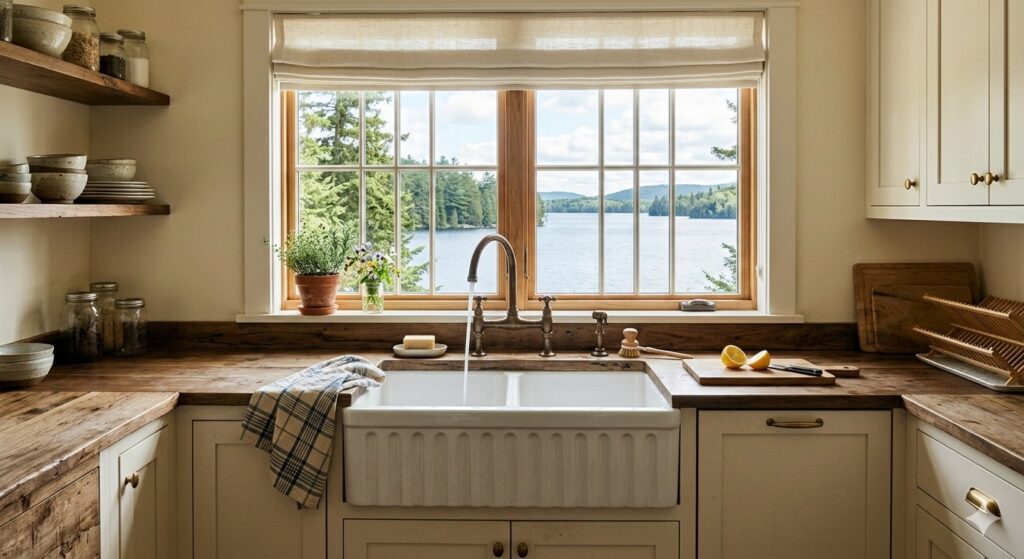
The sink and faucet might seem like purely functional elements, but in lakehouse kitchens, these pieces set the tone and create character. A beautiful sink placed under a window with a lake view becomes a destination in your kitchen, transforming dishwashing from a chore into a pleasant task. Fixtures offer opportunities to introduce different materials and finishes that complement your overall design while adding layers of visual interest. Choosing pieces with vintage inspiration and quality construction ensures they’ll last and remain beautiful despite heavy vacation-home use.
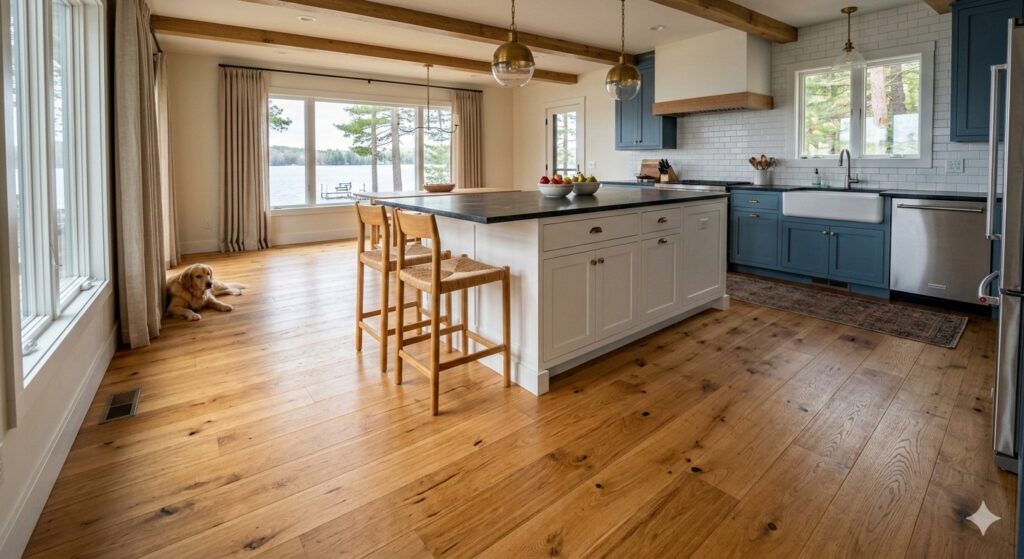
Apron-front farmhouse sinks make powerful design statements while offering practical benefits. These sinks feature exposed fronts that extend beyond the cabinet face, creating a focal point in the kitchen. White fireclay farmhouse sinks evoke traditional farmhouse kitchens and pair beautifully with any cabinet color. The thick walls and substantial weight of fireclay make these sinks durable and resistant to chips and scratches. Cast iron farmhouse sinks offer similar aesthetic appeal with enamel coating over iron, providing good durability at a lower price point. Stainless steel farmhouse sinks suit more contemporary lakehouse kitchens, offering easy maintenance and modern appeal while maintaining the apron-front design.
Single-bowl versus double-bowl farmhouse sinks is an important consideration. A single large basin allows you to wash big pots, baking sheets, and even small coolers easily—particularly useful in lakehouse kitchens where you might be cleaning fishing gear or camp equipment. The uninterrupted bowl also looks cleaner and more sculptural. Double-bowl sinks offer the convenience of separating tasks—washing dishes in one side while using the other for food prep. For most lakehouse kitchens where sink size allows, a large single bowl provides the most flexibility and best aesthetic.
Bronze and brass faucets develop living finishes that improve with age and use. These materials start with beautiful warm tones and gradually develop darker patinas in frequently touched areas, creating depth and character. Unlacquered brass and bronze require no special maintenance—the patina development is natural and desirable. This aging quality suits lakehouse kitchens perfectly, where materials that show their use tell a richer story than pristine surfaces that need constant maintenance. Oil-rubbed bronze finishes offer similar warmth with a darker, more consistent color that won’t continue to change over time.
Bridge faucets bring vintage charm and substantial presence to lakehouse kitchen sinks. These faucets feature two handles and a spout connected by an exposed bridge, referencing early plumbing where pipes couldn’t be concealed in walls. The mechanical appearance and visible connections create visual interest and authenticity. Bridge faucets work particularly well with farmhouse sinks, creating a cohesive vintage-inspired look. They come in various finishes from polished chrome and nickel to aged brass and bronze, allowing you to match your hardware throughout the kitchen.
Pull-down and pull-out faucet sprayers combine vintage style with modern convenience. These faucets look traditional when the spray head is docked but offer the flexibility of a removable sprayer for filling pots, rinsing vegetables, or cleaning the sink. Look for models where the spray head retracts smoothly and locks securely in place, avoiding cheaper versions where the hose hangs visibly or the head droops. The sprayer function proves invaluable in lakehouse kitchens where you might be filling large stock pots for crab boils or cleaning muddy vegetables from the garden.
Pot fillers mounted over the cooktop eliminate the need to carry heavy pots of water across the kitchen. These swing-arm faucets attach to the wall above the range, extending over the cooktop when needed and folding away when not in use. Beyond the practical convenience, pot fillers add professional kitchen aesthetics and become architectural details on your backsplash. Choose finishes that coordinate with your main faucet and cabinet hardware for a cohesive look. A pot filler makes sense in lakehouse kitchens where you might be cooking for crowds and boiling water for corn, pasta, or seafood.
Bar sinks and prep sinks in islands or secondary locations increase kitchen functionality. A small bar sink in the island allows multiple people to work in the kitchen simultaneously without interfering with the main sink. It’s perfect for rinsing vegetables, washing hands, or getting drinks while someone else uses the primary sink. In kitchens with views, placing the main sink facing the lake and a prep sink on the island balances function with the desire to enjoy the view. Smaller secondary sinks don’t require the same visual impact as the main sink—simple round or rectangular stainless steel or copper sinks work well in supporting roles.
Matching hardware finish across faucets, cabinet pulls, appliances, and lighting creates cohesion or intentional contrast. Matching all bronze or brass creates a warm, unified look throughout the kitchen. Mixing finishes—perhaps bronze faucets and lighting with brass cabinet hardware—adds depth while maintaining the warm metal family. Introducing one contrasting finish element, such as matte black handles on drawers when everything else is bronze, creates purposeful accent moments. The key is making mixing look intentional rather than indecisive.
9) Shiplap and Beadboard
Shiplap and beadboard wall treatments infuse lakehouse kitchens with cottage charm and architectural detail, transforming plain drywall into surfaces with texture and character. These traditional materials reference coastal and rural building traditions, creating authentic period details even in new construction. The horizontal or vertical lines created by planking add visual movement and interest while providing practical benefits like protecting walls from wear and hiding imperfections. Both treatments can be painted or stained to suit your color scheme, offering flexibility alongside their inherent character.
Shiplap backsplashes create textured, organic alternatives to tile behind ranges and sinks. The horizontal planks add warmth and softness compared to hard, shiny tile surfaces. White-painted shiplap creates a fresh, coastal look that brightens the kitchen and reflects light. Natural wood shiplap brings warmth and grain variation. Shiplap installed vertically creates height and draws the eye upward, making standard-height ceilings feel taller. The grooves between boards create subtle shadow lines that change throughout the day as light shifts, adding dimension to what could otherwise be flat surfaces. Seal shiplap used as backsplash with polyurethane or wax to protect against grease and moisture while maintaining the wood’s natural appearance.
Full-wall shiplap treatments create cohesive, enveloping spaces with cottage character. Installing shiplap on all walls rather than just accent walls creates rooms that feel more finished and intentional. The consistent material wraps the space, creating a cozy, cabin-like quality perfect for lakehouse settings. White painted shiplap on all walls creates bright, airy kitchens with subtle texture, while natural or stained shiplap creates warmer, more rustic spaces. Installing shiplap horizontally makes rooms feel wider, while vertical installation creates height. The choice depends on your room’s proportions and the feeling you want to create.
Beadboard ceilings add dimension and cottage detail overhead. Rather than flat painted drywall, beadboard ceiling creates visual interest through its narrow planks and regular beaded detailing. White beadboard ceilings in kitchens with white walls create a clean, cohesive look with subtle texture, while natural wood beadboard adds warmth overhead. Beadboard works particularly well between exposed beams, filling the ceiling plane with period-appropriate material. The material also helps with acoustics, softening sounds compared to hard drywall or wood plank ceilings.
Beadboard wainscoting creates traditional detailing on lower walls while protecting against scuffs and damage. Installing beadboard from floor to chair rail height (typically 32-36 inches) creates classic cottage proportions and architectural interest. Paint the beadboard in the same color as the walls for subtle texture or in contrasting colors for more definition. White beadboard with colored walls above creates a classic look. The wainscot height provides visual weight at the bottom of the wall, grounding the space and creating balanced proportions. The practical benefit is protecting lower walls in high-traffic areas from chairs, boots, and daily wear.
The scale of shiplap and beadboard impacts the overall effect. Wide shiplap boards (8-12 inches) create bold, dramatic impact with fewer seams and stronger horizontal lines. Narrow shiplap (4-6 inches) creates more delicate, traditional character with more frequent groove lines. Standard beadboard features narrow planks (2-4 inches) with small beaded details, creating refined, detailed surfaces. The scale you choose should relate to your room size and ceiling height—wider planks work well in larger spaces with taller ceilings, while narrower planking suits smaller, cozier kitchens.
Mixing shiplap and beadboard in the same kitchen creates layered interest. Beadboard on the ceiling with shiplap on walls creates different textures at different planes. Beadboard wainscoting with shiplap backsplash adds detail without overwhelming the space. The two materials are related enough to work together while being different enough to create variety. Both reference traditional building materials and cottage architecture, making them natural partners in lakehouse kitchen design.
Painted versus natural wood finishes dramatically change the feeling these materials create. White painted shiplap and beadboard create bright, fresh, coastal cottage aesthetics. The white finish reflects light and makes small kitchens feel larger. Colored paint allows you to introduce soft blues, greens, or grays that reference water and nature. Natural wood finishes showcase grain and variations, creating warmth and organic beauty. Clear coats protect the wood while maintaining its natural appearance. Stained finishes allow you to adjust the color while still seeing wood grain, offering a middle ground between paint and natural wood.
Installation details matter in achieving professional results. Shiplap should be installed with consistent spacing between boards, creating uniform reveal lines. The planks should be level and properly joined at corners. Beadboard panels should align at seams so the beading pattern continues uninterrupted. Inside and outside corners need proper trim pieces for clean, finished transitions. These details separate amateur from professional installations and ensure your shiplap or beadboard looks intentional and refined rather than like a quick DIY project.
10) Industrial and Vintage Lighting
Lighting transforms lakehouse kitchens from purely functional spaces into atmospheric rooms that feel special at any time of day. The right fixtures provide necessary illumination for cooking while creating ambiance and visual interest. In vacation homes where you gather with loved ones for long dinners and late-night conversations, lighting quality directly impacts the experience. Industrial and vintage-inspired fixtures bring character and authenticity to lakehouse kitchens while offering the durability needed in high-use spaces.
Oversized pendant lights above islands create dramatic focal points and provide task lighting for food preparation and casual dining. Large pendants in metal, glass, or even woven materials hang at different heights to create visual interest and intimacy. Space multiple pendants evenly along the island length, typically 30-36 inches apart, ensuring enough light covers the entire surface. The bottom of pendants should hang 30-36 inches above the counter, high enough to avoid hitting heads while low enough to illuminate work surfaces effectively. Industrial-style pendants in black metal, aged brass, or copper add masculine edge and vintage factory character.
Barn light sconces flanking windows or on walls provide ambient lighting and architectural detail. These simple, functional fixtures reference agricultural buildings and outdoor lighting, connecting to rural and lakehouse traditions. Barn lights come in various sizes and colors, from small accent lights to large statement pieces. Black barn lights create contrast against light walls, while brass or copper versions add warmth. Position barn lights to highlight architectural features, frame windows, or provide task lighting at specific work areas. Their straightforward design ensures they won’t compete with other focal points while still contributing character.
Cage lights and factory-style pendants bring industrial authenticity to lakehouse kitchens. Metal cage or wire basket pendants expose the light bulb, creating an honest, utilitarian aesthetic that suits casual lakehouse living. These fixtures work particularly well in kitchens with exposed beams, concrete counters, or other industrial elements. The metal finishes develop patina over time, adding character. Edison-style filament bulbs in these fixtures enhance the vintage industrial look while providing warm, flattering light.
Schoolhouse glass pendants offer a softer take on vintage lighting. These globe-shaped fixtures in milk glass or clear glass with subtle details create classic American style that works in both traditional and contemporary lakehouse kitchens. The glass diffuses light, creating a softer glow than exposed bulb fixtures. Schoolhouse pendants come in various sizes and can be mixed—larger pendants over islands with smaller versions elsewhere creates visual hierarchy. The simple shapes ensure they remain versatile and appropriate even as other design trends change.
Chandeliers over dining tables or in large open kitchens provide ambient lighting and jewelry for the room. Rustic wood and metal chandeliers suit traditional lakehouse kitchens, while streamlined metal or glass versions work in contemporary spaces. The chandelier should be large enough to anchor the dining table—typically at least half to two-thirds the table width—without overwhelming the space. Hang chandeliers so the bottom sits about 30-36 inches above the table surface, allowing light to reach the table while keeping the fixture from obstructing sight lines across the table.
Under-cabinet lighting illuminates countertops for food preparation while highlighting backsplashes. LED strip lights provide even, shadow-free light along the entire counter length. Individual puck lights create pools of light with more defined edges. Consider the light color temperature—warm white (2700-3000K) creates cozy atmosphere, while cooler white (3500-4000K) provides better task lighting for detailed work. Install under-cabinet lights on dimmers to adjust brightness depending on the time of day and activity—bright for cooking, dimmed for ambient evening light.
Recessed lighting provides general ambient light without visible fixtures competing for attention. In kitchens with beautiful ceiling beams or other architectural features you want to emphasize, recessed lights disappear into the ceiling while still providing necessary illumination. Space recessed lights evenly across the ceiling, avoiding creating a grid pattern that feels institutional. Adjustable recessed lights (sometimes called eyeball or gimbal lights) let you aim light at specific areas or features. Dimmer controls allow you to adjust the overall brightness, creating different moods for cooking versus entertaining.
Mixing metal finishes in lighting fixtures adds depth and prevents the kitchen from feeling too coordinated. Bronze pendants with brass sconces creates warm variation within the same metal family. Black metal fixtures mixed with aged brass creates intentional contrast. The key is having a clear majority finish with minority accent finishes rather than equal amounts of competing finishes. If you’re using multiple metal finishes in lighting, repeat those finishes in cabinet hardware, plumbing fixtures, or appliances to tie the look together.
Statement fixtures in unexpected places create surprise and delight. A beautiful sconce in the pantry, a vintage pendant in the butler’s pantry, or an interesting flush-mount in a hallway leading to the kitchen shows attention to detail throughout the space. These hidden lighting moments make your lakehouse feel thoughtfully designed rather than formula-driven.
11) Open Shelving and Glass-Front Cabinets
Open shelving and glass-front cabinets transform kitchen storage from purely functional to decorative, allowing you to display beautiful dishes, glassware, and collections while keeping items accessible. In lakehouse kitchens where casual entertaining happens frequently, having everyday items visible and within reach makes hosting easier and more spontaneous. These open storage solutions also create visual lightness and connection to the room, preventing kitchens from feeling closed in by solid cabinetry on all sides.
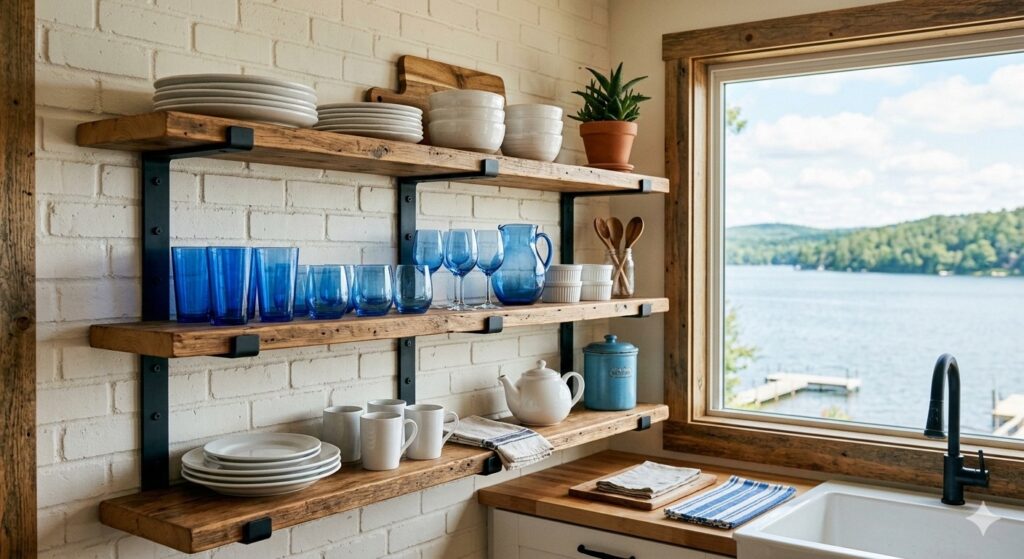
Floating wood shelves mounted on walls create simple, unfussy storage that showcases the items they hold. Thick wood planks (2-3 inches thick) appear to float on the wall when mounted with hidden brackets, creating clean, modern lines. Reclaimed wood shelves bring character and history, while new wood can be stained or painted to match your kitchen’s palette. Space shelves 15-18 inches apart vertically to accommodate standard dish and glass heights. The horizontal lines of shelves create visual movement across the wall and draw the eye, making rooms feel wider.
Metal bracket shelves create industrial charm while providing sturdy support. Wrought iron or steel brackets in black, bronze, or raw steel finishes add architectural detail while holding wood shelves. The brackets become part of the design rather than elements to hide, celebrating the honest connection between support and surface. Simple L-brackets create minimalist support, while decorative cast iron brackets add ornamental detail. Ensure brackets are substantial enough to support the weight of dishes and kitchen items without sagging or appearing flimsy.
Glass-front upper cabinets display contents while providing dust protection. These cabinets work particularly well for china, glassware, and serving pieces you want to show but don’t use daily. Clear glass lets you see everything inside, while seeded or textured glass obscures contents slightly while still allowing light through. Glass-front cabinets create visual lightness compared to solid doors, making them ideal on walls where you want to maintain openness. Lit from inside with LED strips, glass-front cabinets become glowing display cases that add ambiance to the kitchen.
Plate racks integrated into cabinetry provide specialized storage for dishes and platters. These built-in racks keep plates organized and accessible while showing them off as decorative elements. Vertical plate racks work well near the dishwasher, making unloading easy and logical. Open plate racks on countertops or shelves display your most beautiful dishes as functional art. The repetition of stacked plates creates pleasing visual rhythm and showcases color and pattern.
Styling open shelving requires thoughtful curation to look intentional rather than cluttered. Group items by color, size, or type to create visual order. Stack plates, bowls, and platters in neat piles rather than scattering them randomly. Display glasses and cups upright in rows. Introduce plants, cookbooks, or decorative objects between functional items to break up the utility and add personality. Keep everyday items within easy reach on lower shelves, placing less-used pieces higher up. The key is making the shelves look abundant but organized, lived-in but not messy.
Color coordination creates visual calm on open shelves. White dishes create clean, cohesive displays that work with any kitchen color scheme. Coordinating blues and whites reference classic china patterns while maintaining color unity. Neutral ceramics in cream, tan, and gray create sophisticated, earthy displays. Introducing one accent color—perhaps a collection of vintage blue glass—creates a focal point without overwhelming the shelves. Whatever color direction you choose, limiting the palette creates more impact than mixing many different colors and patterns.
Mixing closed and open storage provides the best of both worlds. Open shelving for beautiful items you use frequently keeps them accessible and on display. Closed cabinets hide less attractive necessities like plastic containers, appliances, and bulk goods. This combination lets you curate what’s visible while maintaining practical storage for everything else. A balanced approach might include open shelving flanking the range for oils and frequently used dishes, with closed upper cabinets elsewhere providing concealed storage.
Lighting shelves from above or below highlights displayed items and creates ambiance. LED strips mounted under each shelf illuminate the items below, creating a warm glow that makes glassware sparkle. Lights mounted at the top of the shelving unit shine down over all shelves, creating overall illumination. Backlighting shelves mounted on a wall with LED strips behind them creates a floating effect and makes the shelves themselves glow. These lighting treatments transform practical storage into features that contribute to the kitchen’s overall ambiance.
12) Natural Textiles and Materials That Add Warmth
Textiles and soft materials balance the hard surfaces inevitable in kitchen design, introducing warmth, texture, and comfort to spaces dominated by cabinets, counters, and appliances. In lakehouse kitchens where you want to create a welcoming, lived-in atmosphere, natural fibers and organic materials make the space feel more like home and less like a showroom. These elements also provide opportunities to introduce color, pattern, and seasonal changes that keep your kitchen feeling fresh and personal.
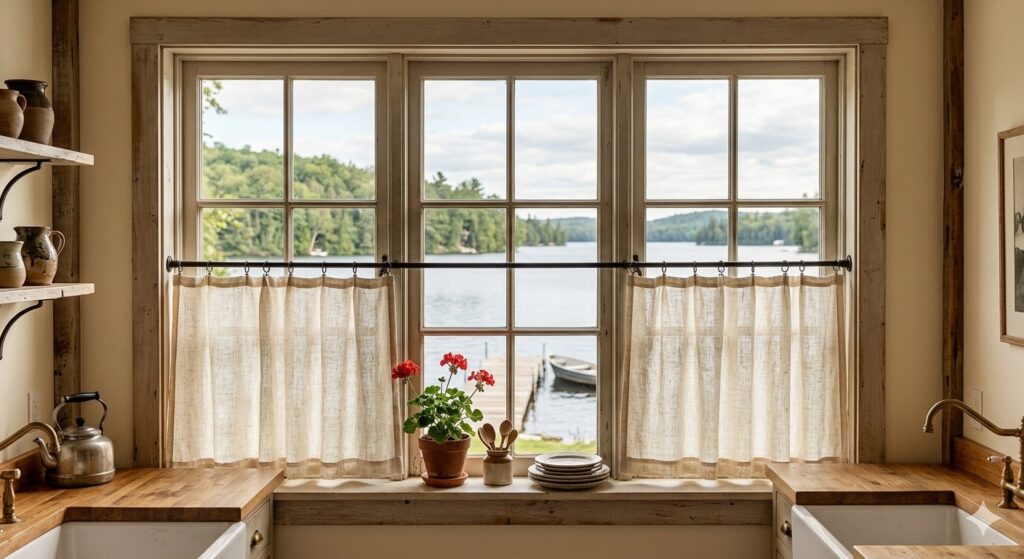
Linen cafe curtains on windows provide soft privacy without blocking light or views. These half-curtains cover only the lower portion of windows, allowing light to stream in from above while creating gentle privacy from nearby neighbors or passing boats. Natural linen in cream, white, or soft gray creates an effortless, relaxed look. The fabric’s slight slubiness and natural wrinkles add to the casual, unfussy aesthetic perfect for lakehouse living. Cafe curtains also help frame lake views, creating a subtle border that makes the scenery outside feel more like artwork.
Jute or sisal rugs define kitchen zones while adding organic texture underfoot. A natural fiber rug under the dining table or in front of the sink creates warmth and acoustic softening without the maintenance concerns of wool in a high-spill area. These rugs are relatively inexpensive, so replacing them when they show wear doesn’t feel like a major investment. The neutral tan color works with any color scheme while the woven texture adds visual interest. For easier cleaning, choose rugs with a cotton backing that can be taken outside and hosed off.
Woven basket storage brings organic texture while solving practical storage needs. Large baskets on open shelves hold kitchen linens, root vegetables, or bulk snacks. Smaller baskets corral cooking utensils, tea bags, or packets on counters. Wire baskets in vintage styles add industrial character while keeping items contained and visible. The natural materials and handcrafted quality of baskets make even mundane storage feel intentional and attractive. Baskets also make items portable—grab the whole basket of napkins to take to the table rather than carrying items individually.
Cotton and linen dishtowels add pops of color and pattern while being functional. Striped towels in blue and white or gray and white create classic, nautical-inspired looks. Vintage-style flour sack towels in plain linen or with simple printed designs add farmhouse charm. Hanging towels on hooks, oven handles, or a dedicated towel bar keeps them accessible while displaying their colors and patterns. Having a collection of beautiful towels makes you more likely to use them instead of paper towels, creating a more sustainable kitchen with less waste.
Wood cutting boards displayed on counters or walls add sculptural organic elements. Large wooden boards with live edges or interesting grain patterns become functional art. Smaller boards in various sizes create interesting compositions when hung on walls or propped on shelves. The wood tones warm up the kitchen and connect to other wood elements like cabinetry or beams. Boards in active use acquire patina and character, telling the story of meals prepared and shared.
Plants bring life and color to kitchen spaces while improving air quality. Herb gardens in pots on the windowsill provide fresh cooking ingredients while adding green to the kitchen. Hanging plants trail from ceilings or shelves, softening hard edges and creating visual movement. Low-maintenance plants like pothos, snake plants, or philodendrons thrive in kitchens with varying light conditions. Grouping plants at different heights creates lush displays that make the kitchen feel more alive and connected to nature outside.
Upholstered seating at islands or dining areas introduces softness and color. Counter stools with fabric or leather seats are more comfortable for extended sitting than hard wood or metal stools. The upholstery also provides opportunities to introduce color or pattern that complements your kitchen’s palette. For lakehouse durability, choose outdoor-rated fabrics or leather that can handle spills and won’t fade from sun exposure. Stools should be cleanable but don’t need to be precious—this is a casual space where comfort trumps formality.
Natural woven pendant light shades in rattan, bamboo, or seagrass add organic texture overhead. These shades filter light while creating interesting shadow patterns on ceilings and walls. The natural materials reinforce the connection to the outdoors and add warmth to the kitchen. Woven shades work particularly well in casual, cottage-style lakehouse kitchens, creating a relaxed bohemian feeling. The texture draws the eye and creates visual interest that solid metal or glass shades don’t provide.
Seasonal changes through textiles keep your lakehouse kitchen feeling fresh. Summer might bring bright striped towels, light cotton tablecloths, and fresh flowers in simple vases. Fall introduces warmer colors, wool throws on chairs, and ceramic pumpkins or gourds. Winter calls for cozy textures like knit dishcloths and evergreen branches in vases. These small seasonal touches make your lakehouse feel cared for and current without requiring major renovations or expenses.
13) Built-In Banquettes and Casual Dining Spaces
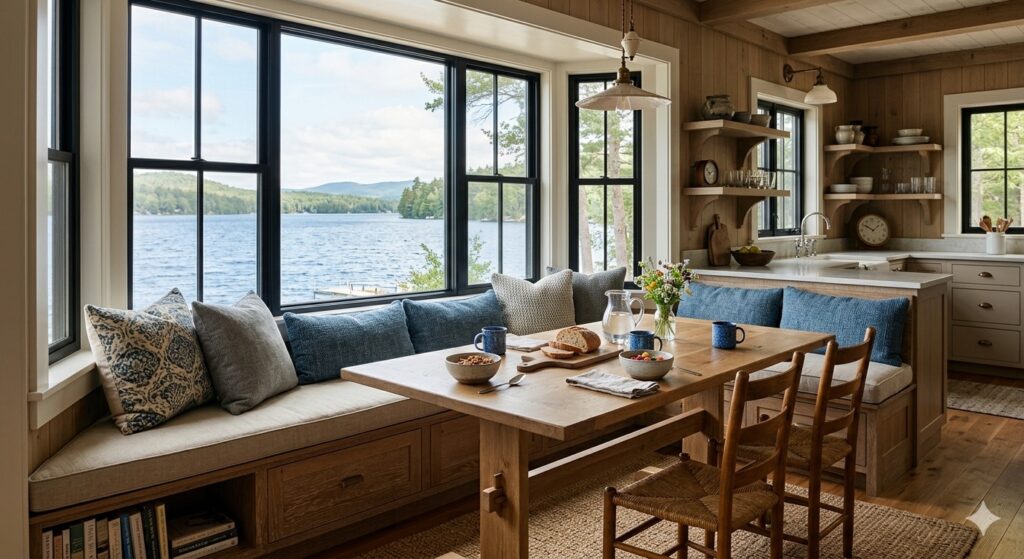
Built-in seating creates cozy gathering spots within or adjacent to lakehouse kitchens, providing comfortable places for meals, conversation, and lounging while maximizing space efficiency. These architectural elements feel permanent and intentional, as if they’ve always been part of the house. Banquettes also offer hidden storage opportunities beneath the seats, solving two problems with one solution. The casual, relaxed nature of banquette seating suits lakehouse living, where formal dining rooms often go unused in favor of casual kitchen meals with better views and closer proximity to cooking.
Window seat banquettes capture lake views while creating intimate dining nooks. Positioning built-in seating under windows lets diners gaze out at the water during meals, making every breakfast feel special. The bench seating wraps around the table, creating a more enclosed, protected feeling compared to chairs alone. This configuration works beautifully in breakfast nooks or kitchen peninsulas where you have windows on one or two sides. Upholstered cushions on the benches provide comfort for lingering over coffee or long dinners, while the permanent seating means you don’t need to store or rearrange chairs.
L-shaped banquettes in kitchen corners maximize seating in compact spaces. The wraparound configuration seats more people than individual chairs would in the same footprint. Corner banquettes create defined dining zones within open floor plans without requiring walls or partitions. The corner becomes the most coveted seat, offering views in two directions and a cozy nook feeling. Choose a table shape that complements the banquette—round or oval tables work well with curved banquettes, while rectangular tables suit straight bench seating.
Storage drawers or lift-up seats beneath banquettes provide valuable hidden storage. Deep drawers accessed from the kitchen side hold table linens, serving pieces, or seasonal items. Hinged seat tops lift to reveal storage for less frequently used kitchen items, games, or extra blankets. This dual-purpose design makes the most of every square foot, particularly valuable in smaller lakehouse kitchens where storage is limited. The built-in storage also keeps items organized and out of sight, maintaining the clean, uncluttered look that makes small spaces feel larger.
Cushioned seats and backs make banquettes comfortable enough for extended use. Upholstered bench seats padded with foam create comfortable sitting surfaces that don’t require chair cushions. Adding an upholstered back cushion makes the banquette comfortable for leaning back during long meals or reading. For lakehouse durability, choose performance fabrics that resist stains and moisture, or outdoor-rated fabrics that handle the inevitable spills and wet bathing suits. Patterns hide small stains better than solid colors, while darker colors show less dirt than light ones.
The height and depth of banquette seating affects comfort. Seats should be 18 inches high—the same as standard dining chairs—and 18-24 inches deep. Deeper seats feel more like a lounge than dining seating, which can be comfortable but makes it harder to reach the table. Allowing 24 inches per person along the bench length ensures everyone has elbow room. The table should sit 7-10 inches higher than the seat for comfortable dining. Getting these proportions right makes the difference between a banquette people love and one they avoid.
Mixing banquette seating with chairs creates flexibility and visual interest. Built-in seating on one or two sides paired with chairs on the other sides allows you to adjust the number of people at the table by adding or removing chairs. This combination also creates a less symmetrical, more casual arrangement that suits lakehouse aesthetics. Choose chairs that complement the banquette’s style—if the banquette is upholstered in a pattern, solid chairs balance the look. If the banquette is simple and solid, patterned or colorful chairs add personality.
Pendant lighting centered over banquette tables creates focal points and provides task lighting. Lower-hanging pendants create intimacy and bring light closer to the table surface. Multiple smaller pendants create more interest than a single large fixture, especially over rectangular tables. The lighting should be on a dimmer so you can adjust brightness depending on the meal and time of day—brighter for breakfast and lunch, dimmed for evening ambiance.
Decorative pillows add color, pattern, and extra comfort to banquette seating. Mix pillow sizes, shapes, and patterns for a collected, casual look. Outdoor fabric pillows withstand moisture and sun without fading or molding. Too many pillows create clutter and need to be moved for seating, so use them sparingly—2-3 pillows on a six-foot banquette provides visual interest without overwhelming the space. Pillow covers that slip off for washing make maintenance easy.
The relationship between banquette and kitchen workflow matters. Position the banquette near but not blocking the main cooking zone, allowing the cook to interact with diners while still accessing the kitchen freely. A banquette in the kitchen allows kids to do homework or guests to chat with the cook while meals are prepared. Clear sight lines from the banquette to the lake view ensures this seating takes full advantage of your location.
14) Coffee Stations
Dedicated coffee and beverage areas in lakehouse kitchens create specialized zones that streamline morning routines and make hosting easier. These mini stations keep coffee-making supplies organized and accessible while preventing the main kitchen from becoming cluttered with equipment and accessories. In vacation homes where multiple households with different wake-up times share space, a well-equipped coffee station allows everyone to help themselves without disturbing others or searching through unfamiliar cabinets.
Built-in coffee bars with dedicated counter space create permanent homes for coffee makers and accessories. A section of counter depth specifically for coffee equipment keeps the machine plugged in and ready to use without taking up prep space needed for cooking. Install an outlet on the backsplash or inside an upper cabinet to eliminate visible cords. Include space for a grinder, filters, cups, spoons, and other coffee essentials within arm’s reach. Upper cabinets or open shelving above the coffee bar store mugs, while drawers below hold coffee, tea, and accessories.
Butler’s pantries or beverage centers adjacent to kitchens provide private areas for coffee and drink preparation. These secondary spaces keep small appliances and morning clutter out of the main kitchen, maintaining clean counters and an uncluttered appearance. A beverage center might include the coffee maker, small refrigerator for cream, ice maker, and sink for filling pots or rinsing cups. Glass-front cabinets or open shelving display mugs, glasses, and coffee supplies. This separate zone is particularly valuable in open-concept kitchens where you want to hide the evidence of coffee-making when entertaining.
Mug racks and hooks keep favorite cups accessible and on display. Mounted under cabinets, hooks hold mugs by their handles while keeping counter space clear. Wall-mounted mug racks create displays that showcase colorful or interesting cups while making them easy to grab. A peg rail with hooks offers a casual, vintage solution that suits cottage-style lakehouse kitchens. Open shelving styled with your best mugs turns functional storage into decoration. Limiting yourself to beautiful mugs you love makes the collection more curated and visually pleasing than an assortment of mismatched promotional cups.
Small beverage refrigerators keep cream, milk, and cold brew accessible without opening the main refrigerator. These under-counter units can be built into the coffee station area, keeping everything needed for coffee in one compact zone. A beverage fridge also stores other drinks—soda, beer, juice—making them accessible to guests without them needing to ask where things are kept. The glass-front models let you see contents without opening the door, while solid-door versions hide the contents for a cleaner look.
Tea storage and organization deserves attention in lakehouse coffee stations. Dedicated drawer organizers or small boxes keep tea bags sorted by type and easy to find. Decorative tea tins on counters or shelves add vintage charm while storing loose tea. An electric kettle with temperature control allows both coffee and tea enthusiasts to heat water to precise temperatures for optimal brewing. Providing high-quality loose tea and beautiful teapots makes tea drinkers feel as cared for as coffee lovers.
Water filtration systems or dispensers improve coffee and drinking water quality. Under-counter filtration systems connect to your water line, providing filtered water from a dedicated tap on the counter or sink. Countertop water dispensers with filtration offer cold, hot, or room-temperature water instantly, eliminating the need for electric kettles. Good water makes better coffee and tea while being more convenient and environmentally friendly than bottled water.
Sugar, honey, and sweetener storage should be attractive and accessible. Small ceramic or glass containers with wooden spoons keep sweeteners fresh and ready to use. A vintage sugar bowl and creamer set adds charm while serving a function. Honey in a glass jar with a wooden dipper makes an attractive counter display while providing a natural sweetener option. Organizing these elements thoughtfully makes the coffee station feel curated rather than cluttered.
Creating a self-serve setup empowers guests and family to help themselves. Clear labeling or obvious organization makes it easy for anyone to find what they need. Keeping supplies stocked and the area clean maintains functionality. Providing various milk options, sweeteners, and flavorings accommodates different preferences. The goal is making the coffee station so intuitive and well-supplied.
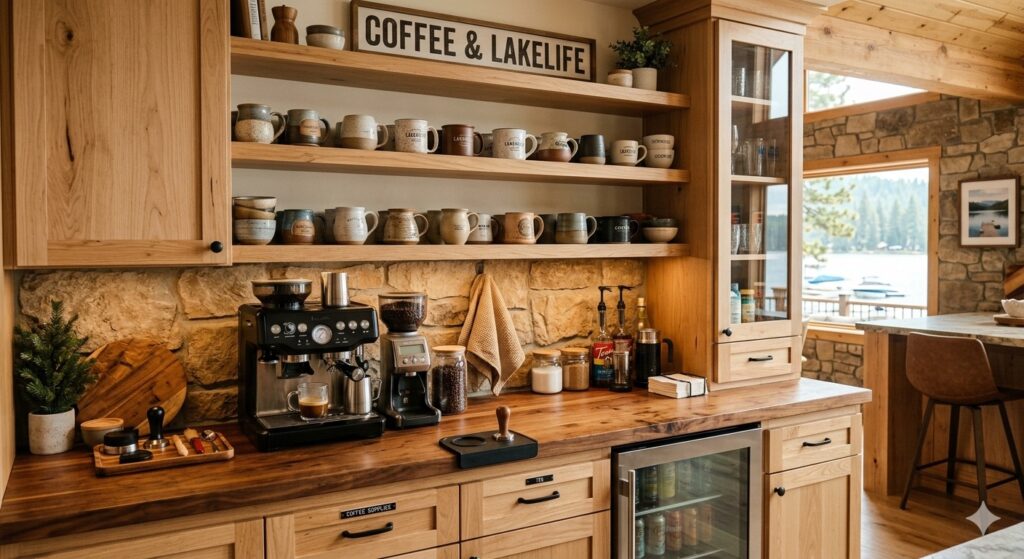
Conclusion
Designing a lakehouse kitchen means balancing practical needs with the unique character of waterfront living. Every choice you make—from the wood species in your cabinets to the placement of windows to the finish on your fixtures—should support both function and the feeling you want to create. The best lakehouse kitchens make you feel relaxed the moment you enter, connecting you to the water, woods, and natural beauty outside while providing everything you need to cook, entertain, and gather with loved ones.
Start by identifying which elements resonate most with your personal style and your specific lakehouse setting. A modern cabin on a mountain lake calls for different choices than a traditional cottage on a quiet pond, and a sprawling family compound needs different features than a cozy couple’s retreat. Use the ideas in this guide as a starting point, adapting them to your space, budget, and aesthetic preferences. Mix and match elements from different sections to create a kitchen that feels uniquely yours rather than copied from a magazine.
Remember that lakehouse kitchens should feel lived-in and comfortable rather than precious or formal. Choose materials that age gracefully and develop character over time—wood that shows use, stone that develops patina, metals that tarnish beautifully. Don’t be afraid of imperfection. The scratch on the counter from when someone dropped a pan, the worn spot on the floor where everyone walks, the collection of mismatched mugs accumulated over years—these imperfections tell the story of your lakehouse life and make the space more meaningful.
Prioritize the view and natural light in every decision. No amount of beautiful cabinetry or expensive finishes can compensate for a kitchen that blocks your view or feels dark. Position sinks and prep areas where you can see the water while working. Minimize upper cabinets on window walls. Choose materials and colors that reflect and enhance natural light rather than absorbing it. Your connection to the lake and surrounding nature should be the star of your kitchen design.
Finally, create a kitchen that supports the way you actually use your lakehouse. If you host large family gatherings, prioritize seating and storage for serving pieces. If you’re weekend warriors who mainly reheat and snack, keep the kitchen simple and invest in outdoor cooking areas instead. If fishing is your passion, include a prep sink and storage for gear. Your lakehouse kitchen should make your vacation time more enjoyable by supporting your specific activities and routines rather than following generic design formulas.
The ideas shared here should inspire and guide you, but the perfect lakehouse kitchen is the one that makes you happy every time you use it. Trust your instincts, embrace the imperfections that come with vacation-home living, and create a space that feels like home.