
There is something quietly sad about a blank wall. It just sits there, white and blank, doing nothing, saying nothing, contributing nothing to the energy of a room. It’s the interior design equivalent of showing up to a dinner party and not bringing anything. Not even yourself, really. Your walls take up a lot of space in your home, and they have a lot of potential — potential to tell a story, to set a mood, to make someone walk in and immediately feel something. The question is just what to do with them.
Wall decor is one of the most misunderstood areas of home styling. A lot of people think it’s just about hanging a few frames and calling it a day. But wall decor is actually one of the most powerful tools you have in a room. It draws the eye, it fills space with intention, it adds texture, color, personality, and warmth. Done well, it can completely transform how a room feels — even when nothing else changes.
This blog post covers 16 different wall decor ideas, ranging from classic approaches with a fresh twist to unexpected choices that might make you rethink what “wall decor” even means. These ideas work for different budgets, different room sizes, and different personalities. Some are bold. Some are calm. Some are a little weird in the best possible way. All of them are better than leaving your wall bare and hoping nobody notices.
Whether you rent, own, live in a studio apartment, or have a sprawling home with more walls than you know what to do with, there is something here for you. Let’s get into it.
1. Gallery Walls Done Right
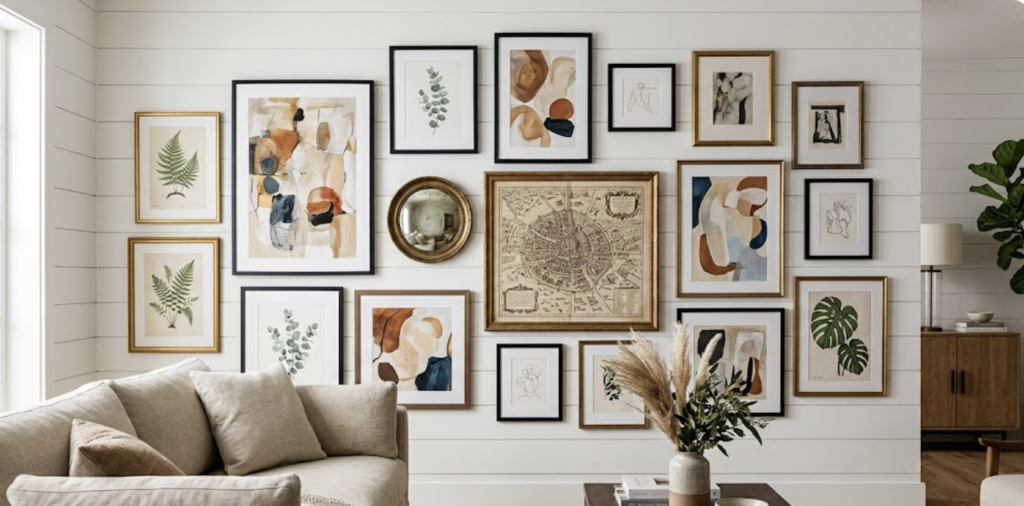
Gallery walls have been popular for years, and there is a very good reason for that — they work. A well-curated gallery wall feels personal, layered, and interesting. It gives you somewhere to look, something to think about, and something to feel. The problem is that most people approach gallery walls the wrong way. They buy a bunch of frames that are all the same size, hang them in a perfectly even grid, and wonder why it looks like the wall equivalent of a PowerPoint presentation.
The secret to a gallery wall that actually feels alive is contrast and intention. You want a mix of frame sizes — large, medium, and small — and you want a mix of what goes inside those frames. Think photographs next to abstract art. A hand-drawn illustration next to a vintage map. A framed piece of fabric next to a black-and-white print. The combination of unexpected elements is what makes a gallery wall interesting. If everything matches too perfectly, it stops being curated and starts looking like a catalog spread.
Color matters too. You can choose to work within a palette — all black frames, or all natural wood, or all gold — while varying the content inside. Or you can mix the frames themselves and let the chaos feel intentional by keeping the content more cohesive. Either approach works. What doesn’t work is making random decisions and hoping it will sort itself out on the wall. Lay everything on the floor first. Move things around. Live with the arrangement before committing to holes in your wall. Your future self will thank you.
Gallery walls work particularly well in hallways, living rooms, and staircase walls. They’re also one of the few wall decor ideas that genuinely grow with you — you can keep adding pieces over time, and the wall evolves as your life does. That’s a rare and lovely quality in a decorating choice.
2. Large-Scale Statement Art
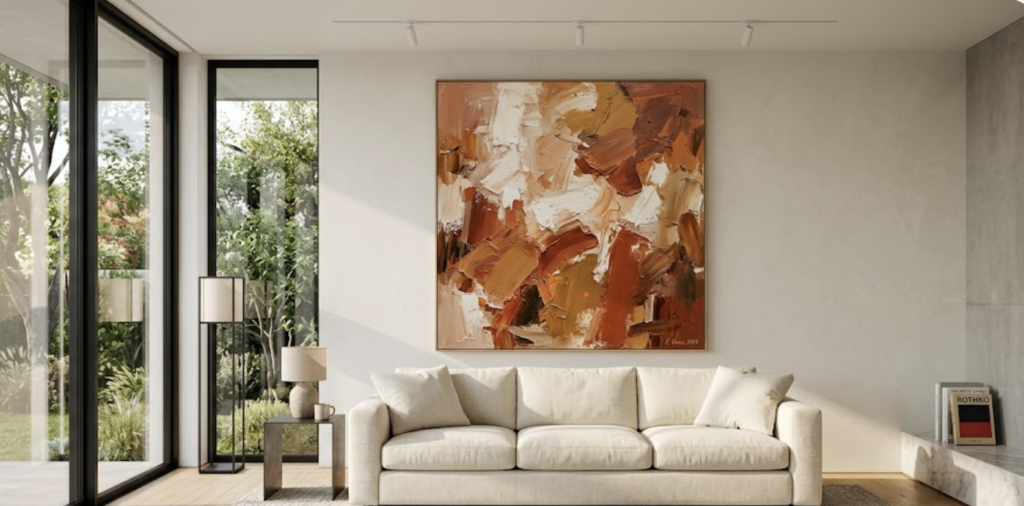
If gallery walls are a conversation, large-scale statement art is a monologue — and sometimes, a monologue is exactly what a room needs. A single oversized piece of art on a wall does something that nothing else can: it commands attention without trying. You walk into the room and your eyes go straight to it. Everything else in the space starts to organize itself around that one piece.
Large-scale art works in almost every room, but it’s especially powerful in living rooms, dining rooms, and primary bedrooms. In a living room, a large canvas above the sofa anchors the entire seating arrangement and gives the eye a place to rest. In a dining room, it creates a sense of occasion — like dinner in this room is actually an event worth dressing for. In a bedroom, it sets the emotional tone of the whole space. Bold and colorful means energy. Soft and abstract means calm. You get to choose what your room feels like when you wake up in the morning.
What counts as “large” depends on your wall. A common mistake is going too small. Art that’s too small for the wall it’s on looks uncertain, like it got lost on the way to a smaller room. As a general reference point, for a sofa that’s around 84 inches wide, your art should be somewhere between 50 and 60 inches wide. For very large walls, you can go even bigger. When in doubt, go larger than feels comfortable — it almost always looks better than you expected.
You don’t have to spend a fortune on large-scale art. Many artists sell prints at accessible prices, and even a large print in a simple, well-chosen frame can look exceptional. There are also online platforms where artists sell original works at a wide range of price points. The investment is worth it — one great piece does more for a room than ten mediocre ones.
3. Mirrors as Wall Decor
A mirror is the multitasker of wall decor — it reflects light, makes a room feel bigger, adds a decorative element, and occasionally shows you that you’ve had spinach in your teeth for the last hour of a dinner party. Mirrors deserve far more credit than they get in the decorating world.
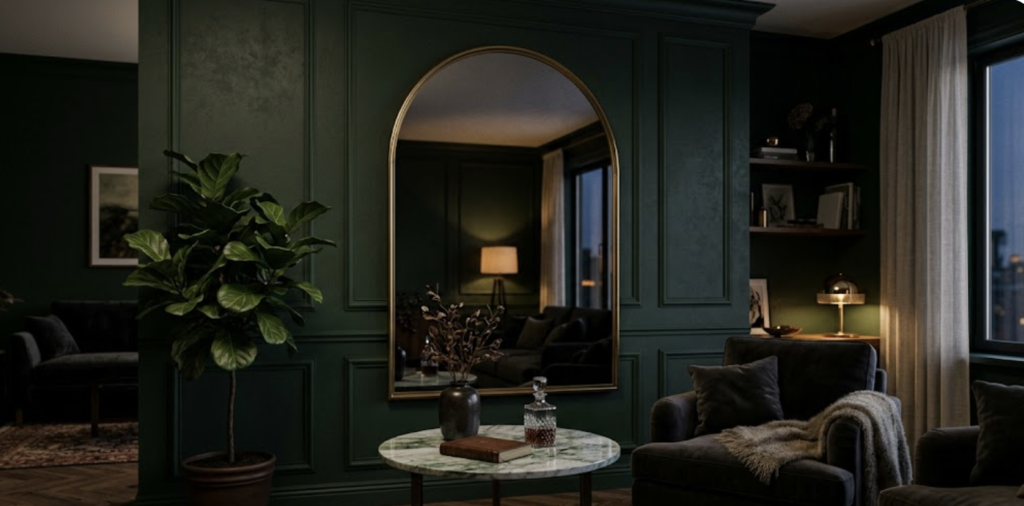
The most common use of mirrors is above a fireplace mantel or a console table in a hallway, and while that’s a great use, it’s also just the beginning. A large round mirror on a living room wall adds a sculptural quality that rectangular art sometimes can’t. A collection of small mirrors arranged together creates a gallery wall effect with the bonus of light-reflection. An antique or vintage mirror brings age, character, and a story to a wall that new pieces can’t always provide.
Shape matters enormously with mirrors. Round mirrors feel soft and organic — they work beautifully in rooms with a lot of straight lines and rigid furniture because they break up the geometry. Arched mirrors are having a major moment, and for good reason: they reference architecture without being architectural, and they make even a small wall feel significant. Sunburst mirrors have a vintage glamour that makes a room feel like it belongs in a film set in the 1960s, which is either very appealing or not at all, depending on your personality.
Mirrors on dark-colored walls are one of the most underrated combinations in interior design. A gold or brass-framed mirror on a deep navy or forest green wall has a richness that feels both old and fresh at the same time. The mirror bounces light back into the room, preventing the dark wall from feeling heavy, while the dark wall makes the mirror look even more deliberate and polished.
4. Floating Shelves as Functional Wall Deco
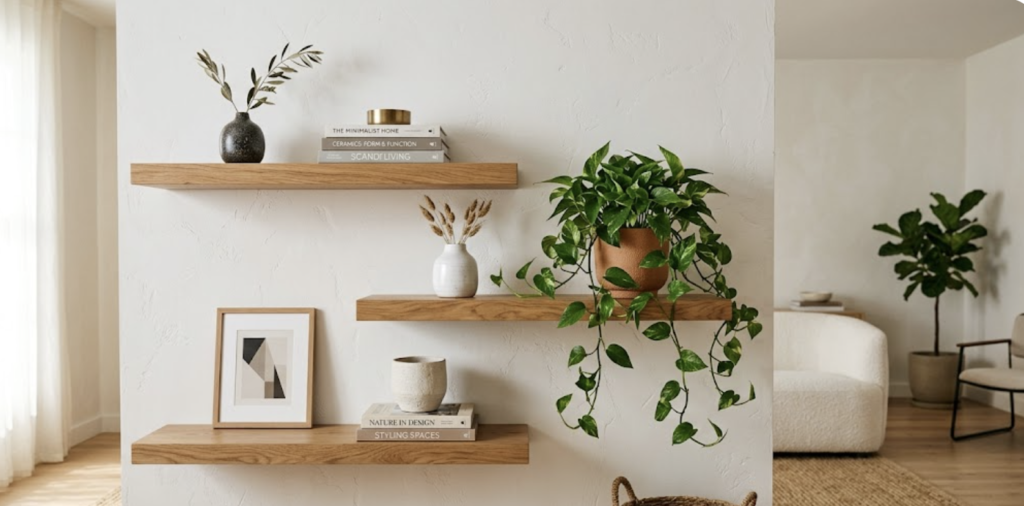
Here’s a thought: what if your wall decor didn’t just look good but also held your stuff? Floating shelves are the practical, underrated sibling of traditional wall decor, and when styled well, they are every bit as beautiful as a piece of art. Maybe more, because they have dimension.
The key with floating shelves is that they should be styled, not just loaded. There is a difference between a shelf that holds things and a shelf that is curated. A curated shelf has a mix of heights — a tall vase next to a short candle next to a stack of books lying flat. It has a mix of textures — something ceramic, something wood, something with a reflective surface, something green and living. It has breathing room — not every inch is filled, because negative space is part of the design. And it has one thing that anchors it — a piece of art leaning against the wall behind the objects, a large plant that spills slightly over the edge, a lamp that adds warm light.
In kitchens, open shelves replace upper cabinets and create a display of dishes, jars, and plants that makes the whole room feel more lived-in and personal. In bathrooms, a small floating shelf can hold rolled towels, a candle, and a plant in a way that makes the bathroom feel like a spa — or at least like a spa’s more approachable cousin. In home offices, shelves hold books and objects that communicate something about who you are, which matters when you’re on video calls all day.
The style of the shelf itself matters. Natural wood shelves are warm and organic. Black shelves are graphic and modern. White shelves disappear into the wall and let the objects do the talking. Thick, chunky shelves have a different presence than thin, minimal ones. None is wrong — it just depends on what you want the wall to say.
5. Woven Wall Hangings and Textile Art
There is something deeply human about putting fabric on a wall. Almost every culture throughout history has done it — tapestries in medieval European castles, woven kilims in Turkish homes, kente cloth in West African traditions, Navajo weavings in the American Southwest. Textile wall art is ancient, cross-cultural, and deeply beautiful, and it’s also very much having a modern moment.
Contemporary woven wall hangings come in an enormous range of styles, from tightly woven geometric pieces with clean lines, to loose, organic fiber art with fringe and natural materials. They add something that no other wall decor can: softness. In a room with a lot of hard surfaces — a leather sofa, a glass coffee table, a concrete floor — a large textile piece on the wall absorbs sound, adds warmth, and gives the eye something tactile and interesting to rest on.
Macramé is part of this category too, and while it went through a phase of being the wallpaper of the wellness industry (you couldn’t open Instagram without seeing a macramé piece next to a succulent and a candle), it has settled into something genuinely lovely when done with quality materials and good proportions. A large, well-made macramé piece has real artisanal value — it represents hours of skilled handwork, and that comes through in the way it looks.
One of the great things about textile wall art is that it’s forgiving. A woven piece doesn’t need to be perfectly level. It has natural movement. It can cover a large section of wall without needing a frame, a nail, or a gallery-hanging system. For renters especially, this is a wonderful quality — a large tapestry can go up with two small hooks and come down just as easily when you move.
6. Accent Walls with Wallpaper
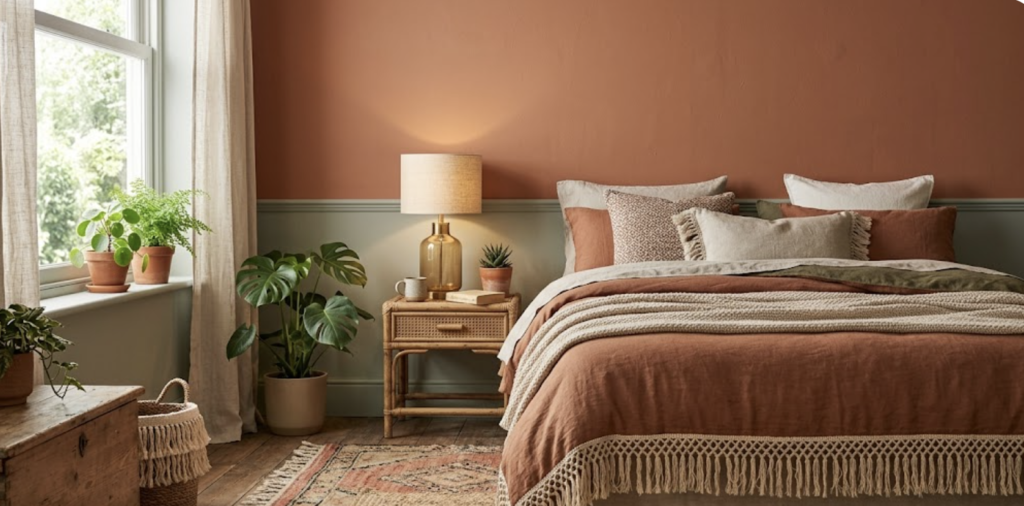
Wallpaper went through a dark era. For a couple of decades, it was associated with dated floral patterns that peeled at the corners and made rooms feel small and stuffy. Then everything changed. Modern wallpaper is a completely different product — beautifully printed, available in an astonishing range of designs, and in many cases, completely removable. If you haven’t looked at wallpaper recently, you are missing out on one of the most dramatic transformations available to any room.
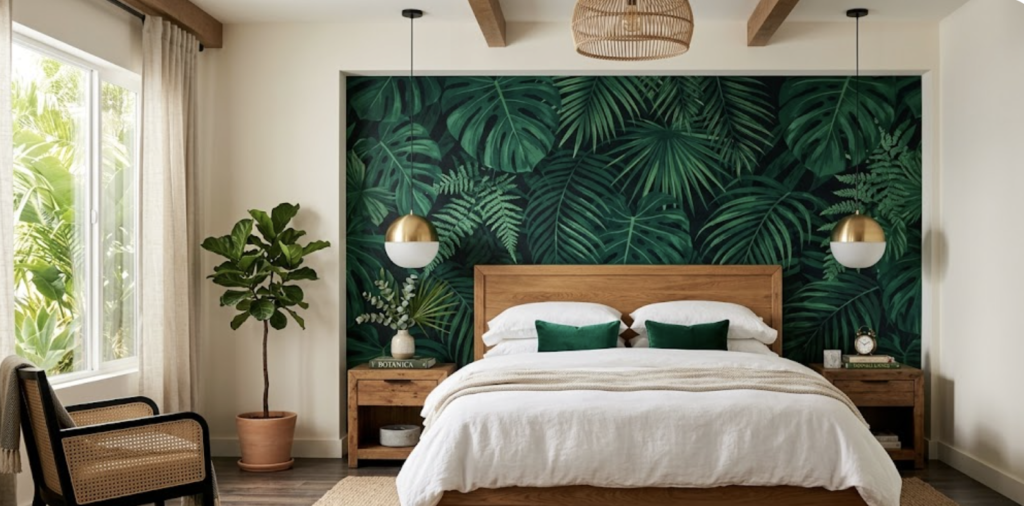
An accent wall with wallpaper does something paint simply cannot. It adds pattern, texture, and depth simultaneously. A large-scale botanical print on one wall of a bedroom makes the room feel like you’re sleeping in a garden — in the best possible sense. A geometric wallpaper in a home office creates a backdrop that’s graphic and energizing without being distracting. A textured wallpaper that mimics grasscloth, linen, or even stone gives a wall visual interest and tactile quality that solid paint just doesn’t have.
The key to a wallpaper accent wall is choosing the right wall. In a bedroom, it’s almost always the wall behind the bed — the headboard wall becomes the anchor of the room and gives the bedding and furniture something interesting to work against. In a dining room, it’s the wall behind the main seating area. In a hallway, you can wallpaper the whole thing — hallways are small enough that even the most dramatic pattern feels appropriate rather than overwhelming.
Peel-and-stick wallpaper has made this option accessible to renters in a way that wasn’t possible before. The quality has improved significantly, and many brands offer designs that are genuinely beautiful and realistic-looking. Installation is still a project, but it’s a manageable one, and the result can look like something from a professional interior shoot.
7. Architectural Wall Panels and Moulding
Walls don’t have to be flat. That is a constraint many people accept without questioning, and the ones who question it end up with the most interesting rooms. Architectural wall panels — whether traditional picture rail moulding, modern slat panels, fluted panels, or decorative plaster — add a layer of physical dimension to walls that changes how light falls, how shadow plays, and how the whole room feels.
Traditional picture rail moulding, wainscoting, and paneling are rooted in classical architecture. They give a room a sense of craft and permanence — a quality that takes a space from feeling like a box with furniture in it to feeling like a thoughtfully constructed environment. In dining rooms and studies, paneled walls feel almost scholarly. In living rooms, they add a formal quality that can be dressed up or down depending on the rest of the decor.
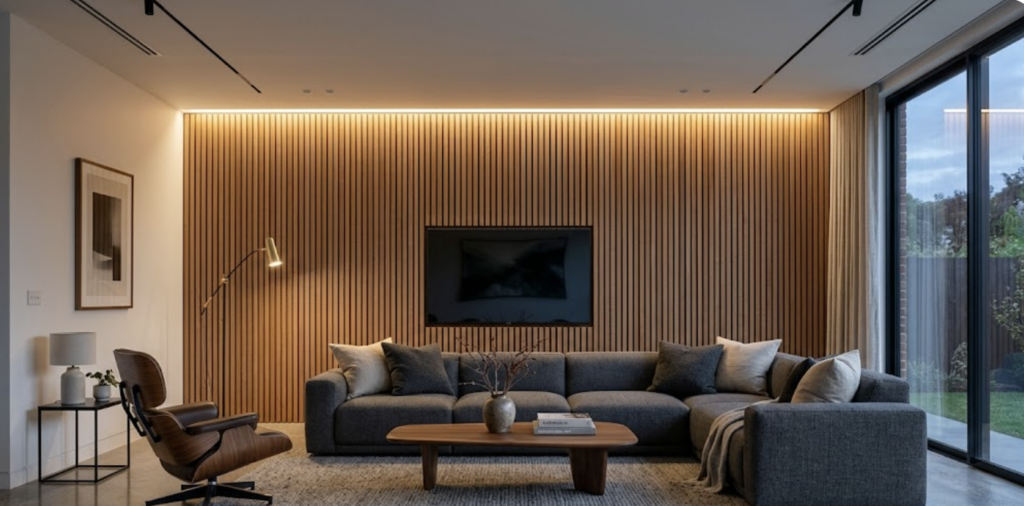
Modern slat panels are a more contemporary take on the same principle. These are long, thin strips of wood (or MDF finished to look like wood) arranged vertically on a wall. The effect is rhythmic, graphic, and deeply satisfying. Slat panels in a warm oak finish on a living room wall have an almost Scandinavian quality — they’re simple, structural, and warm. Painted in a dark color and used in a home office or bedroom, they become moody and dramatic. They can also hide things. Cables behind a TV, a door that you’d rather not see, an awkward corner — slat panels absorb all of these issues without calling attention to them.
8. Botanical and Nature styled Wall Decor
Plants have taken over interior design in the best possible way, and their influence has extended from pots on shelves to wall decor in ways that are genuinely beautiful. Nature-inspired wall decor — whether actual living plants, pressed botanicals, large-format nature photography, or illustrated botanical prints — brings a sense of the outside world into a space. And there is a growing body of research suggesting that exposure to nature, even visual nature, has a real effect on how people feel. Which is a fancy way of saying: plants on your wall might make you happier.
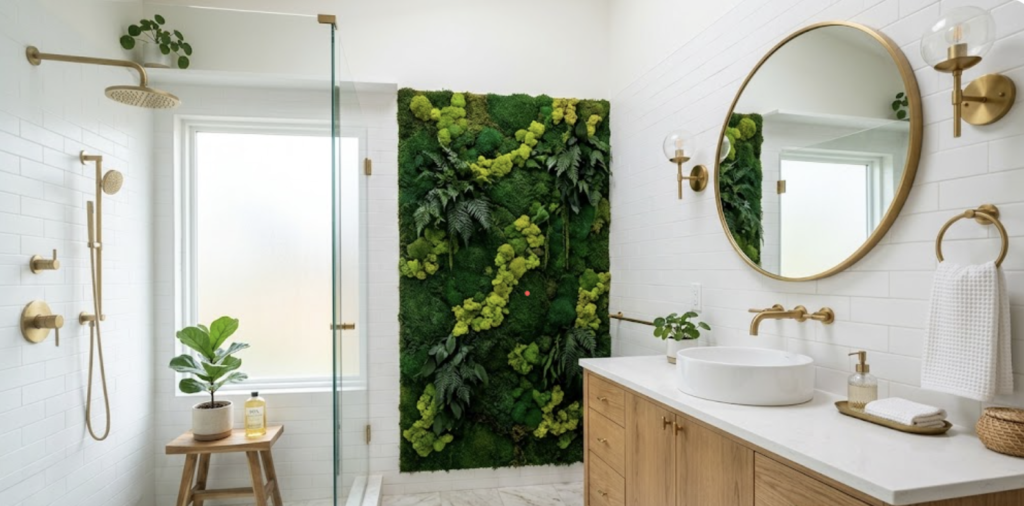
Living walls — vertical gardens made of real plants installed in a panel system on the wall — are the most dramatic expression of this idea. They require more maintenance than a painting (obviously), but the effect is extraordinary. A living wall in a living room or bathroom feels like you’ve brought a garden indoors. The smell, the visual depth, the constant gentle change as plants grow and shift — it’s unlike any other wall decor.
For those who don’t want the commitment of watering their wall, preserved moss panels are a beautiful alternative. The moss is treated to maintain its color and soft texture without needing water or light. A panel of preserved moss — in deep green or a mix of moss varieties — on a wall adds color, texture, and a biophilic quality that prints and paintings can’t quite replicate. It also smells faintly earthy, which is lovely.
For a simpler approach, large botanical prints in simple frames are enduringly appealing. Vintage botanical illustration prints — the kind with scientific Latin names and detailed hand-drawn plants — have a quality that feels both decorative and intellectual. They look good in almost any room, they’re available at a wide range of price points, and they never feel like you’re trying too hard. Which is its own kind of achievement.
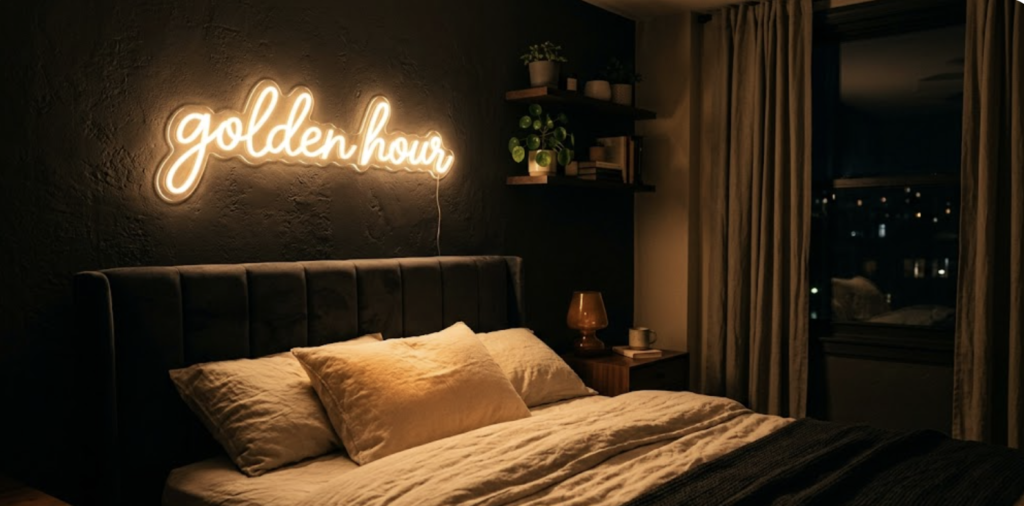
9. Neon Signs and Illuminated Wall Art
Light is not just a utility. It’s a material, and like any material, it can be used decoratively. Neon signs and illuminated wall art are one of the more unexpected ways to use light as decor, and when done thoughtfully, the result is warm, personal, and completely different from anything else on this list.
LED neon signs — which are the modern version of traditional glass tube neon, using flexible LED tubes that can be bent into almost any shape — have become widely accessible and far more customizable than ever. You can get a sign made in almost any word, phrase, or shape, in almost any color. The effect they create in a room is unique: a warm glow that changes the entire atmosphere, particularly in the evening. A soft amber neon sign in a bedroom turns the room into something that feels far more intimate than it did with the overhead light on.
Beyond custom signs, there is a growing category of illuminated wall art that uses back-lit panels, light boxes, and LED installations to create decorative effects. A light box with an interchangeable art panel lets you change the display while keeping the warm, diffused glow. Some contemporary artists create wall-mounted light installations that function as art in the truest sense — not gimmicks, but genuinely thoughtful pieces.
For a subtler approach, consider lighting that interacts with other wall decor. A wall sconce installed at gallery-wall height, casting warm light across a group of frames, makes the art more dramatic and the wall more layered. Uplighters behind large plants create a living shadow-play on the wall that shifts as the plants move. These are cases where the light itself becomes part of the decoration without being the explicit focal point.
10. Abstract and Textured Canvas Art
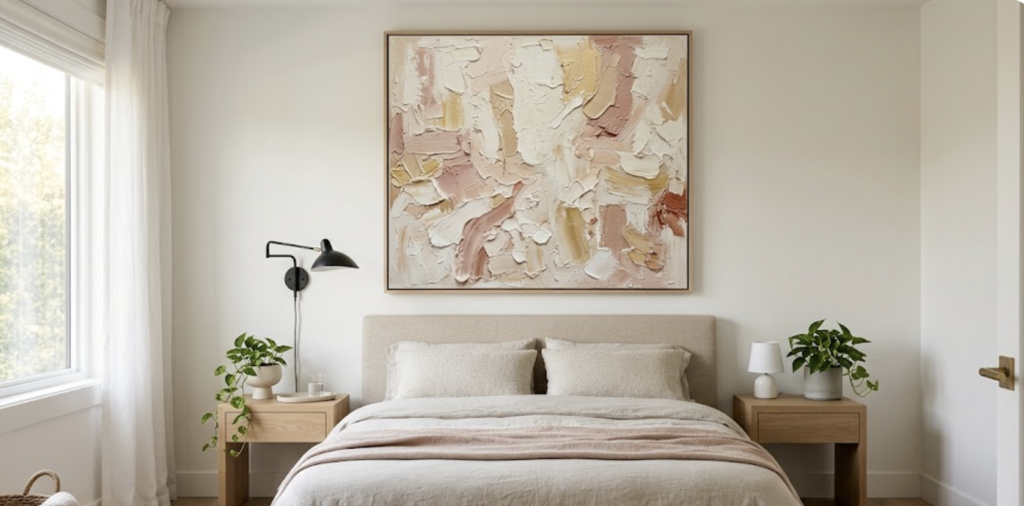
Abstract art is the category of wall decor that people approach most nervously, and this is understandable. When a painting doesn’t look like anything specific, it’s harder to know if you “like” it, because you can’t evaluate it against reality. But abstract art operates differently than representational art — it works through color, texture, movement, and emotional association rather than through subject. And once you understand that, choosing abstract art becomes much less intimidating.
Textured canvas art in particular has a physical presence that flat prints and photographs don’t. An abstract painting where you can see the raised marks of a palette knife, the visible brushwork, the layers of paint built up in some areas and scraped back in others — this is an object with tactile interest even from across the room. The texture catches light differently as the day progresses. In morning light it might look pale and soft. In afternoon light, the shadows in the texture deepen and the colors become more saturated. In lamplight in the evening, the whole surface takes on a warmth it didn’t have before. It’s the same painting, but it behaves differently depending on when you look at it. That’s a remarkable quality in a wall decoration.
When choosing abstract art, the most useful thing to focus on is how it makes you feel rather than what it looks like. Does this palette make you calm? Does the movement in this piece feel energetic or chaotic? Does the scale feel right — large enough to command the space you’re putting it in? Abstract art chosen by feeling rather than by logic tends to be chosen better. The people who study a piece for what it “means” often end up less satisfied with it than the people who simply responded to how it made them feel.
Abstract art in warm terracotta, dusty rose, warm ivory, and ochre works beautifully in bedrooms. Blues and greens — particularly rich, complex blues with depth — work well in living rooms and studies. A large black and white abstract painting has an impact that is almost architectural.
11. Wall-Mounted Sculptures and 3d Art
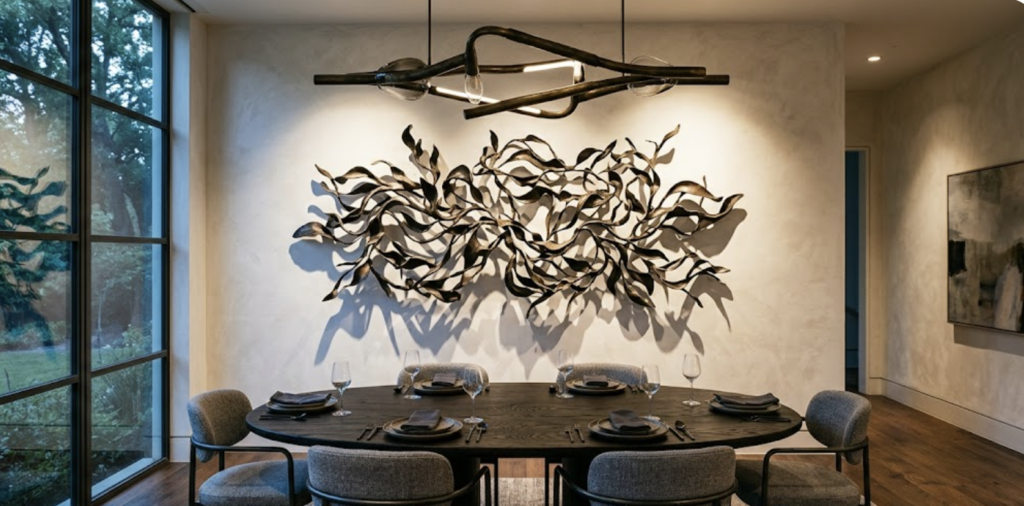
Most people think of wall decor as two-dimensional — flat things hung on flat surfaces. But walls can support sculpture too, and three-dimensional wall art is one of the most distinctive and underused decorating options available. A wall-mounted sculpture changes the entire nature of a wall — it projects into the room, casts shadows, catches light from different angles, and creates a sense of depth and movement that no flat artwork can.
Metal wall sculptures are probably the most common form of 3D wall art, and the range available is enormous. From simple geometric shapes welded together into a graphic composition, to organic flowing forms that look like they’ve been found in nature, to detailed sculptural pieces that look almost like relief panels. The material itself matters — hammered copper has a warmth and antiquity that brushed steel doesn’t, and blackened iron has a rawness that polished chrome wouldn’t. The finish of a metal sculpture contributes as much to the overall effect as the form itself.
Ceramic wall art is another beautiful option that is less commonly seen in homes but deeply lovely when used. Ceramic pieces have a handmade quality — the irregularity, the glaze variations, the connection to traditional craft — that feels different from metal or wood. A collection of ceramic wall vessels, or a series of ceramic tiles arranged in a pattern, brings something irreplaceable to a wall.
Wooden wall art — carved panels, sculptural forms, or assemblages of cut wood pieces — brings warmth and texture in a way that’s distinct from hanging a wooden-framed print. The wood itself is the artwork, with all of its grain, knot, and natural variation. In a room that’s predominantly white and gray, a wooden wall sculpture is often the element that makes the space feel warm and human rather than clinical.
12. Painted Mural Walls
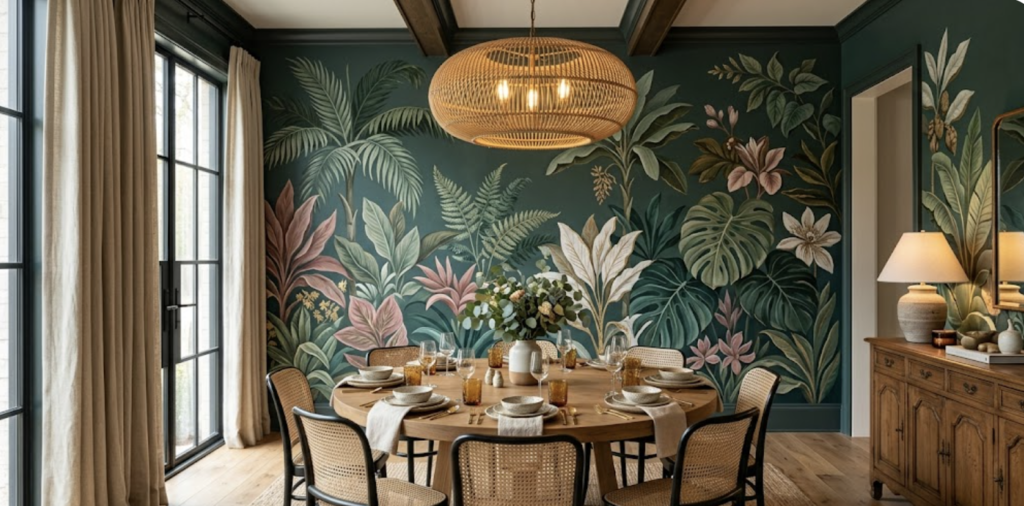
A mural is the most committed form of wall decor, and also one of the most rewarding. When you paint a mural — or commission an artist to paint one — you are making a declaration about the space that no other decor choice can match. A mural is not a decoration on a wall. A mural is the wall. It transforms the entire architectural surface into a single continuous work, and it changes how you experience the room fundamentally.
Murals range from the extraordinarily detailed and realistic — a hand-painted landscape that gives the impression of a window into another world — to simple geometric or abstract applications that work more like oversized graphic design. Botanical murals are among the most popular, where one or more walls of a room are painted with large-scale plant and flower imagery that makes the space feel like stepping into an illustrated garden. Sky and cloud murals in bedrooms create a feeling of openness that’s especially powerful in rooms without much natural light.
For those who paint their own murals, there are techniques that make the process manageable even without formal art training. A simple color-blocked mural — where sections of wall are painted in different colors meeting at a diagonal or curved line — requires only painter’s tape and patience. An arch shape painted on a wall creates a trompe-l’oeil effect that suggests architecture that isn’t there. A wavy horizon line painted in a contrasting color across the lower half of a room’s walls is a simple but impactful graphic choice.
Hiring a muralist is an investment, but it’s one that pays in a way that many purchases don’t. A hand-painted mural by a skilled artist is, in the most literal sense, original art. It cannot be replicated. It lives in that room and only in that room. In a world where most things are mass-produced and identical, there is something genuinely valuable about having something that exists only once, on your wall, in your home.
13. Clocks as Statement Wall Decor
Clocks have been on walls for centuries, and not just because people needed to know what time it was. A wall clock — particularly a large, well-designed one — has a presence on a wall that most purely decorative objects don’t. It’s functional, which means it earns its space in a way that an abstract print sometimes has to argue for. And yet the best wall clocks are as beautiful as any art piece.
Large wall clocks work especially well in living rooms, kitchens, and home offices. In a kitchen, an oversized clock on the wall above a window or above the range gives the room a bistro quality — the kind of kitchen that feels like it’s been feeding people for generations, even if it was renovated last year. In a living room, a large clock with a simple, graphic face makes a bold statement that’s also somehow calming. Knowing what time it is has a grounding effect — there’s a reason clocks appear in almost every room in hotels, and it has nothing to do with the décor budget.
The design language of clocks has expanded significantly in recent years. Beyond the traditional round face with numbers, you can find clocks with minimalist faces that show only markers, clocks with Roman numerals and an antique character, skeleton clocks where the mechanism is fully visible through a transparent face, geometric clocks with octagonal or hexagonal cases, and extra-large clocks that span several feet across. Each creates a different atmosphere.
In a room with a predominantly neutral palette, a black clock with a large face is one of the most graphic and effective statement pieces available.
Final Thoughts
Sixteen ideas, one blank wall (or several), and zero excuses left. Wall decor is not a luxury — it’s the difference between a house that functions and a home that feels like it belongs to someone. Your walls are some of the largest surfaces in your living space, and leaving them bare is, at minimum, a missed opportunity. At most, it’s leaving a major part of your home’s personality uncommunicated.
None of these ideas require a designer on retainer or a renovation budget. They require looking at your walls and asking what you want them to say. Do you want warmth? Drama? History? Calm? Personality? Once you know what you’re after, the right idea from this list — or the right combination of several — will make itself obvious.
Start somewhere. Even one great piece on one wall is better than nothing. Then let the rest come naturally, piece by piece, wall by wall, room by room. Decorating a home is not a project with a deadline. It’s a slow, enjoyable process of making a space feel more like you. Which is, genuinely, one of life’s better uses of time.