
The kind of elegance you inherit, not buy — learn how to build sophisticated interiors that whisper wealth rather than shout it.
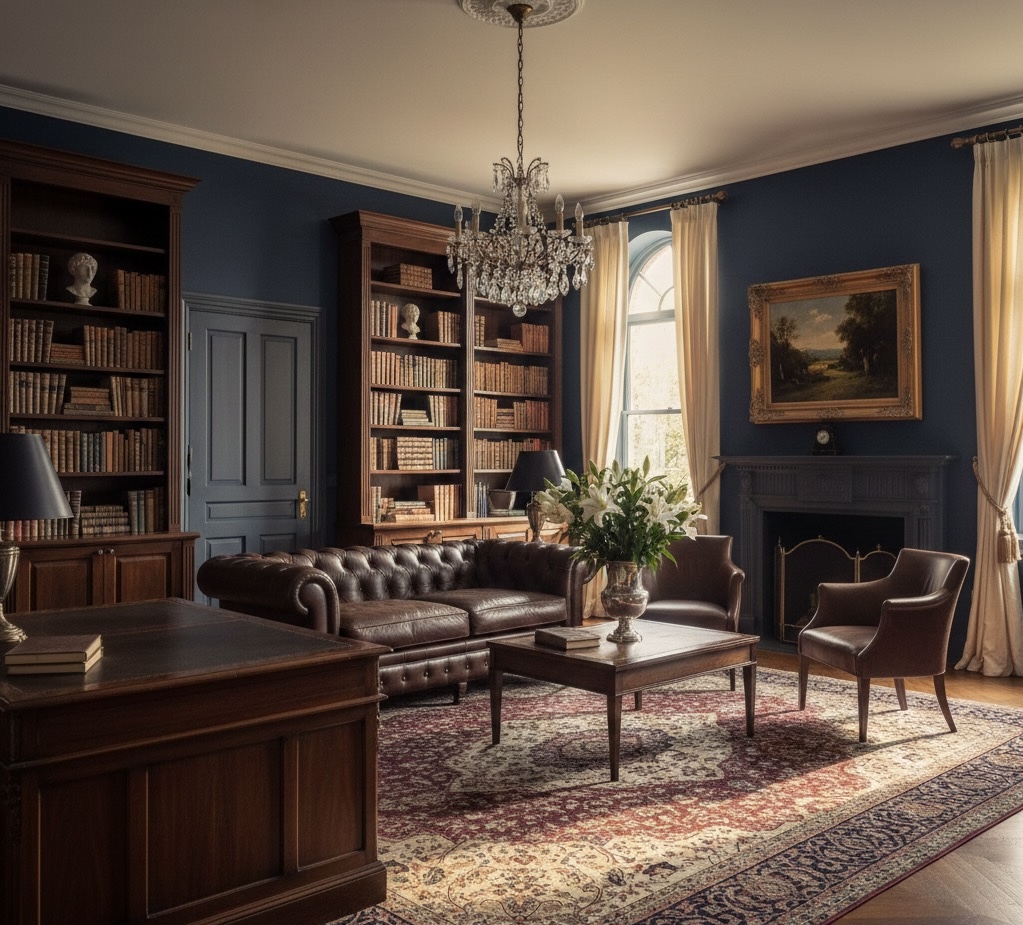
Old money decor is not about how much you spend. It is about how things look like they have always been there — like they were chosen by someone who did not need to impress anyone because their taste was already established generations ago. This is the aesthetic of inherited furniture, leather-bound books that have actually been read, art collected over decades rather than ordered online last Tuesday, and rooms that feel lived in rather than staged. It is sophisticated without trying. It is elegant without announcing itself. And that is exactly why it feels so different from almost everything else you see in modern interior design.
The old money aesthetic does not chase trends. It does not change with the seasons. A room decorated in this style twenty years ago would look appropriate today, and it will still look appropriate twenty years from now. That kind of longevity is rare. It exists because old money decor is rooted in quality, restraint, and a deep understanding of what actually lasts — both in terms of physical materials and visual appeal. These are not rooms designed to photograph well for social media. They are designed to be comfortable, beautiful, and appropriate for the people who live in them.
If you have ever walked into a home and felt immediately that the people who live there have a kind of quiet confidence — the kind that does not need to explain itself — you were probably looking at some version of old money decor. It is in the details. The way the furniture is arranged not for maximum visual impact but for actual conversation. The presence of objects that serve no purpose other than beauty or memory. The total absence of anything that feels cheap, disposable, or trying too hard. Every element in an old money interior exists because it deserves to be there, not because it fills a gap or completes a look.
This post walks through thirteen specific old money decor ideas, each one rooted in the principles that make this aesthetic so distinctive. Some ideas involve furniture and materials. Others involve color, arrangement, and the smaller details that signal sophistication. What they all share is an emphasis on quality over quantity, history over novelty, and restraint over excess. These are the choices that make a home feel expensive without ever needing to announce it.
1. Design Every Room With Antique or Vintage Furniture
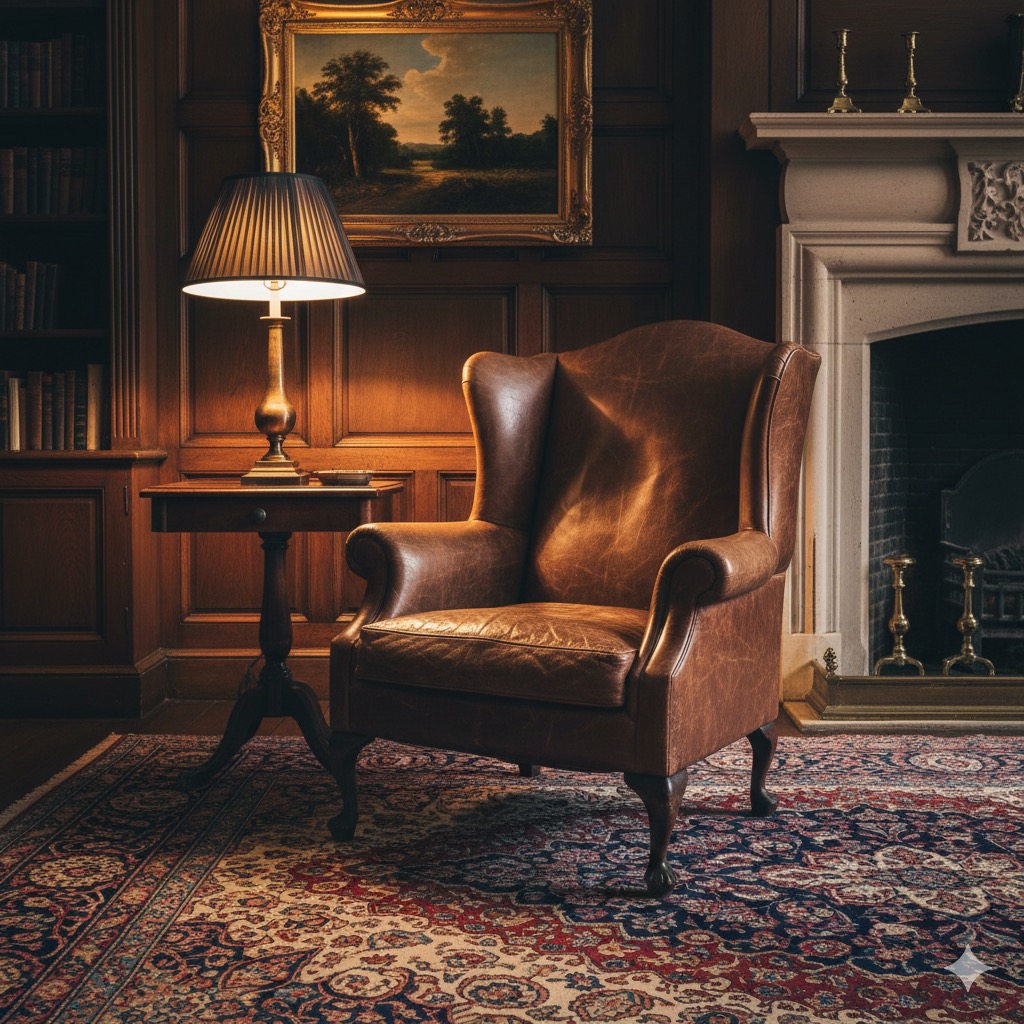
The single most defining characteristic of old money decor is the presence of furniture that clearly predates the current decade. Not reproduction furniture designed to look old. Not distressed pieces from a chain store. Actual antique or vintage furniture that carries the marks of time, use, and craftsmanship from an era when furniture was built to last multiple lifetimes. A single piece of genuine period furniture changes the entire feeling of a room in a way that nothing else quite matches.
Antique furniture brings weight and presence that modern pieces rarely achieve. A Victorian mahogany sideboard. A Georgian writing desk with brass hardware. A mid-century Chesterfield sofa in worn leather. A French bergère chair with its original needlepoint upholstery slightly faded but still intact. These are not just functional objects — they are pieces of history that ground a room and give it a sense of permanence. They communicate that the people who own them value continuity, that they understand the difference between fashion and quality, and that they are not trying to create an interior from scratch because they already have a foundation to build on.
The beauty of antique furniture is in the imperfections. The way a leather chair seat has molded to the shape of the people who sat in it over decades. The small scratches and dings on a dining table that tell the story of a hundred family meals. The slightly uneven color of wood that has aged naturally rather than being stained to look uniform. These imperfections are not flaws — they are proof of authenticity. Old money decor embraces them completely, because trying to make everything look brand new is the opposite of the aesthetic.
When you place one or two genuine antique pieces in a room alongside more contemporary furniture, the antiques become anchors. Everything else in the room orients around them. A modern sofa suddenly looks intentional rather than generic when placed opposite a genuine antique armchair. A simple white bookshelf filled with books looks more considered when positioned next to an antique escritoire. The contrast between old and new is not jarring — it is harmonious, because the old pieces provide the gravitas that allows the newer pieces to feel relaxed and appropriate rather than trying too hard.
2. Layer Rich Colors
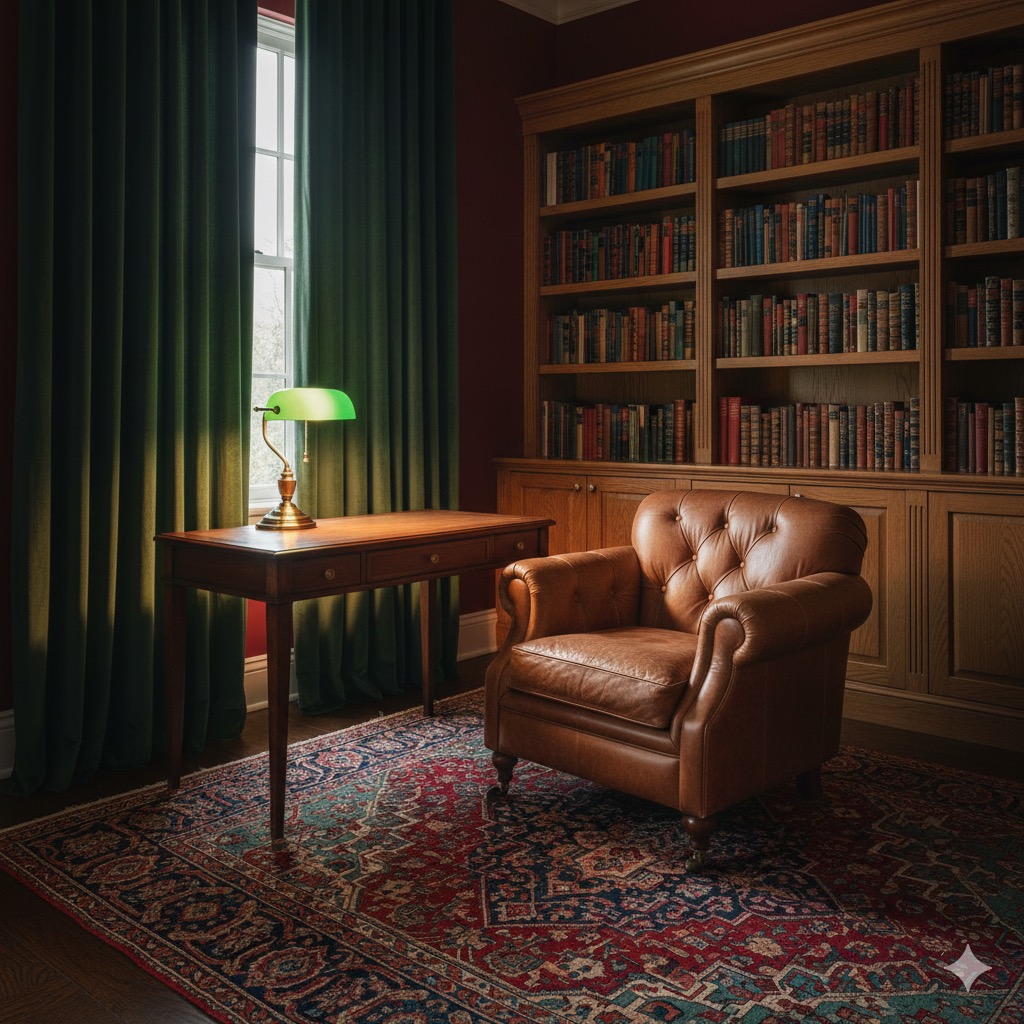
Old money interiors are not afraid of color — but the colors they use are specific. Deep forest green. Burgundy. Navy. Chocolate brown. Rich cognac. Charcoal. These are the colors of old libraries, gentlemen’s clubs, historic estates, and rooms designed to feel enveloping rather than bright and airy. While the modern trend leans heavily toward white walls and beige everything, old money decor goes in the opposite direction, using color to create rooms that feel serious, considered, and completely removed from passing trends.
The reason these deeper tones work so well in old money interiors is that they provide a backdrop against which everything else can shine. Gold picture frames look extraordinary against a deep green or burgundy wall in a way they simply cannot against white. Antique wood furniture gains depth and richness when surrounded by saturated color. Art becomes more dramatic. Books on shelves become more prominent. Even people look better in these rooms — skin tones warm up, and the whole space takes on a flattering, slightly mysterious quality that bright white rooms never achieve.
Layering color means using multiple rich tones in the same space rather than committing to a single shade and making everything match. A room with deep green walls, a burgundy Persian rug, navy velvet curtains, and cognac leather seating creates a visual experience that feels abundant and layered without ever feeling chaotic. The key is that all of these colors share a similar depth and intensity — they are all rich, all slightly dark, all sophisticated. None of them are fighting for attention because they exist in the same tonal family, even if they are technically different hues.
This approach to color is the opposite of minimalism, but it is equally restrained. Nothing in an old money interior is bright or garish. There are no neon accents, no pastel pinks, no trendy millennial pink or Gen-Z yellow. The palette stays firmly in the realm of colors that have been used in wealthy homes for centuries — the colors of natural materials like wood, leather, stone, and aged metal, along with the jewel tones that appear in Persian rugs, antique textiles, and oil paintings. These colors do not age or go out of style because they were never in style to begin with. They simply exist as the visual language of wealth that does not need to announce itself.
3. Fill Walls With Original Art and Framed Pieces That Tell a Story
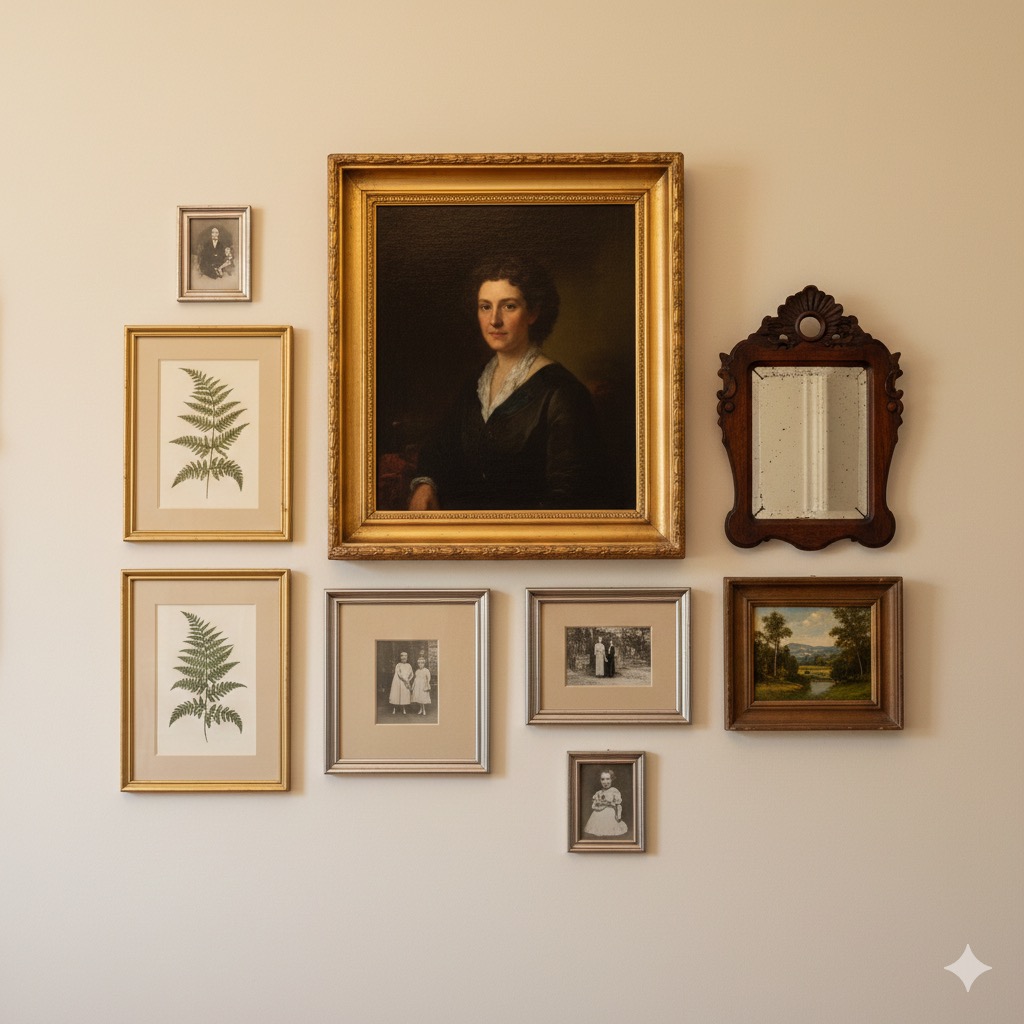
Art in old money homes is never generic. There are no mass-produced prints of the Eiffel Tower, no motivational quotes in sans-serif fonts, no abstract canvases ordered from an online retailer to match the sofa. Instead, the walls are filled with pieces that were acquired over time — original paintings, antique prints, family portraits, botanical illustrations, architectural drawings, and framed maps. Each piece has a reason for being there that goes beyond filling blank space.
The art itself does not need to be famous or even particularly valuable in monetary terms, but it needs to feel genuine. A small oil painting of a landscape, unsigned, purchased decades ago from a local artist. A set of antique botanical prints, slightly faded, framed in simple wood. A charcoal portrait of a family member from three generations back. A collection of pressed flowers under glass, matted in cream and framed in gold leaf. These are the kinds of pieces that populate old money interiors — art that feels collected rather than bought, personal rather than decorative.
Framing matters enormously. Old money homes do not use cheap black frames from big-box stores. They use substantial frames — gilded frames with ornate detailing for important pieces, simple wood frames with subtle carvings for smaller works, silver or brass frames for photographs. The frame is often as important as the art itself, because a beautiful frame elevates even a modest piece into something that deserves attention. Antique frames, in particular, add instant sophistication because they carry the same patina and weight as antique furniture.
Arrangement is equally important. Old money gallery walls are not perfectly symmetrical grids. They are layered, slightly chaotic arrangements that look like they were built up over time — which they often were. A large painting anchors the wall, smaller pieces cluster around it at varying heights, and the overall effect is one of abundance without clutter. There is always space between pieces, always room for the wall color to show through, and always a sense that this arrangement evolved organically rather than being planned out on graph paper before installation. This approach to hanging art is the visual equivalent of inherited wealth — it looks effortless because it has had time to become what it is.
4. Use Oriental Rugs
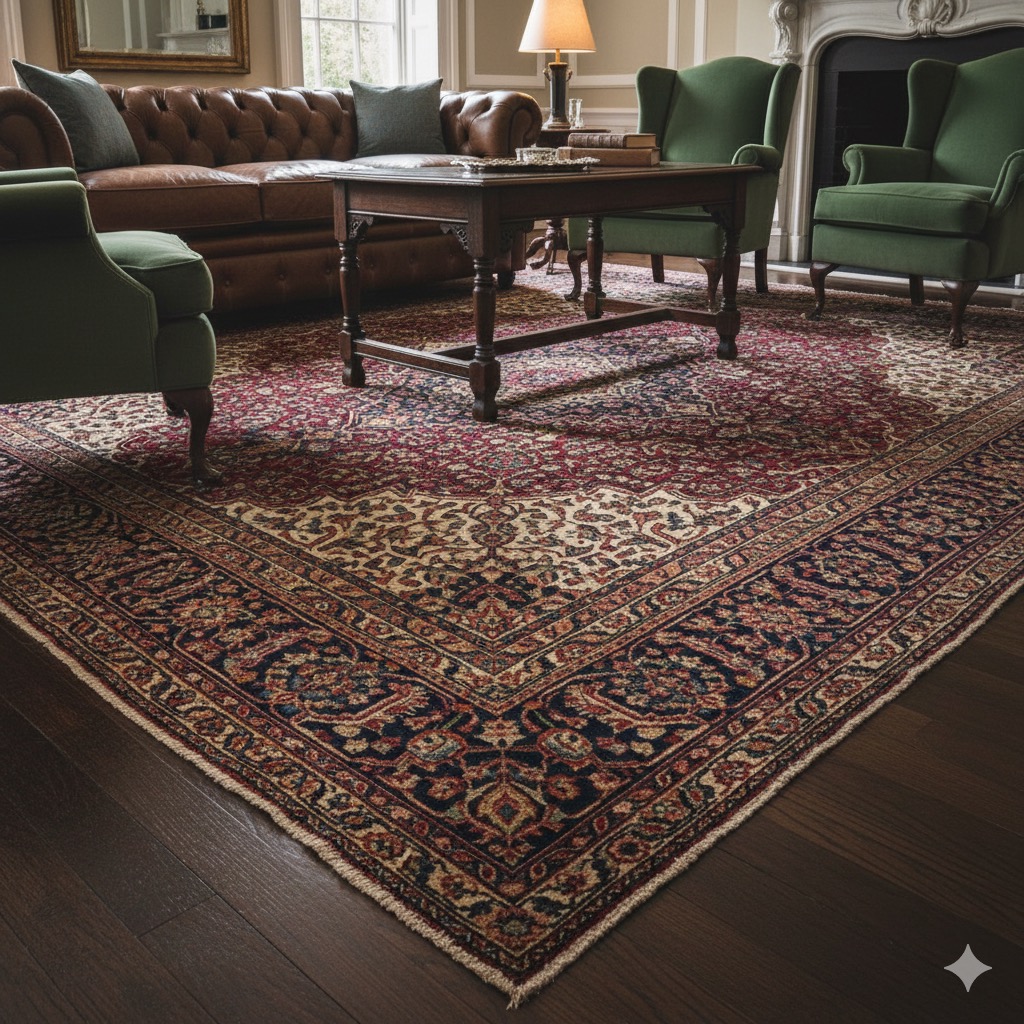
If there is one single element that appears in nearly every old money interior, it is the Persian rug. Not a modern geometric rug from a Scandinavian brand. Not a plain jute rug. Not a cowhide. A genuine handwoven Persian or Oriental rug with intricate patterns, deep jewel tones, and the kind of quality that only comes from traditional craftsmanship. These rugs are investments that last for generations, and they anchor a room in a way that almost no other element can.
The patterns and colors in Persian rugs are what make them so effective in old money decor. They are rich and complex without being overwhelming. The deep reds, blues, creams, and golds blend together in ways that feel harmonious rather than busy, and because these rugs have been used in wealthy homes for centuries, they carry an immediate association with heritage and sophistication. A Persian rug on a hardwood floor instantly makes the room feel more expensive, more grounded, and more intentional. It provides warmth, color, and texture all at once.
Old money interiors often layer rugs, particularly in larger rooms. A Persian rug might sit on top of a larger neutral flatweave rug, creating depth and defining specific seating areas within an open space. Or multiple Persian runners might be used in hallways and entryways, overlapping slightly and creating a sense of abundance. The point is never to make the floor look pristine and minimalist — the point is to make it look lived in, layered, and richly appointed. Rugs in old money homes are expected to show some wear. They are not museum pieces kept behind ropes. They are functional objects that happen to be beautiful, and their slight imperfections only add to their charm.
When choosing a Persian rug for an old money aesthetic, avoid anything too new or too bright. The best pieces are antique or vintage rugs that have softened and faded naturally over time, developing a patina that makes the colors glow rather than jump out. If you are working with a new rug, look for pieces in traditional colorways — burgundy and navy, rust and cream, deep green and gold — and avoid contemporary interpretations in gray or pastel tones. The rug should feel like it belongs in a room from another era, because in old money decor, it probably would have.
5. Display Books as Architecture, Not Just Decoration
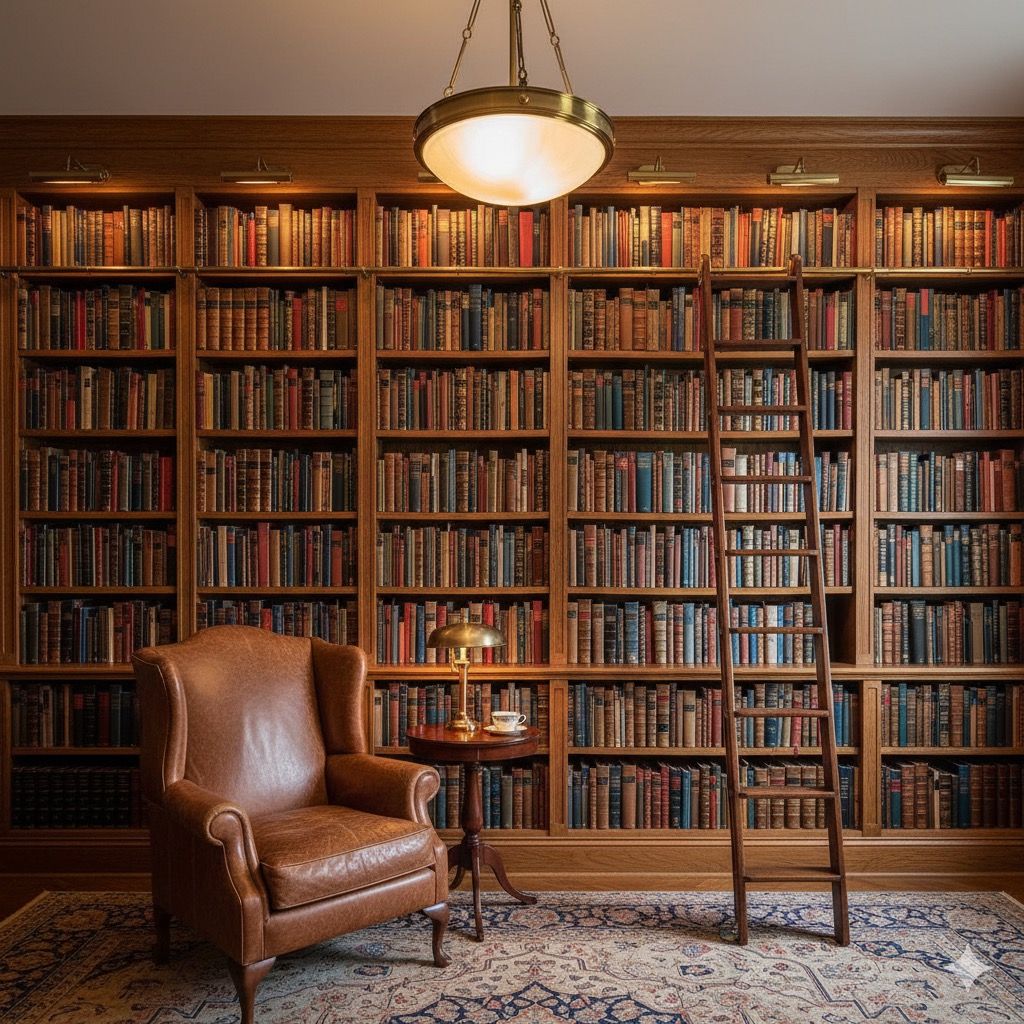
Books in old money homes are not styled by color. They are not arranged with the spines facing inward. They are not interspersed with ceramic vases and decorative objects every third shelf. Books in these spaces are treated as what they are — a collection that represents knowledge, history, and intellectual engagement. They fill entire walls, floor to ceiling, organized by subject or simply left in the order they were acquired. The presence of hundreds or thousands of books in a home is a statement that transcends decoration.
The physical quality of the books matters. Old money libraries are filled with hardcover editions, many of them leather-bound, many with gold lettering on the spines, many showing the wear of being read and handled over decades. First editions, antique volumes, complete sets of classic literature — these are the kinds of books that populate old money shelves. They were not purchased for how they look. They were purchased to be read, and the fact that they also happen to look extraordinary when filling a wall of built-in shelves is simply a fortunate consequence.
Built-in bookcases are one of the defining architectural features of old money homes. These are not freestanding Ikea units — they are custom millwork, often in dark wood, that stretches from floor to ceiling and wall to wall. The shelves are deep enough to accommodate oversized art books and layered objects behind the books. There might be a rolling library ladder for accessing the highest shelves, adding both function and a sense of grandeur. The bookcases themselves become architecture, creating a visual weight and permanence that defines the room as much as the furniture.
What makes book-filled walls work so well in old money decor is that they add texture, color, and pattern without any effort. The spines of books in varying colors, heights, and conditions create a visual complexity that feels organic. When lit properly — with picture lights above each shelf or warm ambient lighting — the books glow, and the room takes on a depth and warmth that empty shelves or shelves styled with minimal objects simply cannot achieve. A room filled with books signals that the inhabitants value learning and history, and that signal is one of the most powerful in old money aesthetics.
6. Choose Statement Lighting
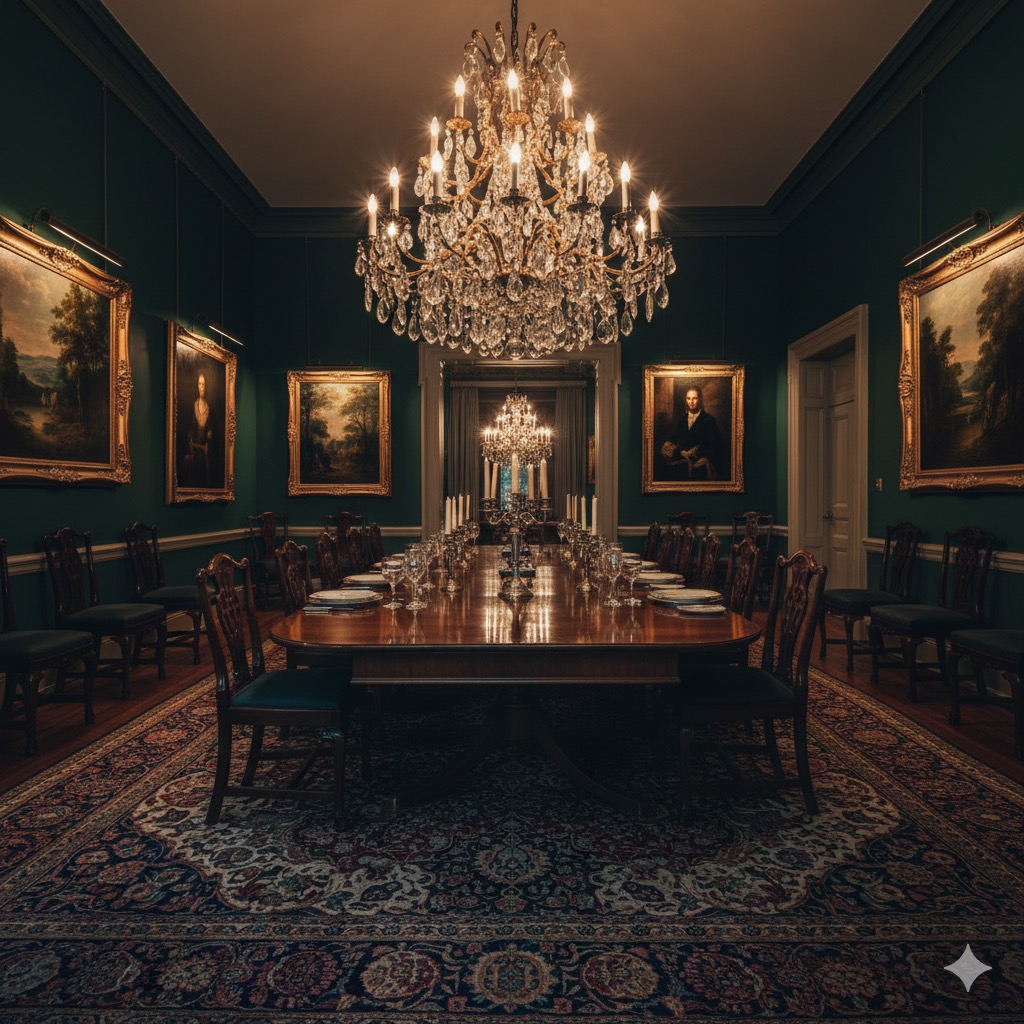
Lighting in old money homes is never minimal or industrial. There are no exposed Edison bulbs, no black metal pendant lights, no Scandinavian paper lanterns. Lighting in these spaces comes from chandeliers, sconces, table lamps with fabric shades, and floor lamps with brass or bronze bases. The fixtures themselves are statement pieces — antique or vintage, often with crystal, glass, or aged metal details — and they provide warm, flattering light that makes the room feel inviting rather than stark.
Chandeliers are particularly important in old money interiors. A crystal chandelier in a dining room. A brass chandelier with candle-style bulbs in a foyer. An antique glass chandelier in a bedroom. These fixtures command attention and add a layer of formality and grandeur that ceiling lights simply cannot match. Even in more casual spaces, a beautiful chandelier signals that the room was designed with care and that the inhabitants appreciate the kind of elegance that comes from traditional design rather than contemporary minimalism.
Table lamps and floor lamps in old money spaces tend to have substantial bases — carved wood, aged brass, ceramic with hand-painted details, or stone. The shades are almost always fabric — linen, silk, or cotton in cream, white, or soft gold — creating warm, diffused light rather than harsh direct light. These lamps are not accent pieces tucked into corners. They are placed deliberately on side tables, desks, and consoles, providing layers of light that can be turned on and off to create different moods throughout the day and evening.
Wall sconces add another layer of sophistication. Brass or bronze sconces flanking a mirror, a fireplace, or a piece of art create symmetry and architectural interest while providing soft, ambient light. In hallways and staircases, sconces serve a functional purpose while also contributing to the overall aesthetic of a home where every detail has been considered. The key is that all of these lighting choices feel permanent and intentional — not trendy, not temporary, and certainly not something that will need to be replaced when tastes change. They are fixtures in the truest sense, chosen to last and chosen to elevate the space they occupy.
7. Invest in Heavy, Luxurious Window Treatments
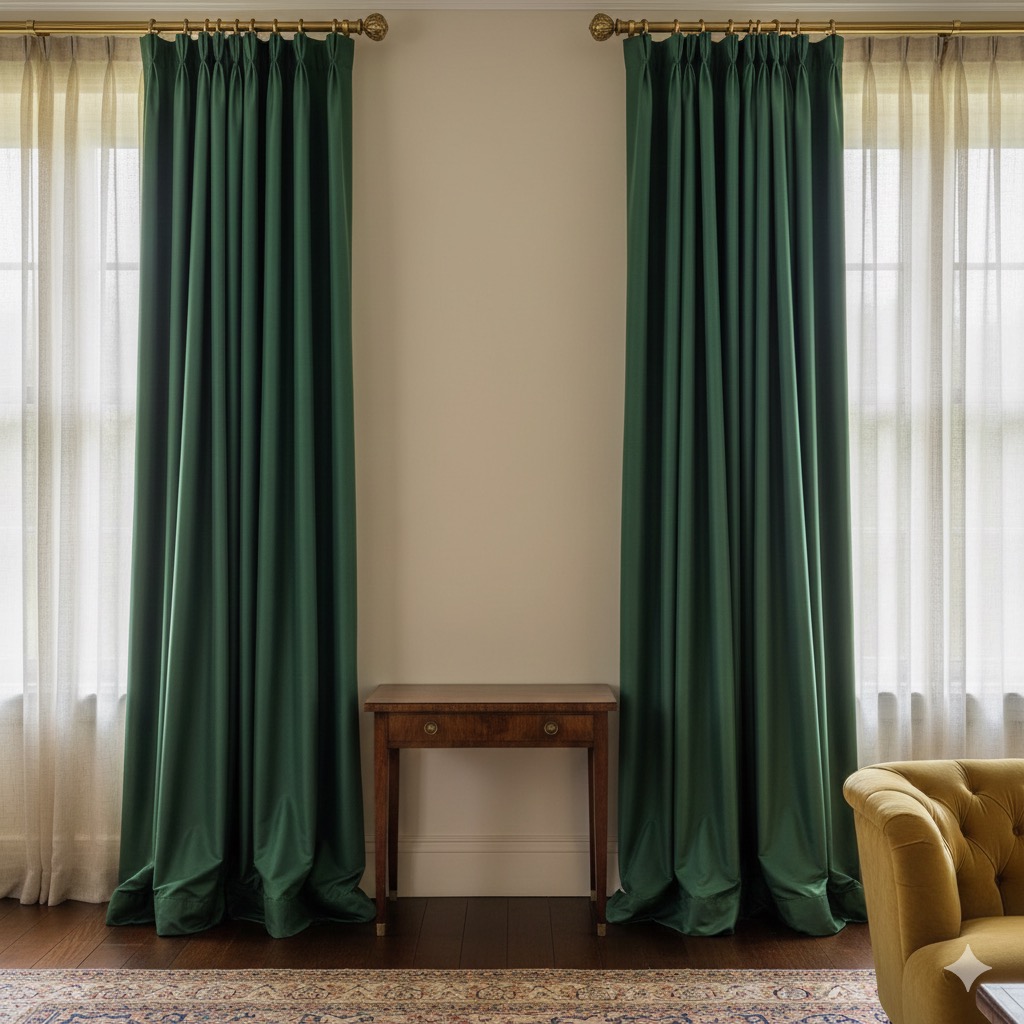
Windows in old money homes are never bare. They are dressed — and dressed generously. Heavy drapes in silk, velvet, or high-quality linen hang from ceiling to floor, often puddling slightly on the ground to create a sense of abundance. These are not simple curtain panels from a home goods store. They are substantial window treatments, often lined and interlined, that block light when closed and add drama and texture when open. The presence of beautiful drapes immediately elevates a room and signals that the space was designed with both function and beauty in mind.
The fabric and color of window treatments matter enormously. Deep jewel tones — emerald green, sapphire blue, burgundy, chocolate brown — are classic choices that work beautifully in old money interiors. These colors add richness and warmth to a room while also serving the practical purpose of blocking light and providing privacy. Silk drapes catch light in a way that synthetic fabrics never can, creating a subtle sheen that changes throughout the day. Velvet drapes add weight and texture, making a room feel cozy and enveloping, particularly in the colder months.
Layering is key to achieving an authentic old money window treatment. The most sophisticated approach involves multiple layers: sheer panels closest to the glass for filtering daylight while maintaining privacy, followed by heavier drapes that can be drawn closed in the evening or when full privacy is needed. This layered approach is not just aesthetic — it is functional. It allows for control over light and privacy while creating visual depth and interest. The hardware itself — brass or wood rods, ornate finials, tiebacks with tassels — adds another layer of detail that contributes to the overall sense of luxury.
The length and fullness of drapes cannot be compromised. Old money window treatments are never skimpy. They are full — meaning there is enough fabric to create deep, generous folds when the drapes are drawn open — and they are long, extending from the ceiling or just below it all the way to the floor and sometimes beyond. Short curtains that end at the windowsill or midway down the wall simply do not exist in this aesthetic. The extra fabric and the extra length cost more, but they create a completely different visual effect. A window dressed in proper drapes becomes a feature of the room rather than just a functional opening, and that distinction is central to old money decor.
8. Feature Leather Furniture and Accessories
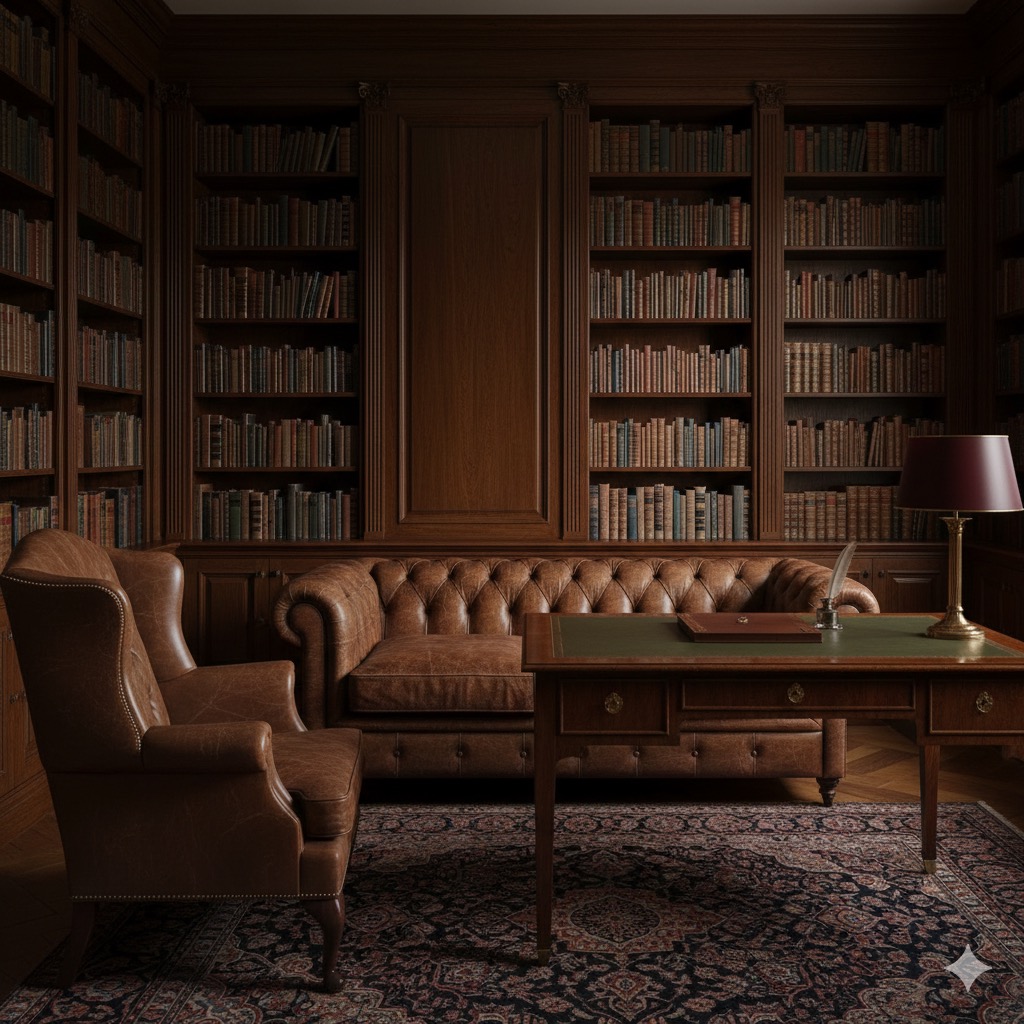
Leather is one of the foundational materials in old money decor. Not faux leather. Not bonded leather. Real, full-grain leather that ages beautifully and develops character over time. Leather furniture — a Chesterfield sofa, a wingback chair, a desk chair with brass tacks — is an investment that lasts decades and looks better with age. The slight creasing, the color variations, the way the material softens and molds to the body — all of these qualities make leather furniture feel authentic and luxurious in a way that upholstered fabric, no matter how expensive, simply cannot match.
The color of leather in old money spaces tends toward warm, rich tones. Cognac brown is the classic choice — a warm, golden-brown leather that develops a beautiful patina as it ages. Deep chocolate brown, oxblood burgundy, and forest green are also traditional choices that work beautifully in libraries, studies, and formal living rooms. Black leather exists in old money homes but is less common, as it can feel too severe or too modern depending on the context. The point is always to choose leather in colors that feel warm and inviting rather than stark or industrial.
Beyond furniture, leather appears throughout old money interiors in smaller but equally important ways. Leather-bound books on shelves. A leather blotter on a writing desk. Leather coasters and trays. A leather magazine holder beside a reading chair. Leather luggage displayed on top of an antique wardrobe. These details add up, creating a sense of richness and attention to material quality that permeates the entire space. Each leather element reinforces the others, and together they communicate that this is a home where materials matter, where quality is prioritized, and where things are expected to last.
The key to using leather in old money decor is to embrace the aging process rather than fight it. New leather looks good, but old leather looks extraordinary. The scratches, the slight variations in color, the areas where the leather has darkened from use — all of these are positives, not negatives. They are proof of authenticity and longevity. A brand new leather sofa can absolutely work in an old money interior, but it will look even better five, ten, twenty years from now when it has developed the kind of character that only time can create. This long-term thinking is fundamental to the entire aesthetic.
9. Incorporate Classical Architectural Details
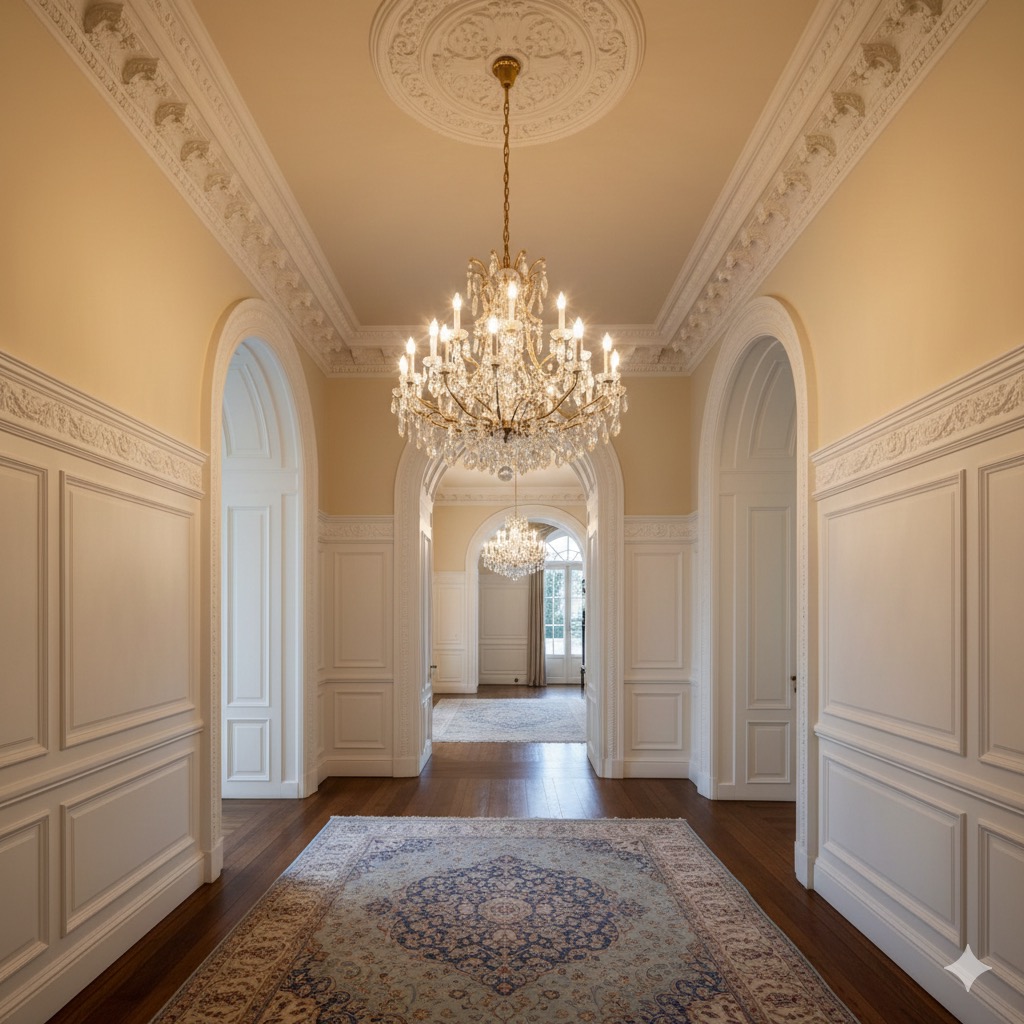
One of the most visible differences between old money homes and contemporary spaces is the presence of architectural detailing. Crown moulding. Wainscoting. Chair rails. Ceiling medallions. Cornices. Paneled walls. Carved door frames. Arched doorways. These elements add visual weight, elegance, and a sense of permanence that flat, minimal walls simply cannot achieve. They are the architectural equivalent of good tailoring — they make everything look more considered, more expensive, and more refined.
Crown moulding is perhaps the single most impactful architectural detail you can add to a room. It creates a visual transition between the wall and ceiling, drawing the eye upward and making the ceiling feel higher than it actually is. In old money homes, crown moulding is substantial — deep, with multiple layers of detailing, painted in the same color as the ceiling or sometimes in a contrasting shade to emphasize its presence. Paired with a ceiling medallion around a chandelier, crown moulding transforms a plain room into a space that feels architecturally significant.
Wainscoting and wall paneling serve both aesthetic and practical purposes. Traditionally used to protect walls from furniture and daily wear, wainscoting now exists primarily for its visual impact. It adds texture, creates horizontal lines that make a room feel wider, and provides an opportunity to introduce color through contrast. Dark wainscoting with lighter walls above creates a formal, traditional look. Painted wainscoting in the same color as the walls creates subtle depth through shadows and texture. Full-height paneling covering an entire wall from floor to ceiling creates a rich, enveloping effect that is particularly effective in studies, libraries, and dining rooms.
These architectural details are not easy or cheap to add, but they are permanent improvements that fundamentally change the character of a space. A room with crown moulding and wainscoting feels finished and intentional in a way that a room without them never quite achieves, no matter how expensive the furniture. This is why old money homes — even relatively modest ones — tend to have these details. They were standard in well-built homes from earlier eras, and their presence or absence is one of the primary signals that separates homes that feel expensive from homes that feel generic, regardless of how much was actually spent on furnishings.
10. Use Formal Symmetry in Furniture Arrangement
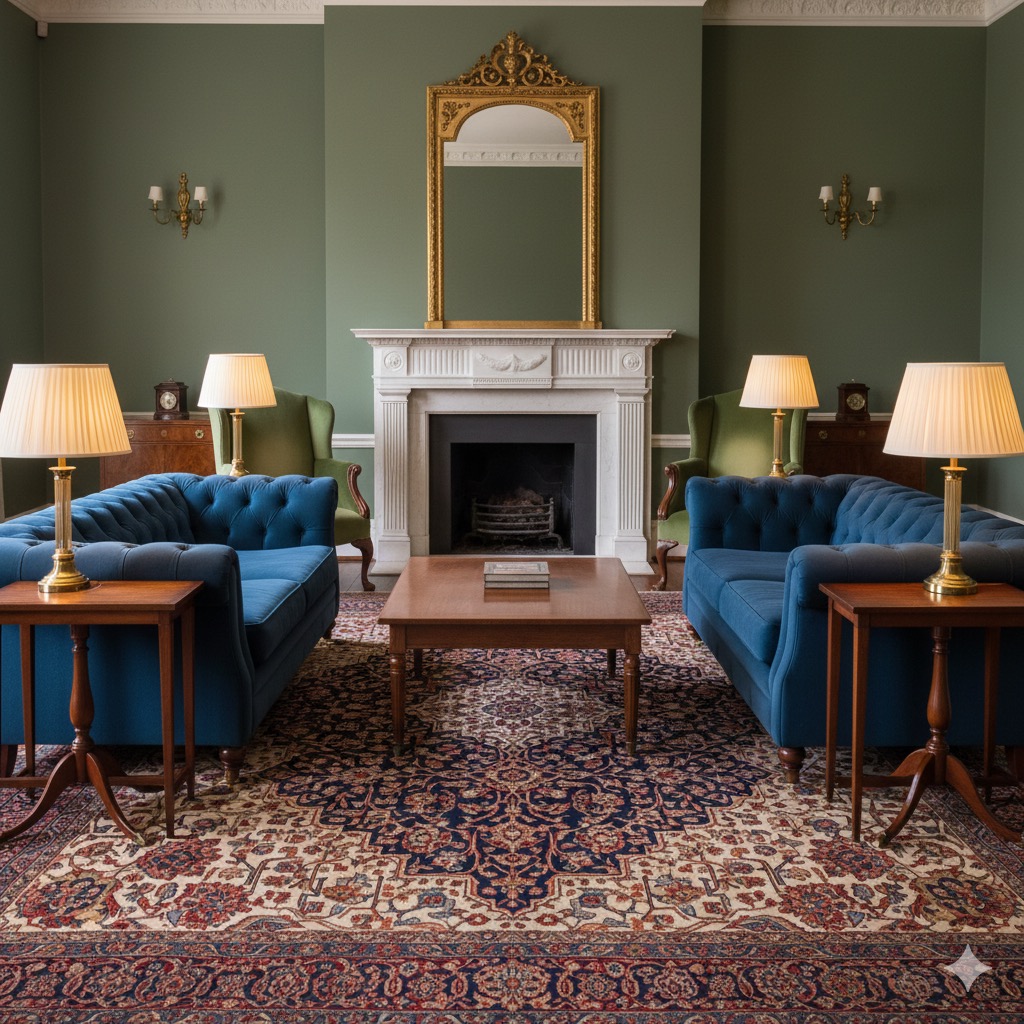
Old money interiors favor symmetry. Two matching sofas facing each other across a coffee table. Two identical lamps on either end of a console table. Two armchairs flanking a fireplace. Matching sconces on either side of a mirror or piece of art. This symmetrical approach to furniture arrangement creates a sense of order, formality, and balance that feels both calming and elegant. It is the visual language of traditional design, and it is one of the most effective ways to make a room feel expensive without relying on expensive individual pieces.
The reason symmetry works so well in old money decor is that it feels intentional and considered. Asymmetrical arrangements — popular in more casual, contemporary interiors — can look dynamic and interesting, but they can also look accidental or haphazard. Symmetry, on the other hand, always looks deliberate. It signals that someone took the time to plan the room, that balance and proportion were prioritized, and that the result is meant to be appreciated as a composed whole rather than as a collection of individual items.
Creating symmetry does not mean everything has to be identical, but it does mean that visual weight should be balanced. Two sofas do not need to be the exact same model, but they should be similar in size and shape. Two lamps do not need to be identical twins, but they should share similar proportions and style. The key is that when you stand in the center of the room and look around, the space should feel evenly weighted on both sides. Nothing should feel lopsided or off-balance.
Symmetry is particularly important in formal rooms — living rooms, dining rooms, libraries, and entryways. These are the spaces where old money aesthetics are most prominent, and where the sense of formality and tradition is most appropriate. In more casual spaces like bedrooms or family rooms, symmetry can be relaxed slightly, but even there, some degree of balance tends to make the space feel more pulled together. Bedside tables and lamps that match or mirror each other. A dresser centered on a wall. A seating area with chairs positioned to create visual equilibrium. These small gestures toward symmetry add up to create a home that feels orderly, elegant, and quietly expensive.
11. Display Silver, Crystal, and Fine China
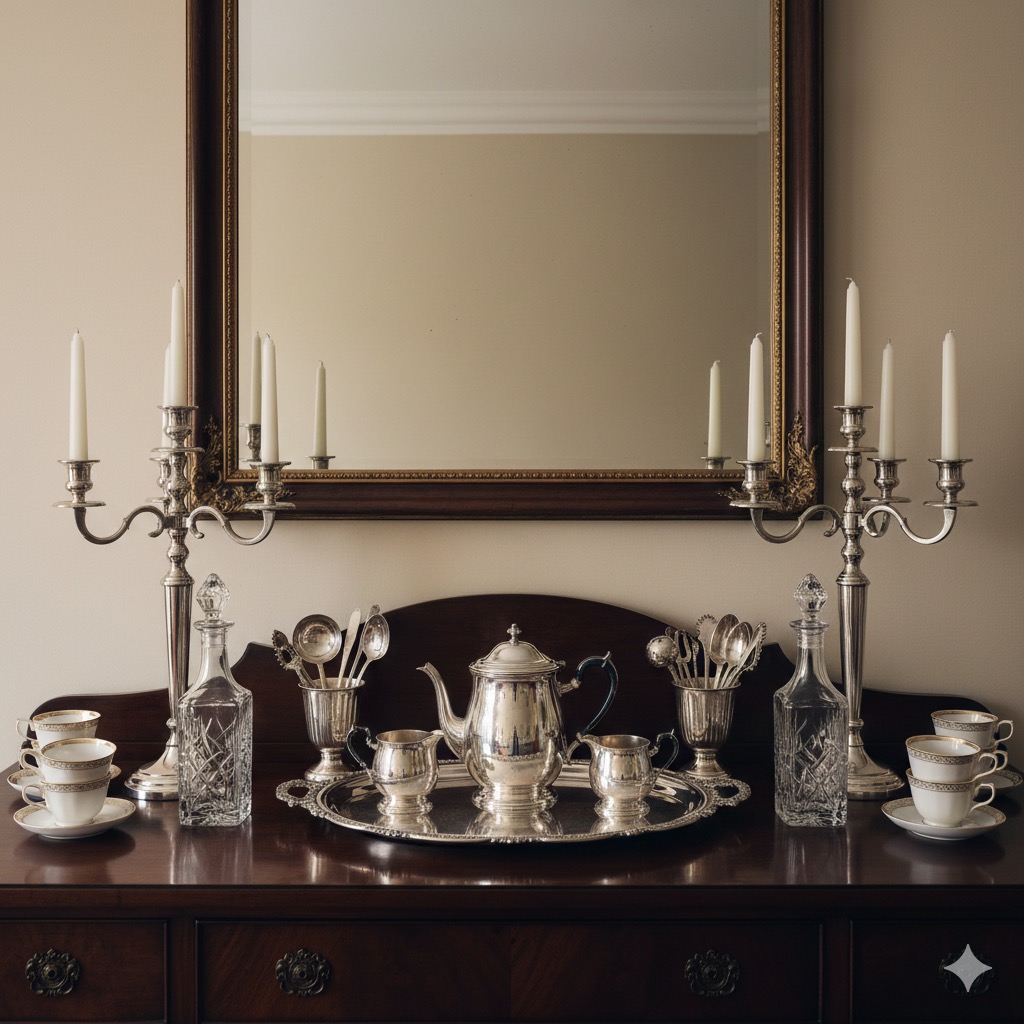
Old money homes display the objects they use for entertaining. Silver serving pieces, crystal glasses and decanters, fine china, porcelain tea sets, and sterling candlesticks — these items are not hidden away in cabinets. They are displayed on sideboards, consoles, and open shelving where they serve as both functional objects and decorative elements. The display of these items signals that the home is prepared to host, that formal entertaining is a regular occurrence, and that the inhabitants possess the kind of inherited or carefully acquired objects that make those occasions special.
Silver is particularly important in old money decor. Sterling silver serving pieces — trays, bowls, pitchers, candlesticks, tea services — develop a beautiful patina over time that enhances their appearance rather than diminishing it. These pieces are often inherited, passed down through generations, and they carry a sense of history and continuity that new items simply cannot replicate. Even when silver is not antique, choosing solid sterling over silver plate communicates a commitment to quality and longevity that is central to the aesthetic.
Crystal and glassware add another layer of elegance. Crystal decanters for whiskey or wine, displayed on a bar cart or sideboard. Sets of crystal wine glasses, water glasses, and champagne flutes stored in glass-front cabinets where they catch the light. A collection of vintage glassware in various colors and patterns, grouped together on a shelf. These items are beautiful to look at even when not in use, and their presence in a room creates a sense of refinement and preparation for gracious living.
Fine china and porcelain serve a similar purpose. A set of antique porcelain displayed on plate racks in a dining room. Teacups and saucers arranged on open shelving in a kitchen or butler’s pantry. A collection of transferware plates hung on a wall in a traditional arrangement. These objects are functional — they are meant to be used — but they are also decorative, adding pattern, color, and texture to the spaces they occupy. The key is that they are displayed openly and confidently, not tucked away where only the inhabitants know they exist. Their visibility is part of the point.
12. Prioritize Quality Over Quantity in Every Material Choice
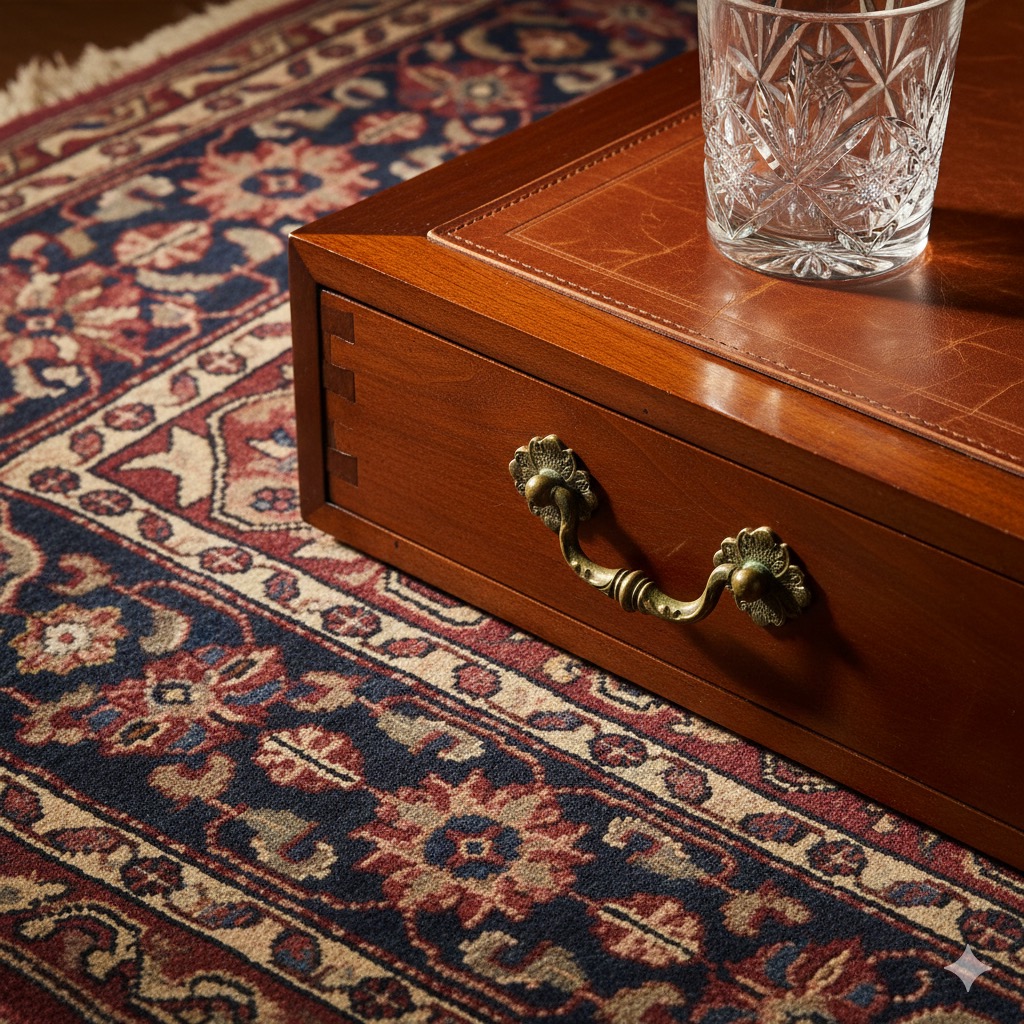
The most fundamental principle underlying all old money decor is the emphasis on quality over quantity. One extraordinary antique is better than three mediocre reproductions. A single pair of silk drapes is better than four sets of polyester curtains. A handwoven Persian rug is better than a collection of machine-made area rugs. This principle applies to every decision, every purchase, every material choice. It is better to have fewer things and for those things to be genuinely beautiful, well-made, and lasting than to fill a space with affordable substitutes that will need to be replaced in a few years.
Material quality is immediately visible to anyone with a trained eye, and it becomes even more apparent over time. Real wood furniture ages beautifully. Solid brass hardware develops a rich patina. Natural fiber textiles soften and improve with washing. Full-grain leather becomes more comfortable and more beautiful with use. Handwoven rugs last for generations. These materials justify their higher initial cost through longevity and through the way they continue to look and feel good decades after purchase.
The contrast between quality materials and cheaper substitutes is stark. Laminate wood-look furniture versus solid hardwood. Brass-colored metal versus actual brass. Polyester velvet versus silk velvet. Synthetic rugs versus wool. Each of these cheaper alternatives might look acceptable at first glance, but none of them age well, none of them feel good to touch, and none of them convey the sense of quality and permanence that old money decor requires. Saving money by choosing lower-quality materials is ultimately counterproductive because the results look and feel cheap no matter how carefully they are styled.
This emphasis on quality also means being willing to wait. Old money decor is not created overnight. It is built gradually, one considered purchase at a time, with each new addition chosen because it meets the standard and not because it fills a need right now. An empty wall is better than a wall filled with mediocre art. A room with minimal seating is better than a room filled with cheap furniture. Patience is a luxury, but it is also the foundation of creating interiors that genuinely look and feel expensive rather than merely trying to appear that way.
13. Add Fresh Flowers and Natural Elements as Daily Luxuries
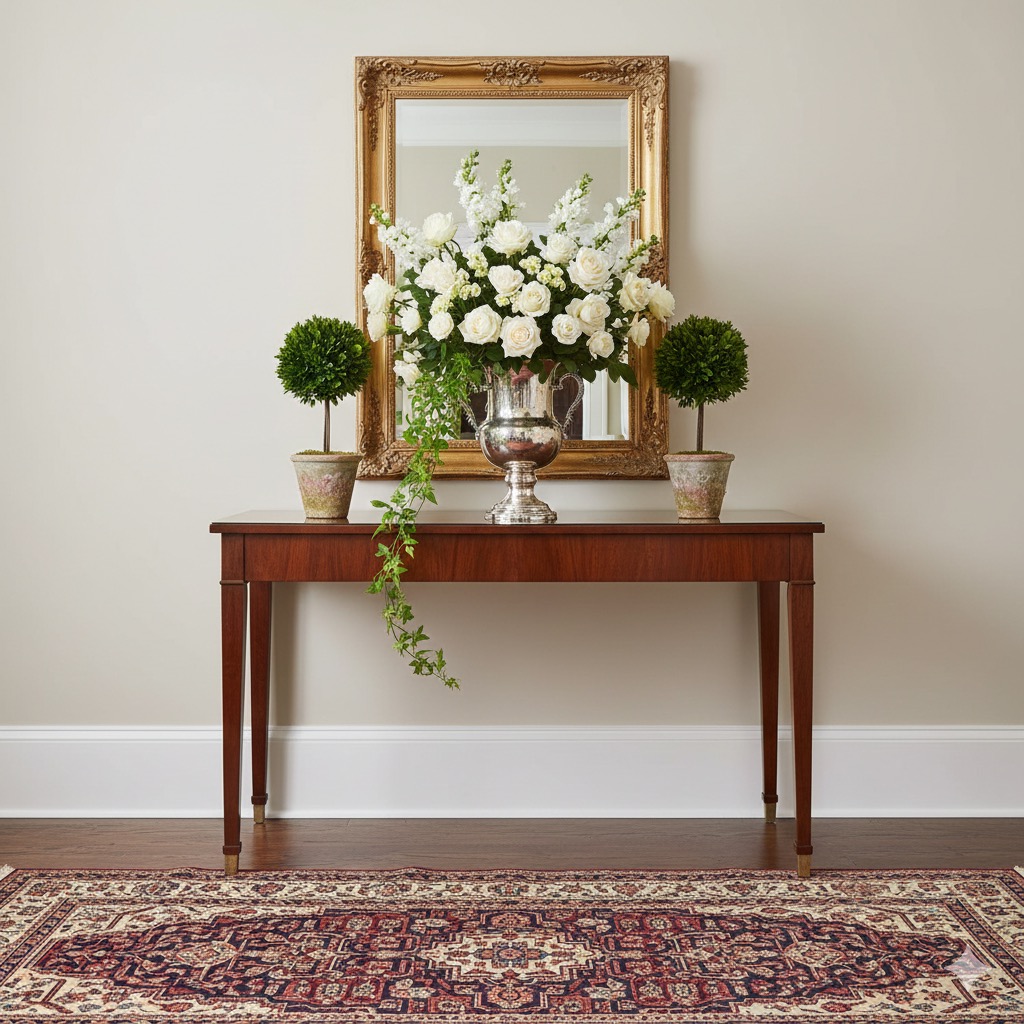
The presence of fresh flowers is one of the most telling details in old money homes. Not a single stem in a minimalist vase. Generous arrangements — roses, peonies, hydrangeas, orchids — displayed in beautiful containers throughout the house. Flowers in the entryway to greet guests. Flowers on the dining table. Flowers on a bedroom dresser or bathroom vanity. These are not special occasion decorations. They are a regular, ongoing commitment to bringing beauty and life into the home, and their presence signals that the inhabitants value daily luxury rather than saving beauty for when guests visit.
The containers matter as much as the flowers themselves. Sterling silver vases. Crystal bowls. Porcelain urns. Aged brass planters. Antique ceramic vessels. These are not cheap glass vases from a supermarket — they are beautiful objects in their own right, chosen to complement the flowers they hold and to serve as decorative elements even when empty. A single beautiful vase is worth far more than a dozen generic ones, because it elevates whatever it contains and contributes to the overall aesthetic of the room.
Beyond cut flowers, old money homes incorporate other natural elements that add life and texture. Topiaries in aged terracotta pots flanking a doorway or fireplace. A large potted fiddle leaf fig or olive tree in a corner. A collection of orchids on a windowsill. Boxwood wreaths on doors. Dried hydrangeas in a tall vase during winter. These elements add greenery and organic texture without feeling overly casual or bohemian. They are traditional choices that have been used in wealthy homes for centuries, and they work because they bring the outside in while maintaining the formality and elegance of the overall aesthetic.
The commitment to fresh flowers and natural elements is not trivial. It requires ongoing attention and expense. Flowers need to be replaced regularly. Plants need to be watered and cared for. But this ongoing investment is part of what makes old money decor feel genuinely luxurious rather than merely styled. It signals that the home is actively maintained and cared for, that beauty is prioritized even in daily life, and that the inhabitants have both the means and the inclination to invest in details that many people would consider optional. That level of care and attention is visible, and it makes a profound difference in how a home feels.
Final Thoughts
Old money decor is not about copying a look. It is about understanding the principles that create it — quality over quantity, history over novelty, restraint over excess, and permanence over trend. Every element in these interiors exists because it deserves to be there, because it was chosen with care, and because it contributes to an overall sense of quiet, confident elegance that does not need to announce itself.
The thirteen ideas in this post are starting points rather than rules. Not every old money interior includes all of these elements. Some homes lean more heavily into color, others into architectural detail, others into the display of collections. What they all share is a commitment to creating spaces that feel layered, intentional, and genuinely luxurious rather than temporarily fashionable. They are rooms designed to last, to age well, and to remain beautiful regardless of what trends come and go in the wider world of interior design.
If you are drawn to this aesthetic, start with the elements that resonate most strongly with you. Perhaps it is the deep, rich colors that make you want to repaint your walls. Perhaps it is the idea of investing in one perfect antique chair rather than buying a full set of new furniture. Perhaps it is the commitment to displaying books, art, and beautiful objects openly rather than hiding them away. Any of these choices will move you closer to creating a home that feels expensive in the quiet, assured way that old money interiors do.
Remember that this is not about wealth. It is about taste, patience, and the willingness to prioritize quality and longevity over immediate gratification. Many of the most beautiful old money interiors were created gradually, piece by piece, over years or even decades. What matters is not how quickly you assemble the look but how thoughtfully you choose each element and how well those elements work together to create a space that feels genuine, considered, and entirely your own.