
Because Your Desk Deserves to Look as Good as Your Living Room
Let’s be real. When most people set up a home office, the priority is to grab a spare table, prop a laptop on it, and call it a day. And for a while, that works just fine, until you realize you have spent the last six months staring at a beige wall and a stack of random mail that somehow multiplied on its own. Your home office is not just a place to send emails. It is where you build your career, run your business, take calls, solve problems, and spend a big chunk of your waking hours. It deserves more than a folding chair and a printer from 2009.
The good news? You do not need to knock down any walls or hire a team of architects to make your home office look genuinely beautiful and feel good to be in. Chic home office ideas are everywhere right now, and the best ones are all about mixing smart style with real-world function. Whether you are working with a full spare room, a quiet corner of the living room, or a closet that you converted out of sheer determination, there is a look in this list that will make your space feel polished, personal, and actually worth sitting in every day.
This blog post walks you through eleven of the most stylish home office ideas making waves right now, from soft minimalism and bold color to cozy library vibes and that sleek, editorial aesthetic you keep saving on Pinterest. Each one is broken down in detail so you can picture it clearly and start pulling pieces together that match your taste and your space. And yes, there is a look in here even for the people who share their “office” with a toddler’s toy chest and a cat who walks on the keyboard at 9 a.m.
1. The Soft Minimalist Office
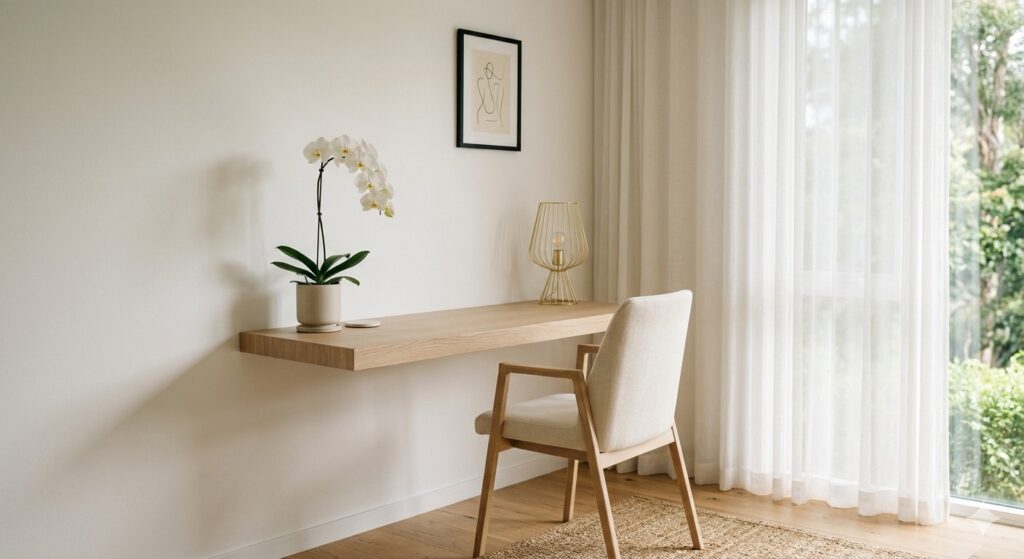
There is a version of minimalism that feels cold and almost punishment-like, all white walls and nothing to look at. Then there is soft minimalism, and that is a completely different thing. Soft minimalism in a home office is warm, intentional, and deeply calming. It is the kind of space where the moment you sit down, your brain actually settles and gets ready to focus. If your current office looks like a stationery shop had a disagreement with a storage unit, this aesthetic might be exactly what you need.
The foundation of a soft minimalist home office is a limited color palette that leans warm instead of stark. Think creamy whites, warm sand tones, dusty oatmeal, and soft putty. These shades feel neutral without feeling cold, and they give the room a sense of light even on cloudy days. Pair that palette with natural materials like light wood, linen, and unglazed ceramic, and you have a space that looks expensive without being expensive.
Furniture in a soft minimalist office is lean but not uncomfortable. A slim floating desk or a clean-lined desk with tapered legs keeps the room from feeling heavy. A good ergonomic chair upholstered in a natural fabric like boucle or linen adds a soft texture that breaks up the hard lines of a desk and monitor. Storage is important here because minimalism only works if there is somewhere to put everything. Low floating shelves, simple drawer units, or even a slim media cabinet in matching wood tones keep the look cohesive without the visual noise of open shelving stacked with random items.
Accessories in this kind of office are few but chosen very carefully. One good desk lamp in brushed brass or matte black, a single piece of art or a framed print in neutral tones, one plant, and one or two functional objects that you actually use every day. That is all you need. The restraint is the whole point. When done well, a soft minimalist office feels like a deep exhale, and that is exactly the kind of energy most people need before a full day of work.
2. The Dark and Moody Study
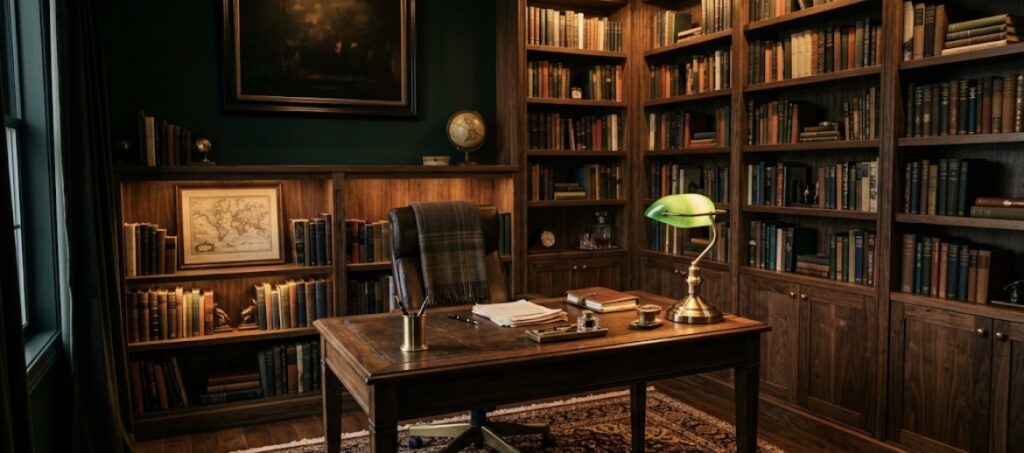
If soft and airy is not your thing, welcome to the dark side. The moody study is having a major moment right now, and for good reason. There is something genuinely sophisticated about a room that leans into deep, saturated color and warm, layered light instead of fighting against it. Think of it as the home office version of a very good scotch. It is rich, it is warm, and it makes you feel like you are about to write something important.
The color story in a dark office is everything. Deep forest green, moody navy, warm charcoal, inky plum, and even a true matte black are all strong choices for walls. These shades create a sense of enclosure that, unlike the anxiety-inducing kind, actually helps with focus. When the walls are dark, the room shrinks visually in the best way, pulling everything inward into a concentrated, focused atmosphere. If painting all four walls feels too bold, one dark accent wall behind the desk is enough to set the tone.
Furniture in a dark study tends toward the heavier and more traditional end of the spectrum. A solid wood desk with a leather inlay, a deep-cushioned upholstered chair in velvet or leather, and a large area rug with a lot of pattern and color all anchor the space beautifully. Bookshelves are practically a requirement here, whether built-in or freestanding, because books are both storage and decor in this kind of room. Fill them up generously. A few plants in matte dark pots add life without breaking the palette, and art with dramatic frames or a bold subject keeps the room feeling curated rather than just dark for the sake of it.
Lighting deserves special attention in a dark office. Because the walls absorb rather than reflect light, you need multiple light sources working together. A banker’s lamp with a warm bulb on the desk, a floor lamp tucked in a corner, and some ambient wall lighting or even candles for the evenings create the kind of layered glow that makes a dark room look intentionally atmospheric rather than just dim. The moody study is not for everyone, but for those who love it, it becomes the favorite room in the house. Your colleagues on video calls will absolutely want to know your designer’s name.
3. The Biophilic Green Office
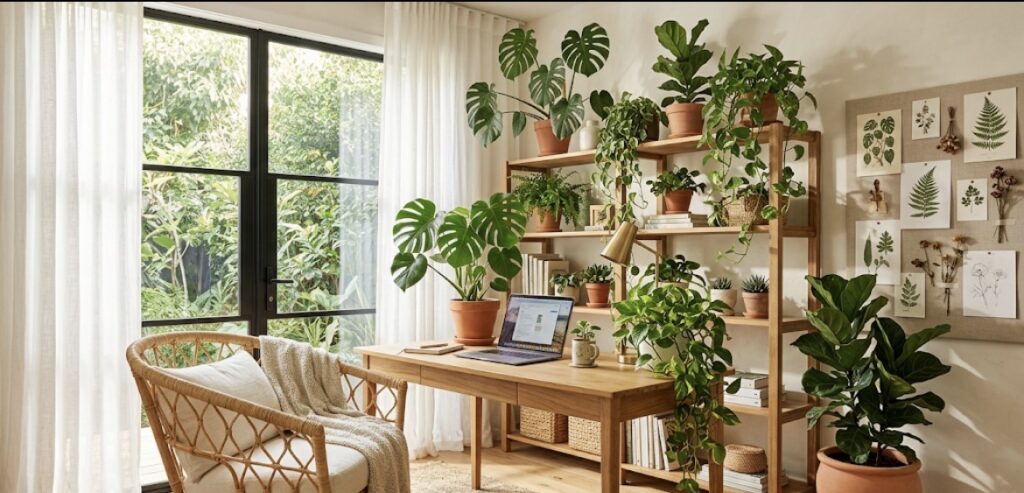
Plants in the office are no longer just a quirky aesthetic choice. There is real science behind the idea that bringing greenery into your workspace makes you calmer, more creative, and more productive. One very large leaf in the right place does more for a room than three shelves of decorative objects ever could. If you have been ignoring the biophilic design trend because you think you cannot keep plants alive, this section is for you too, because there are ways to do this look with low-maintenance greenery that practically thrives on neglect.
The biophilic home office is built around the idea that natural materials and living things should surround you while you work. The desk might be made from solid oak or bamboo with visible wood grain. The chair could be rattan, cane, or a natural linen upholstered seat. The shelves hold both books and plants in terracotta or stone pots. The art on the walls features botanical prints, landscapes, or abstract pieces that reference nature in shape or color. Every material choice leans toward something that was once living or looks like it was.
The plant selection in this kind of office is a real design decision. Large statement plants like a monstera, a fiddle leaf fig, a snake plant, or a big trailing pothos make an immediate visual impact and serve as the room’s natural focal points. Smaller plants on the desk or windowsill add layers without crowding the workspace. If you are genuinely terrible with plants, high-quality realistic faux versions in natural pots look just as beautiful in photographs and in real life, and they will not judge you for forgetting to water them for three weeks. The goal is to create visual warmth and texture through organic shapes and natural tones.
The color palette in a biophilic office is grounded in earth tones, warm greens, terracotta, warm whites, sandy beige, and the rich brown of wood. This is a palette that photographs beautifully in natural light and feels genuinely soothing in person. If you work somewhere with a lot of sunlight, this kind of office will make every ordinary Tuesday feel at least a little bit like a spa retreat. No refund if you become too relaxed to answer emails.
4. The Feminine Glam Office
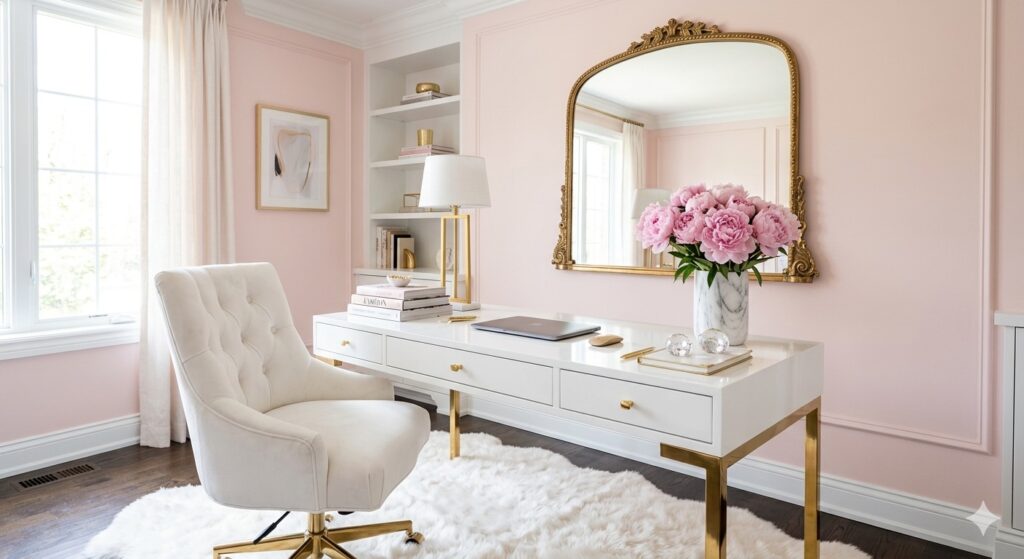
The feminine glam home office is proof that a workspace can be genuinely beautiful in the way a great outfit is beautiful, put together, intentional, and a little bit extra. This is the office for someone who sees no reason to separate style from function and who believes that a beautiful desk makes the work done at it just a little bit better. And honestly, they are not wrong.
This aesthetic lives in a palette of blush pinks, soft creams, warm whites, and generous amounts of gold. The walls might be a soft blush or a warm dusty rose, or they could be a creamy white that lets the furniture and accessories do all the color work. A white lacquered desk with gold legs is a classic anchor piece for this kind of office, but a curved marble-top desk or even a vintage French writing desk in white or cream works equally well. The chair is a statement in itself here, typically something with curves, velvet or bouclé upholstery, and legs in gold or brass.
What makes this style genuinely chic rather than just pink is restraint in the right places. The art is thoughtful, perhaps a single large abstract print or a framed piece in gold that ties the room together. The clutter is hidden away in beautiful organizers or closed cabinets so that what is on display is always intentional. The whole effect should feel like a beautiful room that also happens to contain a desk, not a pink explosion with a chair in the middle.
5. The Modern Industrial Office
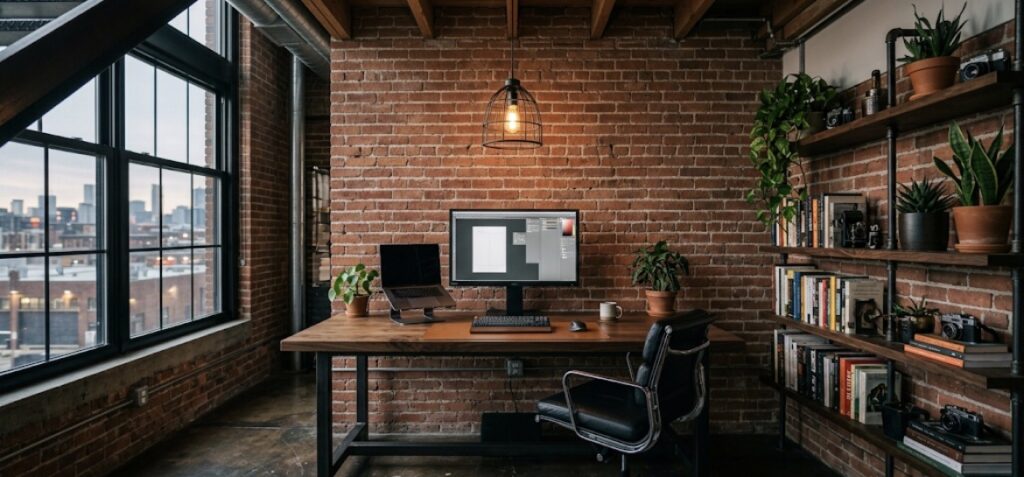
Industrial style in a home office is for people who love when beauty comes from honest materials. The aesthetic is built on the idea that steel, brick, concrete, and dark wood are beautiful as they are, without needing to be hidden behind paint or fabric. It is an unapologetically urban look that feels strong, focused, and seriously cool. If your office currently looks like a waiting room, going industrial is the upgrade that will make people ask if you hired a designer.
The visual language of an industrial home office comes from its raw materials. A brick wall, either real or a convincing brick-effect wallpaper, immediately sets the tone. Exposed ceiling pipes or beams, if you have them, are a gift. The floors are typically dark hardwood, polished concrete, or a large-format dark tile, all of which create a strong base for the room. If your walls are plain drywall, choosing a very deep neutral color like charcoal, dark taupe, or even a warm dark gray pulls the industrial vibe in without needing structural changes.
The desk in an industrial office tends toward the substantial and the architectural. A desk with a thick solid wood top on metal hairpin legs, a frame of black iron with a walnut slab, or even a butcher-block top on a black pipe base all feel at home here. Shelving follows the same logic: black metal pipe shelves with wood planks, dark iron brackets, and industrial-style bookcases. The chair is typically leather or faux leather in black or dark brown, and it should look like something you can actually work hard in.
Lighting in this kind of office is a design feature as much as it is functional. Cage pendant lights, Edison bulb fixtures, adjustable metal arm wall sconces, and industrial task lamps all add to the mood. Plants are welcome here too, especially in matte black or concrete pots, and they soften the hard edges just enough to make the space feel lived-in rather than cold. The industrial office is the one that makes you sit up straight and actually open your laptop without scrolling for twenty minutes first.
6. The Japandi-Inspired Office
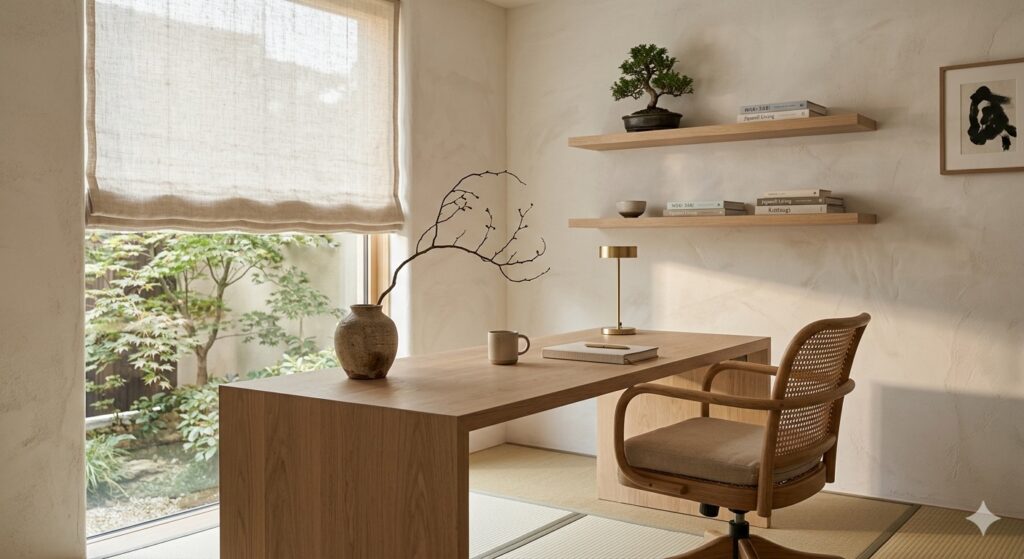
Japandi is the design world’s most successful collaboration, a fusion of Japanese minimalism and Scandinavian hygge that results in spaces that are both incredibly restrained and deeply warm. In a home office, the Japandi style creates an environment of almost meditative calm that makes focus feel effortless rather than forced. It is the office equivalent of a long, quiet morning with a very good cup of tea.
The palette of a Japandi office is soft and organic. Warm whites, sandy plasters, soft greige, pale wood tones, and muted sage or dusty clay accents make up the color story. Nothing is sharp or harsh. Everything feels like it was found in nature rather than manufactured, even when it was not. The textures are equally quiet: linen, unglazed ceramic, woven rattan, rough plaster, and polished pale wood.
The furniture in a Japandi office tends to be low-profile and simple in a way that has clearly been thought about very carefully. A slim desk in pale oak or birch with clean lines and no hardware sits against a warm-toned wall. The chair might be a rattan accent chair, a sculptural wooden stool, or a low-slung upholstered seat in a natural fabric. Shelving is open but sparse, holding only what is genuinely needed: a few books, a small plant, one or two ceramic objects chosen for their shape. The Japanese side of the influence brings a deep respect for negative space, meaning what is not in the room is as important as what is.
Decorative objects in a Japandi office are few and extremely intentional. A single ceramic vase with one dried branch. A small bonsai on the desk. A framed piece of calligraphy or a minimalist abstract print. These objects are not decorations in the usual sense; they are anchor points for the eye in a room that is mostly quiet. The result is a workspace that genuinely calms the nervous system, which, when your inbox looks like a disaster zone, is worth more than any number of organizational tools.
7. The Color Blocked Bold Office
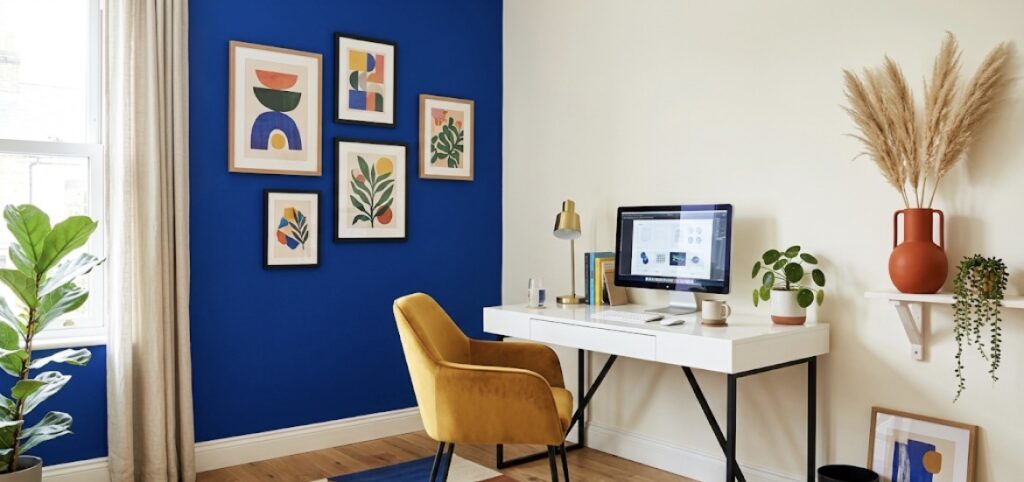
Not everyone wants to work in a neutral space, and color in a home office is not just allowed, it is one of the smartest design choices you can make. Color affects how you feel, how focused you are, and even how creative your thinking gets. A well-executed color-blocked home office is bold, joyful, and visually stimulating in the best possible way. It is also the office that people see on your video calls and immediately say, “Wait, are you in a hotel? That looks amazing.”
Color blocking in interior design means using two or more clearly distinct colors in deliberate sections of a room. In a home office, this might look like one deep, saturated wall in cobalt blue behind the desk while the rest of the room stays in a crisp cream or warm white. Or it could mean a warm terracotta wall paired with a buttery yellow chair and a deep teal rug. The key is choosing colors that create contrast but also genuinely complement each other, and keeping each color block clean and intentional rather than scattered.
The furniture in a color-blocked office can be as bold or as calm as you like depending on how much visual energy you want. If the walls are making the statement, the desk and shelving can stay relatively simple in white, wood, or a neutral tone, letting the walls lead. If the walls are neutral, the furniture itself can carry the color in the form of a richly upholstered chair, a painted desk, or a colorful rug that ties everything together. The accessories then pick up accent tones from across the palette to keep the whole room feeling intentional.
Art is a particularly powerful tool in a bold office because it can tie the colors of the room together in a single piece. A large abstract print that contains all the room’s colors, a graphic illustration, or even a gallery wall of smaller colorful prints all work beautifully in this context. Plants are wonderful here too, because green works with virtually every color palette and adds a natural element that stops the room from feeling like a graphic design experiment rather than a real place to live and work.
8. The Cozy Library Office
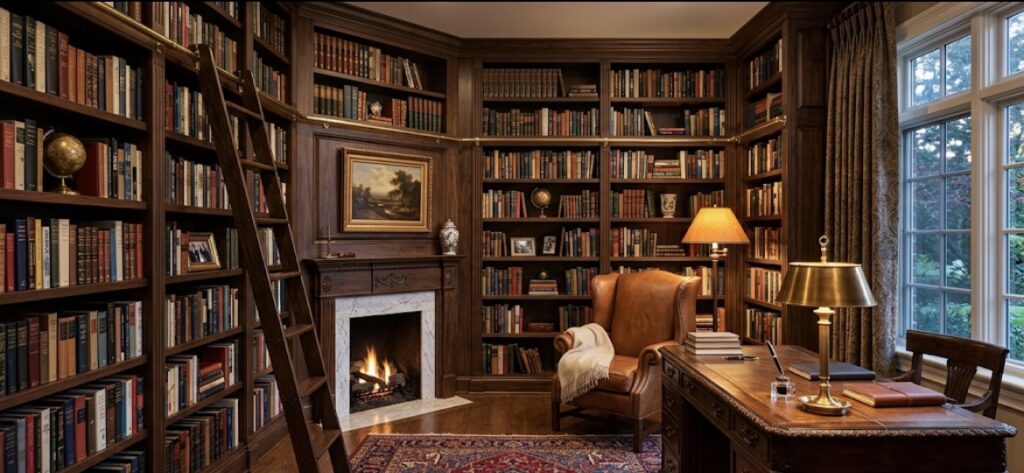
The library office is for people who look at a wall of books the way other people look at a sea view, with complete, uncomplicated joy. This is an office where you are surrounded by the things you love most, where the shelves are full and the chair is deep and every surface has something interesting on it. It is warm, layered, and full of personality. It is also the kind of room that makes everyone who visits immediately sit down and not want to leave, which is either a feature or a problem depending on how much you enjoy having guests.
The backbone of the library office is the shelving. Floor-to-ceiling built-in shelves in dark wood like walnut, mahogany, or ebony-stained oak create an immediate sense of grandeur and purpose. If built-ins are not possible, a combination of large freestanding bookcases arranged to cover most of a wall achieves a very similar effect. The books themselves are decor here, their varying heights, spines, and colors creating texture and depth across the whole room. Organizing them by color is one popular approach that makes the shelves look intentional; organizing them by subject or simply by the order you acquired them is equally valid and often more personal.
The desk in a library office is typically something with a history to it, or something that looks like it does. A classic writing desk, an antique partners desk, a solid wood executive desk, or even a beautifully aged farmhouse table all have the right energy. The chair should be genuinely comfortable for long hours of work; a leather or velvet wingback, a well-padded executive chair with arms, or even a combination of a task chair at the desk and a reading chair nearby for calls or thinking time.
Layers are the key to the library office feeling cozy rather than just cluttered. A good-quality area rug in jewel tones or rich traditional patterns. A throw blanket on the reading chair. A desk lamp that casts warm golden light. Objects on the shelves between the books: small sculptures, framed photos, a globe, a brass magnifying glass, a few beautiful objects that tell a story. Every layer adds warmth and turns the room from a home office into a home, which is exactly what the best chic home office ideas actually do.
9. The Scandinavian Hygge Office
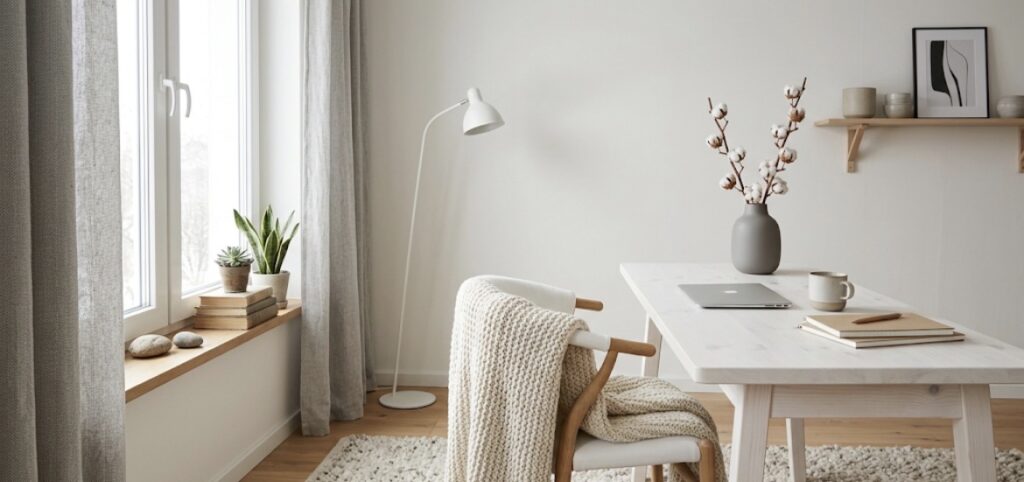
Hygge, the Danish concept of coziness and contentment through simple pleasures, translates beautifully into a home office setting. The Scandinavian hygge office is not the most glamorous room on this list, and it is not trying to be. It is the most comfortable, the most forgiving, and the most genuinely pleasant to spend time in. This is the office for the person who wants their workspace to feel like a warm hug, not a performance.
The palette in a hygge office is warm and soft without being boring. White walls with just enough warmth to keep them from feeling clinical, natural wood in pale birch or white-stained pine, cream and oatmeal textiles, soft sage or dusty blue accents, and the occasional warm terracotta. Nothing is stark or overly polished. Everything has a gentle, handmade quality to it, even when it is not actually handmade.
Texture is the primary design tool in a hygge office. A thick knitted throw on the back of the chair. A wool area rug that you genuinely want to walk on in bare feet. A linen curtain with a slight natural texture. Ceramic accessories that have a slight imperfection. A raw-edge wooden tray on the desk. These textural layers create the sense of warmth and coziness that makes a room feel lived in and loved rather than just staged for a photograph.
The lighting in a hygge office leans heavily on warmth and softness. Candles on a windowsill or side table (safely away from anything flammable, naturally), a warm-bulb floor lamp arching over the workspace, fairy lights strung along a shelf, and plenty of natural daylight through undressed or lightly dressed windows all contribute to the gentle glow that defines hygge. This is not a high-contrast, dramatically lit room. It is the kind of room where the light itself feels comfortable, and where working through a rainy afternoon actually sounds like a perfectly good idea.
10. The Art Studio Office
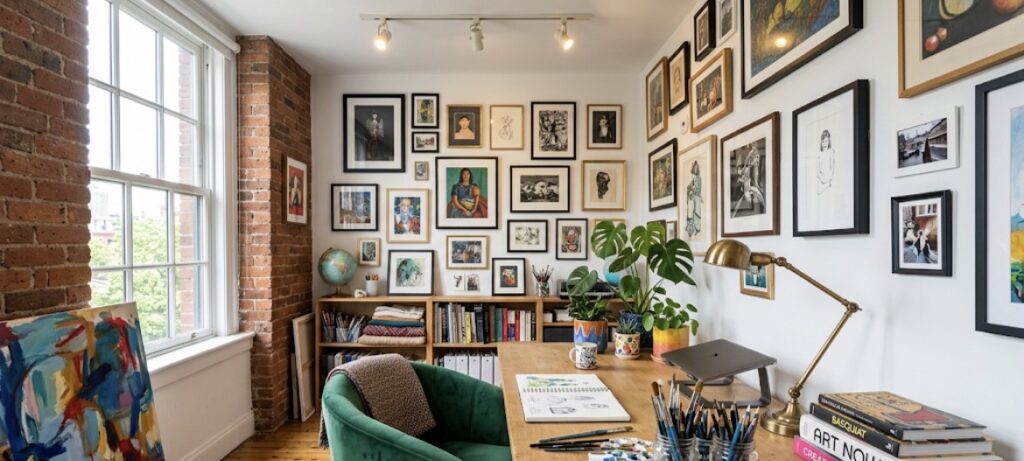
If you are a creative person, working in a deliberately beautiful, art-filled space is not an indulgence. It is a requirement. The art studio office is for designers, writers, photographers, illustrators, and anyone else who needs their environment to be visually interesting in order to do their best thinking. This is a space where the walls are covered in things that inspire you, the desk is set up for real creative work, and every object in the room was chosen because it means something or sparks something.
The walls of an art studio office are the canvas. A large gallery wall that covers most of one wall with prints, paintings, photographs, sketches, and illustrations all at varying heights and in different frame styles creates a sense of creative abundance that is both visually exciting and genuinely inspiring to work in front of every day. This is not a curated, matchy gallery wall with uniform frames and consistent spacing. It is personal, layered, and slightly imperfect in the best way. Large canvases leaning against the wall add another dimension. Floating shelves with small sculptures or ceramics between the books and tools keep the creativity theme consistent.
The desk in this kind of office is wide and functional. It needs space for a computer, notebooks, materials, and whatever tools your specific creative work requires. A trestle desk or a wide solid-wood desk with lots of surface area is ideal. The chair is a genuine statement piece here, something with color or personality, a velvet chair in a jewel tone, a graphic-patterned seat, or even a sculptural vintage piece that you found and fell in love with.
Color in the art studio office can go in many directions depending on your personal aesthetic. Some creative offices lean toward white walls with all the color coming from the art and accessories. Others dive fully into color with painted walls and layered textiles. What makes this style work regardless of the specific palette is the density of interesting things to look at, the sense that the person who works here has a point of view and is not afraid to express it, and the way the room manages to feel both chaotic and entirely intentional at the same time.
11. The Dual-Purpose Bedroom Office
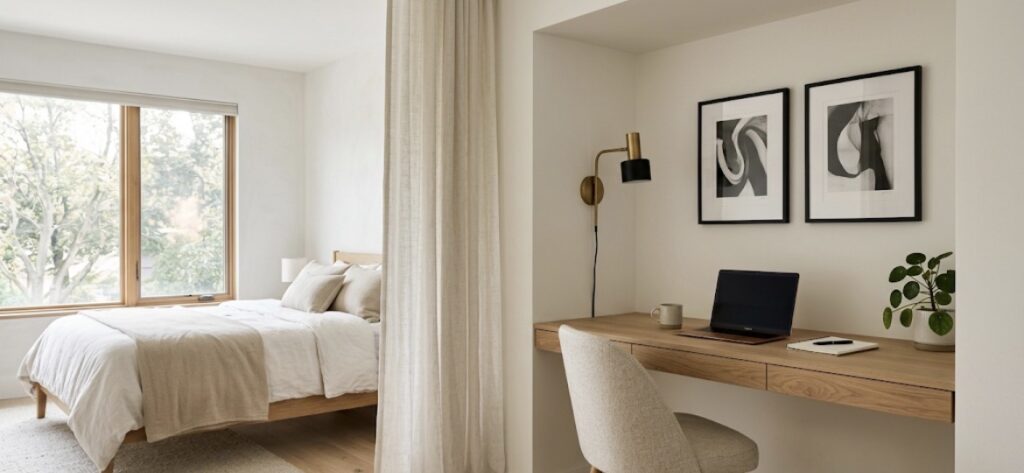
The bedroom office is the home office idea that people feel the most conflicted about, and reasonably so. Sleep experts will tell you not to work where you sleep. Design purists will tell you the aesthetic compromise is too great. And yet, for millions of people, a separate room for the home office is simply not an option, and a beautiful, functional workspace has to coexist with the place where you sleep, rest, and recharge. The good news is that with smart planning and thoughtful design, the bedroom office can look genuinely beautiful and function extremely well without turning your bedroom into a source of stress.
The key to making a bedroom office work is visual separation. The workspace should feel like its own zone within the room, distinct enough that when you are in bed, your eye is not drawn directly to the desk and its associated pile of responsibilities. A recessed nook is an ideal location for a desk because it naturally creates its own frame. A built-in or floating desk along one wall away from the bed works well too. If the layout allows it, a light curtain or a tall open shelving unit used as a room divider creates a gentle visual boundary between the two zones without requiring any construction.
The desk itself in a bedroom office should be clean and relatively compact. A floating desk with slim legs and wall-mounted shelving above it keeps the visual footprint light. The chair ideally should be something that can tuck in completely under the desk when not in use, a slim wooden chair, a backless stool, or a cane chair all disappear nicely. The workspace accessories should be kept to a minimum and organized so that the desk can be entirely clear at the end of the day, because a clear desk is the closest thing to an off switch that a bedroom office has.
Color matters enormously here. The bedroom’s palette should guide the office area so that the two zones feel like one coherent room rather than two competing aesthetics squeezed into the same space. If the bedroom is soft and restful in pale neutrals and warm whites, the desk area stays in the same palette. If the bedroom has a darker, moodier feel, the workspace can lean into that too. The goal is harmony, and when it is achieved, the bedroom office becomes one of the most beautiful examples of what chic home office ideas can actually accomplish in a real person’s real home.
Bringing It All Together
The home office is one of the most impactful spaces in your home because it is one of the most used. Unlike the dining room that sees action a few times a week or the guest bedroom that waits patiently between visits, your home office is in rotation every single day. That means the way it looks and feels has a direct, daily impact on your mood, your productivity, and your general enjoyment of the time you spend working.
The chic home office ideas in this post range from serene and minimal to bold and maximalist, from deeply cozy to strikingly modern. What they all have in common is intention. Every beautiful home office, regardless of its style, got that way because someone made thoughtful decisions about color, furniture, light, and the objects that share the space. None of them happened by accident, and none of them required a limitless budget. They happened because someone decided that the place where they work deserved to be beautiful.
Start with whichever style felt most like you as you read through this list. Maybe it was the soft minimalist room with its warm neutral palette and quiet calm. Maybe it was the dark and moody study with its layered light and rich wood tones. Maybe it was the maximalist eclectic office that made you want to start collecting things immediately. Wherever you land, start there, work with what you have, build slowly, and enjoy the process. A great home office does not happen in a single shopping trip. It evolves over time into something that is completely your own.
And when it does, your 9 a.m. alarm will still be deeply unwelcome, but at least where you go afterward will be worth the trip.